
|
Getting your Trinity Audio player ready...
|
What if James Joyce had to answer critics of The Dead—in person?
Introduction by Nick Sasaki
The Dead by James Joyce explained is usually treated as a conclusion—a masterpiece of quiet restraint, a beautiful ending, a snowfall that settles everything into place. It’s often described as gentle, compassionate, even consoling.
But when I return to The Dead, that’s not what I feel.
I feel something crueller.
Something quieter.
Something that doesn’t resolve.
Joyce doesn’t wound his characters through violence or betrayal. He wounds them through lateness—by letting insight arrive after the moment where it could change anything. By letting love be understood only once it has already passed. By revealing how easily intelligence, politeness, and self-awareness can become forms of emotional evasion.
This five-episode Imaginary Literary Tribunal approaches The Dead not as a sacred text to be admired from a distance, but as a living confrontation. I bring James Joyce himself into the room—alongside some of the most influential Joyce scholars—to ask questions the story still refuses to answer comfortably.
Is Gabriel Conroy awakened, or simply narrating himself more elegantly?
Does Gretta’s grief belong to her—or is it quietly absorbed into Gabriel’s self-reflection?
Is this story private, political, or both at once?
And what exactly is the snow doing—offering compassion, or erasing what makes pain specific?
This is not literary criticism as explanation.
It is criticism as tension.
As listening.
As discomfort that refuses to go away.
(Note: This is an imaginary conversation, a creative exploration of an idea, and not a real speech or event.)
Episode 1 — Awakening or Self-Deception
Participants
James Joyce
Richard Ellmann
Hugh Kenner
Marilyn French
Declan Kiberd
J. Hillis Miller
Moderator
Nick Sasaki
Opening Scene
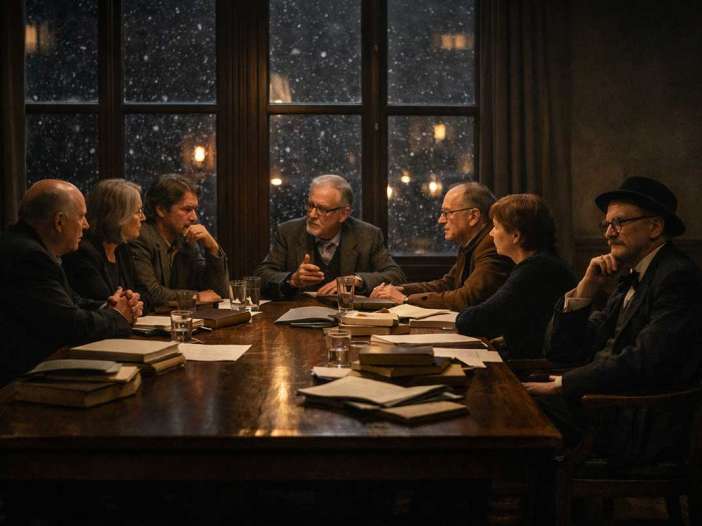
A long wooden table stands beneath a high ceiling. Outside the tall windows, snow falls—not dramatically, not gently—simply falling, without concern for meaning.
James Joyce sits slightly apart from the others, his posture relaxed, his gaze alert. He is not here to defend himself. He is here to listen.
Nick Sasaki opens a slim notebook and looks around the table.
First Question
Nick Sasaki
At the end of “The Dead,” Gabriel Conroy experiences what readers often call an epiphany.
But let’s begin plainly:
Is this moment a genuine moral awakening…
or is it simply a more refined version of self-deception?
Richard, would you begin?
Richard Ellmann
I believe Gabriel awakens—quietly, imperfectly, but authentically.
What matters is not whether he becomes a different man overnight, but that he experiences a collapse of moral certainty. His superiority dissolves. His confidence in his emotional adequacy disappears.
Joyce doesn’t give us redemption. He gives us humility. That is already a profound shift.
Hugh Kenner
I see it differently.
Gabriel doesn’t awaken; he rearranges himself.
He moves from one flattering self-image—the cultivated intellectual—to another—the sensitive man chastened by grief. Both roles preserve his centrality.
The language is beautiful, yes. But beauty can anesthetize judgment. We must be careful not to confuse eloquence with ethical transformation.
James Joyce (breaking the fourth wall, softly)
If eloquence were salvation, I’d have canonized myself long ago.
Marilyn French
I want to ask: awakening for whom?
Gabriel’s “epiphany” is entirely self-focused. He feels diminished, humbled, displaced—and we are encouraged to experience that as growth.
Meanwhile, Gretta has lived with real loss, real grief, and real memory for years. Her emotional reality predates Gabriel’s crisis and outlasts it.
Why do we treat his discomfort as enlightenment?
Declan Kiberd
Because Gabriel embodies a larger paralysis.
He is not merely a husband confronting inadequacy; he is an Irish intellectual shaped by colonial caution. He values restraint, irony, self-command. Passion embarrasses him.
Michael Furey represents a lost alternative—an Ireland capable of intensity, risk, even sacrifice.
Gabriel’s realization comes too late. That lateness is the point.
J. Hillis Miller
What troubles me is how Gabriel narrates his insight.
Even as he claims humility, the snow becomes his metaphor. It spreads according to his consciousness. The living and the dead are unified—but unified within his perception.
Language absorbs everything. That absorption may itself be another form of mastery.
Second Question
Nick Sasaki
Let’s press further.
If Gabriel’s insight is incomplete—or compromised—does that invalidate it?
Or is Joyce suggesting that partial awakenings are the only kind available to us?
Hugh?
Hugh Kenner
Joyce is too honest to offer total transformation.
But partial insight can still be evasive. Gabriel understands about himself. He does not yet understand how to live differently.
Modern consciousness excels at reflection. Action is another matter.
Richard Ellmann
I agree that the awakening is partial—but that does not make it illusory.
Ethical awareness often arrives before ethical capacity. Joyce allows us to witness the moment when self-certainty cracks.
What follows is not shown. That restraint is deliberate.
Marilyn French
Yet Joyce also withholds Gretta’s future.
Gabriel’s interiority is honored with lyricism. Gretta’s grief is revealed, then set aside.
If this is an awakening, it privileges male introspection over female endurance.
James Joyce (turning slightly toward French)
I showed what I knew how to show.
That, too, deserves scrutiny.
Declan Kiberd
We should also ask: what kind of society produces awakenings that arrive only at the edge of sleep?
Gabriel’s insight occurs when the party is over, the lights are low, the world is quiet.
This is not revolutionary consciousness. It is reflective melancholy—the hallmark of a culture stalled between memory and movement.
J. Hillis Miller
And the language reflects that stasis.
The snow does not resolve differences; it covers them. Covering can be compassionate—or it can be silencing.
Joyce leaves that ambiguity intact.
Third Question
Nick Sasaki
Final question for this episode.
If Gabriel is neither redeemed nor unchanged—
what, then, is Joyce asking the reader to confront in themselves?
James, I’d like you to answer last.
Marilyn?
Marilyn French
Joyce asks readers to notice how easily we mistake self-reflection for self-transcendence.
We feel moved. We feel softened. And we assume that feeling equals moral progress.
The story unsettles that assumption.
Hugh Kenner
Joyce confronts us with the danger of aesthetic consolation.
The ending is beautiful enough to make us forgive Gabriel—or forgive ourselves.
That temptation is part of the test.
Richard Ellmann
I think Joyce asks readers to accept human limitation without cynicism.
Gabriel does not become noble. He becomes honest.
That honesty is fragile, but it is real.
Declan Kiberd
Joyce forces readers to ask whether their own awakenings arrive only when it’s safe—when nothing is required of them.
Gabriel’s insight costs him nothing tangible. That question lingers.
J. Hillis Miller
And Joyce reminds us that meaning is never stable.
Every insight contains its own undoing. Every metaphor exceeds its intention.
The reader must live with that uncertainty.
James Joyce (finally)
I did not write an ending that answers questions.
I wrote one that refuses to let you rest comfortably in your answers.
If Gabriel awakens, it is not to wisdom—but to doubt.
And doubt, unlike certainty, has a future.
Closing Scene
The snow continues to fall.
No verdict is delivered.
Nick Sasaki closes his notebook.
Nick Sasaki
Then we’ll leave Gabriel here—not absolved, not condemned.
In our next episode, we’ll turn away from him entirely and ask:
Who owns the emotional truth of this story—Gretta, Gabriel, or the dead themselves?
Fade out.
Episode 2 — Who Owns the Emotional Truth?
Participants
James Joyce
Margot Norris
Vicki Mahaffey
Marilyn French
John Paul Riquelme
Richard Ellmann
Moderator
Nick Sasaki
Opening Scene
The table is the same, but the atmosphere has changed.
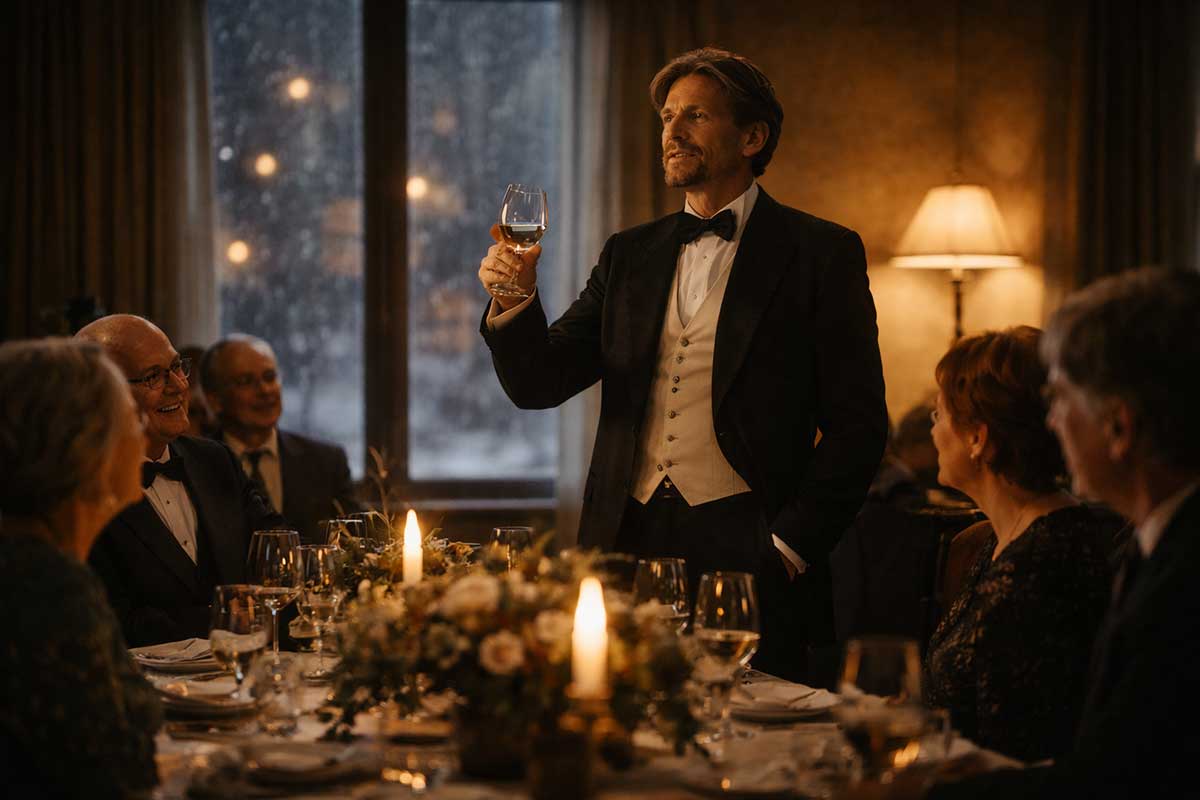
The windows are fogged now, as if the snow outside has pressed its breath against the glass. A half-finished glass of wine stands untouched near an empty chair—no one claims it.
James Joyce sits quietly, his hands folded. He does not look toward the center of the table.
Nick Sasaki waits a moment longer than necessary before speaking.
First Question
Nick Sasaki
In “The Dead,” the emotional climax arrives not through Gabriel’s realization, but through Gretta’s memory of Michael Furey.
So let us ask plainly:
Who owns the emotional truth of this story—Gretta, Gabriel, or the dead boy himself?
Margot, would you begin?
Margot Norris
I would argue that emotional truth briefly belongs to Gretta—and that the story cannot sustain that ownership.
For a moment, Gretta speaks from a place unmediated by Gabriel’s interpretation. Her memory interrupts the narrative hierarchy.
But almost immediately, the story recenters itself around Gabriel’s response to her grief. Gretta’s interiority opens the door—and then we are ushered back out.
That displacement is not accidental.
Marilyn French
I agree, and I’ll be more direct.
Gretta’s grief is not an epiphany. It is lived experience.
Michael Furey loved her in a way that was reckless, embodied, and dangerous. That love did not require interpretation or self-awareness.
Gabriel’s response transforms her pain into a lesson about himself.
The emotional truth exists—but it is appropriated.
Richard Ellmann
I think we must be careful not to erase Joyce’s compassion for Gretta.
Her memory is treated with seriousness, not irony. Joyce does not mock it. He does not aestheticize it excessively.
The shift to Gabriel’s consciousness reflects the story’s structure, not a dismissal of Gretta’s truth.
She alters him. That alteration is the narrative consequence.
James Joyce (quietly, almost to himself)
She alters him, yes.
But alteration is not the same as understanding.
Vicki Mahaffey
This is where the question of knowing becomes central.
Gretta knows something Gabriel cannot access—not because he lacks intelligence, but because emotional knowledge does not transfer cleanly.
Her grief resists possession. Gabriel can feel diminished by it, but he cannot inhabit it.
That asymmetry is crucial.
John Paul Riquelme
And the story dramatizes that asymmetry ethically.
Gabriel listens. He does not interrupt. He does not argue.
But listening is not the same as relinquishing interpretive control.
By the end, Gretta sleeps. Gabriel thinks.
The narrative follows thought, not grief.
Second Question
Nick Sasaki
Let’s press into the most troubling possibility.
Does Gabriel, however unintentionally, use Gretta’s grief as material—for self-knowledge, for poetic insight, for emotional refinement?
Vicki?
Vicki Mahaffey
Yes—but not maliciously.
Gabriel processes experience through abstraction. That is his mode of survival.
The danger is that abstraction can flatten singular pain into metaphor. When grief becomes symbolic, it becomes manageable.
Gabriel manages Gretta’s grief by translating it.
Marilyn French
And that translation strips it of agency.
Gretta does not ask to be a symbol. She does not offer Michael Furey as a lesson.
She remembers him because memory has its own life—not because she wants Gabriel to grow.
The story risks rewarding Gabriel for being wounded by something that was never his.
James Joyce (breaking the fourth wall, gently)
Writers are professional thieves of experience.
The only ethical question is whether we steal honestly.
Richard Ellmann
I think Joyce is acutely aware of this danger.
The story does not celebrate Gabriel’s insight. It describes it.
Readers who feel uplifted by the ending may be supplying their own consolation.
Joyce offers no reassurance that Gabriel has earned his reflection.
John Paul Riquelme
And that discomfort is productive.
The story places readers in Gabriel’s position—feeling moved, reflective, saddened—and then asks whether those feelings constitute moral depth or merely sensitivity.
We are implicated.
Margot Norris
Which is why the silence around Gretta afterward matters so much.
The story ends with her asleep. Her grief is complete; her memory does not need resolution.
The narrative cannot follow her further without violating her autonomy.
So it returns to Gabriel—where violation is easier.
Third Question
Nick Sasaki
Final question.
If Gretta’s grief resists ownership, and Gabriel’s insight risks appropriation—
what role do the dead themselves play in this story?
Is Michael Furey merely memory, or does he possess a kind of moral authority?
Richard?
Richard Ellmann
Michael Furey represents intensity of feeling that transcends prudence.
He is not idealized—he may have been foolish—but his love was uncalculated.
That intensity destabilizes Gabriel precisely because it exposes what his own life has excluded.
The dead here accuse the living—not through judgment, but through contrast.
Vicki Mahaffey
The dead in this story are not silent.
They act through memory, through song, through affect.
Michael Furey does not speak—but he moves the entire emotional structure of the narrative.
That is a form of authority.
Marilyn French
And notice who remembers him.
Not Gabriel. Not society. Not history.
Only Gretta.
The dead survive through women’s memory—while men turn that memory into reflection.
That gendered pattern is not incidental.
John Paul Riquelme
Michael Furey’s power lies in his resistance to narrative closure.
He cannot be explained away. He does not become a lesson fully.
He remains excessive—too much love, too much risk, too much cost.
That excess unsettles everyone.
James Joyce (finally, looking up)
The dead do not ask to be remembered correctly.
They only ask not to be forgotten cheaply.
If Michael Furey haunts this story, it is because he loved without insurance.
That kind of love is always inconvenient to the living.
Closing Scene
The room grows quieter.
Outside, the snow continues—but the sound is muffled now, as if the world itself has stepped back.
Nick Sasaki closes his notebook slowly.
Nick Sasaki
Then perhaps the answer is this:
No one owns the emotional truth of “The Dead.”
But some truths refuse to be shared equally.
In our next episode, we’ll widen the lens and ask:
Is this story a private marriage drama—or a political portrait of Ireland itself?
Fade out.
Episode 3 — Ireland Beneath the Snow
Participants
James Joyce
Declan Kiberd
Harry Levin
Hugh Kenner
John Paul Riquelme
Margot Norris
Moderator
Nick Sasaki
Opening Scene
The snow outside the windows has thickened. The city beyond is barely visible now—streetlights blurred, outlines softened, borders uncertain.
The table feels smaller, closer. Books are stacked higher. Someone has turned a chair slightly away from the others, as if to resist alignment.
James Joyce watches the snow for a long moment before turning back.
Nick Sasaki speaks.
First Question
Nick Sasaki
Readers often encounter “The Dead” as a quiet marital story—an intimate reckoning between husband and wife.
But others insist it is inseparable from Ireland’s political and cultural condition at the time.
So let us ask directly:
Is “The Dead” primarily a private story that happens to take place in Ireland—or a political story disguised as domestic life?
Declan, this question belongs to you first.
Declan Kiberd
It is political to its core.
Gabriel Conroy is the embodiment of a colonized consciousness—educated, ironic, cautious, anxious about authenticity. He is uncomfortable with excess feeling because excess feeling is dangerous under empire.
His anxiety about being “too English,” his discomfort with Irish nationalism, his preference for cosmopolitan distance—these are not personal quirks. They are historical symptoms.
The marriage is not separate from the politics. It is where the politics live.
Hugh Kenner
I resist that reading.
Joyce was suspicious of allegory, especially national allegory. He understood how quickly symbolism hardens into slogans.
“The Dead” operates at the level of individual perception. Ireland is not a metaphor here—it is a setting.
To reduce Gabriel to a political type risks flattening Joyce’s precision.
James Joyce (dryly, breaking the fourth wall)
I fled Ireland partly to escape being turned into a civic lesson.
It appears I failed.
Harry Levin
I think the truth lies between those positions.
Joyce is not writing propaganda, but he is writing from within a culture undergoing crisis. Modernism itself emerges from such fractures.
The brilliance of “The Dead” is that it allows political reality to surface through tone, habit, and silence—never through argument.
The politics are ambient, not declarative.
Margot Norris
And that ambient quality is precisely what makes the politics unavoidable.
The story is saturated with power relations: gendered, cultural, colonial.
Who speaks comfortably? Who feels watched? Who apologizes for their own opinions?
These dynamics are not neutral. They reflect social hierarchies learned over time.
John Paul Riquelme
What Joyce does brilliantly is place readers inside those hierarchies without announcing them.
We experience discomfort before we can name it.
That discomfort—Gabriel’s, and ours—is political even when it feels personal.
Second Question
Nick Sasaki
Let’s sharpen the stakes.
Michael Furey is often read as a figure of pure feeling—passionate, reckless, doomed.
Is he also a political figure?
Does he represent a lost Ireland that Gabriel—and perhaps Joyce—can no longer access?
Harry?
Harry Levin
I would caution against romanticizing Michael Furey.
He is remembered through nostalgia. Memory exaggerates intensity.
If Michael represents anything, it may be youth rather than nation—emotion rather than ideology.
Joyce avoids turning him into a martyr.
Declan Kiberd
But memory itself is political.
Colonized cultures survive through memory—songs, stories, private recollections that resist official narratives.
Michael Furey exists outside institutions. He has no future, no career, no social standing.
That marginality gives him symbolic force whether Joyce intends it or not.
James Joyce (interjecting)
Intent is a lazy refuge.
What matters is what a figure does once released into the world.
Margot Norris
Michael Furey also exposes a gendered politics.
His passion is preserved because a woman remembers him. Women often carry cultural memory while men negotiate public identity.
Gabriel’s discomfort is not only political—it is also about being displaced as the primary interpreter of meaning.
John Paul Riquelme
And note that Michael does not argue, persuade, or recruit.
His political force—if we call it that—lies in his refusal to be reasonable.
Reasonableness is the virtue of stable systems. Michael belongs to instability.
Hugh Kenner
Still, Joyce resists resolution.
Michael Furey is not offered as an alternative program. He is not a solution to paralysis.
He is a disruption—and disruptions are not blueprints.
Third Question
Nick Sasaki
Final question.
If “The Dead” is political—but quietly, indirectly—what responsibility does that place on the reader?
Are we meant to mourn paralysis?
Critique it?
Or simply recognize it in ourselves?
Margot?
Margot Norris
Recognition is not enough.
The danger of subtle political writing is that readers aestheticize discomfort instead of confronting it.
Joyce risks allowing paralysis to become beautiful—and therefore tolerable.
That risk is not accidental. It is the price of his method.
Harry Levin
But Joyce also trusts readers.
He does not instruct them what to do. He asks them to feel unease without moral signage.
Modernism demands maturity from its audience.
Declan Kiberd
Yet readers are not outside history.
An Irish reader in 1904 encounters this story differently than a contemporary global reader.
Joyce knew that. He wrote for the future—but he wrote from a wound.
That wound does not disappear because the prose is elegant.
John Paul Riquelme
The reader’s responsibility is ethical rather than political in the narrow sense.
We are asked to notice how systems—cultural, emotional, linguistic—shape what feels possible to us.
That noticing is already destabilizing.
Hugh Kenner
And Joyce refuses to turn destabilization into instruction.
He shows the weather, not the remedy.
The snow falls. What we do afterward is not his business.
James Joyce (after a pause)
I distrusted movements that promised clarity.
Ireland had enough of those.
If there is politics in this story, it lies in showing how easily people mistake caution for wisdom—and restraint for virtue.
I wrote about paralysis because I knew it intimately.
What readers do with that knowledge…
I leave unfinished.
Closing Scene
The snow outside has erased the street entirely now.
The city exists only as light and shadow.
Nick Sasaki gathers his notes but does not close them yet.
Nick Sasaki
Then perhaps “The Dead” is political in the most unsettling way:
It offers no slogans.
No villains.
No exits.
Only a mirror—held up long enough to make us uncomfortable.
In our next episode, we will return to the ending itself and ask:
Does the snow unite everyone—or quietly erase the differences that matter most?
Fade out.
Episode 4 — The Snow on Trial
Participants
James Joyce
Frank Kermode
J. Hillis Miller
Vicki Mahaffey
Marilyn French
Hugh Kenner
Moderator
Nick Sasaki
Opening Scene
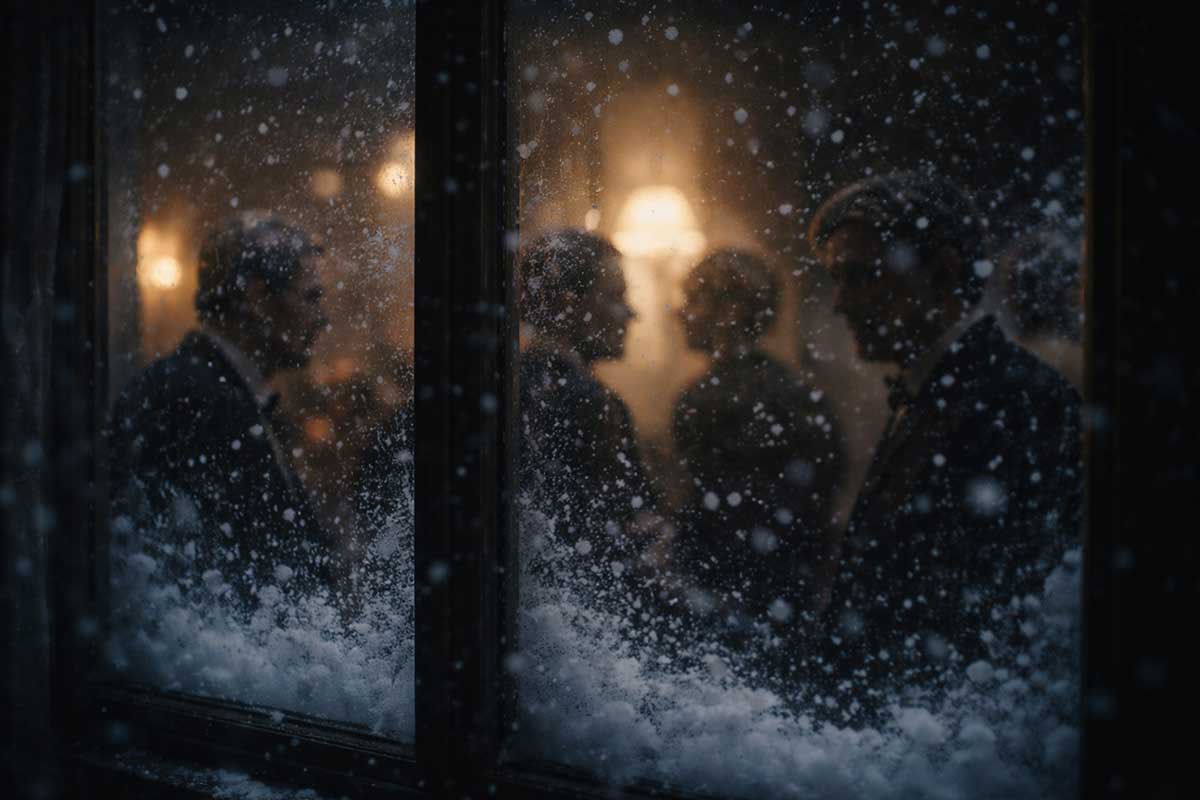
The windows are almost opaque now. Snow presses against the glass as if listening.
No one speaks at first.
The ending of “The Dead” sits in the room like a presence—familiar, revered, and suddenly suspect.
James Joyce does not look at the others. He looks at the snow.
Nick Sasaki breaks the silence.
First Question
Nick Sasaki
The final paragraph of “The Dead” is one of the most famous endings in literature.
Snow falling on the living and the dead alike.
Boundaries dissolving.
A vision of shared human fate.
Let’s begin where reverence usually stops inquiry:
Is the snow an image of compassion—or an image that quietly erases crucial differences?
Frank, would you begin?
Frank Kermode
The snow is powerful precisely because it refuses to settle into a single moral meaning.
Endings traditionally promise resolution. This one resists it.
The snow suggests unity, yes—but it also suspends action. Nothing follows. No decision is demanded.
Its danger lies in its beauty. Beauty can feel like meaning fulfilled when it is only meaning deferred.
J. Hillis Miller
I would go further.
The snow is language doing too much work.
It gathers every distinction—life and death, guilt and innocence, passion and restraint—into a single metaphorical field.
Such gathering can feel generous. But it can also be totalizing.
When everything is included, difference loses force.
James Joyce (dry, breaking the fourth wall)
When a metaphor succeeds too well, it begins to lie.
Hugh Kenner
I want to defend Joyce—partially.
The snow does not declare unity. It suggests it, fleetingly, almost tentatively.
Readers often impose consolation where Joyce offers only stillness.
The problem may not be the image, but our hunger for closure.
Marilyn French
But we must ask: closure for whom?
The snow smooths over Gretta’s specific grief, Michael Furey’s singular sacrifice, and Gabriel’s particular failures.
Universality arrives at the cost of gendered and emotional specificity.
Women’s pain has historically been absorbed into metaphors of “shared humanity.” This ending risks repeating that gesture.
Vicki Mahaffey
The snow also represents a limit of knowing.
Gabriel does not suddenly understand everyone. He understands that understanding has limits.
The image marks the boundary where cognition dissolves into atmosphere.
That boundary can be honest—or evasive—depending on how the reader receives it.
Second Question
Nick Sasaki
Let’s turn the pressure inward.
Many readers report feeling deeply moved—almost soothed—by the ending.
So I’ll ask bluntly:
Does the beauty of the snow risk becoming an aesthetic anesthetic?
Does it let both Gabriel and the reader feel reconciled without responsibility?
Hugh?
Hugh Kenner
Yes, it risks that.
Joyce knew that danger. He walked toward it anyway.
Modernist writers often flirt with beauty as a form of danger—not comfort.
The ending dares readers to decide whether they will mistake emotional resonance for moral resolution.
Frank Kermode
Endings shape interpretation disproportionately.
The snow retroactively softens everything that came before. That power is not neutral.
But Joyce leaves the ending open enough that readers must interrogate their own response.
If you feel soothed, you must ask why.
James Joyce (quietly)
I did not intend to comfort anyone.
But I knew the sentence would sing.
That is the risk every writer takes.
Marilyn French
And that risk is not evenly distributed.
The sentence sings most beautifully over male interiority.
Gretta disappears into sleep. Her grief is complete; her voice is gone.
The snow speaks for her—and in doing so, silences her specificity.
That is not accidental. It reflects who is allowed lyric transcendence.
J. Hillis Miller
The snow is not innocent because language is not innocent.
Metaphor always consumes what it represents.
The ethical question is not whether the snow unifies—but what it costs to unify.
Some losses are hidden by elegance.
Vicki Mahaffey
Yet the snow also refuses mastery.
It does not instruct. It does not resolve.
It creates a mood in which action feels impossible.
That paralysis may be honest.
The danger is not in the snow—but in stopping there.
Third Question
Nick Sasaki
Final question.
If the snow neither redeems nor condemns—
what does Joyce leave us with instead?
Is the ending an act of humility…
or an abdication of responsibility?
James, I’d like you to answer last.
Frank?
Frank Kermode
The ending leaves us with time.
Not narrative time, but existential time—the sense that life continues unresolved.
That refusal of finality is not evasion; it is fidelity to experience.
Hugh Kenner
Joyce hands responsibility back to the reader.
He does not tell us what the snow means. He shows us what it does.
What we do next—emotionally, ethically—belongs to us.
Marilyn French
But responsibility without representation is incomplete.
Gretta does not receive a final sentence.
Her story dissolves into atmosphere.
That absence matters.
Vicki Mahaffey
And yet absence is part of the truth.
Some experiences cannot be concluded without distortion.
The snow marks that limit.
J. Hillis Miller
Meaning dissolves not because it is denied—but because it exceeds language.
The snow is excess. It overflows interpretation.
That overflow is unsettling, not consoling.
James Joyce (finally, looking directly at the others)
I did not write the snow to solve anything.
I wrote it because I reached a place where explanation felt dishonest.
The living want reasons.
The dead offer none.
If the snow feels dangerous, it is because it does not argue.
It falls.
And when it stops, the world must still be lived in.
Closing Scene
The snow outside begins to thin.
For the first time, a faint outline of the city returns—blurred, imperfect, unfinished.
Nick Sasaki closes his notebook.
Nick Sasaki
Then perhaps the snow is neither mercy nor erasure.
It is a pause.
A breath long enough to ask whether we will return to life differently—or simply admire the silence.
In our final episode, we’ll step back and ask:
Was “The Dead” an ending at all—or the beginning of everything Joyce would write next?
Fade out.
Episode 5 — End or Beginning
Participants
James Joyce
Richard Ellmann
Harry Levin
Frank Kermode
John Paul Riquelme
Vicki Mahaffey
Moderator
Nick Sasaki
Opening Scene
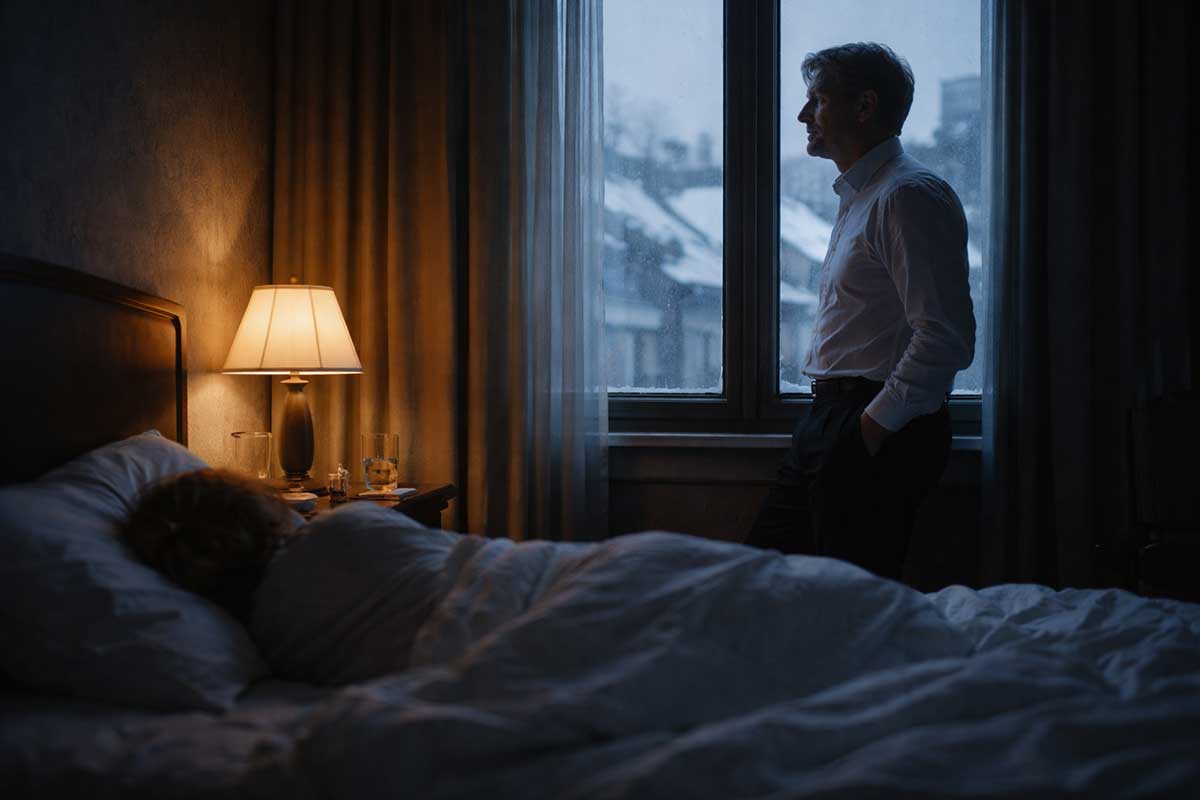
The snow has stopped.
Outside the windows, the city reappears—changed not by transformation, but by endurance. Footprints cross one another. A carriage passes. Somewhere, a light turns on.
The table feels less like a courtroom now and more like a threshold.
James Joyce sits upright, older than he appeared before. Or perhaps simply more visible.
Nick Sasaki speaks gently.
First Question
Nick Sasaki
“The Dead” closes Dubliners—and in many ways closes a chapter of your life as a writer.
So let us begin with the largest question of all:
Did you write “The Dead” as an ending—or as a quiet beginning of everything that came after?
Richard, would you start us off?
Richard Ellmann
I’ve always believed “The Dead” is a culmination.
It completes Joyce’s early moral project: to render paralysis truthfully, compassionately, without false redemption.
But it is also a moment of release. After this story, Joyce no longer confines himself to restraint.
The emotional breadth of the ending anticipates the expansiveness of Ulysses.
It is a farewell to containment.
Harry Levin
I agree, but I’d emphasize form.
“The Dead” is Joyce’s last sustained engagement with traditional realism. After this, consciousness fractures, time dilates, language rebels.
This story is a hinge—still rooted in the nineteenth century, already leaning into the twentieth.
Joyce closes one door carefully so he can open another violently.
James Joyce (smiling slightly)
I never liked slamming doors.
I preferred leaving them ajar—just enough to let noise in.
Frank Kermode
What strikes me is how final the ending feels—even though nothing is resolved.
That paradox is essential.
Joyce achieves a sense of completion without conclusion. That’s a rare feat.
It allows him to abandon realism without repudiating it.
Vicki Mahaffey
And psychologically, this matters.
Joyce pushes realism to its limit—until interior consciousness overwhelms social description.
Gabriel’s inward turn is a preview. Joyce is about to follow consciousness far beyond what Gabriel can bear.
John Paul Riquelme
The ethical stance remains consistent, though.
Joyce never stops resisting moral simplification.
What changes is not his seriousness, but his patience with surface reality.
Second Question
Nick Sasaki
Let’s talk about risk.
After “The Dead,” Joyce abandons accessibility, clarity, and even readerly comfort.
So I’ll ask:
Did “The Dead” give you permission—to yourself—to write differently?
Harry?
Harry Levin
Absolutely.
Joyce proves to himself that emotional depth does not require melodrama, and that restraint can be devastating.
Once that proof is secured, he no longer needs restraint.
The later work explodes because the foundation is secure.
James Joyce (breaking the fourth wall)
You might say I earned the right to misbehave.
Richard Ellmann
There’s also personal courage involved.
“The Dead” confronts regret, lateness, and emotional limitation.
Once Joyce faced those honestly, he no longer needed to write around them.
The later audacity grows out of that honesty.
Frank Kermode
Risk follows confidence—but also dissatisfaction.
Joyce recognized that realism could not fully capture the movement of thought, memory, and desire.
“The Dead” marks the moment he outgrows the form.
Vicki Mahaffey
And epistemologically, this is crucial.
The story exposes how little we truly know—even about those closest to us.
From there, Joyce commits to exploring not knowledge, but its failure.
That commitment defines modernism.
John Paul Riquelme
Ethically, Joyce refuses to simplify human experience into lessons.
His later work becomes harder because it is less willing to lie.
Difficulty becomes a moral stance.
Third Question
Nick Sasaki
Final question—for all of us, and especially for you, James.
More than a century later, readers still return to “The Dead.”
So I ask:
What does this story continue to ask of us—now—long after its world has vanished?
John?
John Paul Riquelme
It asks us to sit with discomfort without rushing to meaning.
To recognize that insight does not absolve us.
That ethical awareness begins with humility, not certainty.
Vicki Mahaffey
It asks us to notice the limits of self-knowledge.
And to accept that some truths arrive only as feelings—never as conclusions.
Frank Kermode
It asks us to resist the temptation of finality.
Life does not resolve cleanly. Art should not pretend otherwise.
Richard Ellmann
It asks for compassion without sentimentality.
To see human frailty clearly—and still care.
That balance is rare.
Harry Levin
And it asks readers to grow up.
To meet complexity without instruction.
Joyce trusted readers more than most writers dared to.
James Joyce (after a long pause)
I wrote “The Dead” because I realized something too late to correct—but not too late to admit.
That most of us live cautiously.
That love often arrives after the moment has passed.
That insight does not save us—but it can soften us.
If the story endures, it is not because it explains life.
It endures because it refuses to flatter the living—or romanticize the dead.
I did not write it to close a book.
I wrote it to leave a door open long enough for the cold to enter.
And for a moment—for just a moment—we feel awake.
Final Scene
The table is empty now.
Only Joyce remains—standing by the window.
Outside, the city continues.
Not redeemed.
Not condemned.
Alive.
Nick Sasaki’s voice returns, quiet but steady.
Nick Sasaki
Five questions.
No verdict.
Only a story that still refuses to lie to us.
Fade out.
Final Thoughts by Nick Sasaki
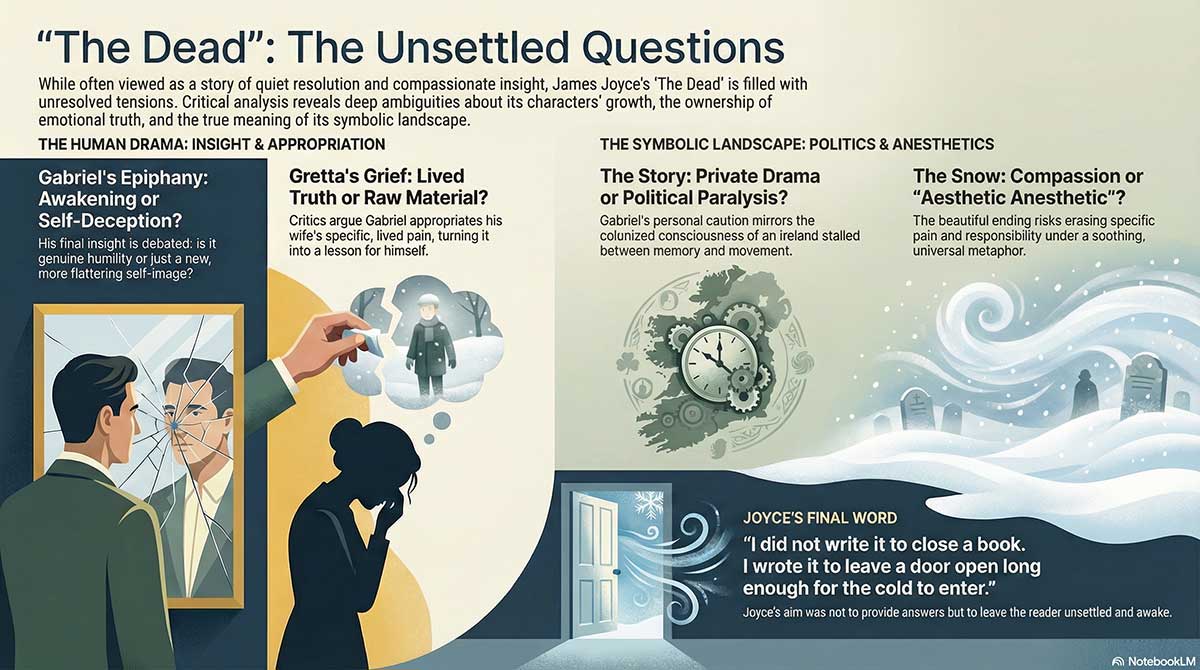
What makes The Dead endure is not its beauty alone—but its refusal to rescue us from ourselves.
Joyce does not punish Gabriel.
He does not redeem him either.
He simply leaves him awake.
And that may be the cruelest gesture of all.
Across these five episodes, we return again and again to moments where nothing “goes wrong”—and yet something is irrevocably lost. A speech delivered too smoothly. A song misunderstood. A belief challenged too publicly. A grief revealed too late. A snowfall that feels merciful until we realize what it has covered.
Joyce understood something that still unsettles us today:
that insight does not equal transformation,
that awareness does not undo damage,
and that consciousness often arrives after the moment when love required action.
If this series has done its work, it has not explained The Dead away.
It has made it harder to read comfortably.
And perhaps that is Joyce’s final gift—not clarity, not consolation, but the quiet insistence that we notice how we are living before the snow begins to fall.
Short Bios:
James Joyce
Irish modernist writer and author of Dubliners, A Portrait of the Artist as a Young Man, Ulysses, and Finnegans Wake. Joyce transformed world literature by turning inward—making consciousness, memory, and time the true terrain of fiction.
Nick Sasaki
Founder of ImaginaryTalks, Nick Sasaki creates living conversations between great minds across time to explore literature, spirituality, and human meaning. His work focuses on tension, emotional truth, and the questions that refuse easy answers.
Richard Ellmann
The most influential Joyce biographer, Ellmann shaped modern understanding of Joyce’s life and moral imagination. His work emphasizes compassion, ethical awakening, and the human costs beneath Joyce’s formal innovation.
Hugh Kenner
A leading modernist critic, Kenner explored Joyce’s irony, structure, and resistance to sentimentality. He argued that Joyce’s brilliance lies not in answers, but in how language exposes illusion.
Marilyn French
Literary critic and feminist theorist known for foregrounding gender, power, and emotional asymmetry in canonical texts. Her readings challenge whose inner lives are centered—and whose are absorbed or erased.
Frank Kermode
Renowned literary theorist whose work on endings and narrative meaning reshaped modern criticism. Kermode examined how stories create a sense of closure—and how that closure can mislead.
J. Hillis Miller
A central figure in deconstruction, Miller focused on language’s instability and the ethical consequences of metaphor. His Joyce readings highlight how beauty can conceal loss and difference.
Vicki Mahaffey
Joyce scholar known for her work on psychology, cognition, and the limits of knowing. Mahaffey explores how Joyce dramatizes consciousness without granting mastery or resolution.
Harry Levin
Influential modernist critic who traced Joyce’s movement from realism to radical experimentation. Levin emphasized Joyce’s formal courage and his refusal to simplify human experience.
John Paul Riquelme
Literary critic whose work bridges modernism, ethics, and reader responsibility. Riquelme focuses on how Joyce demands active moral engagement rather than passive interpretation.
Leave a Reply