
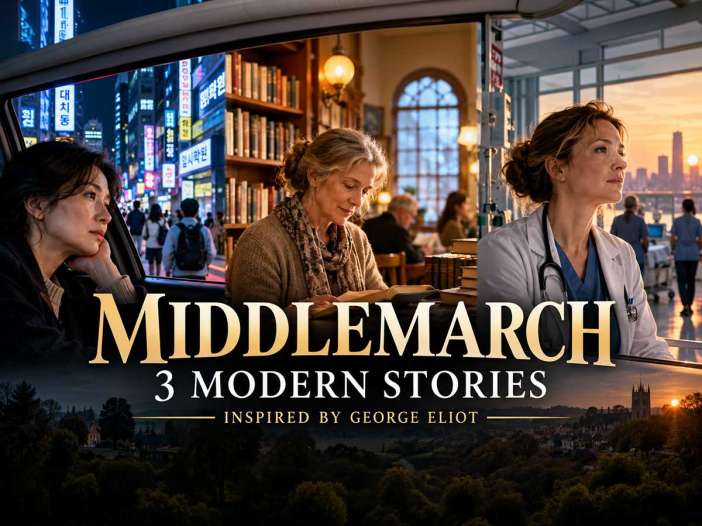
Introduction The Lives We Thought We Wanted: Three Modern-Day Stories Inspired by George Eliot's MiddlemarchWhat if the people of Middlemarch were living among us today?Perhaps Dorothea Brooke's longing for a meaningful life would appear in a Korean mother determined to give her daughter every opportunity she never had.Perhaps Eliot's celebration of … [Read more...] about 3 Modern Stories Inspired by George Eliot’s Middlemarch
Literature
Middlemarch by George Eliot: 5 Experts Debate Its Genius
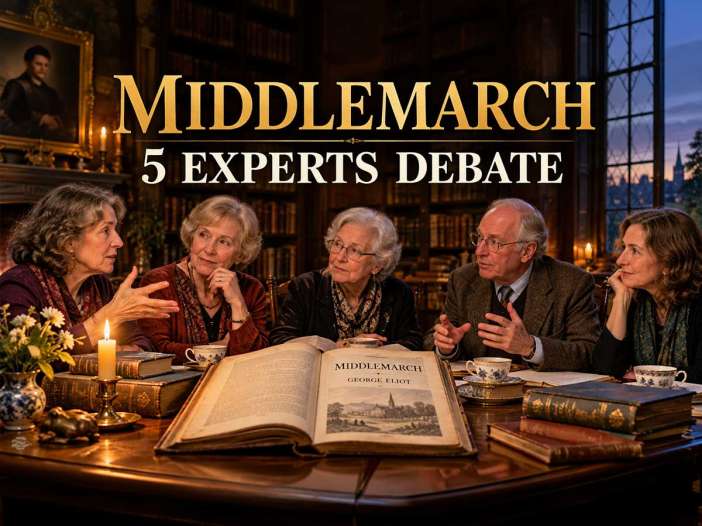
Introduction What Makes Middlemarch a Masterpiece? Five Literary Scholars in an Imaginary ConversationWhy do intelligent people make terrible decisions? Can someone sincerely believe in God while repeatedly deceiving themselves? And what if the greatest achievement of our lives is something nobody will ever recognize?These questions lie at the heart of … [Read more...] about Middlemarch by George Eliot: 5 Experts Debate Its Genius
Middlemarch: What If George Eliot’s Characters Met Again?
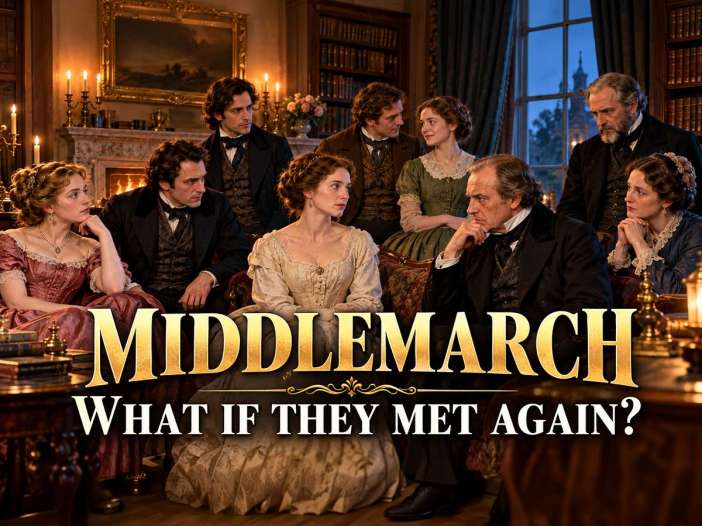
Introduction Middlemarch by George Eliot: What If the Characters Met Again After Death?What if Dorothea Brooke could finally ask Edward Casaubon whether he had ever truly loved her?What if Lydgate and Rosamond could confront the question that haunted their marriage: Who was really responsible for their unhappiness?And what if the characters of George Eliot's … [Read more...] about Middlemarch: What If George Eliot’s Characters Met Again?
3 Modern-Day Stories Inspired by American Hagwon

Introduction What if the most powerful way to understand a novel isn't simply to discuss its ideas—but to experience those ideas through someone else's life?A father spends thousands of dollars preparing his son for success, only to discover that the greatest burden his son carries is the fear of disappointing him.A successful physician has everything she … [Read more...] about 3 Modern-Day Stories Inspired by American Hagwon
Middlemarch by George Eliot: The Complete Story in 20 Minutes
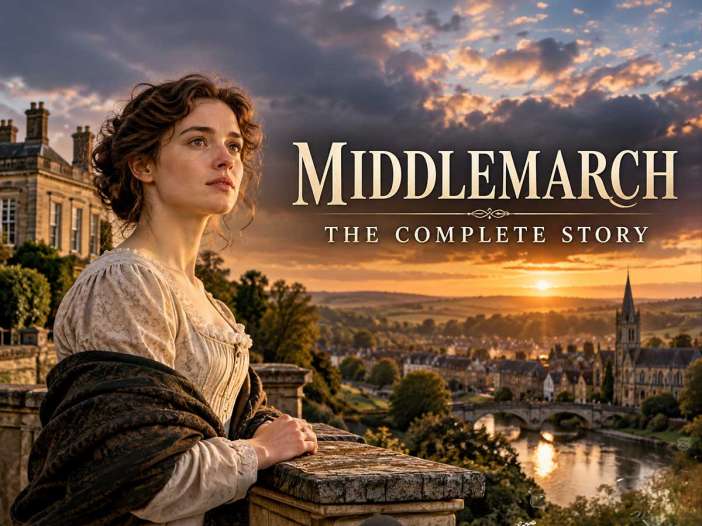
Introduction Middlemarch by George Eliot: The Complete Story of Love, Dreams, and RegretWhat if the life you dreamed of became the very life you wanted to escape?A young woman marries a brilliant scholar, believing she has found her life's purpose. A talented doctor arrives in a small English town, determined to change medicine forever. A beautiful young … [Read more...] about Middlemarch by George Eliot: The Complete Story in 20 Minutes
3 Modern-Day Stories Inspired by American Hagwon
Introduction What If Everything You Sacrificed for Success Wasn't Worth the Price?Three original modern-day stories inspired by Min Jin Lee's American HagwonA father sleeps in his delivery van so his son can afford college preparation.A successful doctor discovers that the person her eight-year-old daughter misses most is her own mother.A university graduate … [Read more...] about 3 Modern-Day Stories Inspired by American Hagwon
American Hagwon by Min Jin Lee: Experts Debate Success
Introduction What If Everything We Teach Children About Success Is Wrong?A fictional conversation among five experts inspired by Min Jin Lee's American HagwonA boy comes home with a 98 on his mathematics examination.His mother looks at the paper and asks, "What happened to the other two points?"She thinks she's preparing him for success.He wonders whether … [Read more...] about American Hagwon by Min Jin Lee: Experts Debate Success
American Hagwon by Min Jin Lee: Characters Speak
Introduction What if the family in American Hagwon could finally say everything they had kept inside?In Min Jin Lee's American Hagwon, John and Helen Koh believe in hard work, education, and sacrifice. They want their three children, Bo, DH, and Mido, to have opportunities they never had. But when betrayal, financial collapse, and immigration overturn their … [Read more...] about American Hagwon by Min Jin Lee: Characters Speak
63% Will Forget How to Think? 3 Chilling AI Stories

Introduction What if the greatest danger of artificial intelligence isn't that machines will take control of humanity, but that human beings will gradually surrender their independence without realizing it?Japanese spiritual counselor Tazuko Katayama has warned that 63% of humanity could lose touch with its own heart within five years.Her prediction is … [Read more...] about 63% Will Forget How to Think? 3 Chilling AI Stories
Winnie-the-Pooh at 100: Hidden Lessons from Scholars
Introduction On October 14, 1926, A. A. Milne published Winnie-the-Pooh, illustrated by E. H. Shepard. A hundred years later, its characters remain among the most beloved in children's literature.But there is something remarkable about the world these two men created.Both had served in World War I. They belonged to a generation that had witnessed … [Read more...] about Winnie-the-Pooh at 100: Hidden Lessons from Scholars