
|
Getting your Trinity Audio player ready...
|
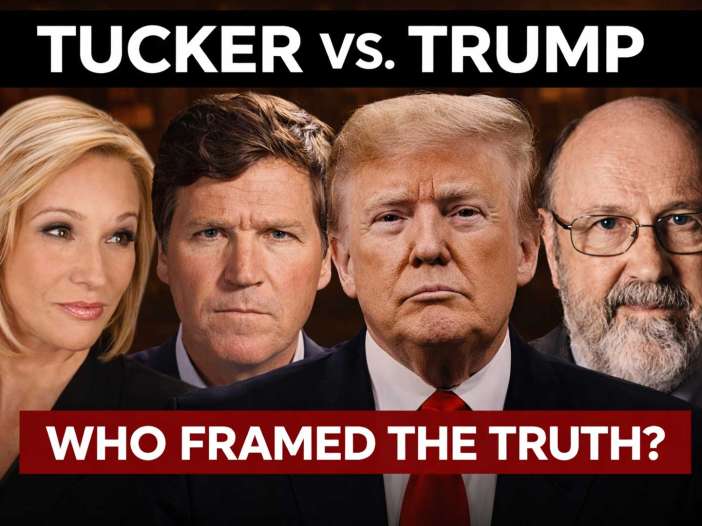
Did Tucker Reduce Trump’s Peace Strategy to “Stealing Oil”?
There are times when a public argument is not really about one sentence.
It is about the frame placed around that sentence.
That is what this conversation is about.
Tucker Carlson took Donald Trump’s language about oil and turned it into a moral conclusion: theft. In the video, he moves from Trump’s words to the claim that the motive was taking something “we wanted,” then calls it theft, and from there presses Christians to ask whether they can still support Trump at all.
That is a very serious move.
Because once Tucker uses that frame, he is no longer only criticizing policy. He is deciding what Trump meant. He is deciding what moral category the action belongs in. And he is strongly implying something about the Christians who still support Trump’s way of seeing the world.
But what if that frame is too small?
What if Trump’s language, rough as it may sound, is coming from a very different worldview — one shaped by leverage, pressure, failed regimes, deterrence, stability, economic reopening, and a peace-through-strength logic that supporters believe is aimed at preventing larger chaos?
That does not automatically prove Trump is right.
But it does mean the argument cannot honestly end at the word theft.
That is why this discussion matters.
This is not a simple fight between good people and bad people.
It is not a simple fight between true Christians and false Christians.
It is not a simple fight between moral clarity and moral blindness.
It is a fight over who gets to define what harsh political language means.
Does Tucker get to hear one blunt phrase and declare the whole moral center exposed?
Do Trump and his supporters get to say that critics are ignoring the larger strategic world he believes he is trying to shape?
Can Christians support forceful leadership and still remain morally serious before God?
Can a commentator sound prophetic and still force reality into too narrow a frame?
And when both strategy and morality are being argued at full intensity, how should believers keep their conscience free?
Those are the questions underneath these five topics.
So tonight, I want to bring together five voices who represent the real lines of this conflict.
Tucker Carlson, who believes a moral line was crossed and that Christians should not look away.
Donald Trump, who sees himself not as a thief, but as a leader using strength to produce order, prosperity, and long-range peace.
Paula White, who represents Christians who still support Trump and reject Tucker’s moral framing of that support.
N.T. Wright, who brings theological seriousness and reminds us that moral judgment requires both clarity and restraint.
And I will stand in the middle, asking whether this whole fight is really about policy, or whether it is about who controls the moral frame through which policy is seen.
Because the deeper issue may not be whether Trump used blunt language.
The deeper issue may be whether Tucker deliberately forced that language into the ugliest possible meaning — and in doing so, judged not only Trump, but the Christians who still believe Trump’s strategy is aimed at something larger than gain.
That is where we begin.
(Note: This is an imaginary conversation, a creative exploration of an idea, and not a real speech or event.)
Topic 1: Did Tucker Deliberately Misframe Trump as a Thief?
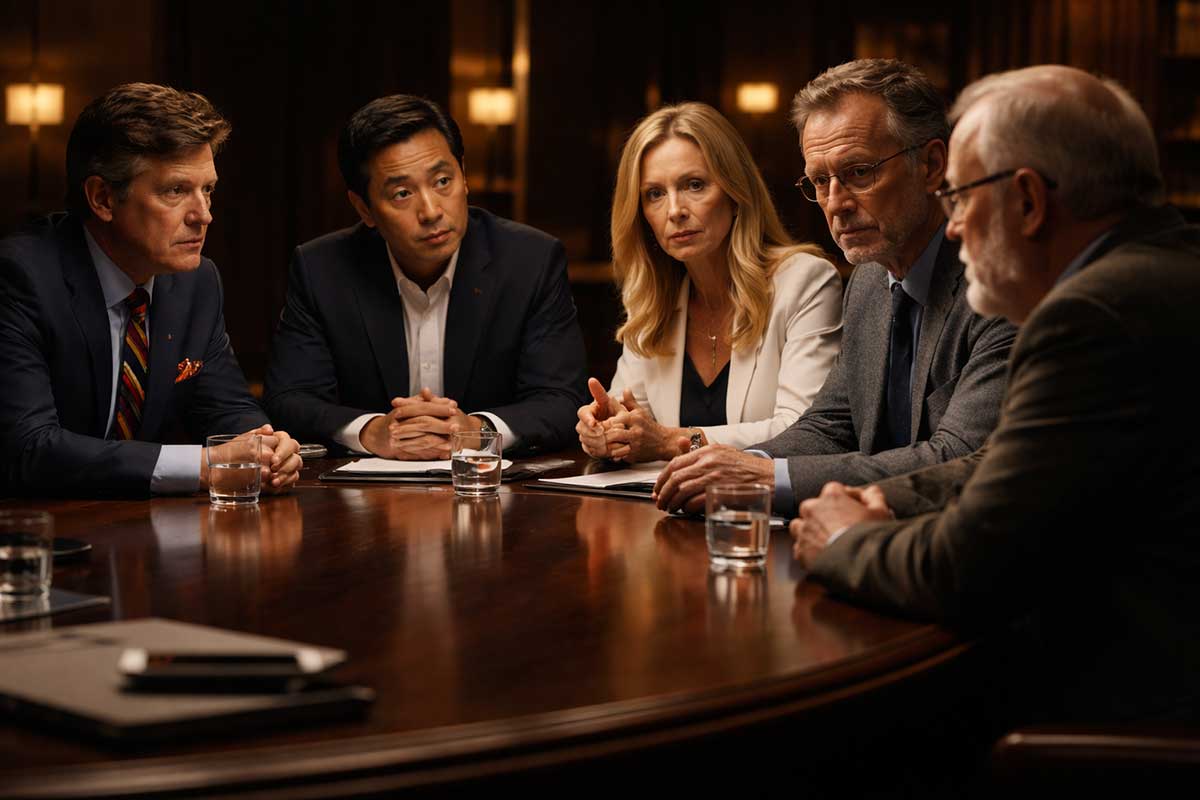
A quiet, serious room. No cheering crowd. No television countdown. Just five people sitting with one hard question in front of them.
Nick Sasaki opens the discussion with the issue that started it all.
Tucker did not merely say Trump’s words sounded rough. In the video, he moved from Trump’s oil language to “taking something that we wanted,” then to “theft,” and even to “we’re just stealing this because we can.” He then said Christians should have stopped and asked whether they could still support Trump at that point.
That is a very strong claim.
So tonight’s first question is not whether Trump used blunt words. He did. The question is whether Tucker took those words, forced them into the darkest frame, and then used that frame to condemn both Trump and Christians who still support him. Tucker’s video does move from that oil framing to a much wider moral challenge for Christians.
Participants
- Nick Sasaki
- Tucker Carlson
- Donald Trump
- Paula White
- N.T. Wright
Question 1
Did Tucker take one blunt phrase about oil and turn it into a complete moral verdict about Trump’s intent?
Donald Trump
Of course he did. That is exactly what he did.
I speak in strong language. Everybody knows that. I have spoken that way for years. I speak in terms of leverage, strength, outcomes, what works, what does not work, who is winning, who is losing, what is fair to the United States, what is not fair. I do not sit around polishing every sentence so media people can admire the phrasing.
Tucker took one part of that language and built a moral drama out of it. He heard “oil,” and he said, “Aha, now I know the soul, now I know the motive, now I know the crime.” That is not analysis. That is a frame job.
From my point of view, when you are dealing with a broken country, a failed regime, or a violent dictatorship, you are not sitting in a classroom talking abstract morality. You are looking at the world and asking: how do you change outcomes? How do you restore order? How do you create strength? How do you stop chaos from spreading? How do you create something that works better for everybody involved?
That is how I think.
So yes, he took one blunt phrase and turned it into a final verdict. That was never fair.
Paula White
Yes, I believe he did.
What troubled me in that video is not that Tucker raised a moral concern. He has every right to do that. What troubled me is that he moved so fast from one harsh phrase into total certainty about intention. He did not stay with concern. He went straight into condemnation.
A leader can use rough language and still be working from a much larger vision. President Trump often speaks from a results-based mind. He speaks from pressure, dealmaking, urgency, and leverage. That does not mean each sentence should be treated like a full theological confession.
Tucker took one statement and treated it like the master key to everything.
That is the part many Christians will feel is unfair. Not because they think every action of President Trump was perfect. They do not. It is because they know that one rough phrase does not automatically reveal the whole heart, the whole motive, or the whole strategy.
Tucker Carlson
No, I think I named the core of what was revealed.
This is where people hide behind style. “That’s just how he talks.” “He’s a businessman.” “He speaks in shorthand.” Fine. But at some point, the words count. They count especially when they are spoken by the president of the United States in the middle of actions with enormous consequences.
If the president says we did this for the oil, if he speaks in terms of possession and taking, I am not required to protect him from the moral meaning of his own language. I am not inventing that meaning out of thin air. I am drawing the line from the words to the principle underneath them.
Now, can there be a strategy around that? Of course. Every ugly thing in history came with a strategy. Every intervention, every empire, every seizure of power had a larger explanation. That does not remove the moral center.
So no, I do not think I took one phrase and exaggerated it. I think I stripped away the respectable wrapping and named what was sitting in the middle of it.
N.T. Wright
I think Tucker identified something serious, but then gave it too much finality.
The language he quoted is morally troubling. On that point, I think many people would agree. A Christian should not hear possessive, force-driven language from a ruler and simply shrug. There ought to be moral seriousness there.
But there is a difference between saying, “This language is deeply troubling,” and saying, “Now the whole motive has been exposed.” That second move is much larger. It is possible for a leader to pursue a wider strategy, even one he believes serves peace or order, and still speak in ways that are morally coarse, prideful, or unworthy.
So I would say Tucker raised a valid concern, but he closed the case too quickly. That is the problem.
Nick Sasaki
That already gives us the shape of the conflict.
Trump and Paula say Tucker shrank a huge strategic picture into one ugly phrase.
Tucker says the ugly phrase revealed the true center.
N.T. Wright seems to be saying the phrase matters, but it may not be the whole case.
That is a much richer problem than just “Trump said oil.”
Question 2
Was “theft” a fair description of Trump’s strategy, or a hostile frame imposed on it?
Tucker Carlson
It was fair.
Look at the sequence. In the video I say the president told us it was “for the oil,” that the United States wanted the oil, that it belonged to us, and that afterward there was talk of splitting up the natural resources and why this was great for America. From there I say plainly that taking other people’s stuff by force is theft. That is not a stretch. That is the moral category.
The reason people dislike that word is simple: it strips away euphemism. It removes the heroic soundtrack. It removes the strategic fog. Suddenly people have to ask whether they are blessing something they would condemn in any other setting.
You cannot tell your children not to steal, then tell a nation it is noble when a superpower does the same thing with better language.
So yes, I think theft was the correct word.
Donald Trump
No. Theft is Tucker’s word, Tucker’s frame, Tucker’s judgment.
He acts like if he uses the harshest word possible, now he owns the truth. That is not how the world works.
When I look at a country that is failing, with bad leadership, corruption, collapse, repression, no future, what am I looking at? I am looking at a disaster. If the United States steps in, changes the structure, creates strength, opens opportunity, gets rid of people who are ruining the country, and helps create prosperity, that is not “theft” from the way I see it. That is rebuilding. That is intervention. That is leverage. That is outcome-based leadership.
Could he disagree with it? Of course. Could he say it is too aggressive? Fine. But theft is a loaded moral label meant to end thought, not begin it.
The moment he says “theft,” he wants Christians to feel dirty for even hearing the other side. That is the real move he is making.
Paula White
I agree with President Trump on that.
“Theft” is not a neutral word. It is a prosecuting word. Once Tucker chooses it, he is no longer asking the audience to examine complexity. He is telling the audience how to feel about the action, the motive, and the people still defending it.
That is why many believers react so strongly to that section.
From one point of view, yes, oil is involved. Yes, national interest is involved. Yes, strong action is involved. But supporters of President Trump do not hear “stealing.” They hear strength used to change outcomes, to confront destructive leadership, and to create a better future than what existed before.
A person can disagree with that vision. Yet it is not honest to say Tucker’s label is the only possible Christian reading.
N.T. Wright
I would say “theft” is too settled a word for a case that still contains moral and strategic complexity.
Mind you, it is not an absurd word. Tucker is not using it out of nowhere. He is using it to name the apparent logic of taking what is wanted through superior force. That is why the word has force in the first place.
But once that word is chosen, a very large conclusion has already been reached. The audience is now positioned inside a courtroom, and the verdict is nearly in.
A more careful moral voice might say:
“This sounds dangerously close to theft.”
“This language tempts a nation toward theft.”
“This needs a grave moral defense if it is to be justified.”
Those are serious judgments too. They leave more room for honest examination.
Nick Sasaki
That is a powerful distinction.
“Theft” may be emotionally strong because it feels morally clean. Yet it may also be too final if it closes the door before the wider strategy is even heard.
That may be why this issue bothers so many people.
Question 3
Did Tucker already decide Trump was morally guilty before considering Trump’s larger geopolitical reasoning?
Paula White
I believe yes.
What I hear in that section is not a man wrestling his way toward a conclusion. I hear a man who has reached the conclusion and is now arranging the moral language around it.
That is why the tone feels so final. Tucker is not speaking as someone who says, “Could there be another reading?” He is speaking as someone who says, “The motive has now been exposed.” The video is very plain on that point. He says Trump at that moment “revealed that the motive was taking something that we wanted,” then moves right into theft and Christian condemnation.
That is why many Christians who still support President Trump feel judged by Tucker before they are heard.
N.T. Wright
I cannot know Tucker’s inner state, but the structure of the argument does make it appear that the moral verdict arrives very early.
The reasoning in that section is not, “Let us examine the possibilities.” It is, “The motive was revealed.” Once that sentence is spoken, the rest follows quickly. That does give the impression that the larger geopolitical reasoning has been given little weight.
This is where moral rhetoric must be handled with great care. A commentator may be right to feel alarmed. Yet once he speaks as though the hidden motive is now proven, he bears a heavier burden than many seem to realize.
Tucker Carlson
No. I had considered the larger reasoning. I rejected it.
That is an important difference.
People keep acting like if there is a bigger strategy, then the moral problem disappears. I do not accept that. I am perfectly aware of how statecraft talks. I know the language of order, deterrence, liberation, security, balance, peace. I have heard all of it.
My point is that the bigger reasoning did not persuade me because the president’s own words cut through it. You can call that premature if you want. I call it refusing to be hypnotized by grand strategy when the underlying appetite is speaking for itself.
Donald Trump
That is exactly it. He rejected the bigger reasoning before taking it seriously enough.
He acts like because he has heard “strategy” before, now he can just dismiss it. But leaders still have to deal with the world as it is. The world has dictators. The world has broken states. The world has threats. The world has regions that stay in chaos because nobody strong is willing to move.
So when Tucker says he rejected the larger reasoning, what I hear is this: he preferred the most morally dramatic interpretation because it fit the story he wanted to tell.
That story is that Trump has crossed some spiritual line, and Christians who do not walk away are failing. He is not just criticizing policy. He is assigning guilt.
Nick Sasaki
That may be the deepest issue in this topic.
Not whether Tucker used strong language.
Not whether Trump used rough language.
But whether Tucker had already chosen the moral ending before the strategic case was fully weighed.
If that is true, then the frame came first, and the evidence was arranged inside it.
Nick Sasaki’s closing thoughts for Topic 1
What stands out to me after hearing all five voices is that the argument is really about frame.
Tucker says:
Trump’s words exposed the truth, and the truth was theft.
Trump and Paula White say:
No — Tucker took one blunt piece of language and used it to force a much larger strategy into the ugliest possible moral box.
N.T. Wright seems to say:
The language was serious enough to raise alarm, but not serious enough to close the whole case by itself.
That leaves us with the real tension.
A commentator may hear one phrase and think he has uncovered the moral center.
A supporter may hear the same phrase and think the commentator has ignored a much larger vision of order, leverage, and peace.
So the first lesson of this discussion may be simple:
A strong moral label can feel like clarity.
It can also become a trap.
Because the moment Tucker says “theft,” many people stop asking whether Trump sees his own actions through an entirely different strategic lens. And once that happens, the debate is no longer fully open.
That may be why this question matters so much.
Not just:
“What did Trump say?”
But:
“Who gets to decide what Trump meant?”
Topic 2: Can a Christian Support Trump’s Strategy Without Becoming Morally Corrupt?
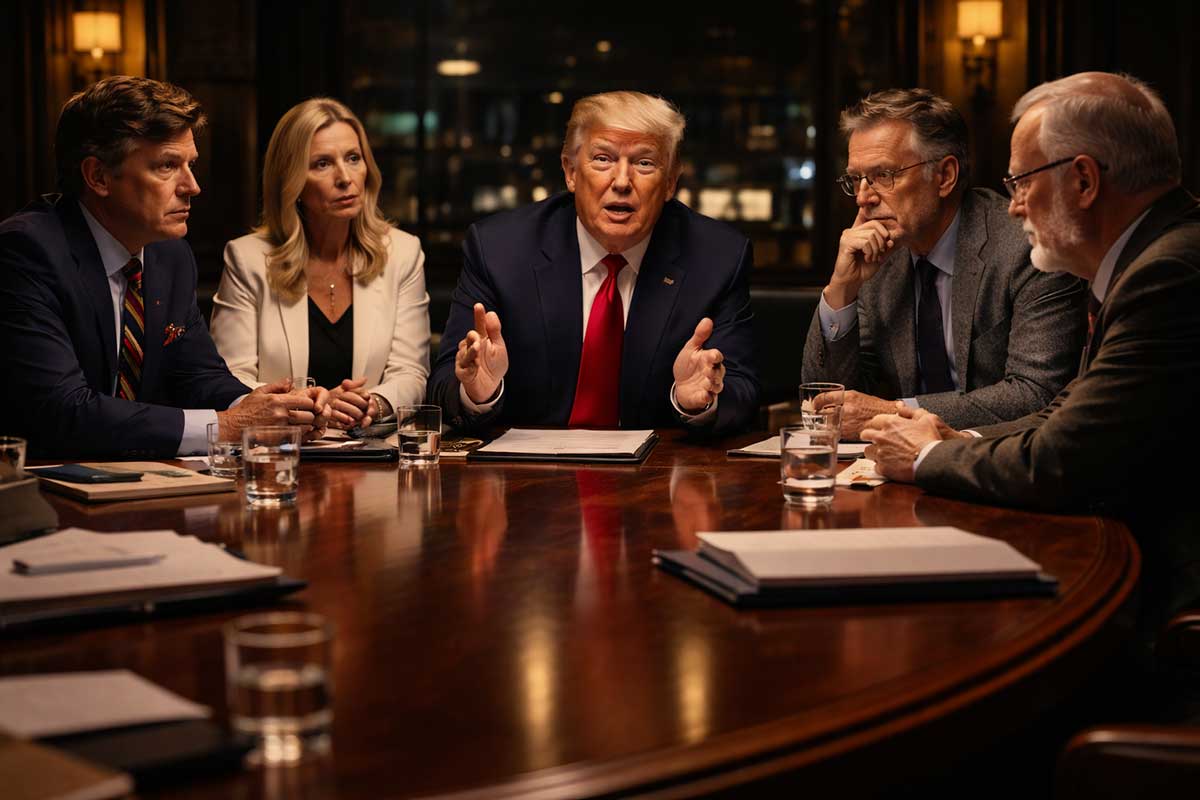
The room feels heavier now.
Topic 1 challenged Tucker’s frame. Topic 2 goes deeper into the wound beneath it.
Because Tucker is not only criticizing Trump’s words. He is also implying something about the Christians who still support Trump. In the video, after turning Trump’s oil language into “theft,” Tucker says Christians should have stopped and asked, “Can I still support this?” and says many church leaders stayed silent when they should have spoken up.
That changes the issue.
Now the question is no longer only:
Did Tucker misframe Trump?
Now the question is:
Can a Christian still support Trump’s strategy and remain morally serious before God?
That is where this discussion begins.
Participants
- Nick Sasaki
- Tucker Carlson
- Donald Trump
- Paula White
- N.T. Wright
Question 1
Can a sincere Christian support Trump’s use of strength and still believe they are serving justice and peace?
Paula White
Yes. Absolutely yes.
A sincere Christian can support President Trump’s use of strength and still believe they are standing for justice, order, protection, and peace. In fact, many do.
That is what Tucker does not seem willing to grant.
He speaks as though once he has judged the action, the Christian conscience is already settled, as though believers who still support Trump must be ignoring morality rather than seeing the situation through a different moral lens. But Christians have always wrestled with the hard question of force, responsibility, leadership, and protection in a broken world.
A Christian may believe:
- weak leadership can prolong suffering
- dictatorships can destroy whole nations
- intervention can sometimes prevent deeper evil
- strength can sometimes create the conditions for peace
That is not the same as worshiping force. It is not the same as abandoning Christ. It is the belief that peace in a fallen world is sometimes guarded by strength.
You may disagree with where that line is drawn. But you cannot say that every Christian who draws it differently has abandoned faith.
Tucker Carlson
A sincere Christian can support strength. That is not the issue.
The issue is what sort of strength, toward what end, under what moral limit, and in whose spirit.
Of course Christians can support force under some circumstances. Christians are not required to become children in the face of evil. That is not what I am saying.
What I am saying is that once a political leader begins speaking in a way that treats acquisition, domination, or raw power as openly legitimate, Christians have to get very nervous, very quickly. And when they fail to get nervous, something may already be wrong.
So yes, a Christian can support strength and still believe he is serving justice and peace. But if the strength starts sounding like appetite, if the language starts sounding like possession, if the moral line starts disappearing, then Christians cannot simply keep using “peace” as a blanket word that sanctifies everything.
That is when support becomes dangerous.
Donald Trump
I think millions of Christians support me because they do believe they are supporting justice and peace. And they are right to see it that way.
They are not fools. They are not morally asleep. They look at the world. They see chaos, weak leaders, violent regimes, failed states, repression, no freedom, no stability. And they say: somebody has to be strong enough to stop this. Somebody has to act.
That is not corruption. That is common sense.
Now, I know Tucker wants to make this into some kind of spiritual dividing line. But the Christians who support me are not saying, “We love cruelty.” They are saying, “We want peace, but we understand peace is not built by pretending evil will go away by itself.”
That matters.
A lot of Christians who support me believe strength can save lives. They believe it can stop worse wars. They believe it can open the future instead of letting people rot under terrible rulers. That is not morally corrupt. That is morally serious.
N.T. Wright
Yes, I think a sincere Christian can support a forceful strategy and still believe he is serving justice and peace.
Christian tradition has never reduced public morality to passivity. Governments do bear responsibility for order, protection, and restraint of evil. Christians have long wrestled with those realities.
So the answer is clearly yes in principle.
But the question becomes difficult at once, because Christians must never confuse the existence of a serious moral dilemma with automatic permission. It is possible to support strength sincerely and still support something gravely wrong. Sincerity is not enough.
That is why conscience must remain alert.
A Christian may support a strategy because he believes it serves peace. Fine. But he must still ask:
- does this action honor truth?
- does it preserve moral limit?
- does it treat human beings merely as means?
- does it remain accountable to justice rather than only victory?
If those questions vanish, then the support may still be sincere, but it is already in danger.
Nick Sasaki
That helps clarify something important.
This is not really a fight between Christians who care about morality and Christians who do not.
It is a fight between Christians who believe strength can still be part of moral responsibility, and Christians who believe the line has already been crossed.
That is a much more honest conflict.
Question 2
Does Tucker unfairly portray pro-Trump Christians as spiritually weaker or morally compromised?
Donald Trump
Yes. I think he does.
He may not use that exact phrase, but that is the effect. He makes it sound like once he has delivered his moral reading, any Christian who still supports Trump is choosing appetite over conscience, politics over faith, or silence over truth.
That is unfair.
The Christians who support me are not doing it because they have no morals. Many are doing it because they think they are defending life, defending order, defending religious freedom, defending peace through strength, defending the weak against worse outcomes.
So when Tucker frames it like: “good Christians should have said no by now,” he is not just attacking me. He is putting a moral cloud over millions of serious believers who simply see the world differently.
That is not discernment. That is moral intimidation.
Paula White
Yes, I believe he does, and that is one of the reasons this issue matters so much.
In the video, Tucker does not only say he disagrees. He presses the matter into the conscience of Christians and says there comes a point where they cannot support this in good faith. He says church leaders said nothing when they should have. He says Christians should have stopped.
That creates a clear moral hierarchy:
- Tucker as the Christian who sees clearly
- the others as Christians who are failing to resist
That is exactly why many believers feel judged by him.
Now, criticism is fair. Christian warning is fair. But he does not simply warn. He strongly suggests that continued support is spiritual failure.
That is not a small thing. Once you say that, you are no longer only discussing policy. You are assigning spiritual standing.
Tucker Carlson
I think that is partly true, but I would put it differently.
I am not saying every Christian who supports Trump is corrupt, fake, or faithless. I am saying Christians, like everyone else, can become accustomed to things they should resist. They can become passive where they should be morally alive. They can place political gratitude above moral limit. That happens all the time.
So yes, when I ask whether Christians can still support this, I am making a serious challenge. I am saying the conscience should be engaged. I am saying there are moments when support can no longer remain casual or automatic. That is true.
Now, if people hear that as me declaring them spiritually weak, maybe that is because the challenge touches something real. Sometimes a warning sounds insulting precisely because it lands too close to the conscience.
N.T. Wright
I think Tucker’s language risks exactly that effect, whether or not he intends every inch of it.
Once a speaker says “you cannot support this in good faith,” or uses language very close to that, he is moving beyond policy critique into spiritual judgment. The video does move in that direction more than once.
That is where great caution is needed.
There are times when Christians must indeed warn one another strongly. But such warnings must be careful not to assume too quickly that those who disagree are morally thinner, spiritually compromised, or blind in some simple way. The differences may arise from divergent judgments about statecraft, war, protection, order, and moral responsibility.
A Christian may be mistaken without being corrupt. That distinction matters tremendously.
Nick Sasaki
That feels like the nerve of this topic.
Tucker may believe he is awakening conscience.
But many pro-Trump Christians hear something else:
they hear him saying that if they still support Trump, their Christianity is already suspect.
That is why this discussion feels so personal.
Question 3
Can two Christians look at the same action and honestly see either theft or peacemaking?
N.T. Wright
Yes, certainly they can.
That is precisely why this conversation matters.
In a fallen and complex world, Christians often bring the same broad faith commitments to radically different prudential judgments. They may share Scripture, prayer, moral seriousness, and love of God, and still interpret a leader’s action very differently.
One Christian may see exploitation, pride, overreach, and coercion.
Another may see realism, burden, intervention, and painful responsibility.
This does not mean truth is relative. It means judgment in public life is often difficult, and faithful people can disagree before one of them is clearly exposed as false.
That is why charity, patience, and humility matter so much.
Paula White
Yes, and they often do.
That is what people forget. Christian unity does not require identical political interpretation. Two believers can both care about peace, justice, and the dignity of human life, and yet one will hear Trump’s words as dangerous and another will hear them as the rough speech of a leader trying to stop something worse.
That does not make one automatically holy and the other automatically compromised.
It means both are trying to interpret a very hard reality through conscience, experience, worldview, and faith.
The problem starts when one side says, “Because I see the danger this way, every sincere Christian must now agree with me or else be failing God.”
That is too much.
Tucker Carlson
Yes, two Christians can see the same action differently. Of course.
But that does not mean both judgments are equally good, equally mature, or equally moral. Disagreement exists. Fine. But real disagreement does not cancel the need for someone to say, “I think you are blessing something you should not bless.”
So yes, two Christians can look at the same action and one can see peacemaking, another theft. My point is that Christians should not flatter themselves that because they have a strategic justification, the moral danger is gone.
Disagreement is possible. So is error. Serious error.
Donald Trump
Yes, and that is why Tucker should not act like his reading ends the matter.
I have no problem with Christians debating hard things. That is normal. But when one Christian says, “I see theft,” and another says, “I see a strategy for peace, strength, and order,” the right response is not to treat the second one as already morally stained.
That is what bothers people.
Because many Christians who support me are not supporting chaos. They are supporting what they honestly think is the path to less chaos. They do not think they are betraying Christ. They think they are choosing the harder road to peace.
And that deserves to be heard fairly.
Nick Sasaki
That may be the strongest point of all.
Two Christians can share the same Bible, the same prayer, the same desire for peace, and still come away from the same event with completely different moral readings.
One sees theft.
One sees peacemaking.
That does not mean one of them must instantly be acting in bad faith.
And perhaps that is exactly where Tucker’s framing becomes too severe.
Nick Sasaki’s closing thoughts for Topic 2
What stands out to me here is that Tucker’s challenge is not only against Trump.
It is also against Christians who still support Trump’s strategy.
That is why this topic matters so much.
Because once Tucker says a Christian should have reached the point of saying no, he is doing more than warning about policy. He is drawing a spiritual line. He is suggesting that continued support may reveal something morally wrong in the believer as well.
But what we heard tonight is more complex than that.
Paula White says a Christian can sincerely support strength as part of peace.
Trump says many believers support him because they believe strength prevents worse evil.
N.T. Wright says sincere Christians can absolutely differ on these matters, though conscience must remain awake.
Tucker says disagreement is real, but Christians may still be blessing what they should resist.
So the question left on the table is not simple.
It is not:
“Can Christians disagree?”
Of course they can.
The deeper question is:
When Tucker challenges Trump, is he also judging the spiritual standing of Christians who still see Trump’s strategy as part of justice and peace?
That may be why so many believers feel not merely corrected by Tucker, but judged by him.
Topic 3: Is Trump Seeking Gain, or a Hard Path to Peace?
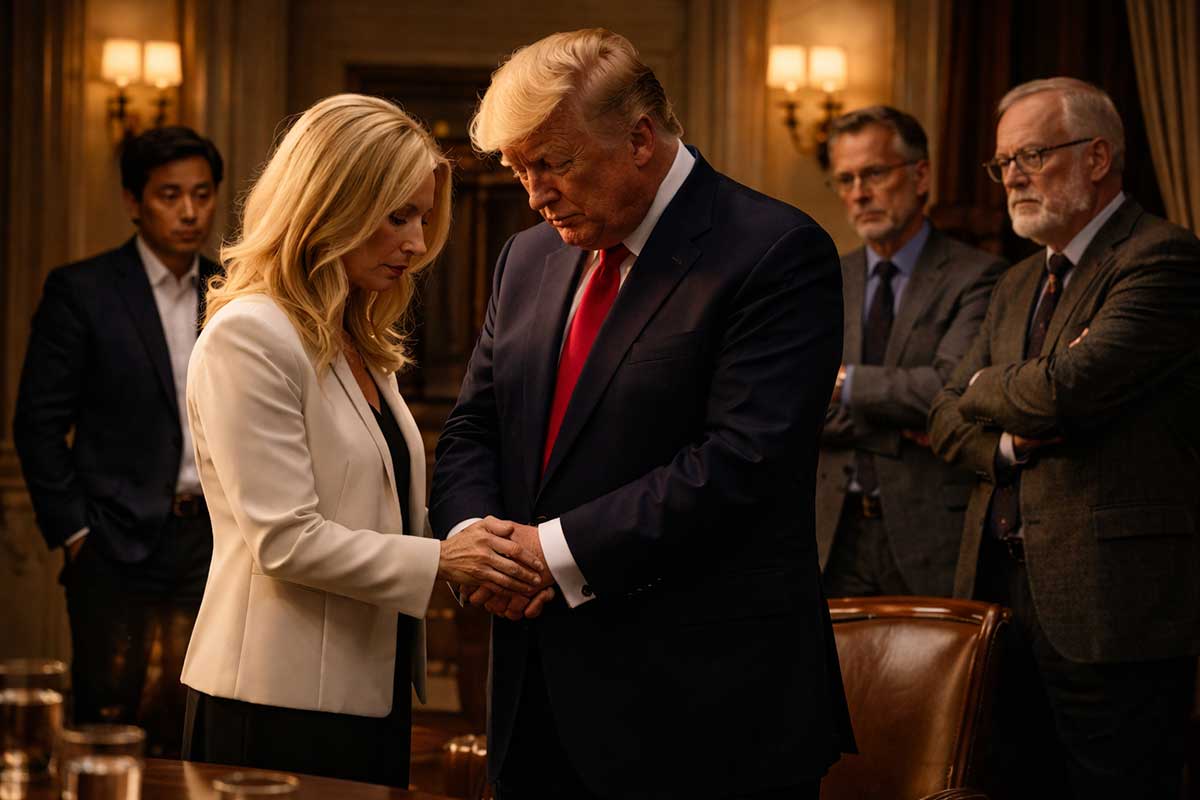
The room shifts again.
Topic 1 asked whether Tucker forced Trump into a theft narrative. Topic 2 asked whether Christians can still support Trump without surrendering moral seriousness. Now the discussion moves to the center of Trump’s own worldview.
Because beneath the argument over “oil” is a deeper question:
What does Trump think he is doing in the world?
Tucker hears appetite, possession, and force. In the video, he says Trump revealed a motive of taking something “we wanted,” and treats that as the moral center.
But Trump’s defenders hear something else. They hear a leader who thinks in terms of leverage, pressure, broken systems, failed regimes, and the use of strength to produce a larger order. They may not love every phrase. But they do not hear simple greed. They hear strategy.
So tonight’s question is:
Is Trump really seeking gain, or does he believe he is taking a hard path toward peace?
Participants
- Nick Sasaki
- Tucker Carlson
- Donald Trump
- Paula White
- N.T. Wright
Question 1
Does Trump see intervention as exploitation, or as a pressure-based path toward order, prosperity, and peace?
Donald Trump
I see it as a path toward order, prosperity, and peace. Very strongly.
Look, the world is not run by soft words. It is not run by people sitting around hoping bad actors suddenly become good. You have dictators, corrupt systems, violent regimes, failed economies, broken leadership, and people suffering under all of it. So what do you do? Do you write essays? Or do you create leverage?
I believe in leverage.
If a country is collapsing, if leadership is terrible, if resources are trapped, if people are oppressed, if instability is spreading, then strong intervention can change the structure. And once you change the structure, you can create opportunity. You can create prosperity. You can create strength. You can create a future that did not exist before.
Now, critics hear only the roughness. They hear one phrase and panic. But from my point of view, the goal is not random gain. The goal is to produce a better world than the one left behind by weak leadership and broken regimes.
That is how I see it.
Tucker Carlson
I think Trump may very well see it that way. I am not denying that he has a self-understanding. Most leaders do. Most actors in history tell themselves a story about why they are imposing force.
The question is whether the story is true enough to justify the means and the language.
Because “order, prosperity, peace” are words that can bless almost anything once you stop asking what kind of spirit is driving the action. A nation can call almost any aggressive move a path toward peace if the peace it imagines is just the world rearranged under its preferred terms.
That is my concern.
So yes, Trump may sincerely believe intervention is creating a better world. But sincerity does not remove the danger that the intervention is still driven by domination, self-interest, or appetite dressed up as civilization.
Paula White
I think President Trump truly does see intervention as part of restoring order and preventing greater evil.
That is why so many people continue to support him. They do not hear a man saying, “Let me take for the sake of taking.” They hear a man saying, “The world is unstable, dangerous, and full of failed leadership, and somebody has to be strong enough to move history in a better direction.”
That matters.
Christians who support him often believe that leaving tyranny in place, leaving people trapped, leaving regions in collapse, and allowing violence to deepen is not morally superior to forceful intervention. They may see intervention as harsh, but still more merciful than prolonged chaos.
So yes, from his own frame, and from the frame of many who support him, this is about order and peace, not exploitation.
N.T. Wright
I think one must allow that Trump and his supporters may indeed see intervention in those terms.
That is very important. If one refuses even to grant that possibility, then the moral discussion has already become too closed.
A ruler may genuinely believe that forceful action is the painful but necessary road toward a more peaceful arrangement. History is full of such reasoning. Sometimes it has been partly right. Sometimes terribly wrong. Usually it is morally mixed.
So yes, I think it is fair to say Trump likely sees intervention as a pressure-based route to order, prosperity, and peace. The Christian task is then not to sneer at that claim, but to test it: whether the peace sought is real peace, whether the means destroy what they claim to protect, and whether the vision remains accountable to justice.
Nick Sasaki
That may be the first real threshold here.
If Tucker hears only greed, he may miss Trump’s actual self-understanding. But if Trump speaks only of order and peace, he may miss the moral danger inside how power can justify itself.
So both sides may be touching something real.
Question 2
When Trump uses transactional language, is he revealing greed or describing strategy the way a businessman would?
Paula White
I believe he is describing strategy the way a businessman would.
That is one of the biggest translation problems in this whole debate. President Trump does not speak like a theologian, diplomat, or professor. He speaks like someone who built things, negotiated hard terms, read incentives, assessed assets, understood leverage, and moved toward outcomes.
That style can sound harsh. It can sound crude. It can sound too blunt for people who want polished moral language.
But blunt does not automatically mean greedy.
Sometimes it means practical. Sometimes it means he is naming the reality of power in ways other people prefer to disguise. Sometimes it means he is speaking from the world of cost, pressure, negotiation, and consequence.
I think many critics hear business language and instantly convert it into moral corruption. That is not always fair.
Donald Trump
Exactly right. I speak like a businessman because I am one. A successful one.
When I look at a situation, I see what is working, what is failing, where the leverage is, what can be opened, what can be restructured, what can be gained, and what can be lost. That is how you get things done.
Now, weak people hear that and say, “Oh, that sounds selfish.” No. It sounds like reality. It sounds like somebody who actually wants results instead of endless failure dressed up in beautiful language.
If a country is sitting on resources and those resources are locked under terrible leadership, corruption, and collapse, then yes, I am going to think in terms of opening it up, making it productive, changing the structure. That is not greed. That is action.
Tucker hears the language of business and turns it into the language of sin. That is his choice. But it is not the only reading, and it is not the right reading.
Tucker Carlson
I understand the businessman defense. I really do.
But one of the dangers of the business frame is that it can turn whole nations into balance sheets. It can make resources look more visible than souls. It can make “opening things up” sound morally clean when what is actually happening is force imposed by the stronger party.
That is why I resist the idea that business language is somehow neutral.
It may not equal greed every time. Fine. But it does reveal a mode of perception. It reveals how the world is being seen: in terms of assets, leverage, productivity, advantage, and gain. Once that mode becomes dominant in statecraft, you can wind up justifying almost anything if the outcome looks favorable enough.
So I would say business language is not proof of greed. But neither is it innocent. It carries its own moral danger.
N.T. Wright
That seems right to me.
Business language may indeed reflect strategy rather than greed. A leader may speak transactionally because he thinks transactionally. That is a matter of temperament, training, and worldview.
But the Christian concern would be this: does the transactional lens become too total? Does it begin flattening human dignity into utility, peace into rearranged advantage, and justice into successful management?
That is where moral theology must still speak.
So no, I would not say transactional language automatically proves greed. But I would also say Christians should not let strategy language silence ethical concern. One must ask whether the business frame is serving life, or slowly mastering it.
Nick Sasaki
That is a useful distinction.
Maybe the issue is not:
“business language equals greed.”
Maybe the issue is:
“business language can describe real strategy, but it can also become morally dangerous if it starts seeing everything only as leverage.”
That feels more precise.
Question 3
Can harsh intervention still be understood by its defenders as a long-range move toward world peace?
N.T. Wright
Yes, certainly it can.
That is one of the hardest truths in public moral life. People often pursue peace through means that look very unlike peace at the moment they are used. The argument is that short-term force may prevent longer-term breakdown, wider suffering, or deeper forms of violence.
That argument cannot simply be laughed away. It has to be tested carefully.
But once one grants that, another truth follows immediately: harsh intervention can also deceive its defenders. It can promise peace while sowing humiliation, resentment, and destruction. That is why Christians must be especially careful with claims of peace. Peace is not merely what we call the world after our side has prevailed.
Still, yes — defenders can absolutely understand severe intervention as part of a long-range peace strategy.
Donald Trump
Of course they can. In many cases, that is exactly what it is.
Sometimes the road to peace is not soft. Sometimes it is decisive. Sometimes it is uncomfortable. Sometimes it requires pressure because the alternative is endless weakness, endless death, endless instability.
People love talking about peace as though it falls from the sky. It does not. Peace often comes because somebody strong enough finally changes the conditions.
That is why many people supported me. They knew I was not going to keep playing the same game of weakness and endless excuses. They believed I would act. They believed I understood outcomes. And they believed strength could actually stop worse conflict.
That is not stealing. That is not chaos. That is leadership with a long-range view.
Tucker Carlson
And that is exactly the kind of statement that worries me.
Because once harsh intervention becomes permanently interpretable as future peace, then the standard becomes very slippery. Every escalation can call itself a bridge to peace. Every seizure can call itself stabilization. Every humiliation can call itself necessary realism.
I am not saying there are no hard choices in the world. Of course there are. I am saying the rhetoric of future peace is one of the easiest ways to neutralize moral resistance in the present.
That is why I push so hard. Because people are too ready to baptize severity when it is wrapped in the language of order.
Paula White
But people can also become too ready to condemn severity simply because it sounds harsh.
That is the other danger.
There are moments when failing to act is not more moral. It is just more comfortable. And millions of believers know that. They know the world contains regimes and rulers who crush life, suppress freedom, deepen instability, and trap nations in darkness.
So yes, they may hear strong intervention not as cruelty but as the painful opening toward something better. Not because they enjoy force, but because they think refusing force can preserve evil even longer.
That is why Tucker’s judgment feels too narrow. He leaves very little room for the possibility that hard action may still be aimed at peace.
Nick Sasaki
That may be the dividing line in this whole topic.
Tucker hears severe action justified by future peace and worries it becomes a moral escape hatch.
Trump and Paula hear severe action criticized by present discomfort and worry people are protecting evil through softness.
Those are two very different instincts.
And maybe that is why the disagreement never stays small.
Nick Sasaki’s closing thoughts for Topic 3
What stands out to me here is that this debate is not really about one word anymore.
It is about what kind of world Trump thinks he is navigating.
Tucker hears appetite hidden inside strategy.
Trump hears strategy misheard as appetite.
Paula White hears strength used to confront broken systems and create the possibility of peace.
N.T. Wright reminds us that both peace language and strategy language need moral testing.
So the deepest question may not be:
“Did Trump sound harsh?”
The deeper question may be:
Does Trump believe he is using strength to build peace, and if so, is Tucker refusing to take that worldview seriously enough?
That matters a great deal.
Because if Trump really sees himself as moving through the world by leverage, pressure, restructuring, and long-range stabilization, then Tucker’s “theft” frame may be far too small for the kind of strategy Trump believes he is carrying out.
That does not prove Trump is right.
But it does mean the moral picture is bigger than one word.
Topic 4: Did Tucker Ignore the Larger World Strategy Behind Trump’s Words?
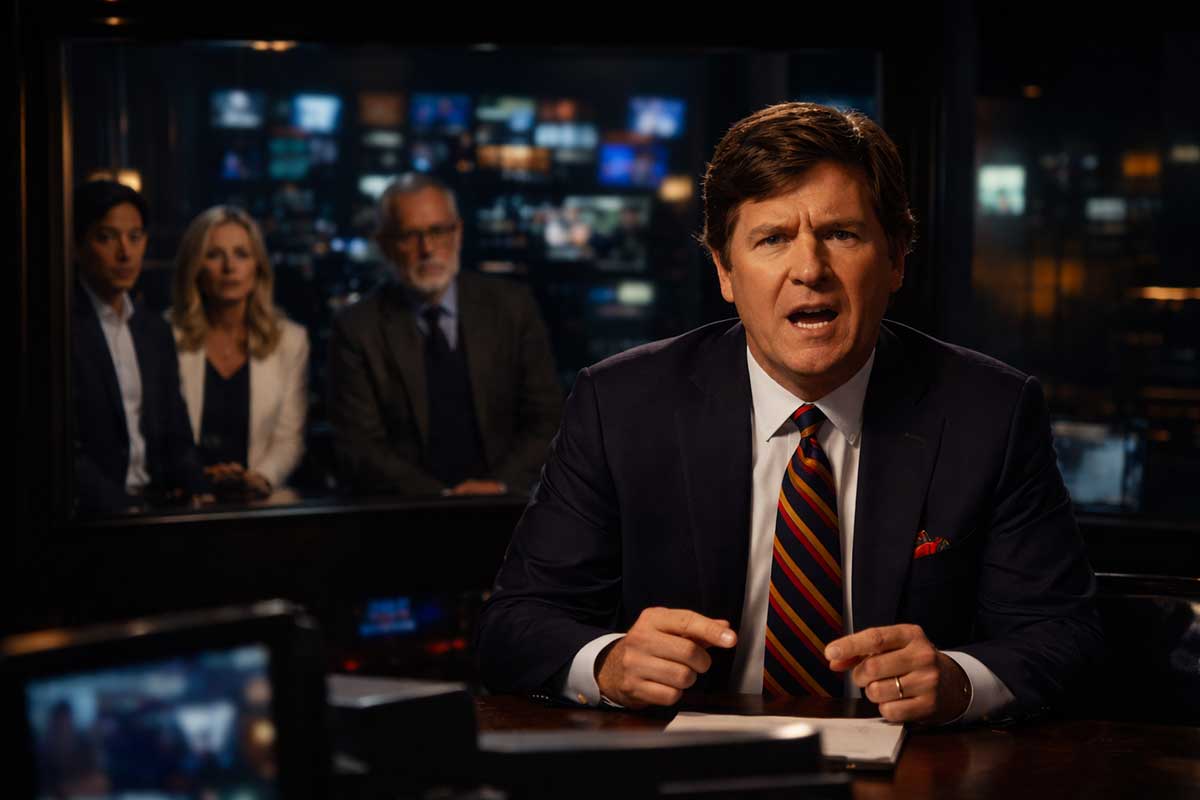
The conversation now moves from motive to scale.
Topic 1 asked whether Tucker deliberately misframed Trump as a thief. Topic 2 asked whether Christians can still support Trump’s strategy without surrendering moral seriousness. Topic 3 asked whether Trump himself sees harsh intervention as a path toward peace.
Now we ask the next question:
Even if Tucker’s moral concern was real, did he make his case too small?
Because in the video, Tucker takes Trump’s oil language and treats it as the revealing center of the whole matter. He says Trump “revealed that the motive was taking something that we wanted,” then turns that into theft and a moral crisis for Christians.
But Trump’s defenders would say that this leaves out the much larger frame:
- failed regimes
- regional disorder
- oppressive governments
- long-range deterrence
- restoring stability
- opening economic life
- preventing worse violence later
So this topic asks:
Did Tucker focus so tightly on one ugly-sounding phrase that he hid the larger strategy Trump believes he is carrying out?
Participants
- Nick Sasaki
- Tucker Carlson
- Donald Trump
- Paula White
- N.T. Wright
Question 1
Did Tucker reduce a larger world strategy to one emotional phrase: “stealing oil”?
Donald Trump
Yes. Totally.
That is exactly what he did, and it is why the whole argument feels dishonest to a lot of people.
The world is complicated. Very complicated. You have unstable regions, corrupt rulers, failing countries, hostile actors, no freedom, terrible leadership, enormous suffering, and strategic danger spreading way beyond one border. So when a leader acts, he is not acting inside one sentence. He is acting inside a whole world.
Tucker took one phrase — one phrase — and tried to make it the entire moral explanation.
That is ridiculous.
A real leader looks at:
- regional stability
- American strength
- deterrence
- the future of the people living there
- the future of our allies
- energy
- trade
- long-term peace
That is strategy.
Tucker hears one rough phrase and says, “That’s the whole story.” No. That is the story he wants to tell.
Tucker Carlson
No. I think I identified the phrase that told the truth about the strategy.
That is different.
People keep saying I reduced the strategy. I would say I exposed the center. A strategy can be very large. It can still be driven by something morally ugly. In fact, the larger the strategy, the easier it becomes to hide that ugliness under layers of sophistication.
So yes, there may be discussions about regional order, stabilization, deterrence, energy, and all the rest. Fine. But if the president himself speaks in terms that reveal a possessive and acquisitive logic, I am not obligated to ignore that because the map is complicated.
Sometimes one phrase does reveal the spirit of the whole thing.
That is my point.
Paula White
But that is exactly where the narrowing happens.
You hear one phrase and assume it is the deepest truth. Why? Because it fits the darker reading you already prefer.
That does not mean the phrase is meaningless. It means it is not automatically the master key.
President Trump’s supporters do not deny that he speaks bluntly. They deny that bluntness should be treated as the whole moral map. They believe he is operating within a broad strategic vision that includes national interest, regional stability, the defeat of destructive regimes, and the possibility of rebuilding conditions for life and order.
So yes, I do think Tucker reduces too much into one emotionally loaded phrase.
N.T. Wright
I think that is a fair criticism.
One phrase may indeed be revealing. Yet it may also be overburdened by the interpreter. The interpreter may make it carry more weight than it safely can.
A Christian moral voice should want proportion. If there is a wider strategy, then that strategy must be examined on its own terms as well, not simply forced into a single moral shorthand from the start.
That does not mean the phrase ceases to matter. It means the phrase should become an entry point into inquiry, not the final verdict before inquiry begins.
Nick Sasaki
That feels like the tension in one sentence:
Tucker says the phrase revealed the center.
Trump’s defenders say Tucker used the phrase to replace the center.
That is a very big difference.
Question 2
Can a commentator be morally passionate and still miss the geopolitical logic a leader believes he is following?
Tucker Carlson
Of course that is possible in general. Commentators miss things all the time.
But in this case, I do not think I missed the geopolitical logic. I think I rejected it as morally insufficient. There is a difference between ignorance and refusal.
I know how geopolitical logic works. I know how people talk about deterrence, force, strategic depth, national interest, and stability. I know how power justifies itself.
My concern is that once people hear “geopolitical logic,” they start acting like moral questions have become simplistic or childish. No. Sometimes the most sophisticated arguments are the ones most in need of moral resistance.
So yes, a commentator can be passionate and miss strategy. But I do not think that is what happened here.
Donald Trump
I think that is exactly what happened here.
Because if you hear the words “regional stability,” “deterrence,” “failed regime,” “opening prosperity,” “protecting allies,” “restoring order,” and you just wave all that away because you prefer a cleaner moral indictment, then you are missing strategy.
Not because you are stupid. Because you want the moral story more than the strategic one.
That is what a lot of commentators do. They want a sentence that sounds final. They want something people can repeat. “Stealing oil.” That is catchy. That is emotional. That is morally charged.
But the world is not built on catchy lines. It is built on consequences.
If a commentator ignores the full strategic picture, he can make himself feel morally pure while making the audience strategically blind.
Paula White
Yes, absolutely a commentator can be morally passionate and still miss the geopolitical logic.
Passion is not the same as completeness.
In fact, strong moral passion can sometimes narrow a person’s field of vision. It can make one part of the picture burn so brightly that the rest of the landscape fades away.
That is what many pro-Trump Christians hear in Tucker’s argument. They hear real intensity, but not enough space for the larger logic that Trump and his supporters believe they are seeing.
That does not mean commentators should become cold or cynical. It means they should be careful not to let moral intensity flatten strategic complexity.
N.T. Wright
Yes, certainly.
The more passionately one feels the moral danger in one dimension, the easier it becomes to underread other dimensions of the case. That is simply a human problem.
One may be morally perceptive and strategically impatient at the same time. One may see a real danger and yet describe the whole reality too narrowly. This is why humility matters.
It is possible that Tucker sees something morally serious and still does not weigh carefully enough the larger strategic logic that Trump believes he is following. That possibility should at least remain open.
Nick Sasaki
That may be one of the most useful points in this topic.
A person can be morally intense and still incomplete.
A person can be strategically aware and still morally dulled.
Neither side gets automatic victory.
Question 3
When critics focus only on one ugly-sounding phrase, do they risk hiding the larger strategic picture from the audience?
Paula White
Yes, they absolutely do.
That is one of the main dangers of modern commentary. The audience hears the sharp phrase, the shocking label, the strongest accusation, and then stops there. The larger strategic picture never gets a fair hearing.
That is not just a media problem. It becomes a conscience problem too.
Because once the audience accepts the ugly phrase as the whole truth, they may start judging leaders, nations, and fellow Christians without ever asking what larger outcomes were being pursued, what evils were being confronted, or what alternatives were actually available.
That is why language matters so much.
Donald Trump
Yes. And it happens all the time.
The media loves the line that sounds ugly. They do not love the long-range strategy, because strategy takes work. It takes thinking. It takes comparisons. It takes admitting that leaders deal with difficult choices in a dangerous world.
“Stealing oil” is easy.
“Using strength to reorder a collapsing situation and create peace, security, and prosperity” is harder.
Guess which one gets repeated?
That is why so many people are misled. Not because the ugly phrase is always false, but because it becomes the whole story and wipes out the rest.
Tucker Carlson
Maybe. But the reverse is just as dangerous.
When audiences hear “strategic picture,” they can start treating every ugly phrase as trivial. They can start excusing any language, any action, any excess, because it supposedly belongs to some vast necessary plan.
So yes, critics can hide the larger strategic picture by focusing too much on one phrase. But leaders and their defenders can also hide moral reality by constantly retreating into scale and complexity.
That is why I keep pressing on the phrase. Sometimes the phrase is the part that has not yet been laundered.
N.T. Wright
I think both dangers are real.
A critic can magnify one phrase until it swallows the larger reality. A ruler and his defenders can enlarge the strategic frame until it swallows the moral particular.
The Christian task is to resist both distortions.
One must not let the ugly phrase do all the work.
One must not let the strategic frame excuse all the work.
Moral and political judgment both require proportion.
Nick Sasaki
That may be the right balance for this topic.
Tucker fears that strategy language launders appetite.
Trump and Paula fear that emotionally charged phrases erase strategy.
N.T. Wright warns that both distortions are possible.
And that leaves the audience with a very serious responsibility:
to keep listening past the phrase, but also past the excuse.
Nick Sasaki’s closing thoughts for Topic 4
What stands out to me here is how easily scale changes moral perception.
Take one phrase out of a vast geopolitical landscape, and the whole thing can look like greed.
Expand the landscape wide enough, and almost any troubling phrase can start to feel small or excusable.
That is the danger.
Tucker may be right that ugly language should not be washed clean by strategic sophistication.
Trump’s defenders may be right that strategy should not be erased by one morally explosive phrase.
So the question is not just:
“Did Tucker hear something ugly?”
He did.
The deeper question is:
Did he focus so tightly on the ugly part that he hid from the audience the larger strategic world Trump believes he is trying to shape?
That is what makes this topic so important.
Because if the audience only hears the phrase, they may become morally charged but strategically blind.
If they only hear the strategy, they may become strategically impressed but morally numb.
A serious conversation has to resist both.
Topic 5: How Should Christians Judge Leaders When Strategy Sounds Harsh?
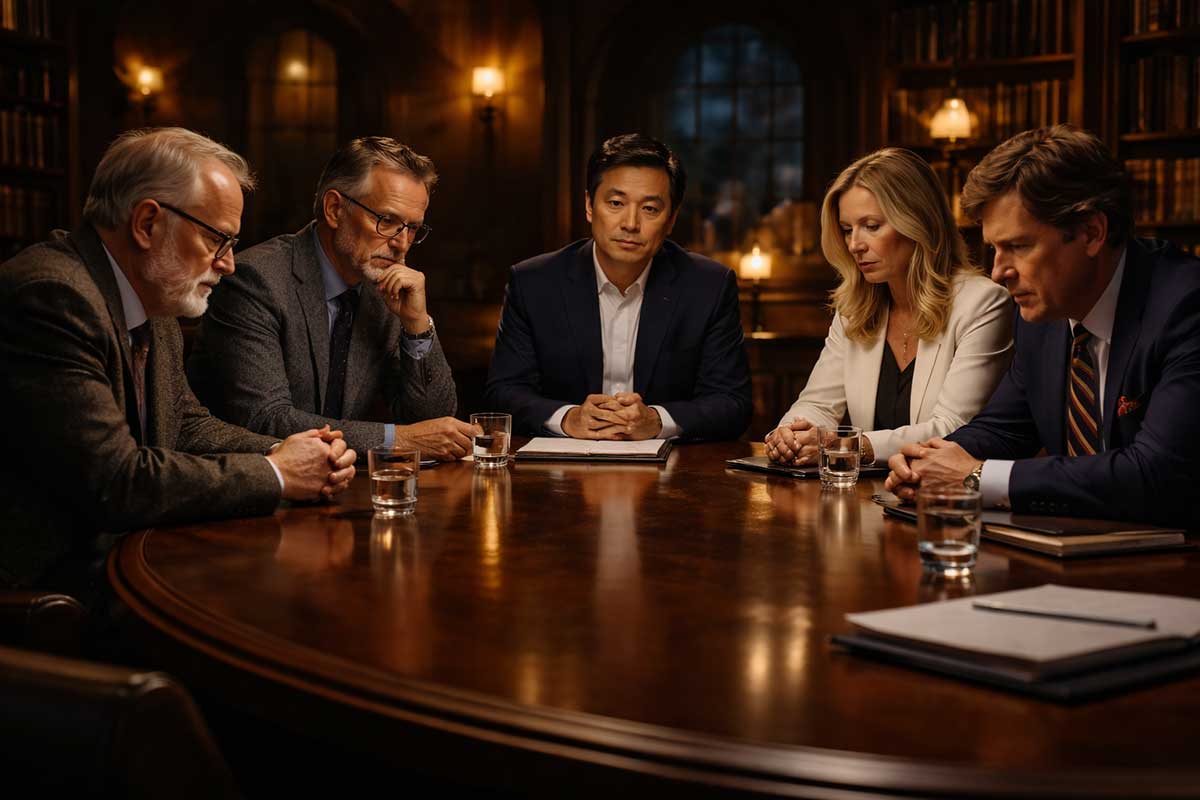
The room grows quieter.
Earlier topics asked whether Tucker deliberately misframed Trump as a thief, whether Christians can still support Trump’s strategy in good faith, whether Trump sees himself as using strength for peace, and whether Tucker ignored the larger world strategy behind Trump’s words.
Now the conversation reaches the deepest question.
Because in the end, most believers are not presidents, pastors near power, or famous commentators. They are ordinary Christians trying to stay truthful in a world where strong language, harsh strategy, moral accusation, and political loyalty all collide at once.
And that is where the conscience gets tested.
Tucker, in the video, does not just criticize Trump. He tells Christians there was a point where they should have stopped and asked whether they could still support him, and he presses church leaders for failing to speak.
So the final question is not only whether Tucker is right or wrong.
It is this:
How should Christians judge leaders when the strategy sounds harsh, the rhetoric sounds rough, and the moral meaning is being fiercely contested?
Participants
- Nick Sasaki
- Tucker Carlson
- Donald Trump
- Paula White
- N.T. Wright
Question 1
How should Christians judge a leader whose words sound rough, but whose supporters believe he is pursuing peace?
N.T. Wright
Christians should judge such a leader neither naively nor hastily.
The roughness of language matters. One should not pretend otherwise. Language forms moral atmosphere. It shapes the imagination of a people. So if a leader speaks in ways that sound possessive, triumphal, or severe, Christians are right to pause and take notice.
But supporters may also be correct that the leader sees himself as pursuing peace, order, or restraint of greater evil. That too must be taken seriously.
So the Christian responsibility is to hold both things together:
- the words matter
- the larger strategy matters
This is slow work. It requires patience, prayer, counsel, and moral steadiness. Christians must resist the temptation to let either rhetorical disgust or political loyalty do all the thinking for them.
Paula White
I believe Christians should judge with prayer, context, and humility.
They should not hear one rough sentence and act as though they now understand everything. They should ask:
- What is the leader actually trying to do?
- What larger danger is he trying to stop?
- What kind of world is he trying to prevent?
- What kind of peace does he think he is protecting?
At the same time, they should not excuse every troubling word automatically. Roughness should not become untouchable.
But I do think many believers are unfairly pushed into a false choice:
either condemn the leader immediately, or prove you have no conscience.
That is not a fair Christian framework.
Tucker Carlson
Christians should judge by refusing to let outcomes become the only standard.
That is the first thing.
People keep saying “he’s pursuing peace,” and perhaps he believes that. Fine. But Christians have to ask what sort of means are being normalized in that pursuit. Once the language and the method begin to break moral boundaries, it is not enough to say, “Well, the goal is peace.”
Lots of people say the goal is peace. That phrase is cheap unless it is disciplined by moral restraint.
So I would say Christians should judge leaders by words, methods, patterns, consequences, and the spirit animating the whole thing. If a strategy sounds harsh, maybe it is necessary. Or maybe it is appetite wearing the costume of necessity. Christians have to stay awake to that distinction.
Donald Trump
I think Christians should judge by results, by seriousness, and by whether a leader is willing to do the hard things other people are too weak to do.
The world is not soft. It is not peaceful by default. If you want peace, sometimes you have to act in ways that sound tough. If you do not, you get more chaos, more killing, more collapse, more suffering.
So when Christians judge a leader, they should ask:
- Is he trying to protect people?
- Is he trying to stop worse violence?
- Is he trying to bring order where there is disorder?
- Is he trying to make life possible again?
That matters.
A lot of people want to judge leaders by tone alone. That is easy. I think tone matters some. But what matters much more is whether the leader is actually confronting evil and building something better.
Nick Sasaki
That may be the first big lesson of this final topic.
A Christian cannot judge by tone alone.
But a Christian also cannot ignore tone completely.
So the judgment has to be wider and deeper than either side wants to admit.
Question 2
What is the difference between moral discernment and adopting a commentator’s hostile frame too quickly?
Tucker Carlson
Moral discernment begins with conscience. Hostile framing begins with agenda.
Now, I know people would say my own conscience is driving a hostile frame. Fine. But the distinction still matters.
If a commentator is trying to awaken a moral response to words and actions that should trouble the soul, that can be legitimate. The problem comes when people outsource their thinking and simply repeat the frame without wrestling with the substance.
I do think many people today let commentators do their conscience work for them. That is dangerous. It is dangerous when the commentators are on their side, and dangerous when they are not.
So the difference is this:
discernment examines, weighs, tests, and remains morally serious.
mere frame adoption grabs the label and stops thinking.
Paula White
That is exactly right, and it happens all the time.
A commentator says one strong phrase, and suddenly the audience feels as though the case is over. That is not discernment. That is emotional alignment.
Moral discernment asks:
- what happened?
- what was said?
- what else was going on?
- what was the larger strategy?
- what are the alternate interpretations?
- what does Scripture require of me here?
A hostile frame skips those questions. It gives you the conclusion first, and then teaches you how to feel righteous inside it.
That is why believers have to be very careful. If their conscience is being built mainly by media voices, they may not be discerning at all. They may simply be echoing whoever sounds most morally certain.
N.T. Wright
I would say moral discernment retains proportion, humility, and openness to correction.
A hostile frame, by contrast, often closes the case before the evidence has been weighed properly. It narrows the moral imagination. It presents one reading as though it were the only one possible for a serious believer.
This is especially dangerous in politically charged matters, where believers are already under emotional pressure.
A Christian should ask:
Has this commentator helped me see more clearly?
Or has he simply made one reading feel morally mandatory before I have done the work of discernment?
That question is very important.
Donald Trump
A lot of people adopt hostile frames because they like how clean they feel.
It is easier to say “thief” than to think through world strategy. Easier to say “evil” than to ask what the alternatives were. Easier to say “crossed the line” than to deal with a dangerous world where every real decision has costs.
So the difference is simple:
real discernment is strong enough to handle complexity.
frame adoption is lazy and emotional.
That is what bothers me about what Tucker did. He gave people a very satisfying label. And once they took it, they felt morally superior without doing the harder work of understanding the full situation.
Nick Sasaki
That feels very important.
Discernment may feel slower, less dramatic, and less emotionally satisfying.
But that may be exactly why it is harder to fake.
Question 3
How can believers stay faithful to truth without blindly following either Trump or Tucker?
Paula White
They stay faithful by keeping Christ above both.
That sounds simple, but it is everything.
If Christ is above both the politician and the commentator, then neither one gets to own the conscience. The believer can listen seriously, weigh seriously, pray seriously, and still refuse to let either voice become the final authority.
That means:
- do not excuse everything because you admire the leader
- do not condemn everything because the commentator sounds burdened
- do not let emotion replace prayer
- do not let tribe replace truth
Christians must remain free enough inside to be corrected from either side.
Donald Trump
I think believers should listen, watch, and think for themselves.
Do not hand your conscience to me. Do not hand it to Tucker. Look at the world. Look at the results. Look at the danger. Look at what weak leadership does. Look at what strong leadership can stop.
Then make a serious judgment.
I never ask people to pretend I speak like a pastor. I do not. I speak like someone trying to deal with real things. So judge me fairly, not sentimentally.
And do not let somebody on television tell you that one phrase explains everything. It usually does not.
Tucker Carlson
I agree with some of that.
Believers should not blindly follow me, either. They should listen and think. They should test what I say. They should test what Trump says. They should refuse political hypnosis from either direction.
But staying faithful to truth also means this: do not use complexity as a refuge from conviction. There are moments when people hide inside nuance because they do not want to face what is in front of them.
So yes, do not blindly follow either man. But do not make caution into cowardice. If something is deeply wrong, then faithfulness may require saying so plainly.
N.T. Wright
Christians remain faithful by learning to live under a higher judgment than either political charisma or media force.
That means Scripture, prayer, wise community, memory, and humility must all matter more than momentum.
It is entirely possible for believers to resist two temptations at once:
- the temptation to baptize everything their preferred leader does
- the temptation to inherit a commentator’s outrage as though it were their own conscience
The Christian must remain free before God. That freedom is not detachment. It is moral accountability rooted beyond the immediate battle.
Nick Sasaki
That may be the final lesson.
Believers do not stay faithful by becoming neutral machines with no convictions.
They stay faithful by remaining anchored somewhere deeper than both the politician and the interpreter.
That is the only way conscience stays alive.
Nick Sasaki’s closing thoughts for Topic 5
After all five topics, what stays with me most is not just the disagreement over Trump or Tucker.
It is the fragility of conscience when powerful frames, rough language, and high-stakes strategy all collide.
Tucker fears Christians are being numbed into blessing what they should resist.
Trump and Paula White fear Christians are being pressured into accepting a hostile frame that ignores the larger strategic vision.
N.T. Wright keeps reminding us that serious believers can disagree and still owe one another charity, proportion, and humility.
So perhaps the deepest lesson is this:
A Christian should not judge too quickly just because a commentator sounds morally certain.
A Christian should not excuse too quickly just because a leader says he is pursuing peace.
A Christian should ask harder questions than either side may prefer.
What kind of peace is being sought?
What kind of means are being used?
What kind of language is shaping the conscience?
Who is framing the story?
What is being left out?
That is not easy work.
But maybe that is exactly why it matters.
Because once believers stop doing that work, they become easier to claim:
by political loyalty,
by moral outrage,
by fear,
by rhetoric,
by tribe.
And maybe the real spiritual danger is not only being wrong about Trump or wrong about Tucker.
Maybe the deeper danger is losing the freedom to judge either one truthfully.
That freedom is precious.
And for a Christian, it may be one of the last places where honesty before God still begins.
Final Thoughts by Nick Sasaki
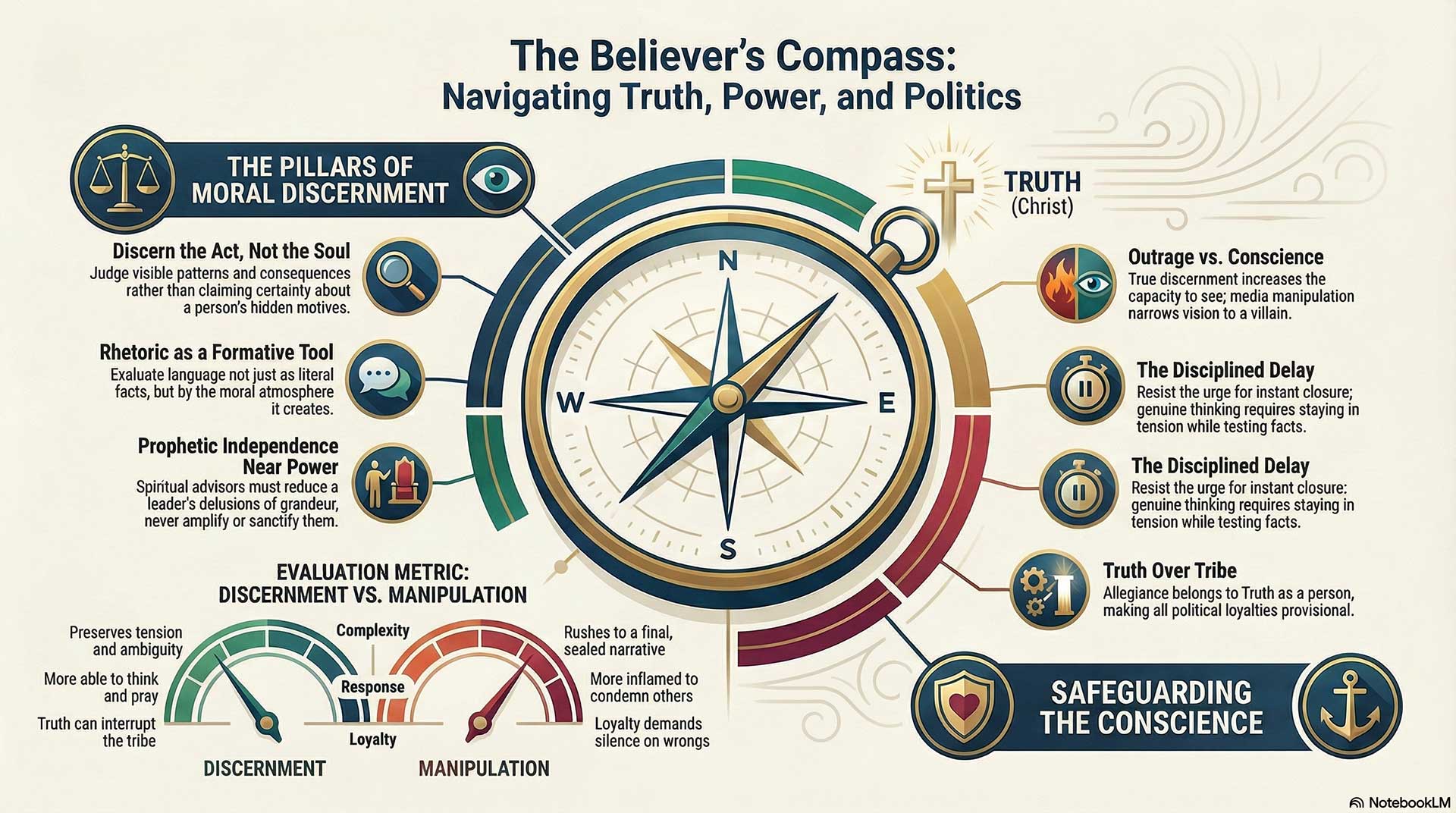
After all five topics, I do not think the deepest issue is whether one phrase sounded ugly.
It is whether one phrase should have been allowed to carry the whole weight of the case.
Tucker heard Trump’s language and called it theft. From there, he built a moral argument that reached past Trump and into the conscience of Christians who still support him. In the video, that is exactly what gives the whole discussion its force.
But what this conversation has shown is that the issue is far more contested than Tucker’s frame allows.
Trump and Paula White insist that what Tucker calls theft, they see as strength, leverage, intervention, and a hard path toward order and peace.
N.T. Wright reminds us that rough language should trouble the conscience, but should not automatically close the whole moral case.
And Tucker himself keeps pressing the warning that strategy can become an excuse structure for appetite, domination, and moral drift.
So what are we left with?
We are left with a hard truth:
A single moral label can feel like clarity.
But it can also become a weapon.
Once the label is strong enough, many people stop asking whether the frame itself has already made the verdict for them.
That is why this matters so much for Christians.
Because the real danger is not only that believers might excuse too much out of loyalty to Trump.
The real danger is that believers might also inherit too much from Tucker’s interpretation without doing the harder work of discernment for themselves.
And that is a serious spiritual danger too.
Christians should be able to hear rough language and remain morally awake.
They should also be able to hear a strong commentator and remain morally free.
They should not be forced into blind defense.
They should not be manipulated into instant condemnation.
They should be able to ask:
Did this leader cross a real line?
Did this commentator force the meaning too quickly?
What larger strategy is being claimed?
What moral costs are being ignored?
What truths are being seen, and what truths are being hidden?
That kind of judgment is slower. It is harder. It is less emotionally satisfying.
But it may be the only kind that remains honest before God.
So in the end, I do not think this conversation is only about Trump or Tucker.
It is about whether Christians still know how to judge without surrendering their conscience to either political strength or moral theater.
That may be the real test now.
Not whether we can repeat the strongest line.
Not whether we can defend our preferred side.
But whether we can remain truthful when both strategy and outrage are trying to claim our soul.
That is not easy.
But without that freedom, faith becomes tribe, conscience becomes echo, and judgment becomes somebody else’s voice speaking inside us.
And that is exactly what Christians must resist.
Short Bios:
Nick Sasaki — Founder of ImaginaryTalks.com and moderator of thought-provoking imaginary conversations that bring together public thinkers, spiritual voices, and cultural figures to explore big moral, political, and human questions. He serves here as the calm center of the discussion, pressing for fairness, clarity, and honest discernment.
Tucker Carlson — American political commentator and interviewer, now leading the Tucker Carlson Network, where he produces long-form interviews, documentaries, and commentary positioned as an alternative to legacy media. In this conversation, he represents moral alarm, media force, and suspicion toward political and spiritual corruption.
Paula White-Cain — Pastor, author, and president of Paula White Ministries, also identified by her ministry as pastor at StoryLife Church and overseer of City of Destiny near Orlando, Florida. She is widely known for public ministry, media outreach, and her role as a spiritual adviser in national political circles.
Jordan Peterson — Canadian psychologist, author, online educator, and Professor Emeritus at the University of Toronto, known for his writing and lectures on psychology, belief, responsibility, meaning, and culture. In this discussion, he brings psychological depth, symbolic analysis, and concern about projection, pride, and ideological possession.
N.T. Wright — English New Testament scholar, Anglican bishop, and bestselling author, currently Research Professor Emeritus of New Testament and Early Christianity at the University of St Andrews and Senior Research Fellow at Wycliffe Hall, Oxford. He brings biblical depth, theological balance, and a strong focus on Christian truth, humility, and moral restraint.
Leave a Reply