

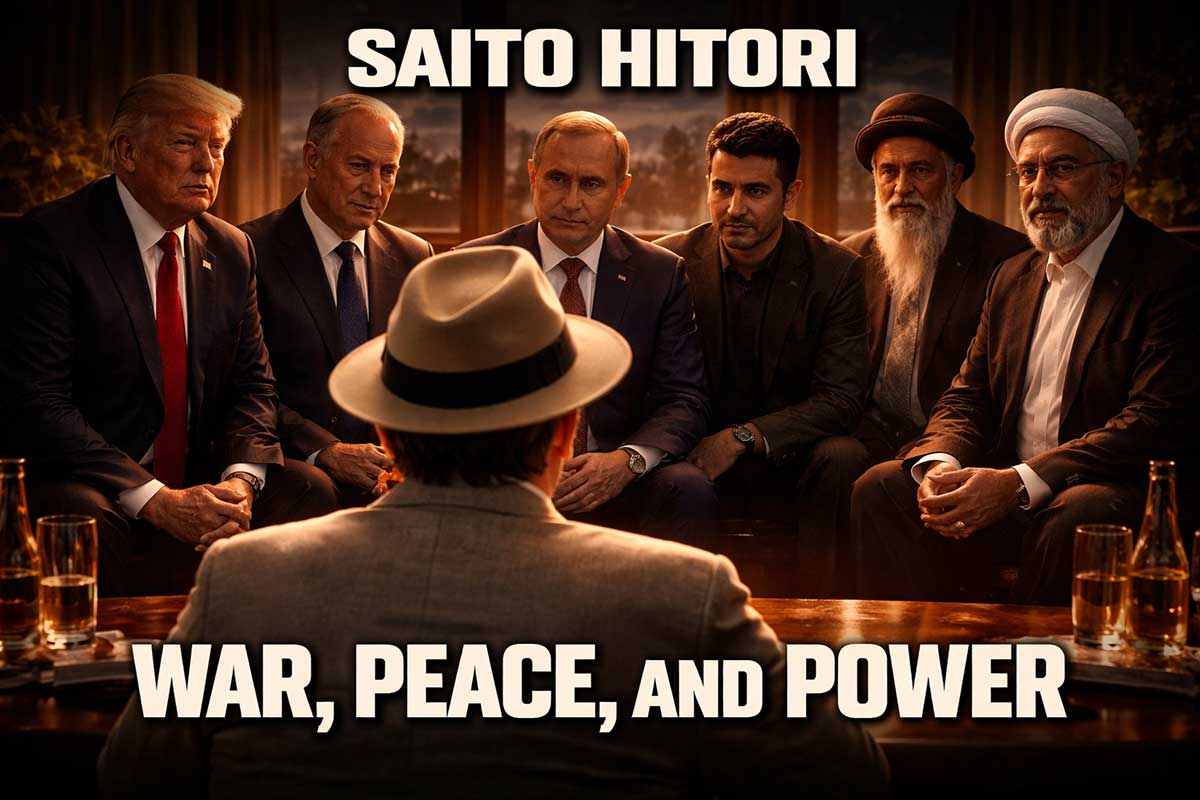
What if Saito Hitori looked world leaders in the eye and asked, “Is this war really necessary?”
Introduction by Nick Sasaki
This is not a normal political discussion.
This is not about scoring points, defending a side, or deciding who is right in the usual way.
It is not about who sounds tougher, who has the stronger argument, or who can justify force more convincingly.
What I wanted to do here is something deeper.
War looks like it is driven by nations, armies, borders, strategy, and history.
But under all of that, war is still driven by human beings.
And human beings are never made of policy alone.
They are made of fear.
Pride.
Pain.
Memory.
Humiliation.
Anger.
Responsibility.
Loneliness.
And sometimes the need to believe that all the suffering means something.
When those emotions live inside ordinary people, they shape families and personal lives.
When they live inside powerful leaders, they shape history.
That is why this conversation matters.
In this imaginary talk, I did not want to simply condemn these leaders.
I did not want to excuse them either.
I wanted to ask a harder question:
What are you really trying to protect?
And what kind of future are you really building?
At the center of this conversation is Saito Hitori.
He is not a military strategist.
He is not a diplomat.
He is not a foreign policy expert.
But he brings something rare into the room.
He looks at power and asks what it is doing to the human spirit.
Do your words make people lighter or heavier?
Do your decisions leave children safer or more afraid?
Does your leadership protect life, or slowly harden it?
Those questions may sound simple.
They are not simple at all.
They go straight past ideology and into the heart.
And maybe that is what makes this conversation unusual.
The men in this room are used to hard language.
National security.
Deterrence.
Sovereignty.
Retaliation.
Historical necessity.
Saito Hitori walks in and asks something more difficult:
Are you protecting life,
or are you protecting your fear from being exposed?
That is a dangerous question.
But it is also a human one.
Right now the world feels heavy.
Conflict is spreading.
Trust is thin.
People are exhausted.
Whole nations are living inside tension.
So before we ask who wins,
before we ask who is justified,
before we ask who looks strong,
I think we have to ask something more basic:
What is all this power for, if human beings cannot truly live?
That is the spirit of this imaginary talk.
If by the end of it, even one person begins to wonder whether strength might mean something deeper than domination,
whether victory might mean something deeper than crushing the other side,
whether peace might take more courage than war,
then this conversation has done something worth doing.
(Note: This is an imaginary conversation, a creative exploration of an idea, and not a real speech or event.)
Topic 1 Is War Really Necessary, or Is It Being Driven by Fear?
Saito Hitori
You know, people in power love to talk about justice, security, history, and national survival.
But before all that, I think there is a much more human question.
What is really happening inside the heart?
What are you afraid of?
What are you trying to protect?
What humiliation are you still carrying?
What anger are you calling principle?
Because once someone has power, whatever is unresolved inside them does not stay private.
It becomes policy.
It becomes military force.
It becomes history.
So before we talk about who is right, I want to ask something simpler and harder.
What is really driving this war?
Question 1
Are you really fighting to protect your country,
or are you being driven by fear, anger, humiliation, and the urge to hit back?
Benjamin Netanyahu
I would say I am fighting to protect my country. That is the obvious answer, and it is the true one.
When you lead Israel, you do not have the luxury of pretending weakness is harmless.
If your enemies believe you are vulnerable, people die.
Now, your question goes deeper than policy.
You are asking whether fear and historical pain are mixed into that response.
Of course they are.
No serious Israeli leader can separate present danger from historical memory as neatly as outsiders want.
Our people carry the memory of what happens when threats are ignored, when hatred is underestimated, when survival is treated like theory instead of reality.
So yes, there is fear in the room.
There is anger too.
There is also humiliation, grief, and the weight of memory.
But I would not call that personal instability.
I would call it the psychology of a nation that believes softness can become catastrophe.
Volodymyr Zelenskyy
For us, the starting point is not abstract.
We were invaded.
Our cities were hit.
Our people were killed.
Our future was threatened.
So when someone asks whether we are fighting from principle or from emotion, I would say both, because real war does not allow you to separate those things cleanly.
Yes, there is fear.
There is fear that your country could disappear piece by piece while the world grows used to it.
Yes, there is anger.
There is anger that people far away can discuss your destruction like it is a geopolitical puzzle.
But I do not think revenge is enough to carry a nation through something like this.
If revenge were all we had, we would burn out.
What keeps us standing is the belief that we still have the right to exist freely, speak freely, and remain ourselves.
Vladimir Putin
The language of fear and anger is the language of psychology.
States do not operate only on that level.
A nation must think in terms of history, power balance, security architecture, and long-term strategic reality.
If you reduce conflict to private emotion, you misunderstand the nature of statecraft.
That said, humiliation does matter in history.
Not only for individuals. For nations.
A country that watches its sphere of security steadily reduced, its warnings ignored, its status diminished, cannot pretend that none of this has consequence.
Eventually, correction comes.
You may describe that as anger.
I would describe it as a delayed response to a reality that had been building for years.
Donald Trump
Look, I do not like war.
I like winning, sure. I like strength. I like leverage.
But endless war? Dead people? Wasted money? Disaster? No. I hate that.
The problem is, the world is full of people who move fast the minute they think you are weak.
So leaders act tough.
They speak tough.
They posture.
And then people say, “Oh, that is ego. That is anger.”
Sometimes it is.
Sometimes it is performance.
Sometimes it is deterrence.
Sometimes it is all three.
But I will say this.
A lot of leaders carry the fear of their whole country and then translate it into force.
That happens all the time.
They cannot admit fear, so they dress it up as strength.
Mojtaba Khamenei
Your question assumes that all conflict begins in the same inner place.
That is too simple.
Yes, anger exists.
Yes, grief exists.
Yes, memory exists.
When people have been sanctioned, humiliated, threatened, and treated as lesser, those things do not vanish.
But anger alone does not sustain resistance.
Something deeper does.
Faith.
Dignity.
The refusal to kneel.
The conviction that survival without honor is not true survival.
You may call that dangerous.
You may call it irrational.
But there are people and civilizations for whom surrender feels worse than suffering.
So yes, fear exists.
We are human.
But fear is not the highest force at work.
Question 2
If the other side stepped back, but you still could not let go of the fight,
would that mean the real battlefield is not the border, but something inside you?
Donald Trump
That is a very smart question.
A lot of leaders do not actually know how to live in peace.
I mean that seriously.
Peace is boring.
Peace does not make you look historic every day.
Peace does not flood the cameras with urgency.
War gives people drama.
It gives leaders a stage.
It makes everything feel big.
So yes, some people do get attached to conflict.
Not just because of the enemy, but because it makes them feel central.
Important. Powerful.
And once that starts, stopping becomes hard.
Not because peace is impossible, but because peace does not feed the same image.
Vladimir Putin
It is true that prolonged conflict creates its own internal logic.
Once sacrifices have been made, losses absorbed, and narratives established, leaders begin to feel that stopping halfway would make everything meaningless.
That is a powerful force.
You could call it psychology if you want.
But I would still caution against making it too personal.
The question is not whether leaders have inner battles. They do.
The question is whether those inner battles are allowed to distort strategic judgment.
A serious leader must understand the emotional momentum of war without becoming its servant.
Mojtaba Khamenei
There is such a thing as an inner battlefield.
Humiliation lives there.
Historical memory lives there.
Religious memory lives there.
Collective wounds live there.
And no, those things do not disappear the moment the other side softens its posture.
But the deeper issue is this:
Has the other side created a world that actually deserves trust?
Has it offered dignity, fairness, restraint?
If a people have been pressured, dishonored, and controlled, they do not simply relax because someone says, “Now let us calm down.”
Inner war does not end with a slogan.
It ends when dignity is no longer under assault.
Benjamin Netanyahu
There is truth in the question.
A nation under threat can become psychologically conditioned for permanent vigilance.
Retaliation becomes normal.
Preemption becomes normal.
Suspicion becomes normal.
At some point, even if the threat shifts, the internal posture remains.
That is dangerous, yes.
But for a leader, there is another reality too.
You cannot stand in front of grieving families, in front of graves, in front of a traumatized public, and casually pivot into softness.
The internal battlefield is real, but it is not merely private.
It becomes national atmosphere.
That is the tragedy.
Volodymyr Zelenskyy
I think this question has to be asked honestly, including of people on my own side.
War teaches people how to survive, but it also reshapes the nervous system.
You become alert all the time.
You start living in emergency mode.
You stop knowing what normal feels like.
So yes, it is possible that even when an opening appears, people cannot receive it.
Not because they love war, but because war has changed them.
That is why leaders are dangerous when they believe they are pure.
The moment someone thinks, “I am only justice, I am only righteousness,” they become blind.
The inner battlefield matters.
If you do not see it, you may end up extending the outer one.
Question 3
What do you believe will end if you stop fighting?
Your nation? Your authority? Your pride? Your public image?
Or the very thing that makes you feel like yourself?
Volodymyr Zelenskyy
For me, what could disappear is not just territory.
It is identity.
Language.
Memory.
The right to decide who we are and what kind of future we have.
That is the deepest fear.
But your last point is painful because it is also true that war can fuse a leader’s identity with the cause.
You become the one holding the line.
The one speaking for survival.
The one who cannot fall apart because too much depends on it.
And then the question becomes frightening:
If the war ended, who would I be?
What would remain of the self that was built inside this crisis?
That is not a comfortable question, but it is a real one.
Mojtaba Khamenei
What ends if one stops fighting is not always merely political control.
Sometimes what ends is the belief that a people can live without bowing.
There is a story a nation tells itself:
We did not break.
We did not sell our dignity.
We did not accept humiliation as the price of comfort.
That story matters.
You may think this is outdated or costly.
But human beings do not live by material stability alone.
Many would rather endure hardship than survive in a way that feels spiritually empty or morally broken.
Donald Trump
A lot of leaders are really fighting to avoid looking small.
Nobody wants to say that, but it is true.
They say it is for the nation.
They say it is for history.
They say it is for security.
And maybe part of it is.
But underneath that there is often this:
“If I stop now, I look weak. I look defeated. I look smaller than I told everybody I was.”
That matters way more than people admit.
And sure, image matters to me too.
I understand it.
But there is a big difference between having an image and becoming trapped by it.
Some leaders do not want peace.
They want an ending that still lets them look huge.
Benjamin Netanyahu
What ends, if one stops too early, may be deterrence.
And in the Middle East, deterrence is not theoretical. It is survival.
If your enemies believe they can hurt you without consequence, future attacks become more likely.
So I would say the first answer is not pride. It is strategic credibility.
But I will be honest enough to admit this:
for a leader, credibility and image are not always cleanly separable.
Authority matters.
Perceived resolve matters.
Public posture matters.
A leader may tell himself he is protecting the nation, and he may be right.
But he may also be protecting the image of a nation through the image of himself.
That is not a simple line to draw.
Vladimir Putin
If a state ceases to resist at the wrong moment, what may end is its strategic independence.
It becomes a nation living inside terms set by others.
That, from my perspective, is intolerable.
Pride is too small a word.
Image is too shallow a word.
Sovereignty is the proper word.
But your final point is still worth considering.
Leaders can begin to confuse themselves with the historical role they occupy.
That is a real danger.
Still, one should not make the mistake of reducing state conflict to personal vanity.
History is larger than personality.
But personality can distort history, yes.
Saito Hitori
What strikes me is that everyone says they are fighting for something bigger.
For security.
For survival.
For dignity.
For memory.
For freedom.
For sovereignty.
And maybe that is all true.
But mixed into all of it, I still hear the human heart.
Fear.
Pain.
Pride.
The refusal to look weak.
The refusal to lose.
The refusal to feel helpless.
That is normal.
That is human.
But the moment human fear picks up national power, the consequences become enormous.
That is why this matters.
Real strength is not pretending you have no fear.
Real strength is not dressing every wound up as righteousness.
Real strength is being honest enough to see what inside you is driving the destruction.
That is where wisdom begins.
Topic 2: What Is Victory, and What Do You Lose Even When You Win?
Saito Hitori
A lot of people talk about winning like the meaning is obvious.
But is it?
Does winning mean taking land?
Does it mean making the other side back down?
Does it mean looking strong on television?
Does it mean your supporters cheer for you?
Maybe.
But here is the question I keep coming back to:
If your country survives, but your people come out colder, harder, more afraid, more broken, did you really win?
If children lose their peace,
if families lose their joy,
if ordinary life becomes heavy and joyless,
then what exactly are we calling victory?
That is what I want to ask today.
Question 1
What kind of victory do you actually want?
Territory? Deterrence? Revenge? Historical prestige? Political survival?
Where does the well-being of ordinary people rank in that list?
Vladimir Putin
Victory, from the point of view of a state, is not emotional satisfaction.
It is the creation of a stable strategic outcome.
Territory may matter.
Influence may matter.
Security guarantees may matter.
Those are not trophies. They are instruments of long-term positioning.
Historical prestige is not the phrase I would use, though historical continuity matters.
A serious state cannot think only in the language of present comfort.
As for the well-being of ordinary people, I would say this:
without security, without strategic stability, without a state that can protect its own framework, well-being is fragile.
People speak of happiness as though it exists apart from structure. It does not.
First the state must endure.
Then life can be built.
Volodymyr Zelenskyy
For me, victory is not just military success.
It is not just making the other side retreat.
Victory means that people in my country still get to decide who they are.
It means they can speak their language, live under their own flag, make choices about their own future.
Of course territory matters.
Of course security matters.
But beneath all that is dignity.
You asked where the well-being of ordinary people belongs.
It belongs first.
But here is the pain of war:
sometimes you have to pass through years of fear and loss just to protect the possibility of a normal life later.
That is the cruelty of it.
The people you are trying to protect are the same people who end up carrying the weight of the struggle.
Benjamin Netanyahu
Victory means your enemies understand that they cannot destroy you, cannot terrorize you, and cannot do so without consequence.
In my region, deterrence is not theory. It is survival.
If deterrence collapses, civilians pay the price.
So yes, military effectiveness matters.
Yes, strategic force matters.
Yes, restoring credibility matters.
You ask where the well-being of ordinary people ranks.
It ranks at the top.
But without security, that well-being is an illusion.
Happiness is not built in a vacuum.
People cannot live normally when they believe the next attack is only a matter of time.
Mojtaba Khamenei
Victory cannot be reduced to comfort.
A people may live more comfortably and still lose something essential.
There is such a thing as spiritual defeat.
There is such a thing as national humiliation dressed up as stability.
So when you ask where ordinary people belong in this question, I would answer differently than many in the West might.
Their well-being matters deeply.
But true well-being is not only material ease.
It includes dignity.
It includes honor.
It includes knowing that one was not forced to submit.
A nation that gains convenience but loses its soul has not truly won.
Donald Trump
To me, victory is pretty simple.
Fewer people dead.
Less money wasted.
Your country looks strong.
Your people feel safer.
Their lives actually get better.
That is victory.
Now sure, leaders love the bigger words.
History. Glory. Prestige. Destiny.
Fine.
But if regular people are poorer, angrier, traumatized, and exhausted after all your “winning,” something is off.
So where do ordinary people rank?
They should be number one.
The problem is, in the real world, a lot of leaders say the people come first, but what they really mean is their own image of strength comes first.
Question 2
If you win, but children lose their peace,
families lose hope,
and society comes out emotionally damaged,
can that still be called victory?
Benjamin Netanyahu
That is a painful question, because no serious leader can ignore it.
But reality is cruel.
There are times when you fight precisely so that your children will not live under permanent threat.
Yes, war scars children.
Yes, it hardens a society.
Yes, it changes the emotional life of a country.
But from where I stand, failing to confront danger can produce something even worse.
So no, that kind of victory is not whole.
It is not beautiful.
It is not clean.
But history does not always offer a clean path.
Sometimes the question is not whether the outcome is tragic, but whether it prevented something more tragic.
Donald Trump
Most ordinary people would hear that question and say, “No, that is not victory.”
And honestly, they are right.
But here is the ugly truth:
leaders are often choosing between a bad win and a worse loss.
That is what makes all of this so dangerous.
My view is that the smartest leaders are the ones who know how to create an exit.
Because the longer it goes, the more people break.
Not just soldiers.
Mothers.
Kids.
Small business owners.
Teachers.
Whole neighborhoods.
At some point, the country can technically still be standing, but emotionally it is shot.
And then your win starts to feel very hollow.
Volodymyr Zelenskyy
I cannot answer that question lightly, because I see those faces.
I know what it means when children start reacting to sound differently.
When people stop laughing the way they used to.
When grief becomes part of the atmosphere.
So no, I do not want to define victory in purely military terms.
That would be too small.
Real victory would mean that one day people can sleep again, plan again, raise children again, and stop flinching at every alarm.
But I also cannot say, “Then let us simply stop,” when the conditions for life itself are still under attack.
That is the torment of it.
You try to protect human life, and the act of protecting it leaves deep wounds inside that same life.
Mojtaba Khamenei
Pain does not automatically invalidate struggle.
There are generations that suffer so that later generations do not live in humiliation.
There are societies that pass through hardship and come out with stronger conviction, stronger identity, stronger memory.
So when you ask whether emotional damage cancels victory, I would say not necessarily.
It depends on what that suffering meant.
There is a kind of peaceful life that is built on surrender.
There is also a painful period that protects a people from permanent submission.
You may see that as dangerous logic.
But many communities in history have lived by it.
Vladimir Putin
It is a serious question.
A state may achieve military or strategic objectives and still produce deep internal damage.
Language coarsens.
Trust erodes.
Social nerves fray.
People become used to loss in unhealthy ways.
Those are real costs.
That is why victory must have limits.
A state that pursues goals without boundary can destroy the social fabric it claims to defend.
So yes, it is possible to win on paper and lose something vital underneath.
A leadership that cannot recognize that is not thinking past the battlefield.
Question 3
If you say you are fighting to protect what must never be lost,
but war keeps stripping away trust, compassion, joy, and basic humanity,
then what are you protecting, and what are you destroying?
Mojtaba Khamenei
That question should trouble any leader, and any religious man as well.
A people may fight in the name of justice and still become hardened by the process.
That danger is real.
But trust alone cannot protect a nation.
Compassion alone cannot defend a people under pressure.
There are moments when gentleness is not enough.
Still, your question remains.
What are we becoming in the act of resistance?
At what point does protection start deforming the thing it was meant to preserve?
I do not think anyone answers that perfectly in real time.
Very often, human beings realize what they have become only after the struggle has already changed them.
Volodymyr Zelenskyy
I feel that tension very deeply.
You rise to defend human dignity, but war steals the softness of daily life.
The little things.
A quiet dinner.
A joke that does not carry pain behind it.
A normal evening.
A future that feels personal rather than historical.
So what are we protecting?
Freedom, I would still say that.
The right to live as ourselves.
What are we destroying?
Part of the gentle life we are trying to save.
That is what makes war so tragic.
You can be morally right in resisting and still come out wounded in ways you never wanted.
Vladimir Putin
Politics is never the art of preserving everything untouched.
To defend one thing, something else is often spent.
That is not cynicism. It is reality.
But the scale matters.
If a state consumes too much of its own moral life in pursuit of security, then it hollows itself out.
Compassion, trust, and civic life rarely appear in military briefings.
But they are central to long-term stability.
So yes, the question is valid.
A nation may preserve sovereignty and still weaken the kind of society that makes sovereignty worth having.
A serious state must think about restoration, not only control.
Donald Trump
This is where war gets ugly fast.
It changes people.
Makes them suspicious.
Makes them harder.
Makes them angrier.
Makes them see everybody through categories instead of as human beings.
And that does not stay on the battlefield.
It follows people home.
So yeah, you can say you are protecting the country, but if everybody inside the country becomes bitter, tense, and emotionally wrecked, what did you really save?
To me, the thing worth protecting is normal life.
Family.
Work.
Dinner at the table.
Being able to think about next year instead of just tomorrow.
If that disappears, then the flag is still there, but the feeling of life underneath it is gone.
Benjamin Netanyahu
A society under constant threat becomes psychologically rigid.
Alertness becomes permanent.
Suspicion becomes reflex.
Trust becomes fragile.
So yes, there is a real contradiction here.
We fight to protect life, but prolonged conflict can narrow life.
Still, I cannot accept the idea that because war damages human feeling, defense should therefore stop.
That would be morally irresponsible.
The real danger comes when the mindset of emergency becomes the permanent psychology of a nation.
That is when the war has entered the soul of the country.
Then what is destroyed is not only security on the other side.
It is the ordinary human openness that makes peace possible later.
Saito Hitori
What I hear from all of you is that everyone wants to protect something.
Security.
Freedom.
Dignity.
Honor.
Survival.
National identity.
But I also hear something else.
Under all the talk about victory, what people really want is relief.
They want safety.
They want not to be humiliated.
They want not to lose the people they love.
They want not to disappear.
That part is universal.
But here is the danger:
when the need to protect becomes too heavy, people start destroying in the name of saving.
Then they call it victory, but their faces grow darker.
Their society grows colder.
Their children grow heavier.
That is when something has gone wrong.
Real wisdom is not just knowing how to defeat the other side.
Real wisdom is finding a road where people can slowly become human again.
That is the kind of strength that matters.
Topic 3 Is a Leader Supposed to Stir Up Anger, or Help a Nation Breathe Again?
Saito Hitori
When people talk about leadership, they usually focus on power.
Who is strong.
Who is decisive.
Who can command the room.
Who can make people move.
But I look at something else.
What grows around that person?
Does fear grow?
Does hatred grow?
Does tension grow?
Or do people become steadier, wiser, more human?
That tells me a lot more.
A leader can ride the anger of a nation and look powerful for a while.
That is not hard.
What is much harder is helping wounded people stand up without feeding the fire that is already burning inside them.
So that is what I want to ask now.
What is a leader really for?
Question 1
Is a real leader someone who gives voice to the people’s anger and makes it bigger,
or someone who calms fear, restores perspective, and helps people live again?
Volodymyr Zelenskyy
In an ideal world, a leader should help people breathe again.
A leader should help people hold onto dignity without losing themselves to rage.
A leader should give courage without poisoning the heart.
But war is not ideal.
When people are grieving, when their homes are hit, when their children are afraid, anger is not theoretical. It is real.
If a leader talks as though none of that exists, people stop trusting him.
So the task is not to pretend the anger is not there.
The task is to keep it from becoming the only language a nation knows.
That is the real challenge.
Turning pain into hatred is easy.
Turning pain into endurance, unity, and clarity is much harder.
Vladimir Putin
A state leader is not simply an emotional caretaker.
He must understand the mood of the nation, yes, but he cannot be ruled by it.
If all a leader does is echo the crowd, then he is not leading. He is following.
Anger can mobilize.
Fear can concentrate attention.
But those things do not create lasting order by themselves.
A serious leader must give shape to emotion without surrendering to it.
He must know when public feeling reflects reality, and when it begins to feed on itself.
Calming a nation does matter.
But calm that is built on denial is dangerous.
The job is not to soothe people with comforting illusions.
The job is to help them face reality without losing structure.
Donald Trump
People want strength from a leader.
Especially when they are scared.
They want somebody who looks like he can handle it.
Somebody who does not flinch.
Somebody who sounds like he knows exactly what he is doing.
Now, can that slip into pumping up anger? Of course.
That happens all the time.
You find the enemy, say the big lines, get the crowd going, and suddenly everybody feels stronger for five minutes.
But that does not mean the country is healthier.
A really good leader knows how to take the fear and frustration people feel and give it direction without turning it into permanent rage.
Once a country gets addicted to outrage, it becomes very hard to govern.
Everybody is ready for a fight all the time.
Mojtaba Khamenei
Anger is not always corruption.
Sometimes anger is the natural response of a people who have been humiliated, pressured, and denied respect.
To tell such a people to calm down too quickly can be its own kind of arrogance.
Still, I agree that anger by itself cannot sustain a nation.
Anger is fire.
Fire can protect. Fire can purify. Fire can warn.
But fire without direction destroys the house it claims to defend.
A leader must know the meaning inside the people’s anger.
He must not betray it.
Yet he must not let it become chaos either.
The goal cannot be mere emotional release.
The goal must be order with dignity.
Benjamin Netanyahu
A leader cannot ignore the anger of a wounded people.
If he does, he becomes detached from reality.
When civilians have been attacked, when fear and grief are real, anger is part of the national condition.
It has to be acknowledged.
But no, a leader cannot live there forever.
If all he does is enlarge the nation’s fury, he may gain short-term political strength, but he weakens the country over time.
Fear has to be addressed.
Anger has to be understood.
But leadership means converting those emotions into something strategic, not simply emotional.
A nation cannot survive on adrenaline alone.
Question 2
Do your words make people stronger,
or do they deepen fear and hatred until people feel they cannot stand without you?
Donald Trump
That is a very sharp question, because a lot of politics runs on exactly that.
Plenty of leaders tell people, in one way or another,
“If I am not here, everything falls apart.”
That is very useful politically.
People are more loyal when they are scared.
People cling harder when they think one person is the wall between order and collapse.
But there is a difference between leadership and dependency.
A strong country should be able to stand without treating one man like oxygen.
If your message makes people tougher, more capable, more confident in themselves, that is one thing.
If your message makes them more panicked and more emotionally dependent on your voice, that is something else.
That is not strength. That is control.
Benjamin Netanyahu
Words shape reality in times of crisis.
A leader’s language tells people how to interpret danger, what to expect, what to fear, and what to endure.
That is an enormous responsibility.
There is always a temptation in politics to let anxiety become a governing resource.
If a leader presents himself as the sole barrier between the public and catastrophe, he increases his own centrality.
That can be effective.
It can even feel necessary in extreme circumstances.
But a society cannot remain healthy if it loses its own internal resilience.
A nation should not become emotionally incapacitated without one man speaking for it.
So yes, that line exists, and leaders should be judged by whether they strengthen civic maturity or weaken it.
Mojtaba Khamenei
There is a difference between becoming a symbol and creating dependence.
In times of danger, people look for a point of moral focus.
That is natural.
A leader can serve as a center of resolve, meaning, and endurance without reducing the people to helpless followers.
Yet your warning is valid.
Fear and hatred are easy tools.
They can bind people together quickly.
But a community built only on permanent tension becomes spiritually distorted.
The leader must ask whether his words are giving people discipline and meaning,
or trapping them inside a state of endless siege.
That is not a small question.
It may decide the character of a whole generation.
Volodymyr Zelenskyy
I want people to stand because they believe in themselves, not just because they believe in me.
But war puts pressure on that ideal.
In moments of crisis, people do look for a face, a voice, a point of steadiness.
That is real.
So the danger is always there.
A leader can become too central.
His words can become too emotionally necessary.
I do not want to build a country that cannot breathe without one person at the microphone.
That would mean the country is still too fragile.
The goal should be that people become stronger in themselves, stronger together, and stronger as citizens.
A leader may help hold the line, but the life of a nation cannot be built on one person’s image.
Vladimir Putin
Language is one of the core instruments of state power.
It creates cohesion.
It directs attention.
It establishes hierarchy and purpose.
But over-centralization always carries risk.
If too much depends on one individual voice, institutions weaken.
The state may appear unified, but in reality it becomes brittle.
Fear and hostility are effective in mobilization.
That is obvious.
But they are poor foundations for long-term vitality.
A nation that is held together only by alarm will lose creativity, confidence, and inner strength.
A leader should consolidate the people, not drain their capacity for independent stability.
Question 3
What do you want history to remember?
A man who crushed his enemies?
Or a man who stopped a nation from falling into darkness and helped people become human again?
Vladimir Putin
History often remembers outcomes before it remembers motives.
The man who preserves the state, secures its place, and reshapes the strategic map is often judged differently from the way he was judged in his own time.
That is the nature of historical memory.
Still, your second image is not trivial.
To stop a nation from descending into destruction, to restore order without endless collapse, that too is a form of strength.
But it requires more than sentiment.
It requires conditions, structure, and realism.
One side cannot simply declare humanity restored if the underlying conflict remains unresolved.
History respects force, yes.
But it remembers durable settlements too.
Volodymyr Zelenskyy
I do not want to be remembered as a man who simply kept the war going.
That would be too small, and too sad.
If history remembers me at all, I would want it to say that when my country was under assault, we did not give up who we were.
That we resisted without surrendering our basic humanity.
Crushing enemies is a very old kind of image.
It is dramatic, but it is empty if the result is a broken future.
I would rather be remembered as someone who helped preserve the soul of a people under unbearable pressure.
That is harder.
It is less theatrical.
But I think it matters more.
Mojtaba Khamenei
History does not only remember who won.
It remembers who refused to kneel.
If I am remembered, I would want it to be as someone who did not trade dignity for comfort.
That matters to me more than the image of dominance.
But your second image has truth in it as well.
To prevent moral collapse, to keep a people from losing their spiritual center, that is no small achievement.
The question is what “becoming human again” actually means.
If it means forgetting injustice, ignoring humiliation, and accepting the story written by the strong, then I do not trust that language.
But if it means keeping dignity without turning into endless vengeance, then yes, that is a higher path.
Benjamin Netanyahu
No leader is indifferent to how history will judge him.
To be remembered as a man who restored deterrence and protected his nation has meaning.
That is not vanity. It is part of leadership in a dangerous region.
But it is not enough.
The real question is what kind of country remains after the crisis.
A country trapped forever in fear?
Or a country that found a way to survive and still leave room for life?
If history were to remember someone as having interrupted a slide into permanent darkness, that would be weightier than being remembered merely as hard or unbending.
But that kind of legacy requires more than force.
It requires vision after force.
Donald Trump
Everybody wants to be remembered.
Let’s just be honest.
Some want to be remembered as the guy who never backed down.
The strong guy.
The guy who made everybody else blink first.
That gets attention.
It looks big.
People cheer for it.
But over time, what really stands out is usually something else.
The person who changed the direction of the story.
The person who stopped the thing from getting worse.
The person who found an exit when everybody else just wanted revenge.
That is harder.
Way harder.
Anybody can keep swinging.
Very few people know how to stop the spiral.
Saito Hitori
Here is what I hear underneath all of this.
Everyone wants to look strong.
Everyone wants to protect something.
Everyone wants history to say they stood firm.
I understand that.
But a leader’s greatness is not measured only by how much fear he creates in the enemy.
It is measured by what grows inside his own people.
Do they become more alive?
Do they become steadier?
Do they recover trust, dignity, and some reason to keep living?
Anger can lift people for a moment.
But if a leader keeps feeding anger, eventually the whole country starts to live inside a hard face and a tight heart.
That is not real strength.
Real strength is helping people stand up without poisoning them.
Real strength is giving courage without making hatred the center of national life.
Real strength is knowing how to carry pain without turning it into a permanent identity.
That kind of leader is rare.
And that is why this question matters so much.
Topic 4: After the Fighting Ends, What Kind of World Are You Trying to Build?
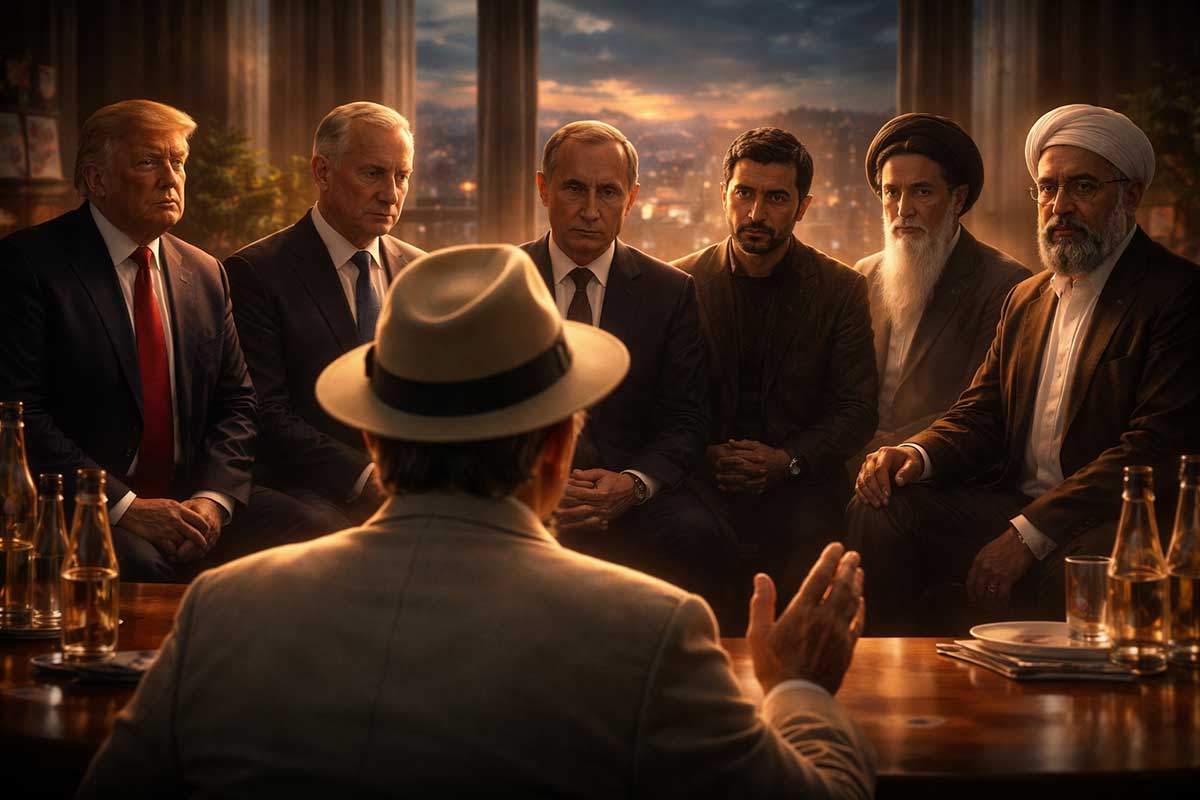
Saito Hitori
A lot of people know how to talk about war.
They know how to talk about winning, striking back, standing firm, not backing down.
But that is only half the story.
What happens after?
You weaken the other side.
You silence them.
You force them back.
Then what?
What kind of life are you actually trying to create?
Are people supposed to live in constant suspicion?
Raise children in permanent tension?
Carry bitterness into the next generation and call that peace?
To me, if you do not know what kind of life should come after the fighting, then you do not fully know what you are fighting for.
So that is what I want to ask now.
When the war is over, what kind of human world do you want to leave behind?
Question 1
If the other side is weakened, silent, or defeated,
what kind of everyday life comes next?
Will people be able to laugh, work, love, and raise children in peace?
Benjamin Netanyahu
That is the point of any serious military action.
War is not supposed to be the goal.
A livable future is the goal.
What I want is a reality where Israeli citizens do not wake up each morning assuming another attack may be coming.
I want parents to send children to school without that shadow hanging over them.
I want families to sit at dinner without living inside constant alertness.
That kind of daily life requires more than good intentions.
It requires a security environment in which enemies understand there are real limits and real consequences.
Still, I will say this.
If what we create is only a colder form of fear, then that is not enough.
A country cannot live forever in survival mode and call that peace.
Donald Trump
To me, the answer is simple.
Normal life.
People should be able to go to work, run businesses, go home, eat dinner, take vacations, think about next year instead of the next missile.
That is what matters.
If you “win” a war and everybody is still tense, bitter, broke, and waiting for the next crisis, then what did you really build?
A lot of leaders are good at war language.
They are not very good at peace language.
They know how to rally people.
They do not know how to return people to ordinary life.
But that is the real test.
Can life feel normal again?
Volodymyr Zelenskyy
For me, the first image of peace is very small.
A quiet night.
No sirens.
No sudden fear.
No child freezing at a sound because the body has learned too much.
Then morning comes, and people think about school, work, family, plans, not survival.
That is the kind of life I want back.
Not a heroic life.
A human life.
People falling in love.
People joking with each other.
People arguing about ordinary things.
People living inside time again instead of inside emergency.
But I do not think that future can last if the silence is only forced.
If defeat leaves behind nothing but humiliation and hatred, then the next war has already begun underneath the surface.
Vladimir Putin
The purpose of force, from the standpoint of statecraft, must be the restoration of order.
That order should create predictability.
People should be able to work, build families, educate children, participate in culture, and live inside a stable framework that is not constantly shaken by external pressure.
That is what daily life requires.
Not merely the absence of gunfire, but a structure people can trust enough to plan within.
Yet if that structure rests only on fear, it will decay from within.
Silence is not the same thing as peace.
Submission is not the same thing as stability.
A society must feel settled, not merely subdued.
Mojtaba Khamenei
No people reject the idea of ordinary life.
Families, prayer, work, children, learning, community.
These are not Western values or Eastern values. They are human values.
But ordinary life loses its meaning if it is built on humiliation.
A quiet life purchased by surrender carries poison inside it.
So yes, I want a future where people can raise children, walk safely, worship freely, and build something steady.
But that life must still contain dignity.
If the war ends only with one side forced into silent resentment, then the peace is false.
You are not handing the next generation a future.
You are handing them buried fire.
Question 2
Do you actually have a real postwar blueprint?
And if you do, is it just revenge extended into the future,
or is it a serious path back to trust?
Vladimir Putin
A war without a postwar framework is not strategy.
It is impulse.
Of course there must be a design for what follows.
Administration, security, infrastructure, economic function, diplomatic balance, social order.
These things matter more after war than during it.
But trust is spoken of too casually.
Trust does not return because leaders say the right words.
It returns slowly, after power is reorganized, interests are clarified, boundaries are accepted, and people begin to see that life can continue without immediate threat.
Revenge is not a durable blueprint.
It can extend conflict under new language.
Yet naive reconciliation is no blueprint either.
A real design must deal with reality first, sentiment second.
Volodymyr Zelenskyy
A postwar blueprint is necessary.
Without one, sacrifice turns into drift.
You need rebuilding.
Homes.
Schools.
Roads.
Energy systems.
Courts.
Institutions.
Economic life.
Everything.
But the hardest reconstruction is not physical.
It is moral and emotional.
How do people remember what happened without becoming trapped inside hatred?
How do they grieve honestly without making grief the permanent foundation of the nation?
That is the hardest part.
So yes, there must be a blueprint.
And no, it cannot be revenge with cleaner language.
It has to be a path where memory remains real, justice remains real, yet human life is allowed to grow again.
Donald Trump
This is where a lot of wars go wrong.
Everybody talks about the beginning. Very few people think hard enough about the ending.
Who is rebuilding?
Who is paying?
Who is governing?
What stops it from starting again?
How do regular people get back to work?
How do investors come back?
How do cities function again?
Those are not side questions.
Those are the real questions.
Revenge is easy.
You can sell revenge politically.
You can get applause with revenge.
But it does not rebuild anything.
You do not get normal life from permanent retaliation.
You get a frozen disaster.
If you want peace, you need a real map for how life becomes livable again.
Mojtaba Khamenei
There must be a design, yes.
But a design written only by the victors becomes the draft of the next conflict.
If postwar order means one side gets to define truth, define legitimacy, define memory, and define dignity, then no genuine trust will grow there.
Revenge creates a chain.
That is obvious.
But forced forgetting creates another kind of lie.
If homes were destroyed, if families were shattered, if humiliation was real, then peace cannot simply demand that people smile and move on.
Memory must be faced.
So a true path back requires two things at once:
not living forever for revenge,
and not burying the truth under the language of reconciliation.
Benjamin Netanyahu
A postwar framework is necessary, though it is hard to develop it clearly in the middle of conflict.
People under threat want safety first.
That is natural.
So talk of future trust can sound distant if the present still feels dangerous.
Still, a war without a political end state is incomplete.
Force alone cannot finish the job.
A real design must contain two things at once.
Firm prevention against renewed violence, and over time, some rebuilding of human contact and legitimacy.
Too much softness too soon can invite danger.
Too much hardness for too long can guarantee the next round.
So yes, the blueprint has to hold both realities.
Question 3
The people suffering most are not the men making the biggest decisions.
They are the ordinary people who lost family, home, safety, and any clear sense of tomorrow.
What future can you honestly promise them?
Donald Trump
Politicians love big promises.
Most of them promise too much.
So I would be careful with the word promise.
But here is what people really want.
They want life back.
They want the house rebuilt.
They want the job back.
They want the kid sleeping through the night again.
They want to stop feeling like history is crushing their kitchen table.
That is what leadership should answer to.
Not speeches, not giant slogans, not moral theater.
If people cannot get a piece of their life back, then all the victory language in the world is empty.
Mojtaba Khamenei
I would not offer light hope to people carrying real loss.
Cheap reassurance insults suffering.
What can be promised, at most, is that their pain will not be erased for political convenience.
That their dead will not be reduced to numbers.
That their humiliation will not be converted into someone else’s bargaining language.
A future must give meaning, not just comfort.
Human beings do not live by material repair alone.
If sacrifice becomes meaningless, then rebuilding feels hollow.
So any honest future must preserve dignity, memory, and the belief that what was endured was not simply thrown away.
Benjamin Netanyahu
I cannot promise perfection, and no responsible leader should.
But I can say that the suffering of ordinary people must never be treated as background material in a strategic argument.
Each family, each death, each shattered home carries real moral weight.
The future that should be promised is not fantasy.
It is narrower than that, but still important.
Less fear.
More security.
A wider space for daily life.
A country in which parents do not imagine their children’s future through the lens of constant threat.
That may sound modest.
But in a region shaped by repeated trauma, that is not a small thing.
Volodymyr Zelenskyy
What I would want to promise is this:
your loss will not be buried under official language.
The empty chair at the table, the damaged house, the life that stopped halfway through, the future that was stolen, none of that should be brushed aside as the price of history.
But memory is not enough.
People need a place to live again.
A town that works.
A school that opens.
A home to return to.
A night that does not terrify.
A future that feels personal again.
War steals tomorrow from people.
Politics must give tomorrow back in concrete form, not only in patriotic language.
Vladimir Putin
The heaviest burden of war is carried by those with the least control over it.
That is a constant truth.
What can be honestly offered is not utopia, but restored structure.
Housing.
Security.
Education.
Medical care.
Employment.
A framework in which people can again assume that life tomorrow will resemble life today.
That sort of predictability is not glamorous, but it is the spine of recovery.
Yet physical reconstruction alone is insufficient.
Societies that have been torn by conflict carry fractures in memory and trust.
If those fractures are ignored, instability survives beneath the rebuilt surface.
So the future must include both material repair and a way of living with damaged memory without letting it rule everything.
Saito Hitori
What I hear underneath all of this is something very simple.
In the end, everybody is still pointing back to ordinary life.
A child sleeping peacefully.
A family eating dinner.
Someone opening a shop in the morning.
Someone planning a future.
Someone laughing without guilt.
That is the treasure.
And it is strange, because people will talk in huge words about history, power, national destiny, and survival, yet in the end, what they are really trying to protect is often something very small and human.
That is why this matters so much.
Destruction is fast.
Rebuilding is slow.
Trust is slower.
So if you have not thought seriously about what kind of life should come after the war, then you are not finished thinking about the war itself.
Winning is not enough.
The real question is whether people can live again.
That is where real leadership begins.
Topic 5: What Is Real Strength, and Why Does Peace So Often Look Harder Than War?
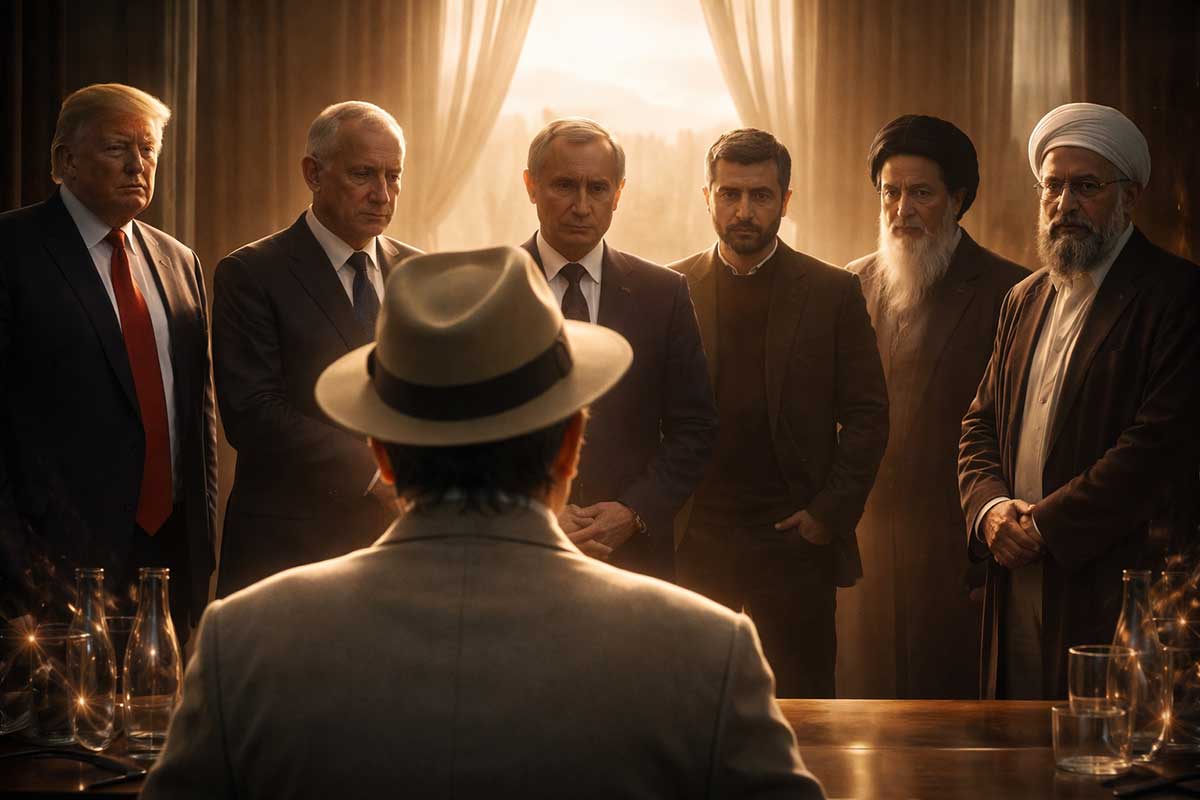
Saito Hitori
At the end of the day, I think this is the question underneath everything.
What does strength actually mean?
A lot of people think strength means overpowering the other side.
Never backing down.
Never apologizing.
Never looking soft.
Always hitting harder.
That can look strong for a while.
But sometimes what looks strong is really fear in armor.
Sometimes it is pride refusing to let go.
Sometimes it is pain that does not know how to stop.
To me, real strength is something else.
Real strength is not being ruled by your own anger.
It is not letting your fear dress itself up as destiny.
It is not needing endless conflict just to keep feeling powerful.
Real strength is having enough inner steadiness to end what could easily keep going.
So that is what I want to ask now.
Not who is toughest.
Not who can dominate the room.
But who is actually strong enough to choose peace.
Question 1
Which takes more courage:
crushing the other side,
or being the one who ends the cycle of hatred in your own generation?
Vladimir Putin
The first is easier to display.
It is visible.
It produces immediate results.
It fits the language of force, deterrence, and strategic advantage.
The second is more difficult.
To interrupt a cycle of hatred requires control over more than weapons.
It requires control over memory, narrative, public emotion, and one’s own sense of historical mission.
It also carries risk.
One side may try to stop the cycle and the other may interpret that as weakness.
So yes, the second requires more courage.
But courage alone is not enough.
The leader must also find a way to prevent restraint from becoming vulnerability.
Donald Trump
No question, the second one is harder.
Anybody can keep hitting back.
That is the easy part.
It is loud, dramatic, people cheer, your side feels strong.
But being the one who says, “This has to stop,” that is much harder.
Your own people may turn on you.
They may say you sold out.
They may say you got weak.
They may say you blinked.
But if nobody is willing to do that, then the whole thing just keeps feeding itself.
And here is the problem with that.
Hatred does not stay neatly aimed at the enemy.
After a while it starts poisoning your own country too.
Your culture gets meaner.
Your people get more anxious.
Everything gets uglier.
So yes, ending the cycle takes way more strength.
Benjamin Netanyahu
Emotionally, crushing the other side is easier to explain to a wounded public.
It feels direct.
It feels satisfying.
It feels like justice has visible force behind it.
Ending the cycle is much harder.
A leader has to create enough security that restraint does not feel like surrender.
He has to give people some sense that stopping now will not simply invite the next attack.
That is extremely difficult.
But I would agree that a nation that never even tries to stop the cycle eventually becomes trapped inside permanent vigilance.
At that point it may continue surviving, but it stops really living.
Volodymyr Zelenskyy
The second takes more courage.
I believe that.
But that does not mean it is emotionally easy, especially for people who have buried loved ones, lost homes, and watched their country suffer.
You cannot tell people to forget.
You cannot tell them their pain is exaggerated.
You cannot ask them to move on as if nothing happened.
So ending the cycle does not mean erasing memory.
It means carrying memory without handing the next generation a future built entirely out of revenge.
That takes a deeper kind of courage than simply continuing the fight.
Mojtaba Khamenei
I agree that ending the cycle is harder.
But only if we are clear about what that means.
It cannot mean surrender disguised as peace.
It cannot mean asking the wounded to abandon memory.
It cannot mean telling the humiliated to become polite so others may feel comfortable.
To stop the cycle in a meaningful way, one must hold onto dignity without making vengeance the center of identity.
That is difficult.
That requires a different scale of human being.
So yes, it is harder.
It is also more demanding of the soul.
Question 2
If today you let go of just a little pride,
loosened your grip on always being right,
and said, “This has to stop,”
what would you lose, and what might you get back?
Donald Trump
You would lose a lot right away.
Some supporters would say you folded.
Some media people would call it weakness.
Some allies would get nervous.
Your image takes a hit.
That is real.
But what do you get back?
You might stop the dying.
You might calm the markets.
You might give regular people room to think about living again.
You might lower the emotional temperature of the whole world.
Pride is expensive.
And the bill usually gets sent to ordinary people.
Volodymyr Zelenskyy
What you might lose is the image of being unbreakable in the most visible way.
People often expect wartime leaders to be made of stone.
But leaders are still human beings.
And sometimes the human cost becomes too obvious to ignore.
What you might get back is language for the future.
In war, the vocabulary narrows.
Casualties.
Missiles.
Emergency aid.
Retaliation.
Darkness.
If the violence stops under real conditions, maybe people get back words like school, rebuilding, family, hope, spring, ordinary life.
That matters.
But I must add this:
saying “this has to stop” cannot mean handing the other side a reward for force.
That is why this is so painful.
The desire to stop and the fear of what stopping means live in the same room.
Vladimir Putin
Pride is too simple a word, but the general point is valid.
A leader who shifts course risks losing image, leverage, internal cohesion, and a degree of perceived historical consistency.
All of that matters in power politics.
But what could be regained?
Resources.
Time.
Social stability.
The future of younger generations.
A reduction of strain on the national mind.
The problem is that stopping cannot be merely emotional.
It must be accompanied by a structure that preserves balance.
Otherwise the gesture becomes temporary and fragile.
Still, there are moments when attachment to one’s own rightness becomes strategically costly.
A leader must recognize that possibility.
Mojtaba Khamenei
One might lose the image of absolute firmness.
Some followers would feel betrayed.
Some would say the path of resistance had been diluted.
That is no small thing.
But what might return?
The sleep of mothers.
The quiet of prayer.
The routines of markets and schools.
The chance for a child to grow up without absorbing war as normal.
These are not trivial things.
Yet peace without dignity is not peace.
So if one loosens pride, one must still preserve honor.
Otherwise one has not ended war.
One has merely changed its shape.
Benjamin Netanyahu
What would be lost is substantial.
Perceived strength.
Deterrent credibility.
Political support from those who equate restraint with weakness.
In times of conflict, those things matter greatly.
But what might be regained is something quieter and perhaps more important.
The return of daily mental space.
The possibility that a nation will no longer define itself almost entirely through threat.
The chance for normal civic life to widen again.
The difficulty is that saying “This must stop” is not enough.
A responsible leader must create the conditions under which stopping does not produce greater danger.
That is the real challenge.
Question 3
Have you become so tied to conflict that it is the only place where you still feel powerful?
If real greatness is tested in peace, not war,
do you have the courage to enter that test?
Benjamin Netanyahu
That is an uncomfortable question, but an important one.
War concentrates leadership.
It makes authority visible.
It makes decisions feel dramatic.
It gives history a stage.
So yes, a leader can begin to feel more substantial in war than in peace.
That danger exists.
But peace tests different qualities.
Restraint.
Design.
Patience.
Dialogue.
The ability to absorb criticism without turning immediately to force.
That kind of strength is less visible and often less rewarded in the short term.
It can even look weak to people who only understand confrontation.
That is why it may be the harder test.
Mojtaba Khamenei
Conflict can make a person feel larger than life.
History, sacrifice, resistance, destiny, faith.
These are powerful currents.
A leader standing inside them may begin to feel that struggle itself is proof of meaning.
But peace asks a different question.
When the heat fades, what remains?
Can you guide a people without relying on the electricity of danger?
Can you give them something deeper than anger?
That may be the truer measure of greatness.
Because in peace, people no longer judge you by the size of your defiance.
They judge you by the quality of life they are able to build.
Volodymyr Zelenskyy
That question cuts deep.
In war, your role becomes very clear.
Protect.
Speak.
Hold the line.
Endure.
Unify.
That clarity can become part of your identity.
People look to you constantly.
Every word feels urgent.
Every decision feels heavy.
Peace is different.
In peace, the healthiest outcome is often that people go back to their own lives.
They stop staring at the leader.
They start thinking about their children, their work, their plans, their future.
That can feel smaller from the outside.
But really it is bigger.
If people no longer need you at the center of every emotional moment, that may be the sign that you did your job.
Donald Trump
That is a great question, because a lot of people do get addicted to crisis.
In crisis, leaders are on TV every day.
Everything feels huge.
They look important.
The room gets quiet when they talk.
It is a powerful feeling.
Peace is a lot less glamorous.
People go to work.
The economy hums.
Kids go to school.
Nobody is treating every statement like it is the end of the world.
But honestly, the person who can manage that kind of boring peace is probably more impressive than the person who just knows how to look tough during chaos.
Anybody can play the big man when everything is on fire.
Not many people know how to build a world where things stop burning.
Vladimir Putin
Crisis intensifies political identity.
That is true.
It sharpens hierarchy, compresses time, and enlarges the visible significance of leadership.
One can feel more central inside conflict than inside normal governance.
That is precisely why it can become dangerous.
A state is not meant to serve as a stage for a leader’s self-confirmation.
If conflict becomes necessary for one’s sense of scale, then judgment has already been distorted.
Peace presents a stricter test in many ways.
It asks for long attention, institutional strength, economic vision, cultural continuity, and controlled ambition.
There are fewer dramatic gestures available.
One is measured more by outcomes than by force of posture.
So yes, peace may in fact be the greater test.
Saito Hitori
This is what I keep feeling as I listen to all of you.
Everybody wants to be strong.
Everybody wants to protect something.
Nobody wants to be humiliated.
Nobody wants to disappear.
I understand that.
But real strength is not constant tension.
It is not endless retaliation.
It is not holding on so tightly to anger that you forget what life was supposed to be for.
Sometimes the strongest thing in the room is not the next strike.
It is the person who says, “Enough. We have to find another way.”
That is not weakness.
War can make people look big.
Peace shows whether they really are.
Because peace asks more of you.
It asks you to build.
To restrain yourself.
To live without the adrenaline of enemies.
To let children grow up without inheriting your bitterness.
To create a life where people can laugh again without guilt.
That is harder than war.
And that is why I believe this:
The person who can choose peace without abandoning dignity,
the person who can end destruction without losing inner strength,
the person who can help human life begin again,
that is the truly strong person.
Final Thoughts by Nick Sasaki
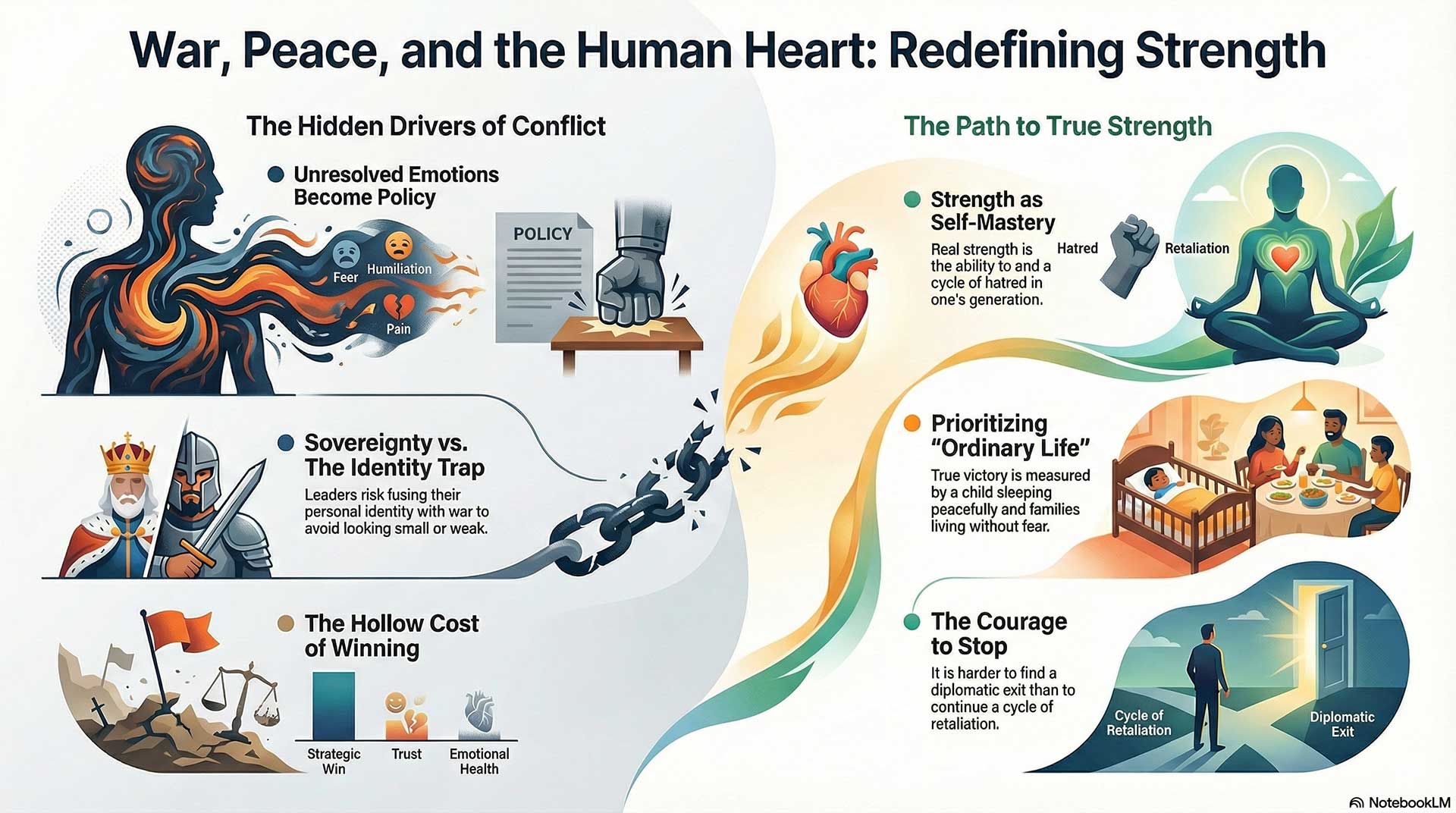
After hearing this whole conversation, one thing stands out very clearly:
War is almost never driven by public logic alone.
On the surface, leaders speak in the language of security, justice, sovereignty, deterrence, survival, and national duty.
Those things matter.
They are real.
But under that public language, there is almost always something more personal and more human at work.
The fear of losing.
The fear of humiliation.
The pain of history.
The need to stay strong in front of your own people.
The refusal to look weak.
The burden of carrying a nation’s trauma.
The temptation to let conflict become part of your identity.
That is what makes war so dangerous.
It is never just military.
It is never just strategic.
It is what happens when wounded human emotion gets hold of national power.
And yet this conversation showed something else too.
No matter how different these leaders are, no matter how fiercely they defend their positions, they all circle back to the same place in the end:
ordinary life.
A child sleeping peacefully.
A family eating dinner together.
A person opening a store in the morning.
A young couple planning a future.
A society where people can laugh again without feeling like the world is closing in.
That is the thing everyone claims to be protecting.
And that is where Saito Hitori’s voice becomes so important.
He does not walk into the room trying to out-argue anybody.
He does not try to dominate the conversation.
He does not try to sound like a statesman.
He does something more unsettling than that.
He keeps asking what is happening inside the people making these decisions.
What are you really afraid of?
What are you really holding onto?
What are you calling justice that may actually be pain?
What are you calling strength that may actually be fear?
Those questions matter because people can justify almost anything once they stop looking inward.
They can call revenge duty.
They can call pride survival.
They can call escalation necessity.
But the moment someone is forced to face what is truly driving them, another possibility opens up.
That does not solve everything.
It does not erase history.
It does not remove danger.
But it creates a crack in the wall.
And sometimes that is where wisdom begins.
This conversation also kept returning to one hard truth:
It is easy to look strong when you retaliate.
It is easy to look strong when you refuse to bend.
It is easy to look strong when you keep escalating.
What is much harder is this:
to stop the spiral,
to loosen your grip on pride,
to carry pain without turning it into an endless inheritance,
to build a future where human beings can live again.
That takes a deeper kind of strength.
Starting destruction takes force.
Ending it takes self-mastery.
Keeping conflict alive takes energy.
Building peace takes character.
That may be the deepest lesson in this whole talk.
Real strength is not the ability to keep fighting forever.
Real strength is the ability to protect dignity without becoming trapped inside hatred.
Real strength is the ability to carry responsibility without letting fear run the soul.
Real strength is helping life begin again.
That is why Saito Hitori’s message reaches far beyond one culture.
He is not saying, “Be soft.”
He is not saying, “Pretend evil does not exist.”
He is not saying, “Just get along.”
He is saying something much more serious:
Do not let dark certainty take over your heart.
Do not let pain become your identity.
Do not forget that power is supposed to protect life, not consume it.
This conversation is imaginary.
But the questions are real.
And they are not only for presidents and prime ministers.
They are for all of us.
Do we make the world heavier, or lighter?
Do we keep feeding anger, or do we create room for life?
Do we pass our bitterness forward, or do we stop it with us?
That may be where peace really starts.
And if I had to leave this whole conversation with one final line, it would be this:
Before you ask how to win, ask how people can truly live again.
The one who can choose that path is the truly strong one.
Short Bios:
Saito Hitori
Japanese businessman and author known for his uplifting philosophy about joy, prosperity, words, and practical wisdom for everyday life.
Donald Trump
American political leader and businessman known for his forceful public style, confrontational rhetoric, and major influence on US and global politics.
Benjamin Netanyahu
Israeli political leader known for his long focus on national security, defense, and the survival of the Israeli state.
Vladimir Putin
Russian leader known for his hard-power approach to sovereignty, state control, and geopolitical influence.
Volodymyr Zelenskyy
Ukrainian leader who became the face of national resistance, dignity, and survival during wartime.
Mojtaba Khamenei
Iranian leadership figure presented here as a symbol of religious authority, national pride, and resistance to outside pressure.
Leave a Reply