
|
Getting your Trinity Audio player ready...
|
What if Billy Collins met his mother again beyond death?
Introduction by Nick Sasaki
Some gifts are so small they seem, at first, almost weightless.
A camp lanyard braided by a boy’s hands. A simple object of red and white plastic. Something made in innocence, offered in love, and received long before its meaning could be fully known.
That is part of the quiet beauty of Billy Collins’s The Lanyard. The poem moves with wit, but beneath its gentle humor rests a deeper ache: a child is carried by a love he cannot yet measure, and only later, often much later, does he begin to understand the vastness of what surrounded him.
This imagined meeting follows that ache into another realm.
What might happen if Billy Collins were to meet his mother again beyond the veil of death? What might be spoken at last, beside a still lake and under a tender, timeless light, when memory no longer hides its deepest truths? In this conversation, the lanyard becomes more than a keepsake. It becomes an opening into gratitude, sorrow, forgiveness, and peace.
At the center of it all is a truth both humbling and beautiful: love was never asking to be repaid. It was asking to be seen.
(Note: This is an imaginary conversation, a creative exploration of an idea, and not a real speech or event.)
Topic 1 — The First Embrace Beyond Time

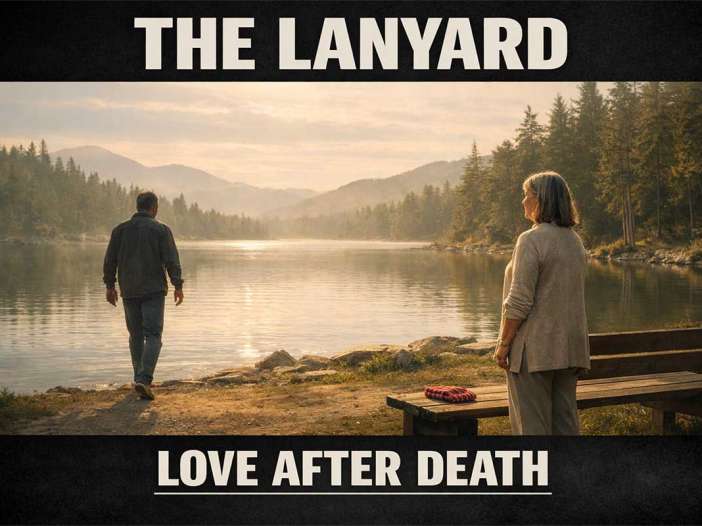
The lake was still under a soft light with no visible sun. Near the shore stood a wooden bench, and on it lay a red-and-white lanyard, neatly coiled, untouched by age.
Billy walked slowly down the path.
He saw his mother standing there, waiting as if she had only arrived a moment before. She looked fully herself — warm, calm, familiar beyond words.
He stopped.
For a moment, he could not speak.
Then, in a voice smaller than he expected, he said, “Mother?”
She smiled gently. “Yes. I am here.”
He let out a breath that turned into tears. “I didn’t know what I would say first.”
“You do not need the right words,” she said. “You are here. That is enough.”
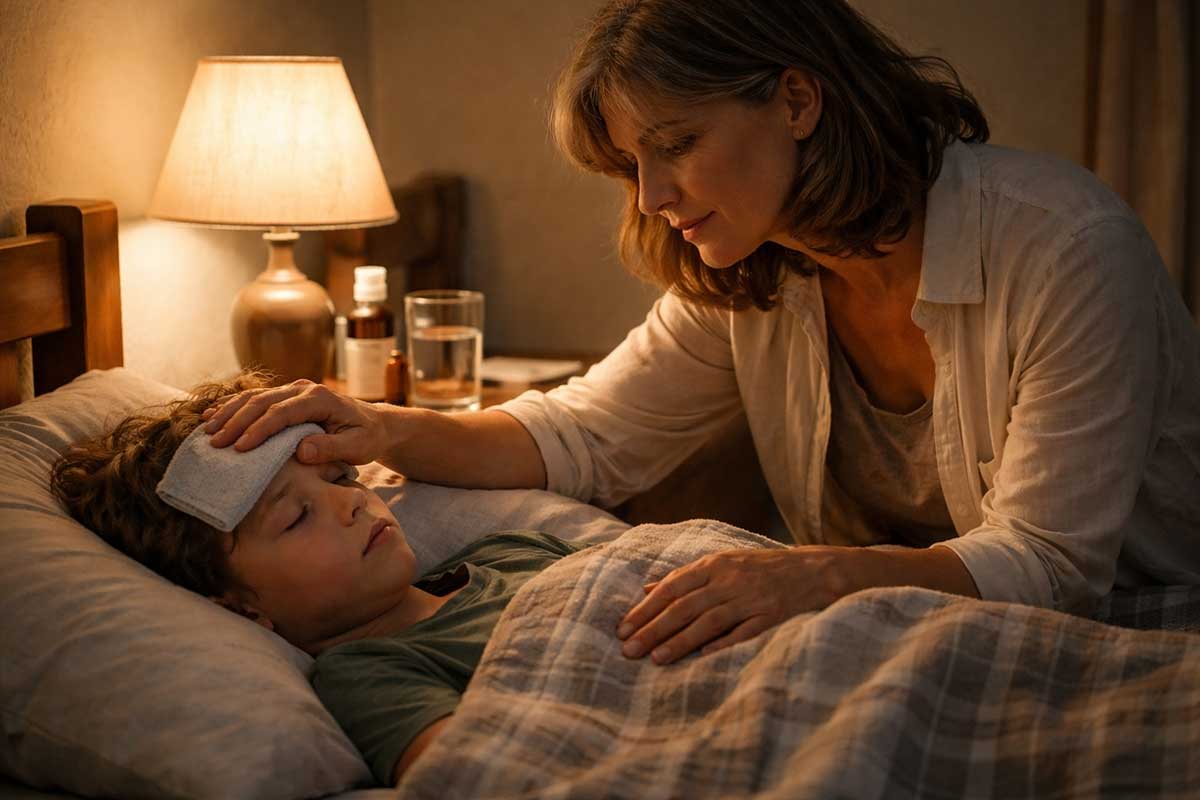
He looked at her face, and memories rose all at once: her hands lifting medicine to his lips, smoothing his hair, guiding him, caring for him in all the unnoticed ways that made a life.
“I know your hands,” he said quietly.
“And I know your face,” she answered. “I still see the boy in it.”
His eyes drifted to the bench. “You knew I would notice the lanyard.”
“I knew you would notice everything in your own time.”
He gave a faint smile. “I thought that if I ever saw you again, I should begin with an apology.”
“And instead?”
“Instead I can only think how strange it was to live in a world where you were gone.”
Her eyes softened. “And I am thinking, there is my son.”
He looked at her, almost like a child again. “I missed so much. I did not see enough.”
“Yes,” she said softly.
“I took too much for granted.”
“Yes, my dear.”
There was no blame in her voice. That made him ache more deeply than blame would have.
Then he said, “You seem so real.”
She smiled. “What were you expecting?”
“A voice in light, perhaps. A symbolic breeze.”
She laughed, and the sound went straight through him.
“No,” she said. “You were always going to find me this way.”
His eyes filled again. “I missed your laugh more than I knew.”
“And I missed hearing you try to be clever when you are overwhelmed.”
He lowered his head, smiling through tears.
Then she opened her arms.
He stepped into them at once.
There was no great thunder, no grand sign — only the simple miracle of being held again. Warmth, closeness, home.
“I’m here,” she whispered.
After a long time, they drew back and looked at one another.
Billy glanced at the lanyard on the bench.
“Is that why it is there?” he asked.
She nodded. “Even the smallest doorway can open into a whole life.”
He looked at her quietly. “I think I am still arriving.”
“You are,” she said. “There is no need to hurry the heart.”
Topic 2 — The Gift He Thought Made Them Even
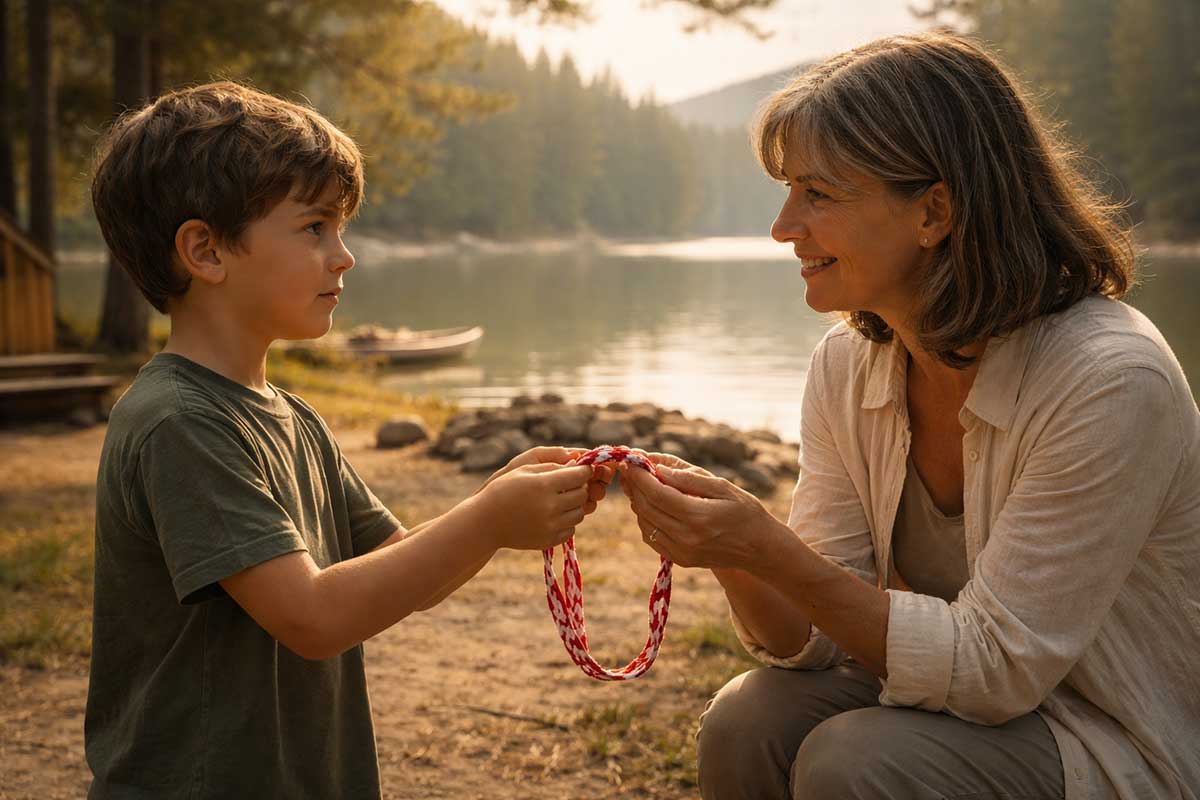
They sat together on the bench, the lanyard between them.
Billy looked at it for a long moment before speaking. “I truly believed this was enough.”
His mother turned to him. “Enough for what?”
He gave a small, embarrassed smile. “Enough to answer everything. Enough to match what you had given me. Life, care, meals, medicine, comfort — and there I was, handing you a braided piece of plastic as if we were now somehow even.”
She did not laugh. She only looked at him with the deep patience he remembered.
“Back then,” he said, “I was so certain. I thought I had done something important.”
“You had,” she said.
He shook his head. “No, I mean useful. Valuable. Something worthy.”
She picked up the lanyard gently and held it across her palms.
“And what do you think I received?” she asked.
Billy looked down. “Something small. Something almost silly.”
She studied the red and white strands. “I received my son trying to give back love in the only shape he knew.”
That line seemed to stop him.
For a moment, he said nothing.
Then, almost in a whisper, “But it was worthless.”
“As an object?” she said. “Perhaps.”
She lifted her eyes to his.
“But not as a gift.”
Billy’s face tightened with feeling. “I have spent years hearing the joke inside it. She gave me life, and I gave her a lanyard.”
“And there is humor in that,” she said softly. “You always heard that part well.”
He smiled faintly. “It is hard to miss.”
“But humor was never the whole truth.”
He looked at her, waiting.
She went on. “When you handed this to me, you were not giving me plastic. You were giving me pride, effort, attention, and that fierce little seriousness children have when they want their love to count.”
Billy looked back at the lake. “I did want it to count.”
“I know.”
“I wanted it to stand for something bigger than itself.”
“It did.”
He turned back to her, almost startled. “It did?”
“Yes,” she said. “It stood for the first time you tried to answer love with love.”
He sat very still.
The shame he had carried around the memory began to loosen.
After a while he said, “I think I have been too hard on that boy.”
His mother smiled. “He was doing holy work with clumsy hands.”
Billy laughed once through his tears. “That sounds kinder than he deserves.”
“No,” she said. “That sounds truer than he understood.”
He looked again at the lanyard in her hands. It no longer seemed quite as ridiculous.
“I thought I was offering you a thing,” he said.
“And you were,” she replied. “But mothers know how to look through a thing and see the heart behind it.”
He swallowed hard. “Then maybe I was not mistaken in wanting to give you something.”
“No,” she said. “You were only mistaken in thinking love could be measured so neatly.”
Billy nodded slowly.
The lanyard rested between them, no longer just a camp craft, no longer just a joke. It had become what it had always secretly been: a child’s first awkward attempt to say thank you for a world he could not yet fully see.
Topic 3 — What a Mother Gives Without Counting
Billy sat quietly, his eyes still on the lanyard.
After a while, he said, “There is so much I never saw.”
His mother did not answer at once. She let the silence hold them, the way she once had during childhood storms, fevers, and long car rides home.
“At the time,” Billy went on, “I noticed the big things. A meal on the table. Clean clothes. A ride somewhere. Help when I was sick. But I did not see what stood behind them.”
She nodded gently. “Children are not meant to see it all at once.”
He turned toward her. “No, but now I do. Or at least I begin to.”
She folded her hands in her lap. “Then tell me what you see.”
Billy took a breath. “I see repetition. The same care, again and again, without applause. I see how much of love hides inside routine. You did things so often I thought they simply belonged to the world.”
Her expression softened. “That is how motherhood often feels. Much of it disappears into the day.”
He looked down. “You stayed up when I was sick. You worried when I did not know you were worrying. You carried the ordinary weight of keeping a life going.”
“And gladly, most days,” she said with a small smile. “And wearily, on some.”
That touched him deeply.
“We never think of that as children,” he said. “That a mother can be tired and still keep giving.”
She gave a quiet laugh. “Oh, she can be tired.”
He smiled, then his eyes filled again. “I think that is part of what hurts now. Not that you gave, but that you gave so steadily I mistook it for nature.”
His mother reached over and rested her hand on his.
“That is no crime,” she said. “A child lives inside love before he can study it.”
Billy looked at her hand over his and felt the truth of that.
“I remember the dramatic moments,” he said. “Illness, fear, trouble. But now I think the deeper gift was the ordinary one. Breakfast. Laundry. Listening. Waiting. Being there.”
“Yes,” she said. “A life is built that way.”
He nodded slowly. “Piece by piece. Day by day. Quietly.”
“Quietly,” she echoed.
He sat with that word.
Then he said, “I think I am grieving something new.”
She looked at him with calm attention. “What is it?”
“That I lived inside all that love and only later learned its size.”
Her eyes held both tenderness and peace. “Late sight is still sight.”
Billy closed his eyes for a moment.
The lake remained still before them. No wind. No hurry. Only the growing clarity of things once hidden inside ordinary days.
At last he said, “You gave me a world before I knew how to name it.”
His mother squeezed his hand softly. “That is what mothers hope to do.”
The lanyard lay beside them, small and handmade, and now Billy could feel more clearly than before what stood behind his need to offer it: a child sensing, however dimly, that he had been carried by something vast and faithful all along.
Topic 4 — You Were Never in Debt
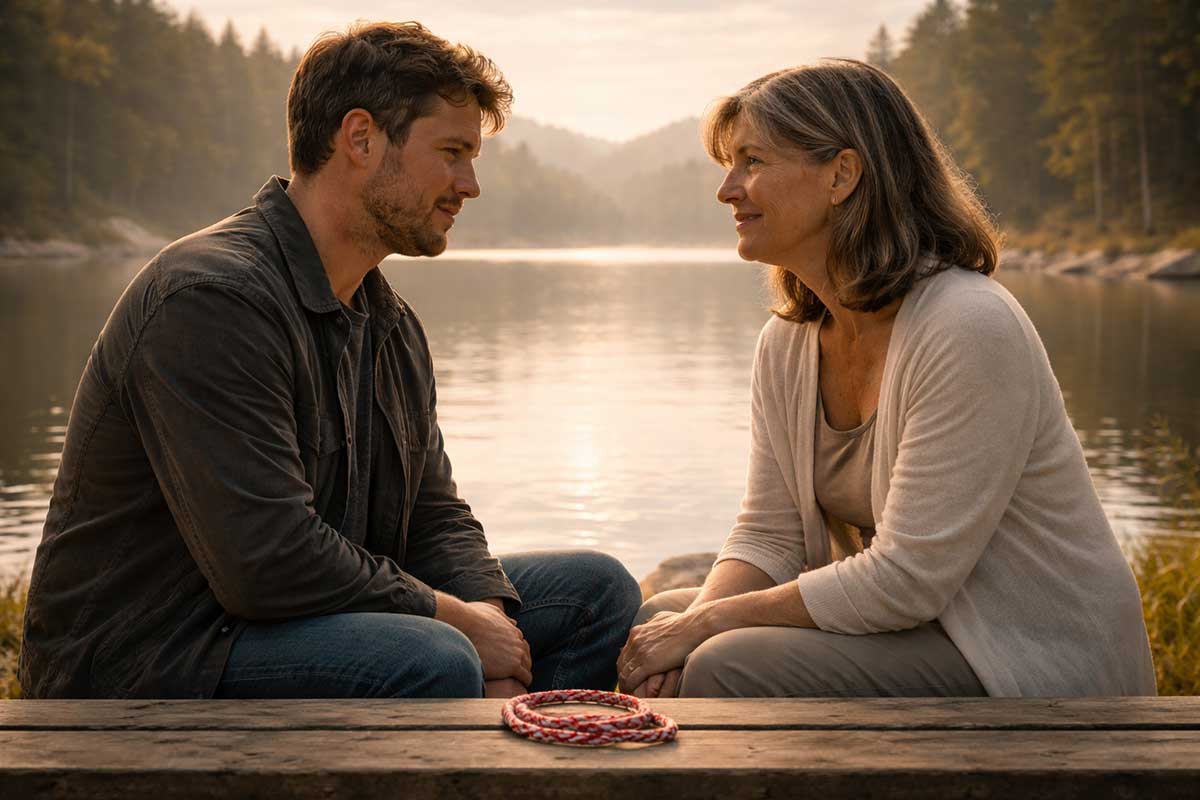
For a long time, neither of them spoke.
Billy watched the still water, then said, very quietly, “I think I have carried one thought for years.”
His mother waited.
He looked down at his hands. “That I never paid you back.”
The words seemed heavier once spoken aloud.
She turned toward him, her face full of sorrow and gentleness, yet with something firmer beneath both.
“My dear,” she said, “you were never meant to pay me back.”
He blinked, as if the sentence had entered him before he could prepare for it.
“But that is how it feels,” he said. “When I think of all you gave, all I missed, all I understood too late. It feels like I should have done more, said more, been more.”
She listened without interrupting.
“I think,” he went on, “that part of me turned love into an account. You gave so much. I gave so little. The balance never came right.”
Her eyes rested on him with quiet certainty.
“That was never the balance I was keeping,” she said.
Billy looked at her, shaken by the calm in her voice.
“When I fed you, held you, worried for you, taught you, forgave you, waited for you,” she said, “I was not writing numbers in a book. I was loving my son.”
He swallowed hard.
“But gratitude matters,” he said.
“Yes,” she answered. “It matters very much.”
He nodded, almost pleading now. “Then why does it hurt so much to feel I came to that gratitude so late?”
“Because love ripens slowly in us,” she said. “Children receive long before they can measure. Adults begin to see what they were standing inside all along.”
Billy lowered his head. “So the sorrow is real.”
“Yes,” she said. “But it need not become a chain.”
That line settled over him.
He sat with it, then asked, “What should it become?”
Her smile was faint and full of light. “A blessing. A tenderness. A way of loving others more truthfully.”
Billy let out a long breath. “Then I was wrong to think I owed you a settled debt.”
“Yes,” she said softly. “You did not owe me payment. You owed life your full presence.”
He looked at her slowly.
She went on, “The true answer to love is not repayment. It is to let it keep moving. Into kindness. Into memory. Into the way you speak, forgive, notice, and give.”
His eyes filled again, though the tears felt different now.
Less shame. More release.
“So when I thought, ‘I can never make us even,’” he said, “I was asking the wrong thing.”
“You were asking a wounded question,” she replied. “A human one. But still the wrong one.”
He gave a small, unsteady smile. “And the better question?”
She looked at him with all the patience of a lifetime.
“How shall I carry love forward?”
Billy sat very still.
The old ache inside him, the one that had always whispered not enough, began to loosen its grip.
At last he said, “I think I have been apologizing for being a son when I should have been grateful for being one.”
His mother’s face brightened with a quiet joy. “Yes.”
He covered his eyes for a moment, then laughed softly through tears. “You make it sound so simple.”
“It is simple,” she said. “Simple does not mean easy.”
He nodded.
The lanyard rested beside them, no longer a symbol of failed repayment, but of a heart that had once tried, in its small and earnest way, to answer a love too large to count.
Billy looked at it, then back at her.
“I feel lighter,” he said.
“That is what truth often does,” she replied.
And for the first time, the thought came to him without pain:
He had never been in debt.
He had always been loved.
Topic 5 — The Lanyard as Blessing, Not Burden
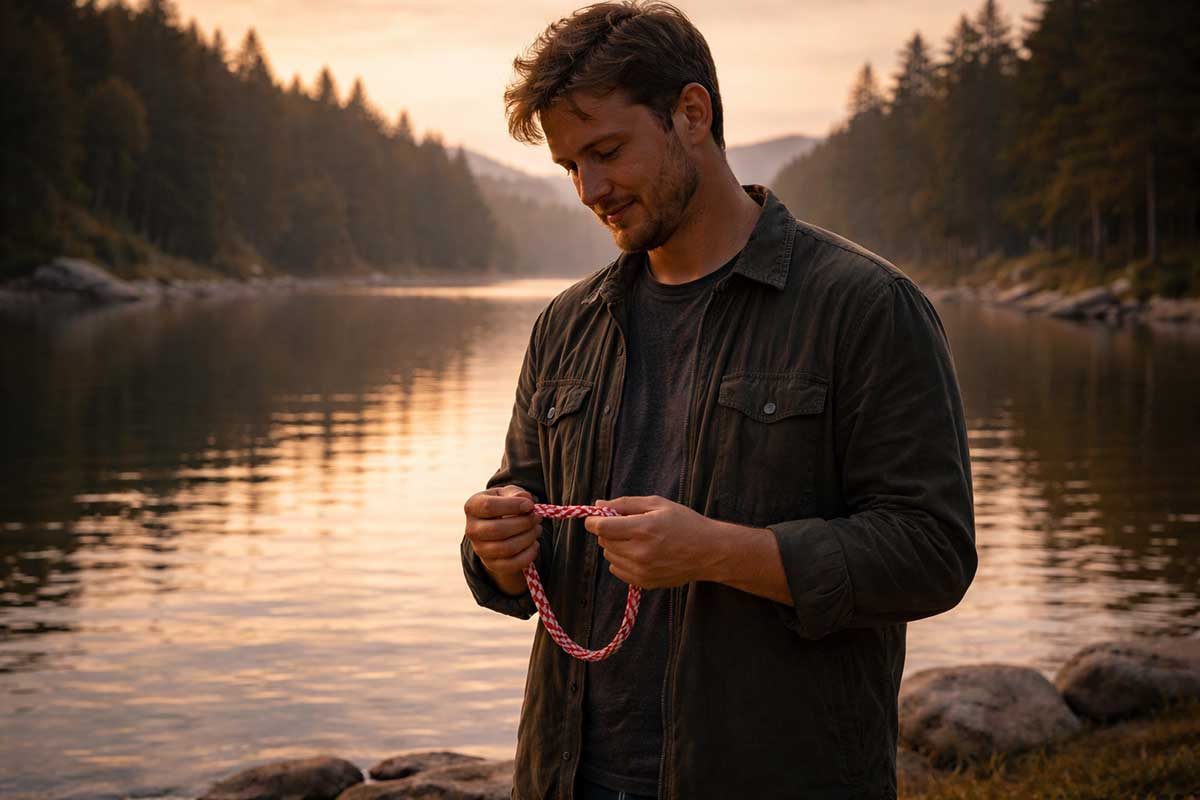
The light over the lake had not changed, yet everything felt softer now.
Billy looked once more at the red-and-white lanyard resting on the bench. For years it had lived in his mind as a small embarrassment, a tender joke, a symbol of how little he had understood. Now it seemed altered, though nothing about it had changed.
His mother picked it up and placed it gently in his hands.
He looked down at it, almost reverently.
“I used to think this was proof of how poorly I answered love,” he said.
She shook her head. “No. It was proof that love had already begun answering.”
He lifted his eyes to hers.
“But it was so small.”
“Yes,” she said. “Small things are often the first true things.”
He ran his fingers lightly over the woven plastic strands. “I called it useless.”
“As an object, perhaps,” she said with a faint smile. “But the heart is always making use of things the world calls useless.”
Billy let out a quiet laugh. “That sounds like something I should have written.”
“Perhaps you did,” she said. “Only you had to live longer first.”
He held the lanyard a little more carefully now.
“So this was never a failed offering?”
“No,” she said. “It was your first handmade thank you.”
That line settled deeply into him.
He looked out across the still water. “I think I understand now why it remained with me. Not just in memory, but somewhere deeper. It kept asking to be seen again.”
His mother nodded. “Some gifts wait many years for their true meaning.”
Billy turned back toward her, and there was peace in his face now.
“I thought this belonged to the boy I was.”
“It does,” she said. “But it belongs to you now too.”
He looked down at it once more. No longer silly. No longer inadequate. No longer a quiet source of shame. It had become something almost sacred: the early shape of a heart trying to speak before it knew enough words.
After a long silence, he asked, “What should I do with it now?”
His mother smiled.
“Keep it,” she said. “Not as a burden. As a blessing.”
He closed his hand around it.
At that moment, the memory of his younger self seemed to pass gently through the air around them — not as a ghost, but as a presence of innocence, earnest and bright. The boy who had once handed over this lanyard with full confidence was no longer someone to correct. He was someone to cherish.
Billy’s eyes filled one last time.
“I was so sure it would make us even,” he said.
“And all along,” she answered, “it was only making you visible.”
He breathed in slowly, holding both the lanyard and the truth of her words.
Then he said, “I do not think I will ever see it as worthless again.”
“You will not,” she said.
They sat together in quiet, the lake before them, the long history of love now gathered into one small woven object resting in his hand.
At last Billy smiled — not with sorrow this time, but with gratitude made peaceful.
“The first shape my love ever took,” he said softly.
His mother nodded.
“Yes.”
And there, beyond time, what had once been a child’s awkward offering became what it had always been waiting to become:
not payment,
not apology,
but blessing.
Final Thoughts by Nick Sasaki
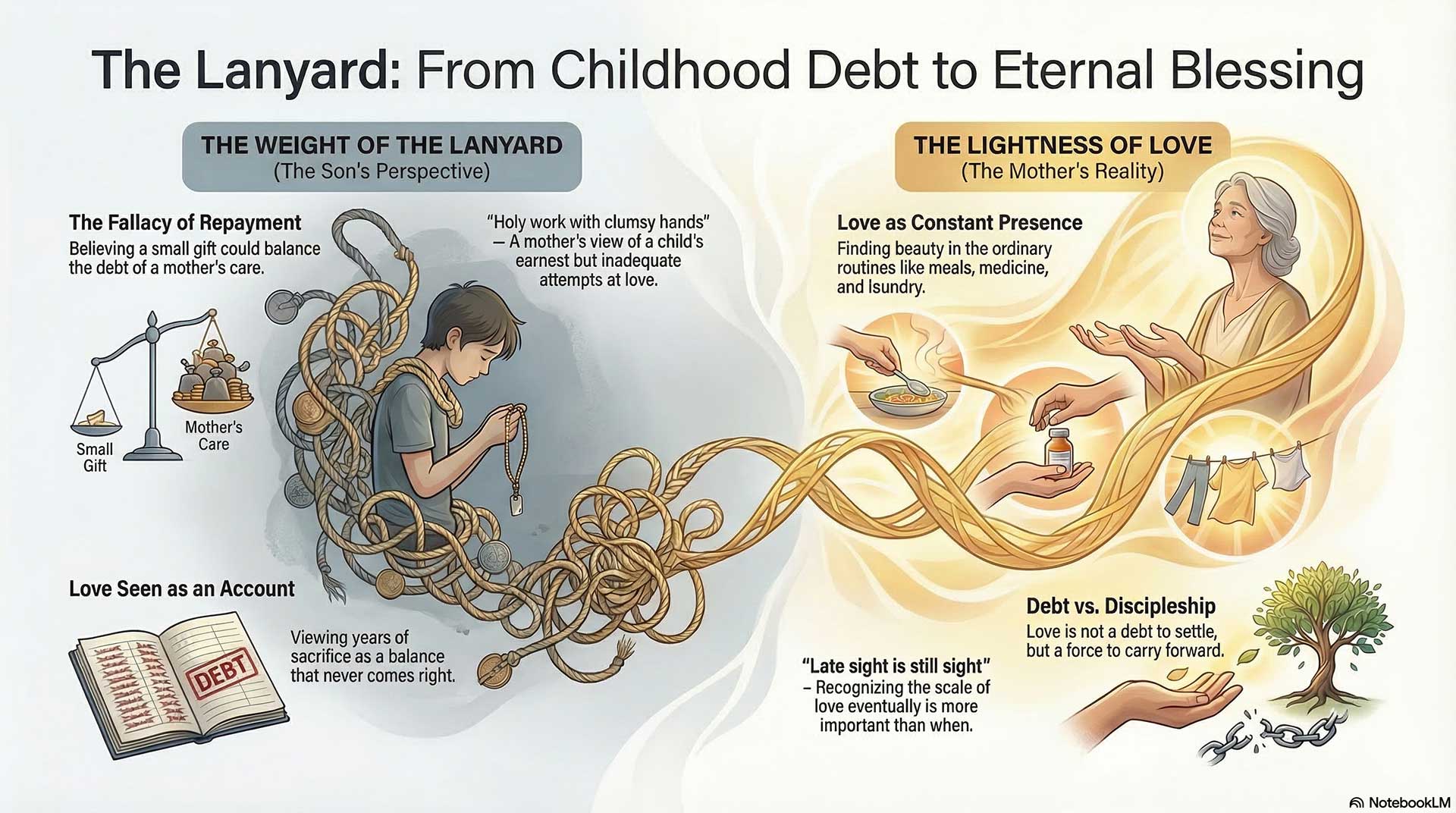
By the end, the lanyard has not grown larger, yet it has become fuller with meaning.
What once seemed slight now feels almost holy. What once carried the sting of insufficiency becomes radiant with tenderness. The little object remains what it always was, yet the heart looking at it has changed.
That is why The Lanyard lingers so deeply. It speaks to the strange sorrow and beauty of human life: that we often awaken late to the greatness of ordinary love. A hand on a fevered forehead. A meal placed quietly on the table. A voice that calls us back, forgives us, waits for us. These moments pass without fanfare, yet later they shine with the light of eternity.
In this imagined reunion, Billy does not arrive to settle an unpaid account. He arrives to learn that there was never an account at all. There was only a mother’s love, given freely, and a son’s love, offered in small and earnest forms until time itself could teach him what they meant.
And so the lanyard, resting softly in his hands, becomes at last what it was waiting to become:
not payment,
not apology,
but blessing.
Short Bios:
Billy Collins
Billy Collins is an American poet known for clear, graceful, deeply human poetry that joins wit with emotional depth. His work often begins in ordinary moments and opens into memory, longing, family, and the quiet mysteries of daily life. In The Lanyard, he reflects on childhood, gratitude, and the late discovery of a mother’s immeasurable love.
Billy’s Mother
Billy’s mother appears in this imagined conversation as the quiet center of the poem’s emotional truth. She represents the steady, faithful love that nourishes a child through daily acts of care, comfort, patience, and sacrifice. In this afterlife reunion, she becomes the voice of grace, helping her son see that love was never a debt to repay, but a gift to receive and carry onward.
Leave a Reply