
|
Getting your Trinity Audio player ready...
|
What if Charlie Mackesy wrote the next sequel as a story about emotional fog?
Introduction by Charlie Mackesy
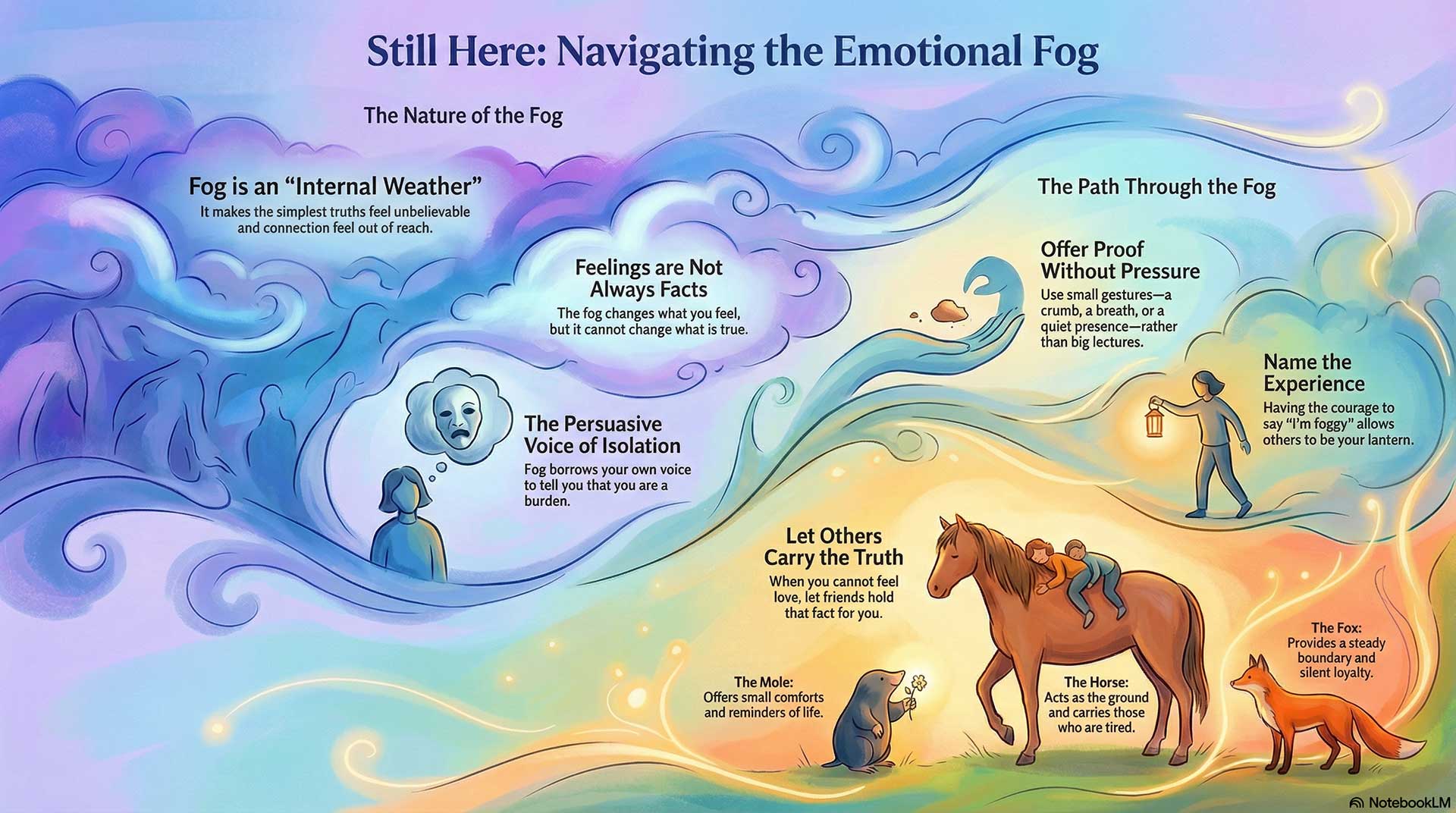
I have learned that storms are not the only hard weather we live through. Sometimes the sky is clear and the world looks fine, but inside you something turns quiet and distant, as if love has moved to the other side of glass. This story is for that kind of day.
The Boy, the Mole, the Fox, and the Horse walk as they always do, gently, with space for questions. But this time the challenge is not a roaring storm. It is a fog that settles in the Boy’s chest and makes the simplest truths feel unbelievable. The others do not try to talk him out of it. They stay. They offer small proofs without pressure. A breath. A crumb. A steady body nearby. A sentence that does not demand he be better.
If you have ever felt alone while surrounded by people who care, you are not strange. You are not broken. You are foggy. And fog changes what you feel, not what is true.
(Note: This is an imaginary conversation, a creative exploration of an idea, and not a real speech or event.)
Scene 1: The Fog That Arrives Inside

The day begins like any other.
A path.
A sky.
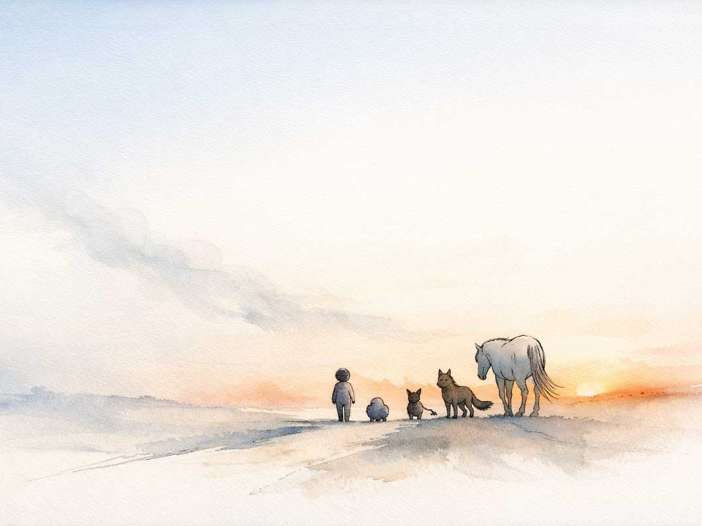
Four friends walking.
The Boy is quiet.
The Mole notices first.
“You’ve gone small,” he says.
“I’m here,” the Boy answers, “but I don’t feel here.”
The Horse slows.
“Then we go slower.”
The Fox looks out at the hills.
There is no fog on the land.
But the Boy’s eyes are searching.
Like someone trying to find a light switch in a familiar room.
“I can’t feel you,” the Boy says.
The Mole steps closer.
“We’re right here.”
“I know,” the Boy whispers.
“That’s the worst part.”
A cold thought drifts in, gentle as snow.
And persuasive.
Maybe you were alone the whole time.
The Boy doesn’t move.
He just breathes.
And the breath feels far away.
Scene 2: Walking While Feeling Alone
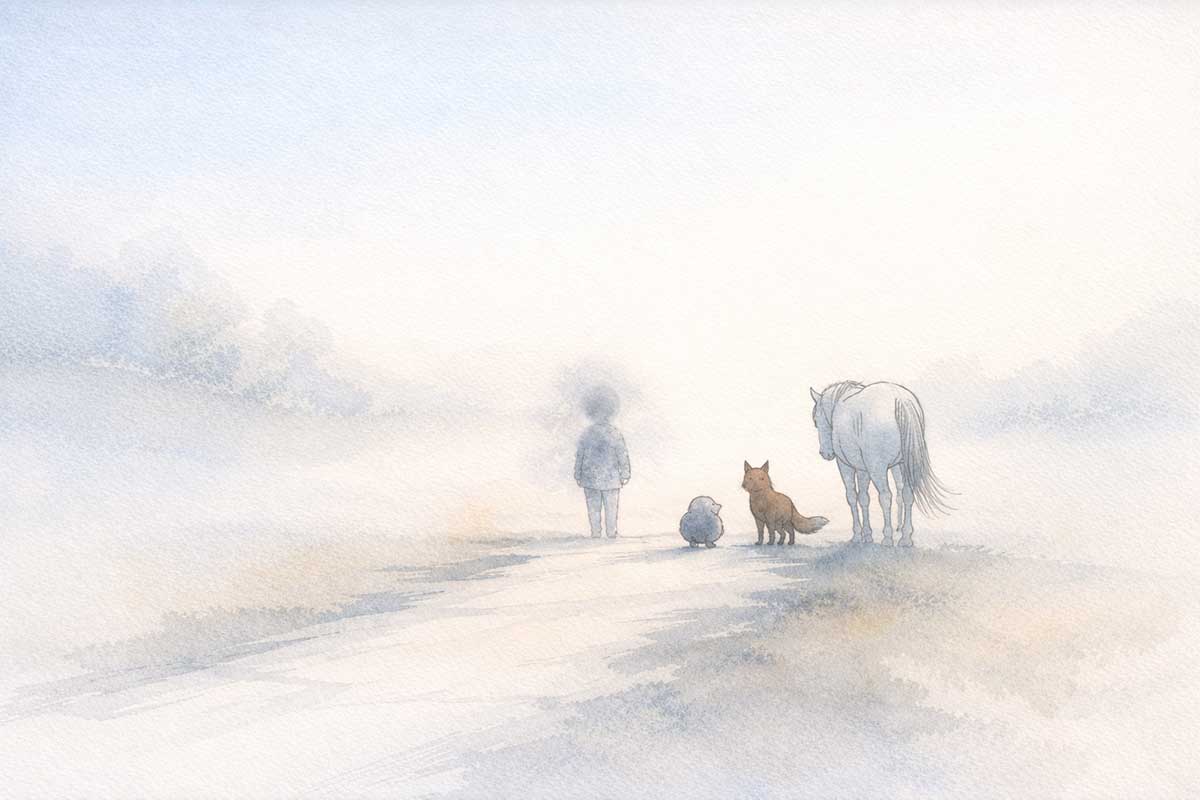
They keep walking.
The Mole talks more than usual.
Not to fill silence.
To keep it from swallowing them.
The Horse’s hooves make a steady sound.
A kind of music.
The Fox stays near the Boy’s side.
He pretends it’s for safety.
The Boy tries to look at them.
To feel them.
But the fog inside him makes everything seem unreal.
Like kindness is a story people tell.
The Boy stops.
“I think I’m broken,” he says.
The Mole freezes.
“Oh no.”
The Fox flinches, as if that sentence hit his own ribs.
The Horse lowers his head.
“You’re not broken.”
“I feel broken,” says the Boy.
“Yes,” says the Horse.
“But feelings are not always facts.”
The Boy looks down.
“What if my feelings are right this time?”
The Mole says, very softly,
“Then we’ll stay until they’re wrong again.”
Scene 3: Proof Without Pressure
They find a small dip in the land where the wind eases.
Not shelter.
Just less.
The Horse stands so his body blocks the sharpest air.
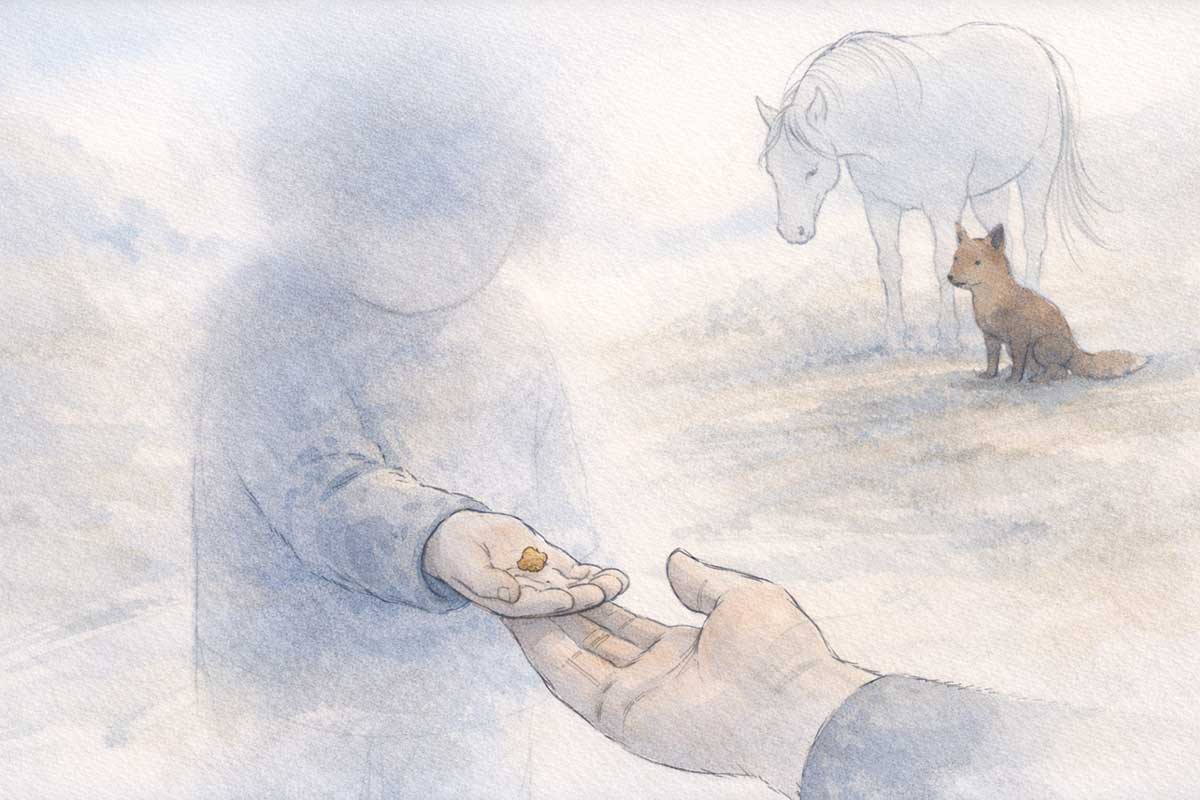
The Mole rummages in his pocket.
He holds out something tiny.
A crumb.
The Boy stares at it.
“It’s not a solution,” says the Mole.
“It’s a reminder.”
“A reminder of what?” asks the Boy.
“That you’re alive,” says the Mole.
“And living things deserve care.”
The Boy eats it.
The Fox sits down nearby.
Not too close.
Close enough.
No speeches.
No fixing.
Just a quiet circle of presence.
The Horse breathes slowly.
The Boy listens.
He cannot feel comfort yet.
But he can hear the Horse’s breath.
He can feel the ground.
He can feel the Mole’s warm little body near his boot.
The fog shifts, slightly.
Not gone.
But less certain.
The Mole says,
“Sometimes the heart goes quiet when it’s tired.”
The Boy asks,
“What if it never gets loud again?”
The Horse answers,
“Then we will carry you until it does.”
Scene 4: The Fox Tells the Truth
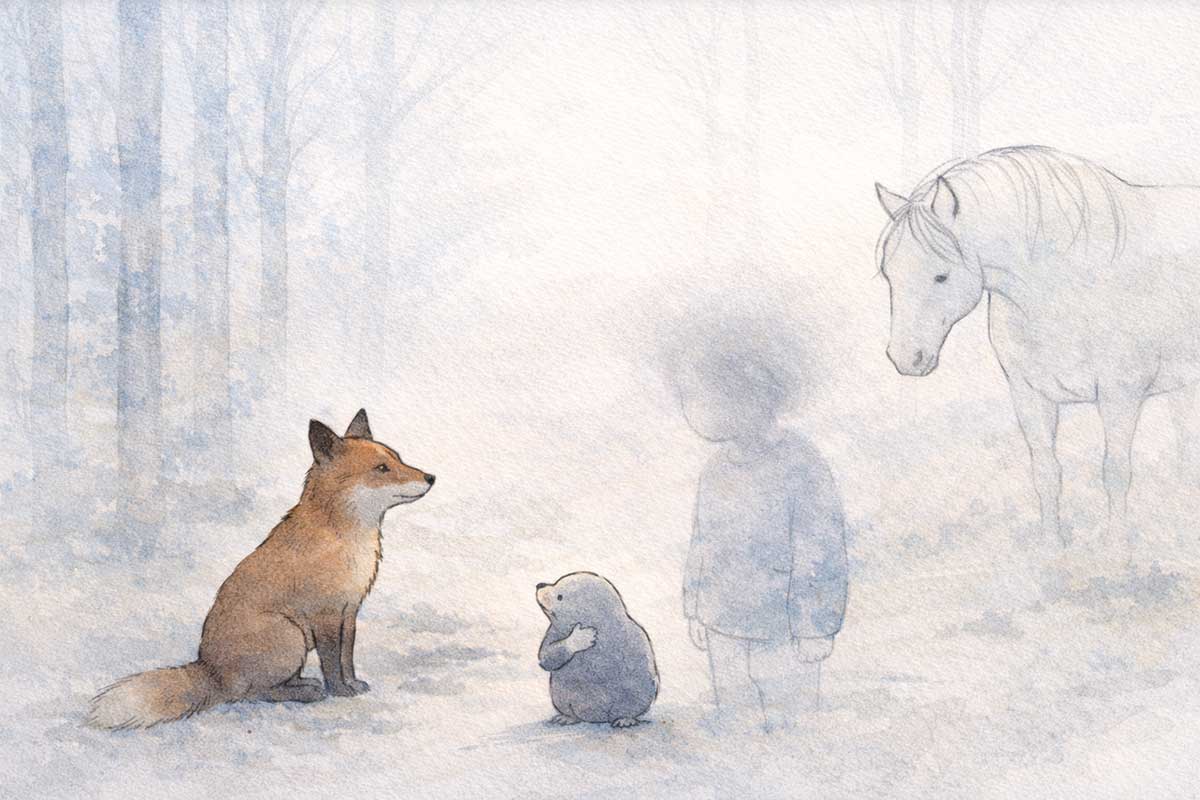
Later, they walk into a small grove.
The trees stand close together,
like friends who don’t ask questions.
The Fox speaks without looking at anyone.
Which is how he speaks when it matters.
“I know this fog,” he says.
The Boy turns to him.
The Fox keeps his eyes on the path.
“It’s when love becomes unbelievable.”
The Mole’s mouth opens.
Then closes.
The Fox continues.
“It tells you people are pretending.”
The Boy nods too quickly.
“It tells you,” the Fox says, “that you’re a burden.”
The Boy’s throat tightens.
The Fox’s voice is quiet now.
Not dramatic.
Just true.
“When it comes for me,” the Fox says,
“I want to run.”
“Why?” the Boy asks.
“So no one can leave me first,” the Fox answers.
The Mole puts a paw to his chest.
The Horse stays still.
Like a mountain holding a secret.
The Boy asks,
“What do you do instead?”
The Fox thinks.
“Small proofs,” he says.
“Not big ones.”
“What kind of small proofs?” asks the Boy.
The Fox nods toward the Mole.
“A hand offered without a lecture.”
He glances at the Horse.
“A body that stays between you and harm.”
Then he says, barely louder than the wind,
“A friend who doesn’t punish you for being hard to reach.”
The Mole whispers,
“That’s a lovely kind of proof.”
The Fox mutters,
“It’s also annoying.”
The Boy almost smiles.
Scene 5: The Fog Lifts the Way It Came

The fog doesn’t lift like a curtain.
It lifts like a hand unclenching.
First, the Boy notices the sky looks wider.
Then he notices the Mole humming.
Then he notices the Fox is still beside him.
Then he notices the Horse has never changed.
The Boy stops and sits down.
His hands are shaking.
Not from cold.
From returning.
“I can feel you,” he says.
The Mole brightens like a candle.
“Good.”
The Fox exhales.
A long breath he didn’t know he was holding.
The Horse says,
“You were never alone.”
The Boy looks down at his hands.
Same hands.
Same path.
Same friends.
Only the fog has moved.
“I thought I was losing you,” the Boy says.
The Mole answers,
“Sometimes you lose the feeling of us.”
“But not the fact of us,” adds the Horse.
The Fox says,
“And you can’t always trust your feelings.”
The Boy frowns.
“That sounds sad.”
“It can be,” says the Horse.
“And it can be freedom.”
They start walking again.
The Boy doesn’t demand to feel perfect.
He only takes the next step.
And when the fog tries to return,
the Boy does something new.
He says it out loud.
“I’m foggy.”
The Mole says,
“Then we’ll be your lantern.”
The Fox says,
“We’ll be your boundary.”
The Horse says,
“We’ll be your ground.”
And the Boy remembers a truth that is small,
and strong,
and enough:
Feeling alone
is not proof
that you are alone.
Final Thoughts by Charlie Mackesy

Fog is persuasive because it borrows your own voice. It tells you that you are a burden, that kindness is pretend, that you are separate, even when you are held. It can make the world look the same and feel completely different. And that is frightening.
But there is a quiet courage that belongs to days like this. It is not the loud kind. It is the courage to name what is happening. It is the courage to accept a small kindness. It is the courage to take the next step without demanding certainty first.
What the Boy learns, with the help of his friends, is something I hope you remember too. Feeling alone is not proof that you are alone. When you cannot carry that truth, let someone else carry it for you. And when you can, be that steady presence for someone else. Not with speeches. With patience. With gentleness. With staying.
Short Bios:
Charlie Mackesy British artist and author known for minimalist line drawings paired with short, compassionate reflections on love, courage, and being human.
The Boy A quiet, searching child figure who represents vulnerability, self-doubt, and the longing to feel safe and loved even on hard days.
The Mole A warm, humorous companion who offers small comforts and simple truths, reminding others to breathe, eat, rest, and accept kindness.
The Fox A cautious, guarded friend shaped by past hurt, learning trust slowly and showing loyalty through presence more than words.
The Horse A steady, calming presence who embodies grounded strength, patience, and the kind of courage that protects without force.
The Fog The inner weather that makes love feel distant and reality feel muted, testing whether connection can be trusted even when it cannot be felt.
Leave a Reply