
|
Getting your Trinity Audio player ready...
|
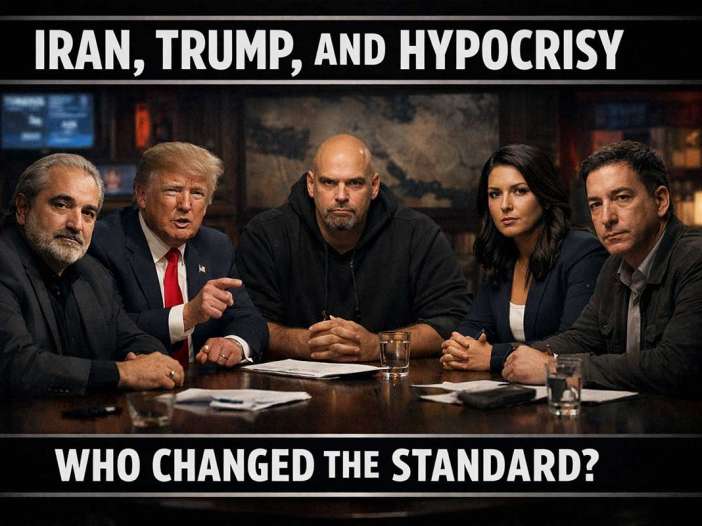
What if John Fetterman just exposed the one contradiction Democrats cannot hide?
Introduction by Nick Sasaki
Welcome, everyone.
Across these five conversations, we are looking at something deeper than Iran alone. We are looking at what happens when a political class says one thing for years, then sounds strangely different once the wrong person takes the same threat seriously.
That is the tension running through all five topics.
For a long time, Iran was spoken of as a real danger. Presidents, senators, commentators, and party leaders warned about its nuclear ambition, its regional aggression, its hostility toward Israel, and the risk it posed to the United States. The language was strong. The warnings were public. The moral seriousness seemed clear.
Then the frame shifted.
Once Trump became the man confronting that danger in a harder, more direct way, much of the public argument seemed to move. For many voices, Iran became less central, and Trump became the center of outrage. That is where the question of hypocrisy enters.
Did the facts change?
Did the threat change?
Or did the emotional and political script change?
That is what these conversations are trying to uncover.
We are not here to flatten every disagreement into bad faith. Real people can differ on method, timing, legality, diplomacy, and the use of force. But when the same threat receives a radically different moral response depending on who is acting, something serious has to be examined.
So across these five topics, we are asking:
When principles change with the person in power, what does that reveal?
When the villain becomes secondary and the man confronting the villain becomes the main target, what does that reveal?
When the same policy gets two opposite reactions, what does that reveal?
When politicians speak strongly on national security, do they mean it?
And when the whole fight becomes a war over narrative, who is still serving truth?
These are not small questions. They go to the heart of public trust.
Once people begin to suspect that principle is often rented, not owned, they do not just lose faith in one party or one leader. They begin losing faith in the moral language of politics itself.
That is why this matters.
Tonight is not only about Iran. It is about memory, consistency, courage, and whether a society can still tell the difference between conviction and selective outrage.
(Note: This is an imaginary conversation, a creative exploration of an idea, and not a real speech or event.)
Topic 1: Did the Principle Change, or Just the President?
Nick Sasaki
Tonight, we are asking a hard question: if Iran was a serious threat before, why do so many voices sound different now that Trump is the one confronting it? Is this really about principle, or is it about who gets to act? Let’s begin.
Question 1: If Iran was a serious threat before, why do so many people sound different now that Trump is the one confronting it?
Glenn Greenwald:
What you are seeing is a familiar political pattern. The standard is often not fixed to the issue itself. The standard is fixed to who is acting. For years, many people in both parties spoke as if Iran’s nuclear ambitions were a major danger. That language was not vague. It was sharp, public, repeated, and morally loaded. Then Trump enters the scene, and suddenly the emotional center of the conversation shifts. Iran becomes less central, and Trump becomes the story. That tells you something important. It tells you that for many political actors and media voices, consistency was never the highest value. The highest value was defeating or discrediting the person they hated most.
John Fetterman:
That is exactly what regular people notice right away. They may not use polished language for it, but they can feel it. They hear one tone when Democrats are warning about Iran, and then they hear another tone when Trump pushes hard against Iran, and they say, hold on, what changed? Iran did not suddenly become harmless. The regime did not suddenly become peaceful. So what changed? The political ownership changed. And when people see that happen, they stop trusting the outrage. They start feeling like the whole thing is selective.
Barack Obama:
I think part of the shift comes from a mix of genuine concern and political distortion. Iran was a real problem. I never treated that lightly. Its nuclear ambitions, its regional behavior, its support for violent proxies, all of that was serious. But there is another layer here. People do not only react to the stated goal. They react to the method, the temperament, the likely consequences, and the broader strategic picture. Still, I do agree that in our political culture, opposition to a figure can become so emotionally intense that it colors every reaction. Once that happens, the public begins to hear less about the underlying threat and more about the personality at the center of the fight.
Douglas Murray:
This happens because many people in public life are far more loyal to tribe than to truth. That is the blunt answer. If the threat were the true center of their concern, their language would remain far more stable. It might vary in nuance, perhaps in strategy, perhaps in emphasis, but the moral seriousness would remain. What changes instead is the passion of condemnation, and that passion begins to follow the man rather than the matter. That is why so much of modern politics feels unserious. The principles are often rented. They are not owned.
Tulsi Gabbard:
I think a lot of this comes from political identity swallowing judgment. Once that happens, people no longer ask, “Is Iran dangerous?” They ask, “What position keeps me aligned with my team?” That is where the credibility starts collapsing. You can disagree on method, timing, even on how much force should be used. That is fair. But when the core threat is described as urgent under one person and then treated almost like a side issue under another, people see that for what it is. That is not a serious moral shift. That is political instinct taking over.
Gad Saad:
This is one of the clearest examples of tribal cognition. The brain of the ideological zealot is not searching for coherence. It is searching for emotional survival inside the tribe. So if Trump says the sky is blue, there will be an emergency symposium on why blue is authoritarian. If Democrats say Iran is dangerous, that is noble realism. If Trump acts on the same premise, then suddenly we must pretend that the true danger is his posture, his tone, his existence. It is absurd, but it is also predictable. The principle did not change. The tribal requirement changed.
Question 2: Are we seeing a real change in moral principle, or political loyalty wearing the mask of moral concern?
Gad Saad:
Political loyalty wearing a mask. Very often, that is exactly what it is. People adore moral language because it makes them feel elevated, but their actual behavior reveals the truth. Their outrage is selective. Their restraint is selective. Their constitutional devotion is selective. Their humanitarian concern is selective. Everything bends with astonishing convenience toward whatever position protects the tribe. And then they expect you not to notice. The fascinating thing is how often they do not even realize they are doing it. They believe their own costume.
Barack Obama:
There are sincere disagreements in foreign policy, and I do not want to erase those. One can genuinely worry about escalation, regional instability, civilian costs, or unintended outcomes. Those are not fake concerns. They matter. But I would also say that political loyalty often shapes how those concerns are expressed. It changes the urgency. It changes the tone. It changes who gets the benefit of the doubt. That is where democratic trust starts to weaken. If moral language is used only when convenient, it no longer carries the weight people claim it does.
Tulsi Gabbard:
That is why people are so cynical right now. They can feel the performance. They can sense when moral concern is real and when it is just being activated because the wrong person is in office. This is one reason so many Americans have stopped trusting institutions, the media, and party leadership. They are tired of being told that something is morally urgent one year and morally suspicious the next, all because the political label changed. That is not leadership. That is branding.
Glenn Greenwald:
One way to test sincerity is to compare language across time. Pull up the old speeches. Pull up the old warnings. Pull up the old interviews. When you do that, a lot of the moral theater collapses. You begin to see how many supposedly sacred principles are applied only under chosen circumstances. The problem is not that public figures disagree. The problem is that many of them rewrite their own moral history and hope the audience has forgotten. That is why this conversation matters. It is not just about Iran. It is about whether memory still has any role in political judgment.
John Fetterman:
I think the public can forgive disagreement more than people in politics realize. What they do not forgive easily is fake distance from your own past language. If you used to talk tough on Iran, own that. If you still think Iran is dangerous, say it. If your issue is the method, then make the issue the method. But do not act like the entire threat vanished the second Trump stepped in. That is where people start thinking, okay, this is not about morality anymore. This is about who gets the win and who is allowed to look strong.
Douglas Murray:
A real principle costs you something. That is one of the easiest ways to tell whether it is genuine. If your principle survives only when it flatters your side, it is not a principle. It is decoration. A great many public moralists are draped in decoration. They speak the language of conscience, but their conscience is strangely obedient to faction. This is why the modern public has become so exhausted. They are surrounded by people who speak as priests but behave as operatives.
Question 3: What would true consistency look like when dealing with Iran, no matter who the president is?
John Fetterman:
It would mean being honest that Iran is still Iran. It would mean not memory-holing years of warnings just because the political atmosphere changed. It would mean saying clearly: if Iran was dangerous under Bush, dangerous under Obama, dangerous under Biden, then it does not stop being dangerous under Trump. You can still argue over tactics. You can still question decisions. But the core reality should stay grounded. That is what consistency looks like to me.
Douglas Murray:
True consistency would mean fixing your judgment on the regime itself rather than on the emotional needs of your coalition. It would mean acknowledging the nature of Iran’s rulers, their ambitions, their history, their hostility, their regional behavior, and their intentions toward those they despise. That does not force one exact policy. It does force moral seriousness. What it forbids is the childish game of pretending that the threat grows or shrinks according to the branding of the American president in office.
Barack Obama:
Consistency would begin with clarity about ends. The objective should remain preventing a nuclear-armed Iran, protecting allies, defending American interests, and avoiding catastrophic escalation where possible. Where governments may differ is in means. Sanctions, diplomacy, covert pressure, deterrence, military action, those are strategic choices, and responsible people can disagree on them. But the public should be able to tell the difference between disagreement over means and denial of the threat itself. Once those become blurred, the conversation stops being responsible.
Glenn Greenwald:
Consistency would also require institutional memory. It would require journalists, politicians, and commentators to be held against their own record. If you spent years saying one thing, then you should have to explain why you sound different now. Not in slogans, not in spin, but in plain terms. If the answer is really about method, then say that. If the answer is really about law, then say that. But if the answer is simply that you cannot bear to validate Trump on anything, then that is what should be exposed. A healthy political culture would not reward that kind of dishonesty.
Gad Saad:
Consistency means your standards do not become inflatable objects. It means that your moral vocabulary still has content when tested by dislike. It means you do not become a dove when Trump acts and a hawk when your side acts. It means you are capable of saying, “I detest this man, but on this point the underlying threat is real.” That sentence is almost impossible for the tribal mind to say. Which is why true consistency is rare. It requires courage, memory, and independence from the narcotic of group approval.
Tulsi Gabbard:
I would add one more thing. True consistency would make room for truth before party. It would require leaders to be willing to upset their own side. That is where the public starts trusting people again. When they see someone willing to say, “My party is wrong here,” or “My side is applying a double standard,” that changes the whole feeling of the conversation. It becomes real. And right now, what people are starving for is not more polished messaging. They are starving for reality.
Nick Sasaki
What stands out here is that the real issue may not just be Iran. It may be whether people can still hold the same moral standard when the political actor changes. Once the person becomes more important than the principle, the conversation starts to drift away from truth. That is where hypocrisy hides.
Topic 2: Is Iran the Villain, or Is Trump Being Framed as One?
Nick Sasaki
Tonight’s question is sharp and uncomfortable: when Iran has a long record of threats, proxy violence, and nuclear ambition, why does so much public outrage suddenly shift toward Trump the moment he confronts that regime directly? Are people still looking at the real danger, or has the story been redirected? Let’s begin.
Question 1: Why does the public conversation so often move away from Iran’s behavior and toward Trump’s character?
John Fetterman:
That is what a lot of people are noticing. Iran does what Iran does, the regime stays the regime, the threat stays the threat, but once Trump takes action, somehow the focus changes. Suddenly the whole story is not about Iran’s conduct. It is about Trump’s tone, Trump’s motive, Trump’s style, Trump’s personality. And look, people can debate style all day. Fine. But when style starts swallowing substance, people start wondering whether the real issue is being avoided on purpose.
Donald Trump:
Because they are obsessed with me. Very simple. Iran can threaten people for years. They can chant death to America, death to Israel, work on nuclear capability, all of it. But the second I step in, the media, the Democrats, all of them, they act like I am the crisis. Not Iran. Me. That tells you everything. They would rather turn me into the villain than admit the regime is the villain, because admitting that would mean I was right.
Tulsi Gabbard:
A lot of people in Washington and in the media are conditioned to react to Trump first and the facts second. That is one of the big distortions of the last several years. Instead of asking, “What is Iran doing? What does that mean? What is the real threat?” the reflex becomes, “How do I position myself against Trump?” Once that becomes the starting point, the public gets a warped picture. The regime fades into the background, and the American political fight becomes the main event.
Mike Pompeo:
Iran has spent decades building networks of terror, destabilizing the region, threatening Israel, threatening American interests, and chasing nuclear capability. That is the story. That has always been the story. But for many critics, there is a deeper emotional investment in opposing Trump than in naming the threat clearly. So the conversation gets inverted. The aggressor becomes secondary, and the man confronting the aggressor becomes the target of moral theater. That inversion is dangerous.
Glenn Greenwald:
There is a structural reason for this. American media is built around personality conflict. It rewards outrage attached to recognizable faces. Trump is the largest magnet for that kind of coverage. Iran is a state actor with a long, complex history. Trump is a constant source of emotional engagement for millions of people. So the media economy naturally gravitates toward him. But that commercial tendency also overlaps with ideological hostility, and together they produce a narrative where analyzing Trump becomes easier, safer, and more profitable than confronting the underlying issue.
Victor Davis Hanson:
This is what happens when politics becomes psychodrama. Instead of asking who did what and why, public life becomes a ritual of emotional sorting. People decide first whom they love, whom they hate, and only then arrange the facts. In that kind of climate, a regime like Iran can almost become a prop in an American morality play. The real actor on stage is Trump, because for many of his opponents, he is the only figure they truly experience as morally vivid. That is how a foreign threat gets overshadowed by domestic obsession.
Question 2: Is this just disagreement over Trump’s style, or is it a deeper attempt to recast him as the real danger?
Mike Pompeo:
A lot of it is deeper than style. Style is the cover story. The real move is to cast Trump as uniquely destabilizing so that any forceful action he takes can be framed as suspect before it is even examined. That way, the debate never starts from the facts on the ground. It starts from a presumption that if Trump is doing it, there must be something reckless, lawless, or self-serving at the center of it. That is not analysis. That is preloaded judgment.
Glenn Greenwald:
That is right. “Style” often becomes a respectable word for a much more total rejection. It lets critics avoid saying openly, “I will interpret almost anything he does through a lens of danger.” So they say tone, temperament, instability, impulse, rhetoric. Sometimes those critiques are fair. But often they are carrying a deeper assumption: Trump himself is the emergency, so any external threat he names becomes secondary. That is how you end up in a strange place where people sound more frightened by his response to Iran than by Iran’s long-term conduct.
John Fetterman:
I think that is what makes people skeptical. They hear critics sounding more emotionally charged about Trump’s posture than about the regime itself, and it lands wrong. It feels upside down. Again, that does not mean every criticism is fake. But when the energy gets misplaced, when the outrage seems to flow more toward the American actor than the actual hostile regime, people start asking whether the frame itself has been flipped.
Tulsi Gabbard:
That flipped frame is one of the biggest problems in Washington. You can disagree with any president on tactics. You can debate military action, diplomacy, sanctions, all of it. But once the conversation becomes “Trump is the bigger danger than Iran,” you are not really weighing the facts anymore. You are collapsing into political identity. And once that happens, the public loses the ability to judge reality clearly.
Donald Trump:
They always do this. They take the person they hate and make him the center of everything. Then they use that to excuse the real bad actors. It is a great trick, actually. Very dishonest, but a great trick. You talk more about me than about the regime. You treat my response as the scandal. You turn the criminal into background scenery and the person fighting the criminal into the main villain. That is exactly what they do.
Victor Davis Hanson:
There is a larger historical pattern here. Democracies sometimes lose confidence in naming external enemies, so they compensate by dramatizing internal ones. It gives them a sense of moral excitement without requiring clarity about the world outside. Trump becomes useful in that sense. He allows critics to perform seriousness, restraint, even moral superiority, all without having to dwell too long on the ugly reality of the regime being confronted. That is why the framing becomes so distorted.
Question 3: How can people tell whether they are looking at the real threat or just being pulled into a political narrative?
Victor Davis Hanson:
They should begin with memory. What has Iran done over time? What has it said over time? What have American leaders in both parties said about it over time? Once you recover that memory, the fog starts to lift. A public with memory is much harder to manipulate. A public without memory can be made to feel that every crisis began yesterday and every moral standard was invented this morning.
John Fetterman:
I would say people should ask a basic question: is the regime still the regime? If the answer is yes, then start there. Start with what Iran is, what it has done, what it wants, and how it has been talked about for years. Then look at the reaction. If the reaction suddenly sounds more panicked about Trump than about Iran, then maybe you are dealing with a political lens more than a reality-based one.
Glenn Greenwald:
Another useful test is to compare how the same commentators respond when different presidents do similar things. That exposes a lot. If the principles move with the partisan weather, you are probably looking at narrative rather than conviction. Look for asymmetry. Look for selective legal outrage. Look for selective humanitarian language. Look for selective fear. Those patterns tell you who is actually evaluating events and who is simply processing them through tribal need.
Tulsi Gabbard:
People have to slow down and refuse to be emotionally programmed. That is hard right now because everything is built to trigger instant reaction. But if you take a breath and ask, “What is the threat? What are the facts? What would I say if a different president were doing this?” you can start breaking out of the trap. That is where real judgment begins.
Mike Pompeo:
I would say people should always return to the adversary’s conduct. What has Iran funded? What has Iran threatened? What has Iran built? What has Iran pursued? Those are not abstractions. Those are facts. If commentary is pulling you away from those facts and into endless speculation about Trump’s psychology, then you are probably being drawn into a political story that serves someone else’s agenda.
Donald Trump:
Very easy. Ask yourself who the media talks about more. If they talk about me more than the regime, you know what is going on. If the headlines are more angry about my response than about Iran’s actions, you know what is going on. They want you looking in the wrong direction. That is how they protect themselves from admitting the truth.
Nick Sasaki
What stands out in this discussion is how easily a real external threat can get buried under an internal political obsession. Once that happens, the public no longer sees the issue clearly. It sees a performance, a contest of identity, a moral drama arranged around the figure everyone has already decided to love or hate. That is where the deeper distortion begins.
Topic 3: Why Does the Same Policy Get Two Opposite Reactions?
Nick Sasaki
Tonight, we move from the policy itself to the reaction around it. Why does the same action look responsible when one leader does it, yet reckless when another does it? Is this about facts, or is it about media framing, party emotion, and selective outrage? Let’s begin.
Question 1: Why does the same policy so often get praised under one president and condemned under another?
John Fetterman:
A lot of people already know the answer, even if they do not say it out loud. The standard shifts with the political label. That is why public trust keeps falling. People hear one side say a policy is necessary, moral, and urgent when their team owns it, then hear the same kind of move described as dangerous or outrageous when the other team owns it. That kind of reversal is hard to hide. Regular people can feel when the language is driven more by politics than by principle.
Joe Biden:
Public reaction is shaped by many things at once. It is shaped by trust, by tone, by process, by history, and yes, by partisanship. I do think people often respond not only to what is done, but to how they believe it will be carried out and what they believe it may lead to. That said, it would be unrealistic to deny that political identity plays a major role. In today’s climate, many people judge actions through the lens of who is doing them before they evaluate the action itself.
Gad Saad:
This is classic ideological possession. People do not evaluate the policy as an independent object. They evaluate whether praising or condemning it helps maintain loyalty to their tribe. Then they wrap that tribal instinct in noble language and call it conscience. That is why the same action can be described as brave one year and monstrous the next. The policy did not change. The tribal requirement changed.
Douglas Murray:
Because many people in public life are not actually loyal to standards. They are loyal to camps. Once you understand that, much of modern politics becomes depressingly easy to read. The same strike, the same sanction, the same strategic posture, the same warning can be interpreted in opposite ways, not because the facts changed, but because allegiance changed. What people call analysis is often only faction with a vocabulary.
Tulsi Gabbard:
This is one reason so many Americans have become deeply suspicious of both parties and of legacy media. They have watched the same facts get narrated in opposite ways depending on who is in office. It is exhausting, and worse than exhausting, it is corrosive. It teaches people that many leaders do not really want truth. They want leverage.
Glenn Greenwald:
The media system helps produce this. News organizations often present themselves as neutral referees, but in practice many of them are deeply invested in narrative outcomes. They know which frames emotionally activate their audience and which frames preserve loyalty. So when leadership changes, the frame changes. The result is that public outrage starts to look less like moral judgment and more like brand management.
Question 2: What role does the media play in teaching people which actions to fear and which actions to excuse?
Glenn Greenwald:
The media does not just report reactions. It engineers them. That does not mean every journalist is lying. It means the structure of the industry rewards emphasis, omission, emotional cues, and repetition. Those tools shape public feeling. If a policy is carried out by a disliked figure, coverage often foregrounds danger, motive, chaos, and abuse. If a similar policy is carried out by a preferred figure, coverage tends to foreground context, necessity, complexity, and restraint. Same reality, different emotional packaging.
Tulsi Gabbard:
That emotional packaging is one of the biggest forces in American politics. People think they are reacting directly to events, but a lot of the time they are reacting to a frame that was built for them. The words chosen matter. The order of facts matters. What gets left out matters. And the problem is that many people do not realize how much their moral instinct is being guided before they ever think for themselves.
John Fetterman:
That is why people get frustrated with the press. It is not just that they disagree. It is that they can feel when the tone is different. They can feel when one administration gets constant suspicion and another gets layers of benefit of the doubt. That kind of thing adds up. Once people notice it, they stop hearing the moral lecture the same way. They start asking who is really being protected.
Douglas Murray:
The modern media class often sees itself as a moral guardian, but it frequently behaves more like a political instrument. It tells the public where outrage belongs, where caution belongs, where sympathy belongs, and where suspicion belongs. The astonishing thing is how often this guidance tracks ideology with such precision. It is difficult to take seriously the claim that this is merely an accident.
Joe Biden:
I do think the media environment is highly fragmented, highly emotional, and often too quick to reward certainty over patience. That affects everyone. It affects presidents, voters, and institutions. It can amplify distrust and sharpen conflict. Leaders have a duty to try to speak clearly inside that environment, but the environment itself often pushes toward reaction before reflection.
Gad Saad:
The media serves as a distribution system for idea pathogens. It takes tribal instinct, emotional bias, selective memory, and moral vanity, then gives them prestige. People feel noble while behaving absurdly. They are told whom to fear, whom to excuse, whom to mock, and whom to sanctify. That is why a person can hold two contradictory views about nearly identical actions and still feel perfectly righteous. The media helped build that psychological shelter.
Question 3: How can people resist selective outrage and judge the same issue by the same standard?
Douglas Murray:
They must recover the discipline of comparison. Put one case next to the other. Compare language, compare reactions, compare headlines, compare justifications. Once you do that, many illusions collapse. Consistency begins when memory is restored. If you do not remember how the same people spoke about similar actions before, you will be governed by mood.
John Fetterman:
I think people should start with a basic test: would I be saying this if the other side did it? That question alone clears up a lot. If your answer changes only because the name changed, then maybe the standard is not real yet. Maybe it is still tied to team loyalty. That is a hard thing to admit, but it is a necessary one.
Glenn Greenwald:
A good rule is to distrust your own rush of certainty when it arrives exactly on cue with your political tribe. That is often the moment when you are most vulnerable to manipulation. Slow down. Ask what facts are being stressed and which ones are being buried. Ask whether the outrage is symmetrical. Ask whether the legal or moral principle being invoked was invoked in other similar cases. That is how you begin separating judgment from programming.
Tulsi Gabbard:
People need the courage to disappoint their own side. Without that, nothing changes. The public is hungry for leaders who will say, “My party is wrong here,” or “My side is using a double standard.” That kind of honesty cuts through the fog immediately. It reminds people that truth still matters more than applause.
Gad Saad:
You resist selective outrage by becoming psychologically allergic to hypocrisy, including your own. That is the hard part. Everyone enjoys spotting the other tribe’s nonsense. The test is whether you can spot your tribe’s nonsense with the same intensity. That requires inner discipline. It requires self-respect. It requires a refusal to outsource your moral life to a collective.
Joe Biden:
A healthy democracy needs citizens willing to ask whether their reaction is grounded in fact, in principle, and in concern for consequences. It also needs leaders and institutions willing to accept that credibility depends on fairness. When standards appear to move with political convenience, trust fades. Once trust fades too far, it becomes much harder for the country to meet serious challenges together.
Nick Sasaki
What this topic reveals is that selective outrage does not appear out of nowhere. It is fed by loyalty, media framing, emotional habit, and the refusal to judge similar things similarly. Once that pattern becomes normal, truth starts losing ground to performance. And when performance wins too often, hypocrisy no longer hides. It becomes the atmosphere.
Topic 4: Do Politicians Really Mean What They Say About National Security?
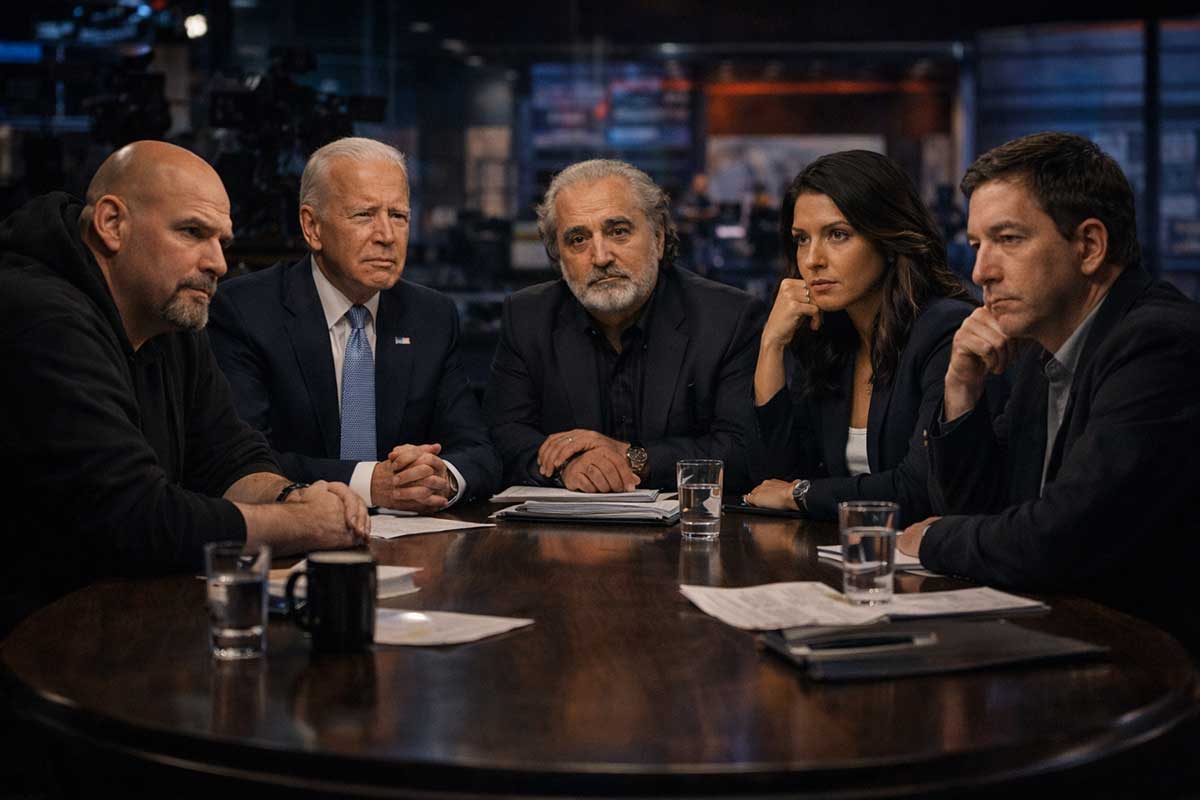
Nick Sasaki
Tonight, we move closer to the center of the contradiction. When politicians speak with urgency about Iran, do they truly mean it, or is that language often shaped by campaign needs, party pressure, and changing political advantage? If the words were serious then, what should they require now? Let’s begin.
Question 1: When politicians warn that Iran is a grave threat, are they speaking from conviction or convenience?
John Fetterman:
Sometimes it is conviction, and sometimes it is clearly convenience. That is the honest answer. A lot of politicians know how to sound strong when it helps them. They know how to use the language of danger, resolve, and national security when they want to look serious. But the test comes later. The test is whether they still sound that way when the politics get uncomfortable. That is where people start separating real belief from borrowed rhetoric.
George W. Bush:
Leadership requires seriousness, especially on matters of national security. When a president or a candidate speaks about a threat, those words ought to come from sober judgment, not temporary advantage. The trouble is that politics invites short memory. Strong words may be spoken in one season and softened in another. That is why the character of leaders matters. Without character, even correct language can become unreliable.
Gad Saad:
For many politicians, national-security language is theatrical costume. They wear it when they need legitimacy, take it off when it becomes socially expensive, and then pretend the wardrobe never changed. This is not unique to one party, but the pattern is easy to spot. If someone describes Iran as a dire danger when it flatters his image, then suddenly becomes evasive when acting on that danger benefits the wrong person, you are not looking at principle. You are looking at opportunism decorated as seriousness.
Tulsi Gabbard:
I think there are people who genuinely understand the threat, but Washington has a way of pressuring people into speaking according to political need instead of plain truth. That is part of why trust breaks down. People hear strong language, but they do not know whether it reflects reality or strategy. And when the follow-through changes with the political winds, it confirms the public’s suspicion that too much of what they heard was situational.
Glenn Greenwald:
The easiest way to answer this is to compare the archive to the present. Go back and read what politicians said when they wanted to project strength. Then compare it to what they say once the same issue becomes politically inconvenient. That comparison exposes a lot. Public figures often rely on the assumption that no one will line up their statements across time. But once you do, a great deal of supposed conviction looks suspiciously like convenience.
Douglas Murray:
A politician who truly means what he says is willing to endure the discomfort of consistency. That is the mark. Anyone can sound grave when the audience rewards it. The real question is whether the same moral clarity survives after the applause changes direction. Too often it does not. And once that happens, the public begins to suspect that national security is just one more field in which language is used tactically rather than truthfully.
Question 2: Why do so many leaders sound fierce during campaigns, then hesitant or selective once power and consequences become real?
Tulsi Gabbard:
Because campaigning rewards emotional certainty and governing punishes it. Once people are in power, they face pressure from institutions, allies, advisors, media narratives, donor networks, and the fear of blame. That does not excuse dishonesty, but it does help explain why so many leaders sound bolder before office than during it. The real problem starts when they never admit the shift. They speak as though their principle is unchanged when everyone can see the tone has moved.
Douglas Murray:
Campaigns reward drama. Governing imposes reality. That gap is understandable up to a point. But what is less forgivable is the refusal to acknowledge that one’s public certainties were often overstated. If a leader spoke with thunder before and whispers after, he should explain why. Otherwise the public is left to conclude that the earlier language was merely instrumental. And frankly, that conclusion is often justified.
George W. Bush:
The burden of office is real. Decisions carry lives, consequences, costs, and risks. A president learns quickly that slogans are lighter than responsibility. But the answer is not to abandon clarity. It is to combine clarity with discipline. A leader may adjust tactics. He may recalibrate timing. He may choose one path over another. But he should not leave the nation wondering whether the threat itself was ever truly believed.
Glenn Greenwald:
Power exposes the difference between branding and belief. On the campaign trail, politicians often speak in moral absolutes because absolutes are easy to market. In office, absolutes collide with legal limits, institutional resistance, strategic ambiguity, and public scrutiny. Again, none of that is the core problem. The core problem is that the original rhetoric is rarely revisited honestly. Instead of saying, “I spoke too simply then, and reality is more complicated now,” many leaders pretend the shift never happened.
John Fetterman:
That is what bothers people most. They know reality is hard. They know office is different from campaigning. They can accept that. What they do not like is the pretending. They do not like hearing leaders act as though they always had the same tone, the same emphasis, the same caution. No, you did not. People heard you. The record is there. So if you changed, say you changed. If the facts changed, explain it. But do not assume everybody forgot what you sounded like before.
Gad Saad:
This is basic mating-display psychology in politics. On the campaign trail, the politician peacocks. He broadcasts strength, certainty, virility, confidence, decisiveness. Once in office, the mating display gives way to bureaucratic sedation. Suddenly the same person discovers complexity, subtlety, process, caution, and a deep reverence for nuance. Again, nuance has its place. But when nuance appears only after power changes hands or when one’s tribe is threatened, it becomes hard not to laugh at the performance.
Question 3: What would it look like for a politician to speak honestly and consistently about Iran from campaign to office, no matter who is president?
Glenn Greenwald:
It would mean saying the same basic thing about the threat across time, then being transparent about disagreements over method. That is the key distinction. A person can say, “Iran is dangerous, but I oppose this tactic,” and that is coherent. What is incoherent is pretending Iran is a fading concern whenever confronting it would validate the wrong political figure. Honest politics would separate threat assessment from partisan discomfort.
John Fetterman:
It would mean not changing the core reality every time the headlines change. Iran is either dangerous or it is not. If you have spent years saying it is dangerous, then keep that part straight. You can argue about whether a strike was wise, whether pressure should be stronger, whether diplomacy should have more room. All of that is fair. But do not start acting like the whole threat is suddenly some kind of exaggerated story just because Trump is involved.
George W. Bush:
Consistency would mean steadiness in judgment and humility in method. A leader should tell the truth about the threat, acknowledge the stakes, and be candid about the limits of any response. He should not exaggerate when seeking office, and he should not retreat into ambiguity once in office. The nation deserves honest language before decisions are made and after they are made.
Douglas Murray:
It would look unfashionable, which is one reason it is so rare. The politician would have to disappoint allies, irritate the press, and resist the temptations of faction. He would have to say, “My position on Iran is not changing because my enemies are temporarily aligned with it.” That kind of sentence is almost extinct in modern public life. Yet without it, we remain trapped in staged morality rather than real judgment.
Tulsi Gabbard:
I think it would look like courage. Real courage. The kind that says truth matters more than tribal comfort. It would mean being willing to upset your donors, your party, your media allies, maybe even your own supporters. But that is the price of credibility. People are hungry for leaders who sound the same in private, in public, on the campaign trail, and in office. That kind of integrity cuts through almost everything.
Gad Saad:
It would require a spinal column. The politician would have to say: “My standards are not for rent. My moral vocabulary is not a seasonal outfit. My threat assessment is not a puppet of social pressure.” That person would be hated by many, respected by more than he realizes, and remembered longer than the polished frauds who adapted themselves to every passing tribal demand.
Nick Sasaki
What rises out of this topic is a hard truth: strong language about national security means very little unless it survives pressure, memory, and political inconvenience. The public can live with complexity. What it cannot respect for long is selective seriousness. Once words become tools instead of convictions, hypocrisy is no longer hidden in the background. It starts speaking through the leaders themselves.
Topic 5: When the Real War Is Over the Narrative
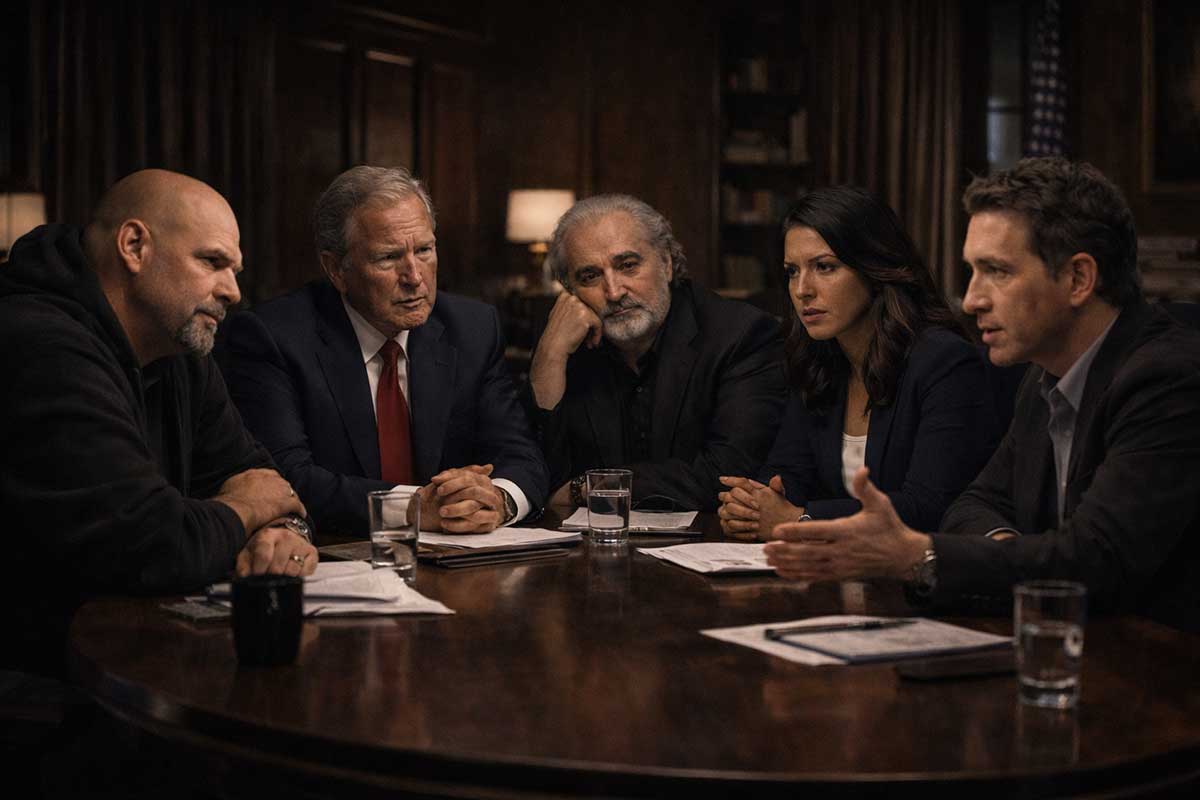
Nick Sasaki
Tonight, we come to the deepest layer of the whole discussion. Maybe the biggest fight is no longer just over Iran, military action, or foreign policy. Maybe the biggest fight is over who gets to define what the public thinks it is seeing. If that is true, then the struggle is not only over events. It is over meaning. Let’s begin.
Question 1: Has the real battle shifted from policy itself to the story told about the policy?
John Fetterman:
A lot of the time, yes. That is what people feel. They can sense that two things are happening at once. One thing is the actual policy, the actual threat, the actual regime, the actual consequences. The other thing is the race to define what it all means before most people even have time to think. That second fight is huge now. Sometimes it almost swallows the first one. Instead of asking what Iran is doing or what the policy is trying to stop, people get pulled straight into a prepackaged interpretation.
Joe Biden:
Public life has always involved narrative, but it is true that the pace and force of it now can overwhelm reflection. People are often presented with a conclusion before they are given the full shape of the facts. That affects how policy is judged, how leaders are judged, and how trust is formed or lost. In a healthy country, the story should arise from reality. Too often now, reality is filtered through story before the public even has a chance to weigh it.
Gad Saad:
Of course it has shifted. This is the age of narrative primacy. Facts are no longer enough. What matters is who frames the facts first, who moralizes them first, who packages them first, and who attaches emotional cues to them first. Once the frame is installed, millions of people will defend it as though it were discovered through independent thought. That is why modern public debate feels so scripted. People think they are responding to reality, but they are often responding to narrative software.
Victor Davis Hanson:
This is what happens when political life becomes theatrical. Events are no longer allowed to stand on their own. They must be sorted into moral templates immediately. Hero, villain, victim, aggressor, savior, tyrant. Once those roles are assigned, the policy itself becomes secondary. The deeper struggle becomes one of interpretation. Whoever controls the frame controls much of the public conscience.
Tulsi Gabbard:
That is why people are exhausted. They are not only trying to judge events. They are fighting through layers of manipulation. They are being told what to fear, what to dismiss, whom to trust, and whom to condemn, often before the facts are clear. That breaks people’s ability to think straight. It also creates a system where truth has to fight its way through branding.
Glenn Greenwald:
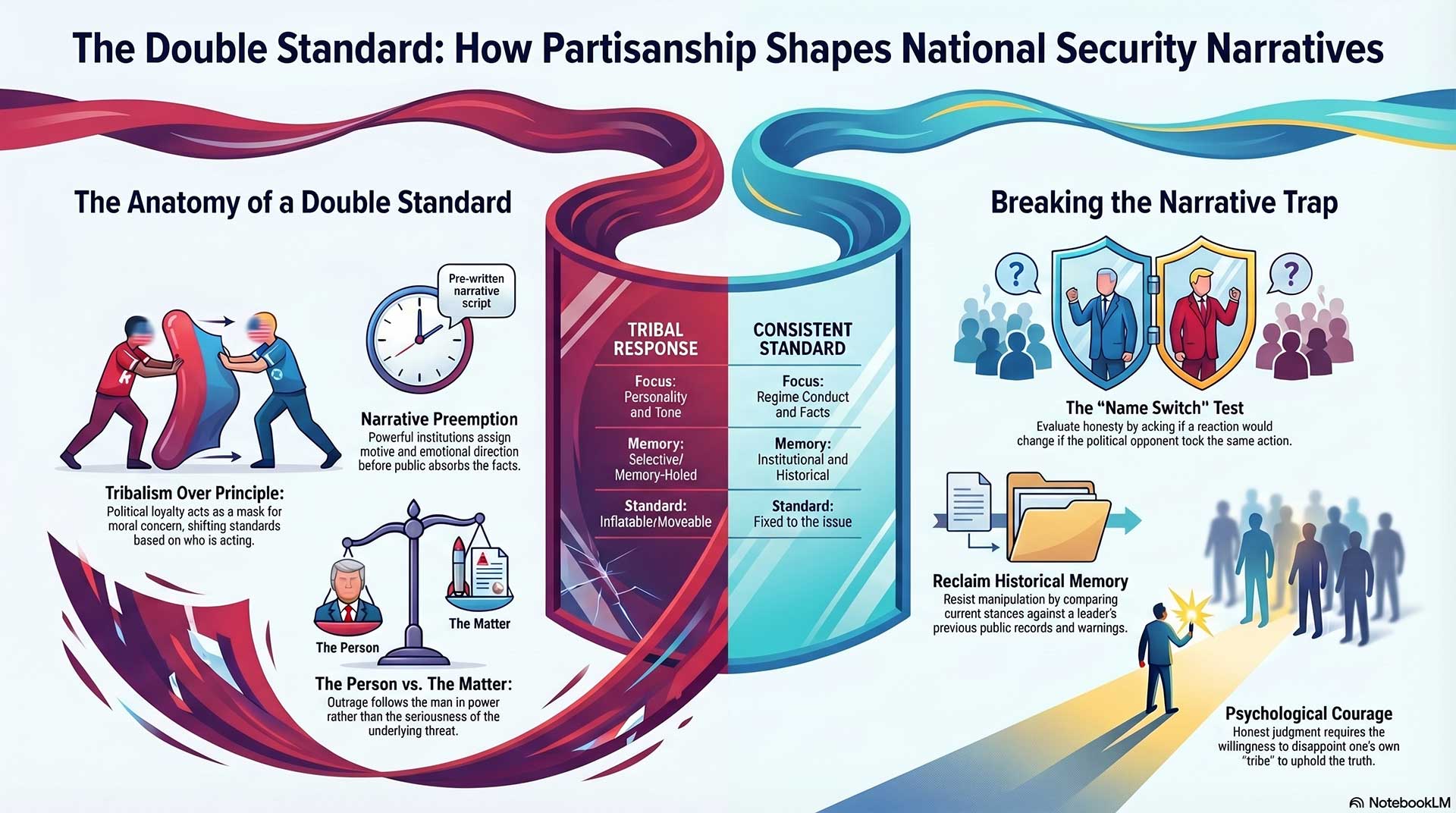
Narrative now functions almost like a form of political preemption. Before an event can be absorbed on its own terms, powerful institutions rush in to assign motive, morality, and emotional direction. That is a huge source of distortion. It means the public is not simply informed. It is cued. And once people are cued hard enough, they begin experiencing disagreement not as a clash of judgment but as a violation of moral reality.
Question 2: How does narrative control help hide hypocrisy?
Glenn Greenwald:
It hides hypocrisy by changing what gets emphasized and what gets buried. That is the trick. If two leaders do something similar, but one is framed as dangerous and the other as responsible, the contradiction gets disguised before people can even name it. The facts may still be there, but the emotional sorting has already been done. That makes hypocrisy feel like consistency, which is one of the most effective forms of manipulation.
Victor Davis Hanson:
Narrative control protects contradictions by scattering attention. The public is directed away from continuity and toward spectacle. Instead of comparing present action with past statements, people are encouraged to focus on mood, style, symbolism, and personality. In that environment, hypocrisy can flourish because memory itself has been weakened. Without comparison, almost any reversal can be dressed up as moral seriousness.
John Fetterman:
That is why some people sound totally different now and still think they can get away with it. The frame does the work for them. It makes the reversal feel normal. It makes it feel like today is disconnected from yesterday. But a lot of regular people are not buying that anymore. They remember the old language. They remember how certain people used to sound about Iran. That is where the frame starts breaking down.
Joe Biden:
Narrative can simplify in ways that make public judgment harder. It can take a complex continuity and turn it into a selective moral contrast. Once that happens, people may lose sight of how much agreement there once was on the threat itself. Public trust suffers when citizens begin to feel that they are being steered away from memory instead of helped back toward it.
Tulsi Gabbard:
It hides hypocrisy by making people react first and compare later, if they compare at all. When emotion is triggered early enough, most people never get to the deeper question. They stay at the level of impression. That is why narrative is so important. It can keep a double standard alive for a long time, especially when institutions all push in the same direction.
Gad Saad:
Hypocrisy survives by anesthetizing pattern recognition. Human beings are actually very good at spotting contradiction when they are not tribally drugged. Narrative control acts like that drug. It says, “Do not compare. Do not remember. Do not examine structure. Just feel.” Once people surrender to that command, they can hold absurdly inconsistent positions and still feel morally pure. That is the magic trick.
Question 3: How can people break out of the narrative war and recover honest judgment?
Tulsi Gabbard:
They have to slow down and reclaim the habit of comparison. Compare what was said before with what is being said now. Compare how the same act is described under different leaders. Compare what facts are highlighted and what facts are skipped. That one habit can restore a lot of sanity. Honest judgment starts when people stop letting institutions do all the framing for them.
John Fetterman:
I think people should ask one very basic question: what would I be saying if the names were switched? That cuts through a lot fast. If the whole emotional reaction changes just because the person changed, then maybe the story has taken over more than the facts. That is not a comfortable question, but it is a clean one.
Glenn Greenwald:
People also need to become less dependent on prestige cues. Too many citizens still assume that if a major outlet, a famous commentator, or a respected political figure says something in a morally serious tone, it must be grounded. That assumption is dangerous. Read across the spectrum. Check old statements. Look for asymmetry. Narrative loses some of its grip the moment people stop confusing authority with honesty.
Victor Davis Hanson:
A nation recovers judgment by recovering memory. Memory is the enemy of manipulation. If citizens remember what their leaders said, what their institutions defended, and what dangers were previously acknowledged, they become much harder to stampede. Historical memory is not academic here. It is moral self-defense.
Gad Saad:
I would say people need psychological courage. Not just information, courage. The courage to disappoint their tribe. The courage to say, “My side is lying,” or “My side is pretending not to remember,” or “My side is applying two standards.” Most people know far more than they admit. What they fear is the social cost of saying it. Honest judgment begins where cowardice ends.
Joe Biden:
Citizens should insist on steadiness, fairness, and humility from leaders and from themselves. They should ask whether their reaction fits the facts, whether their standard is stable, and whether their criticism would survive if the political roles were reversed. A democracy depends on that kind of discipline. Without it, public life becomes easier to manipulate and much harder to trust.
Nick Sasaki
What this final topic brings into view is that hypocrisy often survives through story before it survives through argument. Once the frame is set, contradiction can hide inside it for a long time. That is why memory matters. That is why comparison matters. That is why courage matters. The public does not lose its way only when facts are denied. It loses its way when facts are arranged inside a story that makes double standards feel normal.
Final Thoughts by Nick Sasaki
After all five topics, one truth keeps rising to the surface:
the deepest issue here is not only what Iran is. It is whether people can still hold the same standard when the political actor changes.
Again and again, we came back to the same fracture.
Iran was called dangerous before.
Iran was treated as serious before.
Iran was described in grave moral and strategic language before.
Yet once Trump became the one acting against that threat, many voices seemed to change their emotional posture. Some changed their tone. Some changed their urgency. Some seemed more alarmed by the man confronting the danger than by the danger itself.
That is where hypocrisy becomes hard to ignore.
Across these conversations, we saw that hypocrisy rarely presents itself honestly. It does not usually say, “I am changing my standard because I dislike this person.” It hides behind tone. It hides behind selective memory. It hides behind narrative framing. It hides behind language that sounds moral but often tracks tribe more closely than truth.
That is why this discussion had to go step by step.
In the first topic, we asked whether the principle changed, or just the president.
In the second, we asked whether Iran remained the villain, or whether Trump was being recast as one.
In the third, we looked at why the same policy can receive opposite reactions.
In the fourth, we asked whether politicians really mean what they say when they speak strongly about national security.
In the fifth, we saw how much of modern politics is now a war over narrative itself.
Put together, those five conversations form one larger picture:
when memory weakens, hypocrisy grows stronger.
when comparison disappears, double standards breathe easily.
when truth becomes secondary to side, politics becomes performance.
That may be the deepest warning in all of this.
A healthy public should be able to say:
If Iran was dangerous then, it is dangerous now.
If a tactic is reckless, it is reckless no matter who uses it.
If a response is justified, it remains justified even when carried out by someone we dislike.
That kind of steadiness is rare. But without it, moral language starts to lose meaning.
And once moral language loses meaning, public trust begins to hollow out from the inside.
So the real test is not whether we can denounce the hypocrisy of others. The real test is whether we can resist it in ourselves. Whether we can say, with honesty, that our standards will not move just to preserve our tribe, our image, or our emotional comfort.
That is a difficult test. But it may be one of the last remaining signs that principle is still alive.
Short Bios:
Nick Sasaki
Writer and moderator known for creating imaginary conversations that bring political, moral, cultural, and spiritual tensions into direct dialogue.
John Fetterman
U.S. senator known for blunt language, outsider energy, and occasional willingness to break from expected Democratic messaging.
Barack Obama
44th president of the United States, known for disciplined public language, strategic caution, and a diplomatic approach to major global threats.
Joe Biden
46th president of the United States, known for establishment foreign-policy instincts, alliance-based thinking, and long experience in Washington.
George W. Bush
43rd president of the United States, known for a forceful national-security posture and clear rhetoric on hostile regimes after 9/11.
Donald Trump
45th and 47th president of the United States, known for direct rhetoric, confrontation, and a willingness to break with established political style.
Gad Saad
Public intellectual known for criticizing tribal thinking, ideological conformity, and cultural double standards in blunt terms.
Douglas Murray
Commentator and author known for moral seriousness, civilizational critique, and sharp analysis of Western political and cultural weakness.
Tulsi Gabbard
Former congresswoman known for independence, willingness to challenge party orthodoxy, and direct criticism of Washington consensus politics.
Glenn Greenwald
Journalist known for exposing media double standards, political hypocrisy, and civil-liberties contradictions across party lines.
Mike Pompeo
Former secretary of state known for a hardline view of Iran and a strong national-security focus.
Victor Davis Hanson
Historian and commentator known for linking present conflicts to longer political and civilizational patterns.
Leave a Reply