
|
Getting your Trinity Audio player ready...
|
What if a mother faced a courtroom where her younger self testified against her?
Introduction
Invisible labor of motherhood is the work that keeps a family alive while pretending it is not work at all. It’s the mental tabs left open in your head, the quiet calculations, the anticipations, the constant scanning for what might go wrong next. It’s not just the laundry or the meals or the rides. It’s the invisible choreography behind them. The remembering. The noticing. The translating of a child’s mood into a plan. The soft vigilance that becomes a second skin.
And the strangest part is how often the world praises you for doing it in silence.
That’s why this story doesn’t begin in a bedroom at 3 a.m. or a school drop-off line or a cluttered kitchen where you swallow your irritation like medicine. It begins in a courtroom, because motherhood in modern life can feel like a trial you never asked for and cannot opt out of. A place where you are evaluated by impossible standards, where love is assumed but effort is scrutinized, where any hint of need becomes suspicious. If you make sacrifices, you’re expected to do it without resentment. If you feel resentment, you’re told your love is flawed. If you ask for help, you’re made to feel demanding. If you don’t ask, you’re told you should have spoken up. If you work, you’re absent. If you stay home, you’re wasting potential. No matter which door you walk through, someone calls it the wrong one.
The Sacrifice Courtroom turns that trap into a visible stage.
In the Court of Unpaid Hours, a mother stands in the defendant area not because she failed to love, but because she was human while loving. The prosecution is not a person, exactly. It’s The Culture, smooth and confident, speaking in polished expectations that sound reasonable until you live inside them. The judge is Conscience, calm and exacting, not interested in blame, only truth. Time serves as bailiff, polite and relentless, because in parenting, time is always the thing you owe and never the thing you have.
And then the witnesses arrive.
Her Younger Self takes the stand first, bright-eyed and certain, carrying the old fantasies about balance and control, about keeping an identity untouched. Her Partner follows, not as a villain, but as the kind of person who loved and still underestimated the work. Her grown Child speaks next, finally old enough to see what the child could not see when they were small: that moms don’t run on magic. They run on someone’s life. And when the surprise witness arrives, it doesn’t argue. It simply exists. The Body, worn by years, posture holding pain and endurance, quietly telling the truth no one wants to admit: that love without self-care turns into erasure.
This is not a story about perfect motherhood. It’s about the cost of invisible work, and what happens when it is finally named out loud. It’s about the moment a mother stops pleading for approval and starts asking for something more honest. Not worship. Not medals. Not pity.
Just help. Just recognition. Just permission to be a whole person again.
If you’ve ever felt guilty for needing a break, if you’ve ever sat alone in a car for five minutes before going inside, if you’ve ever smiled while your nervous system begged you to stop, you’ll recognize this courtroom. And if you’ve ever loved a mother, you might finally see the verdict she has been living with for years.
Welcome to The Sacrifice Courtroom.
(Note: This is an imaginary conversation, a creative exploration of an idea, and not a real speech or event.)
The Sacrifice Courtroom
A three-act imaginary play
Core premise
A mother is put on trial in an afterlife courtroom for contradictions that society calls “failure,” but that real life calls “love.” The court is not deciding guilt. It is deciding language. What do we call a life that keeps everyone alive?
Setting
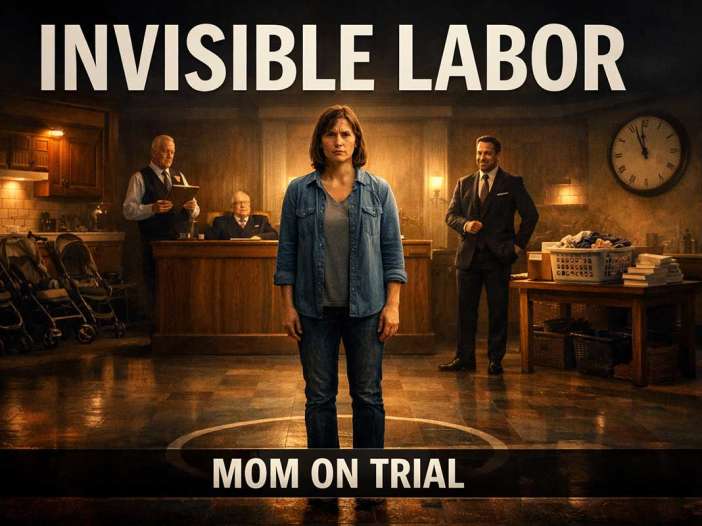
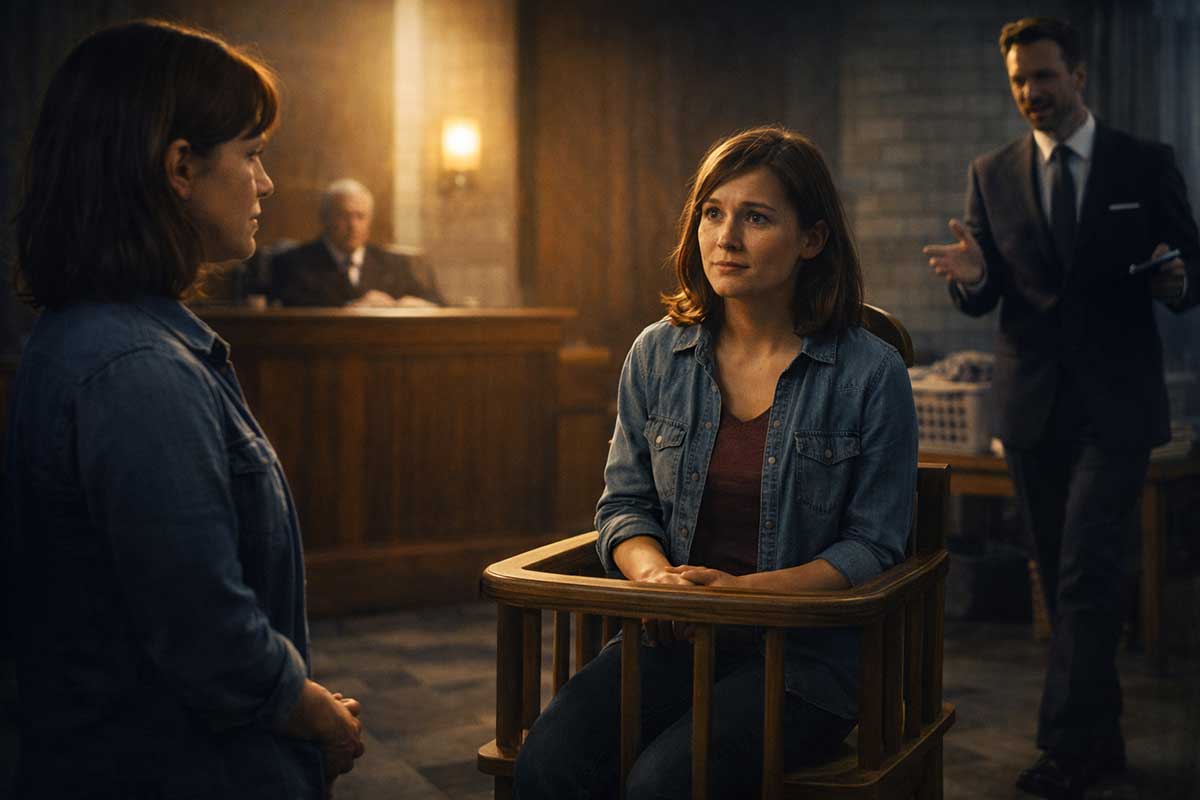
An afterlife courtroom that looks like a blend of a family kitchen and a courthouse. The witness stand is a highchair. The jury box is a row of empty strollers. The evidence table is a laundry basket. A clock ticks, but its hands do not move.
Main cast
- The Judge: The Conscience, calm, precise, impossible to impress
- The Bailiff: Time, polite and merciless
- The Prosecutor: The Culture, charming and cruel in a professional way
- The Defendant: The Mother
- Witness 1: The Younger Self, bright-eyed and sharp
- Witness 2: The Partner, not a villain, just human
- Witness 3: The Child, now grown
- Witness 4: The Grandmother, carrying her own era
- Witness 5: The Body, called as surprise witness near the end
The charges
- Overgiving and calling it love
- Resentment and hiding it
- Losing herself and pretending she did not
- Wanting a break and feeling ashamed
- Choosing work, choosing home, and being blamed either way
Act I: Arraignment
Scene 1: The Court Convenes
(Time steps forward. He carries a clipboard like a hospital nurse. His shoes make no sound.)
TIME (Bailiff): All rise. The Court of Unpaid Hours is now in session. The Honorable Conscience presiding.
(The Judge enters. No robe, no gavel. Just a steady presence. The Judge sits. Everyone feels smaller, not from fear, from truth.)
JUDGE (Conscience): Sit.
(Everyone sits. The Mother remains standing a second too long, like she is used to waiting for permission.)
JUDGE: Defendant, state your name.
MOTHER: I do not know which name you want. The one before, or the one after.
JUDGE: The one you answer to when someone cries in the night.
MOTHER: Mom.
JUDGE: Do you understand why you are here?
MOTHER: I think so. I did not do it perfectly.
JUDGE: This court does not prosecute imperfection. We prosecute distortion. We prosecute lies you were forced to live inside.
(Time gestures toward the Prosecutor.)
TIME: The Culture will present the case.
(The Culture stands. It looks like a polished talk show host in courtroom clothing. Warm smile. Cold eyes.)
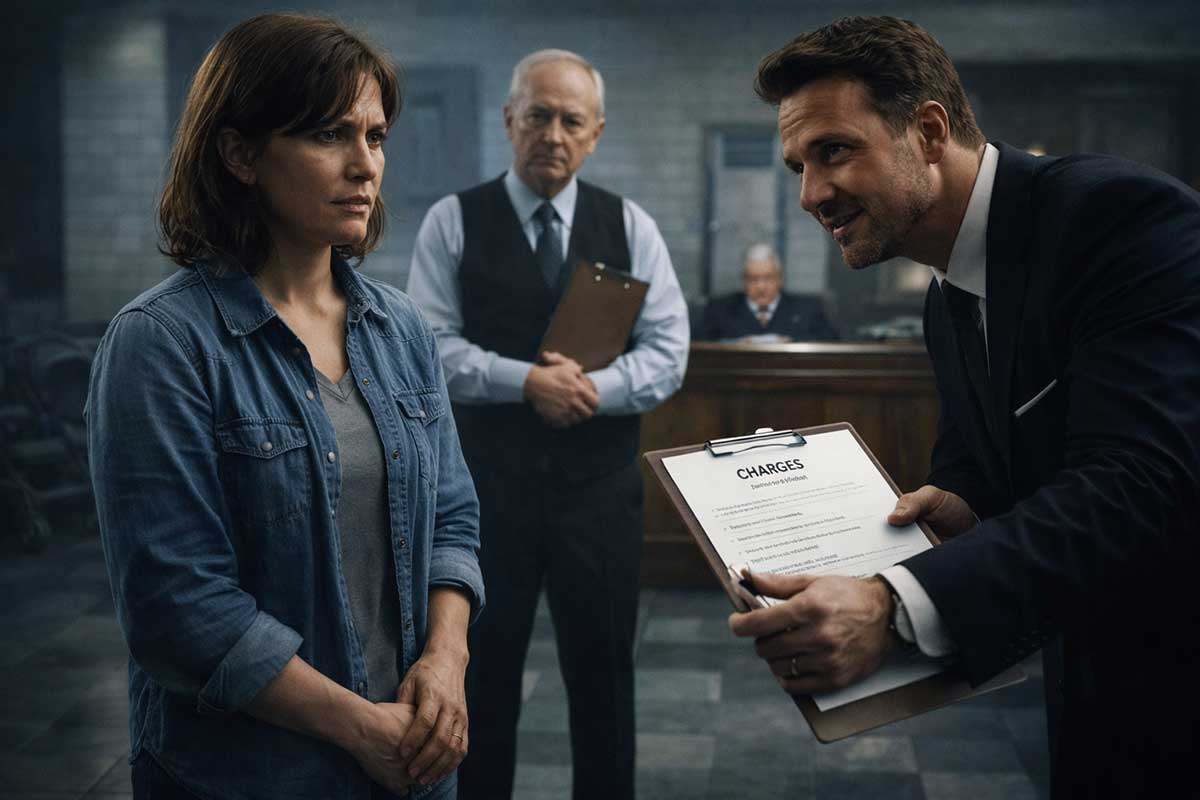
CULTURE (Prosecutor): Your Honor, members of the silent jury, we are here because the defendant has committed a series of offenses that are, regrettably, common. She has overgiven, then complained. She has loved, then asked for something in return. She has lost herself, then blamed the world. And she has made choices that were, frankly, inconvenient for others.
(The Mother swallows. Her hands fold together like a prayer she does not believe will work.)
CULTURE: We will show that her sacrifice was not pure. It was messy. It was loud sometimes. It came with bitterness, with exhaustion, with moments of regret. We will show she wanted applause. We will show she wanted to be seen.
(The Culture turns slightly, as if speaking to the audience at home.)
CULTURE: And if she wanted to be seen, then it was not sacrifice. It was performance.
(A small sound from the Mother, not words. The kind of sound you make when something hits an old bruise.)
JUDGE: Defendant, how do you plead?
MOTHER: I plead… tired.
(Time clears his throat gently, like he is trying to be kind.)
TIME: The court requires a clearer response.
MOTHER: Not guilty of not loving. Guilty of being human.
(The Judge’s eyes soften, just enough to keep the room from breaking.)
JUDGE: Noted. Proceed.
Scene 2: Opening Statement for the Defense
(The Mother has no lawyer. She steps forward anyway.)
MOTHER: I do not have polished words. I have receipts. I have proof that does not look like proof.
(She gestures at the laundry basket.)
MOTHER: I have the years I carried other people’s days on my back. I have the time I cut into pieces so everyone else could have a whole life. I have the way I learned to want less without calling it grief.
(The Culture smiles, as if amused.)
CULTURE: Beautiful. Tragic. But irrelevant.
MOTHER: If you think it is irrelevant, you have never tried to love someone who cannot tell you what hurts.
(Silence lands like snow.)
MOTHER: I did not do it perfectly. I did it repeatedly.
JUDGE: Call your first witness.
(The Mother takes a breath. It trembles, like a curtain about to rise.)
MOTHER: I call… my Younger Self.
Act II: Testimony

Scene 1: The Younger Self
(Younger Self enters, wearing confidence like perfume. She is the Mother before she learned the weight of a small life.)
TIME: Do you swear to tell the truth, the whole truth, and the truth you were too naive to imagine?
YOUNGER SELF: I do.
CULTURE: Tell us about the defendant. Before the baby. Before the body changed. Before the calendars turned into cages.
YOUNGER SELF: She was disciplined. Ambitious. She had plans. She believed in sleep. She believed her mind belonged to her.
CULTURE: Did she want children?
YOUNGER SELF: Yes. But she pictured the pretty parts. The smiling parts. The soft photos. She did not picture the real costs.
CULTURE: So she entered the contract without reading the fine print.
YOUNGER SELF: That is not fair.
CULTURE: Fair is not the issue. Responsibility is.
(The Culture steps closer.)
CULTURE: Did she ever say, before, “I will never be like those moms who lose themselves”?
(YOUNGER Self hesitates. The Mother closes her eyes like she already knows.)
YOUNGER SELF: She said it. She said she would keep her identity. She said love would not erase her.
CULTURE: And what happened?
YOUNGER SELF: Love erased her… and then she became someone else.
CULTURE: Someone weaker.
MOTHER: Objection.
JUDGE: On what grounds?
MOTHER: Love does not make you weaker. It makes you porous. Everything gets in. Everyone gets in. You learn to bleed quietly.
(The Judge considers. Nods once.)
JUDGE: Sustained. Rephrase.
CULTURE: Fine. Someone less impressive.
YOUNGER SELF: Yes. Less impressive. More real.
(The Culture frowns as if the witness has broken script.)
CULTURE: Tell us about her resentment.
YOUNGER SELF: She did not expect resentment. She expected gratitude. Or at least recognition.
CULTURE: Did she receive it?
YOUNGER SELF: Not in the way she needed.
CULTURE: And so she became bitter.
YOUNGER SELF: She became quiet. She became efficient. She became the kind of person who can smile while carrying a collapse inside.
(The Mother’s throat tightens. The Judge watches carefully.)
MOTHER: May I question?
JUDGE: You may.
(The Mother approaches her Younger Self like approaching a photograph.)
MOTHER: When you imagined motherhood, what did you think sacrifice would feel like?
YOUNGER SELF: Noble. Clean. Like a candle.
MOTHER: And what did it actually feel like?
YOUNGER SELF: Like being used up in invisible ways. Like being needed so much you disappeared. Like loving someone so deeply you stopped asking who you were.
(The Younger Self’s voice cracks.)
YOUNGER SELF: I did not know. I did not know.
(The Mother reaches out, almost touches her, stops. Some distances are too sacred.)
MOTHER: Neither did I.
(The Judge speaks softly.)
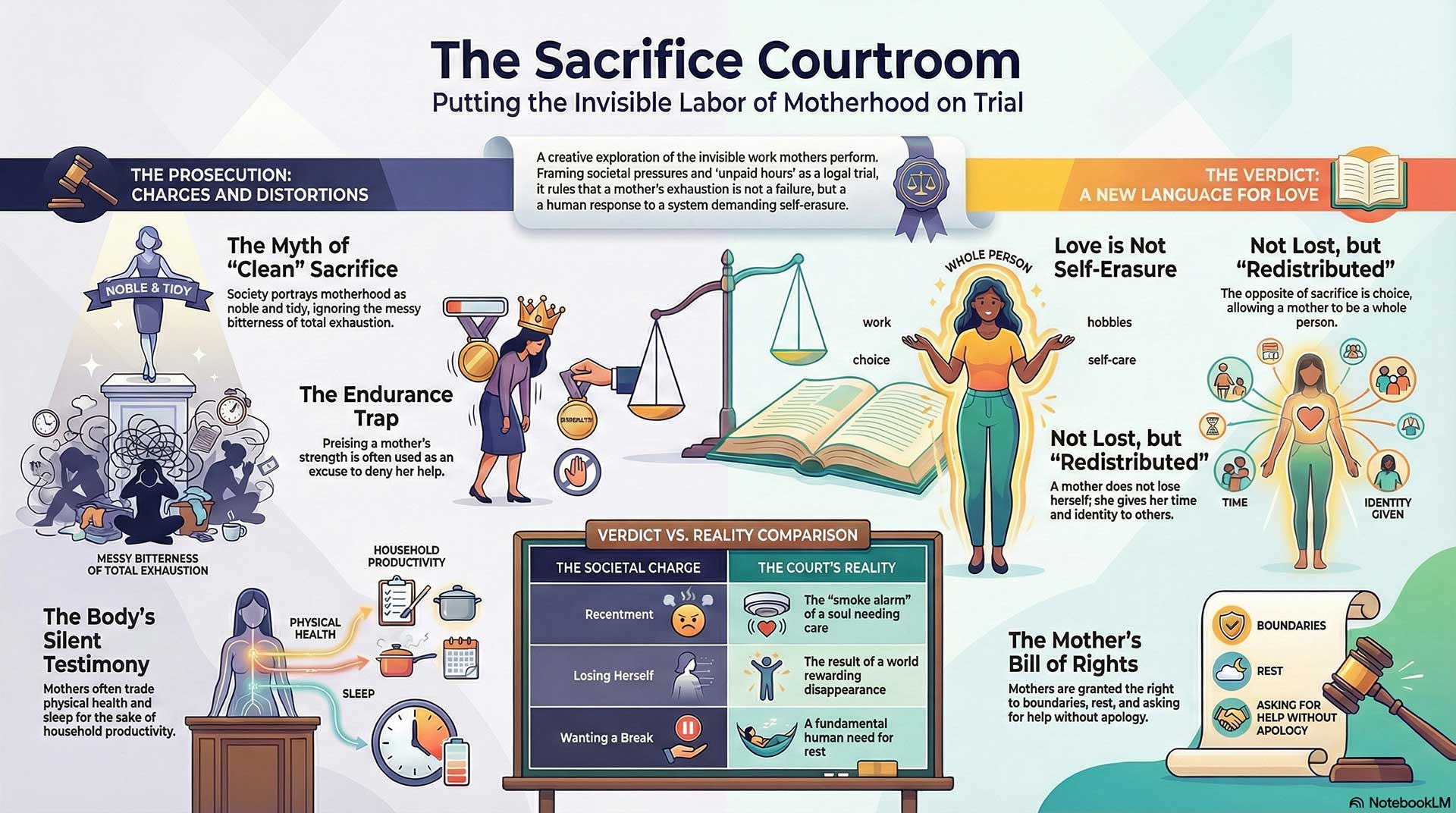
JUDGE: The court recognizes the first distortion: the myth that sacrifice is clean.
TIME: Next witness.
Scene 2: The Partner
(The Partner enters. Not a monster. Just a person who benefited from a system without always noticing.)
CULTURE: Describe the defendant in the household.
PARTNER: She was the center. She held everything.
CULTURE: The center, or the servant?
PARTNER: I did not see it like that.
CULTURE: Of course you did not.
(The Culture turns toward the Mother.)
CULTURE: Did she ever ask for help?
PARTNER: Yes.
CULTURE: And did you help?
PARTNER: Sometimes. I thought I did. I did dishes. I worked. I provided.
CULTURE: Ah yes. The old spell. Provide money, and vanish from the emotional work.
(The Partner stiffens.)
PARTNER: That is not fair. I loved our child.
CULTURE: Love is not the question. Labor is.
(The Mother steps forward.)
MOTHER: When I asked for help, what did you hear?
PARTNER: I heard criticism. I heard, “You are failing.” Even when you did not say it.
MOTHER: And when you got defensive, what did I hear?
PARTNER: That you were alone.
(The Partner’s eyes fill. He hates that he understands now, in court, too late for the clean version of the story.)
PARTNER: I thought you were stronger than me. I thought you could handle it.
MOTHER: That was the compliment that broke me.
(Silence. The Culture shifts uncomfortably. This is not the kind of pain that sells.)
JUDGE: The court recognizes the second distortion: praising women for تحمل, endurance, while using it as an excuse to abandon them inside the work.
TIME: Next witness.
Scene 3: The Child, Grown
(The Child enters as an adult. Their face has the softness of someone who has forgiven and the sharpness of someone who remembers.)
CULTURE: Tell the court what kind of mother she was.
CHILD: She was there.
CULTURE: That is vague.
CHILD: It is the whole thing.
(The Culture smiles like it will win this easily.)
CULTURE: Did she ever yell?
CHILD: Yes.
CULTURE: Did she ever make you feel guilty?
CHILD: Yes.
CULTURE: Did she ever choose herself?
CHILD: Rarely.
CULTURE: So she failed all sides. Too harsh, too soft, too absent, too present. This is the point. She is guilty of contradiction.
(The Child looks at the Mother, long and steady.)
CHILD: She is guilty of being a person who did not get to be a person.
(The courtroom air changes. Like a window opened.)
CHILD: When I was little, I thought moms were appliances. You push a button, food. You push a button, comfort. You push a button, clean clothes.
(The Child swallows.)
CHILD: Then I grew up. I saw the cost. I saw her sitting alone in the car for five minutes before coming inside, just to breathe. I saw her smile at me after crying in the bathroom. I saw her give away pieces of herself like she had unlimited supply.
(The Mother trembles, tears held back by decades of practice.)
CHILD: I do not want her to be punished for that.
CULTURE: Interesting. So you are saying the defendant deserves a medal.
CHILD: No. I am saying she deserves language. I am saying she deserves to be seen as a whole human. Not a saint. Not a machine. A mother.
(The Judge nods.)
JUDGE: The court recognizes the third distortion: children often do not understand the cost until the bill comes due in their own lives.
TIME: Next witness.
Act III: Verdict

Scene 1: Surprise Witness, The Body
(Time steps forward.)
TIME: The court calls an additional witness. The Body.
(The Body enters. It is the Mother, but also not. It carries every sleepless night as posture. Every worry as tension. Every birth, every loss, every held breath as scar tissue.)
CULTURE: Oh please. Melodrama.
JUDGE: You will be respectful. The Body has been under oath longer than any of you.
(The Body sits. It does not look at anyone. It is tired of being looked at only when it is attractive or broken.)
MOTHER (whispering): I forgot you.
BODY: Yes.
(One word. It lands heavy.)
MOTHER: I used you.
BODY: Yes.
MOTHER: I thought love required it.
BODY: Love required care. You confused care with sacrifice.
(The Culture leans in, hungry.)
CULTURE: Tell the court what the defendant did to you.
BODY: She ignored pain. She called it normal. She traded sleep for peace in the house. She traded hunger for one more lunch packed. She traded stillness for productivity. She traded softness for survival.
CULTURE: And therefore she is guilty.
BODY: Of living in a world that rewards women for disappearing.
(The Judge’s gaze sharpens.)
BODY: She did not hate me. She forgot I was her.
(The Mother’s tears finally fall, quietly, like something finally allowed.)
MOTHER: I am sorry.
BODY: I am still here.
(The Judge speaks.)
JUDGE: This court is not here to punish the Mother for what the world demanded. This court is here to return what was stolen.
(Time steps forward, gentle now.)
TIME: The court requests closing statements.
Scene 2: Closing Statements
(The Culture straightens, recovers charm.)
CULTURE: Your Honor, yes, motherhood is hard. But the defendant’s “needs” are inconvenient. If we allow mothers to be fully human, the system collapses. Standards collapse. Expectations collapse. The illusion collapses.
(The Culture smiles as if that is obviously bad.)
CULTURE: We cannot have mothers who ask to be seen. It makes other people feel responsible.
(The Mother steps forward. No grand speech. Just truth.)
MOTHER: I did not want to be worshipped. I wanted to be helped.
(Silence.)
MOTHER: I did not want to be a martyr. I wanted to be a person who could love without erasing herself.
(She looks at the Partner, then the Child, then her Younger Self, then her Body.)
MOTHER: I made mistakes. I yelled. I withdrew. I did not always know how to ask. But I loved with my whole life. And if that is a crime, then the world is guilty too.
(The Judge stands. The room rises automatically, not from rule, from reverence.)
JUDGE: Here is the verdict.
(Everyone holds their breath.)
JUDGE: Not guilty of contradiction. Contradiction is evidence of reality.
Not guilty of wanting to be seen. Being seen is a human need.
Not guilty of resentment. Resentment is the smoke alarm of the soul.
Not guilty of losing herself. She was not lost. She was redistributed.
(The Mother’s face breaks open, relief and grief at once.)
JUDGE: However, this court issues an order.
(Time lifts a small document. It looks like a permission slip.)
JUDGE: The Mother is hereby granted the right to boundary without guilt. The right to rest without explanation. The right to ask without apology. The right to be loved as a whole person.
(The Judge looks at the Culture.)
JUDGE: And the Culture is sentenced to the only punishment that works.
CULTURE: Which is?
JUDGE: To tell the truth.
(The Culture’s smile falters. For the first time, it looks afraid.)
JUDGE: Court adjourned.
(Time closes the clipboard. The clock’s hands move for the first time.)
(Lights dim. The Mother remains onstage. She does not rush out. No one is crying loudly. It is quiet. The way it gets when a wound finally has air.)
MOTHER (to the audience): I thought love meant disappearing.
Now I think love means staying.
(Blackout.)
Final Thoughts
The most painful lie about motherhood is not that it’s easy. Most people know it’s hard. The lie is more specific than that. The lie says: if you were really loving, you wouldn’t feel tired. If you were really grateful, you wouldn’t feel resentful. If you were really strong, you wouldn’t need anything. If you were really a good mom, you would disappear without complaint and call it fulfillment.
And so, countless mothers learn the same survival trick. They turn themselves into something useful. They become the solution to everyone else’s needs. They become the calendar, the pantry, the glue, the emotional translator, the midnight nurse, the relentless optimizer. They become so dependable that nobody checks whether they are okay. They become so capable that asking for help feels like failure. They become so practiced at holding it together that even their sadness looks efficient.
But a person cannot live as a function forever.
That’s why the verdict in this story matters. Not because it is poetic, not because it feels satisfying, but because it is corrective. It refuses to call humanity a flaw. It refuses to call a need “selfish.” It refuses to call resentment “bad,” and instead calls it what it often is: a signal. A smoke alarm. A message from the soul that something essential is being neglected.
Resentment is not proof that you don’t love your child. It’s often proof that you are carrying more than one nervous system was meant to carry alone.
And the witness that changes everything is The Body, because the body doesn’t care about ideals. It does not care about what you “should” be able to handle. It keeps the receipts. It remembers every night you didn’t sleep, every meal you skipped, every time you tightened your jaw to keep the peace, every time you swallowed words because you didn’t want to sound ungrateful. It remembers how you turned your own needs into background noise. It remembers how you forgot that you are not just a mother. You are also the person inside the mother.
When The Body finally speaks, it’s not there to accuse. It’s there to return you to yourself.
And that, in a quiet way, is the real message: the opposite of sacrifice is not selfishness. It’s choice. It’s agency. It’s the ability to say, I love you and I matter too. It’s the ability to accept help without feeling like you are taking something you didn’t earn. It’s the ability to rest without turning it into another chore you must justify.
If this story leaves you with anything, let it leave you with permission.
Permission to name the invisible work.
Permission to ask for a re-balance.
Permission to stop auditioning for sainthood.
Permission to set boundaries and still call it love.
Permission to be held, not just to hold.
Because a mother doesn’t need a pedestal. A mother needs a net. A mother needs partnership that isn’t occasional. A mother needs language that doesn’t shame her for having a human nervous system. A mother needs the kind of love that doesn’t require self-erasure as proof.
And if you’re not a mother, this still belongs to you. Because everyone came from someone who carried invisible labor. Someone who paid with time, with body, with attention, with worry, with the quiet slicing of the self into pieces so another human could grow.
The healing begins when we tell the truth about that.
Not to make mothers martyrs. Not to make anyone guilty. But to make love more honest, more shared, more livable.
The court is adjourned.
Now the real work begins: letting her be a person again.

Short Bios:
The Judge (Conscience) is the calm inner voice that refuses excuses and refuses cruelty, delivering truth with steady compassion and insisting on language that heals instead of shames.
Time (Bailiff) is polite and merciless, keeping the court moving with quiet authority, reminding everyone that love is measured in minutes and that the unpaid hours always add up.
The Culture (Prosecutor) is charming, sharp, and relentless, speaking in polished expectations and impossible standards, turning a mother’s human needs into evidence against her.
The Mother (Defendant) is exhausted but unbroken, a woman who has kept a household alive through invisible work and quiet endurance, now learning to claim rest, boundaries, and dignity without apology.
The Younger Self (Witness) is the mother before motherhood, bright, ambitious, and certain, stepping into the courtroom to confront what she never understood about the costs of love.
The Partner (Witness) is not a villain, just human, shaped by habits and assumptions, loving but imperfect, and slowly learning what “help” really means when the mental load is finally named.
The Child, Grown (Witness) is the adult who can finally see behind the curtain, bringing empathy and clarity to the stand and rewriting sacrifice as something that deserves recognition, not silence.
The Body (Surprise Witness) is the mother’s physical self carrying years of strain, sleeplessness, and unspoken pain, showing that love without self-care becomes erasure, and that healing begins when the body is remembered as home.
Leave a Reply