

|
Getting your Trinity Audio player ready...
|

What if Mr. Houston is naming the quiet sins many grown children refuse to face?
A lot of people think maturity is about age. It is not.
Some people get older, but they still do not know how to treat the people who loved them first.
You can have money, freedom, opinions, and your own life, and still be deeply immature in the way you deal with your parents.
That is what this conversation is about.
It is about four things a son or daughter should never do.
Never speak to your parents with disrespect.
Never make them worry without reason.
Never keep putting your life on their back when you should be carrying your own weight.
Never treat them like a burden.
These things may look small in the moment. A sharp tone. A missing call. A habit of leaning too hard. A cold attitude when they get older. But those small things say something big about your heart.
The truth is, many people do not wake up until it is late. They think their parents will always be there. They think they can fix it later. They think one more harsh reply, one more silent night, one more selfish season does not matter that much.
But it does matter.
The way you treat your parents says a great deal about your character. It shows whether you have learned gratitude. It shows whether freedom made you wiser or just more selfish. It shows whether your strength has any mercy in it.
Your parents may not be perfect. No parent is. This is not about pretending every family story is easy. This is about who you choose to be. This is about honor. This is about the kind of son or daughter people become when nobody is forcing them to do right.
So in this conversation, five men speak on one hard subject:
What should a grown child never do to the people who gave them life, carried them, worried for them, and loved them long before the world knew their name?
(Note: This is an imaginary conversation, a creative exploration of an idea, and not a real speech or event.)
Topic 1 — Never Speak to Your Parents with Disrespect

1. Why do some children speak most harshly to the very people who loved them first and sacrificed most for them?
Myles Munroe:
Many people confuse familiarity with permission. The closer someone has been to your life, the easier it is to stop honoring their place in it. A parent becomes “ordinary” in the mind of a child who has forgotten the cost of that parent’s love. Once honor leaves the heart, harshness enters the mouth. That is why disrespect is rarely just a speech problem. It is a vision problem. The child no longer sees the parent as a gift, a covering, a source, or a steward of early life. He sees only a flawed human being standing in the way of his emotions.
John Wooden:
I think it often comes from lack of discipline in little things. If you let yourself become careless with tone, careless with gratitude, careless with patience, then sooner or later that carelessness shows up at home. And home is where many people drop their standards first. They may speak politely in public and sharply in private. That tells me they do know better. They are just failing to practice what they know when it matters most.
Jim Rohn:
Human nature has a strange weakness. We often take for granted what has been given to us steadily and faithfully. A stranger gives us five minutes, and we say thank you. A parent gives us twenty years, and we start acting like it was owed. That is the danger. When appreciation fades, attitude changes. Then tone changes. Then the relationship starts to crack. One of the great signs of maturity is learning to stay grateful for what has been constant.
Billy Graham:
There is a spiritual issue in it too. Pride hardens the heart. A proud son or daughter begins to speak as though love received in the past no longer matters in the present. But none of us outgrows the command to honor father and mother. None of us becomes so wise, so wounded, or so independent that contempt becomes acceptable. Harsh words often rise from a heart that wants freedom without humility.
Stephen Covey:
I would say many children, and adults too, live reactively instead of intentionally. They speak from accumulated emotion, old irritation, wounded memory, or stress. Then they justify the tone by pointing to the parent’s flaws. But real character begins when you stop letting another person’s weakness dictate your behavior. Your parent may be imperfect. Your responsibility to act from principle still remains.
2. What does disrespectful speech reveal about a person’s character, pain, or hidden immaturity?
Stephen Covey:
It reveals a gap between values and habits. A person may claim to believe in love, family, respect, and loyalty, but pressure exposes whether those values have been internalized. Disrespectful speech often shows that the person has not yet learned to govern self before attempting to judge others. It may reveal pain, yes. It may reveal unresolved history. But it still reveals character, since character is shown most clearly under strain.
Billy Graham:
Words are rarely accidental. They rise from what has been stored in the heart. That does not mean every harsh word proves a person is evil. It may show hurt, bitterness, disappointment, or deep frustration. But it does mean something inside has not been surrendered, healed, or brought under control. Many people want mercy for their pain, but they do not want conviction for their tongue. Both are needed.
Jim Rohn:
Disrespect reveals a failure of inner management. You cannot build a fine life with a poor mouth. If a person has not learned how to handle anger, disappointment, or ego, it will show up in speech long before it shows up anywhere else. The mouth is often the early warning system of a drifting life. Listen to how a person speaks when irritated, and you will learn a great deal about how well that person is leading himself.
Myles Munroe:
It reveals disorder. Mature people know that power begins with self-rule. If your emotions can seize your tongue whenever you are challenged, then you are not yet governing your own spirit. And if you are not governing yourself, you are not ready for larger authority. Disrespect toward parents is often celebrated as boldness or independence, but it is often bondage in disguise. It is being ruled by feeling.
John Wooden:
I would add that it shows a weakness in poise. Poise is being yourself under pressure. A person who loses control in speech is showing that pressure is controlling him. That does not mean he cannot grow. It just means he has work to do. A well-formed character does not appear by accident. It is built choice by choice, especially in moments where emotion tries to take the lead.
3. How can an adult son or daughter disagree with a parent honestly without losing honor, self-control, or love?
John Wooden:
Start with restraint. You do not need to win every point. You do not need the last word. If the goal is truth with dignity, then your manner matters as much as your message. Speak calmly. Be plain. Do not insult. Do not exaggerate. Do not use past wounds as weapons. A person can be firm without being cruel. That is one mark of real strength.
Myles Munroe:
Honor does not mean silence. It means proper posture. You can differ with a parent and still respect position, sacrifice, and personhood. Speak truthfully, but speak with weight in your own spirit. Do not approach the conversation as a rebel trying to break free. Approach it as an adult who knows that freedom without honor becomes arrogance. If you must set boundaries, set them cleanly, not viciously.
Billy Graham:
Truth and love were never meant to be enemies. Some people use truth as a hammer. Others use love as an excuse to avoid truth. But a godly spirit learns to join them. You can say, “I do not agree,” and still keep your voice gentle. You can say, “I need to make a different choice,” and still keep gratitude in your words. Honoring a parent does not mean pretending. It means refusing to let honesty become cruelty.
Stephen Covey:
Seek first to understand. Many conflicts between parents and adult children become destructive because each side enters the conversation already prepared to defend, explain, and react. Listen until you can state their concern fairly. Then speak from your values, not your resentment. Use language that owns your choice rather than attacks their character. That move alone changes the whole spirit of the conversation.
Jim Rohn:
Remember the long view. One emotional outburst may satisfy the moment and damage the relationship for years. So before you speak, ask yourself: what result am I after? If you want freedom, ask for it with maturity. If you want respect, show it first. If you want to be heard as an adult, speak like one. A powerful life is built on learning how to carry conviction without losing class.
Topic 2 — Never Make Your Parents Worry Without Reason

1. Why do some people treat a parent’s concern as control, rather than seeing it as love mixed with fear?
Stephen Covey:
Many people react to the surface instead of reading the deeper need underneath it. A parent asks where you are, when you will be back, or whether you are safe, and the child hears only pressure. What is often missed is that concern is usually tied to memory, responsibility, and love. Parents remember your vulnerability long after you start feeling independent. A mature person learns to hear the care behind the question, not just the discomfort of being asked.
Billy Graham:
Love often carries concern in its hands. A parent may not express that concern perfectly, yet the root of it is still care. Many sons and daughters want the freedom of adulthood without making room for the ache that lives in a parent’s heart. Fear is part of human love in a fallen world. When someone has prayed for you, carried you, and watched over you for years, silence from you can feel heavy in ways you do not see.
Jim Rohn:
Young people often mistake accountability for restriction. They think, “If someone checks on me, they must be trying to run my life.” That is not always true. Sometimes they are trying to protect peace. Sometimes they are trying to keep the imagination from running wild with worst-case stories. One short message can save your parents three hours of needless worry. That is a small act with a big return.
Myles Munroe:
The issue is often a misunderstanding of freedom. Freedom is not doing whatever you feel without regard for the people tied to your life. Freedom without responsibility is childish. A parent’s concern is not always an attempt to dominate. Many times it is a sign that covenant memory still exists. They remember feeding you, carrying you, losing sleep over you. You may feel grown, but that history still lives in them.
John Wooden:
A lot of this comes down to perspective. A son or daughter may see one text or one question. A parent may be carrying a whole night of concern. Good character asks you to think beyond yourself. Even when you want space, you can still act in a way that shows consideration. Consideration is one of the quiet habits that keeps family life from becoming unnecessarily painful.
2. What kind of selfishness or emotional blindness makes a child disappear, stay silent, or leave parents in anxiety?
Jim Rohn:
It is often a mix of carelessness and self-absorption. A person gets busy, emotional, distracted, or wrapped up in personal plans, and forgets that someone else is emotionally invested in his safety. That is how immaturity works. It does not always look cruel. Many times it looks casual. But casual behavior can still create serious pain for other people.
Myles Munroe:
It is blindness to the weight of your presence in another person’s life. Mature people know that their choices send consequences outward. Immature people think only of their own moment. They leave without a word, stay silent, ignore calls, and tell themselves it is no big thing. Yet they are spending someone else’s peace as if it were cheap. That is not independence. That is misuse of relationship.
John Wooden:
I would call it lack of discipline and lack of empathy working together. Discipline would make you pause and send the message. Empathy would make you picture what the silence feels like on the other side. When those are missing, people become inconsiderate without stopping to think. The finest kind of behavior is often simple: doing the little thing that spares someone needless hurt.
Stephen Covey:
There is often a reactive mindset behind it. “I do not want questions, so I will avoid contact.” “I do not want conflict, so I will stay silent.” That may feel easier in the moment, yet it erodes trust. Trust is built when people can rely on your word, your patterns, and your communication. Silence used as escape may give temporary relief, but it creates relational debt.
Billy Graham:
There can be a hardening of the heart too. Once a person begins to think, “Their worry is their problem, not mine,” love has already started to cool. We are called to bear with one another, not hide behind indifference. Parents are not meant to live in constant dread over children who are old enough to offer a simple word of peace.
3. What does mature communication look like when a son or daughter wants freedom but still wants to give parents peace?
John Wooden:
It looks calm, simple, and consistent. You say where you are going. You say when you expect to be back. If plans change, you update them. You do not make a show of it. You just do it. Real maturity often looks plain. It is not about dramatic speeches. It is about reliable habits.
Billy Graham:
It has kindness in it. A mature son or daughter does not communicate as if giving information is some great burden. There is gentleness in the tone. There is willingness to reassure. There is a quiet spirit that says, “I know you care, and I do not want to feed your fear without reason.” Peace often enters a family through very ordinary acts of thoughtfulness.
Stephen Covey:
It means creating clear expectations. Freedom and trust work best when both sides know the pattern. Mature communication is proactive, not forced. You do not wait for worry to build. You give information early. You speak in a way that respects both your adulthood and the relationship. You can set boundaries and still be dependable. Those two things can live together.
Jim Rohn:
A good life is usually built on small disciplines repeated over time. This is one of them. A message before the worry starts. A call when you are delayed. A little consistency that tells your parents, “You do not need to chase me for peace.” That is a grown-up gift. It says you are carrying your share of the emotional load.
Myles Munroe:
Mature communication protects both freedom and honor. You do not surrender your adulthood, and you do not despise the bond either. You act from responsibility. You say what needs to be said with clarity and steadiness. In that way, freedom is no longer rebellion. It becomes trustworthy stewardship of your own life in a way that still respects the hearts of those who raised you.
Topic 3 — Never Keep Forcing Your Parents to Carry Your Life for You

1. When does receiving help from parents stop being gratitude and start becoming dependence, avoidance, or entitlement?
Myles Munroe:
Help becomes harmful when it no longer serves growth. There is nothing wrong with receiving support in a season of need. Families are meant to strengthen one another. But when support becomes a substitute for responsibility, it begins to damage character. The real question is not whether your parents are willing to help. The real question is whether you are still moving toward maturity. A son or daughter who keeps taking without building, keeps leaning without rising, has crossed from gratitude into dependence.
Jim Rohn:
A good test is this: are you using help to get stronger, or are you using help to stay comfortable? Plenty of people accept support for so long that it starts to feel normal. Then what was once mercy becomes expectation. That is a dangerous shift. Gratitude says, “Thank you for helping me get back on my feet.” Entitlement says, “Why would I stand when someone else will keep holding me up?” One builds a future. The other quietly wastes it.
Stephen Covey:
It changes when the person stops acting with intention. Real growth moves from dependence to independence and then to interdependence. If a grown child stays in a pattern of being rescued, financed, managed, or emotionally stabilized by parents year after year, something has stalled. It may be fear. It may be habit. It may be lack of vision. Yet the sign is the same: the person is no longer using help as a step forward. He is using it as a way to avoid the demands of adulthood.
Billy Graham:
There are times when people justify prolonged dependence by calling it closeness or family love. But love should not be used to excuse what weakens the soul. A parent may gladly carry a burden for a season. That can be beautiful. Yet if a child keeps laying the same burden down without repentance, effort, or change, that is no longer humble receiving. It begins to look like taking advantage of kindness.
John Wooden:
I would say it becomes a problem when the person can help himself more than he is willing to admit. Most people know, deep down, when they are truly trying and when they are making excuses. Character is revealed in whether you are doing your best to stand on your own. Help should encourage effort, not replace it.
2. Why do some grown children delay responsibility and keep placing emotional, financial, or practical weight on their parents?
John Wooden:
Sometimes it is plain lack of discipline. Responsibility asks something of you every day. It asks you to plan, work, decide, sacrifice, and live with consequences. Many people want the comfort of adulthood without the demands of it. That kind of life is unstable. It puts pressure on parents who should not have to keep carrying tasks that a mature son or daughter ought to handle.
Billy Graham:
Fear is part of it too. Some people fear failure so much that they stay in a place of dependence where someone else can absorb the risk. But fear, left unchecked, can become disobedience to your own calling. You were not made to stay spiritually, emotionally, or practically childlike forever. At some point, avoiding responsibility is not just weakness. It is refusal.
Stephen Covey:
A person may be trapped in a script he has never challenged. “My parents will fix it.” “My family will cover it.” “Someone else will steady me.” Those habits become part of identity unless they are examined. Without self-awareness and chosen change, dependency becomes a system. It keeps repeating itself across money, emotions, decisions, and daily life. The pattern stays in place until the person decides to live by principle instead of impulse or convenience.
Myles Munroe:
Many people delay responsibility because they have never embraced purpose. When a person does not know what he is meant to build, he drifts. Drift produces passivity. Passivity looks for rescue. Parents then become the holding place for a life that should be carried by the person himself. Responsibility becomes easier when purpose becomes clear. A man with vision does not want to remain a burden. He wants to become a source.
Jim Rohn:
Let me add this: ease is addictive. When bills are covered, choices are softened, and someone else is always there to absorb the blow, it is easy to keep postponing growth. Human beings can get comfortable with a bad arrangement if it saves them from effort. Yet comfort can cost you your future. Too much shelter can keep a person from becoming capable.
3. What inner shift must happen for a person to stop being carried and become someone who can carry others?
Stephen Covey:
The shift begins when a person stops seeing responsibility as punishment and starts seeing it as identity. You become trustworthy by making and keeping commitments to yourself and to others. That changes how you think, spend, speak, and act. You stop asking, “Who will catch me?” and start asking, “How can I become dependable?” That is a deep turn in the soul.
Myles Munroe:
A person must accept ownership. No one else can do that part for him. The moment you say, “My life is now my responsibility before God, before conscience, before those who helped raise me,” something changes. Ownership produces strength. It produces order. It produces movement. Once you carry your own assignment with seriousness, you begin to grow into someone who can support, protect, and build for others.
Jim Rohn:
The change happens when you decide that being an adult is not just about freedom. It is about weight. Can you carry your commitments? Can you carry your bills? Can you carry your word? Can you carry your share of the trouble without handing it off every time life gets hard? That is when your life begins to gain value. Strong people lighten the load in a family. They do not keep adding to it.
John Wooden:
I think it starts with small acts done well. Keep your room in order. Handle your schedule. Follow through on what you say. Show up. Work steadily. Learn from mistakes without collapsing into excuses. Most people do not become reliable in one grand moment. They become reliable by practicing steadiness in ordinary life. Before long, others know they can lean on you.
Billy Graham:
There must also be humility. A grown person does not become strong by pretending he never needed help. He becomes strong by receiving past help with gratitude and then living in a way that honors it. One beautiful moment in life is when a parent begins to feel, “My child is now someone I can rest around.” That is not just success in the world. That is a kind of righteousness in daily life.
Topic 4 — Never Treat Your Parents Like a Burden
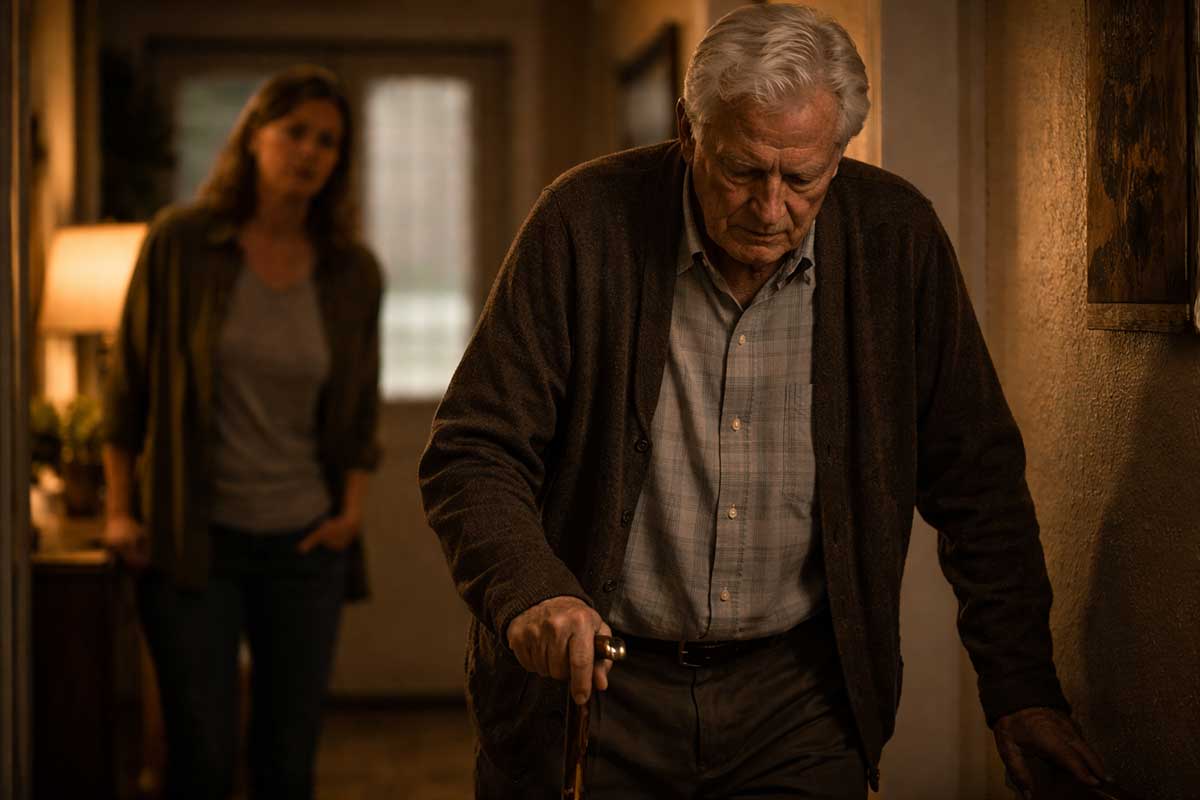
1. Why do some children forget their parents’ value once age, weakness, or inconvenience enters the picture?
Jim Rohn:
It happens when memory gets replaced by self-interest. A child remembers what parents provided when he is in need, but forgets what they mean when their strength begins to fade. That is one of the sadder turns in human nature. We can become so busy building our own lives that we start measuring people by convenience. And once that happens, even the people who once carried us can begin to feel heavy to us. That is a failure of gratitude.
Billy Graham:
There is a moral danger in a culture that prizes strength, speed, independence, and usefulness above love. When parents grow older, slower, or more fragile, some children begin to see them through the eyes of impatience rather than mercy. But the value of a mother or father was never based only on what they could produce. Their dignity does not shrink when their body weakens. If anything, the heart of a child is tested more clearly in that season than in any other.
Stephen Covey:
Many people move into a transactional mindset without realizing it. They begin to view relationships through efficiency, emotional ease, or personal goals. In that frame, an aging parent can start to look like an interruption. But principle-centered living asks a different question: who is this person, and what is my responsibility to love with integrity? Once you return to principle, inconvenience stops being the main lens.
Myles Munroe:
Aging exposes whether honor was real or merely sentimental. It is easy to respect parents when they are strong, giving, and useful to your progress. It is much harder to honor them when they require patience, time, and care. Yet that is where true character is revealed. If your respect disappears when their usefulness declines, then your respect was shallow. Honor that depends on convenience is not honor.
John Wooden:
I think some of it comes from lack of training in unselfishness. A person who has not practiced patience, service, and thoughtfulness in small ways will struggle when life asks those things in larger ways. Caring for older parents can be tiring and emotionally demanding. But difficulty does not excuse coldness. It just shows what kind of habits have, or have not, been built over time.
2. What kind of soul keeps honoring parents when caring for them becomes tiring, costly, or emotionally hard?
John Wooden:
A disciplined soul. Not cold, but disciplined. Real love is not just a feeling that appears when things are pleasant. It is a habit of choosing what is right when the moment is not easy. A good person learns how to stay kind even when tired, stay respectful even when frustrated, and stay steady even when the work is repetitive. That kind of soul has practiced character long before the pressure arrived.
Myles Munroe:
It is the soul that understands duty as part of love. Modern people often want love without obligation, but love has weight in it. It asks something of you. A mature son or daughter does not say, “I will honor my parents only when it feels beautiful.” He says, “Their dignity still matters, so my conduct must rise to meet this moment.” Honor becomes visible when service becomes costly.
Billy Graham:
A merciful soul keeps honoring parents in that season. Mercy remembers weakness without despising it. Mercy does not pretend the task is easy, and it does not deny exhaustion. But it refuses to let hardship turn into contempt. There is a tenderness that God can form in a person who chooses compassion over irritation again and again. That tenderness is holy in everyday life.
Stephen Covey:
I would say it is a principle-centered soul. Feelings change. Energy rises and falls. Circumstances become complicated. But principles give you something stable to live from. Gratitude, respect, stewardship, love, and human dignity can guide action long after emotion grows thin. The person who lives by principle does not need every day to feel inspiring in order to do what is right.
Jim Rohn:
It is also the soul that remembers. Memory is a powerful guard against selfishness. If you remember your mother staying up with you, your father working through exhaustion, your parents carrying worry you never saw, that memory can help you act better now. The soul that honors well in hard seasons is usually the one that has kept gratitude alive.
3. How should an adult child balance personal freedom, family duty, compassion, and dignity when parents grow older?
Stephen Covey:
The balance begins with clarity. You cannot handle this season well through vague good intentions alone. Families need honest conversation, clear expectations, shared responsibility where possible, and decisions rooted in values instead of panic. Personal freedom still matters, but freedom without responsibility becomes hollow. Duty still matters, but duty without dignity can become resentment. The goal is a pattern of care that protects the parent’s worth and the child’s integrity at the same time.
Billy Graham:
This season calls for prayer, humility, and love that is patient. No family handles it perfectly. There may be limits, misunderstandings, financial strain, or painful history mixed into the situation. Still, an adult child should try to move with compassion, not hardness. You may not be able to do everything. But you should not let your parents feel discarded. Even when hard choices must be made, they should feel seen, respected, and loved.
Jim Rohn:
You do have to be practical. Sentiment without structure wears people down. So make plans. Share the load where you can. Get help when needed. Organize the money, the schedules, the responsibilities. But never become so efficient that you lose heart. A parent is not a problem to manage. A parent is a person to honor. Good structure should protect love, not replace it.
John Wooden:
Balance comes from doing the best you can, day by day, with steadiness and decency. There may be no perfect arrangement. You may feel stretched. But you can still choose your manner. You can still speak gently. You can still avoid making your parents feel like an unwanted task. Sometimes dignity is protected less by grand solutions and more by small daily acts of patience.
Myles Munroe:
I would add that honoring parents in old age does not always mean surrendering wisdom or boundaries. It means carrying responsibility with maturity. You may need support from siblings, outside care, or firm decisions. Yet whatever choices are made, the governing spirit must remain honor. The parent must not be reduced to an inconvenience. Freedom, duty, and compassion come into right order when dignity stays at the center.
Final Thoughts by Mr. Houston

Let me leave you with this.
One day, your parents will not be here.
And when that day comes, the money will not matter. Your pride will not matter. The argument you thought was so important will not matter. What will matter is how you treated them when you still had the chance.
Did you speak with respect?
Did you give them peace?
Did you carry your own weight?
Did you honor them when it cost you something?
A lot of people think they have more time. That is the lie. More time is not promised to anybody.
So do not wait until your mother is gone to wish you had spoken softer.
Do not wait until your father is gone to wish you had listened better.
Do not wait until a hospital room or a funeral to suddenly discover gratitude.
If your parents are still alive, you still have a chance to do what is right.
Call them.
Check on them.
Speak better to them.
Stop making life heavier for them.
Stop acting like love will always be there waiting for you to get serious.
Honor is not a feeling. It is a choice.
Respect is not talk. It is how you carry yourself.
Love is not what you say when people die. It is what you do while they live.
So fix it now.
Not next month.
Not when you feel emotional.
Now.
Because a wise son or daughter does not wait until it is too late to become who they should have been all along.
Short Bios:
Leave a Reply