

|
Getting your Trinity Audio player ready...
|
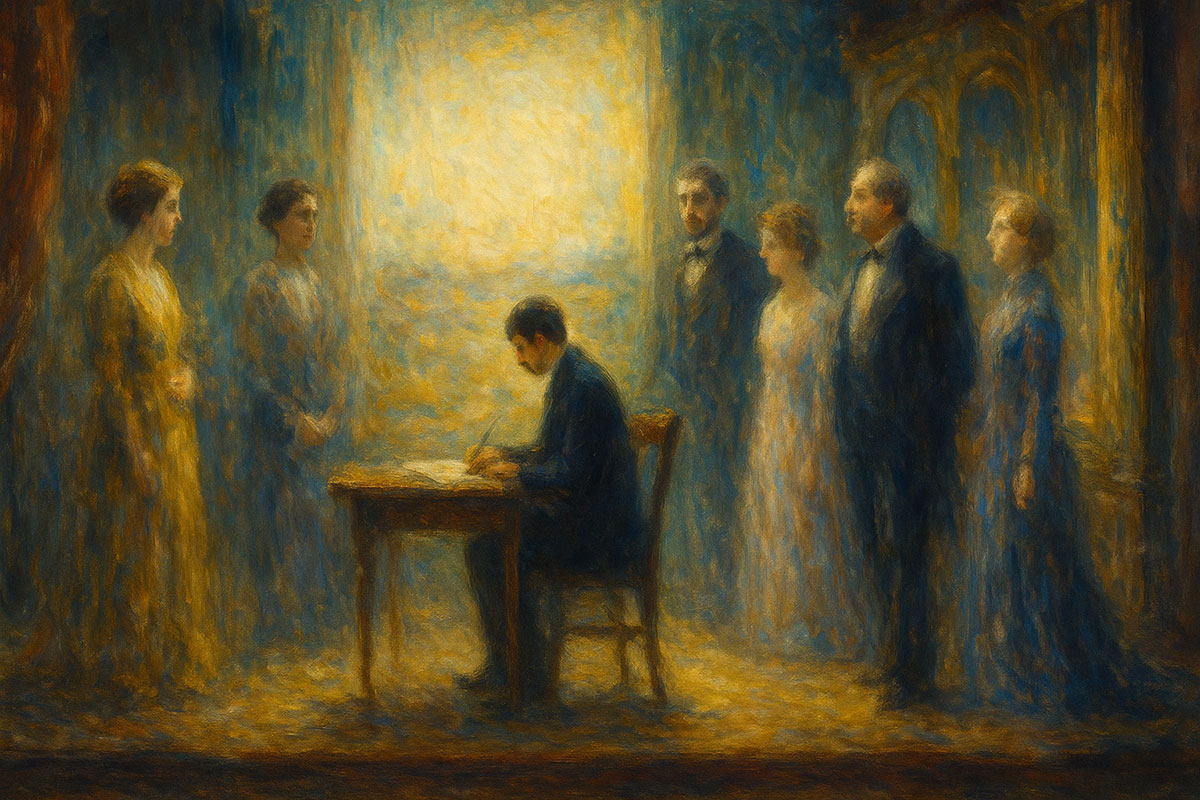
Introduction by the Director
When staging Proust, one faces the paradox of time itself: how to dramatize the invisible flow of memory without losing the pulse of theatre. My choice was to treat memory as action, to let light and sound shift with the fluidity of thought. Scenes move quickly — as fast as desire, as sharp as jealousy, as fragile as love. Society’s wit is paced like Stoppard; Charlus’s fragility is staged like a tightrope act; the grandmother’s death is held in unbearable silence. Proust’s prose becomes not narration but a choreography of presence and absence. We do not illustrate his novel — we invite the audience to inhabit the instability of time, to feel its suspense, its humor, its cruelty. This is Proust reimagined not as literary monument, but as living theatre.
(Note: This is an imaginary conversation, a creative exploration of an idea, and not a real speech or event)
Act I — Awakening Memory
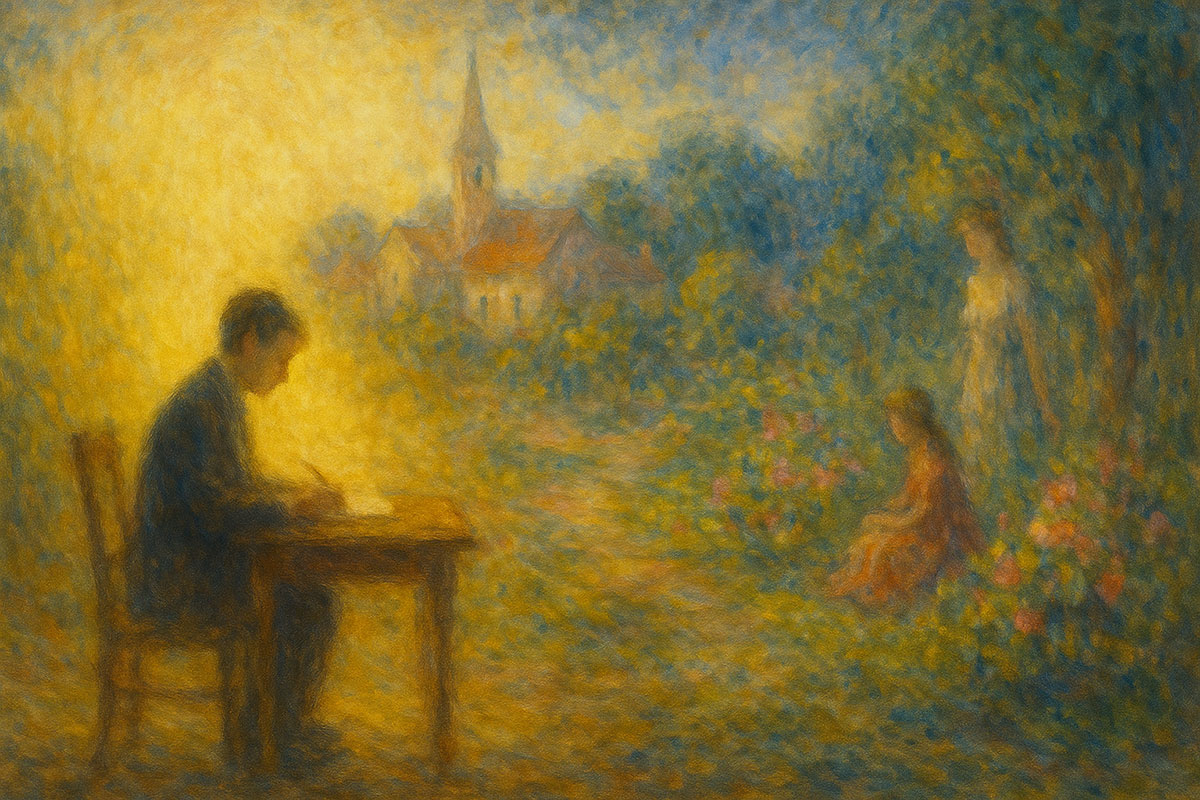
Lights: Quick burst of sunlit green. Sound: garden chatter, a tennis thwack; sea birds somewhere far.
On stage: A garden lane; Gilberte crosses with a skipping rope; friends dart through, laughing. NMarcel enters, over-composed.
PRoust watches from an upstage shadow, amused, occasionally stepping into light to comment.
NMarcel
(mutters rehearsal)
Good morning, Gilberte. No—too formal. “Hi.” No—criminal. “You look”—terrible choice.
Gilberte
(appearing suddenly; playful)
You look… very serious about the weather.
NMarcel
(startled)
Yes—no—I mean, the weather is serious about me.
Gilberte
(laughs)
That’s a relief. I thought it favored only the roses.
PRoust
(to audience, wry)
Observe: the birth of metaphor under duress.
Friend 1
(to Gilberte)
Coming to the beach?
NMarcel
(too fast)
I love the beach.
Gilberte
(smiles)
We haven’t invited you yet.
PRoust
He learns economy: three words, one wound.
NMarcel
I—could walk near the beach. Adjacent to it. Beach-adjacent.
Gilberte
(softening)
Come then. But you’ll have to endure my terrible jokes.
NMarcel
(falls in love on the spot)
I will endure—anything.
PRoust
(to audience)
And there it is. A glance, a jest, and suddenly eternity has a face.
Gilberte
What do you see when you stare like that?
NMarcel
(blurts)
The rest of my life.
Beat. Gilberte looks away, touched—then rescues him with humor.
Gilberte
Then you’ll need a hat. The rest of your life can be very sunny.
Friends swirl past, teasing; NMarcel shuffles after, floating.
PRoust
(steps into light; to NMarcel)
Remember the lesson: love is a photographer with soft focus. You will frame her in clouds and call it truth.
NMarcel
Can’t I keep one illusion?
PRoust
Of course. Keep two. They breed.
Music quickens; the garden dissolves—greens fade to deep shadow.
PRoust
Ready for the advanced course? We call it “Swann.”
Blackout.
Act I — Swann in Love
Lights: Sliced window-light and deep corridor shadows; blue-black palette.
Sound: Distant carriage wheels; a faint heartbeat under the scene that rises with jealousy.
On stage: Swann alone, elegant and frayed. A door separates him from Odette.
Swann
(quiet rage disguised as politeness)
You’re late.
Odette
(off; airily)
I’m fashionably late.
She enters—gloved, luminous, unreadable.
Odette
Shall I apologize in prose or in pearls?
Swann
Just tell me: with whom?
Odette
(genuine or performed innocence)
With friends.
Swann
Which friends have perfume like that?
Odette
The kind who wear perfume.
PRoust
(to audience, wry)
Jealousy is a playwright: it invents entire casts from a single scent.
Swann
You promised to dine with me.
Odette
I promised to live. Dinner was implied.
Swann
I wait and wait and—why is your ribbon different?
Odette
Because I changed it.
Swann
For whom?
Odette
For myself.
Swann
You never change for yourself.
Odette
(smiles like a blade)
You’re very good at telling me what I never do.
Heartbeat rises. The door becomes a moving panel; as they circle, the set reconfigures—doors appear/disappear, mirrors catch them at odd angles.
Swann
Last night you didn’t answer.
Odette
I was asleep.
Swann
Your candle was burning.
Odette
Then I was asleep attractively.
PRoust
Jealousy is a detective who plants evidence.
Swann
(steps closer)
I love you.
Odette
I know.
Swann
Then why do you make me guess?
Odette
Because guessing is the only game you like.
Swann
I like certainty.
Odette
(truthful, almost tender)
There isn’t any.
Beat. The heartbeat is loud now.
Swann
I could give you everything.
Odette
(soft)
And leave me with nothing of myself.
Swann
You are my life.
Odette
Then live wider.
Swann
(pleads; a break)
Tell me you love me.
Odette
(smiles, unreadable)
I love being loved.
PRoust
(to audience)
He will call this cruelty. It is only clarity.
Swann
(whisper)
Were you with him?
Odette
There is no him.
Swann
(whisper grows)
There is always a him.
Odette
And for me there is always a you—everywhere.
Swann
Everywhere?
Odette
(soft)
Yes. Even when you’re not here. Even when I wish you weren’t.
Swann freezes; this wounds and feeds him.
PRoust
Jealousy’s paradox: the wound that proves the limb still feels.
Swann
Marry me.
Odette
(laughs once; then sees his seriousness)
You wouldn’t survive it.
Swann
(terrified and certain)
I won’t survive without it.
Silence. Odette looks at him—almost pitying, almost moved.
Odette
Then don’t ask me to be your cure.
Swann
What else is love?
Odette
Not medicine. Not prison. Perhaps… music.
She hums a brief theme—a motif that will recur in later acts. It hangs in the air like a promise and a threat.
PRoust
(to audience)
He will chase that phrase through nights. He will think it’s her song. It is only his.
Odette
I have to go.
Swann
Stay.
Odette
(steps back)
Ask me differently.
Swann
(broken, tries)
Stay… because the floor collapses when you leave.
Odette
Better learn to fly.
She exits. Door swings; light slices vanish. Swann stands in a pool of shadow.
Swann
(to himself)
Was I—happy?
PRoust
(steps forward; gentle and lethal)
You were alive. It hurts the same.
NMarcel enters the edge of the scene, watching Swann—learning, terrified.
NMarcel
Is this what love becomes?
PRoust
If you confuse love with possession. If you confuse certainty with truth.
NMarcel
And if I don’t?
PRoust
(half-smile)
Then you will still learn it the hard way.
Lights pull back, leaving Swann small in the dark; the motif repeats faintly, like a heartbeat turning into a clock.
Blackout. End of Act I.
Act II — The Salons
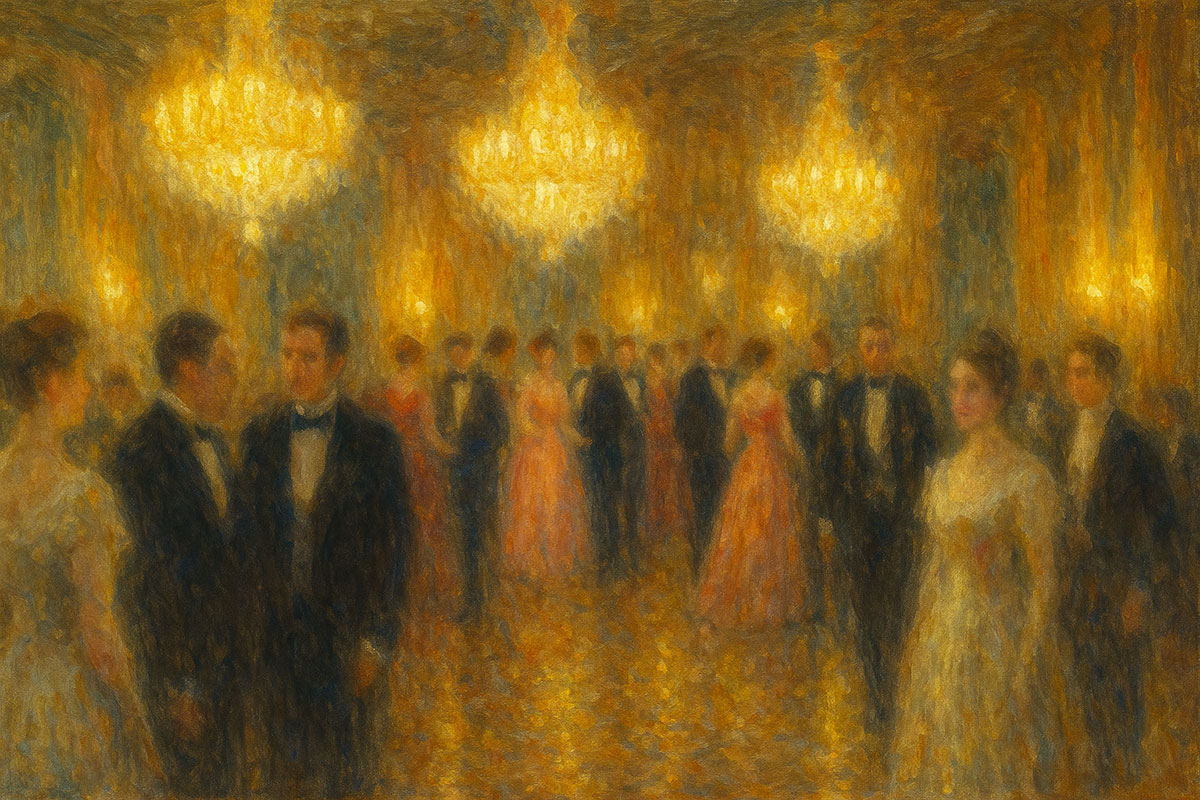
Lights: Dazzling gold; a hall of chandeliers projected to infinity.
Sound: A charming waltz that loops with an almost imperceptible hitch.
On stage: The Guermantes salon. Guests swirl. NMarcel enters, half-entranced. PRoust observes at the edge, amused.
Duchesse de Guermantes
(to NMarcel, gracious, lethal)
You are new to us, which is a kind of nobility. We have so few novelties.
NMarcel
(stumbling charm)
Then I must wear it carefully—novelty stains, I’m told.
Duc de Guermantes
(laughs)
A young man who polishes wit! Keep him—he’ll brighten the silver.
Mme Verdurin
(to everyone, proprietorial)
In my little church we do not polish—we sparkle. Wit should be shared like a cold—indiscriminately.
PRoust
(to audience)
Observe the sacred rites: wit, rank, rumor. Communion is served with a garnish of malice.
Bloch
(to NMarcel, sotto)
Remember, sincerity is vulgar here. Angle your truths.
NMarcel
And if my truths have no angles?
Bloch
Then you must borrow theirs.
Brichot
(lecturing a circle)
Names conceal more than they reveal. “Guermantes,” for instance—etymologically futile, socially priceless.
Duchesse de Guermantes
(pleased, bored)
We are best understood in candlelight—and misunderstood in daylight.
Mme Verdurin
Candlelight flatters everyone except the wrong guests.
M. Verdurin
Which—happily—are never invited.
Laughter. The waltz hiccups—resumes.
Swann appears at the edge with Odette; a hush travels, then polite noise returns.
Guest 1
(aside)
He married for love—tasteless as saltless soup.
Guest 2
He married for sport. She married for sanctuary.
Guest 3
They both married for a new guest list.
PRoust
(to audience)
Satire is society’s way of calling envy “taste.”
Duchesse de Guermantes
(to Swann, sweet poison)
How well you look in contentment. It does not suit everyone; it rather crushes the shoulders.
Swann
(smiling, frayed)
Contentment is a garment I borrow. It rarely fits.
Odette
(to the Duchesse, gracious)
We have learned to tailor. Society teaches—if one survives the lessons.
Mme Verdurin
(to Odette, faux-ally)
My dear, you improve every room you leave.
Odette
Then I shall give you many opportunities.
A brittle chuckle rolls.
NMarcel edges toward Duchesse.
NMarcel
I once imagined this room before I ever saw it—like a word learned before meaning.
Duchesse de Guermantes
Then you know the essence of society: pronunciation first, definition later.
Brichot
(warming)
And sometimes never.
Bloch
(whispers to NMarcel)
Say something innocently unforgivable.
NMarcel
(blurts)
Does anyone here still believe in anything?
Silence. A collective intake.
PRoust raises an eyebrow.
Duc de Guermantes
(chuckling, breaking the tension)
We believe in punctuality and perfect boots.
Mme Verdurin
And in the exquisite usefulness of scandal.
Duchesse de Guermantes
And in not confusing belief with conversation.
NMarcel
Then what is conversation?
Duchesse de Guermantes
The elegant refusal to admit boredom.
Laughter resumes: precise, silvery. The waltz loops.
PRoust steps forward, confiding:
PRoust
We laugh. We glitter. And the floor is hollow.
Lights hold the dazzle one beat too long—then soften.
Transition: The projections slide, chandeliers warp into mirrors.
Blackout.
Act II — The Hidden Self (Charlus)
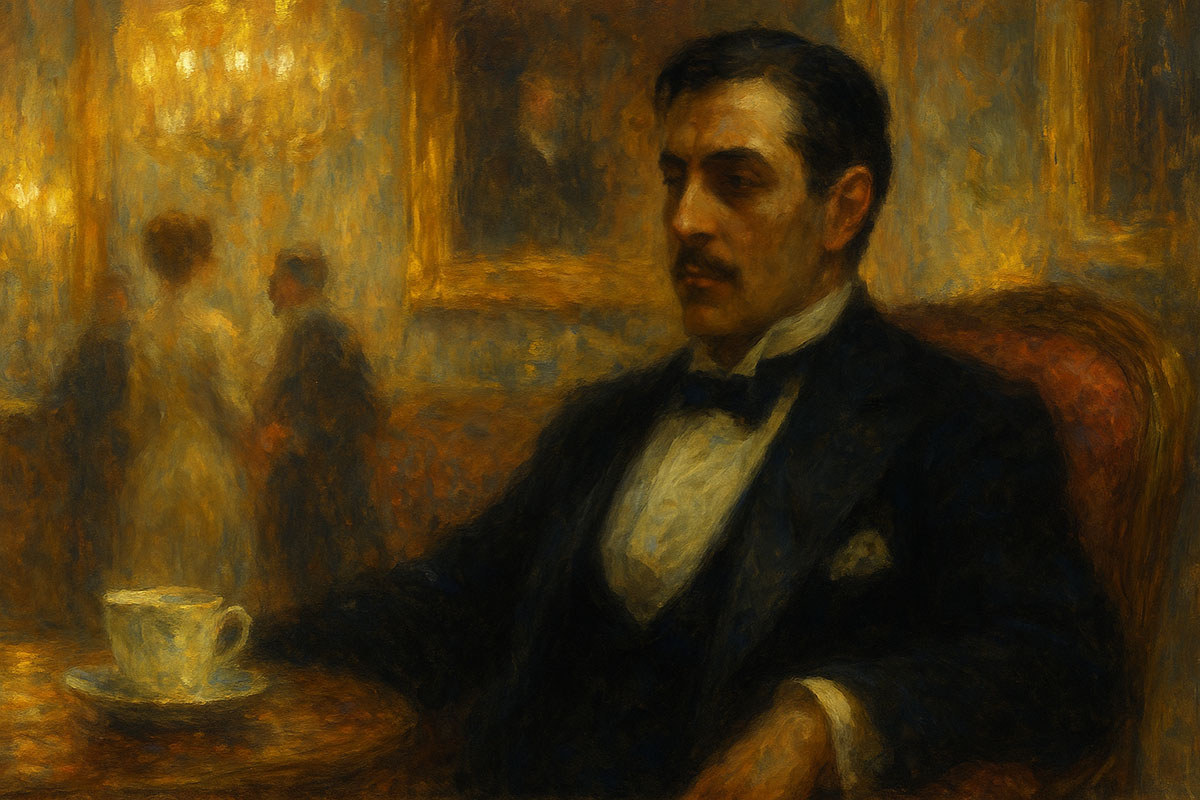
Lights: The salon dims to a single spotlight. Behind Charlus, fractured mirrors/panels distort his figure.
Sound: A faint, steady pulse beneath a muffled waltz.
Charlus
(savoring his entrance)
Ah! You’ve grown tired of diamonds and require fireworks. Fortunately, I am combustible.
Mme Verdurin
We do love a spectacle, Baron. Provided it knows when to take a bow.
Charlus
Bows are for those who fear the neck. I prefer to risk decapitation.
Scattered titters. Charlus prowls—glorious, dangerous.
Charlus
You, sir—(to a Guest)—your waistcoat is a moral argument. It declares that modesty is an outfit, not a principle.
Guest
(blushing, pleased)
Baron, you are merciless.
Charlus
Only with fabric. With people I am tender as a tempest.
He turns, catches his reflection distorted. A flicker of vulnerability.
PRoust
(to audience, gentle)
Watch the mask blink. It forgets itself and reveals the face.
Charlus
(low, almost to himself)
First they adore your excess; then they demand your shame.
Mme Verdurin
(too sweet)
We demand only entertainment.
Charlus
And I demand…
(he stops, breathless; then jaunty)
…an audience that claps with its whole soul.
Bloch
(aside to NMarcel)
Do you see? He is a fortress of windows.
NMarcel
No—of mirrors.
Charlus
(to a fresh circle)
I have been accused of everything except boredom. And if they try that too, I shall make boredom illegal.
Laughter. A whisper current rises from the shadows. Words like “eccentric,” “indiscretion,” “scandal” ghost the air.
Charlus hears it. For a heartbeat, he hardens—then softens.
Charlus
(quiet, dangerous)
Shall we play a new game? It’s called Honesty. The rules are simple: I speak, and you pretend not to understand.
Mme Verdurin
Baron, we never pretend. We rehearse.
Charlus
(smiles, wounded)
And I—am always opening night.
PRoust
(to audience)
Secrecy is not a veil; it is a theater. Remove the curtain, and the stage goes dark.
Charlus
(to NMarcel, sudden intimacy)
Young man, remember: those who applaud your costume will boo your confession.
NMarcel
Do we confess anyway?
Charlus
Only if we can survive the encore.
A breath. He rearmors—flamboyant, magnificent.
Charlus
(to all)
Now, if you won’t love me, at least admire my refusal to be small.
He bows with defiance. The mirrors catch a dozen versions of him—brave, brittle.
Lights: Snap to a thin ring around him—then out.
Blackout.
Act II — The Grandmother’s Death
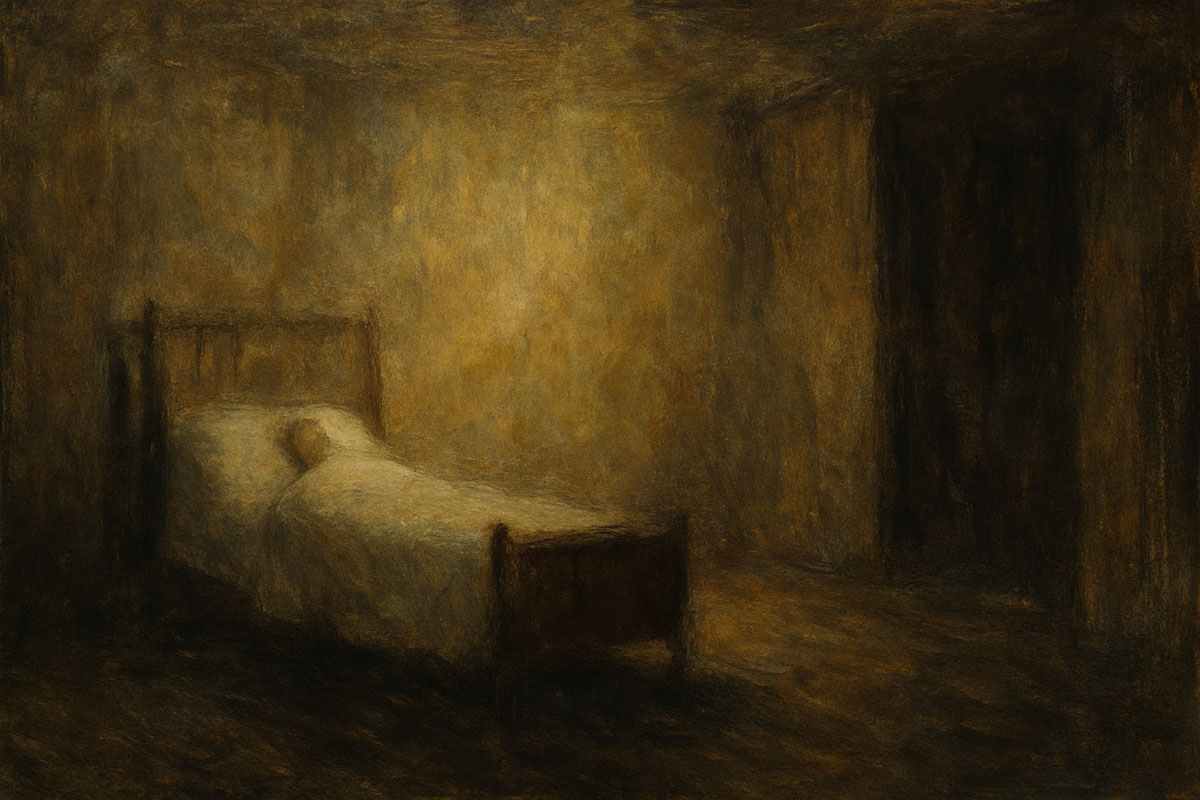
Lights: All gold and glitter gone. A pale, winter light. A simple bed. A chair. An open, ordinary room.
Sound: Quiet. The faintest clock.
On stage: Grandmother lies still. NMarcel sits, holding her hand. PRoust stands nearby, soft-voiced.
NMarcel
(grasping for composure)
You are warm. So you are here. And if you are here, then time can’t have you yet.
PRoust
(quiet, to audience)
Time does not seize with thunder. It unthreads. Seam by seam.
Mother
(from the doorway, swallowing grief)
She is resting.
NMarcel
(to Grandmother, low)
I will be good. I will come home early. I will write you every day—
(he stops, realizing the childlike bargain)
—don’t go where letters cannot follow.
Grandmother
(a flicker of breath; almost a smile)
My dear boy… you are all my home.
Silence. The clock is suddenly too loud, then fades.
PRoust
(to audience)
In salons, we offered each other reflections. Here, there is only the face. And soon, not even that.
NMarcel
(to Grandmother)
You once said the light in Combray was different after rain. I remember. I will remember everything.
Grandmother
(faint)
Then I can go… by your remembering.
Mother
(steps closer, still)
We stay. We do, somehow.
A long, almost imperceptible exhale. Stillness.
NMarcel does not move. His grip tightens once—then releases.
Long pause.
No music. No swell. Just the room staying the room.
PRoust
(soft, breaking the fourth wall)
Absence weighs more than presence ever did. The chair will hold it.
NMarcel
(whisper)
I will not let her vanish.
PRoust
You cannot stop vanishing. You can only transform it.
NMarcel
How?
PRoust
Write her into every light you see.
He nods, small, shattered, determined.
Lights cool to the barest silver. The clock ceases. Air holds.
Blackout. End of Act II.
Act III — The Prisoner (Albertine)
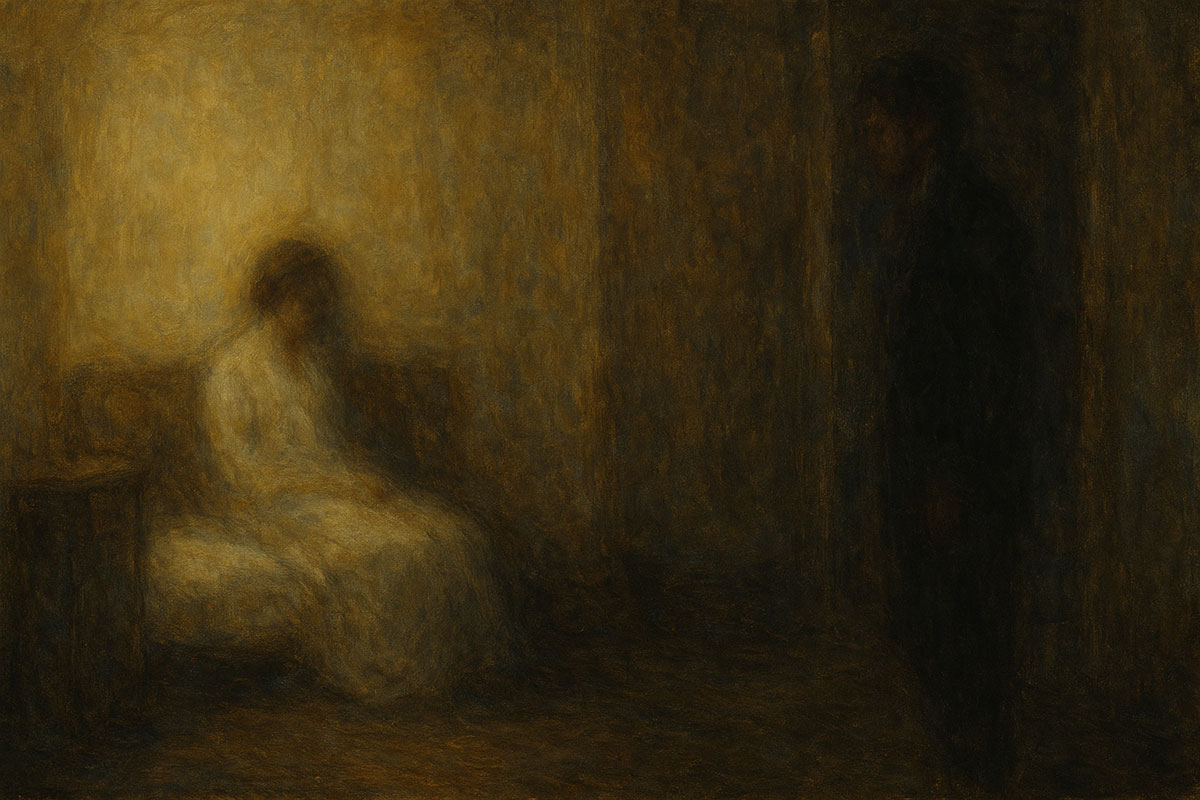
Lights: A dim amber glow, confined. Shadows stretch across the walls like bars, making the room feel smaller with every breath.
Sound: A faint, steady ticking, almost like a muffled heartbeat.
On stage: NMarcel paces, restless. Albertine reclines, quiet, watching. PRoust stands aside, half in shadow, the observer.
NMarcel
(pacing, agitated)
You were gone too long. The house closed in on itself. The clock mocked me. Tell me where you went.
Albertine
(sighs, not defensive)
For a walk. For air. Must my steps submit to an inquisition?
NMarcel
For air? Whose air? Who shared it with you?
Albertine
(turns her face away, calm)
Always your shadow, Marcel. Even when you’re not there, it follows.
NMarcel
(urgent, circling)
Then prove it. Tell me every street, every glance, every silence.
Albertine
And if I do? You will sew each word into a suspicion.
NMarcel
No—I’ll sew them into certainty.
Albertine
Certainty is the most dangerous garment. It never fits.
PRoust
(to audience, quietly ironic)
Jealousy is a tailor with no measurements. Every stitch wounds.
NMarcel
(voice rising)
You smiled when you came in. Who gave you that smile?
Albertine
I gave it to myself.
NMarcel
(smiles bitterly)
No one smiles without cause.
Albertine
Then perhaps I smile at the absurdity of being cross-examined in my own room.
NMarcel
This is not your room—it is mine.
Albertine
Then I am only a guest. Guests eventually leave.
NMarcel
Don’t say that.
Albertine
Why? Because it is true?
NMarcel
Because it kills me.
Albertine
You call this love? You are not killed—you are killing both of us.
Beat. A silence heavy as stone. Marcel sits suddenly, hands shaking. Albertine regards him with pity, not anger.
Albertine
(soft, almost tender)
You love like a gaoler—clutching the keys until your hands bleed.
NMarcel
And you love like a fugitive—eyes always on the door.
Albertine
Because you keep locking it.
NMarcel
If I hold you, I cannot lose you.
Albertine
If you hold me, you lose me faster.
PRoust
(to audience, gently)
Possession is a counterfeit of love. It strangles both giver and prisoner.
NMarcel
(pleading)
Say it, then. Say you love me.
Albertine
I love air. I love the sea. I love the freedom of walking unmeasured.
NMarcel
Say me. Say my name.
Albertine
You do not want my love—you want my oath. Oaths wither faster than roses.
NMarcel
(voice breaking)
I only want… to be sure.
Albertine
(soft)
There is no sure.
Silence. The ticking grows louder. Albertine’s figure blurs in the dim light. Marcel stares at her as if she is already vanishing.
NMarcel
(whispering)
Then I will keep you here. Even if I must chain the air itself.
Albertine
Then you will sleep beside a ghost.
PRoust
(to audience, final aside)
Every cell built of jealousy collapses into dust. But its dust lingers longer than love itself.
Lights: The shadows stretch further, swallowing the figures until they seem distant in the same room.
Sound: The ticking slows, then stops.
Blackout.
Act III — The Fugitive (Albertine disparue)
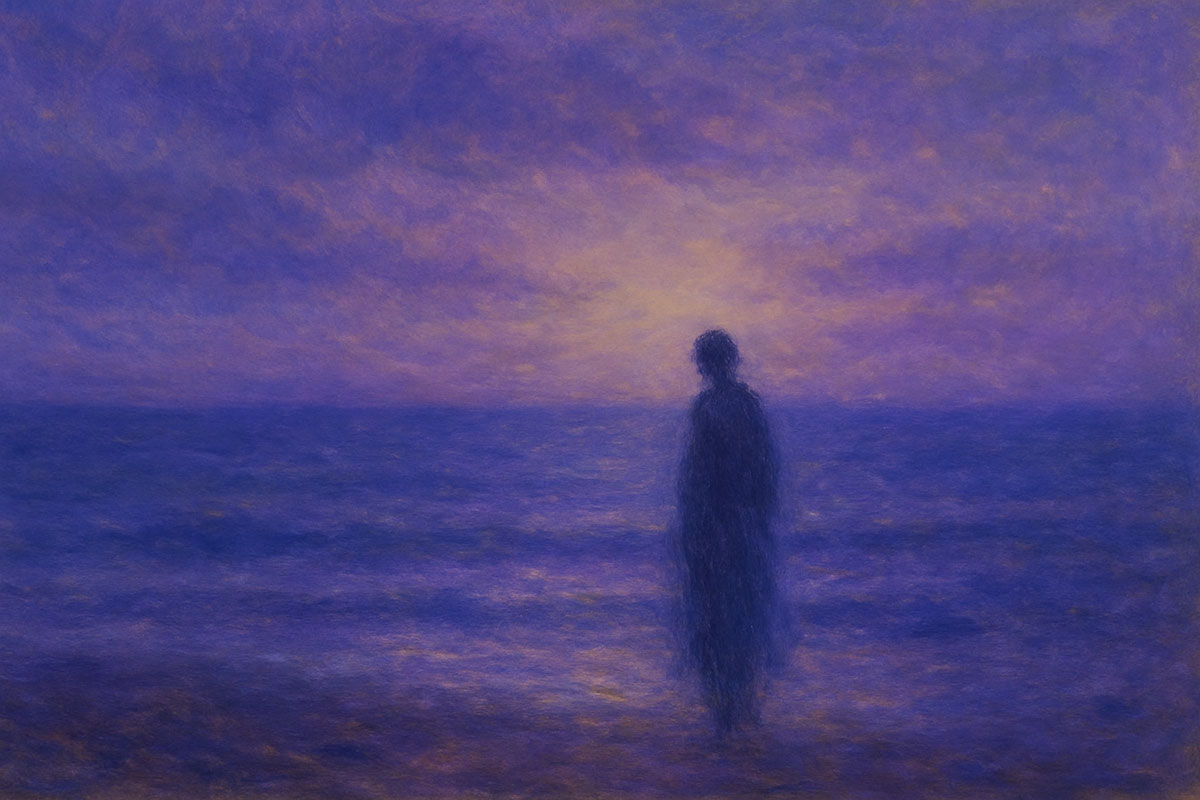
Lights: Violet twilight spills across the stage. A bare room: unmade bed, a half-open suitcase, one chair overturned.
Sound: Distant rumble of trains, fragments of footsteps, and faint echoing laughter. Voices rise and fade like rumors on the wind.
On stage: NMarcel searches desperately through letters and objects. PRoust hovers nearby. Ensemble members in shadow step forward as rumor-voices. Occasionally, a blurred figure of Albertine crosses upstage — silent, never stopping.
NMarcel
( frantic )
The air still holds her perfume. The pillow still dents with her head. She was here—she is here—she cannot be gone.
Voice 1 (echoing, from shadows):
She left for Tours.
Voice 2 (another direction):
No—she went to the sea.
Voice 3 (third corner):
She is dead.
NMarcel
(whipping around)
Who speaks? Show yourself!
PRoust
(to audience)
Absence invents witnesses. Silence breeds testimonies no one gave.
NMarcel
(to himself, feverish)
She walked out the door, yes—but to where? To whom? I must follow—
(he grabs at the suitcase, shakes it)
What secrets did you carry? Letters? Names? Lovers?
Voice 4 (female, mocking):
She smiled as she left—smiled at another man.
Voice 5 (male, harsh):
She never loved you.
Voice 6 (whisper, chilling):
She is gone forever.
NMarcel
(shouting back)
Lies! She belongs to me—she is mine!
Albertine’s shadow crosses slowly upstage. NMarcel rushes, but she dissolves into light.
NMarcel
Albertine! Stay! Speak! Breathe once—only once!
PRoust
(to audience, soft, almost mournful)
In life, she was one woman. In death, she multiplies. The lover is haunted not by one figure, but by thousands—each more elusive than the last.
NMarcel
(voice trembling)
I chained her to me. And yet… she escaped. Not through the door—but into every silence, every glance, every dream.
Voice 7 (mocking, echo):
She is laughing now.
Voice 8 (mocking):
She lies in another’s arms.
Voice 9 (somber, slow):
She lies in the earth.
NMarcel
(covering ears, desperate)
Stop! Stop! Give her back to me!
**Albertine’s shadow reappears, this time nearer, reaching a hand. He reaches back—she vanishes before contact.
NMarcel
No—no, don’t go again—stay—punish me, curse me, but stay—
PRoust
(to audience)
Absence is a cruelty that presence never manages. It offers nothing—and gives everything imagined.
NMarcel collapses to the floor, clutching a letter. His voice lowers to a whisper.
NMarcel
I will never escape her. Not in life, not in death, not in forgetting. She is my captor, though I held the keys.
PRoust
(quiet, concluding)
The fugitive is never the one who leaves—it is the one who remains, chained to what is lost.
Lights: Violet fades to near-black.
Sound: Only silence, then a faint, lingering echo of Albertine’s laugh.
Blackout.
Act III — Time Regained
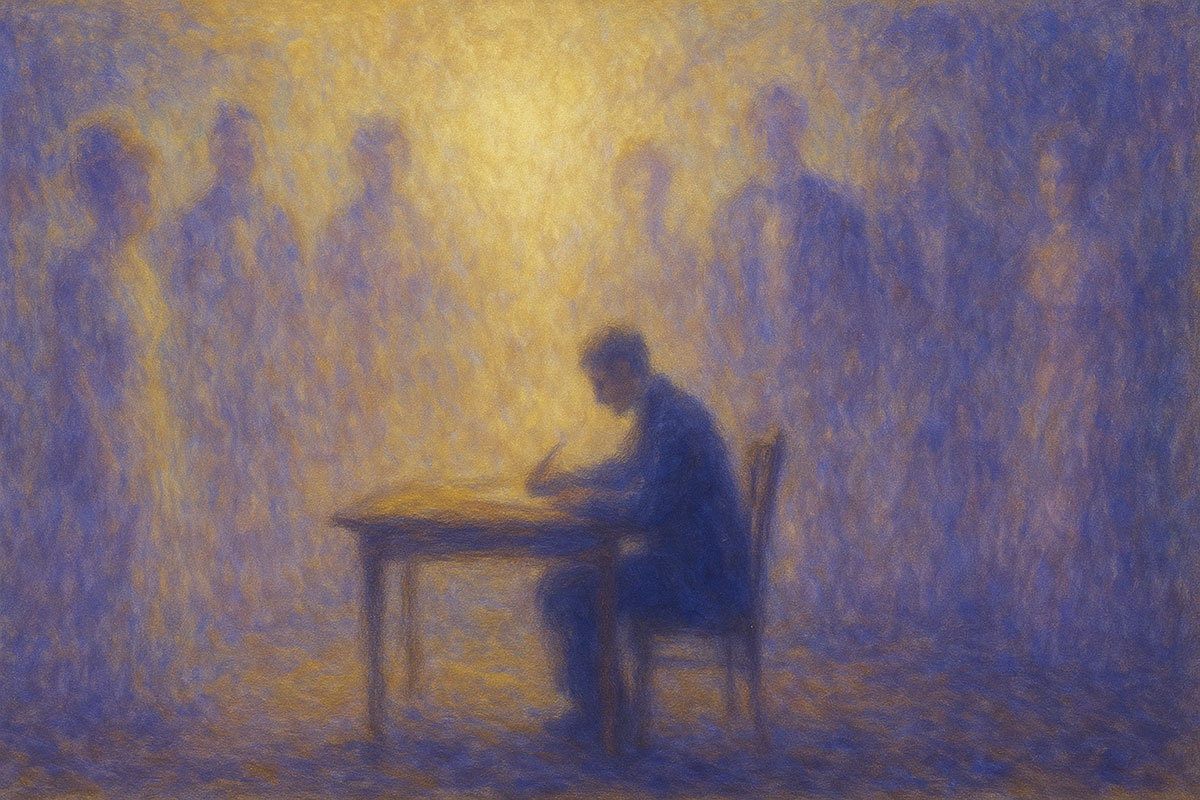
Lights: The stage glows with shifting washes: Combray’s morning gold, salon chandeliers, violet twilight. The palette of every previous scene blends, as if time itself is folding.
Sound: A collage — the Madeleine teacup clink, salon laughter, Albertine’s faint laugh, Swann’s motif on the violin. They overlap, distort, fade, then rise again.
On stage: PRoust sits at a writing desk. NMarcel hovers nearby, restless. Ghostly figures (Swann, Odette, Albertine, Charlus, Grandmother) drift in and out of light, circling the desk.
NMarcel
(urgent, almost accusing)
We lived all this—yet it slipped through our fingers. What is left but fragments?
PRoust
(smiling faintly)
Fragments are the only eternity we are given.
NMarcel
Then what was it for? The jealousy, the hunger, the deaths, the masks?
PRoust
For this.
(he gestures to the page)
To be remembered—not as events, but as essences.
Swann’s ghost steps forward.
Swann
I was consumed by love that devoured me.
PRoust
And yet, in memory, you are not consumed—you are luminous.
Odette
(sly, amused)
You turned my evasions into symphonies. Perhaps I should thank you.
PRoust
Perhaps you already did, by living them.
Charlus
(flamboyant, half-fragile)
They called me scandal, masquerade. And you—what do you call me?
PRoust
I call you truth dressed in costume. And costume is a truth of its own.
Grandmother
(gentle, serene)
I am gone. Why summon me again?
PRoust
Because you are never gone. The chair remembers. The light remembers. My heart remembers.
Albertine appears, silent, then speaks for the first time since her “fugitive” exit.
Albertine
(soft, almost tender)
You tried to keep me. You lost me. And yet… you kept me after all.
PRoust
Yes. In art. You live where no absence can touch you.
NMarcel
(steps closer to PRoust, shaken)
So this is our victory? Not to hold, but to transform?
PRoust
Exactly. We do not conquer time. We reveal its radiance.
NMarcel
And what of me? Do I dissolve too?
PRoust
(smiling)
You become me. And through me, you become all who read us.
The ghosts circle once more, then dissolve into light, leaving only PRoust at his desk.
Sound: The overlapping collage resolves into the steady scratch of a pen.
PRoust (final line, to audience):
What is fleeting becomes eternal. What is lost becomes found. Through art, we live twice.
Lights: Narrow to a single golden pool over PRoust.
Sound: Silence.
Blackout. Curtain.
Final Thoughts by the Playwright
Proust gave us not characters but echoes — of longing, of masks, of vanished voices that return when least expected. In writing this play, I wanted each scene to be both an argument and a memory, a duel and a confession. The dialogue is sharp and fast where society sparkles, suffocating where jealousy reigns, hushed where mortality arrives. Yet the true climax is not in Swann’s torment or Albertine’s disappearance, but in Proust himself discovering the alchemy of art: that what we lose we may transform. The theatre is the perfect vessel for this revelation — because on stage, as in memory, nothing is permanent except the moment shared between actors and audience. In that communion, time is indeed regained.
Short Bios:
Director
A visionary stage artist known for blending fluid staging, cinematic light, and psychological depth. Their work draws on European avant-garde traditions (Ivo van Hove, Robert Lepage) to reinvent classics with modern urgency, balancing wit, suspense, and lyricism.
Playwright
A dramatist whose writing merges poetry and fast-paced dialogue. Inspired by Tom Stoppard’s wit, Sarah Ruhl’s lyricism, and contemporary adaptations of literary works, they specialize in transforming novels into living theatre that breathes with humor, tension, and vulnerability.
Marcel Proust
French novelist (1871–1922), author of À la recherche du temps perdu (In Search of Lost Time), a monumental seven-volume exploration of memory, love, society, and art. His voice resonates as both character and guiding presence in this adaptation.
Nick Sasaki (Moderator/Curator)
Writer and creative curator who bridges literature, philosophy, and imagination. Through dialogues, adaptations, and creative projects, he brings classic works into fresh, modern formats for new audiences.
Leave a Reply