
|
Getting your Trinity Audio player ready...
|
Some stories are written to entertain. Others are written to help us remember something our hearts may have known long before our minds could explain it.
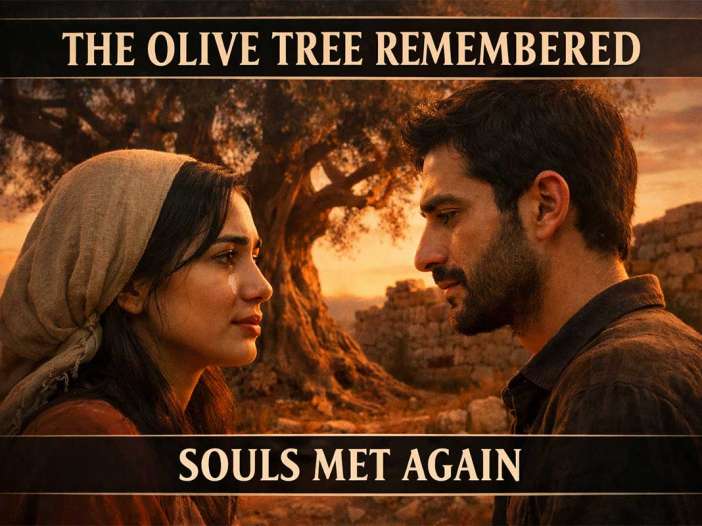
“The Olive Tree Remembered” is one of those stories.
This piece was inspired by the spiritual work of Dolores Cannon, whose ideas invited many people to see life in a very different way — not as a series of random events, but as a journey shaped by soul memory, deeper purpose, and encounters that may reach far beyond one lifetime.
Whether you fully believe in past lives or simply feel drawn to the mystery of human connection, this story is meant to touch that place inside us where grief, love, memory, and mercy all meet.
I wanted this story to unfold in a setting marked by sorrow, prayer, history, and longing — a place where the human heart has carried pain for generations, yet still reaches for healing. In that sense, the olive tree becomes more than part of the landscape. It becomes a witness. A witness to loss. A witness to waiting. A witness to the possibility that even very old wounds do not have to remain open forever.
This is not a retelling of any one Dolores Cannon session or teaching in exact form. It is a fictional, emotional story inspired by the spirit of her work — especially the idea that souls may return, meet again, and seek healing where pain was once left unfinished.
My hope is simple: that as you read, you will feel not only the sadness of Lina and Samir’s journey, but the quiet beauty of what it means to remember, to forgive, and to become free.
The dream returns
In a small stone village not far from Jerusalem, a young woman named Lina woke each morning to the sound of prayer carried on the wind.
The call rose before the sun fully touched the rooftops. It moved over worn walls, narrow alleys, old doors faded by heat and dust. In the kitchen, her mother pressed dough with tired hands. Her father sat near the radio, listening without expression, as if silence had become the safest language left to him.
Everything in that house looked ordinary.
Bread on the table.
Tea steaming in chipped cups.
A folded shawl on the chair.
Morning light slipping through the cracked window.
Yet nothing felt light.
Not in that land.
Not in those days.
Not in Lina’s chest.
She had carried a grief for years that had no clear name.
Since childhood, she had seen the same dream.
A stone house.
A single olive tree.
The evening sky burning red.
Her own voice breaking as she called out to someone she could not save.
Every time, she woke just before the name became clear.
Every time, the pain remained.
It stayed with her through breakfast, through errands, through ordinary talk, like an invisible hand pressing softly against her heart. Some days it felt like longing. Some days it felt like sorrow. Some days it felt like a memory that had lost its face.
Lina had stopped speaking of it long ago. No one can keep listening to a sadness that has no explanation.
One morning, her mother handed her a basket wrapped in cloth.
“Take this oil to the market before it gets too warm.”
Lina nodded and left without a word.
The market was already alive when she arrived. Men lifted crates. Women argued over price. Children darted between stalls. The smell of spice, bread, dust, and sun-warmed fruit filled the air. Voices rose and collided. A donkey brayed somewhere near the far wall. Life pushed forward the way it always did, no matter how much grief the land had swallowed.
Lina moved through the crowd, careful not to let the bottles shift in her basket.
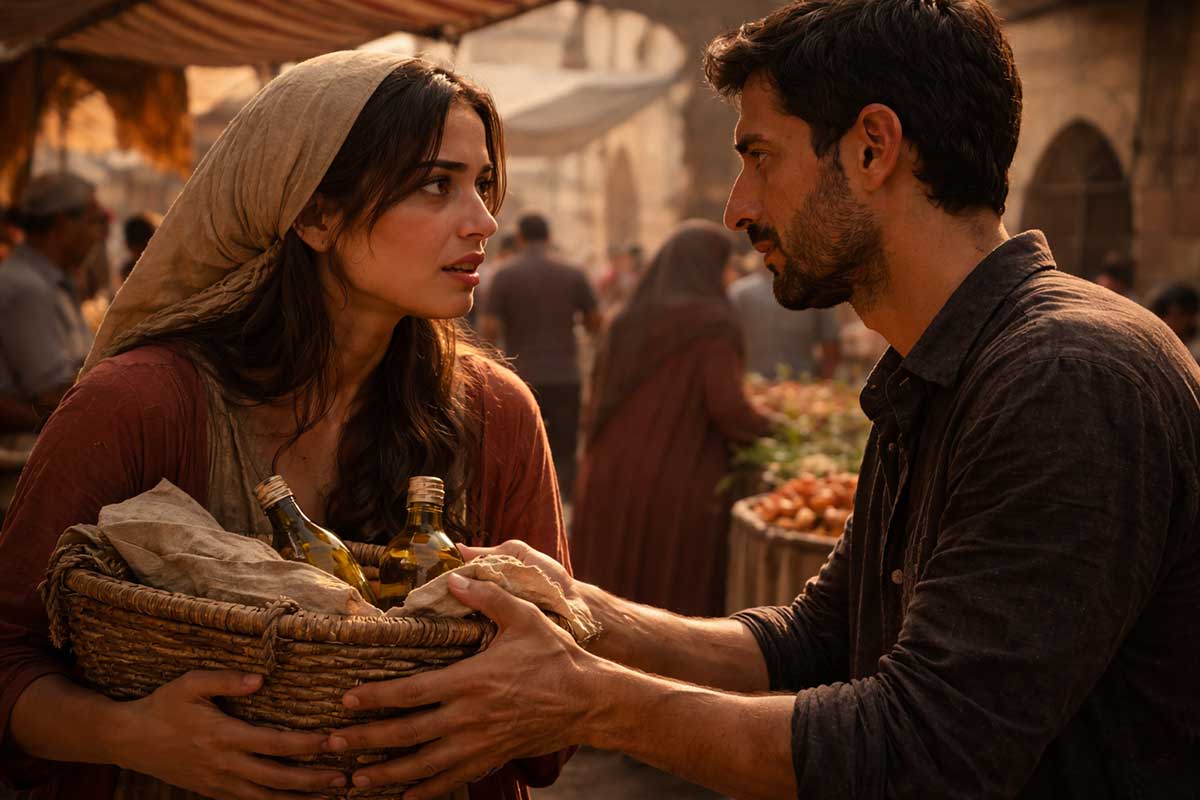
Then someone struck her shoulder.
The basket tipped.
A hand caught it before the glass could break.
“I’m sorry,” a man said.
The market meeting
Lina looked up.
He was young, perhaps close to her age. Dark hair. Tired eyes. A face that held more sadness than a young face should have known. His hand was still steady on the basket.
For one strange second, the noise of the market seemed to fall away.
She knew that face.
No, not knew. That was impossible.
Yet something in her body had already recognized him. Not her mind. Not reason. Something deeper. Something older.
The young man looked at her the same way.
As if he, too, had stepped into a room he had once lived in long ago.
“Are you hurt?” he asked.
Lina shook her head and took the basket quickly.
“No.”
She turned and walked away faster than she needed to.
Her breathing felt wrong. Too shallow. Too fast.
That night the dream came again.
The stone house.
The olive tree.
The red sky.
Hands shaking.
Tears on her face.
A voice leaving her mouth like a wound tearing open.
This time the name reached her.
“Yusef.”
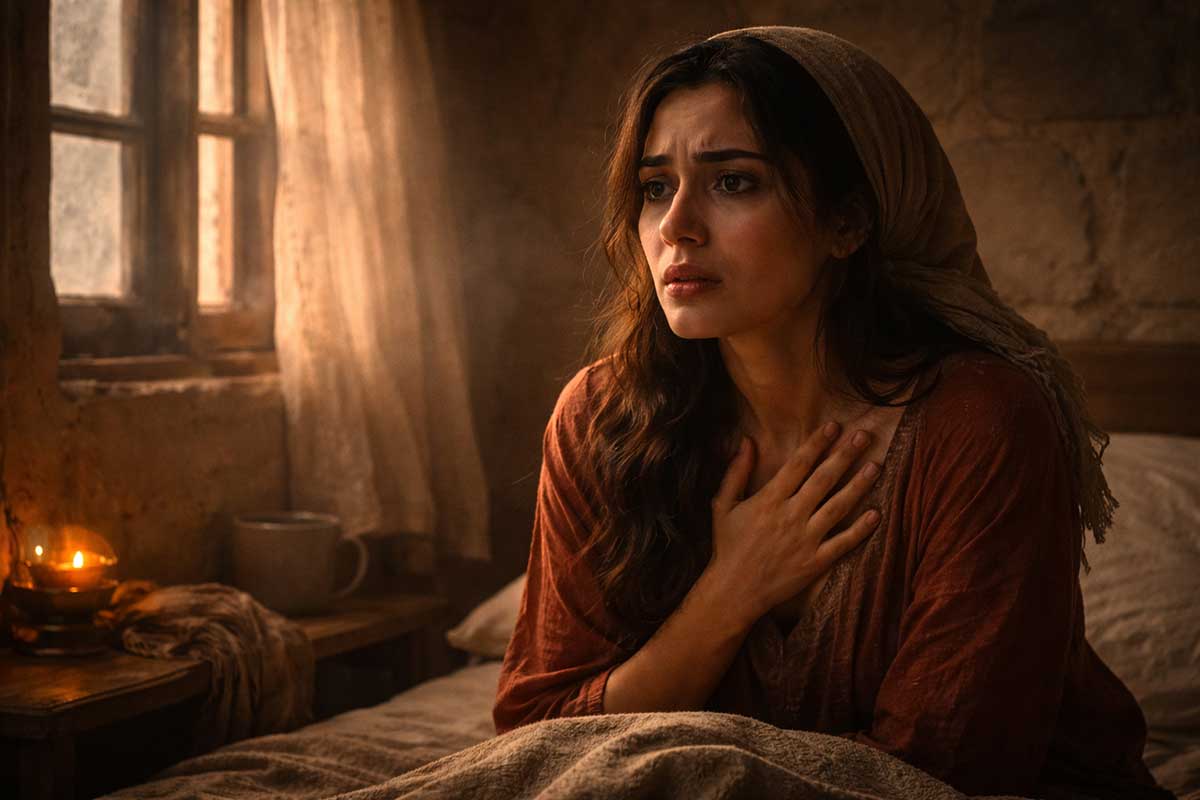
Lina sat upright in bed, gasping.
The room was dark. Her chest ached as if she had truly been crying. Her hands would not stop trembling.
Yusef.
She whispered the name into the dark as if testing it.
No one in her family had that name. No childhood friend. No cousin. No neighbor she remembered. Yet the sound of it broke something open inside her.
She pressed her hand against her mouth and wept without knowing why.
Days passed.
Then she saw him again.
He stood near a stall of figs and olives, speaking to an old merchant. When he turned and noticed her, something in his face softened, though it did not become a smile.
He stepped toward her with care, as if approaching a frightened animal.
“I helped save your basket,” he said. “That should earn me at least one polite conversation.”
Lina stared at him for a moment.
Then, against her own instinct, she let out the smallest breath of laughter.
“Only one.”
“Fair enough.” He placed a hand against his chest. “My name is Samir.”
“Lina.”
He repeated her name quietly, and for a second it sounded less like an introduction than a memory.
From then on, they crossed paths in the market, on the road, near the wells, at the edge of the village. They never planned it, yet it kept happening. A few words at first. Then a few more.
Bread. Weather. Water shortages. Her mother’s stubborn cooking habits. His uncle’s bad knee. The olive harvest. A neighbor’s sick child.
Simple talk.
Human talk.
Talk that had no right to feel sacred, yet somehow did.
Each time Lina left him, her heart felt fuller and heavier at once.
She found herself listening for his footsteps in crowded places. She hated that. She feared that. She could not stop it.
One evening, when the market had nearly emptied and the shadows had grown long, Samir said, “Can I ask you something strange?”
Lina looked at him carefully. “That depends.”
He hesitated, then said, “Have you ever dreamed of a stone house and an olive tree?”
Every part of her went cold.
The basket in her hand slipped against her palm.
She did not answer.
Samir’s eyes lowered, then rose again with quiet pain in them.
“I see it again and again,” he said. “An old house. A tree beside it. Evening light. Someone crying. I can never reach that person in time.”
Lina’s lips parted, but no words came.
Samir stepped no closer.
“I almost said nothing,” he whispered. “I thought grief was making games with my mind.”
Lina’s voice came out thin. “In the dream… do you hear a name?”
His face changed.
A shadow crossed it, deep and old.
“Yes,” he said. “Once.”
Lina could barely breathe.
“What name?”
He looked at her as if he were afraid of the answer.
“I think,” he said slowly, “someone was calling Yusef.”
Lina’s knees weakened. She turned away, pressing a hand to the nearest stone wall.
The wall was warm from the day’s heat. Her body was not.
She had no language for what was happening.
No safe explanation.
No place to put it.
Grandmother’s wisdom
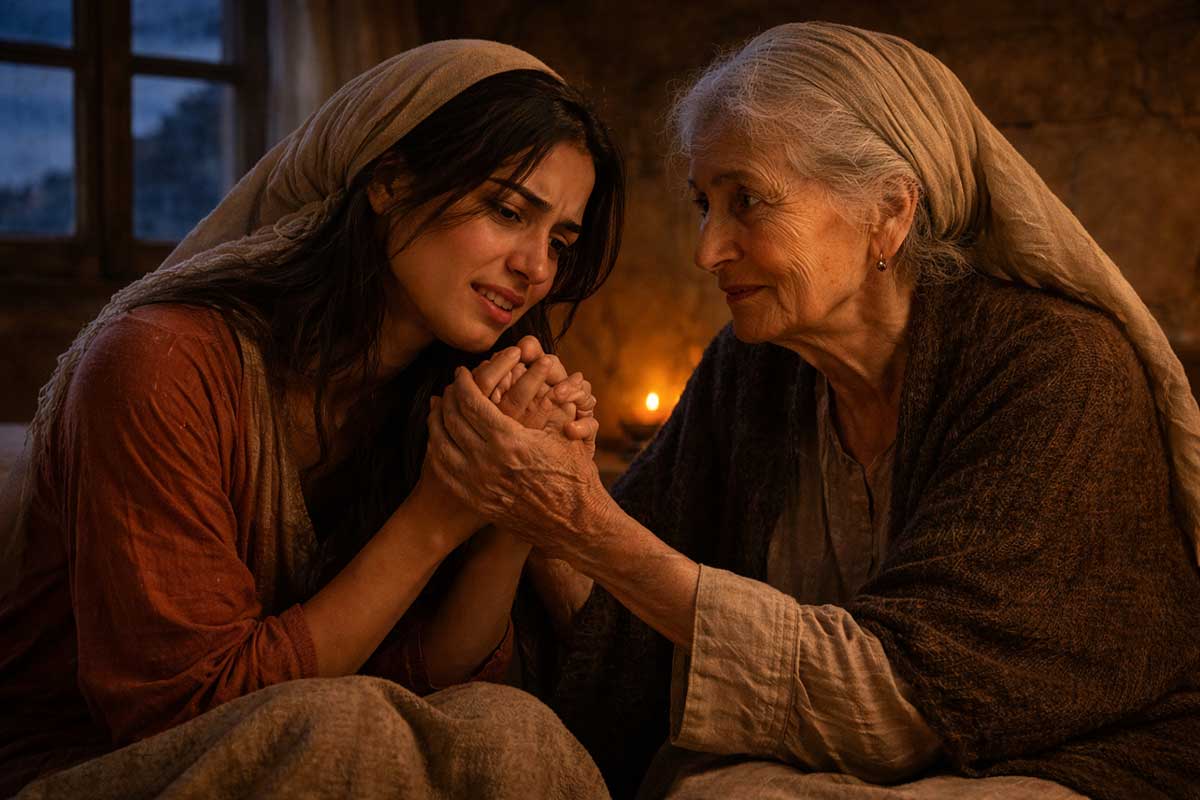
That night she went to her grandmother.
The old woman sat near the window with a shawl around her shoulders, her hands folded in her lap. Her face had grown thin with age, though her eyes still held a kind of quiet strength that made Lina feel like a child again.
Lina told her everything.
The dreams.
The name.
The market.
Samir.
The strange recognition.
The sorrow that now felt less like imagination and more like a door beginning to open.
Her grandmother listened without interruption.
When Lina finished, the room went very still.
At last the old woman said, “There are memories the mind does not keep, but the soul does.”
Lina looked up.
Her grandmother turned toward the window, where the last light had begun to fade.
“This land has seen too much grief. Too much blood. Too many mothers burying sons. Too many promises broken by fear. People think pain disappears when names are forgotten. It does not. It sinks deeper.”
Lina’s eyes filled.
Her grandmother reached for her hand.
“And sometimes,” she said softly, “souls meet again where the wound was left open. Not to make the wound deeper. To close it.”
Lina lowered her head and began to cry.
Not the neat crying she had learned to hide.
This came from somewhere lower. Somewhere broken. The kind that bends the spine and steals breath.
Her grandmother held her hand and let her cry as long as she needed.
No advice.
No correction.
No hurry.
Only the mercy of being held in silence.
A few days later, Lina found Samir waiting at the far edge of the market.
He did not speak at once. Neither did she.
Then Lina said, “I want to find the place.”
Samir answered without surprise. “So do I.”
They left before the heat reached its worst. They walked beyond the last homes, beyond the road, beyond the places people had reason to go. The earth grew harder underfoot. The wind dried their lips. Thorny brush caught at their clothes. Dust rose around their ankles.
At times they spoke. At times they did not.
It did not feel like exploring.
It felt like returning.
By late afternoon, Lina slowed.
A pressure had begun in her chest, deep and sudden.
She stopped on a patch of uneven ground and looked ahead.
Finding the ruined place
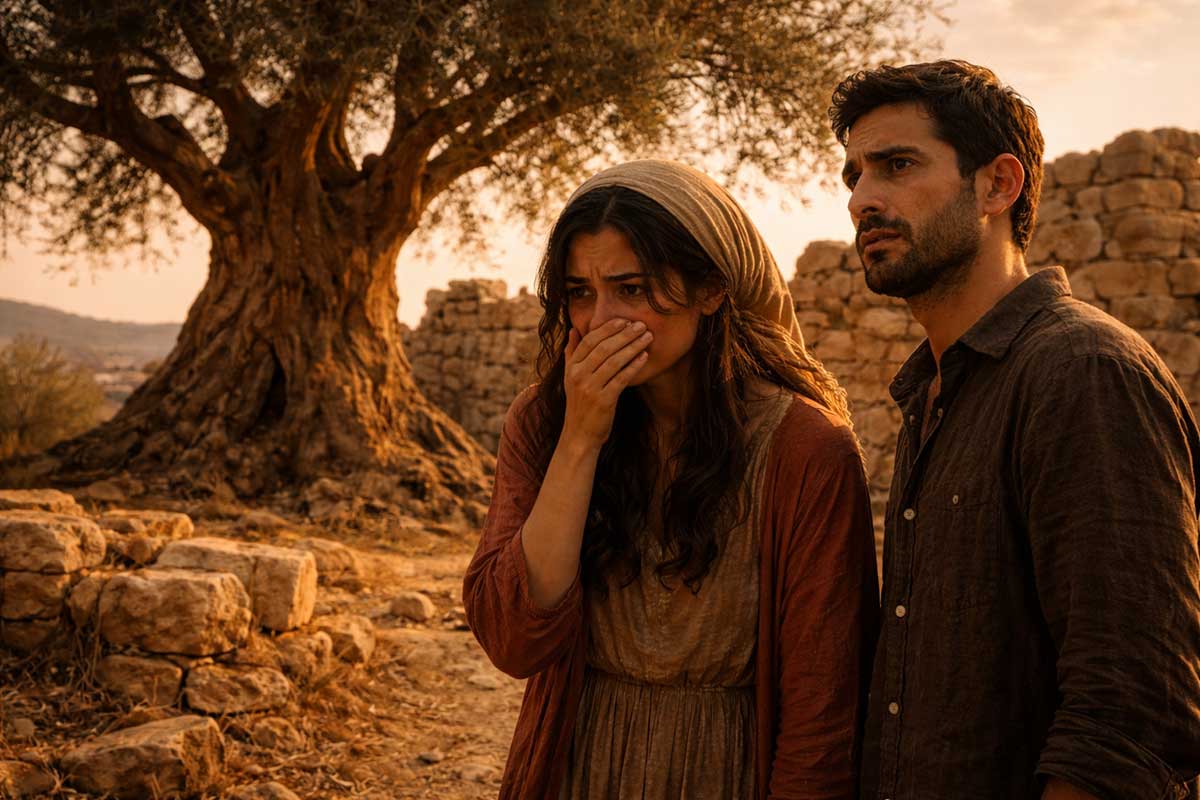
There it was.
A ruined stone wall, half collapsed, almost swallowed by time.
And beside it, an old olive tree.
Its trunk was bent and scarred. Its branches twisted toward the sky as if they had spent a lifetime reaching through sorrow. The light of evening fell across its leaves, and they flashed silver-green in the wind.
Lina could not move.
The world around her faded.
Her ears rang.
Her throat closed.
Then the grief came.
Not from this week.
Not from this year.
Not from the life she knew.
It rose from somewhere vast and buried.
She fell to her knees.
A sound tore out of her before she could stop it.
Not a word.
Not at first.
Just pain.
Samir stood a few steps away, unable to speak. Tears had already reached his face.
Lina pressed both hands into the earth.
The soil was dry. Small stones pressed into her skin. The smell of dust and leaves rose around her. Her whole body shook as images broke open inside her.
A younger sky.
A different dress.
Fear in the air.
Boots in the distance.
A man holding her shoulders.
His face blurred by tears and sunset.
A promise spoken in urgency.
A parting that felt like death before death had even arrived.
Then the name came again.
Not from the sky.
From her own soul.
“Yusef.”
Samir covered his mouth.
Lina lifted her face, streaked with tears, and looked at him.
“You left from here,” she whispered.
His voice broke at once. “I told you I would come back.”
Something inside her answered with terrible certainty.
“You never did.”
Samir’s knees gave way, and he sank to the ground across from her.
For a long time they simply looked at each other, two people wearing present-day faces, carrying a sorrow far older than either body.
“I know this sounds impossible,” Samir said, choking on the words. “But when I saw you in the market, I felt shame before I felt anything else. As if I had failed you long before we met.”
Lina wept harder.
“I have spent years angry,” she said. “At everything. At everyone. At loss. At silence. At the way life keeps going after it takes what it wants. I kept holding on to that anger as if it were the last proof that what was taken from me mattered.”
Samir bowed his head.
“I did the same.”
The wind moved through the tree.
Leaves trembled overhead like a thousand small witnesses.
Lina looked up at its branches through tears.
“All this time,” she said, “I thought the pain meant something had been stolen from me.”
Samir lifted his eyes to hers.
“Maybe it meant something was waiting for us.”
The words entered her slowly.
Not as comfort.
As truth.
Hard truth. Holy truth.
The kind that does not erase grief, yet changes its shape.
Lina’s breathing steadied little by little. The tears kept coming, though the panic in them had begun to loosen.
“I don’t know who we were,” she whispered. “Maybe husband and wife. Maybe brother and sister. Maybe something else.”
Samir nodded through tears. “I don’t think that part matters most.”
“No,” Lina said. “It doesn’t.”
The evening light deepened around them.
The ruined wall glowed red-gold. The olive tree cast long shadows over the ground. From somewhere far off came the faint sound of another call to prayer, floating over hills and broken places, as if heaven itself had not forgotten this land.
Lina closed her eyes.
Then she said the words she had feared for years.
“I am tired of hating.”
Samir’s face crumpled.
Not from shock.
From recognition.
“I am tired,” she said again, voice shaking, “of carrying old fire inside me and calling it strength. I am tired of letting pain tell me who I am. I am tired of losing my life to wounds I cannot even name.”
Samir wept openly now.
“So am I.”
The answer between them was so simple. So human.
It broke her more than any grand speech could have.
Two souls.
Two bodies.
One ruined place.
And the small terrible courage of telling the truth.
Lina placed her hand against the trunk of the olive tree.
The bark was rough and cool beneath her fingers.
At once, a strange peace moved through her.
Not sudden happiness.
Not relief.
Something deeper.
Like a knot loosening after lifetimes. Like a voice too gentle to hear with the ears saying, enough now. You may put this down.
Her tears slowed.
The sky darkened toward violet.
And in the stillness, she understood something at last.
They had not met again to reopen the wound.
They had met to stop handing it from one lifetime to the next.
She opened her eyes and looked at Samir.
“Maybe love was never the only reason souls return to one another.”
He wiped his face with shaking hands. “Then what is?”
Lina’s voice came out barely above a whisper.
“To forgive. To finish what pain could not finish. To become free.”
Samir lowered his head and sobbed.
No dignity left.
No guardedness.
No pride.
Only a grief that had waited too long to be named.
Lina moved toward him, slow and uncertain, then sat beside him in the dust.
Forgiveness beneath the tree
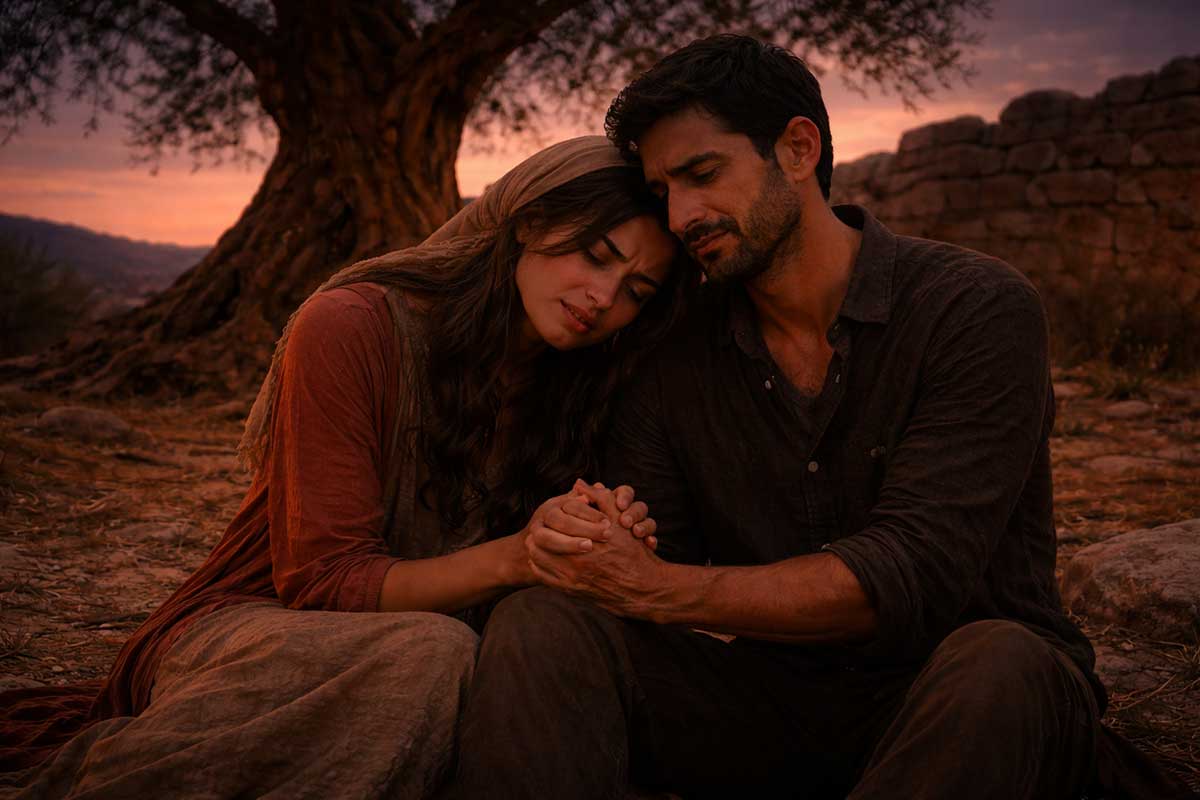
Then Samir reached for her hand like someone asking permission to exist.
She let him take it.
And there beneath the olive tree, with the broken wall behind them and the dying light around them, they sat holding hands as if the soul itself had begun to breathe after centuries underwater.
No one declared peace.
No miracle repaired history.
No voice from heaven explained every sorrow.
The land remained wounded.
The dead remained dead.
The past remained real.
Yet something sacred had still taken place.
Two people had stood at the place where grief once ruled them, and this time they had not given it the final word.
By the time Lina rose, the first stars had begun to show.
She placed her palm once more against the trunk of the tree.
Then she whispered, to the past, to the earth, to the part of herself that had waited so long to be heard:
“I remember now.”
The wind moved softly through the branches.
That was answer enough.
When Lina returned home that night, nothing outside had changed.
The same road.
The same walls.
The same careful voices.
The same tired radio.
The same bread on the table.
Yet inside her, something had ended.
A chain had broken.
She understood now that she had not been born merely to suffer. Not merely to carry inherited sorrow like a sealed jar passed from hand to hand. Not merely to repeat pain and call that fate.
She had come to remember.
To see that not every tear is punishment.
Not every loss is meaningless.
Not every meeting is new.
Some people enter your life like unfinished sentences from another age.
Some griefs follow you because they are still waiting for love to touch them.
Some souls return to one another not for romance, not for comfort, not for rescue, but for one unbearable, beautiful task:
to forgive what once destroyed them.
That night Lina stood by her window long after the house had gone quiet.
Far away, the wind moved over the hills.
She thought of the olive tree standing alone in the dark, roots deep in wounded ground, branches still reaching upward.
Scarred.
Weathered.
Still alive.
For the first time in years, Lina placed her hand over her heart and did not feel only absence.
There was grief there, yes.
There would always be grief.
Yet beside it now was something else.
Mercy.
And from that mercy came a kind of freedom so tender she could hardly bear it.
She closed her eyes.
The tears came again, softly this time.
Not the tears of being lost.
The tears of someone who has finally been found.
Final Thoughts by Nick Sasaki
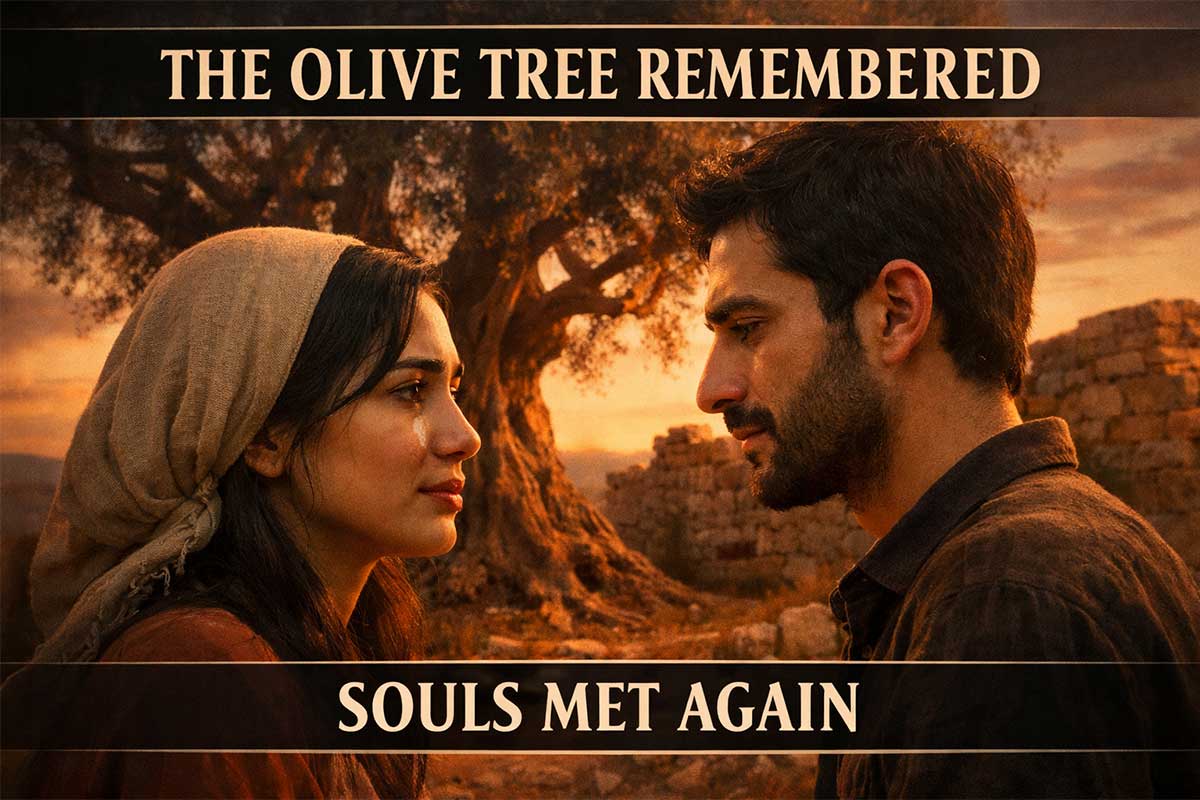
What moves me most about this story is that it does not promise easy healing.
Lina and Samir do not find a magical answer. They do not erase history. They do not undo loss. The land around them is still wounded. Their tears are still real. Their pain is still real.
Yet something holy happens anyway.
They remember.
And in remembering, they stop letting an old wound decide everything.
That, to me, is one of the most moving ideas in Dolores Cannon’s work: that some encounters are not accidental, some griefs are not meaningless, and some people come back into our lives so that what was once broken might finally be faced with love instead of fear.
Maybe that is true across lifetimes. Maybe it is true within this one life alone. Either way, the message reaches us.
We all carry places inside us that feel unfinished. We all carry names, losses, regrets, and questions that seem to live deeper than logic. Sometimes healing begins when we stop asking only, “Why did this happen to me?” and begin asking, “What is this sorrow asking me to become?”
For me, “The Olive Tree Remembered” is a story about that moment.
The moment when pain is no longer the only truth.
The moment when mercy enters.
The moment when the soul, after carrying grief for far too long, finally sets part of it down.
If this story stays with you, I hope it stays with you in that way — not only as a story of tears, but as a story of release.
Short Bios:
Leave a Reply