

|
Getting your Trinity Audio player ready...
|
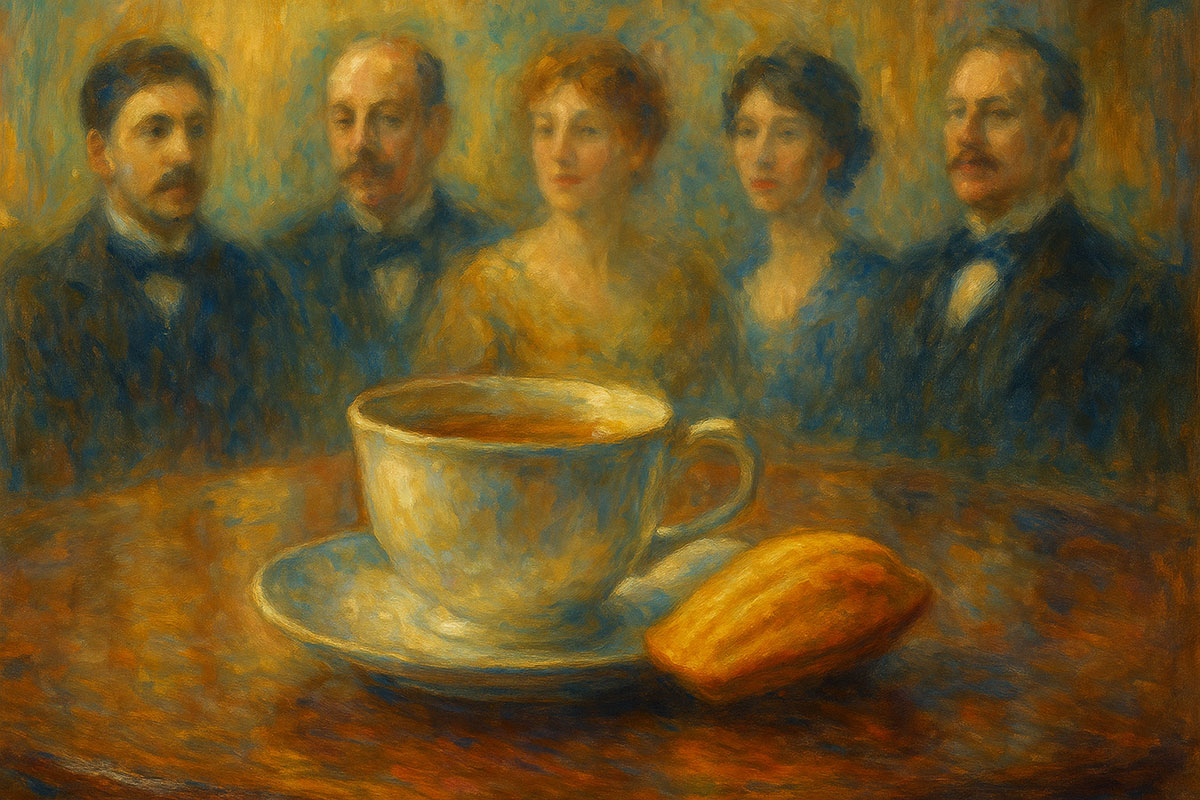
Introduction by Marcel Proust
When I first began to write, it was not to tell a story in the usual sense, but to capture the delicate vibrations of memory and the fleeting impressions that give life its texture. The world is made not of facts, but of sensations, of moments so fragile that they vanish almost as soon as they arrive. Yet within those moments lies eternity.
This series of dialogues is an experiment of the imagination, but it is faithful to the spirit of my search. To bring together Swann, Odette, Albertine, Charlus, and my own younger self, and to let them speak, is to see memory unfold as theatre. Each voice carries its illusions and truths, its passions and frailties. And in their interplay, you may glimpse what I sought all along: that beneath jealousy and vanity, beneath loss and secrecy, there is a deeper current — the persistence of time within us, and the possibility of transforming that persistence into art.
If you listen carefully, you will hear not only my characters but the echo of your own life, for memory belongs to us all. What was once my madeleine may also be yours — a taste, a sound, a glance that restores the world you thought lost.
(Note: This is an imaginary conversation, a creative exploration of an idea, and not a real speech or event)
Topic 1: Memory and the Madeleine
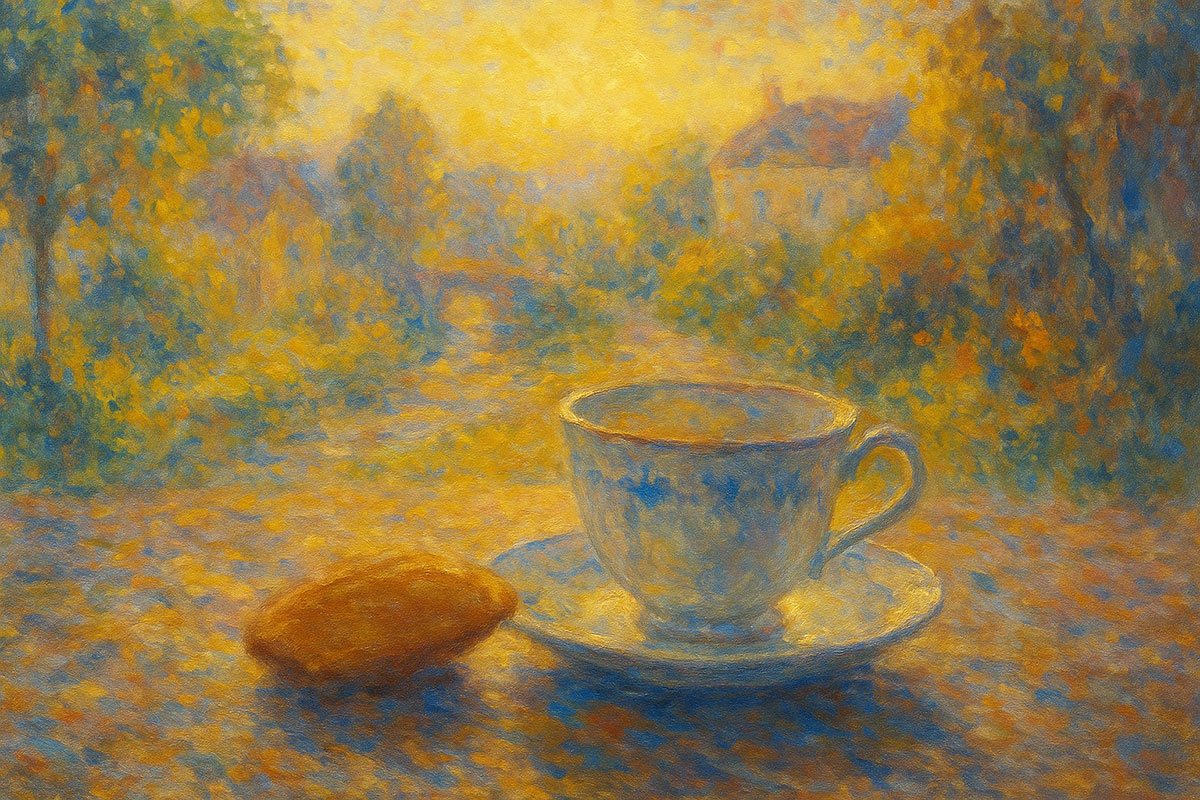
Nick Sasaki: Let’s begin with one of the most iconic moments in all literature — the taste of a madeleine dipped in tea that suddenly unlocks an entire world of childhood memories. I want to ask each of you: what does this moment reveal about the nature of memory and time?
Marcel Proust: That moment was not about a cake. It was about the miracle of sensation leading us into hidden vaults of the soul. Time is not linear; it coils within us, waiting for the spark of a taste, a scent, or a sound to release it. The madeleine showed me that the past is never gone; it is layered within us, waiting to be touched.
Swann: For me, memory is less miraculous and more treacherous. A fragrance, a turn of phrase, can summon not only joy but also obsession. The face of Odette haunted me because memory would not let me rest. It resurrected moments that were better left buried, turning affection into torment.
Albertine: And yet, how fragile those memories are. You think you remember me, but you remember the girl your imagination shaped. Memory is not a photograph. It is a tapestry woven with threads of longing, jealousy, and invention. The madeleine may taste sweet, but what it awakens is not always truth.
Baron de Charlus: Ah, but truth is a vulgar expectation, is it not? Memory is performance — a stage on which we recite our past to ourselves. That bite of madeleine is less revelation than theatre: the grand curtain rising to reveal a self you thought forgotten. We are all actors in the play of memory.
Odette: Charlus, you make it sound artificial, but memory is also tenderness. Swann never loved me as I was — but in memory, I became luminous. If I lived more brightly in his mind than in reality, is that not a kind of truth? Perhaps memory idealizes, but does it not also redeem?
The Narrator (Marcel): When I tasted the madeleine, I did not simply recall; I re-entered Combray. It was as if the past had never died, but had been stored in some secret chamber of being. That, I think, is the essence of involuntary memory: it restores life not as a concept, but as presence.
Nick Sasaki: Beautiful. Let me ask you all something deeper: is memory more truthful than history? Can it reveal something objective, or is it always colored by our desires and illusions?
Swann: History is written by scholars, but memory is written by the heart. I would say neither is fully truthful. My memory of Odette was drenched in jealousy, yes — but was it false? Or was it more true than the dry record of dates and facts?
Odette: If you ask me, Swann, your memory betrayed you. You saw me not as I was, but as your insecurity painted me. Memory may feel vivid, but vividness can be the mask of distortion.
Albertine: I must agree. You thought me unfaithful, even when I was near. In memory, you chained me more tightly than you ever did in life. That was not truth — it was fear crystallized.
Baron de Charlus: And yet, history itself is full of distortion. A trial, a newspaper, a chronicle — they too are theatre, merely cloaked in the garments of objectivity. At least memory admits its subjectivity. It is honest about its lies.
Marcel Proust: That is precisely the point. Memory does not give us truth in the factual sense, but it gives us access to the truth of experience. History can tell us what happened. Memory tells us what it meant.
The Narrator (Marcel): And when memory comes involuntarily, without our control, it carries a kind of purity. It bypasses intellect, giving us back not the event, but the living sensation. That is the closest we come to truth.
Nick Sasaki: One last question for today: what do these flashes of memory teach us about the relationship between time and the self? Are we continuous beings, or fragments linked by remembrance?
Albertine: We are fragments. You pieced me together from scraps of laughter, glances, silences. Without memory, would I exist for you at all? Perhaps not.
Odette: And yet, fragments create a whole. Swann’s love, misguided though it was, gave me a kind of permanence. Through his memory, I escaped the oblivion that time imposes.
Swann: Permanence, Odette? Or imprisonment? I lived more in the prison of my own recollections than in the freedom of the present.
Baron de Charlus: I revel in fragmentation. The self is a kaleidoscope. Today’s Charlus is not yesterday’s. To expect unity is bourgeois sentimentality. We are as multiple as our masks.
Marcel Proust: But art can reconcile the fragments. By shaping memory into literature, I sought to transform scattered moments into a symphony. The self may be fractured, but through art it becomes continuous.
The Narrator (Marcel): And so, the madeleine was not just a taste. It was the reminder that I am not merely a man moving forward in time — I am also the boy of Combray, the youth in Balbec, the mourner of loss. Memory stitches the fragments into a self.
Nick Sasaki (closing): Thank you all. What I hear is that memory is not simply a record of the past — it is the very fabric of identity, sometimes distorted, sometimes luminous, always alive. The madeleine showed us that time may pass, but it never fully disappears. It waits within us, ready to be reborn.
Topic 2: The Nature of Love and Jealousy
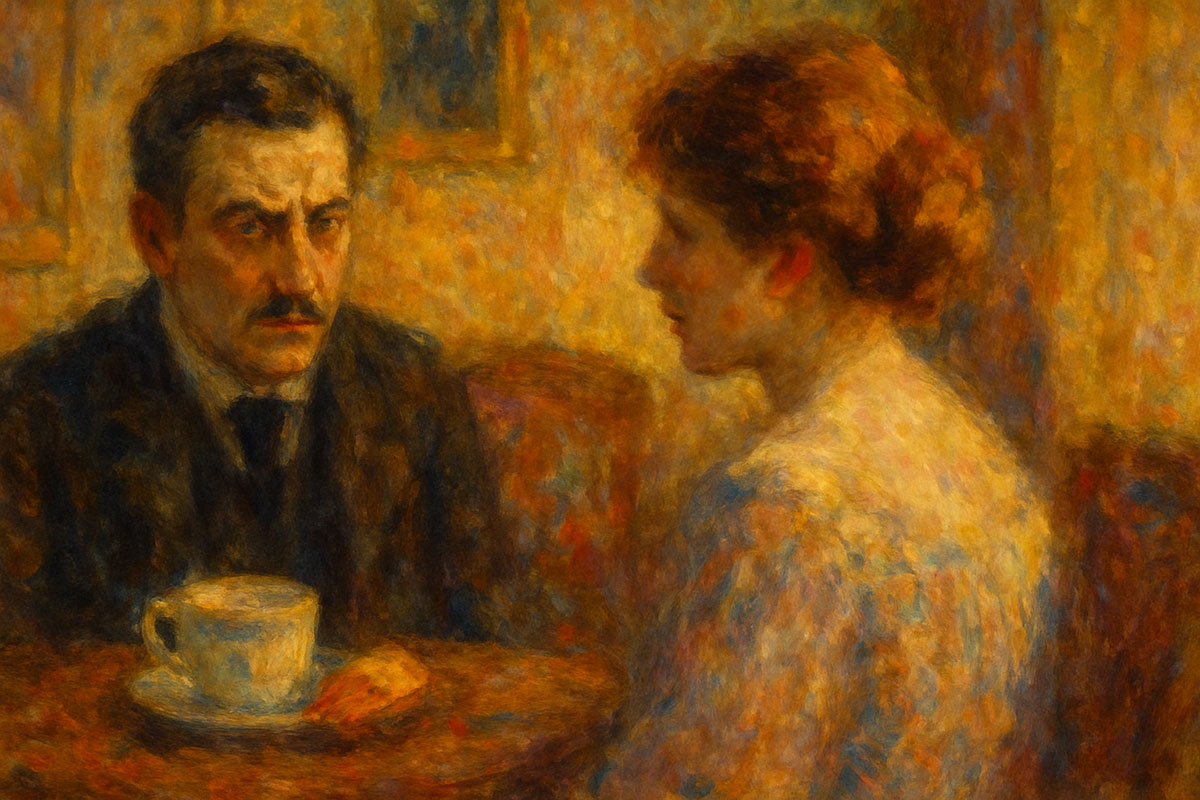
Nick Sasaki: In Proust’s world, love rarely seems peaceful. Swann suffers over Odette, the narrator suffers over Albertine, and jealousy seems to shape love more than tenderness. Let me ask: does jealousy reveal true love, or does it only destroy it?
Charles Swann: I must confess — jealousy was my constant companion. It was not love alone that bound me to Odette, but the suspicion of losing her. Each time I imagined her with another, I felt both despair and desire renewed. Without jealousy, perhaps my passion would have cooled. Was it destructive? Yes. But it also kept love alive, even as it poisoned me.
Odette de Crécy: Swann, you never loved me. You loved a phantom created by your fears. My life was full of ambiguity, yes, but your jealousy painted me darker than I was. You saw treachery in every glance, infidelity in every silence. Jealousy did not deepen your love; it distorted it.
Albertine: Odette, I know this well. I lived imprisoned in Marcel’s gaze, watched constantly, suffocated by suspicion. His jealousy claimed to prove love, but it made me vanish as a person. I became a projection, a captive of his fear. If that is love, then love is a cage.
Marcel Proust: And yet, jealousy cannot be dismissed so easily. It is an affliction, yes, but also a revelation. It exposes how fragile desire truly is — built on insecurity, imagination, and longing. Without jealousy, perhaps we would mistake comfort for love. With it, we glimpse the abyss beneath affection.
Baron de Charlus: Ha! You all speak as though jealousy were a sickness. I see it as theatre, as the very spice of passion. Does not the heart beat faster when we suspect betrayal? Does not desire sharpen in rivalry? Swann’s torment was also his ecstasy. He would have been bored without it.
The Narrator (Marcel): Charlus, you glamorize what tormented me. With Albertine, jealousy was not spice — it was prison. And yet, I must admit: in jealousy, I felt the strongest proof that she mattered to me. Perhaps it is both — a disease that also testifies to love’s intensity.
Nick Sasaki: Then let’s probe further. Is love ever truly about the beloved, or is it always about ourselves — our memories, our needs, our illusions?
Swann: I see your point. I loved Odette not for who she was, but for what she awakened in me. She was never my ideal — at first, I even thought her unattractive. But when passion took hold, I remade her in the image of my longing. In truth, I loved my own desire.
Odette: Exactly. I was never the Odette he worshipped or despised. I was a mirror reflecting his fears and fantasies. Love may claim to be about another, but it is more often a story we tell ourselves.
Albertine: I was no different. Marcel saw me through the fog of suspicion. My laughter with friends, my silences, my small freedoms — he turned them into evidence. I ceased to be Albertine; I became the shadow of his need.
The Narrator (Marcel): And yet, Albertine, I must defend myself — or rather, defend love’s nature. Do we ever see another clearly? Perhaps we cannot. Love is always filtered through imagination. But in that illusion lies its intensity. To love purely, without illusion, may be impossible.
Baron de Charlus: Ah, but why resist illusion? Illusion is half the pleasure! I never sought to know others “as they are.” I reveled in my fantasies, my roles, my masks. Love is artifice, and that is its charm.
Marcel Proust: Perhaps, then, the truth is that love is not about possessing another, nor even about knowing them. It is about discovering the landscapes of our own soul, revealed by the other’s presence. Love is a mirror, but one that shows us our hidden depths.
Nick Sasaki: One last question: if love is so bound with jealousy, illusion, and suffering, why do we still seek it? What makes love worth enduring?
Swann: Because even in torment, love made me alive. Each pang of jealousy, each desperate hour, was proof that I felt. Without love, I would have drifted, dulled by comfort.
Odette: For me, love was not torment but survival. In Swann’s devotion — even misguided — I found security, even a kind of power. Love may be flawed, but it sustains us.
Albertine: I cannot agree. Love, as I lived it, felt more like capture. And yet… in the moments before suspicion, there was tenderness, laughter, intimacy. Those flashes made even captivity bearable.
The Narrator (Marcel): Albertine, it is true. My love bound you, but it also bound me. In you I discovered not just torment, but beauty — fragile, fleeting, and irreplaceable. That is why we endure love: because it reveals life’s intensity.
Baron de Charlus: I seek love for its theatre. Its masks, its jealousies, its rivalries — they make existence grand. Life without love would be unbearably dull.
Marcel Proust: And I would add: love, with all its flaws, is the soil from which art grows. My jealousy, my obsessions, became not only suffering but also revelation. Without love, I would not have written. Without pain, there is no art.
Nick Sasaki (closing): Thank you, all of you. What I hear is that love, though bound in jealousy and illusion, is also what makes us alive. It may deceive us, imprison us, or even break us — yet it also awakens us, sharpens us, and inspires us. Perhaps love is never pure, but it is always profound.
Topic 3: Society and Its Masks

Nick Sasaki: Proust’s work shows us not only the inner life but also the glittering — and often hypocritical — world of salons, aristocracy, and shifting classes. My first question: is society simply a theatre of vanity, or does it reveal something essential about who we are?
Baron de Charlus: Theatre of vanity, yes — but theatre nonetheless. In the salons, one’s worth is measured by wit, by scandal, by one’s ability to dazzle. Hypocrisy? Of course. But hypocrisy is also artistry. To wear a mask is not to lie, but to play. Society is the grand stage, and we are its actors.
Swann: Charlus, you are too forgiving. I have seen how society corrodes sincerity. My own marriage to Odette, though unthinkable to my peers, became yet another subject for gossip and judgment. In salons, one never sees the person, only their rank, their name, their connections. It is not revelation — it is erasure.
Odette: And yet, Swann, those salons gave me entry into a world I could not have dreamed of. Yes, I was whispered about, mocked as unsuitable. But within that world, I gained power through allure, through association. Society may be cruel, but it can be a ladder as well as a cage.
Albertine: For me, the salons felt distant, irrelevant. They were the realm of people with masks and games. What mattered to me was not aristocratic pretense but the suffocating closeness of private relationships. Society is not a mirror of truth; it is a distraction from it.
The Narrator (Marcel): I see both sides. When I entered the Guermantes world, I believed it to hold some secret grandeur. Yet when I came close, the majesty crumbled into banality, vanity, and cruelty. And still — I could not look away. Society is both false and fascinating, hollow and yet irresistible.
Marcel Proust: Let us not forget: society, with all its masks, reveals something precisely because it conceals. When men and women posture, flatter, betray, they show us the deep hunger for recognition, for belonging, for immortality in the eyes of others. In that sense, society is not an illusion — it is a magnifying glass of human desire.
Nick Sasaki: That leads us to another question. During the Dreyfus Affair, we saw the salons split over politics, loyalty, and justice. What does this tell us about the moral nature of society?
Swann: The Affair revealed the cowardice of my world. Men and women of the highest rank, who claimed refinement, sided against truth simply to preserve their circle. Society cares little for justice. Its allegiance is to its own survival.
Odette: But Swann, are you surprised? Society was never about truth. It was about cohesion, belonging, reputation. To take a stand that disrupts harmony — even for justice — is to exile oneself. Many prefer silence to exile.
Albertine: That is exactly why society repelled me. To live by appearances, to sacrifice justice for etiquette — what kind of life is that? If society cannot defend truth, then it is worse than irrelevant: it is corrupt.
Baron de Charlus: Ah, but corruption is universal! Politics, family, even love are riddled with compromise. Do not expect purity from salons. They are reflections of the world at large. If they betray, it is only because mankind itself betrays.
The Narrator (Marcel): For me, the Dreyfus Affair was shattering. It forced me to see that even those I admired most were bound by prejudice, by fear of losing place. It taught me that society is fragile — not only vain, but morally weak.
Marcel Proust: And yet, even in its weakness, it offered me material. The Affair showed that the masks of society are not just entertaining but consequential. They shape history, betray justice, and reveal the heart of human contradiction.
Nick Sasaki: One last question. If society is so full of masks, hypocrisy, and betrayal, why do we keep seeking it? Why do we still care about salons, gatherings, and recognition?
Odette: Because to be seen is to exist. In society, even when whispered about, I was alive in others’ eyes. Outside it, I was invisible.
Swann: I agree, Odette. However much I despised the salons, I could not abandon them. Without them, I would have been cut off from the world that shaped me. We endure hypocrisy for the sake of belonging.
Albertine: I think it is weakness. People cling to society out of fear of solitude. But solitude, though harsh, is more honest. I would rather risk loneliness than lose myself to masks.
Baron de Charlus: Ha! Solitude is overrated. The stage of society is far more thrilling. To intrigue, to be envied, to command attention — these are pleasures solitude cannot provide. I care not for honesty; I crave magnificence.
The Narrator (Marcel): And yet, Charlus, magnificence fades. The salons that once dazzled me now appear as fading theatre, their lights dimming with time. What remains is not their brilliance but the memory of their illusions.
Marcel Proust: That is precisely why we seek society. It is ephemeral, vain, often cruel. And yet, like love, it intensifies experience. In its masks, we glimpse the truth of our hunger — our need for others, even when they deceive us.
Nick Sasaki (closing): Thank you all. What I hear is that society, though false, remains irresistible. Its masks hide truth, yet they also reveal the essence of human longing: to be seen, to belong, to matter. The salons may be theatre, but in their play, they show us the depth of our desire.
Topic 4: Time, Loss, and Mortality
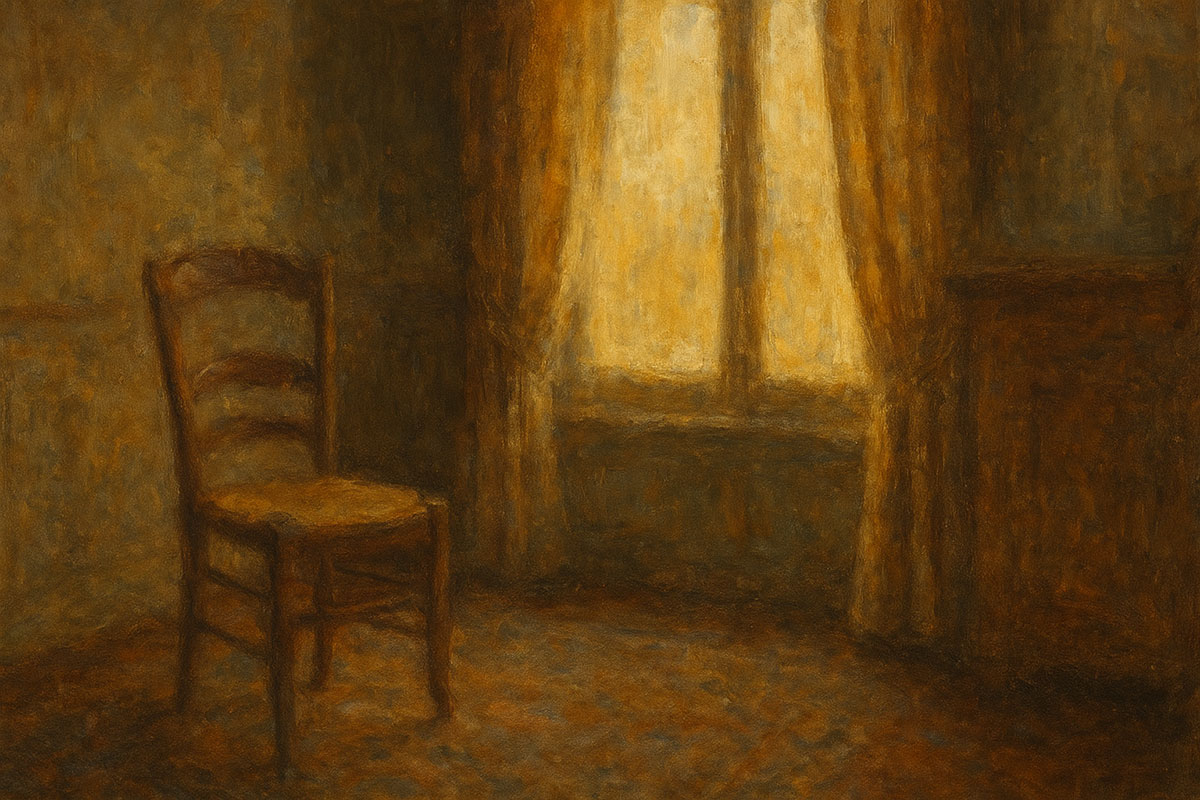
Nick Sasaki: One of the most powerful moments in Proust’s work is the death of the narrator’s grandmother. It marks the cruelty of time and the inevitability of loss. My first question: what does death teach us about time and about ourselves?
The Narrator (Marcel): When my grandmother died, I realized that time is merciless. It takes not only life but the very possibility of return. I thought she was part of my world forever, yet one morning, she was gone, and the air itself seemed empty. Death revealed to me that memory alone cannot hold back the river of time.
Marcel Proust: And yet, Marcel, memory does not merely fail. In grief, I discovered that the dead continue to live within us. The image of your grandmother, the sound of her voice, her presence in a gesture — these remained, woven into your being. Death teaches us that love, once lived, cannot be erased, even as time carries the body away.
Swann: For me, death loomed not only in others but within myself. As illness overtook me, I saw clearly the vanity of my pursuits, my jealous obsessions. What does it matter, whether Odette was faithful or not, when the grave waits for all? Death strips us of illusions and shows us how much time we squandered.
Odette de Crécy: And yet, Swann, even as you faded, you still desired life, still desired love. Death may expose vanity, but it also proves how fiercely we cling to existence. To be mourned, to be remembered — even that is a kind of victory over time.
Albertine: I never lived long enough to age, but my sudden absence revealed another truth: sometimes it is not the years that mark us, but the abrupt end of them. In my death, Marcel discovered how absence can be more haunting than presence. Death does not only take life; it multiplies longing.
Baron de Charlus: Ha! You all speak as though death is a revelation. To me, it is simply the final mask. I lived flamboyantly, defiantly, precisely because I knew mortality would one day unmask us all. Better to dance with vanity than to wait in pious silence for the grave.
Nick Sasaki: Let me ask you this, then. If time and loss are so relentless, how do we endure them? What gives us strength to face the passing of youth and the fading of those we love?
Swann: For me, endurance came too late. I endured by resignation, by surrender. Only when the body weakened did I see that the grand passions of my life were but shadows. Strength came not from fighting time but from accepting its dominion.
Odette: I found endurance in adaptation. One reinvents oneself in every salon, every relationship, every turn of fortune. Time may strip us, but reinvention clothes us again. We survive by changing masks.
Albertine: I think endurance is fragile. Love was my shield, yet it became my prison. Perhaps the truth is that none of us truly endures time — we are carried by it, helpless. What strength we claim is only a moment’s illusion.
Baron de Charlus: Speak for yourself, child! I endured by excess — by refusing moderation, by plunging into experience. If time must devour me, let it feast on a banquet, not crumbs. Strength lies in living so vividly that when loss comes, it meets not a shadow but a flame.
The Narrator (Marcel): I endured by turning to memory. Even as time stole my grandmother, Balbec, Albertine, I found in sudden moments of sensation the possibility of return. A sound, a taste, a gesture — they gave me back what time had taken. That was my strength: the discovery that memory defies time’s erasure.
Marcel Proust: And I endured by writing. To capture time in words, to fix memory in art — this was my resistance. Loss became material, mortality became meaning. Through art, endurance is not only survival, but transformation.
Nick Sasaki: One last question: do you believe art and memory can truly defeat time and mortality, or do they merely console us while we fade?
Albertine: They console, nothing more. Marcel wrote of me, remembered me, but I was still gone. Memory may soothe, but it does not resurrect.
Odette: I disagree. Swann’s memory made me radiant in ways reality never did. Even if I was flawed in life, in art I became immortal. Memory redeems, even if it does not restore.
Swann: Perhaps both are true. My memory of Odette tormented me, yet in torment, she was alive. Even as my body failed, memory made my love eternal, though it also kept me in chains.
Baron de Charlus: Eternal? Nonsense! Nothing defeats time. Not art, not memory. They are distractions, splendid illusions. Yet illusions have their charm. If we cannot win, let us at least play beautifully while we lose.
The Narrator (Marcel): Charlus, even illusions shape reality. When I tasted the madeleine, my childhood returned, not as an idea but as presence. That was not mere consolation — it was resurrection in spirit, if not in flesh.
Marcel Proust: And through art, those resurrections endure beyond the individual. The writer’s task is not to halt time, but to translate its passing into meaning. Mortality is inevitable, but through memory shaped as literature, life gains a second existence. It may not defeat death, but it transfigures it.
Nick Sasaki (closing): Thank you. What I hear is that time and mortality may strip us of all things, yet memory and art give us a way to endure — not by conquering death, but by transforming it into meaning. Loss is inevitable, but in remembering and in creating, we keep life alive within us.
Topic 5: Art as Salvation
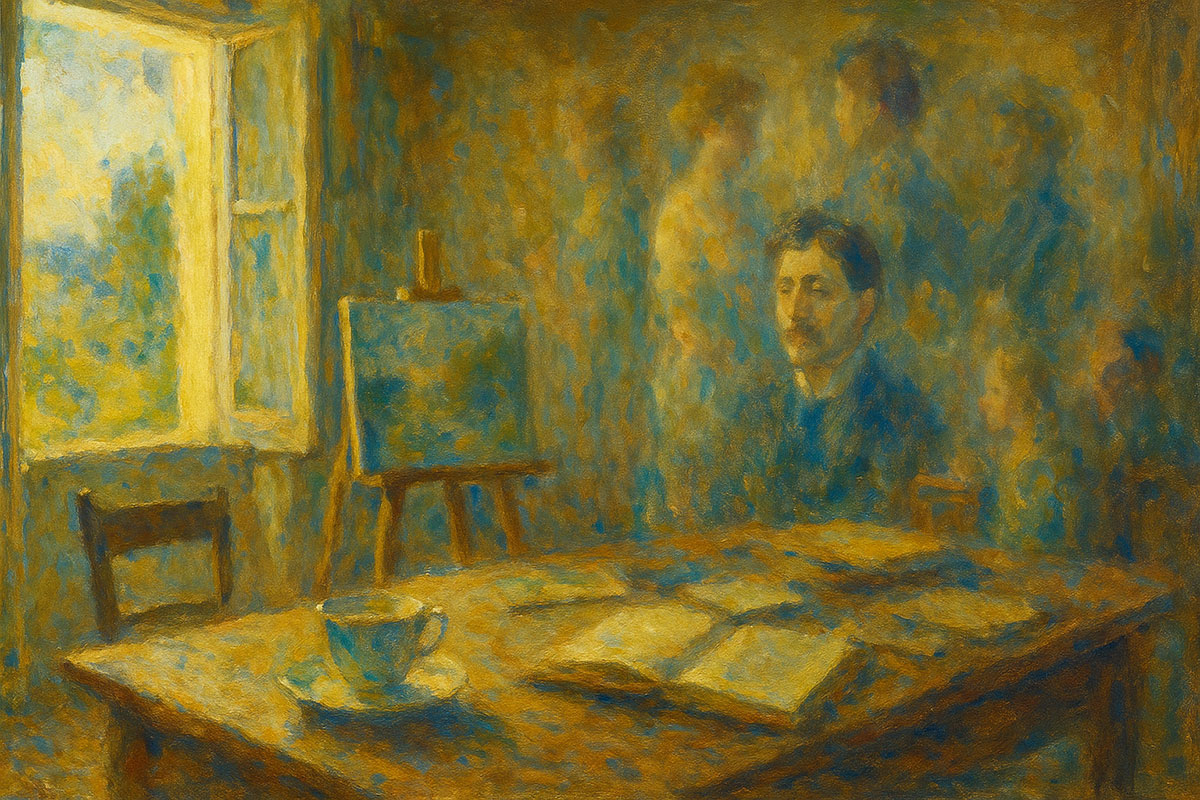
Nick Sasaki: Proust’s journey leads finally to the idea that art is our only true salvation — that through writing, memory and time are transformed into something lasting. My first question: what does it mean for art to “save” us?
Marcel Proust: For me, salvation is not religious but aesthetic. When the taste of the madeleine returned Combray to me, I realized life’s deepest truths hide in memory, waiting for the writer to uncover them. By shaping them into words, I saved not my body, but my soul — giving permanence to what would otherwise be lost.
The Narrator (Marcel): I came to see that art is the thread that sews fragments of the self together. My loves, my losses, my jealousies — scattered, painful, fleeting — only gained meaning when I resolved to write them. Art redeemed my suffering by making it part of a whole.
Swann: Salvation? I am not so certain. My love for Odette consumed me. Could art save me from jealousy’s torment? Perhaps not. But in Proust’s book, my suffering was not wasted. It became testimony, a mirror for others. In that sense, art gave my anguish purpose.
Odette de Crécy: And for me, art was redemption. In life, I was mocked, doubted, diminished. But in the pages of this great work, I became unforgettable. If salvation means to be remembered, then art gave me eternity I could never have found in salons.
Albertine: I am less convinced. In writing, Marcel shaped me into something I was not. Did art preserve me, or erase me? If I live in memory only as his creation, is that salvation — or a second prison?
Baron de Charlus: Ha! Salvation is too grand a word. Art is diversion, spectacle. Yes, Proust made us immortal in his volumes, but immortality is another mask. Still, I admit: it is a mask more beautiful than death.
Nick Sasaki: That raises a harder question: does art preserve truth, or does it only transform experience into something new, perhaps even distorted?
Marcel Proust: It transforms, of course, but transformation does not mean falsification. Reality is fleeting, disordered, chaotic. Art gives it shape, reveals patterns, uncovers essences hidden from daily sight. Art is not the mirror of life — it is its unveiling.
The Narrator (Marcel): When I remembered my grandmother, what I recalled was not her exact words or gestures, but the essence of her tenderness. Was that less true, or more true? Art distills truth from fact, even as it alters detail.
Swann: I know well the danger of illusion. My memory of Odette was often false, distorted by jealousy. Yet when Proust turned my folly into narrative, did it not become truer? Readers see not only my blindness but the universal blindness of lovers. In distortion, art found a deeper truth.
Odette: And I agree. I was perhaps never Odette as the world imagined me — courtesan, angel, betrayer. Yet in art, I became all of these at once. Art freed me from the narrow truth of facts and gave me the larger truth of symbol.
Albertine: I resist. In art, I was transformed into the captive, the fugitive, the phantom of Marcel’s desire. Perhaps that was true for him, but it was not my truth. If art saves, it sometimes does so by sacrificing the subject.
Baron de Charlus: My dear, we are all sacrifices on the altar of art! Do you think Shakespeare’s Hamlet was a faithful man from Elsinore? No — but his suffering was immortalized. If art distorts us, it is only to make us eternal.
Nick Sasaki: One last question: if art is salvation, is it salvation only for the artist, or for all who encounter it?
Marcel Proust: It begins with the artist. By writing, I gave order to chaos, meaning to suffering. But salvation extends outward. Each reader who sees their own secret life reflected in mine is also saved from isolation. Art unites souls across time.
The Narrator (Marcel): When I wrote, I discovered not only myself but others. My book was not a monument to me, but a bridge to those who would read it. In their recognition, salvation multiplied.
Swann: I did not seek salvation, yet in Proust’s art, I found it. My folly became wisdom for others. If my jealousy helps one reader recognize themselves, then my suffering was not in vain.
Odette: And I, too, was lifted. The world that judged me harshly now remembers me as more than gossip. Through art, I became part of something eternal.
Albertine: But let us not forget: readers must still choose to see themselves in the work. For some, art is salvation. For others, it is only entertainment. Its power is great, but not universal.
Baron de Charlus: Entertainment, salvation — these are but names. What matters is that art survives when flesh does not. Whether it saves or not, it outlasts us. That, in itself, is victory over time.
Nick Sasaki (closing): Thank you, all of you. What I hear is that art does not preserve life as it was, but as it was felt — transformed into meaning. It redeems pain, grants eternity, and unites us across time. Salvation may be too strong for some, too weak for others, but one truth stands: through art, what is lost is never entirely gone.
Topic 6: Desire and Possession
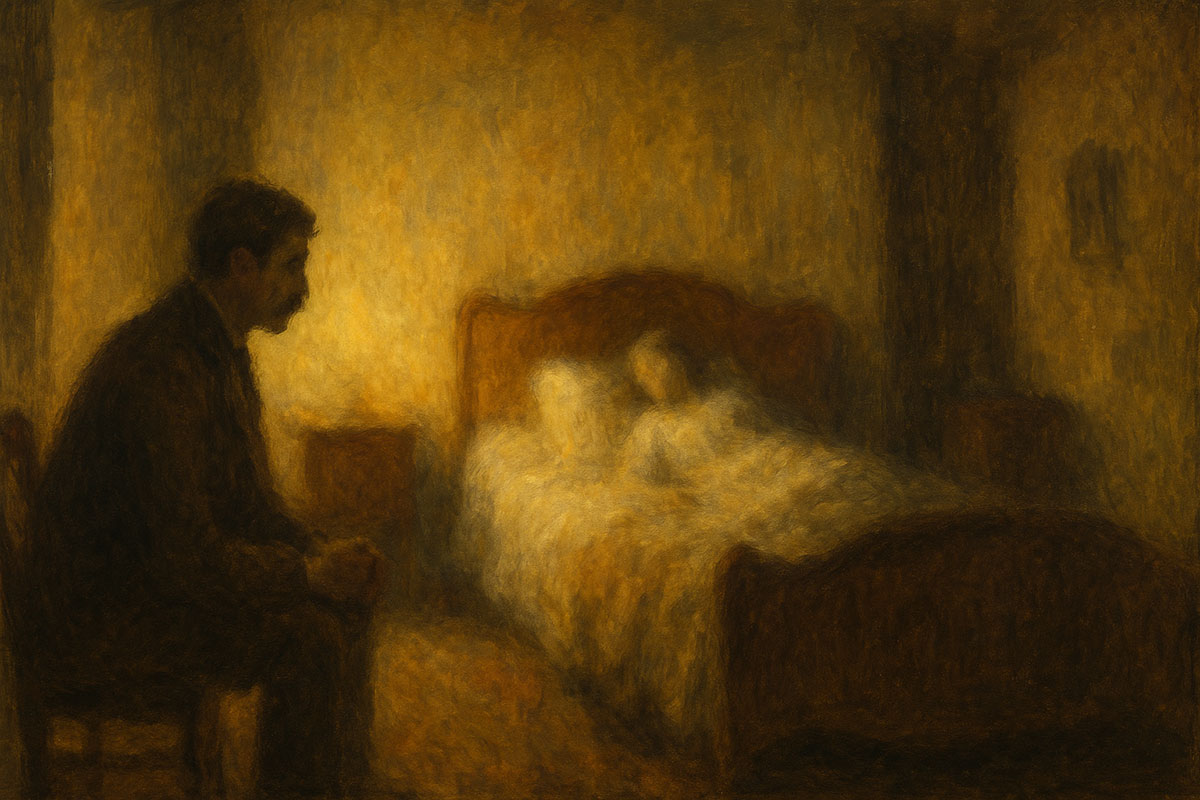
Nick Sasaki: One of the most troubling themes in this work is the narrator’s attempt to “possess” Albertine — keeping her close, watching her, fearing her departure. Let me ask: does possession ever bring fulfillment in love, or is it always an illusion?
Albertine: Possession is never fulfillment. I lived under watch, every step questioned, every freedom doubted. Marcel thought to hold me close was to secure my love, but it only smothered me. Possession destroys what it seeks to preserve.
The Narrator (Marcel): Albertine, I must admit you’re right. My jealousy blinded me. I thought keeping you near would silence my fears, yet the closer you were, the more I doubted. Possession promised peace but delivered torment.
Swann: I know this well. My grip on Odette was no less desperate. I sought certainty — to know where she was, who she was with. But certainty never came. Possession is a mirage: the more we chase it, the more it recedes.
Odette de Crécy: And from my side, being possessed was not love but burden. I lived not as myself but as the figure in Swann’s imagination. Possession did not bring closeness — it built a wall between us.
Baron de Charlus: Ah, but let us not be naive. Possession has its pleasures! To command devotion, to be the object of another’s obsession — is that not a form of power? Illusion, perhaps, but illusion can intoxicate.
Marcel Proust: Power, yes, Charlus, but at what cost? Possession confuses love with control. True intimacy cannot flourish under chains. What remains is not affection but surveillance, not tenderness but fear.
Nick Sasaki: Then why do we seek possession at all? If it brings only jealousy and suffering, why are we drawn to it?
Swann: Because love is fragile. We cling to possession as a shield against loss. To hold Odette, even imperfectly, felt safer than to risk absence. Possession is born of fear, not joy.
Odette: And fear is the enemy of love. When one is treated as an object to be guarded, affection withers. Love requires trust — possession proves its absence.
Albertine: For me, possession was suffocation, but I also saw in Marcel’s jealousy a strange intensity. He needed me because he feared losing me. In that fear, I glimpsed how much I mattered. That was its paradox: cruel and affirming at once.
The Narrator (Marcel): Albertine speaks truth. My jealousy was my prison, yet it was also the proof of my need. Possession failed to give peace, but it made me aware of love’s depth — even as it ruined it.
Baron de Charlus: I embrace the paradox! To desire is to want to consume, to hold, to bind. Do not moralize it — admit it. Possession is the drama of love. Without it, passion becomes dull routine.
Marcel Proust: No, Charlus. Possession is the enemy of art as well as of love. Only when Albertine was lost, only when she escaped me, did my love take on its full shape in memory. Possession chained me; absence liberated my vision.
Nick Sasaki: My last question: why is absence sometimes more powerful than presence in love?
Albertine: Because absence allows imagination to roam free. In presence, I was simply myself. In absence, I became infinite — Marcel’s fears, his fantasies, his longing. Absence multiplies desire.
Odette: Indeed. Swann loved me most when he suspected me elsewhere. In presence, I was flesh; in absence, I became myth. Lovers often love the phantom more than the person.
Swann: Painful but true. When Odette was before me, I doubted. When she was absent, I ached — and that ache was the proof of love. Absence was the fire that kept my obsession alive.
The Narrator (Marcel): Albertine’s absence was more haunting than her presence ever was. After she fled, after she died, she was everywhere — in the streets, in dreams, in memory. Presence gave me a person; absence gave me an eternity.
Baron de Charlus: You see? Absence is the stage on which desire performs its grandest acts. A lover before you may bore; a lover gone can consume the soul. Absence is not loss — it is the theatre of imagination.
Marcel Proust: That is why art depends on absence. Life lived is fleeting. Life remembered, reimagined, becomes eternal. In love, as in literature, absence is the source of depth.
Nick Sasaki (closing): Thank you. What I hear is that possession promises peace but delivers torment, while absence, painful though it is, ignites imagination and preserves love beyond time. Desire seeks to hold, but it is often in letting go that love becomes eternal.
Topic 7: The Hidden Self
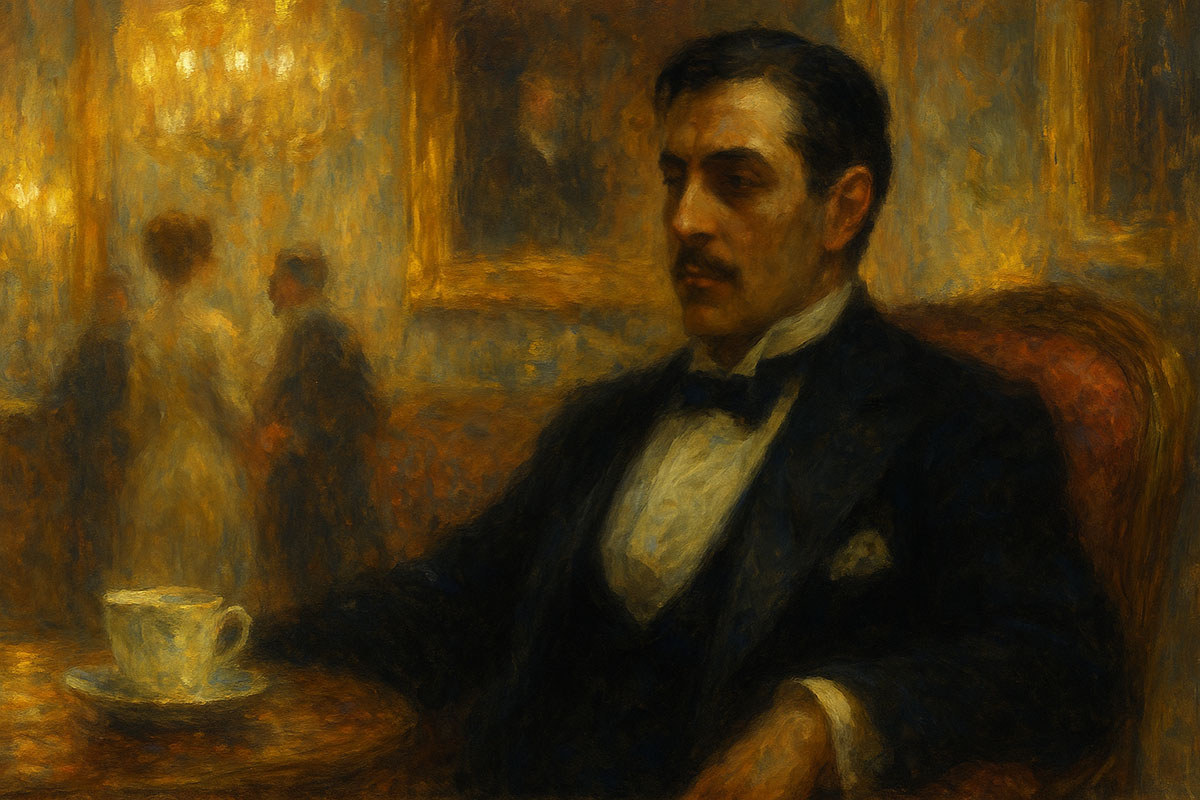
Nick Sasaki: Charlus, your story reminds us that much of life is lived behind masks — of sexuality, of rank, of social performance. My first question is for all of you: do we ever truly reveal who we are, or are we always hiding behind some form of disguise?
Baron de Charlus: Disguise? Call it style. I never hid myself; I adorned myself. Yet yes, my desires, my secrets, I could not parade openly. Society punished too harshly. So I made theatre of my life, hiding with one hand, revealing with the other. We all wear masks. Mine were simply more flamboyant.
Swann: I see it differently. My mask was not chosen but imposed. To love Odette was to defy my circle, and so I wore the mask of conformity until I could no longer bear it. Masks protect us, but they also suffocate.
Odette de Crécy: Masks are survival. A woman like me, rising from my background, could not enter salons without disguises — charm, wit, calculated allure. Did they see Odette, or the role I played? Perhaps both. But without the mask, I would have been excluded entirely.
Albertine: And I too wore masks, though less willingly. Marcel wanted me as innocent, then suspected me of secrets. So I learned to hide, to become what he imagined. My hidden self was not freedom, but fear of discovery.
The Narrator (Marcel): I confess: I sought masks in others and in myself. I played the role of admirer in salons, the role of jealous lover with Albertine. Did I ever show myself as I was? Perhaps not. Perhaps identity itself is a mask that changes with each stage.
Marcel Proust: And yet, the act of writing was the removal of the mask. In art, I dared to show what society forbade, what lovers concealed, what even I feared to face. The hidden self, when transfigured into words, ceases to be secret — it becomes revelation.
Nick Sasaki: That leads to my next question: is secrecy always harmful, or can it give life intensity?
Baron de Charlus: Ha! Secrecy is half the thrill. What is desire without a hidden chamber? To love in the shadows, to whisper what cannot be shouted — this gives passion its fire. Exposure is dull; secrecy is intoxicating.
Swann: You romanticize it, Charlus. Secrecy destroys. Odette’s evasions, my suspicions — they tore me apart. A hidden self is not a flame but a poison, corroding trust.
Odette de Crécy: And yet, Swann, without secrecy I could not have survived. To tell you everything would have been to lose you. Secrecy was my shield — fragile, yes, but necessary.
Albertine: I lived secrecy as a prison. Each time I laughed with a friend, I feared it would be twisted into betrayal. Secrecy did not intensify my life — it stole it.
The Narrator (Marcel): But Albertine, your secrecy also gave you power over me. Each unknown glance, each silence, bound me tighter. Secrecy gave me anguish, but also intensity. Love without mystery may be calm, but it is lifeless.
Marcel Proust: This is why secrecy fascinated me: it wounds, it entices, it consumes. But in art, secrecy becomes meaning. What torments us in life becomes illumination in literature. Secrecy is harmful in life, yet invaluable in art.
Nick Sasaki: Finally, I ask each of you: is authenticity possible? Or are we condemned to live behind masks forever?
Swann: I believe authenticity is fleeting. In rare moments — a confession, a look of love — the mask slips. But it never lasts. Society and fear quickly demand its return.
Odette de Crécy: Perhaps authenticity is not to remove the mask, but to choose it. If I played roles, they were still mine. To live without masks is impossible, but to live without awareness of them is tragic.
Albertine: I was never allowed to be authentic. Always doubted, always suspected, I became a reflection of Marcel’s fears. If authenticity exists, it requires trust — and I never had it.
Baron de Charlus: Authenticity is a myth! We are many selves, shifting by day, by company, by desire. To seek a “true self” is to chase a phantom. Masks are not deception; they are the self’s wardrobe.
The Narrator (Marcel): And yet, Charlus, I must disagree. In moments of involuntary memory — the taste of a madeleine, the uneven stones of a path — I felt authentic being return, unmasked, whole. Brief, yes, but real.
Marcel Proust: That is the task of art: to capture those brief flashes of authenticity, when the hidden self shines forth. Masks may rule society, but art reveals the soul. Authenticity may not be constant, but in literature, it becomes eternal.
Nick Sasaki (closing): Thank you all. What I hear is that masks are inescapable — sometimes playful, sometimes poisonous, sometimes protective. Yet within secrecy and disguise, there are moments when the hidden self emerges, and art has the power to preserve those revelations forever.
Final Thoughts by Marcel Proust
As these conversations draw to a close, I am reminded that literature is not an escape from life, but its most faithful mirror. In love, we find jealousy; in society, we find masks; in time, we find death. Yet through memory and art, even these wounds are redeemed. What is fleeting becomes eternal; what is painful becomes luminous.
Swann’s torment, Odette’s evasions, Albertine’s absence, Charlus’s masks — all are fragments of the same truth: that we live more in what we remember than in what we hold. And it is only by giving shape to those fragments, through words, that we approach salvation.
If these dialogues have illuminated anything, let it be this: that the self is not one, but many; that love is not pure, but profound; and that time, though it takes everything, also gives us the gift of remembrance. And in remembrance, transfigured into art, we find not consolation alone, but a kind of immortality.
Short Bios:
Leave a Reply