
|
Getting your Trinity Audio player ready...
|
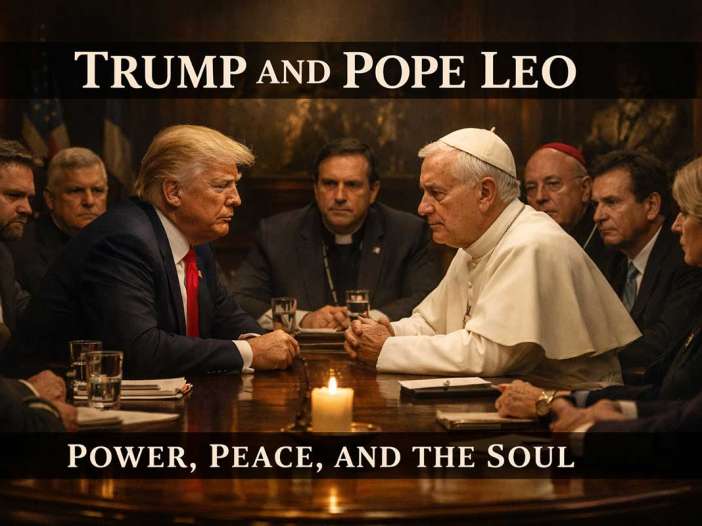
What if Trump and top Christian voices confronted Pope Leo on whether strength can protect a nation without hardening its soul?
There are some conversations that begin with policy, and there are others that begin with something much deeper than policy. This is one of those.
When I imagined Donald Trump and Pope Leo XIV facing each other, I was not mainly interested in who would win an argument. I was interested in what happens when two very different ideas of strength stand in the same room and refuse to bow to each other. One speaks the language of danger, borders, force, protection, and national survival. The other speaks the language of conscience, peace, dignity, restraint, and the soul’s responsibility before God.
That clash is what drew me here.
At first, it may look like this conversation is about war, immigration, Christianity, or political leadership. And yes, it is about all of those things. But underneath them is a more difficult question: what does a nation become when fear and faith begin pulling in different directions? What happens when a leader believes his first duty is to protect his people at any cost, and another believes that once power loses its moral limits, the victory itself may become a kind of defeat?
That is why I wanted to bring these voices together.
Trump, in this imagined setting, represents more than a politician. He represents the demand for action in a dangerous world. He represents the suspicion that moral language, when separated from consequences, becomes ornamental. Pope Leo, on the other hand, represents more than a religious leader. He represents the stubborn refusal to let urgency become an excuse for spiritual blindness. He keeps asking whether a civilization can remain human if it learns to admire force too much.
And that is where the real heat of this 53R1 begins.
Each topic in this conversation moves through a different doorway into the same central struggle. War asks whether strength can remain moral. Borders ask whether order can remain humane. Christianity asks whether faith exists to bless power or judge it. Strongman politics asks why frightened people are drawn to certainty. Peace asks whether the human soul can still hear anything higher than fear.
I did not want this to become a shallow left-right argument. I wanted it to feel heavier than that. More human than that. More spiritually dangerous than that. These are not just disagreements about public policy. These are disagreements about what kind of leaders we trust, what kind of faith we practice, and what kind of inner life a civilization still has when the pressure becomes severe.
So this conversation begins there: not with easy conclusions, but with a room full of people who know that something deeper than politics is at stake.
(Note: This is an imaginary conversation, a creative exploration of an idea, and not a real speech or event.)
Topic 1: Power, peace, and the right to wage war
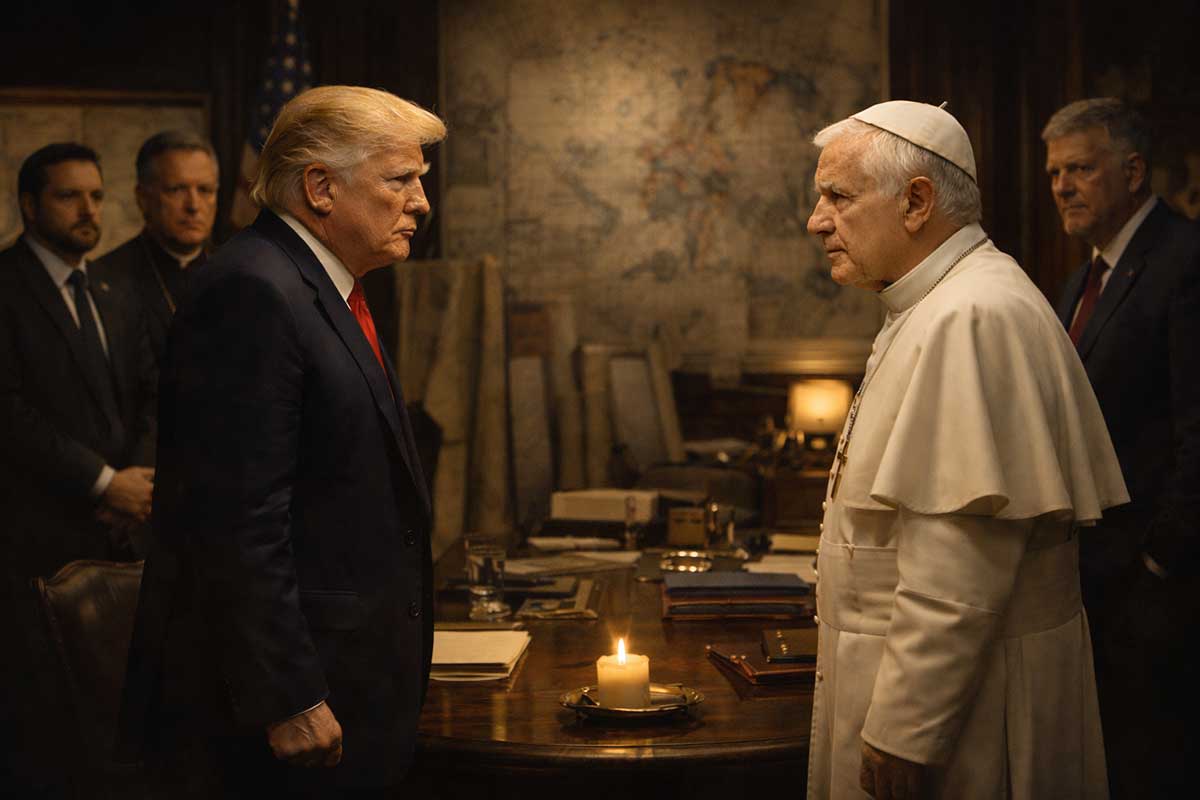
This topic grows straight out of the present public clash. Reuters reported on April 16 that Trump called Pope Leo XIV “weak” on foreign policy and pressed the point that Iran must never get a nuclear weapon. Reuters also reported that Pope Leo kept condemning the war and the moral corruption that comes when leaders lean on force too easily.
Participants
- Donald Trump
- Pope Leo XIV
- JD Vance
- Archbishop Gustavo García-Siller
- Franklin Graham
Three questions
- When a nation faces real danger, when does war become duty, and when does it become moral failure?
- Is a leader more dangerous when he hesitates to use force, or when he starts trusting force too much?
- Can a Christian leader defend violent action without teaching people that peace is weakness?
Question 1
When a nation faces real danger, when does war become duty, and when does it become moral failure?
Donald Trump
“War is never the first choice. But weakness can be the most expensive mistake a leader makes. If a regime is openly hostile, funding terror, moving toward devastating weapons, and mocking diplomacy, then waiting can become its own form of failure. A president’s first duty is protection. If I see a danger growing and still do nothing, that is not peace. That is irresponsibility.”
Pope Leo XIV
“A state may defend life, yes. But war becomes moral failure the moment leaders begin to speak as if destruction were wisdom. One must ask whether every other door has truly been tried, or whether impatience has dressed itself up as duty. Violence may at times be permitted, but it is never something a moral civilization should speak of with ease.”
JD Vance
“The just-war tradition exists for a broken world. It was never written for fantasy. There are times when refusing to confront evil causes greater evil. The tests matter: just cause, legitimate authority, proportionality, last resort. But if you make those standards so unreachable that no modern danger can ever meet them, then moral language stops helping statesmen and starts paralyzing them.”
Archbishop Gustavo García-Siller
“The great danger is that fear excuses too much. Every age says its threat is unique. Every government says its violence is reluctant. Yet conscience must still ask whether force has become the quickest answer simply because it is the answer rulers know best. A nation may protect itself and still lose its moral seriousness.”
Franklin Graham
“Peace is precious, but peace without truth is illusion. If innocent people are in danger and a leader has the means to stop a greater evil, refusing to act may become its own sin. The problem is not force by itself. The problem is force used carelessly or selfishly. Protection is not the same thing as bloodlust.”
Exchange
Pope Leo XIV to Trump
“Mr. President, how do you keep urgency from turning into self-justification?”
Trump
“By remembering I’m judged by what happens to my people, not by speeches after the disaster.”
García-Siller to Vance
“If every generation says its danger is exceptional, who will ever stop war?”
Vance
“The answer is moral limits honestly applied, not pretending grave threats are unreal.”
Question 2
Is a leader more dangerous when he hesitates to use force, or when he starts trusting force too much?
Donald Trump
“A leader who hesitates too long can invite catastrophe. History is full of men who talked carefully, waited politely, and let danger grow until ordinary people paid the price. A weak signal sent to violent people is still a signal. It tells them they have room. It tells them you fear escalation more than they do. That kind of hesitation can destroy nations.”
Pope Leo XIV
“A leader becomes more dangerous when force begins to feel clean in his mind. Hesitation can be costly, yes. But trust in force changes the inner life of power. Once leaders begin to believe that violence is clarity, every problem starts to look like an enemy, every enemy starts to look less human, and every restraint begins to feel like cowardice. That is when power becomes spiritually blind.”
JD Vance
“The real danger is imbalance. A leader who cannot act endangers his people. A leader who sees force as the answer to too many problems endangers the moral order he claims to defend. Prudence is the key virtue here. You need enough hardness to confront evil, and enough discipline to stop strength from becoming habit.”
Archbishop Gustavo García-Siller
“I fear the ruler who starts trusting force too much. Hesitation may fail in one moment. But trust in force reshapes the whole imagination of a nation. It teaches citizens to admire hardness, rewards leaders for escalation, and leaves little room for repentance. A frightened nation may survive a weak leader. It may not survive a generation trained to call aggression realism.”
Franklin Graham
“There are dangers on both sides. A timid leader can leave people exposed. An arrogant leader can confuse action with righteousness. But I would still say a ruler who refuses to face evil plainly can do terrible harm. The issue is not whether force exists. The issue is whether the leader remains humble before God and clear about his duty.”
Exchange
Trump to Pope Leo XIV
“Holiness, people don’t get to live in moral poetry. They live in the real world.”
Pope Leo XIV
“And the real world is full of graves dug by men who said exactly that.”
Franklin Graham to García-Siller
“Would you still speak this way if your own people were the next target?”
García-Siller
“Yes. That is precisely when conscience must speak most clearly.”
Vance to Pope Leo XIV
“Do you admit that restraint can also become vanity, a way of feeling pure while others absorb the cost?”
Pope Leo XIV
“Yes. That temptation exists. But so does the far older temptation of calling domination responsibility.”
Question 3
Can a Christian leader defend violent action without teaching people that peace is weakness?
Donald Trump
“A leader can do it by making clear that force is for protection, not glory. The world has evil in it. People know that. They are not confused by strength. What confuses them is leaders who sound noble but leave them undefended. Peace is a beautiful word, but if enemies hear that word as surrender, then peace becomes an advertisement for more aggression.”
Pope Leo XIV
“A Christian leader must speak of force with grief, not energy. With trembling, not pride. The moment violence becomes something that lifts the leader’s image, peace has already been dishonored. Yes, a ruler may at times defend the innocent. But if he does so in a way that teaches crowds to admire hardness for its own sake, then he is no longer protecting peace. He is forming souls away from it.”
JD Vance
“Yes, it is possible, but only with moral seriousness and clear limits. The Christian task is not to erase the tragic dimension of politics. It is to stop tragedy from becoming appetite. A leader must show that force is sometimes permitted in a fallen world, yet still leave the public with sorrow about its necessity.”
Archbishop Gustavo García-Siller
“In practice, this is harder than many admit. Leaders rarely use force without also shaping a story around it. That story often flatters the nation, praises the leader, and simplifies the enemy. Once that happens, peace starts to sound like softness and war starts to sound like virtue. That is the catechism of empire, not the Gospel.”
Franklin Graham
“A Christian leader can defend necessary action if he keeps the focus on protection, justice, and accountability before God. Scripture does not teach that rulers have no duty to restrain evil. But I agree with one point here: the tone matters. Violence should never be sold as thrilling, cleansing, or spiritually heroic. It should be handled as a grave burden.”
Exchange
Pope Leo XIV to Franklin Graham
“Can Christians still recognize the gravity of force once they begin praising strongmen in sacred language?”
Franklin Graham
“They can, if they remember that leadership is stewardship, not worship.”
Trump to Pope Leo XIV
“You talk as though strength corrupts by nature.”
Pope Leo XIV
“No. I speak as one who knows how easily strength forgets its limits.”
Vance to Trump
“Mr. President, do you think there is any danger in political rhetoric making people hunger for force itself?”
Trump
“There’s always danger in rhetoric. But there’s greater danger in telling evil people you’ll never act.”
Closing reflection for Topic 1
This first topic works because neither side is shallow. Trump’s side asks: What good is moral language if it cannot stop evil? Pope Leo’s side asks: What good is strength if it saves a nation but damages its soul? That tension matches the real public dispute now unfolding between them over Iran, war, and the moral use of power.
Topic 2 Borders, migrants, and the moral meaning of a nation
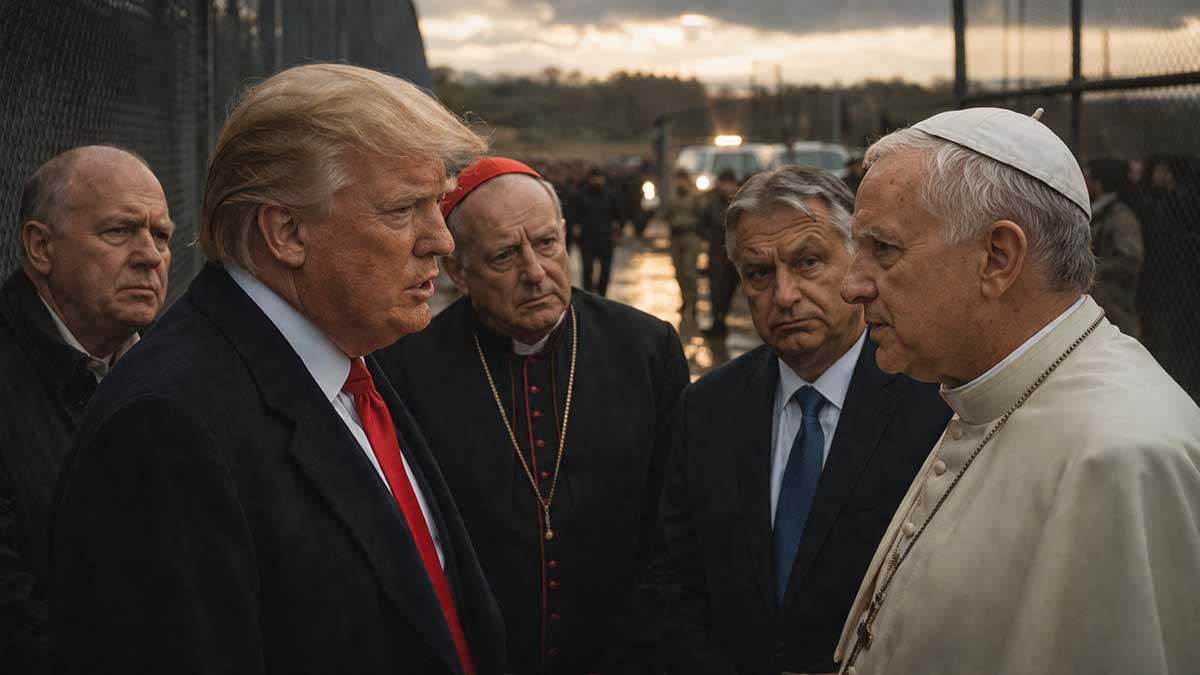
This topic fits the real conflict very closely. Reuters reports that Pope Leo has criticized Trump’s hardline immigration posture, and the White House has framed its April immigration push as restoring “rule of law” and ending an “era of amnesty.”
Participants
Donald Trump
Pope Leo XIV
Tom Homan
Cardinal Robert McElroy
Viktor Orbán
Core tension
Trump and Homan speak from border control, national order, deterrence, and the belief that compassion without enforcement becomes disorder. Pope Leo and McElroy speak from human dignity, moral restraint, and the fear that a nation can protect itself in a way that slowly hardens its soul. Orbán sharpens the civilizational side of the argument: that a border is not just a line, but a cultural and political wall that keeps a people from dissolving.
Three questions
- Does a nation betray itself by failing to defend its border, or by forgetting the stranger at the gate?
- At what point does compassion become disorder, and at what point does order become cruelty?
- Can Christian language survive inside immigration politics without being used as a shield for fear?
Question 1
Does a nation betray itself by failing to defend its border, or by forgetting the stranger at the gate?
Donald Trump
“A nation that cannot defend its border cannot defend its identity, its law, or its future. People talk about compassion as though a country has no right to say who enters, who stays, and under what terms. That’s not compassion. That’s surrender. A border is one of the first duties of a real state. If you give that up, you are telling citizens that their government exists to manage decline, not protect them.”
Pope Leo XIV
“A nation does have the right to protect its borders. But it betrays itself more deeply when it forgets that the stranger is still human. The moral test is not whether a country has limits. The moral test is how it treats the vulnerable when enforcing them. A people may defend its home and still lose its soul if it begins to speak of migrants as if they were a stain, a threat by nature, or a burden unworthy of tenderness.”
Tom Homan
“The border is not an abstract moral classroom. It is a real operational problem with real consequences: trafficking, cartel violence, exploitation, fake asylum claims, strain on local communities. You do not help decent migrants by pretending chaos is mercy. Chaos enriches predators. A nation betrays itself when it lets law collapse and then calls the collapse compassion.”
Cardinal Robert McElroy
“There is a moral blindness that begins when every conversation about migration starts with threat. Law matters, yes. Sovereignty matters, yes. But once the stranger is reduced to a category of pressure instead of a person bearing dignity, a nation starts deforming its own moral imagination. The betrayal is deepest when fear becomes the first lens through which the vulnerable are seen.”
Viktor Orbán
“A nation without borders becomes a territory, not a civilization. Political elites often speak as though every barrier is cruelty and every difference can be dissolved into administrative management. That is fantasy. A people has a right to continuity, cultural memory, and self-preservation. The stranger may deserve respect, but a nation also has the right to remain itself.”
Exchange
Pope Leo XIV to Trump
“Can a nation remain strong if it teaches itself to look at the weak with suspicion first?”
Trump
“It can’t remain strong if it teaches the world that its laws are optional.”
McElroy to Homan
“Do you fear that enforcement language trains the public to stop seeing faces?”
Homan
“I fear the opposite. I fear slogans that sound humane but leave real people to traffickers and disorder.”
Orbán to Pope Leo XIV
“Must every nation feel guilty for wanting continuity?”
Pope Leo XIV
“No. But every nation should feel responsible for what its fear turns it into.”
Question 2
At what point does compassion become disorder, and at what point does order become cruelty?
Donald Trump
“Compassion becomes disorder when it stops distinguishing between need and exploitation. The world is full of suffering. That does not mean every nation must absorb unlimited pressure or abandon enforcement. Once people realize the rules are not real, more people come, more systems break, and more bad actors take advantage. Order becomes cruelty only when it is enforced without humanity. But the answer to that is better enforcement, not no enforcement.”
Pope Leo XIV
“Order becomes cruelty when efficiency replaces conscience. When deportation becomes a spectacle, when deterrence is praised for its harshness, when leaders speak as though severity itself proves seriousness, something disordered has entered the moral life of the nation. Compassion becomes disorder only when it refuses prudence. But order becomes far more dangerous when it refuses mercy.”
Tom Homan
“Compassion without rules is an invitation that criminals exploit. The most dishonest part of this debate is that people pretend enforcement is the violence and illegal crossing is some morally neutral thing. It’s not. Disorder has victims too: children trafficked, women assaulted, families manipulated by cartels, towns overwhelmed. Order becomes cruelty when agents abuse power. Then you punish abuse. But you do not abandon the system that protects the country.”
Cardinal Robert McElroy
“Cruelty begins earlier than abuse. It begins in the public story a government tells. It begins when leaders train citizens to think that suffering is regrettable but necessary, that humiliation is regrettable but useful, that visible harshness is a form of deterrence. A society can become cruel long before it admits to cruelty. It becomes cruel when it grows comfortable with hardness.”
Viktor Orbán
“Disorder begins when a civilization loses confidence in its own right to defend itself. Elites often call restraint cruel because they no longer believe in boundaries. Yet order is not cruelty. Order is the condition under which a people can remain free and coherent. Cruelty enters when punishment becomes aimless or vindictive. But that is not the same thing as refusing entry.”
Exchange
Trump to Pope Leo XIV
“Holiness, you speak as if enforcement itself stains the soul.”
Pope Leo XIV
“No. I speak as one warning that a people can become proud of the stain.”
Homan to McElroy
“Would you tell overwhelmed communities that their demand for control is moral failure?”
McElroy
“No. I would tell them that pain does not excuse contempt.”
Orbán to McElroy
“Is every hard border policy, in your view, the beginning of dehumanization?”
McElroy
“No. But every hard policy carries that temptation, which is why moral vigilance must be greater, not smaller.”
Question 3
Can Christian language survive inside immigration politics without being used as a shield for fear?
Donald Trump
“It can survive if it stays honest. Christianity does not require national suicide. A government can respect human dignity and still protect its people. The problem is that some church leaders use Christian language to shame nations for having borders at all. That turns faith into a one-way moral accusation. Real leadership has to hold both: compassion and control.”
Pope Leo XIV
“Christian language survives only if it remains capable of judging power, not flattering it. The danger is not that Christians speak of order. The danger is that they wrap fear in sacred language and call it wisdom. Once faith is used mainly to reassure the strong that their hardness is holy, the Gospel has been recruited into self-protection.”
Tom Homan
“Faith should never be used as propaganda, but neither should it be used to erase a government’s duty. I reject the idea that enforcing immigration law is somehow unchristian by definition. You can do this work seriously, lawfully, and with decency. The line is crossed when people start using biblical language as a blanket excuse either for chaos or for cruelty.”
Cardinal Robert McElroy
“Christian language is in danger the moment it becomes selective. If believers speak endlessly of law but rarely of mercy, endlessly of sovereignty but rarely of the vulnerable, then the faith is no longer illuminating politics. Politics is colonizing the faith. The Church must be free to remind nations that there are people the state finds inconvenient but God does not.”
Viktor Orbán
“Christian language survives when it remembers that a civilization has a right to survive. Universal charity cannot mean the dissolution of every particular loyalty. Family, nation, tradition, inheritance: these are not embarrassments. They are forms of love too. Fear is real, yes, but the answer is not to pretend every defense is moral failure.”
Exchange
Pope Leo XIV to Trump
“When leaders speak of migrants mainly as danger, how can faith remain more than decoration?”
Trump
“By telling the truth. Some danger is real. Pretending otherwise doesn’t make you holy.”
McElroy to Orbán
“Can Christianity still call itself Christian if it protects inheritance more passionately than persons?”
Orbán
“A people that loses inheritance may soon lose the conditions that protect persons at all.”
Homan to Pope Leo XIV
“Do you admit that some church rhetoric treats border agents as morally suspect before the facts are known?”
Pope Leo XIV
“Yes. That can happen. But it is still the task of the Church to ask what repeated hardness is doing to the conscience of a nation.”
Closing reflection for Topic 2
This topic works because it moves the Trump–Pope Leo conflict from war into the daily moral language of borders, strangers, law, and fear. The White House is framing immigration in terms of order and legal restoration. Pope Leo has been criticizing Trump’s immigration posture in moral terms tied to dignity and coexistence. That makes the disagreement bigger than policy. It becomes a question of what kind of people a nation becomes when it is afraid.
Topic 3: Who speaks for Christianity in public life?
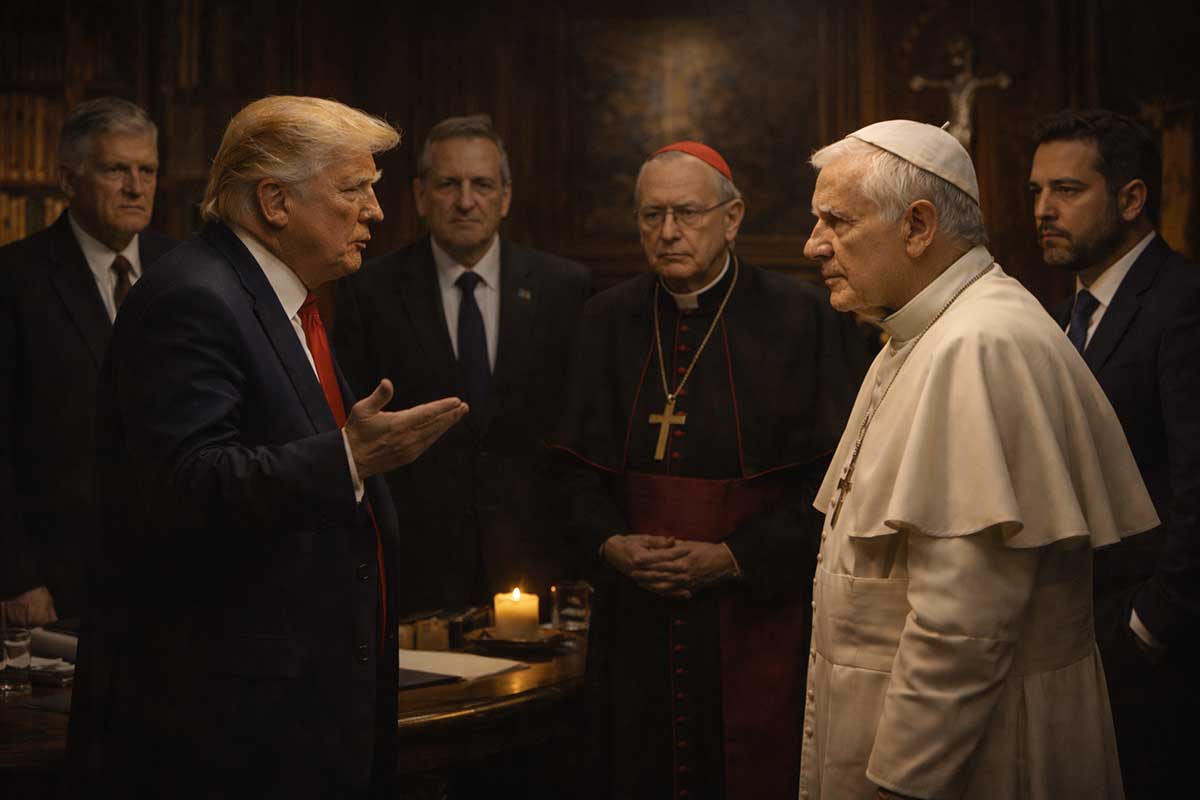
This topic may be the deepest layer of the Trump–Pope Leo conflict. Reuters reports that the fight is no longer only about Iran or immigration. It is becoming a struggle over moral authority itself: who gets to define Christian witness in public life, and whether Christianity is meant to bless national strength, restrain it, or confront it. Recent reporting also shows Pope Leo warning against the misuse of religion in politics, with Archbishop Gustavo García-Siller echoing that concern after comments by U.S. officials invoking Jesus in support of war.
Participants
Pope Leo XIV
Donald Trump
Franklin Graham
Bishop Thomas Paprocki
Sohrab Ahmari
Three questions
- Is Christianity in politics meant to bless a people, restrain a ruler, or judge both?
- When believers defend power too eagerly, when do they stop serving God and start serving access?
- Is public Christianity strongest when it influences the state, or when it refuses to flatter it?
Question 1
Is Christianity in politics meant to bless a people, restrain a ruler, or judge both?
Pope Leo XIV
“Christianity must never become the chaplaincy of power. It may bless what is good in a people, yes. It may strengthen them in suffering, guide them in conscience, and remind them of their duties. But when it enters public life, its first sacred duty is freedom — freedom to judge the nation when it is proud, freedom to judge the ruler when he is tempted by grandeur, and freedom to judge even the Church when it begins to confuse proximity to power with faithfulness. If Christianity loses that freedom, it becomes decoration.”
Donald Trump
“Christianity in politics should help protect a nation’s moral center. It should defend the family, defend life, defend order, defend believers from people who hate them, and remind a country what it stands for. The problem is that some religious leaders act as though the only moral role of Christianity is to criticize strength. That’s not balance. A country also needs confidence, loyalty, and leaders who are not ashamed of their civilization.”
Franklin Graham
“Faith in public life should do all three, but in the right order. It should bless what is true and good. It should restrain leaders when they drift from righteousness. And it should judge the whole society when it turns from God. But many critics today treat every strong Christian presence in politics as corruption by definition. That is unfair. A believer can serve close to power and still remain accountable to God.”
Bishop Thomas Paprocki
“When the Church forgets how to judge, it has already surrendered too much. Christians may support rulers, pray for rulers, and cooperate with rulers for the common good. But once the Church becomes primarily a source of affirmation for the state, it begins to lose its apostolic character. The Gospel is not given to flatter a regime. It is given to call every regime, every people, and every soul to conversion.”
Sohrab Ahmari
“The modern temptation is to force a choice between two bad options: either Christianity retreats into private sentiment, or it becomes partisan branding. Neither is enough. Christianity in politics must shape a moral imagination, set boundaries, preserve a vision of the good, and resist the cult of procedural neutrality. But it must still remain free to judge every coalition it touches. The Church cannot be politically irrelevant, but it also cannot become captive.”
Exchange
Pope Leo XIV to Trump
“Mr. President, can Christianity still speak truth to you if it is praised most when it agrees with you?”
Trump
“It can, as long as it remembers that criticism is not the only form of truth.”
Paprocki to Franklin Graham
“Do you worry that constant defense of political leaders teaches believers that loyalty is holier than discernment?”
Franklin Graham
“I worry more that selective outrage teaches them strength is always suspect and surrender is somehow more righteous.”
Ahmari to Pope Leo XIV
“Holiness, how do you keep prophecy from becoming mere moral performance?”
Pope Leo XIV
“By speaking with sorrow, not self-congratulation.”
Question 2
When believers defend power too eagerly, when do they stop serving God and start serving access?
Pope Leo XIV
“They cross that line when proximity to rulers begins to feel like confirmation of their own importance. Access is intoxicating. It flatters religious leaders into thinking they are influencing power, when often power is simply domesticating them. Once believers hesitate to name injustice because it might cost them influence, once they explain away what they would condemn in others, they have moved from witness into accommodation.”
Donald Trump
“There’s a lot of self-righteousness in this argument. People act as though any religious leader who works with political power must be corrupt. That’s ridiculous. If Christians care about life, schools, courts, families, or religious liberty, they have to deal with real governments. That means access. The real issue is not access. The real issue is whether they use that access to help the country and protect values.”
Franklin Graham
“Believers stop serving God when they start excusing sin just to stay close to influence. That danger is real. But critics often assume that any public defense of a leader is proof of compromise. Sometimes leaders are attacked unfairly. Sometimes defending them is part of telling the truth. The test is whether a believer can still say no when no is needed. If he can’t, then access has already become a master.” Recent reporting on Graham’s call for Pope Leo to praise Trump shows how charged that question has become in public debate.
Bishop Thomas Paprocki
“The shift happens when moral language becomes selective. If a Christian leader condemns arrogance, vulgarity, manipulation, or cruelty in his opponents but suddenly rediscovers complexity when those same traits appear in his allies, then access has begun to govern conscience. Spiritual authority dies slowly in that way. Not by one grand betrayal, but by a hundred softened judgments.”
Sohrab Ahmari
“One of the hardest truths in modern politics is that believers need institutions, influence, and coalition partners. Purity alone cannot govern. But there is still a difference between prudence and captivity. The line is crossed when short-term gains become more important than the long-term moral formation of the faithful. If people learn to see faith as a mere instrument for winning, then even victories become hollow.”
Exchange
Paprocki to Trump
“Can a ruler surrounded by flattering Christians still hear repentance as a serious word?”
Trump
“He can, if the people speaking to him care about results and not just appearances.”
Pope Leo XIV to Franklin Graham
“When praise becomes constant, how does the believer remain free?”
Franklin Graham
“By remembering that leaders are servants too, not saviors.”
Ahmari to Paprocki
“Is there any point at which too much distance from political power becomes its own kind of irresponsibility?”
Paprocki
“Yes. Withdrawal can fail the common good. But captivity fails it more deeply.”
Question 3
Is public Christianity strongest when it influences the state, or when it refuses to flatter it?
Pope Leo XIV
“It is strongest when it can do both without losing its soul. But if one must choose, then refusal to flatter is the holier strength. Influence can accomplish something visible. Refusal can preserve something eternal. The Church must be able to stand near rulers without kneeling before them. Once it becomes useful mainly as a source of blessing for political projects, it no longer carries the sharp edge of the Gospel.”
Donald Trump
“Christianity has to influence the state or it becomes irrelevant to the real world. You cannot protect churches, families, schools, or basic moral standards if you stay above the fight and only criticize. The people want leaders who will act. They don’t want endless lectures from people who never have to make a decision. Faith that never enters power cannot shape history.”
Franklin Graham
“Influence matters. If Christians abandon the state, others will shape it with values hostile to faith. But Christianity loses credibility when it sounds like a public relations arm for any politician. The challenge is to remain engaged enough to matter and free enough to correct. That balance is hard. It always has been.”
Bishop Thomas Paprocki
“The Church’s deepest authority does not come from how many officials listen to it. It comes from whether people believe it would tell the truth even if no official did. Flattery buys access for a season and loses credibility for a generation. A faith that refuses to flatter may seem weak in the short term, but it often preserves the very authority that lets it speak across time.”
Sohrab Ahmari
“This is where modern believers get trapped. If they pursue influence only, they become instrumentalists. If they reject influence completely, they become decorative dissenters. Public Christianity is strongest when it forms communities, shapes elites, affects law, and still retains enough independence to offend its own allies. It must be influential enough to matter and detached enough to remain feared by power.”
Exchange
Trump to Pope Leo XIV
“Holiness, people respect strength. If faith never governs anything, why would the world take it seriously?”
Pope Leo XIV
“The world often takes faith seriously only after it has refused a bargain.”
Franklin Graham to Paprocki
“Is there a danger that constant prophetic distance leaves believers with moral beauty and no public defense?”
Paprocki
“Yes. But constant closeness leaves them with public defense and no spiritual authority.”
Ahmari to Trump
“Mr. President, do you want Christianity as conscience, or mostly as coalition?”
Trump
“I want it alive, strong, and not ashamed to stand with the country.”
Closing reflection for Topic 3
This topic works because the Trump–Pope Leo dispute has exposed a deep split inside public Christianity itself. Reuters describes Leo as a more forceful moral voice on the world stage, willing to challenge leaders directly. Recent reporting on Franklin Graham, JD Vance, and supportive bishops shows that the fight is widening into a larger argument over whether Christianity should sanctify national strength, confront it, or hold itself apart from all easy loyalties.
Topic 4: Strongman politics, conscience, and the temptation of moral certainty
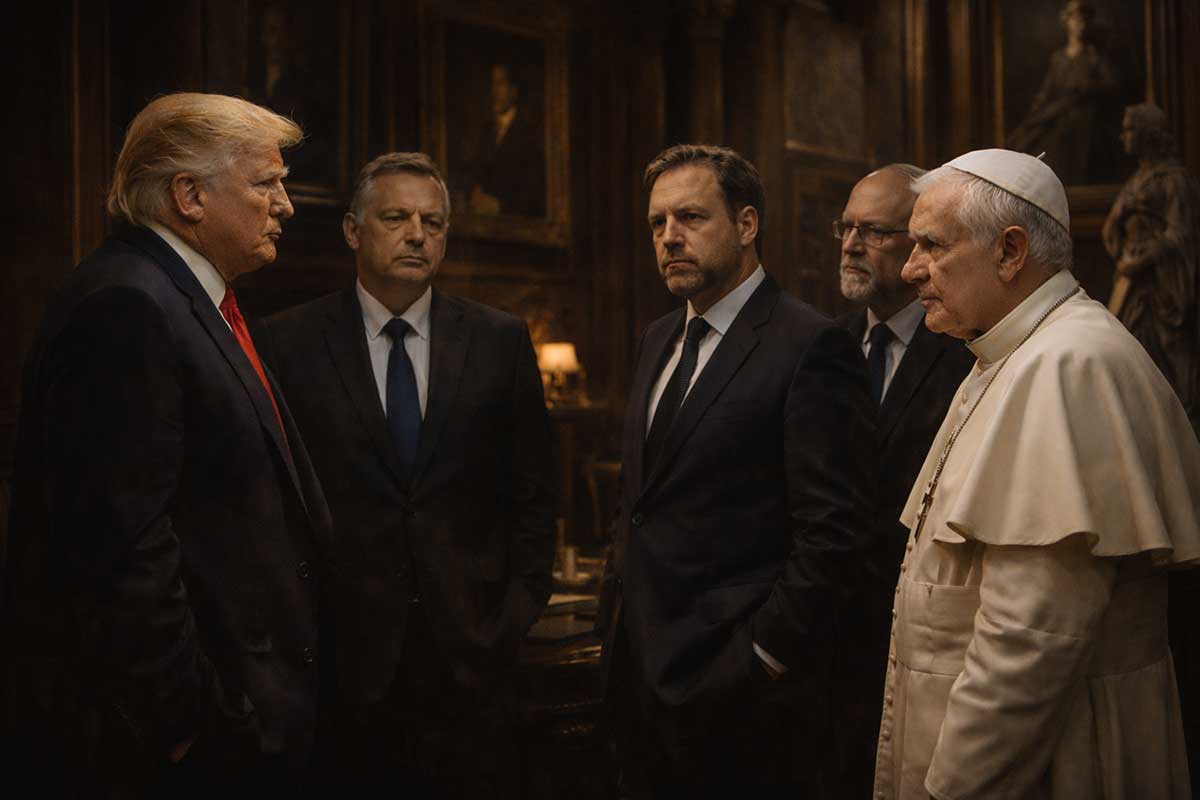
This topic rises naturally from the current Trump–Pope Leo clash. Reuters reports that during his Africa trip, Pope Leo condemned leaders who spend billions on war, warned against rulers who use religious language to justify violence, and said the world is being ravaged by “a handful of tyrants.” Reuters also describes Leo as taking a much more forceful public role than many expected, with Trump answering him in blunt political terms over Iran and foreign policy.
Participants
Donald Trump
Pope Leo XIV
Viktor Orbán
Niall Ferguson
David French
Three questions
- Why are people so drawn to leaders who sound morally certain in an age full of confusion?
- Is the greater danger today chaos without authority, or authority without humility?
- Can a civilization survive if it loses shame before power?
Question 1
Why are people so drawn to leaders who sound morally certain in an age full of confusion?
Donald Trump
“People are drawn to certainty because they’re tired of watching leaders act confused while the country gets weaker. They see open borders, cultural chaos, crime, weak deals, endless lectures, and leaders who speak in careful paragraphs but never fix anything. People want someone who sounds like he knows what matters and is willing to fight for it. They don’t want therapy from politicians. They want direction.”
Pope Leo XIV
“People seek certainty when they are frightened, tired, or humiliated. That is deeply human. But moral certainty becomes dangerous when it stops being rooted in truth and starts being rooted in applause. A ruler who always sounds clear may not be wise. He may simply know how to convert public fear into personal authority. The crowd often mistakes emotional relief for moral vision.”
Viktor Orbán
“People are drawn to certainty because liberal confusion leaves nations undefended. A people cannot live for long on procedural hesitation, elite self-doubt, and moral vagueness. Families need continuity. Nations need borders. Civilizations need memory. When institutions sound embarrassed by their own inheritance, strong voices rise because they restore permission to believe in something again.”
Niall Ferguson
“Periods of uncertainty create a market for decisiveness. That is a recurring pattern in history. When institutions appear brittle and elites appear unserious, citizens start preferring rulers who promise clarity over managers who promise process. The danger is that theatrical certainty can conceal strategic shallowness. Still, one must admit that feeble authority often creates the opening through which harder authority enters.”
David French
“People are drawn to moral certainty because moral fatigue is exhausting. If every issue is framed as nuanced, tragic, and institutionally constrained, a man who speaks with clean conviction feels like relief. But relief is not the same as wisdom. One of the oldest political temptations is to treat confidence as character. That confusion has wounded many nations.”
Exchange
Pope Leo XIV to Trump
“Mr. President, when does confidence stop serving a people and start feeding on their hunger?”
Trump
“When leaders stop delivering. Confidence without results is empty. Confidence with results is leadership.”
French to Orbán
“What happens when certainty becomes so admired that doubt itself is treated as weakness?”
Orbán
“Then people may recover seriousness. Doubt has had a very long reign already.”
Ferguson to Pope Leo XIV
“Is there a risk that public moral caution sounds to ordinary people like elite detachment?”
Pope Leo XIV
“Yes. That risk is real. But flattery of fear is worse.”
Question 2
Is the greater danger today chaos without authority, or authority without humility?
Donald Trump
“Chaos without authority is the greater danger, easily. A nation can recover from a hard leader. It may not recover from leaders who let everything drift: borders gone, standards gone, enemies rising, institutions mocked, no one in charge. Authority is what keeps collapse from becoming normal. Humility is fine, but it cannot replace control.”
Pope Leo XIV
“Authority without humility is more dangerous because it deforms judgment itself. Chaos is visible. It alarms the public. Pride inside authority is harder to see, and once it settles into institutions, media, and political culture, it teaches whole nations to admire hardness and excuse domination. A ruler without humility does not merely make mistakes. He begins to redefine virtue around his own will.” Reuters has highlighted Leo’s recent warnings against tyrants, vast war spending, and the use of religion to bless violence.
Viktor Orbán
“The first danger is chaos. Without authority there is no continuity, no security, no confidence, and no durable freedom. Humility is a virtue for a man. Authority is a necessity for a state. Modern societies have spent years shaming authority and are now shocked that disorder grows. A leader may need correction, yes. But a vacuum cannot govern.”
Niall Ferguson
“History suggests that both dangers can destroy a society, often in sequence. Elite paralysis breeds disorder. Disorder breeds longing for restoration. Restoration, if unchecked, hardens into concentrated authority. The real political challenge is not picking one danger as if the other were imaginary. It is building institutions strong enough to channel authority without worshipping it.”
David French
“Authority without humility is more dangerous in the long run because it trains people to stop asking whether the ruler is bound by anything higher than himself. Chaos can be fought by rebuilding trust, law, and local institutions. But once a culture falls in love with unaccountable force, it starts mocking restraint itself. Then even recovery becomes harder.”
Exchange
Trump to Pope Leo XIV
“Holiness, people can’t eat humility. They can’t defend a country with sermons.”
Pope Leo XIV
“No, but they may lose their country by admiring men who confuse appetite with destiny.”
Orbán to French
“Would you rather have a civilization dissolved politely or defended harshly?”
French
“I would rather defend it lawfully and truthfully, before harshness teaches it to despise its own principles.”
Ferguson to Trump
“Can authority remain healthy if it stops respecting restraint as a source of strength?”
Trump
“Restraint is fine when the other side respects it. Not when they exploit it.”
Question 3
Can a civilization survive if it loses shame before power?
Donald Trump
“A civilization cannot survive if it is ashamed of power itself. That’s the first mistake. You need strength, industry, military force, borders, pride, and leaders who are willing to use them. The problem is not that people respect power. The problem is when weak leaders waste it, surrender it, or let hostile people exploit their guilt. A country that is embarrassed by strength will not stay strong.”
Pope Leo XIV
“A civilization can honor strength and still keep shame before power. In fact, that shame is one of the things that keeps power human. When rulers no longer blush at cruelty, when crowds no longer recoil from humiliation, when religious language is used to praise domination, something sacred has been lost. A people without shame before power does not become strong. It becomes available for corruption.” Reuters has repeatedly reported Leo’s criticism of leaders who invoke religion for war and of rulers he says are ravaging the world.
Viktor Orbán
“Shame before power is useful only if it does not become shame before self-defense. Europe, for example, has often turned moral self-criticism into civilizational exhaustion. A nation must be able to act, decide, exclude, punish, and endure. If every use of power is treated as a moral embarrassment, then the civilization has already lost confidence in its own legitimacy.”
Niall Ferguson
“Civilizations usually decay in one of two ways. Either they become too guilty to defend themselves, or too intoxicated with force to correct themselves. Healthy regimes preserve both confidence and inhibition. They know how to wield power and how to fear its misuse. Once that inner brake disappears, the state may still look formidable for a time, but it becomes strategically clumsy and morally brittle.”
David French
“Yes, a civilization can die that way. Shame before power is one of the last defenses ordinary people have against being trained into complicity. It is the instinct that says, ‘This is too far. This tone is wrong. This humiliation is beneath us.’ Once that instinct is mocked as softness, the public starts participating in its own moral lowering. That is not vitality. That is corrosion.”
Exchange
Pope Leo XIV to Trump
“Can power still serve the common good once it no longer feels answerable to conscience?”
Trump
“It serves the common good when it protects the people. Conscience matters. Results matter too.”
French to Orbán
“Is there any limit where your defense of civilizational survival becomes permission for moral coarsening?”
Orbán
“Yes. A nation must not become savage. But it must still survive.”
Ferguson to Pope Leo XIV
“Can a moral culture keep its shame before power without teaching itself paralysis?”
Pope Leo XIV
“Yes, if it remembers that conscience is not paralysis. It is memory before action.”
Closing reflection for Topic 4
This topic works because it opens the Trump–Pope Leo conflict into a larger civilizational argument. Reuters has described Leo as stepping onto the world stage with a forceful tone, attacking war spending, tyrants, corruption, and the use of religion in service of violence. Trump, by contrast, answers from threat, order, decisiveness, and impatience with what he sees as moral weakness. That makes Topic 4 less about one dispute and more about what kind of leader frightened societies now want.
Topic 5: Can peace still speak to a frightened world?
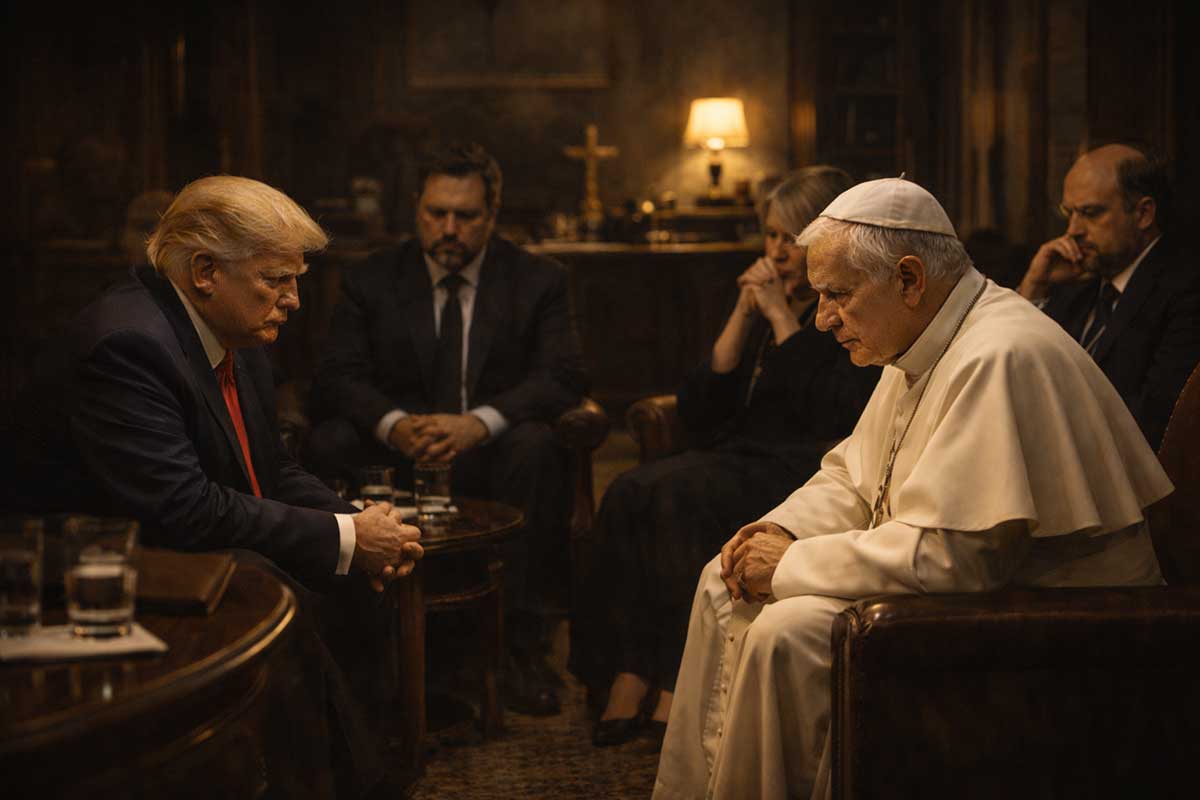
This final topic goes to the deepest fault line in the Trump–Pope Leo conflict. Reuters reports that Pope Leo has kept condemning the Iran war in explicitly Christian language, saying he will continue to speak out against war and warning against the misuse of faith to justify violence. Reuters also reports that Trump answered by calling the pope weak on foreign policy and insisting that leaders must face “the real world” of threats such as Iran.
Participants
Pope Leo XIV
Donald Trump
Sarah Mullally
JD Vance
Ross Douthat
Question 1
Why does peace sound unreal to people living under threat?
Pope Leo XIV
“Peace sounds unreal to frightened people because fear shortens the horizon of the soul. It narrows vision until survival feels like the only moral category left. In such an hour, peace can sound like denial, softness, or distance from suffering. But the task of peace is not to deny danger. It is to refuse the lie that danger alone should govern the human heart. If fear becomes the teacher, then violence will always sound more realistic than mercy.”
Donald Trump
“Peace sounds unreal when people know the threat is real. Families watching missiles, terror, chaos, weak borders, or nuclear blackmail do not want abstract language. They want protection. They want someone who understands that evil exists and that talking doesn’t always stop it. Peace becomes unreal when leaders use it as a slogan after other people have already paid the price for delay.”
Sarah Mullally
“Peace sounds unreal when the public has been trained to think only in immediate terms: strike now, answer now, punish now. But fear does not make peace false. It makes peace difficult. That is exactly why spiritual leaders must keep speaking it. Not as sentiment, but as a moral discipline that keeps the frightened from surrendering their conscience.”
JD Vance
“People under threat hear peace language through the memory of betrayal. They have seen elites talk beautifully and fail practically. They have watched institutions hesitate, moralize, and lose control. So when a spiritual leader speaks of peace, the public may hear not courage but detachment. That does not make peace wrong. But it does mean the burden of explanation is much higher than many clergy admit.”
Ross Douthat
“Peace sounds unreal because modern people are torn between two truths they do not know how to hold together. One is that evil is real and force is sometimes necessary. The other is that force has a way of reshaping the societies that rely on it. Under fear, most people choose the first truth and mute the second. Peace then sounds less like seriousness than like a refusal to rank dangers properly.”
Exchange
Pope Leo XIV to Trump
“Mr. President, does fear ever tempt a nation to mistake harshness for realism?”
Trump
“Sometimes. But the bigger mistake is pretending a threat disappears because you used gentle language.”
Mullally to Vance
“Must peace always prove itself in military terms before frightened people will hear it?”
Vance
“No. But it must prove it understands the cost of being wrong.”
Douthat to Pope Leo XIV
“Can peace rhetoric fail when it sounds morally elevated but strategically empty?”
Pope Leo XIV
“Yes. Peace must never become performance. It must remain tethered to truth.”
Question 2
Must a spiritual leader sound unrealistic in order to keep humanity from worshipping violence?
Pope Leo XIV
“Often, yes. The spiritual leader must sometimes sound unrealistic to a violent age, because the age mistakes repetition for wisdom. When governments speak of necessity again and again, the prophet must recover the language that sounds inconvenient, exposed, and even impractical. That is not fantasy. It is resistance to moral sleep. Reuters reported that Leo said he would continue speaking against war despite Trump’s attacks, grounding that stance in the Gospel rather than in partisan politics. ”
Donald Trump
“A spiritual leader doesn’t have to sound unrealistic. He has to sound responsible. People respect faith when it sees the world clearly. They stop respecting it when it sounds like it has no plan for dealing with dangerous regimes or violent people. There’s nothing holy about refusing to accept reality. A leader can talk about peace and still understand strength.”
Sarah Mullally
“A spiritual leader must at least be willing to sound inconvenient. That is different from being naïve. The Church has to preserve a vocabulary the state cannot generate by itself: repentance, restraint, mourning, and the dignity of enemies. Once religious leaders speak only in terms that already flatter strategic logic, they may become useful, but they stop being distinct.”
JD Vance
“I don’t think the leader must sound unrealistic. I think he must sound morally serious. The risk with some peace witness is that it can become costless — a way of keeping one’s hands clean while others bear the burden of hard choices. The risk on the other side is glorifying force. So the question is whether the spiritual leader speaks in a way that recognizes both tragedy and limits.”
Ross Douthat
“The spiritual leader often has to sound unrealistic in the narrow sense that he must refuse the reduction of politics to security management. But he cannot sound unserious. Christian witness has always had this tension: the saint must speak a language that resists Caesar, yet the Church also ministers inside history, not outside it. The deepest religious voices hold an impossible line: anti-idolatry without irresponsibility.”
Exchange
Trump to Pope Leo XIV
“Holiness, do you worry that people hear your words and think the Church has no answer for violent men?”
Pope Leo XIV
“I worry more that they hear rulers and conclude violent men are the final teachers of history.”
Mullally to Trump
“Can there be any room in public life for a voice that slows the march to force?”
Trump
“Yes, if that voice understands what happens when force is never used in time.”
Douthat to Vance
“Can Christian politics survive if it loses any language higher than prudence?”
Vance
“No. But prudence still matters when lives are at stake.”
Question 3
Is the real crisis of our time a failure of security, or a failure of moral imagination?
Pope Leo XIV
“It is a failure of moral imagination. Not because security is unimportant, but because humanity has become too quick to assume that only force is realistic. When rulers cannot picture a peace worth sacrificing for, when societies cannot picture enemies as still human, when wealth and fear combine to justify endless cycles of destruction, imagination has collapsed. Reuters reports that Leo has condemned leaders who spend billions on war, warned against tyrants, and criticized the misuse of religion for political violence. ”
Donald Trump
“It’s a failure of security first. Moral imagination means nothing if your people are dead, your enemies are armed, and your leaders are too timid to act. You can’t build peace on top of disorder or wishful thinking. Strength is what creates the space where better things are possible. That doesn’t mean you worship force. It means you respect reality before you start lecturing about ideals.”
Sarah Mullally
“It is both, but the deeper crisis is moral imagination. A society can have weapons, intelligence, walls, and alliances and still become spiritually trapped inside fear. Once fear becomes the imagination of a people, every stranger becomes a threat and every conflict becomes proof that harsher measures were needed all along. At that point, security itself starts serving a narrower and narrower vision of humanity.”
JD Vance
“I would say the immediate crisis is security and the deeper crisis is moral imagination. The state exists to keep order in a fallen world. But if that order is defended in a way that teaches people to love hardness for its own sake, then success becomes deforming. So yes, imagination matters. But it cannot be severed from the practical duty to protect citizens first.”
Ross Douthat
“The crisis is the divorce between the two. Modern politics oscillates between technocratic security talk and moral abstraction, each mistrusting the other. Trump represents one side of that divide very clearly: protection first, ideals later. Leo represents the rebuke: if ideals always come later, they eventually disappear. The true crisis may be that advanced societies no longer know how to speak seriously about both power and the soul at the same time.”
Exchange
Pope Leo XIV to Trump
“Can security save a people if it teaches them to fear mercy itself?”
Trump
“It can save them from being destroyed. Then you can argue about mercy from a position of safety.”
Vance to Mullally
“Do you admit that moral imagination without enforceable order becomes fragile very fast?”
Mullally
“Yes. But order without moral imagination becomes hard very fast.”
Douthat to Pope Leo XIV
“Must the Church keep sounding this warning even when the public thinks it is out of touch?”
Pope Leo XIV
“Yes. That is often when it is most needed.”
Closing reflection for Topic 5
This final topic closes the whole 53R1 because it reveals that the Trump–Pope Leo clash is not only about Iran, migration, or one administration. It is about whether peace can still sound serious in an age trained by fear, and whether Christianity should mainly reassure the frightened or keep unsettling their worship of force. Reuters’ recent coverage shows Leo choosing the latter path with unusual directness, and Trump rejecting that posture as weakness in a dangerous world.
Final Thoughts by Nick Sasaki
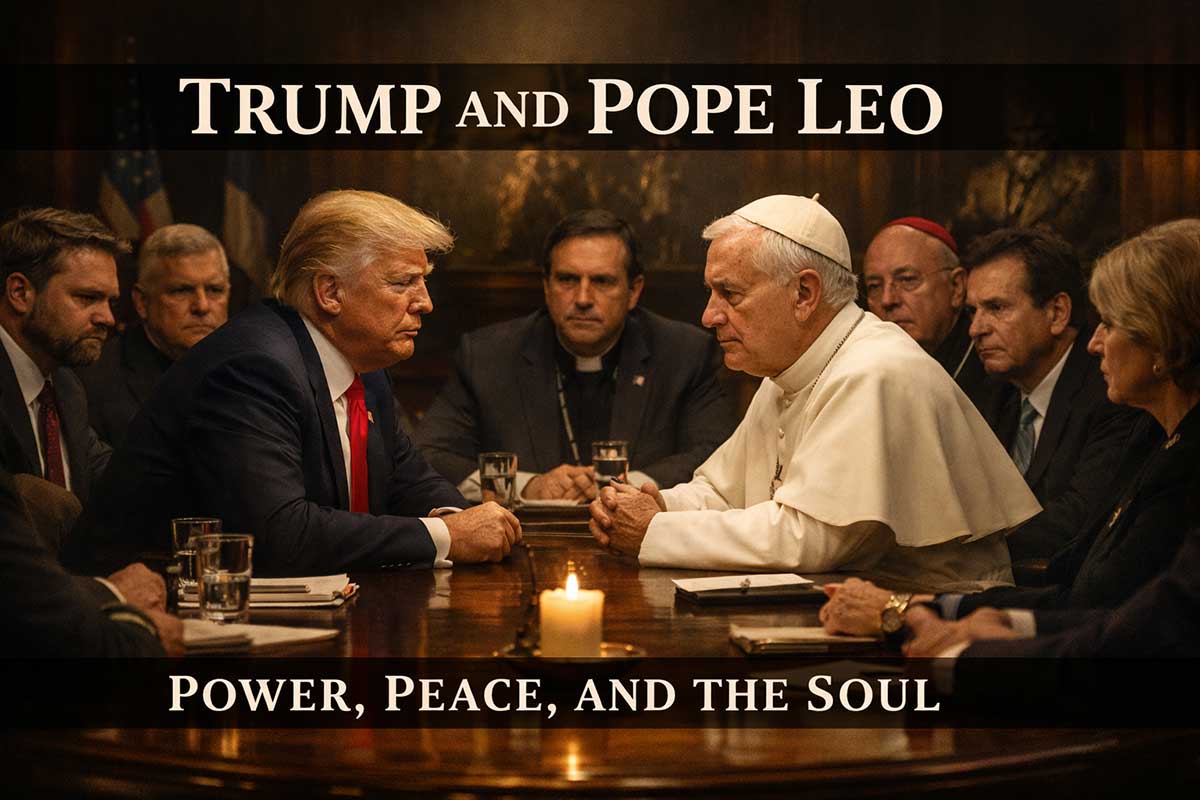
After sitting with this imagined exchange, what stays with me most is not who sounded stronger. It is the fact that both sides are guarding something real, and both sides are afraid of losing something that matters.
Trump is guarding order, deterrence, survival, and the right of a people to protect what is theirs. He fears weakness, drift, confusion, and the kind of moral hesitation that lets danger grow until ordinary people pay the price. In his mind, history punishes leaders who fail to act in time.
Pope Leo is guarding conscience, dignity, spiritual limits, and the belief that power must never be trusted too easily. He fears hardness, moral sleep, and the way nations slowly reshape themselves when force begins to feel normal, admired, or even holy. In his mind, history also punishes leaders who save the structure of a nation while hollowing out its soul.
That is why this conversation could never end in a simple resolution.
The deeper I moved through these five topics, the more I felt that the real issue was not Trump versus the pope. It was fear versus conscience. It was protection versus moral restraint. It was the ancient temptation to believe that danger excuses everything, set against the equally dangerous temptation to speak beautifully about peace without facing the cost of evil.
I do not think this conversation tells us to choose one side cheaply.
It tells us that a nation does need protection. It tells us that borders, order, and security are not meaningless things. It tells us that leaders cannot float above reality in a cloud of abstract virtue. But it also tells us that once strength stops trembling before moral limits, it starts changing the people who cheer for it. And that kind of damage is harder to measure, but no less real.
What stayed with me most was Pope Leo’s side of the warning and Trump’s side of the burden. The warning is that power can become self-justifying very fast. The burden is that leaders are still responsible for what happens when they do nothing. Put those two together, and you get the real tragedy of politics: the world is dangerous enough that force may sometimes be needed, yet the use of force carries a spiritual cost that no serious civilization should dismiss.
Maybe that is the final reason I wanted to imagine this conversation.
We live in a time when many people no longer know how to speak about power and the soul in the same sentence. Politics becomes strategy without conscience. Religion becomes conscience without consequence. And once those two are split apart, both become weaker than they appear.
So I leave this conversation not with certainty, but with a sharper question:
Can a civilization remain strong without teaching itself to love hardness too much?
That, to me, is the question beneath the whole exchange. And that is why this conversation matters.
Short Bios:
Donald Trump
45th and current 47th President of the United States, known for nationalist politics, blunt rhetoric, hardline immigration views, and a strong emphasis on deterrence, sovereignty, and public strength.
Pope Leo XIV
Current pope of the Roman Catholic Church, elected in 2025, who has emerged as a forceful public voice on peace, war, moral restraint, human dignity, and the spiritual danger of unchecked power.
JD Vance
Vice President of the United States and a leading voice in populist conservatism, often arguing from national interest, civilizational concern, and a morally serious defense of state responsibility.
Archbishop Gustavo García-Siller
Catholic archbishop known for strong pastoral advocacy on behalf of migrants and for publicly supporting Pope Leo’s peace witness against war rhetoric.
Franklin Graham
Evangelical leader and public defender of many conservative political causes, often supportive of Trump and influential among Christians who see public strength and religious witness as closely linked.
Tom Homan
Senior U.S. border enforcement figure closely associated with hardline immigration policy, known for framing border control as a matter of law, deterrence, and public safety.
Cardinal Robert McElroy
Catholic cardinal identified with a strong emphasis on human dignity, migrant protection, and the moral duty of the Church to challenge fear-driven politics.
Viktor Orbán
Prime Minister of Hungary and one of the clearest modern voices for nationalist, border-centered, civilizational politics rooted in cultural continuity and state authority.
Bishop Thomas Paprocki
Catholic bishop known for clear public engagement on moral and political questions, with a concern that Christian witness remain independent enough to judge power honestly.
Sohrab Ahmari
Writer and editor whose work explores religion, moral order, post-liberal politics, and the tension between public faith and partisan capture.
Niall Ferguson
Historian and commentator whose work often examines empire, civilizational decline, elite failure, and the historical patterns that drive societies toward harder forms of authority.
David French
Conservative writer and legal commentator known for arguing that Christian and constitutional principles require restraint, moral clarity, and suspicion of personality-driven politics.
Sarah Mullally
Senior Anglican leader recognized for public advocacy on peace, conscience, and the moral role of the Church in times of conflict and fear.
Ross Douthat
Columnist and public intellectual whose work often explores religion, political culture, moral reasoning, and the spiritual tensions inside modern democratic life.
Leave a Reply