
|
Getting your Trinity Audio player ready...
|
What if Herman Melville sat with us and asked why refusal terrifies modern life?
Introduction by Herman Melville
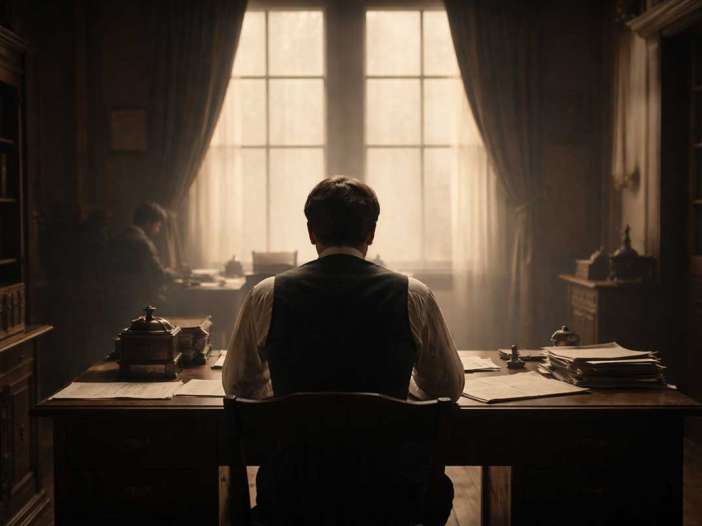
I did not write Bartleby, the Scrivener to explain a man.
I wrote it to place him where explanation fails.
Bartleby enters an orderly world—one governed by reason, industry, and polite authority—and does nothing violent to it. He raises no fist, pens no manifesto, utters no accusation. He merely declines. And in that declining, he reveals how fragile the world’s assumptions truly are.
We are accustomed to rebellion we can name. We understand defiance when it announces itself. But what becomes of us when refusal is calm, courteous, and unargued? When it offers no foothold for correction or condemnation?
Bartleby does not seek sympathy. He does not ask to be understood. He offers a sentence that belongs to neither obedience nor resistance, and in doing so exposes how much of our moral confidence depends on being answered.
This story does not ask the reader to judge Bartleby. It asks something more difficult: to sit in the presence of a man who will not participate in the meanings we rely upon. If the tale unsettles, it is because it reveals a quiet truth—that beneath our systems of work, charity, and reason lies an exhaustion we rarely dare to name.
Bartleby is not an argument. He is a condition.
(Note: This is an imaginary conversation, a creative exploration of an idea, and not a real speech or event.)
Topic 1 - I Would Prefer Not To: Refusal as Language
Participants:
- Gilles Deleuze
- Maurice Blanchot
- Leo Marx
- Adam Phillips
- Christopher Castiglia
Moderator: Nick Sasaki
Nick Sasaki (opening)
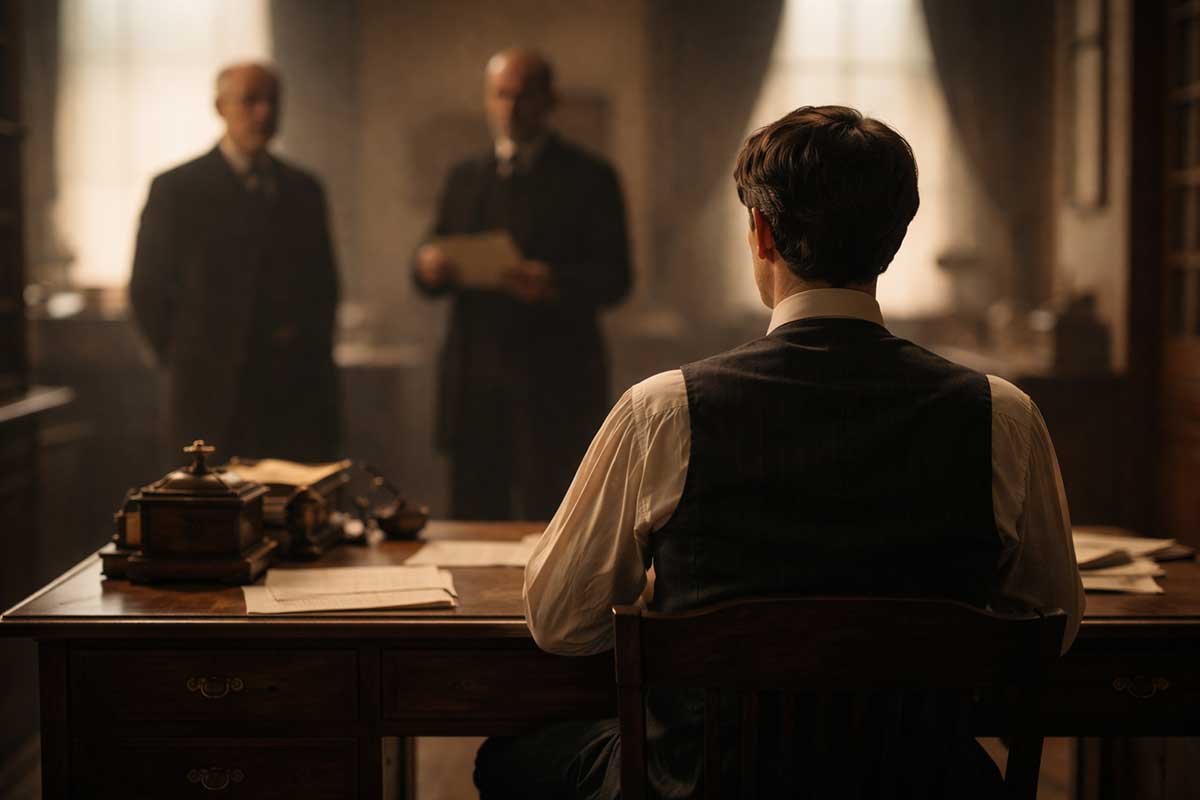
There are very few sentences in literature that feel like they refuse us.
Not refuse our authority, or our interpretation—but refuse us, personally.
Bartleby’s line, “I would prefer not to,” is one of them.
It isn’t loud.
It isn’t angry.
It doesn’t explain itself.
Yet it destabilizes an entire office, an entire moral framework, and—arguably—an entire way of understanding freedom.
So I want to begin here, simply.
Nick Sasaki
When Bartleby says “I would prefer not to,” is he making a choice—or dissolving the very idea of choice itself?
Gilles Deleuze
Bartleby’s sentence is powerful because it belongs to no category.
It is not a refusal, because refusals presuppose an alternative.
It is not obedience, because it does not comply.
And it is not negation, because it never says no.
“I would prefer not to” suspends the entire system of command and response. It does not confront power—it renders it irrelevant.
This is why the lawyer cannot act. Authority requires opposition or submission. Bartleby offers neither. His language creates a zone where the usual coordinates collapse.
Leo Marx
I agree that the sentence is destabilizing—but I want to ground it historically.
This story emerges at the rise of modern bureaucratic labor. Copying, reproducing, complying—these are the values of the world Bartleby inhabits. His sentence exposes how thin that world already is.
Bartleby doesn’t dissolve choice abstractly. He reveals how little real choice exists for someone whose value is defined by mechanical work. The sentence is quiet because the system itself is quiet—sterile, orderly, hollow.
Adam Phillips
What strikes me is how polite the sentence is.
“I would prefer not to” sounds like the language of someone trying not to offend, not to provoke, not to demand. And yet it produces extraordinary anxiety.
Psychologically, this is fascinating. Bartleby doesn’t assert a desire—he expresses a preference, which is weaker, vaguer, almost apologetic. But even that minimal assertion feels intolerable to those around him.
Which makes me wonder: is the problem Bartleby’s refusal—or our discomfort with someone who won’t explain themselves?
Maurice Blanchot
Bartleby’s sentence is not meant to be understood.
It belongs to what I would call the space of neutrality. A region where language no longer serves action, explanation, or meaning. The sentence does not point beyond itself. It simply is.
This is why interpretation fails. Every attempt to explain Bartleby is already a betrayal of what the sentence does. It withdraws language from usefulness. It makes speech inert.
Bartleby does not defend himself because defense belongs to the world he has already stepped outside of.
Christopher Castiglia
I want to bring the lawyer back into focus.
What unsettles him isn’t just the sentence—it’s that the sentence exposes the moral limits of liberal sympathy. The lawyer believes in reason, kindness, and gradual persuasion. Bartleby’s language gives him no leverage.
“I would prefer not to” refuses not only work, but moral negotiation. There’s no argument to refute, no injustice to correct, no request to deny. That’s what makes the sentence ethically terrifying.
Nick Sasaki
That leads directly to the next question.
Nick Sasaki
Why does this sentence unsettle authority more than open rebellion ever could?
Leo Marx
Because rebellion confirms the system it opposes.
A rebel recognizes authority by resisting it. Bartleby doesn’t do that. He continues to sit at his desk. He remains present. He simply does not perform the expected function.
From a systems perspective, that’s far more dangerous. It suggests the machinery can grind to a halt without sabotage—simply through quiet non-participation.
Gilles Deleuze
Exactly. Power feeds on reaction.
Bartleby offers none. His sentence is a linguistic dead end. Commands dissolve when they cannot be answered in the grammar they require.
Authority is helpless in the face of someone who neither obeys nor rebels. Bartleby’s refusal is absolute precisely because it is non-confrontational.
Adam Phillips
There’s also a deeply emotional component.
Authority wants to be acknowledged. Even anger acknowledges. Even hatred acknowledges. Bartleby offers nothing.
That can feel annihilating. The lawyer becomes obsessed because Bartleby does not need him—not even as an enemy.
Maurice Blanchot
Authority collapses when language ceases to be instrumental.
Bartleby’s sentence no longer participates in the economy of meaning. It does not persuade, accuse, or justify. It leaves power speaking into a void.
Nick Sasaki
So let me ask the final question for this topic—perhaps the most unsettling one.
Nick Sasaki
Is Bartleby using language to protect himself—or to disappear from meaning altogether?
Christopher Castiglia
From the lawyer’s perspective, Bartleby seems to be protecting himself. But the tragedy is that protection and disappearance become indistinguishable.
Liberal frameworks assume that speech is how one asserts personhood. Bartleby’s refusal to participate in that assumption makes him unreadable—and therefore ungovernable, but also unprotected.
Adam Phillips
I don’t think Bartleby is trying to disappear.
I think he is trying to exist without being interpreted, managed, or improved. And that may be the most threatening wish of all.
Leo Marx
Whether intentional or not, Bartleby exposes the cost of a world that measures meaning through productivity. Once you refuse usefulness, you risk becoming invisible.
Maurice Blanchot
Bartleby does not disappear. He remains.
What disappears is the reader’s confidence that language must always lead somewhere.
Gilles Deleuze
Bartleby creates a new possibility—not of freedom, but of indeterminacy. And modern systems have no answer for that.
Nick Sasaki (closing)
Bartleby never tells us what he wants.
He only tells us—politely, calmly—that he would prefer not to participate in the assumptions we live by.
And perhaps that is why his sentence still echoes today—quietly, stubbornly—inside offices, institutions, and even our own minds.
Topic 2 - The Lawyer’s Kindness: Ethics or Control?
(from Bartleby, the Scrivener)
Participants:
- Hannah Arendt
- Christopher Castiglia
- Elizabeth Renker
- Adam Phillips
- Raymond Weaver
Moderator: Nick Sasaki
Nick Sasaki (opening)
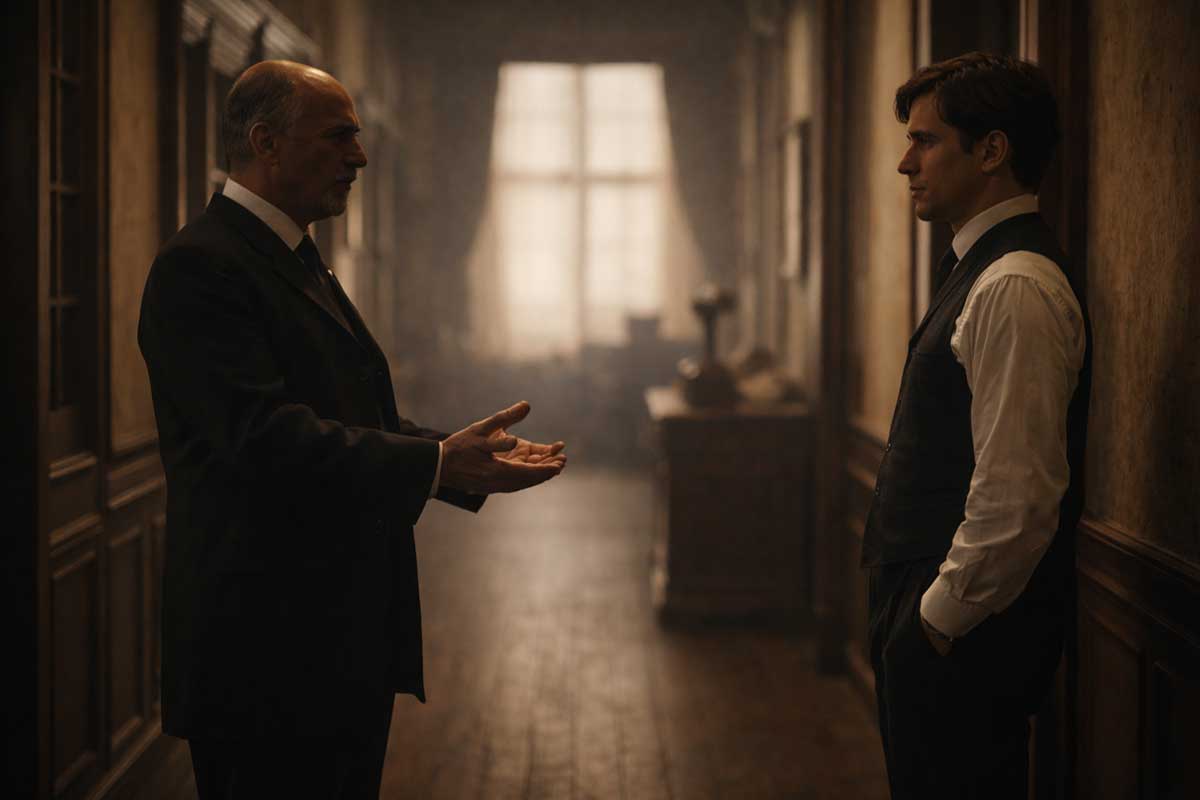
Most readers assume the lawyer is the moral center of the story.
He is patient.
He is charitable.
He does not shout, threaten, or dismiss Bartleby outright.
And yet, many readers feel uneasy around him—as if something doesn’t quite add up.
So let me begin here.
Nick Sasaki
Is the lawyer’s patience a genuine moral response—or a way to remain superior without confrontation?
Hannah Arendt
What interests me is not the lawyer’s kindness, but his self-understanding.
He believes himself to be humane, reasonable, and ethical—and by many social standards, he is. But morality that never risks itself often conceals a deeper fear: the fear of acting decisively.
The lawyer prefers to interpret Bartleby rather than engage him. His patience functions as a buffer, allowing him to preserve his image as a good man while avoiding responsibility for outcomes.
Christopher Castiglia
I agree, and I would go further.
The lawyer’s kindness operates within a framework of liberal governance. He wants to manage Bartleby, not encounter him. His sympathy never questions the structure of authority he inhabits—it merely softens its edges.
Bartleby exposes a crisis in liberal ethics: what happens when sympathy fails to produce compliance?
Adam Phillips
What I find psychologically revealing is how important it is to the lawyer that he be seen—by himself—as kind.
He is deeply invested in his own decency. Bartleby threatens that investment by refusing to respond in the expected ways. Gratitude would confirm the lawyer’s goodness. Resistance would justify punishment. Silence does neither.
That’s destabilizing.
Elizabeth Renker
There’s also a gendered dimension worth noticing.
The lawyer embodies a paternalistic masculinity—benevolent, orderly, protective, but ultimately authoritative. His kindness presumes Bartleby’s dependence. When Bartleby refuses that role, the lawyer’s moral script collapses.
What looks like compassion may also be an insistence on hierarchy.
Raymond Weaver
From a historical standpoint, Melville was deeply suspicious of moral self-satisfaction.
The lawyer is not cruel, but he is complacent. He mistakes civility for virtue. Melville often portrays such figures as morally inadequate precisely because they never interrogate the systems they benefit from.
Nick Sasaki
That leads directly to the second question.
Nick Sasaki
At what point does kindness become a refusal to see the other person clearly?
Christopher Castiglia
Kindness becomes dangerous when it replaces understanding.
The lawyer assumes Bartleby must be improved, rescued, or explained. He never considers that Bartleby might not want what kindness presupposes. In that sense, kindness becomes a form of epistemic control.
Adam Phillips
Yes—and psychologically, that’s very common.
We often offer help not to relieve the other person’s suffering, but to relieve our own anxiety about their suffering. Bartleby’s presence unsettles the lawyer because it cannot be fixed.
So kindness becomes a strategy for restoring emotional equilibrium, not connection.
Hannah Arendt
There is also a political dimension.
When kindness refuses to recognize the other as an equal actor—capable of refusal—it slides into benevolence without respect. The lawyer never grants Bartleby the dignity of choice; he only tolerates him.
Tolerance is not the same as recognition.
Elizabeth Renker
And crucially, the lawyer never listens.
He observes. He speculates. He narrates. But listening would require accepting that Bartleby’s silence might be meaningful in ways that threaten the lawyer’s authority.
Kindness, here, becomes a shield against that threat.
Nick Sasaki
Which brings us to the most uncomfortable question.
Nick Sasaki
Does the lawyer help Bartleby because he cares—or because Bartleby threatens his self-image as a good man?
Raymond Weaver
Melville would likely say both.
The lawyer is sincere, but sincerity does not equal adequacy. His need to be good prevents him from acting rightly. He avoids cruelty, but also avoids truth.
That tension is central to Melville’s moral universe.
Adam Phillips
I’d say the lawyer helps Bartleby in order to preserve a story about himself.
Bartleby refuses to play his assigned role in that story. And that refusal slowly exposes the lawyer’s limits—limits he never quite acknowledges.
Hannah Arendt
What ultimately condemns the lawyer is not malice, but passivity.
He does not cause Bartleby’s death. But he allows a system to absorb Bartleby without resistance. Moral goodness that never interrupts injustice becomes indistinguishable from complicity.
Elizabeth Renker
The tragedy is that the lawyer believes he has done enough.
And perhaps that is Melville’s warning: doing “enough” is sometimes the most dangerous moral position of all.
Christopher Castiglia
Bartleby doesn’t indict the lawyer through accusation.
He indicts him through endurance.
Nick Sasaki (closing)
The lawyer wants to be humane without being transformed.
Bartleby asks for nothing—and in doing so, reveals how conditional our ethics often are.
Perhaps the most unsettling possibility in this story is not Bartleby’s refusal—but the realization that kindness alone may not be enough.
Topic 3 - Work, Modernity, and the Exhausted Soul
Participants:
- Leo Marx
- Gilles Deleuze
- Christopher Castiglia
- Hannah Arendt
- Elizabeth Renker
Moderator: Nick Sasaki
Nick Sasaki (opening)
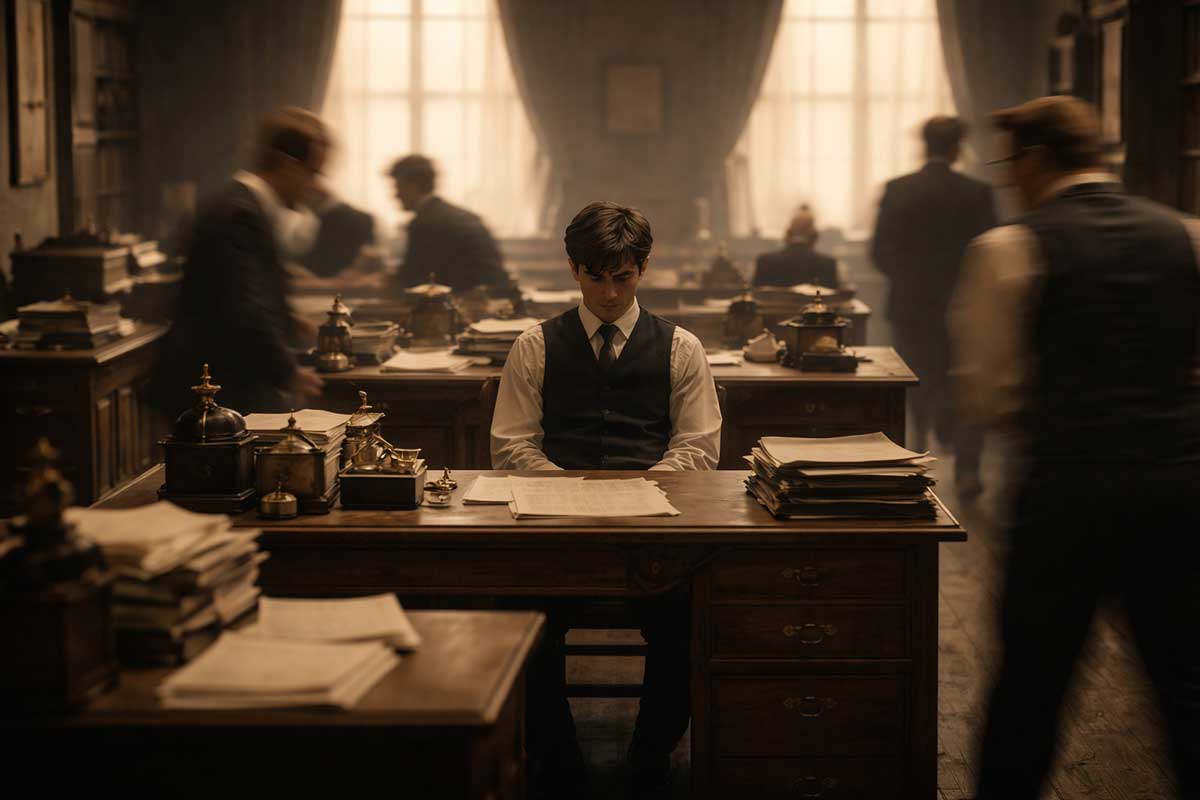
If Bartleby’s sentence destabilizes language, his silence destabilizes work.
He does not sabotage the office.
He does not protest wages or conditions.
He simply stops participating in the logic that says a person’s value is proven by usefulness.
So let’s begin here.
Nick Sasaki
Is Bartleby rejecting work itself—or revealing how modern work empties the human spirit?
Leo Marx
Bartleby is not rejecting labor in the abstract. He is exposing a specific historical moment.
This is clerical work stripped of craft, pride, or visible purpose. Copying copies. Reproducing reproductions. Bartleby’s exhaustion mirrors a system that no longer connects effort to meaning.
His refusal reveals that the problem is not laziness—it’s spiritual depletion.
Hannah Arendt
I would draw an important distinction.
Bartleby’s work belongs to what I would call labor rather than action. Labor sustains life but does not create a shared world. It is repetitive, necessary, and endlessly consuming.
Bartleby does not enter the realm of action. He withdraws even from labor itself. And that withdrawal raises a terrifying question: what remains of the self when one steps outside the structures that grant social visibility?
Gilles Deleuze
Bartleby does something more radical than rejection.
He reveals that work has already hollowed itself out. His refusal is not the cause of collapse—it is the symptom. The system continues to function around him, but meaning evaporates.
Bartleby does not resist productivity; he exposes its emptiness.
Christopher Castiglia
What’s crucial is that Bartleby’s refusal is unintelligible to the logic of liberal society.
Work is not merely economic—it is moral. To refuse work is to refuse legibility. The lawyer cannot categorize Bartleby as criminal, lazy, or rebellious. That is why Bartleby becomes such a problem.
He exists without a socially acceptable narrative of purpose.
Elizabeth Renker
And we should notice how emotionally sterile this workplace is.
There is no camaraderie, no intimacy, no sense of mutual care. The office functions efficiently precisely because it excludes emotional life. Bartleby’s withdrawal makes visible how little humanity the system actually requires.
His exhaustion feels less personal than structural.
Nick Sasaki
That brings us to the next question.
Nick Sasaki
What kind of freedom is left to a person whose labor defines their worth?
Hannah Arendt
Very little.
When labor defines worth, freedom becomes conditional. One is free only insofar as one remains productive. Bartleby’s withdrawal exposes that condition by stepping outside it.
But this freedom is deeply fragile. Outside the labor system, there is no recognized place for him to stand.
Leo Marx
Exactly. Bartleby’s freedom is negative rather than generative.
He can stop—but he cannot begin anew. Modern society offers no alternative identity once work is refused. This is why his freedom appears as paralysis rather than liberation.
Gilles Deleuze
Freedom here is indeterminacy.
Bartleby does not replace work with another value system. He opens a void. And that void terrifies modern institutions because it cannot be organized, optimized, or corrected.
Elizabeth Renker
There’s also a psychological cost.
When worth is equated with productivity, refusal easily slides into invisibility. Bartleby’s freedom looks like erasure because the system has no language for dignity without output.
Christopher Castiglia
Which is why sympathy fails again.
The lawyer cannot imagine freedom apart from usefulness. His offers—to help, to relocate, to employ elsewhere—are all attempts to restore Bartleby to legibility.
Freedom that cannot be administered is treated as pathology.
Nick Sasaki
So let me ask the final question for this topic.
Nick Sasaki
If Bartleby is a product of modern bureaucracy, is his refusal a failure—or an inevitable outcome?
Leo Marx
I would argue it is inevitable.
When work becomes abstract and endless, exhaustion is not an anomaly—it’s the logical conclusion. Bartleby simply reaches that conclusion earlier, and more honestly, than others.
Hannah Arendt
I agree, but with a warning.
Inevitability does not absolve responsibility. A society that produces Bartlebys must confront the structures that make such withdrawal rational.
Elizabeth Renker
Bartleby’s refusal feels like failure only because we lack alternative models of worth.
His fate exposes the cruelty of a system that cannot imagine care without correction.
Gilles Deleuze
Failure belongs to the system, not to Bartleby.
His refusal is the system encountering its own limits.
Christopher Castiglia
Bartleby does not break the office.
He reveals that it was already broken.
Nick Sasaki (closing)
Bartleby does not shout, organize, or demand reform.
He simply stops.
And in doing so, he forces us to confront a disturbing possibility—that exhaustion is not a personal weakness, but a perfectly rational response to a world that measures human worth by productivity alone.
Topic 4 - Withdrawal, Depression, or Silent Resistance?
Participants:
- Adam Phillips
- Maurice Blanchot
- Elizabeth Renker
- Raymond Weaver
- Gilles Deleuze
Moderator: Nick Sasaki
Nick Sasaki (opening)
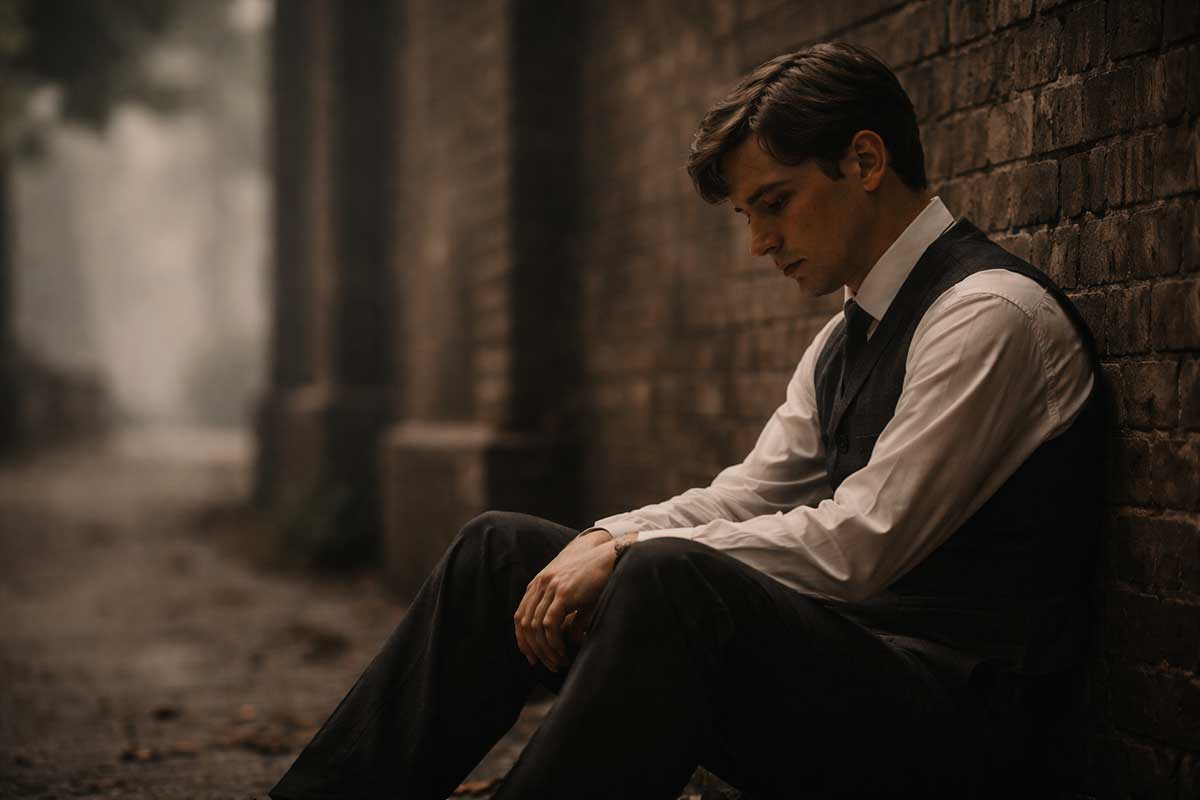
At some point, nearly every reader asks the same question—often quietly, sometimes uncomfortably.
Is Bartleby sick?
Is he depressed, traumatized, or psychologically unwell?
Or is he doing something deliberate—something we don’t quite have a name for?
So let’s begin there.
Nick Sasaki
How do we distinguish between psychological collapse, spiritual withdrawal, and silent resistance—if the person refuses to explain?
Adam Phillips
Psychoanalysis is always tempted to diagnose silence.
But Bartleby resists diagnosis precisely because he offers no narrative. Depression, in clinical terms, usually comes with suffering that seeks expression. Bartleby’s silence does not ask to be relieved.
What troubles us is not that he is silent—but that he seems oddly content with that silence. That unsettles our assumption that withdrawal must be pathological.
Elizabeth Renker
I’d add that diagnosis can become a way of protecting ourselves.
Labeling Bartleby as ill allows us to avoid asking what conditions produced him. It shifts attention away from the social and emotional constraints of his world and places the problem entirely inside him.
That move is familiar—and dangerous.
Raymond Weaver
Historically, Melville was writing at a time when inner suffering was rarely medicalized.
Bartleby would not have been understood as “depressed” in a modern sense. He would have been seen as eccentric, melancholic, or simply strange. Melville leaves him unexplained deliberately.
The refusal to clarify is part of the design.
Gilles Deleuze
Diagnosis presupposes a subject who wants to be understood.
Bartleby does not. His silence is not a symptom—it is an operation. It dismantles the interpretive machinery that tries to capture him.
Whether we call it illness or resistance matters less than the fact that Bartleby steps outside the need to justify himself.
Maurice Blanchot
Bartleby belongs to a region where explanation no longer applies.
This is not resistance aimed at change, nor collapse seeking care. It is a form of withdrawal that does not point toward recovery or revolution. It simply persists.
Language fails there. And when language fails, diagnosis follows it into irrelevance.
Nick Sasaki
That brings us to the question many readers struggle with most.
Nick Sasaki
Why does Bartleby reject help even when it is sincere and offered without conditions?
Adam Phillips
Because help often comes with an agenda—even when we don’t recognize it.
Help implies improvement. It implies a future the helper imagines on the other’s behalf. Bartleby refuses that future.
He may not want to be “better.” And that possibility terrifies us.
Elizabeth Renker
There’s also a power dynamic embedded in help.
To accept help is to accept a certain story about oneself—that one is lacking, broken, or incomplete. Bartleby’s refusal may be the only way he can preserve autonomy in a world that constantly defines him.
Raymond Weaver
Melville often portrays charity as morally ambiguous.
Help that soothes the conscience of the helper can coexist with indifference to the structures causing harm. Bartleby’s refusal exposes that tension.
Gilles Deleuze
Help presupposes participation.
Bartleby has already withdrawn from the circuit of exchange—work, gratitude, improvement, redemption. Accepting help would pull him back into a system he has quietly exited.
Maurice Blanchot
To accept help would be to reenter meaning.
Bartleby remains outside meaning—not as protest, but as condition.
Nick Sasaki
Which leads to the final question—perhaps the most revealing one.
Nick Sasaki
Are we too quick to diagnose Bartleby in order to avoid confronting what his silence reflects back to us?
Elizabeth Renker
Absolutely.
Bartleby mirrors emotional exhaustion, alienation, and quiet despair—conditions many people recognize but prefer not to name. Diagnosis distances us from that recognition.
Adam Phillips
Silence makes demands on us.
It asks us to tolerate uncertainty, helplessness, and the absence of explanation. Diagnosis restores control. It lets us feel competent again.
Bartleby denies us that relief.
Raymond Weaver
Melville forces the reader into discomfort.
There is no moral lesson, no psychological clarity, no redemptive arc. That absence is the point.
Gilles Deleuze
Bartleby is not a case study.
He is a limit.
Maurice Blanchot
And at that limit, interpretation stops—and something else begins.
Nick Sasaki (closing)
Bartleby does not ask to be cured, rescued, or understood.
He asks—without words—to be left alone in his refusal.
And perhaps the most unsettling truth of all is this:
his silence may disturb us not because it is empty—but because it is familiar.
Topic 5 - Dead Letters and Dead Lives
Participants:
- Maurice Blanchot
- Leo Marx
- Hannah Arendt
- Christopher Castiglia
- Raymond Weaver
Moderator: Nick Sasaki
Nick Sasaki (opening)
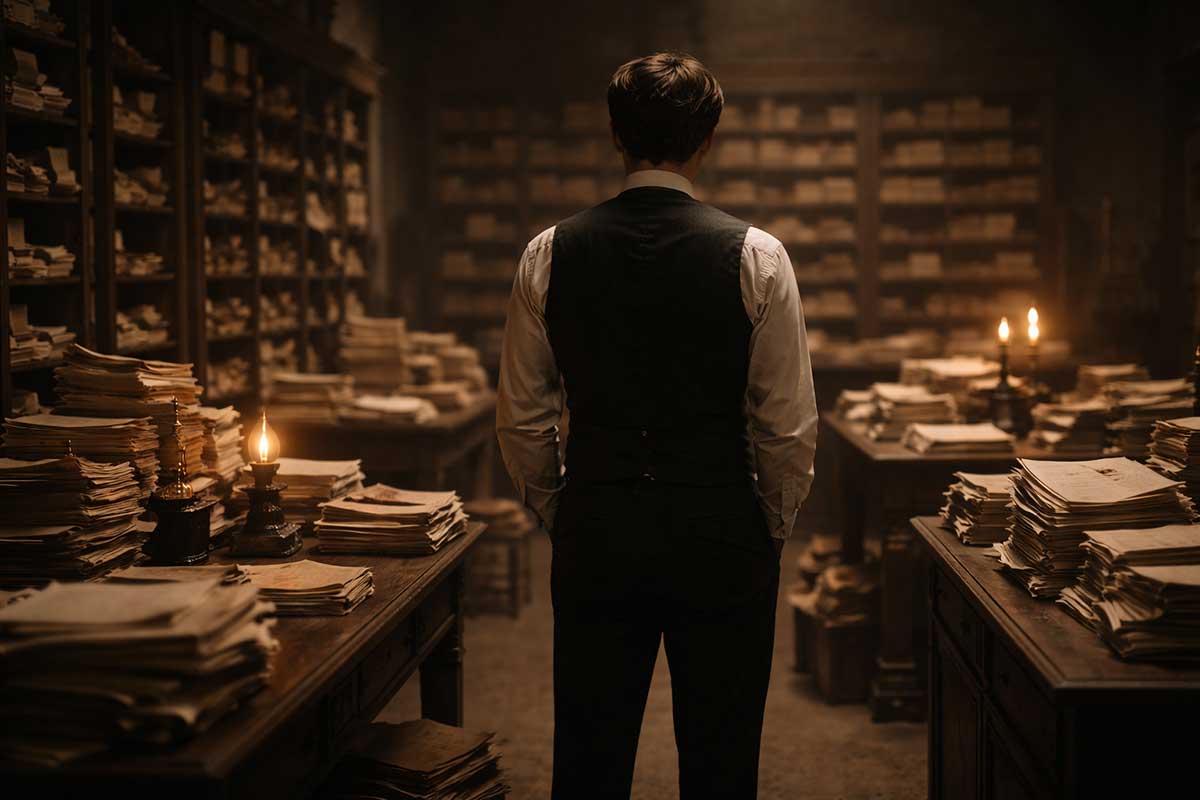
At the very end of the story, Melville gives us one final image.
Not an explanation.
Not a diagnosis.
But a place.
The Dead Letter Office—where letters that never reached their destination are opened, read, and destroyed.
It feels almost like an afterthought. And yet, it reframes everything.
So let’s begin here.
Nick Sasaki
What does the Dead Letter Office reveal about lives that never reach their destination?
Raymond Weaver
For Melville, the Dead Letter Office is not just symbolic—it’s tragic.
These letters once carried hope, love, instructions, forgiveness. They were written with belief in connection. To end up undelivered is not merely unfortunate; it is existentially devastating.
Bartleby is one such letter. A human message that never arrives.
Leo Marx
I’d add that this image anchors the story in modern systems.
Dead letters are not caused by malice, but by scale. Bureaucracy absorbs intention and erases it impersonally. Bartleby’s fate is not the result of cruelty, but of procedural indifference.
That makes it more disturbing, not less.
Christopher Castiglia
The Dead Letter Office also implicates the reader.
We are told these letters are opened, briefly known, and then destroyed. That mirrors our encounter with Bartleby. We glimpse him. We speculate about him. And then the system moves on.
Melville is asking whether recognition without responsibility is its own kind of failure.
Maurice Blanchot
A dead letter is not meaningless.
It is meaning without arrival. Language without destination. This is crucial.
Bartleby is not empty. He is unread. His life does not culminate in revelation because revelation belongs to narratives that believe in resolution.
Bartleby belongs to another order entirely.
Hannah Arendt
There is also a moral dimension.
The Dead Letter Office exists because society accepts loss as normal. Undelivered messages are not emergencies; they are administrative facts.
Bartleby’s death follows the same logic. His disappearance is processed, not mourned.
Nick Sasaki
That leads directly to the second question.
Nick Sasaki
Is Bartleby’s death a tragedy, a release, or an indictment of the world that surrounded him?
Leo Marx
It is tragic because it is preventable—but only in a world that does not exist.
Within the structures Melville depicts, Bartleby’s end is almost inevitable. That inevitability is the real indictment.
Hannah Arendt
I would resist calling it a release.
Release implies freedom achieved. Bartleby gains nothing. What we witness is abandonment—quiet, procedural, and morally anesthetized.
That is what makes it political.
Raymond Weaver
Melville often portrays death without consolation.
Bartleby’s end offers no redemption arc. There is no lesson learned, no reform enacted. The tragedy lies in how easily life passes without consequence.
Maurice Blanchot
Bartleby does not die toward something.
His death is a continuation of withdrawal. It does not resolve meaning—it confirms its suspension.
To call it tragedy assumes narrative closure. Bartleby refuses even that.
Christopher Castiglia
The indictment falls not on any single character, but on a moral economy that mistakes tolerance for care.
The lawyer did not kill Bartleby. Society did not hate him. And yet, none of that saved him.
Nick Sasaki
Which brings us to the final question—not only of this topic, but of the entire work.
Nick Sasaki
If Bartleby is a “dead letter,” who—or what—failed to deliver him to meaning?
Hannah Arendt
A society fails when it recognizes only usefulness, not presence.
Bartleby had no place to appear as a full human being. Without appearance, there is no shared world—and without a shared world, meaning cannot be sustained.
Leo Marx
Modernity itself is the failed courier.
The systems designed to organize life end up intercepting it. Bartleby is not lost by accident—he is filtered out.
Raymond Weaver
Melville suggests that meaning is fragile.
It requires community, recognition, and moral imagination. Remove those, and lives quietly disappear—even when no one intends harm.
Maurice Blanchot
Meaning did not fail Bartleby.
Meaning never arrived.
Christopher Castiglia
And perhaps Melville’s most unsettling suggestion is this:
the failure is ongoing.
As long as we accept lives that never arrive as administrative inevitabilities, Bartleby remains among us.
Nick Sasaki (final closing)
Bartleby leaves no message explaining himself.
But Melville leaves us one final responsibility—to ask what kind of world allows human beings to become dead letters.
Not rejected.
Not condemned.
Simply… undelivered.
Final Thoughts by Herman Melville
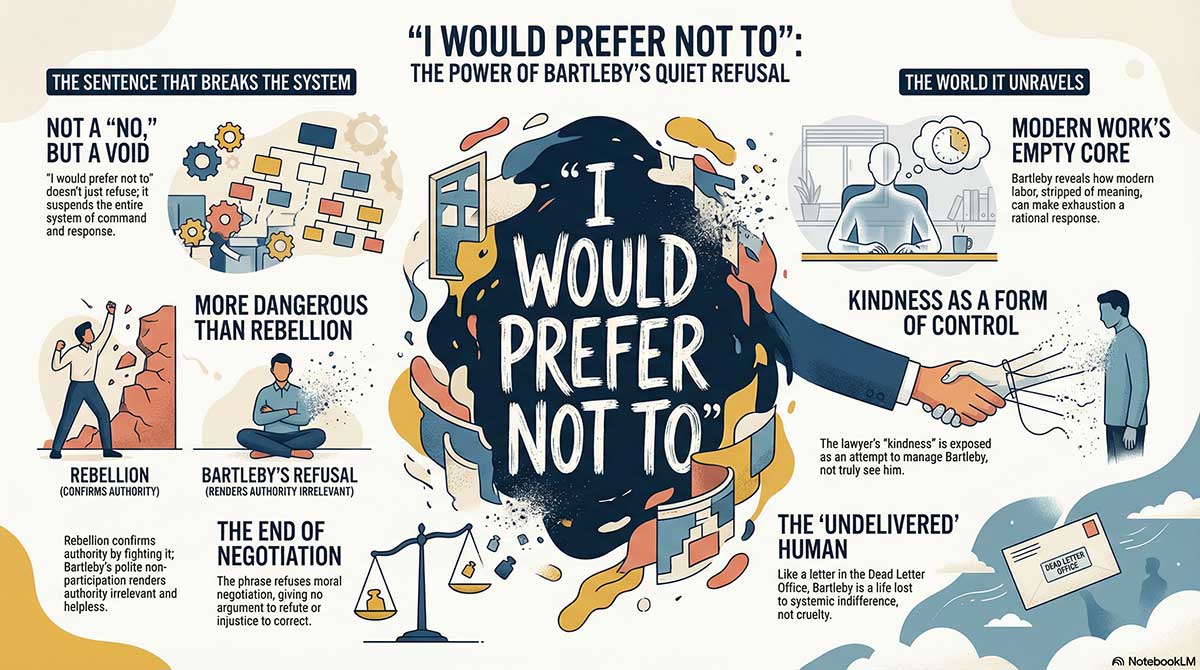
At the end of the tale, I leave you not with a lesson, but with an image: the Dead Letter Office.
There, messages written in hope—words meant for love, instruction, forgiveness—are opened too late and destroyed. They are not false. They are simply undelivered.
Bartleby is such a letter.
Not wicked.
Not monstrous.
Merely unread by the world he inhabits.
If his fate appears tragic, it is not because cruelty triumphed, but because civility proved insufficient. No villain claims him. No hatred pursues him. And yet he vanishes all the same—absorbed by institutions designed to function without intimacy.
I do not ask whether Bartleby should have been saved. I ask whether a society that requires usefulness as the price of recognition can truly claim to understand the human soul.
Some lives do not arrive at meaning through achievement or explanation. Some simply endure, quietly, until endurance itself becomes unintelligible.
If Bartleby lingers with you, that is not an error. He was never meant to resolve. He was meant to remain—politely, persistently—asking whether we know how to receive a human being who asks for nothing at all.
Short Bios:
Herman Melville
An American novelist and short-story writer best known for exploring moral ambiguity, authority, labor, and the limits of human understanding. His later works, including Bartleby, the Scrivener, confront modern alienation with quiet, unsettling precision.
Gilles Deleuze
A French philosopher whose writings on language, power, and refusal reshaped modern literary theory. His essay on Bartleby reframed “I would prefer not to” as a radical statement that escapes both obedience and rebellion.
Maurice Blanchot
A French philosopher and literary critic who explored silence, negation, and the limits of meaning in literature. His work treats Bartleby as a figure who withdraws from language itself, resisting interpretation.
Leo Marx
An influential American literary critic associated with American Studies. His work situates Melville within the rise of industrial modernity, bureaucracy, and the changing meaning of work in the nineteenth century.
Christopher Castiglia
A leading Melville scholar whose research focuses on liberalism, sympathy, governance, and moral authority in American literature. He examines how kindness and power often operate together rather than in opposition.
Hannah Arendt
A political theorist known for her analyses of authority, responsibility, and the moral dangers of passivity. Though not a Melville specialist, her ideas illuminate Bartleby’s withdrawal from action and public life.
Adam Phillips
A British psychoanalyst and essayist admired for his humane, accessible writing on desire, refusal, and emotional life. He approaches Bartleby as a figure who unsettles our need to explain, diagnose, or fix.
Elizabeth Renker
An American literary scholar whose work examines gender, emotion, and power in nineteenth-century literature. She brings attention to the emotional and social pressures surrounding Bartleby’s silence.
Raymond Weaver
One of the earliest major Melville biographers, responsible for reviving scholarly interest in Melville’s later works. His historical perspective helps ground Bartleby within Melville’s broader moral vision.
Leave a Reply