

What if Dolores told the Jesus story like a fifth Gospel witness?
Introduction by Dolores Cannon
Hello, this is Dolores Cannon. What you're about to read isn't meant to replace the
Bible—it's meant to complete it. For decades, through deep hypnosis and past-life
regression, I kept encountering the same patterns: missing pages in the Jesus story.
Not contradictions. Gaps.
I call myself a reporter, not a channel. I ask questions. I follow leads. I compare
thousands of cases. Then I research afterward, so my own expectations don't
contaminate the work. When the same themes appear across different people, different
backgrounds, different belief systems—that's when I pay attention.
This gospel isn't trying to create a new religion. It's trying to recover the human Jesus
that many people never got to meet. A Jesus who learned, traveled, listened, trained,
questioned—and then chose love as his central teaching. A Jesus who wanted people
to understand, not just obey.
The 'missing years' may not be missing at all. They were simply not included in the
official story. And the real message? It's not about building a hierarchy. It's about
waking up the love inside the human soul.
(Note: This is an imaginary conversation, a creative exploration of an idea, and not a real speech or event.)
Chapter 1: The Method of Deep Remembrance
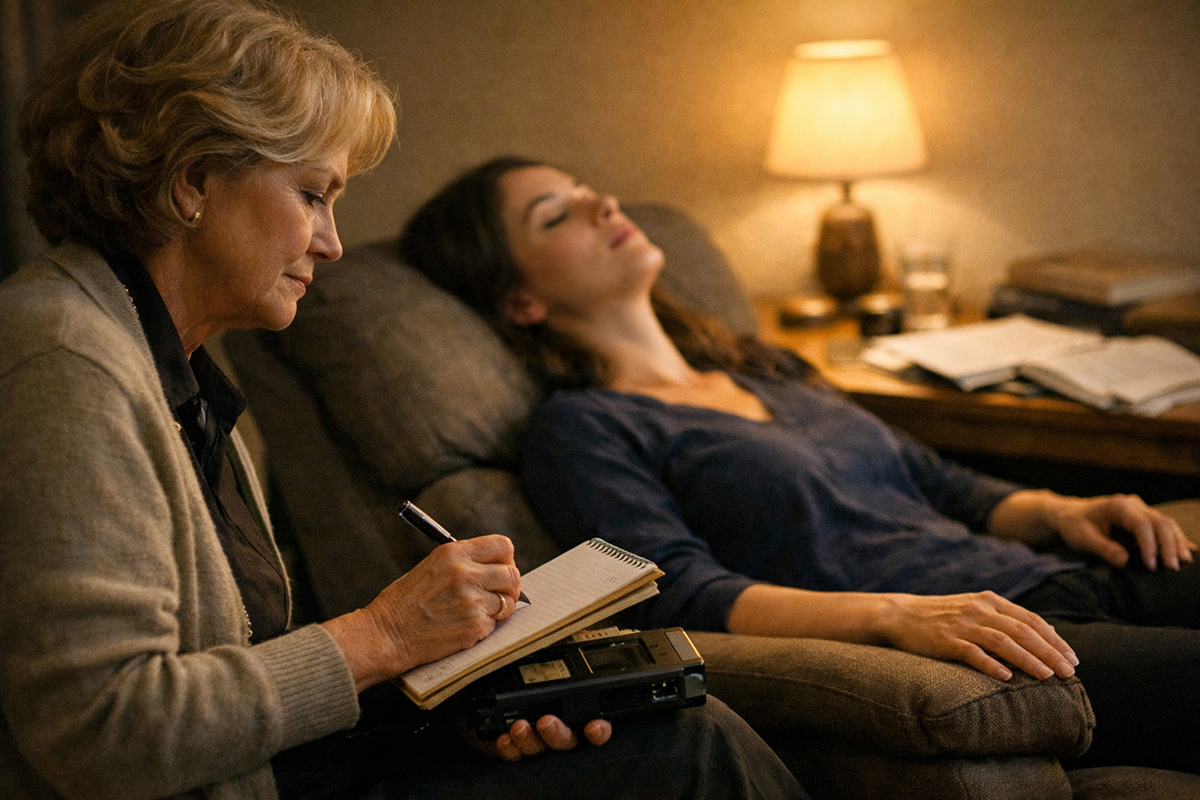
Before we begin, you need to understand how this testimony came to light.
In deep hypnotic trance, some individuals descend beneath ordinary
consciousness—like a diver going beneath the surface of the sea. The present world
fades. Their voice changes. Their mannerisms shift. They speak as someone else
entirely.
One particular subject—a young woman with little formal education, who had never
traveled beyond her home state—provided the core material for the earliest Jesus
accounts. When brought into the deepest state, she became a man: a Torah teacher at
Qumran, instructor to both Jesus and John the Baptist.
She spoke in Aramaic phrases. She described customs and laws not commonly
remembered today. She gave precise theological details that later surprised specialists I
consulted. This wasn't borrowed folklore. The knowledge came from somewhere.
If you speak to such a witness about things unknown in their recalled era—computers,
airplanes, modern concepts—they look genuinely confused. They don't feign
knowledge. They simply don't understand what you're talking about. This isn't role-
playing. It's time travel through consciousness.
What follows is compiled from multiple sessions, cross-referenced with historical
research, presented as a continuous narrative. Think of it as recovered fragments finally
assembled into a whole picture.
Chapter 2: The Community by the Dead Sea
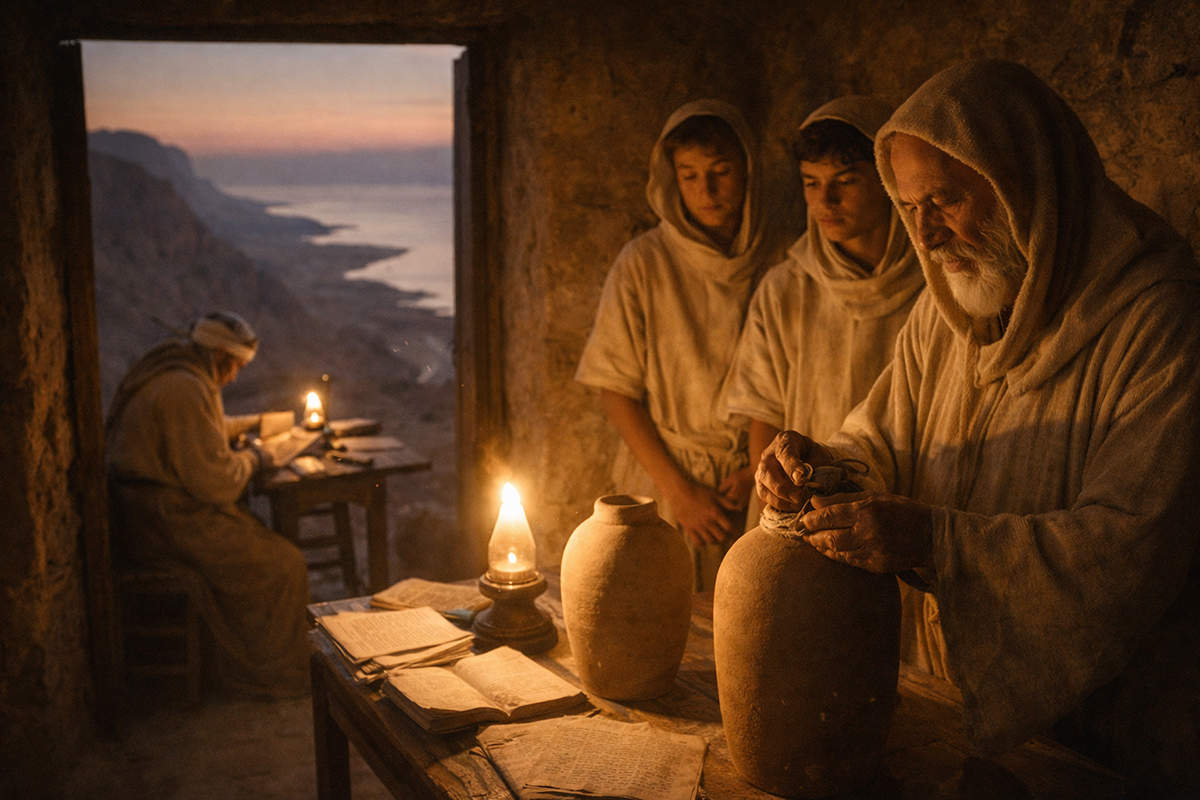
The Essenes lived in a harsh, beautiful place above the Dead Sea—a settlement called
Qumran. The sun was fierce by day, the nights bitter cold. They were called separatists,
but they weren't running from the world. They were preserving it.
Knowledge is a lamp, they said, and a lamp must be sheltered from wind. So they kept
their teachings for the ready and the disciplined. They didn't open their doors to every
traveler.
Scribes worked patiently, copying ancient writings onto scrolls, storing them in clay jars
sealed against decay. They knew armies pass like fire through dry grass. If the buildings
fall, they said, let the memory stand.
They taught many disciplines: mathematics and astronomy, healing and meditation, the
Law and the prophets, and mysteries spoken only in quiet rooms. Students were
chosen not for wealth or lineage, but for readiness of spirit and steadiness of discipline.
Among the teachers was Suddi, a master of Torah whose duty was to instruct those
who would one day speak among the people. He knew the Law could be used to
bind—he preferred it be used to guide.
And into this place came two boys: John, who would become the Baptist, and Jesus.
Chapter 3: The Night of the Star
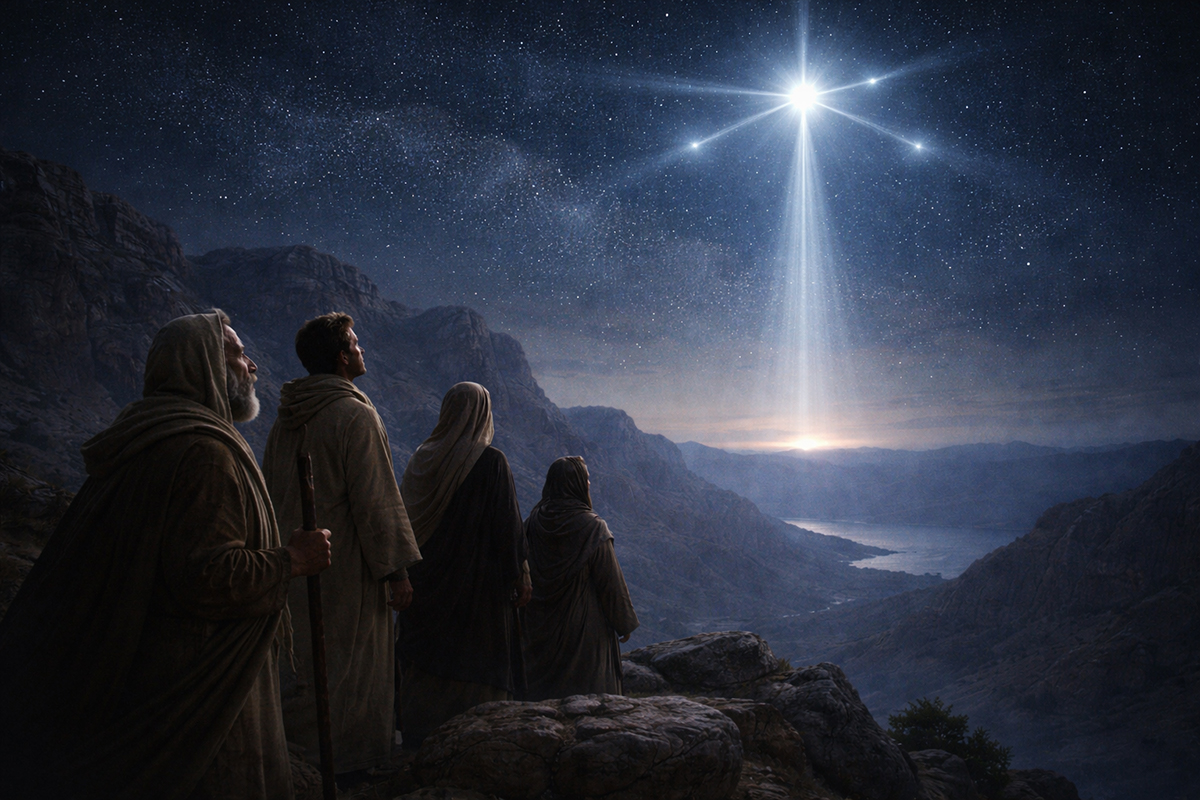
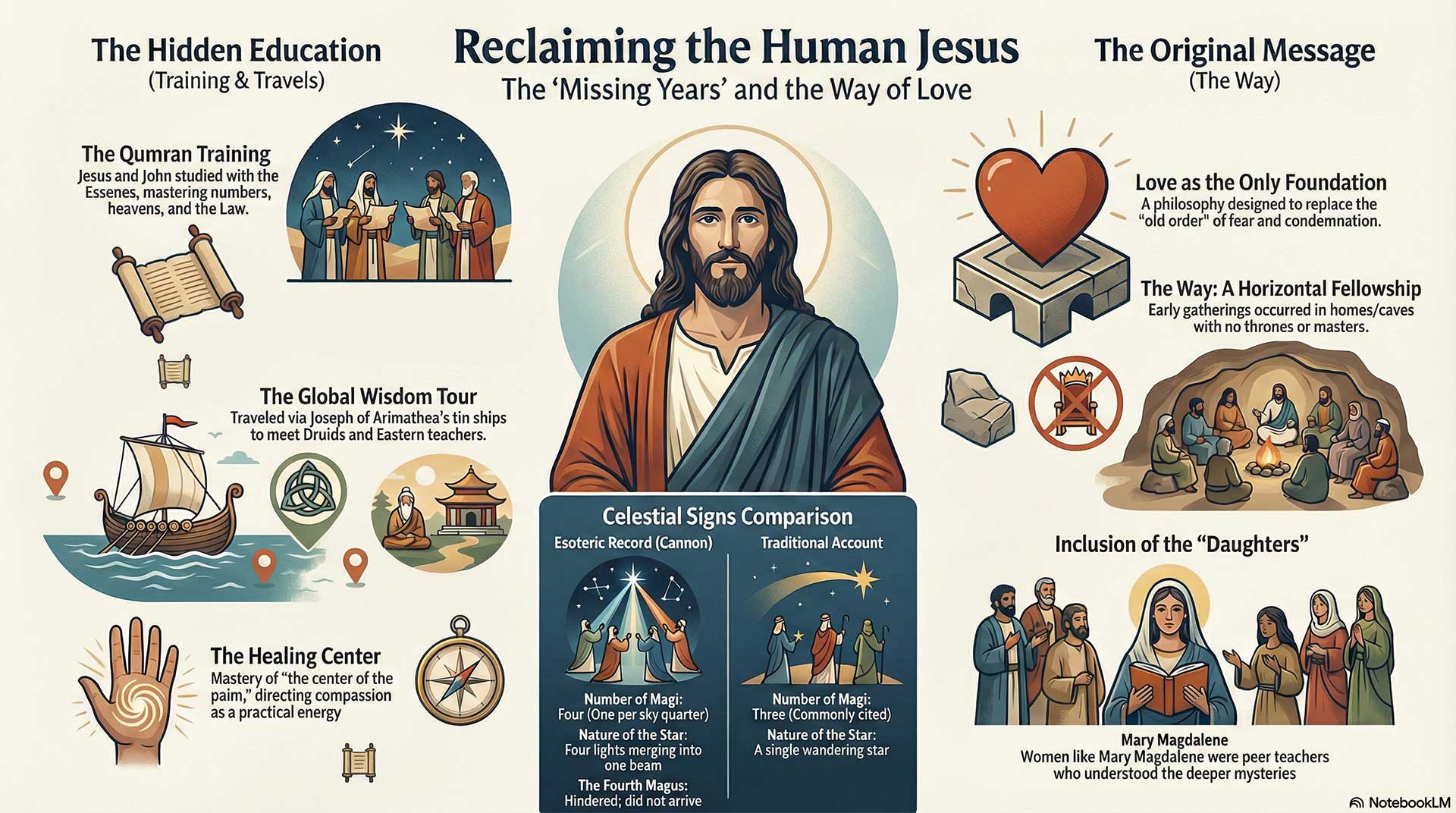
The Essene masters kept watch on the cliffs, studying celestial patterns they believed
marked appointed times. One particular night, they gathered under a clear sky, waiting
for a sign their calculations predicted.
Suddi stood among them, face lifted, heart full. His teachers had told him that on the
night of the Anointed One's birth, there would be a sign unlike ordinary stars.
Then it came.
Four lights appeared from different quarters of the sky, moving slowly but surely toward
convergence. They formed a circle that brightened until the air seemed alive. Then the
four merged into one brilliant radiance, and a beam descended toward the
earth—toward the region of Bethlehem.
The watchers knew: in that light, he was born.
The phenomenon lasted not just one night but many days, visible even in daylight.
Some called it a conjunction of planets. Others spoke of messenger beings. The
Essenes simply recorded what they saw and waited.
Chapter 4: The Flight and the First Seeing
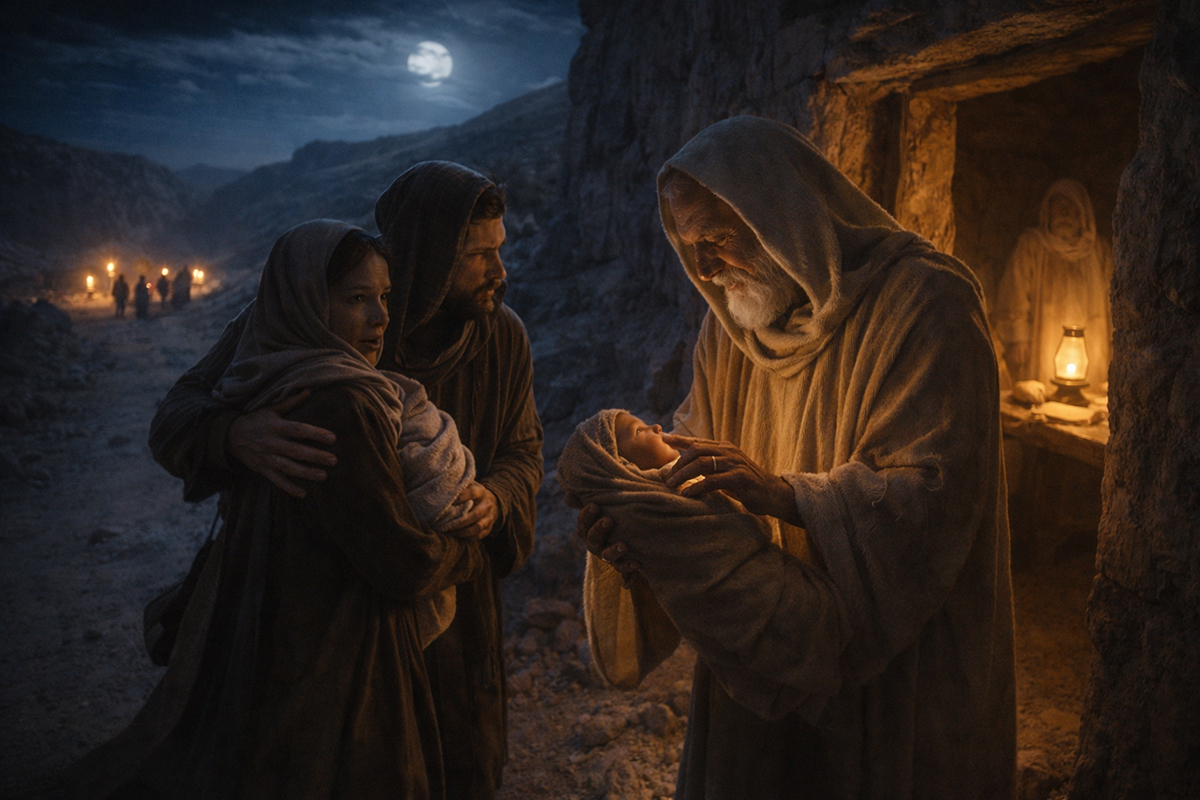
When danger stirred in the towns—rumors of searches, of soldiers hunting
children—the mother and guardian of the infant fled by hidden paths. Fear hastens the
feet and makes every sound in the dark feel like warning.
They turned toward the wilderness, toward Qumran, where there was refuge among
those who kept the ways of secrecy. The community opened to them quietly, gave them
water and rest.
Suddi went to see the child.
The infant didn't cry as infants cry. He was quiet, as though peace rested upon him.
When Suddi looked into the child's eyes, his breath caught. The eyes were deep—like
waters that reflect more than the sky. These eyes look through the world, Suddi thought,
and are not held by it.
He didn't know then that he would one day teach this child. That the child would grow to
speak words that would pierce the hearts of many.
After a short season, the family departed again toward Egypt. The wilderness
swallowed their footsteps. The community returned to its silence. But Suddi kept the
memory in his heart.
Chapter 5: The Training of Two Students
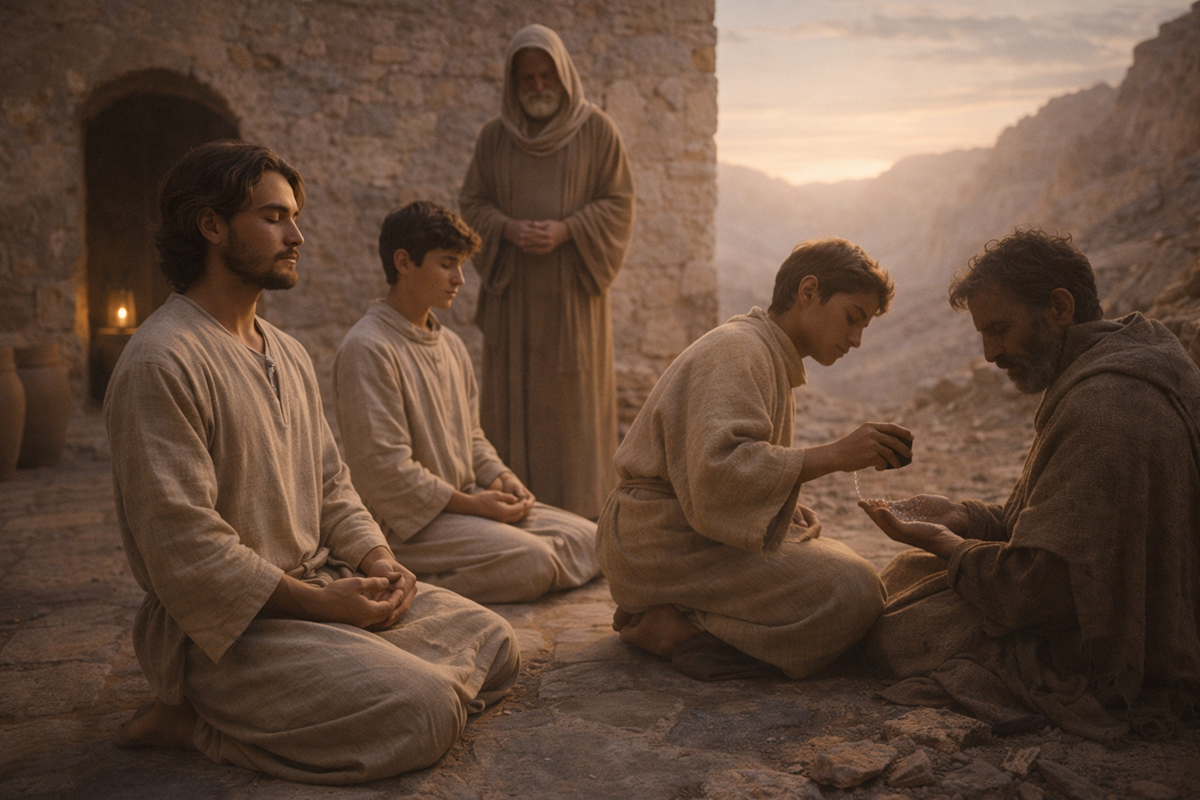
Years later, when the time was right for instruction beyond common measure, the boys
returned—Jesus and John—received as students into the Essene school.
John was bold and quick to speak, his spirit like a flame leaping when wind touches it.
He asked sharp questions, often about injustice, unwilling to tolerate what he saw as
wrong.
Jesus was quieter. He listened long before he spoke. When he answered, his meaning
went deeper than the plain surface of the law. He would take a strict judgment and turn
it toward mercy without breaking its truth.
Suddi marveled. How shall I teach one who already sees farther than I? But he
continued, because humility is wisdom's companion.
The discipline was heavy: early rising, long silence, breath control, mental steadiness.
They learned healing—not as spectacle but as service. Power without compassion
corrupts, the masters taught. So they trained in restraint, purity of intent, and honoring
the laws that govern a soul's path.
Jesus advanced quickly, gathering knowledge like harvest with swift hands. At the
highest level, they taught the mystery of restoration: easing pain, strengthening the
weary, and—when the moment was appointed—even calling back those who had
departed.
Not for display. For service.
Chapter 6: The Philosophy of Love Emerges
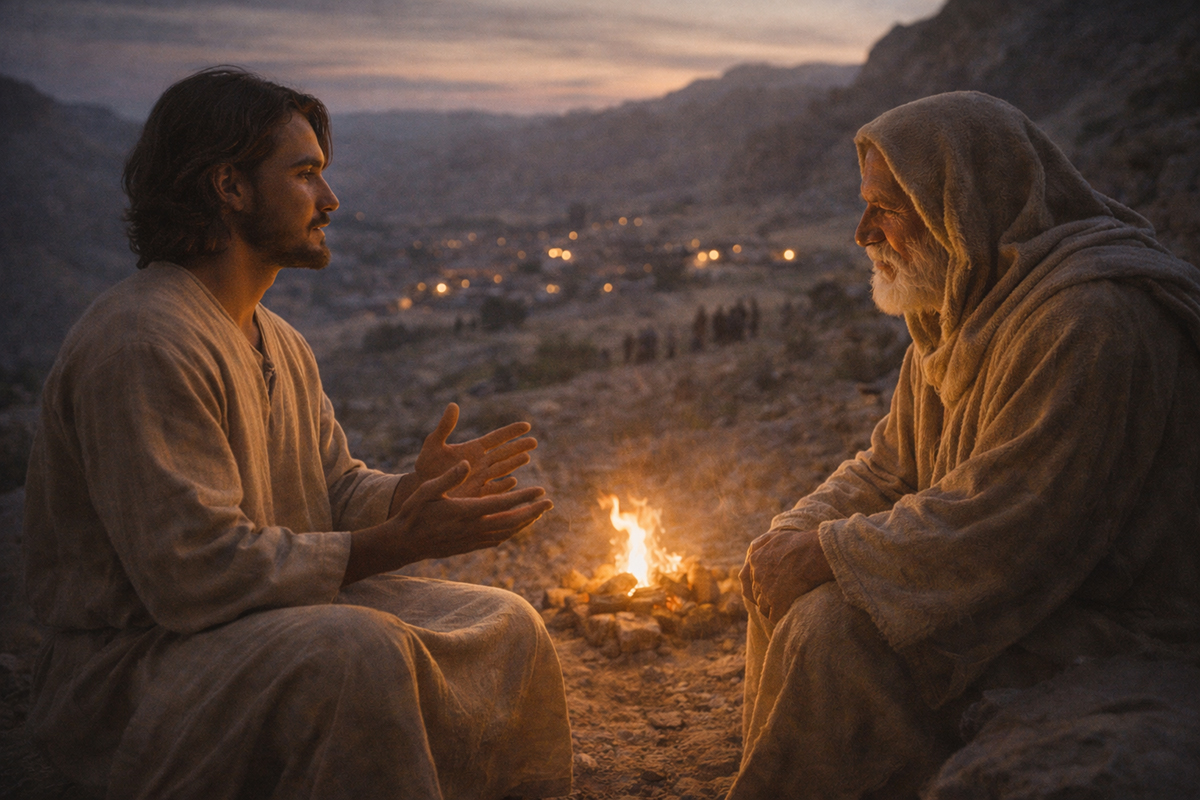
As Jesus completed his Essene training, Suddi noticed something shifting. The boy was
gathering everything he'd learned into a single, unified philosophy.
'I won't speak above their heads,' Jesus told him, 'the way many teachers do. I'll speak
so they can carry it home.'
He planned to use parables—clothing hidden things in common images. The seed, the
soil, the birds, the water, the storms. So even the unlearned could understand.
And he was turning away from the God of fear the elders preached—the condemner,
the punisher. Instead, he gathered it all into one saying:
If love is made full among people, evil finds no home. Violence cannot live where the
heart is healed.
Suddi had not heard such teaching set forth so plainly. Jesus was lonely in this
vision—he saw farther than those around him could bear. Yet he didn't despise the
people. He desired to lift them.
Chapter 7: Joseph of Arimathea and the Journeys
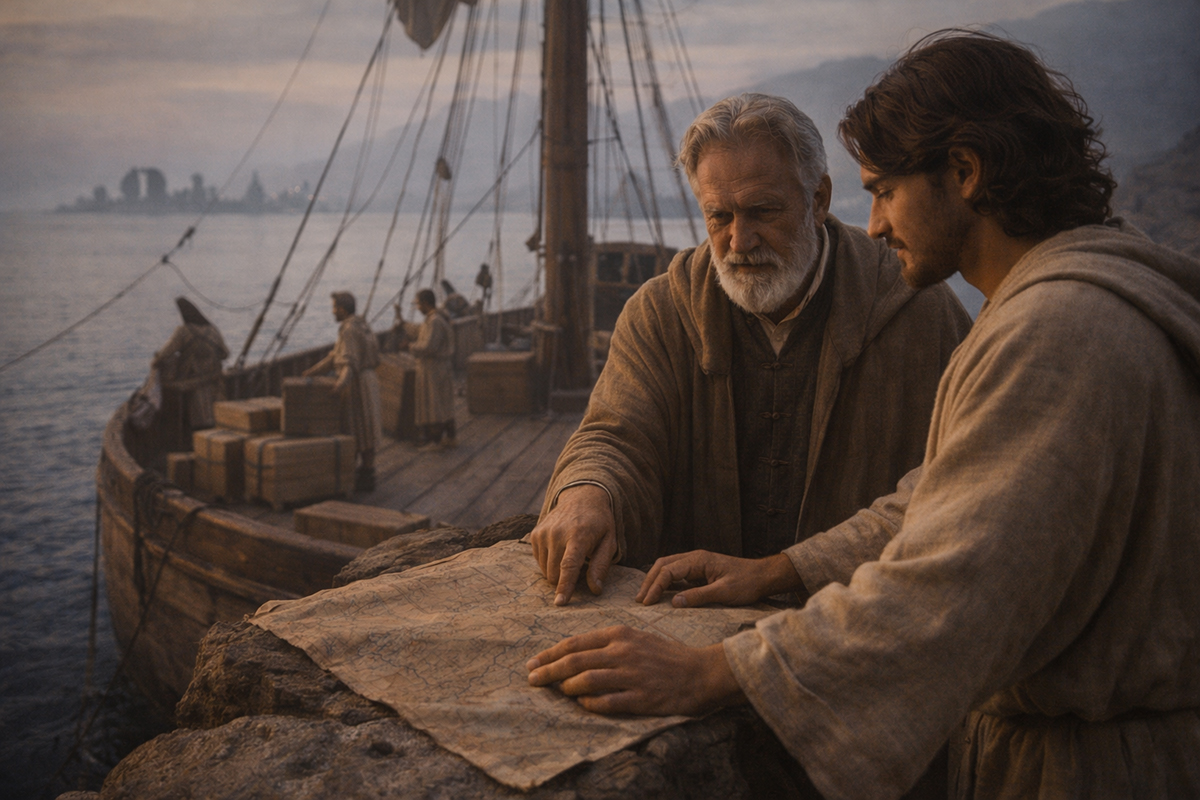
There was a kinsman of Mary—Joseph of Arimathea—a man of great wealth whose
ships traded in tin, the metal that made bronze, the metal that powered nations.
Joseph kept his trade routes secret, but his deeper purpose was wisdom. He took the
young Jesus with him on certain journeys, not only for adventure but so the boy might
meet teachers beyond Israel's borders.
They traveled to England, where tin was drawn from the earth near Glastonbury. There
were learned men there called Druids, later accused of being barbarians, but actually
keepers of knowledge—teaching astronomy, mathematics, healing, and the discipline of
the inner life.
Jesus listened. He gathered what was true, left what was vain, held fast what would
serve the people.
The journeys also went eastward—toward lands where teachers spoke of breath and
stillness, of the mind as a field to be tended. He learned from multiple traditions, not to
boast of many schools, but to shape one way of healing and mercy.
When he returned, the learning of many lands had ripened into singular purpose. He
would speak, not as the scribes who bind heavy burdens, but as one who lifts burdens
from the shoulders of the poor.
Chapter 8: The Teaching in Parables
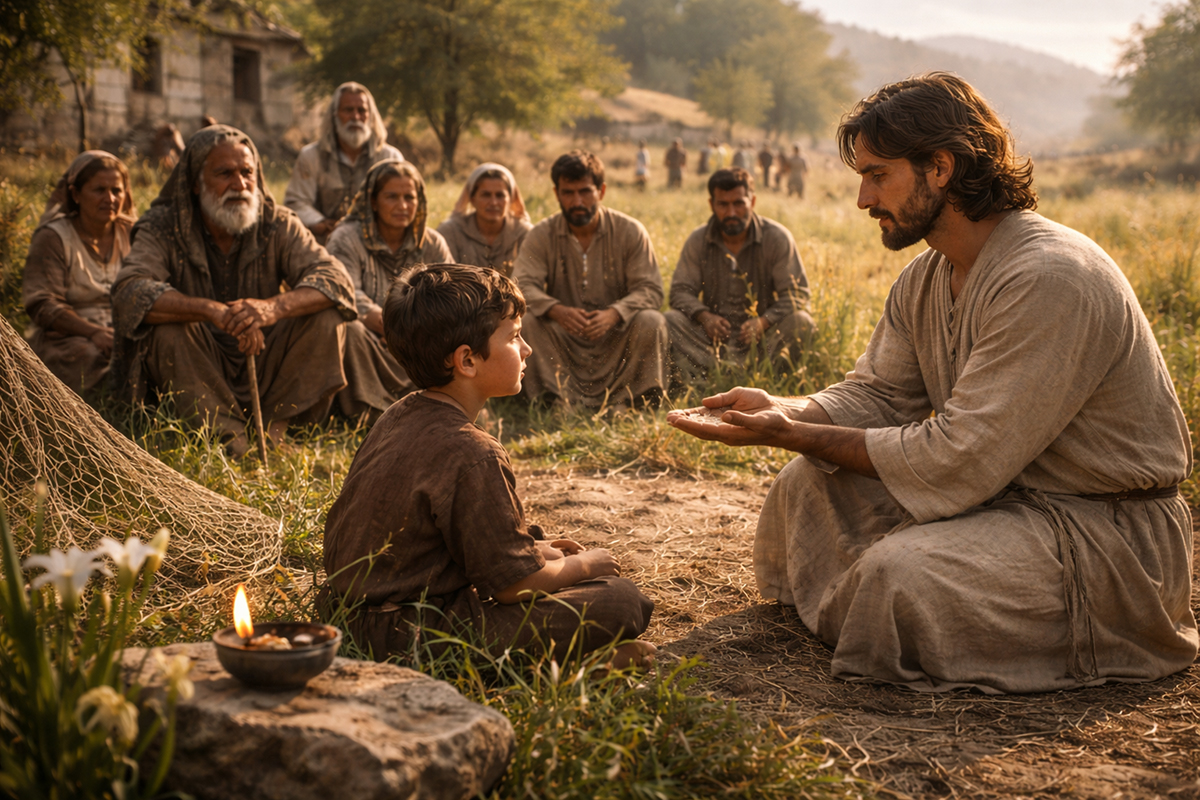
When the years of training were complete, Jesus walked among the villages. Not
seeking a throne or favor with rulers, but seeking hearts.
Many teachers speak in heights the poor cannot climb, he thought. They cover truth
with hard words. The learner returns home empty. So he chose simpler speech that the
burdened could carry.
He spoke of seed and soil, wind and weather, fishermen and nets, lamps and doors,
birds and lilies. The unseen understood through the seen.
The people said, 'This word is near to us.' They listened as thirst finding water. His voice
was gentle yet strong. When he spoke, strife grew quiet.
But Jerusalem heard rumors. Guardians of order feared gatherings they couldn't
command. When many hearts move together, rulers suspect rebellion—even when the
word is peace.
Chapter 9: Mary Magdalene and the Women
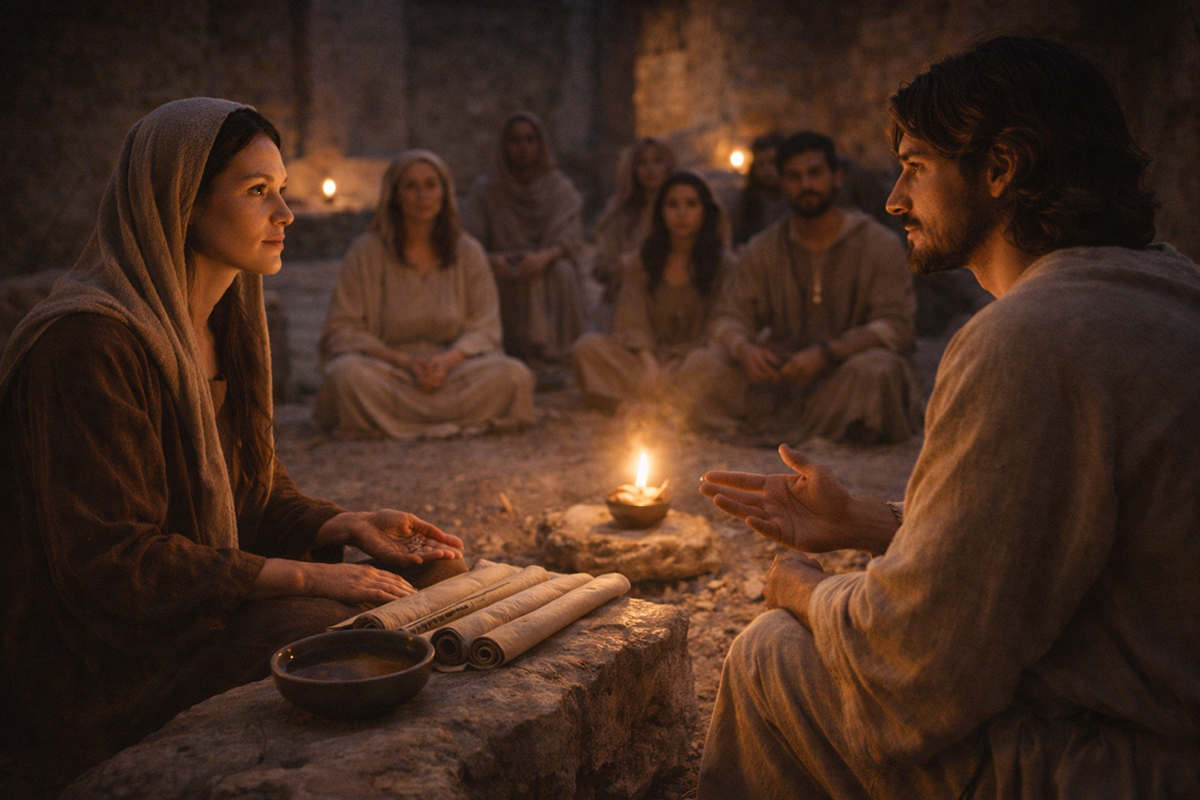
Many women followed him, perceiving the inward teaching quickly. They weren't
ashamed of unseen spiritual things. He didn't turn them away, as many in that age
would have done. He received them as learners and helpers.
Among them was Mary Magdalene—a woman of knowledge and discipline who
understood the mysteries of healing and prayer. He spoke with her at length, as one
speaking to a kindred mind.
Some were uneasy at this. Peter was zealous, his zeal mixed with fear of losing place.
He didn't always understand why the teacher honored those society despised.
But the teacher sought not rank, only readiness of heart.
Chapter 10: The Hidden Gatherings and Underground Persecution
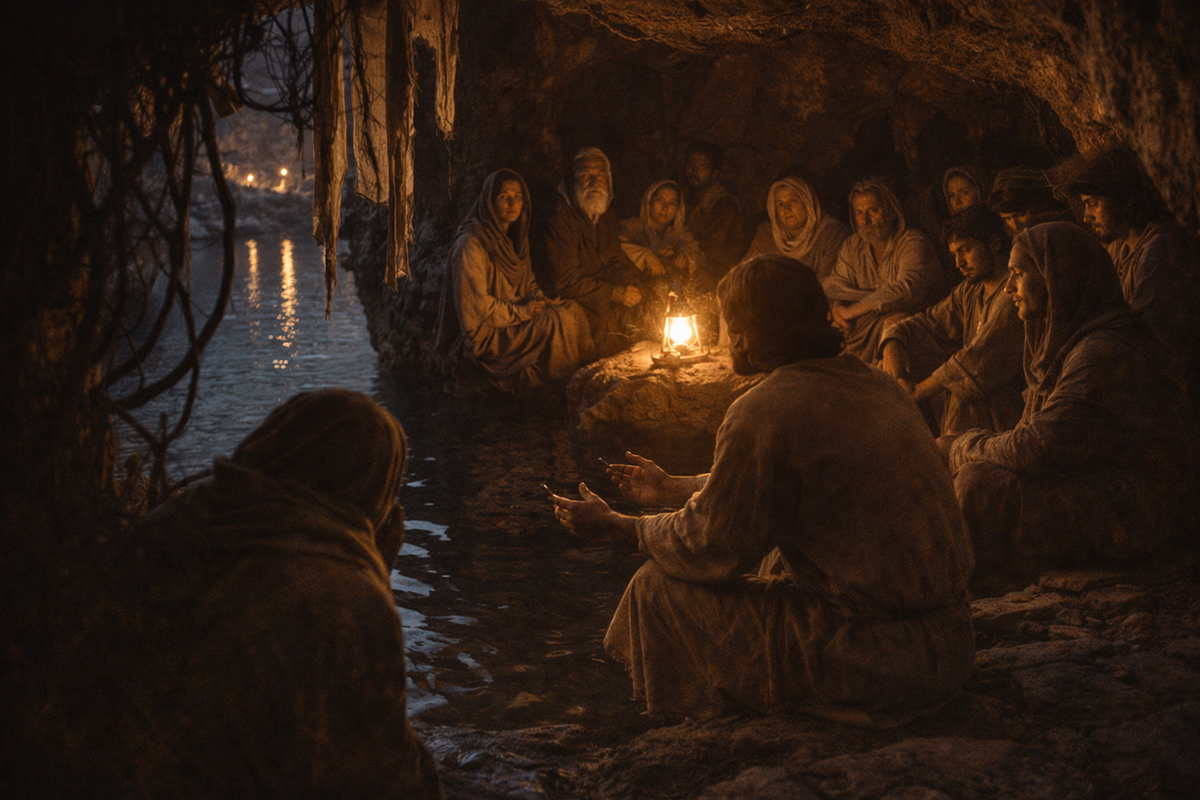
As his influence spread, the rulers grew watchful. The company moved with care,
meeting not always in open places but in quiet hollows, in caves near water, where
voices could be kept low and entrances covered.
They hung cloth and brush at cave mouths so passersby saw only shadow and stone.
There he taught stillness, the cleansing of the mind, the heart that heals before the hand
touches. 'If the inside is whole,' he said, 'the outside will not rule you.'
But fear of authority followed even into quiet places. There were informers who loved
reward more than truth.
Beneath Jerusalem were passages and chambers—tunnels used for hiding and
holding, some for torment. He was seized more than once, taken into darkness,
questioned with hardness, beaten so fear might silence him.
They said, 'Cease speaking to the crowds.' But he refused. When released, he returned
to teach. He had set his face toward the work. Pain in the road would not turn him aside.
At one point they tried to destroy him in secret—throwing him as one throws refuse. Yet
he survived. This increased their fear. 'We cannot master him by ordinary ways,' they
said.
Chapter 11: The Villages of the Untouchables
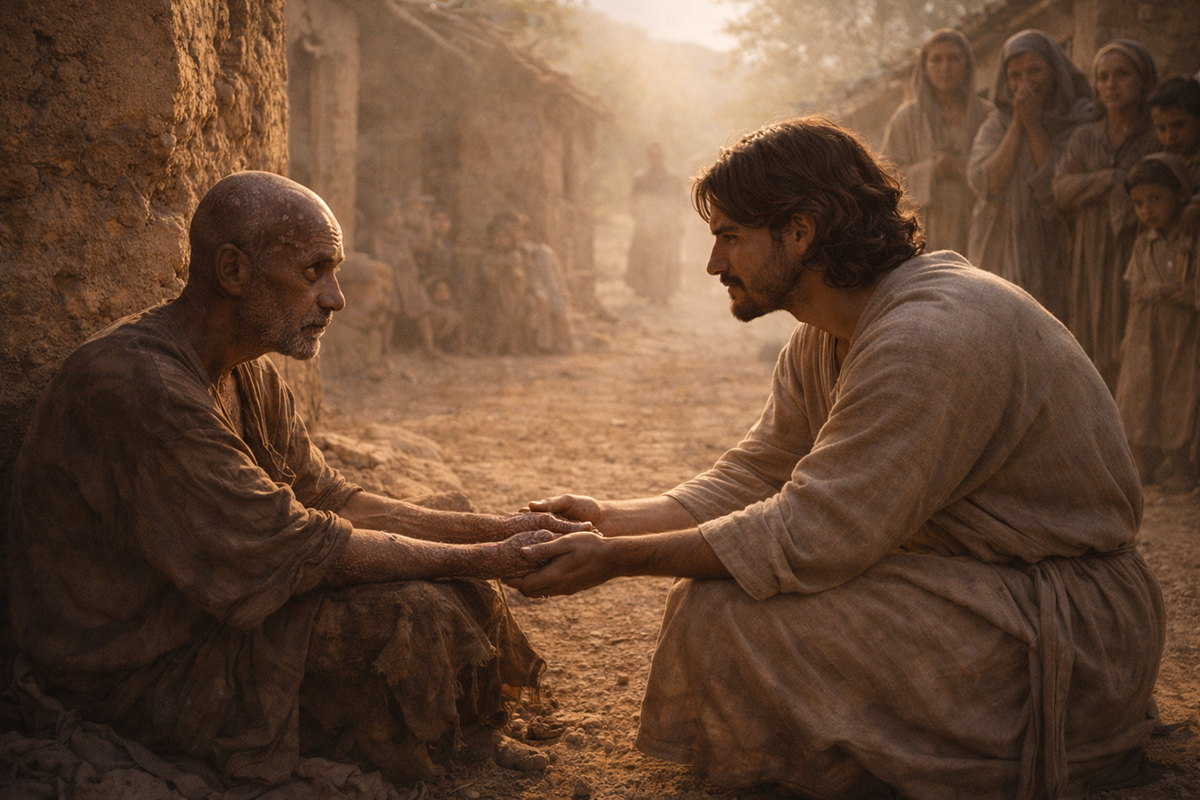
When danger thickened in the city, they departed toward the countryside—the poor
places rulers despised.
'If I bring good news,' Jesus said, 'let it be brought first to those who have none.'
They came to villages of the sick and outcast, places where people were called
untouchable. Many had sores, failing strength, loneliness that ate the heart like hunger
eats the body. Some hadn't felt a kind touch in years.
The teacher didn't go alone, nor with wonders only, but with practical hands. Workers of
wood repaired roofs and strengthened doors. Women skilled in herbs tended sores,
washed wounds, brought comfort without disgust.
'Mercy is not only a word,' he said, 'but a deed done.'
When he healed, those who watched closely saw light—gentle brightness flowing from
his hands. He taught them about the center of the palm, tracing an invisible circle. 'This
is given to all,' he said, 'not to me alone.'
He taught them to quiet their minds, steady their breath, direct compassion with
intention—so the hand becomes comfort, not merely flesh.
But he didn't heal everyone the same way. Some he healed fully. On others he laid
hands and brought peace, yet the affliction remained.
'Why heal one and not another?' they asked.
'There are burdens a soul must carry until its lesson is complete,' he answered gently. 'I
may ease pain and bring courage, but I won't steal a man's learning from him.'
Chapter 12: The Organization of The Way
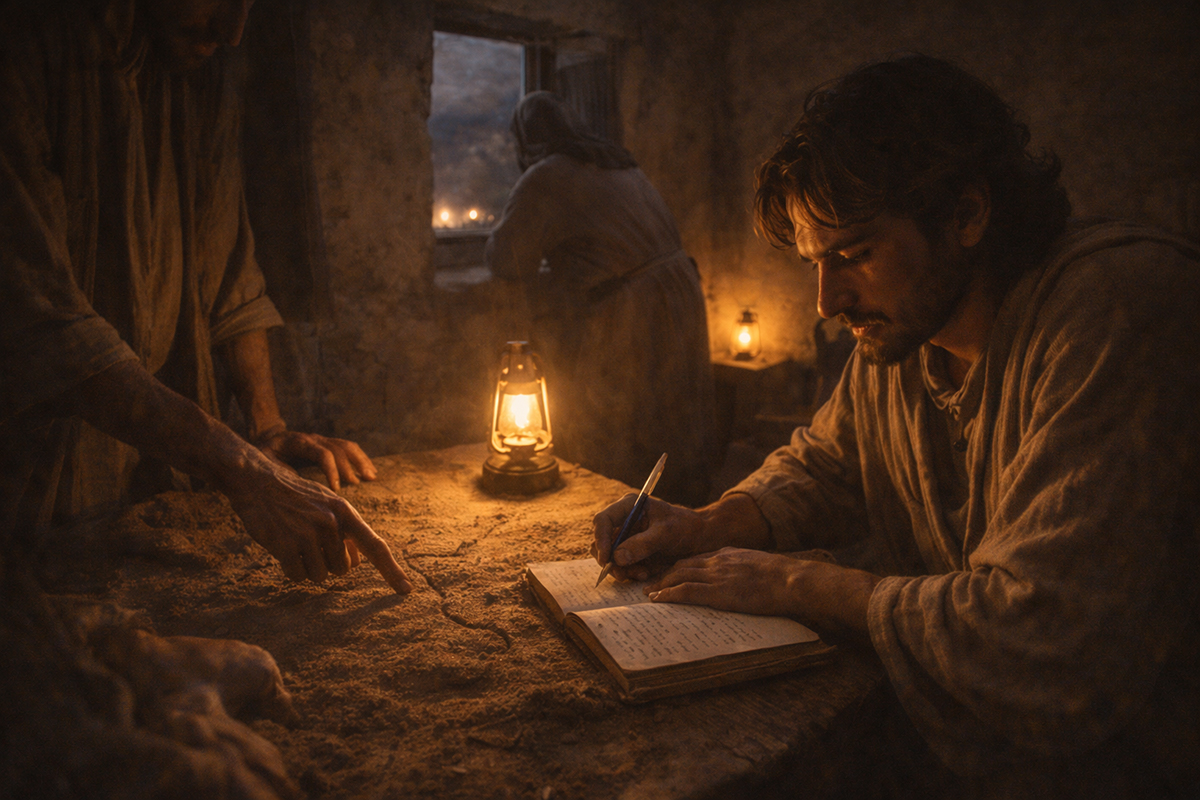
The company wasn't wandering without purpose. They were organized. Someone went
ahead to scout safe lodging and listen for threats. If danger was near, word went back
and the group changed course.
There was also a recorder—Judas—whose task was to write what was done and
spoken, so the word wouldn't be lost when the speaker was gone. Jesus himself didn't
keep scrolls. He spoke and moved. The days were full. So a recorder was appointed.
Judas wrote swiftly: parables spoken beside fields, healings by the road, comfort given
in the night. The more he recorded, the more he understood what was coming. And
knowledge became a weight when hope thinned.
His heart divided—not at first, but by degrees, as heavy things pressed. The teacher
saw the torment within him. 'Pity him,' Jesus said, 'for his road will be hard.' The others
didn't understand.
Chapter 13: The Return to Jerusalem
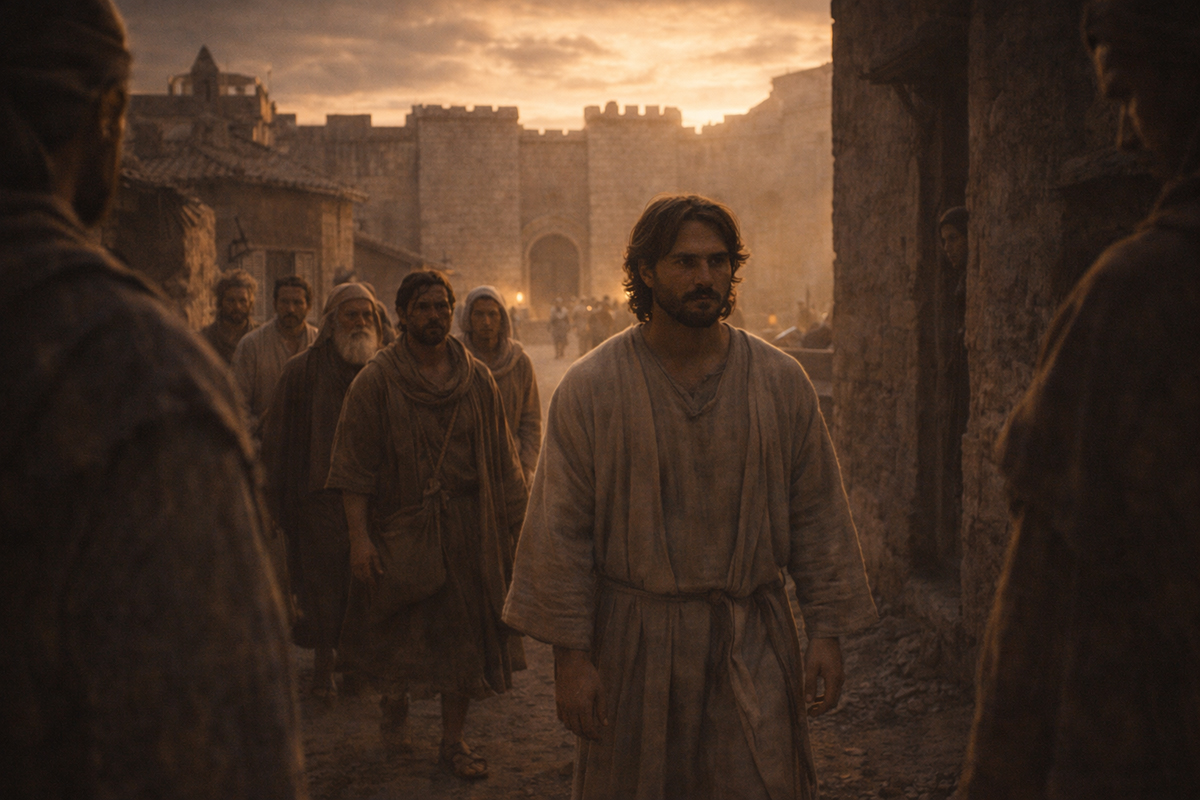
After many journeys, Jesus set his face toward Jerusalem again. The disciples
perceived the change—his steps steady, his silence heavy.
'Why return to danger?' they asked, remembering the former seizures and darkness
beneath the streets.
But he answered with calm, as one who knows what is appointed. 'No man takes my life
from me,' he said. 'I lay it down when the work is finished.'
They didn't understand. The mind resists what the heart cannot bear.
As he entered the city, watchers multiplied. Whispers ran through narrow streets. Some
praised him. Others waited with stone faces, measuring him as a threat.
He taught again, though danger stood close. He wouldn't hide the lamp when the room
was dark. The leaders said, 'His influence grows.' They feared the people would follow
him and shake the order they controlled.
So they sought a way to take him quietly, lest the city rise in confusion.
Chapter 14: The Night of Betrayal
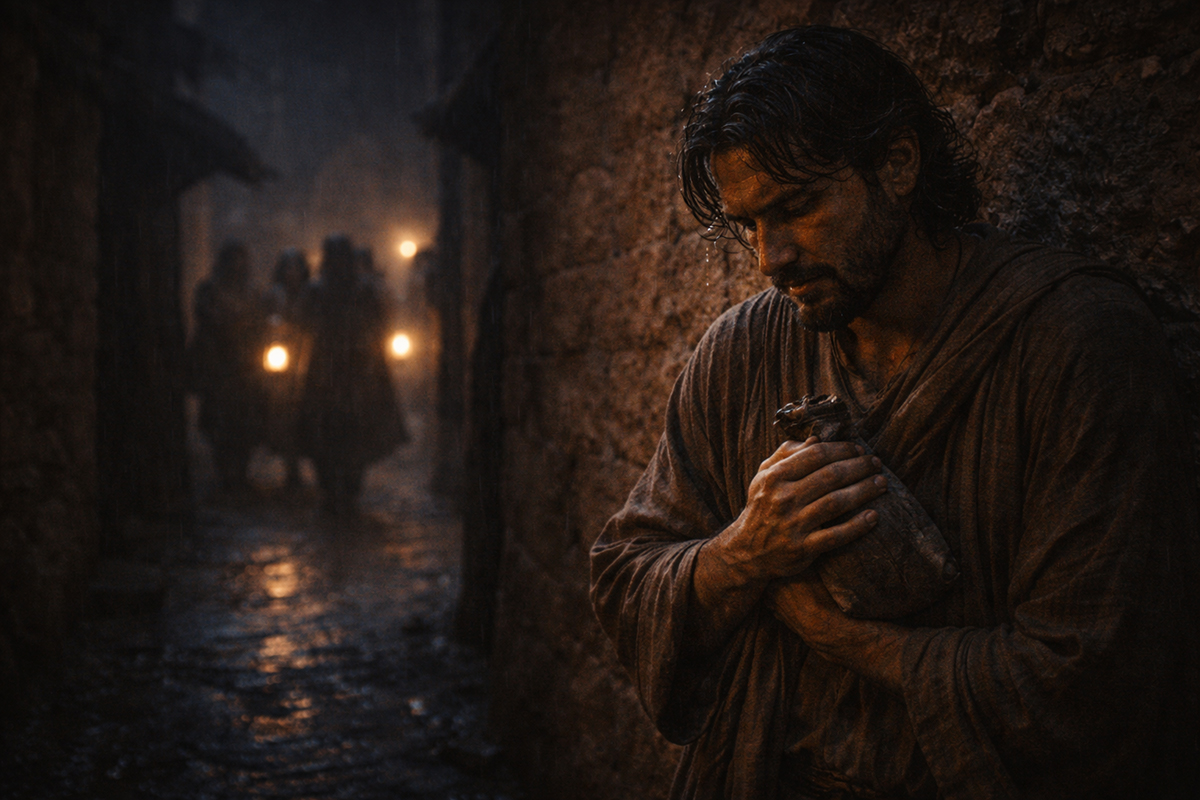
In the final days, the air felt heavy. The company moved as people who sense a storm
before clouds appear.
Jesus gathered those nearest and spoke plainly: 'The work is entering its last passage.'
Some looked away, unable to bear the nearness of loss.
Judas's mind had become tangled with fear and despair. He had seen the hatred
growing. He believed no road remained but ruin. He reasoned—not with wisdom, but
with panic—'If I yield him, perhaps the storm will pass quickly. Perhaps the leaders will
be satisfied and the others spared.'
Fear is a false counselor. It promises safety while building a snare.
Jesus looked upon him and grieved. Not because he was surprised, but because he
saw what the man would do to himself afterward. Judas's punishment wouldn't come
first from others, but from the crushing weight of his own heart.
The hour came in darkness. Those sent by the leaders came quietly. Judas walked with
them, his steps like stones in his chest.
Jesus didn't flee. He said, 'Let it be done'—not as surrender to evil, but as one stepping
into the last act of his calling.
The disciples cried out. Some reached for weapons. But he restrained them. 'If you
answer darkness with darkness, you become what you hate.'
They bound him and led him away. The company scattered—some in tears, some in
shock, some in silence.
When the deed was done, Judas felt the full weight. He sought relief but found none.
Guilt is a fire that consumes the one who carries it. The teacher's mercy—never
condemning him—became unbearable. Mercy reveals the ugliness of betrayal more
sharply than anger.
Judas went out alone. His despair closed around him like night with no stars. He chose
a door that is not a door, thinking to escape the pain by ending the life. But the pain
followed him. The lesson wasn't complete.
Chapter 15: The Trial and the Cross
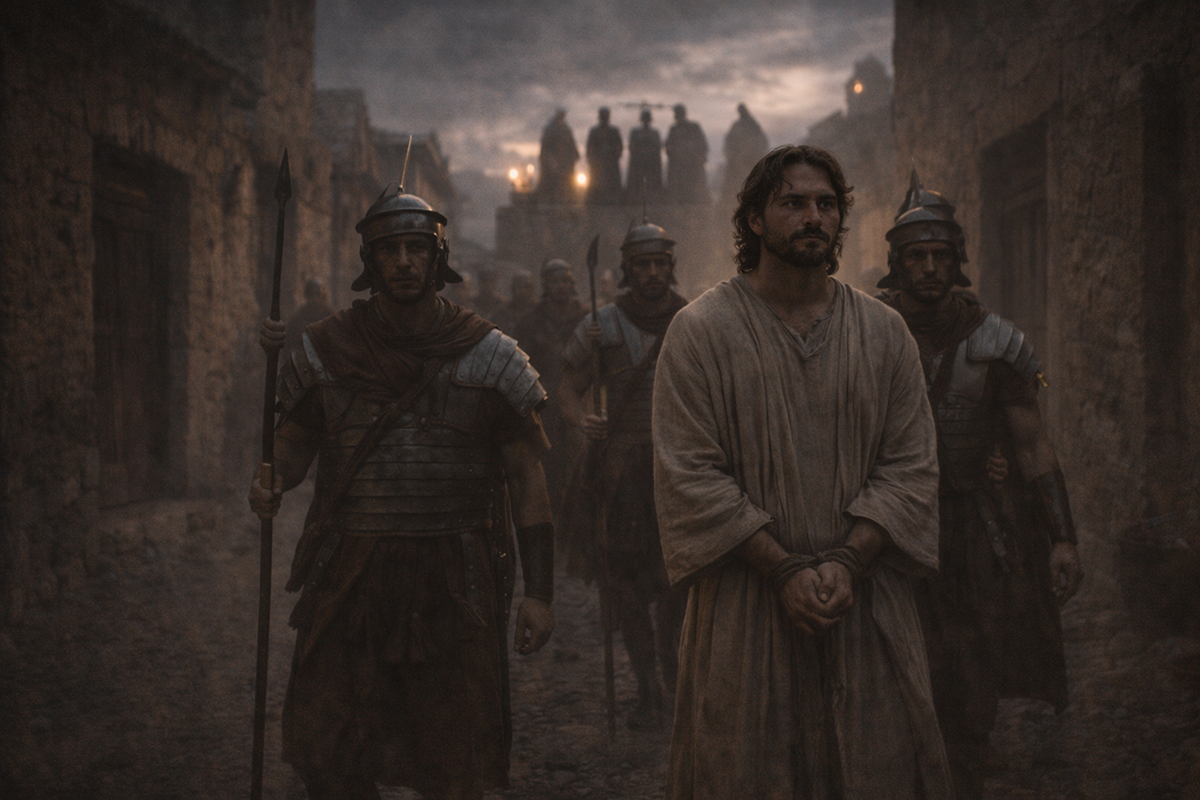
They led him through sleeping streets. Soldiers' feet sounded like judgment on stone.
They brought him before councils that had already decided the end. Many seek
verdicts, not truth, and call it law.
False witnesses rose, stitching fragments into a story with fear as thread. But he
answered not with rage—rage would have fed the fire they desired. His calm unsettled
them. Calm cannot be controlled by shouting.
They brought him to Pilate, seeking empire's authority—death that looked official, so
they could wash their hands and say, 'It wasn't our doing.'
The governor questioned him, looking for a fault that would satisfy the crowd and
preserve order. But he found a man who wouldn't bargain with fear. Jesus didn't plead
as the guilty plead, didn't flatter as the desperate flatter, didn't curse as the wounded
curse.
'My work is not of violence,' he said. 'My kingdom is not of swords.'
But the leaders pressed. 'He stirs the people'—because truth stirs the sleeping, and the
sleeping call it trouble.
The judgment returned to power. The crowd was stirred like sea in wind, leaders
pouring fear into the multitude until it spoke with borrowed anger.
Some who'd once praised him grew silent, fearing to be seen. Some who'd been healed
hid their faces. Gratitude is hard when danger is near.
He was condemned—not because he was hateful, but because love cannot be chained,
and those who build cages hate what won't fit inside them.
As he was led to death, he didn't curse those who struck him. He saw they were bound
by fear, and fear makes people cruel while convincing them they're righteous.
No man took his life from him. He laid it down when the hour was complete. The body is
a garment. The spirit doesn't leave until the purpose is finished.
In the moment of greatest darkness, some perceived the world itself trembled—not
because heaven was defeated, but because mercy was being misunderstood by the
violent.
When his breath departed, the rulers thought they'd ended a problem. But they'd only
planted a seed. A teaching of love cannot be executed.
Chapter 16: The Hidden Records and The Way
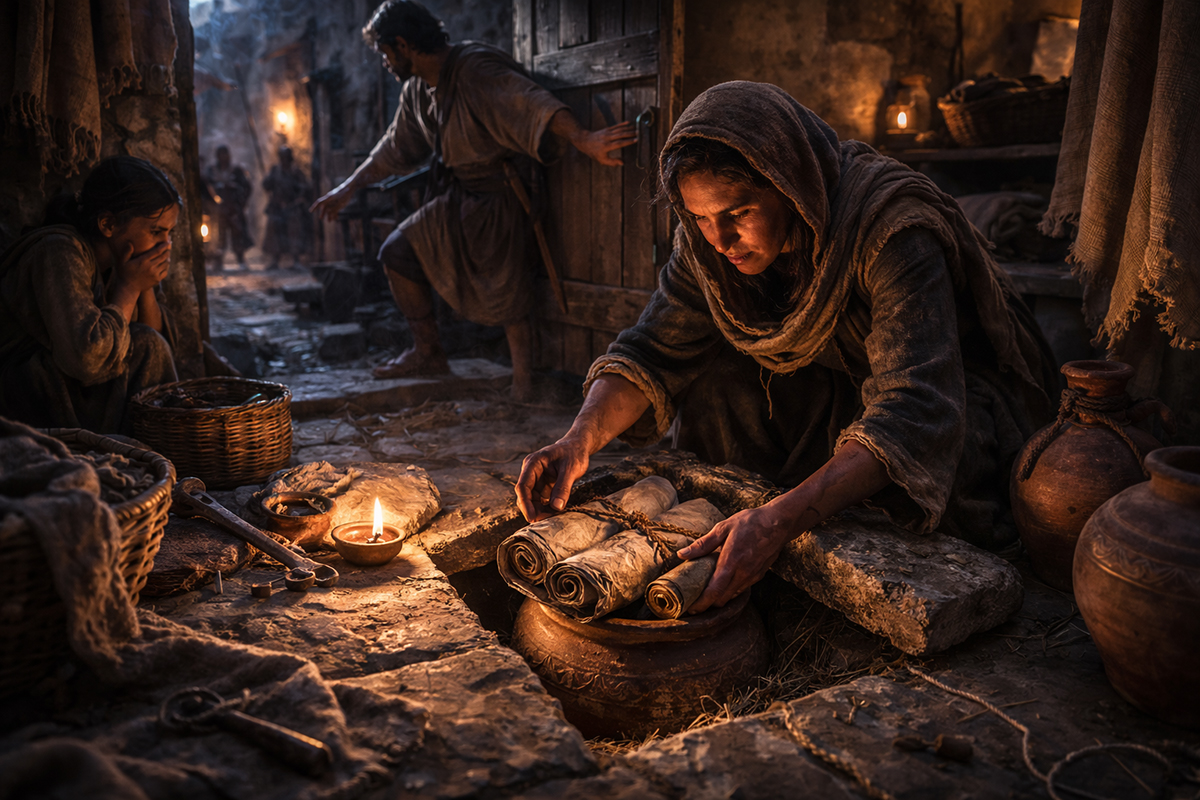
After these things, silence fell like dust. Many who'd cried loudly shut their doors. Fear
makes people bold in crowds, timid alone.
The disciples scattered for a season, pressed by sorrow and danger at once. But the
teaching remained like coal covered in ash, waiting for breath.
Concerning the records Judas had written—none could say with certainty where all
were kept. In days of fear, people hide what is precious lest enemies seize and twist it.
Some scrolls were concealed. Some were carried away like common goods. Some
were broken apart so no single hand held the whole. Later generations received only
portions, and called the portions complete.
Those who loved the teacher didn't call themselves a religion. He hadn't desired a
throne or a structure of domination. They called the gatherings 'The Way'—a path of
living, not a banner for conquest.
They met in houses, in quiet rooms, hidden places. They shared bread and counsel.
They spoke of love as the highest law. No one was appointed supreme. Each in turn
would speak what had been learned. Understanding grew as fire grows when many
sticks are laid together.
They practiced stillness and prayer—not as empty ritual, but as a way of clearing the
mind so compassion becomes steady. They practiced healing, remembering the
teacher's hand, the circle he traced on the palm, the light some said they saw.
'What he did, we also may learn,' they taught one another. They didn't worship him as a
distant idol but honored him as a guide who showed what a human soul may become.
Chapter 17: The Journeys to Distant Shores
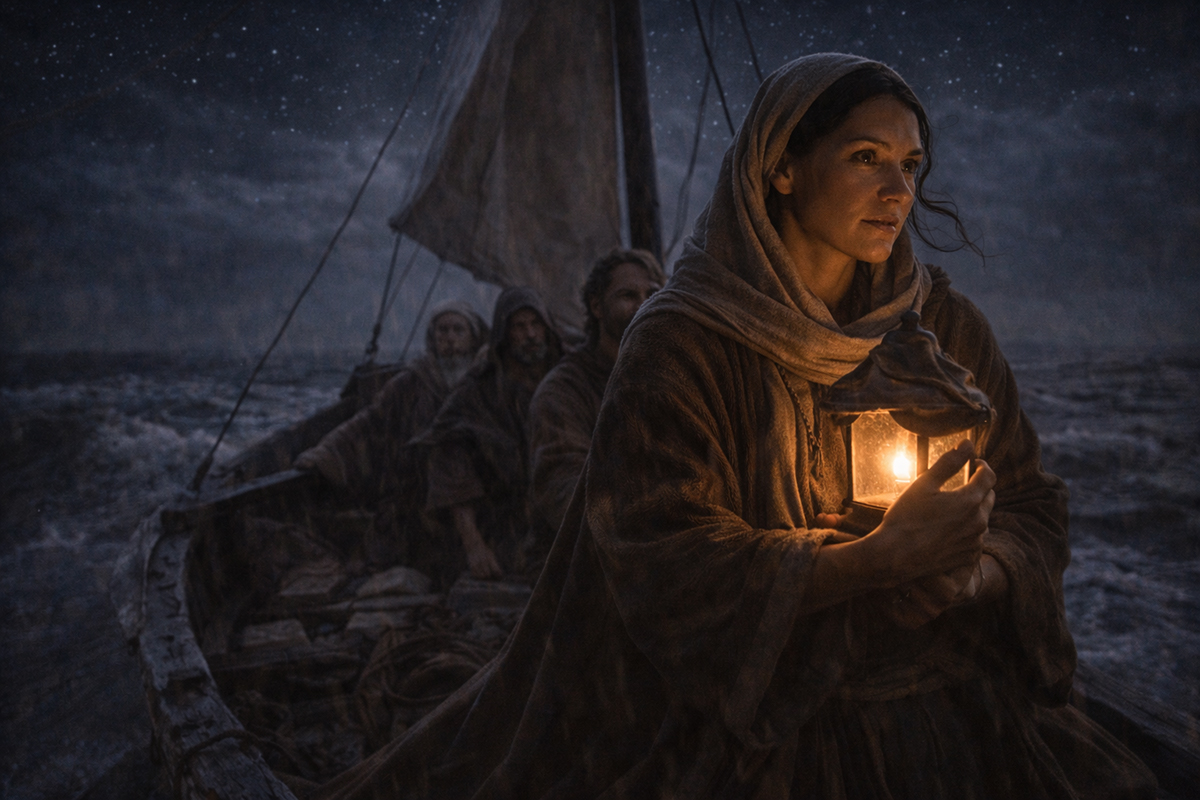
Joseph of Arimathea, the wealthy kinsman, had ships and influence. When sorrow
scattered the company, those who loved the work sought places where the teaching
might live without the city's chains.
Journeys by sea were carried out quietly, as one carries a lamp through wind.
They came to western lands—to England, where hills are green and air heavy with rain.
Near Glastonbury, where wise teachers of the groves once kept knowledge, a first
house of gathering was raised.
Not as a throne for power, nor a fortress. As a refuge for the weary and a school for the
willing.
They didn't call it a kingdom. They continued in The Way—meeting in simplicity,
speaking of love as the highest law, practicing stillness, mercy, healing of the afflicted.
Mary Magdalene was among those who labored—strong in knowledge, steady in
courage. She carried the teaching not as rumor but as living practice. She spoke with
the teacher as one who understood. When the men trembled, she didn't shrink from the
work.
Chapter 18: The Councils and the Choosing of Writings
After many years, when the first witnesses had departed and living memory grew faint,
disputes arose among leaders—not concerning love, but concerning authority.
Some desired that the gatherings remain as The Way—simple, shared, without a
throne. Others desired structure. 'If we build not a fence, the flock will scatter,' they said.
As numbers grew, the hunger for control grew also. Power always seeks to make itself
holy.
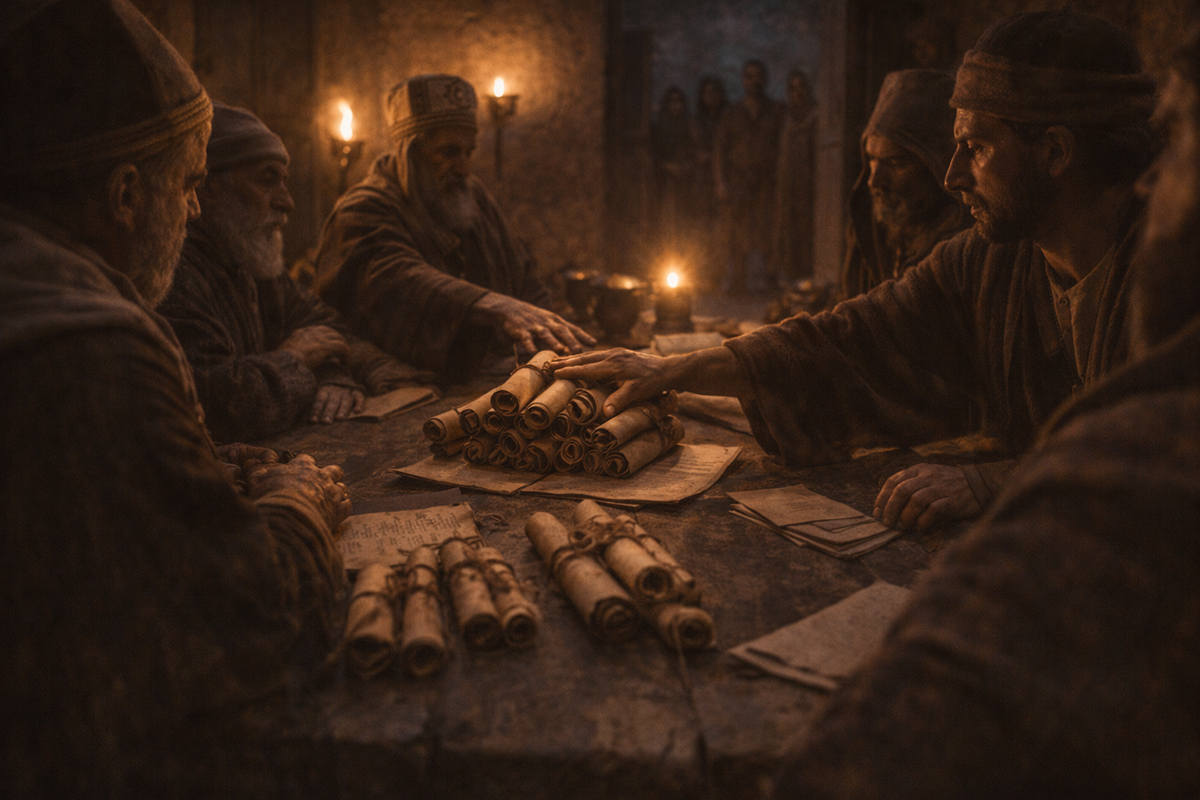
Councils were assembled. Scribes were summoned. Men searched for writings,
collected sayings, argued over meanings. They gathered not once but many times,
saying, 'This shall remain, that shall be cast out.'
At the Council of Nicaea and later gatherings, walls of words were built to guard the
faith. But walls that guard can also imprison.
Certain matters were deemed 'too difficult for the common people.' They feared
questions more than ignorance. So they removed teachings about the soul's returning,
about the law by which one reaps what one sows across more than one life.
'If people believe there is time again,' they reasoned, 'they won't fear punishment
quickly. They won't obey as easily.' Fear became a tool of rule, disguised as holiness.
Many beautiful accounts were left aside: stories of the teacher's learning, the hidden
years, the women who served and understood, healings taught as practice for all—lest
people remember that authority was meant to be shared.
'The writing is finished,' they declared, though other writings continued to be found.
They set aside what didn't fit the shape of their house.
The story that reached later generations was true in part, yet incomplete. Like a lamp
covered with cloth—still shining, but dimmed.
Those who had ears to hear kept searching. The hunger for missing words remained. It
was whispered from house to house: 'There is more than we've been told.'
Epilogue: The Witness After the Writing
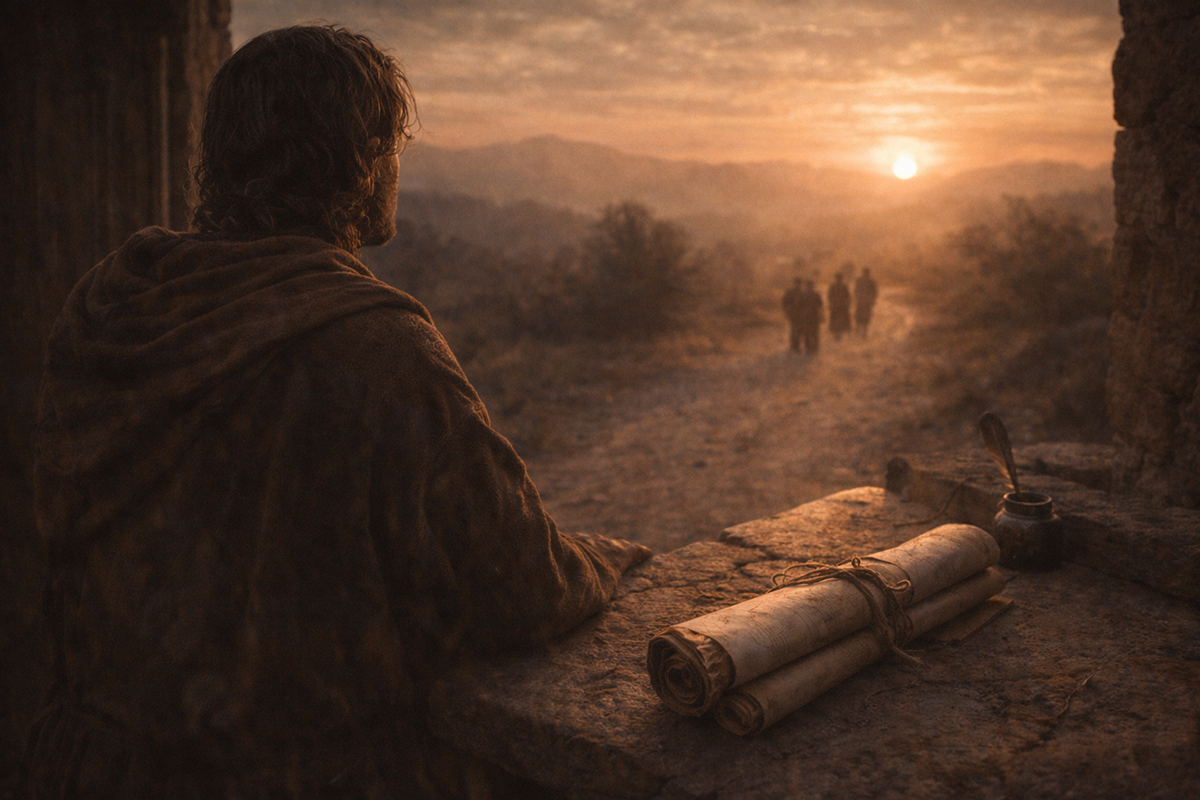
This account is offered not to attack faith, but to widen it. To show that the story we
were given, though beautiful, is not complete.
The missing years weren't missing—they were edited out. The women's voices weren't
absent—they were silenced. The teachings on reincarnation and karma weren't
heretical—they were removed because they threatened control.
What remains is an invitation to remember what was forgotten:
That Jesus was fully human and fully purposeful, shaped by training, experience, and
compassion.
That he learned from many traditions and synthesized them into one philosophy of love.
That he taught healing as a practice anyone could learn, not a miracle reserved for one.
That he honored women as equals and included them in ways the official story rarely
acknowledges.
That he built a movement called The Way—decentralized, participatory, rooted in
understanding rather than obedience.
That he chose love over fear, even when fear held all the weapons.
The message was never about building hierarchies or demanding belief. It was about
waking up the love inside the human soul.
If this account stirs something in you—if it feels like a missing piece clicking into
place—then perhaps the deep remembrance isn't finished. Perhaps it's still unfolding,
waiting for those willing to listen.
The work of love is never complete. It's handed down, generation to generation, like a
torch passed in darkness.
And the flame still burns.
Final Thoughts by Dolores Cannon
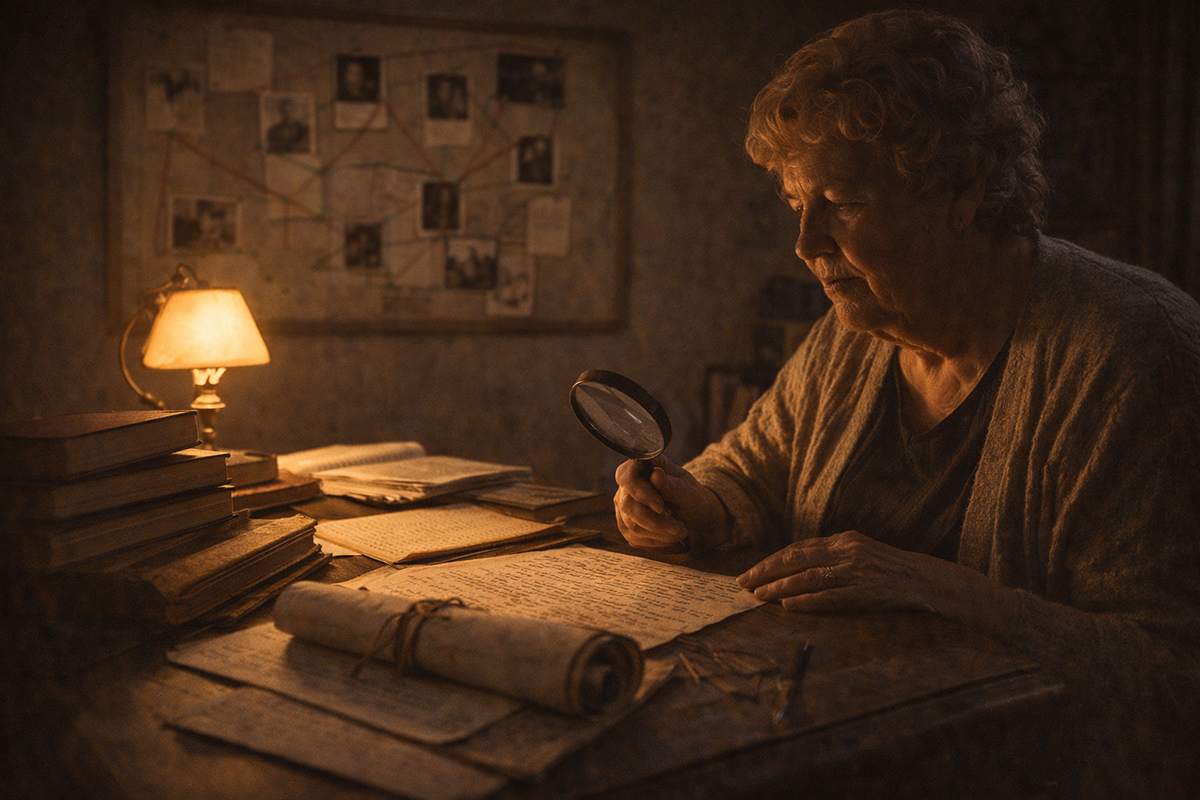
When the sessions first revealed this material, I didn't immediately believe it. I'm a
researcher. I need evidence. So I started checking—consulting scholars, reading
ancient texts, comparing testimonies.
The Dead Sea Scrolls were discovered in 1947, hidden in caves near Qumran, exactly
where the regression subjects described an Essene community. The scrolls contained
teachings the church had suppressed for centuries.
Multiple subjects, unknown to each other, described the same missing years: Jesus
learning in Egypt, traveling to England, studying with Eastern teachers. These weren't
common ideas in the 1960s when I started this work.
The subjects spoke of Mary Magdalene as a teacher and healer, not a prostitute—a
view only recently supported by discovered Gnostic gospels.
They described reincarnation as part of early Christian teaching, removed at the Second
Council of Constantinople in 553 AD—historical fact, not speculation.
I'm not asking you to believe everything here. I'm asking you to consider it. To hold it
alongside what you already know and see if it deepens your understanding.
The real Jesus—the one who walked dusty roads, who studied and questioned, who
chose compassion over safety—that Jesus is worth knowing. Not as a distant deity, but
as a human being who showed us what's possible when love becomes the foundation.
The missing years aren't missing anymore. They're here, waiting to be remembered.
—Dolores Cannon
Short Bios:
Dolores Cannon – American hypnotherapist and past-life regression researcher best known for popularizing “lost knowledge” narratives through thousands of client sessions, and for writing widely read metaphysical books on history, UFOs, and the life of Jesus.
Jesus – First-century Jewish teacher and healer whose life and teachings form the foundation of Christianity, remembered through the canonical Gospels and early Christian tradition.
Essenes – A Jewish sect/brotherhood active from roughly the 2nd century BCE to the 1st century CE, often associated in scholarship with ascetic communal life and, in some theories, with the community near Qumran connected to the Dead Sea Scrolls.
John the Baptist – Jewish preacher and ascetic figure who called for repentance and is closely linked to Jesus in the Gospel narratives.
Joseph of Arimathea – A wealthy disciple figure in the Gospel accounts who requests Jesus’s body and provides a tomb for burial, appearing across the four canonical Gospels.
Mary Magdalene – Prominent follower of Jesus in the Gospel tradition, present at the crucifixion and described as a key witness to the resurrection accounts.
Simon Peter – One of Jesus’s best-known disciples in the New Testament tradition, often portrayed as a leading voice among the early followers.
Judas Iscariot – Disciple figure in the canonical Gospel narratives known for betraying Jesus, followed by his tragic end in later tradition.
Herod the Great – Roman client king who ruled Judea around the time associated with Jesus’s birth narratives in Christian tradition.
Pontius Pilate – Roman prefect/governor of Judea in the early first century CE, depicted in the Gospels as the official who authorizes Jesus’s crucifixion.
Leave a Reply