

|
Getting your Trinity Audio player ready...
|
What if Camela Hurley 2026 predictions were challenged by Craig Hamilton-Parker and Spiritman JT—and the overlaps were the real message?
Introduction by Nick Sasaki
Camela Hurley’s 2026 predictions don’t land like a tidy list — they land like a pressure map of the collective nervous system. When I pulled her themes apart and compared them with other major psychic voices, the point wasn’t to “prove” anyone right. The point was to find the overlaps that keep repeating no matter who’s speaking: a tense leadership window in early spring, a quieter kind of conflict that targets systems instead of borders, a health year where stress and denied care collide with breakthroughs, a surge of UAP narratives that could be contact or a coordinated mirage, and an everyday scarcity test that starts in the most ordinary place — your kitchen.
So this is the frame for our five-topic ImaginaryTalks series: not fear, not fandom, not conspiracy. Discernment. Preparation without paranoia. And a refusal to let uncertainty steal our humanity. If the next three months of 2026 bring turbulence, we’re not here to worship the storm. We’re here to learn how to steer.
(Note: This is an imaginary conversation, a creative exploration of an idea, and not a real speech or event.)
TOPIC 1 — The Leader Shock: Health Scare, Backlash, and the “March Window”

The studio lights are subdued, warm—not a debate arena, more like a place you come to tell the truth carefully. A single screen behind them shows a slowly rotating calendar page: February → March → April, as if time itself is under observation.
At the table sit Camela Hurley, Craig Hamilton-Parker, Pam Gregory, Chani Nicholas, and Sonia Choquette.
Nick Sasaki looks around the circle.
“Let’s start where the overlap is strongest. Multiple voices—different methods—are circling the idea of a leader shock in 2026, and in Camela’s case there’s a March window.”
He pauses, choosing his words.
“When you look into 2026, do you see this as a literal physical health crisis… a political backlash event… or a symbolic ‘leadership wobble’ that spreads through the public like weather?”
Camela Hurley answers first, calm but firm.
“It reads like a convergence,” she says. “Not just ‘a thing happens’—but the way the collective reacts to it. The point isn’t sensationalism. The point is: a leader’s body becomes a screen the public projects onto. That creates fear, rumor, and volatility.”
Pam Gregory follows with astrological simplicity.
“When leaders wobble, systems wobble,” she says. “Because it triggers the collective nervous system. Whether it’s literal health or symbolic destabilization, the signature is the same: uncertainty becomes contagious.”
Craig Hamilton-Parker leans in, careful not to perform.
“I see it as pressure hitting a focal point,” he says. “It could manifest as health, scandal, or an emergency-style episode. But the deeper story is that a highly polarized era creates conditions where any shock becomes a catalyst.”
Chani Nicholas speaks with grounded social reality.
“Leadership shock is rarely just about the leader,” she says. “It’s about who feels endangered, who feels empowered, and what narratives get weaponized. The question I’m holding is: how quickly does fear turn into policy?”
Sonia Choquette ends the first round gently.
“I feel the lesson is discernment,” she says. “Events may happen, but the real spiritual test is: do you surrender your inner authority the moment uncertainty spikes?”
Nick nods once.
“Okay,” he says. “Now I want to move from ‘what’ to ‘how.’ Because if we keep this vague, people either panic—or dismiss it.”
He taps the calendar behind them.
“Camela’s language is very ‘timeline-specific’—a March emphasis. Other forecasters talk more generally about health crises or shake-ups. So let me ask it this way: what are the early signals that a ‘leader shock’ is approaching—without turning every headline into prophecy?”
Craig Hamilton-Parker answers first.
“Escalation shows up as clustering,” he says. “Not one alarming headline—many that rhyme. Security chatter, unusual schedule shifts, conflicting reports, heightened volatility around rallies or public appearances. It’s the pattern density that matters.”
Chani Nicholas adds a social lens.
“The signal is narrative temperature,” she says. “When people stop listening and start preparing to punish. When every story becomes a loyalty test. That’s when any incident—real or rumored—can tip into mass reaction.”
Camela Hurley returns to the body theme.
“You’ll notice it in people’s behavior,” she says. “Sleep disruption. Short tempers. Doom-scrolling. The ‘leader’ becomes a container for collective anxiety. So I watch the public’s nervous system as much as I watch the news.”
Sonia Choquette nods.
“And you’ll notice intuition gets noisy,” she says. “People mistake anxiety for guidance. That’s why spiritual hygiene matters—so you can tell the difference.”
Pam Gregory finishes the round with an earthy practicality.
“Watch your own baseline,” she says. “If your baseline becomes panic, you lose discernment. If your baseline is steadiness, you can respond wisely to real information.”
Nick lets that land.
Then he asks the question that makes the whole topic useful.
“Let’s assume 2026 does have a ‘leader shock’ moment—whether health, backlash, or destabilization. What’s the mature way to hold that possibility? Not naïve. Not paranoid. What do ordinary people do—emotionally, practically, spiritually?”
Sonia Choquette answers first.
“Refuse emotional hijacking,” she says. “Choose one or two reliable information sources. Limit exposure. Then come back to your life. The soul doesn’t thrive in constant alarm.”
Camela Hurley speaks plainly.
“Regulate first,” she says. “If you’re dysregulated, you’ll become part of the chaos machine. If you’re regulated, you can make clean decisions—about your health, your family, your finances, your community.”
Chani Nicholas sharpens it into civic wisdom.
“Build local resilience,” she says. “Mutual aid, community ties, practical preparedness that isn’t fear-based. When leadership wobbles, the antidote is people who know how to care for each other without scapegoating.”
Pam Gregory adds a longer view.
“Remember the pendulum,” she says. “Politics swings, systems convulse, but cycles pass. Don’t give temporary turbulence the power to define your entire inner life.”
Craig Hamilton-Parker closes the final round.
“And don’t let it become entertainment,” he says. “If something serious happens, it’s not a spectacle. The spiritual posture is sobriety—calm, watchful, humane.”
Nick looks around the circle.
“So the ‘common prediction’ isn’t really ‘this exact thing happens on this exact day,’” he says. “The common prediction is that 2026 tests our relationship to uncertainty, and that leaders—especially polarizing ones—become lightning rods for collective fear.”
He glances back at the calendar.
“Next, we’re going to step from leader shock into the machinery underneath it—hybrid conflict, information warfare, grid anxiety, airport disruptions—the world where war doesn’t announce itself. Because that’s where fear becomes a tool… and where discernment becomes a survival skill.”
TOPIC 2 — The Invisible War: Cyber, Grids, Airports, and “Strategic Ambiguity”

The studio feels like a quiet command center, but without the drama. On the wall behind them: a map of glowing nodes—power grids, airports, ports, undersea cables, server hubs—all connected by faint lines that pulse like a nervous system.
At the roundtable sit Camela Hurley, Spiritman JT (Joseph Tittel), Craig Hamilton-Parker, Michele Knight, and Richard Tarnas.
Nick looks at them.
“Camela uses a phrase I can’t shake: a silent war—strategic ambiguity, proxy conflict, grid and airport disruptions, economic pressure, info war.”
He pauses.
“In 2026, what does the ‘invisible war’ actually look like? Is it cyber? Is it propaganda? Is it disruptions staged to look random? Or is it simply the pressure of a world outgrowing its systems?”
Camela Hurley begins, direct.
“It looks like friction everywhere,” she says. “Not one big explosion. A pattern: systems glitching, stories conflicting, people arguing while their nervous systems overload. You don’t need tanks if the population is exhausted and divided.”
Spiritman JT nods sharply.
“That’s the vibe,” he says. “People think war means soldiers. But I keep seeing attacks on function: communications, power, travel—things that make society feel stable.”
Craig Hamilton-Parker adds his own texture.
“I see it as orchestrated uncertainty,” he says. “Not always ‘one enemy.’ Sometimes it’s opportunists, sometimes state-level games, sometimes a cascade from one failure into another. But the result is the same—people don’t know what to trust.”
Michele Knight softens the room but doesn’t weaken it.
“The battlefield is perception,” she says. “If you can steer attention, you can steer behavior. When people are afraid, they’ll accept almost anything that promises safety.”
Richard Tarnas anchors it historically.
“Empires shift through these phases,” he says. “Conflict migrates into systems, symbolism, and mass psychology. Physical war doesn’t vanish—but it becomes only one layer in a broader contest over reality.”
Nick nods. He doesn’t look impressed—he looks sobered.
He turns the question without labeling it.
“Camela also described how it feels—strategic ambiguity, incidents that appear radicalized, airport disruptions, cyber ops, even grid shutdowns.”
He leans forward.
“How do ordinary people recognize escalation early—without becoming paranoid or living on adrenaline?”
Spiritman JT answers first.
“You watch for clustering,” he says. “One disruption is life. Multiple disruptions across sectors—especially travel, communications, payment systems—within a tight window, that’s different.”
Camela Hurley follows, bringing it back to the body again.
“You’ll feel it socially,” she says. “People become quicker to snap. Sleep gets worse. Rumors multiply. The signal isn’t just the news—it’s the emotional contagion.”
Michele Knight nods.
“And paranoia is part of the trap,” she says. “If you can be pushed into constant fear, you can be steered. Discernment means limiting inputs and watching what actually repeats.”
Craig Hamilton-Parker adds a practical note.
“When officials contradict each other repeatedly, and explanations change fast, it’s either confusion or something being managed,” he says. “Either way, the wise response is the same: prepare calmly, don’t spiral.”
Richard Tarnas closes the round.
“Escalation often arrives as moralization,” he says. “Everything becomes existential, every disagreement becomes ‘good versus evil.’ That’s a pre-war psychological environment, even if no formal war is declared.”
Nick lets the map pulse behind them—airports glowing a little brighter, like a warning.
He asks the third question—quietly, like a test of character.
“If 2026 is this kind of war—hybrid, psychological, infrastructural—what is practical readiness that doesn’t destroy joy?”
Camela Hurley speaks first, almost like a prescription.
“Regulate first,” she says. “If your nervous system is hijacked, you cannot make good choices. Then: simplicity. Reduce dependence where you can. Have backups. But do it without fear.”
Spiritman JT goes practical.
“Water, basic supplies, a power backup plan if possible, some cash, copies of documents,” he says. “And a way to communicate if networks go down. Quiet readiness—not panic shopping.”
Craig Hamilton-Parker adds a mindset layer.
“Hold possibilities lightly,” he says. “Prepare for inconvenience and disruption, not apocalypse. When you expect turbulence, you don’t crumble when it happens.”
Michele Knight turns it human.
“Don’t let the invisible war make you betray your heart,” she says. “The purpose of psychological conflict is to make you hate your neighbor. Choose community and kindness as a form of resistance.”
Richard Tarnas ends with a long view.
“Preserve moral imagination,” he says. “The greatest victory of any coercive system is making you mirror it—becoming cold, absolutist, and numb. Readiness includes staying human.”
Nick looks around the table.
“So the overlap across Camela and other forecasters isn’t ‘World War III in 2026.’ It’s pressure without clarity—hybrid conflict, narrative warfare, disruptions that feel random but change behavior.”
He exhales once.
“And that leads perfectly into Topic 3—because in a world like this, the first thing that breaks isn’t politics.”
He taps his chest lightly.
“It’s the body.”
TOPIC 3 — The Body Year: Denied Care, Nervous-System Collapse, and Quantum Medicine Breakthroughs

The studio roundtable is quieter than Topic 2’s map-and-nodes energy. Behind them is a single image: a human silhouette filled with faint circuitry—half “body,” half “system.”
At the table: Camela Hurley, Spiritman JT (Joseph Tittel), Craig Hamilton-Parker, Barbara Brennan, and Anthony William (Medical Medium).
Nick begins gently.
“Camela, your text is unusually specific here: winter-to-spring illness, denied care, insurance profit pressure, stress turning into autoimmune/GI issues—and at the same time a real-world thread about UChicago pushing quantum medicine.”
He lets that sit.
“In 2026, is the health crisis mainly biological… mainly systemic… or mainly nervous-system collapse that makes everything worse?”
Barbara Brennan answers first, calm and exact.
“It’s nervous-system collapse acting through systems,” she says. “When people lose regulation, their immune response changes, their field becomes porous, and their choices narrow. Then the system meets them at their weakest point.”
Camela Hurley nods.
“Exactly,” she says. “People think health is an individual issue. But 2026 is a collective stress imprint—fear, instability, the aftermath of 2025… it shows up in the body. Winter to spring is where I see it spike.”
Anthony William leans forward, energized.
“I see people dealing with chronic symptoms they can’t get answers for,” he says. “And stress doesn’t help, but it’s not ‘just stress.’ People need practical support—food, nervous system support, and clarity on what’s driving symptoms.”
Craig Hamilton-Parker adds a broader arc.
“I see it as a pressure year,” he says. “When society gets stressed, the body becomes the messenger. Some of what emerges will be illness, some mental strain, some panic. The pattern is ‘fragility exposed.’”
Spiritman JT speaks plainly.
“I keep seeing health becoming political and personal at the same time,” he says. “People fighting for care, people overwhelmed, and people waking up to how much their body has been carrying.”
Nick doesn’t rush to the next point. He goes straight into what made Camela’s section feel sharp.
“You also said something that hits a nerve: many people will be denied care—not because they don’t need it, but because profit and policy decide who qualifies.”
He watches the panel.
“So tell me: in a year like 2026, what’s the spiritual and ethical line between ‘personal responsibility’ and ‘systemic cruelty’?”
Camela Hurley answers first, steady.
“The line is compassion,” she says. “We can teach prevention without blaming the sick. But the system—insurance-driven, profit-centered—creates people dangling by a thread. That’s why I keep telling people: improve your health before you’re negotiating with a system that doesn’t love you.”
Spiritman JT nods.
“I’ve said it in different words,” he says, “but yes: people assume the system will catch them. And then it doesn’t. That shock is spiritual—it breaks trust.”
Barbara Brennan tightens it into ethics.
“Blame is the tool of coercion,” she says. “If a system denies care and then tells the individual it’s their fault, it compounds trauma. The spiritual task is boundaries and advocacy—without shame.”
Craig Hamilton-Parker adds the civic dimension.
“When pressure rises, bureaucracies harden,” he says. “And people interpret that as ‘reality.’ It’s not reality—it’s policy and incentive. Spiritually, the test is whether we stay human and organized, or retreat into cynicism.”
Anthony William brings it back to the body.
“People need more support than they’re getting,” he says. “And when they’re dismissed, they feel crazy. The ethical line is: don’t turn suffering into a character flaw.”
Nick glances at the backdrop—body and circuitry.
“Now let’s talk about the paradox in your text, Camela: while care gets harder for many, you pointed to breakthroughs—specifically the University of Chicago and quantum medicine.”
He gestures to the screen behind them as if it’s suddenly a lab window.
“How do we hold both: system strain and genuine innovation—without turning hope into hype?”
Craig Hamilton-Parker goes first.
“Innovation arrives in cycles,” he says. “Often alongside crisis. A strained era forces new tools. But it won’t reach everyone at once.”
Camela Hurley adds specifics.
“What grabbed my attention is that this isn’t vague,” she says. “It’s a real push to merge quantum approaches with medicine—new diagnostics, new sensing, new ways to observe biology.” She pauses. “But the question is access. Breakthrough doesn’t automatically become care.”
Nick nods—because this part is grounded in the real-world announcement: the Berggren Center for Quantum Biology and Medicine launched via a $21 million gift to UChicago, explicitly framed as integrating quantum technology with biology to transform medicine.
Barbara Brennan reframes it spiritually.
“Even the best technology won’t heal a dysregulated culture,” she says. “If the collective nervous system is collapsing, we’ll use miracles like weapons or status markers. Consciousness must evolve with capability.”
Anthony William keeps it practical.
“New tools are great,” he says. “But the basics still matter: reducing inflammatory load, supporting the gut, cleaning up what we consume. Tech won’t replace daily choices.”
Spiritman JT brings it home.
“And 2026 will push people back to basics,” he says. “Not because they want to be ‘preppers,’ but because they’ll realize stability is something you build.”
Nick smiles slightly, because Camela’s original text had a strangely memorable “basic” theme: become friends with your freezer, read ingredients, prioritize unprocessed foods, reduce spoilage, build self-sufficiency—almost like spiritual preparedness disguised as grocery advice.
He leans in for the final turn—what makes this topic useful.
“Give me one concrete practice for 2026 health that is both spiritual and practical—something people can do even if they don’t trust institutions.”
Camela Hurley answers first.
“Regulate first,” she says. “Parasympathetic living. Movement daily. Simple food. Use your freezer. Cook at home. Reduce ultra-processed ingredients. Your body needs stability.”
Barbara Brennan follows.
“Energetic boundaries,” she says. “Ask daily: ‘What am I carrying that isn’t mine?’ Then breathe it out. That question alone reduces illness-by-absorption.”
Anthony William adds.
“Stop normalizing symptoms,” he says. “Support the nervous system, support digestion, reduce what burdens you. Healing is real—but it needs consistency.”
Spiritman JT says.
“Prepare quietly,” he says. “If care gets delayed, you want basics on hand. Not panic—just calm readiness.”
Craig Hamilton-Parker ends.
“Choose steadiness,” he says. “The healthiest people in turbulent cycles are rarely the most informed—they’re the most regulated.”
Nick closes his notebook.
“So Topic 3 isn’t ‘fear of illness.’ It’s a call to sovereignty without paranoia—health as nervous system, food as strategy, and innovation as hope that must be matched with ethics.”
He looks up.
“And now we’re ready for Topic 4—because once the body is stressed and systems are shaky, the next battlefield is belief itself.”
TOPIC 4 — UAP “Disclosure”: Contact, Psyops, or a Mirror for Consciousness?
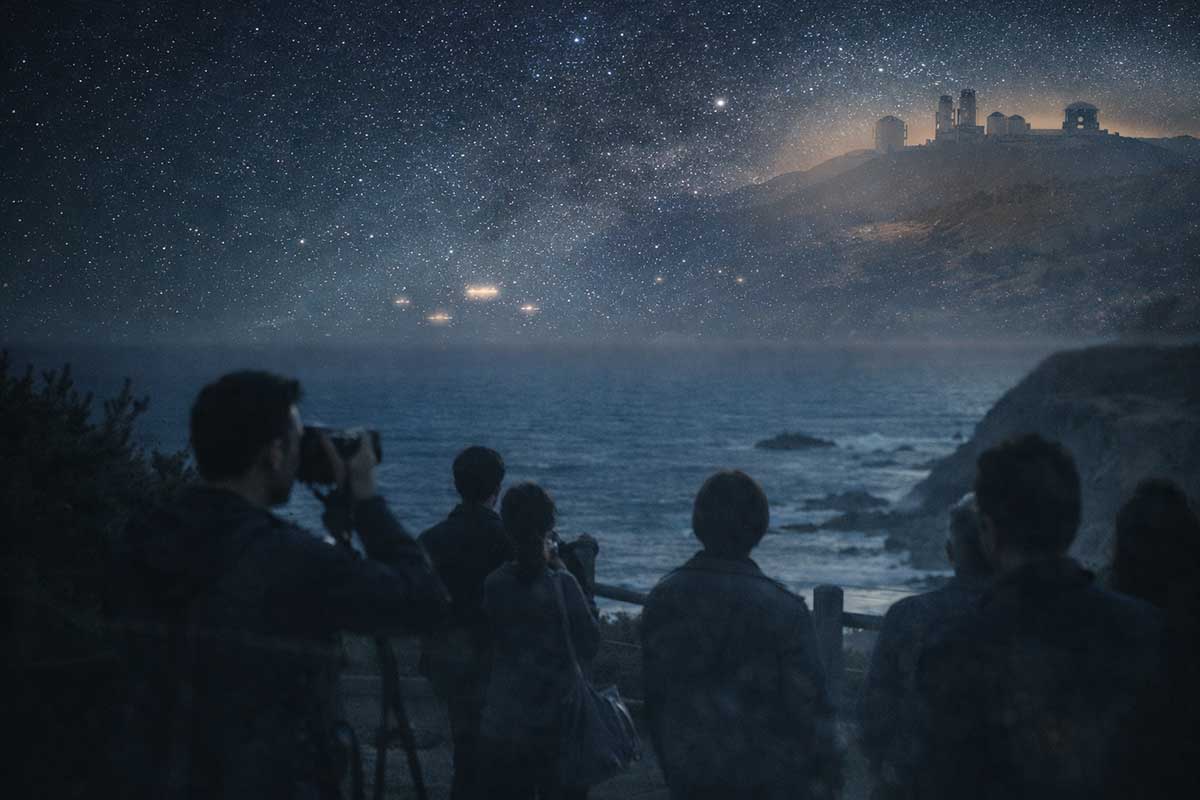
The studio is dim, like a planetarium after hours. Above the panel, a slow projection of stars drifts across the ceiling. On the table: a blank notebook, a small telescope lens, and a single old photograph—intentionally out of focus—so nobody can argue about what it “is.”
At the roundtable sit Camela Hurley, Baba Vanga, Bashar, Whitley Strieber, and Paola Harris.
Nick Sasaki begins softly.
“Camela, your text says Feb–March is a window for increased UAP reports, with hotspots—UK, Chile/Argentina, and the San Francisco coast. You also warn: even if some contact is real, manipulation is also possible.”
He lets that settle, then asks the first question without fanfare:
“When you look at 2026, is ‘UAP contact’ more likely to be genuine interaction… a psychological operation… or something that reveals the state of human consciousness regardless of what’s in the sky?”
Camela Hurley goes first, measured.
“It’s all three layers,” she says. “There can be genuine phenomena—and also human exploitation of phenomena. But the biggest layer is consciousness: how easily people can be pushed into fear and obedience.”
She glances upward at the drifting stars. “That’s why I’m cautious about how we talk about it.”
Whitley Strieber speaks next, voice intimate, personal.
“My life taught me that the phenomenon doesn’t behave like a normal ‘object,’” he says. “It behaves like an encounter with intelligence—sometimes physical, sometimes psychological, sometimes spiritual. Which means people will try to weaponize it, because ambiguity is power.”
Paola Harris answers like a researcher.
“I’m always careful,” she says. “I’ve worked around witnesses, cases, military narratives, and cultural myths. Some stories are misunderstandings, some are distortions, some are experiences people can’t easily categorize. But what matters is evidence and integrity—otherwise we become a playground for disinformation.”
Bashar responds with calm certainty.
“Your society is approaching a threshold,” Bashar says. “The idea is not to convince you with a spectacle. The idea is to bring you to a point where you must choose: fear-based interpretation or curiosity-based interpretation.”
Baba Vanga speaks last, short and eerie.
“People will see signs and call them salvation,” she says. “Others will see the same signs and call them terror. The sky will not decide. People will.”
Nick nods, as if that’s the real thesis: the sky may be the stage, but the audience writes the meaning.
He shifts to the second question.
“Camela also tied Chile to observation and a ‘signal’ storyline, and she suggested suppression could follow. Separately, science had the BLC1 Proxima Centauri signal episode that later looked less like ET and more like interference or unresolved anomaly.”
Nick pauses carefully.
“So if the next wave of UAP reporting comes—how do we keep discernment? What would count as a ‘real’ signal, and what would count as engineered narrative?”
Paola Harris answers first.
“Patterns and provenance,” she says. “Who reports it? How is the data collected? Is there independent corroboration? A credible chain matters more than a viral clip. And if government or media suddenly becomes too eager to tell you what to think, you should ask why.”
Camela Hurley follows, returning to her warning.
“Discernment requires nervous-system regulation,” she says. “When people are dysregulated, they’ll accept the story that matches their fear. That’s why a staged event—if it happened—would be so effective. Fear makes people sign away their agency.”
Whitley Strieber adds a hard-earned nuance.
“The phenomenon itself can produce altered states,” he says. “That makes it even easier for others to claim authority over it. The trick is not to hand your sovereignty to any interpreter—skeptic or believer.”
Bashar answers with a different kind of test.
“Ask: does the interpretation expand your capacity, or contract it?” Bashar says. “If a story makes you hate, panic, or surrender, it is not serving your evolution—even if it contains fragments of truth.”
Baba Vanga speaks simply.
“Many will be tricked by pictures,” she says. “Few will be guided by character.”
Nick lets the room breathe. The ceiling stars keep drifting, indifferent.
Then he asks the third question—the one that makes this useful, not just fascinating.
“Assume 2026 brings more UAP stories—some real, some false, some impossible to classify. What should ordinary people do that keeps them grounded and safe, without mocking the mystery or worshiping it?”
Camela Hurley answers first.
“Stabilize your life,” she says. “Sleep. Food. Movement. Relationships. If the world tries to pull you into panic, you answer with regulation. And if something extraordinary appears, you don’t rush to give it authority over your soul.”
Whitley Strieber goes next.
“Treat the unknown with humility,” he says. “Not terror, not fascination-addiction. Humility. Write your experiences down. Don’t let the crowd tell you what you experienced before you’ve met it honestly yourself.”
Paola Harris gives the practical version.
“Verify before you amplify,” she says. “Build media discipline. If you share every sensational clip, you’re part of the manipulation ecosystem. Curiosity is fine—irresponsible certainty is the danger.”
Bashar answers in a steady tone.
“Choose the definition that reflects your highest self,” Bashar says. “Contact—real or symbolic—should lead you toward greater compassion, clarity, and creativity. If it doesn’t, then you are not using it as it is intended.”
Baba Vanga concludes, almost like a warning carved in stone.
“The future will not punish disbelief,” she says. “It will punish fear.”
Nick closes his notebook.
“So this topic isn’t ‘prove aliens,’” he says. “It’s: what happens to humanity when the unknown enters the room—especially in a year already filled with system stress and narrative warfare.”
He looks up at the projected stars.
“And now Topic 5 is inevitable—because when people are stressed, and stories are unstable, scarcity becomes the loudest religion.”
TOPIC 5 — Scarcity vs. Sovereignty: Inflation, Food Stress, and the Spiritual Test of Resources
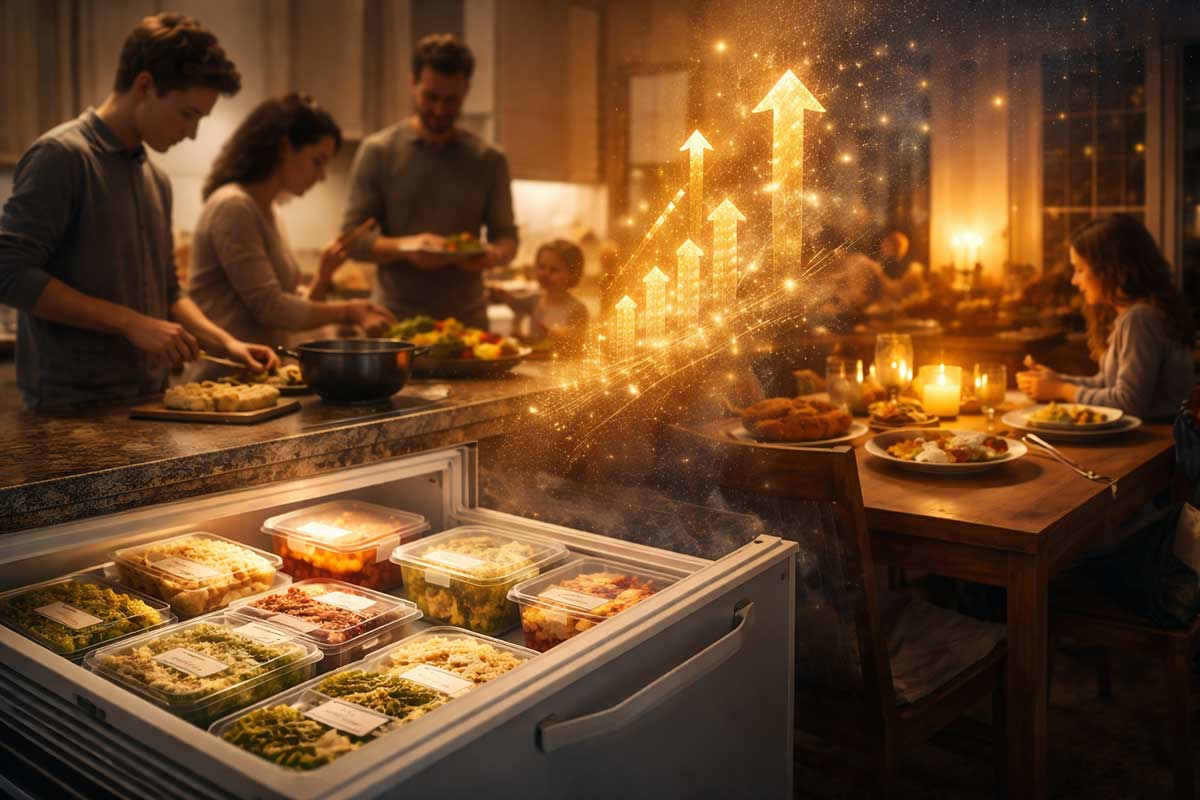
The studio feels like a kitchen more than a newsroom now. Warm light. A wooden table. A bowl of fruit (real fruit, not decorative). Behind them, a softly projected image: a grocery aisle that fades into a family dinner table—like a reminder that economics always ends up in someone’s body and someone’s relationships.
At the table: Camela Hurley, Nostradamus, Jeane Dixon, Sylvia Browne, and Susan Miller.
Nick begins with the simplest possible question, because this topic can go off the rails fast.
“Camela, your message wasn’t just ‘inflation.’ It was a whole way of living: freezer, home-cooked meals, reduced waste, upcycling, self-sufficiency, and a refusal to let scarcity turn into fear.”
He looks at the others.
“In 2026, is the real crisis actually money… or is it the psychological and spiritual distortion that scarcity creates?”
Camela Hurley answers first, steady.
“It’s distortion,” she says. “Because scarcity energy makes people reactive. It makes them hoard. It makes them blame. And then they become easy to control.”
She gestures toward the projected dinner table. “Sovereignty starts in the home. Not because you’re ‘poor’—because you’re choosing stability.”
Susan Miller speaks next, measured, pragmatic.
“When the collective feels squeezed, everyone wants a single villain,” she says. “But the experience is often structural—costs rising, wages lagging, uncertainty. What matters is how people plan, adapt, and avoid panic.”
Sylvia Browne leans in with her familiar certainty.
“People will feel like the world is taking away their comfort,” she says. “And the test is whether they become harsh. Scarcity reveals character.”
Jeane Dixon answers with a more civic tone.
“When resources tighten, society becomes vulnerable to emotional manipulation,” she says. “Fear pushes people to extremes. The spiritual question becomes: do we protect the vulnerable—or punish them?”
Nostradamus speaks in images, as if translating fog into language.
“When the pantry becomes a battlefield, the soul is tempted,” he says. “Not by hunger alone—by resentment. Beware the hunger that is not in the belly but in the heart.”
Nick lets that sit, then pivots to Camela’s very specific “practical mysticism.”
“Camela, you repeatedly emphasized food strategy—frozen foods, reducing spoilage, reading ingredients, unprocessed meals—almost like the freezer is a spiritual tool.”
He smiles slightly.
“What’s the deeper meaning of that? And for the rest of you—what does ‘spiritual preparedness’ look like without sliding into fear or doomsday identity?”
Camela Hurley answers immediately.
“The freezer is about agency,” she says. “If you can feed yourself well, you think better. If you think better, you make better choices. If you make better choices, you don’t get herded by fear.”
She pauses. “It’s not about being a prepper. It’s about being stable.”
Susan Miller adds a practical layer.
“It’s also about budgeting reality,” she says. “People underestimate how quickly small changes—waste reduction, meal planning—create relief. Relief becomes emotional stability.”
Sylvia Browne nods, then turns it psychological.
“Preparedness is peace,” she says. “Panic is addiction. If you’re constantly checking prices and doom-scrolling, you create your own torment. But if you quietly prepare, you stop being hypnotized.”
Jeane Dixon frames it socially.
“Spiritual preparedness includes community,” she says. “Scarcity isolates. Wisdom connects. Share resources, share knowledge, protect dignity.”
Nostradamus adds a warning.
“Those who profit from fear will sell you fear,” he says. “The wise will buy bread, not panic.”
Nick looks at the projected grocery aisle again. It fades into the dinner table—family, community, warmth.
Then he asks the third question, the one that turns this topic into a practice rather than a prediction.
“If 2026 squeezes people—higher costs, tighter choices, shortages in certain items—what are three actions that build sovereignty without making life joyless?”
Camela Hurley goes first, giving it like a checklist.
“First: simplify what you consume—ingredients, media, stress. Second: become friends with your freezer—reduce waste, cook at home, keep nutrition stable. Third: regulate your nervous system—scarcity hijacks the mind through the body.”
Susan Miller adds three grounded steps.
“Track spending honestly, cut waste before you cut joy, and build a small buffer—time buffer, money buffer, food buffer. Small buffers prevent spirals.”
Jeane Dixon speaks for the vulnerable.
“Practice generosity strategically,” she says. “Not self-sacrifice that breaks you—generosity that strengthens community. In scarcity cycles, community is wealth.”
Sylvia Browne goes psychological again.
“Stop measuring your worth by what you can buy,” she says. “That’s where scarcity becomes spiritual poison. 2026 will pressure identity. Don’t let it.”
Nostradamus ends with a simple image.
“Light a candle at the table,” he says. “Eat with gratitude. The empire of fear cannot rule a home that remembers its blessings.”
Nick closes his notebook.
“So the final topic isn’t ‘doom economics.’ It’s the spiritual test of resources: whether scarcity makes us cruel or makes us wise.”
He looks around the table.
“And across all five topics, the thread from Camela’s original text holds: when the world intensifies—politics, conflict, health, belief, money—the real question is whether we can stay regulated, sovereign, and human.”
The projected dinner table stays on the wall as the lights soften—ending not with prophecy, but with something more useful: a way to live.
Final Thoughts by Nick Sasaki
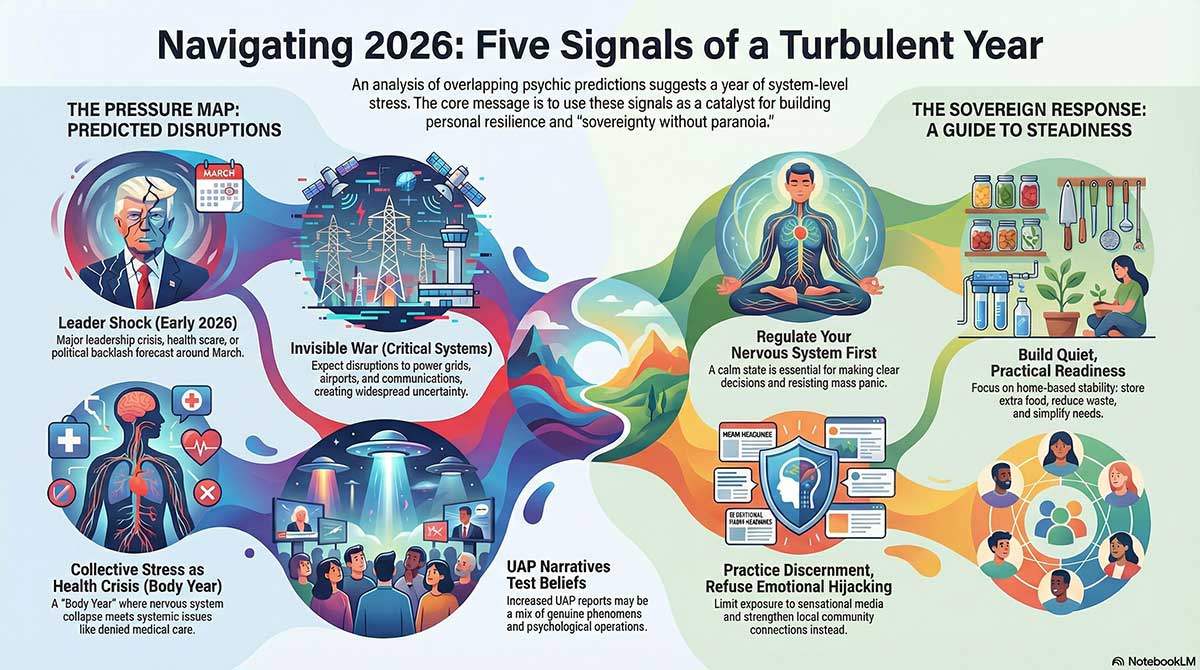
After five topics, one thing feels unmistakable: the future isn’t “coming” — it’s being negotiated, moment by moment, inside the choices we make when pressure rises. If 2026 becomes a year of system strain, health stress, weird skies, and tightening resources, the real question isn’t whether a psychic nailed a date. The real question is whether we stay regulated when the world tries to dysregulate us.
Because the invisible war is not just cyber or propaganda — it’s what fear does to the mind. The body year isn’t only about symptoms — it’s about whether we listen early, before we collapse. UAP narratives aren’t only about what’s out there — they’re about what we do with the unknown. And scarcity isn’t just economics — it’s the spiritual test of whether we become cruel, numb, and hoarding… or grounded, creative, and generous.
So my takeaway is simple: build quiet readiness, protect your nervous system, keep your relationships clean, and make your home a place the empire of fear can’t easily enter. The future may not be fixed. But your steadiness can be.
Short Bios:
Nick Sasaki — Founder of ImaginaryTalks and longtime marketer who builds big, story-driven roundtables that mix culture, spirituality, and strategy into practical insight.
Camela Hurley — Evidential medium and intuitive forecaster who frames 2026 as a nervous-system year: leadership shock, system strain, health pressure, UAP narratives, and scarcity-as-a-spiritual-test.
Craig Hamilton-Parker — British psychic medium and author known for world-event forecasting and “big pattern” readings that emphasize cycles, pressure points, and how public fear spreads.
Spiritman JT (Joseph Tittel) — Psychic and intuitive commentator known for direct, headline-style predictions focused on infrastructure, major events, and practical preparedness.
Baba Vanga — Bulgarian mystic figure whose attributed forecasts became cultural folklore, often used as a symbolic “oracle voice” in modern prediction discussions.
Pam Gregory — Astrologer who translates collective turbulence into timing, emotional weather, and long-cycle transformation, with an emphasis on grounded spiritual resilience.
Chani Nicholas — Astrologer and writer focused on the social reality of cycles—how power, identity, and community responses shape what “events” become.
Sonia Choquette — Intuitive teacher and author centered on inner authority, energetic boundaries, and spiritual discernment in chaotic information environments.
Michele Knight — Psychic and spiritual writer who frames predictions through emotional truth, pattern recognition, and compassionate, empowering guidance.
Richard Tarnas — Cultural historian and astrologer known for archetypal analysis linking planetary cycles to historical and psychological eras.
Barbara Brennan — Energy-healing educator whose work emphasizes the human energy field, emotional causality, and the ethics of compassion in healing.
Anthony William (Medical Medium) — Health author and influencer known for alternative wellness protocols and a strong focus on chronic symptoms, diet, and detox-style approaches.
Bashar — Channeled “interdimensional” teaching persona associated with themes of frequency, parallel realities, and fear-to-curiosity transformation.
Whitley Strieber — Author best known for “Communion,” exploring anomalous encounters as experiences that blur physical, psychological, and spiritual categories.
Paola Harris — UFO/UAP researcher and journalist focused on witness accounts, documentation discipline, and avoiding disinformation traps.
Nostradamus — Renaissance-era seer whose quatrains became a lasting cultural lens for prophecy, often interpreted symbolically rather than literally.
Jeane Dixon — 20th-century American astrologer and psychic figure associated with public predictions and the ethics of foreseeing collective events.
Sylvia Browne — Popular American psychic and author whose legacy is tied to broad, high-certainty forecasts and a strong “spiritual warning” tone.
Susan Miller — Astrologer known for practical, timing-based forecasts and advice that helps readers plan around cycles rather than panic about them.
Leave a Reply