

What if Toni Morrison sat with us and asked who “love” really protects? Introduction by Toni MorrisonTonight, I want to start with the title—because Love is not a comforting word in this book. It’s a word people use to cover what they cannot—or will not—name. “Love” can be a veil thrown over power. It can be the excuse a community repeats so it doesn’t have … [Read more...] about Love Toni Morrison Summary: The Women in Cosey’s Wake
Psychology
Jonathan Haidt The Righteous Mind: Why Good People Are Divided

What if Jonathan Haidt mapped why good people are divided—and gave one practical way to argue without turning each other into enemies?Introduction by Jonathan HaidtWhen I chose the title The Righteous Mind, I was not trying to accuse anyone of hypocrisy or moral arrogance. I was trying to describe a psychological reality that I myself struggled to accept: … [Read more...] about Jonathan Haidt The Righteous Mind: Why Good People Are Divided
Charlie Munger Mental Models: Poor Charlie’s Almanack

What if Charlie Munger sat you down and showed you how he avoids stupidity first?Introduction by Charlie MungerCharlie Munger mental models are my attempt to do something unfashionable: reduce the odds of being a damn fool. I’ve never believed wisdom is a mystery—most of it is a set of usable ideas, borrowed from multiple disciplines, applied with a little … [Read more...] about Charlie Munger Mental Models: Poor Charlie’s Almanack
The Tempest analysis in the Afterlife Tribunal
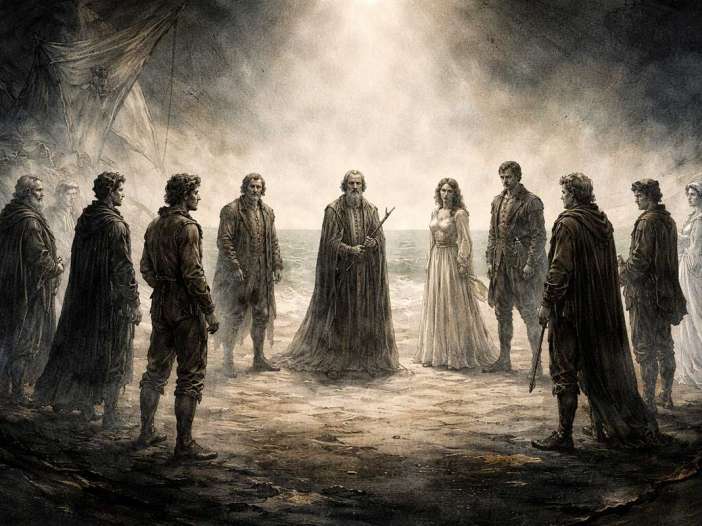
What if Prospero had to defend his mercy after death—without magic?Main Introduction by Shakespeare I wrote of storms once as a stage-trick—thunder borrowed, lightning feigned, a ship split apart in sound and terror. Yet what haunted me was never the tempest itself, but what men become when the ground is taken from beneath them. Strip away office and title, strip … [Read more...] about The Tempest analysis in the Afterlife Tribunal
Thinking Fast and Slow Summary: Daniel Kahneman System 1 & 2

What if Daniel Kahneman sat with you and pinpointed the exact moment your mind lies?Introduction by Nick SasakiThinking Fast and Slow summary: Most of us walk through life believing we’re the author of our decisions. We say “I decided,” “I knew,” “I chose,” as if a single, steady self is sitting behind our eyes, calmly steering the ship. But Daniel Kahneman’s … [Read more...] about Thinking Fast and Slow Summary: Daniel Kahneman System 1 & 2
The Psychology Behind A Midsummer Night’s Dream

What if Shakespeare wasn’t explaining love, but exposing certainty?Introduction by William ShakespeareI did not write this play to explain love.If I had wished to explain love, I would have written a sermon, or a tragedy, or a warning. Instead, I wrote a comedy—because comedy allows people to behave honestly without noticing themselves.Watch the lovers before the … [Read more...] about The Psychology Behind A Midsummer Night’s Dream
A Midsummer Night’s Dream Explained

What if Shakespeare sat quietly while scholars argued over love?Introduction by William ShakespeareI ask no patience for this gathering, only attention.I have watched my plays outlive their hour and their author. They walk now in minds I never knew, among customs I never imagined, speaking truths I did not fully understand when I first set pen to page.A Midsummer … [Read more...] about A Midsummer Night’s Dream Explained
The Lady with the Dog Explained: Love That Arrives Too Late

What if Chekhov believed real love begins only after life is already arranged?Introduction by Anton ChekhovI did not write The Lady with the Dog to defend love, nor to condemn betrayal. I wrote it because human life rarely fits the moral outlines we draw for it. People live one way, feel another, and often discover—too late—that sincerity arrives only after habit … [Read more...] about The Lady with the Dog Explained: Love That Arrives Too Late
A Hunger Artist Explained: When Devotion Loses Its Witness
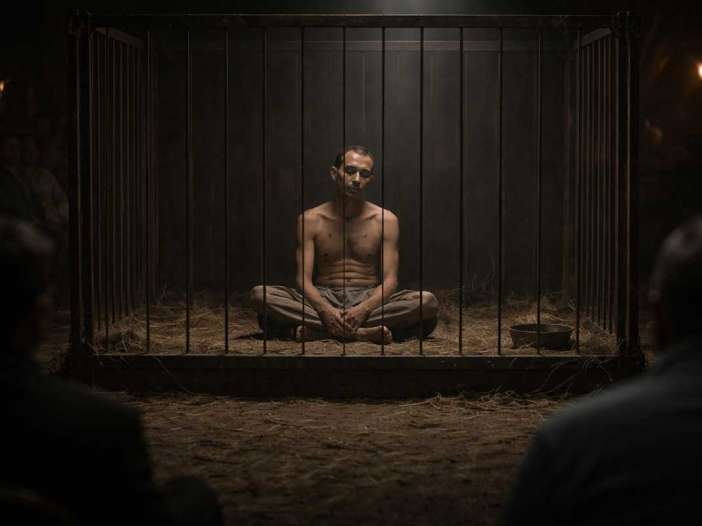
What if Kafka wrote A Hunger Artist as a prophecy of creators who would starve quietly while louder lives thrived?Introduction by Franz KafkaI did not write A Hunger Artist to praise suffering, nor to condemn the world that watches it.I wrote it because there are people who live by an inner necessity that does not translate. Their devotion is not chosen for … [Read more...] about A Hunger Artist Explained: When Devotion Loses Its Witness
Bartleby the Scrivener Explained: Why Refusal Still Haunts Us
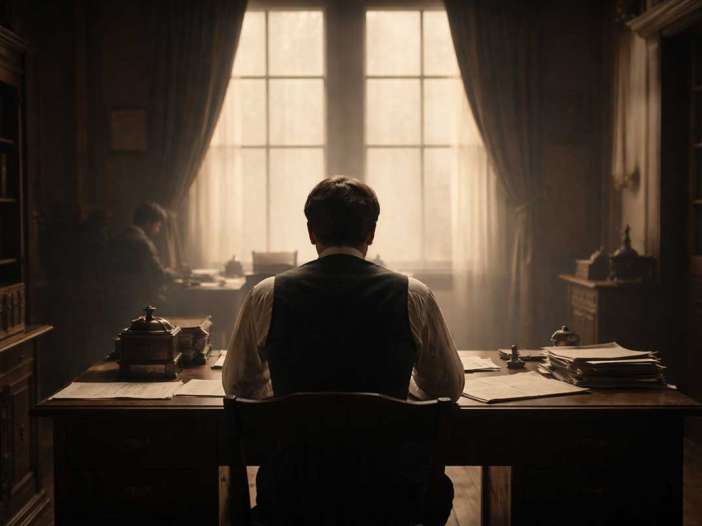
What if Herman Melville sat with us and asked why refusal terrifies modern life? Introduction by Herman MelvilleI did not write Bartleby, the Scrivener to explain a man.I wrote it to place him where explanation fails.Bartleby enters an orderly world—one governed by reason, industry, and polite authority—and does nothing violent to it. He raises no fist, pens … [Read more...] about Bartleby the Scrivener Explained: Why Refusal Still Haunts Us