
|
Getting your Trinity Audio player ready...
|
Introduction by Naomi Watanabe
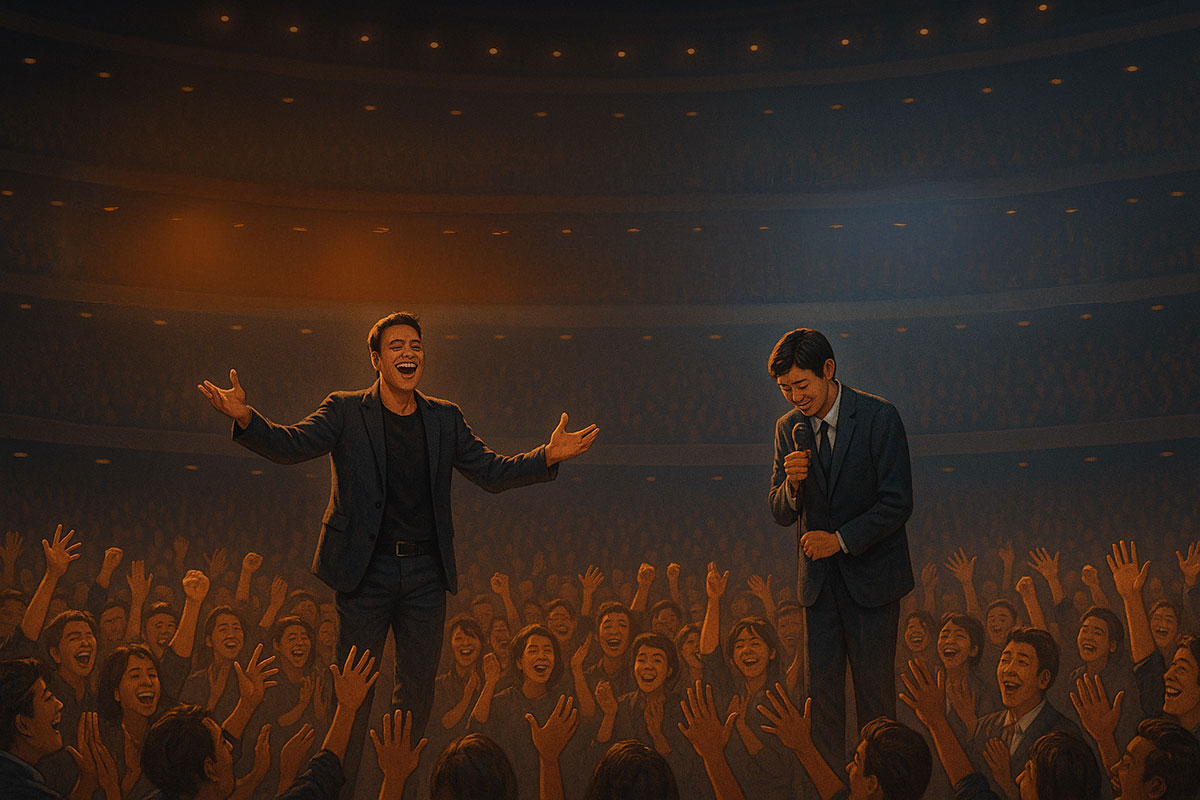
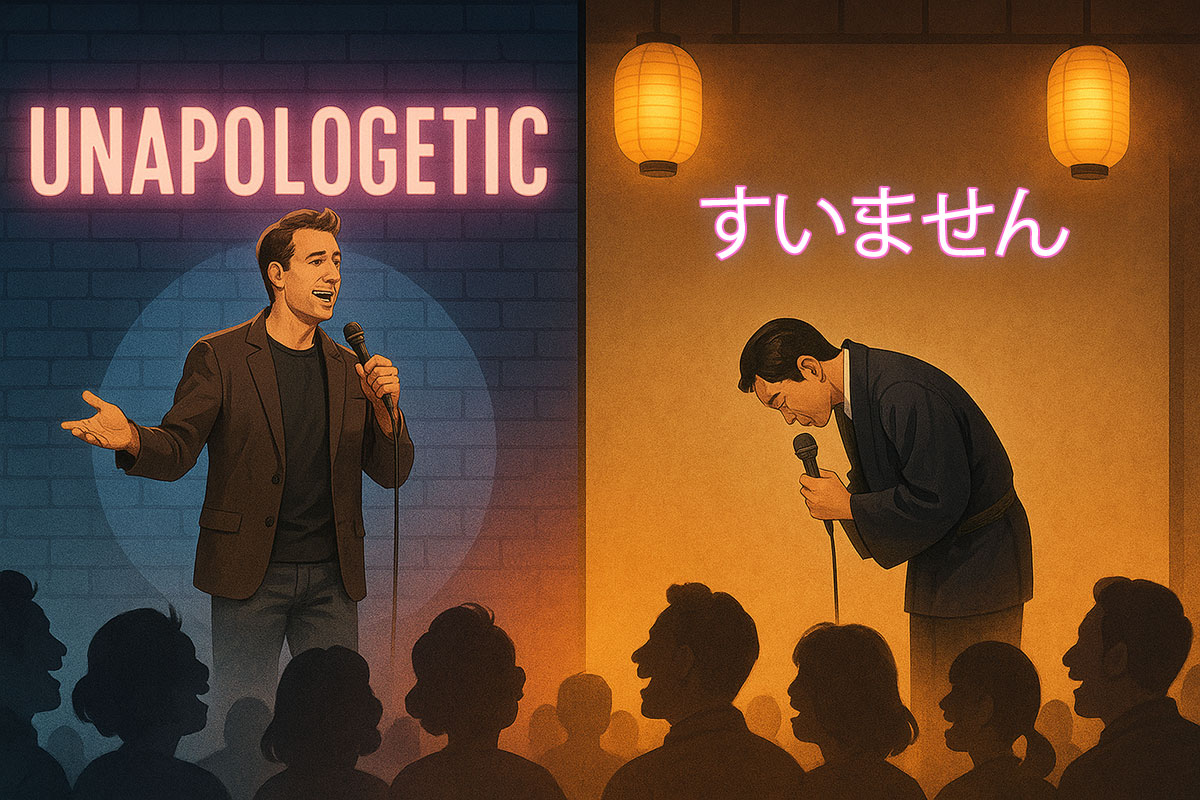
Welcome, everyone! Tonight, we’re diving into something I know very well: what’s funny in one country doesn’t always land the same in another. In the U.S., words like unapologetic or unstoppable sound powerful, even glamorous. But in Japan, if I walk into a room and say, ‘I’m unapologetic!’ people might look at me like, ‘Are you okay?’
I’ve performed comedy on both sides of the ocean. In America, people cheer when I’m loud, bold, and unfiltered. In Japan, they laugh when I bow too deeply, trip over myself, or show humility. It’s not that one way is right and the other is wrong — they’re just different languages of laughter.
So tonight, we bring together some of the sharpest, funniest voices from both cultures. Together, we’ll explore what happens when American boldness meets Japanese humility, when the unbreakable tries to bend, and when the untouchable sits down at the table with everyone else. Let’s laugh our way through the cultural clash — and maybe even find common ground in the punchline.
(Note: This is an imaginary conversation, a creative exploration of an idea, and not a real speech or event)
Topic 1 — Confidence vs. Humility (Unapologetic & Unstoppable)
Participants:
Moderator: Margaret Cho
U.S. comedians: Kevin Hart, Amy Schumer, Chris Rock
Japanese comedians: Hitoshi Matsumoto, Naomi Watanabe
Opening by Margaret Cho
“Tonight we’re looking at two words that sound super cool in America but feel kind of abrasive in Japan: unapologetic and unstoppable. Americans often love to show confidence, while Japanese culture values humility. Let’s dig into how those vibes land differently on stage, in life, and in laughter.”
Question 1 — Why do Americans love being unapologetic, while Japan opens conversations with suimasen (“sorry”)?
Kevin Hart:
“In America, unapologetic is like a superpower. You bomb a joke, you double down and make it bigger. People laugh because they respect the guts. But in Japan, I feel like if I came out yelling ‘I don’t say sorry,’ I’d be booed out of the theater before my mic even warmed up.”
Hitoshi Matsumoto:
“In Japan, ‘sorry’ is not about guilt—it’s about harmony. If Kevin says something outrageous, and I just laugh without a ‘sorry,’ the audience might think I’m ignoring them. Suimasen is like oil on the gears—it keeps things smooth.”
Amy Schumer:
“I gotta say, in the U.S., we love unapologetic women—well, at least on Instagram. In real life, men call us ‘too much.’ So maybe America pretends to like ‘unapologetic,’ but Japan at least is honest about wanting everyone to say sorry.”
Naomi Watanabe:
“In Japan, if I act unapologetic, people think it’s comedy, not attitude. That’s why I get away with it. But if I did that in my daily life, my mom would call and say, ‘Naomi, you embarrassed the family.’”
Chris Rock:
“Look, America is built on people not saying sorry. Cowboys didn’t apologize. Wall Street doesn’t apologize. And now comedians are supposed to be unapologetic truth-tellers. The problem is, sometimes people confuse honesty with just being a jerk. Japan figured out the trick—say sorry first, then roast each other.”
Question 2 — What does being unstoppable mean in comedy and culture?
Hitoshi Matsumoto:
“In Japan, unstoppable sounds dangerous. If you keep talking without pause, the audience feels trapped. Timing is about restraint—stop before it’s too much. That’s why manzai duos always have tsukkomi to cut the boke. Balance.”
Kevin Hart:
“See, that’s where we’re different. In America, being unstoppable means never shutting up. I keep rolling, stacking joke on joke until the audience begs for air. It’s like cardio—I don’t stop until the crowd sweats with me.”
Naomi Watanabe:
“Unstoppable for me means fashion and energy. I go full Beyoncé mode, no breaks. But I learned that if I do that too long, Japanese audiences get tired. In America, they scream ‘Yaaass queen!’ In Japan, they go, ‘Please calm down.’”
Amy Schumer:
“I think unstoppable is an illusion. On stage, sure, but in life? I stop for pizza, I stop for naps, I stop for reality checks. Maybe America sells unstoppable because it sounds heroic, but Japan’s honesty about limits is healthier.”
Chris Rock:
“You know who’s unstoppable in America? Cancel culture. One wrong joke, and boom—you’re stopped. So maybe we’re not so unstoppable after all. In Japan, at least, you stop yourself before the crowd stops you. That’s wisdom.”
Question 3 — Can confidence and humility coexist in comedy—or do they clash?
Naomi Watanabe:
“Yes, they can. My confidence is my costume, my humility is my heart. On stage, I’m larger than life. Backstage, I say sorry to everyone from the cameraman to the janitor. Both are real.”
Chris Rock:
“Confidence is how you deliver the punchline. Humility is how you survive when the punchline bombs. You need both, or you’re just an ego with a microphone.”
Hitoshi Matsumoto:
“In Japan, comedians live by humility. If you act superior, the audience pulls away. But if you show vulnerability, they laugh with you. Confidence without humility is noise.”
Amy Schumer:
“I don’t think humility is natural for Americans on stage. We confuse self-deprecation with humility, but that’s not the same. True humility is admitting you’re part of something bigger. I see that more in Japanese comedy.”
Kevin Hart:
“Comedy is confidence dressed in humility. You get up there like, ‘I’m the boss,’ but you’re actually saying, ‘I’m human, just like you.’ That’s the balance. That’s why it works across cultures—we’re all ridiculous.”
Closing by Margaret Cho
“What we’ve uncovered is that confidence and humility aren’t opposites—they’re dance partners. In America, we cheer the unapologetic and unstoppable, but risk tripping over our egos. In Japan, humility softens confidence, keeping comedy grounded in connection. Maybe the best laughter comes when we can stand tall and bow low at the same time.”
Topic 2: Strength vs. Flexibility (Unbreakable & Unshakeable)
Participants:
Moderator: Margaret Cho
Japanese comedians: Beat Takeshi, Sanma Akashiya, Yuriyan Retriever
U.S. comedians: Ellen DeGeneres, Jim Gaffigan
Opening by Margaret Cho
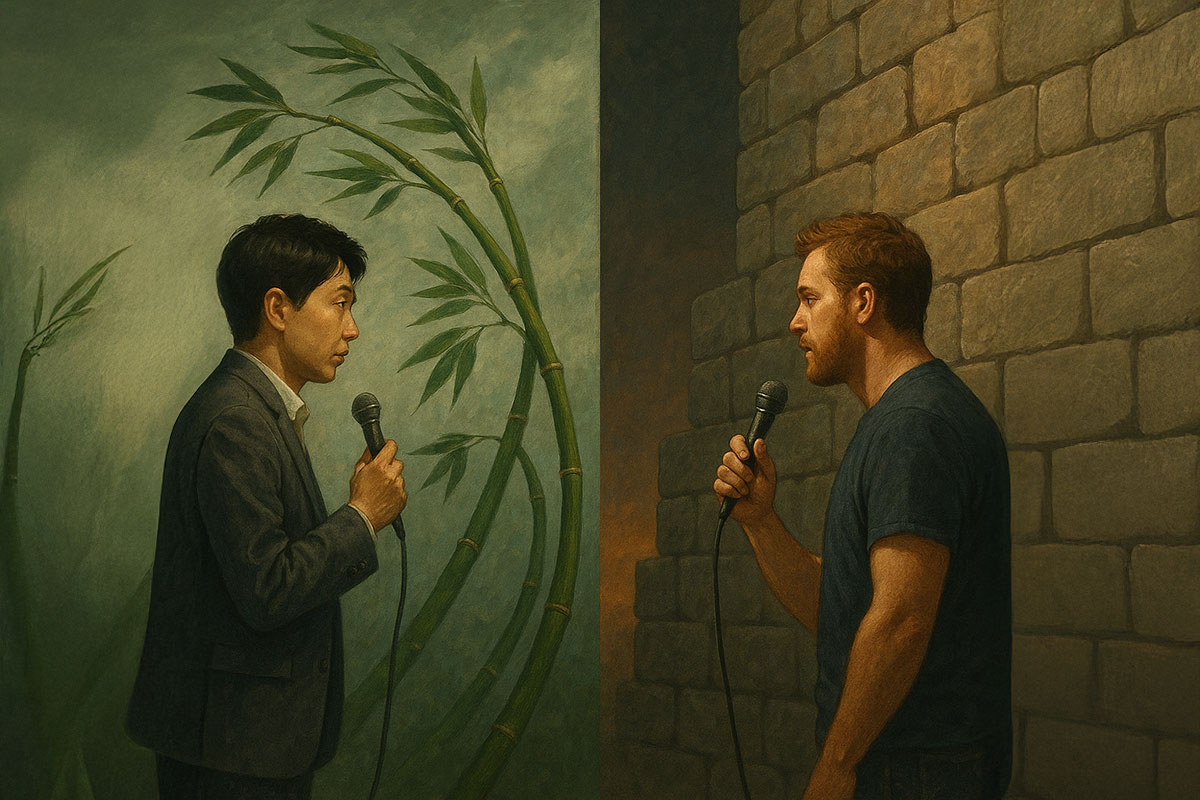
“Tonight’s theme is strength versus flexibility. Americans love words like unbreakable and unshakeable—they sound heroic, like a motivational poster. But in Japan, sometimes strength is shown not by never bending, but by bending gracefully, like bamboo in the wind. So let’s explore how those ideas play out in comedy.”
Question 1 — What does it mean to be unbreakable in comedy?
Sanma Akashiya:
“In Japan, if a comedian looks unbreakable, the audience gets nervous. They want to see cracks, mistakes, flaws. Laughter lives in imperfection. If I fall on stage, I laugh first so the audience feels safe. To be unbreakable is not funny—being breakable is.”
Ellen DeGeneres:
“In the U.S., we sell resilience as entertainment. You mess up, you keep smiling. My whole style is calm, unshaken, even when chaos is happening. But maybe that’s more illusion than truth. Honestly, I break all the time—just not on camera.”
Beat Takeshi:
“Unbreakable… hmm. In Japanese comedy, that sounds boring. I like to be broken—physically, literally, in slapstick. I’ve been hit with hammers, pies, buckets of water. Being unbreakable means you’re not human. But humans breaking? Always funny.”
Jim Gaffigan:
“For Americans, unbreakable is about stamina. I do five kids, endless food jokes, tour life, and I’m still standing. The audience admires that. But you know the truth? At night I collapse like overcooked pasta. The unbreakable image keeps the show going.”
Yuriyan Retriever:
“I tried to act unbreakable once. I stood on stage like a superhero, chest out, no smile. The audience laughed not at my strength, but at how ridiculous I looked. They don’t want unbreakable. They want awkward courage—that’s real.”
Question 2 — What does unshakeable confidence look like in different cultures?
Beat Takeshi:
“In Japan, unshakeable confidence is dangerous. If you stand too still, too sure, the audience feels distance. I prefer unstable confidence—it wobbles, it shakes, and people laugh because it feels real. Perfection is suspicious.”
Ellen DeGeneres:
“In America, unshakeable is part of our comedy DNA. You stand there, take the hit, keep the smile. The audience feels safe because you’re not rattled. But I see what Takeshi means—sometimes the cracks are more relatable than the polish.”
Sanma Akashiya:
“I’m always shaking! Talking fast, moving, laughing too loud. If I look unshakeable, people think I’m lying. Energy is shaking, that’s life. Maybe Americans think calm is strength, but we think energy is strength.”
Jim Gaffigan:
“My unshakeable confidence is pretending I don’t care when I bomb. Inside, I’m dying. Outside, I sip water and keep going. Maybe that’s the American trick—we sell calm while chaos lives inside.”
Yuriyan Retriever:
“Unshakeable confidence for me is… dancing badly but not stopping. Everyone laughs, but they also admire that I don’t run away. It’s unshakeable because I embrace being ridiculous.”
Question 3 — Which is funnier: showing strength or showing flexibility?
Sanma Akashiya:
“Flexibility is always funnier. If you’re stiff, jokes bounce off. If you bend, you turn a mistake into comedy. The audience laughs because they see you survive by adapting.”
Jim Gaffigan:
“Flexibility. If my kid interrupts my set, I roll with it. That becomes the biggest laugh. Strength is fine, but flexibility makes comedy human.”
Beat Takeshi:
“Both matter. Strength gives you presence—people listen. Flexibility makes them laugh—people relate. I’ve always believed: comedy is tragedy plus flexibility. If you can bend your pain into laughter, you’re strong.”
Ellen DeGeneres:
“I agree. Strength gives the confidence to walk out there. Flexibility is what saves you when things go wrong. I once had a bird fly across my stage in the middle of a monologue. I bent into it, made it part of the joke, and people thought it was scripted.”
Yuriyan Retriever:
“Flexibility wins. My whole career is bending into the absurd. If I tried to be strong and serious, I’d never get a laugh. Flexibility means you can be strong in a soft way. Like rubber—soft but unbreakable.”
Closing by Margaret Cho
“What we see tonight is that strength in America often means holding steady, while in Japan it means knowing how to bend without breaking. Comedy lives in that bend. The unbreakable might inspire us, but the flexible makes us laugh. Maybe the real art is being strong enough to stay soft.”
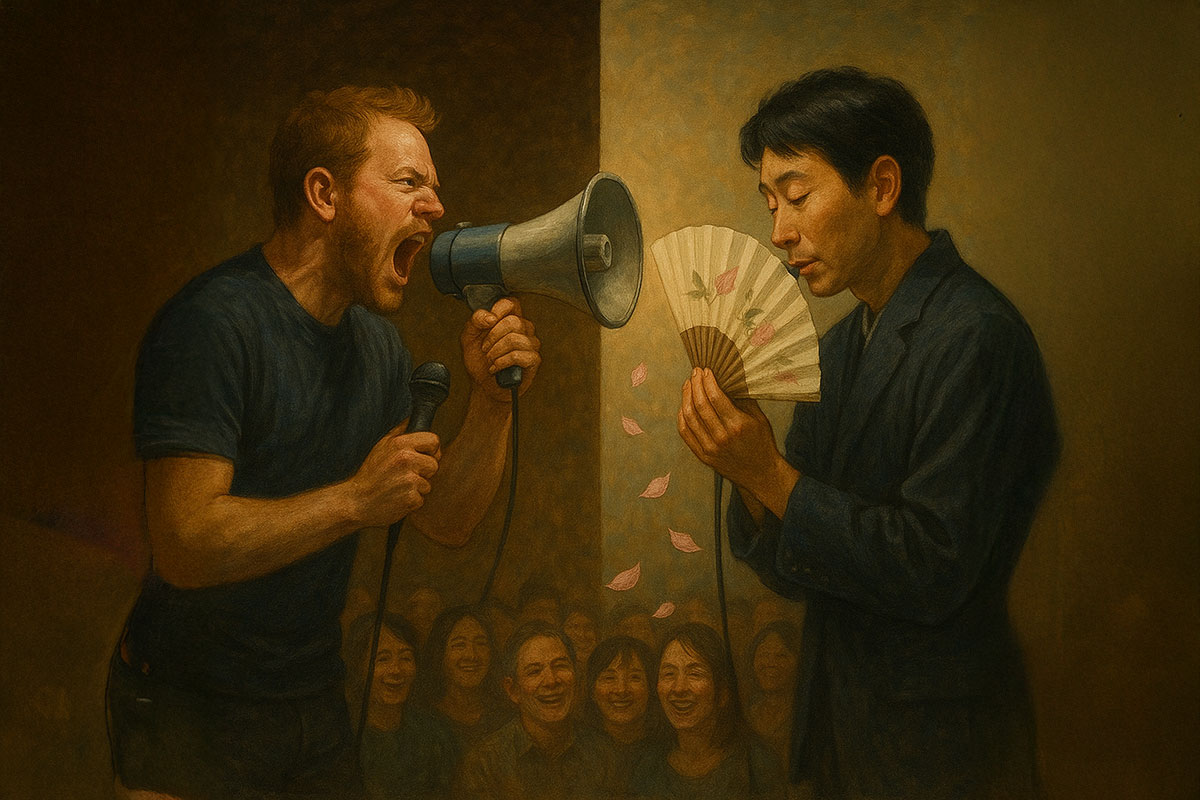
Topic 3: Honesty vs. Tact (Unfiltered & Uncompromising)
Participants:
Moderator: Margaret Cho
U.S. comedians: Louis C.K., Sarah Silverman, Hasan Minhaj
Japanese comedians: Ken Shimura, Atsushi Tamura
Opening by Margaret Cho
“Tonight we’re tackling honesty vs. tact. In the U.S., we celebrate being unfiltered—raw, blunt, no holds barred. But in Japan, humor often dances around subtlety, irony, or reading the air. And then there’s uncompromising—in America, it’s admired. In Japan, it can feel inflexible. So, which gets more laughs, and which gets you in trouble?”
Question 1 — Is being unfiltered an asset or a liability in comedy?
Sarah Silverman:
“I’ve built my whole career on being unfiltered. I’ll say the thing everyone else is afraid to say. But you know what? Half the time, people aren’t laughing—they’re gasping. In America, we treat shock as comedy. In Japan, I think shock is just… rude.”
Ken Shimura:
“In Japan, if you are unfiltered, the audience stops laughing. They feel shame. Comedy must be a safe place. Too direct is like stabbing with a knife. We prefer tickling—it’s softer, but still gets you.”
Louis C.K.:
“Unfiltered is only funny if there’s truth. Otherwise, it’s just noise. People laugh because they recognize themselves in the ugliness. If you’re unfiltered without purpose, you’re just an a**hole with a microphone.”
Atsushi Tamura:
“I once tried an unfiltered joke on TV. The network censored me the next day. In Japan, being unfiltered is dangerous for comedians—we live in rules. But maybe breaking rules in small, clever ways is our version of unfiltered.”
Hasan Minhaj:
“I think being unfiltered is cultural currency in the U.S. People want comedians to say what politicians won’t. But there’s a thin line—sometimes we’re applauded, sometimes we’re canceled. Maybe Japan’s tact saves comedians from self-destruction.”
Question 2 — What does being uncompromising look like on stage?
Atsushi Tamura:
“In Japan, uncompromising is not respected. If I push my style without bending to the audience, they think I’m selfish. Comedy is a relationship. To compromise is to care.”
Louis C.K.:
“For me, uncompromising means sticking to the truth, even if people hate it. You lose fans, you lose shows, but you keep your voice. That’s the trade-off. And weirdly, people end up respecting you more for not folding.”
Ken Shimura:
“Uncompromising comedians in Japan don’t last. The system rejects them. To survive, you must compromise, but with grace. I think Americans confuse stubbornness with integrity. Sometimes compromise is wisdom.”
Sarah Silverman:
“I get called uncompromising because I won’t soften certain jokes. But really, I compromise all the time—I change words, timing, tone. The art is to look uncompromising while actually compromising.”
Hasan Minhaj:
“Uncompromising is political for me. I talk about race, power, injustice. If I compromise, the point is lost. But I also adapt my punchlines so people listen instead of shutting down. So it’s not either/or—it’s uncompromising in message, flexible in delivery.”
Question 3 — Where’s the balance between honesty and tact in comedy?
Ken Shimura:
“In Japan, balance is everything. Too honest, you hurt. Too tactful, you bore. The best comedians hide the truth in playfulness. That way, the audience laughs first, then understands.”
Sarah Silverman:
“I try to balance by making myself the target. If I say something raw, I soften it with self-deprecation. Honesty lands better when you admit you’re flawed, too.”
Atsushi Tamura:
“Tact is like seasoning. Without it, honesty tastes bitter. But too much tact, and there’s no flavor. Comedy is about mixing both—strong taste, but not poison.”
Louis C.K.:
“The balance is brutal honesty, delivered with humanity. If you love the people you’re talking about—even when mocking them—the audience feels it. That’s tact. Hate kills laughter. Love saves it.”
Hasan Minhaj:
“I think tact is about making the audience lean in, not pull away. I’ll tell an honest story, but I shape it so people laugh at the system, not at each other. That’s the line I walk—cutting truth, but delivered with empathy.”
Closing by Margaret Cho
“Tonight we’ve seen that honesty can sting, but tact can dull the blade without losing the cut. In America, comedians push the limits of being unfiltered and uncompromising, often at great risk. In Japan, tact is survival—humor comes from weaving around the sharp edges. Maybe the real art is not choosing one or the other, but learning to be honest with care. After all, laughter heals best when it doesn’t wound too deeply.”
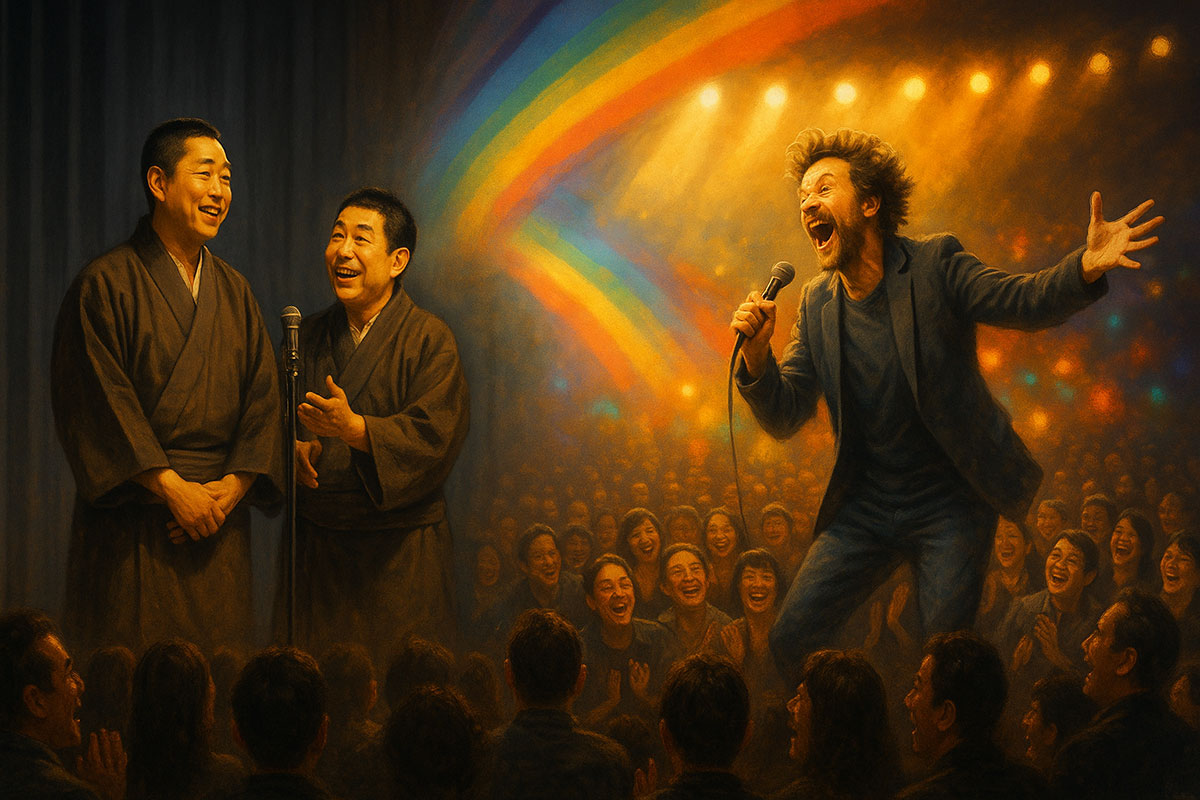
Topic 4: Innovation vs. Tradition (Unconventional & Unrestrained)
Participants:
Moderator: Margaret Cho
Japanese comedians: Bakarhythm, Drunk Dragon, Oriental Radio
U.S. comedians: Robin Williams, Ali Wong
Opening by Margaret Cho
“Tonight we’re exploring unconventional and unrestrained. In the U.S., comedians are celebrated for breaking rules, pushing boundaries, and being unpredictable. In Japan, tradition shapes comedy deeply—formats like manzai have lasted generations. So how do innovation and tradition collide or blend in the world of humor?”
Question 1 — Is it better to be unconventional or stick with tradition in comedy?
Robin Williams:
“Unconventional, always! Comedy is like jazz—you riff, you break, you improvise. Tradition gives you the instrument, but unconventional playing makes the music. If I stuck to one-liners forever, I’d have exploded by now!”
Bakarhythm:
“Tradition in Japan is the soil. Without it, comedy cannot grow. But unconventional seeds can still be planted. You must know the rules before you can bend them. Otherwise, you’re just noise.”
Ali Wong:
“I love breaking tradition. I walk out pregnant on stage, and that alone flips the image of a comic. But I respect that in Japan, tradition is not a cage, it’s a safety net. It tells the audience, ‘Relax, you know the rhythm.’ That’s powerful, too.”
Oriental Radio:
“For us, unconventional means remix. We take manzai rhythm but mix it with rap, dance, lights. People laugh because it’s new but familiar. Pure tradition feels safe, pure unconventional feels chaotic. The mix is best.”
Drunk Dragon:
“Tradition is the stage, unconventional is the joke. Without stage, no joke. Without joke, no stage. It is not fight—it is marriage.”
Question 2 — What happens when a comedian goes unrestrained?
Ali Wong:
“Oh, unrestrained me is just screaming about childbirth and sex for an hour. In the U.S., people love it because it’s raw. But sometimes, after a set, I think, ‘Wow, my mom would disown me if she understood English that well.’”
Drunk Dragon:
“In Japan, unrestrained means losing face. If you go too far, the audience feels uncomfortable. They don’t laugh—they worry. Comedy is about care. If you don’t restrain, you break trust.”
Robin Williams:
“Unrestrained is where the magic happens. I’d be ten characters in one breath—grandma, alien, Shakespeare, a squirrel on cocaine. The audience doesn’t know what’s next, and that chaos is laughter fuel. But yes, sometimes it’s like fireworks—you can burn down the stage if you don’t aim it.”
Bakarhythm:
“Restraint is elegance. Unrestrained is easy—just shout, just shock. But true skill is restraint that still surprises. For me, less is more.”
Oriental Radio:
“Unrestrained is dangerous but fun. Sometimes the best laugh comes from pushing too far. But we always check—if audience pulls back, we pull back. It is dance, not war.”
Question 3 — How can innovation and tradition coexist in comedy?
Robin Williams:
“They already do! Every improv I ever did was built on the tradition of vaudeville, silent film, radio. Innovation is not throwing tradition away—it’s building a spaceship on top of it.”
Bakarhythm:
“Yes. Tradition is foundation. Innovation is window. You need both for a house. If you only innovate, no walls. If you only tradition, no light.”
Ali Wong:
“I think it’s generational. My parents loved structured TV comedy. I love breaking rules. But I also want my kids to know comedy isn’t chaos—it has history. Maybe innovation keeps tradition alive for the next generation.”
Drunk Dragon:
“We use traditional duos, but our jokes are modern—about smartphones, social media. That is coexistence. People laugh because the form is old, the content is new.”
Oriental Radio:
“Yes, coexistence is survival. If tradition never changes, it dies. If innovation has no root, it disappears. Together, they last forever.”
Closing by Margaret Cho
“What we’ve seen is that comedy thrives in tension between convention and surprise. In America, being unconventional and unrestrained often wins applause, but risks chaos. In Japan, tradition and restraint offer rhythm, safety, and elegance. The sweet spot may be where the two meet—where the audience feels both the comfort of tradition and the thrill of innovation. After all, laughter needs both roots and wings.”
Topic 5: Elite vs. Belonging (Untouchable & Unstoppable Force)

Participants:
Moderator: Margaret Cho
U.S. comedians: Richard Pryor, Jerry Seinfeld, Wanda Sykes
Japanese comedians: Teruyoshi Uchimura, Sandwichman (duo, but counted as one slot)
Opening by Margaret Cho
“Tonight’s theme is untouchable and unstoppable force. In the U.S., these words make you sound like a legend, larger than life. In Japan, though, being too elite can make you feel distant, even lonely. Comedy thrives on belonging, not standing above the crowd. So let’s ask: is it funnier to be a superstar, or to be part of the group?”
Question 1 — What does it mean to be untouchable in comedy?
Jerry Seinfeld:
“In America, untouchable means you’ve made it. You fill arenas, your specials go global. But in comedy, if you actually act untouchable, you’re finished. People laugh at connection, not perfection. The moment you stop being relatable, you stop being funny.”
Teruyoshi Uchimura:
“In Japan, untouchable is not compliment. It means cold, unreachable. A comedian must be touchable—audience must feel, ‘He is one of us.’ If you stand too high, people stop laughing. They bow, but they don’t laugh.”
Richard Pryor:
“Man, I never wanted to be untouchable. My comedy came from pain, from being broken. People laughed because they saw themselves in me. Untouchable? That’s for marble statues, not comedians. We’re supposed to bleed in public.”
Sandwichman:
“For us, comedy is always duo, always balance. If one acts untouchable, the other pulls him down. That’s the joke. Audiences love when high becomes low, elite becomes foolish. Untouchable is only funny when it breaks.”
Wanda Sykes:
“Untouchable in America usually just means rich. But money doesn’t make you funny. I’ve bombed in fancy theaters and killed in dive bars. Comedy doesn’t care about untouchable—it cares if you can make the back row laugh.”
Question 2 — What does it mean to be an unstoppable force on stage?
Richard Pryor:
“Unstoppable force is just truth that can’t be denied. You speak it, people laugh and cry at the same time. I didn’t stop because my life didn’t stop throwing me stories. Pain was unstoppable, so the comedy had to be too.”
Sandwichman:
“In Japan, unstoppable force is scary. If you never stop talking, the audience feels trapped. Comedy must breathe. We think unstoppable is not speed—it is flow. You move with audience, not crush them.”
Wanda Sykes:
“For me, unstoppable is attitude. I walk out, and I don’t wait for permission. The jokes keep coming like punches. If you’re with me, you’re laughing. If not, buckle up. That’s my unstoppable.”
Teruyoshi Uchimura:
“In Japan, unstoppable force is teamwork. Like manzai rhythm—back and forth, no break. It feels unstoppable because it never dies, but it also never overwhelms. Force plus care.”
Jerry Seinfeld:
“Honestly, unstoppable is just… timing. If you keep hitting the rhythm perfectly, it feels unstoppable. But it’s really just one setup, one punchline, repeated endlessly. Unstoppable is discipline dressed as chaos.”
Question 3 — Which gets more laughs: standing above as elite, or standing with the crowd as one of them?
Sandwichman:
“With the crowd, always. Japan laughs when they see themselves. We make fools of ourselves so the audience feels proud. Elite is lonely—laughter is community.”
Wanda Sykes:
“I agree, with the crowd wins. But sometimes being elite—being bold, loud, in-your-face—earns laughs too. It’s not either/or. You can be the queen and still trip on stage. That’s the sweet spot.”
Jerry Seinfeld:
“Standing with the crowd. Comedy is democracy. You’re not the king—you’re the mirror. People laugh because they see their life reflected, just more ridiculous. Elite? That’s for athletes, not comedians.”
Richard Pryor:
“Man, I was never above anyone. My comedy came from being in the mud with people. You laugh because you recognize the struggle. Standing above? That’s not funny, that’s politics.”
Teruyoshi Uchimura:
“In Japan, comedians are servants. We serve laughter. If we stand above, people respect us but don’t laugh. Belonging is the secret—touch the ground, and the crowd comes with you.”
Closing by Margaret Cho
“What we’ve discovered is that comedy resists being untouchable. In America, words like elite or unstoppable sound heroic, but comedians who live in that role risk losing connection. In Japan, belonging, humility, and shared humanity are what make people laugh. Maybe the true unstoppable force is not standing apart, but standing together—and laughing at the same messy, beautiful human experience.”
Final Thoughts by Naomi Watanabe
What I’ve learned from working in both the U.S. and Japan is that comedy is really about connection. Words like unapologetic or unstoppable might not fit neatly into Japanese culture, but the feelings behind them — confidence, resilience, passion — those are universal.
And humility? Bowing, saying suimasen, showing you care about others — that’s not just Japanese. It’s human.
Tonight showed us that laughter doesn’t need translation. Whether you stand tall or bow low, shout the truth or whisper it gently, comedy brings us together. At the end of the day, the biggest laugh comes not from being untouchable, but from being touchable — from sharing our humanity.
Thank you for joining us. May we keep laughing, across languages, across cultures, together.
Short Bios:
Naomi Watanabe (Japan / U.S.)
A Japanese comedian, actress, and fashion designer known as the “Japanese Beyoncé.” She has gained international recognition for her bold, unapologetic style and has successfully performed in both Japan and the U.S., bridging cultural humor with global appeal.
Kevin Hart (U.S.)
One of the most successful American stand-up comedians and actors, Kevin Hart is known for his high-energy performances, storytelling, and physical comedy. He’s also starred in numerous films and produced his own comedy specials.
Amy Schumer (U.S.)
An American stand-up comedian, actress, and writer, Schumer is known for her unfiltered humor, tackling topics like gender, relationships, and social norms with sharp wit and satire.
Chris Rock (U.S.)
Legendary American comedian and actor, Rock is celebrated for his incisive takes on race, politics, and society. His sharp delivery and fearless commentary have made him one of the most influential comedians in the world.
Hitoshi Matsumoto (Japan)
Half of the iconic comedy duo Downtown, Matsumoto is a central figure in Japanese comedy. Known for his boke (funny man) style and sharp comedic instincts, he has shaped Japanese television humor for decades.
Sanma Akashiya (Japan)
A beloved Japanese comedian and television host, Sanma is famous for his fast-paced talking style and boundless energy. He’s a household name in Japan and a master of variety-show comedy.
Beat Takeshi (Takeshi Kitano) (Japan)
One of Japan’s most famous comedians, actors, and filmmakers. He began his career in comedy before becoming an internationally acclaimed director. Known for blending slapstick with depth and social commentary.
Yuriyan Retriever (Japan)
A rising Japanese comedian and entertainer, Yuriyan is known for her eccentric, self-deprecating humor, often blending dance, awkwardness, and boldness in unique performances that challenge norms.
Ellen DeGeneres (U.S.)
An American comedian, actress, and former talk show host. Ellen is celebrated for her observational humor, kindness-centered brand of comedy, and influence on LGBTQ+ representation in entertainment.
Jim Gaffigan (U.S.)
An American stand-up comedian known for his clean, family-friendly humor often centered on food, fatherhood, and everyday life. His deadpan delivery and relatability have made him a household favorite.
Louis C.K. (U.S.)
An American stand-up comedian, writer, and filmmaker, known for his unfiltered, brutally honest comedy about life, family, and human flaws. Widely respected for his craft and timing.
Sarah Silverman (U.S.)
An American comedian and actress, Silverman is known for her provocative, unfiltered humor that mixes satire with social commentary, often challenging taboos with wit.
Hasan Minhaj (U.S.)
An American comedian, actor, and political commentator, Minhaj is known for his Netflix show Patriot Act and storytelling style that combines humor with cultural and political critique.
Ken Shimura (Japan)
A legendary Japanese comedian remembered for his slapstick humor and television presence. He was beloved across generations for his playful characters and accessible comedy.
Atsushi Tamura (Japan)
Half of the comedy duo London Boots 1gō 2gō, Tamura is known for his mix of sharp wit and playful, sometimes provocative humor. He’s a familiar face in Japanese variety shows.
Robin Williams (U.S.)
The late American actor and comedian celebrated for his unrestrained energy, improvisational brilliance, and ability to switch between comedy and deep emotion seamlessly. A legend in stand-up and film.
Ali Wong (U.S.)
An American stand-up comedian, actress, and writer. Wong gained fame with her Netflix specials that blend raw, unrestrained humor about motherhood, relationships, and identity.
Bakarhythm (Japan)
A Japanese comedian and TV writer known for his understated, surreal humor and unique perspectives on everyday life. His subtle comedic style contrasts with louder, more physical acts.
Drunk Dragon (Japan)
A popular Japanese comedy duo recognized for their sketch comedy and manzai-style performances, often blending slapstick with witty banter.
Oriental Radio (Japan)
A Japanese comedy duo famous for blending traditional manzai with modern elements like rap, dance, and flashy performance styles.
Richard Pryor (U.S.)
Widely regarded as one of the greatest stand-up comedians of all time. His raw, fearless comedy addressed race, class, and personal struggles, reshaping stand-up as an art form.
Jerry Seinfeld (U.S.)
An American comedian and actor best known for the sitcom Seinfeld. His observational humor focuses on the absurdities of everyday life, delivered with clean precision.
Wanda Sykes (U.S.)
An American comedian and actress celebrated for her sharp wit and outspoken takes on politics, race, and gender. She combines biting commentary with approachable humor.
Teruyoshi Uchimura (Japan)
A Japanese comedian, television presenter, and member of the comedy duo Uchan Nanchan. Known for his humility, charm, and balance between silliness and sophistication.
Sandwichman (Japan)
A Japanese comedy duo beloved for their manzai and conte sketches, often rooted in everyday life scenarios. Their humor is accessible and widely appealing across generations.
Leave a Reply