

|
Getting your Trinity Audio player ready...
|
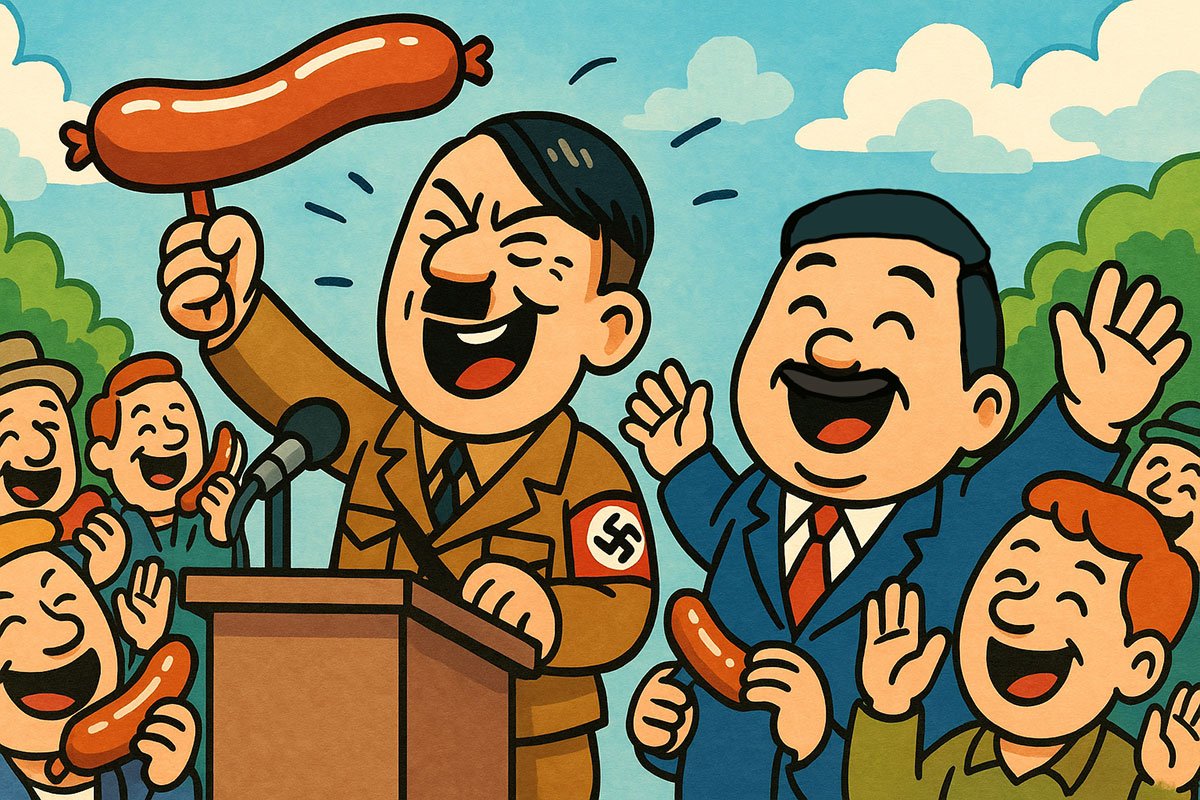
What if history’s darkest chapters had been rewritten with laughter instead of fear? Imagine a world where Hitori Saito, Japan’s beloved philosopher of humor and happiness, lived next door to a grumpy dictator. Instead of lectures on power, he offered jokes about sausages, toothbrush mustaches, and smiling soldiers. The result? A parody tale where even the sternest general cracks a smile, tanks fire bratwursts, and peace treaties are sealed with chocolate cake. This is not history as it was—it’s history as it could have been, if laughter had been the loudest voice in the room.
(Note: This is an imaginary conversation, a creative exploration of an idea, and not a real speech or event.)

Topic 1: Laughter Is Stronger Than Fear
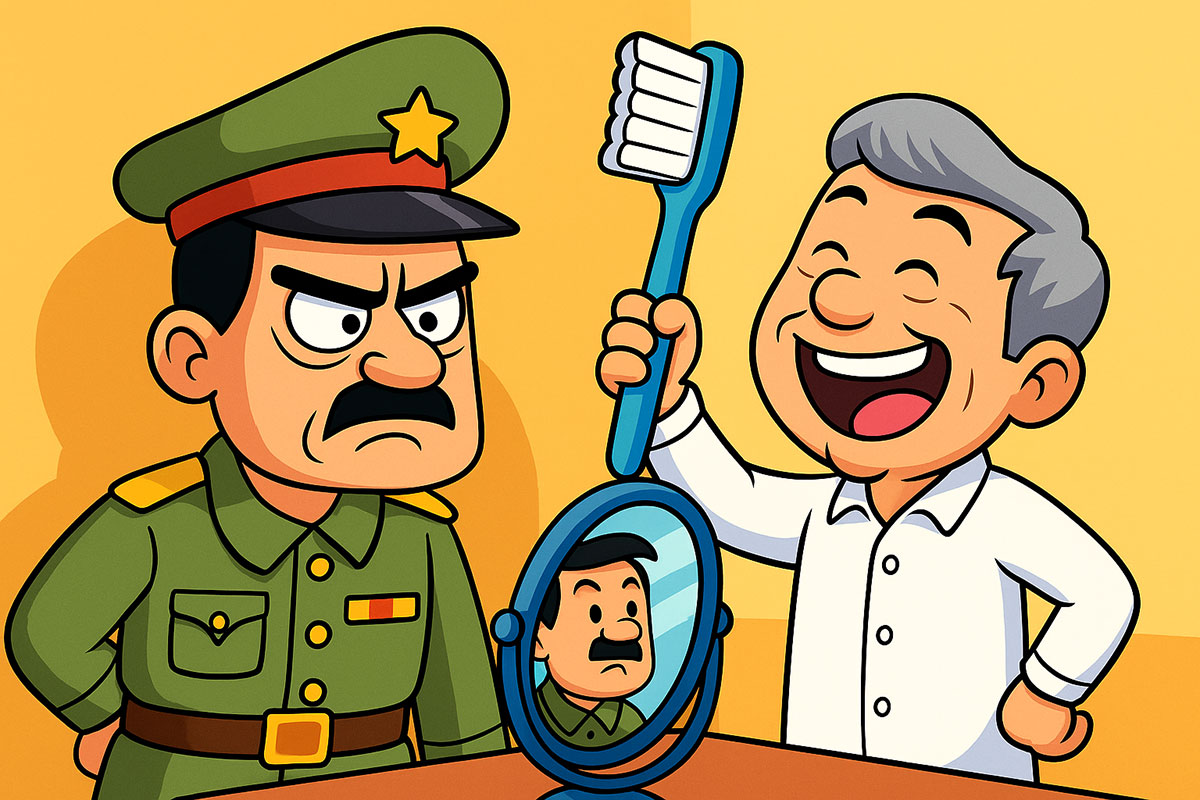
Hitler was preparing another fiery speech when his strange neighbor, Hitori Saito, leaned over the fence with a grin.
Hitori: “You know, Hitler, your mustache is famous. But honestly, it looks less like power and more like a commercial for a toothbrush. If you leaned into it, people might salute you not as a dictator, but as ‘the nation’s dental hero.’”
Hitler froze, then tried to hide a smirk.
Hitori: “Think about it. You’ve been trying to rule with fear, but fear makes people obey only until they find a bigger bully. Laughter, though—that wins people forever. No one forgets the person who made them smile when life was hard.”
For the first time, Hitler chuckled out loud. It was small, but real. And in that crack of laughter, something shifted: fear no longer felt like the only tool of power.
Topic 2: Sausages, Not Soldiers
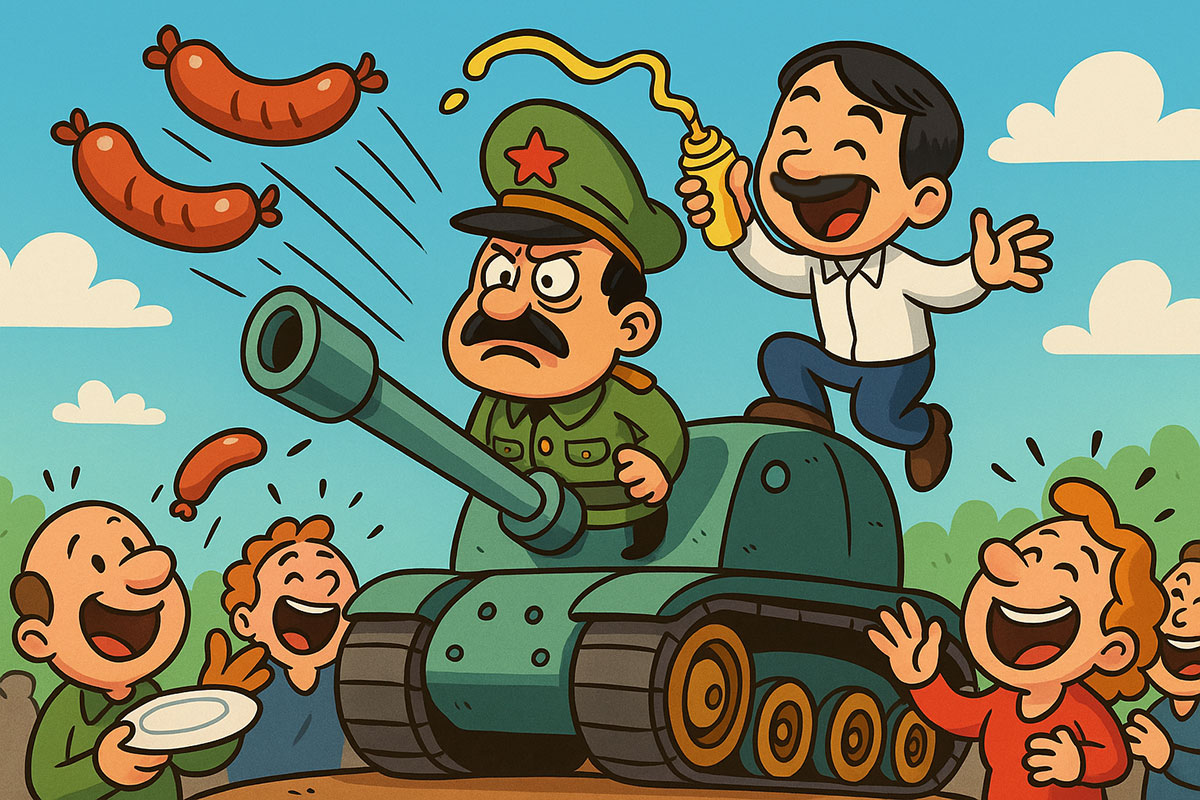
The next day, Hitler was pacing in his study, drafting plans for new tanks. Hitori walked in carrying a grocery bag.
Hitori: “Hitler, you’re wasting your genius on machines. If you really want to conquer the world, forget tanks. Try sausages.”
Hitler: “Sausages?”
Hitori: “Yes! Imagine this: instead of rolling Panzer tanks into France, you roll in carts full of half-price bratwursts. The people won’t fight you—they’ll line up with plates. In five minutes, you’ll have them singing German folk songs while licking mustard off their fingers.”
Hitler raised an eyebrow, but the corner of his mouth twitched.
Hitori: “Tell me, which lasts longer—fear, or a full stomach? Fear disappears the moment people get brave. But when people eat well, they feel grateful. Loyalty is baked right into the bread roll.”
Hitler tried to keep his stern face, but the image of his generals marching into Paris with sausages instead of rifles made him burst out laughing.
Hitler: “An invasion of sausages… history would never believe it.”
Hitori: “Exactly! But history would also never forget it. Feed people, don’t fight them, and you’ll win more land than any army ever could.”
For a moment, the thought of soldiers carrying sizzling bratwursts instead of guns flickered in Hitler’s mind. And oddly enough, it didn’t feel like defeat—it felt like a strange kind of victory.
Topic 3: Smiling Armies Win the War
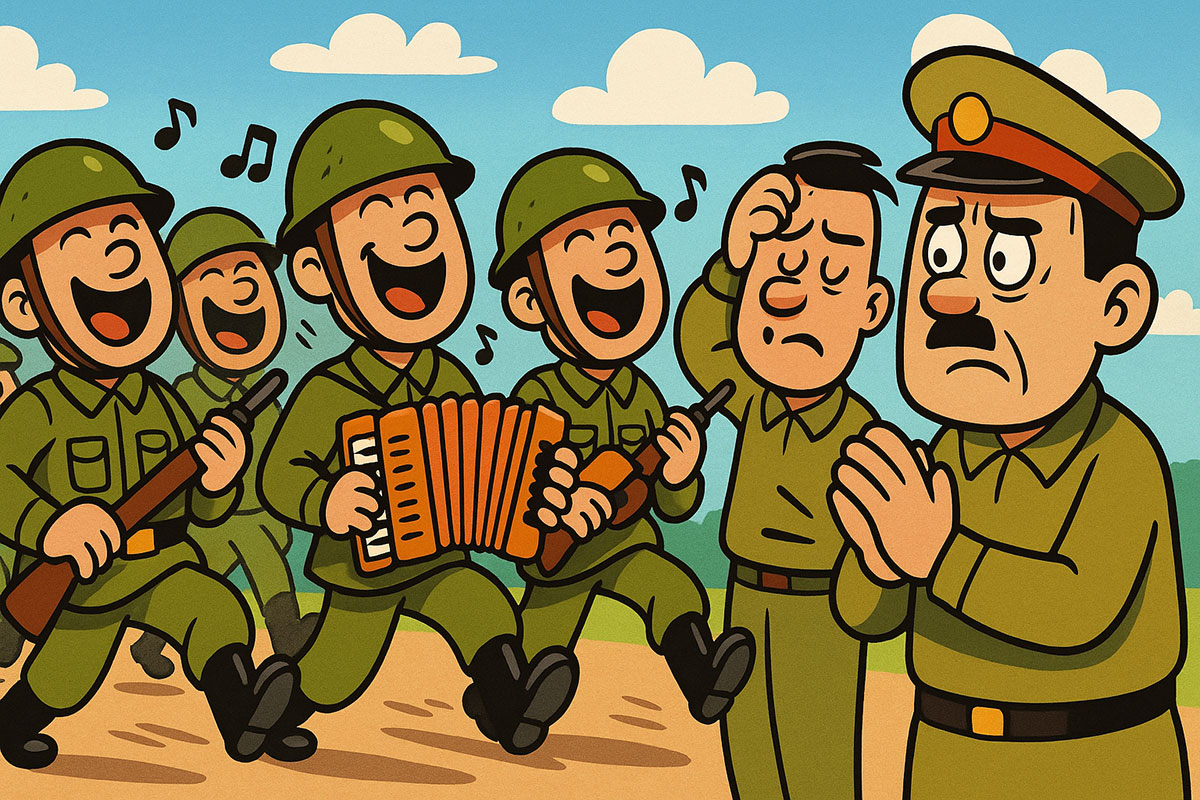
Later that week, Hitler inspected his troops, rows of stone-faced soldiers standing stiff as statues. Hitori strolled beside him, hands in his pockets, smiling as usual.
Hitori: “Hitler, your soldiers look terrifying—but also miserable. If you really want to scare the enemy, make your men smile.”
Hitler: “Smile? Soldiers don’t smile in battle.”
Hitori: “That’s the problem! Imagine your army marching into enemy territory, not grim and angry, but laughing, singing, maybe even dancing a little polka. The enemy wouldn’t know whether to fight or join the party.”
Hitler frowned, but his curiosity was caught.
Hitori: “Picture this—your general steps forward, not with a gun, but with an accordion. The soldiers laugh, the enemy laughs, and suddenly nobody remembers why they were fighting. That’s how you win without losing anyone.”
The thought made Hitler’s lips twitch again.
Hitler: “You think music and smiles could defeat armies?”
Hitori: “Of course. Look, fear can make an army move, but joy makes an army unstoppable. A soldier who laughs marches twice as far. A soldier who sings never deserts. Happiness is the strongest weapon you’ve never tried.”
For a moment, Hitler looked at his soldiers again—imagining them not stiff, but grinning and cheerful. The image was so absurd he couldn’t stop himself—he laughed, a deep, rolling laugh that startled even the guards nearby.
Hitori: “See? Even you fight better when you’re laughing.”
And for the first time, Hitler began to wonder if maybe Hitori was right—perhaps a smiling army could conquer more than war ever could.
Topic 4: From Dictator to “Laugh-tator”

A massive rally filled the Berlin square. The crowd waited tensely for Hitler’s usual thunderous speech. He stepped up to the podium, chest out, jaw tight. But at the edge of the stage stood Hitori, grinning ear to ear, waving like he was greeting old friends.
Hitori (whispering): “Remember what I told you. Less dictator… more ‘Laugh-tator.’”
Hitler blinked. “Laugh-tator?”
Hitori: “Yes! A leader who rules with laughter, not fear. Trust me, the world’s had enough dictators. Try being the first Laugh-tator—history will love you for it.”
The crowd hushed. Hitler gripped the podium. Then, instead of shouting, he cracked the tiniest smile.
Hitler: “My people… today, I declare war on… bad sausage prices! From now on, bratwursts will be half-off!”
The crowd gasped—and then erupted into laughter. People clapped, some even whistled. Soldiers exchanged confused glances, but then one snorted and laughed too.
For once, Berlin’s square wasn’t filled with fear, but with joy.
Hitori leaned in: “See? One smile, and you just conquered more hearts than ten battalions ever could.”
Later, back in his office, Hitler still chuckled at the memory.
Hitler: “They laughed… at me, with me… and they loved it. Perhaps… being a Laugh-tator isn’t weakness after all.”
Hitori (patting his shoulder): “Exactly. A true leader doesn’t make people tremble—he makes them smile. That’s the kind of power that lasts.”
And that night, for the first time, Hitler felt that laughter might leave a legacy far greater than fear.
Topic 5: The Smile That Brings World Peace
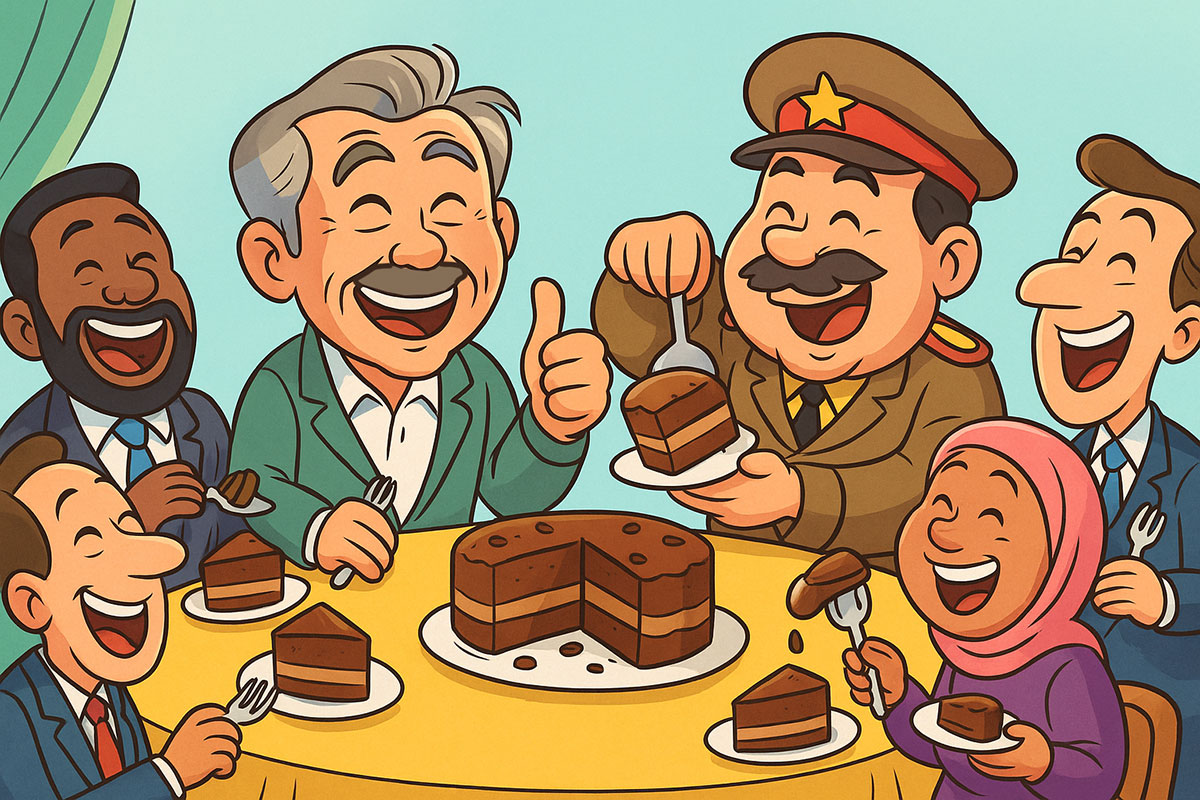
Weeks later, Hitler sat across from Hitori in the garden. The once-fearful leader now looked oddly thoughtful, even gentle.
Hitler: “Hitori… you’ve made me laugh more than I ever thought possible. But tell me—could laughter really change the world? Could it… bring peace?”
Hitori (grinning): “Of course! Think about it. Wars start because people take themselves too seriously. One insult, one grudge—and suddenly millions are fighting. But a good laugh? It melts anger faster than any treaty.”
Hitler leaned back, imagining.
Hitler: “What if… instead of tanks, we sent comedians to other nations? What if, at peace conferences, instead of threats, I opened with a joke?”
Hitori: “Exactly! Picture this—you walk into the League of Nations, clear your throat, and say, ‘Gentlemen, I came to divide the world… into equal slices of chocolate cake!’ Everyone laughs, the tension breaks, and suddenly they’re ready to talk like human beings again.”
Hitler actually laughed aloud at the thought, startling a few guards nearby.
Hitler: “The world would think me mad.”
Hitori: “Maybe. But they’d also think you human. And once they laugh with you, they can’t hate you the same way. That’s how peace begins—not with signatures, but with smiles.”
Hitler stared at the horizon. For the first time, he imagined his name not tied to war, but to laughter echoing across nations.
Hitler (quietly): “Perhaps history could remember me… not as a destroyer, but as a man who found peace through laughter.”
Hitori (softly, with a smile): “Now that’s real power. Not to rule the world with fear… but to unite it with joy.”
And in that unlikely garden, the seeds of an impossible dream—world peace through laughter—were planted in the heart of a man once consumed by darkness.
Final Thoughts
Hitori Saito often said that true strength comes not from control, but from joy—the ability to lift others’ hearts. In this playful reimagining, even a man of iron fists is undone not by enemies, but by his own laughter. What begins as ridicule of a mustache turns into the birth of the “Laugh-tator,” and finally a vision of world peace sealed with cake and smiles. The lesson is timeless: fear fades, anger burns out, but laughter has the power to unite. Perhaps the greatest revolution of all is not political, but simply learning to make each other laugh.
Short Bios:
Hitori Saito — Japanese entrepreneur, philosopher, and bestselling author, beloved for his joyful teachings that humor, gratitude, and positive words can transform lives. He taught that making others happy is the truest form of strength.
Adolf Hitler — The dictator of Nazi Germany (1933–1945), responsible for World War II and the Holocaust. In this what-if parody scenario, his character is reimagined as comically vulnerable to laughter, showing the contrast between history’s reality and the healing power of humor.
Nick Sasaki — Entrepreneur, storyteller, and creator of Imaginary Talks. Nick curates playful and thought-provoking “what-if” dialogues, blending history, philosophy, and humor to spark insight. His work shows how imagination and laughter can offer fresh ways of thinking about even the darkest corners of history.
Leave a Reply