
|
Getting your Trinity Audio player ready...
|
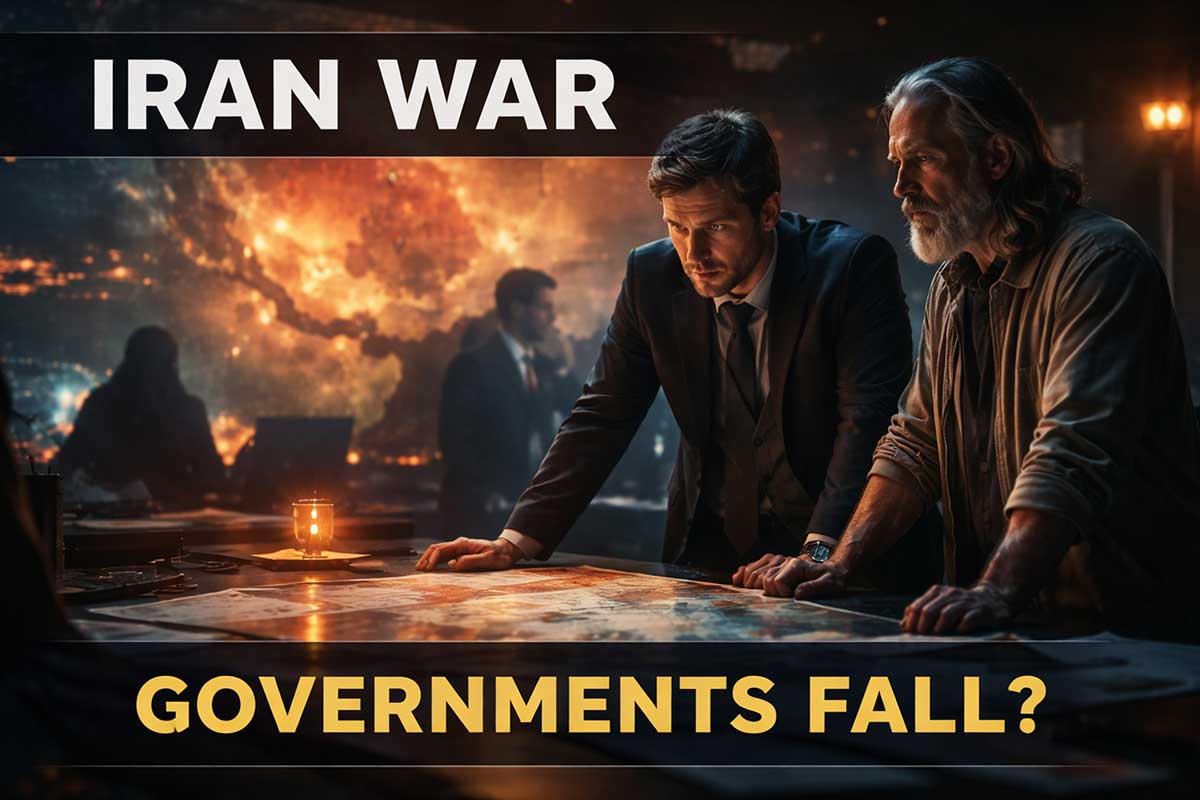
What if the Iran war is not a regional crisis, but the opening shock of a much wider unraveling?
Introduction — by Craig Hamilton Parker
What I’d like to bring into this conversation is a sense that we may be standing at the edge of something much larger than a single war. People often look at a conflict like Iran and ask whether it will spread, whether governments will survive, whether religion will inflame it, whether hidden technologies will deepen it, and whether anything good can possibly come out of such a dark period. Those are serious questions, and I feel they must be faced with honesty.
From my own perspective, I do not see this as only a military matter. I see layers beneath layers. I see political weakness, religious passion, unseen pressure, public anxiety, and a wider spiritual crisis all gathering at once. A war may begin in one place, yet the real shockwaves move through economies, institutions, media, psychology, and the inner life of humanity itself. That is why moments like this are so unsettling. They are never just about missiles, borders, or leaders. They reveal the condition of the age.
The old prophetic traditions often spoke in symbolic language, yet their warnings still feel strangely alive in our time: governments shaken, conflict spreading through sacred lands, weapons that do terrible damage in ways not easily seen, and a period of trial that eventually forces people to ask deeper questions about who they are and what they serve. I do not take prophecy as a rigid script. I take it as a warning pattern, a spiritual weather sign, something that asks us to pay attention before events harden into suffering.
My hope in this conversation is not to frighten people, but to look clearly. If we are entering a period of upheaval, then we need truth, courage, discernment, and inner steadiness more than ever. We need to ask whether the crisis is only outer, or whether it reflects something deeply unsettled in humanity itself. And if that is so, then perhaps the real task is not only to predict what comes next, but to meet it with more consciousness than fear.
(Note: This is an imaginary conversation, a creative exploration of an idea, and not a real speech or event.)
Topic 1: Iran as the Spark of a Wider World Conflict
John Mearsheimer:
Let me begin with a blunt question. Are we looking at a contained regional war, or are we watching the first stage of a much larger confrontation that the public still refuses to name? Craig, your original framing suggests this is bigger than Iran itself. Why?
Craig Hamilton Parker:
Because the pattern feels larger than the battlefield. Iran is not just a country in crisis here. It is a node. Once conflict gathers around Iran, it touches oil routes, Israel, the Gulf states, American prestige, Russian positioning, Chinese ambition, religious identity, and maritime security all at once. That is why it feels prophetic to me. A single strike may look isolated, but behind it stands a web. And when enough strands tighten at once, the whole web shakes.
Henry Kissinger:
That is a useful image, though I would express it in less mystical terms. A regional war becomes dangerous when it intersects with the interests of major powers that cannot afford humiliation. The issue is not only who fires first. The issue is which states begin to believe that retreat would damage their strategic standing beyond repair. In that circumstance, what begins as a local conflict acquires international gravity.
Tucker Carlson:
And yet the public is almost always the last to be told what is actually at stake. They get slogans. They get moral theater. They get “this is about freedom” or “this is about stability.” They rarely get the real answer, which is usually some combination of energy, military positioning, domestic politics, and fear of looking weak. So I think the first thing to say is that if this expands, it won’t be because ordinary people demanded a wider war. It’ll be because elites decided they could manage one.
Fareed Zakaria:
There’s truth in that, but there is another side. States do sometimes drift into escalation without any master design. The danger here is cumulative. Drone attacks, naval strikes, proxy militias, retaliatory missile launches, misread signals, domestic pressure inside capitals, and the constant pressure of media cycles. You do not need a grand conspiracy to produce a wider war. You only need several governments boxed in at once.
Niall Ferguson:
History supports that. Major wars often look obvious in hindsight and muddled in real time. People later search for a single cause, but what actually happens is a layering of pressures. A naval incident here, an alliance commitment there, a false belief that the other side will back down, a public mood that demands resolve. Then the thing lurches forward. One of the reasons this moment matters is that many leaders now seem to believe they can use limited force without unleashing uncontrolled consequences. History is not kind to that assumption.
John Mearsheimer:
That gets us to the real heart of this. Great powers hate disorder in strategically important regions, but they also exploit it. The Middle East remains strategically important. It matters less than it once did to some economies, but it still matters enormously to global markets and prestige politics. Once the United States becomes directly entangled, Russia and China do not need to mirror American action symmetrically. They only need to ask how this conflict can weaken Washington, distract it, or expose its limits.
Craig Hamilton Parker:
Yes, and that is exactly where my concern grows darker. The public still tends to imagine war in old terms: armies meeting armies, declarations, obvious fronts. But this feels layered. One front may be visible in Iran or Israel, another in the Red Sea, another in cyber systems, another in financial instability, another in political agitation inside Western societies. So when I speak of a wider war, I don’t necessarily mean everyone lining up under flags in a conventional manner. I mean the sense that many forms of pressure begin striking at once.
Henry Kissinger:
That distinction is wise. The modern international order is vulnerable in many dimensions. A state no longer needs to win a grand battlefield victory to damage an adversary. It may act through proxies, through shipping disruption, through covert transfers of weapons, through political influence, through economic pressure. So the question is not merely whether war expands geographically. The question is whether conflict begins to link theaters that governments previously considered separate.
Tucker Carlson:
But don’t you think that’s already happening? That’s the part people dance around. We pretend events are compartmentalized. We tell the public, “This strike is about one thing, that deployment is about another, that intelligence operation is unrelated.” But everyone in this room knows power centers think in chains. If the U.S. acts in Iran, China is watching Taiwan. Russia is watching NATO fatigue. Energy traders are watching shipping lanes. Voters are watching gas prices. So why keep pretending this is a neat, isolated event?
Fareed Zakaria:
No serious observer thinks it is isolated. The disagreement is over degree. One should be careful about treating every linkage as proof of an inevitable world war. Interdependence makes shocks spread fast, yes. But there are still brakes. China may see advantage in American distraction, yet prefer not to trigger a global rupture that would hurt its own economy. Gulf states may fear Iran, yet dread total regional collapse. Europe may speak in moral language, yet remain cautious about direct entanglement. Not every actor benefits from maximal escalation.
Niall Ferguson:
That is fair, but there is a historical irony here. Systems under strain often rely on restraint from actors who are under growing domestic pressure not to appear restrained. That is one of the most dangerous ingredients. Leaders who privately know the costs of escalation may still move closer to it if their prestige is on the line. The old imperial powers knew this. So did the powers of 1914. Reputation can become a prison.
John Mearsheimer:
Craig, let me press you. Your language of prophecy raises a problem. Does speaking in prophetic terms help people see the stakes more clearly, or does it risk making conflict sound fated, as though states no longer have agency?
Craig Hamilton Parker:
A fair challenge. I do not see prophecy as fate carved in stone. I see it as pattern recognition. When certain energies gather, or if you prefer, when certain political and spiritual conditions align, one can sense a direction. But direction is not the same as inevitability. In fact, a warning matters only if people can still choose. If leaders could step back, if publics could refuse manipulation, if nations could face reality without vanity, then much suffering could be prevented. Prophecy, to me, is not meant to paralyze; it is meant to wake people up.
Henry Kissinger:
That formulation brings prophecy closer to statesmanship than I expected. The task of statesmanship is also to recognize patterns before they become irreversible. The tragedy is that many leaders now operate inside short time horizons. They manage headlines, coalition moods, party pressures. They do not shape order. And when order is not shaped, it is shaped by events.
Tucker Carlson:
Or by unelected institutions, bureaucracies, defense contractors, intelligence services, lobbying networks, and media incentives. Let’s be honest here. Many people hear “leaders” and picture elected officials in command. That is not the whole picture. A war can widen through institutional momentum long before any public debate catches up. That’s one reason distrust is so high. People sense that decisions are being made somewhere above their reach.
Fareed Zakaria:
Distrust is real, though I’d caution against making it the whole story. States do still respond to incentives and constraints. Public opinion matters. Economic stress matters. Alliance cohesion matters. There remains room for diplomacy, back channels, de-escalation signals, and pressure from partners who fear a catastrophic spiral. The challenge is that diplomacy is least visible when it is most necessary.
Niall Ferguson:
And diplomacy is weakest when every side believes time is on the other side. That’s when short wars become long ones, and limited strikes become symbols of national destiny. Another point from history: wars widen when leaders misjudge endurance. They assume an opponent cannot bear pain. Then the opponent absorbs pain and retaliates. That cycle can go on longer than anyone expected.
John Mearsheimer:
Which leads to a strategic question for all of you. What would mark the true threshold? Not a headline, but a genuine threshold. What event would tell us that this is no longer simply an Iran-centered war, but an unmistakable great-power crisis?
Henry Kissinger:
A direct and acknowledged clash involving forces of a major power, with each side feeling compelled to answer publicly. Once symbolic ambiguity disappears, escalation becomes much harder to contain.
Fareed Zakaria:
I would add sustained disruption of major shipping lanes combined with direct attacks that force broader military coordination. That would pull markets, alliances, and domestic politics together very quickly.
Tucker Carlson:
For me, the threshold is when governments start using emergency language at home. Not just military action abroad, but domestic preparation: new surveillance powers, censorship framed as wartime necessity, economic controls, patriotic messaging campaigns. That’s when you know the conflict has crossed from foreign policy into national transformation.
Niall Ferguson:
A good answer. I would phrase it historically: the threshold is when elites begin to reorganize society around the expectation of prolonged conflict. That is when wars stop being incidents and become eras.
Craig Hamilton Parker:
And spiritually, if I may put it that way, the threshold is when fear becomes the organizing principle of ordinary life. When people feel the conflict in their nerves, in prices, in speech, in neighbors distrusting neighbors, in the atmosphere of daily existence. That is when a war truly enters a civilization.
John Mearsheimer:
Interesting. So one threshold is military, one economic, one political, one cultural, one psychological. That suggests the bigger reality here: a wider war may begin before the public agrees on what to call it.
Henry Kissinger:
Precisely. Modern conflict permits strategic ambiguity, but ambiguity does not lessen danger. It only postpones recognition.
Tucker Carlson:
And postponing recognition is one of the regime’s favorite tricks. Keep everything vague long enough and you can move the country somewhere it never consciously chose to go.
Fareed Zakaria:
Or, from another angle, ambiguity can sometimes buy time for negotiation. One should not discard that. Unclear boundaries can be dangerous, yet they can leave room for stepping back without public humiliation.
Niall Ferguson:
That is the tension, isn’t it? Ambiguity can either prevent disaster or incubate it.
Craig Hamilton Parker:
Which is why moments like this matter so much. If we are honest, the deeper fear underneath all of this is that the post-Cold War illusion of managed order is fading. The structures still stand, but the confidence inside them is weakening. Iran becomes dangerous in that setting because it is where so many unresolved tensions converge. It is less the whole story than the place where the hidden story begins to show itself.
John Mearsheimer:
Then let me leave the table with a sharper question for the next round: if Iran is a convergence point rather than the whole cause, which underlying force is most likely to widen the conflict first — strategic rivalry, religious passion, energy disruption, domestic political weakness, or miscalculation? That is where I think we need to go next.
Topic 2: Why Governments May Fall During War
Peter Zeihan:
Let’s move from battlefield drama to state survival. Wars do not only break armies. They strain logistics, budgets, food systems, energy flows, public trust, and elite cohesion. So here’s the central question: do wars topple governments, or do they merely reveal that those governments were already far weaker than they looked? Craig, your text leans hard into collapse. Why?
Craig Hamilton Parker:
Because what I sense is not simply defeat in war, but exposure. Governments can appear stable for years, yet they may be held together by habit, media management, debt, and public distraction. Then a real crisis arrives, and suddenly their weakness becomes visible. War is like a pressure lamp. It shines into all the cracks at once. If leaders are indecisive, if economies are brittle, if the people no longer trust what they are being told, then conflict does not create the fall from nothing. It brings the hidden rot to the surface.
Niall Ferguson:
That is close to how historians would frame it. Empires and states rarely collapse out of the blue. What looks sudden is often the final stage of a much longer decline. Fiscal weakness, strategic overreach, elite complacency, cultural exhaustion, poor leadership, institutional drift — all of that can sit beneath the surface for years. Then war arrives and turns an argument about policy into a test of survival.
Ray Dalio:
Yes, and war often comes after a period of internal imbalance. High debt, widening wealth gaps, political polarization, distrust of institutions, declining productivity, and weak social cohesion tend to make societies more fragile. When an external shock appears, the government has less room to absorb it. It can print money, borrow more, tighten control, or blame outside enemies, but none of those moves fixes the deeper imbalance. In fact, they often intensify it.
Victor Davis Hanson:
There is another element: cultural confidence. A government can endure hardship if the people still believe in the civilization behind it. They will sacrifice if they believe the nation is worth saving. But when leadership is seen as unserious, self-serving, cowardly, or hostile to its own people’s values, then war becomes politically dangerous. Citizens start asking, “Why should we trust these people with greater power in the name of emergency?”
Douglas Murray:
And once that question becomes widespread, every crisis turns political. Fuel shortage, migration pressure, censorship, social disorder, terror alerts, military failure — none of it gets read in isolation. Everything becomes part of the same accusation: the people in charge are not telling the truth, are not in control, or are not acting for the good of the nation. In that atmosphere, a government can lose authority long before it loses office.
Peter Zeihan:
That’s the key distinction. Collapse does not always mean tanks outside parliament. It can mean incapacity. The forms of government remain, but the ability to govern drains away. Supply chains fail. Security services are stretched. Debt costs rise. Regional authorities stop cooperating. The public improvises on its own. In modern states, failure may look administrative before it looks theatrical.
Craig Hamilton Parker:
Exactly. The image people have is often too dramatic. They think of a palace stormed or a president fleeing. But I feel collapse can begin as a kind of paralysis. Leaders hesitate. Officials contradict one another. The public loses confidence. Markets shake. The narrative fractures. And underneath all of it is fear. If a government cannot reassure people, cannot feed stability into the atmosphere, then its legitimacy begins to drain away.
Niall Ferguson:
There is a pattern to this. Weak governments often respond to mounting crisis with performative confidence. They make grand declarations, issue symbolic gestures, promise resilience, denounce enemies. But the real markers lie elsewhere: shrinking room for fiscal maneuver, weakening military credibility, rising internal factionalism, and an inability to control second-order effects. Once events begin generating new crises faster than the state can contain them, decline accelerates.
Ray Dalio:
That is often when policymakers turn to short-term fixes that carry long-term cost. They monetize debt, increase surveillance, use emergency powers, or polarize the public further by blaming internal enemies. Those methods can buy time, but they also lower trust. And trust is one of the most valuable assets a government has in a crisis. Without it, every policy becomes harder to execute.
Victor Davis Hanson:
And trust is not built by slogans. It’s built by competence, clarity, and visible loyalty to the people. A leadership class that mocks ordinary concerns during peacetime should not expect deep reserves of goodwill when hardship arrives. This is one reason modern states are more vulnerable than they admit. They have material wealth, yes, but moral cohesion is thinner than it appears.
Douglas Murray:
A state can survive being poor. It is harder to survive being hollow. If people no longer share basic assumptions about nationhood, borders, obligation, truth, and sacrifice, then war places unbearable strain on what remains. The argument is no longer merely “How do we win?” It becomes “Who are we?” And a country that cannot answer that under pressure becomes volatile.
Peter Zeihan:
Let me sharpen this. What breaks first in a serious wartime stress test: the economy, the political class, public trust, or institutional capacity?
Craig Hamilton Parker:
Public trust. Once that starts to go, the rest follows faster. A weak economy can be endured for a time. Even military setbacks can be absorbed. But when people stop believing the people at the top, every message fails. Every reassurance sounds false. Every request for sacrifice sounds manipulative.
Ray Dalio:
I’d place debt and money close to the center. Trust and financial order reinforce each other. When people no longer trust institutions, they want out of financial promises. They want hard assets, security, cash flow, food, community, things they can touch. If enough people move into defensive behavior at once, the state loses flexibility.
Niall Ferguson:
Historically, fiscal crises have indeed brought down regimes. But I agree with Craig that trust is the faster variable. Financial weakness can sit inside a state for a long time. Loss of public belief can turn a manageable strain into a political emergency.
Victor Davis Hanson:
The military matters too, though perhaps not in the old sense. A government can survive hardship if people believe there is still force and discipline behind the state. But if war reveals degraded readiness, poor recruitment, exhausted stockpiles, confused command, or symbolic posturing in place of capability, then the public reads weakness everywhere.
Douglas Murray:
And they read hypocrisy. That may be the most poisonous element. Citizens are often willing to endure hardship. What they will not forgive is being told to endure hardship by people who seem insulated from it, dismissive of it, or ideologically committed to policies that made it worse.
Peter Zeihan:
That brings us to modern vulnerability. Could the next government falls come less from invasion than from systems stress — energy shock, cyber disruption, food costs, migration, and administrative overload?
Craig Hamilton Parker:
Yes, that is much closer to what I feel. The war front is only one layer. Another layer is the cumulative pressure that enters daily life. Power grids, communications, shipping, inflation, social unrest, distrust of media, fear in the streets. It becomes a full-spectrum exhaustion. Under those conditions, governments don’t need to be conquered to fail. They need only lose grip.
Ray Dalio:
That fits historical patterns in a modern form. Internal conflict rises when resources tighten and people lose faith that the system is fair. Then outside pressure magnifies the problem. It becomes difficult to separate foreign conflict from domestic fracture, because each feeds the other.
Niall Ferguson:
One should not miss the historical irony here. Wealthy societies often assume their complexity is proof of resilience. Yet complexity can create hidden fragility. If a simpler system fails, the damage may be local. If a highly interdependent system fails, the damage spreads much farther and much faster.
Victor Davis Hanson:
And the political class often mistakes rhetoric for readiness. It talks about values, inclusion, progress, global leadership — all the fashionable language — but war asks much older questions. Can you produce? Can you defend? Can you endure? Can you command loyalty? If the answer to those is weak, then speeches do not help much.
Douglas Murray:
This is where cultural denial becomes dangerous. Many societies do not wish to admit that comfort has made them dependent, fragmented, and slow to react. They prefer narratives of moral prestige. But a state in crisis does not survive on moral prestige alone. It survives on competence, seriousness, and a shared will to hold together.
Peter Zeihan:
So let me ask the hardest version. If several Western governments are already politically brittle, what kind of wartime event would push them from weakness into genuine breakdown?
Ray Dalio:
A sustained energy and debt shock combined with domestic unrest. If governments are forced to choose between financial stability, social peace, and military commitments, they may discover they cannot preserve all three.
Niall Ferguson:
A humiliating external event can do it too. A visible strategic failure, especially one that destroys elite confidence and exposes prior misjudgments, can split ruling coalitions very quickly.
Victor Davis Hanson:
I would point to the combination of military embarrassment and loss of internal order. If citizens see weakness abroad and lawlessness at home at the same time, they may conclude the state has failed in its most basic duties.
Douglas Murray:
Mass loss of narrative control. Once the official story collapses and alternative interpretations spread faster than the government can contain them, authority begins leaking in all directions.
Craig Hamilton Parker:
I would say the breaking point comes when people no longer fear the government enough to obey it and no longer respect it enough to trust it. That is the dangerous middle. Once a government enters that space, it can still issue commands, but the soul of obedience has already gone.
Peter Zeihan:
That’s a strong line, Craig. It captures something structural and human at once. States are not machines. They are agreements, habits, loyalties, and expectations held together under stress. War is one of the fastest ways to discover how real those bonds are.
Niall Ferguson:
And perhaps the grimmest historical lesson is this: collapse often looks impossible right up until it begins.
Ray Dalio:
Yes. People extrapolate stability from the recent past. Then the cycle turns.
Victor Davis Hanson:
And when it turns, it exposes what a nation truly values.
Douglas Murray:
Or what it forgot to value until it was too late.
Peter Zeihan:
Then the next question is waiting for us: if governments fall under the strain of war, what role does religion, identity, and sacred memory play in pushing conflict from state crisis into civilizational crisis? That’s where this conversation needs to go next.
Topic 3: Religion, Holy Lands, and the Future of Conflict
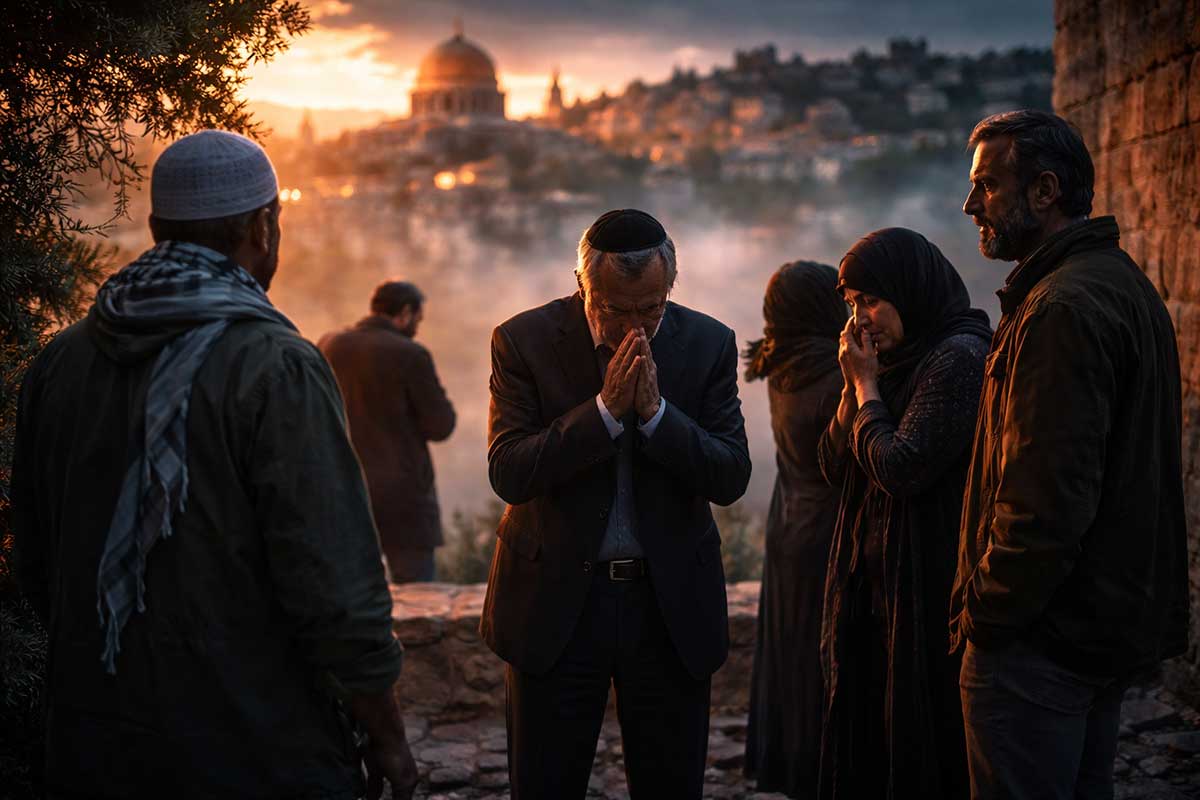
Karen Armstrong:
We’ve spoken about war as strategy and war as state failure. Now we come to something more dangerous still: war wrapped in sacred meaning. That is when conflict stops being only political and becomes existential. Craig, your framing suggests that religion is not just one factor here, but one of the deepest sparks. What do you see?
Craig Hamilton Parker:
What I see is that when land is called holy, conflict over it becomes more than territorial. It becomes emotional, spiritual, ancestral, even cosmic in the minds of those involved. People no longer feel they are negotiating over borders. They feel they are defending heaven’s memory, their people’s story, or God’s will. That makes everything hotter. A political dispute can be compromised. A sacred one can feel untouchable.
Reza Aslan:
Yes, but I’d push that a little. Religion rarely acts alone. It gives language, symbols, and emotional force to conflicts that are often rooted in politics, power, dispossession, grievance, and history. The problem is that once religion enters the frame, those worldly struggles get sanctified. Compromise begins to look like betrayal, and violence can be dressed up as duty.
Bishop Robert Barron:
And that is one of the great perversions of faith. True religion is meant to orient the soul to truth, humility, love, repentance, and reverence. Yet fallen human beings repeatedly turn religion into a banner for pride, vengeance, and tribal identity. The sacred becomes instrumentalized. God is no longer worshiped. God is recruited.
Jordan Peterson:
That happens because religion is not merely doctrine. It is identity structured through story. Human beings live inside meaning. Sacred places, sacred texts, ancestral wounds, martyr narratives — these are not minor decorations on top of politics. They are the deep architecture of how people perceive reality. If you insult or threaten what a people holds sacred, they do not experience it as a policy disagreement. They experience it as an assault on the order of being itself.
Rabbi Jonathan Sacks:
And that is why the holy can become dangerous when detached from moral restraint. The paradox is that religion at its best teaches the dignity of the other, yet religion at its worst can divide the world into children of light and children of darkness. Once that division hardens, cruelty becomes easier, because one no longer sees the other as fully human, only as an obstacle to covenant, destiny, or survival.
Karen Armstrong:
That is exactly the fracture I want us to stay with. Why do holy places carry such explosive force? Why do they become magnets for collective passion in ways ordinary territory does not?
Craig Hamilton Parker:
Because they carry accumulated feeling. Prayer, memory, suffering, longing, hope, blood, devotion — all of that gathers over centuries. A holy place is never just stone and earth. It is layered consciousness. It holds the emotional history of a people. So when such places are threatened, the reaction is not only strategic. It is visceral.
Reza Aslan:
And sacred geography always does something political. It turns a physical location into a center of meaning. Jerusalem is the clearest example. It is not powerful only because of what it is materially. It is powerful because multiple traditions have made it a mirror of ultimate truth. Once that happens, whoever controls the place claims more than land. They claim legitimacy.
Bishop Robert Barron:
And legitimacy rooted in the sacred is uniquely intense. Political defeat can be endured. Sacred humiliation burns in memory. It enters prayer, liturgy, family stories, education, poetry. It becomes part of the soul of a people.
Jordan Peterson:
There’s a psychological layer here too. Human beings need places where heaven and earth touch. We orient ourselves through symbolic centers. In a disenchanted age, many modern thinkers underestimate this. They assume people are moved mainly by material interests. But that is not how people behave when the sacred is involved. Then archetypal forces emerge: sacrifice, purity, exile, conquest, desecration, redemption. Those are ancient patterns. They seize groups and make rational bargaining much harder.
Rabbi Jonathan Sacks:
Which is why the moral challenge is so severe. How do you honor your own sacred story without denying the humanity of someone else’s sacred story? That is one of the great tests of civilization. We are all tempted to think that if something is holy to us, then others must step aside. But the mature religious conscience asks a different question: can I make space for the image of God in the one who does not share my covenant, my creed, or my grief?
Karen Armstrong:
That may be the heart of it. So let me ask directly: when war is framed as sacred, how do we tell whether religion is the true cause or merely the chosen language of deeper struggles?
Reza Aslan:
Often both. It is too simple to say religion is just a mask. That dismisses the genuine power of belief. But it is equally naive to treat belief as pure. Religion usually fuses with ethnicity, history, class, territory, humiliation, and ambition. The result is combustible because it speaks in absolute terms while carrying very human resentments.
Craig Hamilton Parker:
That fusion is what makes the present hour feel so dangerous to me. Once religion, nationalism, and trauma start feeding one another, events can accelerate far beyond the calculations of governments. Leaders may think they are managing a conflict, but the emotional and spiritual forces under it are already moving through millions of hearts.
Bishop Robert Barron:
That is why spiritual leadership matters so much in such a time. A real religious leader must call people out of hatred, not baptize it. Must call for truth, not propaganda. Must remind believers that holiness without mercy becomes monstrosity.
Jordan Peterson:
Yet there is a reason demagogues succeed in these conditions. They offer moral simplicity. They say: your suffering has one cause, your enemy has one face, your duty is pure, your violence is justified. That is psychologically seductive. It relieves people of ambiguity, which is one of the hardest burdens to bear in times of fear.
Rabbi Jonathan Sacks:
And that is why covenantal morality is so essential. A healthy society teaches limits. It teaches that power is not permission, that pain is not a license for revenge, that chosenness is responsibility rather than superiority. Once religion forgets that, it ceases to be a light and becomes a weapon.
Karen Armstrong:
Craig, your original material suggests that religious conflict may widen into unrest far from the Middle East. Do you see this as a battlefield issue or a social one?
Craig Hamilton Parker:
Both. The battlefield is only the visible center. The wider effect is atmospheric. If conflict in holy lands intensifies, it will stir communities far away who already carry grievance, fear, resentment, or divided loyalty. Then streets in cities far from the war can become emotionally connected to it. Protests, counterprotests, anger, suspicion, radicalization — all of that can grow. A distant war enters local life.
Reza Aslan:
That is already the pattern of modern conflict. Global media collapses distance. Sacred outrage travels instantly. A bombing in one place becomes a spiritual wound in another. Communities that have never seen the land itself still experience the event through identity and memory.
Jordan Peterson:
And in that sense, the holy land becomes internalized. The map is carried in the psyche. People do not need to live near a sacred site to feel implicated by what happens there.
Bishop Robert Barron:
Which places an immense burden on speech. Religious leaders, media figures, and public thinkers must speak with discipline, or they inflame souls already near the edge. Words can calm. Words can dignify grief. Words can restrain vengeance. But words can just as easily sanctify rage.
Rabbi Jonathan Sacks:
That is one reason why memory must be handled with care. Every tradition carries wounds. If memory becomes only accusation, it imprisons the future. If it becomes wisdom, it may humanize the present. The question is whether religious communities teach memory as grievance alone or as moral responsibility.
Karen Armstrong:
Can religion still become a force for reconciliation in such a climate, or does it mainly intensify division once war begins?
Reza Aslan:
It can do both. Religion has enough emotional power to inflame conflict, but for the same reason it can speak to the deeper longings politics cannot reach. Forgiveness, repentance, dignity, shared mourning, restraint — these are not weak words. They can be revolutionary if they come from credible voices.
Bishop Robert Barron:
Yes, and reconciliation is never sentimental. It does not deny evil. It does not erase justice. But it refuses the lie that violence alone can heal sacred injury.
Jordan Peterson:
Reconciliation also requires truth. You cannot build peace on slogans. The suffering, guilt, fear, resentment, and temptation to revenge all have to be named. Otherwise they return in monstrous form.
Rabbi Jonathan Sacks:
Peace is born when we learn that God is larger than our fear and that covenant does not erase conscience. The religious person must ask not only, “What is owed to my people?” but “What is required of me before God in the face of another people’s tears?”
Craig Hamilton Parker:
And perhaps that is where the spiritual meaning of this crisis lies. The danger is real, the anger is real, the forces are real. But there is also a test in it. Can humanity handle the sacred without turning it into fuel for destruction? Can we remember that the holy is meant to awaken humility, not sanctify hatred?
Karen Armstrong:
That is beautifully put. Sacred conflict becomes most dangerous when people believe God belongs exclusively to their side of the wound. The challenge is to recover a religious imagination spacious enough to hold grief, truth, and restraint at once.
Reza Aslan:
And to admit that the line between devotion and fanaticism is thinner than communities like to think.
Bishop Robert Barron:
Which is why holiness must always be bound to love.
Jordan Peterson:
And to responsibility.
Rabbi Jonathan Sacks:
And to the dignity of difference.
Karen Armstrong:
Then perhaps our next question must follow naturally: if the future of conflict is shaped less by visible armies alone and more by hidden systems, invisible influence, cyber pressure, and silent forms of control, what does war become when its weapons are no longer always seen?
Topic 4: Invisible Weapons and the New Face of War
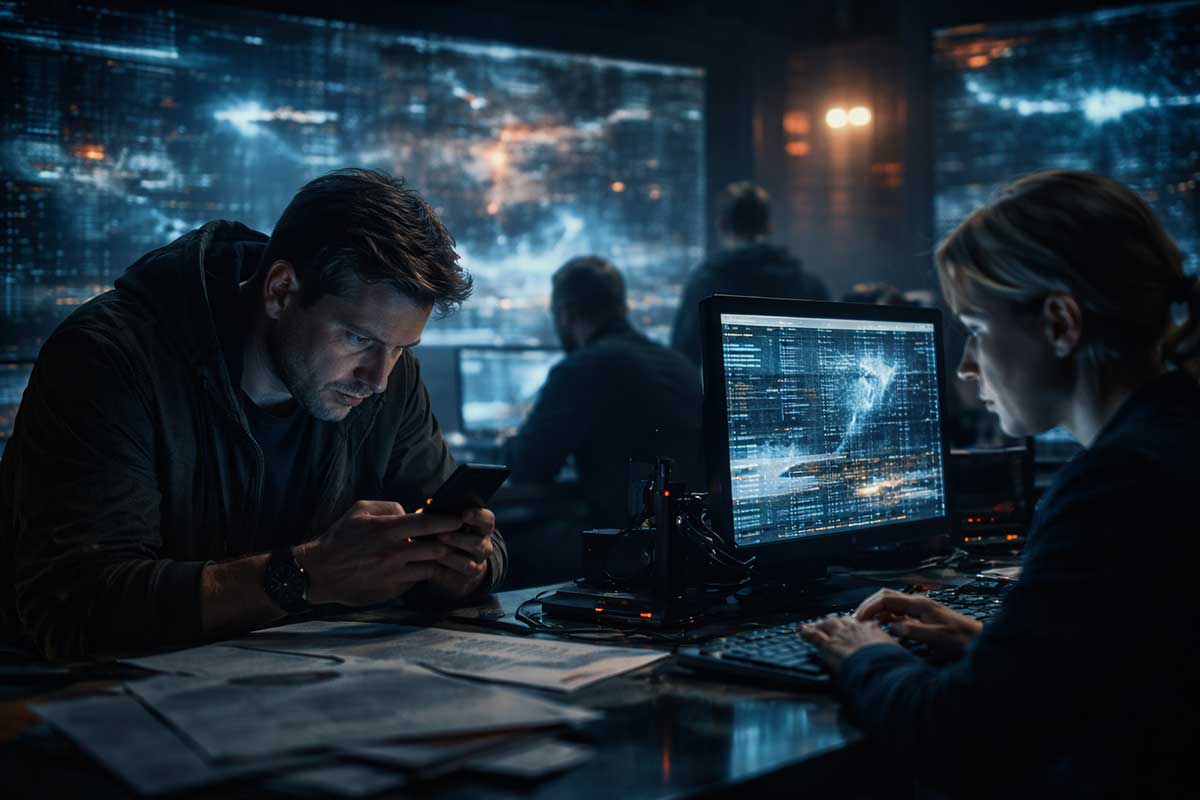
Yuval Noah Harari:
We have spoken about armies, governments, and religion. Now we come to a stranger battlefield — one that is often unseen. In earlier ages, war was recognized by uniforms, borders, artillery, and invasion. Today, a nation can be weakened through code, satellites, networks, markets, narratives, and data. Craig, your text included the haunting phrase “weapons that burn without fire.” What does that mean to you?
Craig Hamilton Parker:
It suggests destruction without the old visible forms. Something can wound a nation deeply without cities visibly burning in the traditional way. Systems can be struck. Minds can be unsettled. Economies can be shaken. Fear can spread. In that sense, a nation may be under attack long before the public recognizes that war has begun.
Eric Schmidt:
That is exactly the shift. The battlefield is becoming computational. Whoever can shape information, disable infrastructure, penetrate communications, or alter decision speed gains enormous leverage. You no longer need to destroy every target physically if you can blind, confuse, delay, or manipulate the systems that hold society together.
Edward Snowden:
And what makes that especially dangerous is invisibility. The public expects war to announce itself. But the architecture for silent control is already built into normal life — phones, cloud systems, payment rails, internet backbones, location data, facial recognition, metadata. The same systems that make modern life convenient can be turned into mechanisms of surveillance, coercion, and influence.
P. W. Singer:
War now stretches across domains at once. Drones in the air, malware in networks, satellites overhead, disinformation in social feeds, autonomous systems in logistics, and private companies running infrastructure once handled by states. The old line between civilian and military space is getting blurred. That changes everything.
Shoshana Zuboff:
And there is a deeper layer still. Societies are already being conditioned by systems that monitor behavior, predict response, and shape choices. If a society becomes habituated to constant extraction of attention and data, then influence becomes ambient. In that environment, war may be less about conquering territory and more about steering behavior at scale.
Yuval Noah Harari:
So the question is not only what weapons can destroy, but what systems can direct. In previous centuries, the fear was that machines would kill people. Today the fear is also that systems may govern perception itself. Craig, do you think the public is prepared for that kind of war?
Craig Hamilton Parker:
No, not at all. Most people still think in old categories. They imagine war as an event over there. But invisible warfare enters daily life. It changes what people trust, what they fear, what they believe is true, how secure they feel about money, communication, and leadership. It is intimate. It reaches into the ordinary.
Eric Schmidt:
And speed matters. Machine-speed conflict can outpace human deliberation. If cyber attacks, autonomous responses, sensor fusion, and military AI systems interact during a crisis, leaders may have less time than ever to interpret events. That makes miscalculation more likely.
Edward Snowden:
It also makes secrecy more powerful. If a government claims a cyber threat, a foreign intrusion, or a national security emergency, the public usually cannot verify it independently. That creates enormous scope for hidden action, manipulation, or expansion of state powers under the banner of protection.
P. W. Singer:
Right. In classic warfare, the damage is visible. In modern hybrid warfare, a state can deny, obscure, and outsource. A militia launches one strike, a hacker group launches another, a contractor runs a system, a bot network spreads panic, and nobody is quite sure where the chain begins. Ambiguity becomes a weapon.
Shoshana Zuboff:
And ambiguity weakens democratic resistance. Citizens cannot respond clearly to harms they cannot locate. They feel destabilized, but the source remains diffuse. That is fertile ground for dependency. People become more willing to surrender autonomy in exchange for promised safety.
Yuval Noah Harari:
That leads us to a hard distinction: what is more dangerous in the long run — weapons that destroy bodies, or systems that quietly manipulate thought, truth, and collective behavior?
Craig Hamilton Parker:
I would say the second, because if minds are manipulated, then people may welcome what harms them. They may not know how deeply they have been turned. A missile can destroy a building, but distortion of truth can hollow out a civilization from within.
Eric Schmidt:
From a strategic standpoint, both matter, but Craig has a point. Physical destruction is terrible, yet it is often legible. Cognitive and informational manipulation can spread more widely and last longer. It alters institutions, elections, trust, military readiness, and national cohesion.
Edward Snowden:
And once surveillance becomes normalized, people start censoring themselves. They internalize the watcher. That changes a society at the behavioral level. You do not need to arrest everyone if you can make them anticipate observation. That is a form of silent power.
P. W. Singer:
There’s a military version of that too. If commanders no longer trust their systems, if communications are compromised, if GPS can be spoofed, if logistics software is altered, then the battlefield becomes psychologically unstable. The enemy doesn’t need to win every exchange. It only needs to make the system unreliable.
Shoshana Zuboff:
Unreliability is itself a form of domination. When people cannot trust what they see, hear, or measure, they become more dependent on centralized interpreters. Then those who control the interpretive systems acquire extraordinary power.
Yuval Noah Harari:
That is the paradox of the information age. More information does not automatically produce more truth. It can produce more confusion. And confusion can become strategic terrain.
Craig Hamilton Parker:
Which is why I keep returning to this sense that war is no longer just on the horizon. Parts of it may already be underway in hidden form. Not necessarily with open declarations, but through interference, destabilization, and silent corrosion.
Eric Schmidt:
That’s plausible. Major powers already probe one another continuously. They test networks, map vulnerabilities, shape platforms, and watch how quickly institutions respond. The boundary between peacetime competition and wartime preparation is thinner than people think.
Edward Snowden:
And much of the public has no idea how much can be done quietly. Data trails reveal social structure. Payment systems reveal behavior. Devices reveal movement. Platforms reveal sentiment. If you can map a society deeply enough, you can pressure it in ways that are highly targeted.
P. W. Singer:
And hybrid conflict works precisely because societies are interconnected. Banking, transport, healthcare, media, water, power, logistics — these are not side systems. They are civilization’s bloodstream. You don’t need to occupy a capital if you can make the bloodstream stutter.
Shoshana Zuboff:
Or if you can convince people that collapse is imminent, that institutions are lying, that neighbors are enemies, that panic is rational. Behavioral destabilization is now a genuine strategic capacity.
Yuval Noah Harari:
Then let me sharpen the problem. If a nation’s economy, trust, communications, and psychology can be damaged without visible invasion, what does “defense” even mean now?
Eric Schmidt:
Defense means resilience. Not only military strength, but secure infrastructure, hardened networks, rapid recovery, trustworthy institutions, and decision systems that remain humanly accountable under pressure.
Edward Snowden:
It should also mean limits. A state that responds to every threat by building total surveillance may defend itself externally while destroying its own freedom internally.
P. W. Singer:
It means adaptation too. Militaries and governments must train for blended conflict, where cyber, narrative, economic, and kinetic pressures arrive together.
Shoshana Zuboff:
And defense must include protection of human autonomy. If citizens become mere data points to be optimized, then the society has already surrendered something vital, no matter how secure its networks appear.
Craig Hamilton Parker:
I’d add something spiritual. A society that loses its center inwardly becomes easier to manipulate outwardly. If people are afraid, distracted, fragmented, and alienated from truth, then invisible weapons find easy entry. Inner disorder invites outer control.
Yuval Noah Harari:
That is a profound point. Technology magnifies what already exists in human systems. It does not create all weakness from nothing. It accelerates it, scales it, and renders it more difficult to perceive.
Eric Schmidt:
Yes, technology is leverage. It amplifies competence and amplifies chaos.
Edward Snowden:
And it amplifies the reach of those who operate in secret.
P. W. Singer:
And the speed of escalation.
Shoshana Zuboff:
And the commercialization of control.
Yuval Noah Harari:
Then perhaps the true horror of invisible war is not only that it hides the attacker. It also hides the moment at which ordinary life has already become part of the battlefield.
Craig Hamilton Parker:
Yes. And once people realize that, they may feel helpless. But that is exactly when discernment matters most. Not paranoia, but discernment. Not surrender to fear, but clarity about how power now moves.
Yuval Noah Harari:
A fitting place to pause. We began with weapons without visible flame, and we arrive at a world in which war may spread through code, systems, perception, and behavior long before it is named. That leaves one final question for us: if crisis now reaches into governments, beliefs, and the hidden architecture of daily life, can humanity still pass through such upheaval into wisdom rather than deeper fear?
Topic 5: Can Global Crisis Awaken Humanity Spiritually?
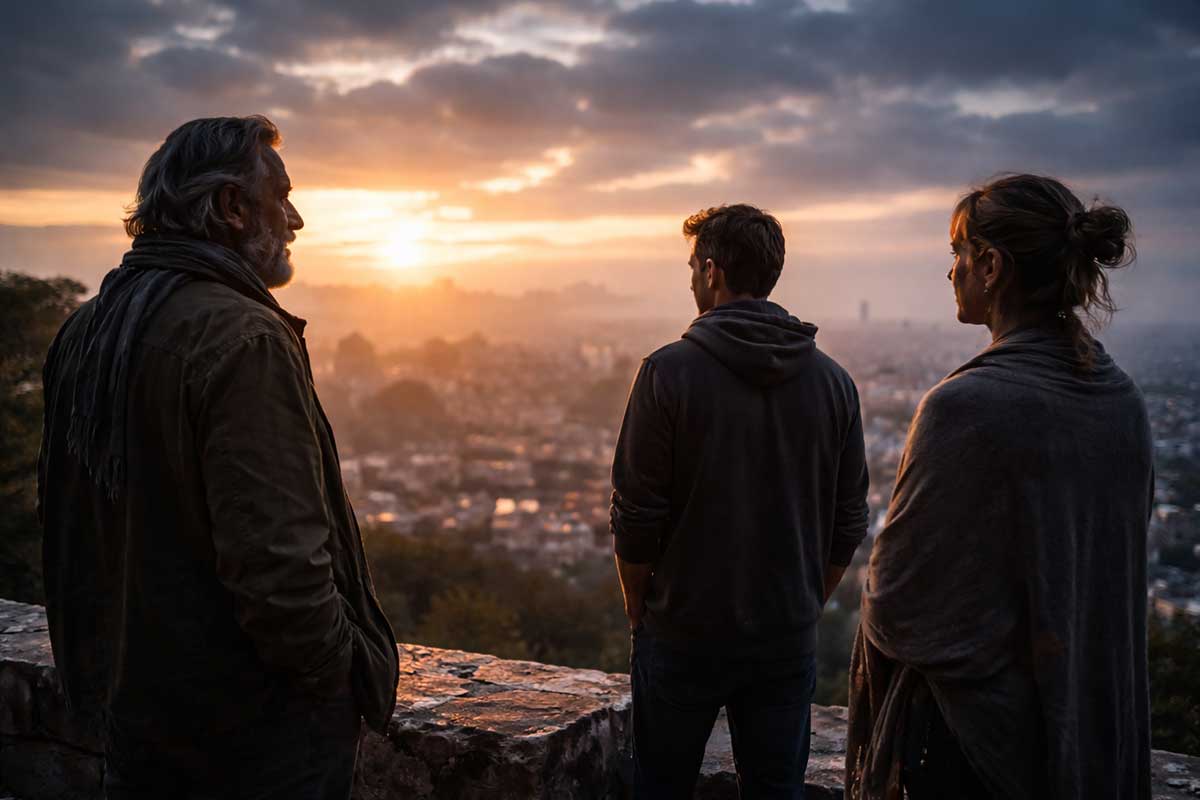
Eckhart Tolle:
We have spoken of war, collapse, religion, and invisible systems of control. Now we arrive at the deepest question: can a time of collective crisis awaken humanity, or does it more often drive people into fear, hatred, and unconsciousness? Craig, your vision carries both warning and hope. Why do you believe awakening can come through such darkness?
Craig Hamilton Parker:
Because collapse strips away illusion. When life is comfortable, people can remain asleep for a very long time. They live inside distraction, routine, identity, and false security. But when systems shake, when governments fail, when fear enters the air, people begin asking deeper questions. Who am I really? What can be trusted? What matters if the outer structure no longer holds? Crisis can force the soul to turn inward. It can become a doorway.
Carl Jung:
Yes, though one must add a warning. Crisis does not automatically awaken consciousness. It can do the opposite. It can unleash the shadow. In times of disorder, people do not merely seek truth. They seek certainty, enemies, belonging, and permission to project their darkness outward. So the spiritual value of crisis depends on whether the individual can face the shadow within rather than merely discovering it in others.
Joseph Campbell:
That is why so many traditions place descent before renewal. The hero does not awaken in comfort. He enters the forest, the underworld, the wasteland. Civilizations do the same. A dark age often precedes a new symbolic birth. The question is whether a people can read the crisis as initiation rather than only as catastrophe.
Thich Nhat Hanh:
Suffering can open the heart, but only if we know how to hold it. If fear comes and we do not breathe with it, it becomes anger. If pain comes and we do not embrace it, it becomes blame. Awakening in a time of crisis begins with the smallest thing: to stop, to breathe, to return to the present, and not be carried away by the storm inside us.
Rudolf Steiner:
And there is a larger movement at work as well. Humanity evolves through stages of consciousness. Materialism, conflict, fragmentation — these are not the end of the story. They may be symptoms of a transition. The danger comes when human beings become trapped in the outer machinery of life and forget their spiritual nature. Then crisis becomes destructive. But if crisis compels a rediscovery of spirit, then it becomes transformative.
Eckhart Tolle:
So perhaps we must separate two possibilities. One is suffering that deepens unconsciousness. The other is suffering that breaks identification with unconsciousness. Craig, when you speak of awakening after turmoil, what exactly is awakening?
Craig Hamilton Parker:
It is not mass optimism. It is not people suddenly becoming perfect or peaceful. It is deeper than that. It is a recognition that the outer world cannot be our only foundation. Awakening means people begin to sense that they are more than fear, more than tribe, more than politics, more than the narratives they have been fed. The old identities begin to crack, and something truer tries to emerge.
Carl Jung:
That “something truer” must include integration. Otherwise awakening becomes fantasy. Many people speak of light and transcendence, yet remain unacquainted with their own resentment, pride, and appetite for destruction. Real transformation asks something harder. It asks us to admit that the same psyche capable of compassion is also capable of atrocity. A crisis reveals this with terrifying clarity.
Joseph Campbell:
And yet the revelation of darkness is part of the mythic process. The dragon guards the treasure. The wasteland hides the grail. The broken kingdom is not merely broken; it is waiting for a consciousness capable of renewing it. Crisis is meaningful when it summons courage, humility, and participation in something greater than the frightened ego.
Thich Nhat Hanh:
But that renewal does not begin in abstraction. It begins in the way we speak, walk, breathe, listen, and hold one another’s pain. When a society is afraid, each person’s consciousness matters. To sit with suffering without becoming suffering — this is already peace work.
Rudolf Steiner:
Yes, and the spirit does not awaken only in monasteries or through private meditation. It awakens in culture, education, art, community, and work. A civilization in crisis must renew the invisible foundations of its humanity, not only its institutions.
Eckhart Tolle:
There is a phrase I often return to: ego thrives on conflict because conflict strengthens form identity. “Me against you.” “My people against your people.” “My fear against your threat.” So a collective crisis can either intensify ego or expose its madness. Why do human beings so often seem to awaken only when comfort collapses?
Craig Hamilton Parker:
Because comfort sedates the deeper search. It is easier to ask spiritual questions when your old supports fail. The tragedy is that many people need shock before they look beyond the surface of life. But perhaps that has always been true. The soul is often nudged gently at first, then more sharply if it refuses to listen.
Carl Jung:
What is not made conscious comes to us as fate. A civilization that refuses inner work will encounter its unconscious externally — through leaders, mobs, wars, collective fantasies, and ruinous projections. So yes, collapse may awaken, but only because what was ignored inwardly becomes unavoidable outwardly.
Joseph Campbell:
That is beautifully said. Myth speaks of this again and again. Refuse the call, and the world grows narrower. Accept the call, and even pain becomes part of the road. The danger for modern civilization is that it has abundant means and thin meaning. When meaning thins, crisis becomes incomprehensible rather than initiatory.
Thich Nhat Hanh:
And when meaning is lost, people cling to anger. Anger gives a false sense of solidity. But if we can touch the suffering beneath anger, compassion becomes possible. That is where awakening begins in a wounded world.
Rudolf Steiner:
Compassion, yes, but joined with spiritual discernment. Humanity must learn to see beyond surfaces. If we remain fixated only on material events, we will respond mechanically to crises that demand inward development. The future depends on whether enough people awaken to the moral and spiritual dimensions of existence.
Eckhart Tolle:
Let me press the difficult side. Can collective suffering truly deepen consciousness, or does it usually harden fear, tribalism, and ego unless there is deliberate inner work?
Carl Jung:
Left to itself, suffering often hardens. One must be honest. Pain does not ennoble automatically. It may embitter, brutalize, or regress. The possibility of awakening enters only when suffering becomes reflected upon, symbolized, and integrated.
Thich Nhat Hanh:
Yes. If there is no mindfulness, suffering becomes more suffering. If there is mindfulness, suffering may become understanding.
Joseph Campbell:
And if there is no story worthy of sacrifice, suffering becomes absurd. Human beings need symbolic frameworks that turn ordeal into meaning. Without that, crisis collapses into panic or nihilism.
Rudolf Steiner:
That is why leadership matters — not merely political leadership, but spiritual and cultural leadership. A society in upheaval needs voices that can point beyond fear without denying reality.
Craig Hamilton Parker:
I agree. I do believe teachers will arise, but I do not think they will all look like traditional prophets. Some may be very ordinary outwardly. The awakening may come through many people remembering what they already carry within. The great change may not be one figure descending from above, but humanity beginning to hear its own deeper conscience.
Eckhart Tolle:
That is very important. Awakening is often imagined as an external event — some dramatic arrival, some final revelation. But true transformation occurs when identification with fear begins to loosen in the individual. The collective then shifts through the many, not merely through the one.
Carl Jung:
Which returns us to responsibility. One must not use the language of awakening to escape history. The work is not to float above the world, but to become conscious within it.
Joseph Campbell:
Yes. The return from the underworld is part of the journey. Insight must be brought back to the village.
Thich Nhat Hanh:
And offered as peace, not superiority.
Rudolf Steiner:
As service, not spectacle.
Craig Hamilton Parker:
Then perhaps the spiritual message of this dark period is not “wait for rescue,” but “become more real.” Become less manipulable. Less reactive. Less asleep. More inwardly grounded. More capable of truth. More aware that the divine is not far away, but pressing from within.
Eckhart Tolle:
That may be the clearest answer of all. Genuine spiritual awakening in a time of war and collapse is not escape from the world. It is a new way of seeing and acting within it.
Carl Jung:
And a willingness to face the shadow without worshiping it.
Joseph Campbell:
To accept the ordeal without losing the mythic horizon.
Thich Nhat Hanh:
To breathe in fear and breathe out compassion.
Rudolf Steiner:
To remember spirit in an age hypnotized by matter.
Craig Hamilton Parker:
And to trust that darkness, though real, is not final.
Eckhart Tolle:
Then let us end there. A civilization in crisis stands at a threshold. One path leads deeper into fear, identification, and destruction. The other leads through suffering into consciousness. The question is not only what will happen to the world. The question is what will awaken in us as it does.
Final Thoughts by Craig Hamilton Parker
Having listened to all of these perspectives, I’m left with the feeling that the deepest issue is not simply whether one war spreads, or whether one government falls, or whether one region becomes unstable. It is that the world seems to be entering a testing time in which many hidden weaknesses are being exposed at once. Political systems, religious tensions, technological dangers, and the human psyche itself all seem to be under strain. That is why this moment feels so charged.
Yet I do not believe such periods come only to destroy. They also reveal. They strip illusion away. They force us to see what has been ignored, postponed, or covered over. A government may fall because it has lost truth. A conflict may spread because too many forces have been left unresolved. A society may become vulnerable to hidden warfare because inwardly it has become fragmented and unsure of itself. In that sense, outer crisis often reflects an inner condition.
Still, I would not want anyone to leave with despair. Dark times can call forth something real in people. They can wake conscience. They can break false certainty. They can remind us that our deepest security never truly came from governments, markets, weapons, or media. It came from something inward — from the soul, from moral clarity, from spiritual depth, from the capacity to remain human when fear is pushing everyone else toward panic or hatred.
So, for me, the real question is not only what happens to Iran, or to nations, or to the world order. The real question is what happens within us as these pressures rise. Do we become more divided, more manipulable, more angry, more lost? Or do we become more awake, more grounded, more honest, more able to see through the noise? That, I think, is where the true battle lies.
And if there is hope ahead, it may not arrive with fanfare. It may begin quietly, person by person, as people recover their inner center and refuse to hand their minds over to fear. That is how a better age begins — not all at once, but through the awakening of human beings who choose truth over panic, conscience over hatred, and spirit over despair.
Short Bios:
Craig Hamilton Parker — British psychic medium, author, and public commentator known for blending prophecy, intuition, and spiritual reflection in his discussions of world events and human destiny.
John Mearsheimer — Political scientist and leading realist thinker in international relations, known for his sharp analysis of great-power rivalry, deterrence, and geopolitical conflict.
Henry Kissinger — Diplomat and strategist whose work shaped modern U.S. foreign policy, widely associated with balance-of-power thinking and hard-edged statecraft.
Fareed Zakaria — Journalist, author, and global affairs commentator known for explaining international politics, diplomacy, and shifts in world order to a broad audience.
Tucker Carlson — Media personality and political commentator known for populist critiques of elite narratives, foreign intervention, and establishment power.
Niall Ferguson — Historian and author focused on empires, civilizational change, finance, and the long historical forces behind political upheaval.
Peter Zeihan — Geopolitical strategist and author known for linking geography, demographics, energy, and supply chains to the rise and weakness of states.
Ray Dalio — Investor and macro thinker known for studying debt cycles, internal conflict, and the recurring patterns behind the rise and decline of nations.
Victor Davis Hanson — Historian and commentator known for writing on war, classical history, leadership, and the cultural foundations of national strength.
Douglas Murray — Author and cultural critic known for examining Western identity, political strain, social fragmentation, and civilizational confidence.
Karen Armstrong — Religious historian and writer known for her deep work on the world’s faith traditions, sacred history, and the role of religion in conflict and reconciliation.
Reza Aslan — Scholar of religion and author known for exploring the intersection of faith, identity, politics, and the historical evolution of religious belief.
Bishop Robert Barron — Catholic bishop, speaker, and theologian known for presenting Christian thought in a public, philosophical, and culturally engaged way.
Jordan Peterson — Psychologist, author, and public intellectual known for discussions of myth, meaning, order and chaos, and the psychological depth of human belief.
Rabbi Jonathan Sacks — Rabbi, philosopher, and moral voice known for his writings on covenant, human dignity, religious responsibility, and the ethics of difference.
Yuval Noah Harari — Historian and bestselling author known for analyzing technology, information systems, power, and the future of humanity.
Eric Schmidt — Technology leader and former Google CEO known for his views on artificial intelligence, digital infrastructure, and the strategic impact of emerging technology.
Edward Snowden — Whistleblower and privacy advocate known for exposing mass surveillance systems and raising global debate about state power and civil liberties.
P. W. Singer — Futurist and defense expert known for writing on drones, cyberwarfare, military innovation, and the changing nature of conflict.
Shoshana Zuboff — Scholar and author known for her work on surveillance capitalism, behavioral data, and the hidden systems shaping modern life.
Eckhart Tolle — Spiritual teacher and author known for teaching presence, inner stillness, and awakening through freedom from ego and compulsive thought.
Carl Jung — Foundational psychologist known for ideas such as the collective unconscious, archetypes, shadow, and the spiritual dimension of human development.
Joseph Campbell — Mythologist and writer known for showing how ancient story patterns, symbols, and the hero’s journey shape human meaning.
Thich Nhat Hanh — Zen teacher, poet, and peace advocate known for mindfulness, compassion, and practical spiritual wisdom in times of suffering.
Rudolf Steiner — Philosopher and spiritual thinker known for teachings on consciousness, human development, and the inner evolution of civilization.
Leave a Reply