

|
Getting your Trinity Audio player ready...
|

Rabbi Lord Jonathan Sacks:
There are moments in history when a people must pause—not to retreat, but to remember.
Not to lament, but to listen.
In 2025, the Jewish people stand not merely at a crossroads, but at a confluence.
Of ancient values and modern velocity.
Of deep memory and digital noise.
Of sovereignty and scattered identity.
We are called not only to survive—but to serve.
Not only to resist darkness—but to radiate light.
And so I welcome you to this gathering.
A global table of minds and hearts—leaders, thinkers, builders, and storytellers.
Together, they will wrestle with questions we can no longer avoid:
– Can democracy endure in a world shaped by algorithms?
– Can capitalism be redeemed by conscience?
– Can Israel still unite a global people fractured by distance and ideology?
– Can memory survive when truth itself is contested?
– And can those who hold power truly lead with humility?
This is not just a Jewish conversation. It is a human one—rooted in Jewish wisdom, but relevant to the world.
For we were never chosen for privilege. We were chosen for responsibility.
Let the dialogue begin.
(Note: This is an imaginary conversation, a creative exploration of an idea, and not a real speech or event.)

Topic 1: The Future of Democracy in the Age of AI and Disinformation

Participants:
– Mark Zuckerberg (Meta CEO)
– Antony Blinken (U.S. Secretary of State)
– George Soros (Philanthropist, Open Society Foundations)
– Larry Fink (CEO, BlackRock)
– Steven Spielberg (Director, Shoah Foundation founder)
Moderator: Fareed Zakaria
🎤 Opening by Fareed Zakaria
"Thank you all for joining this roundtable at such a critical juncture in human history. As we enter 2025, democracy stands at a precipice—tested not just by regimes and revolts, but by algorithms, deepfakes, and disinformation machines.
Let’s begin with this:
What’s the greatest threat AI and disinformation pose to democracy—not just politically, but socially and spiritually?
George Soros:
"The greatest threat isn’t technological—it’s existential. AI magnifies everything: lies spread faster, echo chambers deepen, and the line between reality and fiction vanishes. Democracy depends on shared truth, and without it, we’re governed by illusion. That’s not just political decay—it’s moral decay."
Mark Zuckerberg:
"I agree, and I take responsibility. Platforms like mine are now part of the democratic infrastructure. But the real threat is that AI is enabling weaponized narratives, faster than we can moderate. The challenge is building tools that foster truth and diversity of thought, not just engagement."
Steven Spielberg:
"Storytelling shaped civilization. Now AI tells the stories—and often without soul or responsibility. When history is rewritten by bots, and identity is shaped by digital mirrors, we don’t just lose democracy—we lose our shared humanity."
Larry Fink:
"From an economic lens, the crisis is trust. Disinformation erodes faith in institutions—governments, media, even markets. If people believe the system is rigged or false, they stop investing—not just financially, but civically."
Antony Blinken:
"At the state level, we’re already fighting information warfare—AI-generated propaganda, election interference, destabilization via narrative. But the spiritual danger is the cynicism it breeds. Democracy can’t thrive where citizens no longer believe in facts, or each other."
Fareed Zakaria:
"Thank you. Let me take that further:
In a world increasingly shaped by algorithms, how can we preserve human agency and democratic will?
Antony Blinken:
"We need digital diplomacy, not just cybersecurity. We must engage tech companies, civil society, and international partners to craft global norms. But it also starts at home—with media literacy, civic education, and rebuilding public trust."
Larry Fink:
"Transparency. Algorithms shouldn’t be black boxes. At BlackRock, we advocate for AI governance that protects user autonomy and prevents manipulation. Democracies must require algorithmic accountability—before manipulation becomes invisible and irreversible."
Steven Spielberg:
"Agency comes from story and memory. We must teach young people to recognize truth, context, and empathy. It’s not enough to program smarter AI—we must nurture wiser humans. Technology will always evolve, but our moral compass must lead."
George Soros:
"Regulation without imagination is useless. We need moral frameworks guiding AI. Treating it like just another tool is naïve. AI shapes perception, identity, even ethics. Preserving human agency means ensuring AI serves democratic values—not the other way around."
Mark Zuckerberg:
"We’ve learned hard lessons. Giving users more control over what they see, reducing algorithmic bias, and boosting credible sources are part of it. But we also need collaboration across platforms—this isn’t something Meta can solve alone."
Fareed Zakaria:
"Final question—and perhaps the most personal:
What responsibility do each of you bear, personally or professionally, for protecting democracy in this new era?
Steven Spielberg:
"As a storyteller, I bear the responsibility of truth with heart. I have to tell stories that awaken—not just entertain. Stories can heal division or deepen it. My role is to remind us who we are and what we must protect."
Mark Zuckerberg:
"I’ve made mistakes, and I’m working to correct them. My responsibility is to make sure technology empowers, not divides—to invest in safety, transparency, and human-centered design."
George Soros:
"I have spent decades funding democratic institutions. But more than funding, my responsibility is to speak uncomfortable truths—even when they’re unpopular. Silence is complicity."
Larry Fink:
"I lead one of the most powerful financial institutions. My duty is to invest in a future where freedom, stability, and sustainability coexist. I must ensure that capital flows toward systems that uphold democracy—not undermine it."
Antony Blinken:
"As Secretary of State, I bear daily responsibility. But as a Jew and the descendant of Holocaust survivors, I know that truth and freedom are fragile gifts. I will defend them relentlessly—not just in policy, but in principle."
🧭 Final Thoughts by Fareed Zakaria
"This isn’t just a question of technology. It’s a question of who we become when machines can lie better than people—and faster. If democracy is to survive, it must evolve—not just in law or code, but in conscience.
Thank you, gentlemen, for helping us take the first steps toward that evolution."
Topic 2: Can Jewish Values Guide a Post-Capitalist World?

Participants:
– Larry Fink (CEO, BlackRock)
– Janet Yellen (U.S. Secretary of the Treasury)
– George Soros (Investor & Philanthropist)
– Yuri Milner (Tech Investor & Breakthrough Prize co-founder)
– Ronald Lauder (President, World Jewish Congress)
Moderator:
Thomas Friedman
(Pulitzer-winning columnist, author of "Thank You for Being Late", and a leading voice on globalization and ethics)
🗣️ Opening by Thomas Friedman
“In a world where late-stage capitalism is being questioned—from environmental collapse to inequality and digital feudalism—we must ask:
What role can Jewish ethical tradition—rooted in justice, stewardship, and human dignity—play in guiding us beyond capitalism as we know it?
So let’s begin with this:
What Jewish value do you think the global economy needs most today—and why?
George Soros:
"I’d say Tzedek—justice. Capitalism without justice becomes predatory. The market must serve society, not dominate it. Jewish tradition insists on balancing profit with purpose. That’s the value I’ve tried to embody with Open Society Foundations."
Yuri Milner:
"For me, it’s Chochma—wisdom. In tech investing, I’ve seen brilliant inventions cause harm because wisdom was missing. Jewish thought encourages foresight over speed, something tech and finance often forget."
Ronald Lauder:
"The world desperately needs Kavod HaBriyot—respect for human dignity. Jewish law puts human life and dignity at the center. If capitalism forgets that, it’s no longer a system—it’s an engine of exploitation."
Janet Yellen:
"I would point to Shalom Bayit—peace in the home. At scale, that means economic harmony, reducing inequality and stabilizing systems. A Jewish economy isn’t just productive—it’s relational. It must work for everyone."
Larry Fink:
"Tikkun Olam—repairing the world. That’s what ESG investing is at its best: aligning capital with climate, community, and long-term value. Markets can be used to heal, not just grow."
Thomas Friedman:
"Thank you. Here’s the next critical layer:
Can capitalism evolve from an extractive model to a regenerative one—and what would that look like in real terms?
Larry Fink:
"Absolutely. We’re seeing the shift already. Investors now demand sustainability and social return, not just profit. Regenerative capitalism means integrating climate resilience, worker dignity, and long-term thinking into every balance sheet."
George Soros:
"In theory, yes. But real change needs regulatory courage. The market won’t regulate itself. Without bold policies—wealth taxes, corporate accountability—capitalism will not regenerate. It will consume itself."
Janet Yellen:
"It’s possible, but we must redefine growth. GDP doesn't measure well-being, nor does the stock market reflect the health of our communities. We need new indicators of prosperity rooted in care, education, and security."
Ronald Lauder:
"Jewish values remind us that land must rest, the poor must eat, and wealth must circulate. Shmita—the sabbatical year—is a radical idea: regeneration through sacred pause. Maybe we need that at a global scale."
Yuri Milner:
"In science, we know that closed systems decay. Regeneration in economics might mean global investment in knowledge, space, longevity, and interdependence. Jewish tradition pushes us to dream big—and with purpose."
Thomas Friedman:
"Powerful. Final question:
What personal responsibility do you carry as a Jewish leader with economic power in shaping a more ethical future?
Janet Yellen:
"As Treasury Secretary, I try to uplift the whole, not just the fastest risers. I grew up with stories of struggle and resilience—those shaped how I see markets. Economics must be a servant of fairness."
Yuri Milner:
"I see myself as a steward of the future. The Breakthrough Prize was created to reward science that helps humanity. Jewish history teaches us to invest in vision, not just valuation."
Larry Fink:
"Running BlackRock means making decisions that affect trillions. That’s an enormous responsibility. My goal is to ensure capital rewards those who build, not exploit. My Jewish upbringing taught me to lead with conviction and accountability."
Ronald Lauder:
"My family taught me that wealth is a test, not a trophy. I try to use influence to protect memory, uphold dignity, and strengthen Jewish life worldwide. That’s not philanthropy—that’s legacy."
George Soros:
"I am often vilified for speaking truth to power. That’s part of the burden. But I believe Jewish ethics demand we speak out, disrupt, and repair. Especially when silence is profitable."
🧭 Final Thoughts by Thomas Friedman
"Jewish values have survived empires and exiles. Maybe they hold something enduring that capitalism needs: a sense that economies exist to serve people—not the other way around.
Thank you all for reminding us that the true wealth of a people is measured not by profit, but by purpose."
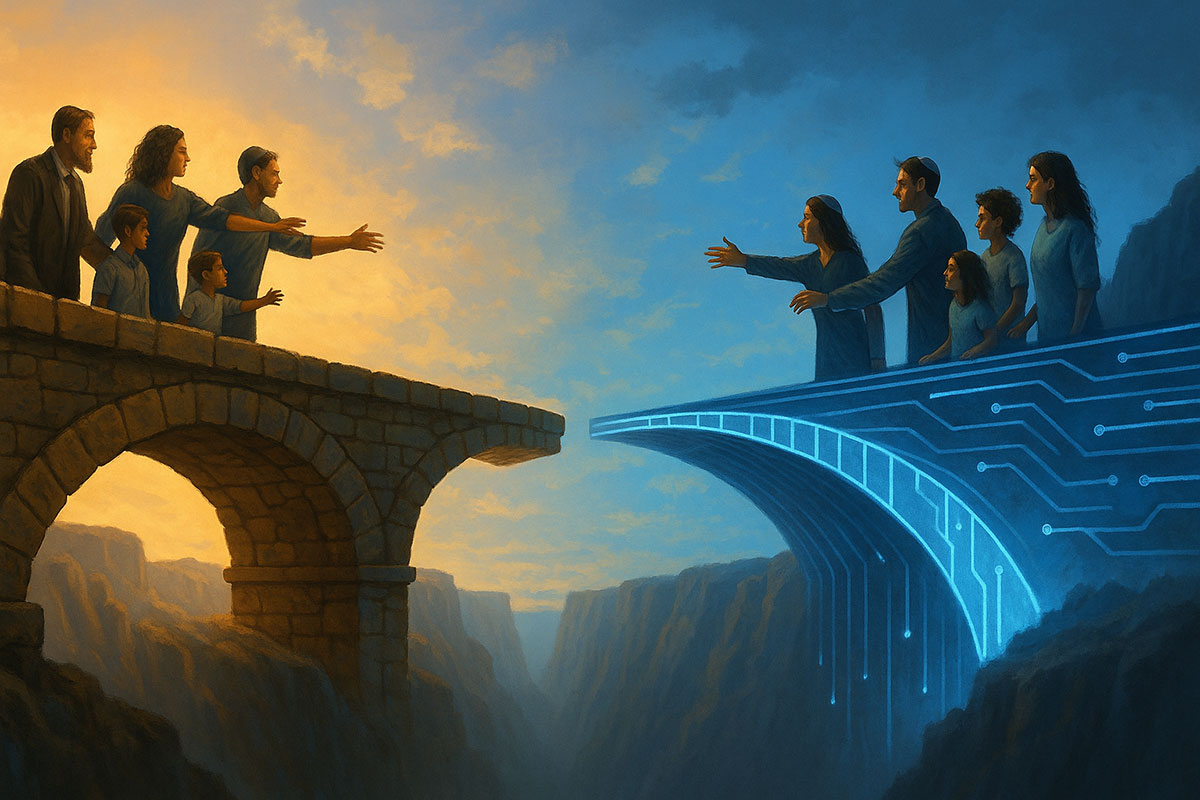
Topic 3: Israel and the Diaspora: A Relationship in Crisis or Renewal?
Participants:
– Benjamin Netanyahu (Prime Minister of Israel)
– Jared Kushner (Former Senior Advisor, U.S. government)
– Ronald Lauder (President, World Jewish Congress)
– Janet Yellen (U.S. Secretary of the Treasury)
– Mark Zuckerberg (CEO, Meta)
Moderator:
Bari Weiss
(Jewish journalist and founder of The Free Press, known for her thought leadership on Jewish identity, antisemitism, and free expression)
🗣️ Opening by Bari Weiss
“For generations, Israel was the heartbeat of Jewish identity, especially after the Holocaust. But in 2025, cracks are showing—politically, spiritually, generationally.
So let’s start here:
What is the biggest misunderstanding between Israel and the global Jewish diaspora today?”
Ronald Lauder:
"The biggest misunderstanding is mutual assumption. Israeli leaders often believe that global Jews will support them unconditionally. And many diaspora Jews assume Israel should reflect their liberal values. But neither side is listening deeply enough."
Mark Zuckerberg:
"A lot of my generation doesn’t even see Israel as central to their Jewish identity. The misunderstanding is that support for Israel doesn’t automatically equal alignment with its politics. Many young Jews feel spiritually Jewish, but politically distant."
Benjamin Netanyahu:
"The misunderstanding is that Israel exists to serve global Jews. No—Israel exists to protect the Jewish people from existential threats. Our decisions are made with survival in mind. We welcome input—but not judgment from afar."
Janet Yellen:
"I think both sides underestimate the emotional distance growing between them. American Jews are often secular and universalist, while Israeli politics are increasingly nationalist and religious. That’s not just a gap—it’s a rupture."
Jared Kushner:
"It’s not just misunderstanding—it’s mistrust. Diaspora Jews think Israel’s drifting from democracy; Israelis think diaspora Jews are assimilating into irrelevance. We need to rebuild trust without demanding total agreement."
Bari Weiss:
“Let’s go deeper.
In an age of rising antisemitism and global instability, what does Israel mean to the next generation of Jews—and how should that meaning evolve?”
Janet Yellen:
"To many young Jews, Israel used to symbolize resilience and rebirth. Now it’s seen—rightly or wrongly—as a place of conflict. We need to recast Israel as a space for moral courage, not just military strength."
Jared Kushner:
"Israel should be seen as a hub of Jewish innovation and diplomacy, not just politics. The Abraham Accords showed what's possible when we shift the narrative. That excites younger Jews more than ideological battles."
Mark Zuckerberg:
"We need to speak a language that Gen Z understands: identity, justice, pluralism. If Israel doesn't align with those values, young Jews will disconnect. Spiritual belonging can’t survive on tribal loyalty alone."
Benjamin Netanyahu:
"Israel doesn’t need to be liked—it needs to be respected and secure. If the next generation forgets that Jews were stateless for 2,000 years, they risk losing the very freedom they now take for granted."
Ronald Lauder:
"We need a renewed covenant—not just a historical tie. Israel must be a place all Jews feel invited to shape, not just defend. Without that sense of shared ownership, the next generation walks away."
Bari Weiss:
“Final question:
What personal responsibility do you hold in either bridging or deepening the gap between Israel and the diaspora?”
Ronald Lauder:
"As president of the World Jewish Congress, I try to be a translator between worlds. My job is to bring Jewish people together without pretending they all agree. Unity doesn’t mean uniformity."
Benjamin Netanyahu:
"My responsibility is to keep Israel strong. That strength—military, economic, moral—guarantees a future for world Jewry. I welcome criticism, but not at the expense of our survival."
Mark Zuckerberg:
"I don’t speak for all Jews, but I do shape the digital world they live in. I take responsibility for how Israel is seen—and misunderstood—online. Building bridges means moderating hatred while amplifying dialogue."
Janet Yellen:
"As an American Jew in public service, I try to model ethical leadership grounded in Jewish values. That includes being honest about where we’re aligned and where we’re drifting. Silence isn’t neutrality—it’s neglect."
Jared Kushner:
"I helped broker peace between Israel and Arab states. Now, I want to help broker peace within the Jewish world. We don’t need a monolithic narrative—we need a family reunion, messy and honest."
🧭 Final Thoughts by Bari Weiss
“The bond between Israel and the diaspora is no longer automatic—it must be earned, examined, and renewed.
We’re not just a people of memory—we’re a people of conversation. And maybe the future of Jewish unity depends not on agreement, but on the courage to stay in the room.”
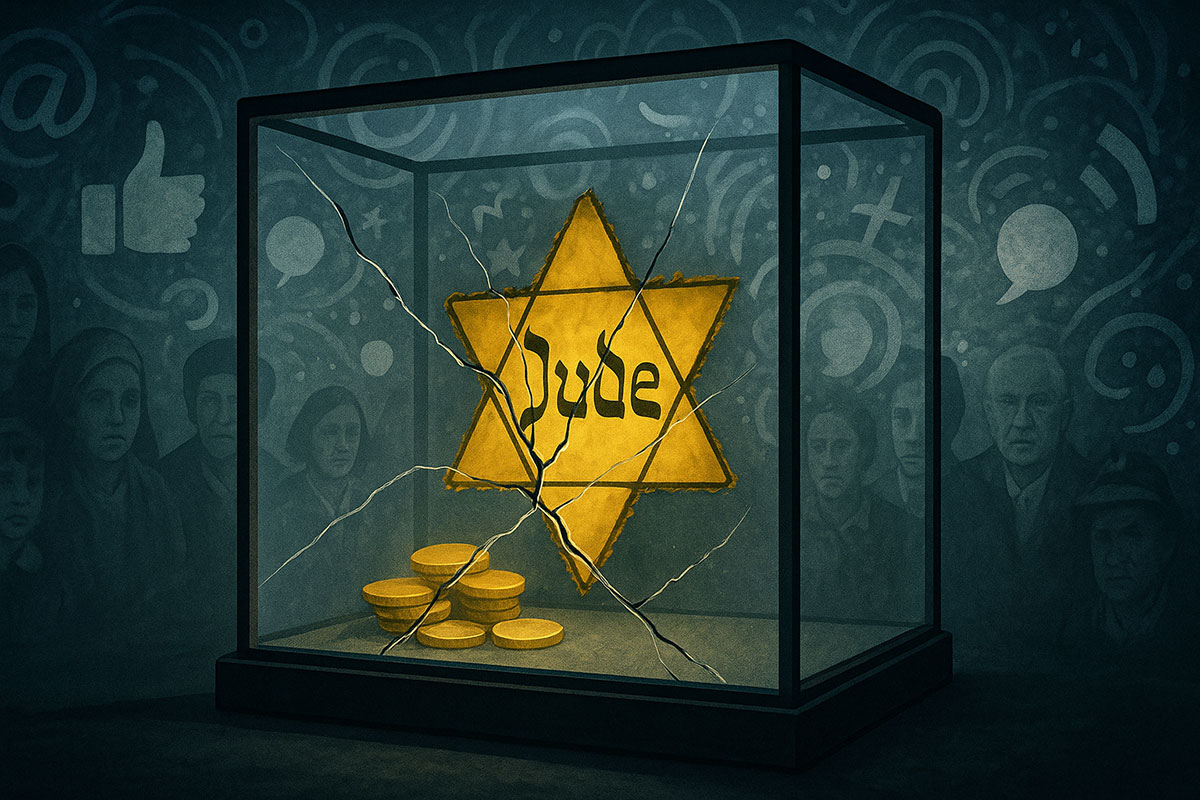
Topic 4: Memory and Identity in a Post-Holocaust, Post-Truth Era
Participants:
– Steven Spielberg (Filmmaker, founder of USC Shoah Foundation)
– Ronald Lauder (President, World Jewish Congress)
– Antony Blinken (U.S. Secretary of State, descendant of Holocaust survivors)
– Mark Zuckerberg (Meta CEO, shaping digital identity)
– George Soros (Philanthropist and Holocaust survivor)
Moderator:
Dara Horn
(Jewish novelist and scholar, author of "People Love Dead Jews," known for sharp insight into Jewish memory and cultural tension)
🗣️ Opening by Dara Horn
“Memory isn’t just about the past. It’s about who we choose to be today.
But in 2025, we live in a world where memory is manipulated, history is rewritten, and even the Holocaust is questioned or downplayed.So let’s begin with this:
What’s the greatest risk when memory becomes optional—or digitalized beyond recognition?
George Soros:
"When memory becomes optional, morality becomes flexible. If the Holocaust becomes a 'narrative' rather than a fact, then truth becomes political currency. And that’s how totalitarianism begins again."
Steven Spielberg:
"I founded the Shoah Foundation to preserve the stories in first-person voices—because memory, to be real, must be felt, not just studied. If AI or media trivialize trauma, we risk raising a generation desensitized to evil."
Antony Blinken:
"Memory is national security. When nations forget atrocities, they repeat them. My stepfather survived the camps. His story shaped my diplomacy. Without memory, we lose the compass that guards freedom."
Mark Zuckerberg:
"Digital memory is vast but shallow. My responsibility is to ensure platforms elevate truth, not erase it. Holocaust denial shouldn’t just be moderated—it should be confronted."
Ronald Lauder:
"The greatest risk is apathy. When survivors are gone, memory becomes abstract—and abstraction leads to forgetting. That’s why we build museums, fund education, and speak up every single time history is distorted."
Dara Horn:
“Let’s turn to the next challenge.
In a post-truth world, where identity is fluid and history is politicized, what does it mean to be Jewish? Is memory still central—or something else?”
Ronald Lauder:
"To be Jewish is to remember. Our holidays, our prayers, our very names echo memory. But we must translate that memory into meaning for a generation shaped by screens, not survivors."
Mark Zuckerberg:
"I grew up with tradition, but my kids are growing up in a global, digital world. Being Jewish today means choosing meaning—choosing identity, not inheriting it. Memory helps, but it must be interactive, not frozen."
George Soros:
"Jewish identity without memory is just folklore. But memory alone is not enough. We must ask: What moral clarity do we draw from that memory? Are we more compassionate? More just? If not, we’ve missed the point."
Antony Blinken:
"For me, being Jewish is about moral responsibility. Memory is a call to action. Whether in policy or personal life, it asks: What will you do so this never happens again?"
Steven Spielberg:
"It’s about storytelling. If young Jews don’t see their own reflection in Jewish stories, we’ve failed them. Memory must evolve into legacy—not obligation, but invitation."
Dara Horn:
“And finally:
What responsibility do you carry—personally or professionally—for keeping Jewish memory alive in a way that resists distortion and inspires action?”
Antony Blinken:
"In every negotiation, I think of the boy my stepfather once was, barefoot and starving in a camp. That memory guides my diplomacy. I owe it to him—and to every survivor—to make memory matter on the world stage."
Mark Zuckerberg:
"As the architect of a major platform, I have a duty to curate truth, not just content. We’ve removed denial content and elevated survivor voices. But I know the fight isn’t over. Memory needs a megaphone."
Ronald Lauder:
"I’ve invested in Holocaust education across continents. But I also work to ensure memory fuels unity—not division. That’s the future: not guilt, but shared mission."
Steven Spielberg:
"I film memory. I turn it into light and sound. That’s how I keep it alive. But now I mentor others—young filmmakers, educators—so that when I’m gone, the stories continue to speak."
George Soros:
"I survived because others acted. My responsibility is to ensure no group becomes the ‘other’ again—not Jews, not anyone. My life is a testament to memory that awakens conscience."
🧭 Final Thoughts by Dara Horn
“Memory is not nostalgia. It's resistance.
In a world addicted to novelty and convenience, Jewish memory is a form of moral stubbornness—a refusal to forget what should never be repeated.May we continue to remember—not just with candles, but with courage.”
Topic 5: The Moral Role of Power: Responsibility or Control?

Participants:
– Benjamin Netanyahu (Prime Minister of Israel)
– Jared Kushner (Investor, Diplomatic Strategist)
– Larry Fink (CEO, BlackRock)
– Yuri Milner (Tech Philanthropist, Science Visionary)
– Steven Spielberg (Director and Ethical Storyteller)
Moderator:
Rabbi Lord Jonathan Sacks
(posthumously imagined)
*(Philosopher, moral voice of modern Judaism, author of "Not in God's Name" and "The Dignity of Difference")
He serves here as the moral compass, inviting introspection from powerful leaders.
🗣️ Opening by Rabbi Jonathan Sacks (imagined voice)
“Power, in Jewish thought, is not inherently good or evil. It is a sacred trust—to protect, to elevate, to serve. The question is not whether power corrupts, but whether conscience can redeem it.
So let us begin:
What does moral power look like in your position—and how do you guard against its corruption?”
Jared Kushner:
"To me, moral power is silent diplomacy—the kind that creates peace, not headlines. But the temptation is ego, not ethics. I try to remember that impact matters more than applause."
Larry Fink:
"Moral power in finance means aligning trillions in assets with long-term good—climate, governance, worker dignity. The corruption comes from short-termism. I guard against that by pushing companies to think in generational terms."
Steven Spielberg:
"My power is cultural—storytelling that shapes how people see right and wrong. The corruption is vanity. I avoid it by telling stories that don’t glorify power—but question it. That’s where art becomes ethical."
Benjamin Netanyahu:
"I lead a nation surrounded by threats. Moral power means making hard decisions to protect life—even when unpopular. Corruption comes from fear or flattery. I keep my compass by remembering that Jewish sovereignty is sacred, not self-serving."
Yuri Milner:
"In science and tech, moral power is curiosity guided by purpose. We fund big ideas, but always ask: Will this help humanity? I avoid corruption by investing in wonder, not domination."
Rabbi Sacks:
“Now let me ask something deeper:
In our age of fragmentation, how can power be used to unify rather than divide? Is that even possible?”
Benjamin Netanyahu:
"Power often divides because truth is contested. But unity doesn’t mean uniformity. It means protecting a shared identity—in Israel’s case, Jewish identity—while making room for difference."
Larry Fink:
"Finance can unify by creating shared prosperity. Capitalism should be inclusive, not extractive. When people feel seen and secure, unity follows. But we must listen to those outside boardrooms."
Steven Spielberg:
"Stories unify. Whether it’s Schindler’s List or The Fabelmans, I try to make films that show our shared human longing—for love, for dignity, for redemption. That’s the quiet power that bridges gaps."
Yuri Milner:
"Science unifies. The search for truth transcends borders. I believe supporting global collaboration in physics, medicine, and space is a way to remind humanity of our common potential."
Jared Kushner:
"Diplomacy can unify when it's focused on outcomes, not ideology. The Abraham Accords didn’t erase difference—they created mutual interest and trust. That’s the model we need more of."
Rabbi Sacks:
“Final reflection:
What would it mean—for you personally—to lead with humility, knowing your influence touches millions?”
Larry Fink:
"It means constantly asking: Who benefits from this decision—and who’s left behind? Humility is knowing that stewardship matters more than status."
Jared Kushner:
"I wasn’t elected. That taught me to work quietly, focus deeply, and accept that legacy matters more than credit. Humility is remembering you’re just passing through history."
Benjamin Netanyahu:
"Humility is hard when you’re in charge. But I try to remember the generations who came before me—stateless, voiceless, defenseless. I lead not for me, but for them."
Steven Spielberg:
"It means making space for new voices. I’ve told my stories. Now I mentor others—to ensure the next storytellers are wiser, braver, and more compassionate."
Yuri Milner:
"Humility is cosmic. When you invest in space exploration or longevity, you realize how tiny and precious we are. That awareness keeps my ego grounded in wonder."
🧭 Final Thoughts by Rabbi Jonathan Sacks (imagined)
“Power without purpose is noise. Power without humility is danger.
But power with conscience—that can heal, uplift, and renew the world.
May you all continue to lead not just with strength, but with soul.”
Final Thoughts by Rabbi Lord Jonathan Sacks
We have listened to voices of power and humility.
Of warning and hope.
Of memory, mission, and meaning.
And if there is one thread that runs through them all, it is this:
The future does not belong to the powerful. It belongs to the responsible.
Jewish tradition teaches us not to flee from the world, but to elevate it.
To hold influence lightly, and integrity tightly.
To build bridges between past and future, between justice and joy.
We must not become a people who only remember.
We must become a people who renew—renew trust, renew truth, renew our sacred task.
In an age of noise, may we be melody.
In an age of division, may we be covenant.
In an age of haste, may we be wisdom.
And in all things, may we never forget:
The Jewish people were not chosen to rule.
We were chosen to remind the world what it means to be human.
Thank you.”
Short Bios:
Leave a Reply