

|
Getting your Trinity Audio player ready...
|

Introduction by Charlie Kirk
Welcome, everyone. Tonight we gather not to rehearse old arguments, but to wrestle with the most pressing challenges facing our nation. Poverty, immigration, education, family, and faith—these aren’t abstract policy points, they’re the very foundations of the American experiment. Too often our public square is filled with noise and division, where labels replace dialogue and slogans substitute for solutions. What we’re attempting here is different.
We’ve brought together 25 experts from across the spectrum—men and women who don’t always agree, but who have devoted their lives to searching for truth and building solutions. My role as moderator is not to hand you easy answers, but to press, to challenge, and to keep the focus on what matters: ideas that can actually restore hope and opportunity in America. Our goal tonight is simple but urgent—to cut through the rhetoric, confront the hard realities, and move toward common ground that can strengthen our communities and our country.
(Note: This is an imaginary conversation, a creative exploration of an idea, and not a real speech or event)

Topic 1: Poverty, Family, and Values

Participants:
- Thomas Sowell (Economist, cultural and economic roots of poverty)
- Robert Putnam (Harvard sociologist, social capital & family breakdown)
- Angela Rachidi (AEI scholar, family and anti-poverty policy)
- Isabel Sawhill (Brookings Institution, social policy, inequality)
- Arthur Brooks (Public policy scholar, compassionate conservatism)
Moderator: Charlie Kirk
Charlie Kirk’s Brief
“Tonight we’re tackling an issue at the very heart of our national debate: how to lift people out of poverty. For decades, government programs have poured trillions into welfare, housing, and healthcare, but many communities remain stuck. Some argue it’s about structural barriers, others say it’s about personal values. My first question is this: What concrete policies or cultural changes have actually been proven to move people from poverty to the middle class, and how can we scale them nationwide?”
Question 1: Proven Solutions to Escape Poverty
Angela Rachidi:
“I’ve studied safety-net programs extensively. What works best is combining work incentives with family stability. The Earned Income Tax Credit, for example, has proven to raise incomes and encourage employment. But the most consistent predictor of upward mobility is being raised in a two-parent household. Scaling solutions means encouraging family formation while ensuring work always pays more than benefits.”
Thomas Sowell:
“The evidence is clear: culture matters. We saw sharp declines in poverty before the Great Society programs expanded. Once government began subsidizing single parenthood, we reversed progress. The best way forward isn’t more programs, but restoring a culture that rewards responsibility—finishing school, getting a job, marrying before having children. These aren’t theories; they’re data-driven realities.”
Isabel Sawhill:
“Thomas is right that culture matters, but policy can help reinforce it. The ‘success sequence’—education, work, marriage—should be supported by better access to contraception, childcare, and job training. Young people don’t fail because they don’t value responsibility; they fail because the systems around them make responsibility harder to achieve. We need policies that make the right choices easier.”
Arthur Brooks:
“Both are true: values and systems work hand-in-hand. I call this ‘subsidiarity’—solutions should be closest to where problems occur, like families, churches, and communities. Policy should empower those local institutions, not replace them. Poverty programs that treat people with dignity—seeing them as assets, not liabilities—create transformation. We need to stop measuring compassion by money spent and start measuring it by lives changed.”
Robert Putnam:
“My research shows that when social capital erodes—fewer churches, weaker neighborhoods, disconnected families—children lose the networks they need to succeed. This isn’t about one policy lever; it’s about rebuilding trust in communities. Mentorship programs, local civic groups, and investment in schools matter as much as family structure. Scale comes not just from Washington, but from local bonds that hold people together.”
Charlie Kirk’s Next Question
“Thank you all. Let’s take it deeper. How do we reconcile the role of ‘values’—marriage, savings, responsibility—with the structural realities of poor schools, unstable jobs, or broken neighborhoods? Are values enough on their own?”
Question 2: Reconciling Values and Structures
Thomas Sowell:
“Values don’t exist in a vacuum—they’re tested by real-world conditions. But blaming structures for behavior misses the fact that groups facing the same obstacles achieve differently. Immigrant communities arrive with nothing and succeed because of cultural norms: hard work, family loyalty, discipline. If we keep excusing destructive choices by pointing to structures, we trap people in dependency.”
Robert Putnam:
“But Thomas, the problem isn’t just excuses—it’s unequal access to opportunity. When schools in wealthy suburbs invest twice as much per child as schools in poor neighborhoods, how do we expect the same outcomes? Values matter, but they flourish when institutions support them. A child with ambition but no decent school has an uphill climb. We need both personal and structural reform.”
Arthur Brooks:
“Robert’s right about institutions, but they can’t substitute for values. We can improve schools, but if children go home to instability, violence, or absent fathers, even the best teachers can’t overcome that. The key is aligning both—strong families supported by strong schools. Conservatives often stress values, progressives stress structures. The truth is, it’s the combination that transforms lives.”
Isabel Sawhill:
“I’d add that stability often requires economic security. Parents can’t model responsibility if they’re constantly on the brink of eviction. Paid family leave, affordable childcare, and wage supports strengthen families by reducing stress. Structural help gives people breathing room to exercise personal responsibility.”
Angela Rachidi:
“We can design programs that reinforce values instead of undermining them. For example, requiring work or training as a condition for benefits, while providing childcare so parents can actually fulfill that obligation. Too often, our programs create disincentives to work and marry. We should flip that so public policy reinforces the cultural habits that lead to mobility.”
Charlie Kirk’s Final Question
“Let’s get practical. If you could redesign one anti-poverty program today, what would it be and how would it encourage both independence and long-term stability?”
Question 3: Redesigning Programs for Independence
Isabel Sawhill:
“I’d start with universal childcare. It allows parents—especially mothers—to work, finish education, and escape poverty. Done right, it’s not just welfare; it’s an investment in the next generation. Independence comes when parents can balance work and family without impossible trade-offs.”
Thomas Sowell:
“I’d abolish welfare programs that pay people not to work or marry. The best anti-poverty program is a job. Government should focus on creating conditions for employment—low taxes, fewer regulations, safe neighborhoods—not writing endless checks. Dependency is not dignity.”
Angela Rachidi:
“I’d reform the Earned Income Tax Credit. Expand it to cover single adults without children, so work always pays more than welfare. Right now, too many young workers are discouraged because benefits taper off in ways that punish extra effort. Let’s fix that incentive structure.”
Arthur Brooks:
“I’d reimagine housing policy. Instead of locking poor families into failing neighborhoods with Section 8 vouchers, give them mobility to move to areas with stronger schools and job markets. When families relocate to places of opportunity, children’s life outcomes improve dramatically. That’s proven.”
Robert Putnam:
“My redesign would be community schools. They’re not just classrooms but hubs with after-school programs, mentors, and family services. This knits together the structural and cultural—raising kids within a web of support. When kids feel surrounded by caring adults, they’re more likely to adopt the very values Thomas emphasizes.”
Charlie Kirk’s Conclusion
“What we’ve heard is that escaping poverty requires both personal responsibility and supportive structures. Sowell reminds us that culture and values can’t be replaced by handouts. Sawhill and Putnam argue that opportunity must be real, not theoretical. Rachidi and Brooks bring practical policy redesigns—work incentives, mobility, dignity. My view is this: values are non-negotiable, but government must stop undermining them. If we can align policy with the timeless virtues of family, hard work, and responsibility, we won’t just reduce poverty—we’ll restore the American dream.”
Topic 2: Immigration & Border Policy

Participants:
- Mark Krikorian (Center for Immigration Studies — secure enforcement, immigration limits)
- Doris Meissner (Former INS commissioner — pragmatic reform advocate)
- Jason Riley (Wall Street Journal — market-oriented immigration perspective)
- Reihan Salam (Manhattan Institute — author, Melting Pot or Civil War?)
- Alejandro Mayorkas (Current DHS Secretary — real-world policymaker experience)
Moderator: Charlie Kirk
Charlie Kirk’s Brief
“Immigration is one of the most divisive issues in America today. Some argue our borders are overwhelmed and our citizens are paying the price. Others point to our tradition as a nation of immigrants and say compassion must lead. My first question is this: How can America maintain secure borders while keeping immigration fair, sustainable, and humane?”
Question 1: Secure, Fair, and Humane Immigration
Jason Riley:
“America has always thrived by welcoming ambitious newcomers, but we need orderly processes. Border chaos fuels resentment. The best path is more work visas tied to labor-market demand, combined with credible enforcement against illegal entry. That way we secure the border while ensuring the economy gets the workers it needs.”
Mark Krikorian:
“Jason, I disagree. The real problem isn’t just illegality—it’s scale. Even legal immigration is too high for our assimilation systems. We should reduce total immigration numbers, enforce laws strictly, and prioritize stability for citizens first. A humane policy starts by stopping the flow that overwhelms our schools, hospitals, and communities.”
Doris Meissner:
“I agree we need order, but enforcement alone doesn’t solve everything. A secure system requires modernized technology, efficient asylum processing, and real cooperation with countries of origin. If we provide clear, legal pathways while closing loopholes, fewer people will risk dangerous illegal crossings.”
Alejandro Mayorkas:
“As someone dealing with this every day, I can say it’s about balance. We’ve expanded lawful pathways, invested in border technology, and increased cooperation with allies. But the humanitarian crisis is real. We must process claims quickly, remove those who don’t qualify, and protect those fleeing true persecution. That’s both secure and humane.”
Reihan Salam:
“The long-term question is cultural integration. Even if we manage flows, if newcomers and host communities don’t share common norms and values, tensions rise. Sustainable immigration must go hand in hand with strong assimilation policies—civic education, English language acquisition, and reinforcement of American identity.”
Charlie Kirk’s Next Question
“Thank you. Let’s press further. What reforms to asylum, work visas, or green cards would create a fairer, faster, and safer immigration system that doesn’t overwhelm local communities?”
Question 2: Reforming Asylum and Legal Pathways
Mark Krikorian:
“The asylum system is the biggest loophole. Claims should be adjudicated outside the U.S.—in embassies or consulates abroad—so people can’t cross the border and disappear into the interior. That alone would cut down abuse massively. Work visas should also be capped tightly to protect U.S. workers’ wages.”
Doris Meissner:
“I’d focus on asylum processing speed. Right now, it takes years to decide claims, creating incentives to come illegally. With more judges and streamlined procedures, we can distinguish legitimate refugees from economic migrants. On work visas, we need flexibility—when industries truly need workers, visas should adjust accordingly.”
Reihan Salam:
“I’d emphasize green card reform. Our current system prioritizes family reunification over skills. We should shift to a merit-based model that selects immigrants who can thrive economically and socially. That makes the system more fair to both newcomers and citizens, and reduces the strain on struggling communities.”
Alejandro Mayorkas:
“We’ve already taken steps in this direction, but Congress must act. Updating outdated visa caps, expanding seasonal worker programs, and providing a pathway for Dreamers are essential reforms. Without legislative change, the executive branch can only patch holes in a broken system.”
Jason Riley:
“I’d caution against protectionism disguised as reform. Studies show immigrants often complement rather than replace native workers. If we streamlined work visas and matched them to labor demand, it would reduce illegal entry and benefit our economy. Faster, more responsive legal pathways are the best border security.”
Charlie Kirk’s Final Question
“Let’s cut to the heart. How should policymakers balance compassion for migrants with the responsibility to prioritize the needs of struggling American citizens, especially young workers?”
Question 3: Citizens First vs. Migrant Compassion
Reihan Salam:
“National solidarity has to come first. Citizens must know their government prioritizes their well-being. Compassion is real, but it cannot mean open borders. The right balance is limited, carefully selected immigration that strengthens—not weakens—the bonds of citizenship.”
Jason Riley:
“I’d argue compassion and self-interest aren’t always in conflict. Many migrants take jobs that Americans won’t, boosting overall productivity. But yes, we must protect citizens. That means better wage enforcement, investing in worker skills, and ensuring immigrants are integrated quickly rather than left in limbo.”
Mark Krikorian:
“I’ll be blunt: citizens’ needs must always outweigh non-citizens’. When working-class Americans face stagnant wages and high housing costs, mass immigration is a betrayal. Compassion must be channeled through aid abroad, not by importing poverty here.”
Doris Meissner:
“I understand the concern, but compassion and responsibility can coexist. For example, temporary protection for those fleeing immediate crises can be combined with strict caps and community support for citizens. We can design humane policies without undermining American workers.”
Alejandro Mayorkas:
“Ultimately, compassion defines America’s moral leadership, but it must be managed through laws and limits. Our responsibility to citizens is primary—jobs, security, opportunity—but we don’t abandon our humanitarian commitments. With proper infrastructure, both duties can be honored.”
Charlie Kirk’s Conclusion
“This conversation shows the deep tension between heart and head. Krikorian warns of scale overwhelming our systems. Riley and Meissner argue that economic demand and faster processing can reduce chaos. Salam emphasizes assimilation and national identity. Mayorkas stresses the daily reality of balancing compassion with enforcement.
My view? America is a nation of laws first, and compassion second. If we fail to enforce our borders, we fail our own people. Secure the border, fix the loopholes, and then, within the rule of law, welcome those who can contribute to the American dream.”
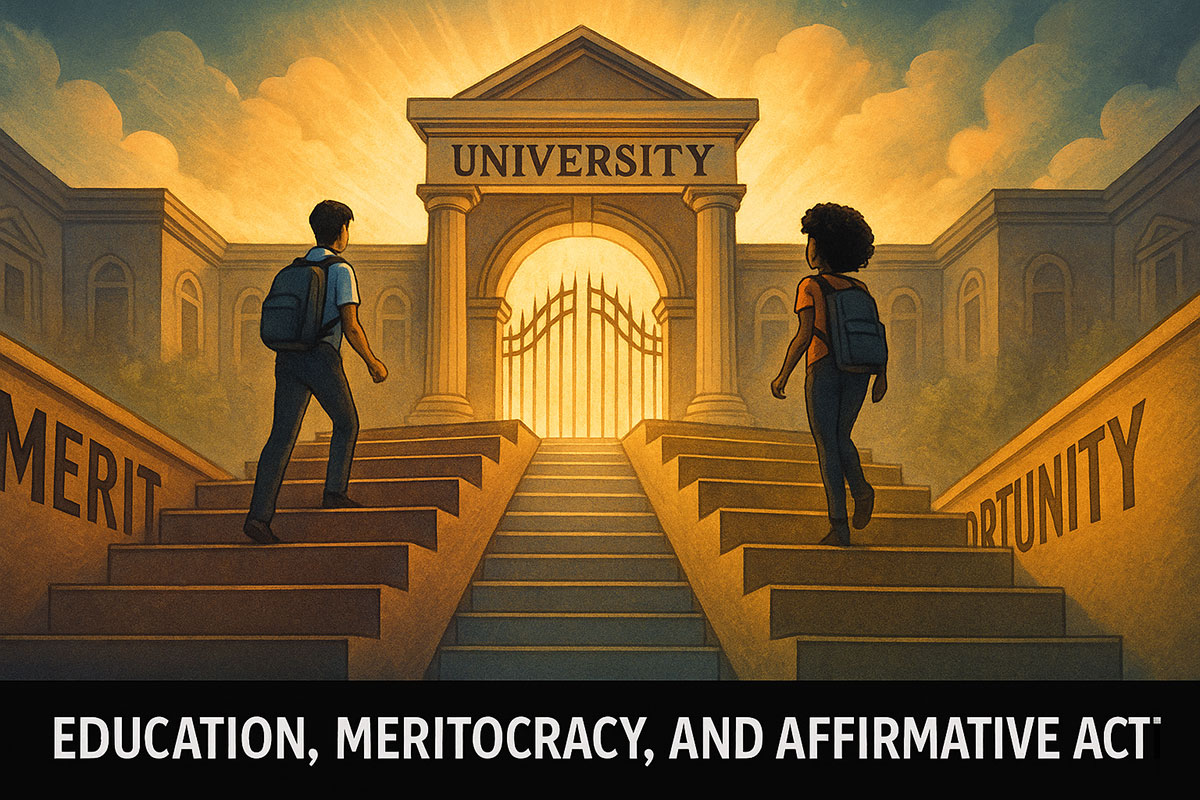
Topic 3: Education, Meritocracy, and Affirmative Action
Participants:
- Glenn Loury (Economist, critiques race-based affirmative action)
- Richard Kahlenberg (Advocates class-based affirmative action)
- Heather Mac Donald (Critic of DEI, defender of meritocracy)
- Claude Steele (Psychologist, stereotype threat research)
- Freeman Hrabowski (Former UMBC president, champion of minority success in STEM)
Moderator: Charlie Kirk
Charlie Kirk’s Brief
“Education is supposed to be the great equalizer, but the debate over affirmative action and meritocracy shows just how divided we are. Some believe race-based preferences are essential to equity, others argue they erode excellence. Let’s get into it. My first question: How do we preserve academic excellence while ensuring that students from disadvantaged backgrounds still have real opportunities to succeed?”
Question 1: Balancing Excellence and Opportunity
Heather Mac Donald:
“Excellence has to be the first principle. Lowering standards in the name of diversity hurts everyone—especially the very students it’s meant to help. Instead, we need rigorous K–12 preparation. If universities admit students who aren’t ready for the work, we set them up to struggle.”
Glenn Loury:
“I agree with Heather that mismatching students is destructive. But we can’t ignore history and inequality. The solution isn’t racial preferences—it’s strengthening pathways that genuinely prepare disadvantaged students to compete on equal footing. That means investment in early education, strong discipline in schools, and restoring high expectations.”
Freeman Hrabowski:
“Both of you highlight the problem, but let’s talk solutions. At UMBC, we proved minority students can excel in STEM when given rigorous preparation, mentoring, and a supportive peer culture. Excellence and equity are not opposites—they can reinforce one another if institutions set high standards and provide tools for success.”
Richard Kahlenberg:
“The key is class, not race. Poor and working-class students of all races face structural disadvantages—weak schools, unstable homes, unsafe neighborhoods. By targeting socioeconomic status in admissions, we preserve fairness, avoid racial divisiveness, and still diversify campuses in meaningful ways.”
Claude Steele:
“We also have to recognize psychological barriers. Stereotype threat—when students feel they’re judged by their group identity—can undermine performance. Universities that create inclusive environments don’t lower standards; they enable students to perform at their best without the weight of bias.”
Charlie Kirk’s Next Question
“Thanks. Let’s move to the second big issue. Should affirmative action shift from race-based to class-based criteria, and what would the impact be on universities and workplaces?”
Question 2: Race vs. Class in Affirmative Action
Richard Kahlenberg:
“Absolutely. Class-based affirmative action captures the real disadvantage. A poor white kid from Appalachia or a poor Black kid from Baltimore face similar uphill battles. By focusing on income, parental education, and neighborhood poverty, we can create diversity without racial resentment.”
Heather Mac Donald:
“I oppose both race-based and class-based preferences. Admissions should be colorblind and class-blind. Once you start adjusting standards for groups, you undermine the principle of meritocracy. The mission of a university is knowledge and excellence, not social engineering.”
Claude Steele:
“But Heather, you can’t ignore that systemic barriers exist. Class is part of it, but race adds unique challenges—bias, stereotypes, historical exclusion. If we remove race entirely, we risk resegregating elite institutions. We need both race and class lenses.”
Glenn Loury:
“I side with Richard here. Using race entrenches a divisive narrative of victimhood. Class-based policy is a fairer way to capture disadvantage. That said, we must be careful not to confuse opportunity with outcomes—admissions preferences should never become entitlements.”
Freeman Hrabowski:
“What matters most is whether students succeed after admission. If universities adopt either race- or class-based affirmative action without investing in student support—mentorship, tutoring, STEM readiness—they’ll fail. The question isn’t just who gets in, but who graduates and thrives.”
Charlie Kirk’s Final Question
“Let’s finish with this. What reforms to K–12 education are most urgent if we want students of all backgrounds to enter higher education and the workforce on a more equal footing?”
Question 3: Fixing the K–12 Pipeline
Glenn Loury:
“We need to restore order and excellence in schools. Discipline policies that excuse bad behavior in the name of equity are ruining learning environments. If we don’t teach children personal responsibility and basic literacy and numeracy by middle school, no college policy will save them.”
Freeman Hrabowski:
“I’ve seen firsthand that expectations are everything. If children—especially from disadvantaged communities—are told early on that they can be scientists, engineers, or teachers, and are given caring mentors, they rise to the challenge. We need more math enrichment, teacher training, and partnerships with parents.”
Heather Mac Donald:
“The single most urgent reform is teacher quality. We can’t tolerate incompetent teaching protected by unions. We need merit-based hiring, rigorous curricula, and accountability through standardized testing. Without that, disadvantaged students will always be behind before college even starts.”
Claude Steele:
“We also need to address climate. If children constantly feel devalued or stereotyped in classrooms, they disengage. Building environments that affirm their potential—not through empty slogans, but through genuine inclusion—boosts motivation and achievement.”
Richard Kahlenberg:
“Integration matters. High-poverty schools trap kids in cycles of disadvantage. We should expand school choice and regional integration so poor children can attend mixed-income schools. Research shows this dramatically improves outcomes.”
Charlie Kirk’s Conclusion
“What we’ve heard tonight is that excellence and opportunity don’t have to be at odds—but we have to be smart. Loury and Mac Donald warn that standards matter above all. Steele emphasizes the psychological environment. Kahlenberg urges a shift to class-based criteria. Hrabowski reminds us that real support transforms students into graduates.
My takeaway? If we keep lowering standards, everyone loses. But if we fix K–12, focus on class, and reinforce values of hard work and discipline, we can expand opportunity without sacrificing excellence. That’s the path to true meritocracy.”
Topic 4: Family Structure, Crime, and Culture

Participants:
- Ian Rowe (AEI fellow, “Success Sequence” advocate)
- Patrick Sharkey (Princeton sociologist, research on neighborhoods & crime)
- Kay Hymowitz (Manhattan Institute, family structure & opportunity)
- Wilfred Reilly (Political scientist, challenges progressive orthodoxy on race & crime)
- James Forman Jr. (Yale Law professor, pragmatic criminal justice reformer)
Moderator: Charlie Kirk
Charlie Kirk’s Brief
“Crime, poverty, and family breakdown are often deeply connected. Conservatives argue fatherlessness is the key driver, while others stress systemic inequities. My first question: Is the breakdown of the two-parent household the single biggest factor driving crime and poverty, or are systemic barriers equally important?”
Question 1: The Biggest Driver — Family or Systems?
Kay Hymowitz:
“The data is overwhelming—children raised in single-parent homes face far greater risks of poverty, school failure, and crime. That doesn’t mean systemic issues don’t matter, but if you ask me the single biggest driver, it’s family structure. Stable two-parent households are the best anti-poverty program we’ve ever seen.”
Patrick Sharkey:
“I’d caution against oversimplification. Yes, family structure matters, but neighborhoods and institutions amplify those effects. If you grow up in a violent neighborhood with failing schools, even two-parent households struggle. We must look at the ecology of disadvantage—family, schools, policing, housing—all interconnected.”
Wilfred Reilly:
“Patrick, with respect, that’s dodging the cultural question. The success sequence—finish school, get a job, marry before having children—works across all races and classes. Systemic barriers exist, but culture and personal choices explain much of the variance. We need to stop excusing destructive behavior as if it’s inevitable.”
Ian Rowe:
“Wilfred’s right—values matter. But I frame it positively: we should empower young people with agency. When students learn the success sequence, they’re more likely to follow it. It’s not about blaming, it’s about giving hope: ‘You can do this. You can break the cycle.’”
James Forman Jr.:
“I agree family matters, but I’ve also seen how systemic barriers trap families. Over-policing, discriminatory sentencing, and economic segregation feed instability. If a father is incarcerated for a low-level drug offense, the household collapses. Family and systems are intertwined—you can’t fix one without addressing the other.”
Charlie Kirk’s Next Question
“Alright, so let’s get practical. What concrete steps can communities take—whether through faith-based groups, civic organizations, or government—to restore stable families and reduce violence?”
Question 2: Practical Steps for Stronger Families & Safer Communities
Ian Rowe:
“Faith-based mentorship is powerful. Churches, local nonprofits, Big Brothers Big Sisters—these are lifelines for young men especially. When father figures are absent, mentors can step in. Government can’t legislate love, but communities can cultivate it.”
Patrick Sharkey:
“We need investment in place. Community-based violence prevention programs, after-school opportunities, and neighborhood revitalization reduce crime and give families breathing room. When local institutions thrive, families are supported, not isolated.”
Kay Hymowitz:
“I’d focus on cultural messaging. For too long, we’ve shied away from saying marriage matters. Public campaigns—like past anti-smoking or seatbelt drives—could highlight the benefits of two-parent households. We can normalize commitment again, especially for young men.”
James Forman Jr.:
“I’d stress reforming the justice system. Ending harsh sentencing for minor offenses keeps fathers in homes. Providing second-chance programs for reentry helps men return to their families with dignity. Stability grows when the law strengthens families instead of tearing them apart.”
Wilfred Reilly:
“And let’s not forget economic incentives. Our welfare system often penalizes marriage. We should redesign benefits so couples are rewarded—not punished—for raising children together. That’s a policy lever with immediate cultural effects.”
Charlie Kirk’s Final Question
“Let’s zoom out. How do we create cultural role models—through music, media, and education—that elevate responsibility and virtue rather than glamorize destructive behavior?”
Question 3: Building Role Models in Culture
Wilfred Reilly:
“Pop culture matters enormously. Rap that glorifies violence, promiscuity, or drugs shapes attitudes. We can’t censor, but we can elevate alternatives—artists and influencers who model discipline, entrepreneurship, and family values. Culture is upstream of behavior.”
James Forman Jr.:
“I’d add that young people need to see role models in their own communities—teachers, coaches, neighbors who embody stability. National celebrities are important, but nothing replaces a local mentor showing kids a different path.”
Kay Hymowitz:
“The media also shapes expectations for women. Too often, motherhood outside marriage is portrayed as empowering, when in reality it often leads to hardship. Storytelling should reflect the real struggles—and the real benefits of building stable families.”
Patrick Sharkey:
“Let’s not overlook structural supports for role models. If neighborhoods lack safe public spaces or decent schools, positive influences are drowned out. Cultural change thrives when supported by strong institutions. Media alone can’t carry the weight.”
Ian Rowe:
“Role models are also about hope. When students hear stories of peers who followed the success sequence and thrived, it’s contagious. We need campaigns that say: ‘Your choices matter, and you can succeed.’ It’s not just culture—it’s aspiration.”
Charlie Kirk’s Conclusion
“What we’ve heard is that family stability is central, but it doesn’t exist in a vacuum. Hymowitz and Rowe emphasize marriage and values, Reilly points to incentives and culture, Sharkey stresses neighborhoods and institutions, and Forman reminds us justice reform matters.
My view? Fatherlessness is the root cause of much of our social crisis. But we can’t just preach family values—we need policies and institutions that make choosing responsibility the easier, not the harder, path. Restore the family, and we’ll restore communities.”
Topic 5: Morality, Leadership & Christian Politics

Participants:
Albert Mohler (President of Southern Baptist Theological Seminary, evangelical perspective)
Russell Moore (Editor-in-Chief, Christianity Today, advocate for integrity in public faith)
Eric Metaxas (Author, Christian public intellectual, defender of strong Christian political engagement)
Cornel West (Christian philosopher, left-leaning prophetic critique of politics)
Robert P. George (Princeton professor, Catholic natural law scholar)
Moderator: Charlie Kirk
Charlie Kirk’s Brief
“As Christians, many of us wrestle with how to evaluate leaders. Do we focus on their personal morality or on the outcomes of their policies? This isn’t just about Donald Trump—it’s about what standard believers should use in politics. My first question is this: Should voters judge political leaders more by their personal morality or by the results of their policies—and where should Christians draw that line?”
Question 1: Morality vs. Policy Results
Cornel West:
“Character and justice cannot be separated. If a leader is corrupt in private, that corruption eventually seeps into public life. Christians must never become cynics who excuse lies, cruelty, or greed for the sake of political gain. Our witness depends on consistency.”
Albert Mohler:
“Cornel is right that integrity matters, but we must also recognize the nature of politics—it’s about governing a fallen world. Christians are not electing pastors; we’re electing presidents and legislators. Policy outcomes—such as protecting the unborn, defending religious liberty, and strengthening the family—must weigh heavily in our moral calculus.”
Eric Metaxas:
“I’ll go further. God often uses deeply flawed people to accomplish His purposes—think of King David or Cyrus. What matters is whether policies align with biblical truth. We cannot abandon our duty to support leaders who defend life, family, and freedom simply because their personal lives are imperfect.”
Russell Moore:
“But Eric, the danger is when Christians confuse political expediency with gospel witness. If we excuse sin in our leaders while condemning it in our neighbors, we undermine our credibility. Policies matter, yes—but so does public virtue. We need both.”
Robert P. George:
“The classical Christian tradition teaches prudence—choosing the best option available in imperfect circumstances. Sometimes that means voting for a flawed leader if his policies protect fundamental goods. But we must never celebrate vice. Support can be conditional without becoming idolatrous.”
Charlie Kirk’s Next Question
“Thank you. My second question gets to the heart of this. How do we prevent blind partisanship from corrupting religious communities while still engaging politics in a morally responsible way?”
Question 2: Avoiding Idolatry of Politics
Russell Moore:
“The church must always remember it is not the Republican Party at prayer—or the Democratic Party at prayer. When political identity eclipses Christian identity, we’ve traded the gospel for tribalism. Pastors must disciple congregations to see politics as important, but not ultimate.”
Eric Metaxas:
“I agree partly, but let’s not swing to disengagement. Silence in the face of evil is complicity. Churches must speak on moral issues—abortion, marriage, religious liberty—even if it sounds ‘political.’ The danger is not speaking too clearly, but speaking as if our hope is in politics alone.”
Cornel West:
“The prophetic tradition calls us to speak truth to both parties. Neither Democrats nor Republicans are the Kingdom of God. The church must be willing to critique greed, militarism, racism, and indifference to the poor—wherever it shows up. That’s how we avoid idolatry.”
Albert Mohler:
“We should also distinguish between the church as church and Christians as citizens. The church’s mission is to preach the gospel. Christians in their vocations—including politics—apply biblical principles prudently. That keeps us from conflating the pulpit with the campaign rally.”
Robert P. George:
“The virtue of humility is key. Politics is always a matter of prudential judgment. Christians should argue strongly for what they believe, but with the recognition that they might be wrong. That humility guards against turning partisanship into idolatry.”
Charlie Kirk’s Final Question
“My last question: If America is to remain both faithful and free, what guiding principles should shape the way Christians—and all religious voters—evaluate candidates in the years ahead?”
Question 3: Guiding Principles for Christian Politics
Albert Mohler:
“The first principle must be the sanctity of life. If a candidate will not defend innocent human life, he fails the most basic test. Beyond that, religious liberty and family stability should be guiding priorities. Without them, freedom collapses.”
Cornel West:
“I would add justice for the least of these. Christians must evaluate candidates by how they treat the poor, the immigrant, the marginalized. If we only care about life in the womb but not life after birth, we betray the fullness of the gospel.”
Eric Metaxas:
“Principles of courage and truth-telling matter. We should ask: does this leader have the backbone to stand against cultural currents hostile to biblical truth? A free society requires leaders willing to resist lies and affirm reality—even at great personal cost.”
Robert P. George:
“Natural law teaches us to look for leaders who protect the basic goods of human flourishing: life, family, religious freedom, and the rule of law. If those pillars are upheld, other disagreements can be prudential.”
Russell Moore:
“And let’s not forget integrity. A candidate’s word should mean something. If we normalize lying and cruelty, even in pursuit of good policies, we erode the moral fabric that makes freedom sustainable. Christians should never lower their standards to ‘win.’”
Charlie Kirk’s Conclusion
“What we’ve heard tonight shows the tension every Christian voter feels. West emphasizes justice for the marginalized. Mohler and Metaxas stress life, family, and courage in the face of cultural decay. Moore reminds us not to lose our gospel witness. George insists on prudence and humility.
My view? Christians should be wise as serpents and innocent as doves. We can vote for flawed leaders if their policies protect life and freedom, but we must never worship them. Our loyalty is to Christ alone. If we remember that, we can keep America both faithful and free.”
Final Thoughts by Charlie Kirk

Over the course of these discussions, we’ve heard from some of the brightest voices wrestling with America’s deepest problems. What emerged was not uniformity, but clarity. Poverty cannot be solved by handouts alone; it requires values, opportunity, and strong families. Immigration policy must respect both compassion and sovereignty. Education thrives when we demand excellence while making sure doors of opportunity remain open to every child. Families are still the heartbeat of society, and when they fracture, communities suffer. And for people of faith, politics can never replace the gospel, but it must always be engaged with wisdom and courage.
What I take away from all of this is a sense of sober optimism. The road ahead is not easy—there are deep divides in culture and politics—but there is also extraordinary potential when Americans of goodwill commit to truth and responsibility. If we can recover discipline in our homes, integrity in our institutions, and courage in our leaders, then the story of America is far from over. In fact, I believe the best chapters may still be ahead. Thank you for joining us in this effort.
Short Bios:
Topic 1 — Poverty, Family, and Values
Robert Doar — President of the American Enterprise Institute, specializing in poverty policy and welfare reform, with decades of experience running social service programs in New York.
Isabel Sawhill — Senior fellow at the Brookings Institution, noted for her work on economic mobility, family policy, and child welfare.
Arthur Brooks — Former president of the American Enterprise Institute, Harvard professor, and author on happiness, opportunity, and economic policy.
Ron Haskins — Senior fellow at Brookings, co-director of its Center on Children and Families, and expert in welfare policy and social mobility.
Star Parker — Founder of the Center for Urban Renewal and Education, advocating market-based solutions to poverty after rising from welfare herself.
Topic 2 — Immigration & Border Policy
Mark Krikorian — Executive Director of the Center for Immigration Studies, focused on immigration control and enforcement.
Reihan Salam — President of the Manhattan Institute, author of Melting Pot or Civil War?, offering pragmatic solutions on assimilation and immigration reform.
Douglas Massey — Princeton sociologist, leading authority on immigration patterns and U.S.–Mexico migration.
Linda Chavez — Chair of the Center for Equal Opportunity, former White House official, advocating for immigration reform and Latino community issues.
Victor Davis Hanson — Historian and political commentator, Hoover Institution fellow, writing extensively on border security and culture.
Topic 3 — Education, Meritocracy, and Affirmative Action
Glenn Loury — Economist at Brown University, known for his critiques of racial preferences and focus on social inequality.
Richard Kahlenberg — Policy expert and author, advocate for class-based affirmative action and education reform.
Heather Mac Donald — Fellow at the Manhattan Institute, critic of DEI initiatives and advocate for meritocracy.
Claude Steele — Stanford psychologist, pioneer of “stereotype threat” research on identity and achievement.
Freeman Hrabowski — Former president of UMBC, nationally recognized for promoting minority success in STEM.
Topic 4 — Family Structure, Crime, and Culture
Ian Rowe — AEI fellow, charter school leader, and author of Agency, promoting the “Success Sequence” for upward mobility.
Patrick Sharkey — Princeton sociologist, researcher on neighborhoods, crime, and inequality.
Kay Hymowitz — Fellow at the Manhattan Institute, author of books on family breakdown and opportunity.
Wilfred Reilly — Political scientist and author of Taboo, challenging misconceptions about race, culture, and crime.
James Forman Jr. — Yale Law School professor, Pulitzer Prize–winning author of Locking Up Our Own, focused on criminal justice reform.
Topic 5 — Morality, Leadership & Christian Politics
Albert Mohler — President of Southern Baptist Theological Seminary, leading voice in evangelical theology and cultural commentary.
Russell Moore — Editor-in-Chief of Christianity Today, advocate for integrity and public faith engagement.
Eric Metaxas — Author of Bonhoeffer and Letter to the American Church, Christian public intellectual and commentator.
Cornel West — Philosopher, theologian, and activist, blending Christian prophetic tradition with social justice advocacy.
Robert P. George — Princeton professor of jurisprudence, Catholic intellectual, and leading scholar on natural law and ethics.
Leave a Reply