
|
Getting your Trinity Audio player ready...
|
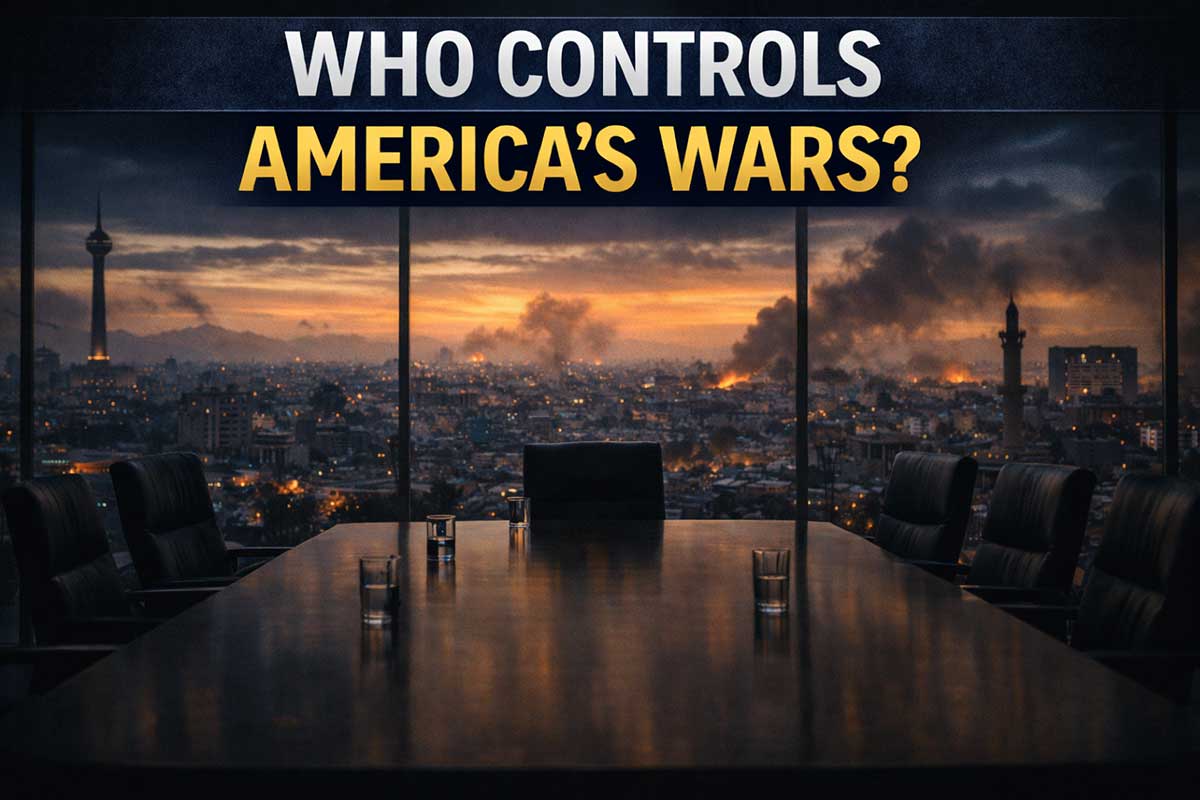
What if America’s wars are no longer decided by its voters?
Introduction by Tucker Carlson
Good evening, and thank you for joining us.
Tonight, we’re taking on a question that sits underneath nearly every argument now unfolding in American public life: Who really controls the direction of the United States when the stakes are war, peace, sovereignty, speech, and truth?
For many years, Americans were told a simple story. Vote hard enough, care enough, send the right people to Washington, and the system will respond. Your voice will matter. Your leaders will act in your interest. Your country will remain your country.
But a growing number of Americans no longer believe that story. They look at one foreign conflict after another, one pressure campaign after another, one emotional media cycle after another, and they begin to wonder whether the public is still steering anything at all. They wonder whether elections change the surface but leave the machinery beneath untouched. They wonder whether presidents govern, or whether they are governed. They wonder whether the United States still acts for its own people first, or whether it has become trapped inside networks of influence far larger than any campaign slogan.
That is the heart of tonight’s discussion.
We are going to examine five connected questions. Has America lost control of its own foreign policy? Is the Iran conflict exposing the limits of populism? Is war once again being sold through fear? Is criticism becoming more dangerous in a nation that claims to protect free speech? And finally, if Americans reject all of that, what kind of Middle East policy would actually serve the United States?
These are not small questions. They are not academic questions. They reach into gas prices, military families, public trust, media credibility, national cohesion, and the future of self-government itself.
This is not really a conversation about one country, one war, or one administration. It is a conversation about whether the American people still possess meaningful control over the decisions made in their name.
So let’s begin there, honestly and without euphemism.
(Note: This is an imaginary conversation, a creative exploration of an idea, and not a real speech or event.)
Topic 1 — Has America Lost Control of Its Own Foreign Policy?
Moderator: Tucker Carlson
Participants:
Saagar Enjeti, John Mearsheimer, Tulsi Gabbard, Glenn Greenwald, Jeffrey Sachs
Opening by Tucker Carlson
Good evening. Tonight, we begin with a question that cuts straight to the center of American power: Does the United States still control its own foreign policy, or has that control slipped into the hands of forces most voters never see and cannot meaningfully restrain?
For years, Americans have been told that elections decide direction, that presidents set policy, and that Congress represents the will of the people. Yet over and over, war, intervention, covert pressure, intelligence operations, donor influence, media framing, and alliance demands seem to push the country in directions voters never clearly chose.
So tonight’s first discussion is not just about Iran, Israel, or any single conflict. It is about something deeper: whether the American people still have real ownership over the decisions made in their name.
Let’s begin there.
Discussion
Saagar Enjeti:
I think the honest answer is that control has been badly weakened. That doesn’t mean elections mean nothing, but it does mean the range of actual choice is much narrower than people think. Voters can express outrage, choose personalities, reject a ruling faction, and still watch the permanent structure of foreign policy keep moving in nearly the same direction. The language changes. The branding changes. The faces change. Yet the pattern often stays intact: intervention, escalation, moral pressure, secrecy, and then after the damage is done, the public gets a very neat explanation for why it all had to happen.
John Mearsheimer:
That is right. What you are seeing is the collision between democratic theory and strategic bureaucracy. In theory, public officials answer to the population. In practice, foreign policy is shaped by a small class of people inside the national security state, major donors, organized lobbying efforts, think tanks, and media institutions that set the boundaries of respectable opinion. Once a crisis begins, those boundaries tighten even more. At that point, what the public wants becomes much less important than what elite networks define as necessary, responsible, or urgent.
Tulsi Gabbard:
And the human cost of that disconnect is immense. The people making the pressure decisions are usually not the people who pay the price. It is the service member, the military family, the taxpayer, the civilian in some faraway place, the veteran who comes home carrying trauma, the community here that loses trust in government yet one more time. When leaders say, “We had no choice,” that is often the line that arrives after a choice was made without honest public consent.
Glenn Greenwald:
A big part of how this works is information control. You do not need formal censorship at first. You just need a system where the same assumptions are repeated across major institutions. Once that happens, dissent is framed as reckless, fringe, disloyal, or morally stained. The public is still free to speak, but the cost of speaking rises. That is how consent gets manufactured in a modern liberal society. People are told they are choosing, yet they are choosing inside a narrative already built for them.
Jeffrey Sachs:
I would take it one step further. A great deal of American foreign policy now operates through entanglement. There are military commitments, intelligence ties, financial relationships, ideological partnerships, and alliance expectations that accumulate over decades. By the time a visible crisis appears, the machinery is already in place. A president enters the scene late. The public enters even later. So when people ask, “Who decided this?” the most truthful answer is often: no single person. A whole structure carried the country there.
Tucker Carlson:
So if that’s true, then what exactly are Americans voting for? They think they’re electing someone to act in their interest. They imagine a president can say no. But maybe “no” is the one answer the system is built to punish.
John Mearsheimer:
Yes. Presidents have more room in domestic affairs than in foreign affairs. On foreign policy, the costs of defiance can be severe. They face pressure from intelligence agencies, military leadership, party elites, major media, donors, allied governments, and ideological factions. A president can resist some of that for a time. Sustained resistance is much harder. That is one reason campaign rhetoric so often gives way to establishment behavior once in office.
Saagar Enjeti:
And that gap between campaign promise and governing reality is what creates such deep cynicism. People were told the old script would end. No more pointless wars. No more nation-building. No more sacrificing working Americans for somebody else’s grand strategy. Yet once the crisis atmosphere starts, all the old vocabulary comes flooding back. Threat inflation. existential danger. moral duty. strategic credibility. Then suddenly the anti-war promise looks like a slogan from another lifetime.
Tulsi Gabbard:
That betrayal runs deep because a lot of Americans were very clear. They wanted restraint. They wanted realism. They wanted leaders who would stop treating military force like a first reflex. They wanted the government to put the safety, prosperity, and liberty of Americans at the center. When that hope is ignored, the damage is more than political. It breaks trust at a very personal level.
Glenn Greenwald:
And then comes the second insult. First the public is bypassed. Then it is shamed. If you object, you are told you are naive, soft, compromised, or somehow sympathetic to the enemy. That ritual happens again and again. It is a way of protecting the people who pushed the policy in the first place. They move the country into danger, and then they grab the moral high ground against anyone who notices.
Jeffrey Sachs:
There is also an economic dimension that people should never ignore. War and confrontation are not abstractions. They affect oil flows, trade routes, food prices, inflation, debt, industrial planning, and alliances that shape long-term prosperity. Yet many of the people driving escalation speak as though economics is secondary, almost vulgar, compared with grand moral language. But citizens live in the real economy. They feel policy in rent, groceries, fuel, and uncertainty.
Tucker Carlson:
So let me ask the basic question plainly: is this weakness, corruption, ideology, or empire? Why does it keep happening?
John Mearsheimer:
It is a mixture. Great powers develop foreign policy establishments that begin to think in self-justifying terms. They believe credibility must be defended everywhere. They become captive to their own abstractions. Then add lobbying pressure, domestic politics, and alliance commitments, and you get a machine that treats restraint as dangerous and escalation as prudent. That is how failure becomes self-renewing.
Saagar Enjeti:
I would add class interest. The people who run this system often live in insulated environments. Their children are usually not the ones going to the front. Their neighborhoods do not collapse when gasoline spikes. Their careers rise from managing crisis. For them, foreign policy is a field of influence, prestige, and access. For the average citizen, it is cost, risk, and consequences. That class divide is one reason the same mistakes can repeat with so little humility.
Tulsi Gabbard:
And for soldiers and families, humility is not some abstract virtue. It is the difference between life and death. When leaders are casual with force, they are casual with lives. That is why Congress should be doing much more than it usually does. Debate should be open. Objectives should be clear. Costs should be spelled out. Exit plans should be real. Without that, “support the troops” can become cover for failing them.
Glenn Greenwald:
Congress has often surrendered its role because it is easier to posture than to govern. Members can speak in moral slogans, avoid real scrutiny, then later blame the executive branch, the intelligence community, or “bad information.” The public hears noise. Accountability disappears. That arrangement suits a lot of people in Washington.
Jeffrey Sachs:
And the international side is often hidden from public view. Foreign governments lobby Washington intensely. Defense interests lobby intensely. Regional blocs lobby intensely. The public sees a speech or press conference, but not the private channels, the long campaigns, the cultivated networks. That is why citizens often sense manipulation without being able to map it fully.
Tucker Carlson:
Then how would a foreign policy actually controlled by Americans look different?
Tulsi Gabbard:
It would begin with one principle: the lives and well-being of the American people come first. That means war only when there is a real, direct, unavoidable threat. It means diplomacy before force. It means no blank checks. It means no pretending other peoples’ civil wars can be micromanaged from Washington. It means honoring service by using force rarely and only with moral clarity.
John Mearsheimer:
From a strategic point of view, it would mean restraint and clear prioritization. Great powers fail when they confuse peripheral interests with core interests. The United States should conserve power, avoid unnecessary wars, reduce exposure where possible, and think soberly about what truly matters for national survival and prosperity.
Saagar Enjeti:
It would mean telling the public the truth, even when the truth is politically inconvenient. If an action raises prices, say so. If an ally’s interests diverge from ours, say so. If escalation carries a real risk of regional war, say so. The public can handle hard facts much better than elites think. What destroys trust is not difficulty. It is deception.
Glenn Greenwald:
It would mean protecting dissent as a patriotic function, not treating dissent as contamination. A country that cannot argue honestly about war is already in danger. The minute criticism becomes taboo, manipulation has won half the battle.
Jeffrey Sachs:
And it would mean reviving diplomacy as a serious tool, not as stage dressing before coercion. Many disasters become inevitable only after diplomatic space is deliberately narrowed. If the public wants peace and stability, then negotiation, realism, and regional balance have to be restored to the center of policy.
Closing by Tucker Carlson
What we have heard here is unsettling, but not confusing.
The argument is not that elections are meaningless, nor that presidents are puppets with no agency at all. It is that the American voter may have far less control over foreign policy than he has been taught to believe. Around the ballot box there is a much larger structure: intelligence networks, donor pressure, lobbying machines, bureaucratic continuity, media enforcement, alliance demands, and a permanent habit of intervention that survives one administration after another.
If that is true, then the crisis is bigger than one war. It is a crisis of self-government.
And that leaves us with the next question: if populism rose on the promise of breaking that machine, what happens when the machine still seems to win?
That is where we go next.
Topic 2 — Trump, Iran, and the Breaking Point of American Populism
Moderator: Tucker Carlson
Participants:
Saagar Enjeti, Tulsi Gabbard, Steve Bannon, J.D. Vance, Glenn Greenwald
Opening by Tucker Carlson
Welcome back.
Our first discussion asked whether America still controls its own foreign policy. Now we move to a more explosive question: If Donald Trump returned to power promising restraint, sovereignty, and an end to the old war machine, what does it mean if his presidency is now linked to another major Middle East conflict?
This matters for one reason above all: millions of Americans did not support Trump merely as a person. They supported him as a rejection of a failed ruling consensus. They believed he would resist the permanent pressures that had dragged the country into disaster after disaster. They believed he would be different.
So if the same old logic reappears under a leader elected to stop it, then maybe the real crisis is not one man’s inconsistency. Maybe it is the breaking point of American populism itself.
Let’s start there.
Discussion
Saagar Enjeti:
That is exactly the fear. Trump was not just a Republican candidate. He was a vehicle for people who felt locked out of the system. They believed he would say no where others always said yes. No to another regime-change fantasy. No to donor-driven foreign policy. No to elite emotional blackmail. So when a conflict like this rises under his watch, the shock is deeper than ordinary disappointment. It feels like the whole promise of disruption may have hit a wall.
Steve Bannon:
The reason people are angry is simple. They thought they were voting for a nationalist agenda. Secure the border. rebuild industry. stop endless wars. break the grip of the old establishment. That was the deal. Populism works only if it keeps faith with the core concerns of ordinary citizens. The minute foreign entanglement jumps back to the center, people begin to wonder whether the movement got captured from the inside.
Tulsi Gabbard:
And that question is not unfair. People sent a message very clearly. They were tired of watching their sons and daughters sent into conflicts with vague goals and dishonest framing. They were tired of hearing that every new intervention was necessary, urgent, moral, and unavoidable. So when the language of escalation starts coming back under a presidency that was supposed to reject it, there is bound to be anger and grief. Trust is hard to build and very easy to damage.
J.D. Vance:
I think there are two realities at once. One is that many voters still believe Trump’s instincts are better than the people around him. The other is that instincts alone are not enough. A president needs a team, a structure, and a governing philosophy strong enough to resist the pull of Washington. If personnel and pressure networks keep steering events back toward intervention, then the populist project starts to look less like a governing revolution and more like a temporary uprising absorbed by the capital.
Glenn Greenwald:
That is the key point. Populism is always tested by whether it can survive contact with institutions that know how to neutralize it. Campaigns run on rebellion. Governments run through systems. The people who voted for Trump were not naive. They knew he was imperfect. But they thought he at least represented a break. If that break disappears at the very moment it matters most, then the disillusionment could be severe and lasting.
Tucker Carlson:
So was the problem Trump himself, the people around him, or the nature of the presidency? Which one failed here?
Steve Bannon:
All three matter, but personnel is huge. Populist leaders talk like outsiders, then enter office and find themselves surrounded by people who speak the language of the old order fluently. Those people know how to wait, how to flatter, how to reframe, how to create a crisis atmosphere. They know how to turn every question into a test of seriousness. If the president is not relentless about staffing and discipline, the old regime quietly returns wearing new badges.
Saagar Enjeti:
I agree. And once the crisis environment starts, the moral leverage becomes intense. Every argument is compressed into slogans. Are you serious about national security or not? Do you stand with our ally or not? Are you strong or weak? Are you with the commander-in-chief or are you helping the enemy? That structure leaves very little room for the populist promise of skepticism, restraint, and national self-interest. It is built to suffocate that kind of thinking.
Tulsi Gabbard:
That is why moral courage matters so much. In Washington, the pressure to conform can be extraordinary. But leaders are elected to withstand pressure, not to become an excuse for it. If a president campaigned as the one who would break this cycle, then that duty becomes even greater. People are not asking for perfection. They are asking for honesty and backbone.
J.D. Vance:
There is another piece here. Populism raised expectations that the old bipartisan foreign policy consensus could actually be overturned. That was always going to be harder than many supporters imagined. It is one thing to identify the failures of the establishment. It is another thing to build a governing framework that replaces it. That replacement has been incomplete. There are still too many people in positions of influence who fundamentally do not share the worldview of the voters who made the movement possible.
Glenn Greenwald:
And once that happens, the public is asked to accept a strange contradiction. They are told this is still their revolution, still their movement, still their anti-establishment victory, even as the policy outcome starts looking familiar. That contradiction cannot last forever. If the substance becomes indistinguishable from what came before, then branding alone will not save it.
Tucker Carlson:
What about the coalition itself? The people who backed Trump the second time were not just old Republican voters. It was younger voters, independents, anti-war people, disaffected Democrats, libertarians, working-class families. What happens to that coalition now?
Saagar Enjeti:
That coalition is much more fragile than people in Washington think. Traditional Republicans will stay loyal longer. They are used to party discipline. But the newer coalition came in with specific expectations. They wanted border enforcement, economic nationalism, skepticism toward foreign wars, distrust of intelligence games, and a direct challenge to elite hypocrisy. Those voters are not attached by habit. They are attached by belief. If the belief collapses, turnout and energy collapse with it.
Steve Bannon:
That is right. A movement like this does not survive on old donor logic. It survives on emotional conviction. People have to feel that the fight is real and that someone is actually carrying it for them. The minute they think the script has been swapped out behind the scenes, you get demoralization. And demoralization is deadly in politics.
Tulsi Gabbard:
Many of those people also came from military families or communities deeply affected by war. For them, this is not abstract. They have buried people. They have cared for veterans. They have watched lies repeated with solemn faces. So when they hear familiar rhetoric again, the reaction can be immediate. It touches memory, pain, and betrayal all at once.
J.D. Vance:
The coalition can still hold, but only if there is a genuine correction. People are willing to forgive missteps when they believe the core direction is still right. But they have to see evidence. They have to hear clarity. They have to know the administration understands what is at stake politically and morally.
Glenn Greenwald:
And the risk is not just electoral. It is philosophical. If the biggest populist movement in modern American politics enters office, faces a major foreign policy test, and still gets bent back toward intervention, then cynicism expands far beyond one election. People begin to suspect that no democratic revolt can reach the real levers of power. That is a dark conclusion, but many are close to drawing it.
Tucker Carlson:
Let’s make this concrete. What would tell voters that populism is still alive and not dead?
Tulsi Gabbard:
First, stop the drift toward open-ended escalation. Second, state clearly that American troops are not bargaining chips for somebody else’s strategic agenda. Third, put diplomacy and de-escalation back at the center. Fourth, level with the public. No slogans. No fantasy language. Tell people what the risks are, what the goals are, and what the limits are.
Steve Bannon:
I’d say clean house where needed and re-center the presidency on the people who actually built the movement. Put the focus back on workers, families, border security, energy, industry, and national cohesion. Bring it home. Populism dies when it forgets home.
Saagar Enjeti:
I’d add one thing: stop treating every criticism from the base as betrayal. The people objecting are often the very people who believed hardest in the project. If you dismiss them, you do more than lose an argument. You sever the emotional bond that made the coalition possible.
J.D. Vance:
There has to be a visible willingness to learn from the backlash. The worst response would be to pretend none of this matters or to insist the base will simply fall in line. That would misread the movement badly. This coalition was built by people who no longer trust institutions automatically. They are not going to suspend that skepticism just because the pressure is coming from their own side.
Glenn Greenwald:
And protect dissent inside the movement. Once a populist coalition starts policing speech the same way the establishment does, it has already begun to imitate what it once opposed. The health of the movement depends on whether internal criticism is allowed to exist without being smeared as treasonous, disloyal, or helpful to the enemy.
Tucker Carlson:
Then let me ask the blunt final question. Is this a temporary fracture, or the beginning of the end for the populist right as Americans have known it?
Saagar Enjeti:
It is not the end yet, but it is a breaking point. The next choices will matter enormously.
Tulsi Gabbard:
Movements survive tests only when they return to truth. This is such a test.
Steve Bannon:
The base can forgive a lot. It does not forgive surrender.
J.D. Vance:
This is the moment where rhetoric has to become governing reality or the project weakens badly.
Glenn Greenwald:
If the movement cannot resist the very machinery it was created to oppose, then people will start searching for something new.
Closing by Tucker Carlson
What we heard tonight is sobering.
American populism did not rise merely from partisan anger. It rose from a deep intuition that the country was no longer being run for the people who live in it. It promised sovereignty, restraint, honesty, and a break from the bipartisan habits that had emptied trust out of public life.
So when war logic returns under a presidency elected to stop it, the danger is not just strategic. It is existential for the movement itself.
A coalition built on rebellion can survive disappointment. What it cannot survive easily is the suspicion that it has been absorbed by the very system it came to defeat.
That leaves the next question: if foreign policy is shaped as much by narrative as by force, then how exactly is that narrative built?
That is where we go next.
Topic 3 — Is War Being Sold to the Public Through Fear Again?
Moderator: Tucker Carlson
Participants:
Saagar Enjeti, Glenn Greenwald, Matt Taibbi, Tulsi Gabbard, Douglas Macgregor
Opening by Tucker Carlson
Welcome back.
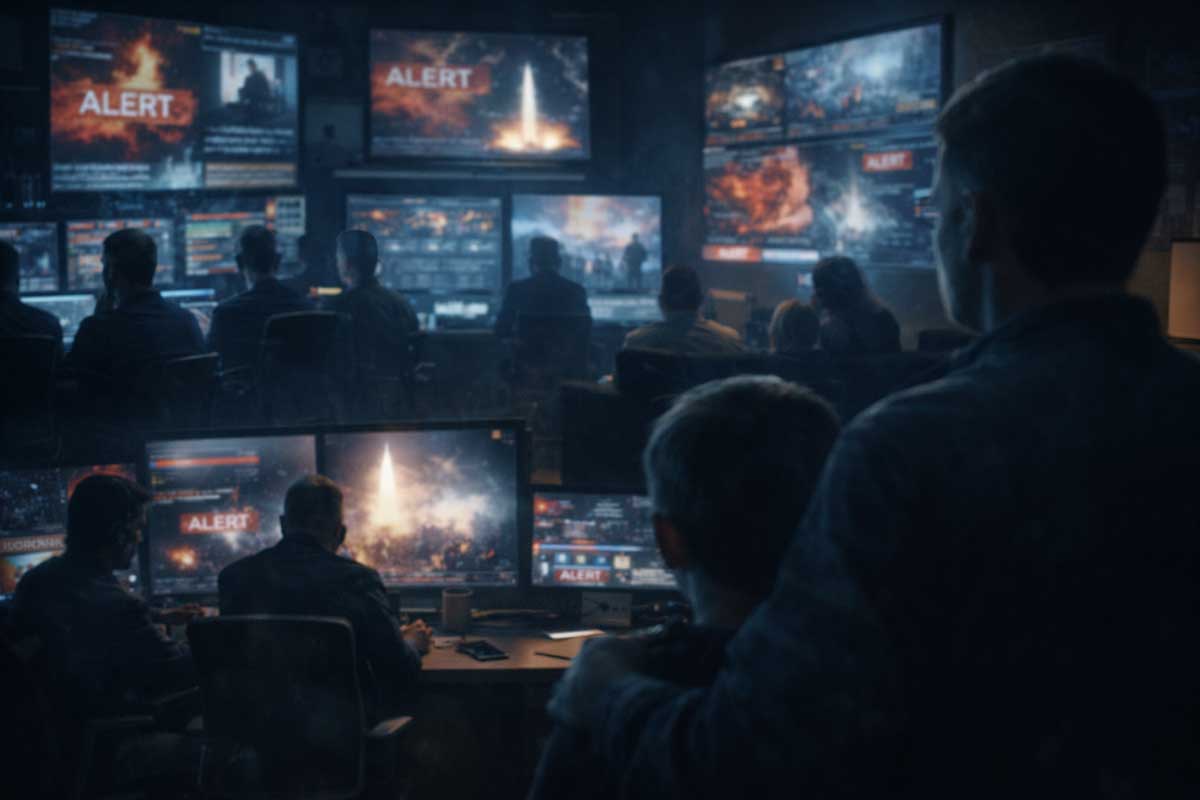
Tonight’s third discussion asks a question that should make every American uneasy: Is war once again being marketed to the public through fear?
Before major conflicts, the pattern often feels familiar. The language tightens. The headlines sharpen. Threats become immediate. Enemies become absolute. Doubt begins to look immoral. Complex realities are compressed into emotional commands. Act now. Support this. Do not hesitate. Do not ask too many questions.
Maybe sometimes those warnings are justified. But history suggests that fear is one of the oldest and most effective tools ever used to move populations into wars they did not fully choose and often do not fully understand until much later.
So tonight, we are asking how that process works, who drives it, and whether Americans are watching it happen again in real time.
Discussion
Saagar Enjeti:
Yes, I think we are watching it again, and the mechanics are painfully familiar. First comes a climate of urgency. Then a narrowing of acceptable opinion. Then a moral sorting process where some people are cast as responsible adults and others as reckless or compromised. Once that frame locks in, facts no longer enter the public mind as facts. They enter already interpreted. The question is no longer, “What is true?” It becomes, “Which side are you on?”
Glenn Greenwald:
Fear is the perfect political accelerant because it disables patience. It makes scrutiny feel dangerous. It makes caution seem weak. The state does not always need to lie in the crude sense. It can simply amplify selected facts, suppress context, repeat worst-case scenarios, and allow a compliant media culture to do the emotional packaging. By the time anyone slows down enough to examine the claims carefully, the policy momentum is already underway.
Matt Taibbi:
And the media’s role in that is massive. Modern fear campaigns do not always arrive through one centralized voice. They arrive through a swarm. Cable panels, newspaper framing, intelligence leaks, social media amplification, expert language, moral signaling, clips, slogans, hashtags. You do not need everyone to say the exact same sentence. You just need the same emotional shape everywhere. People absorb the feeling long before they assess the evidence.
Tulsi Gabbard:
The cost of that is real because fear-driven policy almost always lands on human beings who never got an honest hearing in the debate. Young men and women in uniform, their families, civilians in conflict zones, taxpayers at home, veterans carrying wounds for decades. When fear takes over, those people become background. They become symbols or numbers. But their suffering is not symbolic. It is personal, permanent, and very often avoidable.
Douglas Macgregor:
War planning in a fear environment is usually reckless. Fear rewards exaggeration and punishes realism. It encourages leaders to speak as though every adversary is ten feet tall and every hesitation is fatal. That atmosphere leads to overreach, mission creep, false confidence, and strategic blindness. Militaries perform best when political leaders are cold-eyed. Fear makes leaders theatrical, and theater is poison in war.
Tucker Carlson:
So what are the main emotional triggers? What gets used over and over because it works?
Saagar Enjeti:
The biggest one is immediacy. You are told the threat is not distant, not hypothetical, but right at the door. Then comes sacred language: democracy, civilization, survival, security, morality. Then personal contamination: if you question the case, maybe there is something wrong with you. Maybe you are weak. Maybe you are helping the enemy. That mix is powerful because it turns analysis into identity.
Glenn Greenwald:
I would add patriotism and social belonging. People do not just fear physical danger. They fear isolation. They fear being cast outside the moral community. So when elite institutions imply that support for escalation is the responsible, decent, patriotic position, many people comply long before they are persuaded. They want to remain legible to their community. They want to avoid stigma.
Matt Taibbi:
And then there is the role of selective emotional imagery. A single dramatic incident can dominate public consciousness for days or weeks. One clip. One photo. One intelligence leak. One phrase from an official. It becomes the lens through which everything else is viewed. Meanwhile, background facts that might slow the public down get buried. The press will say it is just following the story, but the story it follows is often the one power has already chosen.
Tulsi Gabbard:
This is why honest leadership matters so much. Leaders are supposed to lower the temperature, not exploit fear for compliance. They are supposed to help the public think clearly, weigh risk, ask what the mission is, what success means, what the cost will be, and who will bear it. When leaders instead ride the emotional wave, they fail in one of their most basic responsibilities.
Douglas Macgregor:
And military realities get distorted immediately. Suddenly the public is told victory will be clean, contained, limited, and fast. The enemy is brittle. Escalation will restore deterrence. There is always some version of that. But war is not a presentation slide. Once violence starts, other actors react. Fronts expand. Objectives change. Resources drain. What looked easy in a studio becomes deadly in the field.
Tucker Carlson:
Let’s talk about religion and morality. Fear campaigns often seem to borrow sacred language. Why?
Glenn Greenwald:
Because sacred language shuts doors. Once a conflict is moralized beyond measure, skepticism begins to sound obscene. That is the point. You are no longer debating prudence, cost, or interest. You are standing before something cast as holy, existential, or civilizational. In that atmosphere, ordinary democratic questioning feels like desecration.
Saagar Enjeti:
And it is effective because many elites no longer believe in much else. Shared religion is weak, trust in institutions is weak, national unity is weak, but a sudden moral emergency can still generate conformity. It gives people an instant sense of purpose and moral clarity. That is part of why fear politics is so tempting in a fractured society.
Tulsi Gabbard:
But moral language without truth becomes manipulation. If leaders truly believe military force is necessary, then they should be able to explain it without hiding behind slogans or demonization. They should be able to present facts, accept scrutiny, and face the country honestly. Once they start substituting emotional intimidation for argument, something is already wrong.
Matt Taibbi:
Media culture loves that moral packaging too because it flatters the storyteller. It turns journalists into guardians of virtue rather than investigators. It is much easier to join a moral pageant than to ask boring but necessary questions about evidence, sourcing, incentives, and prior deception.
Douglas Macgregor:
And soldiers pay for elite melodrama. People in offices get to speak in absolutes. People in the field inherit the consequences. That gap should offend every serious citizen.
Tucker Carlson:
How can ordinary people tell the difference between a real threat and a fear campaign designed to herd them?
Saagar Enjeti:
Watch for compressed time. When leaders say there is no time to debate, that is a warning sign. Watch for expanding goals. If the justification keeps shifting, that is a warning sign too. Watch for the instant moral discrediting of critics. Real cases can survive scrutiny. Manufactured urgency usually cannot.
Glenn Greenwald:
Look for information asymmetry. Are anonymous officials shaping the story more than named accountable figures? Are dissenters being smeared more than answered? Are prior institutional liars suddenly being treated as unquestionable authorities again? Those are classic markers.
Matt Taibbi:
Ask what facts are strangely absent. What is not being discussed? What costs are being pushed off-screen? What history is being skipped? Fear campaigns are often as revealing in what they omit as in what they repeat.
Tulsi Gabbard:
Ask who will bleed, who will grieve, who will pay, and who will profit. Those questions do not solve every case, but they restore moral seriousness very quickly.
Douglas Macgregor:
And ask whether the military objective is actually clear. If you cannot explain the mission in plain language, you are not ready for war.
Tucker Carlson:
Then let me end the discussion with the darkest possibility: if fear works again, what happens to the country?
Saagar Enjeti:
More cynicism, more division, more distrust, more damage to the legitimacy of public institutions.
Glenn Greenwald:
A frightened population becomes easier to manage and less capable of self-government.
Matt Taibbi:
The press becomes weaker, not stronger, when it serves panic.
Tulsi Gabbard:
Families carry scars that last much longer than the headlines.
Douglas Macgregor:
And the nation may win a news cycle and lose its strategic position for years.
Closing by Tucker Carlson
Fear has always been one of the quickest ways to move a population.
Sometimes fear is honest. Sometimes danger is real. But free people are supposed to know the difference between warning and manipulation, between prudence and panic, between truth and emotional management.
What we heard tonight is that war is often sold long before it is understood. First the feeling arrives. Then the slogans. Then the narrowing of thought. Then the pressure to conform. By then, many of the most important questions are already unwelcome.
And that leads directly to our next subject.
If fear becomes the engine, what happens to people who refuse to be frightened on command? What happens to those who keep asking questions anyway?
That is where we go next.
Topic 4 — Is Criticizing War Becoming Dangerous in America?

Moderator: Tucker Carlson
Participants:
Glenn Greenwald, Tulsi Gabbard, Rand Paul, Nadine Strossen, Matt Taibbi
Opening by Tucker Carlson
Welcome back.
Our fourth discussion begins with a hard question, one that free societies must face honestly if they hope to remain free: Is criticizing war becoming dangerous in America?
In theory, the answer should be simple. In a constitutional republic, citizens have the right to question their government, challenge military action, reject official narratives, and speak openly without fear of punishment. That is not extremism. That is citizenship.
But history suggests that war changes the temperature of a nation. In wartime, dissent is often recast as disloyalty. Skepticism becomes suspect. Criticism is treated as sabotage. The state gains new powers, media institutions narrow acceptable speech, and ordinary people begin to fear the cost of saying what they really think.
So tonight, we ask whether that process is already happening again, and what it would mean if it is.
Discussion
Glenn Greenwald:
Yes, I think it is happening, though the form is more sophisticated than in older eras. The classic image is a knock on the door from the government, and that can still happen. But much of the pressure now arrives through softer systems first: reputational smears, platform suppression, employer pressure, advertiser pressure, coordinated media attacks, and the social branding of dissent as morally contaminated. The result can be the same. People silence themselves.
Tulsi Gabbard:
That is what troubles me most. A free society does not lose its freedom only through formal laws. It can lose freedom through fear. If citizens start asking, “Will I be punished for saying this? Will I lose my job? Will I be smeared? Will my family be targeted?” then the chilling effect is already in motion. You do not need a prison cell to make people quiet.
Rand Paul:
And from the government side, this is why constitutional limits matter so much. Wartime has always been used to justify powers that would never be accepted in calmer times. Surveillance expands. secrecy expands. emergency logic expands. Then the public is told all of it is temporary, necessary, patriotic. But powers granted in crisis have a way of lingering. That is one reason citizens should be especially alert when government starts treating disagreement as a security issue.
Nadine Strossen:
From a civil-liberties perspective, the principle is very clear: the right to speak does not depend on whether your opinion is popular, tasteful, or welcomed by those in power. In fact, free speech matters most when public pressure is strongest. The test of a free society is not whether it protects safe opinions. It is whether it protects contested ones. Once the state or powerful institutions begin collapsing criticism into danger, that principle is in real jeopardy.
Matt Taibbi:
A lot of it begins with language. First critics are described as irresponsible. Then reckless. Then sympathetic to bad actors. Then maybe hateful, extremist, or disloyal. That progression matters because each label moves dissent further outside the circle of legitimate speech. By the time people realize what happened, the substance of the argument is gone and all that remains is the stigma attached to the speaker.
Tucker Carlson:
So when people hear phrases like “dangerous rhetoric,” “harmful speech,” “amplifying enemy narratives,” what should they hear underneath that?
Glenn Greenwald:
Very often they should hear an attempt to bypass debate. If someone can reclassify your criticism as a form of harm, then they no longer need to answer you on the merits. They move instantly from argument to containment. That is why moralized language around speech has become so central. It turns disagreement into a problem to be managed.
Nadine Strossen:
Exactly. And the legal line in the United States is actually quite high for a reason. Mere advocacy, criticism, offense, or harsh opinion are protected. The First Amendment is built on the view that open debate is safer than enforced silence. Once institutions start pretending that discomfort itself is danger, they are chipping away at a deeply important safeguard.
Tulsi Gabbard:
And that matters especially in questions of war because the cost of silencing critics can be catastrophic. If people are too frightened to challenge official claims, ask about intelligence failures, question shifting goals, or demand accountability, then the country becomes much easier to mislead. That is not a theoretical concern. We have lived through it before.
Rand Paul:
Congress bears responsibility here too. Lawmakers should be defending the right of citizens to criticize policy without intimidation. Instead, too many politicians lean into the pressure campaign. It is easier to accuse than to answer. Easier to posture than to defend liberty when the atmosphere becomes emotionally charged.
Matt Taibbi:
And the press often helps create that atmosphere. Newsrooms used to think their job was to protect the space for public argument. Now many of them act like referees of acceptable opinion. They do not just report conflict. They participate in boundary enforcement. That is a major cultural shift.
Tucker Carlson:
How much of this is government, and how much is corporate or institutional pressure?
Glenn Greenwald:
Both. And the line between them is often blurry. Government may not need to order censorship directly if it can signal preferences, apply pressure quietly, or build a climate where corporations act preemptively. Platforms, media companies, universities, and employers may then do the enforcement themselves. From the citizen’s point of view, the effect is similar: your ability to speak shrinks.
Matt Taibbi:
Yes, that is the modern model. You get a public-private pressure system where no one actor has to take full responsibility. The government hints. NGOs warn. media stigmatize. employers panic. platforms tighten rules. Then each part says, “We did not censor anyone. We were just being responsible.” But the narrowing is real.
Nadine Strossen:
That diffusion of responsibility is one reason vigilance is so important. Freedom can be weakened by a whole network of actors, each claiming they did almost nothing. Yet taken together, the burden on dissent becomes heavy.
Tulsi Gabbard:
And ordinary people feel that burden first. A prominent commentator may survive a smear campaign. A senator can fight back. But a teacher, nurse, veteran, student, small business owner, or junior employee may decide it is safer to remain silent. That is where the damage spreads quietly.
Rand Paul:
That is why legal and political leadership matter. Citizens should know that someone is willing to draw a line and say: disagreement is not treason. criticism is not violence. questions are not crimes.
Tucker Carlson:
Let’s talk about patriotism. One of the oldest tricks is to say that criticism during wartime weakens the nation. How should people think about that?
Tulsi Gabbard:
Real patriotism does not require silence. It requires conscience. Loving your country does not mean endorsing every decision made by those in power. It can mean the reverse: refusing to let leaders misuse American lives, American values, and American trust without challenge.
Rand Paul:
I agree. The founders were deeply suspicious of unchecked power. They would not have accepted the idea that loyalty means mute obedience. A self-governing people must be able to question war, especially war, since it is the gravest power government can exercise.
Glenn Greenwald:
The demand for silence is usually strongest when the case for policy is weakest. Confident governments can tolerate scrutiny. Insecure governments and insecure institutions try to criminalize or stigmatize it.
Matt Taibbi:
And patriotic pageantry can become a mask. People wrap themselves in national language in order to shut down real civic responsibility. The message becomes: do not think, just align. That is not citizenship. That is theater.
Nadine Strossen:
A free nation is strongest when its principles hold under stress. Rights are most meaningful when fear is high and pressure intense. That is when they are tested.
Tucker Carlson:
Then what must be protected now, before the climate gets worse?
Nadine Strossen:
The core principle that speech cannot be punished simply because it is unpopular or offensive. That line must remain bright.
Rand Paul:
Strong resistance to surveillance abuse, emergency overreach, and any attempt to treat dissent as a security threat.
Tulsi Gabbard:
Moral courage from citizens, leaders, and veterans who know the price of blind conformity.
Matt Taibbi:
Independent journalism that is willing to investigate power instead of policing thought.
Glenn Greenwald:
And a cultural refusal to let the language of fear redefine criticism as betrayal.
Closing by Tucker Carlson
What we heard tonight is simple, but not comforting.
A country does not become unfree all at once. It becomes unfree when people learn, step by step, that honesty carries a penalty. When asking questions brings risk. When criticizing war means being marked, smeared, isolated, or watched. When institutions begin teaching citizens that the safest opinion is no opinion at all.
That process may begin with emergencies, but it never ends there. Once built, the machinery remains, waiting for the next justification.
And that brings us to the final question.
If Americans reject fear, reject censorship, and reject the old habits of intervention, then what kind of Middle East policy would actually serve the United States?
That is where we go next.
Topic 5 — What Kind of Middle East Policy Actually Serves America?
Tucker Carlson
An American political commentator known for sharp critiques of war, media narratives, and elite power. In this discussion, he serves as moderator, pressing the deeper question of whether American voters still control the decisions made in their name.
Saagar Enjeti
A political analyst and co-host known for focusing on populism, foreign policy realism, and working-class political realignment. He brings a younger anti-intervention perspective shaped by distrust of establishment war logic.
John Mearsheimer
A leading realist scholar of international relations, widely known for arguing that great powers act from strategic interest rather than moral language alone. He offers a structural view of how states, alliances, and power incentives drive conflict.
Tulsi Gabbard
A former U.S. congresswoman and military veteran recognized for her opposition to regime-change wars and her emphasis on restraint. She grounds the discussion in the human cost of intervention and the duty owed to service members and their families.
Glenn Greenwald
A journalist and commentator known for his defense of civil liberties, free speech, and skepticism toward state and media power. He focuses on how dissent can be stigmatized or narrowed during periods of war and fear.
Jeffrey Sachs
An economist and public policy scholar known for his criticism of militarized foreign policy and his support for diplomacy. He highlights the economic, strategic, and humanitarian costs of escalation.
Steve Bannon
A populist strategist and political operative associated with nationalist and anti-establishment currents on the American right. He frames foreign policy through the lens of movement loyalty, working-class frustration, and elite betrayal.
J.D. Vance
A U.S. senator whose political identity combines populist rhetoric, cultural conservatism, and skepticism toward foreign entanglement. He represents the question of whether populism can truly govern without being absorbed by Washington.
Matt Taibbi
A journalist and essayist known for his criticism of media conformity, institutional narratives, and speech policing. He examines how fear campaigns and press culture shape public consent for war.
Douglas Macgregor
A retired military officer and strategist known for blunt critiques of U.S. military overreach and unrealistic war planning. He emphasizes battlefield reality, mission clarity, and the dangers of escalation.
Rand Paul
A U.S. senator associated with constitutional restraint, non-interventionist instincts, and skepticism of executive war powers. He speaks from the standpoint of civil liberties, congressional accountability, and limits on state power.
Nadine Strossen
A legal scholar and longtime civil-liberties advocate known for defending free expression across political divides. She brings a constitutional perspective to the question of whether criticism of war is becoming harder to express openly.
Final Thoughts by Tucker Carlson
After hearing all of this, one conclusion becomes very hard to avoid.
The crisis facing the United States is not only military, diplomatic, or political. It is constitutional, moral, and spiritual. It is a crisis of ownership. Who owns this country now? The voters? The citizens? The families who work, pay taxes, raise children, and send their sons and daughters to serve? Or the permanent structures that continue moving, pressuring, escalating, and narrating public life no matter what the electorate says?
That is the question beneath the question.
If Americans sense that wars are drifting out of democratic control, that fear is being used to narrow debate, that dissent is being stigmatized, and that even leaders elected to break the pattern are being bent back into it, then public trust will keep collapsing. A nation cannot stay healthy for long once its people believe the biggest decisions are no longer truly theirs.
Yet there is still one reason for hope. People can still see. People can still recognize patterns. People can still say no. They can still refuse manipulation. They can still insist that American power exists to defend the American people, not to consume them. They can still defend the right to speak plainly in times of panic. They can still demand that foreign policy return to realism, restraint, and moral seriousness.
That work begins with clarity. It begins with naming what is happening. It begins with rejecting the lie that obedience is patriotism and that silence is virtue. A free people do not prove their loyalty by surrendering judgment. They prove it by using judgment when it matters most.
If this conversation has any purpose, it is not to create despair. It is to strip away illusion. And once illusion is gone, responsibility returns.
The future of the country depends on whether Americans are still willing to take that responsibility back.
Short Bios:
Tucker Carlson
An American political commentator known for sharp critiques of war, media narratives, and elite power. In this discussion, he serves as moderator, pressing the deeper question of whether American voters still control the decisions made in their name.
Saagar Enjeti
A political analyst and co-host known for focusing on populism, foreign policy realism, and working-class political realignment. He brings a younger anti-intervention perspective shaped by distrust of establishment war logic.
John Mearsheimer
A leading realist scholar of international relations, widely known for arguing that great powers act from strategic interest rather than moral language alone. He offers a structural view of how states, alliances, and power incentives drive conflict.
Tulsi Gabbard
A former U.S. congresswoman and military veteran recognized for her opposition to regime-change wars and her emphasis on restraint. She grounds the discussion in the human cost of intervention and the duty owed to service members and their families.
Glenn Greenwald
A journalist and commentator known for his defense of civil liberties, free speech, and skepticism toward state and media power. He focuses on how dissent can be stigmatized or narrowed during periods of war and fear.
Jeffrey Sachs
An economist and public policy scholar known for his criticism of militarized foreign policy and his support for diplomacy. He highlights the economic, strategic, and humanitarian costs of escalation.
Steve Bannon
A populist strategist and political operative associated with nationalist and anti-establishment currents on the American right. He frames foreign policy through the lens of movement loyalty, working-class frustration, and elite betrayal.
J.D. Vance
A U.S. senator whose political identity combines populist rhetoric, cultural conservatism, and skepticism toward foreign entanglement. He represents the question of whether populism can truly govern without being absorbed by Washington.
Matt Taibbi
A journalist and essayist known for his criticism of media conformity, institutional narratives, and speech policing. He examines how fear campaigns and press culture shape public consent for war.
Douglas Macgregor
A retired military officer and strategist known for blunt critiques of U.S. military overreach and unrealistic war planning. He emphasizes battlefield reality, mission clarity, and the dangers of escalation.
Rand Paul
A U.S. senator associated with constitutional restraint, non-interventionist instincts, and skepticism of executive war powers. He speaks from the standpoint of civil liberties, congressional accountability, and limits on state power.
Nadine Strossen
A legal scholar and longtime civil-liberties advocate known for defending free expression across political divides. She brings a constitutional perspective to the question of whether criticism of war is becoming harder to express openly.
Leave a Reply