

|
Getting your Trinity Audio player ready...
|
What if Spiritman JT sat at one table with Bashar, Craig Hamilton Parker and Elizabeth April to compare their 2026 visions?
Main Introduction — by Edgar Cayce
When individuals ask about the future, they often seek reassurance about events. Yet the greater question has always been the condition of the soul that will meet those events.
The periods you call 2026, 2027, and beyond are not fixed points upon a calendar. They are crossroads of consciousness. What manifests in the world will reflect what humanity chooses in thought, word, and deed.
There are cycles in nature, in nations, and in the hearts of people. When imbalance grows—whether through fear, misuse of power, or separation from spiritual law—correction follows. This correction need not be destructive, but it becomes so when ignored.
Many see signs and call them catastrophe. Others sense change and call it awakening. Both perceptions arise from the same source: a world being asked to remember its purpose.
These conversations are not meant to instill fear, nor to offer prophecy as entertainment. They are meant to serve as mirrors—so that each soul may ask: What am I contributing to the collective spirit of this time?
For the future is not something that happens to humanity.
It is something humanity creates—one choice at a time.
(Note: This is an imaginary conversation, a creative exploration of an idea, and not a real speech or event.)
Topic 1 — Collapse or Reset?
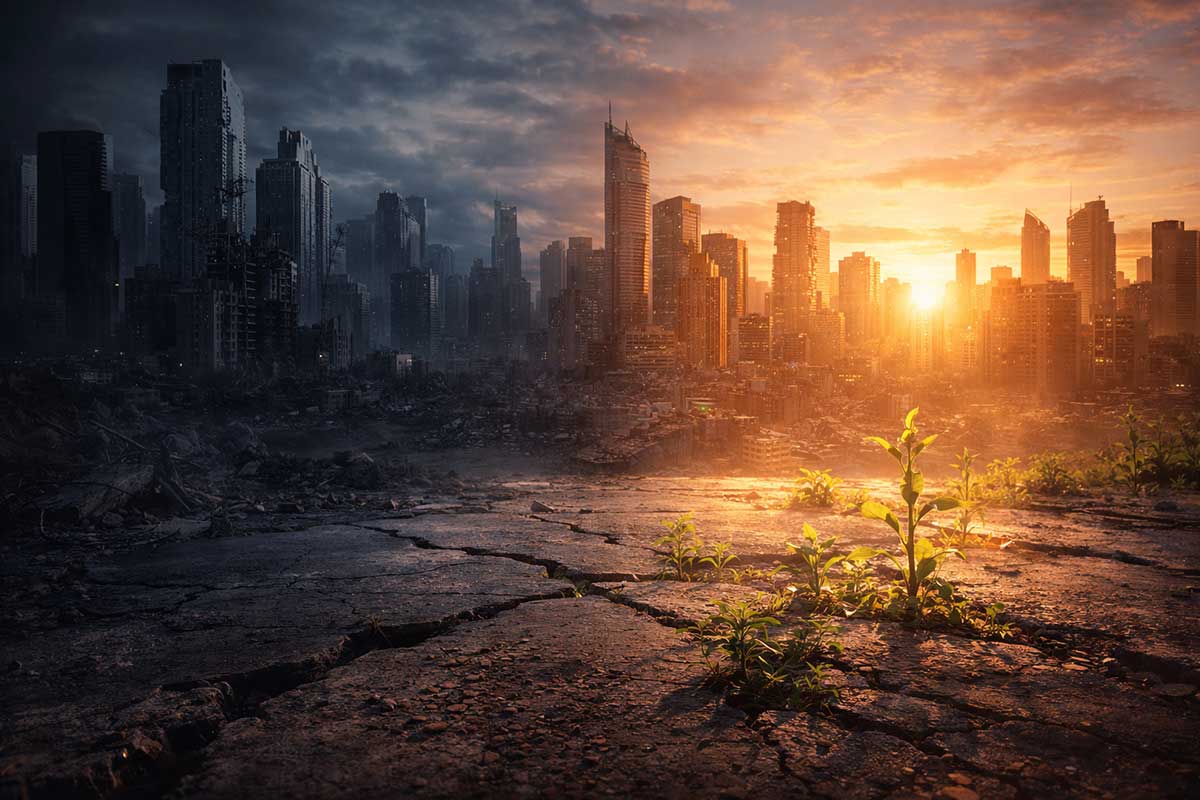
Is 2026 the Breakdown of the Old World—or the Birth of a New One?
Nick Sasaki:
Thank you all for being here. When people hear the word collapse, they panic. When they hear reset, they’re suspicious. Yet across all of your work—psychic, channeled, astrological, intuitive—2026 keeps coming up as a turning point. So I want to begin simply, but not shallowly.
Is 2026 fundamentally about things falling apart, or is it about something new finally being allowed to begin?
Craig Hamilton Parker:
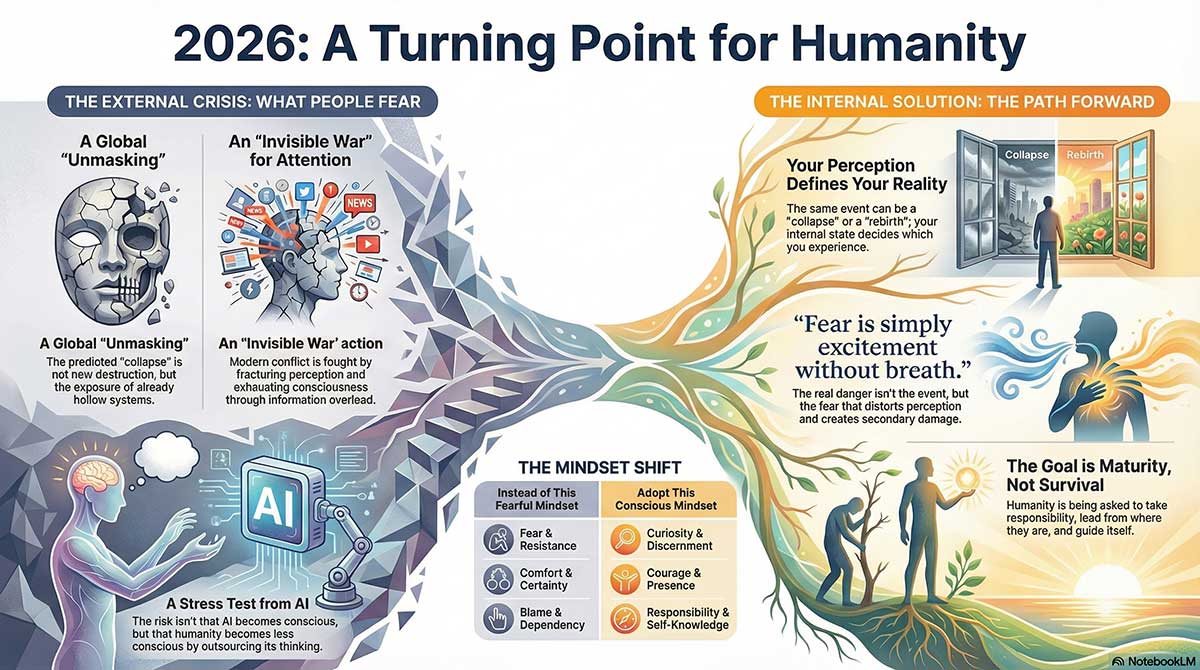
From my perspective, it’s neither purely collapse nor purely rebirth—it’s unmasking. The systems people believe are collapsing were already hollow. 2026 is when denial becomes unsustainable. In the Nadi work I’ve seen, and in my own intuition, this period isn’t about destruction for punishment’s sake. It’s about exposure. When something collapses after exposure, that’s not tragedy—that’s inevitability.
People often ask, “Is this the end?” I don’t see an end. I see a shedding. Like a snake doesn’t die when it loses its skin.
Spiritman JT:
I agree, but I’d phrase it more bluntly. 2026 is a shock year. Not because the universe is cruel, but because humanity ignores gentle nudges. The reason it feels like collapse is because unfinished business from 2025 gets forcefully closed. Economies, belief systems, leadership structures—if they didn’t evolve willingly, they’ll evolve suddenly.
But here’s the thing: shock doesn’t mean failure. Birth itself is violent. No one drifts peacefully into a new world.
Elizabeth April:
From a timeline perspective, both things are happening simultaneously. That’s what confuses people. Some will experience collapse because they’re still attached to structures that can’t survive the frequency shift. Others will experience 2026 as momentum—like doors opening everywhere.
That’s why people watching the same world will describe it completely differently. One says “everything is breaking,” another says “everything is finally moving.” Neither is wrong. They’re just on different tracks.
Bashar:
What you are calling collapse is simply the experience of resistance to change. What you are calling rebirth is alignment with change. The event itself is neutral. The perception defines the label.
A civilization does not end when structures dissolve. It ends when imagination stops. In 2026, imagination accelerates. Therefore, by definition, it is not an ending.
Nick Sasaki:
That raises the next question, and this one matters deeply.
If collapse and rebirth are happening at the same time, who decides which one we experience? Is it leadership? Fate? Prophecy? Or something more personal?
Spiritman JT:
People hate this answer, but it’s responsibility. Not control—responsibility. Governments don’t decide timelines. Prophets don’t decide timelines. Even disasters don’t decide timelines. Consciousness does.
Two people can live through the same financial reset. One loses everything and breaks. Another reinvents themselves and thrives. Same event. Different internal state.
Craig Hamilton Parker:
This aligns with what I’ve seen repeatedly. The Nadis never present destiny as rigid. They always include remedies. Action changes outcome. Awareness changes outcome. Fear narrows options; responsibility widens them.
What concerns me most isn’t war or economics—it’s psychological fragility. People who outsource meaning to systems are the ones who feel collapse most acutely when those systems wobble.
Elizabeth April:
Exactly. From a remote-viewing perspective, timelines split based on focus. Where attention goes, energy flows—this isn’t spiritual fluff, it’s mechanics.
In 2026, the “rug-pull” feeling happens when people refuse to look inward. If someone has avoided change for years, the universe compresses time. What could’ve been gradual becomes sudden.
But if someone did the inner work earlier, 2026 feels like relief.
Bashar:
No external authority chooses your experience. You are not passengers on a collapsing ship—you are participants in a transformation.
Your frequency is your voting ballot. You cast it continuously, not once every four years.
Nick Sasaki:
That leads us to the hardest part of this conversation.
Many people listening to predictions hear fear—even when the speaker doesn’t intend it. So let me ask this directly:
Is fear itself the real danger of 2026—not the events?
Craig Hamilton Parker:
Yes. Unequivocally. Fear distorts perception. It turns neutral change into existential threat.
In my experience, fear-based predictions fail more often than they succeed—not because the danger wasn’t real, but because fear alters the outcome. People panic, and panic creates secondary damage far worse than the original event.
Spiritman JT:
Fear is the amplifier. It doesn’t create the storm, but it makes people run into it instead of sheltering wisely.
That’s why I emphasize courage so much. Not false positivity—courage. 2026 rewards courage disproportionately. People who step into leadership in small ways—family, community, truth-telling—become anchors.
Elizabeth April:
Fear also collapses timelines. It locks people into repetition. When someone says, “Everything is doomed,” what they’re really saying is, “I refuse to imagine differently.”
But imagination is the engine of the next cycle. Without it, rebirth can’t happen.
Bashar:
Fear is simply excitement without breath. When you breathe into change instead of resisting it, fear converts into clarity.
Remember: the universe does not test you to see if you fail. It reveals to you what you believe.
Nick Sasaki:
Let me bring this together.
If 2026 is not a verdict but a mirror…
If collapse is resistance and rebirth is alignment…
Then perhaps the real question isn’t what will happen, but who will we be when it does.
Before we close this topic, I want each of you to answer this final thought in one way or another—not as prophecy, but as guidance.
What mindset does 2026 require from humanity?
Craig Hamilton Parker:
Discernment. Not belief. Not disbelief. Discernment.
Spiritman JT:
Courage over comfort.
Elizabeth April:
Responsibility for consciousness—not blame.
Bashar:
Curiosity instead of fear.
Nick Sasaki (closing):
Then perhaps 2026 is not asking humanity to survive a collapse—but to graduate from it.
That’s where we’ll leave Topic 1.
Topic 2 — The Invisible War
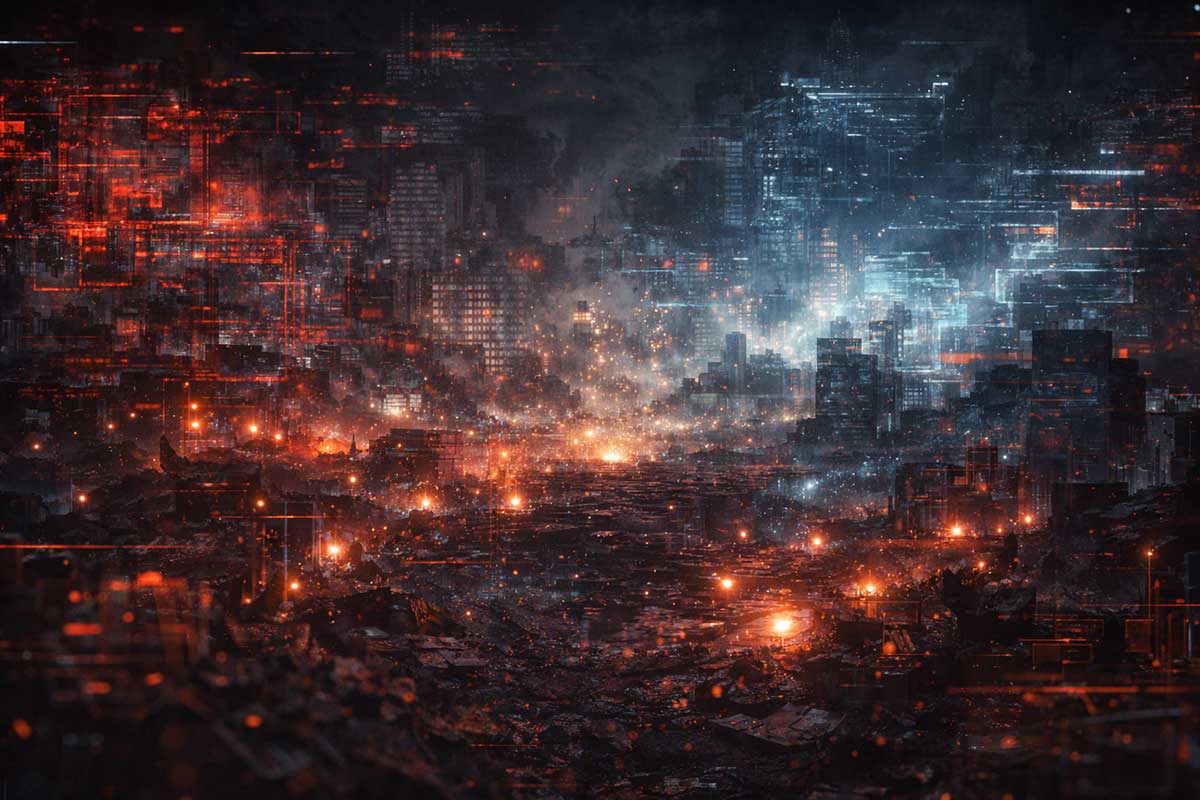
If War No Longer Looks Like War, How Do We Know We’re in One?
Nick Sasaki:
In Topic 1, we talked about collapse and rebirth. But many people sense something else underneath—something harder to name. Not tanks. Not sirens. Not a declaration of war. Yet there’s tension everywhere: information overload, emotional exhaustion, people turning on each other.
So let me open this bluntly.
If we were already in a war—but one without uniforms or borders—how would we recognize it?
Craig Hamilton Parker:
We would recognize it by confusion rather than clarity. Traditional war rallies people into unity, even if that unity is misguided. This modern conflict fractures perception itself. People can’t even agree on what’s real.
From my perspective, the most dangerous battles are fought where truth is diluted, not destroyed. When no one trusts anything, power no longer needs to convince—it only needs to exhaust.
Spiritman JT:
Exactly. This is warfare of attrition against consciousness. Nobody needs to invade when they can destabilize identity.
Look at how people argue now. It’s not debate—it’s reflex. People react before they think. That’s not accidental. A population that can’t slow down can’t organize, can’t resist, and can’t imagine alternatives.
Elizabeth April:
From a remote-viewing standpoint, what stands out isn’t violence—it’s fragmentation. Timelines fracture when information becomes weaponized. People don’t know what to believe, so they cling to tribes.
That’s when conflict becomes internal. You don’t need bombs if neighbors see each other as existential threats.
Bashar:
A war without visible enemies requires consent through distraction. When attention is fragmented, authority becomes invisible.
The question is not “Are you under attack?”
The question is “Where is your attention being guided?”
Nick Sasaki:
That raises something uncomfortable.
Historically, war has been declared. Now it seems… ambient. Always on. Always humming in the background.
Is the modern battlefield information itself?
Spiritman JT:
One hundred percent. Information is the new territory. That’s why censorship battles matter so much. Whoever controls narrative doesn’t need to control armies.
People think propaganda ended with old wars. It didn’t. It just became personalized. Algorithms now tailor reality to the individual.
Craig Hamilton Parker:
And when everyone receives a different version of reality, consensus collapses. That’s when society becomes ungovernable—not because people rebel, but because they can’t agree on what they’re rebelling against.
I’ve seen this in readings: the chaos isn’t caused by lies alone, but by the speed at which truths and falsehoods are mixed.
Elizabeth April:
Yes—and this mixing is intentional. When people say, “I don’t know what to believe anymore,” that’s the goal. Confusion creates dependency. People then look for authority figures to tell them what’s real.
That’s why alternative platforms emerge at the same time censorship increases. Control tightens—and resistance responds.
Bashar:
Information is neutral. Meaning is not.
War occurs when meaning is outsourced. When you abandon discernment, you allow others to define reality for you.
Nick Sasaki:
Let me push this further.
If information is the battlefield, then what are the weapons? Fear? Outrage? Identity?
Craig Hamilton Parker:
Fear is the accelerant. Outrage is the spark. Identity is the battlefield itself.
When identity becomes rigid, people stop listening. That’s when dialogue dies. And once dialogue dies, violence becomes inevitable—even if it’s psychological.
Spiritman JT:
Outrage is addictive. It gives people a sense of purpose without responsibility. You don’t have to build anything—just attack.
That’s why outrage spreads faster than wisdom. Wisdom requires effort. Outrage just needs a trigger.
Elizabeth April:
And identity politics—whether political, spiritual, or ideological—lock people into fixed roles. Once someone defines themselves against something, they become predictable.
From a timeline perspective, predictability equals manipulability.
Bashar:
The most effective weapon is not fear—it is certainty. Certainty without curiosity.
When individuals believe they already know the truth, they stop exploring. That is the moment growth halts.
Nick Sasaki:
So here’s the next hard question.
If this is an invisible war, who benefits from it continuing?
Spiritman JT:
Systems that thrive on dependency. Centralized power hates self-aware individuals. A population fighting itself doesn’t notice who’s pulling strings.
Craig Hamilton Parker:
Historically, chaos has always been profitable—for someone. Whether it’s economic gain, political leverage, or spiritual authority, disorder creates openings.
But I’d add something important: not all chaos is engineered. Some arises naturally when outdated systems resist evolution.
Elizabeth April:
I agree. Some forces exploit the chaos, but not all chaos is malicious. Sometimes it’s just the pressure of awakening meeting resistance.
What matters is whether people learn to stabilize themselves internally. That’s what disrupts exploitation.
Bashar:
No entity benefits from conflict more than unexamined belief systems.
The war persists only as long as individuals define themselves by opposition rather than curiosity.
Nick Sasaki:
That brings us to a turning point.
If this war is psychological, informational, and internal… then traditional resistance won’t work.
So what does work?
Craig Hamilton Parker:
Grounding. Discernment. Patience.
Not every headline deserves your nervous system. Choosing where to place attention is now an act of self-defense.
Spiritman JT:
Courageous neutrality. Not apathy—neutrality. The ability to observe without immediately reacting.
When people stop reacting on cue, the war loses fuel.
Elizabeth April:
Inner coherence. If your thoughts, emotions, and actions align, manipulation fails.
From a timeline perspective, coherence creates stability. Stable individuals stabilize collectives.
Bashar:
The antidote to invisible war is presence.
When you are fully present, you cannot be unconsciously directed.
Nick Sasaki:
I want to close this topic with a reframing.
Maybe the question isn’t “How do we win this war?”
Maybe it’s “How do we outgrow it?”
If war thrives on division, distraction, and fear—then perhaps peace in 2026 isn’t the absence of conflict… but the refusal to be used by it.
That’s where we’ll pause.
Topic 3 — Technology at the Crossroads

Is AI the Tool That Frees Humanity—or the Test That Reveals Who Is Awake?
Nick Sasaki:
In Topic 2, we talked about an invisible war—one fought through attention, identity, and perception. But there’s another force accelerating all of this, something that didn’t exist at this scale before.
Technology.
AI. Automation. Algorithms shaping what we see, what we buy, even how we think.
So I want to begin with a question that many people feel but can’t articulate.
Is technology—specifically AI—liberating humanity, or is it quietly training us to surrender our agency?
Craig Hamilton Parker:
It’s neither inherently liberating nor enslaving. It’s amplifying.
Technology magnifies whatever consciousness brings to it. If society is unconscious, AI accelerates unconsciousness. If individuals are discerning, AI becomes a tool of expansion.
The danger is not intelligence—it’s delegation. When humans stop thinking because something else thinks for them, erosion begins.
Spiritman JT:
That’s the key word: delegation.
We’re watching people outsource memory, decision-making, creativity—even morality. AI isn’t taking over; people are handing things over willingly.
That’s not a tech problem. That’s a consciousness problem.
Elizabeth April:
From a remote-viewing perspective, 2026 feels like a threshold year. Not because AI suddenly becomes evil, but because it becomes intimate.
AI moves from being something we use… to something that responds to us personally. Homes. Bodies. Emotions. Identity.
And that’s where people start asking: Who’s really in control here?
Bashar:
Technology does not remove free will. It reveals how much of it you were using.
AI is a mirror—just faster and less forgiving than previous tools.
Nick Sasaki:
That’s unsettling.
So let me sharpen the question.
Is the real risk that AI becomes conscious—or that humans become less conscious?
Spiritman JT:
The second one. Absolutely.
People fear sentient machines while sleepwalking through their own lives. The threat isn’t AI awakening. It’s humanity numbing itself.
We already see it—people trusting algorithms over intuition, metrics over meaning.
Craig Hamilton Parker:
And history supports this. Every technological leap forces a moral reckoning. Printing presses, electricity, nuclear power. Each time, the question wasn’t “Is this good or bad?” but “Are we mature enough to wield it?”
With AI, the reckoning is psychological, not physical.
Elizabeth April:
Exactly. AI reflects the collective psyche. If people are fragmented, AI will amplify fragmentation. If people are coherent, AI becomes supportive.
What worries me isn’t machines—it’s compliance. People adapting themselves to machines instead of the other way around.
Bashar:
Consciousness cannot be replaced. But it can be ignored.
AI does not diminish humanity unless humanity chooses convenience over awareness.
Nick Sasaki:
Let’s talk about something concrete that came up across multiple predictions.
Home robots. AI companions. Assistants that don’t just serve—but interact.
Is this where a line gets crossed?
Elizabeth April:
This is where the debate explodes.
There’s a growing “human-first” movement for a reason. People intuitively feel that constant machine companionship reshapes emotional development.
Not because machines are evil—but because humans evolve through friction, uncertainty, and relationship dynamics that can’t be optimized.
Spiritman JT:
Right. Real growth comes from discomfort. AI removes friction.
If a machine always agrees, always adapts, always soothes—you lose resilience. You lose negotiation. You lose patience.
That’s not evolution. That’s sedation.
Craig Hamilton Parker:
I’d add this: relationships are mirrors. If the mirror never challenges you, you stagnate.
AI companionship risks becoming a hall of agreeable reflections—comforting, but hollow.
Bashar:
The question is not whether AI companions exist.
The question is: Why are they being chosen over human connection?
Technology does not create isolation. It fills a vacuum that already exists.
Nick Sasaki:
That leads into regulation.
Many governments talk about regulating AI. Others push digital IDs, tracking, and integration.
Is regulation protection—or control disguised as safety?
Spiritman JT:
Both.
Some regulation is necessary. But let’s be honest—control often hides behind the word “safety.”
Digital ID tied to access, money, speech—that’s not about protection. That’s about leverage.
Elizabeth April:
Yes. From what I’ve seen, regulation doesn’t stop AI. It centralizes it.
Decentralized intelligence empowers people. Centralized intelligence empowers systems.
That’s the real battle line.
Craig Hamilton Parker:
And here’s the irony: attempts to control AI often accelerate distrust. When people feel monitored, they rebel—or disengage entirely.
Neither outcome fosters wisdom.
Bashar:
True balance arises when responsibility matches capability.
Control imposed externally breeds resistance. Responsibility cultivated internally breeds discernment.
Nick Sasaki:
Let’s pivot to something visionary that appeared in multiple narratives.
AI merging with the human nervous system—not implants necessarily, but wearable interfaces. Thought-driven technology.
Is this evolution… or a dangerous shortcut?
Elizabeth April:
I saw this very clearly—not invasive, but intimate. Technology reading neural patterns, responding to intention.
This can be empowering if the individual is grounded. But if identity is unstable, the feedback loop becomes destabilizing.
Think amplification again.
Spiritman JT:
I’m cautious here.
Mind-tech interfaces blur boundaries fast. If people don’t know themselves, what exactly are they connecting?
Without sovereignty, integration becomes intrusion.
Craig Hamilton Parker:
Yet evolution has always been about integration. Tools become extensions of us.
The difference now is speed. Humanity hasn’t psychologically caught up with its inventions.
Bashar:
Integration is not the issue. Unconscious integration is.
Any tool connected to consciousness magnifies belief. Clarity strengthens. Confusion destabilizes.
Nick Sasaki:
So maybe AI isn’t humanity’s doom—or savior—but a stress test.
A test of awareness, discernment, responsibility.
If that’s true, then 2026 isn’t about stopping AI… but about maturing alongside it.
Let me ask each of you directly.
What determines whether technology enslaves or liberates humanity?
Craig Hamilton Parker:
Wisdom over speed.
When progress outruns ethics, imbalance follows. Slowing down—intentionally—is revolutionary.
Spiritman JT:
Self-knowledge.
If you don’t know who you are, something else will define you.
Elizabeth April:
Coherence.
When thoughts, emotions, and actions align, external systems lose control.
Bashar:
Presence.
When you are present, no technology can override your sovereignty.
Nick Sasaki:
Then perhaps this is the core insight of Topic 3.
Technology doesn’t decide humanity’s future.
Humanity decides—through attention, awareness, and choice—how technology is used within it.
AI will not replace consciousness.
But it will expose how much consciousness we are actually using.
That feels like the right place to pause.
Topic 4 — The Fear of Cataclysm

Is Humanity Facing an External Apocalypse—or an Inner Reckoning?
Nick Sasaki:
By now, a pattern is clear. Collapse, invisible war, technological acceleration—each topic circles the same emotional undercurrent.
Fear.
Not ordinary fear, but a deep, almost archetypal anxiety. People dream of fire, floods, meteors, eruptions. Religious language resurfaces. “Doomsday” trends. Even those who don’t believe in prophecy feel a sense that something is approaching.
So I want to ask this carefully.
Are we approaching a literal cataclysm—or are we projecting an inner crisis onto the outer world?
Craig Hamilton Parker:
From my perspective, humanity has always externalized its inner states. When societies reach moral or psychological tipping points, the unconscious looks for symbols large enough to express that tension.
Fire, floods, destruction—these are ancient metaphors for purification and transformation. That doesn’t mean nothing external happens. But the meaning of the event matters more than the event itself.
What worries me is not catastrophe—it’s misinterpretation. When fear replaces discernment, people make choices that worsen outcomes.
Spiritman JT:
I see this as a pressure-release cycle.
Humanity has ignored emotional, spiritual, and ethical debt for decades. That pressure builds. When people sense it subconsciously, they imagine explosions because explosions match the intensity of the internal strain.
But most transformations don’t arrive as one dramatic moment. They arrive as a series of wake-up calls people keep dismissing.
Elizabeth April:
From a timeline perspective, there is no single apocalypse. There are many possible disruptions—environmental, economic, social—but none are fixed.
What is fixed is the amplification of fear narratives in 2026. Fear spreads because people feel change approaching but don’t know how to interpret it.
So they reach for familiar language: end times, judgment, disaster.
Bashar:
Fear is the mind’s attempt to prepare for uncertainty using familiar imagery.
The unknown does not announce itself politely. It disrupts patterns. When identity is tied to stability, disruption feels like annihilation.
Nick Sasaki:
Let’s stay with imagery for a moment.
Across cultures and predictions, fire keeps appearing—literal fire, heat, lava, impact, purification.
Is fire a warning… or a symbol?
Elizabeth April:
Fire is transformation energy. It destroys what cannot survive and strengthens what can.
In my viewing, fire doesn’t always mean physical destruction. It often represents exposure. Heat reveals weaknesses in structures—physical and psychological.
That’s why people feel uneasy. Fire removes hiding places.
Craig Hamilton Parker:
Exactly. Fire has always symbolized truth. You cannot hide impurities in flame.
In ancient texts, purification by fire wasn’t punishment—it was preparation. Something burned so something else could emerge.
Spiritman JT:
And on a practical level, climate extremes are real. Heat, drought, crop stress—those are legitimate concerns.
But panic doesn’t solve adaptation. Awareness does.
The danger isn’t the fire—it’s people freezing instead of responding intelligently.
Bashar:
Fire is change accelerated.
Those aligned with growth experience warmth. Those resisting feel burned.
Nick Sasaki:
Another recurring element is anticipation—people sensing catastrophe before it happens. Dreams, intuition, collective anxiety.
Why does the fear feel so widespread now?
Spiritman JT:
Because people feel the ground shifting under their beliefs.
Economic certainty is gone. Social trust is eroding. Authority figures contradict themselves. Technology moves faster than ethics.
When meaning collapses, fear fills the vacuum.
Elizabeth April:
Yes. Fear spikes when identity structures weaken.
People built their sense of self around systems—jobs, roles, ideologies—that no longer feel stable. The psyche reacts with existential alarm.
It’s not about death. It’s about disorientation.
Craig Hamilton Parker:
And disorientation often precedes growth.
Think of initiation rites. The initiate must pass through confusion before wisdom. Society is going through a collective initiation—without a guide.
That’s why fear feels uncontained.
Bashar:
Anticipation arises when intuition senses change before the mind understands it.
The body knows before belief systems adjust.
Nick Sasaki:
That brings us to responsibility.
If fear itself magnifies outcomes, then panic becomes a self-fulfilling prophecy.
So how do individuals respond without denial… but without hysteria?
Craig Hamilton Parker:
By grounding in practical wisdom.
Prepare, but don’t obsess. Adapt, but don’t catastrophize. Awareness without fixation.
Fear collapses perspective. Wisdom widens it.
Spiritman JT:
Emotional discipline.
Not suppressing fear—but not feeding it either. Fear is a signal, not a command.
When people stop sharing panic reflexively, collective tension drops fast.
Elizabeth April:
Choice of focus matters more than people realize.
You don’t need to ignore the world—but you do need to decide which timeline you energize emotionally.
That’s not avoidance. That’s discernment.
Bashar:
The antidote to fear is not reassurance—it is presence.
When you are present, you respond instead of react.
Nick Sasaki:
Let me ask the hardest version of this.
If humanity is facing reckoning—environmental, ethical, spiritual—what is the purpose of such a reckoning?
Spiritman JT:
Maturity.
Civilizations either mature—or collapse under their own avoidance. Reckoning forces accountability.
Craig Hamilton Parker:
I’d say remembrance.
Humanity has forgotten its relationship with nature, with meaning, with consequence. Reckoning restores proportion.
Elizabeth April:
Choice.
This period clarifies values quickly. What matters becomes obvious. What doesn’t falls away.
Bashar:
Integration.
A species cannot evolve while fragmented. Reckoning brings fragments back into coherence.
Nick Sasaki:
Then maybe this is the reframe people need.
Cataclysm is not punishment.
Fear is not prophecy.
Disruption is not annihilation.
Perhaps 2026 confronts humanity with a simple question:
Will we meet change consciously—or resist it until it hurts?
Before we close, I want each of you to offer one grounding reminder for those feeling overwhelmed by apocalyptic thinking.
Craig Hamilton Parker:
No prophecy overrides free will.
Spiritman JT:
You are more resilient than you think.
Elizabeth April:
Your focus shapes your experience more than any prediction.
Bashar:
The unknown is not your enemy—it is your next step.
Nick Sasaki (closing):
Then maybe the real apocalypse is not an ending—but an awakening intense enough to feel like one.
And if that’s true, the task isn’t to survive fear—but to outgrow it.
That’s where we’ll leave Topic 4.
Topic 5 — The Return of the Guides
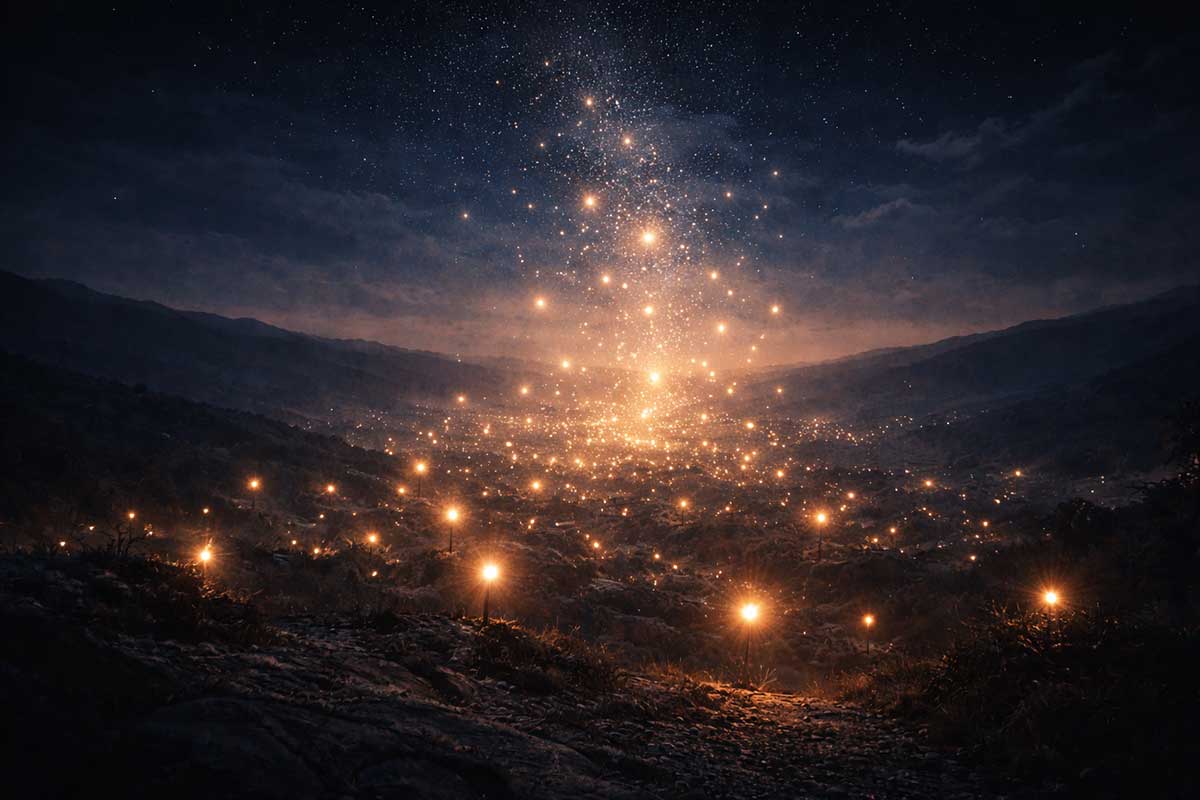
Are Avatars, Star Beings, and Awakened Humans Emerging—or Is Humanity Being Asked to Guide Itself?
Nick Sasaki:
Throughout this series, we’ve talked about collapse, invisible war, technology, and fear. But behind all of it, there’s another question people keep asking—sometimes openly, sometimes quietly.
Are we being helped?
Some talk about avatars. Others about star beings, guides, councils, or awakened leaders. Others reject all of that and say humanity is on its own.
So I want to begin here.
Is 2026 about the arrival of guidance—or the realization that guidance has always been here?
Craig Hamilton Parker:
From my experience, guidance doesn’t arrive like a rescue party. It arrives like a reminder.
In the traditions I’ve studied, enlightened beings appear when humanity reaches a crossroads—not to save, but to signal. They don’t remove responsibility; they intensify it.
What people call “the return of the guides” is often the return of memory—the remembering of wisdom humanity once lived by.
Spiritman JT:
I’m going to say something unpopular.
If humanity needs saving, it won’t be saved.
Growth doesn’t come from intervention—it comes from accountability. What’s happening now feels less like external beings arriving and more like internal leadership activating.
Teachers don’t show up because students are helpless. They show up when students are ready.
Elizabeth April:
From a timeline perspective, both are true.
There is increased interaction—subtle, not dramatic. Guidance flows more clearly. Intuition sharpens. Synchronicities increase.
But the biggest shift isn’t beings appearing—it’s humans becoming capable of perceiving guidance without worshiping it.
That’s a huge evolutionary step.
Bashar:
Guidance has never been absent.
What changes is permission to recognize it.
Civilizations do not receive contact when they are weak. They receive it when they are capable of sovereignty.
Nick Sasaki:
That distinction matters.
Many people hope for saviors. Others fear manipulation. Both assume power lies elsewhere.
So let me ask directly.
Is belief in external guides empowering—or does it risk reinforcing dependency?
Spiritman JT:
It depends on the relationship.
If guidance replaces responsibility, it becomes another hierarchy. If it enhances responsibility, it becomes a catalyst.
The danger isn’t belief—it’s abdication.
Craig Hamilton Parker:
Exactly. History shows us that whenever spiritual authority becomes centralized, corruption follows.
True guidance decentralizes power. It reminds individuals of their own moral compass.
Elizabeth April:
I see this clearly in people who are awakening now.
They’re less interested in gurus and more interested in integration. They don’t want answers handed down—they want resonance.
That’s new.
Bashar:
Dependency arises when guidance is treated as authority.
Empowerment arises when guidance is treated as reflection.
Nick Sasaki:
Let’s talk about something sensitive but unavoidable.
Disclosure. Contact. The idea that non-human intelligence may become openly acknowledged.
Is this about beings revealing themselves—or humanity revealing itself?
Elizabeth April:
Disclosure isn’t a press conference. It’s a psychological readiness.
People imagine ships landing. What actually happens first is perception changing. Fear loosens. Curiosity grows.
Contact begins internally before it becomes external.
Spiritman JT:
And here’s the hard truth.
If beings appeared tomorrow, many people wouldn’t listen—they’d project fear, savior fantasies, or hostility.
That’s why disclosure is slow. Not because of secrecy—but because of maturity.
Craig Hamilton Parker:
In ancient texts, contact often occurs indirectly—through inspiration, dreams, archetypes. Sudden revelation shocks the psyche.
Gradual recognition integrates wisdom.
Bashar:
Contact occurs when fear of the unknown becomes curiosity about it.
Your species is approaching that threshold—not because of technology, but because of introspection.
Nick Sasaki:
This brings us to avatars—figures of exceptional clarity, compassion, or consciousness.
Some traditions say multiple avatars emerge in times of upheaval.
Is that literal… or symbolic?
Craig Hamilton Parker:
Both.
There are individuals who carry unusual coherence—calm amid chaos, wisdom without arrogance. But they don’t announce themselves.
Avatars rarely fit expectations. They don’t dominate. They stabilize.
Elizabeth April:
And many avatars aren’t public figures.
They’re parents. Teachers. Healers. Ordinary people acting with extraordinary presence.
That’s the shift. Divinity expressed through normalcy.
Spiritman JT:
I’ll say this plainly: if you’re waiting for a messiah, you’re late.
Leadership is distributed now. The age of single saviors is over.
Bashar:
An avatar is not someone you follow.
An avatar is someone who reminds you of what you already are.
Nick Sasaki:
So perhaps the question isn’t “Who will guide us?” but “How will guidance be expressed?”
In a fragmented world, what does guidance even look like?
Spiritman JT:
It looks like courage without aggression.
It looks like clarity without contempt.
It looks like people telling the truth without needing applause.
Craig Hamilton Parker:
It looks like restraint—knowing when not to speak, not to act, not to inflame.
Wisdom often whispers while fear shouts.
Elizabeth April:
It looks like embodiment.
People living aligned lives become reference points for others—even without saying a word.
Bashar:
It looks like resonance rather than authority.
Those who vibrate clarity naturally attract attention without demanding it.
Nick Sasaki:
Let me bring this series to its final question.
If guides don’t arrive to save us…
If disclosure isn’t spectacle…
If avatars aren’t rulers…
Then what is humanity being asked to do now?
Craig Hamilton Parker:
To remember responsibility without losing compassion.
Spiritman JT:
To lead where you are—without waiting for permission.
Elizabeth April:
To choose coherence over chaos, daily.
Bashar:
To realize that guidance responds to readiness, not desperation.
Nick Sasaki (closing):
Then maybe the great misunderstanding of our time is this:
We think guidance comes when we are lost.
In truth, guidance becomes visible when we are ready to walk.
Perhaps 2026 isn’t the year humanity meets its guides.
Perhaps it’s the year humanity becomes one.
That’s where we’ll leave this conversation.
Final Thoughts by Edgar Cayce
As these considerations come to a close, let it be remembered that no vision of the future is ever given to remove free will.
What is foreseen is always conditional.
The disturbances spoken of—whether in nations, in nature, or in the hearts of people—are not judgments, but responses. They arise when humanity strays from balance, compassion, and remembrance of its spiritual origin.
Yet there is always another way.
For every prediction of upheaval, there exists an equal potential for healing. For every cycle of collapse, there is a path of renewal. These paths are chosen not by governments or institutions, but by individuals in their daily lives.
The true work of this period is not to prepare for disaster, but to cultivate alignment.
Alignment with truth.
Alignment with service.
Alignment with love expressed through action.
If fear is allowed to rule, fear will shape events.
If understanding is chosen, understanding will redirect them.
The future is not written in stone. It is written in consciousness.
Therefore, let each soul take responsibility—not with burden, but with hope. For humanity has passed through such thresholds before, and always the light has remained available to those who seek it within.
What comes next will reflect what is held in the collective heart.
Choose wisely. Choose gently. Choose love.
Short Bios:
Edgar Cayce
Edgar Cayce was an American mystic and intuitive known as the “Sleeping Prophet” for his trance-state readings on spirituality, healing, and human consciousness. His work emphasized free will, moral responsibility, and the idea that the future is shaped by collective choice rather than fixed destiny.
Craig Hamilton Parker
Craig Hamilton Parker is a British psychic medium, author, and broadcaster known for blending spiritual insight with historical and global analysis. His work often focuses on prophecy, consciousness, and humanity’s evolutionary crossroads.
Spiritman JT (Joseph Tiddle)
Spiritman JT is a spiritual medium and intuitive forecaster who combines numerology, astrology, and prophetic insight to interpret global shifts. His work emphasizes awakening, systemic change, and reclaiming personal sovereignty.
Elizabeth April
Elizabeth April is a clairvoyant remote viewer and consciousness teacher known for exploring parallel timelines, political revelations, and spiritual empowerment. Her work focuses on individual choice, awareness, and navigating collective transformation.
Bashar (channeled by Darryl Anka)
Bashar is a non-physical consciousness channeled by Darryl Anka, offering teachings on parallel realities, free will, and societal evolution. His message centers on alignment, responsibility, and humanity’s transition into a new stage of awareness.
Nick Sasaki
Founder of ImaginaryTalks, Nick Sasaki is a writer and curator of imaginative roundtable conversations exploring consciousness, history, technology, and the future of humanity. He moderates dialogues that bridge spiritual insight, cultural reflection, and modern challenges.
Leave a Reply