
|
Getting your Trinity Audio player ready...
|
What if Charles Dickens wrote his own Christmas story before he wrote Scrooge’s?
Winter does not ask what you are ready to lose.
It simply arrives, taking light early, thinning warmth, reminding people of the places they learned to endure rather than belong. In its silence, old absences grow louder. What was once ignored returns—not as memory, but as feeling.
Christmas enters this season gently. Not as a promise that everything will be healed, but as an invitation to notice what is missing. It does not demand joy. It asks whether joy is still allowed.
Every Christmas story begins here.
With something lost.
With the quiet hope that what matters most has not vanished forever—only waited to be found.
This is one such story.
Of a man who survived winter once before,
and of the Christmas that gave something back.
(Note: This is an imaginary conversation, a creative exploration of an idea, and not a real speech or event.)
Scene I — The Boy Who Learned How to Disappear
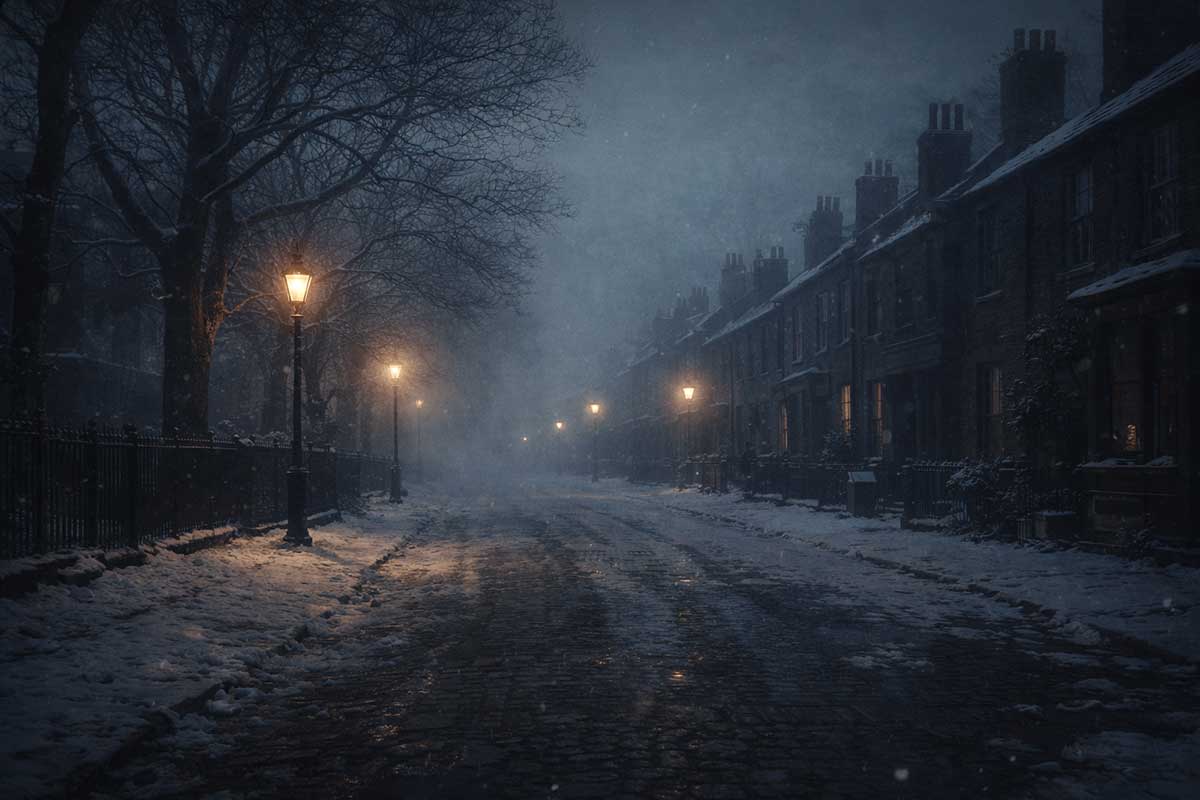
London always felt colder to Charles Dickens in December.
Not because of the weather—though the damp cold had a way of seeping into bone—but because Christmas arrived every year carrying memories he had never quite managed to outrun. Bells rang. Windows glowed. Laughter spilled into streets already dark by late afternoon. And with it came the quiet accusation: You survived. But at what cost?
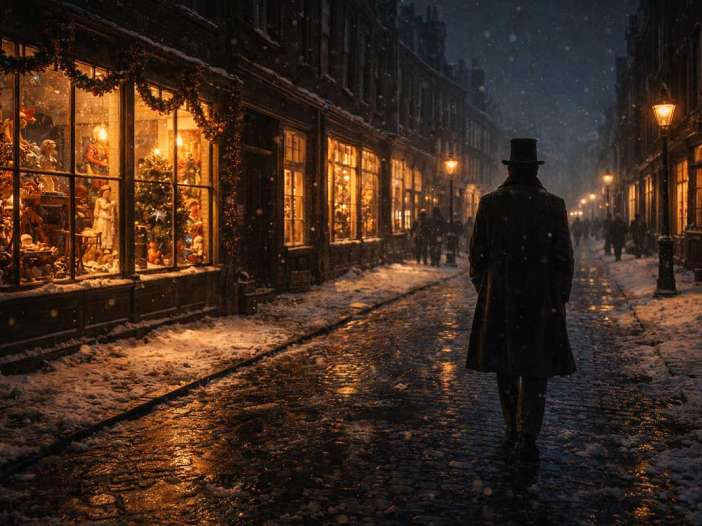
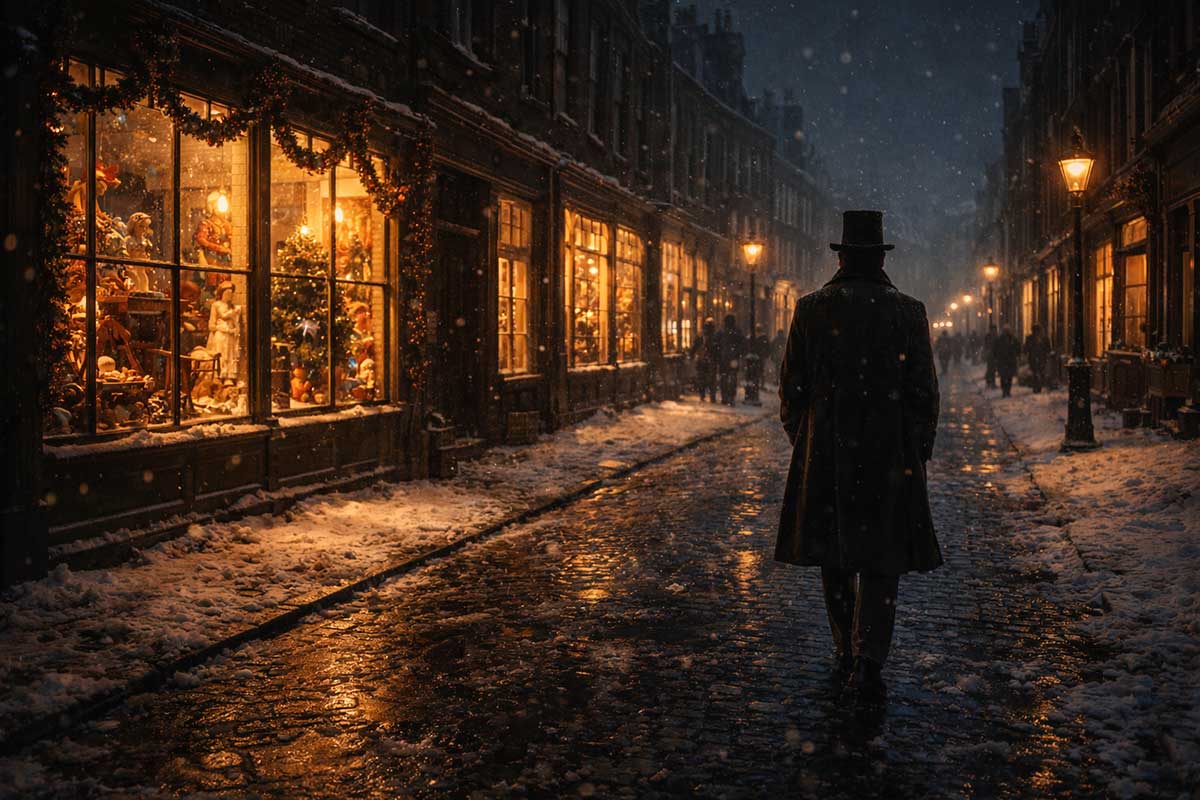
On one such December evening in 1843, Charles walked alone through the city he knew better than any mapmaker. Gas lamps hissed. Carriages rattled. Snow, half-melted into blackened slush, clung stubbornly to the edges of the street. He passed shop windows crowded with toys and sugared cakes, their warmth sealed safely behind glass.
He did not stop.
He had learned long ago that stopping hurt.
I. The Boy Who Learned How to Disappear
There are memories that fade with time, and others that do not age at all. Charles carried one that remained permanently twelve years old.
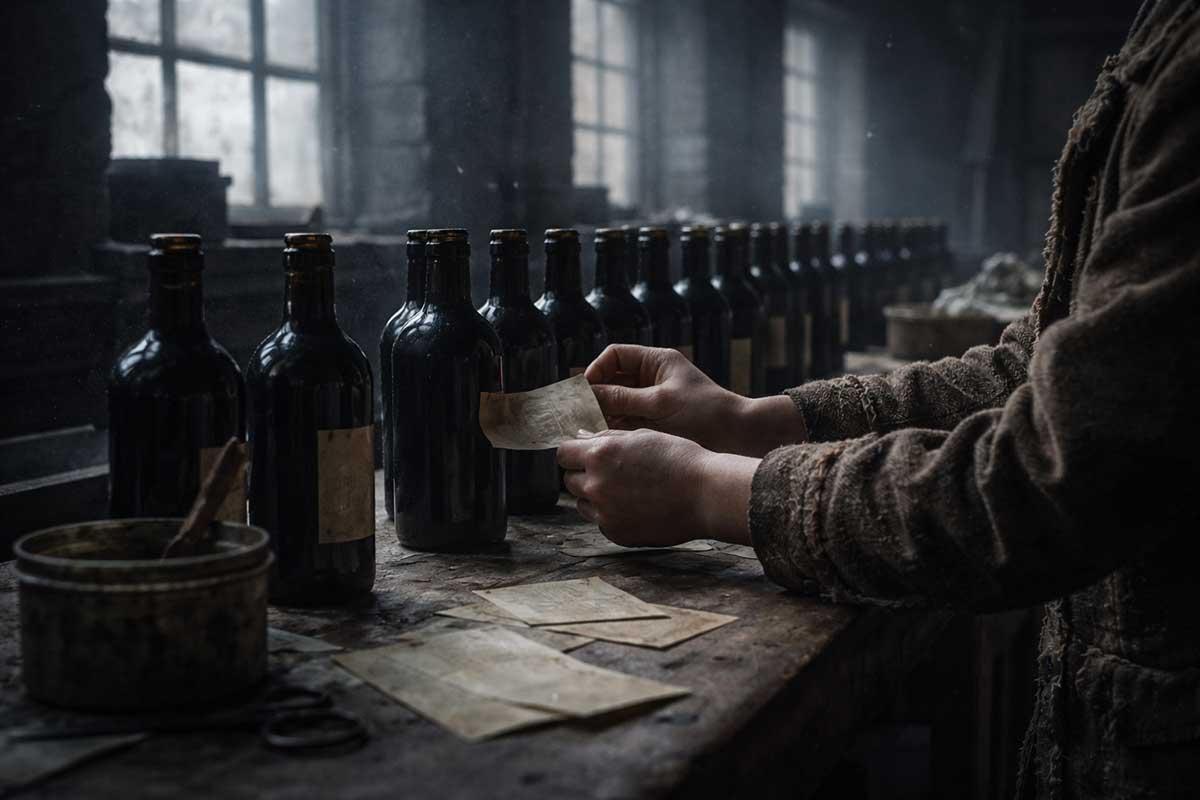
The factory smelled of glue and damp paper. Rows of bottles stood like obedient soldiers, waiting to be labeled by hands too small for the work. Charles’ fingers moved quickly—not because he was skilled, but because speed kept the supervisor from noticing him.
Mistakes were dangerous. Mistakes drew attention.
Outside, Christmas passed like a rumor. Bells echoed faintly through dirty windows. Somewhere, families gathered. Somewhere, children were being children.
Charles learned, that winter, that a child could vanish in plain sight.
His father’s imprisonment for debt had not shocked him as much as his mother’s practicality. When she suggested he remain at the factory even after the family’s situation improved, something inside him quietly folded in on itself.
From that moment on, Charles stopped expecting rescue.
He became useful instead.
II. Success Without Shelter
By the age of thirty-one, Charles Dickens was a household name. His novels sold well. His public readings filled halls. Strangers greeted him as though they knew him personally.
Yet fame proved to be a curious thing. It could open doors, but it did not keep out the cold.
He had a wife. Children. A home full of noise. Still, restlessness followed him like a second shadow. Bills arrived faster than comfort. Publishers pressed for more. England itself seemed to groan under the weight of its own progress—factories expanding, fortunes growing, children shrinking into labor.
Charles saw himself everywhere.
In the boys sweeping chimneys.
In the girls stitching until their eyes failed.
In the clerks counting pennies like prayers.
He spoke about it. Passionately. Publicly. He wrote pamphlets. He delivered speeches that left audiences visibly moved.
And then they went home.
The streets remained unchanged.
III. The Christmas That Demanded an Answer
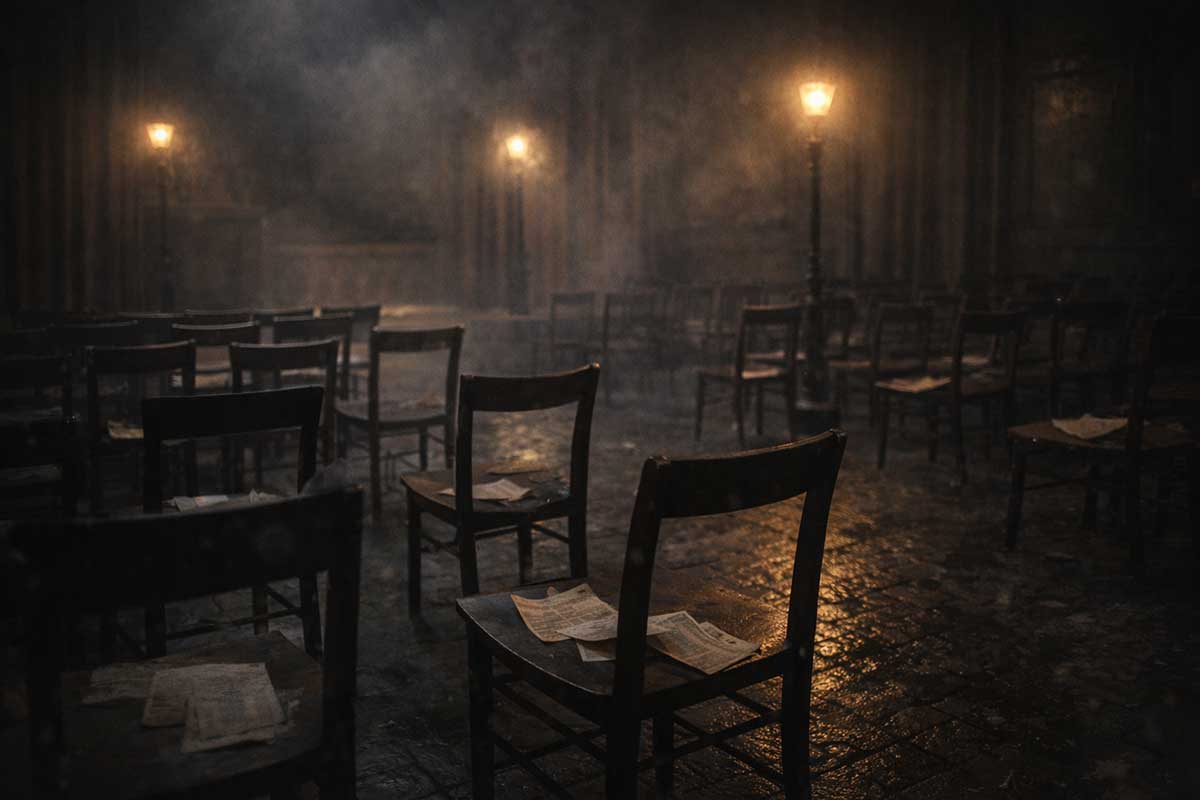
That December, Charles attended yet another charity meeting. Polite applause followed earnest speeches. Donations were pledged with careful enthusiasm. Everyone agreed that something should be done.
Walking home afterward, Charles felt a tightening in his chest that had nothing to do with the cold.
What good is awareness without transformation?
Christmas loomed like a deadline he could not postpone. It was not simply a holiday; it was a reckoning. Every year, it demanded an answer to the same question:
What do you believe about people?
Are they capable of change?
Are they worth saving from themselves?
Are kindness and joy indulgences—or necessities?
Charles reached his study late that night and did not light the fire. He stood in the dark, listening to the city settle, and felt the presence of his past more keenly than usual.
Not as memory.
As accusation.
IV. The Man Who Feared Becoming Hard
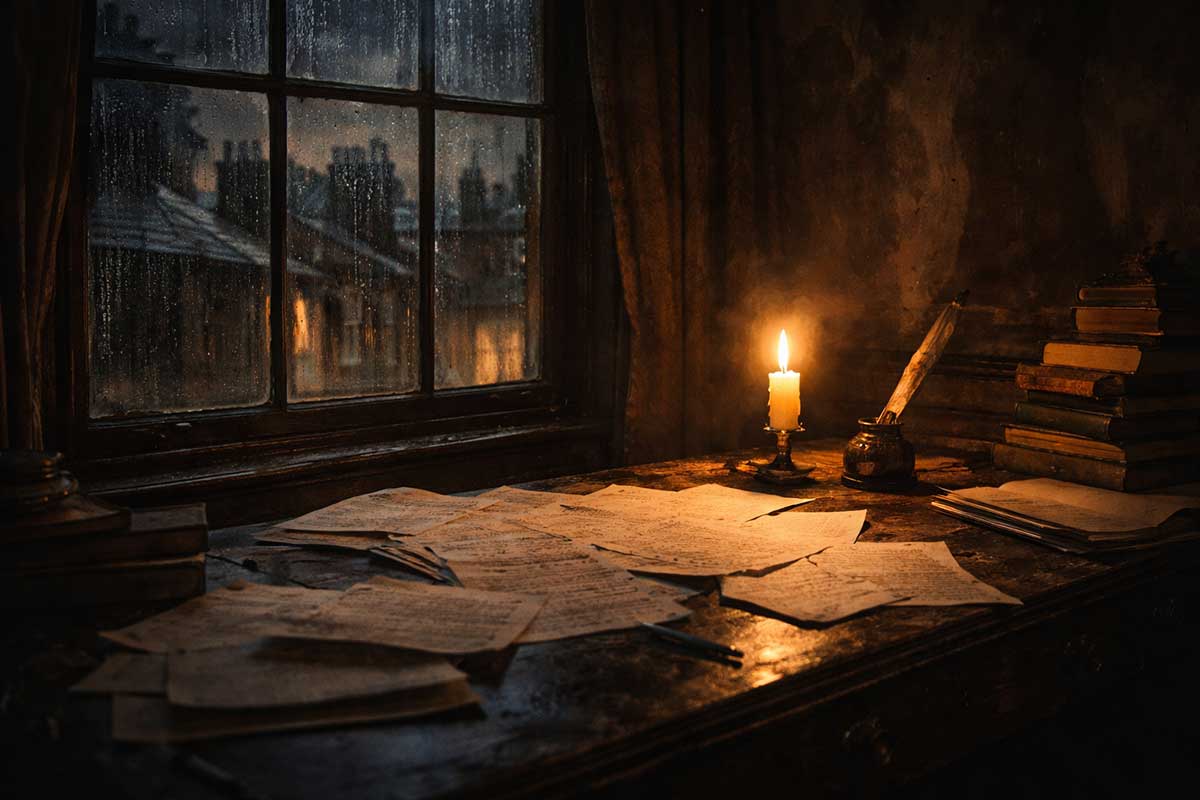
The idea came to him not as a story, but as a confrontation.
What if a man were forced to face every version of himself he had abandoned? What if memory were not sentimental, but merciless? What if kindness arrived too late—and yet still mattered?
Scrooge was not born a villain. Charles knew that instinctively. Scrooge was someone who had once been vulnerable and learned, disastrously, how to protect himself.
Someone who had survived.
Someone like him.
As Charles began to write, something inside him resisted. The work demanded honesty. It demanded that he acknowledge a truth he had avoided: survival alone is not a virtue. It can calcify into cruelty if left unexamined.
He wrote late into the nights. He walked the streets rehearsing dialogue aloud. He laughed suddenly, then found himself crying without warning.
Friends worried about him. He looked thin. Haunted.
But Charles felt strangely alive.
For the first time in years, he was not running from the boy in the factory.
He was inviting him back into the room.
V. Six Weeks That Changed Everything

The writing consumed him. He finished A Christmas Carol in six weeks—a pace that felt less like discipline and more like urgency. As though the story itself insisted on being born before Christmas arrived.
He refused suggestions to price it beyond the reach of ordinary readers. This story was not meant for the comfortable alone.
It was meant for clerks.
For laborers.
For parents.
For children who needed to know that the world had not forgotten them.
When the first copies appeared, bound in red cloth, Charles held one in his hands with a feeling he could not quite name.
Relief, perhaps.
Or surrender.
VI. A City Responds
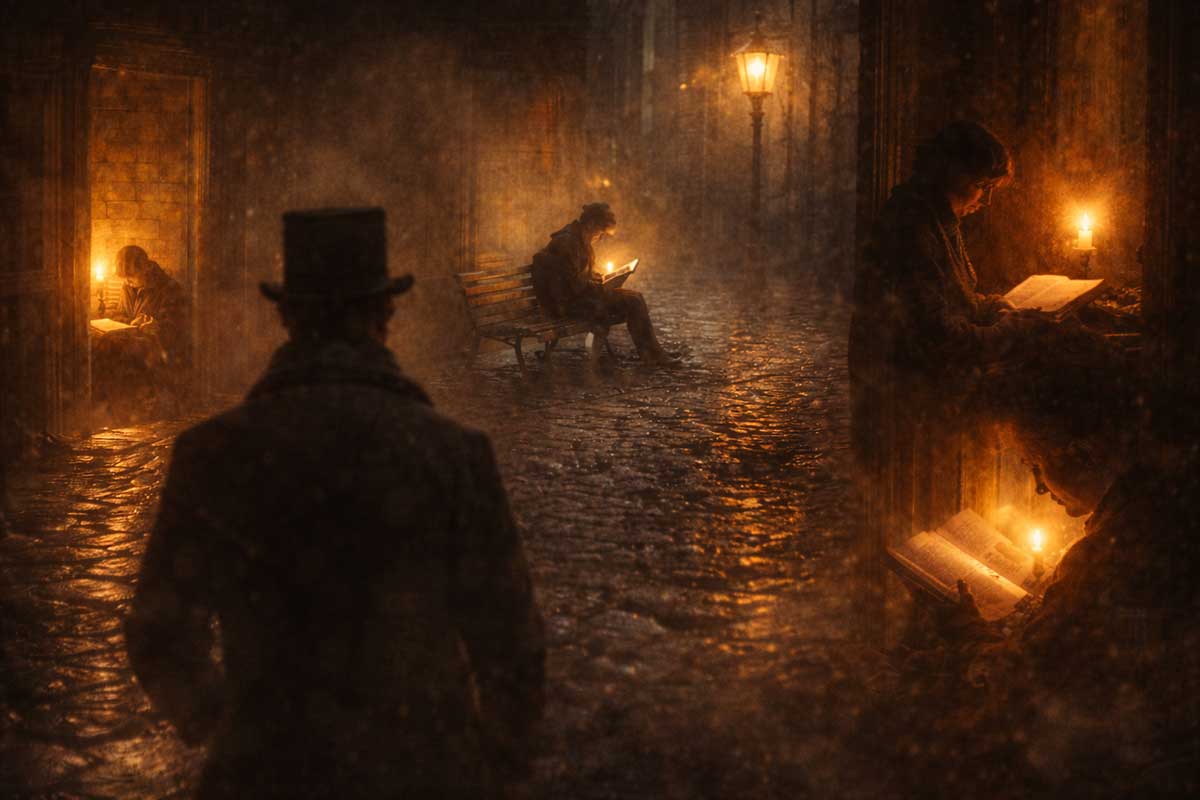
On Christmas Day, Charles walked London again.
This time, he noticed something different.
People were reading.
In doorways.
On benches.
By candlelight in cramped rooms.
He saw a woman close the book and sit quietly for a long time, as though listening for something she had nearly missed. He saw a man laugh aloud at a passage, then grow solemn, then nod to himself as if making a private vow.
The city was not transformed. Poverty did not evaporate. Injustice did not vanish overnight.
But something subtler had shifted.
People were remembering each other.
VII. What Was Truly Lost
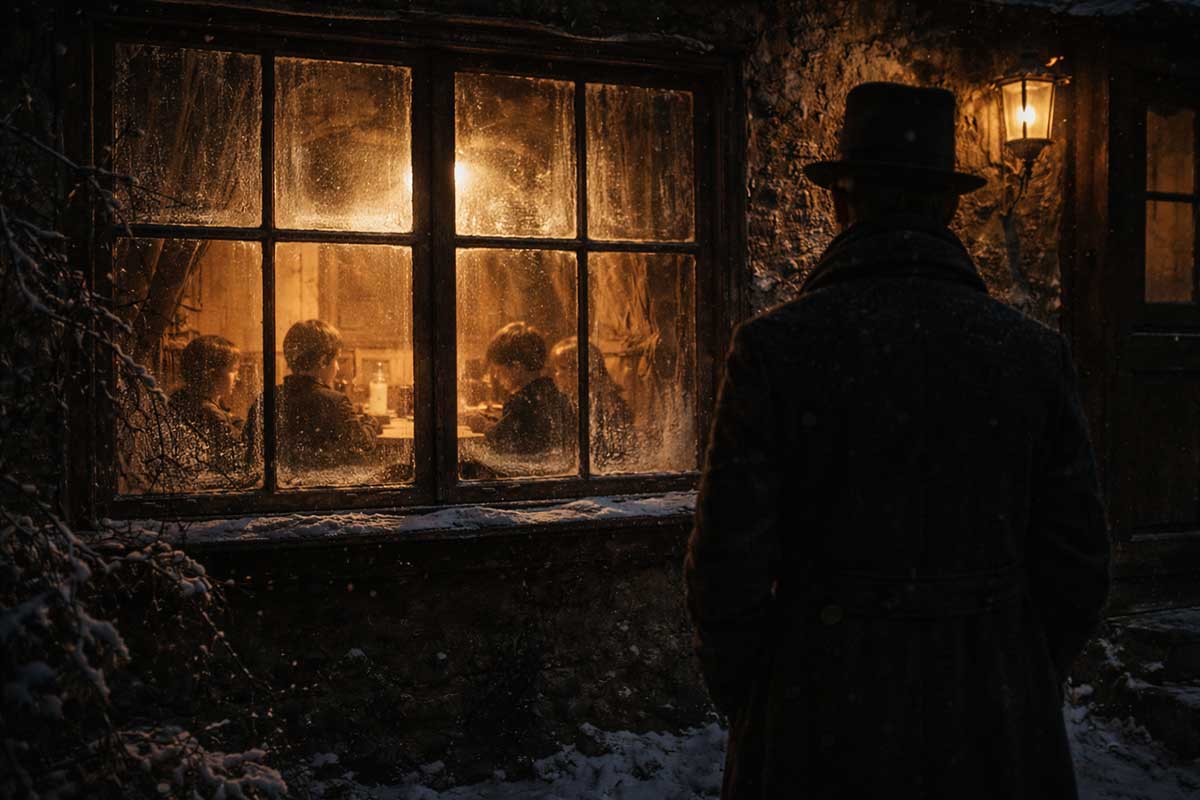
That evening, Charles stopped outside his own home.
Warm light spilled through the windows. Inside, his children were gathered around a table. One of them was reading aloud—haltingly, carefully—from a familiar red book.
Charles did not enter right away.
He realized, suddenly, what he had lost all those years ago.
It was not innocence.
Not safety.
Not even childhood itself.
It was permission.
Permission to feel joy without justification.
Permission to belong without proving his worth.
Permission to believe that warmth could exist without conditions.
As a boy, he had learned that love was fragile, contingent, easily withdrawn. So he had replaced it with usefulness. With productivity. With relentless moral urgency.
Even kindness, at times, had become a duty rather than a delight.
Until now.
VIII. Found
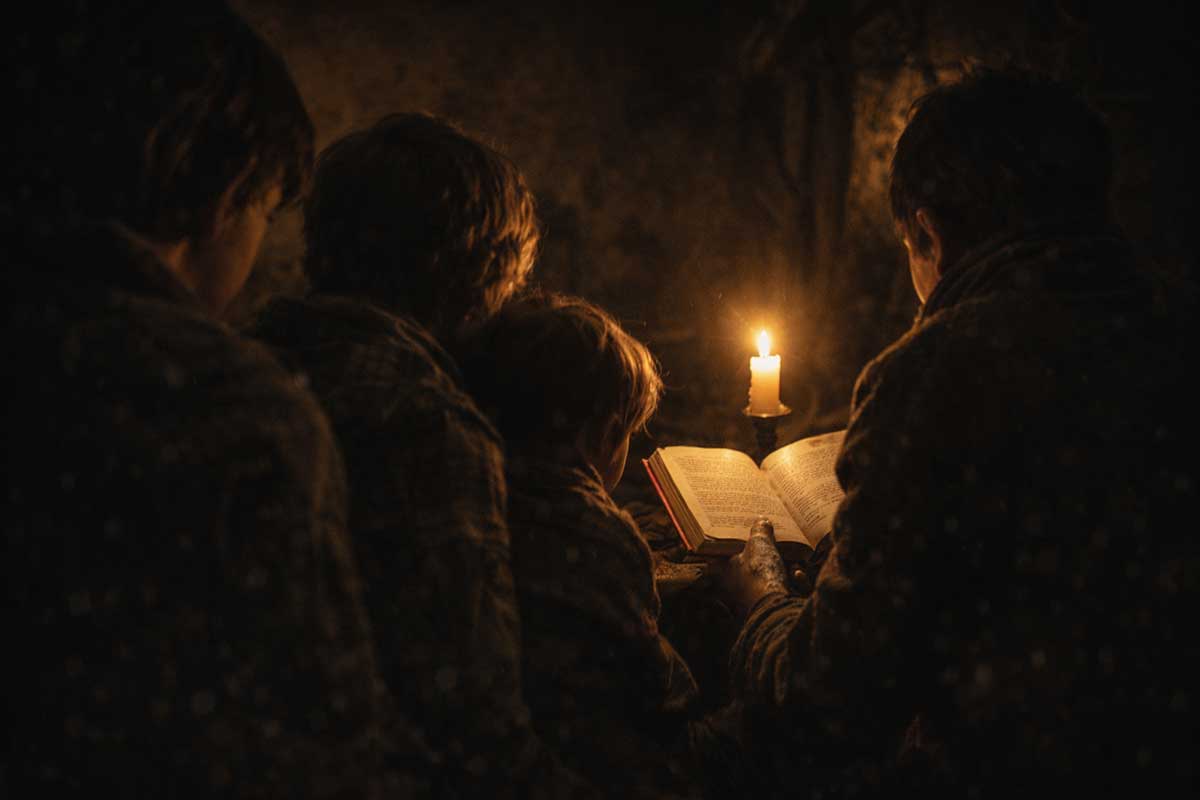
Across the street, a poor man read A Christmas Carol aloud to his family. His voice wavered. His children listened as if the words were food.
Charles watched, unseen.
And something inside him loosened.
The story had not merely changed readers.
It had found its way back to its author.
The boy who once believed he had been forgotten was no longer alone.
He was recognized.
IX. Home
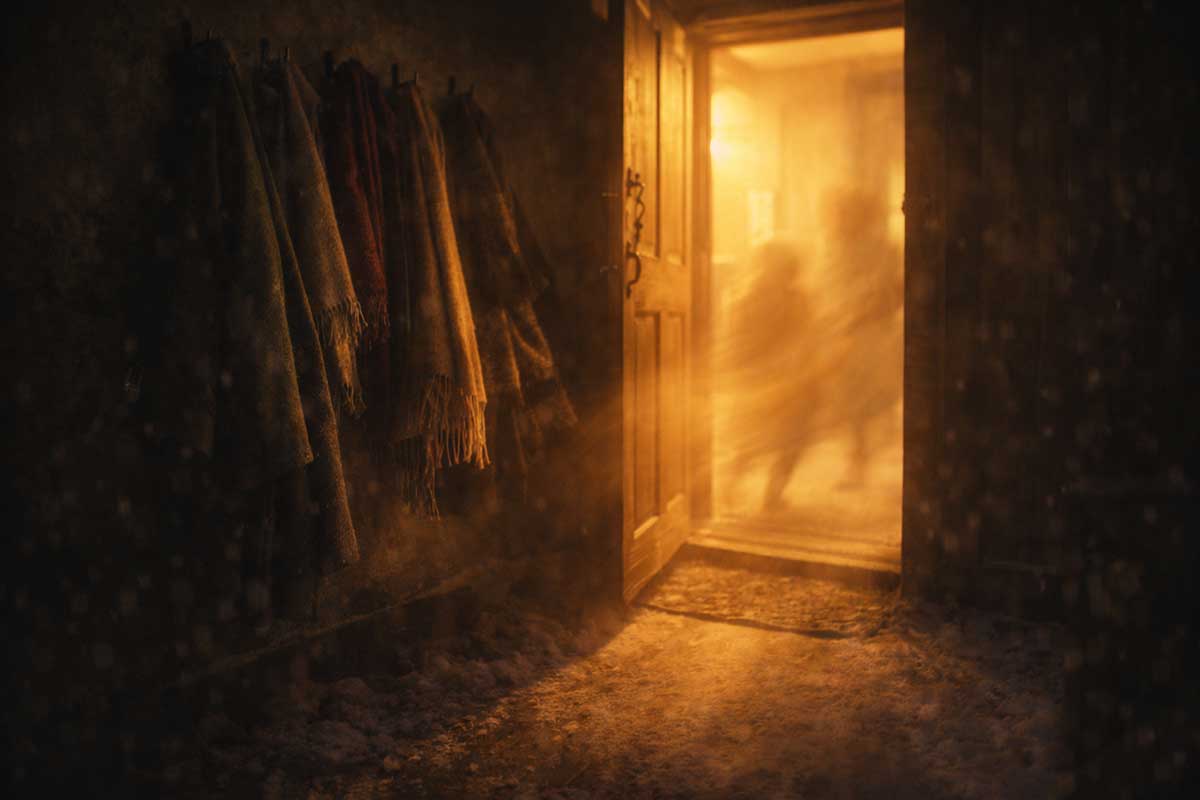
Charles opened the door and stepped inside.
His children looked up. For a brief moment, there was only stillness—then laughter rushed in to fill the space.
Charles felt no need to perform. No need to earn his place. He did not feel like a man who had succeeded.
He felt like someone who had returned.
The ghosts that once haunted him did not vanish. They simply fell silent, their work complete.
Christmas did not save the world.
But it returned something precious to one man—and through him, reminded countless others of what they, too, might recover.
Epilogue — What Remains
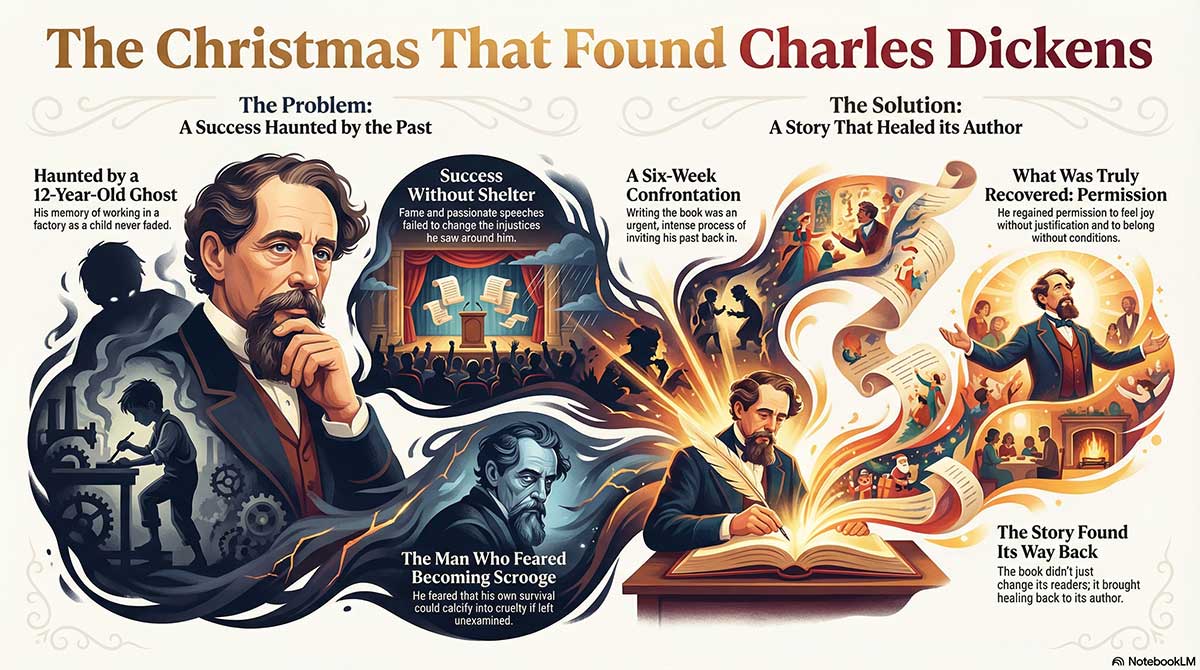
Charles Dickens would spend the rest of his life insisting—through story, through voice, through action—that joy is not naïve, kindness is not weak, and redemption is not reserved for the deserving.
He had lost something essential.
And at Christmas, he found it again.
Not wrapped.
Not earned.
Simply waiting to be welcomed home.
Short Bios:
Charles Dickens
Charles Dickens (1812–1870) was an English novelist whose early experience of poverty and factory labor shaped his lifelong concern for the forgotten. His Christmas writing grew from a deeply personal struggle between survival and tenderness, urgency and belonging.
The Readers of London
Clerks, laborers, parents, and children of Victorian London—ordinary people living under hardship—who found in Dickens’ words a quiet reminder of compassion, dignity, and shared humanity.
Leave a Reply