
|
Getting your Trinity Audio player ready...
|
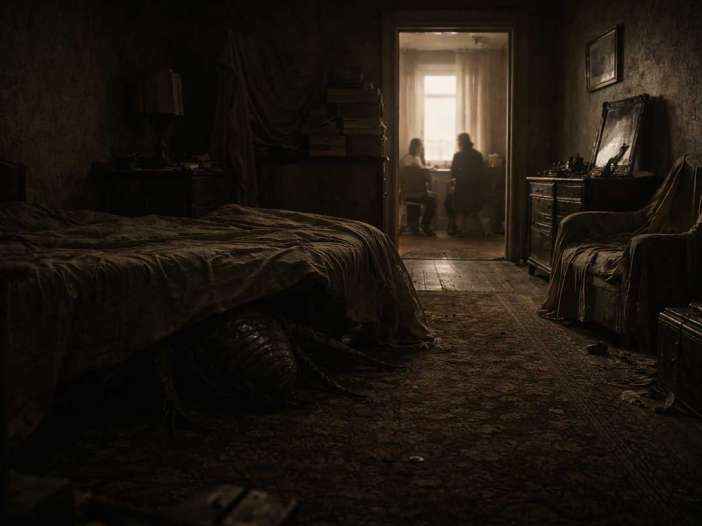
What if Franz Kafka had to face today’s leading Kafka scholars?
The Metamorphosis by Franz Kafka explained is often approached as a strange allegory—a man wakes up as an insect, and meaning must be decoded. But Kafka’s power doesn’t come from symbolism. It comes from recognition.
In this ImaginaryTalks series, I bring Franz Kafka into conversation with leading Kafka scholars to examine The Metamorphosis not as a puzzle to solve, but as a process to witness. We follow Gregor Samsa not through a single shocking transformation, but through a sequence of crucial scenes—moments where dignity quietly gives way to usefulness, where love becomes conditional, and where disappearance happens without anyone choosing it.
Kafka doesn’t ask why Gregor changes.
He asks what happens after—in families, in systems, and inside a mind trained to obey.
This is not a retelling.
It is a confrontation.
(Note: This is an imaginary conversation, a creative exploration of an idea, and not a real speech or event.)
Episode 1 — Awakening or Condemnation?
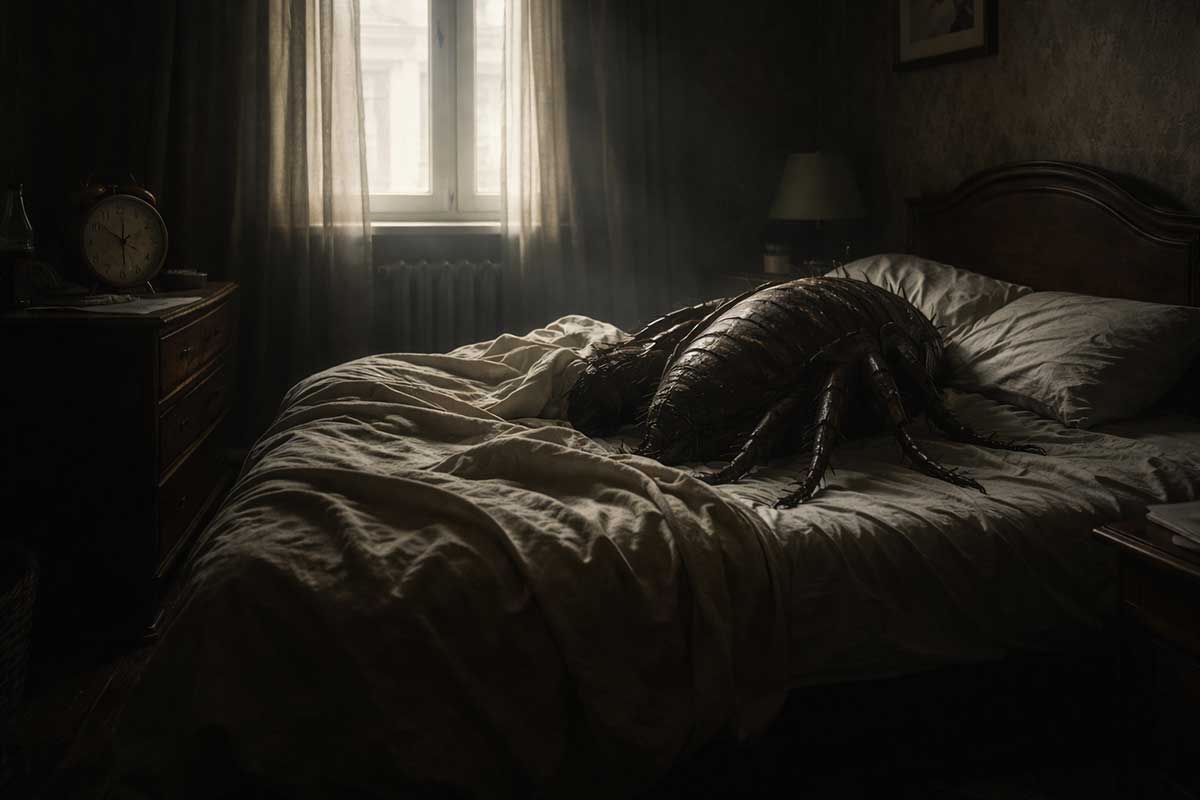
Is Gregor Samsa Still Human After He Changes?
Participants (Kafka Scholars)
Franz Kafka
Stanley Corngold
Ritchie Robertson
Mark Harman
Elizabeth Boa
Sander L. Gilman
Moderator
Nick Sasaki
Opening Scene
Morning does not arrive gently.
It arrives as obligation.
The room is narrow, precise, almost bureaucratic in its layout. A bed. A door. A window that admits a light neither warm nor hostile—merely sufficient. Somewhere in the apartment, voices already carry impatience.
Franz Kafka sits slightly apart from the others, posture reserved, expression alert, as if listening itself requires endurance.
Nick Sasaki allows the silence to work before speaking.
First Question
Nick Sasaki
Gregor Samsa wakes up transformed into an insect. Kafka offers no explanation, no moral cause, no mythic logic.
So let’s begin at the foundation:
Is Gregor’s transformation a punishment—or is it the moment his true condition becomes visible?
Stanley, let’s start with you.
Stanley Corngold
Kafka carefully avoids framing the transformation as punishment.
Gregor feels no guilt about changing. He feels anxiety about missing work, about upsetting routines, about consequences for others.
That detail matters enormously.
It suggests that Gregor’s internal life was already structured around obligation. The insect body does not create his condition—it reveals how thoroughly his humanity had already been subordinated.
Franz Kafka (quietly)
I never wanted the change to explain anything.
Only to remove excuses.
Ritchie Robertson
Historically, this is crucial.
Gregor exists within a modern, urban, economically pressured household. His role is that of breadwinner, and that role defines his worth.
When he transforms, nothing mystical happens socially. The family immediately recalculates. The question is not why he changed—but what now.
This is modern alienation, not mythic curse.
Elizabeth Boa
And the body is central here.
Gregor’s new form is awkward, vulnerable, grotesque—but also hyper-visible. His body becomes the site where power operates.
What’s striking is that Gregor experiences his body as a problem for others before he experiences it as a problem for himself.
That tells us how deeply he has internalized his family’s needs.
Mark Harman
Kafka’s language reinforces this.
The narration is calm, almost administrative. The transformation is described without metaphorical flourish.
That stylistic restraint prevents us from reading the change as symbolic punishment. It insists on factuality.
This happened. Now deal with it.
Sander L. Gilman
And the insect body must be taken seriously as a body.
Kafka was acutely aware of illness, vulnerability, and physical difference. Gregor’s form marks him as other—unclean, disturbing, excluded.
But crucially, Gregor does not experience himself as morally degraded. Only socially degraded.
That distinction drives the cruelty of the story.
Second Question
Nick Sasaki
Gregor remains conscious, empathetic, and emotionally intact.
Yet almost immediately, he is treated as less than human.
So I want to sharpen this:
Is humanity defined by inner consciousness—or by social recognition?
Elizabeth?
Elizabeth Boa
Kafka shows us that inner life alone does not secure humanity.
Gregor thinks, feels, remembers, loves—but those qualities lose all social force once he can no longer function.
Humanity, in this world, is relational. It exists only insofar as others acknowledge it.
Once recognition is withdrawn, inner life becomes irrelevant.
Franz Kafka (breaking the fourth wall, softly)
I was always more frightened of being ignored than being punished.
Punishment still notices you.
Stanley Corngold
Gregor’s tragedy is intensified by his compliance.
He hides himself to spare others discomfort. He accepts isolation as reasonable.
Kafka exposes how domination works most efficiently when the dominated agree to disappear.
Ritchie Robertson
And the family’s behavior evolves incrementally.
First confusion.
Then inconvenience.
Then irritation.
Then relief.
No one announces a decision. Social death occurs through adjustment.
This is a distinctly modern form of cruelty.
Mark Harman
The language mirrors this shift.
Early on, the family speaks anxiously. Later, practically. Eventually, dismissively.
Kafka lets syntax do moral work.
Sander L. Gilman
This is also about bodily intolerance.
The family cannot bear Gregor’s physical presence. His body violates norms of cleanliness, order, and control.
Once the body becomes intolerable, empathy collapses.
Third Question
Nick Sasaki
By the end of the opening section, Gregor is still alive—but something essential has already ended.
So I’ll ask the hardest question of this episode:
Is Gregor already dead before his body fails?
And if so—who killed him?
Sander?
Sander L. Gilman
Gregor is socially dead the moment he ceases to be useful.
No violence is required.
Only agreement.
Kafka depicts a death that occurs politely, domestically, without spectacle.
Mark Harman
And linguistically, Kafka prepares us for this.
The narration gradually distances itself from Gregor’s perspective.
He remains conscious—but narratively marginal.
That shift is the death.
Ritchie Robertson
This is not fate. It is structure.
Gregor dies because the system he supports has no place for him once he falters.
The family survives by adapting.
Elizabeth Boa
What makes this unbearable is that no one acts out of hatred.
The cruelty is passive, practical, reasonable.
Kafka shows us how easily love contracts under pressure.
Stanley Corngold
Gregor is not murdered.
He is rendered unnecessary.
And Kafka suggests that in modern life, that is often enough.
Franz Kafka (after a long pause)
I did not write Gregor to accuse his family.
I wrote him to show what happens when love is measured by function.
It shrinks.
Quietly.
Closing Scene
In the adjacent room, furniture is rearranged.
Life continues.
Gregor is still alive.
But life has already learned how to move without him.
Nick Sasaki closes his notebook.
Nick Sasaki
Then perhaps The Metamorphosis is not a story about transformation at all.
It is a story about discovering—too late—
what the world was already prepared to do with you.
In the next episode, we’ll ask:
Is Gregor Samsa a victim of his family—or the most obedient member among them?
Fade out.
Episode 2 — Who Is the Real Monster?
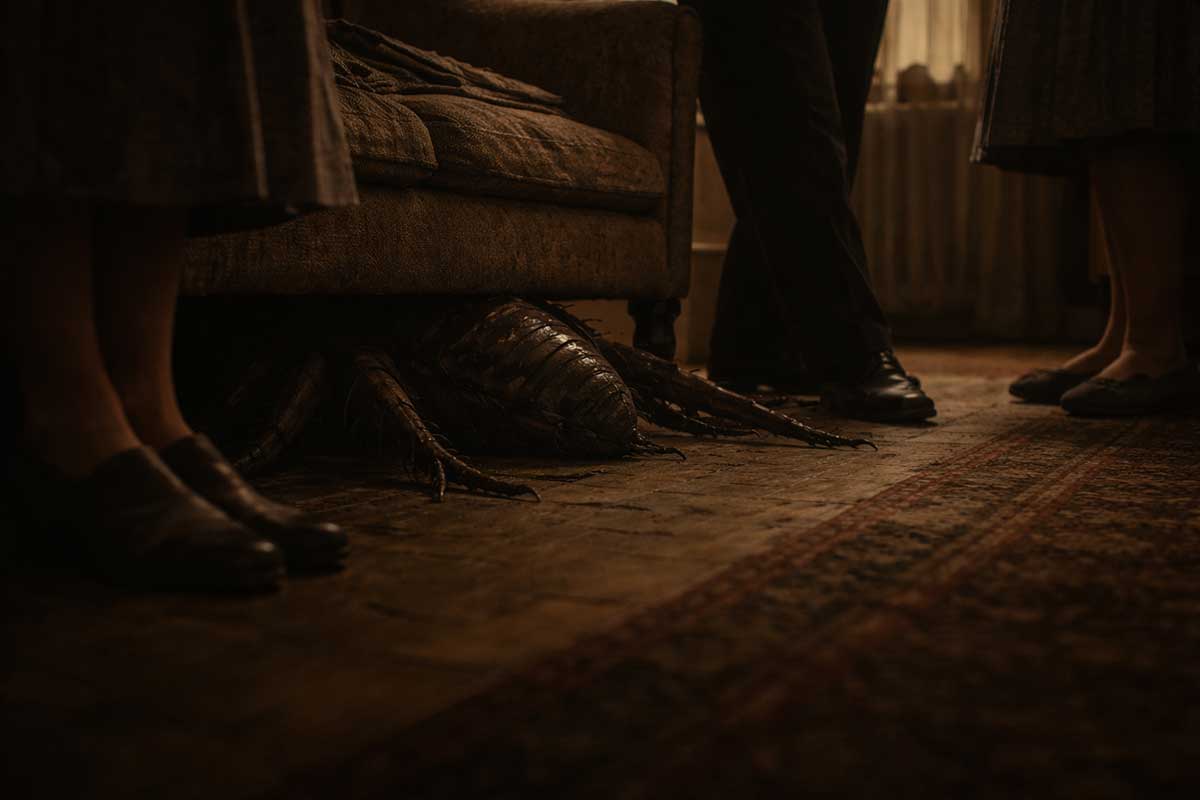
Is Gregor Samsa a Victim of His Family—or the Most Obedient Member Among Them?
Participants (Kafka Scholars)
Franz Kafka
Stanley Corngold
Ritchie Robertson
Mark Harman
Elizabeth Boa
Sander L. Gilman
Moderator
Nick Sasaki
Opening Scene
The apartment has adjusted.
Furniture has shifted. A door now stays locked. A routine has formed around avoidance. What once felt like an emergency has become a schedule.
Gregor’s room is no longer a bedroom. It is a containment space.
Franz Kafka sits quietly, eyes lowered, as if listening to a familiar sound from behind a wall.
Nick Sasaki begins.
First Question
Nick Sasaki
Readers often approach The Metamorphosis assuming the family becomes monstrous while Gregor remains innocent.
But Kafka complicates that.
So let’s ask it plainly:
Is Gregor a victim of his family—or the most obedient member among them?
Elizabeth, would you start?
Elizabeth Boa
Gregor is both.
But Kafka makes obedience central.
Gregor’s passivity is not imposed—it is learned. He anticipates the family’s needs, limits his own presence, and accepts isolation as considerate behavior.
This is not moral virtue. It is conditioning.
The family’s cruelty is enabled by Gregor’s willingness to disappear.
Franz Kafka (quietly)
Obedience is often mistaken for goodness.
I never trusted that confusion.
Stanley Corngold
Kafka stages a deeply uncomfortable truth here.
Gregor collaborates in his own erasure.
He hides under the couch. He restricts his movement. He accepts confinement without protest.
The family does not need to dominate him aggressively. Gregor manages himself.
That is Kafka’s most modern insight.
Ritchie Robertson
And we must remember the economic context.
Gregor has spent years subordinating his own desires to support the family. That dynamic does not vanish with the transformation—it intensifies.
The family has been trained to receive. Gregor has been trained to give.
Once he can no longer give, the structure collapses—but the habits remain.
Mark Harman
Kafka’s language makes this unmistakable.
Gregor’s thoughts are saturated with apology. Even as an insect, he worries about being a burden.
That internal voice does not originate in the transformation. It predates it.
The metamorphosis merely strips away the distractions.
Sander L. Gilman
And the body plays a crucial role.
Gregor’s physical vulnerability intensifies his obedience. His body cannot resist effectively, so compliance becomes survival.
Kafka understood how illness and weakness accelerate moral self-blame.
Second Question
Nick Sasaki
Let’s turn directly to the family.
They begin confused, then irritated, then hostile—and finally relieved.
So I’ll ask:
Does the family become cruel—or do they simply reveal what they were always prepared to do?
Ritchie?
Ritchie Robertson
Kafka refuses sudden moral transformation.
The family does not become evil. They become practical.
And practicality is often the mask cruelty wears in modern life.
Their shift reflects economic pressure, exhaustion, and fear—not sadism.
That is what makes it so disturbing.
Franz Kafka (breaking the fourth wall)
People rarely wake up intending to be cruel.
They wake up needing things to work.
Elizabeth Boa
Grete’s transformation is especially telling.
She begins as Gregor’s caretaker—empathetic, attentive, willing.
But over time, care becomes labor, and labor becomes resentment.
Kafka shows how compassion erodes when it is unpaid, unrecognized, and endless.
Stanley Corngold
The apple incident marks a threshold.
It is the first moment of overt violence—but it does not erupt from nowhere.
It emerges from accumulated frustration, from the need to restore order.
Violence here is corrective, not expressive.
Mark Harman
And Kafka’s narration refuses to dramatize it.
The apple lodges in Gregor’s body almost casually. There is no emotional crescendo.
This restraint forces readers to confront the act without emotional cues.
Sander L. Gilman
The father’s violence is also bodily.
It is a defense of boundaries—of cleanliness, propriety, control.
Gregor’s body threatens those norms simply by existing.
Once a body is framed as contaminating, violence feels justified.
Third Question
Nick Sasaki
Here’s the most uncomfortable question of this episode.
Kafka never gives Gregor a moment of rebellion, accusation, or rage.
So I’ll ask:
Is Gregor’s obedience a moral failure—or the only survival strategy available to him?
Stanley?
Stanley Corngold
Kafka does not moralize obedience.
Gregor’s compliance is not virtue or vice—it is inevitability.
Kafka shows how deeply social roles shape inner life. Gregor cannot imagine resistance because resistance was never part of his education.
Franz Kafka (softly)
Disobedience requires imagination.
Not everyone is given that luxury.
Elizabeth Boa
Gregor’s obedience is also relational.
He loves his family. He internalizes their comfort as his responsibility.
Kafka does not condemn that love—but he exposes its cost.
Love without reciprocity becomes self-annihilation.
Ritchie Robertson
We should also note that resistance would not save him.
The system has already adapted.
Kafka denies readers the fantasy that courage alone could alter Gregor’s fate.
This is not a story about missed heroism.
Mark Harman
Language itself limits Gregor.
His voice no longer communicates. His words become noise.
Without language, resistance becomes unintelligible.
Kafka understood how power operates through legibility.
Sander L. Gilman
And the family benefits from Gregor’s obedience.
It reduces conflict. It simplifies logistics.
Obedience smooths the path toward erasure.
Closing Reflections
The apartment grows quieter.
Gregor eats less. The family speaks more freely. A new normal settles in.
Kafka watches the scholars without expression.
Nick Sasaki closes the conversation.
Nick Sasaki
Then perhaps the most unsettling truth of The Metamorphosis is this:
Gregor is not destroyed by force.
He is undone by loyalty.
His obedience does not save him.
It prepares the world to move on without him.
In our next episode, we’ll confront the system that makes this possible and ask:
Did Gregor ever live for himself—or only as labor from the beginning?
Fade out.
Episode 3 — Work, Guilt, and Obedience
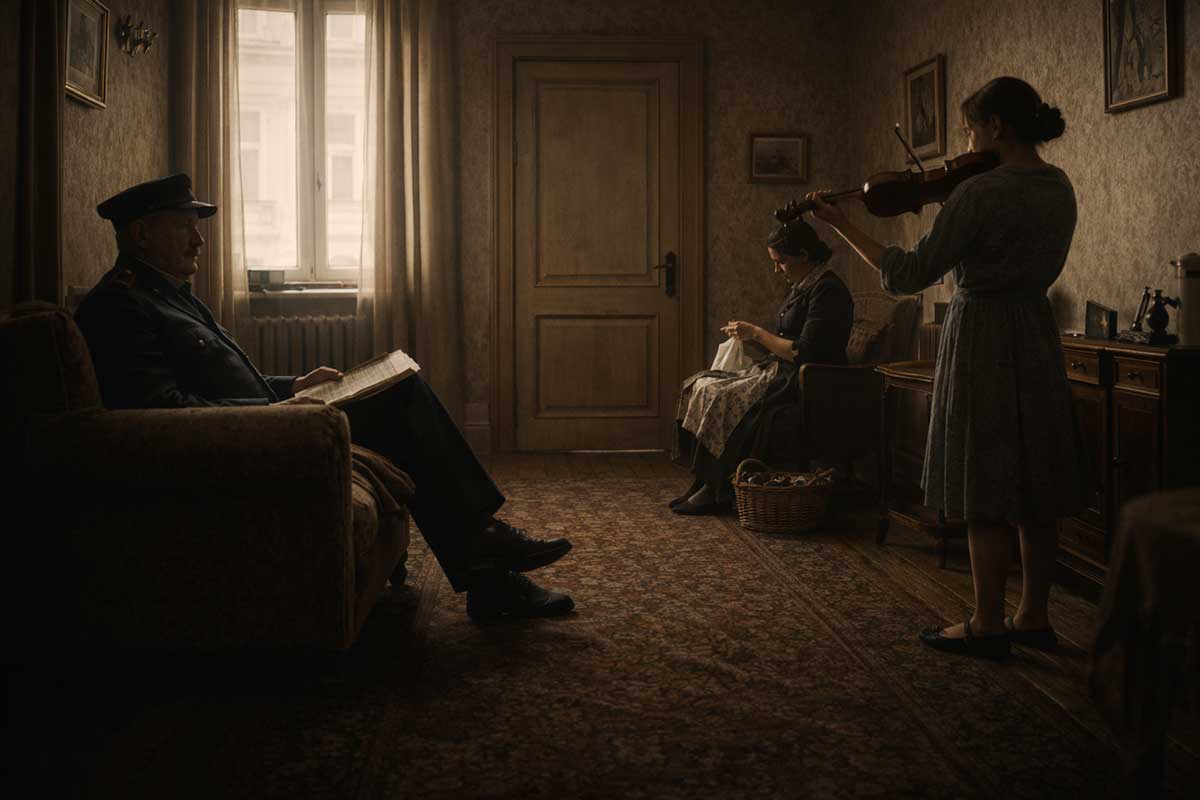
Did Gregor Samsa Ever Live for Himself—or Only as Labor?
Participants (Kafka Scholars)
Franz Kafka
Stanley Corngold
Ritchie Robertson
Mark Harman
Elizabeth Boa
Sander L. Gilman
Moderator
Nick Sasaki
Opening Scene
The father has found work again.
The mother sews.
Grete practices her violin.
The apartment breathes with renewed purpose.
Gregor, meanwhile, shrinks—physically, narratively, economically.
His room accumulates unused furniture, dust, neglect. What was once the center of the household’s survival has become surplus space.
Kafka sits very still. This part of the story, he knows, is often misunderstood as progress.
Nick Sasaki begins.
First Question
Nick Sasaki
Before his transformation, Gregor works constantly, without complaint, without vision of escape.
So let’s ask the question Kafka forces but never states:
Did Gregor ever live for himself—or was he always functioning as labor, even before he became an insect?
Mark, let’s start with you.
Mark Harman
The story answers this almost immediately.
Gregor’s first thoughts are not Who am I? or What has happened to me?
They are logistical: missed trains, angry supervisors, financial consequences.
That priority order is decisive.
Gregor’s inner life has been colonized by work. His identity is already externalized before the transformation occurs.
Franz Kafka (quietly)
People often imagine freedom as something lost.
I was more interested in freedom never learned.
Stanley Corngold
Kafka presents Gregor as someone whose subjectivity has been replaced by obligation.
He does not resent his job in any meaningful way. He resents inconvenience.
That distinction matters.
Resentment might have led to refusal. Inconvenience leads only to anxiety.
Ritchie Robertson
Historically, this reflects modern capitalist discipline.
Gregor’s labor is not just economic—it is moral. He feels responsible for his parents’ debts, for Grete’s future, for the household’s stability.
Work becomes guilt institutionalized.
Kafka understood that guilt is the most efficient motivator in modern systems.
Elizabeth Boa
And Gregor’s body absorbs this guilt.
Even before the transformation, his work exhausts him physically. Afterward, his body becomes the visible site of failure.
The insect form externalizes what exhaustion already did invisibly.
Sander L. Gilman
Kafka was deeply attuned to how illness functions socially.
Gregor’s transformation resembles chronic illness: sudden uselessness, social withdrawal, moral suspicion.
Once productivity disappears, sympathy follows it.
Second Question
Nick Sasaki
After Gregor’s transformation, the family is forced to work.
They resent him—but they also improve.
So I want to ask something uncomfortable:
Does the family’s recovery suggest that Gregor’s sacrifice was unnecessary—or that the system only required his disappearance to function?
Ritchie?
Ritchie Robertson
Kafka is ruthless here.
The family’s recovery exposes the myth of necessity. Gregor believed his sacrifice was indispensable.
It was not.
Once forced to adapt, the family discovers competence, agency, and resilience.
That realization quietly condemns Gregor’s years of obedience.
Franz Kafka (breaking the fourth wall)
Devotion often overestimates its importance.
Stanley Corngold
Kafka stages a devastating irony.
Gregor’s labor sustains the family—but also infantilizes them. His disappearance enables their growth.
This does not redeem the family. It indicts the structure that required one member to disappear for others to mature.
Elizabeth Boa
Grete’s transformation is key.
She grows not because Gregor cared for her—but because he no longer can.
Care, when asymmetrical, can prevent development.
Kafka does not sentimentalize sacrifice.
Mark Harman
And notice how quickly language shifts.
Gregor becomes “it.”
The family speaks more freely.
Plans emerge.
The narrative energy transfers away from Gregor.
Work reorganizes life efficiently—once the obstacle is removed.
Sander L. Gilman
This is the cruelty of systems: they absorb loss seamlessly.
Gregor’s absence does not destabilize the world. It clarifies it.
Kafka refuses the consoling belief that suffering guarantees meaning.
Third Question
Nick Sasaki
Here’s the question that lingers beneath everything:
If Gregor’s life was structured entirely around obligation, can we say he ever possessed a self to lose?
Elizabeth?
Elizabeth Boa
Kafka suggests that selfhood requires space—psychological, emotional, bodily.
Gregor never had that space.
His desires are postponed indefinitely. His future is always someone else’s.
When transformation arrives, there is no independent self to defend.
Franz Kafka (softly)
A self that is never practiced becomes difficult to recognize.
Stanley Corngold
Gregor’s tragedy is not that he loses himself.
It is that he never developed one separate from function.
Kafka exposes how identity collapses when it is built solely on usefulness.
Ritchie Robertson
This is not a personal failure. It is structural.
Gregor is exemplary, not aberrant. He follows the rules perfectly.
Kafka’s warning is not about disobedience—but about systems that reward obedience until it destroys the obedient.
Mark Harman
Language reinforces this.
Gregor’s thoughts are procedural, repetitive, constrained.
Kafka writes a consciousness trained to circulate within narrow corridors.
Sander L. Gilman
And the body pays the price.
When the system no longer needs Gregor, his body becomes surplus.
Kafka shows us how societies discard what they have exhausted.
Closing Scene
The apartment hums with activity now.
Gregor eats little. His presence barely registers.
Work has redistributed itself.
Kafka looks at the others, then down at the table.
Nick Sasaki closes the session.
Nick Sasaki
Then perhaps the most unsettling realization of The Metamorphosis is not that Gregor becomes an insect—
—but that he had already been living as labor long before the change.
When usefulness replaces identity, disappearance becomes inevitable.
In our next episode, we’ll confront the quietest cruelty of all and ask:
How does Gregor vanish without anyone deciding to destroy him?
Fade out.
Episode 4 — The Banality of Erasure
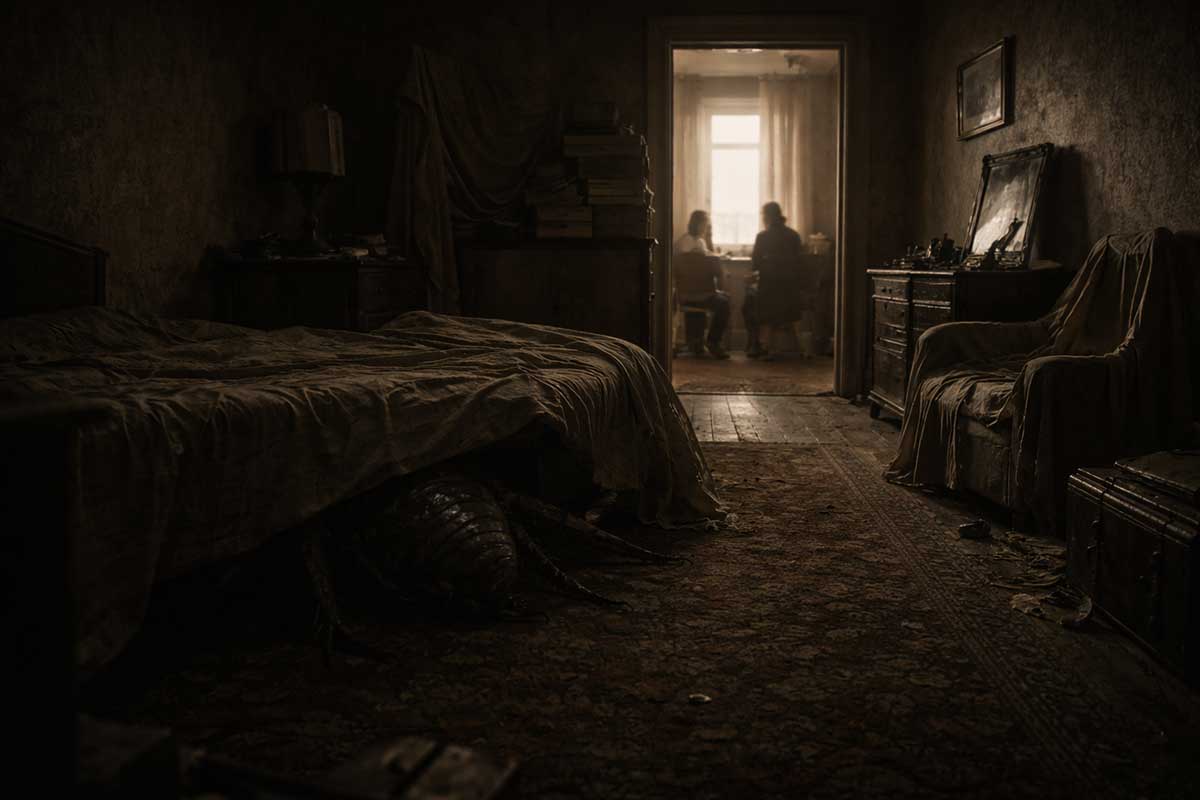
How Does Gregor Disappear Without Anyone Choosing to Destroy Him?
Participants (Kafka Scholars)
Franz Kafka
Stanley Corngold
Ritchie Robertson
Mark Harman
Elizabeth Boa
Sander L. Gilman
Moderator
Nick Sasaki
Opening Scene
Nothing dramatic happens.
That is the point.
The apartment runs more smoothly now. Doors open without hesitation. Conversations resume at normal volume. Meals are eaten without calculation.
Gregor is still alive—but he has become background.
Franz Kafka watches the room as if listening for a sound that will never arrive.
Nick Sasaki speaks.
First Question
Nick Sasaki
There is no moment in The Metamorphosis where anyone clearly decides Gregor must die.
And yet—he disappears.
So let’s begin here:
How does Kafka show us destruction without decision?
How does erasure occur without intent?
Stanley?
Stanley Corngold
Kafka replaces decision with process.
No one declares Gregor expendable. Instead, attention withdraws incrementally. Responsibility diffuses.
Each family member performs a small, reasonable adjustment—until no one is responsible for the outcome.
That is Kafka’s most unsettling move.
Franz Kafka (quietly)
People are more comfortable with necessity than choice.
Ritchie Robertson
This is historically precise.
Modern bureaucratic societies specialize in outcomes without authors. Harm emerges not from malice, but from procedure.
Gregor’s disappearance mirrors how institutions erase individuals—slowly, politely, invisibly.
No one pushes him out. The space around him simply closes.
Elizabeth Boa
And importantly, the family experiences relief.
That emotional shift is crucial.
Once Gregor recedes, tension dissolves. Life becomes manageable again.
Kafka shows us how quickly moral concern evaporates when discomfort does.
Mark Harman
Language does the work.
Kafka gradually removes Gregor from narrative focus. His thoughts are reported less frequently. His perceptions grow thinner.
The story does not announce his erasure—it enacts it stylistically.
Sander L. Gilman
This mirrors illness narratives.
When someone becomes chronically ill, society often stops seeing them as fully present.
Gregor becomes invisible not because he is hidden—but because attention has moved on.
Second Question
Nick Sasaki
Let’s confront the emotional heart of this episode.
The family does not hate Gregor. They grow tired of him.
So I’ll ask:
Is indifference more destructive than cruelty in Kafka’s world?
Elizabeth?
Elizabeth Boa
Yes—because indifference requires no justification.
Cruelty still acknowledges a relationship. Indifference dissolves it.
Kafka shows that when care becomes labor, and labor becomes burden, indifference feels like mercy.
That is the lie.
Franz Kafka (breaking the fourth wall)
Hatred still looks at you.
Indifference looks past you.
Stanley Corngold
Kafka refuses melodrama.
There are no villains. Only fatigue.
The family’s emotional withdrawal is presented as reasonable—and that reasonableness is precisely what makes it lethal.
Ritchie Robertson
This is also economic.
Once Gregor no longer contributes, attention reallocates naturally.
Modern systems teach people to move on efficiently.
Kafka captures that efficiency as moral danger.
Mark Harman
Notice how practical language replaces emotional language.
Gregory becomes “a problem,” “a nuisance,” “something to be dealt with.”
Once a person becomes a logistical issue, elimination feels neutral.
Sander L. Gilman
This is the medicalization of exclusion.
Bodies that disrupt order are managed, isolated, minimized.
Gregor’s body is treated not as suffering—but as interference.
Third Question
Nick Sasaki
Here’s the hardest question of the episode.
Kafka does not frame Gregor’s disappearance as tragedy.
So I’ll ask:
Does Kafka want us to mourn Gregor—or to recognize ourselves in the process that erases him?
Ritchie?
Ritchie Robertson
Kafka resists sentimentality.
He does not invite grief. He invites recognition.
The story is not asking us to pity Gregor—but to see how easily ordinary life absorbs loss.
That recognition is more disturbing than sorrow.
Franz Kafka (after a pause)
I was not interested in tears.
I was interested in habits.
Elizabeth Boa
Kafka implicates the reader.
We adjust just as the family does. We read faster. We stop expecting Gregor to recover.
The narrative trains us into indifference.
That is deliberate.
Stanley Corngold
Kafka does not let us stand outside the system.
We participate by continuing to read.
Gregor’s diminishing presence mirrors our own diminishing attention.
Mark Harman
Even the prose becomes economical.
Excess emotion is stripped away.
Kafka writes erasure as efficiency.
Sander L. Gilman
This is why the story remains terrifying.
It does not show evil. It shows normality functioning smoothly.
Closing Scene
Gregor lies still.
Not dramatically.
Not pleading.
Simply unnoticed.
The apartment breathes easily now.
Kafka closes his eyes briefly—not in grief, but in recognition.
Nick Sasaki brings the episode to a close.
Nick Sasaki
Then perhaps the most frightening truth in The Metamorphosis is not that Gregor is destroyed—
—but that he disappears without resistance, without outrage, without interruption.
Not because someone chose to erase him—
but because everyone learned how to continue.
In our final episode, we will ask the last question Kafka leaves unresolved:
Is Gregor’s death a tragedy—or the only mercy Kafka allows?
Fade out.
Episode 5 — Escape, Failure, or Mercy?
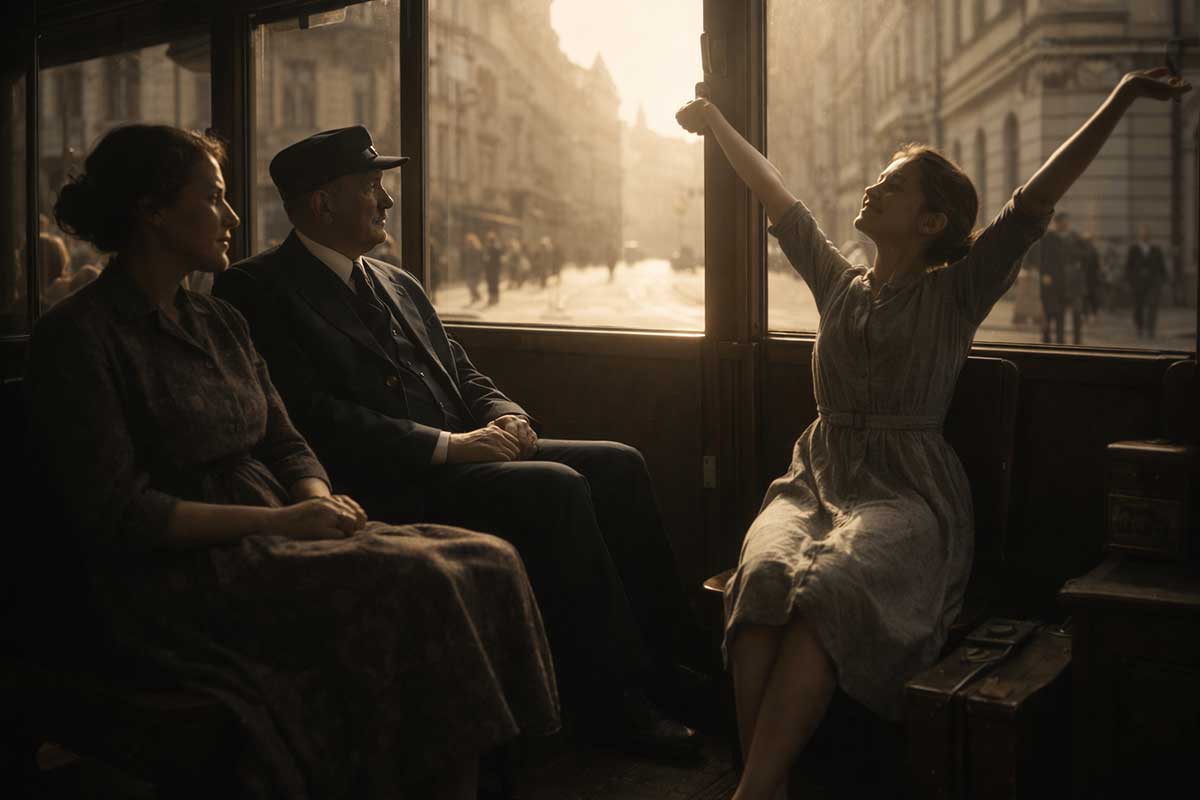
Is Gregor Samsa’s Death a Tragedy—or the Only Release Kafka Allows?
Participants (Kafka Scholars)
Franz Kafka
Stanley Corngold
Ritchie Robertson
Mark Harman
Elizabeth Boa
Sander L. Gilman
Moderator
Nick Sasaki
Opening Scene
Morning comes again.
Gregor does not.
There is no struggle. No final confrontation. No cry that interrupts the household’s rhythm. When the cleaning woman discovers his body, the announcement is almost casual—another task completed.
Outside, the city continues. Inside, relief settles quietly into the room.
Franz Kafka does not look away.
Nick Sasaki begins.
First Question
Nick Sasaki
Kafka gives Gregor no heroic end. No rebellion. No recognition.
So we must ask:
Is Gregor’s death meant to be read as a tragedy—or as the only form of release Kafka permits?
Stanley?
Stanley Corngold
Kafka denies the structure of tragedy.
There is no reversal, no recognition scene, no catharsis. Gregor does not fall—he fades.
That absence matters.
Gregor’s death feels less like punishment than exhaustion reaching its limit. Kafka offers no redemption—only cessation.
Franz Kafka (quietly)
I did not imagine death as dramatic.
Only as something that finally stops the questions.
Ritchie Robertson
Historically and socially, Gregor’s death functions as resolution—for everyone else.
The family is relieved. They regain momentum. The burden lifts.
Kafka exposes a brutal truth: the system works better once Gregor is gone.
That efficiency undermines any sentimental reading of tragedy.
Elizabeth Boa
From a gendered and relational perspective, Gregor’s death is not framed as sacrifice—it is framed as relief.
No one mourns. No one remembers.
Kafka refuses to ennoble suffering simply because it endured.
That refusal is itself cruel—and honest.
Mark Harman
The language is astonishingly restrained.
Kafka avoids metaphor. Avoids emotion. Avoids moral commentary.
Gregor dies “peacefully,” but that peace is empty. It is not consolation. It is absence.
Sander L. Gilman
And physically, the body simply gives out.
This mirrors chronic illness narratives, where death is not dramatic but inevitable.
Kafka shows how society accommodates death when it arrives quietly enough.
Second Question
Nick Sasaki
After Gregor’s death, the family feels lightness. Possibility. Even hope.
So let me ask the uncomfortable follow-up:
Does the family’s renewal confirm Gregor’s erasure—or indict it?
Elizabeth?
Elizabeth Boa
It does both.
The family’s renewal exposes how unnecessary Gregor’s suffering was—but it also reveals how easily people move on once a burden disappears.
Kafka doesn’t condemn the family for feeling relief. He shows it.
That honesty is devastating.
Franz Kafka (breaking the fourth wall)
People rarely grieve what they no longer need.
Stanley Corngold
Kafka stages a reversal of moral expectation.
We expect grief. We receive practicality.
The parents plan the future. Grete stretches her body. Life resumes.
Kafka’s cruelty lies in showing renewal without repentance.
Ritchie Robertson
This is not a moral failure—it is structural.
The family’s improvement demonstrates that Gregor’s role was unsustainable.
Kafka indicts the system that required such sacrifice, not the people trapped inside it.
Mark Harman
Language again does the work.
Gregor is no longer mentioned. The narrative energy shifts fully to the family.
The story teaches us how quickly narrative forgets those who stop functioning.
Sander L. Gilman
This is social hygiene.
Once the contaminating body is removed, order returns.
Kafka exposes how “health” is often defined by exclusion.
Third Question
Nick Sasaki
Final question—for Kafka, for the scholars, and for us.
Kafka does not rescue Gregor. He does not redeem him.
So I’ll ask:
What, if anything, does Kafka want us to do with this ending?
Mark?
Mark Harman
Kafka does not offer instruction.
He offers exposure.
The ending refuses meaning in the conventional sense. It leaves readers unsettled—not guided.
Franz Kafka (after a long pause)
I did not write to teach.
I wrote because some things become clearer only when they are shown without mercy.
Elizabeth Boa
Kafka wants us to notice how easily care becomes conditional.
How love contracts under pressure.
And how systems train us to accept disappearance as normal.
Stanley Corngold
The ending denies consolation.
That denial is Kafka’s ethics.
He refuses to make suffering meaningful simply because it occurred.
Ritchie Robertson
Kafka implicates the reader.
We close the book. The family goes on. Life continues.
The question is not what happened to Gregor—but how easily we accepted it.
Sander L. Gilman
Kafka leaves us with vigilance.
Not hope. Not despair.
Attention.
Franz Kafka (final)
I did not believe stories could save people.
But I believed they could remove excuses.
If Gregor’s death feels empty, that is because the world he lived in had already hollowed him out.
I did not give him meaning.
I showed what happens when meaning is replaced by usefulness.
Final Scene
The family walks into the sunlight.
Grete stretches.
The parents speak of plans.
Gregor is not mentioned again.
Nick Sasaki closes the final notebook.
Nick Sasaki
Kafka does not end The Metamorphosis with tragedy or mercy.
He ends it with continuation.
Life goes on—not because justice was done, but because systems adapt.
If this story still unsettles us, it’s because it refuses to flatter our compassion.
It asks whether we recognize the moment when usefulness replaces dignity—
and whether we notice before someone disappears quietly from the room.
Fade out.
Final Thoughts by Nick Sasaki
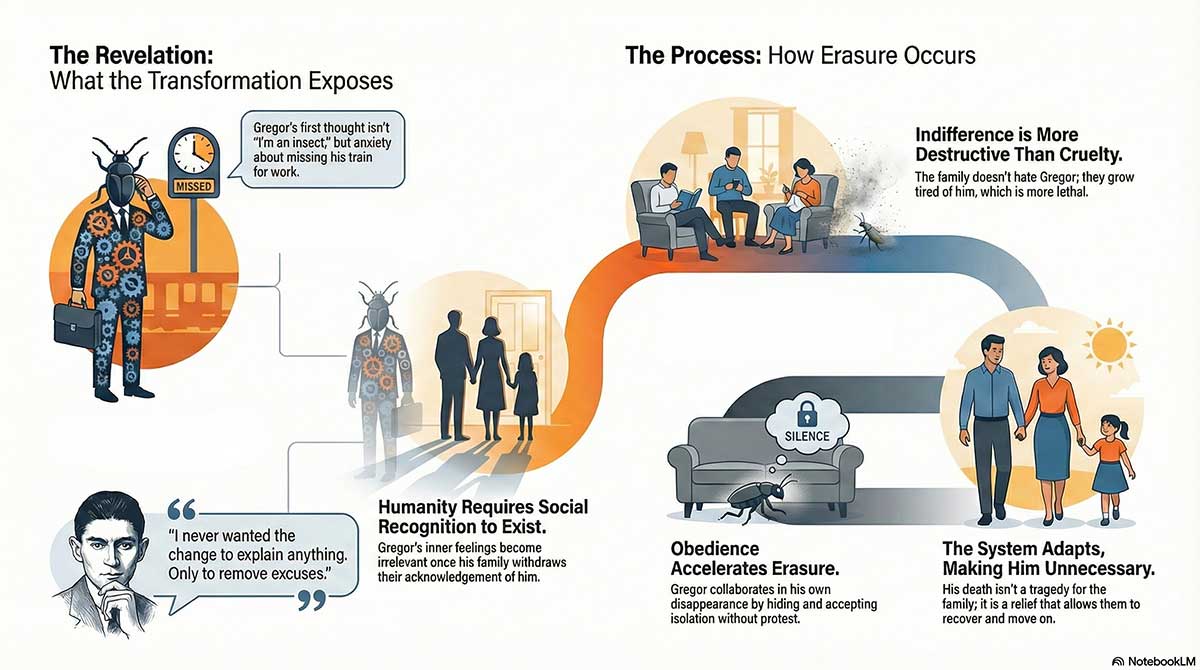
Kafka does not end The Metamorphosis with justice, redemption, or even outrage. He ends it with efficiency.
Gregor Samsa does not die because he is hated. He dies because he is no longer needed—and the world learns, very quickly, how to continue without him. The family recovers. The system stabilizes. Life moves on.
That is Kafka’s quiet accusation.
Across these episodes, we’ve seen how crucial scenes accumulate: a body that can no longer work, a door that stays closed, a room that fills with dust, a morning that arrives lighter without one person in it. No single moment feels decisive. And that is precisely the danger Kafka exposes.
The horror is not transformation.
It is adaptation.
Kafka does not ask us to pity Gregor. He asks us to notice how easily usefulness replaces dignity—and how rarely that exchange announces itself. If this story still unsettles us, it’s because it suggests that erasure does not require cruelty, only habit.
The question Kafka leaves us with is not what happened to Gregor Samsa.
It’s whether we recognize the crucial scene before someone quietly disappears from the room.
Short Bios:
Franz Kafka
German-speaking writer from Prague whose works reshaped modern literature by exposing the quiet violence of bureaucracy, obedience, and alienation. The Metamorphosis remains one of the most influential explorations of dignity, work, and erasure in modern life.
Nick Sasaki
Founder of ImaginaryTalks, Nick Sasaki creates deep, tension-driven conversations between authors and scholars to explore literature as lived experience rather than abstract theory. His work focuses on emotional truth, moral ambiguity, and the moments where meaning quietly fractures.
Stanley Corngold
One of the foremost Kafka scholars in the English-speaking world, Corngold’s work centers on Kafka’s language, guilt, obedience, and the ethical implications of modern subjectivity. His readings emphasize how systems shape inner life long before crisis appears.
Ritchie Robertson
Professor of German literature and leading authority on Kafka’s historical, Jewish, and Central European contexts. Robertson’s scholarship examines power, alienation, and the social structures underlying Kafka’s seemingly private narratives.
Mark Harman
Kafka translator and critic known for his precise attention to Kafka’s syntax, tone, and narrative restraint. Harman’s work highlights how Kafka’s stylistic discipline produces emotional and moral pressure without sentimentality.
Elizabeth Boa
Literary scholar specializing in Kafka, gender, the body, and family power structures. Boa’s work explores how care, obligation, and vulnerability operate within domestic spaces in Kafka’s fiction.
Sander L. Gilman
Cultural historian and literary scholar whose work connects Kafka to illness, the body, exclusion, and modern identity. Gilman’s research illuminates how physical difference becomes a site of social judgment and erasure.
Leave a Reply