
|
Getting your Trinity Audio player ready...
|
Introduction by Newt Gingrich
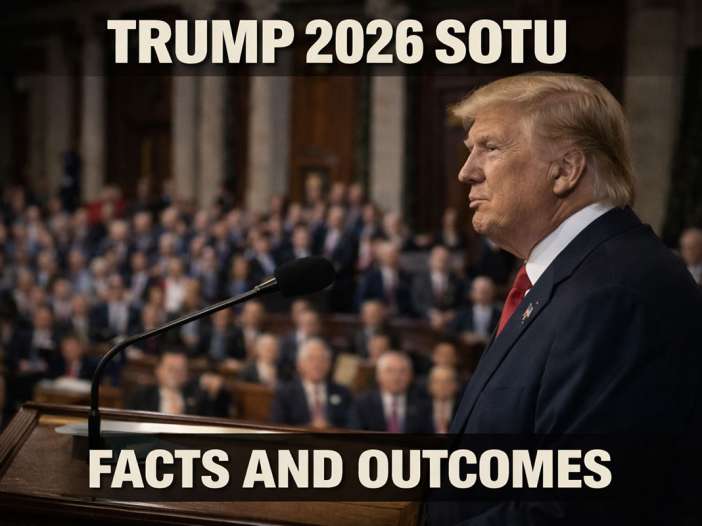
The Trump 2026 State of the Union was not a speech designed to make everyone comfortable. It was designed to make a distinction unmistakable.
For months, critics argued that the country was drifting. Supporters argued that it needed direction. The President stepped into the chamber knowing the stakes were not symbolic. They were structural.
A State of the Union has two audiences. One sits in the chamber. The other sits at kitchen tables across America. The applause inside the room matters far less than the reaction outside it.
What made this address significant was not only its content but its framing. It presented a choice. Border control or open systems. Smaller, more efficient government or expanded federal management. Parental authority or institutional authority. Energy growth or regulatory constraint. Institutional reform or institutional protection.
In moments of high polarization, clarity often feels confrontational. Yet democracy is built on contrast. Voters cannot choose if leaders blur differences.
The deeper question, however, is not whether the President successfully drew distinctions. The deeper question is whether those distinctions were disciplined, measurable, and sustainable.
A republic does not collapse because parties disagree. It collapses when disagreement turns into permanent delegitimization.
This conversation is not about cheering or condemning. It is about asking whether contrast strengthens the nation or fractures it.
The burden of leadership is not simply to energize supporters. It is to define reality in a way that withstands scrutiny.
That is the standard we apply here.
(Note: This is an imaginary conversation, a creative exploration of an idea, and not a real speech or event.)
Topic 1: Order vs Chaos

The room is not the House chamber. No applause signs, no camera pans, no theatrics that reward the sharpest jab. It is a private roundtable in a quiet Capitol conference space with plain walls, a pitcher of water, and five name cards that feel almost too ordinary for a subject that can split a nation.
Newt Gingrich sits at the head of the table, relaxed but alert, like a chess player who enjoys the middle game more than the opening.
Newt Gingrich: Tonight I want definitions, trade-offs, and proof. Not slogans. Here is the first question.
He looks down the line of faces.
Newt Gingrich: What does “order” mean in measurable terms, and what would prove we achieved it without violating basic rights?
Bret Stephens: Order is credibility. A border system is orderly when outcomes are predictable and the public can see that rules are enforced consistently. The measurable proof is not one number. It is a dashboard: illegal crossings down, asylum decisions faster, fewer people dying on routes, and fewer communities getting overwhelmed. Rights matter because if enforcement is sloppy or abusive, you end up with a legitimacy crisis that becomes its own kind of disorder.
Tom Homan: Order means control. It means the government decides who comes in, not cartels, not smugglers, not a broken process. You prove it with fewer illegal entries, fewer gotaways, and fewer repeat crossers. And you prove it with fewer border deaths because when you shut down the chaos, you shut down the incentive to take the risk. On rights, I will say it plainly. You can enforce the law and still treat people humanely, but you cannot be humane at scale if you allow the chaos to continue.
Julian Castro: Order means a functioning legal system. It means people are not stuck in limbo for years, and communities are not lurching from crisis to crisis. If we are honest, the disorder is partly created by an asylum system that cannot keep up, and by legal immigration pathways that do not match real demand. Proof is shorter processing times, fewer backlogs, more people using legal avenues instead of crossing illegally. And if rights are violated, you might get a temporary drop in crossings but you will pay in lawsuits, moral injury, and loss of public trust.
James Lankford: Order is when the incentives change. If it takes years to get a decision, we are basically inviting people to come and wait inside the country. That is not compassion. It is dysfunction. Proof looks like this: credible screening, rapid decisions, consequences for those who do not qualify, and a system that does not punish the legal immigrant who followed the rules. Rights are protected by clear process, access to hearings, and a standard that is applied consistently. Rights do not mean endless delay.
Abigail Spanberger: Order means communities can breathe. It means border towns, interior cities, schools, hospitals, and law enforcement are not doing improvisation every week. Proof is reduced chaos at points of entry, faster adjudication, and a real capacity plan so local governments are not holding the bag. On rights, the country cannot claim to be secure if we are insecure about our own principles. Humane standards and due process are not luxuries. They are guardrails that prevent power from becoming arbitrary.
Newt nods, not agreeing, just taking inventory.
Newt Gingrich: Second question. When does compassion create disorder, and when does enforcement become cruelty?
James Lankford: Compassion creates disorder when it becomes a loophole. When the system signals that getting here is the main hurdle, then you create a market for smuggling and you overload your own capacity. Enforcement becomes cruelty when it is not tethered to rules, when it is humiliating for the sake of humiliation, or when it ignores family realities. The answer is not softer or harder. It is faster and clearer.
Julian Castro: Compassion creates disorder when leaders promise protection but do not fund the system, so people end up warehoused, stranded, or exploited. Enforcement becomes cruelty when it treats every migrant like a criminal, or when it uses fear as policy. We have to separate categories. Violent offenders and smugglers are one category. Families with credible claims are another. If you flatten everyone into one bucket, you end up cruel and ineffective.
Tom Homan: Compassion creates disorder when it is performative. When you say, “Come,” and then you do not have the beds, the judges, the transport, the medical care. That is not compassion. That is negligence dressed up as virtue. Enforcement becomes cruelty when agents are told to do things that are unnecessary for control, or when you ignore the health and safety standards in detention. But I will also say this. Failing to enforce is a form of cruelty too, because it empowers cartels and it kills people.
Abigail Spanberger: Compassion creates disorder when it is not paired with credibility. The public will not support humane policies if they believe the system is a free-for-all. Enforcement becomes cruelty when it lacks transparency and accountability, or when it treats children and families as bargaining chips. The safest political ground is not maximal compassion or maximal force. It is a system that is visibly fair, visibly enforced, and visibly monitored.
Bret Stephens: Both sides commit a similar sin. The left sometimes romanticizes the migrant and forgets the citizen who lives with the consequence. The right sometimes romanticizes toughness and forgets the human being in front of the badge. Compassion becomes disorder when it becomes policy by emotion. Enforcement becomes cruelty when it becomes policy by humiliation. The mature stance is to insist on competence, and to insist that competence includes decency.
Newt leans forward. His voice tightens slightly, like he is sharpening the lens.
Newt Gingrich: Third question. What is the one policy trade-off your side refuses to admit, but must, if we want stability?
Abigail Spanberger: Democrats have to admit this. If enforcement is not credible, nothing else survives. The public stops listening. So the trade-off is discomfort with enforcement tools that, when properly overseen, are necessary. That includes workplace enforcement against illegal hiring. It includes faster removals for clearly non-qualifying cases. If we refuse that, we lose the ability to protect due process and humane treatment because the system collapses under its own contradictions.
Tom Homan: On my side, we have to admit enforcement alone is not a system. If you do not fix the courts, if you do not fix the adjudication pipeline, you end up chasing symptoms. The trade-off is spending money on judges, infrastructure, and processing capacity, which some conservatives instinctively reject. But if you want order, you have to build the machinery of order, not just talk about it.
Julian Castro: The left has to admit that some claims are not legitimate, and that a fast, fair denial with real consequences is necessary, or you create a magnet. The trade-off is accepting policies that feel harsh in the abstract but are essential for the integrity of asylum. The right has to admit that legal pathways and modernization reduce illegal crossings more effectively than slogans.
Bret Stephens: The right refuses to admit that demographic and labor realities will keep pulling people here unless legal channels match reality and employers face consequences. The left refuses to admit that national solidarity requires boundaries, and boundaries require enforcement. The trade-off is that neither side gets to keep its favorite moral story intact. You either build a stable system or you keep farming outrage.
James Lankford: Republicans have to admit that certain legal immigration reforms are necessary, especially for work, or we will keep repeating the same chaos cycle. Democrats have to admit that some enforcement measures are not cruelty, they are structure. The trade-off is simple. You can keep your talking points or you can get stability. You cannot keep both.
Newt lets the silence sit for a moment, then closes the loop in the way he always has, by turning the argument into a choice that demands clarity.
Newt Gingrich: Here is what I am hearing. Everyone at this table wants fewer deaths, less chaos, and more credibility. The difference is where you put the moral emphasis. Citizens first. Dignity first. Order first. Process first. Those are not mutually exclusive, but they are in tension.
He looks at each of them.
Newt Gingrich: The head-wing test is whether you can say two sentences without flinching. The first duty of government is to protect its citizens. The second duty of a civilized nation is to treat human beings with dignity. If your plan cannot do both, it is not stable. It is a campaign speech.
No one applauds. But no one storms out either.
For a country as polarized as this one, that small fact feels like a beginning.
Topic 2: The Size and Purpose of Government

The second roundtable meets in a plain hearing-room annex, the kind of place where the microphones look older than the arguments. Fluorescent lights, beige walls, a pitcher of water, and a long table that has hosted decades of moral certainty from every direction.
This topic sounds abstract until you translate it into daily life: your paycheck, your health insurance, your child’s school, the price of energy, the speed of a permit, the way a small business either opens or dies.
Newt Gingrich sits at the head of the table with the relaxed posture of someone who has watched big ideas collide with reality for a very long time.
Newt Gingrich: We are going to define what government is for, what it is not for, and how to prove the difference. Here is the first question.
Question 1
Newt Gingrich: What is government for, and what is it not for, in 2026 America?
Elizabeth Warren: Government is for protecting the public from abuses of power that individuals cannot stop on their own. It is for enforcing fair rules in markets, making sure monopolies do not crush competition, and ensuring families are not one illness away from financial ruin. Government is not for serving the powerful. It is not for writing loopholes that let insiders win while everyone else pays. In 2026, the core purpose is restoring trust that the rules apply to everyone, including the rich and connected.
Rand Paul: Government is for defending the country, protecting basic rights, and providing a framework of law that lets free people build their own lives. Government is not for managing the economy from Washington, not for micromanaging communities, and not for turning every problem into a federal program. In 2026, we have a government that is too large, too expensive, and too intrusive. The purpose should be narrowed. If we do not narrow it, we will keep trading liberty for promises that never arrive.
Jason Furman: Government is for things that markets cannot do well by themselves, especially when the benefits are shared and the incentives are misaligned. It is for national defense, basic infrastructure, rule-setting, and stabilizing the economy when shocks hit. It is not for wasting money, preserving outdated programs, or using complexity as camouflage. In 2026, the practical question is not big versus small. It is effective versus ineffective. People will tolerate size if they feel results. They will reject even small government if it feels incompetent.
Ben Shapiro: Government is for protecting natural rights, enforcing contracts, securing borders, and ensuring public order. It is not for re-engineering society, not for coercing speech, and not for using bureaucracies to do what lawmakers are afraid to vote on openly. In 2026, the line has blurred because unelected agencies exercise enormous power. The purpose of government should be to preserve a free society, not to manage outcomes by force.
Andrew Yang: Government is for building the operating system of society so people can actually function. That includes basic stability, predictable rules, modern infrastructure, and making sure the incentives reward work and family formation, not just financial engineering. Government is not for pretending it can fix culture, not for rewarding insiders, and not for being so slow and confusing that it breaks trust. In 2026, the reality is that technology is changing society faster than our institutions can adapt. Government’s job is to modernize the system so it is fair and it works.
Newt nods slightly, then presses where everyone hates to go, specifics.
Question 2
Newt Gingrich: Which programs are truly essential, and which ones survive mainly because they buy votes or protect insiders?
Ben Shapiro: Essential programs are those tied directly to the core functions of government: defense, law enforcement, courts, and limited safety nets that do not create permanent dependency. The ones that survive because they protect insiders are often the ones buried in the regulatory state and the contracting world, where lobbying shapes outcomes. We have programs that exist because a constituency benefits from them, not because the country benefits. That is the definition of insider government.
Jason Furman: Essentials include social insurance programs that keep the country stable, like programs for seniors, people with disabilities, and the poor, along with infrastructure and national defense. The programs that survive for the wrong reasons are often those with confusing eligibility rules, outdated design, and narrow benefits that are invisible to the public but valuable to a small group. We also keep programs because reform is politically painful, even when reform would make them stronger.
Rand Paul: Essentials are small and limited. The problem is that almost every program is sold as essential once it exists. The ones that survive to protect insiders include corporate welfare, subsidies that distort markets, and the bloated bureaucracy that feeds on complexity. If you want to find the rot, follow the money. Look at who gets paid to administer programs, who gets no-bid contracts, who gets special exemptions. That is not a safety net. That is a machine.
Elizabeth Warren: Essentials are anything that protects families from predatory systems, including the ability to see a doctor without bankruptcy and the ability to send children to decent schools. What survives because it protects insiders is the loophole economy. Tax breaks that reward lobbying. Regulatory carve-outs. Contracts that favor a few giant firms. If you want a smaller government, start by shrinking the parts that are doing favors for the powerful. If you want a better government, stop pretending corruption is an accident.
Andrew Yang: Essentials are the things that keep society functional and calm: basic economic stability, basic healthcare access, modern infrastructure, and public safety. The insider programs are often hidden in procurement, licensing barriers, and incentives that reward lobbying. We keep old systems because the people who profit from them are organized and the people who pay are dispersed. That is a design problem. The answer is to make costs visible and to simplify systems so insiders cannot hide inside complexity.
Newt leans back for a beat, then leans forward again.
Question 3
Newt Gingrich: If you had to cut one major area of spending and defend it on national TV, what would you cut and why?
Andrew Yang: I would cut waste in procurement and bureaucracy first, because it is the least moral and the least productive spending. If you modernize how government buys things and how it measures outcomes, you can save real money without cutting benefits people rely on. I would defend it by saying this is the one cut that both sides should agree on. Stop paying more for less.
Rand Paul: I would cut the growth of federal spending across the board and put real limits on deficits. Specifically, I would go after foreign aid and any domestic program that is unconstitutional or better handled locally. I would defend it by saying we are borrowing from the next generation. If you care about the poor, you should care about inflation and debt, because that is a hidden tax on everyone.
Elizabeth Warren: I would cut the parts of the budget that function as giveaways to powerful interests, including certain subsidies and contracting waste, and I would strengthen oversight so that savings are real. I would defend it by saying you cannot ask families to sacrifice while billionaires and monopolies get special treatment. The moral case is that fairness requires ending rigged systems.
Ben Shapiro: I would cut the administrative state, the layers of agencies and regulatory expansion that operate without clear democratic accountability. I would defend it by saying voters deserve government they can control. When power is moved from elected representatives to permanent bureaucracies, freedom shrinks. Cutting bureaucratic sprawl is a pro-democracy cut.
Jason Furman: I would cut or reform inefficient tax expenditures and poorly targeted subsidies that do not accomplish their goals. Some of these are spending through the tax code, and they are politically protected because they are less visible. I would defend it by saying we should not be paying for programs that do not work. If we need to spend, spend on what produces measurable results and helps long-term growth.
Newt pauses long enough to make sure no one escapes the implications of what they just said.
Newt Gingrich: Now I want one sentence from each of you that makes the other side feel seen without surrendering your principles.
Rand Paul: I understand that people want security and a safety net, but we cannot build it on endless debt and endless federal power.
Elizabeth Warren: I understand the fear of government overreach, but concentrated corporate power is also a form of control that crushes freedom.
Ben Shapiro: I understand the desire for fairness, but fairness enforced by unaccountable bureaucracy becomes coercion.
Jason Furman: I understand the demand for limits, but limits without competence and stability will not earn public trust.
Andrew Yang: I understand both fears, the fear of control and the fear of abandonment, and the goal is a system that is simple, modern, and measurable.
Newt closes his folder.
Newt Gingrich: Here is the head-wing summary. The country is tired of a government that feels expensive and ineffective, and tired of a market that can feel rigged and unforgiving. The fair question is not whether government should be big or small. The fair question is whether power is accountable and whether results are real. If you cannot define the purpose, you cannot defend the budget. And if you cannot measure outcomes, you cannot ask the public to trust you.
The room stays calm. No applause. No heckling.
Just a sense that the argument moved one inch closer to reality, which is more than most speeches manage.
Topic 3: America’s Economic Engine

The third roundtable meets in a place that feels appropriately unglamorous for economics: a small manufacturing incubator on the edge of a rust-belt downtown. You can hear a forklift beep somewhere in the building. The air smells like metal, coffee, and machine oil. On a nearby wall, a photo shows workers in hard hats, but the faces are blurred by age and dust.
This is not an accident. The point is to argue about the economy where the economy actually happens.
Newt Gingrich sits at the head of the table with a thick folder and an expression that says he has no patience for people who speak in abstractions.
Newt Gingrich: This is the engine that decides everything. If families cannot breathe, nothing else matters. Here is the first question.
Question 1
Newt Gingrich: Why do families still feel squeezed even when some numbers look better?
Jared Bernstein: Families feel squeezed because the lived economy is not the same as the headline economy. Prices rose fast, and even if inflation slows, the higher price level stays. Wages may rise, but housing, healthcare, childcare, and insurance can rise faster. The gains can also be uneven, and people notice when they feel one car repair away from panic. The fix is to target the big household costs and strengthen bargaining power so productivity gains translate into paychecks.
Larry Kudlow: Families feel squeezed because growth is not as strong as it should be, and government policy can make it worse through regulation, taxes, and uncertainty. Energy costs ripple through everything. If you raise the cost of energy, you raise the cost of living. Also, when you spend too much and run big deficits, you risk inflation and higher interest rates that hit mortgages and credit cards. The fix is pro-growth policy, lower barriers, and predictable rules.
Heather Boushey: Families feel squeezed because markets are not always competitive, and concentration allows price-setting and fee extraction. When a few firms dominate housing construction, healthcare systems, or food supply chains, families pay. Also, a lot of work is insecure. People may be employed but still feel unstable. The fix is competition policy, smart public investment, and policies that reduce the costs families face, especially housing and childcare.
Peter Navarro: Families feel squeezed because we offshored our industrial base and became dependent on global supply chains that do not prioritize American workers. When you lose manufacturing, you lose wage growth, dignity, and local tax bases. Cheap imports can look good in a spreadsheet but kill communities. The fix is rebuilding domestic production, securing supply chains, and using tariffs strategically to stop predatory trade behavior.
Oren Cass: Families feel squeezed because we built an economy optimized for consumption, not for productive work and family stability. We chased cheap goods and financial returns, but we hollowed out the institutions that help people build a life. Wages, community stability, marriage rates, and family formation all matter. The fix is policy that rewards work that produces real value, and that strengthens the social foundations that markets alone do not preserve.
Newt tilts his head slightly, letting the contrast sharpen.
Newt Gingrich: Second question. Do tariffs and industrial policy rebuild American strength, or do they quietly tax the middle class?
Question 2
Newt Gingrich: Be precise. Who pays, who wins, and what is the measurable outcome?
Peter Navarro: Tariffs are a tool. Used strategically, they protect critical industries, rebuild supply chains, and force fair trade. Yes, some prices can rise in the short run, but the alternative is long-run dependency and wage stagnation. Who wins? American workers and national security. Who pays? Some consumers in the short term. The measurable outcome is increased domestic production capacity in strategic sectors and reduced dependency on adversarial supply chains.
Larry Kudlow: Tariffs are taxes. Full stop. They raise costs for consumers and businesses that need imported inputs. You cannot tariff your way to prosperity. If you want strength, you want growth, innovation, and competitive markets. Who pays? The middle class, through higher prices. Who wins? Special interests with protection. Measurable outcome: if tariffs work, you should see lower consumer prices and higher real wages after costs. Typically you do not.
Jared Bernstein: Industrial policy can work if it is transparent, limited, and performance-based. Tariffs can protect in some cases but are blunt instruments and can be regressive. Who pays depends on design. If you do it poorly, consumers pay and firms pocket the gains. If you do it well, you pair targeted support with competition, worker training, and clear benchmarks. Measurable outcome: more high-quality jobs, higher productivity, and reduced vulnerability to shocks, without persistent price increases.
Heather Boushey: The real question is whether industrial policy is captured by insiders. If it is, it becomes corporate welfare. If it is accountable and tied to outcomes, it can build capacity and innovation. Tariffs often fall hardest on lower-income consumers because essentials are a larger share of their budget. Measurable outcome: does policy increase domestic capacity and innovation while keeping household costs manageable? If not, it is a political gesture.
Oren Cass: Tariffs are not inherently good or bad. They are a way to signal priorities. If the goal is to rebuild productive capacity, you cannot pretend the cheapest global option always serves the national interest. But you must be honest about costs. The middle class pays if you do not offset costs with wage growth and domestic investment. Measurable outcome: do real wages for non-college workers rise, and do communities see stable, long-term jobs?
Newt taps his folder lightly once, a small sound that makes people sit up straighter.
Newt Gingrich: Third question. What is one reform that would increase opportunity for the working class without expanding permanent bureaucracy?
Question 3
Newt Gingrich: One reform. Not a list. And tell me how we would measure success.
Oren Cass: Expand wage subsidies for work, designed simply, so that producing value is rewarded and family formation is supported. Measure success by real wage growth for working-class households and reduced reliance on emergency assistance.
Larry Kudlow: Accelerate permitting and deregulate to unleash construction and investment, especially in housing and energy. Measure success by lower housing costs, increased supply, and higher job creation in productive sectors.
Heather Boushey: Enforce competition rules to reduce monopolistic pricing and fee extraction, particularly in housing-related markets and healthcare. Measure success by lower household cost inflation in concentrated sectors and higher small-business entry rates.
Jared Bernstein: Expand apprenticeships and skills pipelines tied directly to employers, with performance contracts, not open-ended programs. Measure success by placement rates, wage gains within 12 months, and employer retention.
Peter Navarro: Use targeted procurement and tax incentives to reshore strategic manufacturing, with clawbacks if firms do not deliver jobs and output. Measure success by domestic capacity growth, job creation in key sectors, and supply chain resilience during shocks.
Newt closes the folder halfway, not ending the discussion, but pinning it down.
Newt Gingrich: Now one sentence each that makes the other side feel seen without surrendering your principles.
Larry Kudlow: I understand the desire for industrial strength, but I do not want families paying higher prices for policies that protect insiders.
Peter Navarro: I understand the fear of higher prices, but I do not want America dependent and hollowed out while communities collapse.
Jared Bernstein: I understand the need for growth, but growth that bypasses workers is not success, it is a statistic.
Heather Boushey: I understand skepticism of bureaucracy, but unchecked concentrated power is also a bureaucracy, just private.
Oren Cass: I understand the appeal of cheap goods, but a nation cannot thrive if its people cannot build stable lives through work.
Newt looks around the table, then delivers the kind of summary he likes best: a sharp fork in the road, with consequences.
Newt Gingrich: Here is the head-wing reality. Everyone wants an economy that makes families feel secure. The fight is over how you get there and who bears the cost. If you push global cheapness too far, you hollow out production and wages. If you push protection too far, you raise prices and reward insiders. The only sustainable approach is measurable: policies that raise real wages, lower the big household costs, and rebuild capacity without turning into permanent subsidy machines.
Outside, the forklift beeps again.
The sound is mundane.
But it is the sound of the country trying to keep running while its leaders argue about what “prosperity” is supposed to mean.
Topic 4: Culture, Schools, and the Next Generation

The fourth roundtable is held in a public school auditorium after hours. The stage curtains are half-drawn. A few rows of chairs are set up on the floor instead of in the seats, as if someone wanted the discussion to feel closer to the people it affects.
A custodian’s cart rests near the exit. On the wall, a trophy case reflects the overhead lights. It is ordinary, and that is the point. Everything argued on cable news eventually lands here, in a building where children try to learn while adults fight about what learning is for.
Newt Gingrich sits at a small table facing the panel. There is no lectern. No applause line. Just a stack of index cards and the expectation that everyone will be concrete.
The panel for this topic:
Glenn Youngkin
Christopher Rufo
Randi Weingarten
Jonathan Haidt
Katelyn Jetelina
Newt looks up, as if he is about to cross-examine a witness.
Question 1
Newt Gingrich: Who should shape a child’s worldview first, parents, schools, or the state, and where is the bright line?
Glenn Youngkin: Parents first. The bright line is when schools act as if parents are optional, whether by hiding materials, changing major policies without disclosure, or treating the family as an obstacle. Schools exist to educate, not to replace parents. The state’s role is to set standards and ensure safety, but it should not indoctrinate. The moment a school pushes contested values as moral truth, it has crossed the line.
Randi Weingarten: Parents matter deeply, but schools are not merely academic factories. They are public institutions responsible for educating children to participate in a diverse society. The bright line for schools is safety and equal treatment. The bright line for parents is that they cannot veto reality for everyone else. We can be transparent and collaborative without allowing any one ideology to dictate what other children are allowed to learn.
Christopher Rufo: Parents first, and the bright line is ideological coercion. If schools are teaching kids what to think about race, sex, or politics instead of how to think, that is indoctrination. The state should not outsource worldview formation to activist bureaucracies. The other bright line is secrecy. When schools hide content or use language games, trust collapses.
Katelyn Jetelina: Children need parents first, but schools are also a health and safety environment. The bright line for schools is when there is credible risk of harm, whether physical, mental, or neglect. The bright line for parents is transparency and collaboration, and also not turning science and safety into partisan warfare. If we make public health and child safety into culture-war trophies, kids lose.
Jonathan Haidt: Parents shape values first. Schools shape competence, social development, and the norms of civic life. The state’s bright line should be limited to protecting children from harm and guaranteeing basic educational standards. The bright line overall is coercion. If either side uses power to force children into ideological commitments, trust collapses. We should optimize for child development, not adult victory.
Newt does not nod. He does not disagree. He simply moves the conversation to the place where everyone gets uncomfortable: durability.
Question 2
Newt Gingrich: How do we protect kids from ideological coercion without turning schools into censorship battlegrounds?
Christopher Rufo: You define coercion clearly, and you publish materials. Transparency is the antidote. Parents should have access to curriculum and training materials. Complaints should go through a process, not social media. The point is not banning books. The point is stopping schools from becoming political re-education centers.
Randi Weingarten: Transparency is fine, but “coercion” is often used as a label for any content someone dislikes. We need clear educational standards and due process. If something is challenged, you review it through representative committees, not activist mobs. Teachers need professional space to teach. The battleground is created when political groups nationalize local disputes for fundraising and clicks.
Glenn Youngkin: The answer is a bright-line policy: parents can see what is taught, period. Then create a structured review process that is local and accountable. This is not censorship. It is governance. The system becomes a battleground when people feel excluded. Bring parents in early and reduce surprise.
Katelyn Jetelina: We should separate political ideology from basic safety and science. Kids need accurate health information, mental health support, and anti-bullying systems. If every conversation about kids becomes a proxy war about adult identity, you will get censorship battles. The answer is transparent policy plus clear “harm thresholds,” so interventions are tied to protection, not politics.
Jonathan Haidt: Censorship battles arise when trust is broken and when stakes become existential. Reduce existential stakes by focusing schools on core competencies: literacy, numeracy, reasoning, character, and healthy development. Teach controversial issues through multiple perspectives and debate skills, not moral instruction. The system needs transparency, and it also needs restraint. Not everything requires institutional judgment.
Newt leans forward and asks the kind of question that forces priorities.
Question 3
Newt Gingrich: What would you change tomorrow that improves learning and character, not just politics?
Jonathan Haidt: Ban smartphones during the school day. It improves attention, social interaction, and mental health. Measure success by reduced anxiety indicators, fewer discipline incidents tied to online conflicts, and improved academic performance.
Glenn Youngkin: Restore a clear, rigorous focus on reading, math, science, and history with transparent standards and teacher support. Measure success by higher proficiency rates and fewer parents saying they feel shut out.
Randi Weingarten: Reduce bureaucratic mandates and paperwork so teachers can teach, and invest in proven reading instruction and tutoring. Measure success by literacy gains and improved teacher retention.
Christopher Rufo: End ideological training that treats students as political categories, and require curriculum transparency district-wide. Measure success by reduced parent complaints and improved trust, while tracking academic outcomes so it is not just a cultural win.
Katelyn Jetelina: Put mental health supports and anti-bullying systems on stable funding with measurable outcomes, and train schools in evidence-based interventions. Measure success by reduced chronic absenteeism, fewer crisis incidents, and improved student well-being surveys.
Newt sets the cards down and looks around the table.
Newt Gingrich: One sentence each that makes the other side feel seen without surrendering your principles.
Glenn Youngkin: I hear that schools must protect kids in real danger, but protecting kids cannot mean excluding parents as a default.
Randi Weingarten: I hear that secrecy breeds distrust, but protecting professional teaching cannot mean surrendering schools to political intimidation.
Christopher Rufo: I hear that not all equity efforts are indoctrination, but ideological coercion and hidden curricula are unacceptable.
Katelyn Jetelina: I hear the fear of worldview coercion, but basic health and safety information must not become partisan targets.
Jonathan Haidt: I hear everyone’s fear of abuse of power, and the best safeguard is transparency, restraint, and child-centered metrics.
Newt delivers his summary with the instinct he always had: make it a choice that forces discipline.
Newt Gingrich: Here is the head-wing conclusion. Parents need dignity and access. Teachers need professional respect and clear standards. Children need safety, belonging, and competence. If any one of those three becomes absolute, the other two are crushed. So the only workable approach is simple: maximum transparency, minimum coercion, and relentless measurement of outcomes that families can feel.
The auditorium stays quiet.
Not the quiet of surrender.
The quiet of people realizing that the real goal is not winning the argument.
The real goal is protecting the next generation from becoming collateral damage.
Topic 5: Truth, Trust, and National Cohesion

The fifth roundtable is held in a small civic hall that used to host PTA meetings and holiday charity drives. The kind of place where the chairs are stacked in the corner, the carpet has coffee stains, and the walls have seen more ordinary conversation than grand speeches.
A simple sign at the entrance says “Community Room,” and for once it feels accurate.
Because this topic is not about winning.
It is about whether the country can still live in the same reality.
Newt Gingrich sits at the head of the table with a thin folder. He does not look angry. He looks focused, which is more unsettling. He knows the real battlefield is not Congress. It is the mind of the public.
The panel for this topic:
Nate Silver
Ezra Klein
Bari Weiss
Ben Shapiro
Yuval Levin
Newt looks down at his card, then up, and begins.
Question 1
Newt Gingrich: If Americans cannot agree on basic facts, how does a free republic survive?
Nate Silver: It survives only if it builds shared measurement. We do not need to agree on values to agree on numbers, definitions, and outcomes. The problem is that facts are now tribal identity tokens. The fix is to create public dashboards for major national questions and punish institutions that hide data. If we can agree on what we are seeing, we can argue about what it means.
Ezra Klein: A republic survives when citizens trust that disagreement is happening in good faith. Right now, the information system rewards the opposite. Outrage outperforms accuracy. We need to redesign incentives in media and politics so truth is not a disadvantage. Without that, facts become weapons, and the public becomes permanently suspicious.
Bari Weiss: A free republic survives by protecting open inquiry. When people fear saying what they believe, truth dies quietly. The danger is not only misinformation. The danger is self-censorship and institutional gaslighting. If citizens believe institutions will punish dissent, they will stop trusting institutions entirely and move into alternative realities. The cure is a strong culture of free speech and transparency.
Ben Shapiro: A republic survives if it teaches citizens to distinguish between truth and narrative. The collapse comes when people decide outcomes matter less than feelings. We need norms that punish lying and reward intellectual honesty. That includes within our own tribes. A republic cannot survive if half the country assumes the other half is insane.
Yuval Levin: A republic survives through institutions that mediate disagreement. Families, churches, schools, civic groups, local governments. When these weaken, national politics becomes total war. Then every fact becomes existential. The answer is not only about news. It is about rebuilding the institutions that teach restraint and trust.
Newt’s eyes narrow slightly, not with hostility, but with determination to push them into uncomfortable symmetry.
Question 2
Newt Gingrich: Which institutions have earned distrust, and which ones are being unfairly smeared, and how do we tell the difference?
Ben Shapiro: Institutions earn distrust when they act politically while claiming neutrality, and when they refuse accountability. Some media outlets, some universities, and some agencies have done that. But we also smear institutions as a way to avoid responsibility. The test is process. Is there transparency, consistent standards, and consequences for failure? If not, distrust is rational. If yes, smearing is destructive.
Ezra Klein: Distrust is sometimes earned, but often it is strategically cultivated. People in power benefit when citizens stop trusting any referee. The test is whether criticism is specific and evidence-based or whether it is a blanket narrative meant to delegitimize. Institutions should be held accountable, but we should also be careful not to burn down the infrastructure of democracy because it is politically useful.
Bari Weiss: We tell the difference by asking whether the institution tolerates internal dissent and corrects itself. If a newsroom, a university, or an agency punishes dissent and never admits error, it deserves distrust. But if we smear every institution as corrupt, we end up with nihilism and conspiracism. The key is to defend accountability without abandoning the concept of institutions.
Nate Silver: Use metrics. Institutions should publish prediction records, error rates, correction speed, and performance outcomes. If an institution cannot show its work, it does not deserve trust. But if it can show its work and people still reject it, then we have a cultural problem, not only an institutional problem.
Yuval Levin: We also need to ask what we are replacing institutions with. If we replace them with personal brands and rage platforms, we will not get truth. We will get loyalty. Institutions should be criticized, but we need reformation, not demolition. The difference is whether the goal is improvement or destruction.
Newt sets the card down.
Question 3
Newt Gingrich: What is one civic practice every American should adopt in 2026 to rebuild trust across tribes?
He emphasizes “one” the way a coach emphasizes “fundamentals.”
Bari Weiss: Practice: read the best argument from the other side once a week, and do it privately, not performatively. The goal is not agreement, it is reality-checking your own tribe.
Nate Silver: Practice: demand measurable claims. If a politician or media figure makes a claim, ask: what would prove you wrong, and when will we know? If they cannot answer, reduce your trust in them.
Ezra Klein: Practice: slow down. Share less, verify more. Outrage thrives on speed. Trust requires friction. Citizens should build a habit of reading beyond the headline and watching beyond the clip.
Ben Shapiro: Practice: apply the same standards to your own side. If you excuse lying because it helps you win, you are teaching the country to collapse. Treat truth like a moral obligation, not a tactic.
Yuval Levin: Practice: join a local institution and show up consistently. Not for politics. For community. The strongest antidote to tribal hatred is durable relationship across difference, created in shared responsibility.
Newt looks around the circle. This is his kind of moment: not sentimental, but decisive.
Newt Gingrich: Let me summarize in head-wing terms.
He speaks plainly.
Newt Gingrich: We have two equal dangers. One is censorship disguised as safety. The other is misinformation disguised as freedom. If you choose either extreme, you lose the republic. The only answer is accountability that is measurable, free speech that is protected, and civic habits that rebuild trust at the local level.
He pauses.
Newt Gingrich: If you want national cohesion, you stop treating your neighbors as enemies. And you stop rewarding leaders who make you feel righteous while making the country ungovernable.
The room goes quiet.
Not a dramatic quiet.
A sober quiet, the kind that comes when people realize the problem is not out there.
It is in what they choose to reward every day.
Final Thoughts by Newt Gingrich
The 2026 State of the Union revealed something undeniable.
We are not a nation divided by personality alone. We are divided by competing definitions of duty.
Is the first duty of government protection of citizens above all else?
Is the first duty expansion of inclusion, even at institutional risk?
Is economic growth the central engine of stability?
Or is regulatory oversight the safeguard against injustice?
These are not minor disagreements. They are foundational differences.
The President chose to make those differences visible.
His critics argue that such visibility inflames division. His supporters argue that hiding differences is the greater deception.
Both claims contain truth.
Contrast can clarify. It can also harden.
The test for the months ahead is not rhetorical. It is practical.
Did border metrics improve?
Did economic burdens ease?
Did government waste decline?
Did public trust rise?
If measurable improvement follows bold contrast, then clarity served the country.
If measurable improvement does not follow, then the speech was theater.
In a polarized era, it is tempting to measure success by applause or outrage. That is the wrong metric.
The right metric is governance.
America has endured fierce political battles before. It survives when leaders draw sharp distinctions but still operate within shared constitutional boundaries.
The danger is not disagreement. The danger is when either side decides the other is illegitimate.
The future of the republic depends not on who cheers louder, but on who governs better.
History will not judge this speech by its volume.
It will judge it by its consequences.
Short Bios:
Newt Gingrich - Former Speaker of the U.S. House of Representatives and longtime political strategist known for sharp contrast framing and institutional reform arguments.
Tom Homan - Former senior immigration enforcement official known for strict border enforcement positions and operational, law-and-order messaging.
James Lankford - U.S. Senator from Oklahoma known for policy negotiations, especially around border security, immigration process reform, and fiscal issues.
Abigail Spanberger - Former CIA officer and Democratic politician associated with center-left, security-minded positioning and pragmatic governance messaging.
Julian Castro - Former HUD Secretary and former mayor of San Antonio known for immigration reform, urban policy, and progressive priorities.
Bret Stephens - Conservative-leaning columnist and commentator known for hawkish foreign policy instincts and criticism of extremes on both left and right.
Ben Shapiro - Conservative commentator and legal-political pundit known for constitutional arguments, rapid-fire debate style, and media criticism from the right.
Rand Paul - U.S. Senator from Kentucky associated with libertarian-leaning conservatism, spending restraint, and civil liberties concerns.
Elizabeth Warren - U.S. Senator from Massachusetts known for consumer protection work, anti-corporate concentration arguments, and progressive economic policy.
Jason Furman - Economist and former chair of the Council of Economic Advisers known for mainstream, data-driven Democratic policy analysis.
Andrew Yang - Entrepreneur and political reform advocate known for technology-focused governance ideas, economic modernization, and incentive-based policy proposals.
Peter Navarro - Economist and trade policy figure associated with tariffs, industrial policy, and reshoring arguments focused on economic nationalism.
Larry Kudlow - Economic commentator and former senior economic adviser known for pro-growth, market-oriented policy views and skepticism of tariffs.
Jared Bernstein - Economist and senior Democratic policy adviser known for labor-friendly economics, wage growth focus, and middle-class cost pressures.
Heather Boushey - Economist known for research on inequality, labor markets, and inclusive growth, with experience advising Democratic administrations.
Oren Cass - Conservative policy thinker and founder of American Compass known for pro-worker, pro-family economic arguments and industrial policy support.
Glenn Youngkin - Governor of Virginia known for education and parental-rights messaging alongside mainstream Republican economic positions.
Christopher Rufo - Conservative activist and writer known for culture and education critiques and for pushing transparency and anti-indoctrination framing.
Randi Weingarten - Prominent labor leader and educators advocate known for defending public schools, teacher protections, and education investment.
Jonathan Haidt - Social psychologist known for research on moral psychology, polarization, and youth mental health, often emphasizing institutional and cultural causes.
Katelyn Jetelina - Public health communicator and epidemiologist known for evidence-based health guidance and translating research for public decision-making.
Nate Silver - Statistician and analyst known for probabilistic forecasting and focusing on measurement, incentives, and empirical accountability.
Ezra Klein - Political journalist and commentator known for systems-level analysis of media incentives, polarization, and policy narratives.
Bari Weiss - Journalist and commentator known for free speech advocacy, institutional skepticism, and cross-tribal critique of cultural pressures.
Yuval Levin - Political theorist known for work on constitutionalism, civil society, and rebuilding institutions that sustain democratic trust.
Leave a Reply