
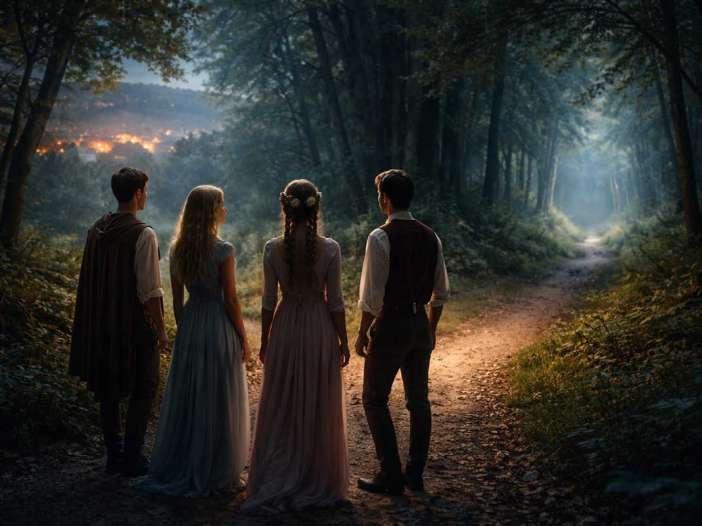
|
Getting your Trinity Audio player ready...
|
What if Shakespeare sat quietly while scholars argued over love?
Introduction by William Shakespeare
I ask no patience for this gathering, only attention.
I have watched my plays outlive their hour and their author. They walk now in minds I never knew, among customs I never imagined, speaking truths I did not fully understand when I first set pen to page.
A Midsummer Night’s Dream is often called light. That is because laughter moves more easily than honesty. I hid difficult things where smiles would carry them safely—love that believes too quickly, order that sleeps too soundly, harmony that returns without remembering how it was lost.
You will hear scholars speak of illusion, of desire, of comedy’s disguises. Let them. I do not sit to correct them. I sit to listen. A play does not belong to its maker once it has been spoken aloud.
I wrote a forest because people require places where rules loosen, where hearts speak without rehearsal. But I did not promise that such speech would be wise—only that it would be sincere.
If you find certainty here, distrust it. If you find confusion, attend to it. Dreams are honest not because they explain, but because they reveal what daylight prefers to ignore.
I leave the play now in your care.
(Note: This is an imaginary conversation, a creative exploration of an idea, and not a real speech or event.)
Topic 1 — Why Love Feels Certain When It Isn’t

The room is quiet, almost too quiet, as if everyone has stepped just beyond waking. The moderator lets the silence settle before speaking.
Anne Barton
When we speak about A Midsummer Night’s Dream, we often treat confusion as comic accident. But Shakespeare does something more unsettling. He gives his lovers absolute confidence—right at the moment they are most mistaken. That brings us to the first question I’d like us to sit with.
If love can change overnight without reason, what gives it the feeling of absolute certainty in the first place?
Harold Bloom
The certainty comes from the self, not the beloved. Shakespeare’s lovers are convinced because desire persuades consciousness that it has found its destiny. This is not romance; it is a psychological event. The mind, once seized by longing, rewrites reality to match its hunger. Certainty is not proof—it is a symptom.
Stephen Greenblatt
I would add that certainty here is socially permitted. Theseus’ Athens is a world of rules, contracts, and fathers. The forest allows a sanctioned suspension of accountability. Within that space, emotion feels truer because it faces no resistance. Certainty flourishes when nothing pushes back.
Anne Barton
Yes—and Shakespeare sharpens this by refusing to distinguish between sincere certainty and foolish certainty. The lovers sound just as convinced when they are wrong as when they are right. The play suggests that emotional confidence is stylistic; it borrows its force from rhetoric, not from truth.
Helen Vendler
Language plays a quiet role here. Shakespeare’s verse grants the lovers fluency even in error. Their words are lyrical, balanced, persuasive. The ear is seduced along with the heart. When language flows, belief follows. Certainty feels earned because it sounds beautiful.
Jonathan Bate
And perhaps that is the most human element of all. We trust feelings that arrive fully formed. Hesitation feels dishonest; conviction feels authentic. Shakespeare is merciless in showing us that confidence may simply be speed—the mind settling too quickly to notice its own instability.
The moderator nods, allowing the collective discomfort to breathe.
Anne Barton
That leads naturally to a more dangerous question—because magic is often blamed too easily in this play.
Does Shakespeare suggest that confidence in love is evidence of truth—or evidence of illusion?
Harold Bloom
It is evidence of illusion. Shakespeare invents characters who believe before they know. The self, in Bloom’s sense, is not discovering truth but asserting preference. Confidence becomes the voice of the ego mistaking appetite for destiny.
Stephen Greenblatt
I would complicate that slightly. Shakespeare does not mock confidence; he studies it. The play depends on our recognition that confidence is how humans move forward at all. Illusion is not a failure of love—it is love’s engine. The danger comes when confidence refuses correction.
Anne Barton
And Shakespeare denies us a stable measure. There is no internal alarm that sounds when certainty becomes illusion. That is what makes the play unsettling. If error felt different from truth, comedy would collapse. Shakespeare insists they feel identical.
Helen Vendler
Which returns us to sound. The lovers’ language does not degrade when they are wrong. Their metaphors remain elevated, their syntax assured. The poem does not warn us. That refusal is deliberate. Shakespeare withholds linguistic cues that might protect us.
Jonathan Bate
I think Shakespeare is also commenting on youth—not as age, but as a state of urgency. Certainty compresses time. The future feels decided instantly. The tragedy is not that lovers are wrong, but that they feel no need to wait.
A pause follows. Then, from the edge of the gathering, a quiet presence finally speaks.
William Shakespeare
I watched them believe because belief moves faster than knowing. And speed, once it feels like truth, resists delay.
No one responds immediately. The moderator lets the moment pass before continuing.
Anne Barton
That brings us to the question people often avoid—because it implicates the lovers themselves, not the enchantment.
Are the lovers mistaken because of magic, or because they were already vulnerable to deception?
Harold Bloom
The magic merely accelerates what is latent. Shakespeare’s lovers arrive in the forest already divided within themselves. Their affections are unstable before the potion appears. Magic is convenience, not cause.
Stephen Greenblatt
Exactly. The forest does not corrupt; it reveals. It removes social friction, allowing private volatility to surface. The potion dramatizes susceptibility—it does not invent it.
Anne Barton
What troubles me is how willing the lovers are to abandon yesterday’s convictions. There is no grief for what was loved an hour ago. That ease suggests a deeper fragility: affection without memory.
Helen Vendler
Shakespeare lets the language pivot instantly. One metaphor replaces another with no residue. This poetic agility mirrors emotional disposability. The heart moves on because the verse can.
Jonathan Bate
And yet, we recognize ourselves here. Who among us has not revised the past to justify a new attachment? Shakespeare does not accuse the lovers. He exposes the human talent for self-forgiveness.
The moderator draws the conversation inward.
Anne Barton
So perhaps the most unsettling truth of A Midsummer Night’s Dream is this: magic does not deceive the lovers. They deceive themselves—quickly, beautifully, and with absolute conviction.
Shakespeare offers one last, almost apologetic thought.
William Shakespeare
I gave them a dream so they might wake without blame. Whether they learned anything—I leave to you.
The silence returns, heavier now, but clarifying.
Topic 2 — What Happens When Social Order Falls Asleep

The conversation resumes without ceremony. If Topic 1 hovered at the edge of personal certainty, this one moves outward—toward structure, rule, and the strange relief that comes when they loosen.
Stephen Greenblatt
In A Midsummer Night’s Dream, the forest is not simply a setting. It is permission. A space where law, lineage, and consequence are briefly suspended. That raises a difficult question—because Shakespeare does not tell us whether this suspension is a gift or a threat.
Is the forest a place of freedom, or a place where responsibility temporarily disappears?
Northrop Frye
From the standpoint of comic structure, the forest is ritual space. Comedy traditionally requires a zone where normal rules dissolve so that renewal can occur. Freedom and irresponsibility are inseparable here. The danger is mistaking the ritual for permanence.
Marjorie Garber
I would push further. The forest allows freedom precisely because it removes accountability. That freedom is seductive, but it is also morally weightless. Shakespeare does not show us liberated selves so much as unmoored ones.
Jonathan Bate
And yet the forest feels necessary. Athens is rigid, paternal, and contractual. Without the forest, desire would have nowhere to misbehave safely. The play suggests that order without release becomes tyranny—even if it calls itself reason.
Stanley Wells
On stage, this distinction becomes visible. Actors move differently in the forest. Their posture loosens. Their voices quicken. Responsibility doesn’t vanish; it becomes inaudible. The audience senses this immediately, even before understanding it.
Stephen Greenblatt
So perhaps the forest offers freedom—but at the cost of ethical clarity. Which leads us to a more troubling question.
When rules dissolve, do people reveal their true selves—or simply lose themselves?
Northrop Frye
Comedy assumes revelation. Characters pass through disorder to emerge clarified. But Shakespeare complicates that assumption. The lovers do not articulate deeper truths; they merely survive confusion. Revelation is postponed, not guaranteed.
Marjorie Garber
Exactly. The self revealed in the forest is not stable—it is multiple, reversible, and reactive. Identity here is not uncovered; it is performed. That makes the idea of a “true self” deeply suspect.
Jonathan Bate
I’m not sure Shakespeare dismisses the true self entirely. Rather, he shows how fragile it is. Without social scaffolding, the self flickers. What we call authenticity may depend more on structure than we like to admit.
Stanley Wells
In performance, this flickering becomes unsettling. The audience laughs, but uneasily. We recognize how quickly dignity collapses when rules fade. The forest strips away habit, not essence—and habit, Shakespeare seems to say, does much of our moral work.
Stephen Greenblatt
Which means the forest is neither mirror nor mask—it is solvent. It dissolves the bindings that keep identity coherent. What remains may not be truth, but vulnerability.
A quiet presence shifts, as if acknowledging the discomfort.
William Shakespeare
I loosened their world to see what held them together. Some found nothing. Some found each other. I did not decide which was better.
The moderator lets the words settle before continuing.
Stephen Greenblatt
That raises the final and perhaps most pressing question—because it moves beyond the play and toward society itself.
Does society need controlled disorder to survive, or is disorder always a threat pretending to be play?
Northrop Frye
From the perspective of comic tradition, controlled disorder is essential. Without it, renewal stagnates. But comedy depends on containment. Disorder must end. The danger lies in forgetting that boundary.
Marjorie Garber
And Shakespeare never lets us forget how thin that boundary is. The forest feels playful, but the emotional damage is real. Jealousy, humiliation, abandonment—they do not vanish at dawn. Disorder leaves residue.
Jonathan Bate
Still, Shakespeare does not advocate repression. The play suggests that societies denying disorder invite more violent eruptions later. The forest may be risky, but it is preferable to suffocation.
Stanley Wells
Theater itself is the model here. A play is controlled disorder. Audiences experience chaos safely, then return home unchanged—or so they believe. Shakespeare understood this paradox intimately.
Stephen Greenblatt
Which may explain why the forest must remain temporary. Disorder cannot govern, but it must be acknowledged. Shakespeare offers no blueprint—only a warning against absolutes.
Shakespeare speaks once more, almost as an aside.
William Shakespeare
Order that never sleeps forgets why it was made. Disorder that never wakes forgets what it destroys.
The conversation slows. No one rushes to resolve the tension.
Stephen Greenblatt
Perhaps A Midsummer Night’s Dream does not ask us to choose between order and disorder, but to recognize their dependence. The forest is not an answer—it is a question society must keep asking itself.
The room grows quiet again, not with closure, but with unease—the kind that suggests recognition rather than confusion.
Topic 3 — Is Love Chosen, or Is It Contagious?

If the forest loosened rules, it also loosened loyalties. What once looked like devotion now appears transferable, even interchangeable. The moderator does not rush to soften this implication.
Marjorie Garber
We often speak of love as personal and deliberate, but A Midsummer Night’s Dream repeatedly shows desire moving in patterns—circulating, copying, shifting targets. That leads us to a question that unsettles romantic assumptions.
Why do the characters fall in love with whoever others desire, rather than whom they truly know?
Harold Bloom
Because knowledge has very little to do with desire. Shakespeare exposes the illusion that intimacy precedes attachment. These lovers do not know one another deeply; they respond to presence, rivalry, and sudden preference. Desire, in this play, is reflexive.
Marjorie Garber
And reflexivity is key. Attraction shifts as relationships realign. When one bond dissolves, another forms almost immediately. The play suggests that desire follows availability and proximity more than interior truth.
Jan Kott
There is cruelty in this. Shakespeare does not disguise it. One character’s longing becomes another’s humiliation. Love here is not mutual recognition—it is reallocation. The comedy laughs because tragedy is narrowly avoided.
Anne Barton
What troubles me is how little resistance there is. Characters accept new attachments without mourning old ones. This suggests that affection is shallow—but Shakespeare does not mock them for it. He observes it as a human tendency.
Terry Eagleton
Desire, in this sense, is social before it is personal. People want what appears wanted. Shakespeare anticipates a deeply modern insight: attraction is shaped by circulation, not conviction.
Garber allows the weight of this to settle before continuing.
Marjorie Garber
Which leads us directly into a harder question—because if desire moves this way, agency itself comes into doubt.
Does Shakespeare portray love as an act of will, or as something that spreads through proximity and imitation?
Harold Bloom
There is very little will here. The lovers do not decide; they comply. Shakespeare’s genius is to dramatize how quickly consciousness rationalizes what it has not chosen. The will enters after the fact, offering explanations.
Anne Barton
Yes. Love speaks as if it were chosen, but behaves as if it were caught. Shakespeare allows the rhetoric of intention to persist even as the evidence collapses beneath it.
Jan Kott
That gap between language and action is where unease grows. The lovers speak like sovereign selves, but move like figures in a pattern they do not see. Comedy hides this; modern audiences feel it more sharply.
Terry Eagleton
And imitation is never neutral. It reinforces hierarchy. Desire aligns itself with power, with approval, with what seems validated. Shakespeare shows how quickly love mirrors authority—even when authority is accidental.
Marjorie Garber
Which destabilizes identity itself. If desire is mimetic, then the self is porous. Attraction does not express who we are—it participates in shaping who we become.
A pause. Then a voice from the edge, neither correcting nor clarifying.
William Shakespeare
They loved as echoes love—answering sounds before they knew their source.
The moderator inclines her head slightly, then presses on.
Marjorie Garber
If that is so, then responsibility becomes the final, unavoidable question.
If desire is contagious, where does personal responsibility begin—or does it disappear entirely?
Anne Barton
Shakespeare does not absolve his characters, but he complicates blame. Responsibility exists—but it is diffused. No one intends harm, yet harm accumulates. Comedy survives by dispersing guilt.
Harold Bloom
Responsibility begins in awareness, and awareness is precisely what is lacking. The lovers are not evil; they are unreflective. Shakespeare’s critique is not moralistic—it is psychological.
Jan Kott
Still, ignorance does not erase consequence. Characters suffer humiliation, fear, abandonment. The play laughs, but damage occurs. Shakespeare trusts the audience to notice what the genre forgives.
Terry Eagleton
And perhaps that is the sharpest edge of the play. Society forgives what it can package as play. Responsibility dissolves when desire is framed as natural, inevitable, uncontrollable. Comedy becomes ideology.
Marjorie Garber
Yet Shakespeare does not conclude with punishment. He restores order without settling accounts. Responsibility is neither enforced nor denied—it is postponed. That postponement is deeply unsettling.
Shakespeare speaks once more, almost gently.
William Shakespeare
I did not ask them to choose desire. I asked them to live with what followed.
The conversation slows, the energy subtly altered. No one rushes to redeem love or condemn it.
Marjorie Garber
Perhaps A Midsummer Night’s Dream suggests that love is neither chosen nor innocent. It moves through us, reshaping us, while asking—quietly, persistently—how awake we are while it does so.
The room falls silent again, this time with a sharper awareness. Desire no longer feels romantic. It feels powerful, social, and slightly dangerous.
Topic 4 — Why Laughter Makes Moral Confusion Acceptable
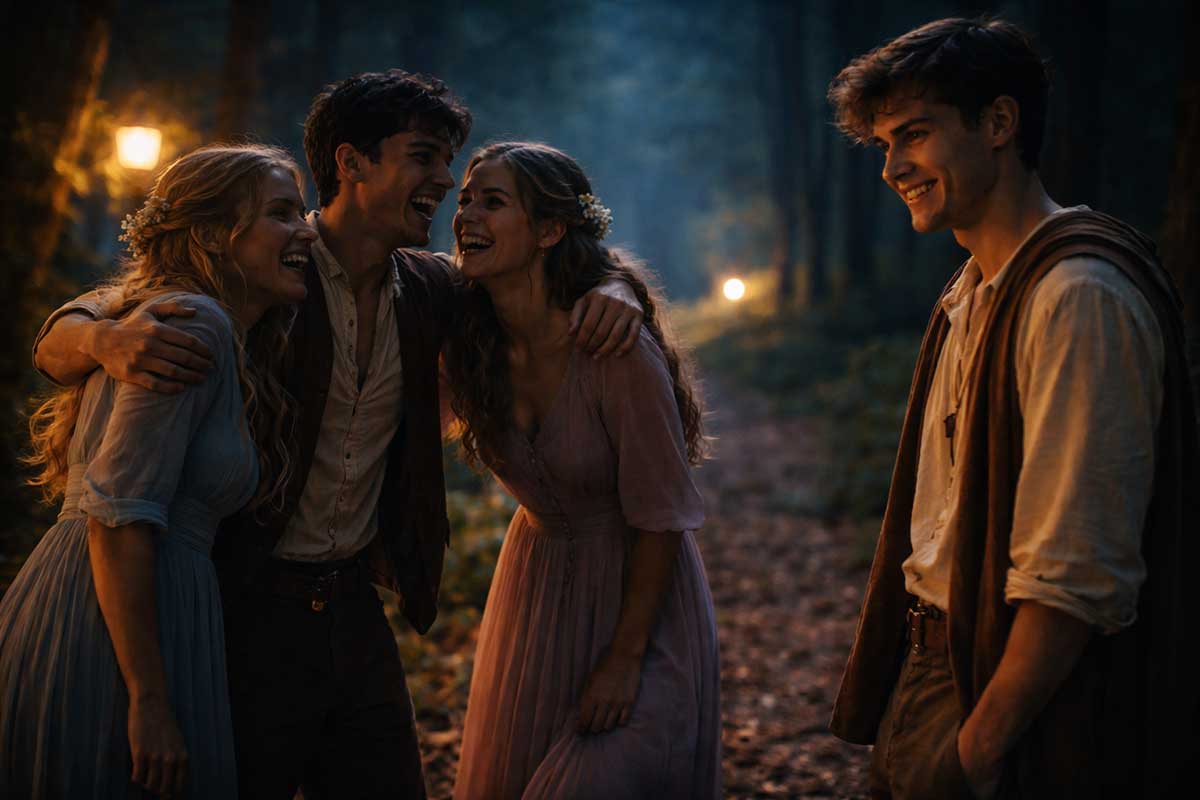
The tone shifts almost imperceptibly. Where desire unsettled, laughter disarms. The moderator does not smile.
Terry Eagleton
Comedy is often treated as innocence—harmless, forgiving, light. But in A Midsummer Night’s Dream, laughter arrives precisely when judgment should sharpen. That contradiction leads us to a difficult starting point.
Why are we willing to forgive behavior in comedy that would feel cruel or disturbing in tragedy?
Northrop Frye
Because comedy operates on ritual expectation. We know, in advance, that harm will not be permanent. This foreknowledge changes our moral posture. We watch with leniency because we trust restoration will arrive.
Jan Kott
But that trust is dangerous. Shakespeare’s comedy contains humiliation, abandonment, fear. The laughter does not erase these experiences—it covers them. Tragedy forces us to face pain; comedy invites us to pass over it quickly.
Stephen Greenblatt
Comedy also implicates the audience. We laugh because the play permits us to. That permission creates complicity. What would feel intolerable alone becomes acceptable together, in the shared ritual of theater.
Stanley Wells
In performance, timing is everything. A pause invites discomfort; a laugh line dissolves it. Shakespeare understood how rhythm governs moral response. Laughter arrives before reflection has time to form.
Terry Eagleton
Which suggests that comedy doesn’t merely soften cruelty—it reorganizes our perception of it.
Does laughter soften moral judgment—or suspend it altogether?
Northrop Frye
Suspension may be closer. Comedy brackets judgment temporarily, allowing the system to reset. The danger is not the suspension itself, but forgetting that it was ever meant to end.
Jan Kott
I am less forgiving. Laughter trains us. It teaches audiences which harms are survivable, which humiliations are negligible. Comedy becomes a moral anesthetic.
Stephen Greenblatt
Yet Shakespeare also uses laughter to expose vulnerability. The ridicule of the lovers is double-edged. We laugh—and then we recognize how easily we could be laughed at. That recognition carries ethical weight.
Stanley Wells
Actors feel this tension acutely. Push the laughter too far, and cruelty emerges. Pull back too soon, and the play stiffens. Shakespeare wrote comedy that walks a knife-edge.
Terry Eagleton
And ideology thrives on that edge. When power hides behind humor, resistance weakens. Laughter reassures us that nothing serious is happening—even when it is.
A brief stillness follows. Then a quiet voice breaks it, not with defense, but with observation.
William Shakespeare
I trusted laughter to carry what sermons could not. Whether it carried too much—I left to the audience.
Eagleton nods, then advances to the final question.
Are we laughing with the characters, or laughing to avoid recognizing ourselves?
Jan Kott
We laugh to survive recognition. The lovers’ foolishness is close to our own. Comedy gives us distance. Without it, shame would overwhelm the scene.
Northrop Frye
Comedy depends on identification and separation at once. We recognize ourselves just enough to be amused, not enough to be accused. That balance is fragile—and powerful.
Stephen Greenblatt
Shakespeare knew that audiences come to theater for permission: permission to feel, to judge, to escape judgment. Laughter negotiates that permission. It lets us see ourselves without demanding change.
Stanley Wells
And the stage magnifies this. The actors’ bodies—tripping, mis-speaking, mis-loving—invite laughter through exposure. We laugh at embodiment, at vulnerability made visible.
Terry Eagleton
Which is why comedy is never neutral. It shapes what societies forgive. If we laugh too easily, we may forget to ask who bears the cost.
Shakespeare offers one final, spare thought.
William Shakespeare
I let them laugh so the truth might enter quietly. Truth that arrives laughing is rarely challenged.
The room grows still. The laughter, imagined now, feels heavier than before.
Terry Eagleton
Perhaps A Midsummer Night’s Dream asks us not whether comedy is harmless, but whether harmlessness itself is an illusion. Laughter may not erase moral confusion—it may simply make it livable.
No one rushes to answer. The question lingers, unresolved, as laughter fades into thought.
Topic 5 — Do the Characters Actually Learn Anything?
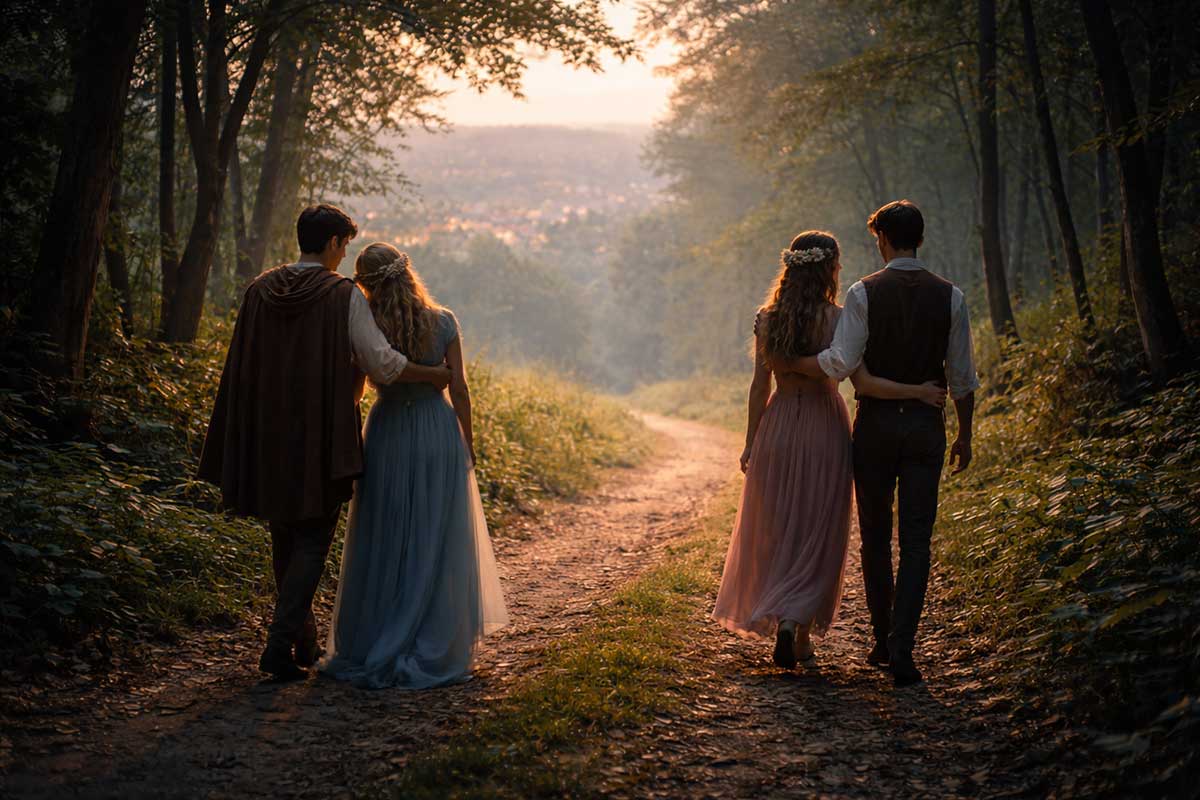
Morning has arrived. The forest has released its hold. The lovers stand once more in daylight, married, restored, forgiven. Comedy tells us this is the end. But Shakespeare, characteristically, leaves something unresolved.
Harold Bloom
Comedy ends with harmony, but harmony is not the same as understanding. Shakespeare restores order with remarkable speed—and that haste invites a question we rarely ask.
When the dream ends, are the characters wiser—or merely restored to order?
Anne Barton
They are restored, certainly. But wisdom requires memory, and Shakespeare gives us little evidence of it. The lovers recall confusion as a dream—pleasant, strange, already fading. Restoration happens without reckoning.
Helen Vendler
Language confirms this. The verse settles, smooths, stabilizes. Emotional turbulence leaves almost no linguistic trace. Poetry resumes its equilibrium, as if disorder had been a temporary lapse rather than a formative event.
Jonathan Bate
Yet Shakespeare does not present this as failure. He may be suggesting that societies cannot afford permanent insight. Order depends on forgetting as much as learning. Wisdom, if it arrives too forcefully, can destabilize communal life.
Marjorie Garber
That forgetting is strategic. The play’s resolution requires amnesia. Identity confusion, power shifts, emotional injuries—these are smoothed over so that marriage can proceed. Wisdom would interrupt closure.
Harold Bloom
Which suggests that comedy may tolerate experience, but not transformation. That leads us to the deeper unease beneath the happy ending.
If harmony returns without insight, is that resolution genuine—or cosmetic?
Anne Barton
I would say cosmetic—but deliberately so. Shakespeare understands the necessity of surface peace. The play asks whether social stability requires us to accept appearances as sufficient.
Jonathan Bate
And yet audiences have always accepted this ending gladly. That acceptance is itself part of Shakespeare’s insight. We prefer repair to examination. Harmony, even shallow harmony, feels like relief.
Marjorie Garber
But cosmetic resolution has consequences. The structures that enabled confusion—patriarchy, authority, obedience—remain intact. Nothing structural changes. Only the emotional weather clears.
Helen Vendler
The poetry assists in this clearance. Shakespeare’s language restores symmetry, cadence, reassurance. The ear is soothed before the mind can object. Form enacts resolution even where substance hesitates.
Harold Bloom
Which is why I find the ending quietly troubling. Shakespeare gives us happiness without growth. The self, as I understand it, does not deepen—it resets.
A presence shifts at the edge of the circle, listening closely.
William Shakespeare
I gave them peace, not answers. Answers do not always make good endings.
Bloom inclines his head slightly, then presses the final question—one that reaches beyond the play itself.
Does Shakespeare leave us with growth, or with the unsettling comfort of forgetting?
Anne Barton
Forgetting is not framed as failure here—it is framed as mercy. To remember too much would fracture the comedy. Shakespeare spares his characters the burden of insight.
Jonathan Bate
And perhaps he spares us as well. The theater is a place of temporary awakening. We glimpse disorder, then return to life intact. Growth is optional; continuation is not.
Marjorie Garber
Still, Shakespeare leaves a trace. The dream may be forgotten consciously, but its unease lingers. The audience remembers even if the characters do not. That asymmetry matters.
Helen Vendler
Yes—the residue lives in tone. Something slightly off remains. The final harmony is beautiful, but fragile. The poetry carries a faint awareness that order is not truth—only arrangement.
Harold Bloom
Which brings us back to Shakespeare’s singular achievement. He does not educate his characters. He educates his audience. The growth occurs outside the play.
Shakespeare speaks one last time, quietly, without instruction.
William Shakespeare
I did not ask them to awaken. I asked them to wake up.
Silence follows—not the silence of confusion, but of recognition.
Harold Bloom
Perhaps A Midsummer Night’s Dream ends exactly where it must. Not with wisdom, but with continuity. The question of learning is passed to us—where Shakespeare always places his most difficult truths.
The conversation ends without resolution, which feels, somehow, appropriate.
Final Thoughts by Shakespeare

Morning returns. Order resumes. Lovers pair themselves and move on, as people always have.
Some will say nothing was learned. Others will insist everything was forgiven. I say only this: forgetting is not the same as understanding, and peace is not proof of truth.
I allowed the lovers to wake without memory because life requires forward motion. But I did not grant the same mercy to those who watch. You remember what they cannot—the speed of certainty, the ease of cruelty when it is laughed away, the comfort of harmony that asks no questions.
If this play troubles you, let it. If it reassures you, question why.
I did not write A Midsummer Night’s Dream to resolve the heart, but to show how gently we excuse it. The dream ends because it must. The question it leaves behind does not.
That question now belongs to you.
Short Bios:
William Shakespeare
English playwright and poet whose works explore love, power, illusion, and human contradiction with unmatched psychological depth. His plays continue to shape how we understand desire, identity, and social order.
Harold Bloom
Influential American literary critic known for his focus on Shakespeare as the creator of modern human consciousness and psychologically complex characters.
Stephen Greenblatt
Leading Shakespeare scholar and founder of New Historicism, examining how literature reflects and negotiates power, culture, and social performance.
Anne Barton
Respected Shakespeare scholar whose work on comedy and illusion highlights uncertainty, emotional instability, and the limits of resolution in Shakespeare’s plays.
Helen Vendler
Renowned poetry critic celebrated for her close readings of language, rhythm, and emotional nuance in English literature, including Shakespeare’s verse.
Jonathan Bate
Shakespeare biographer and literary scholar known for connecting Shakespeare’s imagination to nature, creativity, and enduring human concerns.
Marjorie Garber
Prominent Shakespeare scholar whose work focuses on ambiguity, gender, identity, and the fluid boundaries between roles and selves.
Northrop Frye
Influential literary theorist whose archetypal approach to comedy and romance shaped modern understanding of myth, structure, and narrative cycles.
Jan Kott
Polish literary critic who reinterpreted Shakespeare for modern audiences, emphasizing power, cruelty, and existential unease beneath classical forms.
Terry Eagleton
Literary theorist and critic known for examining ideology, comedy, and moral tension in literature with sharp insight and intellectual rigor.
Stanley Wells
Shakespeare editor and scholar whose work bridges textual scholarship and theatrical performance, emphasizing how Shakespeare functions on stage.
Leave a Reply