
|
Getting your Trinity Audio player ready...
|

Introduction by Yuval Noah Harari
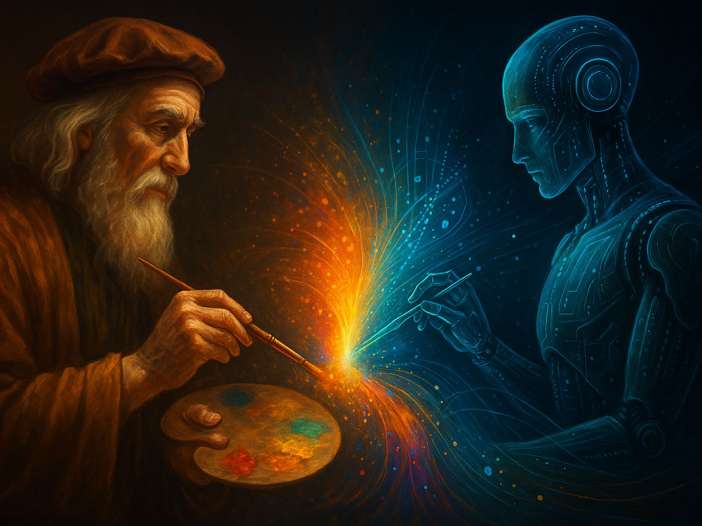
For thousands of years, humans have struggled against the boundaries of their own minds. We told stories around fires, painted symbols on cave walls, and etched words on clay tablets — all in an attempt to extend the limits of memory and imagination. Each invention gave us a larger canvas on which to think. Writing allowed us to coordinate empires. Mathematics allowed us to explore the cosmos. Computers allowed us to model realities too vast for our neurons alone.
And yet, throughout this history, one constant remained: the human brain itself, with its narrow channels of working memory and its fragile attention span. We are brilliant, but bounded. A poet may carry hundreds of metaphors in mind, but not thousands. A scientist may juggle equations, but never all possible equations at once. The ceiling of our working memory has always capped the scope of our creativity.
Now, for the first time in history, we are no longer alone in this endeavor. Artificial intelligence offers not just a new tool, but a new kind of partner. Unlike pen or paper, AI does not merely store or transmit. It generates, combines, and reimagines at a scale beyond comprehension. It can hold millions of concepts simultaneously, explore countless variations, and return to us possibilities that stretch beyond our natural reach.
This raises profound questions. If AI can think with us, or even for us, what becomes of the word “genius”? Do we still speak of Newton and Einstein as singular minds, or do we begin to see genius as a symphony of human–machine collaboration? If creativity is redefined as the ability to generate and select meaningful novelty, then what role does the human spark still play? Are we the composers, the editors, the gardeners, or something else entirely?
The five conversations that follow will not provide final answers. Instead, they will illuminate the crossroads at which we stand. We will begin with the question of human limits — whether AI truly breaks the cognitive ceiling of 2,500 ideas. We will ask what creativity really is: a uniquely human spark, or a pattern that machines can replicate. We will debate ownership and ethics: if an idea emerges from human–AI collaboration, who has the right to claim it? We will pause to consider silence, walking, and the role of embodiment in thinking — reminding ourselves that not all thought is digital. And finally, we will confront the ultimate question: the future of genius itself.
What unites these questions is not technology, but humanity. AI is not an alien force. It is a mirror of our ambitions and anxieties, a reflection of how we imagine intelligence, originality, and meaning. To ask whether AI is creative is also to ask what creativity means to us. To ask whether machines can be geniuses is also to ask what genius has ever meant.
As we enter this era of co-creation, we may discover that the most important breakthroughs are not the products of machines, but the transformations in how we humans see ourselves. In the past, fire and writing and electricity reshaped the story of humanity. Today, AI may reshape the very story of what it means to think.
Let us now step into these conversations — not as spectators of a technological revolution, but as participants in redefining the boundaries of the human mind.
(Note: This is an imaginary conversation, a creative exploration of an idea, and not a real speech or event)

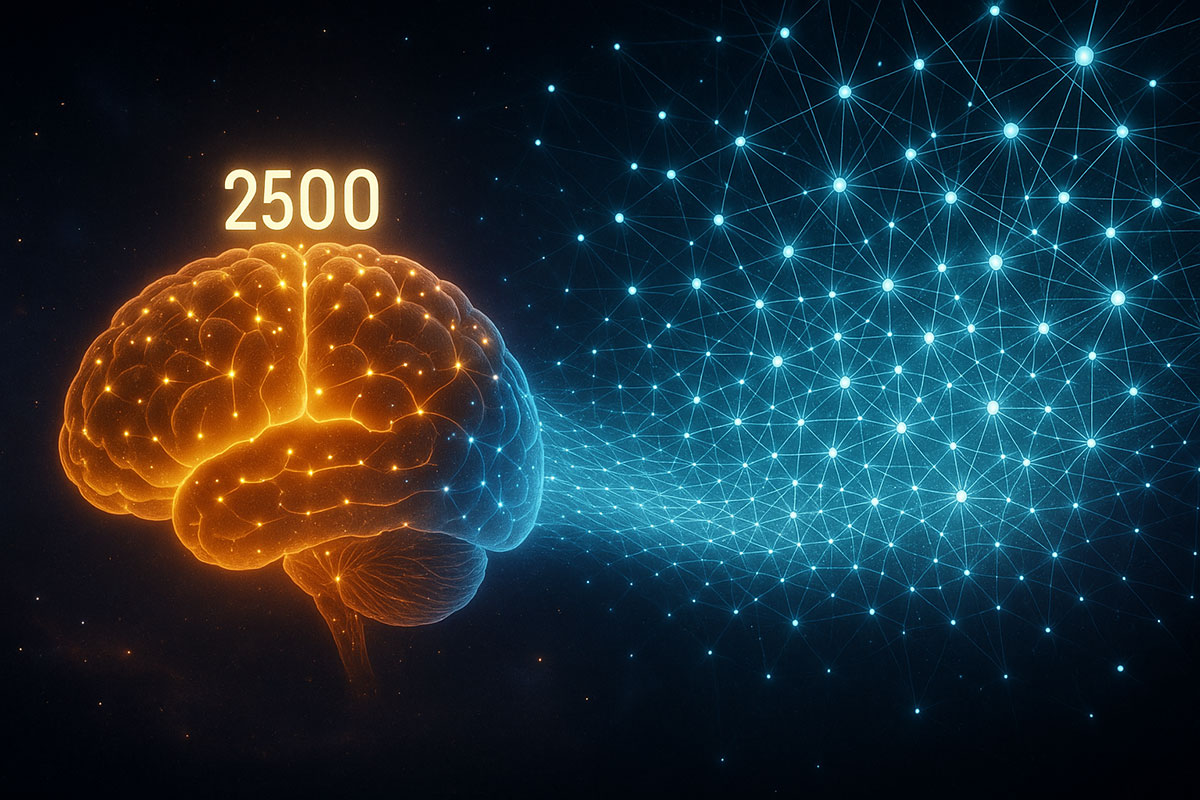
Topic 1: Beyond the 2,500-Idea Limit — Can AI Truly Break Human Cognitive Ceilings?
Moderator: Riki Ishii
Participants: Daniel Kahneman, Margaret Boden, Gary Marcus, Howard Gardner, Fei-Fei Li
Opening (Riki Ishii)
In my research, I’ve argued that human working memory has a limit — about 2,500 concepts we can actively hold and manipulate. This ceiling means that even the most creative person is constrained. AI, in contrast, can generate and manage vastly more combinations without fatigue. But does this mean AI is the new frontier of creativity, or is human genius something different altogether? Let’s explore this question together.
First Question (Riki Ishii)
If the human brain has such a strict working memory limit, does this mean we are fundamentally unable to reach higher levels of creativity without AI? Or have humans always found ways to stretch these ceilings?
Margaret Boden
Humans have always used tools to amplify thought. Writing, mathematics, and computers are extensions of our minds. AI is simply the latest tool in that lineage. But what makes AI different is the scale: it can explore combinations far faster and broader than any human could. I wouldn’t say we are incapable without it — after all, history is filled with brilliant discoveries — but AI accelerates the stretching of these ceilings in ways once unimaginable.
Daniel Kahneman
I see it slightly differently. The ceiling itself isn’t a flaw, but a condition. We rely on heuristics, simplifications, and biases precisely because our minds can’t process everything. These shortcuts create both errors and insights. AI can provide breadth, but the leap from information to meaning remains a human one. We may never “overcome” the ceiling — we may simply work around it more elegantly with AI’s help.
Gary Marcus
And yet, let’s not forget: AI doesn’t truly “understand.” Yes, it can juggle millions of data points, but that doesn’t mean it grasps context. Humans compress, abstract, and leap conceptually in ways machines don’t. The 2,500 limit is real, but the mind compensates by building higher-order concepts. AI can generate brute-force combinations, but the spark — the insight that ties them together — still needs a human.
Howard Gardner
I agree with Gary. Creativity is not simply about how many concepts you can juggle. It’s about engaging different intelligences — linguistic, musical, spatial, interpersonal. Human creativity involves moral and cultural dimensions, which cannot be reduced to working memory limits. AI may help extend the playground, but the act of synthesis across intelligences is profoundly human.
Fei-Fei Li
I think we’re moving toward a partnership model. AI broadens the canvas — it gives us more colors to paint with, more variations to consider. But humans still choose the composition, the meaning, the direction. The question isn’t whether AI will replace our ceiling, but whether we are willing to co-create in a way that lets both sides contribute their strengths.
Second Question (Riki Ishii)
If AI can produce ideas beyond our ceiling, even if many are shallow, what does this mean for originality? Are we moving toward a future where originality is less about invention and more about curation?
Howard Gardner
Curation has always been part of creativity. Think of Mozart, who absorbed themes from his contemporaries, or Picasso, who reinterpreted African art. What matters is how humans reframe, reinterpret, and give meaning. If AI floods us with possibilities, then yes, the role of the human becomes increasingly one of discernment — but discernment is no less creative.
Fei-Fei Li
Exactly. Originality is not always about inventing something from nothing. It often lies in how we connect existing elements in new contexts. AI can generate thousands of starting points, but humans bring the wisdom of context. In that sense, curation and invention are not opposites — they are stages of the same creative process.
Gary Marcus
But we should be careful not to conflate quantity with quality. AI can swamp us with outputs, but most will be mediocre. If we rely too heavily on curation, we risk lowering our standards. The challenge is how to build AI that doesn’t just produce noise but helps amplify genuine originality. That requires a deeper architecture of reasoning, not just statistical patterns.
Margaret Boden
I’d push back a little. Many great creative acts have begun with “noise” — with exploring vast landscapes of ideas until something valuable emerged. Surrealists used chance as a creative method. Scientists often pursue dead ends before breakthroughs. If AI produces an overwhelming landscape, it may feel chaotic, but chaos can be fertile ground.
Daniel Kahneman
Humans are poor judges of originality in the moment. Often, what feels original proves trivial, and what seems trivial can prove revolutionary years later. AI may accelerate this uncertainty. The human role may shift toward cultivating environments where serendipity is possible — creating conditions where the right idea can be recognized when it appears.
Third Question (Riki Ishii)
Do you believe AI will eventually help us redefine what it means to be a “genius thinker”? Will tomorrow’s great minds be individuals, machines, or hybrids?
Gary Marcus
Hybrids, if we’re lucky. The danger is treating AI as more capable than it is. True genius involves context, depth, and accountability — qualities machines lack. But if humans learn to use AI responsibly, hybrids may become the new model of genius: not one mind, but a symbiosis.
Margaret Boden
I agree. Genius has always been contextual. Einstein was a genius not only because of his ideas but because of how those ideas reshaped science. With AI, the locus of genius may shift from the lone individual to the collaborative system — human plus machine, working together.
Fei-Fei Li
From the AI perspective, this is already happening. Many breakthroughs in science, medicine, and art are emerging from teams that use AI as a creative partner. Genius will increasingly be measured by how well one collaborates with technology, not just by what emerges from within a single human brain.
Howard Gardner
But we must also remember the ethical and cultural dimensions. A genius is not only someone who produces extraordinary ideas, but someone whose ideas contribute to humanity. If AI helps us generate ideas but disconnects us from responsibility, then we risk hollowing out the very meaning of genius.
Daniel Kahneman
I’d end on a note of caution: humans will always want to attribute genius to individuals — it is how we tell stories, how we find inspiration. Even in a hybrid world, we will seek human faces to represent breakthroughs. So yes, genius may become hybrid, but the narrative of genius will remain stubbornly human.
Closing (Riki Ishii)
What I hear from all of you is that the “2,500-idea ceiling” is not the end of human creativity, but the beginning of a new collaboration. AI can flood us with possibilities, but meaning, discernment, and responsibility remain deeply human. Perhaps the future of genius is not a contest between man and machine, but a partnership that allows us to think beyond our natural limits.
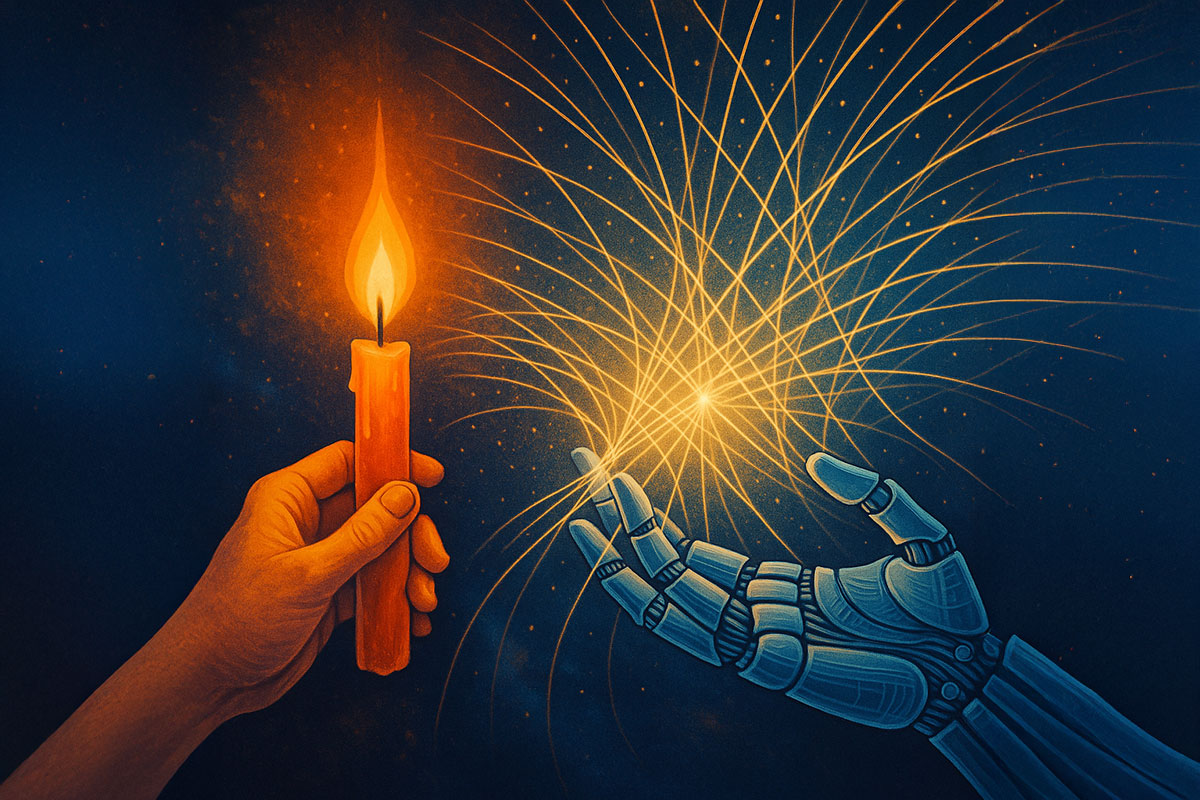
Topic 2: The Nature of Creativity — Human Spark vs. Machine Combination
Moderator: Riki Ishii
Participants: Steven Pinker, Scott Barry Kaufman, Douglas Hofstadter, Brian Eno, Margaret Boden
Opening (Riki Ishii)
In the last discussion we examined the limits of working memory and how AI may help us transcend them. But today I want to shift our focus to a deeper question: what is creativity itself? Is it a unique human spark — something born of consciousness, emotion, and culture — or is it ultimately just the clever recombination of existing elements? AI is testing this boundary in real time.
First Question (Riki Ishii)
Do you believe creativity is an irreducibly human spark, or can it be explained — and replicated — as combinations of existing knowledge, something machines are beginning to master?
Douglas Hofstadter
To me, creativity isn’t just clever recombination. It’s about meaning, metaphor, and self-reference. Machines can shuffle patterns endlessly, but they don’t understand the resonance of a metaphor, the humor in a pun, or the sorrow in a poem. Without that depth of subjective experience, I hesitate to call machine outputs “creative” in the full sense.
Margaret Boden
I partly agree, but I’ve long argued that creativity comes in three varieties: exploratory, combinational, and transformational. Machines are increasingly capable of the first two — exploring vast idea spaces and combining concepts in novel ways. The third, transformational creativity — altering the very rules of the game — remains elusive. But if we dismiss AI outright, we risk ignoring the genuine sparks it already produces.
Steven Pinker
Let’s not forget that even human creativity is fundamentally combinatorial. Shakespeare borrowed plots, Einstein stood on centuries of physics, musicians riff on scales that have existed for millennia. What makes it feel like a “spark” is the cultural and emotional context. Machines can mimic some of that, but without shared human experience, their creativity feels like a shadow of the real thing.
Brian Eno
But shadows can be powerful. Much of art is about creating contexts where surprise is possible. My work with generative music showed me that machines can create systems that surprise even their creators. Is that not creativity? Perhaps we need to shift our definition: creativity isn’t a property of an isolated brain but an emergent phenomenon of systems — human, machine, or both.
Scott Barry Kaufman
I’d add that human creativity is deeply tied to imagination — the ability to simulate possibilities that don’t yet exist, to empathize with unrealized futures. Machines don’t imagine; they generate. But humans also benefit from what machines generate, because it can spark our own imaginative leaps. Creativity, then, may be less about spark versus combination, and more about how sparks emerge from combinations.
Second Question (Riki Ishii)
If machines can generate combinations at scale, how should humans position themselves? Do we become editors of machine creativity, or do we still hold a unique role as inventors?
Brian Eno
I think of humans as gardeners rather than editors. When I create generative art, I don’t just correct what the system produces; I design conditions where unexpected beauty can emerge. Humans shape the soil, the nutrients, the boundaries — and then we let the system grow in surprising directions. That’s not editing; that’s co-creation.
Steven Pinker
Still, we shouldn’t underestimate the role of critical judgment. Machines can spew endless variations, but it’s the human who decides which ones are meaningful, which ones move us. Without that selection process, we drown in possibilities. So yes, we remain inventors, but increasingly our inventiveness may be about steering, not originating.
Margaret Boden
And this is where transformational creativity matters. Machines don’t yet rewrite the rules of the system they inhabit. Humans do. Think of paradigm shifts in science — relativity, quantum mechanics — these weren’t just new combinations; they changed the whole framework. As long as humans remain the agents of transformation, our role as inventors is secure.
Scott Barry Kaufman
I’d emphasize the inner journey. Creativity is also about self-actualization — expressing something personal and meaningful. Even if machines assist, the act of inventing shapes our identity. Editing may be part of it, but when I compose, I’m not just selecting; I’m discovering myself. Machines can’t replicate that.
Douglas Hofstadter
Yes, and let’s not forget: meaning is not in the artifact but in the mind that interprets it. A haiku isn’t creative because of its syllable structure; it’s creative because it resonates with us, because it makes us pause and reflect. Machines can generate haikus endlessly, but without an inner life, they don’t create meaning — we do.
Third Question (Riki Ishii)
Looking ahead, do you imagine a future where we redefine creativity itself? Could the word “creative” eventually apply equally to humans and machines, or will the human spark always set us apart?
Scott Barry Kaufman
I believe we will expand the definition, but the human spark will remain central. Machines may be called “creative” in a functional sense, but creativity as a human ideal will continue to involve imagination, authenticity, and personal meaning. We’ll learn to respect both, but we won’t confuse them.
Brian Eno
I’m more optimistic about blurring the line. Already we describe systems — weather patterns, evolution — as “creative.” Why not machines? Creativity is less about who or what produces it, and more about the surprising richness of the outcomes. We may not need to guard the word so jealously.
Margaret Boden
But we must tread carefully. Language shapes perception. If we too easily equate machine novelty with human creativity, we risk devaluing what makes human life meaningful. I think we will adopt a layered understanding — acknowledging machine creativity while preserving the special role of human imagination.
Steven Pinker
I suspect people will cling to the distinction. We tell stories about genius and inspiration because they anchor our sense of purpose. Even if AI produces symphonies or scientific breakthroughs, we will still look for the human element, the biography behind the creation. Creativity is as much narrative as it is novelty.
Douglas Hofstadter
For me, the essence of creativity is consciousness reflecting upon itself. Until machines have that — until they suffer, rejoice, and wonder — their outputs will be fascinating, useful, even beautiful, but not truly creative in the deepest sense. The word “creative” may expand, but the human spark will always define its core.
Closing (Riki Ishii)
What strikes me from this conversation is that creativity is both a spark and a system. Machines may flood us with combinations, but humans bring meaning, imagination, and story. Perhaps the future of creativity lies not in asking who owns the word, but in learning to weave sparks and combinations together, so that both humans and machines extend each other’s horizons.
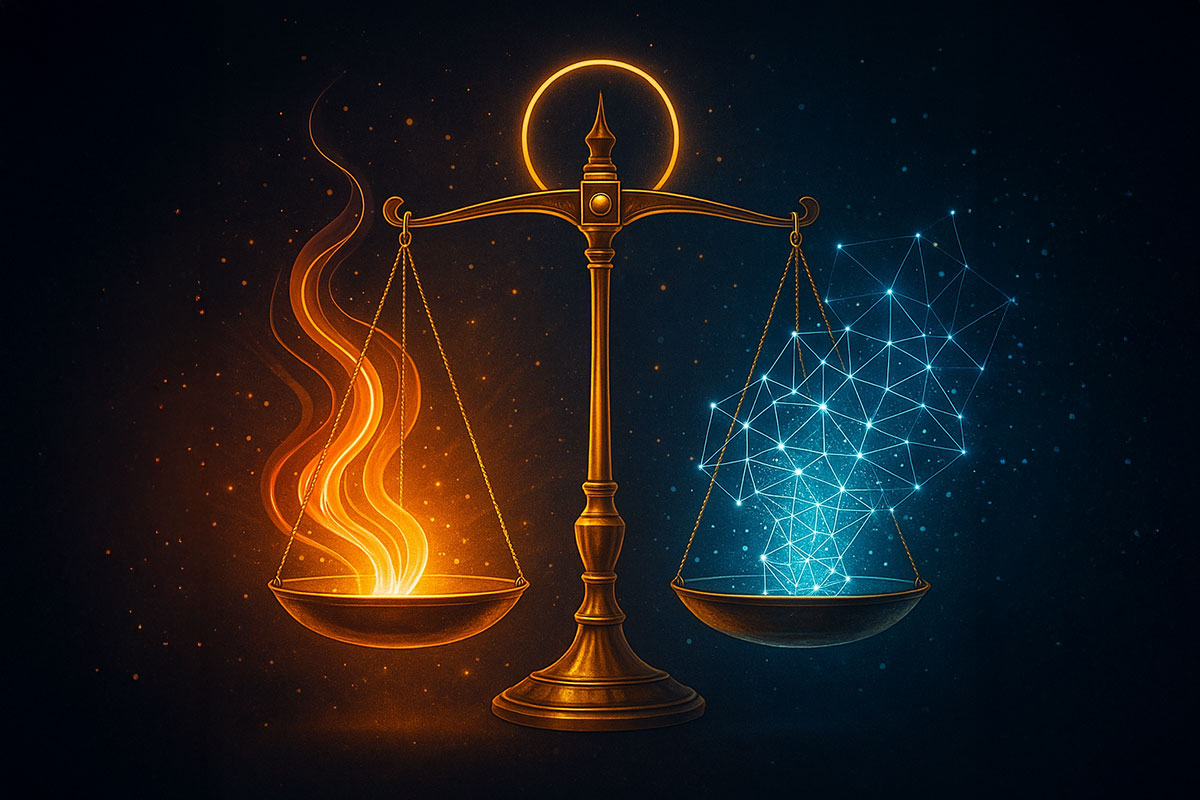
Topic 3: Co-Creation Ethics — Who Owns an Idea Born with AI?
Moderator: Riki Ishii
Participants: Shoshana Zuboff, Lawrence Lessig, Timnit Gebru, Demis Hassabis, Yuval Noah Harari
Opening (Riki Ishii)
In our first two sessions, we spoke about human limits and the meaning of creativity. But creativity doesn’t happen in a vacuum — it happens in society. When AI is part of the process, a question immediately arises: who owns the outcome? If an idea is generated with machine assistance, does it belong to the individual, the company, the machine, or perhaps even society itself? Tonight, I’d like us to wrestle with the ethics of co-creation.
First Question (Riki Ishii)
When a human and AI collaborate on an idea, who should be recognized as the “creator”?
Lawrence Lessig
Traditionally, intellectual property law is built on human authorship. Machines cannot hold rights because they are not legal persons. So, in the current system, the credit belongs to the human who initiated or directed the process. But as AI systems grow more autonomous, the line blurs. If the human’s role is minimal, are they still the author? Our laws are not ready for this ambiguity.
Shoshana Zuboff
The deeper problem is power. Most AI systems are owned by corporations that harvest our data to fuel their models. If I write with AI, the model itself has been trained on countless other creators’ works — often without consent. To claim ownership without acknowledging this hidden collective labor is to perpetuate surveillance capitalism. The real question is not just “who owns,” but “who has been dispossessed.”
Demis Hassabis
From the perspective of building these systems, our intent is to create tools that extend human capability. Ownership, I believe, should rest with the human who shapes the input and the context. Yes, models are trained on broad datasets, but they are not simply copying; they are generalizing patterns. The creator remains the person who asks the question, frames the prompt, and selects the outcome.
Timnit Gebru
But Demis, that argument downplays the real asymmetry. AI tools are not neutral; they are designed, owned, and controlled by corporations. When someone uses these tools, their creativity is mediated by systems shaped by those who built them. The notion of individual authorship becomes almost fictional. If we’re serious about fairness, we must rethink ownership beyond the individual and consider collective rights.
Yuval Noah Harari
History reminds us that ownership is always a story we tell. Copyright, patents — these are social fictions we agreed upon to encourage innovation. When AI enters the picture, we may need new stories. Perhaps we’ll move toward crediting hybrids — human-machine collaborations — or toward more open models where ideas flow freely. The danger is not just legal confusion, but the concentration of power if only a few entities can claim ownership of hybrid creativity.
Second Question (Riki Ishii)
If AI-generated ideas are based on data harvested from millions of human works, do individuals or communities deserve recognition — or even compensation — for their contributions?
Shoshana Zuboff
Absolutely. Without the unpaid labor of millions of creators whose data was scraped, these systems wouldn’t exist. To deny that debt is to continue the enclosure of the digital commons. We must find mechanisms to return value to the many, not just to the corporations who consolidate it.
Demis Hassabis
I agree that transparency and accountability are essential. At DeepMind, we’ve begun exploring ways to make training sources clearer. But compensation is complicated. Models generalize; they don’t store or replicate any single author’s work. A balance must be struck between protecting creators and enabling innovation.
Timnit Gebru
Demis, “balance” often ends up favoring corporations. The truth is, creators’ voices are erased. If an artist’s work is used to train a model, they should have the right to opt out or to be compensated. Otherwise, we are building a system on exploitation.
Lawrence Lessig
There may be a legal analogy in collective licensing. In the music industry, for example, performance rights organizations collect fees from radio stations and distribute them to artists. Perhaps AI requires a similar mechanism: a structured way to acknowledge and pay those whose work is part of the training corpus.
Yuval Noah Harari
But even beyond compensation, there is a philosophical issue: creativity has always been collective. Every writer, every musician builds on those who came before. What AI has done is expose that truth at scale. We can’t put the genie back in the bottle. Instead, we must design systems that reflect this reality fairly, rather than pretending individual genius exists in isolation.
Third Question (Riki Ishii)
Looking ahead, how should societies design rules of ownership around AI creativity to ensure fairness without stifling innovation?
Timnit Gebru
We must begin by centering marginalized voices. If ownership frameworks are designed only by those in power, they will replicate existing inequalities. Rules must be participatory, transparent, and global — because AI affects everyone.
Lawrence Lessig
Law will inevitably lag behind technology, but we can anticipate. I would advocate for hybrid frameworks: protect individual contributions, establish collective licensing for training data, and preserve the public domain as a commons. Innovation thrives when both creators and communities feel respected.
Demis Hassabis
Innovation also requires flexibility. If rules are too rigid, progress slows. I believe in layered approaches — strong transparency standards, options for creators to control their data, and incentives for open research. But we must avoid a patchwork of conflicting laws across countries. Global cooperation is essential.
Shoshana Zuboff
And let’s not forget: ownership is not only about money, but about dignity. People want recognition, not just compensation. Any future framework must restore visibility to the invisible labor behind AI systems. Otherwise, we are repeating the same extractive patterns of industrial capitalism.
Yuval Noah Harari
Perhaps the real challenge is not who owns, but how we live with abundance. If AI makes ideas plentiful, the scarcity model of intellectual property may collapse. We may need to rethink ownership altogether, moving toward models of stewardship, collaboration, and shared benefit. This shift will be uncomfortable, but history shows that when technology changes the landscape, our stories of ownership must evolve too.
Closing (Riki Ishii)
What I take from this conversation is that co-creation raises not only legal questions but moral ones. Ownership is about recognition, fairness, and power. If AI is to truly become our partner, we must ensure the partnership is just — not only for those who use the tools, but for the countless others whose contributions make these tools possible.
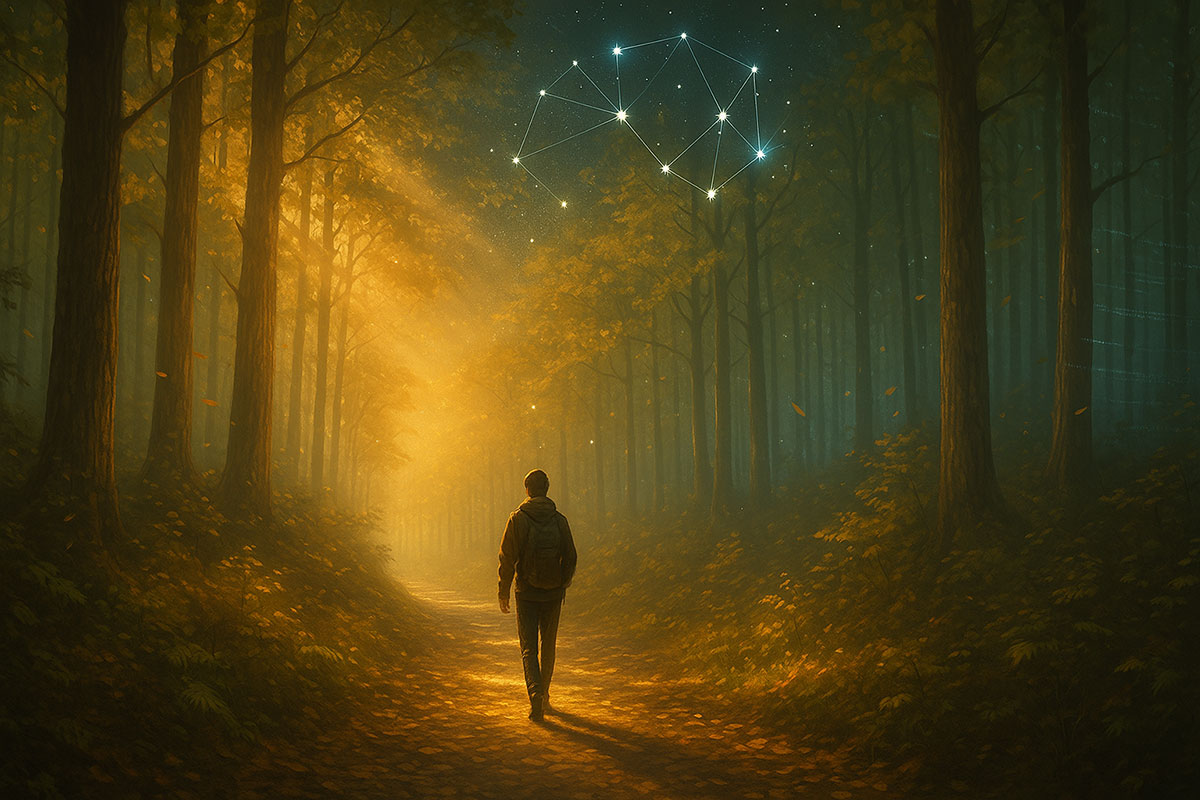
Topic 4: The Role of Silence and Space in Thinking — Why Walks Still Matter
Moderator: Riki Ishii
Participants: Annie Murphy Paul, Jon Kabat-Zinn, Barbara Fredrickson, Steven Kotler, Howard Gardner
Opening (Riki Ishii)
In my own writing, I’ve suggested that when we step away from AI and take a walk or a short trip, our brains reset and new associations emerge. Tonight, I want us to explore this idea in depth. Why does silence, space, or walking matter in an era when AI can generate ideas in seconds? Is this just nostalgia for the human past, or is there something irreplaceable about slowing down?
First Question (Riki Ishii)
Why do practices like walking, silence, or meditation still matter for creativity, even when AI can process ideas instantly?
Jon Kabat-Zinn
Because the human mind is not a machine. Creativity arises not only from computation, but from awareness. When we walk or sit in silence, we connect with sensations, emotions, and presence. This embodied awareness allows us to notice things AI cannot — the smell of the air, the rhythm of footsteps, the unexpected association triggered by a birdcall. These experiences feed creativity in ways no algorithm can replicate.
Annie Murphy Paul
Exactly. In The Extended Mind, I argued that thinking doesn’t happen only in the brain; it happens in the body and the environment. Walking provides a rhythm that helps structure thought. Silence creates the space for patterns to settle. These aren’t luxuries; they are cognitive strategies. AI can accelerate combinations, but it doesn’t give us embodiment. That remains uniquely ours.
Steven Kotler
And don’t forget flow states. Movement, novelty, and even mild risk prime the brain for deep focus and creativity. A walk through a forest or a bike ride down a hill can trigger dopamine, norepinephrine, and endorphins — neurochemicals that unlock new insights. AI can give you information, but it can’t put you in flow. That’s where silence and space come in.
Barbara Fredrickson
From the perspective of positive psychology, emotions matter too. Awe, joy, and calm broaden our thought–action repertoire. Walking under a big sky or sitting quietly by a river can expand the mental lens, making us more open to novel associations. Creativity thrives in that broadened state. AI may provide stimuli, but it doesn’t generate awe in the human nervous system.
Howard Gardner
I’d add that different intelligences are activated through different practices. Bodily-kinesthetic intelligence, for instance, comes alive when we move. Interpersonal intelligence can be nourished by a quiet conversation on a walk. AI may support logical-mathematical or linguistic intelligence, but silence and space engage the broader human spectrum. That diversity of intelligences is what fuels rich creativity.
Second Question (Riki Ishii)
If these practices are so vital, how should we balance them with AI use in everyday creative work?
Steven Kotler
Think of it as a cycle: input, incubation, output. AI can supercharge input — providing ideas and connections at scale. But incubation requires stepping away, letting the subconscious and the body do their work. Walking, silence, reflection — these are incubation tools. Then you return to AI for output, to test and expand. Balance is about rhythm, not rigid rules.
Annie Murphy Paul
Yes, rhythm is the right word. Too much time in front of a screen, even with AI, leads to cognitive saturation. By intentionally alternating between AI sessions and embodied practices, we optimize both. It’s like breathing — inhale with AI, exhale with a walk.
Jon Kabat-Zinn
But let’s not treat silence or meditation as merely instrumental. Their value is not only in productivity. They remind us that being precedes doing. When we rest in awareness, we rediscover a ground of creativity that isn’t about outcomes. That ground nourishes everything else — including our use of AI.
Barbara Fredrickson
And there’s evidence for that. Positive emotional states generated by breaks, nature, and silence create an upward spiral. They don’t just help creativity in the moment; they build resilience and openness over time. If we see walks as essential mental nutrition, then the balance with AI becomes clear.
Howard Gardner
Practically, I’d say institutions need to recognize this balance too. Schools, companies, labs — they should design environments where silence and reflection are not stigmatized as laziness, but honored as part of the creative process. That’s how we integrate AI without losing our humanity.
Third Question (Riki Ishii)
Looking ahead, do you think silence and space will remain essential even as AI grows more advanced, or could machines eventually simulate or replace these human practices?
Barbara Fredrickson
Machines may simulate, but not replace. Virtual reality might mimic a forest walk, but it won’t reproduce the subtle bodily shifts that come from real wind on your skin or the scent of pine. Those embodied experiences shape physiology in ways AI cannot fully capture. Silence and space will remain essential.
Howard Gardner
And they will become even more essential. The more we delegate to AI, the more important it becomes to cultivate distinctively human practices. Silence is not a redundancy — it is our differentiation.
Steven Kotler
I’d go further: in an AI-saturated future, flow and embodiment will be competitive advantages. Those who can drop into these states will create at a level machines can’t match. Silence isn’t just tradition; it’s strategy.
Annie Murphy Paul
Yes. If we look at history, every technological leap has made rest more valuable, not less. The printing press didn’t end oral storytelling; it gave it new importance. AI won’t erase silence. It will highlight its irreplaceable role.
Jon Kabat-Zinn
Ultimately, silence is not something to be outsourced. It is the heart of human presence. AI can amplify our ideas, but silence helps us remember why those ideas matter. That cannot be simulated, because it is about being, not doing.
Closing (Riki Ishii)
What I hear is that silence and space are not relics of a slower age, but living practices that keep creativity human. AI may extend our reach, but walking, resting, and pausing ground us in meaning. In the rhythm of AI’s speed and silence’s depth, perhaps we will discover the future of human imagination.
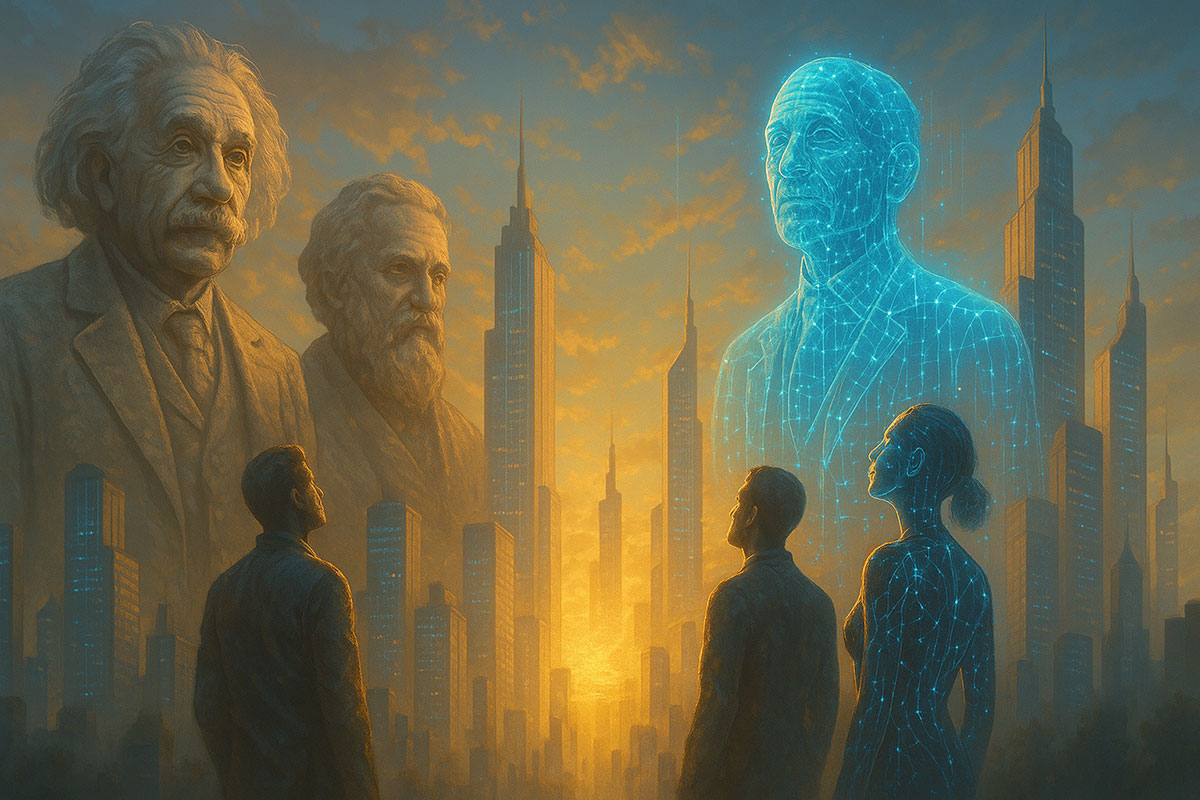
Topic 5: The Future of Genius — Will Tomorrow’s Einsteins Be Human, AI, or Hybrid?
Moderator: Riki Ishii
Participants: Demis Hassabis, Max Tegmark, Ray Kurzweil, Scott Barry Kaufman, Douglas Hofstadter
Opening (Riki Ishii)
Throughout history, societies have celebrated “genius” figures — Newton, Einstein, Mozart, Curie — individuals whose insights transformed the way we see the world. But today, as AI co-creates with us, we face a new question: will the Einsteins of the future be singular human beings, or hybrids of human and machine intelligence? Or might machines themselves earn the title of “genius”? Let’s explore this together.
First Question (Riki Ishii)
What do you think genius will mean in the age of AI? Will it still describe extraordinary individuals, or something fundamentally different?
Ray Kurzweil
I believe genius will increasingly describe hybrid intelligence. Humans will integrate AI tools into their thinking so seamlessly that breakthroughs will emerge from the synergy, not from isolated minds. Tomorrow’s Einsteins will be humans amplified by AI — their brains extended by algorithms, their creativity enhanced by endless simulations. Genius will become a shared achievement between human and machine.
Douglas Hofstadter
I hesitate to go that far. Genius, to me, has always been about a conscious mind wrestling with meaning. Einstein wasn’t just juggling equations; he was imagining himself riding on a beam of light. That imaginative leap, born of subjective experience, is not something a machine can replicate. If we call machines geniuses, we risk flattening the word into mere cleverness.
Demis Hassabis
As someone building AI systems, I think of genius less as an individual trait and more as an ecosystem outcome. DeepMind’s breakthroughs in protein folding, for instance, weren’t the work of a single mind but of teams augmented by AI. In the future, genius may be distributed — not one Einstein, but networks of human-AI collaborations producing discoveries at unprecedented speed.
Scott Barry Kaufman
I’d argue genius will remain deeply tied to personal meaning. It’s not just about solving problems, but about expressing something profound about human potential. A poet, a scientist, a child with a new way of seeing the world — these are still geniuses because they bring authenticity. AI can support, but it cannot replace that personal dimension.
Max Tegmark
I see it as a spectrum. Genius may expand to include different forms of intelligence — biological, artificial, and hybrid. But we must be careful. If only machines earn the title of genius, we risk diminishing human worth. The challenge is to celebrate genius wherever it arises, while ensuring it serves humanity’s survival and flourishing.
Second Question (Riki Ishii)
If AI becomes capable of making scientific or artistic breakthroughs beyond human comprehension, should we still call that “genius”?
Demis Hassabis
We are already approaching this in science. AlphaFold predicted protein structures that humans struggled with for decades. Was that genius? In one sense, yes — it solved an extraordinary problem. But it lacked intentionality. For now, I’d say we can acknowledge machine achievements as “genius-like,” while reserving the deeper label for beings that understand their work.
Douglas Hofstadter
That’s the crux. Genius isn’t just about output; it’s about inner life. If a machine produces symphonies that move us, is the genius in the machine, or in the human who interprets the notes as meaningful? Until machines possess consciousness — until they care — I can’t bring myself to call them geniuses.
Ray Kurzweil
But machines will achieve consciousness, or at least a functional equivalent. By 2045, I predict we’ll reach the singularity — the point where human and machine intelligence merge. At that stage, insisting on separating human from machine genius will be outdated. Genius will belong to the merged entity.
Scott Barry Kaufman
I worry about that framing. Genius as we’ve celebrated it is tied to humanity’s story — the struggles, the emotions, the growth. A machine that outputs brilliant equations may amaze us, but unless it connects to human meaning, we may admire it without reverence. Genius requires a story, not just a solution.
Max Tegmark
And stories are precisely what keep us grounded. Even if machines achieve feats beyond comprehension, we will still frame them through human narratives. We may say “the AI discovered this,” but we’ll look for human figures to interpret, contextualize, and embody the breakthrough. Genius may expand, but it will remain filtered through human perspective.
Third Question (Riki Ishii)
So, if the definition of genius is evolving, what values should guide us? How do we ensure that future “genius” — whether human, machine, or hybrid — benefits humanity?
Scott Barry Kaufman
We must anchor genius in growth, empathy, and meaning. Otherwise, we’ll have brilliance without wisdom. Future Einsteins should not only solve puzzles but also uplift human potential. That requires education systems that cultivate not just intelligence, but compassion and imagination.
Demis Hassabis
I agree. At DeepMind, we’ve tried to frame our mission as solving intelligence to advance science and benefit humanity. Genius should always be measured not just by what is achieved, but by what is contributed to society. AI must remain aligned with human values.
Ray Kurzweil
Alignment is key, but so is optimism. Every great leap in history — fire, electricity, the internet — was met with fear. Genius should be guided by a belief in human progress. If we embrace AI as a partner, it will amplify what is best in us.
Douglas Hofstadter
But progress must not blind us to risks. Genius without humility can become dangerous. If machines amplify not only our intelligence but also our arrogance, we may find ourselves in peril. The future of genius must include not just awe, but caution.
Max Tegmark
Exactly. We need governance, ethics, and global cooperation. If genius becomes a hybrid phenomenon, it must be stewarded collectively. Otherwise, we risk creating a world where genius serves the few at the expense of the many. True genius will be defined by whether it helps humanity survive and thrive in the long run.
Closing (Riki Ishii)
From our discussion, it seems the future of genius will not be a simple replacement of human with machine. It will be a complex evolution — hybrids of mind and algorithm, human stories and machine computations, brilliance and responsibility. Perhaps tomorrow’s Einsteins will not be lone figures but symphonies of collaboration, where human spark and machine scale create something greater than either could alone.
Final Thoughts by Yuval Noah Harari
Having heard these conversations, I am reminded that technology always forces us to reconsider the stories we tell about ourselves. The printing press gave rise to the idea of authorship. The telescope gave rise to the idea of universal laws. Artificial intelligence now presses us to rethink creativity, genius, and the role of the human mind in shaping the future.
Some patterns are clear. First, human cognition has limits — we cannot escape the 2,500-idea ceiling on our own. Second, AI has already demonstrated its ability to break this ceiling, offering a flood of possibilities. Third, originality is shifting from invention to discernment: in a world of infinite variations, the genius is the one who chooses wisely. Fourth, ownership and ethics cannot be ignored. Co-creation demands new frameworks of fairness, or else we risk reinforcing the inequalities of the past. Finally, silence and space remain indispensable. Even as AI accelerates thought, we must preserve the embodied practices that ground creativity in meaning.
But the most provocative insight is about the future of genius. For centuries, we worshiped the lone genius — the singular figure who, through brilliance and perseverance, transformed the world. Tomorrow’s geniuses may not look like that. They may be hybrids of human intuition and machine computation, networks rather than individuals, symphonies rather than solos.
Yet we must be careful. If genius becomes purely a function of machine power, we risk losing sight of the values that genius has always represented: imagination, courage, responsibility, and humanity itself. Einstein’s equations mattered not only because they were correct, but because they reshaped how humanity understood its place in the cosmos. Genius is not only about problem-solving; it is about meaning-making.
Therefore, the challenge of our age is not whether machines can be creative, but whether humans can remain wise. Not whether AI can generate genius-level outputs, but whether we can ensure those outputs serve life rather than destroy it. History has shown that intelligence without wisdom is dangerous. As we move forward, we must demand that genius — whether human, hybrid, or machine — be aligned with compassion, justice, and survival.
In the end, the story of genius is the story of humanity itself. Each generation redefines it, not only in laboratories and studios but in the ways we choose to live. AI may alter the landscape of creativity forever, but the question of what we call “genius” will remain a human decision. And in that decision lies our deepest power.
So let us leave these conversations not with fear, but with vigilance. Not with despair, but with curiosity. The future of genius is not predetermined. It is being written now — by us, with the help of the very machines that challenge us to rethink what it means to be human.
Short Bios:
Riki Ishii — Founder of IdeaPlant, researcher in creative engineering, and author of All the Techniques for Thinking with AI.
Topic 1 Experts
Daniel Kahneman — Nobel Prize–winning psychologist known for research on decision-making, cognitive biases, and behavioral economics.
Margaret Boden — Cognitive scientist and pioneer in computational creativity, author of The Creative Mind.
Gary Marcus — Cognitive scientist, author, and critic of deep learning, specializing in human and machine intelligence.
Howard Gardner — Developmental psychologist best known for the theory of multiple intelligences.
Fei-Fei Li — Stanford computer scientist and AI researcher, co-director of the Stanford Human-Centered AI Institute.
Topic 2 Experts
Steven Pinker — Cognitive psychologist, linguist, and author on language, thought, and human nature.
Scott Barry Kaufman — Psychologist and author focused on imagination, creativity, and human potential.
Douglas Hofstadter — Cognitive scientist and author of Gödel, Escher, Bach, exploring consciousness and creativity.
Brian Eno — Musician, producer, and theorist, pioneer in generative and ambient music.
Margaret Boden — Cognitive scientist and AI creativity researcher (also featured in Topic 1).
Topic 3 Experts
Shoshana Zuboff — Scholar and author of The Age of Surveillance Capitalism, specializing in digital power and data ethics.
Lawrence Lessig — Legal scholar and professor, authority on intellectual property, copyright, and technology law.
Timnit Gebru — Computer scientist and AI ethics researcher, co-founder of the Distributed AI Research Institute.
Demis Hassabis — CEO and co-founder of DeepMind, leading research in advanced AI systems.
Yuval Noah Harari — Historian and author of Sapiens, Homo Deus, and 21 Lessons for the 21st Century.
Topic 4 Experts
Annie Murphy Paul — Science writer and author of The Extended Mind, focusing on embodied cognition.
Jon Kabat-Zinn — Founder of Mindfulness-Based Stress Reduction, teacher of meditation and awareness practices.
Barbara Fredrickson — Psychologist specializing in positive emotions and human flourishing.
Steven Kotler — Author and researcher on flow states, peak performance, and creativity.
Howard Gardner — Developmental psychologist and theorist of multiple intelligences (also featured in Topic 1).
Topic 5 Experts
Demis Hassabis — CEO and co-founder of DeepMind (also featured in Topic 3).
Max Tegmark — MIT physicist and AI researcher, author of Life 3.0.
Ray Kurzweil — Inventor, futurist, and author, known for predictions about the technological singularity.
Scott Barry Kaufman — Psychologist and creativity researcher (also featured in Topic 2).
Douglas Hofstadter — Cognitive scientist and author of Gödel, Escher, Bach (also featured in Topic 2).
Leave a Reply