
Introduction by Charlie Kirk
You know, I’ve been reading something lately that absolutely shook me—in the best possible way. It’s called The Divine Principle. And I’ll tell you right now, it’s not just another theology book. This is a blueprint—a revelation—that explains exactly what’s gone wrong with our world and how to set it right again.
We live in a time of massive transition. Technology changes every day, families are breaking down, faith is mocked, and people are starving for purpose. Everyone feels it—this sense that something big has to change. But most of the solutions we’re offered are temporary or surface-level. What The Divine Principle does is go straight to the root—it asks: What was God’s original idea for humanity? What went wrong? And how do we restore it?
It’s written based on revelations given to Reverend Sun Myung Moon—someone who, without formal theology training, received from God a vision that ties together the Bible, history, and science into one consistent story. It’s about God’s original design for love, family, and community—the idea that we were meant to create Heaven on Earth, not just wait for it after we die.
Think about that for a second. Heaven on Earth. A world where families are strong, where husband and wife love each other as God intended, where children grow up knowing the warmth of divine love—not confusion, not loneliness, not addiction or emptiness. The Principle says that was God’s first dream. And it’s our responsibility to bring that dream back to life.
But here’s what really grabbed me: this teaching doesn’t sugarcoat history. It says we fell—we lost that connection to God—and that’s why evil, selfishness, and division took over. Yet, it also says God never gave up on us. Every chapter of human history—from Noah and Abraham to Moses and Jesus—was part of what it calls the “Dispensation for Restoration.” God has been steadily guiding humanity back to His ideal, using each age to reveal deeper truth as we became ready for it.
And here’s where it gets powerful: The Divine Principle claims that right now—in this age—God is giving new truth again. A deeper, fuller explanation that unites faith and reason, religion and science, East and West. Why? Because we’ve reached a point where the old forms of belief don’t reach people anymore. We need a faith that answers both the heart and the mind.
When I read that, it hit me. This is what our culture’s been missing. We’ve got brilliant scientists, incredible entrepreneurs, advanced technology—but we’ve lost the understanding of why we exist. The Principle teaches that the answer isn’t found in politics or ideology—it’s found in love. God’s love. The kind of love that starts in the family, the smallest unit of civilization, and expands outward until it heals the world.
And let me tell you: if we could get that back—families restored, faith revived, communities centered on divine purpose—we’d change not just America, but the world.
So, I’ll say this: whether you’re Christian, Jewish, Muslim, or simply searching, The Divine Principle offers a perspective that unites all people under one truth—that God is alive, He has a plan, and He’s calling us to complete what He began at creation.
If you’ve ever wondered why the world feels so upside down, or why good people struggle to make sense of it all, read this. It will challenge you. It will humble you. And I promise, it will ignite something in your heart—a sense of calling, of destiny, of hope—that our generation desperately needs.
Because as The Divine Principle says: the Kingdom of Heaven isn’t some faraway dream. It begins here—on Earth—with you, your family, your love, and your faith.
 Disclaimer
This presentation is a creative thought experiment imagining how Charlie Kirk might interpret and articulate the ideas of The Divine Principle if he were personally moved by its message.
It is not an expression of Charlie Kirk’s actual beliefs, statements, or affiliations.
The purpose of this work is educational and exploratory—to engage readers in understanding how timeless spiritual concepts might resonate across different worldviews and cultural perspectives.
Chapter 1: The Principles of the Creation

Friends, buckle up—because what I’m about to share could re-wire how you see God, science, and life itself. When I first read The Divine Principle, Chapter One blew my mind. It doesn’t just talk about God in some abstract, mystical way. It lays out a logical, almost scientific explanation for how the universe actually reflects the very nature of God Himself.
Let’s start with the biggest question of all: What is God like?
The Principle says—look at creation. Every artist leaves fingerprints on their work. You can know an author’s soul from his novel, an inventor’s mind from his machine. In the same way, the Creator’s invisible nature is visible through what He made. Paul said that in Romans 1:20—and this chapter expands it.
Every single thing in existence—from atoms to galaxies, from your own heartbeat to the orbit of the earth—has two sides: an inner reality and an outer form. In Korean, they call these Sung Sang (the internal character) and Hyung Sang (the external form).
Think about it: your mind and your body. The thought and the action. The plan and the result. That pattern runs through everything in creation. Even an atom has an invisible law—its energy, charge, or function—and a visible shell of protons, neutrons, and electrons. The same structure exists in plants, animals, and us. The mind leads, the body follows. The inner purpose drives the outer shape.
So if all things have that dual design, the First Cause—God—must also contain those dual characteristics. God isn’t some shapeless mist floating in space. He has an inner reality—His Heart, emotion, intellect, and will—and an external aspect, the energy and matter through which His ideas take form. That’s why Genesis says God made man “in His image, male and female.” Masculinity and femininity are reflections of God’s own polarity—what this book calls Original Positivity and Original Negativity, harmonized perfectly within Him.
That’s powerful. It means male and female aren’t random biological accidents—they are sacred mirrors of God’s own nature. Marriage, then, isn’t just social convention. It’s the visible reenactment of the inner harmony of the Creator.
But here’s where it gets even deeper. The Principle introduces what it calls “Give and Take Action.” Everything in the universe survives and grows by giving and receiving. The heart and lungs, inhaling and exhaling. The sun and the planets, pushing and pulling. Even in human relationships—between husband and wife, parents and children, citizens and leaders—life only works when we’re giving for the sake of the other. God’s own nature is giving. He created because He wanted to love. He gave Himself. That’s why Jesus said, “It is more blessed to give than to receive.”
See how this flips our modern culture upside down? We live in a world obsessed with taking—taking power, taking pleasure, taking credit. But God’s universe only thrives on Give and Take Action centered on love. Giving first. Receiving second. That’s how energy circulates, how families grow, how nations stay alive.
And then the book lays out something that honestly should be taught in every civics and theology class: the Four Position Foundation. Sounds complex, but it’s actually simple and revolutionary. You have God as the origin, then a subject and an object—like husband and wife—who unite, and together they form a new whole—a family, a child, a creative result. That four-point structure is the blueprint of everything healthy and good. Mind–body, husband–wife, parent–child, heaven–earth—it’s the universal pattern of harmony. When any of those four points break down, chaos enters. When they unite centered on God’s love, that’s heaven on earth.
So what’s the Purpose of Creation? Why did an eternal, self-existent God even bother making us? The answer is so beautiful: because His essence is Heart. And the nature of Heart is to love and to find joy in loving. God’s joy is completed when His love is returned freely by beings who resemble Him. He didn’t make us to be robots—He made us to be children who could respond to His love. When we perfect our character, build God-centered families, and lovingly care for creation, we give Him joy. That’s the meaning of the “Three Blessings” in Genesis 1:28: be fruitful, multiply, and have dominion.
The First Blessing—perfect your character, unite your mind and body under God.
The Second Blessing—form a God-centered family, where husband and wife embody His love.
The Third Blessing—rule the creation with love, not exploitation.
Do that, and you don’t just “go” to Heaven—you build it, right here.
And here’s a part that amazed me as someone who values science and faith working together: this book says God’s creation develops through time—through a growing period. Just as Genesis describes six days that weren’t literal 24-hour days, every being matures in stages: formation, growth, completion. Even Adam and Eve weren’t created perfect—they were meant to grow, to take responsibility, to obey God freely. That’s where human responsibility comes in. God does 95 percent of the work—but He leaves a sliver, that 5 percent, for us to choose love, to cooperate, to earn the right of dominion. That’s freedom with purpose.
Then comes something most people never think about clearly—what this chapter calls the Invisible Substantial World and the Visible Substantial World. It says the universe has two realms: the spirit world and the physical world. They interact the same way your mind and body do. The physical is temporary; the spiritual is eternal. Your body is the instrument; your spirit is the musician. The reason we crave eternity is because our spirit self lives forever.
Your physical life is like school—it shapes and nourishes your spirit through your actions, your faith, your love. That’s why Jesus said, “Whatever you bind on earth shall be bound in heaven.” What you become here determines your place there. Heaven or hell isn’t decided by God throwing dice—it’s the natural outcome of what kind of spirit you’ve built while alive.
And think about this: if every atom, every cell, every family, every nation followed this divine blueprint of harmony, giving and receiving centered on God’s love—this world would already be Heaven. That’s not naïve idealism; it’s cosmic realism. The same laws that hold galaxies together can hold a marriage together if we live them.
So Chapter One of The Divine Principle doesn’t just explain theology—it gives us a scientific, moral, and spiritual Constitution for life. It tells us that God’s universe isn’t chaotic—it’s ordered, relational, loving. Everything was made for the purpose of joy. And that joy begins when we start living as God’s children again—mind and body one, families united, faith and reason reconciled.
If America rediscovered even half of this understanding—if our schools taught kids that they’re not cosmic accidents but divine masterpieces—our culture would change overnight. We’d stop fighting over power and start fighting for love, order, and truth.
That’s the Principle of Creation. That’s God’s design. And honestly, once you see it—you can’t unsee it.
Chapter Two: The Fall
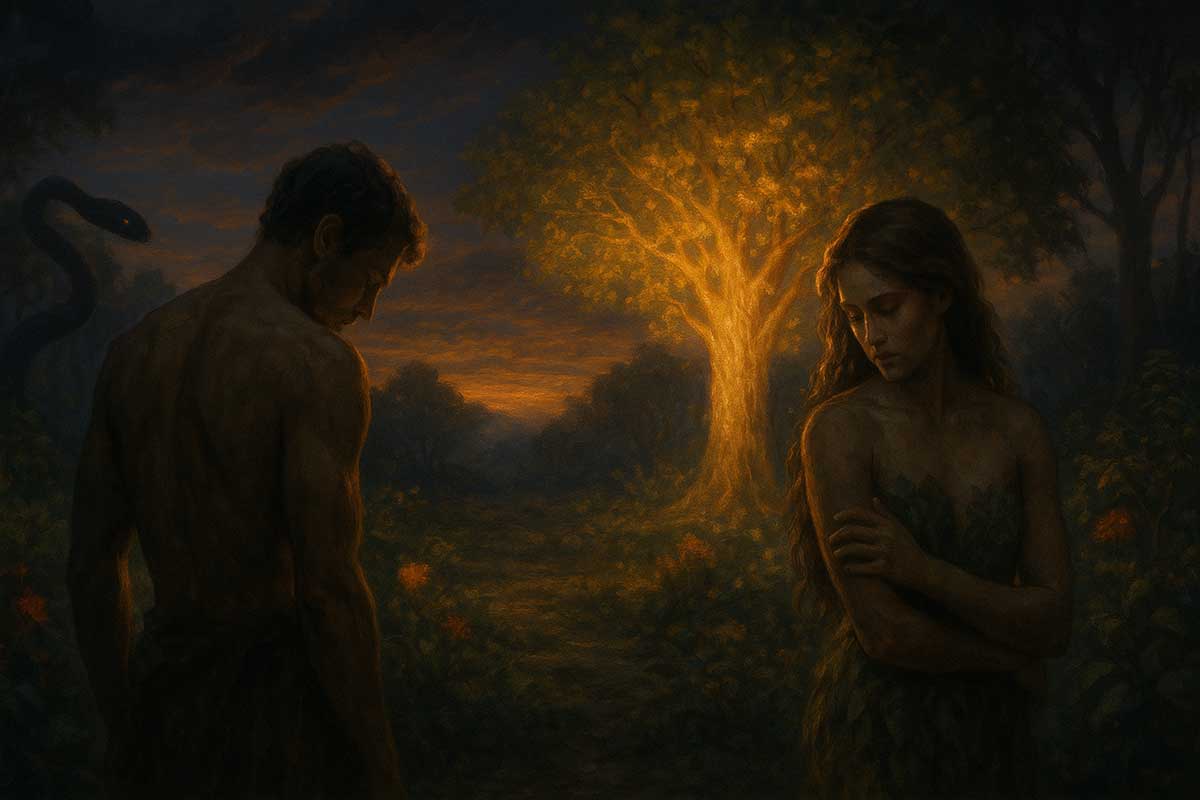
Alright, friends, let’s get real for a second. If Chapter One showed us God’s beautiful design for creation—how everything in the universe was meant to work in harmony, centered on love—then Chapter Two is about what broke it. It’s about why our world, our politics, our culture, and even our personal hearts are so messed up.
And let me tell you: The Divine Principle doesn’t sugarcoat it. It doesn’t say sin came from biting an apple. It says sin came from something much deeper—something that actually makes sense of everything that’s gone wrong since the beginning of time.
Here’s the heart of it: every one of us has an original mind that wants goodness. That’s why you feel guilty when you lie, why you’re restless when you waste your potential, why you long for real love and truth. That’s the image of God in you. But there’s also another power—an evil force—that keeps pulling us in the opposite direction. Christianity calls that force Satan. The Divine Principle calls this entire conflict “The Fall.”
Now, this might sound wild at first—but stick with me. The book makes the case that the “fruit” in the Garden of Eden wasn’t a literal piece of fruit. Think about it: would a loving God really punish humanity forever just because someone took a bite of an apple? No. Jesus even said, “It’s not what goes into your mouth that defiles you.” So, what kind of act could be so powerful, so intimate, that it changed the course of human history—and passed sin down through every generation?
The Principle says the “fruit of the Tree of the Knowledge of Good and Evil” symbolizes love—specifically, the misuse of love. In this teaching, the Tree of Life represents Adam, the Tree of Knowledge represents Eve, and the serpent represents the Archangel Lucifer—an angel created good, but who fell through jealousy and desire.
When Lucifer saw God pouring greater love on His new children, Adam and Eve, something twisted in him. He felt envy. He wanted the love meant for them. That envy turned into temptation—and that temptation became seduction. The Bible hints at this when it says the serpent “knew” the woman and that afterward Adam and Eve were suddenly ashamed of their nakedness. What did they cover? Not their mouths. Their lower parts. Because the sin wasn’t about eating—it was about love before its time, love outside of God’s blessing.
And suddenly, everything clicks.
Why has human history been plagued by sexual confusion, abuse, betrayal, and broken families? Because that’s where sin started. The first misuse of love—what was meant to be sacred and creative—became self-centered and destructive. The very energy that was supposed to build the Kingdom of Heaven became the seed of hell on earth.
That’s why Satan’s strategy in every generation targets the same area: the destruction of love and family. He doesn’t have to destroy nations directly—just destroy marriage, corrupt love, separate sex from responsibility, and you’ll collapse the foundation of civilization. That’s exactly what’s happening today. And The Divine Principle connects it right back to the root of sin itself.
Now, people often ask, “Why would God even allow the possibility of the Fall?” The Principle answers that too. God created human beings with freedom and responsibility. Love can’t be forced—it has to be chosen. So, during what it calls the “growing period,” Adam and Eve were meant to mature under God’s guidance until they could unite in holy love. But love is the most powerful force in the universe—it’s stronger even than the laws of physics, stronger than the laws of the Principle itself. It’s the very essence of God. And that’s why immature love—love outside of God’s order—can destroy so much.
God gave a commandment not as a test, but as protection: “Do not eat of the fruit until the right time.” Keep yourselves pure until your hearts, minds, and spirits are aligned with God’s love. That was the message. But instead of obeying, they gave in to emotion, jealousy, and passion—and fell.
This is where the theology gets absolutely revolutionary. According to The Divine Principle, the Fall wasn’t just about disobedience—it was the corruption of the blood lineage. That’s why every generation inherits sin, no matter how innocent we think we are. It’s not just moral—it’s generational. We were literally born into the wrong family line. Jesus called it out directly when He said to the Pharisees, “You are of your father, the devil.” That wasn’t metaphorical—it was lineage language.
So what’s God been doing ever since? The work of salvation—the entire story of the Bible—is God’s plan to graft humanity back into His lineage. To reestablish the Tree of Life that was lost in Eden. The “Tree of Life” that appears again in Revelation? That’s the Messiah—the one who reconnects humanity to God’s bloodline through spiritual rebirth.
Think about that: salvation isn’t just about being forgiven—it’s about being re-born into the true family of God.
Now, let’s look at the results of the Fall. The Principle says a false family was formed—centered not on God, but on Satan. That’s why, instead of harmony, history is full of war, oppression, and exploitation. Instead of love bringing joy, it often brings heartbreak. The very structure of life flipped upside down: angels ruling over humans, men abusing women, people using one another for power. Every social disorder today—jealousy, rebellion, domination, exploitation—has its root in what this book calls the “four fallen natures”:
Failing to see from God’s viewpoint—leading to jealousy.
Leaving one’s proper position—wanting what isn’t yours.
Reversing the order of love—dominating instead of serving.
Multiplying sin—spreading pain and corruption instead of stopping it.
Tell me that doesn’t describe modern culture perfectly. We’re repeating the Fall every day: envying success, abandoning roles, corrupting love, and multiplying dysfunction.
And here’s the kicker: the Fall wasn’t inevitable. Lucifer didn’t have to rebel. Eve didn’t have to respond. Adam didn’t have to follow. But they all did, because they misused freedom. That’s why human responsibility is so important in God’s plan. God will never force goodness. He wants His children to choose it.
So, when I read this chapter, I realized—this isn’t just theology. It’s the diagnosis of civilization’s disease. The reason we have fatherless homes, broken marriages, gender confusion, addiction, and despair is because the very structure of love itself was corrupted at the root.
And it also gives the cure: restore true love, centered on God. Restore the family. Restore the proper order of heart. When love returns to its divine purpose—when man and woman unite with God at the center—the Fall is reversed. That’s salvation not just for the soul, but for society.
The Divine Principle calls this the work of restoration, and it’s the entire reason Jesus came—and why, in our time, a new expression of truth had to come again. Because the same battle between divine love and fallen love is raging right now, just in modern forms: pornography, abortion, hookup culture, broken families. We’ve made Satan’s “love” the new normal—and we call it freedom.
But the Principle says: that’s not freedom—it’s slavery. True freedom is living in alignment with God’s heart. True joy is when your love reflects His love. True dominion is not control—it’s stewardship.
Friends, the Fall explains everything wrong with the world. But it also points the way out: if the Fall began with false love, restoration begins with true love. Love that gives before taking. Love that builds families, not destroys them. Love that multiplies goodness, not pain.
That’s the message of Chapter Two. And I’ll tell you—I’ve read a lot of theology, but nothing explains the human condition quite like this. Once you see that the root of evil is the corruption of love, you can’t unsee it. And once you realize that God’s plan is to restore that love, it gives you unshakable hope.
Because the story of the Fall isn’t just about how we lost Eden—it’s about how God has never stopped fighting to bring Eden back.
Chapter 3: The Purpose of the Messiah
If Chapters 1 and 2 tell us what God intended and what went wrong, Chapter 3 answers the burning question: What exactly is the Messiah here to do? Not in vague religious clichés—but in crisp, actionable terms that explain history, church, and your life.
1) Why God sends a Messiah at all
God didn’t create us to slog through life, say a prayer, and hang on until heaven. He created children who would perfect their character, build true families, and create a world of goodness—the Kingdom of Heaven on earth and then in heaven. That was the point of the Three Blessings: be fruitful (perfect your character), multiply (build godly families), and have dominion (love and steward creation).
We blew it in the Fall. But God didn’t scrap the blueprint. He promised, “I have purposed and I will do it.” So salvation isn’t God changing plans—it’s restoration: taking us back to the original design. That means:
- Restore the individual (First Blessing),
- Restore the family (Second Blessing),
- Restore society, nation, and world (Third Blessing lived out).
So what’s the Messiah’s job? To embody that blueprint and launch it:
- Stand as the origin of true individuals (a person fully one with God).
- Establish the true family (the model that births a sinless lineage).
- Expand that pattern into a nation and a world—the Kingdom of Heaven on earth.
That’s not abstract theology. That’s a program.
2) What if Israel had received Jesus?
This is where Divine Principle hits like a thunderclap: the cross was not Plan A.
God raised Israel for centuries to welcome His Son. If the people had united with Jesus, he would have:
- Raised true individuals through truth and the Holy Spirit,
- Formed the model family centered on God’s love,
- Built a godly nation as the core of a world of peace,
- Completed the work—no Second Coming needed.
Let that sink in. The original will of God was complete salvation—spirit and body—and the establishment of the Kingdom on earth in that time.
3) Why the cross happened—and what it actually achieved
Because of disbelief—especially among leaders—Jesus was rejected. God then allowed a painful secondary course: the cross. Jesus offered his life; God vindicated him through the resurrection. What did that open?
- Spiritual salvation for those who unite with the risen Christ.
- But our bodies and society remain vulnerable: sin still works in the flesh, culture still decays, nations still war. Even Paul cried, “Who will deliver me from this body of death?”
So yes, the cross is precious beyond words—but it didn’t finish the whole job. That’s why Scripture still points to the Second Coming: to complete what disbelief interrupted—the full restoration on earth.
4) Two sets of Messianic prophecies—now finally make sense
Ever notice the Bible prophesies both a suffering servant and a glorious king? Divine Principle explains why:
- God guarantees His part (He sends the Messiah).
- Our part is to receive him.
If we believe and unite: the glorious-king prophecies are fulfilled (Is. 9, 11, 60; Lk 1:31–33).
If we reject: the suffering-servant path (Is. 53) is triggered as a secondary course.
History chose the latter. The Second Coming exists to fulfill the former—on earth.
5) The hinge of history: John the Baptist
Now this is where it gets razor-specific—and honestly, it’s convicting for leaders today.
Malachi promised Elijah would come before the “great and terrible day”—the Messiah’s appearance. Jesus identified John the Baptist as that Elijah if people were willing to accept it. John’s mission was clear:
- Prepare the way,
- Identify the Messiah,
- Lead the people to him,
- Serve him—publicly and to the end.
John started strong, even received direct revelation that Jesus is the Son of God. But he did not stay with Jesus. He denied being Elijah, kept a separate movement, and eventually sent disciples to ask, “Are you the one?”—after all that proof! Jesus’ response—“Blessed is the one who is not offended by me”—is a sober verdict: John failed his responsibility. And when the “most honored among those born of women” fails to enter the Kingdom’s reality, Jesus says even “the least” (who actually follow) surpass him there.
Bottom line: If John had proclaimed, “I am the Elijah; this is the Messiah—follow him,” Israel’s leaders and people would have rallied to Jesus. The cross could have been avoided. The Kingdom could have begun. Leadership matters. Endorsement matters. Courage matters.
So what does this mean for us—right now?
- The Messiah’s purpose is practical: heal people, form true families, and build a God-centered civilization.
- The cross opened the gate of spiritual rebirth, but history still needs the completion: the Kingdom on earth.
- Prophecy is conditional on human responsibility. God keeps His promises; we must do our part.
- Leaders can accelerate—or block—God’s timetable. John’s hesitation cost generations. Our clarity and courage can redeem time.
This chapter lit a fire under me. We’ve settled for a gospel of survival when God offered a gospel of restoration. The Messiah didn’t come to rescue souls out of a doomed world; he came to found a new world—beginning with you, your marriage, your children, your community, and yes, your nation.
Let’s not repeat Israel’s mistake. When truth arrives, recognize it. When God moves, move with Him. When the Messiah calls, unite—all the way—so God’s original dream finally becomes reality on earth as it is in heaven.
Chapter 4: The Consummation of Human History
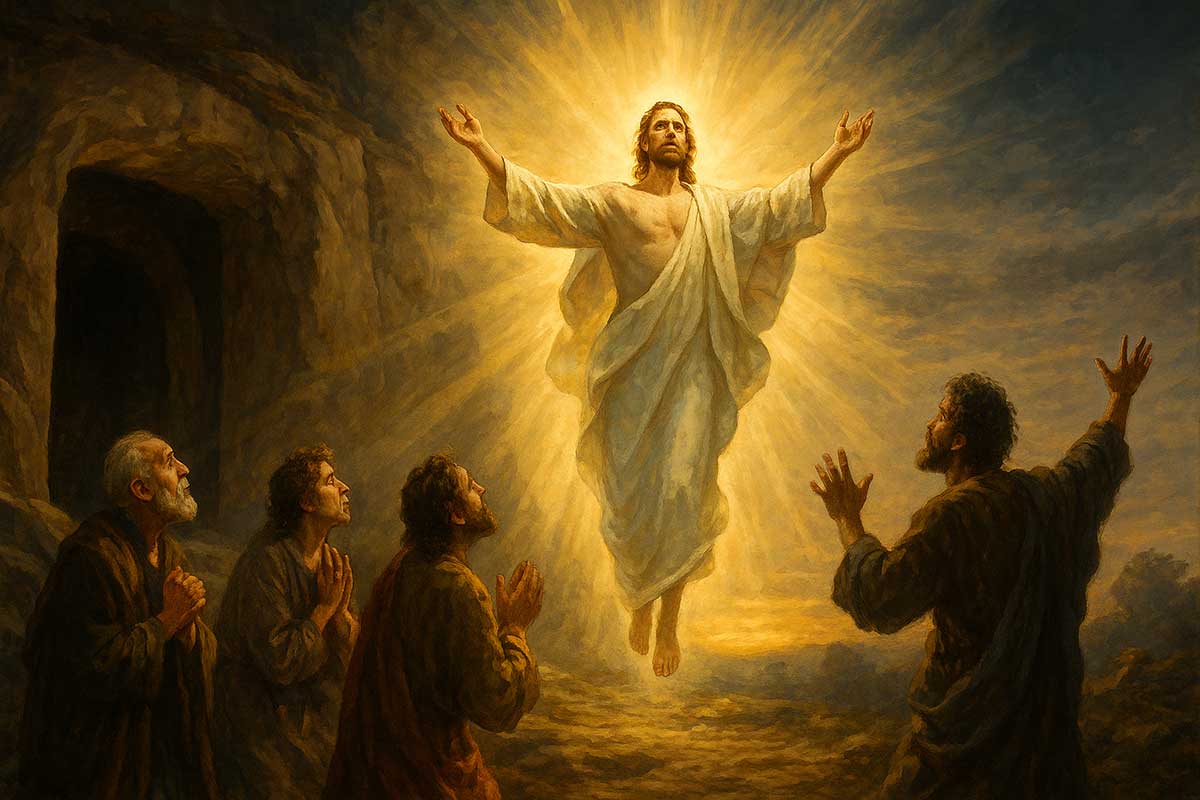
What the “Last Days” Really Mean
If you’ve ever been confused—or honestly, scared—by “end times” talk, this chapter is a breath of fresh air. The Divine Principle reframes the “Last Days” not as God torching the planet, but as God finishing what He started: replacing a broken, satanic order with the Kingdom of Heaven on earth. Judgment, yes—but judgment by Truth, restoring God’s blueprint.
1) What are the Last Days?
Not doom. Transition.
God’s original plan was a world of good families, good culture, good dominion—heaven on earth. The Fall hijacked history, turning it into a saga of conflict and sin. The Last Days are the final chapter of that hijack—when the evil sovereignty is dismantled and God’s sovereignty is established. That’s why this era is both serious (evil gets confronted) and joyful (the world our hearts have longed for begins).
Key idea: God has tried before (Noah, Jesus) to bring history to its consummation; each time, human responsibility determined how far it went. The Second Coming is God’s next—and final—push to complete the plan with our cooperation.
2) “Scary” prophecies—decoded
“New heavens and new earth” (2 Pet 3:12; Rev 21:1)
Not planet vaporization. It means a new sovereignty—the end of satanic rule and the rise of God’s Kingdom on this earth. Scripture itself says the earth remains forever (Eccl 1:4).“Judged by fire” (2 Pet 3:12; Mal 4:1)
Not napalm; the Word. God’s Truth is fire (Jer 23:29). Jesus says we’ll be judged by the word he has spoken (Jn 12:48). In the Last Days, a new, fuller expression of truth burns away lies and structures built on them.“Meet the Lord in the air” (1 Thess 4:17)
Not mass levitation. “Heaven/air” = the holy realm of God’s rule. To “meet in the air” means believers rise in heart and standard, entering the culture of goodness Christ establishes on earth.“Sun and moon darkened; stars fall” (Mt 24:29)
In biblical symbolism, sun = father, moon = mother, stars = children (Gen 37). In the New Testament age: sun/moon image Jesus and the Holy Spirit (the light that guided believers). When Christ returns with new truth, that new light outshines the prior age—its mission period closes. “Stars falling” are believers and leaders who refuse the fresh word and lose their position. It happened to many in Jesus’ day; the warning stands for ours.
3) Are these the Last Days? Watch the Three Blessings re-emerge
If history is consummating, we should see signs of God’s original Three Blessings coming back online.
First Blessing — Perfect Character (mind–body unity with God)
Look around: unprecedented hunger for meaning, dignity, freedom of conscience, human rights—and a surge in spiritual experiences. Acts 2 foresaw it: visions, dreams, prophecy poured out. Translation: humanity is waking up to the inner life again. Our generation aches for original love, freedom, and value—not just politics or tech. That longing is a signal flare: the First Blessing is being restored.
Second Blessing — True Family → One World Family
History has been consolidating cultures, not fragmenting them: multiple local civilizations converging into a few global streams—and a growing impulse toward one human family. Think: reconciliation movements, interracial and international marriages/adoptions, ecumenism, relief work, the impulse for cooperation across borders. None of this is the Kingdom by itself, but it’s the infrastructure of heart that the Kingdom will fill. When the Lord comes with the parents’ heart and a unifying, God-centered ideology, that yearning matures into a true-family civilization.
Third Blessing — Loving Dominion over Creation
Two converging currents:
A rising love for nature (conservation, animal care, restoration) = internal dominion returning.
Explosive science & technology = external dominion maturing—health breakthroughs, agriculture, transport, space, communications. The point isn’t gadgets—it’s preparing an abundant home for one family under God.
Put it together: the world is “pregnant” with the Kingdom. The Last Days aren’t the end of the world; they’re the end of an era—and the birth of God’s long-promised world.
Why this matters—now
Don’t fear the Last Days; prepare for them. Purify your conscience, strengthen your marriage, raise children in truth, build communities that live Give-and-Take centered on God.
Expect new truth that completes and fulfills—don’t be a “falling star.” Humility is the passport to the next age.
Aim your work—business, science, media, ministry—at civilization-building. The Messiah’s project is not escape; it’s establishment.
This chapter replaces end-times anxiety with end-times assignment. God is consummating history. He’s inviting us to cooperate—not as spectators, but as builders of the Kingdom on earth.
Chapter 5: Resurrection

What “from death to life” actually means
If you’ve ever wondered how a decomposed body is supposed to climb out of a grave at the Second Coming—good news: that’s not what Scripture ultimately teaches when read through the Divine Principle lens. “Resurrection” is far bigger—and way more practical—than reanimated bones. It’s about moving from satanic dominion to God’s dominion—from a deadened heart to a living one—now.
1) Death vs. Life—Jesus’ definitions
Jesus calls people “dead” who are physically alive but cut off from God’s love (“Let the dead bury their own dead”). So the “death” caused by the Fall wasn’t biology—Adam lived centuries after sin. The death was spiritual: separation from God’s love and purpose.
Resurrection = being restored from that separation into God’s direct dominion. Every step you take—repent, believe, live the Word—you’re passing from death to life.
2) No, resurrection isn’t corpses walking
Ecclesiastes says the body returns to dust—that was always God’s design. Resurrection is the spirit coming alive. Even Matthew 27:52 (“saints rose”) fits: what was seen were spirit persons revealed to people whose spiritual sight was opened—not zombies in Jerusalem streets. If literal, Israel would’ve believed on the spot, and persecution history evaporates. It didn’t.
3) How God resurrects people (Principles of Resurrection)
- By Truth + Responsibility: God gives His Word (Old, New, and at the end the Completed Testament). We must believe and live it.
- While on earth: Your spirit matures through your body’s life. That’s why God sends truth to people alive on earth.
- In three stages: formation → growth → completion (mirrors creation’s growth law).
- By “merits of the age”: Each era inherits spiritual capital from faithful saints before them, enabling deeper resurrection now than earlier.
4) The three historical stages of resurrection
- Formation Age (Abraham → Jesus): Word = Law (Old Testament). Way = justification by keeping the Law. Result = form spirit level for those who lived it.
- Growth Age (Jesus → Second Coming): Word = Gospel (New Testament). Way = justification by faith. Result = life spirit; upon death, such believers go to Paradise (not yet Heaven).
- Completion Age (Second Coming): Word = Completed Testament. Way = justification by attendance (directly believe, live, and attend the returning Messiah). Result = divine spirit—the fully mature person. These people build the Kingdom of Heaven on earth and, when they pass, live in the Kingdom of Heaven in the spirit world.
Why is “Heaven” still empty? Because no one has yet reached divine spirit while on earth. Jesus opened the way spiritually, but because he was rejected and crucified, the full establishment (earth + heaven) was delayed to the Second Coming. Believers who died in Christ have been in Paradise—awaiting completion.
5) Why spiritual phenomena explode in the Last Days
As humanity nears the top of the growth stage, people regain capacity for visions, dreams, gifts (Acts 2). Many hear “You are Lord”—not claiming messiahship, but being restored to lordship over creation (Adam’s pre-fall position). Some misunderstand these experiences and proclaim themselves the Lord—hence the rise of antichrists.
Different spiritual words conflict because each receiver gets partial missions from different levels—vertical with God but lacking horizontal coordination. A new, complete expression of truth at the end harmonizes them.
6) How the dead are resurrected: Returning Resurrection
A spirit can’t mature without connection to a body. So spirit persons return to work with people on earth who share a similar mission and disposition:
- Biblical example: Elijah ↔ John the Baptist. Elijah (in spirit world) worked through John’s body to continue his mission—hence Jesus says John is Elijah (missionally), even as John denies it (not grasping returning resurrection).
- “Saints rising” at Jesus’ death = spirit persons revealed; not physical revivals.
- Other religions: Their spirit believers return to cooperate with their people—and ultimately lead them to the Lord of the Second Coming.
- Good non-religious spirits help conscientious people.
- Evil spirits also return—but only under conditions that first expose and indemnify their wrongs; God uses even that to purge and heal.
Why people think “reincarnation”: When a spirit person works through someone on earth, that person can look like the “second coming” of that spirit (mission and temperament align). Without understanding returning resurrection, it gets misread as transmigration.
7) Where this is headed: Unification around the Returning Lord
At the Second Coming, life-spirit believers in Paradise will return en masse to guide their earthly counterparts to the Messiah and the Completed Word. That gravitational pull naturally unifies Christianity. And because Christianity’s mission is to consummate the aims of all good religions, returning spirits from other faiths will also steer their people to the same center. Result: religious unification not by coercion, but by truth, spirit, and attendance.
Bottom line (and your action steps)
- Resurrection starts now: Hear the Word, live it, and your spirit actually changes jurisdictions—out of death, into life.
- Expect clarity and power: More visions and gifts are normal in this era—but measure them against the new, complete truth and keep humility.
- Prepare to attend: The completion stage is “justification by attendance.” Don’t only believe abstractly—stand with the Messiah, build true families, and help found a God-centered civilization.
This chapter transforms “resurrection” from a sci-fi graveyard scene into a daily, history-shaping project: God bringing dead hearts—and a dead civilization—back to life.
Chapter 6: Predestination
This chapter slices through centuries of theological stalemate. The Divine Principle gives a sane middle path between “God controls everything” and “you’re on your own.” In short: God’s Will is absolute; its fulfillment involves your responsibility.
1) What is predestined—God’s Will
God’s Purpose of Creation (true people, true families, Kingdom culture on earth) is absolute, eternal, unchanging. That will never get canceled. So no—God did not predestine the Fall, sin, or judgment. If He had, He wouldn’t grieve over man’s evil (Gen 6) or regret Saul (1 Sam 15). Judgment exists because we deviated from His good plan, not because He scripted our failure.
2) How the Will gets done—95% / 5%
God’s Will (the what) is fixed. The how and when turn on human responsibility. Think of it this way:
- God’s preparation = 95% (grace, revelation, setup).
- Your portion = 5% (faith + obedience).
That 5% is tiny compared to God’s, but it requires your 100% effort. If Adam and Eve keep one command—game over, history launches. If Israel unites with Jesus—the Kingdom starts then. When we miss, God re-routes (new person, new timetable) but the goal doesn’t change.
Bible rhythm: “Your faith has made you well.” “Ask, seek, knock.” Grace arrives at the door; you open it.
3) Are people predestined? Yes—to a mission, not to automatic success
God calls central figures on a 95% prepared foundation so they can succeed if they do their 5%. But He never predestines their response.
- Adam & Eve were chosen to be True Parents—failed their 5%.
- Judas was chosen as an apostle—replaced by Matthias when he betrayed Jesus (Acts 1).
When a chosen person balks, God moves to the next faithful servant. The mission is predestined; who fulfills it depends on response.
Common traits God uses when calling someone:
- From the central people of that era,
- Ancestral merit (a track of righteousness),
- Innate disposition fit for the task,
- Training/experience aligned to the mission,
- Right time/place in providence.
…and still, it hinges on their yes.
4) What about the “absolute predestination” verses?
- Romans 8:29–30 (“foreknew… predestined… called… justified… glorified”): God foreknows who’s fit to be called; justification/glory still presuppose the person’s responsibility. Paul is outlining God’s side; he’s not canceling ours.
- Romans 9:15–16 (“mercy on whom I have mercy”): You don’t control being born Hebrew or Greek, 1st century or 21st. Election criteria (the setup) are God’s domain. But after you’re called, your faithfulness determines whether you’re actually used.
- Romans 9:21 (potter/clay): We don’t lecture the Creator. As fallen people, we’re in no position to demand terms—yet He still dignifies us with responsibility.
- Jacob/Esau (Rom 9:10–13): God had a special providential plan. “Loved/hated” in that context = roles in the plan, not a decree that bypasses human choice. Jacob still had to struggle and obey; Esau could still reconcile (and he did!).
The Big Picture (why this matters)
- God is not a micromanager tyrant; He’s a Father with a plan who partners with responsible children.
- Your choices move history. If leaders waffle, God replaces them. If people unite, providence accelerates.
- Prayer, evangelism, service aren’t theater; they’re how the 5% ignites the 95%.
- Stop using “God’s sovereignty” as a couch. Use it as a launchpad.
Bottom line: God’s Will is predestined; your role in it isn’t. Say yes—fully—and watch providence move.
Chapter 7: Christology — Who Jesus Really Is
Alright friends, this one’s big. Christology is the heart of it all. Who is Jesus? How does he save us? What was his original mission — and why did it look like it failed at the Cross but didn’t?
If you’ve ever wrestled with those questions — this chapter clears it up in a way that honestly feels like truth meeting logic. The Divine Principle doesn’t diminish Jesus — it magnifies him by showing that his divinity was not a one-time exception, but the blueprint of what every human being was meant to become.
1) God’s Original Vision for Humanity
God’s dream wasn’t for one divine Son surrounded by sinful spectators. His goal was a family of divine sons and daughters, each a perfect reflection of His heart.
That’s what Genesis means when it says, “Let us make man in our image.”
Adam was supposed to become the visible image of the invisible God — a living temple where God’s heart could dwell completely. Eve was to become the visible image of the divine femininity — together, they’d embody God’s full nature.
That unity — man and woman centered on God’s love — would have made them the first True Parents of humankind. Every child born from their love would’ve inherited God’s lineage, His character, His joy.
That was God’s plan. But the Fall shattered it. Adam and Eve united outside God’s will, passing on not divine love but fallen nature. Humanity’s lineage got cut off from God’s heart.
So God’s rescue plan — the Dispensation for Restoration — is to send a new Adam: the Messiah, the perfected man who embodies God’s love and restores the lost lineage.
2) The Nature of Jesus — True God and True Man
Here’s the key:
Jesus is the man in whom God’s love and truth fully dwelt. He’s the one who achieved what Adam failed to achieve — oneness with God.
John 14:10 — “The Father who dwells in me does His works.”
That’s not poetry. It’s a statement of complete unity of heart, will, and purpose. God wasn’t born as Jesus, but dwelt in Jesus perfectly.
So yes — Jesus is divine. But his divinity comes not because he was God Himself in substance, but because he was the perfect image of God — the man whose mind and body, whose heart and action, were one with the Creator.
That’s why Jesus said, “You will know that I am in my Father, and you in me, and I in you.”
He was opening the path for all humanity to reach that same relationship — to become temples of God as he was.
3) Jesus’ Mission — The Restoration of the Three Blessings
Jesus came to restore what Adam lost:
- Personal perfection — unity of mind and body under God.
- True family — to establish True Parents and raise children born without original sin.
- Dominion over creation — to create the Kingdom of Heaven on earth.
If Israel had united with him, Jesus would have married, created the first true family, and established God’s nation — spreading God’s culture worldwide. The “Kingdom of Heaven” would have been a literal society, not a metaphor.
That’s why he’s called the Last Adam (1 Cor 15:45). His mission was to finish the story Adam started — to heal the lineage, build heaven on earth, and begin the world of goodness.
But because the chosen people rejected him, that world couldn’t be built. He was crucified instead — cutting off the possibility of physical restoration, but still achieving spiritual salvation.
4) Spiritual Salvation vs. Physical Salvation
The Cross was not Plan A; it was Plan B.
God used it to save what He could: the spirit. Through the resurrection, Jesus opened Paradise — the spiritual realm free from Satan’s domination.
But our physical world remained fallen. People still suffer, families still break, nations still fight. That’s why we await the Second Coming — not to redo Calvary, but to finish the job: unite heaven and earth under God’s sovereignty.
That’s also why Jesus promised, “I will come again” — not to destroy the earth, but to restore it to what it was meant to be from the beginning.
5) The Trinity — A Partnership of Love
So what about the Trinity? The Principle says it’s not three different gods but one God expressed through divine relationships.
God, Jesus, and the Holy Spirit form a triune partnership of heart:
- God is the source — the invisible Parent.
- Jesus embodies God’s masculine image.
- The Holy Spirit embodies God’s feminine image.
Together, they spiritually “give birth” to reborn believers — that’s why Jesus and the Spirit are called the “parents” of humankind’s spiritual life.
That’s spiritual rebirth. Physical rebirth — the cleansing of lineage — must come through the True Parents at the Second Coming.
6) What This Means for You
Jesus wasn’t just an exception — he was an example. His perfection isn’t unattainable; it’s our destiny.
He showed what one person, fully surrendered to God’s love, can become.
When you live by truth and love, you’re participating in the same process Jesus lived — growing from servant to child to partner to heir.
That’s why Romans 8:17 says we are “joint heirs with Christ.” That’s not symbolic — it’s the plan.
Bottom Line
- God’s Will was never to have one divine Son and billions of sinners — it was to have one divine family under one Parent.
- Jesus came to model that family and restore it.
- The Cross opened the way for spiritual salvation; the Second Coming completes physical restoration.
- The Trinity expresses God’s parental heart working through Father and Mother love.
- And you were created to become what Jesus embodied — a living temple of God’s love and truth.
This chapter doesn’t reduce Jesus — it reveals his true greatness: the bridge between God and humanity, and the pioneer of what we’re all meant to become.
Chapter 8: Overview of the Principles of Restoration
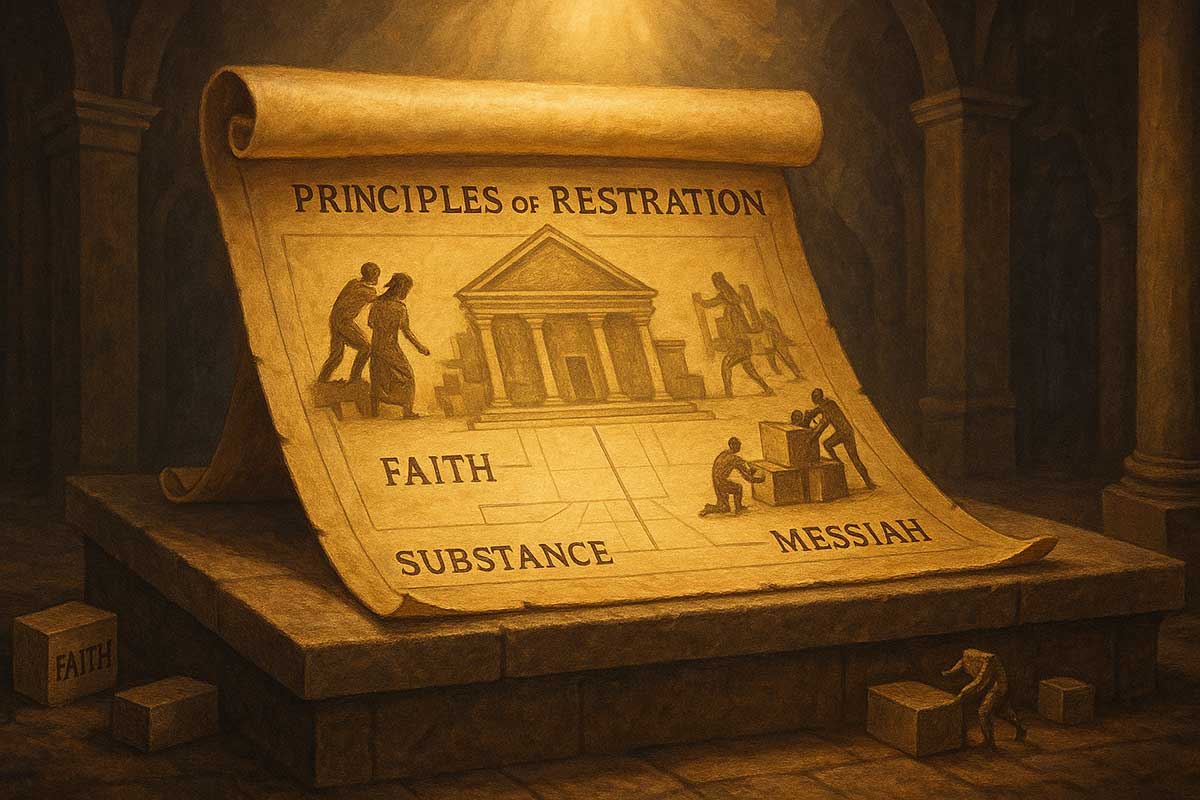
Alright team — let’s rip through Chapter 8: Overview of the Principles of Restoration like a playbook. This is the “big map” of history: why it’s messy, where it’s going, and how God methodically gets us back to His original blueprint.
1) History = God’s Rescue Mission
History isn’t random events — it’s the record of God restoring a family that fell. God’s goal never changed: people perfected in His love → true families → a world of goodness. The Fall hijacked that plan, so history becomes the Dispensation for Restoration — God step-by-step separating humanity from Satan and rebuilding the foundation for the Messiah to land, be received, and lead the finish.
Key lens:
Fallen humans are a mix: a budding original mind (good) + a strong fallen nature (evil).
That inner tug-of-war scales up — families, tribes, nations. Every great conflict ultimately mirrors a God vs. Satan contest over direction and ownership.
2) Why History Advances (and sometimes stalls)
God’s Will is absolute; our responsibility isn’t. Whenever a central person does their 5%, restoration jumps forward. When they don’t, plans delay — not canceled — and God rebuilds conditions and tries again (what DP calls Dispensational Time Identity: same pattern, new people/era).
Bottom line: God’s will is fixed; the schedule depends on human responsibility.
3) The Restoration Method: Messiah + Indemnity
Two pillars:
A) The Messiah’s role
Only the True Parent (the Messiah) can cut Original Sin and restore lineage. But God can’t just drop him anywhere; the world must prepare an environment that won’t immediately crush him. That’s why God raises a central person → family → tribe → nation as a runway.
B) Restoration through Indemnity
To restore what was lost, you pay the reverse of how it was lost. Three kinds:
Equal amount (“eye for eye”): direct repayment.
Lesser amount (grace conditions): e.g., faith in the Cross, baptism, communion.
Greater amount: when we blow the lesser (e.g., Israel’s 40 days → 40 years).
4) The Foundation for the Messiah (the runway)
Two parts — both required:
(1) Foundation of Faith (vertical to God)
Central person (Abel, Noah, Abraham…)
God’s required offering (done exactly, with absolute faith)
A set time-period (numeric “indemnity” span) proving steady obedience
Adam/Eve failed this → every chosen figure has to rebuild it.
(2) Foundation of Substance (horizontal order healed)
We must remove the fallen nature by reversing the Fall’s four steps:
Not taking God’s viewpoint → Love Abel from Cain’s position (see as God sees).
Leaving one’s position → Stay in position; receive love/order through Abel.
Reversing dominion → Let Abel (Adam-position) lead; Cain follows.
Multiplying sin → Multiply goodness; pass the right direction down the line.
When Cain-type and Abel-type unite properly under God, the Foundation of Substance is set.
Foundation of Faith + Foundation of Substance = Foundation to Receive the Messiah.
5) Central vs. Peripheral Histories
God runs a model course through a central nation (Israel → Christianity) while also working peripheral tracks among all peoples, later grafting them to the center. Religion — which heals the person (the core unit of history) — is the central history; politics/economy/tech are peripheral supports that eventually align under restored people.
6) The Three Great Ages (2,000 years each)
Think of restoration in three big drives:
Adam → Abraham
Age of the Foundation for the Word / Foundation for Resurrection / Foundation for Restoration through Indemnity
Family-level prep; mainly symbolic offerings.
Abraham → Jesus
Old Testament Age (formation stage)
National foundation; image offerings (tabernacle/temple).
Jesus → Second Coming
New Testament Age (growth stage)
World-wide foundation; substantial faith in Christ; spiritual salvation expands globally.
After the Second Coming
Completed Testament Age (completion stage)
Cosmic foundation (earth + spirit world); full restoration: true individuals, true families, true culture — Kingdom on earth and in heaven.
Also mapped as resurrection ages:
Foundation → Formation → Growth → Completion (at the Second Advent).
7) What this changes for you
History isn’t drifting; it’s aimed.
Your personal victory (mind over body, loving like God, building a principled family) matters historically — it’s how God lands His plan locally.
Expect repeating patterns: similar tests, new names. Learn the pattern, don’t miss the moment.
The Second Coming finishes what started: not just spirit saved, but lineage/family/society restored.
Mic-drop summary
God’s been running a precision comeback: set the Foundation of Faith, heal the Foundation of Substance, receive the Messiah, and scale that from family → nation → world. When enough people play their 5%, the Completed Testament world — the culture of true love — becomes visible history.
Chapter 9: Adam’s Family in the Dispensation for Restoration
Let’s unpack Chapter 9: Adam’s Family in the Dispensation for Restoration—the first attempt to lay the runway (Foundation for the Messiah) after the Fall.
Big picture
God’s rescue plan starts immediately after the Fall.
To welcome the Messiah, a family must build two pads:
Foundation of Faith (vertical to God)
Foundation of Substance (horizontal order healed: Cain ↔ Abel)
Adam’s family is the prototype—and also the first miss.
1) Foundation of Faith — why Abel (not Adam) offers
Adam should have offered (he committed the Original Sin), but he’s now “midway”—claimed by both God and Satan—so a direct, principled transaction with him would let both lords lay claim. That’s a no-go.
Solution: split the mixed nature embodied in Adam into two sons:
One stands on God’s side (Abel)
One stands on Satan’s side (Cain)
Why the second son? It mirrors Eve’s two illicit loves:
1st (with the archangel) = farther from Principle → Cain symbolizes this
2nd (with Adam) = closer to Principle → Abel symbolizes this
God often favors the second (Jacob over Esau, Ephraim over Manasseh, etc.) to unwind the first, non-principled grab.
Abel’s acceptable offering (right heart/right position) = Foundation of Faith achieved for the family (on Adam’s behalf).
2) Foundation of Substance — the Cain/Abel work
To complete the runway, Cain must make the Indemnity Condition to Remove the Fallen Nature by reversing the Fall’s four steps (archangel → Eve → Adam in wrong order):
Take God’s viewpoint
Cain (archangel-position) must love Abel (Adam-position).Stay in position
Receive God’s order through Abel, don’t try to replace him.Right dominion
Let Abel lead; Cain follows → restore proper subject–object order.Multiply goodness
Pass the righteous direction from Abel outward, not sin.
If Cain had humbled, obeyed, and loved Abel, the Foundation of Substance would be set.
Instead, Cain killed Abel—the satanic side struck God’s side—resetting the board.
Personal echo: within each of us, mind (Abel) vs body (Cain).
When the body fights the mind’s higher direction, we replay Cain and Abel.
Salvation comes by subjugating body to mind and, at the macro level, by Cain-type people humbling to the Messiah (True Adam).
3) Foundation for the Messiah — what would’ve happened
Had Abel’s vertical faith + Cain’s horizontal unity both stood,
the Foundation for the Messiah (family-level) would be complete.The Messiah could have come to Adam’s family, rebirthed them, and history would have pivoted immediately into God’s ideal lineage.
Because Cain killed Abel, the foundation failed, so God restarts through descendants (same goal, new central figures).
Takeaways you can use
God separates mixed realities into Cain/Abel pairings so good can grow unblocked.
Abel must win with love (offering + heart), and Cain must move with humility (obedience + service). Restoration requires both sides.
Expect this pattern to repeat at every scale—within you, in families, churches, movements, nations—until a community is ready to receive the Messiah.
Chapter 10: Noah’s Family in the Dispensation for Restoration
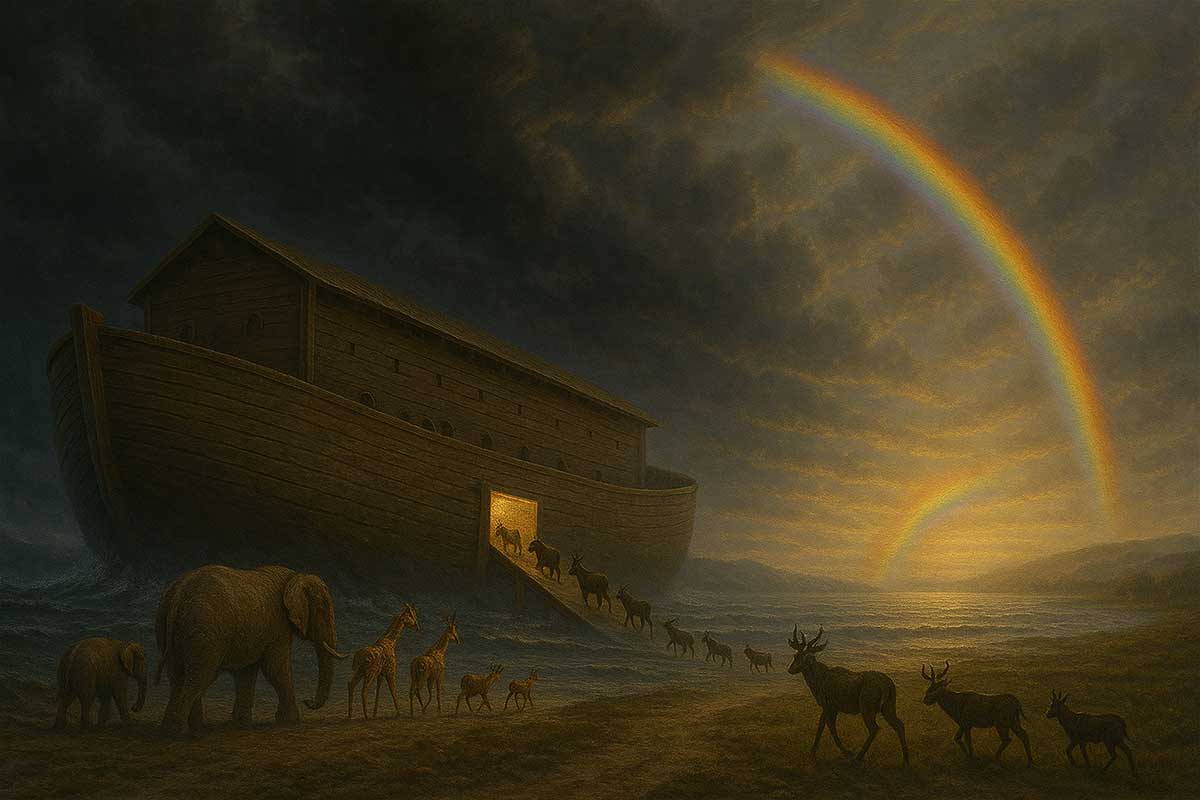
Noah’s Family — When Faith Builds, and Doubt Destroys
Alright, friends, this is where the first restart of human history happens. God hits reset after Adam’s failure, using Noah’s family as a second chance to lay the foundation for the Messiah.
If Adam’s story was the prototype, Noah’s is the relaunch — a second Adam, a new world, and a test of loyalty that would decide whether the Messiah could finally appear.
1. The Mission: Reboot the Human Race
When the earth was filled with violence and corruption, God said to Noah:
“I will destroy all flesh… the earth is filled with violence” (Gen 6:13).
Translation: this was the Last Days of that age.
God was ready to start over — not from scratch, but from faith.
So, He chooses one man, Noah, ten generations after Adam — a man “righteous in his generation.”
And with Noah, God begins His second attempt at building the Foundation for the Messiah.
2. Foundation of Faith — Building the Ark
Noah’s offering wasn’t a lamb or a dove; it was a project — the ark itself.
It symbolized the entire cosmos that needed to be restored from Satan’s grip.
Let’s break the symbolism down:
Three decks of the ark = the three stages of growth (formation, growth, perfection).
Eight members of Noah’s family = restoring the eight fallen members of Adam’s family (Adam, Eve, their sons and wives).
Animals = all creation, returning to harmony under God.
The forty days of rain = cleansing history’s corruption and restoring the lost Four Position Foundation (4 positions × 10 generations = 40).
By spending 120 years building the ark in total obedience — despite mockery and zero evidence of rain — Noah proved absolute faith.
That 120 years of ridicule was his test.
The flood was God’s response — His way to cleanse, reset, and create a pure environment where His Will could continue.
This is why the number 40 becomes the universal number for “separation from Satan” throughout history:
40 days in the wilderness,
40 years in the desert,
40-day fasts,
40 years of kings’ reigns,
40 days of Jesus’ temptation.
The pattern starts here — Noah’s 40 days.
When Noah completed the ark and endured the flood with faith, the Foundation of Faith was restored.
3. Foundation of Substance — The Test of Heart
Now came the horizontal test — unity between father and son, Noah and Ham.
Here’s the Principle pattern again:
Adam’s family: Cain had to unite with Abel.
Noah’s family: Ham had to unite with Noah.
But this time, something subtle but deadly goes wrong.
After the flood, Noah plants a vineyard, drinks wine, and falls asleep naked in his tent (Gen 9:20–25).
Ham sees him, feels shame, and stirs the same feeling in his brothers.
They cover their father’s body with their faces turned away — and afterward, Noah curses Ham’s lineage.
At first glance, that seems unfair — why curse a son for being embarrassed?
But here’s where the Divine Principle gives you the deeper view.
4. What Actually Went Wrong
After the flood, Noah’s family stood in Adam’s place.
Everything that had allowed Satan to invade Adam’s family had to be reversed — emotionally, spiritually, and symbolically.
When Ham saw his father’s nakedness and felt shame, he re-enacted the Fall — repeating the same inner posture as Adam and Eve after their sin.
Remember: after the Fall, they too became ashamed and covered their bodies.
That shame wasn’t humility; it was guilt — a sign that they’d entered Satan’s bloodline.
So Ham’s reaction wasn’t moral modesty. It was spiritual regression — a return to the fallen mindset that the flood was supposed to erase.
The Principle calls this “giving Satan a condition to invade.”
By interpreting his father’s nakedness as evil rather than trusting God’s dispensation through Noah, Ham reconnected with the very spirit that God had just separated through judgment.
5. Why It Mattered So Much
Ham’s role was to be the Abel-type son in this new family — to inherit Noah’s faith, heart, and obedience.
That meant absolute oneness of heart with his father.
When he felt disgust instead of faith, that unity shattered.
Externally, Ham’s act looked small.
Internally, it reopened the gate for Satan.
It’s not that Noah’s behavior was perfect; it’s that God used the situation as a test of heart — could Ham stay loyal when his father looked weak?
He didn’t. And by failing, Ham broke the horizontal unity required for the Foundation of Substance.
Without that, the Foundation for the Messiah collapsed — again.
6. The Bigger Lesson
This story isn’t about shame or nudity. It’s about heart alignment under trial.
God had already separated Satan through the flood — total reset.
Ham’s disbelief reopened the door.
It’s the same reason many modern people lose faith: they see the weakness of religious figures and forget that faith isn’t in the man’s mistakes, but in God’s purpose through him.
Ham’s failure became a universal warning: never lose faith in the person through whom God is working, even when they seem imperfect.
That’s why Jesus later said, “Blessed is he who is not offended in me.” (Matt 11:6)
7. What Could Have Been
Had Ham kept faith and honored his father:
The Foundation of Faith (Noah) and the Foundation of Substance (Ham) would have united.
The Foundation for the Messiah would have been complete.
The Messiah could have come in that era — literally thousands of years earlier.
Instead, the process reset again — God’s Will unchanged, but history delayed.
8. Personal Reflection
Every generation faces a “Ham test.”
It happens when the person God is using — your leader, parent, teacher, or even yourself — looks weak or flawed.
The question: Do you stay loyal to Heaven’s purpose, or judge based on appearance?
Ham chose shame over trust.
Faith would have built the Kingdom right there.
And because of that, humanity waited another four hundred years for the next central figure — Abraham — to try again.
Chapter 11: Abraham’s Family in the Dispensation for Restoration
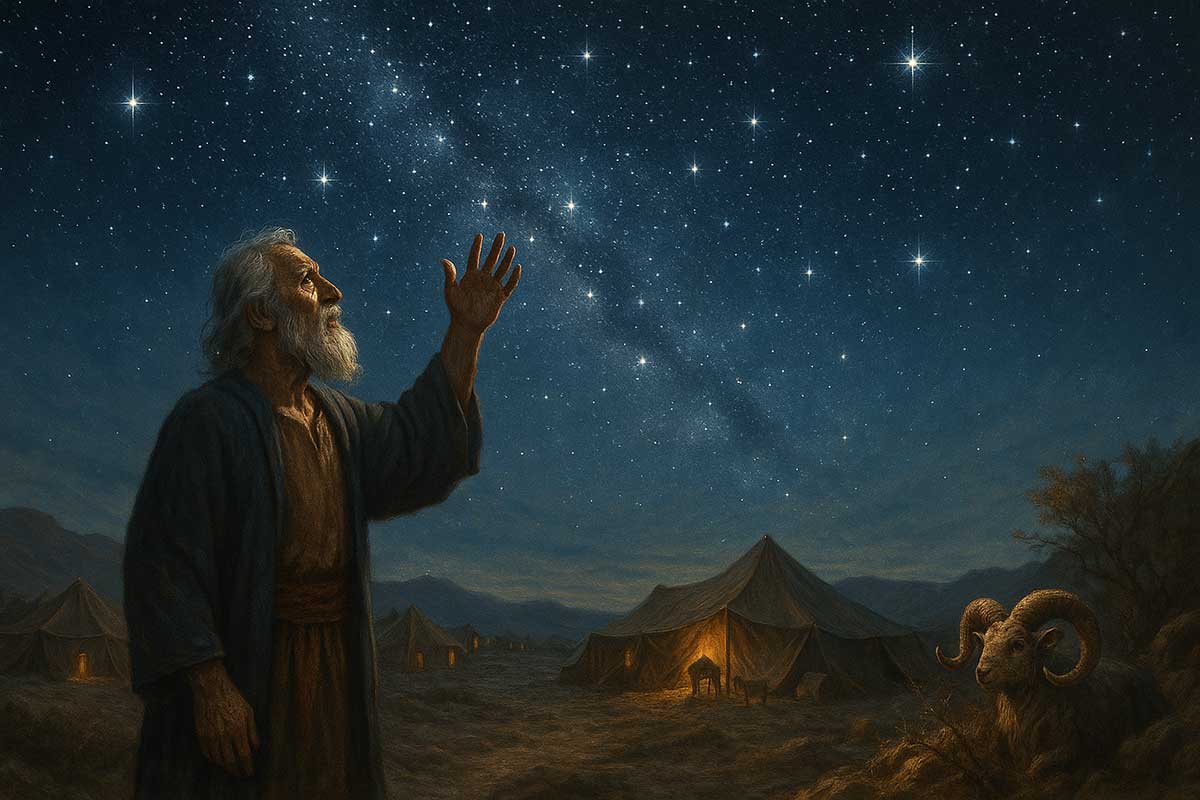
Abraham, Isaac, Jacob — How God Rebuilt the Launchpad for the Messiah
If Noah’s family was the reboot, Abraham’s line is the blueprint — how to actually land the Messiah. Three big moves:
- restore faith (vertical),
- restore substance (horizontal),
- stand up a foundation big enough for the Christ to arrive.
1) Foundation of Faith — Abraham’s Two Offerings
a) The failed symbolic offering (Gen 15)
God tells Abraham to prepare five items: heifer, ram, she-goat, dove, pigeon — symbolizing the whole creation across the three growth stages. Abraham cuts the animals except the birds. Birds of prey swoop in. God announces 400 years of oppression. Why?
- Dividing the offering = separating good and evil so God can claim it.
- Not dividing the birds left a breach. Spiritually, that’s like leaving Cain and Abel unseparated — no Abel-position for God to work through.
- Result: the offering becomes vulnerable to Satan’s claim → Israel must pay a four-century indemnity in Egypt to re-separate.
b) The successful offering of Isaac (Gen 22)
God reopens the providence on a higher level: “Offer Isaac.”
Abraham raises the knife; God stops him. What changed?
- Abraham’s absolute obedience leaves no foothold for accusation.
- Isaac, willingly cooperating, is “resurrected” to God’s side.
- From heaven’s view, Isaac now embodies the “resurrected Abraham” — transferring the central role from Abraham to Isaac.
- The ram substituted on the altar completes the symbolic offering properly this time.
=> Foundation of Faith restored, now centered on Isaac.
2) Foundation of Substance — Esau & Jacob and the Removal of Fallen Nature
Now comes the horizontal test: can the “Cain” figure freely submit to “Abel”? That’s how the Fallen Nature gets reversed (envy, leaving position, reversing dominion, multiplying evil → replaced with love, order, obedience, multiplying good).
Jacob’s mission: win the birthright (Abel-position) and convert Esau’s heart.
- Birthright secured: Jacob buys it for a meal (Esau despises it). Isaac later blesses Jacob — God honors the one who values heaven’s order.
- 21 years in Haran: Jacob is forged in hardship, wins household/flocks, and symbolically recovers a family out of the satanic realm.
- Wrestling the angel at Jabbok: Jacob prevails → restores human dominion over angels → receives the name Israel.
The showdown: Esau comes with 400 men. Jacob responds with prayer, prudence, and radical humility — gifts, strategic staging, and seven bows.
Esau’s heart melts: he runs, embraces, weeps (Gen 33:4). That is the moment Cain submits voluntarily to Abel.
=> Indemnity Condition to Remove the Fallen Nature accomplished.
=> Foundation of Substance established.
3) Foundation for the Messiah — Finally Achieved (at the family level)
With Isaac’s Foundation of Faith + Esau/Jacob’s Foundation of Substance, the family-level Foundation for the Messiah is finally in place — the first time since Adam.
But because of Abraham’s earlier failure, a price remains: the 400-year Egyptian course must still be walked. During that time, the family expands into a nation, so that when the indemnity is paid, God can lift them back to Canaan and build the national foundation for the Messiah.
4) Why God “Loved Jacob and Hated Esau” (Rom 9:13)
This isn’t arbitrary favoritism — it’s positional for the providence. Jacob must stand as Abel, Esau as Cain, so the Fall can be reversed in order. Once Esau fulfills his part (loving, accepting, obeying, inheriting good through Jacob), he, too, is blessed (see Gen 36). The “hate/love” language tracks the roles, not their eternal value.
5) Why Jacob Matters for Everyone After Him
Jacob pioneers the model:
- Value the birthright (heaven’s order).
- Endure the grind (Haran).
- Win the unseen fight (angel).
- Conquer by love and humility, not by force (win Esau’s heart).
From then on, Moses, the prophets, Israel as a nation, and ultimately the Messiah all walk this Jacob-pattern: restore order, subdue the satanic claim, and unite Cain to Abel voluntarily.
6) Takeaways for Today
- Don’t despise the birthright. If you treat spiritual things lightly, you’ll trade eternity for appetite.
- Hard seasons forge authority. Jacob’s 21 years were not wasted; they were weapons.
- True victory is voluntary unity. Cain has to want to embrace Abel. That requires Abel’s humility and God’s touch.
Where this goes next
The family foundation is set; now God scales it to the national level through Moses — exodus, law, tabernacle, and the long march to a society that can actually host the Messiah.
Chapter 12: Moses in the Dispensation for Restoration
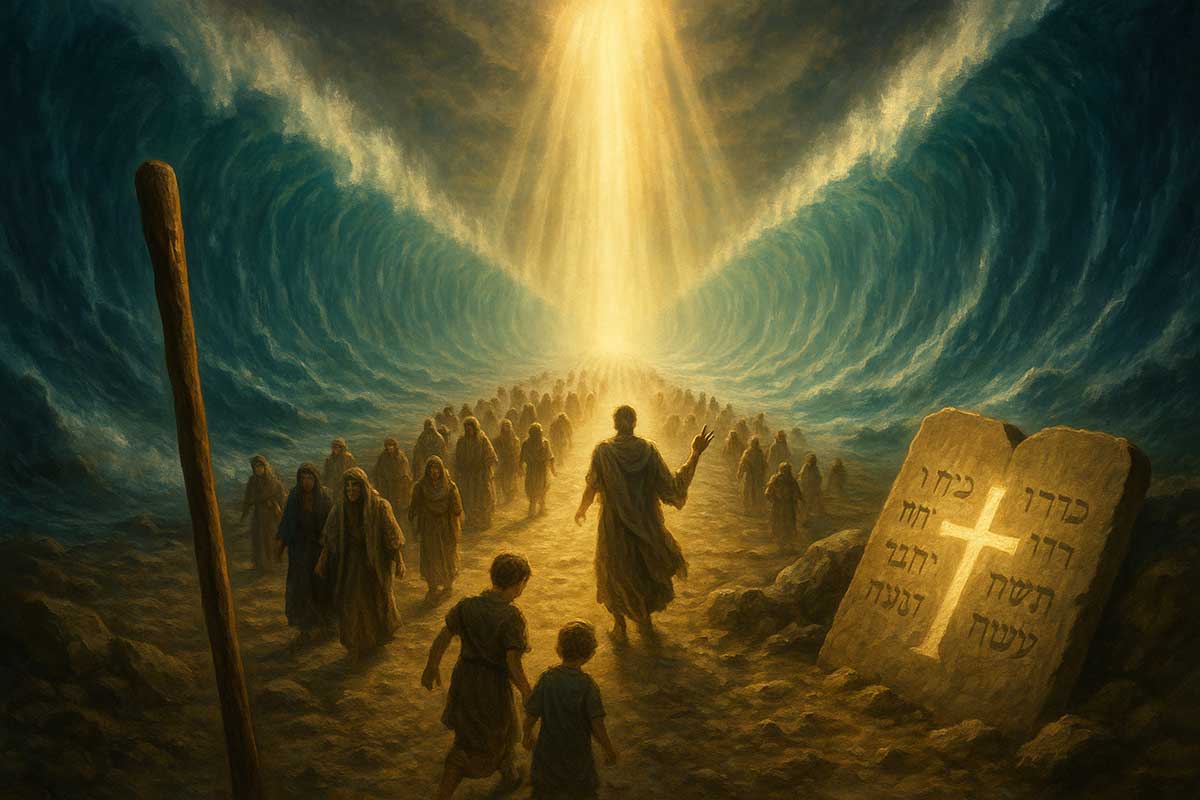
Moses—The Blueprint of Freedom and the Model for Christ
When I first read The Divine Principle’s section on Moses, it hit me—this isn’t just Bible history. This is a manual on how God wins back a fallen world through responsibility, faith, and leadership.
Let me tell you what’s really going on here.
1. God Always Works by a Pattern
The Principle says something profound:
“Surely the Lord God does nothing without revealing His secret to His servants the prophets.” (Amos 3:7)
That means history is predictable, not random. God creates models, and once He proves them, He scales them.
- Jacob shows the family-level pattern—how to subdue Satan through faith and love.
- Moses expands it to the national level.
- Jesus completes it on the world level.
That’s why Jesus said, “The Son can do nothing of his own accord, but only what he sees the Father doing.” (John 5:19)
He was literally saying: I’m following the Moses template.
That’s mind-blowing—Jesus didn’t improvise; He fulfilled a model that had already worked once.
2. The Model Course: How to Make Satan Submit Voluntarily
The Divine Principle explains that the goal of restoration isn’t God forcing Satan—it’s winning his voluntary submission through righteousness.
And how does that happen? By reversing the exact steps of the Fall:
- Adam and Eve failed the test of obedience → Jacob, Moses, and Jesus each pass it through trials.
- Fallen nature came through disobedience → restoration comes through obedience to the Word.
- Humanity lost dominion over angels → restoration means gaining it back.
God doesn’t destroy evil by rage; He defeats it through principled order.
So when Moses faces his trial—God nearly kills him in Exodus 4—it’s not cruelty, it’s calibration. It’s God verifying that Moses can be trusted with the pattern.
3. Parallels Between Jacob, Moses, and Jesus
This is where The Principle shines: it connects the dots like no sermon ever did.
| Restoration Element | Jacob | Moses | Jesus |
|---|---|---|---|
| Trial against “Satan” | Wrestled the angel at Jabbok | Faced God’s near-death test (Ex 4:24–26) | Forty-day temptation by Satan |
| Bread & flesh symbol | Lentil pottage | Manna & quail | Flesh & blood of Christ |
| Forty-period separation | Embalming of Jacob’s body | Forty years in Midian | Forty days in wilderness |
| Twelve-fold structure | Twelve sons | Twelve tribes | Twelve apostles |
| Seventy-fold expansion | Seventy family members | Seventy elders | Seventy disciples |
| The staff / Word | Crossed Jordan leaning on staff | Parted Red Sea with staff | Rules with “rod of iron” |
| Mother–son cooperation | Rebekah helps Jacob | Moses’ mother saves him | Mary supports Jesus |
| Journey from Satanic to Holy land | Haran → Canaan | Egypt → Canaan | World → Kingdom of Heaven |
| Destruction of idols | Buried household idols | Broke golden calf | Overcame the world |
What does that mean?
God isn’t experimenting—He’s scaling the same restoration code from the micro to the macro level.
4. The Tabernacle: The First Symbolic Messiah
This blew my mind. The Principle calls the tabernacle the “symbolic Messiah.”
Think about it.
While Moses was fasting 40 days, God gives him two tablets of stone—symbolizing Adam & Eve restored, Jesus & the Holy Spirit incarnate.
Then He commands: “Let them make me a sanctuary, that I may dwell among them.”
That’s God saying, “I’m going to be physically present through a structure, until My Son can come.”
So the Ark, the tablets, and the tabernacle are a prophetic rehearsal of Jesus Himself—the Word made flesh, dwelling among His people.
When Moses smashed the first tablets, it wasn’t just anger—it symbolized how humanity’s disbelief would later lead to the crucifixion of the living Word.
5. The Three Courses to Canaan: Freedom through Faithfulness
This is where it becomes practical for America today.
- First course: Israel didn’t trust Moses. They exposed him and lost their chance for the quick route.
- Second course: They began but fell again—golden calf, bad spy reports, more delay.
- Third course: A new generation, purified through forty years of hardship, finally enters under Joshua.
Every failed generation delays freedom; every faithful one inherits the promise.
Sound familiar? Our culture has seen Pharaoh’s palace, golden calves, and wilderness years too. But the Principle reminds us: God always raises a Joshua generation—the ones who believe and obey when everyone else complains.
6. Why Moses Struck the Rock Twice — and What It Means for Christians
This detail floored me.
At Rephidim, God told Moses to strike the rock once—water flows, symbolizing Christ giving life.
At Kadesh, he strikes it twice—angrily—and God says, “You shall not enter Canaan.”
Why?
Because striking twice means crucifying Christ again.
It symbolized faithlessness toward the already-revealed Messiah.
In other words, Moses’ anger created the condition for Satan to strike Jesus later if Israel lost faith. That’s not just symbolism—that’s providential math. One leader’s action at the national level sets conditions for or against God’s work at the global level.
7. Joshua’s Generation — Completing What Moses Began
Moses couldn’t enter Canaan, but Joshua did—because he believed.
He took the ark, led the people through the Jordan (another parted sea), marched around Jericho seven times with priests and trumpets, and the walls fell.
That’s not superstition—it’s providence fulfilled. The numbers, symbols, and obedience lined up exactly with the heavenly model.
Joshua represents the next generation who inherit the Word and act on it.
That’s what the Divine Principle calls “the national Foundation for the Messiah.”
God was finally ready for the Christ to appear on that foundation—if only Israel had remained faithful afterward.
8. The Big Picture: What This Means Today
Here’s what this all tells me:
- Freedom is always conditional. God’s blessing flows when faith and responsibility align.
- History is patterned. God uses models—Jacob, Moses, Jesus—to show that victory follows obedience.
- Faithlessness delays destiny. Every generation that doubts its Moses spends another forty years wandering.
- Our task is Joshua’s. Cross the river, bring the Ark (God’s truth), and build a society worthy of heaven.
So if you ever wonder whether God’s working behind history, The Divine Principle says: look for the pattern.
Every true revolution of freedom—from Exodus to America’s founding—starts the same way:
a leader who trusts the invisible, a people who must learn obedience, and a promised land that waits for courage.
Chapter 13: Jesus in the Dispensation for Restoration

Let me level with you: this chapter reframes Jesus’ mission in a way that’s both humbling and explosive. It says Jesus didn’t just come to inspire us—he came to substantially subjugate Satan and build a real, working foundation for God’s Kingdom on earth. And the plan? It followed a model God had already previewed through Jacob and Moses. Same playbook, higher stakes, global field.
1) The first attempt: a perfect runway that never gets used
God set up John the Baptist as the “make-straight-the-way” guy—national Abel, the bridge between Israel and the Messiah. The people actually revered John. Miraculous birth, prophetic aura—everything pointed to him. If Israel (in the Cain position) had united with John (Abel), that unity would have formed the Foundation of Faith and Foundation of Substance—together, the Foundation for the Messiah.
But here’s the heartbreak: John testified to Jesus…and then didn’t follow Him. Later he even doubted (Mt 11:3). He also denied being the Elijah foretold—confusing the people who were waiting for Elijah first. Result? The very foundation God prepared became a barrier. The first world-level “Restoration of Canaan” stalled on the runway.
Takeaway: When God prepares a leader to connect people to the Messiah, that leader’s humility and follow-through are everything. Miss that, and history gets delayed.
2) The second attempt: Jesus takes John’s job—and fights Satan head-on
Because the foundation collapsed, Jesus had to assume John’s mission before He could stand as openly as the Messiah. That’s why He goes into the wilderness: forty days, three direct hits from Satan. Not showboating. It’s a legal, providential fight to clear satanic claims.
- Temptation 1—Stones to bread: Jesus refuses to trade the Word for mere survival. He restores the integrity of the “stone/tablet” symbolism and secures the path to God’s First Blessing (perfected character).
- Temptation 2—Jump from the Temple: He refuses spectacle and reasserts rightful lordship over the temple—opening the way to God’s Second Blessing (true family, children as living temples).
- Temptation 3—Glory of the kingdoms: He rejects dominion-by-compromise and reclaims true sovereignty under God—God’s Third Blessing (loving dominion over creation).
He wins the internal war. But then comes the external test: Will the nation unite with Him? That’s the Foundation of Substance—Cain uniting with Abel. Instead, leaders brand Him a sinner, crowds turn hostile, Judas betrays. The second attempt collapses. And that leads to the cross.
Hard truth: The cross wasn’t Plan A. It was God wringing salvation out of human disbelief. Jesus secured a spiritual victory, but humanity lost the chance at immediate, physical restoration.
3) The third attempt: spiritual Canaan—then the road to a physical completion
After the crucifixion, the Risen Jesus launches a spiritual course:
- Spiritual Foundation of Faith: Forty days of appearances; He fortifies the disciples beyond Satan’s reach.
- Spiritual Foundation of Substance: The disciples (in Cain’s position) now unite absolutely with the risen Lord (spiritual Abel). Pentecost seals it. Jesus (as spiritual True Father) and the Holy Spirit (as spiritual True Mother) give spiritual rebirth to believers.
That’s why Christians are saved spiritually yet still wrestle with sin in their bodies and pass on Original Sin. The third world-level course became spiritual Canaan—real, but not yet physical.
Which is why Chapter 13 points forward: the Lord must come again. The Second Advent completes what the first inaugurated—engrafting humanity both spiritually and physically, removing Original Sin in lineage, and building the substantial, worldwide Canaan—the Kingdom on earth.
What this means for us—right now
- God’s plan moves in courses. When leaders falter or people won’t unite, God doesn’t quit—He adjusts the play and runs it again.
- Personal miracles aren’t enough; public unity around God’s Abel is the hinge of history.
- The first coming secured the spiritual base; the Second Coming finishes the physical, societal, civilizational build.
Bottom line: Chapter 13 is a charge to this generation. When the Lord advances the final course, don’t repeat Israel’s mistake with John or the nation’s failure with Jesus. Recognize, unite, build. That’s how the long war ends—and how the Kingdom begins, for real, on earth.
Chapter 14: Dispensational Time-Identity
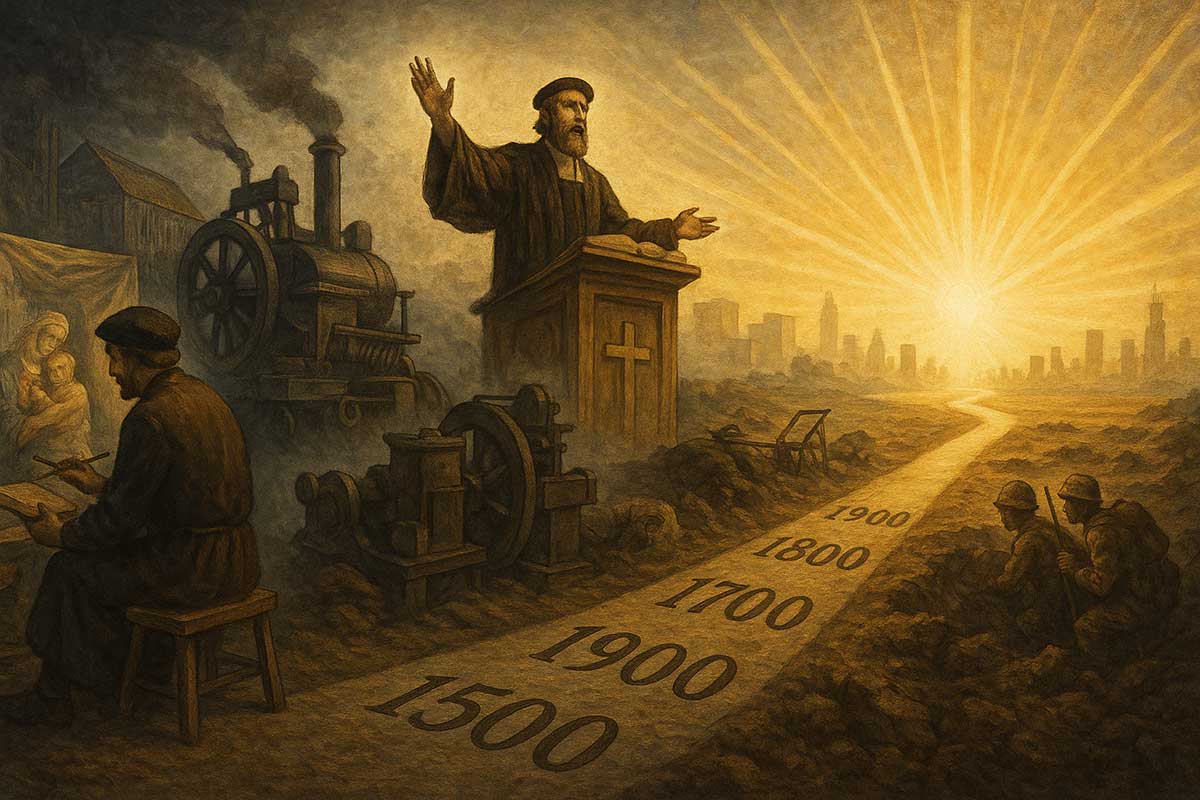
You know, there’s a chapter in The Divine Principle that really stopped me in my tracks—it’s called Dispensational Time-Identity. And I’ll be honest, at first the phrase sounds like a mouthful. But once I dug in, it hit me like a lightning bolt. This chapter explains something I think we all sense deep down—that history isn’t random. It’s patterned. It’s intentional. And yes, it’s spiritual.
Here’s what it says: every time humanity fails to fulfill its responsibility—every time we turn away from God’s call—He doesn’t throw away the plan. He restarts it. Same goal, same purpose, but a new chapter, a new people, and a higher level of responsibility. In other words, God re-runs the play until we get it right.
Think about that. The same dynamics that played out in the time of Abraham, Moses, and Jesus are still happening now—just on a larger scale. The Divine Principle calls that pattern time-identity—the idea that history repeats itself in form until the mission is accomplished in substance. It’s not about superstition or numerology—it’s about how God patiently rebuilds His dream for humanity, step by step, generation by generation.
You see, when someone like Noah or Israel or even the early Christians failed to fully unite with God’s will, the story didn’t end there. God didn’t scrap humanity. He raised up new people to continue the mission—often under eerily similar circumstances. A new “Abel figure.” A new test of faith. A new offering. Same divine blueprint, but a different time.
And if you trace it through, it’s mind-blowing. The Israelites’ four hundred years of slavery in Egypt mirror the Christians’ four hundred years of persecution under Rome. Their exodus into Canaan mirrors the rise of the early church into a new spiritual Canaan. Even the division of Israel into north and south kingdoms parallels the split between the Eastern and Western Churches. It’s like watching history rhyme in perfect symmetry.
Now, here’s where it gets really profound. The Divine Principle says we’re not just reading about the past—we’re living in the final repetition of it. What was symbolic in Adam’s time became historical in Israel’s time, and now, in our time, it’s substantial—real, global, and complete. In other words, we’re standing at the end of a long line of providential parallels—the moment when all the earlier ages converge.
That means the same test God gave to Israel—faith, unity, love, obedience—He’s now giving to the world. The same division that tore kingdoms apart—Cain versus Abel, faith versus reason, love versus pride—it’s playing out right now on a global stage: between ideologies, nations, even within families.
And yet, that’s what gives this chapter hope. Because it says that when humanity finally gets it right—when we align with God’s will instead of fighting it—the cycle ends. History’s “time identities” resolve into the real thing: one world, one family under God, centered on true love.
That’s the moment we’re heading toward—the time when religion, philosophy, and even science finally agree on one truth: that God has been steering human history all along toward the fulfillment of His original design.
So when I read this chapter, I couldn’t help but think: this explains everything. Why empires rise and fall. Why civilizations seem to echo one another. Why we’re feeling that same tension in our world today—a sense that history is repeating, but with higher stakes. Because it is.
The Divine Principle says that God is patient, but purposeful. Every age, every trial, every “failure” is part of a divine replay designed to bring humanity back to its original relationship with Him. And now—it’s our turn.
So here’s the challenge this chapter leaves us with:
Will we repeat the mistakes of the past? Or will we finally become the generation that fulfills what Abraham, Moses, and even Jesus came to complete—the foundation for the Kingdom of Heaven on earth?
That’s the power of Dispensational Time-Identity. It’s not just theology—it’s a call to wake up and realize that we are living the final act of God’s unfolding story.
Chapter 15: Preparation For The Second Coming
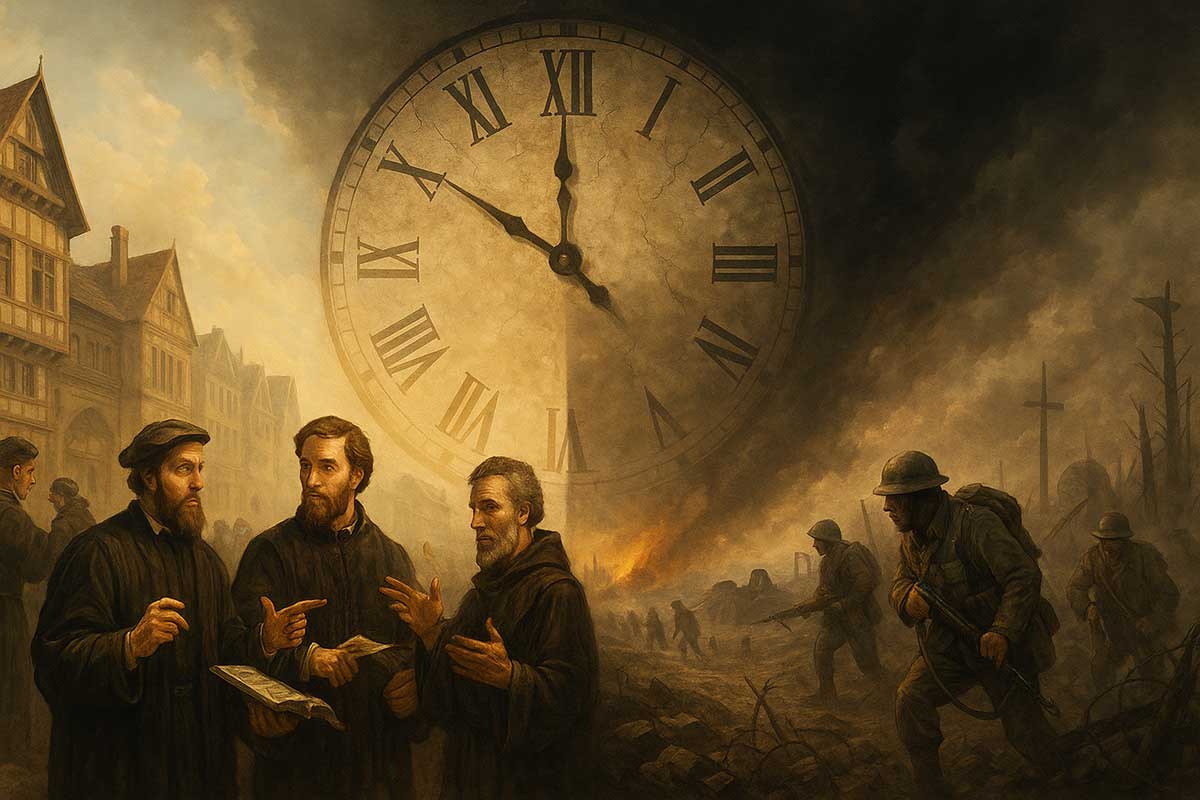
History Has a Blueprint — How God Prepared Civilization for the Second Coming
When I first read this chapter, I realized something:
The Divine Principle doesn’t see history as a series of accidents — it sees it as a curriculum.
Every century, God’s been teaching humanity how to handle freedom, truth, and responsibility — getting us ready for the moment the Messiah returns and says, “Now let’s finish what I started.”
So let’s break down how we got here — how five hundred years of revolutions, reformations, and even world wars were all part of God’s plan.
1. The Renaissance — Man Rediscovers His Mind
After a thousand years of religious dominance and corruption, humanity’s spirit was suffocating.
The Renaissance was God’s way of restoring the external side of human nature — our creativity, intellect, art, and science.
People started saying: “Wait — we’re made in God’s image. That means we’re meant to think, build, and create.”
That’s why The Divine Principle calls the Renaissance a Cain-type movement — it awakened our external desires first: freedom, beauty, and mastery of nature.
Was it secular? Yes. But God used it.
Because before people could serve heaven freely, they had to rediscover what freedom even was.
2. The Reformation — Man Rediscovers His Soul
Once human reason woke up, God immediately moved to restore the internal side — faith and spirit.
That’s the Reformation, an Abel-type movement, led by Luther, Calvin, and others who cried, “The Church has no monopoly on truth — the Bible does.”
It wasn’t just theology — it was the beginning of personal responsibility before God.
Each believer now stood directly before Heaven, no priest required.
That’s the foundation of democracy, conscience, and even the idea of limited government.
The Principle shows how the Renaissance and Reformation are twins — two sides of the same restoration:
- Renaissance: Man discovers freedom of reason.
- Reformation: Man discovers freedom of faith.
Together they destroyed the medieval feudal world and prepared the soil for modern civilization — and for the Messiah’s return.
3. The Conflict Between Religion and Philosophy — Freedom’s Growing Pains
After the Treaty of Westphalia in 1648, people had more freedom than ever — and they didn’t know what to do with it.
So they started to ask: “What’s real — faith or reason?”
And here comes the Divine Principle’s big insight:
That conflict wasn’t random — it was the separation of Cain and Abel worldviews on a global scale.
- Cain-type view (external): Rationalism, empiricism, humanism, materialism — from Descartes to Locke to Marx.
It believed truth comes from man’s senses, not God.
It built science, but it also birthed atheism and communism. - Abel-type view (internal): Mysticism, Pietism, Methodism, Idealism — from Spener and Wesley to Kant and Hegel.
It defended faith, morality, and the reality of spirit.
It built movements like the Great Awakening and Quakerism.
So the Enlightenment and the Great Awakenings were two sides of one coin — the Cain and Abel of modern thought.
One focused on the material world, the other on the moral world — both preparing for the day those two would finally unite under God.
4. The French & Industrial Revolutions — Humanity Grows Up (and Gets Tested)
By 1789, God’s lesson plan was maturing.
People were demanding liberty, equality, and brotherhood — divine ideals distorted through human hands.
The French Revolution tried to create heaven on earth — but without God.
That’s what the Principle calls Cain-type democracy — freedom without responsibility.
It ends in chaos, tyranny, and blood.
But over in England and America, freedom grew with conscience.
That’s Abel-type democracy — liberty grounded in faith.
That’s why the American Revolution succeeded: it was built on “In God We Trust,” not “Reason Alone.”
Then came the Industrial Revolution — the physical side of restoration.
Steam, electricity, and finally atomic energy — three stages of dominion mirroring the three stages of perfection.
God was building the environment where the Messiah could actually live — a connected, global, advanced civilization.
Even colonial expansion — though flawed — spread the Gospel across continents.
The Principle calls that the external foundation for the internal providence.
5. The World Wars — Satan’s Last Stand
Now it gets heavy.
According to The Divine Principle, world wars aren’t random political events — they’re final showdowns between Heaven’s side and Hell’s side, played out through nations.
First World War (Formation Stage)
- God’s side: Christian nations — England, France, America, Russia.
- Satan’s side: Authoritarian empires — Germany, Austria-Hungary, Turkey.
- Result: Heaven wins.
→ Formation-stage condition to restore the First Blessing (individual perfection).
Second World War (Growth Stage)
- God’s side: U.S. (Adam-type), U.K. (Eve-type), France (archangel-type).
- Satan’s side: Germany, Japan, Italy — same positions, opposite purpose.
- Result: Heaven wins again.
→ Growth-stage condition to restore the Second Blessing (multiplying goodness, family-level foundation).
Third World War (Completion Stage)
The Divine Principle says this one can be fought by weapons or by truth.
If people accept Heaven’s ideology — the ideology of true love and unity — it can be won without destruction.
If not, external conflict erupts again.
Either way, the purpose is the same:
To overcome Satan’s third temptation — dominion — and restore God’s sovereignty on Earth.
6. The Ultimate Purpose — The Ideology of True Love
Here’s the Divine Principle’s conclusion, and I think it’s what our world desperately needs to hear:
All revolutions — political, industrial, or spiritual — lead to this one point:
Humanity needs a higher ideology than capitalism, socialism, or even democracy.
We need the ideology of True Love.
That’s not a slogan. It means:
- Breaking down barriers between races and nations.
- Restoring families as the building blocks of peace.
- Creating an economy that serves people, not enslaves them.
- Uniting science and faith under a single divine purpose.
The Principle calls this final state the Ideal World of Cosmic Ideology —
a world where every individual, family, and nation lives in harmony under God’s sovereignty.
Not as a theocracy, but as a family — with God as Parent, and humanity as brothers and sisters.
7. Why This Matters Now
We’re living in the final stage of the preparation period — post–World War II to today.
Globalization, AI, climate, identity politics — these aren’t random.
They’re the test: will we unite under truth and love, or divide under ideology and ego?
That’s why The Divine Principle feels so prophetic.
It says: God is not done with history — He’s just about to finish it.
And when the Lord of the Second Coming appears, it won’t be to destroy the world —
but to complete it.
Chapter 16: The Second Coming
The Return of Christ — How, When, and Where God Finishes History
If there’s one question that has divided Christians for two thousand years, it’s this one:
How will Jesus come again?
Every denomination has its view—some say He’ll appear in our hearts, others that He’ll descend from the clouds with trumpet blasts.
But The Divine Principle invites us to look at Scripture the way God actually works—through patterns, not superstition.
Once you see that, everything clicks: the Second Coming is not a cosmic spectacle; it’s God finishing what He started—on earth, through human responsibility.
1. The Pattern of Elijah: God Always Repeats His Method
Remember Malachi’s prophecy: “I will send Elijah before the great and terrible day of the Lord.”
Every Jew expected Elijah to drop out of the sky.
But Jesus shocked them:
“If you are willing to accept it, John the Baptist is Elijah.” (Mt 11:14)
John wasn’t the same person—but he came with the same mission and spirit, born on earth, not descending in a chariot of fire.
That single pattern tells us how God works:
When He says someone “comes again,” He means a new person is born on earth, anointed with the same mission.
That’s the key.
So if Elijah returned through another man, why would Christ’s own return be different?
2. Prophecy Confusion: Clouds vs. Bethlehem
The Old Testament prophesied both a Messiah born in Bethlehem (Mic 5:2) and one coming on the clouds (Dan 7:13).
Israel chose the wrong verse to emphasize—they wanted glory, not humility.
So when Jesus came through Mary, they couldn’t see Him.
They wanted lightning; God sent love.
The same thing is happening now.
Modern Christians look up to the sky, not within the providence.
If He appeared literally on clouds, who would persecute Him?
But Jesus said of His return:
“The Son of Man must suffer many things and be rejected by this generation.” (Lk 17:25)
That’s only possible if He comes in the flesh again.
3. Why the Lord Must Come as a Man
Here’s the Principle logic:
The purpose of creation was to build the Kingdom of Heaven on earth, beginning with Adam’s family.
Because Adam fell, Jesus came as the Second Adam to restore that mission—but His crucifixion cut it short.
So a Third Adam must come—sinless, in the flesh—to:
- Perfect himself (First Blessing),
- Build the true family as True Parent (Second Blessing), and
- Establish dominion over creation in love (Third Blessing).
That can’t happen in the clouds or in spirit form.
It requires a living, breathing man who walks, teaches, marries, and multiplies heaven’s lineage.
That’s why He’s called the Son of Man.
4. What “Coming on the Clouds” Really Means
In Revelation, water symbolizes people: “The waters you saw are peoples and multitudes.” (Rev 17:15)
Clouds are purified vapor—water transformed.
So, “coming on the clouds” means coming among purified believers, the spiritual atmosphere of saints ready to receive Him.
God used this symbol for two reasons:
- To protect the mission until the right time (preventing false messiahs).
- To sustain early Christians through persecution by giving them hope of a glorious return.
Now that the time is mature, He reveals the literal truth: the Messiah comes again as a person on earth, born like all of us, but from heaven in mission and heart.
5. When Does He Come?
Jesus said, “No one knows the day or the hour.”
But Amos 3:7 says God never acts without revealing His secret to His prophets.
History follows exact providential time-intervals.
The first Israel’s preparation from Jacob to Jesus was ≈ 1,930 years.
Christianity’s course—from Jesus to today—matches that same 1,930-year pattern.
That brings the window for the Messiah’s birth to the early 20th century (roughly 1917 – 1930).
It’s no coincidence that this was the dawn of global turmoil, new revelations, and world wars.
We are living not before the Second Coming but in the era of its fulfillment.
6. Where Will He Come? Why Korea?
This is the most controversial and most moving insight in The Divine Principle.
Jesus’ parable of the vineyard (Mt 21:33-43) says the Lord will not return to the people who rejected Him; the Kingdom will be given to a nation producing its fruits.
Revelation 7:2-4 describes an angel rising “from the East, from the rising sun,” sealing God’s servants.
The Principle explains that this “East” is Korea—a nation God has prepared through unthinkable suffering.
Why Korea?
- It has walked the path of tears, like Israel and early Christianity.
Under foreign occupation, it paid indemnity for the world’s restoration. - It is deeply spiritual—a cradle of Confucian, Buddhist, and Christian devotion blended into one moral culture.
- It sits on the front line between good and evil—the 38th parallel, where democracy and communism collide.
That’s not geopolitics; that’s providence. - It preserved purity of lineage and heart across 5,000 years.
No other nation kept faith, culture, and language so intact through invasion and loss. - It even carried prophecies—the Chung Gam Nok foretold a righteous king from the East who would renew heaven and earth.
So the land most crushed by history became the womb for heaven’s rebirth.
7. America’s Role — The New Rome
Two thousand years ago, Israel was the cradle, and Rome was the superpower that unknowingly protected and spread the Gospel.
Today, Korea is the new Israel, and America is the new Rome.
God raised America on Christian ideals so it could defend freedom and faith worldwide.
Our alliance with Korea isn’t just political; it’s providential.
If America stays true to God, it will be the shield for the world’s final restoration.
If it falls into materialism or division, it will repeat Rome’s decline.
8. What the Second Coming Really Looks Like
The returning Christ will:
- Reveal the full truth of God’s purpose, completing the Bible’s hidden meaning.
- Establish True Parentship—restoring the family as God’s original temple.
- Unite all religions and races under one God of love.
- Bring harmony between faith and science, East and West, spirit and matter.
This isn’t myth; it’s civilization’s next stage.
The world wars, the Cold War, even our cultural chaos—all of it is labor pain before the birth of the Kingdom.
9. Our Responsibility Now
At Jesus’ first coming, the tragedy wasn’t God’s plan—it was humanity’s blindness.
The priests clung to ritual; the scholars to scripture; the politicians to power.
So the Messiah was crucified instead of crowned.
At the Second Coming, we can’t make that mistake again.
Christ may come quietly, teach in unexpected ways, appear in a nation people least expect.
The question is: Will we recognize truth when it doesn’t fit our theology?
Jesus warned:
“Those invited to the wedding feast will not come;
so go into the streets and bring in whomever you find.” (Mt 22:8-10)
He was talking about us—the humble, the seekers, the ones whose hearts can still be moved.
10. The Call of Our Time
We are standing where history turns from tragedy to completion.
The Second Coming isn’t a single miracle in the sky—it’s the dawn of a new civilization built on truth, freedom, and true love.
That’s why The Divine Principle calls this coming world the Ideal World of Cosmic Ideology—
a family of nations living by God’s heart, guided by the Messiah who finishes the human story where it began: in love.
“Let us calm our minds,” it says,
“and pay attention to the hope-giving news that announces the New Age.”
Friends, that’s not poetic—it’s literal.
History’s final chapter has already begun.
Final Thoughts by Charlie Kirk
Here’s what this entire message means for you, right now:
Faith without action is incomplete. The Pattern shows it time and again. God calls us to step up—not passively hope, but actively build.
History is on a clock. The chapters show the ages moving, the time-identity pulses beating. Don’t treat this like “sometime in the future.” We’re at the cusp.
You are not incidental. Whatever you do—how you live, how you lead, how you vote or how you love—matters in the Kingdom calculus.
The Kingdom of Heaven on Earth is real. This isn’t just a spiritual golden age on another planet. This is designed to be physical, societal, global. The Messiah doesn’t come to a shrine; He comes to a people, a culture, a civilization.
Prepare—not for defeat, but for dominion. Because the trajectory of the Divine Principle is clear: restoration leads to authority, suffering leads to sovereignty. Your role: align with that arc.
So here’s my challenge to you: choose today to stand—not drift. To build—not collapse. To serve—not demand. Because a Kingdom is coming. And the question is: Will you be ready to welcome it?
There’s no greater moment in the ages. The time is now. The blueprint is here. And the world is watching.
Short Bios:
Charlie Kirk is the founder and CEO of Turning Point USA, a national organization dedicated to promoting faith, freedom, and moral responsibility among young Americans. Known for his clear and passionate communication style, he often explores the intersection of culture, theology, and civic purpose.
Reverend Sun Myung Moon (1920–2012) was the founder of the Unification Movement and author of The Divine Principle. He devoted his life to uniting science, religion, and humanity under God’s ideal of true love, emphasizing the restoration of the family as the cornerstone of world peace.
Adam and Eve
According to the Bible, Adam and Eve were the first human ancestors created by God. In The Divine Principle, they represent the starting point of God’s ideal for love and family. Their disobedience in the Garden of Eden introduced the human fall, severing the original relationship between God and humanity.
The Archangel (Lucifer)
Originally created as a servant of God, the Archangel was meant to help guide and protect Adam and Eve. However, through pride and jealousy, he turned away from God, leading Eve into a premature, unprincipled relationship that caused the Fall. In Divine Principle teaching, this act represents the origin of evil and the corruption of love.
Noah
A righteous man chosen by God to survive the Flood, Noah represents the beginning of a new humanity after judgment. His faith and perseverance symbolize obedience under trial. In The Divine Principle, Noah’s family becomes a key foundation in God’s attempt to restore the lost ideal through faith and unity.
Abraham
The father of faith, Abraham left his homeland in obedience to God’s call and became the ancestor of Israel. In the Principle’s framework, his offering of Isaac laid a critical foundation for restoring trust and faith between God and humanity—although his earlier symbolic offerings revealed how even small acts of faithlessness can have providential consequences.
Isaac
As Abraham’s son and the one offered in faith, Isaac symbolizes obedience, lineage restoration, and the continuation of God’s covenant. His willingness to submit to God’s will represents the internal victory of faith passed from father to son.
Jacob
Known for wrestling with the angel and reconciling with his brother Esau, Jacob embodies the victory of faith and wisdom over resentment and division. His victory over Esau marks a providential turning point in history—demonstrating that love and humility can subdue hostility and restore unity.
Moses
Chosen to lead Israel out of slavery in Egypt, Moses represents both deliverance and struggle. In The Divine Principle, his course through the wilderness serves as a symbolic model for the Messiah’s later course—revealing the importance of faith, obedience, and perseverance in building the foundation for God’s Kingdom.
Joshua
As Moses’ successor, Joshua guided Israel into the Promised Land. He symbolizes the fulfillment of leadership that acts with faith and courage, bringing God’s promises from vision to reality.
John the Baptist
The forerunner of Christ, John was sent to “make straight the way of the Lord.” Though his mission began in great faith, his doubt and misunderstanding of Jesus’ identity tragically hindered the people’s ability to unite with the Messiah, delaying the full realization of God’s providence.
Jesus Christ
The Son of God and central figure of salvation, Jesus came to restore humanity to its original relationship with God. His life, crucifixion, and resurrection established the foundation for spiritual salvation, opening the way for the completion of God’s Kingdom on earth through the Lord of the Second Coming.
The Holy Spirit
The feminine expression of God’s nurturing love, the Holy Spirit works with Jesus as the spiritual True Mother, bringing inner rebirth and comfort to believers. Through their joint work, humanity receives spiritual salvation and preparation for complete restoration.
The Lord of the Second Coming
Prophesied to appear in the last days, the Lord of the Second Coming fulfills the remaining task of physical and spiritual restoration. In The Divine Principle, this figure is born on earth to complete Jesus’ unfinished mission and establish the Kingdom of Heaven both in heaven and on earth.
Leave a Reply