

What if top Hamlet scholars debated whether thinking too deeply is fatal? Introduction by William ShakespeareI did not write Hamlet to teach revenge.Nor to praise thought.Nor to excuse delay.I wrote it because I began to fear a certain kind of clarity.There comes a moment in a human life when the world reveals itself too plainly.The lie beneath the crown.The … [Read more...] about Hamlet Explained for Modern Readers: Truth That Destroys
Literature
Romeo and Juliet Explained Who’s to Blame and Why It Matters

What if top Shakespearean scholars argued about Romeo and Juliet Explained with modern readers—who would they blame?Introduction — William Shakespeare Romeo and Juliet Explained begins, not with lovers, but with a city that has forgotten how to breathe. Verona is loud with honor, quick with insult, hungry for spectacle. Its streets are trained to flare—boys … [Read more...] about Romeo and Juliet Explained Who’s to Blame and Why It Matters
In a Grove Explained — Akutagawa and the Collapse of Truth

What if Akutagawa was warning us that truth itself can be a form of violence? Introduction by Ryūnosuke AkutagawaI did not write In a Grove to confuse the reader, nor to play games with truth. I wrote it because I was troubled by how easily people claim certainty—especially when certainty spares them from self-examination.In courts, in religion, in everyday … [Read more...] about In a Grove Explained — Akutagawa and the Collapse of Truth
King Lear Explained: Power, Madness, and Moral Collapse

What if Shakespeare asked today’s top scholars to judge whether Lear caused his own ruin?Introduction by William ShakespeareI did not write King Lear to comfort you.I wrote it to strip things away.When this play opens, Lear believes power is something he owns, love something he can measure, and obedience something he deserves by age alone. These are comforting … [Read more...] about King Lear Explained: Power, Madness, and Moral Collapse
The Tempest Explained: Power, Forgiveness, and Control

What if Shakespeare invited today’s top scholars to debate whether Prospero was just—or controlling?Introduction by William Shakespeare Good friends and patient readers,If this play has seemed to you a tale of storms and spirits, know that the thunder was never my chief concern. I set the sea in motion only to still it again, and I raised magic not to … [Read more...] about The Tempest Explained: Power, Forgiveness, and Control
W. H. Auden Reading List: Fate & the Individual Roundtable

What if W. H. Auden reunited Dante, Shakespeare, and Kafka to defend his legendary reading list—line by line? Introduction by W. H. Auden Before we begin, let me confess the real reason I have gathered you here.It is not because I expect a classroom—or any room—to “solve” the problem of fate. Fate has always been too large for that. And it is not because I … [Read more...] about W. H. Auden Reading List: Fate & the Individual Roundtable
Edgar Allan Poe’s The Cask of Amontillado Explained
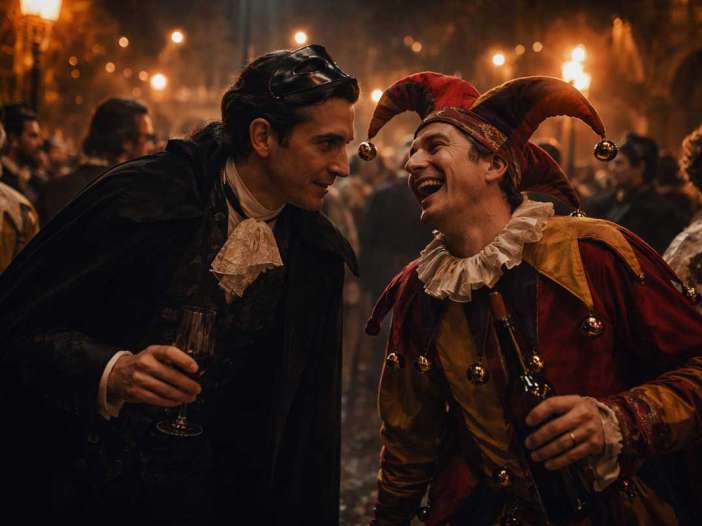
What if Edgar Allan Poe was warning us about moral certainty, not madness?Introduction by Edgar Allan Poe I have often been accused of dwelling too closely upon the darker chambers of the human soul. Yet I have never believed that terror is born of violence alone. It is born of certainty—of the calm conviction that one is right, and need not explain.The Cask … [Read more...] about Edgar Allan Poe’s The Cask of Amontillado Explained
The Taming of the Shrew Explained for Modern Readers

What if Shakespeare invited leading scholars to explain The Taming of the Shrew to a modern audience, without defending it? Introduction by William Shakespeare Good friends, before you judge this comedy by its laughter, I ask you to listen for what laughter covers.When I wrote The Taming of the Shrew, I did not set out to craft a lesson wrapped neatly … [Read more...] about The Taming of the Shrew Explained for Modern Readers
Macbeth analysis of ambition that turns into terror

What if Macbeth had to defend his choices with no prophecy to blame?Introduction by William ShakespeareMacbeth analysis begins in the most dangerous place of all: a mind that hears a sentence and calls it destiny. I did not write this tragedy to prove that witches can rule men like puppets. I wrote it to show how easily a man will offer himself to ruin when he … [Read more...] about Macbeth analysis of ambition that turns into terror
Love Toni Morrison Summary: The Women in Cosey’s Wake

What if Toni Morrison sat with us and asked who “love” really protects? Introduction by Toni MorrisonTonight, I want to start with the title—because Love is not a comforting word in this book. It’s a word people use to cover what they cannot—or will not—name. “Love” can be a veil thrown over power. It can be the excuse a community repeats so it doesn’t have … [Read more...] about Love Toni Morrison Summary: The Women in Cosey’s Wake