
|
Getting your Trinity Audio player ready...
|
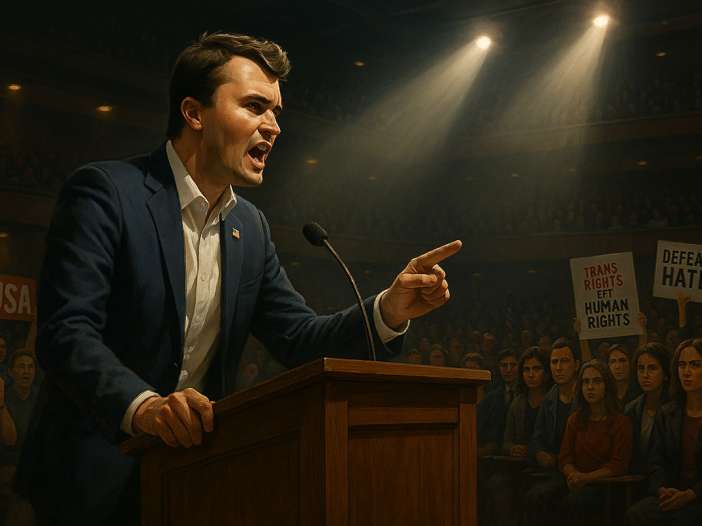
Introduction by Charlie Kirk (After Death)
You’re probably expecting me to sound different now that I’m gone — quieter, more reflective, maybe even apologetic. Don’t hold your breath. Death doesn’t change truth, it only strips away the fear of speaking it.
I was accused of being hateful, divisive, and dangerous. Fine. If defending the unborn, if standing against gender ideology, if warning against open borders and broken culture makes me hateful in your eyes, then so be it. I didn’t live to win popularity contests. I lived to say what too many were afraid to say.
This conversation isn’t a séance or a ghost story. Think of it as my voice refusing to be silenced, even in death. The left threw their toughest questions at me, and I’ll answer them the same way I always did: without apology, without retreat, and without compromise.
(Note: This is an imaginary conversation, a creative exploration of an idea, and not a real speech or event)

Topic 1 — Rhetoric, Hate, and Responsibility
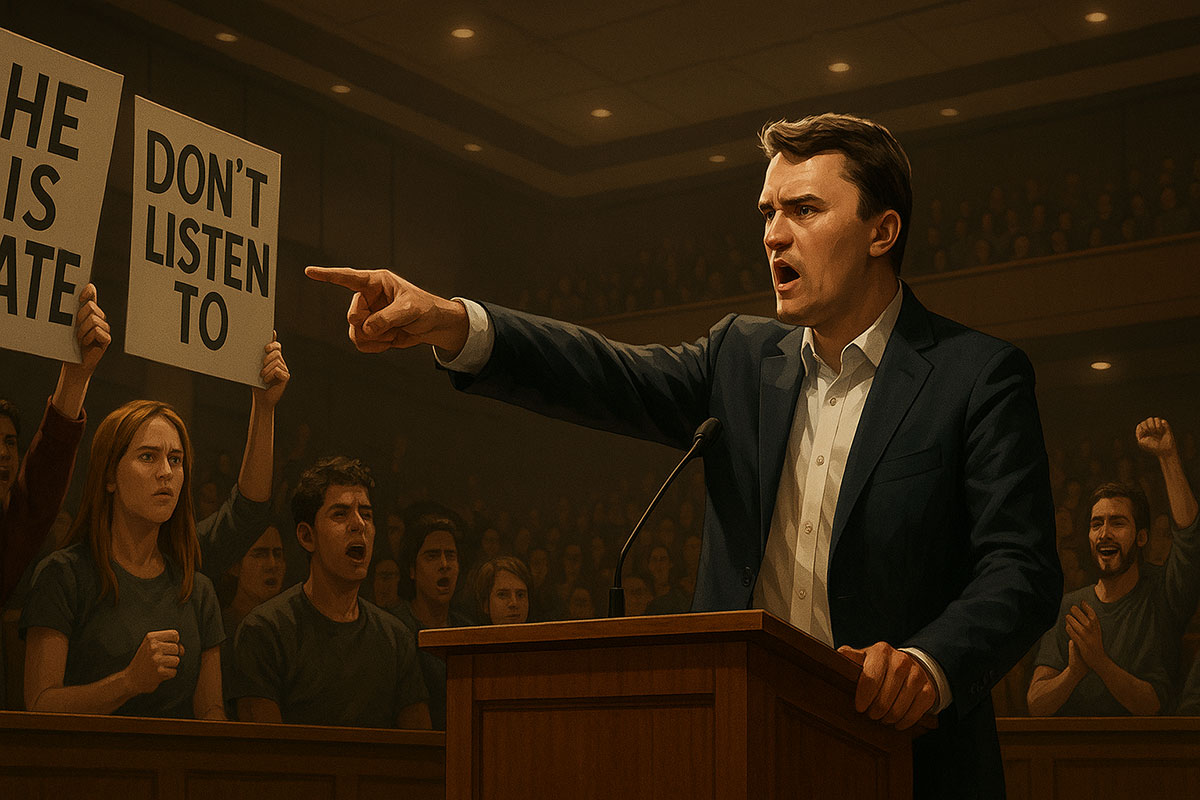
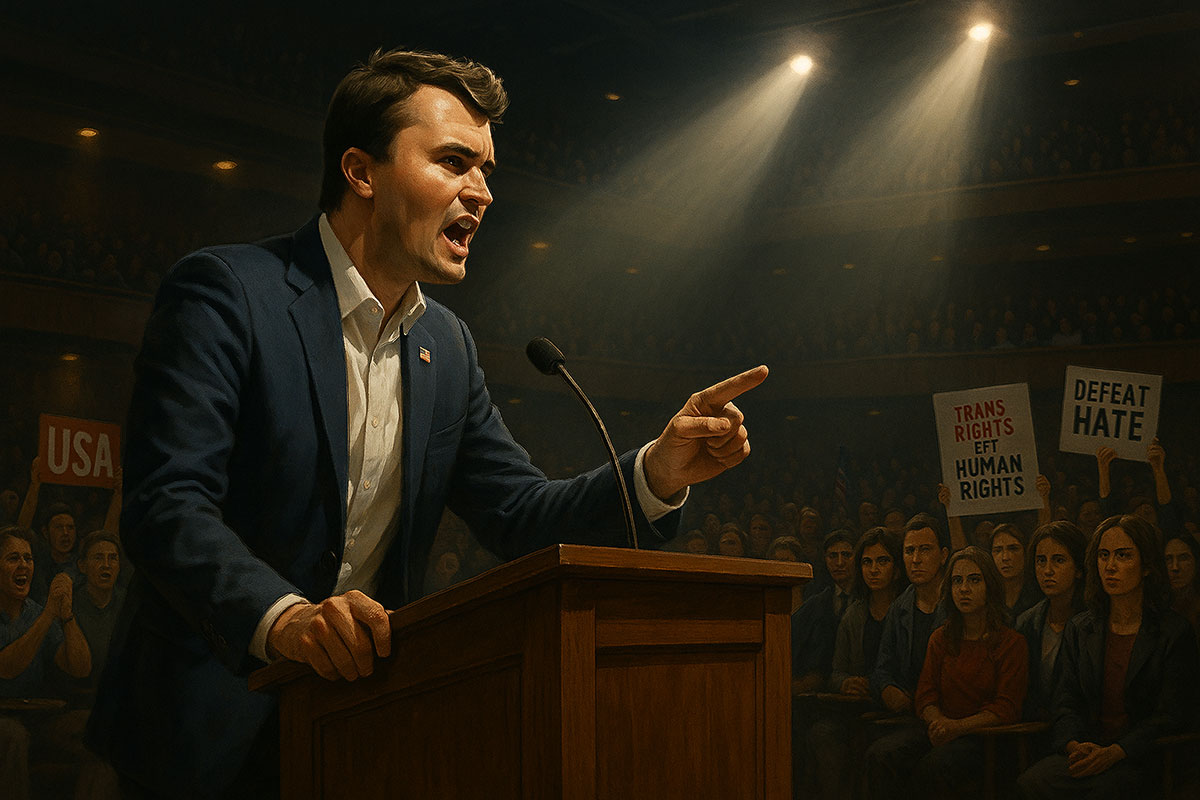
Student 1:
Why did you spend so much of your platform attacking transgender people instead of focusing on issues that affect all Americans?
Charlie Kirk:
First of all, I reject the framing of that question. I never attacked people — I attacked bad ideas. That’s a huge difference. When I said, “There are only two genders,” I wasn’t singling out an individual to bully. I was standing for a truth that’s been recognized for thousands of years across every culture and civilization. If we lose the ability to define something as basic as male and female, we lose the ability to define anything.
Now, did I talk about this issue a lot? Yes, because it became the wedge the left used to push into schools, sports, locker rooms, and even medical decisions for children. If I didn’t push back, who would? Should I have ignored it and talked only about tax policy? That would have been easier, but it wouldn’t have been honest.
So, no — I don’t apologize for focusing on this. It affects all Americans, because when truth is compromised in one area, society crumbles everywhere.
Student 2:
Do you accept that your rhetoric may have contributed to the rise of hostility and violence toward LGBTQ communities?
Charlie Kirk:
No, I don’t accept that. And I’ll tell you why. Violence comes from the people who choose to commit it, not from people debating ideas. If you start blaming speech for violence, you’re on a dangerous path — because then any strong opinion can be silenced by labeling it “dangerous.”
The left loves to pretend that disagreement equals harm. That’s not true. I disagreed with LGBTQ ideology. That’s not the same as saying someone deserves violence. In fact, I condemned violence repeatedly. The idea that my words “caused” violence is not only false, it’s an attempt to shut down debate.
If you really believe in free speech, you have to tolerate strong speech — even when it makes you uncomfortable. I never called for harm. I called for truth. That’s a big difference, and I stand by it.
Student 3:
Do you regret normalizing inflammatory language that may have inspired division or hatred?
Charlie Kirk:
No, because I don’t believe in tiptoeing around the truth to avoid hurting feelings. The left wants everyone to speak in “safe” language — but what that really means is controlled language. It means you can never challenge their sacred cows.
Division didn’t start with me. Division comes from radical activists who demand society deny biological facts, shut down dissent, and punish anyone who doesn’t comply. I didn’t create the division — I exposed it.
Now, was I sharp at times? Absolutely. Was I passionate? Yes. But passion is not hate. Clarity is not cruelty. I wasn’t there to make everyone feel good — I was there to make people think. Sometimes truth divides. That’s the nature of it. Jesus himself said, “I came not to bring peace, but a sword.” Truth cuts. If that caused division, I’d argue the division was already there — I just brought it into the open.
Student 4:
What do you say to young people who believe your words fueled bullying and hostility in schools and online?
Charlie Kirk:
I’d say this: don’t confuse responsibility. If a student bullied another because they heard me say, “There are two genders,” the problem is with the bully, not with me. Should we hold rappers accountable if someone copies their lyrics to insult someone? Should we hold comedians accountable if someone repeats a joke cruelly? Of course not.
I taught young people to speak boldly. To stand against the cultural tide. To not be intimidated. That’s not bullying — that’s courage. And courage always looks like aggression to people who are used to cowardice.
If someone misused my words as an excuse to hurt someone, that’s wrong, but it’s not my responsibility. I never said, “Mock people.” I said, “Stand for truth.” If young people can’t tell the difference, maybe that’s a failure of parenting, education, and culture — but it’s not a failure of my message.
Charlie’s Closing Words
When people accuse me of fueling hate, what they’re really saying is: “You spoke truths we didn’t like, and now we want to silence you.” But I won’t play that game. I won’t let accusations of “harm” muzzle speech that challenges the prevailing narrative.
I never bent to the mob because I believed our civilization was at stake. If young people felt my words were sharp, good — sometimes you need a jolt to wake up. Better to be offended by words than destroyed by lies.
That’s what I stood for, and that’s what I’d still say today.
Topic 2 — Freedom, Speech, and Polarization
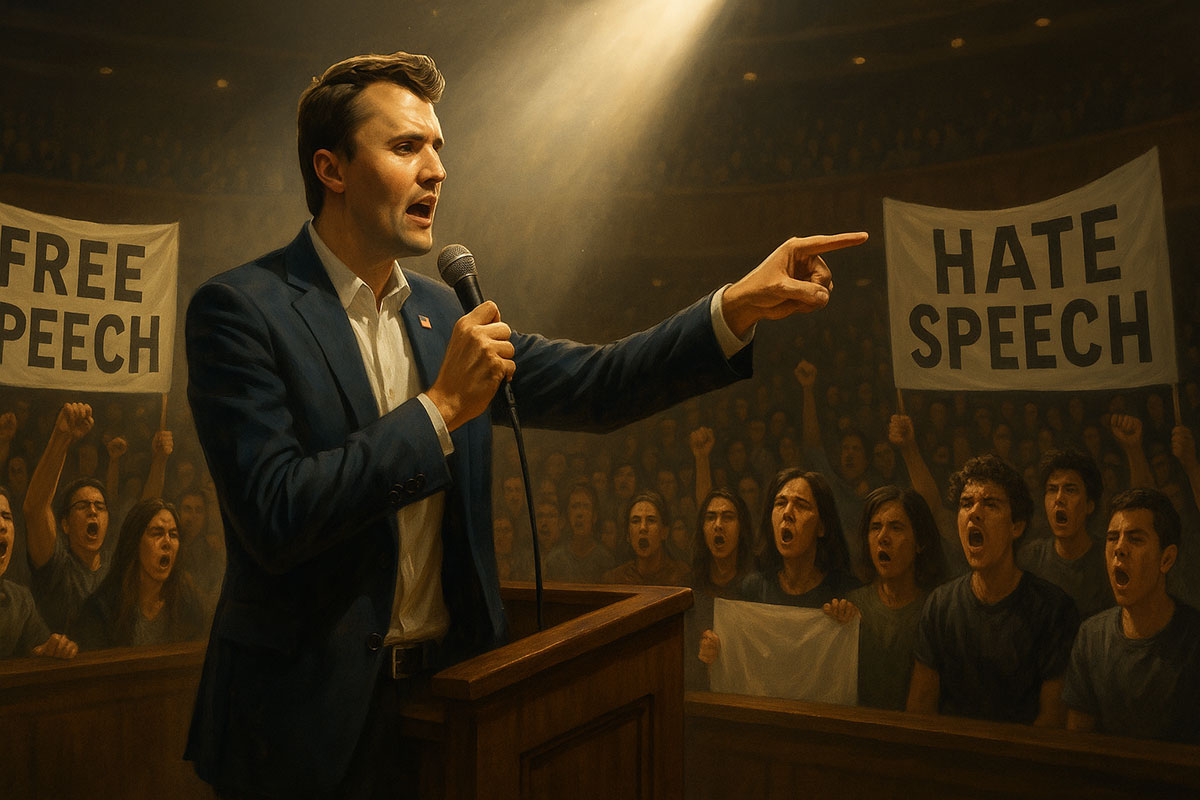
Student 1:
How do you reconcile calling yourself pro-life while supporting policies that many see as anti-healthcare and anti-welfare for vulnerable families?
Charlie Kirk:
Here’s the problem with that framing: the left loves to say, “If you’re pro-life, then you must support my entire welfare state.” No. Being pro-life means protecting the unborn child from being killed in the womb. Full stop. That’s the most fundamental human right. Without life, there are no other rights.
Now, do I want families to thrive? Of course. But I reject the idea that government handouts are the solution. In fact, I believe they often trap people in dependency and poverty. You think you’re helping families by giving them a government check, but what you’re really doing is robbing them of dignity and long-term opportunity.
I reconcile this easily: I’m pro-life because I defend life from conception. I’m pro-family because I believe strong families, churches, and communities should be the safety net — not a bloated, bankrupt federal bureaucracy. That’s not hypocrisy. That’s consistency.
Student 2:
Why did you dismiss systemic racism when so many Americans live with its daily consequences?
Charlie Kirk:
Because “systemic racism” has become a catch-all phrase for every inequality in society. Did racism exist in America’s past? Absolutely. Did laws exist that were racist? Yes. But today, the law protects equal rights. Show me one law on the books that says a person is lesser because of their skin color. You can’t.
What I dismissed wasn’t the existence of racism — it was the weaponization of that term to silence debate and justify radical policies. If a student fails in school, it’s not automatically “systemic racism.” If someone doesn’t get hired, it’s not automatically “systemic racism.” Sometimes it’s about hard work, preparation, and choices.
The left wants young people to believe they are permanently oppressed victims. I reject that. I tell them: you are free, you are capable, and you are responsible for your own destiny. That message might not be popular, but it’s empowering. And I’ll take empowerment over victimhood every single time.
Student 3:
How do you justify championing “free speech” while also trying to silence educators, journalists, or activists who disagreed with you?
Charlie Kirk:
I never tried to silence anyone. I challenged them. And there’s a difference. When a professor pushes radical gender ideology onto students, I have every right to call it out. That’s not silencing — that’s accountability.
The left confuses criticism with censorship. If I say, “That teacher is wrong, and parents should know about it,” suddenly I’m accused of attacking free speech. No — I’m using my free speech to expose bad ideas.
Free speech does not mean freedom from consequences. If you spread misinformation in a classroom, you should be held accountable by parents and taxpayers. If a journalist lies, they should be confronted. That’s not silencing. That’s truth meeting error.
The left wants a monopoly on speech. I fought for competition in speech. That’s what real free speech looks like.
Student 4:
Why did you encourage distrust of mainstream media while building your own echo chamber through Turning Point USA?
Charlie Kirk:
Because the mainstream media earned that distrust. They lied about Russia collusion. They lied about Hunter Biden’s laptop. They lied about COVID policies. They lied about “mostly peaceful protests” while cities burned. They deserved to be distrusted.
Now, about the echo chamber accusation: every movement has its institutions. CNN is an echo chamber. MSNBC is an echo chamber. The New York Times is an echo chamber. Why is it only a problem when conservatives build our own platforms?
Turning Point USA was never about censorship. It was about giving young conservatives a voice on campuses where they were silenced. Was it a strong viewpoint? Absolutely. Was it an echo chamber? Only if you believe conservative students shouldn’t have a voice at all.
I encouraged distrust of corrupt institutions because they betrayed trust. And I built new institutions so truth could compete in the marketplace of ideas. That’s not hypocrisy. That’s strategy.
Charlie’s Closing Words
Here’s the reality: America doesn’t suffer from too much free speech — it suffers from too little tolerance for free speech. Every time I spoke boldly, the left screamed “polarization!” But polarization is just what happens when truth collides with lies.
I never pretended to be neutral. Neutrality in the face of falsehood is cowardice. I chose to be clear. And clarity creates sides. That’s not me dividing America. That’s me refusing to bow to the demand that we all repeat the same slogans.
So how do I reconcile my positions? Easily. I’m pro-life because I value life. I reject systemic racism narratives because I value personal responsibility. I defend free speech by using mine to confront bad ideas. And I built platforms because the mainstream ones were corrupt.
If that makes me polarizing, so be it. Better to be polarizing than paralyzed.
Topic 3 — Guns, Violence, and Real-World Consequences
Student 1:
Did you ever consider how your confrontational style might escalate into real-world violence, including against yourself?
Charlie Kirk:
Yes, I considered it. And I chose to keep speaking anyway. If you’re afraid that strong words might trigger violence, then you’ve already surrendered free speech. Should Martin Luther King Jr. have stopped marching because racists might respond violently? Should abolitionists have stopped preaching because slaveholders got angry? Of course not.
Confrontation doesn’t create violence — it exposes it. I was confrontational because I believed we were being lied to about basic truths. If my words stirred people, that’s the sign of a healthy debate, not a reason to self-censor.
And as for violence against me? Look, I knew the risks. When you take on powerful cultural lies, you become a target. But silence is worse than risk. I’d rather face hostility for speaking the truth than enjoy safety by being a coward.
Student 2:
Do you accept that your stance on guns may have undermined efforts to reduce the epidemic of gun violence?
Charlie Kirk:
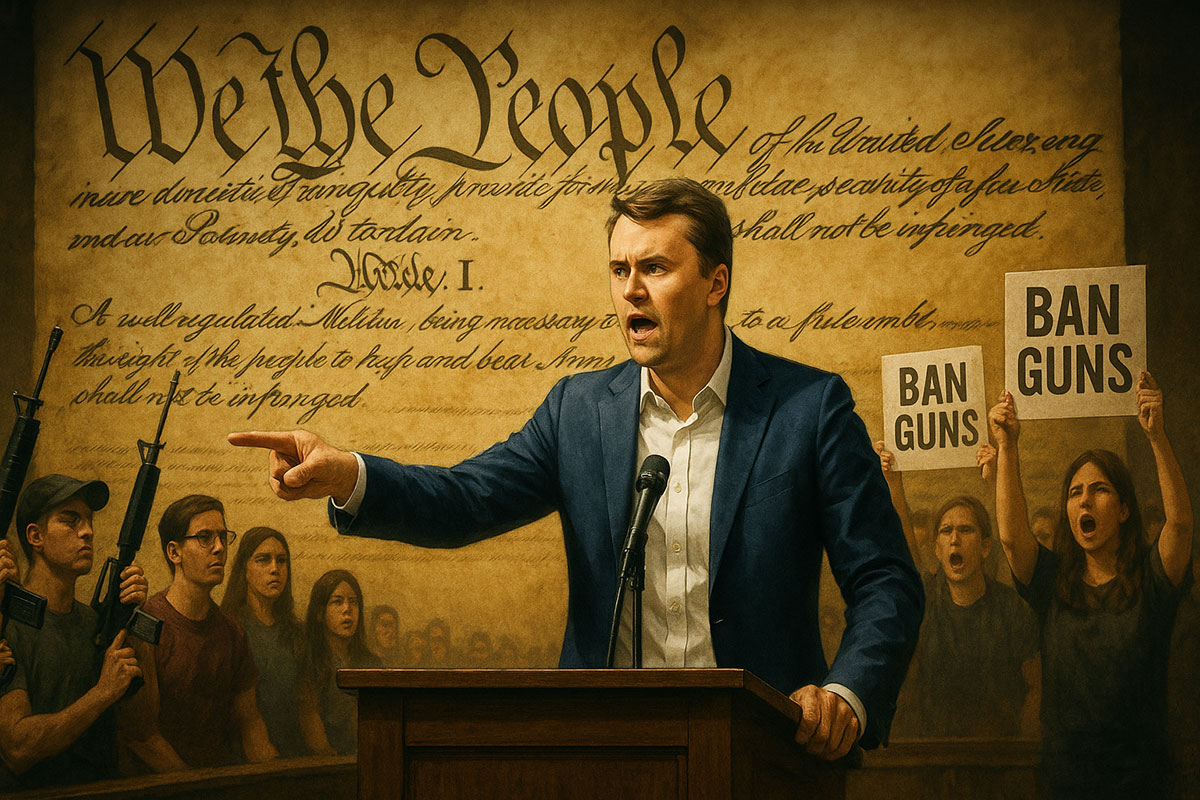
Absolutely not. In fact, I would argue the opposite: my stance on guns was the only rational approach to stopping violence. Gun violence doesn’t come from guns — it comes from people. Evil people. Broken people. Criminals who don’t follow laws in the first place.
The left thinks if you pass another law, suddenly criminals will obey. That’s fantasy. Chicago has some of the toughest gun laws in the country — and also some of the worst gun crime. That’s proof that gun control doesn’t work.
My position was simple: the best defense against evil is a good person with a gun. I trust law-abiding citizens more than bureaucrats. If you really want to reduce violence, restore strong families, bring back faith, and end the cultural rot. Take away guns from good people, and you don’t get peace — you get victims.
Student 3:
What would you say to marginalized communities who felt directly harmed by your words and policies?
Charlie Kirk:
I’d say: disagreement is not harm. We have to stop confusing those two. If my words hurt your feelings, that doesn’t mean I caused you material harm. It means I challenged an idea you hold dear. That’s the essence of free society.
But I’d also say this: I never targeted communities out of hate. I targeted ideologies I believed were destructive. If you’re in a marginalized group and you felt harmed, I want you to know — my fight was not against you as a human being. It was against systems and narratives that I believe weaken America.
Here’s what no one on the left will admit: the policies I fought for — strong families, safe communities, fewer government handouts — actually benefit marginalized groups the most. A neighborhood where fathers are present, schools are disciplined, and police are respected is a safer, stronger, more prosperous neighborhood. That’s good for everyone, regardless of race, gender, or identity.
Student 4:
If you could speak to the families of those hurt by hate crimes that your critics link to your rhetoric, what would you say?
Charlie Kirk:
I’d say first and foremost: I grieve with you. Losing a loved one to violence is horrific, and no political debate can justify that. But then I’d add: don’t let the left manipulate your grief by blaming me or anyone else for crimes we never committed.
I never told anyone to hurt another person. Not once. If someone committed a hate crime and quoted my words, they twisted them beyond recognition. That’s on them, not on me. Holding me accountable for their evil is like blaming a preacher for a sinner’s crime, or blaming a song lyric for a murder. It’s dishonest.
What I would say is this: real solutions to hate crimes don’t come from censorship. They come from truth, from rebuilding moral culture, from strengthening the bonds that make us see each other as fellow Americans. Blaming rhetoric is a lazy excuse that distracts from the real work of fixing broken hearts and broken communities.
Charlie’s Closing Words
Here’s the truth: violence has always existed. Guns have always existed. What’s changed isn’t the hardware — it’s the heart. We’ve raised a generation disconnected from faith, family, and purpose. That’s the soil in which violence grows.
My critics want you to believe that if Charlie Kirk had spoken more softly, the world would be gentler. That’s nonsense. Evil doesn’t care about tone. Evil thrives in silence, not confrontation. I was loud because the stakes were high.
Guns are not the problem. Ideas are. Culture is. The breakdown of the family is. And the left refuses to face that because it indicts their own policies.
So no, I don’t accept blame for gun violence, or hate crimes, or hostility. I accept blame only if I had stayed quiet while lies spread unchecked. And that’s one blame I’ll never carry.
Topic 4 — Division, Identity, and Legacy
Student 1:
Why did you often frame immigration as a threat rather than as part of America’s strength and diversity?
Charlie Kirk:
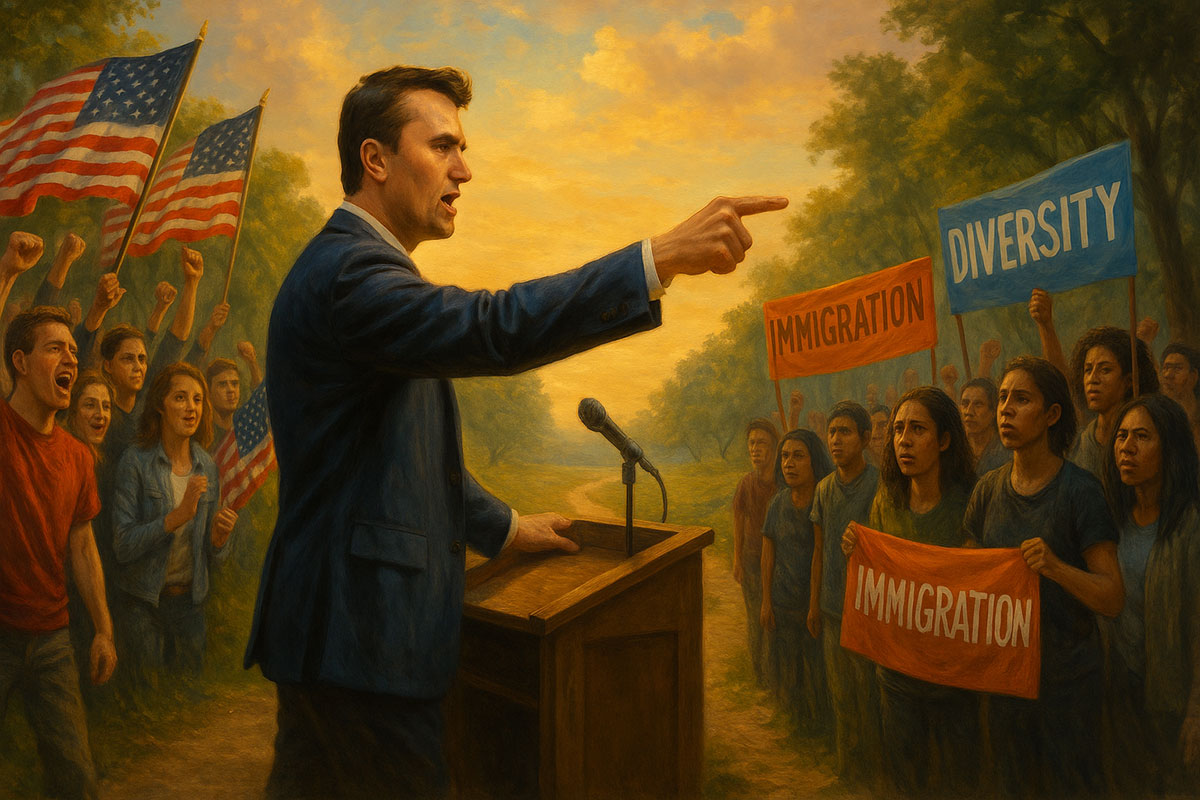
Because uncontrolled immigration is a threat. I never opposed immigrants who come here legally, who work hard, who assimilate into the American way of life. My problem was with illegal immigration and open borders. That’s not strength — that’s chaos.
When millions cross the border unchecked, it strains schools, hospitals, housing, and wages. It empowers cartels, traffickers, and drug runners. That doesn’t make America stronger; it makes us weaker.
The left loves to romanticize immigration as if it’s always Ellis Island in 1900. But this isn’t Ellis Island anymore. This is the southern border overwhelmed with fentanyl, gangs, and lawlessness. I framed it as a threat because it is one. And any leader who sugarcoats that is lying to you.
Student 2:
What do you say to critics who believe your activism deepened America’s political polarization more than it helped civic dialogue?
Charlie Kirk:
I say polarization already existed — I just refused to hide it. The left wants “dialogue” only if it means conservatives shut up and accept their terms. That’s not dialogue. That’s surrender.
Did my activism energize conservatives? Absolutely. Did it make the left angrier? Sure. But that’s not polarization — that’s clarity. For too long, conservatives were afraid of being called mean, so they kept quiet while the left rewrote the rules. I said, “Enough.”
Polarization is the natural result of taking sides. And sometimes, taking sides is the only moral option. Was America polarized over slavery? Yes. Over segregation? Yes. Some issues aren’t solved with polite middle ground — they’re solved with conflict, with debate, and yes, sometimes with division.
So, if my activism made people pick sides, good. At least now the lines are clear.
Student 3:
How do you respond to people who accuse you of profiting from outrage rather than seeking genuine solutions?
Charlie Kirk:
That’s a lazy attack. Yes, I built a movement. Yes, it raised money. You know why? Because people believed in it. People don’t donate unless they feel their voice is being amplified.
The left never accuses MSNBC, CNN, or Planned Parenthood of “profiting from outrage,” even though that’s their entire business model. They only accuse conservatives because they don’t think we’re allowed to organize, fundraise, or build institutions.
Did I speak passionately? Absolutely. Did it attract attention? Of course. But I also built Turning Point USA into one of the largest youth conservative organizations in America. We trained students, hosted conferences, debated professors, and built real communities. That’s not grifting. That’s grassroots.
If outrage funded it, it’s because outrage was justified. Outrage isn’t the enemy. Outrage at lies, corruption, and cultural rot is the beginning of change.
Student 4:
Do you think your legacy will be remembered as building hope for conservatives — or spreading fear of “the other”?
Charlie Kirk:
That depends on who you ask. My critics will always say I spread fear. But my supporters know I spread courage. Courage to speak. Courage to push back. Courage to not be silenced by accusations of “hate” or “phobia.”
The left calls it “fear of the other” when conservatives defend borders, traditions, and truth. That’s not fear — that’s preservation. That’s responsibility. You can’t have a nation if you don’t defend its culture and values.
As for hope — yes, I gave conservatives hope, especially young people. They saw someone not afraid of cancel culture. They saw someone who said, “You’re not crazy, you’re not alone, you’re not wrong.” That gave them permission to be bold too.
Legacy isn’t about pleasing everyone. It’s about whether you stood firm in your time. My legacy will be judged as one of defiance, of conviction, and of rallying a generation to stand up when silence was easier. And I’m fine with that.
Charlie’s Closing Words
Division is not always bad. Sometimes division is the necessary prelude to clarity. I didn’t divide America — I revealed the division that was already there.
Immigration, race, gender, family, freedom — these aren’t minor disagreements. These are fundamental questions of what America is and will be. Pretending we can just “dialogue” them away is naïve. Conflict was inevitable. I chose to be honest about it.
Yes, I raised money. Yes, I built a brand. But behind that brand were thousands of young people who felt abandoned by their culture and found a home in our movement. That’s not exploitation. That’s leadership.
And as for legacy? History will decide. But I’d rather be remembered as someone who fought too hard than as someone who sat on the sidelines while the country he loved was dismantled piece by piece.
Topic 5 — Reflection, Regret, and Lessons
Student 1:
Did you ever worry that aligning so closely with the culture wars overshadowed more constructive conservative policies, like economic reform?
Charlie Kirk:
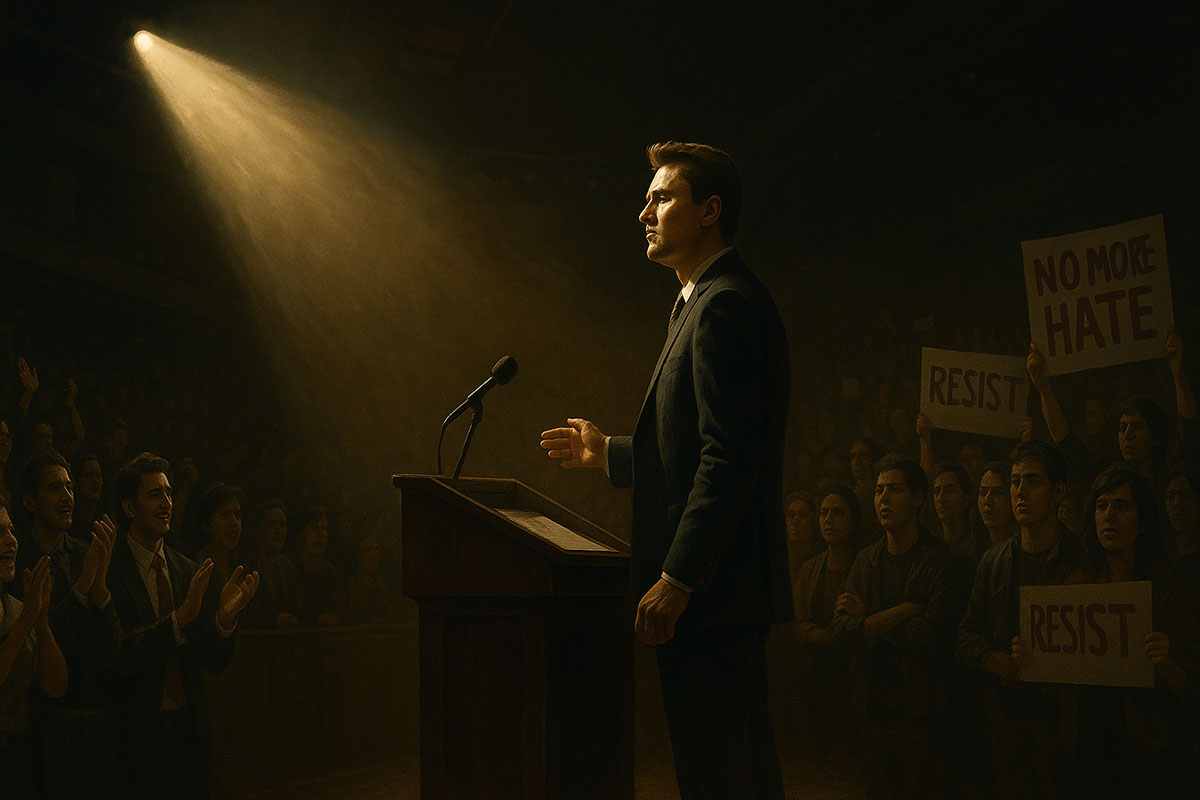
No, because the culture war is the real war. You can have the best economic plan in the world, but if the culture collapses, it doesn’t matter. If people can’t even agree on what a man or a woman is, how are they going to agree on tax policy? If families are broken and values are gone, what good are balanced budgets?
I focused on the culture because I understood something a lot of old-school conservatives didn’t: politics flows downstream from culture. You can win a tax cut today and lose a generation tomorrow if you don’t fight for the culture. That’s why I chose that battlefield. I don’t regret it for a second.
Student 2:
Looking back, would you have chosen to be less combative and more unifying in your speeches?
Charlie Kirk:
No. That’s not who I was, and it wouldn’t have worked. The left didn’t want unity — they wanted surrender. They wanted me to “tone it down” so they could advance their agenda without opposition. If I had softened my message, they would’ve steamrolled me and everyone I represented.
Was I combative? Yes, because the times demanded it. We were up against institutions — universities, Hollywood, Big Tech, the media — all aligned to push radical ideas onto young people. You don’t politely whisper when the house is on fire. You shout.
Unity sounds nice, but it often means compromise with lies. I’d rather be combative in defense of truth than “unifying” in service of falsehood.
Student 3:
Do you acknowledge that your movement sometimes spread misinformation — and if so, what responsibility do you bear for that?
Charlie Kirk:
Look, I’ll be honest: in the fast-moving world of politics, sometimes people on my team shared things too quickly. Everyone does it — left and right. But here’s the bigger issue: who decides what counts as misinformation? CNN? The New York Times? The so-called “fact-checkers” who are just activists with laptops?
I never deliberately spread lies. What I did was challenge the establishment narrative. And nine times out of ten, the stuff they called “misinformation” turned out to be true a year later. Remember when they censored talk of COVID’s origins? Or Hunter Biden’s laptop? Or the failures of lockdowns? I was called a liar for pointing those out, but eventually the facts caught up.
So no, I don’t carry guilt for “misinformation.” My responsibility was to question the regime narrative and defend free inquiry. If that made the gatekeepers uncomfortable, good. That means I was doing my job.
Student 4:
Finally, if your life and death serve as a lesson, what do you think it should teach about the dangers of words, ideology, and violence in America?
Charlie Kirk:
The lesson is not “don’t speak boldly.” The lesson is “evil hates the truth.” If I became a target, it wasn’t because my words were dangerous — it was because my words were effective. People don’t assassinate irrelevant voices. They silence those who challenge power.
Ideology is dangerous when it demands blind obedience, when it punishes dissent, when it says, “Shut up or else.” That’s the ideology I fought against. Violence comes when people stop debating and start eliminating opposition. I never called for that. I called for more debate, more speech, more engagement.
If there’s a lesson from my life and death, it’s this: don’t underestimate the power of conviction. Words matter. They can inspire courage, they can rattle tyrants, they can change history. And yes, they can also make you enemies. But better to live — and die — as someone who spoke the truth than to live quietly as a spectator in a time of great conflict.
Charlie’s Closing Words
Regret? No. Reflection? Plenty.
I don’t regret being combative, because the left doesn’t play fair. I don’t regret focusing on the culture, because that’s where the soul of America is decided. And I don’t regret refusing to bow, because apologizing to the mob only makes them hungrier.
What I reflect on is this: did I equip enough young people to keep fighting after me? Did I raise up leaders who won’t fold under pressure? Did I make conservatives believe they had a future on hostile campuses and in hostile media environments? That’s the measure of my life.
The truth is dangerous. It always has been. But silence is deadlier. If you take one lesson from me, let it be this: never let fear of backlash stop you from standing for what’s right. America is worth the fight — and the fight is never over.
I never apologized then. I won’t start now. Because truth demands nothing less.
Final Thoughts by Charlie Kirk (After Death)
If you wanted me to back down, even in death, you’ll be disappointed. My critics say my words caused harm. I say their lies caused rot. They wanted me to be softer. I chose to be sharper. They wanted me to unify. I chose to clarify.
Legacy isn’t about whether everyone claps for you — it’s about whether you stood for something that mattered. I know I did. I stood against lies when it was easier to stay silent. I stood for truth when it was easier to bow to the mob. And I stood unafraid of death, because conviction is stronger than fear.
So here’s the lesson: don’t wait until you’re gone to be bold. Speak now. Fight now. Live unapologetically now. Because when the final chapter is written, you won’t be judged by how safe you played it. You’ll be judged by whether you told the truth — even if it cost you everything.
Short Bios:
Charlie Kirk (1993–2025) was an American conservative activist, commentator, and founder of Turning Point USA, one of the most influential youth-oriented conservative organizations in the United States.
Born in Arlington Heights, Illinois, Kirk entered politics at a young age and quickly rose to prominence through his sharp rhetoric and ability to energize conservative students on college campuses. In 2012, at just 18 years old, he founded Turning Point USA with the mission of promoting free markets, limited government, and individual responsibility. Under his leadership, the group expanded to thousands of chapters nationwide and became a hub for conservative youth activism.
Kirk was known for his bold, often combative speaking style, delivering frequent appearances on college campuses, media outlets, and podcasts. He thrived in debate-style settings, where he confronted critics directly and framed himself as a defender of conservative values against what he saw as left-wing cultural dominance.
Beyond his activism, Kirk also co-founded Turning Point Action and Turning Point Faith, extending his organization’s reach into politics and religion. He authored several books, including The MAGA Doctrine (2020), where he aligned himself with the America First agenda and became a close ally of Donald Trump.
Kirk’s career was marked by controversy as much as influence. Supporters praised him as a fearless truth-teller who mobilized a new generation of conservatives, while critics accused him of spreading divisive rhetoric and targeting vulnerable communities.
Regardless of perspective, Kirk left a lasting impact on American political culture. By his early thirties, he had built a nationwide movement that shaped conservative discourse and made him one of the most visible and polarizing figures of his generation.
Leave a Reply