
Introduction — Desmond Tutu
(His voice warm, humble, with a touch of gravity, setting the moral stage.)
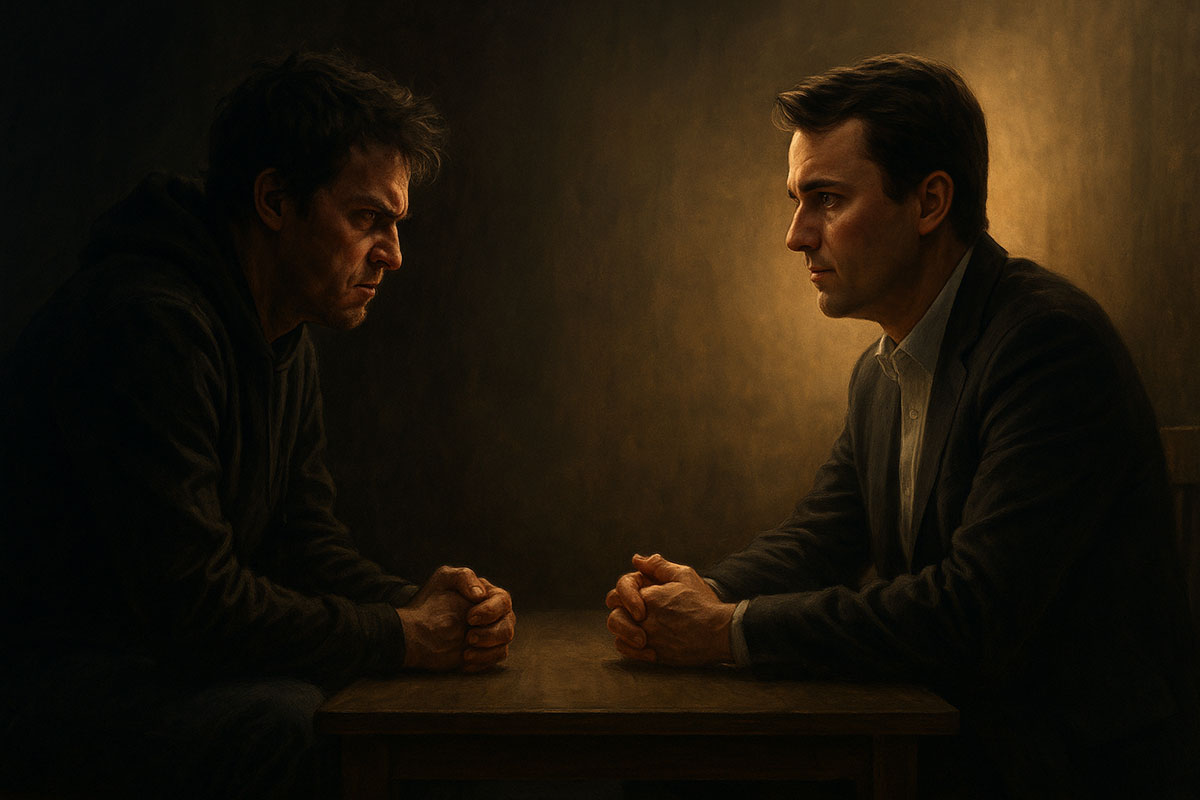
“My dear friends, before us lies not a debate of politics, nor a quarrel of labels, but the raw encounter between two souls. One, a young man burning with rage, feeling unseen and unheard. The other, a man who has built his life speaking boldly of faith and nation.
It would be easy—so very easy—for these two to remain enemies. The world around them feeds that story: divide, hate, destroy. But today, let us imagine another story.
In South Africa, I witnessed what happens when hate festers—it consumes lives, families, entire nations. Yet I also witnessed what happens when one person dares to see the humanity in another. Healing begins not in grand speeches, but in listening.
So let us listen now—not to arguments, but to hearts. Let us walk with Charlie and Tylor as they move from anger, to questioning, to recognition of their shared humanity. For reconciliation is never the work of angels alone—it is the brave work of men and women willing to see that even their enemy is, in truth, a brother.
This conversation, though imagined, calls us to a truth desperately needed in our world: that peace is not forged by silencing the other, but by opening space for both voices to speak, to wrestle, to be heard.
May this dialogue remind us that no one is beyond redemption, and no conflict too great for compassion to enter. With that, let us listen together.
(Note: This is an imaginary conversation, a creative exploration of an idea, and not a real speech or event)
Topic 1: The Value of Being Heard

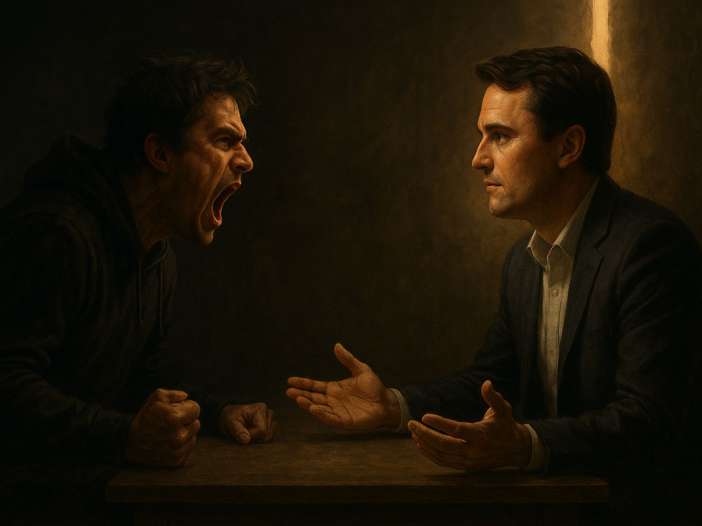
Scene: A quiet room, no cameras, no audience. Two chairs face each other. Tylor slams the door behind him, fists clenched, his voice already raised. Charlie stays seated, his hands open on his lap.
Tylor (shouting):
You think you’ve got all the answers, don’t you? You stand on stage, preaching about God, freedom, whatever, like you know what it’s like for the rest of us. You don’t care about people like me. You only care about people who cheer for you!
Charlie (calmly):
I hear the anger in your voice. And I don’t blame you for letting it out. You feel like no one cares, and that the system ignores you. Is that right?
Tylor (snapping back):
Of course it’s right! Politicians, churches, the media—everybody’s lying. They all pick their side, and people like me get crushed. You’re part of it. You pretend you’re for the people, but really you’re just feeding your crowd!
Charlie (nodding slowly):
That’s a fair accusation. I can see why you’d think that. When someone like me stands on a stage, it’s easy to imagine we’re detached from the pain on the ground. But I need you to know something: I don’t think you’re invisible. Right now, you’ve got my full attention.
Tylor (still heated):
Your attention doesn’t fix anything. My life is still broken. My future is still trash. I’m stuck in a world that doesn’t care whether I live or die!
Charlie (leaning forward):
And yet—you showed up here, to say these words to me. That tells me you do care about whether you live or die. Deep down, you’re fighting to be heard, to not vanish. You matter.
Tylor (hesitates, voice cracking slightly):
…Don’t tell me I matter. Everyone says that. But they don’t mean it. They just say it to shut me up.
Charlie (softly):
I’m not trying to shut you up. I’m asking you to keep talking. Tell me more about the part of your life that feels broken. What do you want me to understand?
Tylor (pauses, breathing heavy, then blurts out):
I want you to know what it feels like to wake up every day and feel like nothing’s ever going to change. I work hard, I try to be decent, but it’s like the game is rigged. People talk about the “American Dream,” but it’s a joke. For me, it’s just survival.
Charlie (listening, nodding):
That’s real. Survival mode is exhausting. And when you see others celebrating success, it feels like a slap in the face.
Tylor (still defensive):
Exactly! And then people like you stand there and talk about faith and family values, like that fixes rent, or stops the bills, or keeps me from drowning. It’s easy for you to preach.
Charlie (with empathy):
You’re right, preaching alone doesn’t pay the bills. And I don’t want to insult you with easy slogans. What I can do, right now, is sit here and let you pour it out. No judgment. No cameras. Just you and me.
Tylor (quieting a little):
Why would you even care what I say? You already made it. You’ve got your platform, your followers. Why listen to some nobody?
Charlie (firm but gentle):
Because there’s no such thing as a nobody. You’ve got a name, a story, a voice. And right now, you’re teaching me something I can’t learn from books or speeches—you’re teaching me what it feels like to stand in your shoes.
Tylor (long pause, softer):
…Nobody’s ever said it like that. Usually when I start talking, people just shut down or argue back.
Charlie (sincerely):
I won’t shut you down. Even if you curse at me, even if you say things that sting, I’d rather hear your truth than live inside my assumptions.
Tylor (sits back, voice calmer):
You don’t get it though—anger’s the only thing that keeps me moving. If I stop being angry, I feel…empty.
Charlie (leaning in):
I get that. Anger feels powerful, like fuel. But it burns fast, doesn’t it? Leaves you exhausted, hollow. What if there was another way to find that strength—one that didn’t leave you drained?
Tylor (looking down, thinking):
I don’t know. I wouldn’t even know where to start.
Charlie (gently):
You just started. Right here, by telling me how you feel. You think this is weakness? It’s not. It takes guts to admit emptiness.
Tylor (meeting his eyes):
So what? I tell you this, and then what? My life’s still the same.
Charlie (steady):
Maybe your life doesn’t change overnight. But here’s the truth: you’re not alone in that feeling. Millions of people wake up with that same weight. And if you and I can sit here, across this divide, and not kill each other with words—that’s already something different. That’s a crack in the wall.
Tylor (sighs, voice much softer now):
I didn’t think you’d actually listen.
Charlie (smiles faintly):
Listening is the first step. If we can keep talking, maybe the next step will show itself.
Narrative Reflection:
The room grows quieter. Tylor’s body language has shifted—less clenched fists, more open hands resting on his knees. His breathing has slowed. He’s still guarded, but the temperature has dropped. For the first time, he sees Charlie not as an enemy behind a podium, but as a man across from him, willing to listen without interruption.
In this space, anger has lost some of its grip. What replaces it is not agreement, but something more fragile: the possibility of being understood.
Topic 2: Faith, Doubt, and the Search for Truth
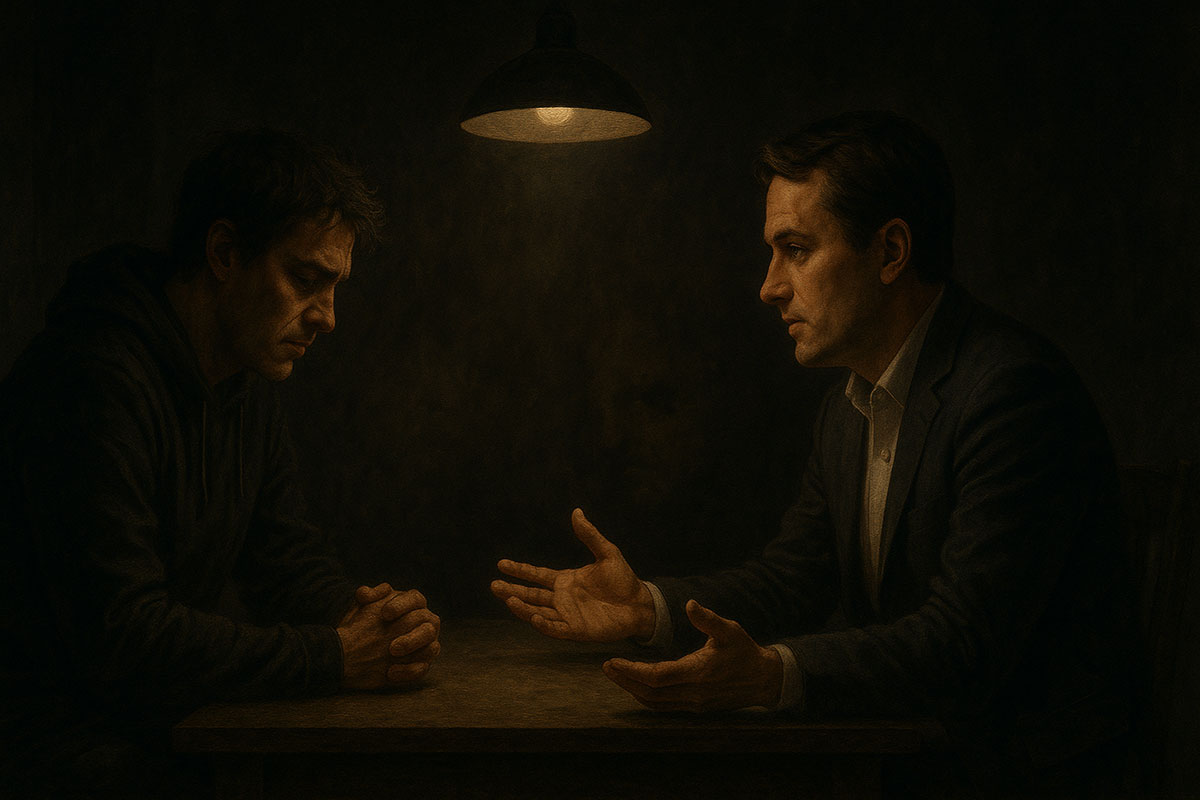
Scene: The room feels less tense now. Tylor has stopped pacing. He leans back in his chair, arms crossed but less tightly than before. Charlie remains patient, letting silence breathe until Tylor speaks again.
Tylor (hesitant, still guarded):
You know what bugs me most? People like you always bring God into everything. You talk about “faith” like it’s the answer. But for me, faith feels like a trick. Something leaders use to keep people quiet while nothing changes.
Charlie (nodding slowly):
I hear that. You’re not alone in feeling that way. A lot of people think faith is just a leash—something meant to control rather than free.
Tylor (leaning forward, frustrated):
Exactly. My parents dragged me to church when I was a kid. The sermons were about heaven and hell, rules and punishments. But when the service ended, those same people were gossiping, judging, living like hypocrites. That’s when I said, “Forget it.”
Charlie (gentle, not defensive):
I get it. Hypocrisy turns people away more than anything else. And if that’s the only faith you saw, then walking away might have been the most honest thing you could do.
Tylor (pauses, surprised):
Wait—you’re not gonna argue with me? You’re not gonna tell me I should’ve stuck it out?
Charlie (smiles faintly):
No. Because doubt is part of faith. Even I wrestle with questions. I’ve had nights where I thought, “God, are You even there? Or am I talking to the ceiling?”
Tylor (studying him, quieter):
You? The guy who makes a living talking about God?
Charlie (sincerely):
Yes. Just because I stand on a stage doesn’t mean I’m immune to doubt. It means I’ve fought through it enough to see some light on the other side. But that doesn’t erase the struggle.
Tylor (looking down):
I don’t know… For me, the struggle never ends. If there’s a God, He sure doesn’t care about me. Look at my life. Look at this country. If He’s real, why doesn’t He fix it?
Charlie (leaning in, softer):
That’s the oldest, hardest question. “Why doesn’t God fix it?” I don’t pretend to have a perfect answer. But I’ve come to believe this: God gave us freedom. And freedom means the chance to choose—sometimes for good, sometimes for evil. The mess isn’t always His doing; it’s ours.
Tylor (shakes his head):
So we’re just supposed to clean it up ourselves? That’s hopeless. People are too selfish.
Charlie (acknowledging):
True—on our own, we fail a lot. But I’ve seen people change in ways that make no sense without something bigger helping them. Addicts who break free. Families who forgive after years of hatred. Even nations healing after war. To me, that’s God moving through broken people, not erasing the struggle but transforming it.
Tylor (thoughtful, voice softer):
…Sounds nice. But it still feels like wishful thinking.
Charlie (respectfully):
I get why you’d say that. And I don’t want to force belief on you. What I want is for you to see that searching, questioning, even doubting—those aren’t signs of weakness. They’re signs that you care about truth.
Tylor (leaning back, sighs):
Truth. That word. Everyone claims they’ve got it. Politicians, pastors, professors. But it’s always their version, and you’re wrong if you don’t buy in.
Charlie (quietly):
And maybe that’s where faith comes in. Not as blind obedience, but as courage to keep asking: What’s true? Who can I trust? What actually lines up with reality? Faith is less about having every answer, more about not giving up the search.
Tylor (pauses, staring at the floor):
So you’re saying faith is… the fight to keep looking? Even when you don’t like what you find?
Charlie (nodding):
Exactly. Faith doesn’t mean you stop doubting. It means you doubt, but you keep moving anyway.
Tylor (soft laugh, shaking his head):
Funny. I never thought I’d hear that from you. Thought you’d be here telling me I’m damned if I don’t believe.
Charlie (smiling gently):
If I came at you like that, would you even listen?
Tylor (half-smile, reluctant):
…No. I’d probably walk out.
Charlie (serious, leaning closer):
Then let’s keep it real. I’m not here to win an argument. I’m here to know you, to understand where you’re coming from. And maybe, just maybe, in the middle of doubt and anger, we can find a little truth together.
Narrative Reflection:
The tension that dominated the first encounter has softened into something more vulnerable. Tylor still carries skepticism like armor, but for the first time, he’s let Charlie peek behind it. He realizes that even the man he considered an enemy wrestles with questions.
For Tylor, this is disorienting—he expected a fight, not a companion in the search. For Charlie, it’s an opening: the beginning of a dialogue where doubt isn’t an obstacle but a doorway to deeper connection.
Topic 3: Shared Humanity Over Labels

Scene: The air in the room is calmer now. Tylor’s shoulders no longer look like stone. He sits back, chewing on Charlie’s last words. Charlie stays patient, waiting for Tylor to re-engage.
Tylor (gruffly):
You know, the truth is, half the time I don’t even care about religion or politics. I just hate the way people slap labels on me—conservative, liberal, angry, lost. It’s like I’m just some file in their cabinet.
Charlie (nodding):
I know that feeling. People slap labels on me every day—Christian nationalist, far-right, fascist, you name it. And sometimes, I wonder if anyone sees me as just… Charlie.
Tylor (snorts):
Yeah, well, at least your label comes with a crowd cheering for you. Mine just makes people cross the street when they see me coming.
Charlie (softly):
That hurts. Being reduced to a label instead of being seen as a person.
Tylor (pauses, then mutters):
Feels like you’re invisible, even when everyone’s looking right at you.
Charlie (leaning forward):
Exactly. And yet, here’s the thing—I believe before anything else, before conservative or liberal, believer or skeptic, rich or poor… we’re human. Made with dignity. And no label gets to erase that.
Tylor (defensive again, but weaker):
That sounds good on paper, but in reality, labels run the world. You’ve got your side, I’ve got mine. That’s the battlefield.
Charlie (steady):
But do you really think that’s all we are—soldiers on opposite sides? Or are we sons, maybe fathers, brothers, neighbors first?
Tylor (looks away, quieter):
I don’t know. Sometimes it feels like that’s just a fantasy. Like, sure, we’re all “human,” but in the real world, sides are everything.
Charlie (gently):
Let me ask you something. If you got sick—really sick—and ended up in the hospital, would you care whether the nurse leaning over you voted red or blue?
Tylor (stares at him, caught off guard, then shakes his head):
…No. I’d just want them to take care of me.
Charlie (nodding):
Right. Because in that moment, it’s not about labels. It’s about being alive. It’s about one human caring for another.
Tylor (sighs, his tone softer):
You make it sound so simple. But then I turn on the news, or go online, and it’s nothing but people screaming, calling each other monsters.
Charlie (acknowledging):
That’s true. The noise is constant. But let’s not confuse the noise with reality. The media thrives on division, but when you sit across from someone face to face—like you and me right now—it’s harder to hate.
Tylor (pauses, studying him):
So what are you saying? That I should just forget the labels, pretend they don’t exist?
Charlie (carefully):
Not forget them. They matter, sometimes. But they’re not the core of who we are. They’re coats we wear. Underneath, there’s something deeper—something no label can touch.
Tylor (half-smile, bitter):
And what’s that? My “soul”?
Charlie (without hesitation):
Yes. Your soul, your humanity, your story. Whatever word you want to use—it’s the part of you no political tag can define.
Tylor (shakes his head, but his voice is gentler now):
You talk like you actually believe people can look past all that.
Charlie (firmly):
I do. Because I’ve seen it. I’ve sat with people who hate everything I stand for, and when we put the slogans aside and talk like humans, something shifts. Not agreement, maybe, but recognition.
Tylor (leans back, almost whispering):
Recognition. That’s what I’ve wanted my whole life. Just for someone to say, “I see you.”
Charlie (softly):
I see you, Tylor. Not the label. Not the anger. The man.
Tylor (eyes glisten, quickly looks away):
Don’t… don’t say that like it fixes everything.
Charlie (gentle smile):
It doesn’t fix everything. But maybe it’s a start.
Tylor (after a long silence, voice breaking slightly):
You know, I never thought I’d hear someone like you say that. I always pictured you looking at people like me and seeing… trash.
Charlie (quietly, with conviction):
Never trash. Broken, maybe. Hurt, definitely. But still human. And humans can heal.
Tylor (wiping his face quickly, defensive again):
Don’t get ahead of yourself. I’m not suddenly your friend.
Charlie (nodding respectfully):
I’m not asking you to be my friend. I’m just asking you to remember that before you’re anything else—before you’re “angry,” before you’re “liberal,” before you’re “the guy no one listens to”—you’re Tylor. A man whose life matters.
Narrative Reflection:
For the first time, the room holds more than anger—it holds vulnerability. Tylor feels exposed, caught between wanting to reject Charlie’s words and wanting desperately to believe them.
He came in prepared to fight a “conservative figurehead,” but instead he’s discovering something unsettling: a man who refuses to box him into a label. The walls aren’t down completely, but a crack has opened wide enough for light to slip through.
Topic 4: The Cost of Violence
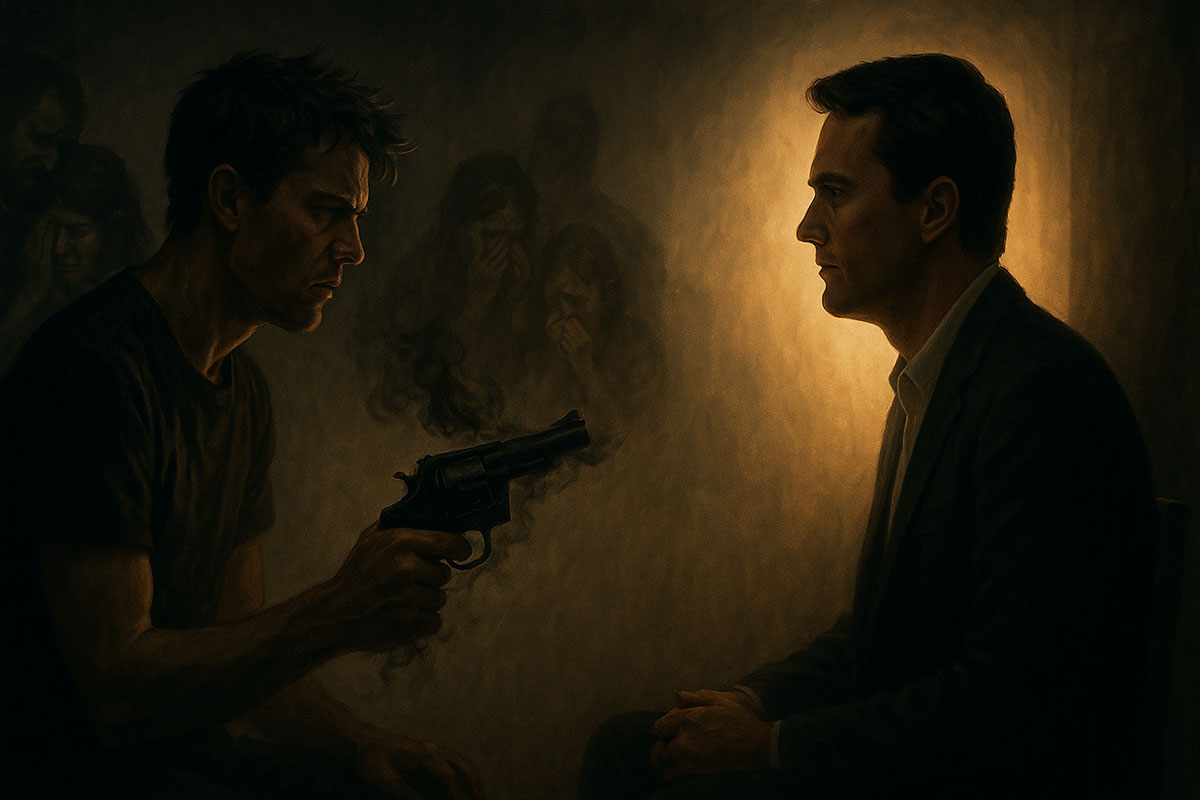
Scene: The room is quieter now. Tylor leans forward, elbows on his knees, his face shadowed. Charlie senses the heaviness and decides it’s time to touch the hardest subject.
Charlie (steady, calm):
Tylor, can I ask you something hard?
Tylor (defensive):
What now?
Charlie (softly):
When you walked in here earlier, what did you imagine happening between us?
Tylor (hesitates, jaw tightens):
…Honestly? I pictured finally shutting you up. Permanently.
Charlie (nods slowly, not flinching):
Thank you for being honest. That’s not easy to admit out loud.
Tylor (snapping):
Don’t thank me. I’m not proud of it. It’s just the truth. People like you… I thought if I could take you out, it would prove something. That it would make the world hear me.
Charlie (gently, leaning in):
And do you still believe that? That killing me would make the world hear you?
Tylor (voice sharp, then falters):
I… I don’t know. At the time, yeah. But saying it now, it sounds… empty.
Charlie (quietly):
Because it is empty. Violence doesn’t fill the hole inside—it just makes it deeper.
Tylor (angry again, clenching fists):
But what else am I supposed to do? Talking doesn’t change anything. Protesting doesn’t change anything. Nobody listens until something explodes.
Charlie (firm, compassionate):
I understand why you think that. The world glorifies explosions—big, loud acts of violence that dominate the news. But look closer, Tylor. What happens after the smoke clears?
Tylor (bitter laugh):
More smoke. More hate.
Charlie (nodding):
Exactly. The cycle doesn’t break. Families grieve. Children grow up fatherless. Communities get torn apart. And the person who pulled the trigger—he doesn’t become a hero. He becomes a ghost, erased by the very act he thought would make him matter.
Tylor (quietly, staring at the floor):
…A ghost.
Charlie (gentle, leaning forward):
Yes. A ghost who leaves nothing behind but pain. And I don’t believe that’s who you really want to be.
Tylor (struggling, voice trembling with anger and hurt):
You think I don’t already know that? Every time I pictured it, I saw the blood. I saw the families crying. And part of me hated myself for even imagining it. But the rage… it’s like fire. It blinds me.
Charlie (soft, steady):
And fire burns the one holding it, too. You’d lose yourself, Tylor. You’d lose everything—your freedom, your future, even your own soul.
Tylor (eyes narrowing, whispering):
And you.
Charlie (meeting his eyes without fear):
And me. Yes. But let me tell you something—my life isn’t mine alone. If you took it, you wouldn’t just silence me. You’d wound my wife, my family, the people who look to me for strength. They’d carry that wound forever.
Tylor (voice breaking):
That’s exactly why it scared me. Because deep down I know what that would mean. I know it wouldn’t just be about me. It would wreck everything.
Charlie (softening, leaning closer):
And you don’t want to wreck everything. You want to be seen. You want to matter. But violence won’t give you that. It will rob you of it.
Tylor (tears in his eyes, shaking his head):
Then what am I supposed to do with all this anger? It’s like it’s the only thing keeping me alive.
Charlie (gentle, but firm):
You hand it over. Not to me, not to politicians, but to something bigger than you. To God, if you’re willing. Or, if you’re not ready for that, at least to the truth that life is worth more than rage. Because once you let go, you can start building instead of burning.
Tylor (long silence, breathing heavy):
You really believe people can change? Even people like me?
Charlie (without hesitation):
I do. I’ve seen it. I’ve watched men with blood on their hands turn into protectors of life. I’ve seen addicts become healers. Skeptics become seekers. I believe that same story could be yours.
Tylor (shaking his head, whispering):
It’s hard to believe.
Charlie (gently):
It’s always hard to believe before it happens. But Tylor, you’re standing at a crossroads. One road leads to destruction—for you and everyone around you. The other… maybe it doesn’t promise easy answers, but it does promise the chance to live. To heal. To mean something good.
Tylor (voice cracks, almost pleading):
And if I can’t walk that road? If the anger’s too strong?
Charlie (reaches out a hand, steady):
Then let someone walk with you. Don’t carry it alone. Because carried alone, it will crush you. Shared, it can start to heal.
Narrative Reflection:
The silence in the room is heavier now, but not with rage—with the weight of realization. Tylor sits hunched forward, trembling between despair and relief. For the first time, he’s naming the darkness inside without glorifying it. Charlie’s words don’t erase his anger, but they begin to show him what that anger would cost—not only to others, but to himself.
And deep in Tylor’s heart, a seed of doubt about violence begins to grow—not the doubt that says “maybe I should,” but the doubt that whispers, “Maybe I shouldn’t.”
Topic 5: A Moment of Conversion: Choosing Life Over Hatred
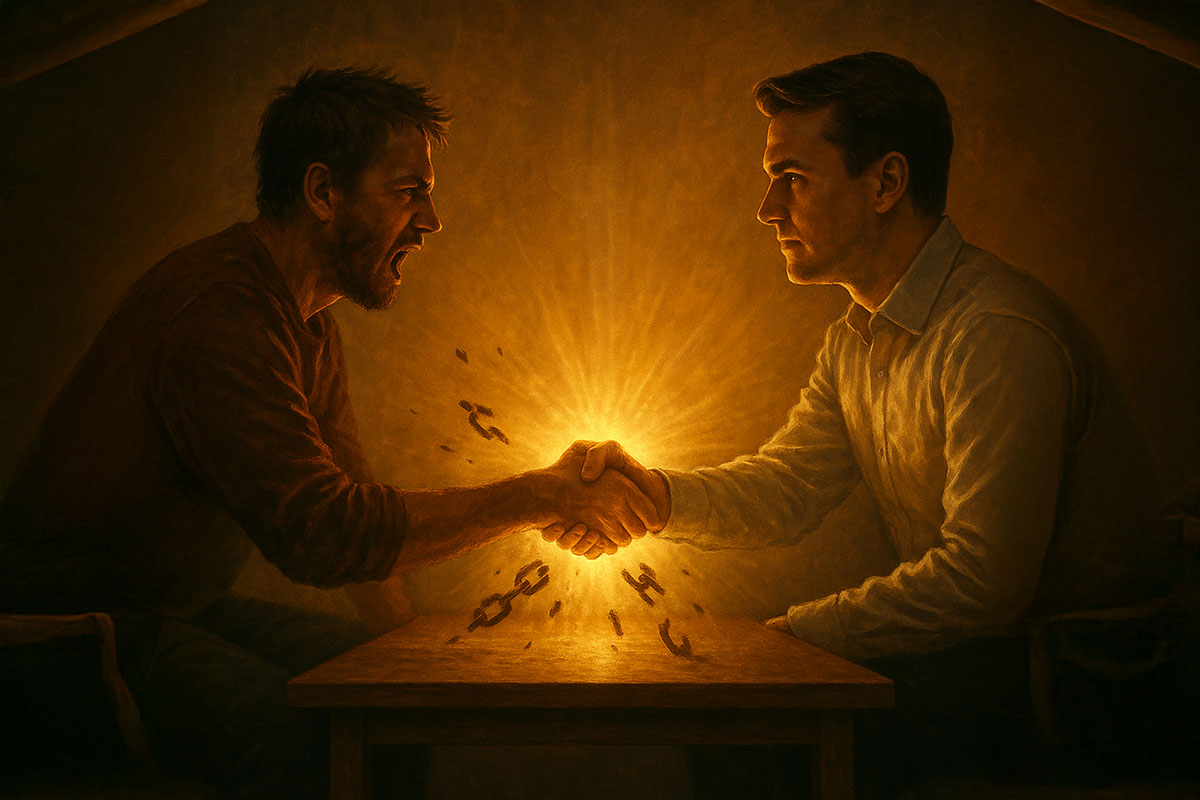
Scene: The room is still. The storm of anger has passed, leaving Tylor hunched forward, staring at the floor. His fists are unclenched now. Charlie waits, giving space for silence to do its work. Finally, Tylor speaks.
Tylor (hoarse whisper):
You said I’m at a crossroads. That’s what it feels like. One way is dark, violent, final. The other… I don’t even know where it leads. But at least it’s not blood.
Charlie (gentle, leaning closer):
That uncertainty you feel—that’s the beginning of hope. It means you’re imagining a future that doesn’t end in destruction.
Tylor (shaking his head, almost angry again):
But what if I can’t keep it up? What if the rage comes back tomorrow and I’m right back where I started?
Charlie (calm, steady):
It might. Rage doesn’t vanish in a night. But here’s the difference: tonight you’ve seen another option. You’ve seen that you don’t have to obey the anger. Every day, you get to choose again.
Tylor (long pause, then softly):
Choice. That’s the part I never believed. I thought I was just stuck—trapped in the same cycle, carrying hate until it finally exploded.
Charlie (nodding):
You’re not stuck. You’re freer than you realize. And freedom isn’t just about politics—it’s about the power to choose life instead of death, forgiveness instead of bitterness, building instead of tearing down.
Tylor (eyes glistening):
You make it sound like I could actually matter. Like I could do something that… heals, instead of destroys.
Charlie (with conviction):
You could. Imagine this: the same passion that made you want to take life could one day help you save it. The same fire that nearly consumed you could light someone else’s path out of darkness.
Tylor (quietly, almost to himself):
Save life instead of taking it…
Charlie (softly):
Yes. And you wouldn’t be the first. History is full of people who turned from violence to compassion—people who found meaning not in destruction, but in helping others find their way.
Tylor (hesitant, voice cracking):
But would anyone believe me? Everyone already thinks I’m just another angry nobody.
Charlie (firm):
They don’t have to believe it today. You start by believing it yourself. And then, you prove it with the way you live, one choice at a time.
Tylor (tears forming, whispering):
I don’t know if I believe in God the way you do… but maybe… maybe I can believe in that. In living instead of dying.
Charlie (smiles gently):
That’s a powerful start. Belief doesn’t have to begin with answers—it begins with a decision. And you just made one.
Tylor (after a long silence, looks Charlie in the eyes):
You know what scares me most? That if I had gone through with it… I wouldn’t just have ended your life. I would’ve ended mine, too. And for what? A headline? A scar that never heals?
Charlie (softly):
You’re right. Violence doesn’t just kill bodies—it kills futures. But tonight, you’ve chosen differently. You’ve chosen to keep your future alive.
Tylor (breathing heavy, then exhaling slowly, as if releasing a weight):
Then maybe this is the first time I’ve actually felt free. Not chained to hate. Not chained to the past. Just… free.
Charlie (smiling, voice warm):
That’s what real conversion looks like, Tylor. Not forced, not manipulated, but a turning from death to life. And that’s something anyone—liberal, conservative, believer, skeptic—can respect.
Tylor (quietly, almost a vow):
Then I choose life. I don’t know where it leads, but I choose it.
Charlie (offering his hand):
And I’ll walk with you, as long as you let me.
Tylor (hesitates, then grips Charlie’s hand firmly):
Thank you… for seeing me.
Narrative Reflection:
The handshake lingers—not just as a gesture of peace, but as a sign of transformation. Tylor entered the room ready to kill; he leaves it having chosen life. Not because he suddenly shares Charlie’s politics or theology, but because he discovered something deeper: his own humanity, mirrored in another’s eyes.
This is the kind of conversion that transcends ideology—a choice that liberals and conservatives alike could agree on. Not the conversion of one worldview to another, but the conversion of hatred into hope, of destruction into dignity.
And in that fragile, powerful moment, a new story begins.
Final Thoughts by Maya Angelou
(Her voice lyrical, steady, with deep maternal strength. Closing with poetry and hope.)
My beloveds, what we have witnessed is not a fairy tale, but the rough labor of human transformation. A man once chained by fury found his hands unclenched. Another, once seen only as a target, became a mirror of dignity.
They did not agree on every doctrine. They did not solve every wound. But they touched something far greater—the sacred truth that each life matters. That we can choose, even in the furnace of anger, to lay down the weapon and extend a hand.
I have said before, ‘We are more alike, my friends, than we are unalike.’ And here, you have seen it proven true. When labels fell away, when violence was named for what it truly is—emptiness—the light of our shared humanity shone through.
And so I leave you with this charge: do not wait for leaders or heroes to bring peace. Begin where you are. At your table. In your home. In your heart. Ask the question that matters most: not ‘Who is right?’ but ‘Who is human, like me?’
For when we honor that truth, we break chains—not only from each other, but from ourselves.
And in that breaking, we are free.
Free to choose love over hatred. Free to build, not to burn. Free, at last, to be whole.”
Short Bios:
Charlie Kirk
Charlie Kirk is an American conservative activist, author, and speaker. He is the founder and president of Turning Point USA, a nonprofit organization that advocates for conservative values on college campuses and in public life.
Desmond Tutu
Desmond Tutu (1931–2021) was a South African Anglican bishop and human rights activist. He played a major role in opposing apartheid and later chaired the Truth and Reconciliation Commission, earning the Nobel Peace Prize in 1984.
Maya Angelou
Maya Angelou (1928–2014) was an American poet, singer, dancer, actress, and civil rights activist. Best known for her memoir I Know Why the Caged Bird Sings, she became a voice for dignity, resilience, and human equality.
Tylor Robinson
Tylor Robinson is the man accused in the killing of Charlie Kirk in September 2025. His case has drawn attention as an example of how anger, division, and radicalization can lead to tragic consequences.
Leave a Reply