
|
Getting your Trinity Audio player ready...
|
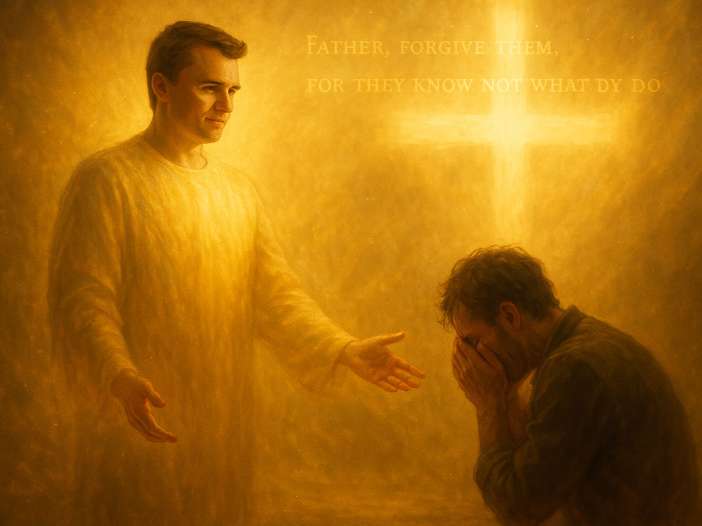
Introduction by Charlie Kirk
Life… it’s so fragile. We live as if tomorrow will always be there, but it isn’t promised. Every sunrise, every heartbeat, is a gift. I look back now, and I see how easy it is to spend our days chasing things that fade—anger, pride, success, the approval of others. But in the end, eternity is what waits. Death doesn’t close the story. It only reveals what we carried in our hearts all along.
For me, my heart belonged to Jesus Christ. He’s the one who showed the world what love really is. He loved even when the world hated Him. He forgave even when He was betrayed. His life was not just an example, it was a calling—a reminder that mercy is stronger than vengeance and that hope is never extinguished, even in the darkest moment. That truth became my anchor.
So if I had one final chance to meet the man who ended my life, I would not scream at him. I would not curse him. I would not condemn him. I would look him in the eye and give him what was given to me: forgiveness. This story is not about revenge. It’s about grace breaking into darkness. It’s about mercy stronger than tragedy. It’s about the miracle that forgiveness makes possible.
(Note: This is an imaginary conversation, a creative exploration of an idea, and not a real speech or event)

Scene 1: The Meeting in Light
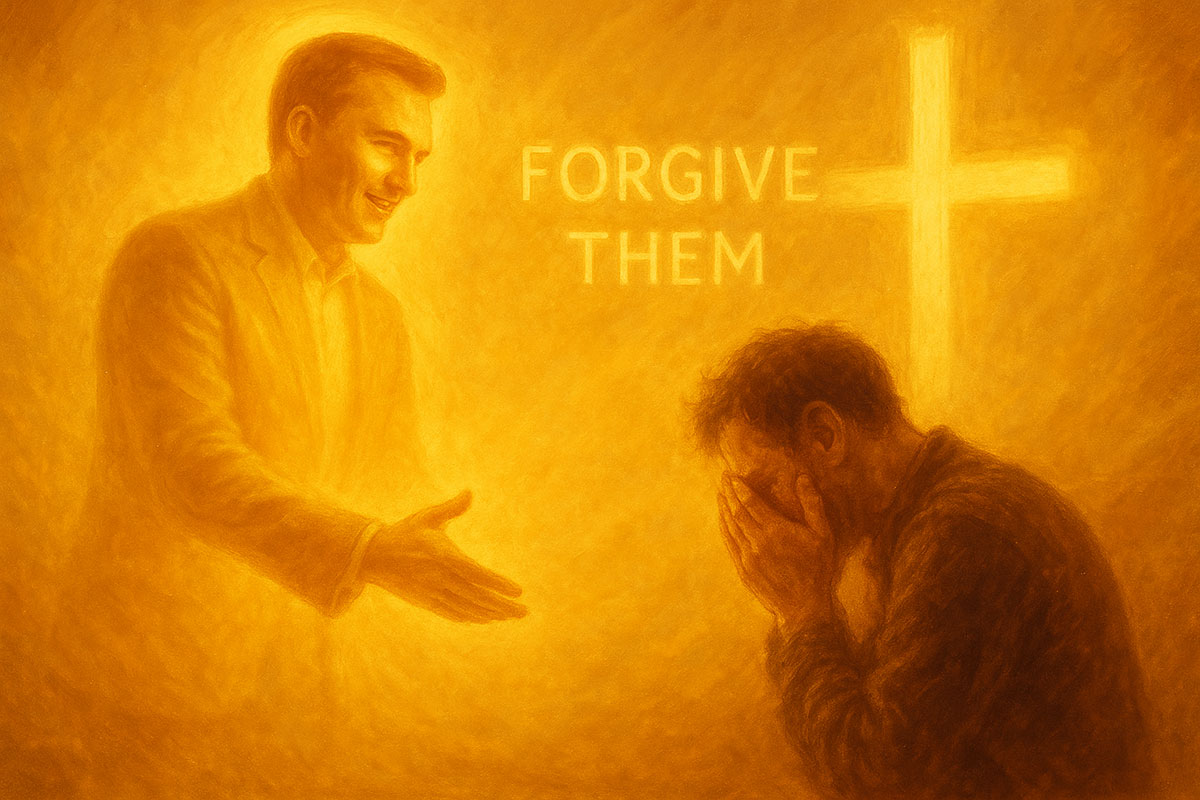
A boundless golden expanse, shimmering like dawn. The killer stands, trembling, unsure if this is judgment or madness. Suddenly, Charlie appears—his figure radiant yet calm, eyes full of compassion, not wrath.
Charlie (his voice warm, carrying eternity’s resonance):
“You expected fire, condemnation, and rage. But see—here I am, not in hatred, but in the love of Jesus Christ. You took my life, but my life was never truly mine. It belonged to Him, and in Him it continues. Death did not silence me, and it cannot silence the One who sent me.”
The Killer (staggering back, his breath catching):
“No… you can’t… You shouldn’t look at me like that. I don’t deserve those eyes. I destroyed you. I ended everything you were.”
Charlie (taking a step forward, radiant but gentle):
“You ended nothing. My body fell, but my soul rose to Jesus. And He brought me here—not to curse you, but to offer what only He can give: forgiveness. Not earned. Not deserved. Pure grace.”
The killer’s knees wobble. He grips his chest as though pierced by something unseen, struggling to breathe under the weight of such words.
Scene 2: The Resistance
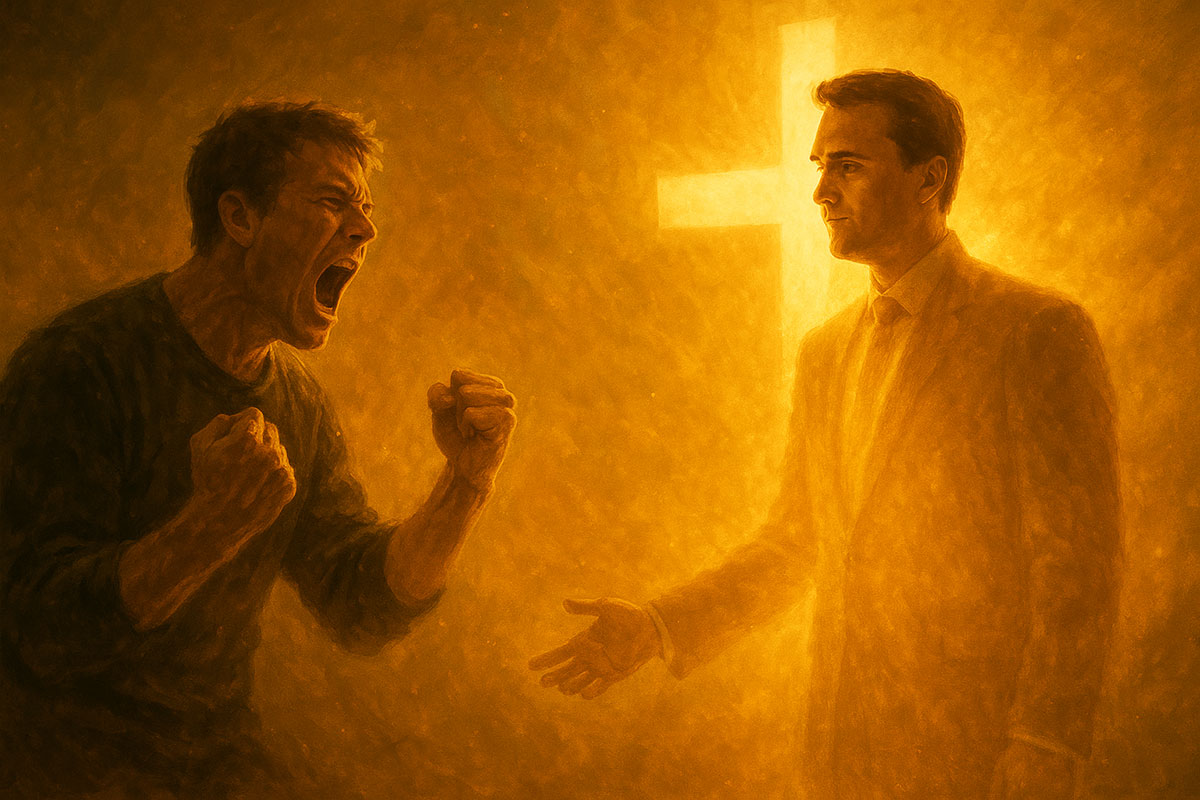
The golden expanse trembles as the killer bursts into anger, a futile attempt to shield himself from the light pouring over him.
The Killer (shouting, fists clenched):
“Stop! Don’t say His name. Don’t speak of Jesus to me. I don’t want it—I can’t want it. I killed. I hated. My hands are red forever. Don’t you see? I chose this path. I chose darkness. I silenced you!”
Charlie (his light brighter, his tone steady):
“You think you silenced me, but you never could. You thought hatred would end truth, but truth only echoes louder in the silence of violence. You are not hated, even now. Jesus’ love reaches further than the grave. Even yours.”
The Killer (covering his ears, tears breaking through his fury):
“No! No! It hurts too much to hear. I don’t deserve His mercy. I don’t deserve yours. I deserve nothing but hell.”
Charlie (with both grief and hope in his voice):
“None of us deserve mercy. That is why Jesus died. Not for the righteous, but for the broken. For the guilty. For the condemned. He came for you. That’s the scandal of grace—you cannot outsin His love.”
Scene 3: The Breaking
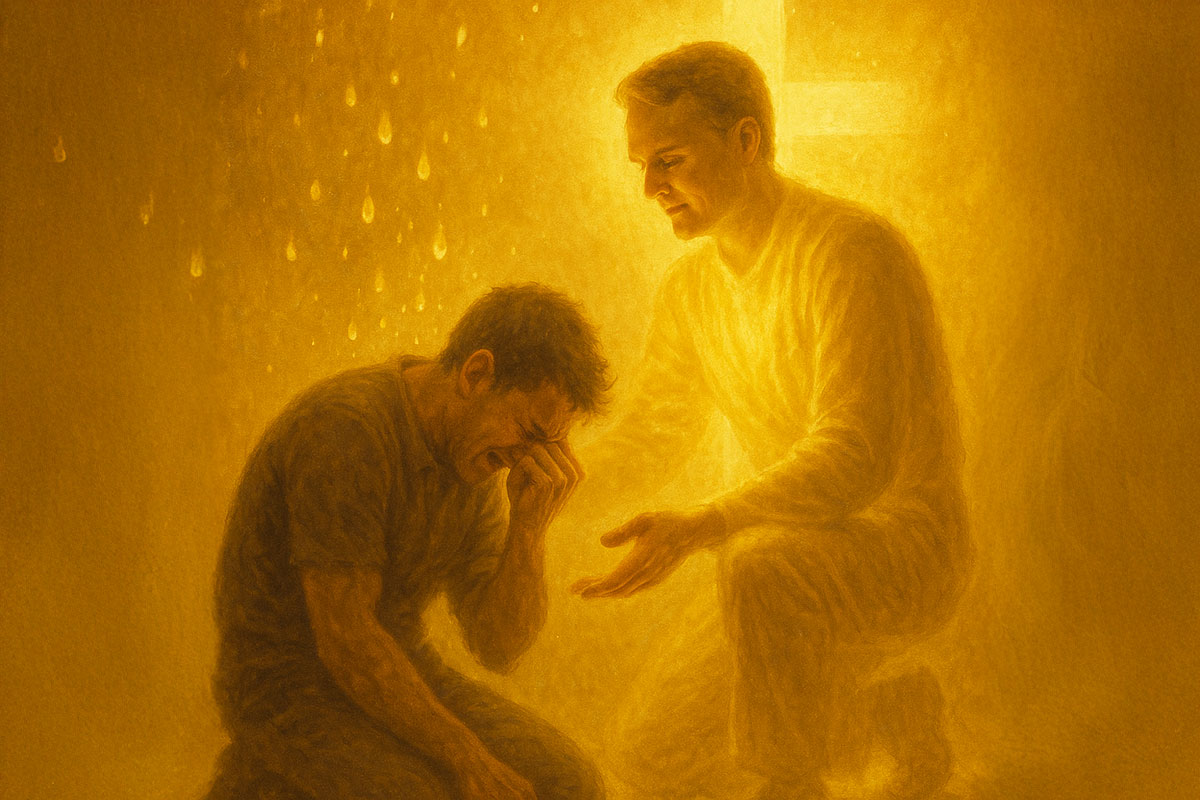
The killer collapses to his knees, trembling, his rage finally consumed by unbearable guilt. His sobs echo through the glowing expanse like thunder rolling away.
The Killer (weeping uncontrollably):
“I feel your face burning through me. I see the blood on my hands and it won’t wash away. I thought killing you would silence the voice of truth that haunted me—but it screams louder now! Every second, it crushes me. I can’t live with what I’ve done.”
Charlie (kneeling beside him, voice tender yet filled with fire):
“Then stop carrying it. Your tears—let them be your prayer. Don’t run from your brokenness. Bring it to Jesus. The blood He shed on the cross is stronger than the blood you spilled. He carried this sin already. He carried mine, and He carried yours. Nothing you’ve done outweighs what He’s done.”
The Killer (lifting his face, streaked with tears):
“But how could He forgive this? How could He forgive me?”
Charlie (placing a glowing hand near his heart):
“Because the cross was for the unforgivable. That is its power. It was for me. It was for you.”
The killer falls forward, his sobs shaking his whole body, as if the dam of years of hatred finally broke.
Scene 4: The Confession

The light shifts. A vision of the cross appears in the distance, radiant and immense. The killer lifts his head, his tears spilling like a flood, drawn toward the image as though gravity itself has changed.
The Killer (crying out, broken):
“I killed. I hated. I destroyed. I spat on life itself. I don’t deserve Your mercy, Jesus—but I want it. I want to be free. Please… forgive me!”
The vision of the cross glows brighter, the shadow of Christ’s figure silhouetted upon it. The atmosphere trembles with unseen power.
Charlie (guiding him, voice filled with joy):
“Yes—this is the cry He’s been waiting for. Confess it all. Lay it down. His blood is enough. His mercy runs deeper than your shame.”
The Killer (screaming into the light, voice raw):
“Jesus! I give it all! Take this darkness, take this guilt—I can’t bear it anymore. Please—save me!”
Suddenly, radiant streams of light burst from the cross, flooding into him. The chains of guilt on his spirit shatter, clattering into nothingness. He gasps as though breathing for the first time, clutching his chest, overwhelmed by release.
Scene 5: The Hope
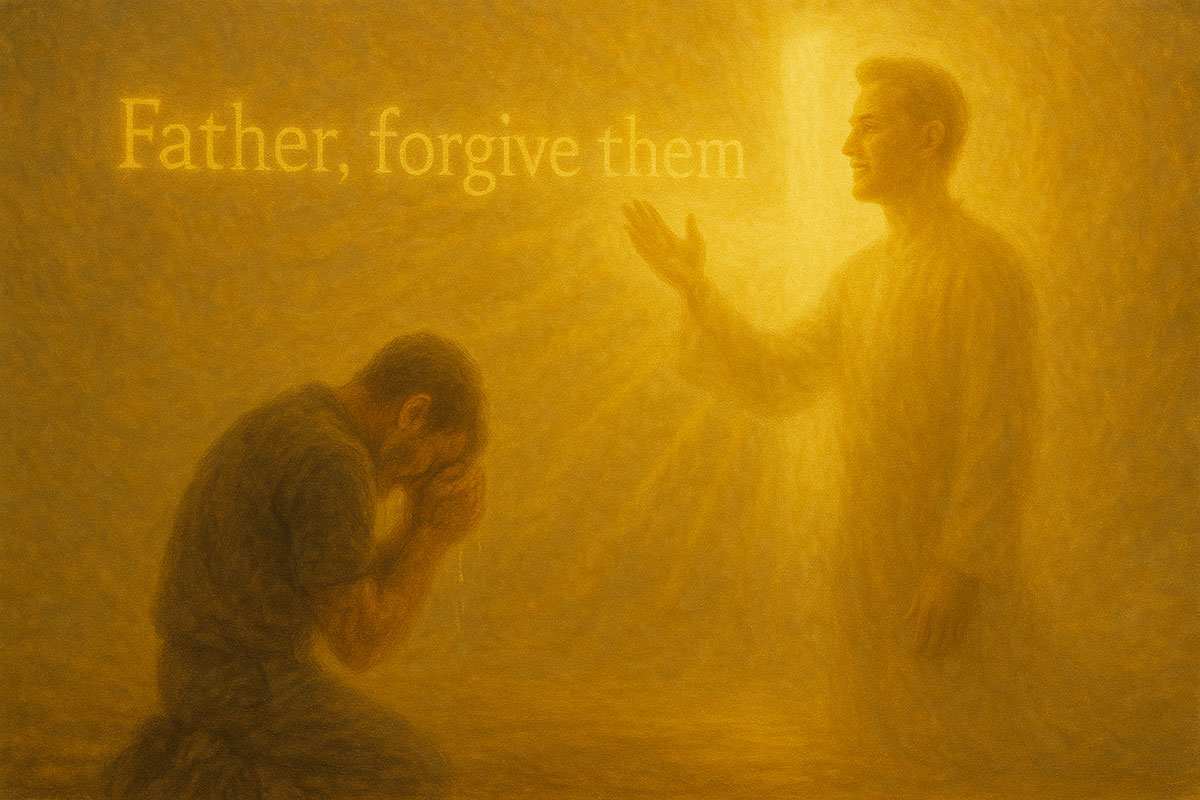
The golden expanse is now radiant beyond description. The killer kneels, weeping, his heart broken open. Charlie, glowing with light, looks upon him not as an enemy, but as a brother.
The Killer (sobbing):
“Why would Jesus forgive me? Why would you? After everything I’ve done, how can love still reach me?”
Charlie (his voice trembling with both compassion and conviction):
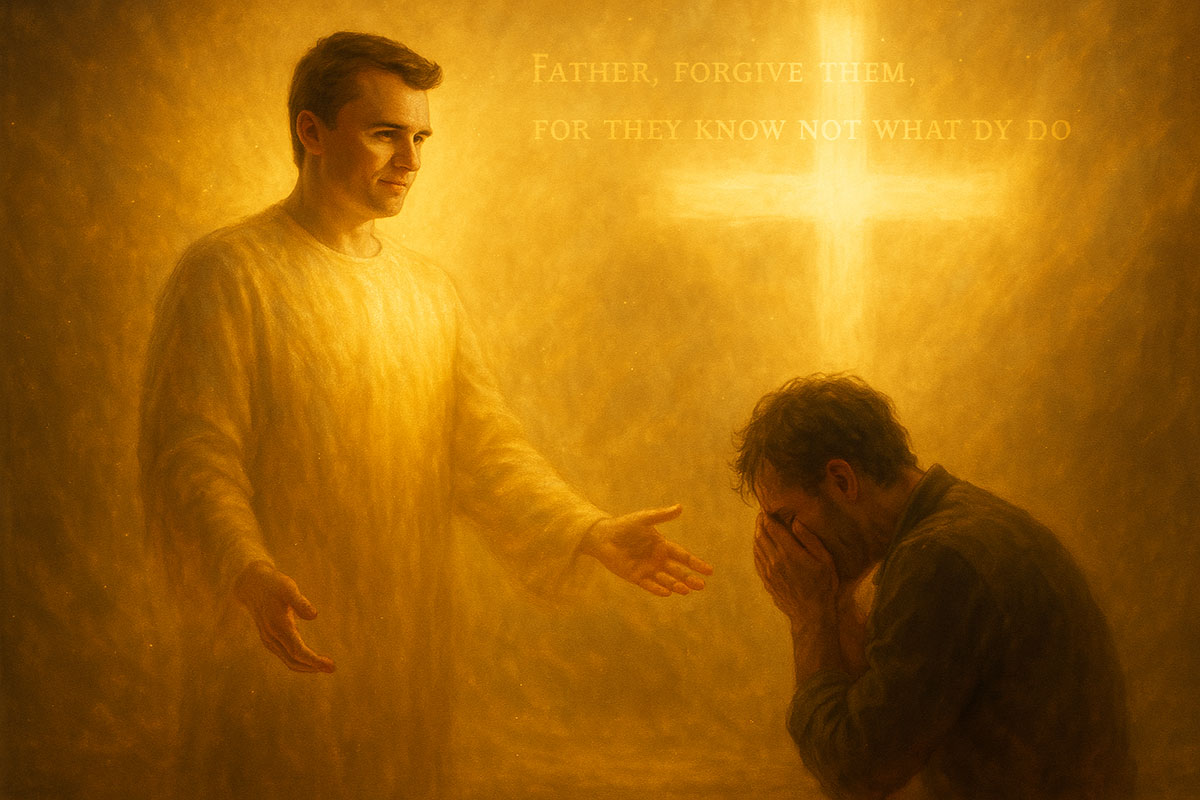
“Because long before this moment, Jesus showed us the way. As He hung on the cross, pierced by the very ones He came to save, He prayed, ‘Father, forgive them, for they know not what they do.’ Those words were not just for the soldiers that day. They were for all of us—for me, for you. Even now, they reach across time and eternity to cover your sin.”
The killer gasps, his sobs turning into cries that echo through the light.
The Killer:
“He… He said that even for me?”
Charlie (nodding, tears in his eyes, but smiling through them):
“Yes. Even for you. He knew your blindness, your brokenness, your pain. And still He chose forgiveness. I only echo what He first gave. I forgive you, because He already has.”
The killer collapses forward, tears streaming onto the luminous ground, but these are tears of release, not despair. The weight breaks, the chains fall away.
Charlie (fading into light, his final words resounding):
“Remember this forever: Jesus loves you. He forgives you. And so do I. Let these words be your beginning, not your end.”
The scene dissolves into dazzling brilliance. The killer remains kneeling, but now his tears rise like light, prayers carried upward, his soul trembling with the first taste of true freedom.
Final Thoughts by Charlie Kirk
When I think about what happened in that vision, I know this—it was never about me. It was about God’s mercy breaking through when no one expected it. On my own, I couldn’t have forgiven. On my own, I would’ve been weak. But with Christ, I found strength I never had before. His love spoke through me, and in that moment, bitterness had no power.
Forgiveness isn’t weakness. Forgiveness is the strongest thing we can do. Hatred keeps us chained to the pain. Forgiveness shatters the chains. It doesn’t erase what happened, but it transforms it. And sometimes, it gives the one who hurt us the chance to finally see light. That’s what mercy does. It heals both the wounded and the one who wounds.
So if my death, if even my last words, could shine a light on that truth, then nothing was wasted. My prayer is that you who hear this will choose the better way. Put down the weight of anger. Let go of the guilt you’ve been carrying. Step into the mercy of Jesus that never runs out. That’s where freedom is. That’s where new life begins. And in the end, you’ll see that love—love alone—has the final word.
Short Bios:
Charlie Kirk
Charlie Kirk is an American Christian conservative activist and founder of Turning Point USA. Born in 1993, he has been a leading voice for faith, freedom, and the value of life from a young age. His work centers on equipping younger generations with principles rooted in biblical truth and American ideals. Known for his outspoken defense of Christianity and moral clarity, he has emphasized forgiveness, redemption, and the enduring hope found in Christ.
Jesus Christ
Jesus of Nazareth is the central figure of Christianity, believed by Christians to be the Son of God and Savior of humanity. His teachings, miracles, and sacrificial death on the cross form the foundation of the Christian faith. His life exemplified love, mercy, and truth, and His resurrection is seen as the victory over sin and death. His words and actions continue to inspire billions across the world to live lives of compassion, forgiveness, and devotion to God.
The Killer
In this visionary retelling, the killer represents the brokenness of humanity when consumed by hatred and blindness. He is not portrayed as a historical figure but as a symbol of those who lose themselves in sin and violence. His journey from defiance to confession and finally to hope illustrates the possibility of redemption, showing that no one is beyond the reach of divine mercy when they surrender to God’s love.
Leave a Reply