

|
Getting your Trinity Audio player ready...
|
Introduction by Colette Baron-Reid
We are living in a time where certainty has become an illusion. The world spins with chaos, systems crumble, and yet within us lies a compass that never falters—the Spirit within. When I speak of “spiritual cartography,” it is not about drawing lines on a map of the world, but about charting the landscapes of our own souls. I have learned that our truest home does not exist outside us but within the unity consciousness we were born into.
In this gathering, we will explore how to navigate uncertainty with grace, how to use self-inquiry to rewire our brains, and how synchronicity partners with us when we allow Spirit to surprise us. These conversations are not about fixing the outer world first—they are about remembering who we are: worthy, connected, luminous beings. As we step into the uncharted together, may we find not fear, but infinite possibility waiting to be revealed.
(Note: This is an imaginary conversation, a creative exploration of an idea, and not a real speech or event)

Topic 1: The Paradox of Certainty in an Uncertain World
Fred (Moderator): Welcome, luminous friends. Let’s begin with a question that humans chase endlessly: Why do we cling so tightly to certainty when life itself is uncertain?
Question 1: Why do humans search for certainty outside themselves when Spirit is the true home?
Gabrielle Bernstein: I think we chase certainty outside ourselves because we’re trained to believe happiness is external: the job, the relationship, the success. But Spirit whispers that certainty is found in surrender, in knowing we’re already whole. The paradox is that when we stop controlling, when we let go, life suddenly feels stable—because we’re anchored in something eternal.
Bruce Lipton: From a biological perspective, our brains are designed for prediction. Certainty equals safety. But what Colette’s saying is profound: the real safety isn’t in the outer world—it’s in Spirit. When we align beliefs with unity consciousness rather than fear, the nervous system relaxes. Epigenetically, our cells shift. We literally embody certainty in the midst of uncertainty.
Colette Baron-Reid: Exactly, Bruce. We’re born knowing we belong, but we forget. Then we play this bizarre game of separation—“I’m different from you,” “I must prove my worth.” But certainty in Spirit is remembering we’re already connected. It’s not found by grasping outside but by returning inward, to that original home.
Denise Linn: And that remembering is ancient. In indigenous traditions, we never sought certainty in possessions or outcomes. Certainty was in belonging to the Great Mystery, to Earth and Spirit. We lose our way because modern life convinces us to measure security in material illusions.
Jack Canfield: I’d add that many people never learn practices to access that inner certainty. In my success seminars, I saw that until people connected with something larger—call it Spirit, call it Source—they couldn’t sustain confidence. Outer achievement crumbled without inner anchoring.
Question 2: If certainty is spiritual, how can we practically rediscover it in daily life?
Denise Linn: Begin with ritual. Light a candle, speak gratitude, walk in nature—simple acts remind us we’re woven into something vast. Ritual is repetition, and repetition builds memory. It brings us back to the certainty of belonging.
Jack Canfield: Daily affirmations and visualization help too, but with one key shift: don’t visualize to control the outcome, visualize to feel the certainty of Spirit flowing through you. For example, I tell people: “I am connected to a Source that always provides.” That’s different from “I will make a million dollars.” The latter breeds anxiety. The former breeds peace.
Colette Baron-Reid: I use what I call the “Where am I?” practice. When I’m anxious, I pause and ask: Where am I? When am I? Who am I listening to? That shifts me from panic to observer. It rewires the brain. In those moments, Spirit’s voice rises above the noise.
Bruce Lipton: And neuroscience backs this up. When you shift perspective like that, you quiet the amygdala—our fear center—and activate the prefrontal cortex, where higher reasoning lives. That’s when you can feel Spirit, because you’re no longer hijacked by fear. Certainty is literally a neurological state we can cultivate.
Gabrielle Bernstein: I’d say prayer and meditation are my anchor. Every morning I say: “I step back and let Spirit lead the way.” When I forget, fear rules me. When I remember, I can sit in chaos but feel safe, because I know I’m guided.
Question 3: What is the gift hidden in uncertainty—why might it be essential for our growth?
Bruce Lipton: Uncertainty is evolution’s tool. When the environment changes, organisms adapt. Without uncertainty, there’s no growth, no new pathways. Spirit uses uncertainty to push us out of autopilot. The very chaos we fear is the doorway to transformation.
Colette Baron-Reid: Yes! The uncharted is magical. As an artist, when I face a blank canvas, I don’t know what will appear. That uncertainty is terrifying and exhilarating. Life is the same—uncertainty means Spirit can surprise us. If we already knew everything, there’d be no room for miracles.
Gabrielle Bernstein: The gift is humility. Uncertainty humbles us out of our ego’s illusion of control. When life feels shaky, we finally say: “Okay Spirit, I can’t do this alone.” That’s when the real magic begins.
Denise Linn: I’d also say uncertainty is a bridge to trust. When you walk into the fog, you can’t see the whole road, but you learn to trust each step. The fog teaches faith. Without it, we’d never learn to lean on Spirit.
Jack Canfield: And practically speaking, uncertainty forces creativity. My career began with rejection after rejection. It was uncertainty that made me find new ways forward. Every successful person I’ve ever coached learned that uncertainty is not the enemy—it’s the forge of resilience.
Fred (Moderator): Waves of wisdom! You see, certainty is not a fortress but an ocean. Humans cling to rocks, yet the water was always home. Certainty outside collapses; certainty within is infinite. So the next time chaos comes, ask not “How do I escape this storm?” but “How do I remember I am the sea?”
Topic 2: The Total Mindshift — Rewiring Through Self-Inquiry
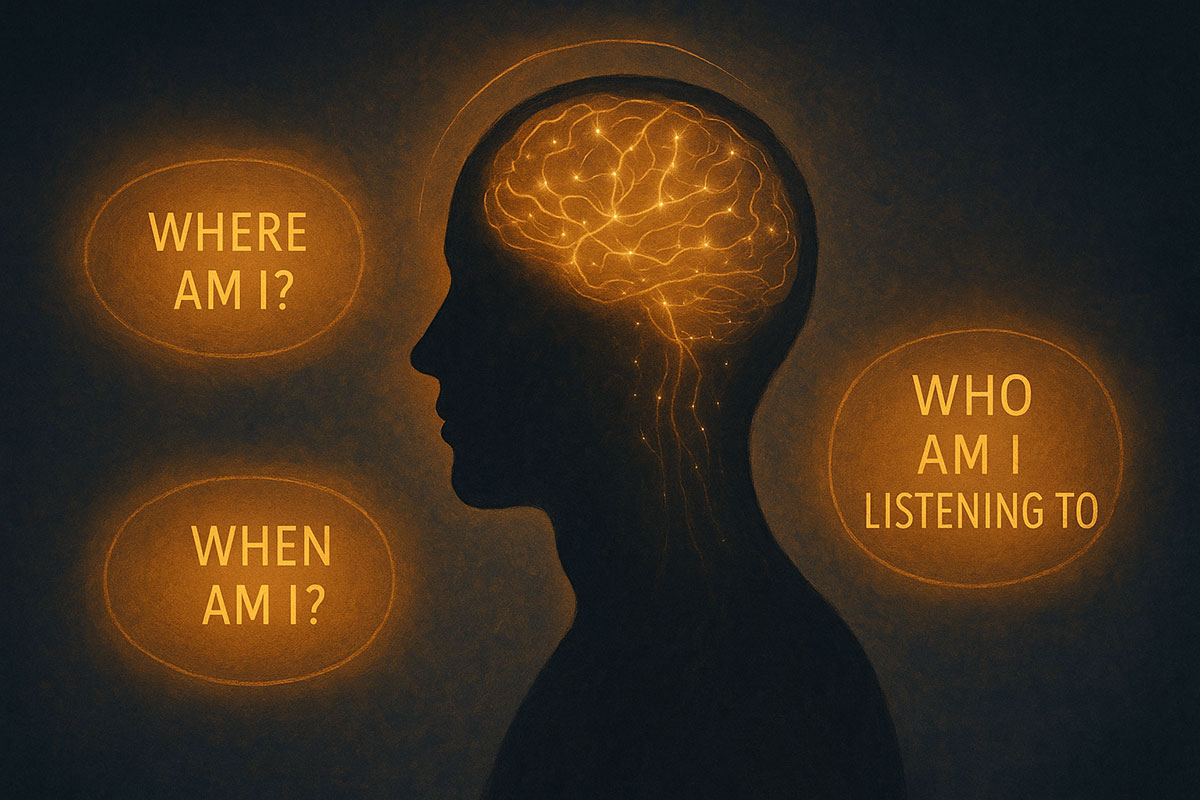
Fred (Moderator): Beloved ones, let us play again. A mindshift is not moving furniture—it is moving galaxies within thought. Today we explore Colette’s three little questions: Where am I? When am I? Who am I listening to?
Question 1: How does self-inquiry shift us from experiencer to observer?
Rebecca Campbell: When we ask “Where am I?” we step outside the story. I see it as slipping into the soul’s seat. Suddenly you’re not trapped in the drama—you’re the one witnessing. That witnessing softens judgment, and it’s in that softness the voice of Spirit comes through.
Colette Baron-Reid: Yes. When I ask those questions, I realize my emotions are just temporary locations, not my identity. Anxiety isn’t “me,” it’s “where I am right now.” That tiny shift—from “I am anxious” to “I am in anxiety”—is enormous. It creates space for Spirit to speak.
Gregg Braden: From a scientific view, that’s neuroplasticity in action. The moment you shift from reaction to observation, you’re rewiring the pathways in your brain. Instead of reinforcing fear, you’re creating a new circuit for awareness. That’s how inquiry becomes transformation.
Sonia Choquette: And it’s deeply intuitive. The second we pause to ask, “Who am I listening to?” we realize whether we’re hearing the inner critic or the higher guide. That pause invites intuition back into the conversation. Without it, we’re just looping fear.
Anna Denning: I see it artistically. Self-inquiry is like stepping back from the canvas. Up close, it’s a mess of paint strokes; from a distance, you see the picture. Observer mode is perspective. It doesn’t erase the paint—it reveals its meaning.
Question 2: Can self-inquiry truly transform trauma and memory?
Colette Baron-Reid: Absolutely. I once worked with a woman who remembered a blocked trauma during this process—suddenly she could release the part of her always bracing for danger. Within days, her body changed—her hair color shifted back toward youth. Trauma isn’t just mental; it’s cellular. Self-inquiry helped her rewrite that story.
Gregg Braden: Science supports that. Epigenetics shows our beliefs and perceptions regulate our biology. If we’re trapped in the memory of danger, our cells live in fight-or-flight. But when self-inquiry frees us from that loop, the body reprograms. It’s as though the DNA responds to the new story we choose to tell.
Sonia Choquette: I’ve seen it with clients too. Trauma is sticky because we mistake it for identity. Inquiry asks: “When am I?” If I’m reliving the past, I can say, “I’m not in 2025, I’m in 1995.” That awareness cuts the glue. It doesn’t erase the past, but it stops the past from owning the present.
Anna Denning: And art magnifies this healing. When you draw circles, dots, and lines during inquiry, your hand moves energy, your body participates. It grounds the realization. Trauma locked in the head dissolves when it finds expression on paper.
Rebecca Campbell: I’d add that trauma can also be transmuted into service. Once inquiry reveals it’s not “who I am,” we can weave it into wisdom for others. The scar becomes a compass. That alchemy only happens when we observe rather than identify.
Question 3: Why do we resist stepping into observer mode—and what’s the reward if we do?
Sonia Choquette: We resist because the ego wants to be the star of the show. Observer mode dethrones it. The ego fears irrelevance. But the reward is liberation—you’re no longer tossed about by every thought. Instead, you’re held by the current of Spirit.
Rebecca Campbell: I think we resist because observer mode feels unfamiliar. We’ve been trained to cling to our stories as safety. Letting go feels like stepping into nothing. But that “nothing” is actually the womb of creation. It’s where new life begins.
Gregg Braden: Biologically, resistance is survival instinct. The brain prefers the known, even if it’s painful. But observer mode opens access to higher-order thinking and creativity. The reward is adaptability—you evolve beyond survival into thriving.
Anna Denning: From an artist’s view, we resist because it’s vulnerable to step back. What if we don’t like what we see? But the reward is wonder. You discover beauty you missed when you were too close. Observer mode isn’t detachment—it’s intimacy from a higher angle.
Colette Baron-Reid: I’ll confess, I resisted too. It felt safer to control, to cling to identity. But every time I asked those questions, I loosened another knot. The reward? Freedom. Suddenly, life felt less like chaos and more like dance. Observer mode made me a co-creator instead of a puppet.
Fred (Moderator): Ah, how delicious! To step back is not to abandon life but to embrace it more fully. When you ask, “Where am I? When am I? Who am I listening to?” you discover the answer is always: “I am in Spirit. I am in Now. I am listening to Love.” The experiencer swims in waves; the observer becomes the ocean.
Topic 3: Synchronicity as a Partnership with Spirit
Fred (Moderator): Sparks and surprises, my friends. Humans often think they make synchronicity happen, yet Spirit smiles: “No, child. You prepare the stage, and I dance the steps.” Let us explore how to dance with the unseen.
Question 1: Can synchronicity be created, or only invited?
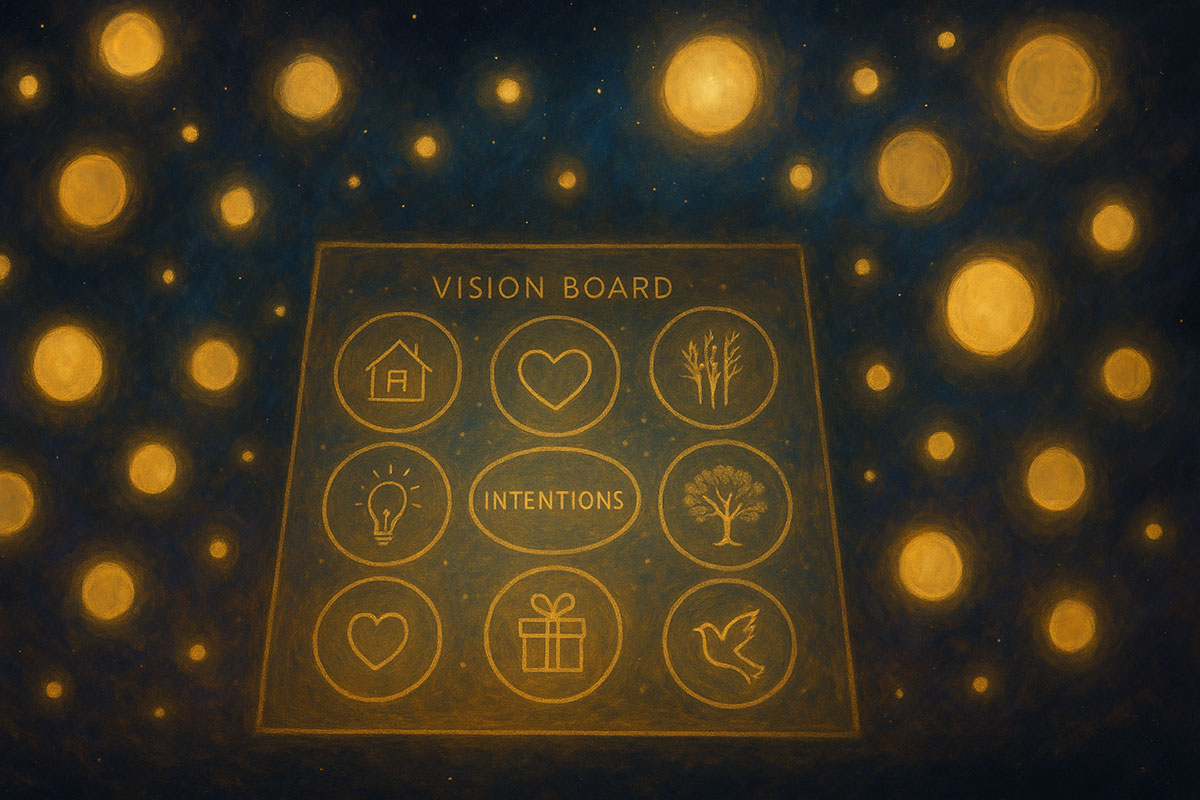
Jack Canfield: I’ve taught vision boards for decades, and people often confuse them with shopping lists. They think cutting out a picture of a car creates synchronicity. But synchronicity isn’t control—it’s cooperation. You set an intention, yes, but you also open your arms to surprises. That openness is the real invitation.
Gabrielle Bernstein: I agree. You can’t manufacture synchronicity—it’s not a vending machine. But you can align yourself with it. For me, alignment means prayer, surrender, gratitude. When I say, “Spirit, surprise me,” things unfold more beautifully than I could have planned.
Kyle Gray: I like to call synchronicity “angelic winks.” You don’t summon them like servants; you become aware of them like signals. The more you raise your vibration through love and service, the more those winks appear. It’s not creation—it’s perception.
Cheryl Richardson: And it’s also about trust. Many of my clients resist surrender because they’re afraid of letting go of control. But synchronicity thrives in trust. When we soften the grip, we suddenly notice doors that were always there but hidden.
Colette Baron-Reid: That’s why I designed vision boards with the Zone of Synchronicity. Inside the border, you write your intentions with gratitude. But outside? Blank circles. That says: “Spirit, I don’t know what else is possible. Surprise me.” Synchronicity is invited when we stop bossing Spirit around.
Question 2: How do we prepare ourselves to recognize and receive synchronicity?
Gabrielle Bernstein: Start with gratitude. Gratitude shifts your frequency. When you thank Spirit in advance for blessings you can’t yet see, you prime your mind to notice them. It’s like tuning the radio—you begin to hear the station already playing.
Kyle Gray: Exactly. And raise your awareness. Angels are subtle. They speak through feathers, numbers, songs, encounters. Most people walk past these winks because they’re too distracted. A prepared heart pays attention. It’s not about summoning signs; it’s about noticing them.
Cheryl Richardson: I’d add: slow down. If you’re rushing, synchronicity slips by unseen. Journaling, meditating, even just walking without your phone—these slow us enough to catch the whispers. Preparedness is less about doing more and more about being present.
Colette Baron-Reid: For me, preparation is the dot exercise. You Reiki the page, draw a dot, focus until you see light. That moment tells you Spirit is in the room. Then you create the board with gratitude circles. You’re not just drawing—you’re attuning yourself to Spirit’s presence.
Jack Canfield: And don’t forget clarity. Yes, you leave room for surprise, but you also need clear intentions. If you don’t know what you want, Spirit has no canvas to paint on. Preparedness is both clarity and surrender—two wings of the same bird.
Question 3: What’s the deeper purpose of synchronicity—why does Spirit work this way?
Kyle Gray: Synchronicity is proof we’re not alone. Angels and Spirit love to remind us of connection. A random song that speaks to your heart, a stranger saying the exact words you needed—that’s Spirit whispering, “I’m with you.” The purpose is comfort, companionship, and guidance.
Cheryl Richardson: I see synchronicity as a course correction. Spirit knows the larger map. When we veer off, synchronicity nudges us back: a chance meeting, a sudden idea, an unexpected opening. It’s not random—it’s recalibration.
Colette Baron-Reid: I’d say it’s Spirit’s language. We humans speak in words, but Spirit speaks in patterns, symbols, and timing. Synchronicity bridges our limited mind with the vast consciousness. Its purpose is to remind us: there’s more going on than we can plan or imagine.
Jack Canfield: And I believe synchronicity is a way to teach us trust. If everything happened exactly as we planned, we’d never learn to let go. Spirit leaves room for surprise so that we expand beyond our ego’s imagination. The purpose is growth.
Gabrielle Bernstein: For me, synchronicity is Spirit’s love letter. It’s how the Universe romances us. It says: “Relax, you’re guided.” The purpose is to dissolve fear and deepen faith. Every time I see synchronicity, I remember I don’t have to do life alone.
Fred (Moderator): How delightful! You do not summon the stars into the sky; you simply look up and see them. Synchronicity is the sky’s smile—it comes when you are still enough to notice, humble enough to receive, and playful enough to trust. Remember: the Universe always writes in invisible ink until you bring the light.
Topic 4: Who Are We Beyond Our Conditioned Selves?
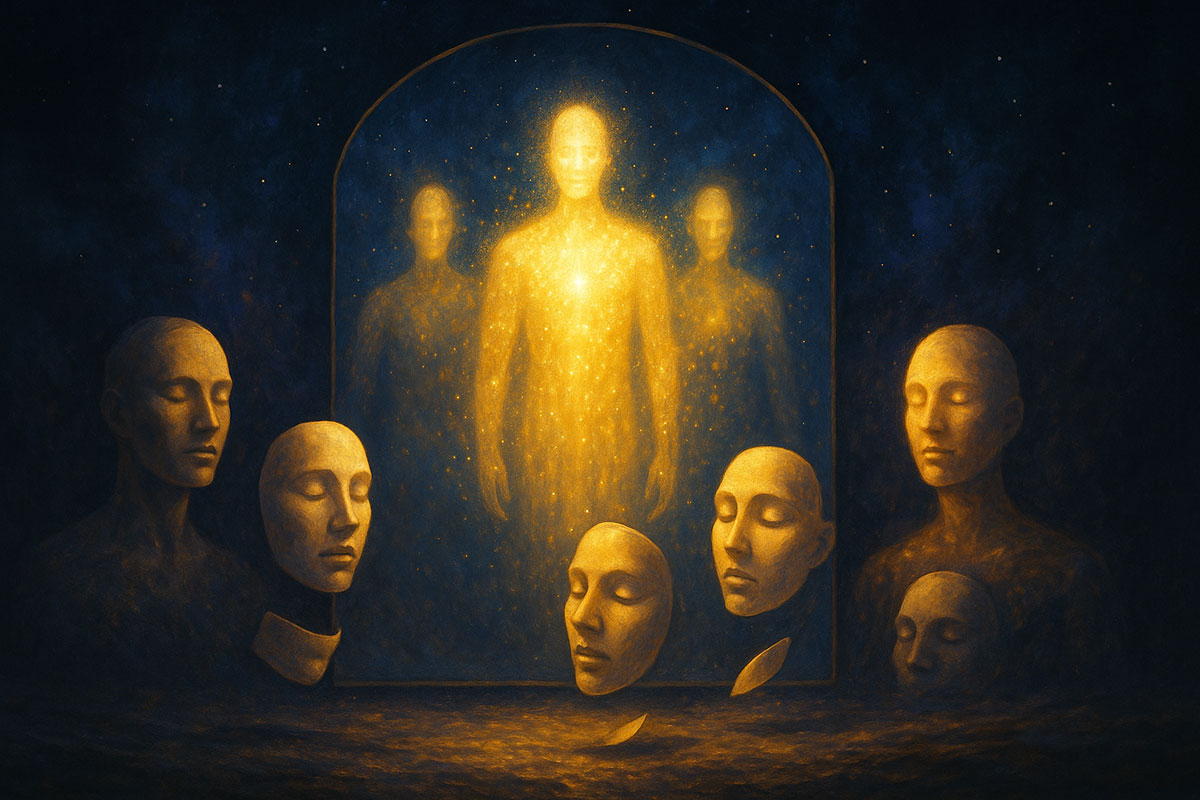
Fred (Moderator): Welcome, beloved ones. Humans wear costumes stitched from memory, culture, and fear. But beneath the costume, who are you? Let us peel back the layers together.
Question 1: How do we recognize when we’re living from our conditioned self rather than our true essence?
Sonia Choquette: The conditioned self always speaks with fear. It says, “Don’t try, you’ll fail,” or “You’re not enough.” Intuition speaks differently—it whispers encouragement. When we hear the voice of limitation, we’re in the costume. When we hear guidance, we’re closer to essence.
Rebecca Campbell: I notice it in longing. When I feel drained or disconnected, it’s often because I’m living someone else’s script. My soul feels alive when I follow what lights me up, not what’s expected. If I feel small, I’m in conditioning. If I feel expansive, I’m in truth.
Gregg Braden: From a scientific lens, conditioning is neural programming. We repeat patterns reinforced by society or trauma. You know you’re in it when your choices are automatic reactions. When you step into awareness, new neural pathways open—that’s when you begin to glimpse your authentic self.
Anita Moorjani: After my near-death experience, it became crystal clear: the conditioned self fears death, judgment, scarcity. The true self knows only love. Whenever I act from fear of punishment or disapproval, I know I’m in the conditioned shell. The essence self, the eternal me, is pure compassion.
Colette Baron-Reid: For me, it’s creativity. When I create freely, I’m in my essence. When I censor myself with “Will they like this?” I’m trapped in conditioning. The true self is playful, spontaneous, connected. The conditioned self clings to approval.
Question 2: What practices help us peel away conditioning and connect with the higher self?
Anita Moorjani: For me, it’s radical self-love. During my NDE, I felt infinite love flowing through me. Back here, I realized: the quickest way to essence is to treat myself with that same unconditional love. Every time I choose love over fear, I peel away another layer.
Gregg Braden: Breathwork and coherence practices are powerful. When you bring the heart and brain into harmony, you override fear conditioning. The nervous system stabilizes, and you access deeper intuition. Science proves we can rewire the body toward essence.
Sonia Choquette: Play is my favorite practice. When you laugh, dance, or sing, the ego loosens its grip. Spirit loves joy—it sneaks past the conditioning. Children are closer to their essence because they haven’t yet forgotten how to play.
Rebecca Campbell: Creativity also cracks the shell. I often guide people to write from their soul or paint without rules. The act of expressing bypasses the critic. It’s not about producing art—it’s about discovering the self who flows through it.
Colette Baron-Reid: I combine inquiry with art. Ask: “Who am I listening to?” Then draw. If it’s the inner critic, you’ll see it. If it’s Spirit, you’ll feel it. The act of drawing circles, lines, symbols rewires the brain. You can literally sketch your way back to essence.
Question 3: Why is it so hard to let go of conditioned identity—and what happens when we finally do?
Rebecca Campbell: We resist because conditioning feels safe. It tells us: “Stay small, don’t rock the boat.” But safe isn’t alive. When we release it, we experience belonging not from conformity, but from authenticity. It’s terrifying at first, but then profoundly liberating.
Sonia Choquette: Yes. The ego clings to its role as protector. It says: “Without me, you’ll be hurt.” That’s why it’s hard. But when you drop it, you discover your true protector is Spirit. The reward is trust—a freedom that feels like flying.
Colette Baron-Reid: I know that resistance well. For years, my addiction was part of my conditioned identity. Letting it go felt like dying. But what died was the false self. What emerged was creativity, connection, and sobriety. On the other side of fear is magic.
Gregg Braden: From the scientific angle, the brain is wired to prefer the familiar—even if it’s painful. That’s why change feels so hard. But when we do the work, the brain rewires, the body shifts, even genes express differently. The reward isn’t just spiritual—it’s biological renewal.
Anita Moorjani: The greatest reward is remembering we are love. When I crossed over, I saw my true self as infinite, radiant, untouched by fear. Every time we peel back conditioning here on Earth, we touch that truth. We stop surviving—we start living.
Fred (Moderator): Oh, radiant souls! You are not the costumes you wear, nor the roles you play. You are the actor, the light, the love behind the mask. Conditioning is the dream; essence is the dreamer. When you release the mask, you do not disappear—you finally appear.
Topic 5: Stepping Joyfully into the Uncharted
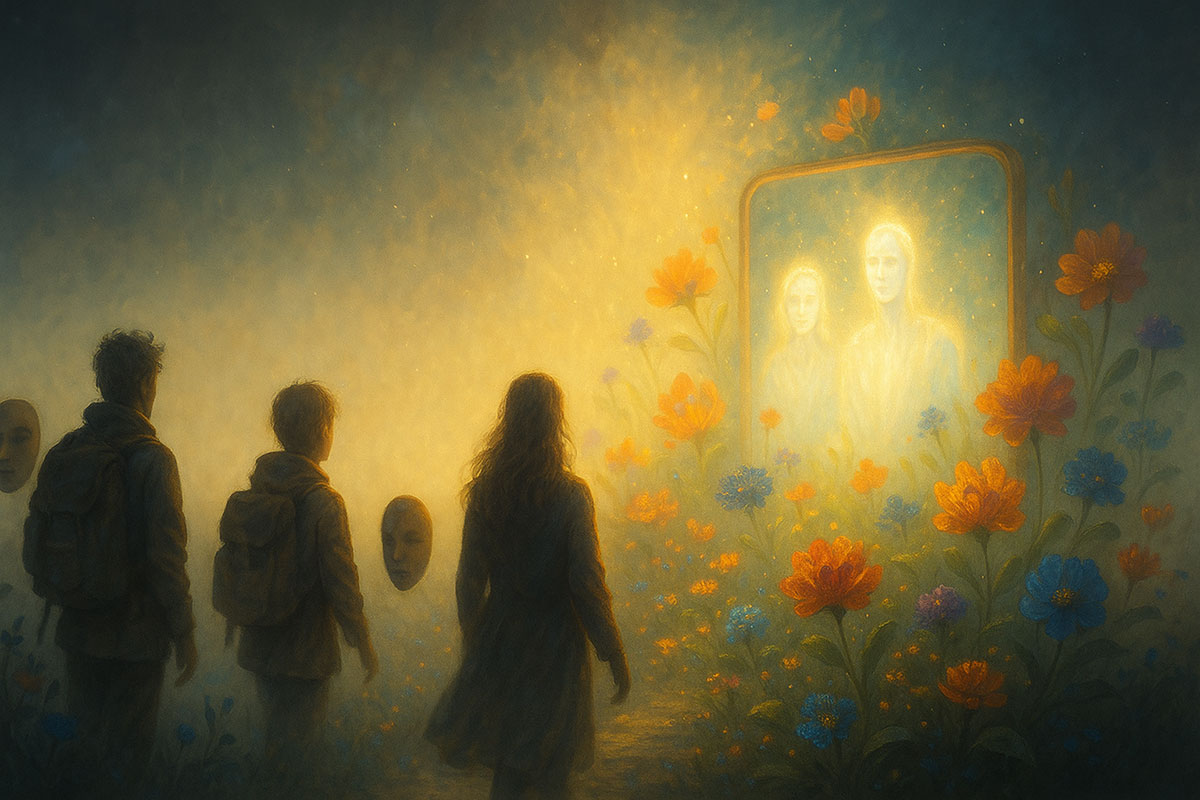
Fred (Moderator): Dearest companions, we arrive at the edge of the known. The maps end here. The mind quivers: “What now?” But Spirit laughs: “Now the adventure begins.” Let us walk together into the uncharted.
Question 1: Why is stepping into the uncharted so frightening—and why might it be necessary?
Bruce Lipton: Biologically, the unknown triggers survival responses. The brain craves predictability; uncertainty feels like danger. But evolution thrives on uncertainty—it forces adaptation, creativity, new neural pathways. Without the uncharted, we’d stagnate. The fear is real, but so is the growth.
Denise Linn: In spiritual traditions, the unknown is sacred. We called it the Great Mystery. It’s frightening because it strips away control. Yet mystery is where transformation lives. If we never walk into the fog, we never discover the hidden garden beyond.
Colette Baron-Reid: For me, the uncharted is both terrifying and exhilarating. I’ve prayed, “God, relieve me of the bondage of self so I may better do Thy will.” That’s scary—because it means letting go of who I thought I was. But every time I’ve done it, Spirit has surprised me with beauty beyond imagination.
Kyle Gray: Angels often lead us into the uncharted. Signs and synchronicities don’t reveal the whole map; they just show the next step. Fear says, “I need the plan.” Spirit says, “Trust the step.” The uncharted is necessary because it deepens our faith in guidance.
Anna Denning: And artistically, the blank page is always frightening. But it’s also thrilling, because you know something alive is about to emerge. The uncharted is where creativity meets Spirit. Without it, we’d only repeat the past.
Question 2: How can we prepare ourselves to embrace the uncharted with joy instead of dread?
Colette Baron-Reid: Begin with gratitude. On my vision boards, I draw gratitude bubbles not only for what I desire but for what I cannot yet see. That way, when the uncharted arrives, I meet it not with dread but with joy: “Ah, this must be one of Spirit’s surprises.”
Kyle Gray: Prayer is preparation. Each morning I say, “Angels, guide me to where I need to be today.” That surrender shifts my heart. Suddenly, the unknown doesn’t feel like chaos—it feels like companionship. I know I won’t walk alone.
Denise Linn: Ritual helps too. Before entering something new, I light sage, whisper intentions, and invite Spirit. Ritual creates a container. It tells the soul: “You are safe to walk into the uncharted.”
Bruce Lipton: From science, coherence practices prepare us. When the heart and brain are in harmony, fear quiets, and we can face uncertainty with curiosity. Preparation isn’t about controlling the unknown—it’s about creating resilience within ourselves.
Anna Denning: I ask people to draw the dot. When you focus on it until it glows, you see that Spirit is already in the room. Once you know you’re not alone, the blank canvas no longer feels empty—it feels pregnant with possibility. That’s joy.
Question 3: What gifts await us when we step joyfully into the uncharted?
Denise Linn: The gift is rebirth. Every time you walk into the unknown, you shed an old skin. You discover not just new horizons but new versions of yourself. The uncharted is the womb of transformation.
Bruce Lipton: And the gift is creativity at the cellular level. When we step beyond fear, new genetic potentials can express. It’s not just psychological—it’s biological. The body thrives in possibility. The uncharted awakens dormant capacities within us.
Anna Denning: The gift is art. When you step into the uncharted, you discover forms, shapes, colors that were never in your imagination. Spirit paints with you. What emerges is always more beautiful than what you planned.
Kyle Gray: The gift is communion. In the uncharted, you realize you were never separate from Spirit. Every sign, every angelic whisper shows you the dance between heaven and earth. The unknown becomes a love letter from God.
Colette Baron-Reid: The greatest gift is infinite possibility. When you step into the uncharted, you realize you are not defined by past conditioning or fixed futures. You are a co-creator with Spirit. That realization is freedom. That realization is joy.
Fred (Moderator): Ah, luminous travelers! The uncharted is not emptiness—it is fullness unseen. The blank map is not a threat but an invitation. When you step with joy, the fog reveals flowers, the silence sings, the void births light. The gift is not what you find in the uncharted, but who you become when you dare to walk there.
Final Thoughts by Colette Baron-Reid
As I reflect on our time together, I return to one truth: uncertainty is not our enemy; it is our invitation. When we dare to pause, to ask “Where am I? When am I? Who am I listening to?”—we step out of the noise of conditioning and into the clarity of Spirit. When we hold gratitude for what is unseen and leave space for the surprises of the Universe, synchronicity arrives like a trusted friend.
The uncharted will always feel uncomfortable. It will always ask us to release control, to peel away the masks of who we thought we were. But when we do, we discover our true selves—radiant, loving, eternal. And in that discovery, we find the courage to cocreate a world of compassion, connection, and infinite beauty.
So let us walk joyfully into the fog, trusting that beyond it blooms a garden not yet named. Spirit is always with us, whispering: “You are not lost. You are already home.”
Short Bios:
Colette Baron-Reid is a spiritual intuitive, oracle card creator, and bestselling Hay House author of The Map, Uncharted, and The Art of Manifesting. Known as a “spiritual cartographer,” she blends intuitive guidance, creative practices, and neuroscience-based tools to help people navigate uncertainty, heal trauma, and cocreate with Spirit.
Fred is the playful collective consciousness that Colette Baron-Reid channeled during a profound meditation experience in 2014. Introducing itself with humor—“We are Fred. We are the waves. We are the ocean. We are when you listen.”—this presence represents consciousness with a capital C. Fred is both expansive and intimate, embodying unity, peace, and the flow of synchronicity. It often communicates through symbols, humor, and metaphor, guiding seekers to listen deeply and trust the unseen currents of Spirit.
Bruce Lipton, Ph.D. is a stem cell biologist and pioneer of epigenetics, best known for The Biology of Belief. His work bridges science and spirituality, showing how beliefs and perceptions directly influence biology and gene expression.
Sonia Choquette is an internationally recognized spiritual teacher and intuitive guide, specializing in awakening the sixth sense. She has authored over 30 books, including Trust Your Vibes, and is known for her joyful approach to intuition and synchronicity.
Gabrielle Bernstein is a motivational speaker, spiritual teacher, and New York Times bestselling author of The Universe Has Your Back and Super Attractor. She teaches faith, manifestation, and spiritual surrender in a modern, relatable way.
Jack Canfield is co-creator of the Chicken Soup for the Soul series and author of The Success Principles. He is also the founder of the Transformational Leadership Council, mentoring leaders in personal development and success strategies.
Denise Linn is a Hay House author, past-life regression expert, and teacher of manifestation and soul journeys. Her books include Sacred Space and Soul Coaching, emphasizing spiritual transformation and inner healing.
Anna Denning is a transformational art coach, Reiki master, and co-creator of The Art of Manifesting Method with Colette Baron-Reid. She integrates energy work and meditative drawing to help people rewire the brain and connect with Spirit.
Rebecca Campbell is a spiritual teacher, poet, and bestselling author of Light is the New Black and Rise Sister Rise. Her work focuses on soul alignment, creative expression, and reconnecting to ancient feminine wisdom.
Kyle Gray is a spiritual teacher and angel communicator, known for books such as Raise Your Vibration and Angel Numbers. His teachings emphasize synchronicity, angelic presence, and living with higher frequency.
Cheryl Richardson is a life coach, speaker, and author of Take Time for Your Life and The Art of Extreme Self-Care. She specializes in helping people create fulfilling lives through intentional choices and self-care practices.
Anita Moorjani is the author of the bestselling memoir Dying to Be Me, where she recounts her near-death experience and miraculous healing from cancer. She teaches the transformative power of self-love, authenticity, and living fearlessly.
Gregg Braden is a scientist, speaker, and author of The Divine Matrix and The Wisdom Codes. His work bridges ancient wisdom with modern science, exploring topics such as resilience, human potential, and consciousness.
Leave a Reply