

|
Getting your Trinity Audio player ready...
|
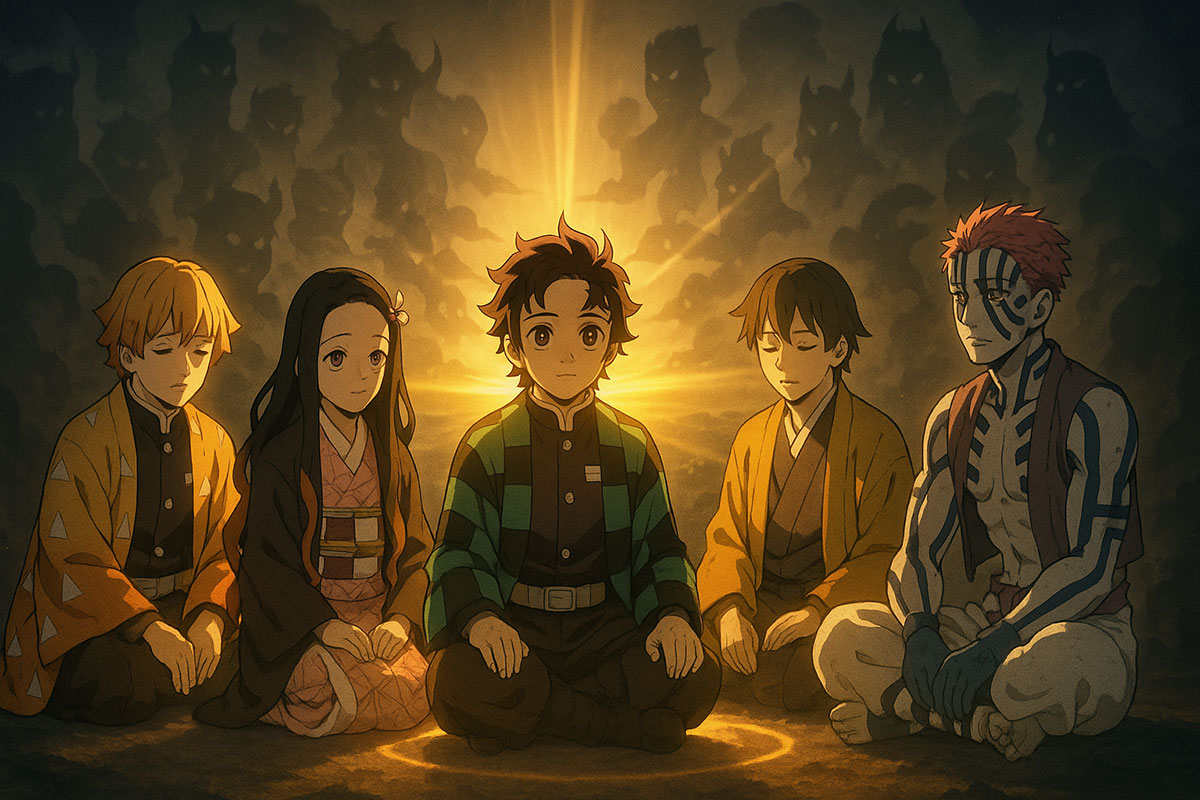
(His voice is soft, measured, each word carrying both fragility and warmth. He pauses often, as if every breath is precious.)
For generations, my family carried the burden of a curse—yet within that curse, we sought to cultivate hope.
I have called you here, not as warriors with swords, but as witnesses to a truth greater than any battle. Demons may no longer prowl the night as you once knew them, yet the shadows have not vanished. They live in fear, in cruelty, in greed, in despair. They take new forms, but they are no less dangerous.
And so, together, we will ask: Do demons still exist today? What is evil, and what is pain? How do family bonds protect us? What does sacrifice mean in our time? How do we awaken the light within, discern what makes a true monster, and hold fast to hope until dawn breaks?
These are not the questions of a single era, but of every soul who longs for meaning in the face of darkness.
My children, let us begin. May the conversations you are about to hear light a flame in your heart, and may that flame grow into a dawn that cannot be extinguished.

Topic 1: Do Demons Exist in Today’s World?
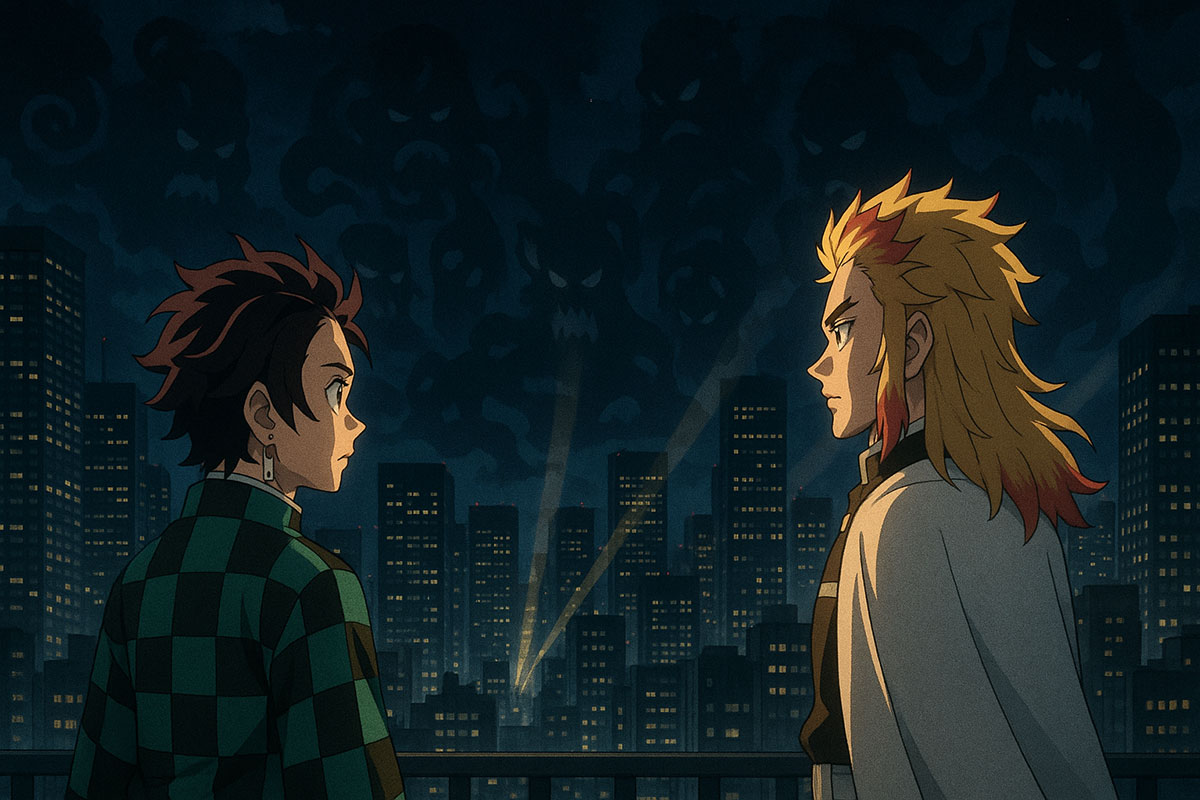
Kagaya Ubuyashiki:
“My children, in your time you fought demons with claws, fangs, and powers beyond comprehension. But today, the world is different. I ask you: do demons still exist, and if so, in what form? Let us explore this together.”
 First Question — Are demons literal beings, or do they manifest as human vices?
Rengoku:
“Magnificent question! I believe demons of flesh are no longer walking among us, but the essence of demons lives on. They take form in greed, in cruelty, in the indifference of one person toward another’s suffering. These are demons of the heart, and they are every bit as dangerous as those I faced with my blade!”
Zenitsu:
“O-oh man, that hits too close! I feel like… demons whisper in your own head. ‘You’re not good enough, you’re weak, just give up.’ Sometimes that voice is louder than any monster’s roar. So yeah… I think demons are real, but they live in fear and despair inside us.”
Akaza:
“…Demons exist, yes. They may not drink blood in alleys anymore, but they thrive in hatred, in neglect. When someone feels abandoned, their pain curdles into bitterness. If no one reaches them, that bitterness becomes a demon’s face. That was my story, and it still repeats in others today.”
Tanjiro:
“I’ve met many people whose eyes were filled with pain. Sometimes they lashed out, sometimes they hurt others, but I could see the human beneath. Demons are not only monsters — they are vices, cruelty, and selfishness made flesh. If we face those in ourselves and in others, we are still fighting demons.”
Nezuko:
“…Hurt… hate.” (She points to her chest, then out into the room. Her meaning is clear: demons exist both inside us and outside us, in the actions we take when pain turns to hatred.)
Second Question — How do New Age perspectives on negative energy or evil spirits align with Demon Slayer battles?
Tanjiro:
“New Age teachings speak of negative energy, don’t they? I think that’s very close to what we fought. Demons fed on fear and despair. When people fill themselves with anger or resentment, it’s like inviting a demon in. The battles we fought were against that darkness, whether inside a person or outside.”
Akaza:
“…Yes. In my time, Muzan’s blood created demons. Today, hatred itself is enough. The New Age speaks of energy — light and dark. I see truth in that. Demons are energy twisted, love that has soured into hunger. The fight is not always with swords, but with what you choose to nurture.”
Rengoku:
“Ha! Excellent! The language may change, but the meaning is the same. Whether you call it negative energy, evil spirits, or malice, it must be resisted with courage. In my battles, my flame met their darkness. In today’s world, kindness and hope are the flames that burn away these shadows!”
Zenitsu:
“S-so what you’re saying is… demons are like bad vibes? Because… yeah, I can feel those! Walk into a room where everyone’s angry, and it’s like drowning. That’s the kind of demon people face now. You don’t cut it down with a sword… you survive it with love, maybe?”
Nezuko:
“…Light… protect.” (Her eyes shine. She means: positive energy, like sunlight, protects us the way family bonds protected her.)
Third Question — Are “modern demons” people, systems, or inner struggles?
Zenitsu:
“Ugh… all of the above? Look, some people act like demons, sure. But sometimes the real demon is the system—like bosses that crush workers, governments that abandon people. And sometimes the scariest demon is the one in your own chest that won’t shut up. I think it’s all three.”
Rengoku:
“Indeed! Modern demons take many forms. Yes, there are individuals whose cruelty harms countless others. Yes, there are systems of greed and oppression that grind down the innocent. But the fiercest struggle is within the human heart. If we conquer that, no outer demon can defeat us!”
Akaza:
“…Systems. That is where most demons live today. Not always in individuals, but in structures that reward cruelty and punish compassion. Yet even then… each system is made of choices. Humans make those choices. That is why the fight is never done.”
Tanjiro:
“I see demons in all three. People, yes. Systems, yes. But also inside each of us. And if we don’t fight the demons within, we cannot face the ones outside. The first step is always to look inward, then reach outward with compassion.”
Nezuko:
“…Together.” (She clasps her hands. Demons may exist in many forms, but unity is the only way to resist them.)
Kagaya Ubuyashiki (closing):
“You have spoken wisely, my children. Demons still exist in today’s world—not in fangs and claws, but in despair, in cruelty, in broken systems and wounded hearts. Yet just as you once fought in darkness, today’s people can fight with love, compassion, and unity. Remember this: demons thrive where there is no light. But even the smallest flame can end a long night.”
Topic 2: The Nature of Evil vs. the Nature of Pain
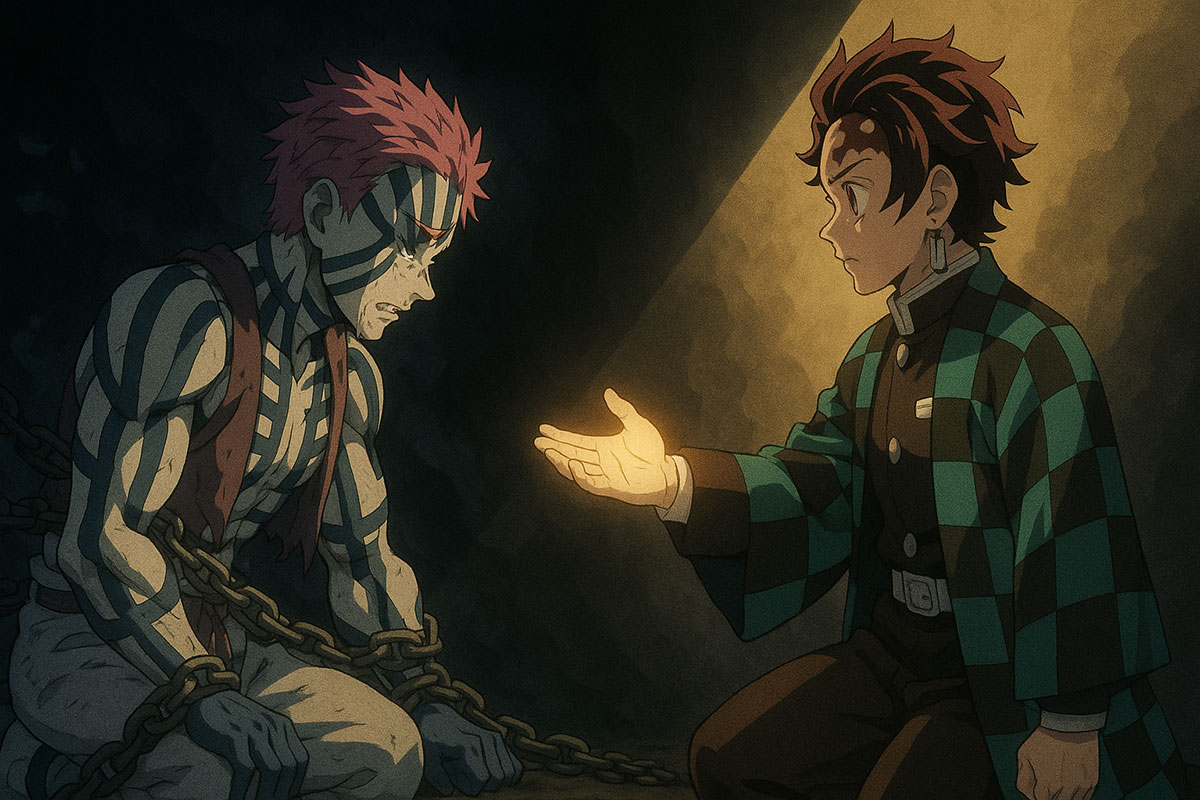
Kagaya Ubuyashiki:
“My children, demons are born of pain, yet they commit acts we call evil. This is a question humans still wrestle with: is evil a separate force, or only pain left unchecked? How do we see the difference? Let us search for clarity.”
First Question — Is evil a separate force, or is it born from pain?
Zenitsu:
“I-I really want to believe evil is just, like… some outside thing! Because that’s easier. You cut it down, poof, gone. But the truth? Pain’s usually behind it. People lash out because they’re hurt. But then… some start enjoying it. That’s when pain twists into something worse—evil.”
Rengoku:
“Splendidly put, Zenitsu! Pain is not evil in itself—it is suffering, and it can be endured, even transformed. Evil is when one chooses to embrace cruelty, to reject compassion, and to inflict suffering knowingly. The seed may be pain, but the fruit is evil when humanity is cast aside.”
Akaza:
“…I was in pain. My father’s death, Koyuki’s murder—yes, they broke me. But what I became later… the blood I spilled… that was more than pain. Evil was my choice to keep killing after the pain no longer explained it. Pain gave birth to me, but evil raised me.”
Tanjiro:
“I think pain is where it begins. I saw it again and again—demons crying even as they attacked. But Rengoku is right: evil is when pain stops asking for healing and starts asking for power. That’s where the line lies. Pain deserves compassion. Evil demands resistance.”
Nezuko:
“…Pain… not same… evil.” (Her words are soft, but her meaning sharp: they may touch, but they are not identical.)
Second Question — How should we judge those who fall into darkness?
Akaza:
“Judge them honestly. Do not erase their crimes by saying they were in pain. That insulted me more than hatred ever did. Hate my deeds, but know I was human once. That balance matters. Punish what must be punished, but see clearly.”
Tanjiro:
“Yes… Akaza speaks truth. I grieved for every demon I slew, but I never forgot the humans they killed. We must judge both with justice and with sorrow. If we judge only with anger, we become cruel. If only with pity, we abandon the victims. To be human is to hold both.”
Rengoku:
“Well said! True judgment is neither blind vengeance nor empty pardon. It is stern but compassionate. We condemn evil acts while honoring the humanity that was lost. That is justice worthy of remembrance!”
Zenitsu:
“I-I don’t wanna judge anybody! It’s terrifying. But… if we don’t, demons run wild. Maybe judgment should come with trembling knees—so we never forget it’s heavy. Maybe… we judge less quickly, more carefully. With fear, not pride.”
Nezuko:
“…See both.” (She opens her hands wide, then clasps them. Justice and compassion held together.)
Third Question — Can pain ever be fully healed, or does evil always remain?
Rengoku:
“Pain can heal! Scars remain, yes, but scars are proof of survival. They remind us we endured. Evil, however, is harder—it clings, resists. But I believe even evil can be redeemed, if met with courage and light. I died with this belief, and I would die for it again.”
Akaza:
“…Not always. Pain can heal if someone reaches you in time. But if no one comes, if hatred takes over, sometimes it is too late. For me, redemption came only in death. Evil consumed me beyond return. For others? Perhaps there is hope. But not for all.”
Tanjiro:
“I must believe pain can always heal. If I give up that hope, then I cannot save anyone—not even myself. Yes, scars stay. Yes, some may fall too far. But even if redemption is rare, it must never be declared impossible. As long as someone loves you, healing is possible.”
Zenitsu:
“Ugh… healing? It sounds impossible most days. But then I think about me. I was useless, a coward… but people believed in me anyway. And little by little, I changed. If I can heal even a little, maybe anyone can. Maybe evil is just pain that stayed too long.”
Nezuko:
“…Hope.” (One word, but it glows like dawn. Her eyes shimmer. Everyone bows their head in silence.)
Kagaya Ubuyashiki (closing):
“You have spoken bravely. Pain is not evil—it is a wound. Evil is when the wound festers and is used to harm others. Yet even then, hope may remain. We must judge wisely, love fiercely, and never abandon the chance for redemption. For in healing pain, we weaken evil’s grip on the world.”
Topic 3: Family and Bonds as Protection Against Darkness
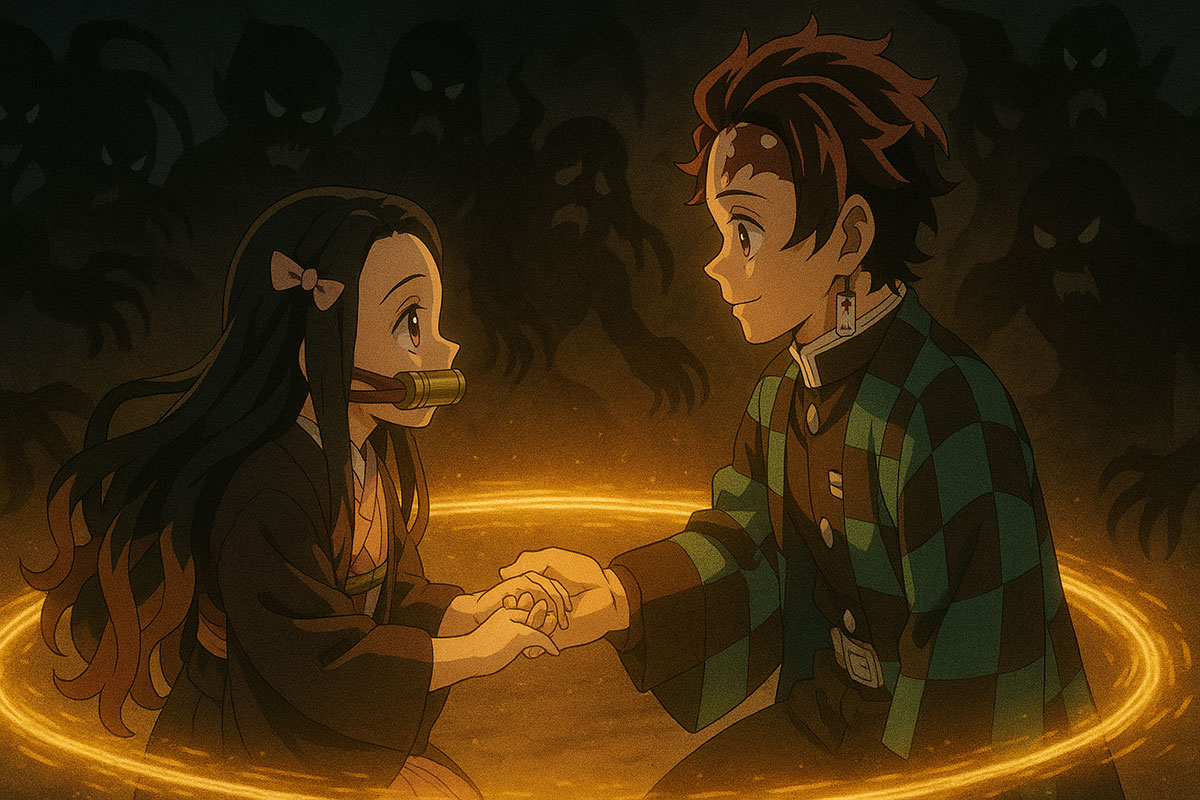
Kagaya Ubuyashiki:
“My beloved children, the Corps did not endure because of swords alone, but because of the bonds that held us together. Today’s world is different, yet the shadows remain. I ask you: are family and community still shields against the darkness of despair?”
First Question — How do relationships protect us from falling into despair?
Tanjiro:
“My family was everything to me. Even after they were gone, their memory kept me alive. Nezuko’s presence gave me the strength to fight. Relationships are like ropes tied around us—they stop us from falling too far. Even when we slip, someone’s hand pulls us back. Without bonds, despair swallows us whole.”
Akaza:
“…I lost everyone. My father, my fiancée, the only people who saw me as human. When they were taken, I fell. Had I found another bond, perhaps I would not have become what I became. Relationships do not just protect—they define the road ahead. With them, you endure. Without them, you rot.”
Zenitsu:
“Honestly, I’d be dead a hundred times if I didn’t have friends. I freeze, I panic, I collapse… but then I think, Tanjiro’s counting on me. Nezuko’s watching. I can’t let Inosuke get all the credit. And somehow, I move. Bonds make you do what you thought you couldn’t.”
Rengoku:
“Splendid! Bonds are the foundation of courage. Alone, even the strongest falter. Together, even the weakest rise. When I fought Akaza, I stood firm not for myself, but for those behind me. That bond made my body stronger than pain, my will brighter than night.”
Nezuko:
“…Together… safe.” (She leans against Tanjiro’s shoulder, her quiet word carrying more weight than any speech.)
Second Question — Can family love act as a “spiritual charm” against evil today?
Rengoku:
“Without question! Family love is the purest flame. It is a charm against despair, against hatred, against cruelty. When one knows they are loved, truly loved, the grip of evil weakens. The love of family is armor no blade can pierce!”
Zenitsu:
“Y-yeah! Like, when I think about Grandpa… he believed in me when nobody else did. That memory still pushes me forward. Family love sticks, even when they’re gone. It’s like a charm sewn into your sleeve. You forget it’s there until it saves you.”
Akaza:
“…Yes. Koyuki’s smile was my charm. Her love was enough to quiet the violence inside me. But when it was stolen, I shattered. Family love protects, but losing it can destroy. That is why it must be cherished fiercely while it lasts.”
Tanjiro:
“My family’s love carried me long after their deaths. Nezuko’s love pulled me back from becoming a demon myself. In today’s world, where loneliness spreads like poison, family love—whether blood or chosen—is the most powerful protection against darkness.”
Nezuko:
“…Onii-chan.” (She hugs Tanjiro tightly. One word, but her whole existence proves the truth of it.)
Third Question — Are communities today as vital as the Corps was for Demon Slayers?
Zenitsu:
“Y-yes! Totally! I mean, can you imagine me out there alone? I’d be demon food in two seconds. Community is everything! Even now, people can’t survive alone. Not really. We need each other—to talk, to laugh, to cry. Without that, the ‘demons’ of fear and despair just eat you alive.”
Akaza:
“…The Corps was a family of warriors. Today, communities don’t always fight monsters, but they fight hunger, loneliness, injustice. Yes, communities are vital. More vital than ever. Without them, individuals are devoured. With them, even broken people can stand.”
Rengoku:
“Marvelous! Community is the torch that lights a hundred candles. One flame can guide a man, but a hundred flames can guide a nation. The Corps proved that unity is strength. Today, communities must rise in the same spirit—to shield, to heal, to inspire.”
Tanjiro:
“Yes. The Corps taught me that we fight not only for ourselves, but for each other. In today’s world, community is the breathing style that keeps humanity alive. It is how we resist despair—not alone, but together.”
Nezuko:
“…Many hearts, one light.” (She gestures, hands spread, as if gathering everyone into a single flame.)
Kagaya Ubuyashiki (closing):
“You have spoken beautifully. Relationships are ropes that pull us back from despair. Family love is the charm that shields us from evil. Communities are the Corps of the modern age, standing together against loneliness and cruelty. Remember this: a single heart can flicker—but joined together, hearts burn with eternal light.”
Topic 4: Sacrifice and Legacy in a Modern World
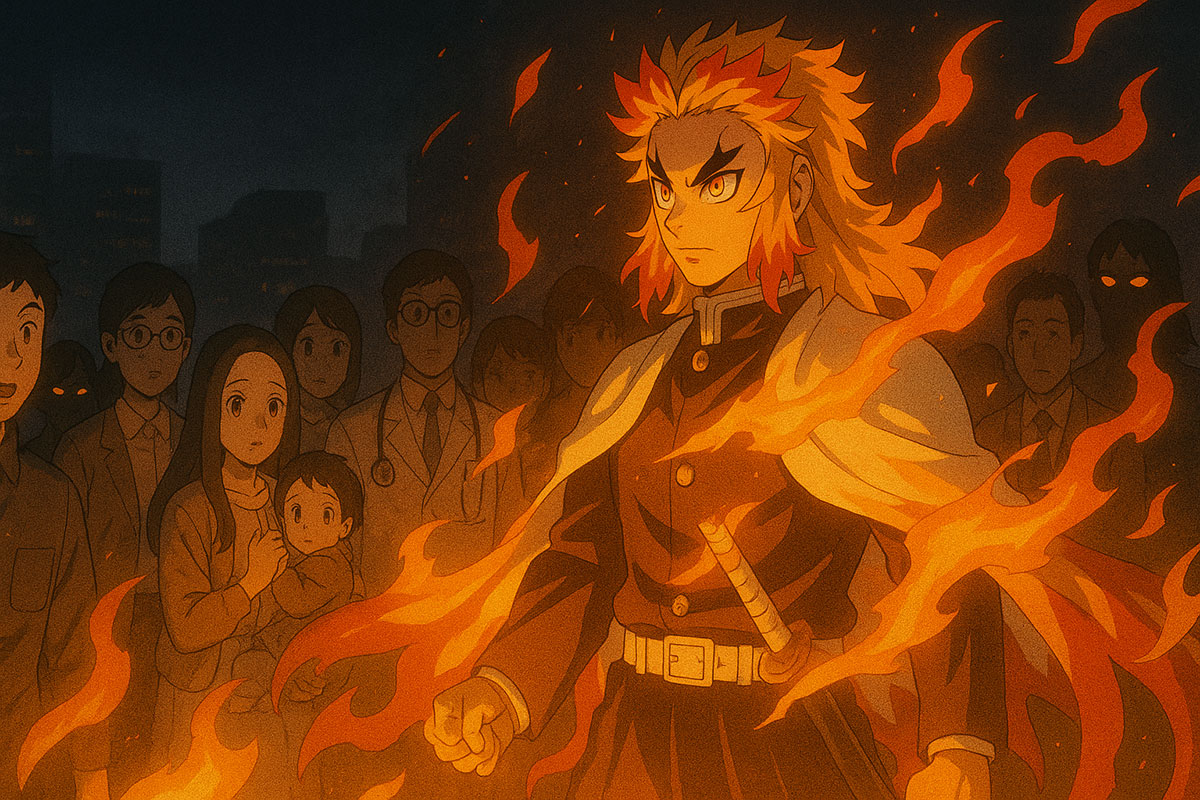
Kagaya Ubuyashiki:
“My children, your world was filled with blades and demons. Yet even today, the question of sacrifice remains. What does it mean to give of oneself in times without monsters of flesh, but shadows of spirit? And what legacy should we leave behind?”
First Question — What does sacrifice mean in an age without swords and demons?
Rengoku:
“Ah! Splendid question! Sacrifice is not confined to the battlefield. It is any act where one gives of themselves for the sake of another. In today’s world, it is the mother working two jobs so her children may study, the doctor laboring through the night, the stranger who defends the weak at personal cost. These are sacrifices as noble as any fight I waged.”
Tanjiro:
“Yes. Sacrifice is not always dramatic—it is quiet, daily, often unseen. It means choosing others over yourself, whether through time, energy, or kindness. Every small act of giving prevents darkness from spreading. Swords may not be needed, but hearts that endure suffering for others always will be.”
Zenitsu:
“Ughhh… sacrifice sounds terrifying. I don’t want to die young or throw myself into danger! But… then I think about all the times people protected me when I couldn’t protect myself. Maybe sacrifice today means… stepping up even when you’d rather hide. Giving something up—comfort, safety—so someone else can breathe easier.”
Akaza:
“…Sacrifice is dangerous. If given unwillingly, it turns to resentment. If demanded, it becomes cruelty. But when chosen freely, sacrifice is power. Today, it may mean standing against injustice even when it costs you, or loving someone even when it hurts. That is the sacrifice worth honoring.”
Nezuko:
“…Give… love.” (Her eyes soften, and she squeezes Tanjiro’s hand. To her, sacrifice is nothing more—and nothing less—than giving love without condition.)
Second Question — Who are today’s “Hashira”?
Zenitsu:
“H-H-Hashira today? Oh man… maybe it’s not sword fighters. Maybe it’s… people who protect others in different ways. Like activists fighting for the planet, or teachers who don’t give up on their students, or parents who carry everything for their kids. They don’t have fancy titles, but… they stand like pillars.”
Rengoku:
“Indeed! The Hashira of today are the guardians of life itself—nurses who labor in hospitals, volunteers who feed the hungry, those who speak boldly against cruelty when silence would be easier. They are not bound by uniform, but by their flame of duty!”
Akaza:
“…Yes. Today’s Hashira are those who fight without blades: healers, truth-tellers, even artists who shine light into despair. Anyone who resists the corrosion of the soul—anyone who stands between others and harm—is a Hashira in spirit.”
Tanjiro:
“I see Hashira in ordinary people who refuse to look away. A neighbor who helps another, a stranger who shows kindness, a friend who listens. They may not stand on battlefields, but they are pillars that keep others from falling.”
Nezuko:
“…Family. Friends. Protect.” (Her short words gather them all together: every bond that shields another is a kind of Hashira.)
Third Question — How does one ensure their legacy inspires hope, not fear?
Rengoku:
“By living with honor until your final breath! My legacy was not my death—it was my resolve to smile in the face of despair, to burn brightly for others. If you live so that others may rise from your example, then your legacy will always inspire hope!”
Akaza:
“…Legacy is cruel if it is only power. Muzan’s legacy was fear. Mine was destruction. But Tanjiro’s, Rengoku’s—theirs inspire hope because they gave, not took. To inspire hope, you must plant seeds in others, not carve scars into them.”
Zenitsu:
“I-I don’t want a legacy! I’m too scared to think about that! But… maybe it’s not about statues or history books. Maybe it’s just… someone remembering you kindly. Like, ‘Zenitsu was scared, but he still showed up.’ If someone says that about me, that’s enough.”
Tanjiro:
“Legacy is written in the hearts you touch. If you leave behind kindness, forgiveness, and courage, people carry it forward. Hope spreads like ripples in water. That is how you ensure your memory becomes a light instead of a shadow.”
Nezuko:
“…Smile.” (She whispers it softly, her own smile radiant. To her, legacy is in the smile you leave behind, carried in the hearts of those who loved you.)
Kagaya Ubuyashiki (closing):
“You have spoken truly. Sacrifice is not only death in battle, but life given in love. Today’s Hashira are those who stand as pillars of compassion, courage, and truth. And a legacy of hope is born not from fear, but from lives lived as flames—burning for others, leaving warmth long after the fire is gone.”
Topic 5: The Light Within: Human Potential to Overcome Darkness
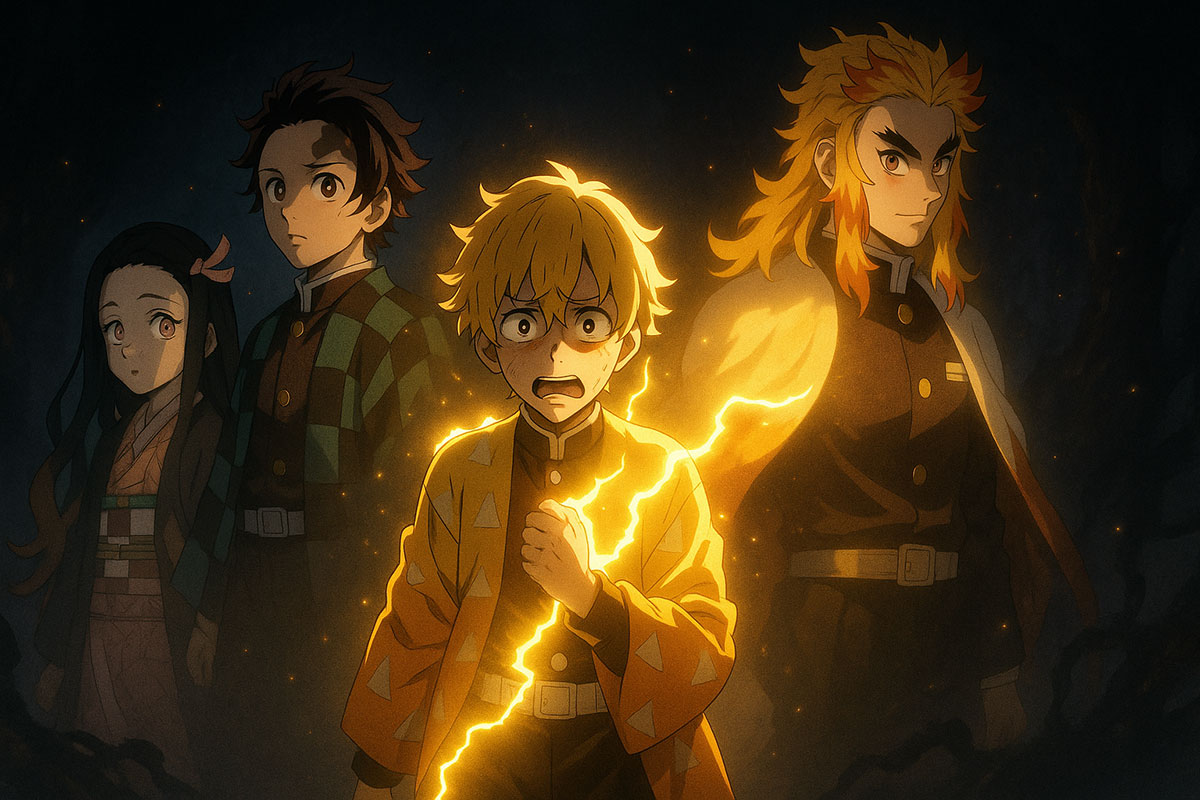
Kagaya Ubuyashiki:
“My beloved children, in your battles you discovered strength not only in weapons but in your hearts. In today’s world, people do not fight demons with blades, yet they face shadows nonetheless. How might one awaken the light within to overcome that darkness?”
First Question — How do people awaken inner strength in the face of fear?
Zenitsu:
“O-ohhh, this is me! I’m scared of everything. Seriously—everything! But sometimes fear itself wakes up something inside you. Like when I thought Tanjiro would die if I didn’t act. My legs shook, my teeth clattered… but then lightning struck, and I moved. People awaken strength when they realize someone else needs them. Fear doesn’t go away—you just let love be louder.”
Rengoku:
“Splendid, Zenitsu! You shine even in trembling. Indeed, fear is the forge of strength. One awakens their light not by avoiding fear, but by facing it. Courage is not the absence of fear—it is the mastery of it! When we dedicate our lives to others, our hearts blaze, and fear becomes fuel.”
Tanjiro:
“Yes. Inner strength awakens when love outweighs fear. When Nezuko was in danger, I didn’t think about my weakness—I only thought about protecting her. In today’s world, strength comes not from ignoring fear, but from choosing to act despite it.”
Akaza:
“…Fear awakens strength, yes. But only if you believe life has meaning. My fear turned to rage because I believed nothing mattered. If people are to awaken strength today, they must find something—or someone—worth living for. Without that, fear destroys instead of building.”
Nezuko:
“…Protect.” (She lifts her chin, eyes steady. To her, the answer is simple: strength comes from the desire to protect loved ones.)
Second Question — Are practices like meditation or breathing today’s equivalent of Total Concentration Breathing?
Tanjiro:
“Breathing was our foundation—it kept us alive. Today, people don’t wield swords, but they still fight stress, anger, despair. Meditation, mindful breathing—these can be their ‘Total Concentration.’ They calm the mind, strengthen the heart, and make space for compassion. The form changes, but the essence remains.”
Akaza:
“…I trained my body beyond limits, yet without peace inside, it meant nothing. Meditation, breath, stillness—yes, these are today’s swords. They allow people to master themselves before they face the world. Without them, strength is hollow.”
Rengoku:
“Magnificent! The practice may differ, but the principle is eternal. Whether it is meditation, breathing, prayer, or discipline, it tempers the spirit! The fire within must be tended, or it burns wild. Such practices are today’s Total Concentration—an art of self-mastery!”
Zenitsu:
“I-I never thought of it like that… but yeah! Whenever I slow my breath, I panic less. Maybe normal people don’t need lightning swords, but they need calm hearts. If meditation does that, then it’s like their version of breathing styles. Maybe even better—less dangerous!”
Nezuko:
“…Breathe… peace.” (Her quiet words echo softly, as if she’s reminding everyone that even demons can find calm through breath.)
Third Question — Can everyone find their “inner flame,” or is it only for the chosen few?
Rengoku:
“Everyone! Without exception! The flame is not bestowed—it is kindled by choice. Some flames burn brighter, yes, but every heart carries a spark. Even the smallest flame can light a path through darkness. It is not about being chosen—it is about choosing!”
Zenitsu:
“I-I used to think I was useless. That I wasn’t chosen for anything. But then… I realized I could still protect, even in fear. So yeah, I think everyone has something. Maybe not huge, maybe not flashy, but enough to make a difference. If I can find mine, anyone can.”
Akaza:
“…I once believed only the strongest had worth. That was Muzan’s poison. But I was wrong. Even the weak can shine. Even the broken. Especially the broken. Everyone has a flame. The tragedy is not when it burns small—it’s when no one helps shield it from the wind.”
Tanjiro:
“Yes. Everyone has their flame. Sometimes it’s hidden, sometimes buried under pain. But with love, with encouragement, it emerges. My job, our job, is to see that flame in others even when they can’t see it themselves.”
Nezuko:
“…All hearts. Fire.” (She presses her hand to her chest, then to each of theirs, reminding them that every heart carries light.)
Kagaya Ubuyashiki (closing):
“You have spoken truth. Inner strength awakens when love overcomes fear. Practices of breath, stillness, and compassion are today’s swords. And every soul, no matter how small or broken, carries a flame. Protect it, nurture it, share it—and the world will never fall entirely into darkness.”
Topic 6: What Makes a True Monster?
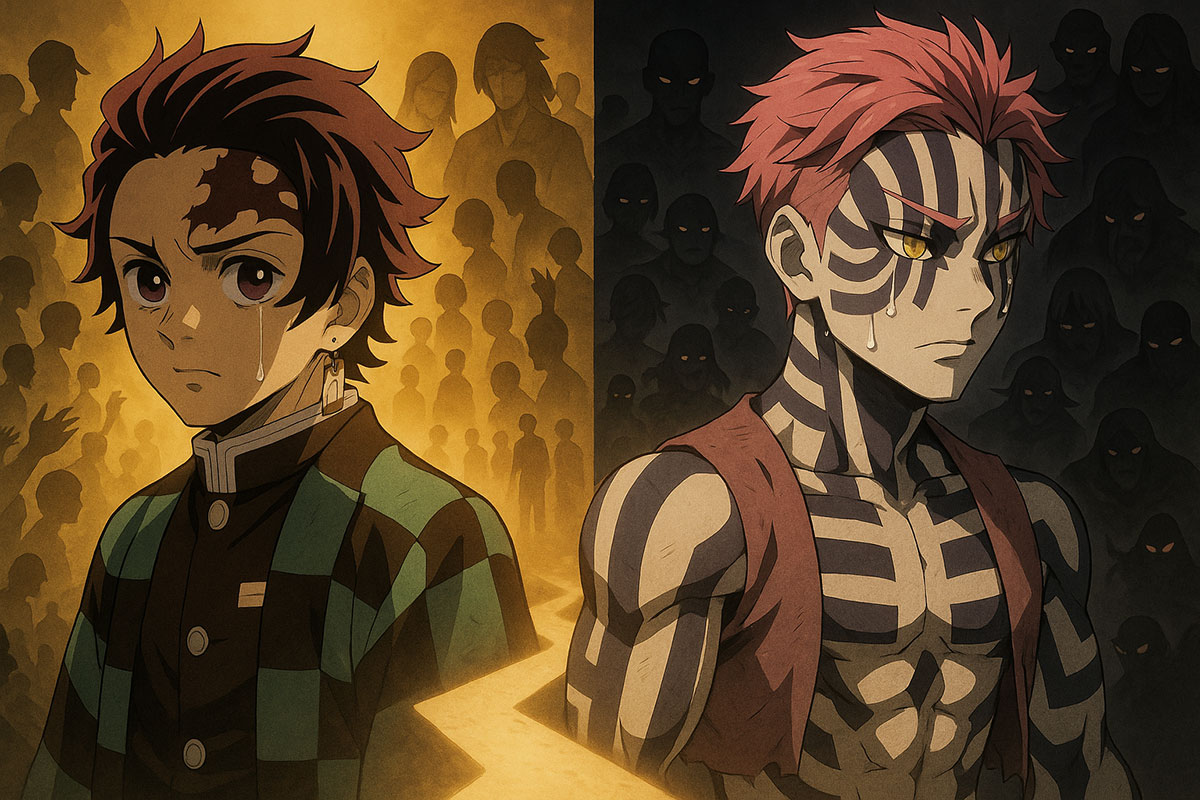
Kagaya Ubuyashiki:
“In your time, monsters took human form through Muzan’s blood. Yet in truth, not every demon lost their humanity. Today, there are no Muzans creating armies, but humans still speak of ‘monsters.’ I ask you: what truly makes one a monster?”
First Question — Is monstrosity in the person or in their choices?
Rengoku:
“Magnificent question! Monstrosity is not in blood, nor birth—it lies in choices! One may be scarred by tragedy, burdened by hardship, yet remain noble. Another, with ease and privilege, may choose cruelty. That choice, that rejection of compassion—that is what makes a monster.”
Akaza:
“…I was a man once. Pain broke me. But I chose violence again and again, long after my pain should have been heard. Monstrosity is not who you are, but what you embrace. It is in the choice to stop being human. That is the truth I lived—and died—by.”
Tanjiro:
“I agree. I saw demons who suffered so much they forgot who they were. But I also saw moments when they remembered kindness. That means monstrosity is not permanent—it comes from choices. Even in the darkest moment, you can still choose compassion. That is what separates humans from monsters.”
Zenitsu:
“I—I think it’s both! I mean, some people just… feel scarier, like their aura’s dark. But then again, I’ve also seen cowards—like me—choose to do something good. So maybe it’s not about what you look like or what you feel like—it’s about the moment you decide. Do you harm or do you heal? That’s the real test.”
Nezuko:
“…Choice.” (She presses her hand over her heart, then extends it outward, as if showing the world what we give away. Her meaning is clear: choice defines who we are.)
Second Question — Are today’s “monsters” individuals, or corrupt systems?
Akaza:
“…Both. Monsters can be a single hand taking a life—or a system that makes countless hands complicit. Systems that reward greed, punish kindness, and abandon the weak—these are monstrous. But individuals create systems. They cannot escape blame.”
Tanjiro:
“Yes. Systems themselves can become monstrous—when they crush people under rules and greed. But every system is built from human choices. To call it only a system removes responsibility. Each of us must resist becoming part of a monster made of many hands.”
Zenitsu:
“Ughhh, that’s even scarier! A system’s like a demon you can’t even stab! But… yeah, you feel it, right? Like when people just accept cruelty because ‘that’s the way it is.’ The system becomes a monster because individuals stop fighting back. That’s what really terrifies me.”
Rengoku:
“Indeed! Systems may be vast, but it takes only one heart to resist. Just as one flame can defy the night, one righteous act can inspire change. Monsters may gather in systems, but so too can heroes gather in communities. We must never forget this truth!”
Nezuko:
“…Together strong. Together cruel.” (Her words point both ways: communities can heal, or they can harm. It depends on what they choose to embody.)
Third Question — At what point is redemption no longer possible?
Tanjiro:
“I don’t believe redemption ever vanishes completely. Even in their last moments, I saw demons weep with regret. Redemption may not undo harm, but it can reclaim a piece of humanity. If someone chooses to change—even at the end—it matters. It always matters.”
Akaza:
“…I wanted redemption too late. By the time I reached for it, I had drowned in blood. Perhaps for some, the only redemption is death—the end of their cruelty. Yet, even then, remembering their humanity is a kind of redemption, isn’t it? Pain turned me into a monster. My final choice was to stop.”
Rengoku:
“Well said! Redemption is not erased by time, but by refusal. As long as one can choose differently, the door remains open. Yet we must be honest—some never turn, some never seek it. Their legacy is fear. But hope remains for all who choose the path of light, however late.”
Zenitsu:
“I-I hope redemption is always possible… because if it’s not, then what about me? I failed so many times. I was weak. But people believed in me anyway, and that gave me another chance. If I can find a shred of courage, maybe anyone can find redemption. I have to believe that.”
Nezuko:
“…Hope.” (She lifts her eyes, a faint smile on her lips. To her, hope is the last flame, never extinguished, even for monsters.)
Kagaya Ubuyashiki (closing):
“You have spoken wisely. Monstrosity lies not in birth but in choice. Systems and individuals alike may become monstrous, yet both can be redeemed if hearts turn back to compassion. Remember this: the line between human and monster is fragile—but as long as hope is chosen, humanity endures.”
Topic 7 — The Final Dawn: Hope in a Broken World
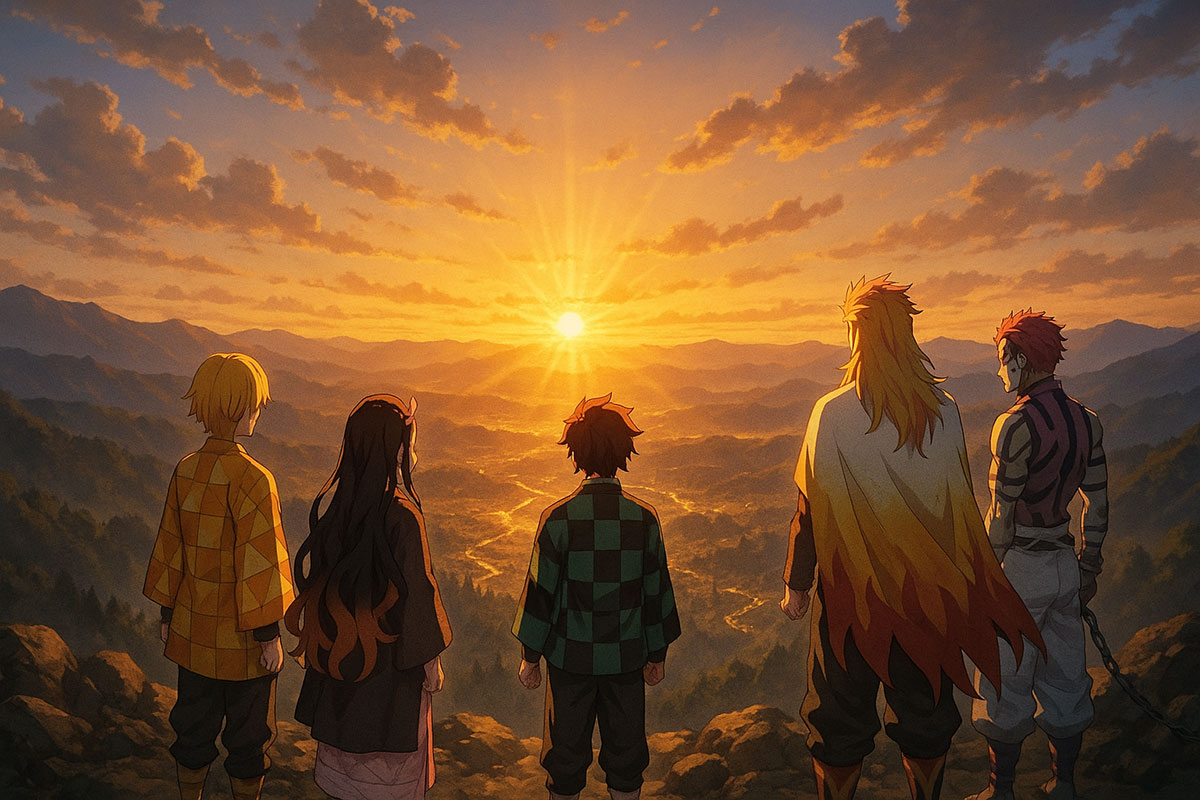
Kagaya Ubuyashiki:
“My children, all struggles seek an ending, as every night longs for dawn. Today, humanity faces crises without claws or fangs—wars, division, a planet in peril. What, then, is the dawn we must seek? And how do we endure until it comes?”
First Question — What is “dawn” for us in an age of war, division, and climate fear?
Rengoku:
“Dawn is the moment we choose unity over discord, compassion over cruelty. It is not merely the rising sun, but the rising heart! Even in times of conflict, dawn arrives when people stand together, refusing to surrender to despair. The earth itself waits for us to rise!”
Akaza:
“…For me, dawn would have been a chance to start again, free from hunger and rage. For this world, dawn is the moment we remember what it means to care—for the land, for each other. War and division are darkness. Dawn is when people decide not to repeat my mistake: choosing strength over love.”
Zenitsu:
“Ugh, dawn feels so far away sometimes. Like, everywhere you look—bad news, shouting, fighting. But maybe… dawn doesn’t mean everything is fixed. Maybe it just means one small thing is better. Like someone forgives. Or someone plants a tree. Or someone laughs when they could’ve cried. That’s dawn too.”
Tanjiro:
“Yes. Dawn is not a single event—it’s a thousand small moments of kindness that grow into something greater. When a community cares for the weak, when one person chooses to protect another, that is the light of dawn. Even in a broken world, it shines.”
Nezuko:
“…New day.” (She smiles faintly, her voice soft but steady. Dawn means simply: another chance, another beginning.)
Second Question — How do we keep fighting when hope feels far away?
Akaza:
“…When I lost hope, I fell. That is the truth. But if I had held on—if I had allowed others to reach me—I might not have become a demon. To keep fighting, you must lean on others. Alone, hope dies. Together, it survives, even when far away.”
Tanjiro:
“Yes. We fight for each other, not only for ourselves. When hope feels far, I think of Nezuko, of my friends, of the people I’ve met who smiled even through suffering. Remembering their faces keeps me moving forward. Hope is not always near—but bonds carry us until we find it again.”
Rengoku:
“Magnificent! To endure when hope is distant is the mark of true courage. We may stumble, we may weep, but we rise for those who cannot. Even if the dawn seems far, we fight knowing that every step brings it closer. We set our hearts ablaze, and the night cannot consume us!”
Zenitsu:
“M-me? I panic! I cry! I want to quit! But… then I remember, I’ve survived every day I thought I couldn’t. And somehow, I’m still here. Maybe fighting when hope is far is just… surviving until the light shows up. Surviving is a kind of victory too.”
Nezuko:
“…Hold hands.” (She reaches out. Her answer is simple: together, we carry hope until it returns.)
Third Question — Where do we look for light when the world grows darker?
Tanjiro:
“In people. Always. In the kindness of strangers, in families holding each other, in children who laugh despite hardship. Even when the world is dark, light appears in human hearts. If we seek it there, we will never be lost.”
Akaza:
“…Look at the broken. The forgotten. That is where light waits. When you lift them, you see it. When you heal what is hidden, light rises. I wish someone had looked for light in me. Perhaps then, I would not have been lost.”
Rengoku:
“Splendid! Light is everywhere, if only we choose to see! In courage, in sacrifice, in the smallest acts of joy. Even in darkness, stars burn above us. The world cannot silence them! Look upward, look inward, look to one another—and you will find light.”
Zenitsu:
“Honestly? I look for light in the little things. Food that tastes good. Friends who don’t leave me behind. A sky full of stars. Those moments remind me that darkness isn’t everything. Light doesn’t have to be huge—it just has to be enough to notice.”
Nezuko:
“…Sunrise.” (Her voice is barely above a whisper, but it lands with finality. The sun always rises. Always.)
Kagaya Ubuyashiki (closing):
“My children, you have given me peace with your words. Dawn is not the end of darkness—it is the promise that darkness cannot last. When hope feels far, we hold each other. When the world grows dark, we look for small lights, and together, they become a blaze. Remember this: as long as we choose love, morning will always come.”
Final Thoughts by Kagaya Ubuyashiki
(His words are almost like a prayer, his tone peaceful, carrying the weight of both sorrow and unshakable faith.)
You have listened to warriors who fought with swords, but also with love, with fear, with sacrifice, with compassion. Their voices remind us that demons are not only foes of the past—they are choices, systems, shadows that remain in our world today.
Yet what greater truth have we heard than this? That even in despair, love endures. That even in fear, courage awakens. That even in cruelty, redemption flickers. That hope, though fragile, can carry us until the dawn.
Rengoku’s fire still burns. Nezuko’s innocence still shines. Tanjiro’s compassion still heals. Zenitsu’s trembling courage still inspires. And even Akaza’s regret reminds us: no soul is beyond the reach of light.
If you carry their stories with you, then you too become part of their legacy. In your own choices, in your own small acts of love, you help build the dawn this world so desperately needs.
My beloved children, remember this: demons will always exist where light is absent. But as long as we choose to be the flame, to be the sunrise, the darkness shall never claim the final word.
May you go forward with your hearts ablaze, and may your dawn be eternal.
Short Bios:
Tanjiro Kamado
A kindhearted boy who becomes a Demon Slayer after his family is slaughtered. Defined by compassion and determination, he seeks not only to defeat demons but to understand their pain. His empathy is his greatest weapon.
Nezuko Kamado
Tanjiro’s younger sister, transformed into a demon yet retaining her humanity. Protected by her brother’s love, she resists her demonic urges and even conquers the sun. Nezuko symbolizes innocence, resilience, and the power of family bonds.
Kyojuro Rengoku
The Flame Hashira, known for his blazing spirit, optimism, and mantra: “Set your heart ablaze.” He gave his life to protect others, embodying sacrifice and courage. His presence inspires others long after his death.
Zenitsu Agatsuma
A cowardly but loyal Demon Slayer. Though paralyzed by fear, in moments of unconscious instinct he wields incredible lightning-fast power. His journey proves that even the most frightened can be courageous.
Akaza (Hakuji)
An Upper Rank demon who once was a tragic young man. His descent into cruelty came from unbearable loss, but even in death he remembered his humanity. He represents both the danger of pain unchecked and the possibility of redemption.
Kagaya Ubuyashiki
The wise and gentle leader of the Demon Slayer Corps. Frail in body but luminous in spirit, he treats every Slayer as his child. His calm, poetic words frame the series, offering hope, reflection, and the assurance that sacrifice has meaning.
Leave a Reply