
|
Getting your Trinity Audio player ready...
|
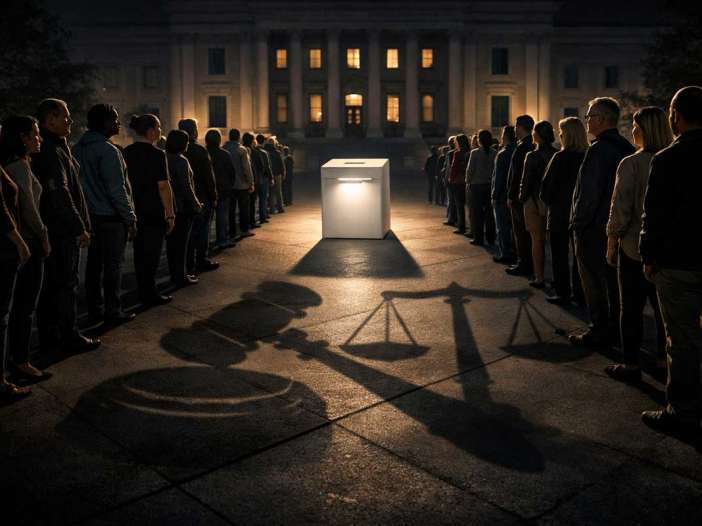
What if Megyn Kelly and Rachel Maddow pinned Tucker Carlson and Chuck Schumer to one impossible question—do elections still decide who holds power in America?
Introduction by Megyn Kelly & Rachel Maddow
Do elections still decide who holds power in America? That’s the question at the center of this ImaginaryTalks debate—because even people who disagree on everything else can feel the same unease: that power is starting to operate outside the vote.
Megyn Kelly: This conversation started with something President Trump said that a lot of media treated like a “threat,” but many supporters hear as a blunt warning: if his side loses the midterms, he expects impeachment efforts to return. Whether you think that’s cynical, strategic, or simply realistic, it raises a bigger issue than Trump: can a president win an election and still be denied the ability to govern if Congress flips and the political incentives turn toward removal?
Rachel Maddow: From the left, the concern is equally straightforward: elections are essential, but they are not a permission slip for abuse of power. “No one is above the law” is not a slogan—it’s the principle that keeps democracy from turning into immunity for whoever wins. The danger isn’t accountability itself. The danger is accountability being distrusted, or misused.
Megyn Kelly: So tonight we’re not doing caricatures. We’re testing standards. What counts as legitimate oversight? What crosses into lawfare? What guardrails still function when trust is low?
Rachel Maddow: We’ve invited two distinct styles of moderation—one from each side—to press hard questions, demand definitions, and steelman the best arguments. Not to crown a winner, but to clarify the stakes: if elections don’t settle legitimacy anymore, what exactly holds the system together?
(Note: This is an imaginary conversation, a creative exploration of an idea, and not a real speech or event.)
Topic 1 — When Impeachment Becomes “Routine”: Accountability or a Power Weapon?
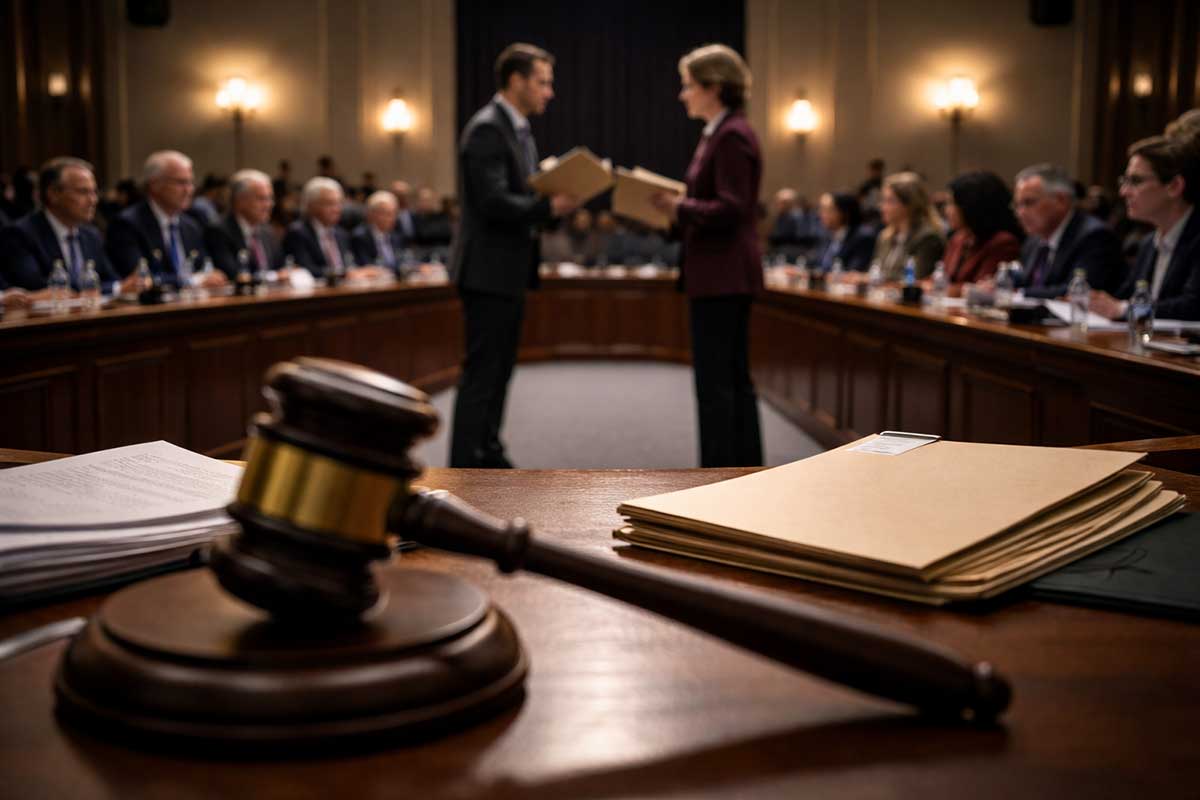
Setting: A quiet, high-production roundtable studio. Two moderator chairs face the panel from opposite angles—Megyn Kelly on one side, Rachel Maddow on the other—like the debate itself has two gravitational pulls. Between them: Tucker Carlson, Marco Rubio, Stephen Miller (right) and Chuck Schumer, Elizabeth Warren, Gavin Newsom (left). No applause sign. No warm-up comic. Just a tense understanding that this is about what governs America when politics gets sharp-edged.
Megyn Kelly: I want to set a rule before anyone speaks: nobody gets to pretend their side is innocent. If impeachment is becoming a tool of routine combat, it’s because incentives reward it. Tonight we’re not litigating one man’s personality. We’re asking what happens to a republic when removal proceedings become an expected midterm tradition.
Rachel Maddow: And to make it even more specific: impeachment is supposed to be an emergency brake. If the brake becomes a steering wheel—if it’s used constantly—the system changes. Some people think that’s necessary accountability. Others think it’s a coup-by-procedure. We’re going to define terms carefully.
Tucker leans back like he’s already heard every argument. Schumer sits forward like he’s watching the Senate floor clock in his mind.
The first question comes out clean, almost clinical.
Megyn Kelly: What is impeachment actually for—and what would make it dangerous if it becomes routine?
Chuck Schumer: Impeachment exists because the Founders were not naive. They understood you might have a president who abuses power. But if impeachment becomes a routine partisan ritual, you don’t just weaken the presidency—you weaken Congress and the public’s faith in every outcome. You turn elections into pre-trials. Then you teach the country that governing is provisional, pending the next House majority.
Tucker Carlson: That sounds wise, Chuck, but it’s missing the central point. The reason impeachment becomes routine isn’t because people forgot civics. It’s because the system already runs on power, not principle. When you don’t control Congress, you don’t control the narrative machinery or the investigatory machinery. “High crimes” becomes a label you paste on whatever you need. Routine impeachment isn’t the disease—it’s a symptom of a governing class that no longer accepts losing.
Elizabeth Warren: Tucker, that’s a great line—“no longer accepts losing”—but it can’t be an excuse to make presidents unaccountable. Impeachment is for corruption, abuse of power, betrayal of the public trust. If it feels “routine,” it’s often because the public is watching things that would get anyone else fired. You don’t fix the problem by saying “it’s all power.” You fix it by defining standards and enforcing them consistently.
Stephen Miller: “Consistently” is always the word people use when they want discretion. The real-world problem is that impeachment is a political act wrapped in legal language. And once you admit that—once you stop pretending it’s some pristine moral courtroom—then you see why it’s dangerous: it becomes a method to nullify elections. The House can impeach on a party-line vote. That alone can cripple a presidency. Even if the Senate won’t convict, the damage is done: agenda paralyzed, legitimacy contested, the executive made to beg for permission.
Gavin Newsom: The public hears “nullify elections,” but what they also see is presidents acting like kings and calling oversight “harassment.” Here’s what’s dangerous: presidents refusing restraint and then telling people any consequence is illegitimate. That’s how democracies slide. If you want to prevent routine impeachment, you don’t weaken oversight—you strengthen norms and transparency so misconduct doesn’t become the fuel.
Marco Rubio: I actually think both fears are real. Impeachment should be rare, because it’s a constitutional trauma. But the answer can’t be “never use it,” because then the executive learns it can do whatever it wants as long as it holds its base. The danger of routine impeachment is that it becomes a shortcut for what voters are supposed to do. The danger of no impeachment is you create a presidency without a meaningful check. The question is: what’s the limiting principle that both sides would accept when the other side wins?
Rachel Maddow: Rubio just landed on the key phrase: limiting principle. If nobody has one, impeachment becomes a weapon. If everyone has one but ignores it, impeachment becomes theater.
Now the conversation tightens to the line that started all this.
Rachel Maddow: Let me sharpen it. If a president says, “If we lose the midterms, I’ll be impeached,” is that a threat, a warning, or just political messaging?
Tucker Carlson: It’s not a threat. It’s basically the only honest sentence you hear in Washington. It’s saying: “If they have the votes, they’ll do it.” People act shocked, like the system is a cathedral. It’s a machine. The machine punishes those who lose control of it.
Chuck Schumer: Tucker, you’re normalizing cynicism as wisdom. A president making that statement is trying to turn elections into self-protection. “Vote for my party or I’ll be attacked.” That’s not statesmanship. That’s hostage language. And it poisons the civic atmosphere because it tells voters the institution is illegitimate before anything even happens.
Megyn Kelly: Chuck, politicians do that every day. “If they win, they’ll destroy democracy.” “If we lose, the country ends.” It’s fear marketing, and both parties use it.
Elizabeth Warren: Sure, politicians message. But here’s the difference: if you’re accused of wrongdoing, you don’t get to pre-label accountability as a coup. If you want to make the argument “they’ll impeach me for political reasons,” then show the public what standard would be illegitimate. Don’t just say “they’ll find a reason.” That makes the law sound like a prop.
Stephen Miller: It is a prop, Elizabeth. That’s the point. Law and process are instruments of power, and impeachment is one of the sharpest. The House doesn’t need proof beyond a reasonable doubt. It needs votes. That is a reality statement, not a moral statement.
Gavin Newsom: And it becomes self-fulfilling. If you tell the public “they’ll impeach me no matter what,” then you’ve already destroyed the possibility of legitimate oversight. Because now any inquiry is framed as persecution.
Marco Rubio: I’d call it a warning and messaging. The warning part is real: in modern politics, motives are rarely pure. The messaging part is obvious: you’re rallying your side. But the deeper issue is the public’s trust. If half the country believes any impeachment is a sham, and the other half believes any resistance to impeachment is tyranny, then you have a legitimacy crisis no matter what the facts are.
Rachel Maddow: That’s the problem: once everything becomes “sham” versus “tyranny,” the Constitution becomes less a shared framework and more a weapon each side swings.
The third question arrives like a verdict the room hasn’t agreed to yet.
Megyn Kelly: So what do we do—practically—to keep impeachment from becoming a routine political weapon without making presidents untouchable?
Chuck Schumer: First: restore a shared threshold culturally. Parties have to pay a price internally for frivolous impeachment. Second: transparency. If you’re going to impeach, lay out a clean record that persuades people who didn’t vote for you. If you can’t persuade outside your base, think hard about whether you’re protecting the republic or just feeding the cycle.
Tucker Carlson: That’s elegant and totally unrealistic. Parties don’t restrain themselves; they exploit opportunities. The only brake is political cost—meaning voters must punish weaponization. And that requires the media and institutions to stop laundering power moves as moral crusades. If you call everything “saving democracy,” you justify anything.
Elizabeth Warren: Here’s a concrete reform mindset: define categories of conduct that count—abuse of office for personal gain, bribery, obstruction tied to constitutional duties—and commit publicly to those standards before power changes hands. Make it harder to pretend “this is just vibes.” I’m not saying you can legislate virtue. I’m saying you can reduce ambiguity.
Stephen Miller: Standards don’t restrain actors who believe the ends justify the means. If you want to prevent routine impeachment, you need structural disincentives. For example: make the House vote for impeachment require more than a bare majority—some supermajority threshold. If it’s truly “extraordinary,” treat it extraordinarily.
Rachel Maddow: That would be a constitutional change, and it raises a real risk: you might make it impossible to remove a genuinely abusive president. That’s not a small tradeoff.
Gavin Newsom: The best disincentive is political maturity—hard to manufacture. But I’d add one more: if leaders want legitimacy, they should stop describing the other side as inherently illegitimate. You can fight them and still accept that elections are real and opponents can govern. Once you deny that, impeachment becomes the “clean” way to say, “We don’t accept the result.”
Marco Rubio: If we’re serious, we need both a cultural and procedural answer. Culturally: stop promising your voters you can “end” the other side through procedural warfare. Procedurally: norms like “impeachment is not a midterm tradition.” And yes, if we can’t sustain norms, then you start exploring reforms—but cautiously, because the cure can be worse than the disease.
Megyn Kelly: Rubio’s basically saying: if we can’t trust ourselves, we redesign the system. That’s a grim admission.
Tucker Carlson: It’s also honest.
Chuck Schumer: It’s not grim; it’s a warning. The system runs on restraint. If restraint dies, the paperwork won’t save you.
Elizabeth Warren: Restraint plus standards. Otherwise “restraint” becomes code for “look away.”
Stephen Miller: And “standards” becomes code for “we’ll decide when they apply.”
Rachel holds that last line for a beat—not endorsing it, not dismissing it—just letting the audience feel how plausible it sounds in 2026.
Closing beat (not a conclusion—an escalation)
Rachel Maddow: Tonight we’ve established something uncomfortable: impeachment is both a safeguard and a weapon, and whether it’s one or the other depends on standards, incentives, and trust.
Megyn Kelly: And we’ve also established something equally uncomfortable: both sides can describe their actions as “defending democracy,” and that rhetorical move is how weapons get normalized.
Schumer glances down like he’s already counting votes that don’t exist yet. Tucker looks satisfied that everyone finally said “power” out loud. Warren looks like she’s ready to draft a rulebook. Miller looks like he’s already thinking about loopholes. Newsom looks like he’s preparing for the next fight.
Megyn Kelly: Next, we need to address the phrase everyone uses like a holy charm—“no one is above the law”—and ask whether law is applied consistently, or strategically.
Rachel Maddow: Because if people believe enforcement is selective, then every impeachment argument—legitimate or not—sounds like politics. And that’s where trust breaks.
Topic 2 — “No One Is Above the Law”: Principle or a Selective Weapon?
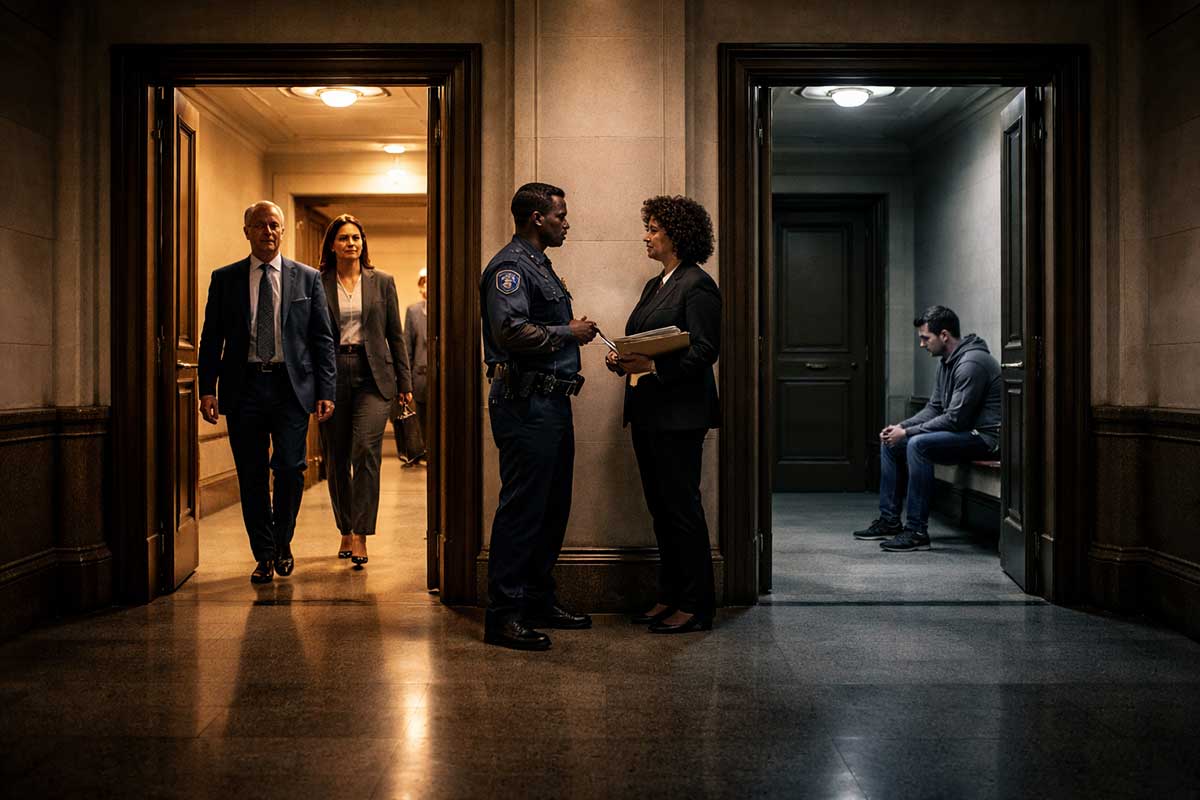
Setting: Same studio, but the lighting feels colder now—less “roundtable discussion,” more “cross-examination.” A glass of water sweats under the lights. The air has that subtle tension that comes when everyone knows the next topic is where people start accusing institutions, not just opponents.
Rachel Maddow: Before we start, I want to define the phrase we’re about to fight over. “No one is above the law” can mean a noble principle: powerful people should be held accountable. Or it can become a slogan that justifies selective targeting. Tonight, we’re going to separate the phrase from the uses people put it to.
Megyn Kelly: And I’m going to make a promise to the audience: I’m not letting anyone on this panel pretend selective enforcement is a problem only when the other party does it. If “the law” is a club, both sides have swung it. And if “the law” is a shield, both sides have hidden behind it.
Tucker nods once—almost amused. Schumer’s expression is patient but tight, like someone who’s had this argument in a Senate hallway a hundred times.
The first question lands where it hurts.
Rachel Maddow: Do you believe law enforcement and accountability mechanisms are applied evenly in American politics? And if not, is that a bug or a feature?
Tucker Carlson: It’s a feature. That’s the whole point. We live in a country where ordinary people get punished fast, and powerful people get punished only when the punishment serves another powerful interest. The slogan “no one is above the law” is marketing copy. The reality is: some people are protected until they’re no longer useful.
Elizabeth Warren: That’s the kind of cynicism that lets corruption thrive. The answer can’t be “it’s all fake.” Yes, enforcement can be uneven—because institutions are staffed by humans, and humans have incentives, biases, and politics. But the principle matters. If you abandon it, you’re basically saying, “We should accept a two-tier system.” I refuse that.
Stephen Miller: Elizabeth, what you call cynicism I call pattern recognition. The public sees that the system can move quickly when it wants to. It can leak, indict, raid, subpoena—when it benefits the people already in charge. Then suddenly it becomes cautious and careful when the target is protected. That selective tempo is what destroys trust.
Chuck Schumer: Trust is also destroyed when leaders tell millions of people that any investigation into them is illegitimate by definition. That’s not exposing a two-tier system—that’s attempting to immunize yourself from scrutiny. Of course the system isn’t perfect. But the answer is strengthening institutions, not burning them down.
Gavin Newsom: Here’s what people miss: selective enforcement doesn’t require some evil mastermind. It can happen because politics is asymmetric. Some scandals are visible. Some are buried. Some agencies prioritize certain cases. And yes, media attention shifts pressure. But it’s still better than the alternative—where presidents and their circles become untouchable.
Marco Rubio: I think the public’s perception is more important than either side wants to admit. If half the country believes enforcement is political, then even legitimate enforcement looks political. That’s dangerous. Because it means real wrongdoing won’t be punished—or will be punished in a way that sparks civil distrust. We need legitimacy as much as we need accountability.
Megyn Kelly: And legitimacy requires consistency. But consistency is exactly what no one wants when it hurts their side.
Maddow moves the conversation from theory to the stress fracture.
Rachel Maddow: Let’s test the slogan directly. When you say “no one is above the law,” what is the limiting principle that keeps it from becoming “no one is safe from prosecution”?
Stephen Miller: The limiting principle should be constitutional restraint. But in reality, it becomes “who has institutional control.” If you’re the protected class, you get caution. If you’re the enemy class, you get maximalism. That’s why people fear it’s becoming lawfare.
Elizabeth Warren: “Lawfare” is often just a way to smear accountability. If someone committed wrongdoing, you investigate. The limiting principle is evidence. The limiting principle is due process. The limiting principle is transparency.
Tucker Carlson: Those words are always used as decoration. “Evidence,” “due process,” “transparency”—until the target is someone the system wants removed. Then leaks become moral, accusations become proof, and process becomes punishment. Here’s the limiting principle in practice: if you can keep the story alive long enough, you win—regardless of the final verdict.
Chuck Schumer: Tucker, that’s exactly why leaders should not pre-emptively declare the system illegitimate. It invites supporters to reject any outcome that isn’t favorable. And that’s how you get a country where law becomes tribal.
Gavin Newsom: Also, the right says “lawfare” and the left says “accountability,” but there’s overlap. Sometimes it’s one, sometimes the other. The question is: can we build a process that is trusted even by people who dislike the result?
Marco Rubio: And the answer to that is a painful one: you’d have to be willing to accept accountability mechanisms even when they hit your friends. That’s the only real test.
Megyn Kelly: Rubio, politicians are allergic to that test. They only pass it when forced.
Now Kelly does what she does best: she makes it symmetrical.
Megyn Kelly: I’m going to ask something that annoys both sides. Give me one example—not a specific case, just a type of behavior—where your own side has been tempted to use the law as a weapon.
A beat. The room shifts. Nobody wants to answer first because whoever does gives the other side permission to pounce.
Elizabeth Warren: Fine. On the left, there’s a temptation to treat every opponent’s wrongdoing as uniquely disqualifying while downplaying misconduct from our own coalition. That’s hypocrisy. It corrodes the moral force of accountability.
Chuck Schumer: And there’s also a temptation to let institutions become performance—where investigations are timed to headlines. Even if the underlying concerns are real, political timing can make it look like a stunt.
Gavin Newsom: I’ll say it plainly: sometimes Democrats trust bureaucracy too much—like it’s pure. It’s not. Agencies respond to incentives. If we pretend they don’t, we enable selective outcomes without admitting it.
Tucker smiles slightly, as if to say, welcome to my worldview.
Tucker Carlson: On the right, there’s a temptation to treat law enforcement as illegitimate whenever it targets our side, but legitimate when it targets people we dislike. That’s also hypocrisy. And it turns “rule of law” into “rule of us.”
Marco Rubio: Another temptation is to use investigatory power as political theater—endless hearings, endless insinuations—without the discipline of a clear standard. It becomes character assassination by process.
Stephen Miller: I’ll be even more blunt. The temptation on the right is to respond to perceived lawfare with symmetrical retaliation—“do it back harder.” That feels satisfying. It also guarantees escalation.
Rachel Maddow: That’s the most honest sentence spoken so far tonight.
Maddow presses the question the audience is actually asking.
Rachel Maddow: If selective enforcement is real—or even if it’s widely believed—does that mean impeachment becomes inevitable anytime power changes hands?
Chuck Schumer: Not inevitable. But the risk rises when trust collapses. If the country believes institutions are rigged, then every accountability mechanism is perceived as political. That’s why we have to preserve credibility.
Tucker Carlson: Credibility is already gone. You’re asking people to trust institutions that have shown contempt for them. The system is not neutral. The sooner we stop pretending it is, the sooner we can talk about how power is actually controlled.
Elizabeth Warren: That’s where you lose me, Tucker. If you declare neutrality impossible, you’re basically licensing permanent factional warfare. The whole point of law is to be something bigger than partisan emotion.
Stephen Miller: But the law is administered by humans inside institutions. And institutions always have culture, ideology, and incentives. That’s not a radical claim. The radical claim is that you can rely on them to be perfectly impartial while they are actively being politicized.
Gavin Newsom: Then the solution is to depoliticize—strengthen ethics rules, strengthen transparency, strengthen oversight of agencies. If you abandon the principle, you end up with open power struggles where nobody even pretends to be fair.
Marco Rubio: I think we should name the tradeoff: if you want aggressive accountability, you risk weaponization. If you want to prevent weaponization, you risk impunity. The country is trying to find a balance. And our current politics makes balance feel like surrender.
Megyn Kelly: That’s a big truth: in this environment, restraint looks like weakness, and that’s why the extremes set the tone.
Closing beat: what each side “wins” and what remains unresolved
Rachel Maddow: Here’s what the left side of this argument gets right: “No one is above the law” is a necessary democratic principle. Without it, the presidency becomes immune.
Megyn Kelly: And here’s what the right side gets right: selective enforcement—real or perceived—turns law into a political weapon. Even legitimate actions get disbelieved when trust is gone.
Marco Rubio: The unresolved issue is the hardest one: how do you restore trust in enforcement without creating impunity?
Chuck Schumer: And how do you demand accountability without turning it into a permanent civil war?
Tucker looks like he thinks the civil war is already here—just conducted through institutions. Warren looks like she still believes in reform. Miller looks like he believes reform is naive. Newsom looks like he believes reform is political survival. Rubio looks like he’s trying to keep the bridge from collapsing under everyone’s feet.
Megyn Kelly: Next, we’re going to talk about the guardrails—courts, Senate thresholds, norms, bureaucracy—what actually works, what’s theater, and what breaks first.
Rachel Maddow: Because if we can’t agree on guardrails, we’re not debating impeachment anymore. We’re debating whether the system can function at all.
Topic 3 — Guardrails or Illusions: What Actually Stops Abuse of Power?
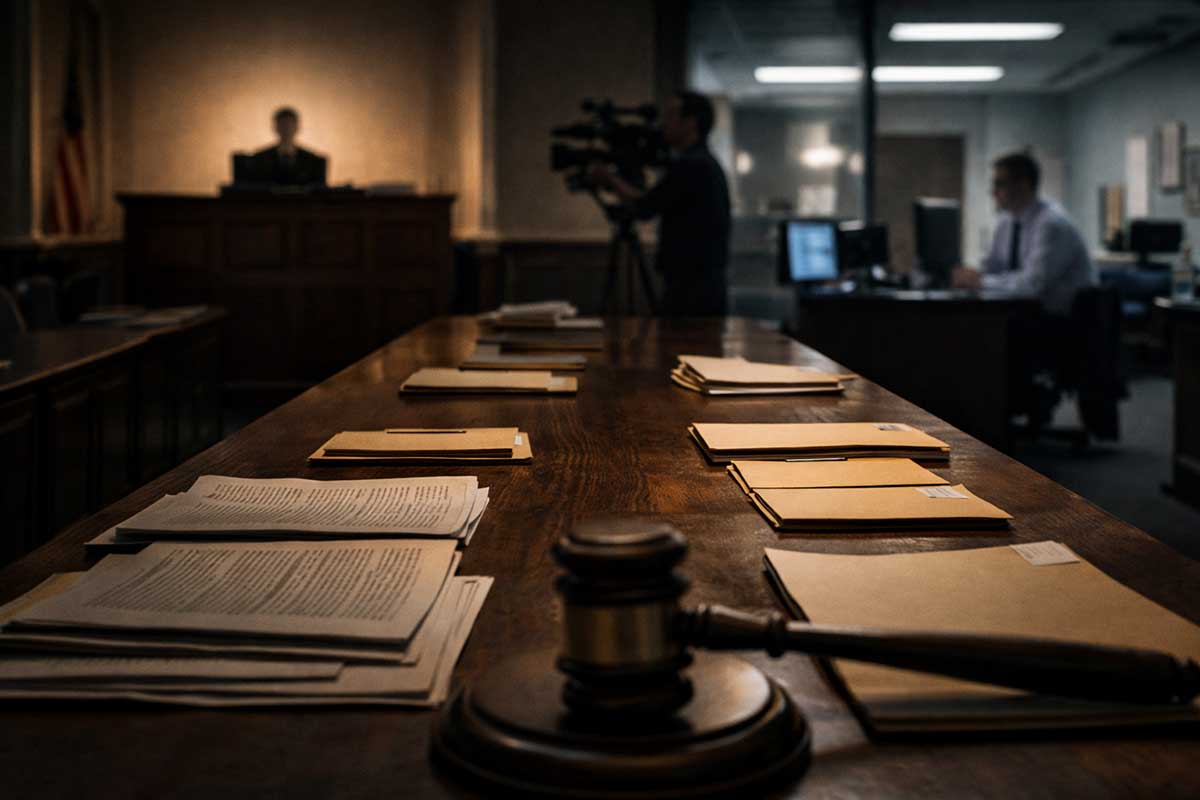
Setting: The studio feels quieter than before, like everyone’s used up their easy lines. The audience at home can sense it: this is where slogans die. If impeachment and “rule of law” are the weapons, then guardrails are supposed to be the locks on the cabinet.
Megyn Kelly: By now we’ve admitted two things most people won’t say out loud: impeachment is political, and law enforcement can be perceived as selective. So let’s get serious. If those are true, what actually prevents a full slide into “whoever has power wins”?
Rachel Maddow: And to keep this fair: “guardrails” includes the courts, Congress, the Senate threshold for removal, norms, bureaucratic professionalism, the press, and voters. Which of those still works—and which is theater?
Tucker folds his hands like he’s waiting for someone to pretend the system is healthier than it is. Schumer looks like he wants to defend the institution but knows it’s not an easy defense right now.
The first question is the spine of Topic 3.
Rachel Maddow: Name the guardrail you trust most—and the guardrail you trust least.
Marco Rubio: I trust the courts most, not because judges are perfect, but because the process forces arguments to be made in a structured way, with written decisions that can be appealed. I trust norms least. Norms are invisible until they’re gone. And once politics becomes existential, norms evaporate.
Elizabeth Warren: I trust transparency mechanisms most—oversight that is documented, auditable, and public. Sunshine is a guardrail. I trust the press least when it behaves like an extension of tribal politics. If people think news is just messaging, it can’t stabilize anything.
Stephen Miller: I trust bureaucracy least. People imagine “career professionals” are neutral. They’re not. Agencies have cultures. Cultures have politics. And those politics shape enforcement priorities. The guardrail I trust most is the constitutional structure that makes removal hard—Senate conviction thresholds, separation of powers. The system was built to slow down mob rule.
Gavin Newsom: I trust voters most in the long run, but least in the short run. In the short run, outrage moves faster than information. And I’m going to disagree with Stephen: bureaucracy is often the thing that keeps the lights on when political leadership becomes reckless. You can call that “the deep state.” I call it professionalism.
Chuck Schumer: I trust procedure most—the parts of the system that require public votes, recorded decisions, and real consequences. I trust informal restraint least, because restraint is the first thing sacrificed when a party thinks survival is on the line.
Tucker Carlson: I trust none of it the way you’re describing it. That sounds like a civics brochure. The real guardrail is the public’s willingness to reject illegitimate power. And the guardrail I trust least is the belief that “experts” will save you. Experts are usually the ones building the machine.
Megyn Kelly: Tucker’s basically saying the guardrails are psychological, not institutional.
Tucker Carlson: Exactly. Institutions follow whoever controls them.
Kelly tightens it: if guardrails exist, we should be able to test them.
Megyn Kelly: Let’s do a stress test. Suppose the House flips and impeachment becomes routine. Suppose the DOJ is viewed as political. Suppose half the country thinks the courts are partisan. What still prevents the system from turning into a permanent revenge cycle?
Chuck Schumer: The Senate threshold still matters. You can impeach on a simple majority, but you cannot remove without broad agreement. That forces a national consensus. It’s a stabilizer.
Stephen Miller: Yes—on removal. But impeachment alone becomes punishment. It immobilizes a presidency. The guardrail against that is political cost. If voters punish frivolous impeachments, the House will hesitate. If voters reward them, it becomes a tradition.
Elizabeth Warren: Political cost depends on information. If the public doesn’t share basic facts, cost is impossible to calculate. That’s why there needs to be a credible process that persuades people outside your tribe. That’s also why I keep coming back to standards: define what counts as impeachable abuse and show the evidence.
Tucker Carlson: Evidence doesn’t matter in an environment where the people presenting the evidence are distrusted. That’s where you are. You’re trying to fix a spiritual problem with paperwork.
Rachel Maddow: Tucker, I’m going to push back. Evidence does matter—because the alternative is pure will-to-power. If you don’t have standards, then you are endorsing the exact thing you claim to fear: “they will find a reason.”
Marco Rubio: Maddow’s right in principle and Tucker’s right in sociology. Standards matter, but trust determines whether standards are believed. So you need both: credible standards and credible messengers.
Gavin Newsom: And that’s where leadership matters. Leaders can decide not to light fires. Or they can decide that burning trust is worth it because it energizes their base.
Megyn Kelly: Leadership matters, but leaders respond to incentives too. If outrage is rewarded, you get arsonists promoted to fire chief.
Now Maddow drills into the most controversial guardrail: the bureaucracy.
Rachel Maddow: Is the administrative state a guardrail against abuse—or an unelected power center that can become abusive itself?
Stephen Miller: It’s a power center. Unelected, entrenched, ideologically shaped. People will deny that because it sounds conspiratorial, but it’s not. Agencies set priorities. Priorities determine who gets punished and who gets protected. That is power.
Chuck Schumer: Agencies implement laws passed by elected representatives. The idea that the bureaucracy is some independent monarchy is convenient rhetoric. The real question is whether you want competence and continuity—or chaos every time elections change.
Tucker Carlson: Chuck, you just made Stephen’s point for him. You said “implement.” The question is: do they implement neutrally, or do they implement selectively? If implementation becomes political, then yes—an unelected class is effectively governing.
Elizabeth Warren: There’s a middle truth here. Bureaucracies can drift. They can become captured by industries or ideologies. That’s why we need oversight and ethics. But tearing down professional institutions because they’re imperfect is like burning down your house because the plumbing leaks.
Gavin Newsom: Also, the presidency itself is a bureaucracy now. People romanticize “elected power” and forget that a modern executive branch is massive. You don’t escape bureaucracy—you choose which kind you’re going to have: professionalized or politicized.
Marco Rubio: And that’s the key. If every election turns into a full purge, you lose competence and stability. If there is no accountability for agencies, you get drift and resentment. The guardrail is responsible oversight without total politicization.
Megyn Kelly: That sounds like a wish, not a plan.
Marco Rubio: It’s a plan if voters reward it.
Tucker Carlson: Voters don’t reward nuance.
Kelly moves to the courts—the last refuge in most people’s minds.
Megyn Kelly: Courts. Are they still the last guardrail? Or have they become the next battlefield?
Chuck Schumer: Courts remain essential. Even when people dislike decisions, courts are a place where arguments are constrained. That constraint itself is a guardrail.
Stephen Miller: Courts are a battlefield, but they are a battlefield with rules. That’s why everyone runs there.
Elizabeth Warren: And courts require facts. The more the public lives in alternate realities, the more court decisions feel like partisan decrees.
Gavin Newsom: Still—when a president overreaches, courts are often the only institution that can stop it quickly. That matters.
Tucker Carlson: But the legitimacy of courts is not unlimited. If people conclude the courts are ideological actors, then court rulings become just another power move. That’s the danger.
Rachel Maddow: Which is why delegitimizing courts for short-term advantage is playing with fire.
Megyn Kelly: And both sides do it, when they lose.
Closing beat: what holds, what fails, what comes next
Rachel Maddow: Here’s what I’m hearing: guardrails still exist, but they depend on trust—trust in courts, in evidence, in procedure, in the legitimacy of opposition.
Megyn Kelly: And I’m hearing something darker: guardrails are not self-enforcing. If the public rewards escalation, the guardrails become props, not brakes.
Marco Rubio: The system works when losing is tolerable. When losing feels existential, everything becomes a weapon.
Chuck Schumer: And if everything becomes a weapon, then the presidency becomes provisional—always under threat, always bargaining for survival instead of governing.
Stephen Miller: Or the presidency becomes militant—using every tool available because restraint is punished.
Elizabeth Warren: Which is why the only stable answer is standards plus credibility. Otherwise, you’re just choosing which faction gets to weaponize first.
Tucker Carlson: Or you’re finally admitting that factions already weaponize—and the only question is who pretends not to.
Rachel and Megyn exchange a look—not agreement, but recognition that Topic 4 is going to be where the argument stops being about impeachment and starts being about the country’s consent to be governed.
Rachel Maddow: Next: If impeachment and enforcement become routine weapons, do elections still decide who holds power—or do elections just decide which side gets to use the weapon next?
Topic 4 — Do Elections Still Decide Power, or Just Who Gets the Weapons?
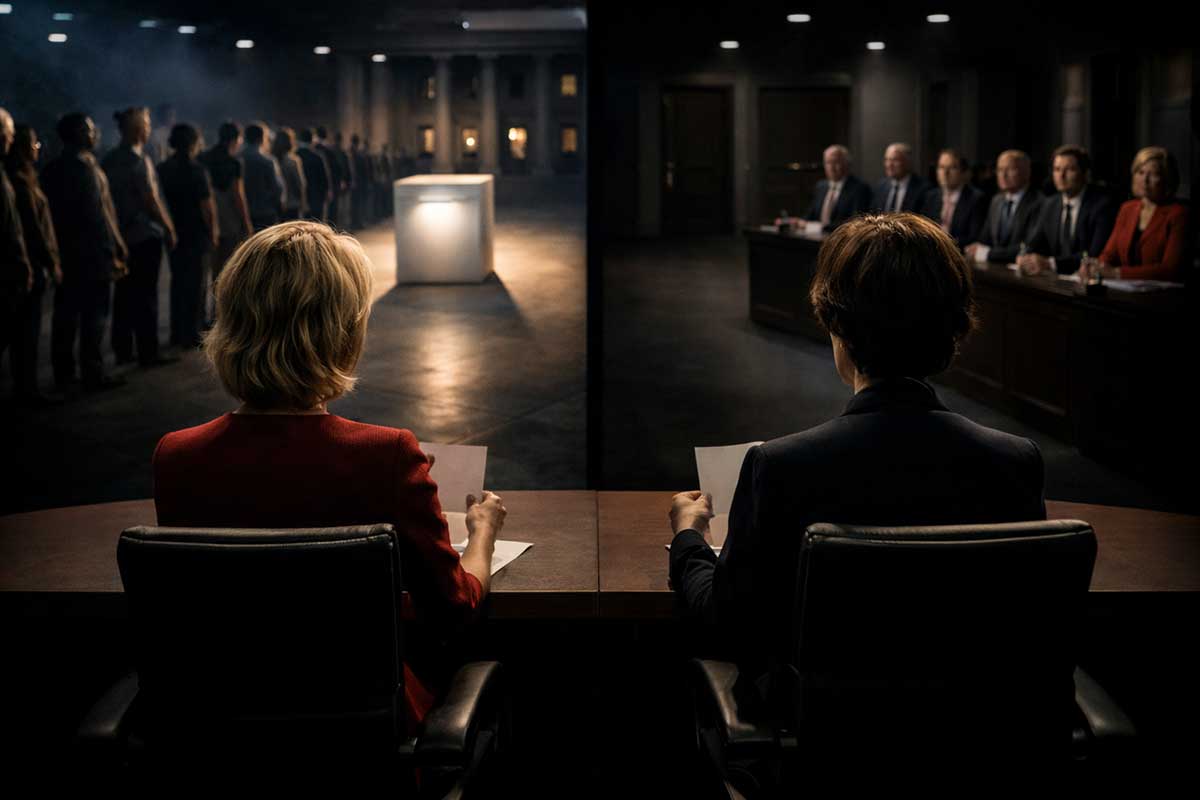
Setting: The studio lights warm slightly, not because the topic is softer, but because it’s final—like the last minutes before a storm hits land. The table feels less like a talk show now and more like a constitutional stress test. Everyone has said “power” enough times that the word has started to sound literal.
Megyn Kelly: Okay. We’ve talked impeachment. We’ve talked selective enforcement. We’ve talked guardrails. Now we get to the question underneath all of it: do elections still decide who holds power in this country—or have we drifted into a system where elections just decide who gets the tools to attack the other side?
Rachel Maddow: And this has to be fair. Because each side believes the other is trying to negate elections—through impeachment, through investigations, through bureaucracy, through media narratives. Tonight, we’re going to name what “negating an election” actually means, and where the line is.
Tucker looks ready. Schumer looks like he wants the argument to stay inside the Constitution. Rubio looks like he’s trying to keep the language precise. Warren looks like she wants to restore moral grammar. Newsom looks like he wants to win the future. Miller looks like he wants to win the present.
The first question is simple, but it forces definitions.
Rachel Maddow: What counts as “overturning” or “negating” an election result? Is impeachment that? Is constant investigation that? Is bureaucratic resistance that? Define it.
Marco Rubio: Negating an election means refusing to accept the winner’s legal authority to govern—treating the outcome as illegitimate by default. Impeachment can be legitimate if it’s based on serious abuse. But if impeachment becomes routine, used as a punishment for winning, it starts to feel like negation. Same with endless investigations timed to paralyze. The line is intent plus standard: are you enforcing clear rules, or are you trying to undo an outcome you dislike?
Chuck Schumer: Elections decide who holds office, not whether they’re accountable. Accountability is not negation; it’s part of the system. But I’ll concede something: if Congress uses impeachment as a routine partisan reflex, it sends a message that voters didn’t settle anything. That’s corrosive. We should not turn constitutional tools into seasonal warfare.
Tucker Carlson: You’re both describing a world that doesn’t exist anymore. Negating elections is what happens when a permanent governing class—media, bureaucracy, intelligence-adjacent institutions, corporate interests—decides there are outcomes it will not accept. And if an outsider wins, the system activates. The public senses this. That’s why people say elections feel less decisive.
Elizabeth Warren: Tucker, you just named a bunch of institutions and implied they’re a unified class. That’s convenient because it means any opposition to a president becomes “the regime.” But let’s be real: elections don’t confer a license to break laws. If a president abuses power, oversight is not negation. Oversight is the bargain we made as a democracy: power plus constraints.
Stephen Miller: Oversight is legitimate. The issue is when oversight becomes a substitute for elections—when you use investigations to create a cloud of illegitimacy, then impeachment to institutionalize it. You don’t need to remove someone to negate them. You just need to make governing impossible.
Gavin Newsom: Governing is impossible when presidents treat accountability as sabotage. But I’ll go further: elections are not just ballots. Elections require trust in basic reality. If voters can’t agree on facts, then every outcome is contested. That’s when “power” stops being democratic and becomes tribal.
Megyn Kelly: So we’ve got two definitions on the table. One says negation is “undermining legitimacy and governability after a lawful win.” The other says negation is “using accountability as a cover for removing a leader the system hates.” Now let’s see who can defend their definition under pressure.
Kelly puts the knife right where voters feel it.
Megyn Kelly: Here’s the part I think normal people are actually asking: if I vote, and my candidate wins, will they be allowed to govern—or will the other side just use institutions to block, investigate, and cripple them until the next election?
Tucker Carlson: The answer is: it depends on whether your candidate is acceptable to the people who run the system. If not, the system will find a way—scandal, prosecution, impeachment threats, whatever. That’s not paranoia. It’s pattern.
Chuck Schumer: That framing guarantees permanent distrust. You’re telling people, “If you lose, it was rigged; if you win, the system will sabotage you.” That’s a recipe for nihilism. Here’s the truth: presidents govern every day. Congress fights, courts intervene, agencies implement. That is not sabotage; that is separation of powers.
Stephen Miller: Chuck, separation of powers is one thing. Coordinated institutional obstruction is another. When bureaucracy slow-walks policy because it dislikes the elected leader’s agenda, that’s not “checks and balances.” That’s power without accountability.
Elizabeth Warren: And when a president pressures institutions to protect themselves or punish opponents, that’s power without accountability too. The unfairness here is that both sides point at the other’s abuses and then excuse their own as “self-defense.”
Gavin Newsom: Exactly. And that’s why the public is exhausted. They feel like they’re voting for a team in a permanent lawsuit rather than a government.
Marco Rubio: The easiest way to say it is: elections still decide power, but they no longer settle legitimacy. We’ve separated “winning office” from “being recognized as rightful.” That’s the crisis.
Rachel Maddow: That’s the line. When legitimacy is permanently contested, every mechanism becomes suspect—even the ones meant to protect democracy.
Maddow forces a fairness test: the “would you accept it?” question.
Rachel Maddow: Each of you: what is one guardrail you would accept against your own side—even if it disadvantages you—because it protects elections from becoming meaningless?
Elizabeth Warren: Stronger anti-corruption enforcement against everyone—donors, lobbyists, officials. Including my side. If people believe money runs everything, elections feel fake.
Chuck Schumer: A norm—publicly enforced—that impeachment should have a bipartisan evidentiary threshold, even if it’s not formal. If you can’t persuade some portion of the other side’s voters that it’s necessary, you’re probably weaponizing.
Gavin Newsom: Transparency requirements that prevent shadowy coordination—clear disclosure rules, clear ethics standards, clear records. Voters should know who’s influencing decisions.
Marco Rubio: Limits on executive power that my party sometimes likes when we hold the presidency. If we want elections to matter, we can’t make the executive a personal instrument.
Stephen Miller: Stronger constraints on agencies—more accountability, clearer statutory limits, less discretionary enforcement. If agencies can pick winners and losers, elections feel symbolic.
Tucker Carlson: I’d accept something cultural, not legal: stop treating political opponents as existential enemies. Because once you do that, you justify any method. But I’ll be honest: I’m not sure the culture can do it anymore.
Megyn Kelly: That’s the first time tonight someone admitted we might be dealing with a cultural problem, not just a constitutional one.
Rachel Maddow: And it’s also a warning: if the culture can’t accept losing, the Constitution becomes paper.
Kelly brings it back to the audience’s gut-level fear.
Megyn Kelly: So let’s answer the real question—yes or no, with a sentence of explanation. Are we headed toward a system where elections don’t decide who holds power?
Tucker Carlson: Yes—if institutions keep acting like they can veto outcomes.
Chuck Schumer: No—unless we persuade people that accountability is illegitimate.
Stephen Miller: We’re headed toward elections deciding the winner, and institutions deciding whether the winner can govern.
Elizabeth Warren: Elections decide power, but corruption decides how power gets used—and that’s what must be confronted.
Gavin Newsom: Elections still decide, but the legitimacy crisis is making governance unstable.
Marco Rubio: Elections still decide who sits in the chair. The question is whether the country will accept the person in the chair as lawful.
Rachel Maddow: That last line is the chilling one. A democracy can survive policy disagreement. It cannot survive permanent refusal to recognize outcomes.
Megyn Kelly: And if impeachment becomes routine, that refusal becomes institutionalized.
Closing beat: an honest, balanced ending—no victory lap
Rachel Maddow: Here’s the strongest point from the right tonight: accountability mechanisms can be used as weapons, and weaponization destroys trust.
Megyn Kelly: And here’s the strongest point from the left: without accountability, elections can become a shield for abuse of power.
Marco Rubio: The choice isn’t “accountability or democracy.” The choice is whether we can build accountability that doesn’t feel like negation.
Chuck Schumer: Which requires standards, restraint, and persuasion—especially persuasion of people who didn’t vote for you.
Elizabeth Warren: And it requires equal application—because unequal enforcement is the seed of disbelief.
Stephen Miller: And it requires admitting that power exists in more places than elections.
Tucker Carlson: That’s the real argument. The ballot box matters—but the machine matters too.
The two moderators sit back. Not satisfied, not hopeless—just sober.
Megyn Kelly: If the machine keeps turning politics into procedural warfare, voters will stop believing the vote matters.
Rachel Maddow: And if leaders keep delegitimizing accountability, voters will stop believing law matters.
For a moment, the studio is quiet enough that you can hear the faint hum of the lights—like a country holding its breath, wondering whether it can still argue without breaking.
Final Thoughts by Megyn Kelly & Rachel Maddow
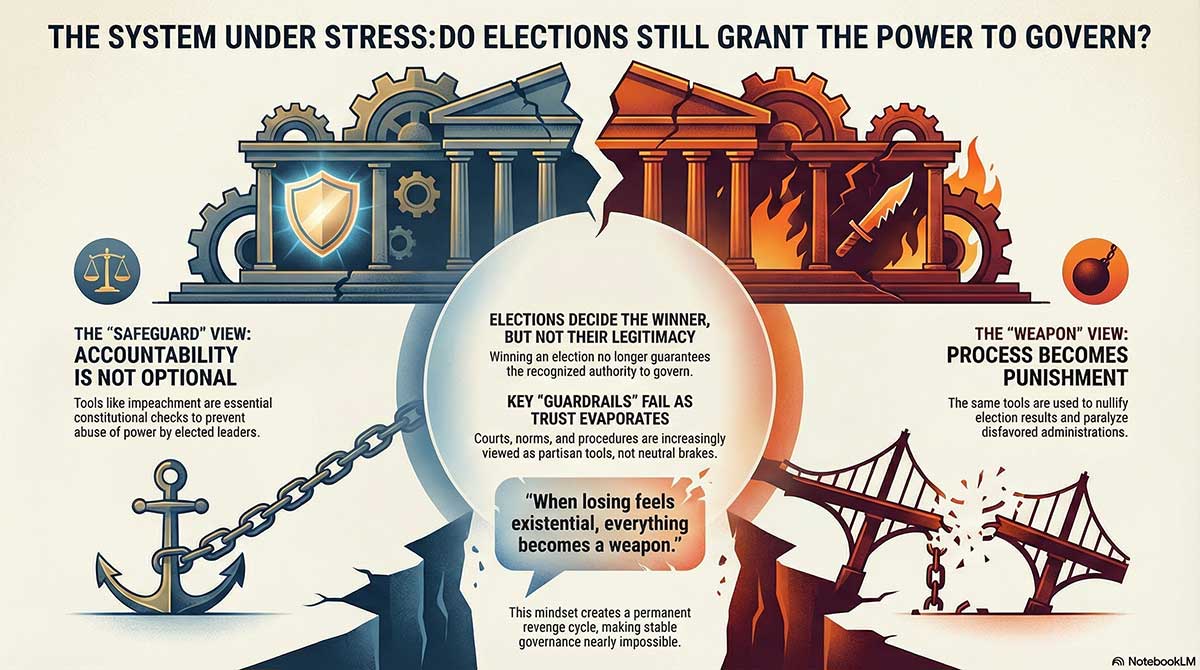
Rachel Maddow: The strongest point from the right in this conversation is that process can become punishment. Even without removal, the constant threat of impeachment, investigation, and selective enforcement can make governing impossible—and if voters believe that’s the game, elections start to feel less decisive.
Megyn Kelly: The strongest point from the left is that accountability can’t be optional. If elections become a shield from scrutiny, then power turns into entitlement—and the public loses faith for a different reason: because “rule of law” becomes a slogan, not a constraint.
Rachel Maddow: What we couldn’t fully resolve is the hardest problem: trust. Standards only work if people believe standards are being applied honestly.
Megyn Kelly: And restraint only works if people stop rewarding escalation. If every tool is justified as “self-defense,” then the tools become the system.
Rachel Maddow: So here’s the clean takeaway—fair to both sides: elections must decide who holds office, and transparent standards must decide when power has crossed a line.
Megyn Kelly: Otherwise we end up with the worst of both worlds: a country where votes happen, but legitimacy never settles—and the real question becomes not “who won,” but “who can force the other side to submit.”
Short Bios:
Megyn Kelly — Former prosecutor and hard-edged interviewer known for sharp cross-examination and demanding clear answers over talking points.
Rachel Maddow — Detail-driven political host who builds arguments through timelines, documents, and pressure-testing claims for consistency.
Tucker Carlson — Populist commentator who frames politics as a struggle for institutional power and legitimacy rather than policy details.
Marco Rubio — Republican statesman with an institutionalist streak, focused on governance, foreign policy, and constitutional boundaries.
Stephen Miller — Combative political strategist centered on executive authority, enforcement, and the use of institutions to implement power.
Chuck Schumer — Senate power-broker and procedural tactician who thinks in votes, leverage, and institutional stability.
Elizabeth Warren — Anti-corruption crusader with a prosecutor’s tone, pushing for standards, accountability, and equal application of rules.
Gavin Newsom — High-energy Democratic executive and culture-war fighter who argues from governability, messaging, and political momentum.
Leave a Reply