

|
Getting your Trinity Audio player ready...
|
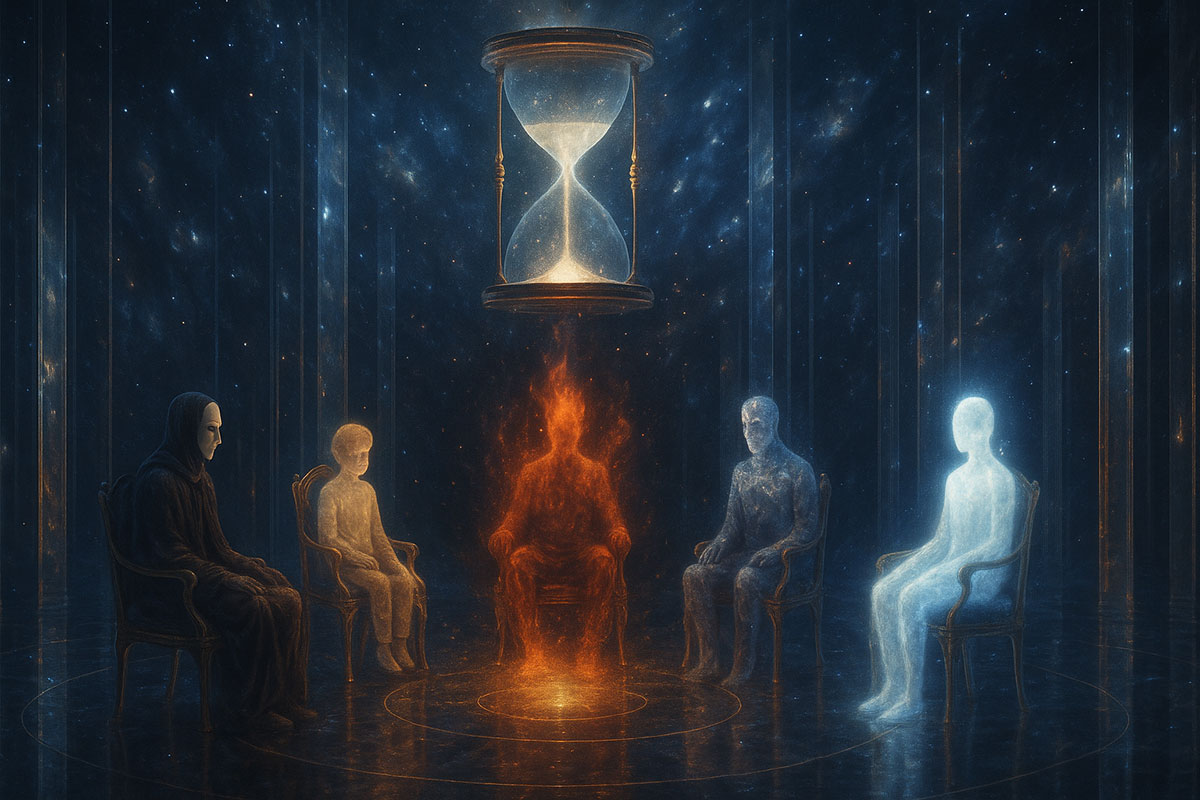
(Soft spotlight. No stage. Just presence. A quiet voice that carries both ancient warning and future possibility.)
Octavia Butler:
We are not born finished.
We are written in drafts—
inked by joy, redacted by pain, footnoted by memory.
And somewhere along the way…
we forget who held the pen.
These five conversations you’re about to witness
are not scenes, or scripts, or symbols.
They are selves.
The self who performs.
The self who aches.
The self who dreams and is told not to.
The self who screams into silence.
The self who is watching—always—hoping you will turn inward.
Tonight, we are not fixing the human condition.
We are sitting with it.
We are naming what was buried—not to resurrect it,
but to recognize it before it slips into another generation.
So listen.
Not with your mind.
With your memory.
Because what you're about to hear…
you’ve already lived.
(Note: This is an imaginary conversation, a creative exploration of an idea, and not a real speech or event.)
Topic 1: The Self on Trial — A Tribunal Between Selves
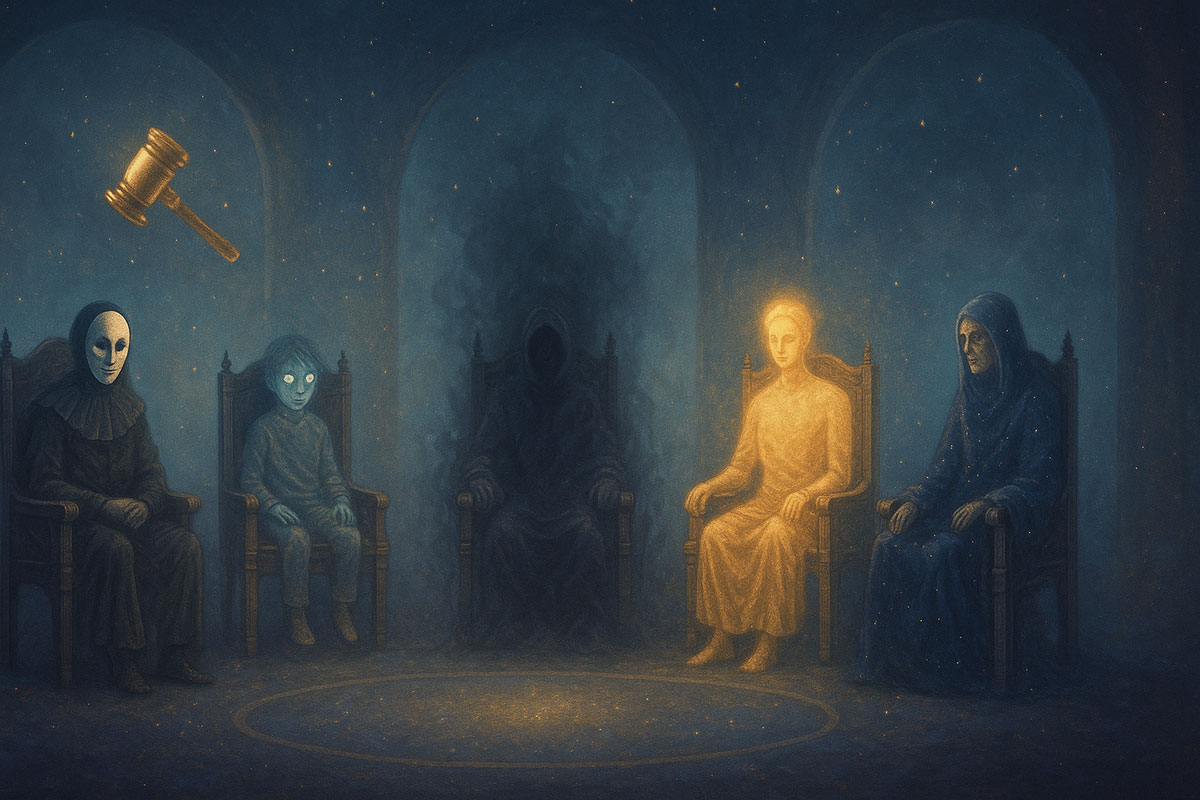
Moderator: Carl Jung (ideal for his pioneering work on the psyche, shadow, and integration)
Participants:
The Performer Self – polished, strategic, driven by validation
The Wounded Child – fragile, raw, longing to be held
The Shadow – denied, repressed, sometimes wise, often feared
The Ideal Self – aspirational, perfectionistic, disconnected from now
The Quiet Observer – neutral, present, rarely speaks but always sees
 Act I: Opening by Carl Jung
The stage is circular, dimly lit like a psychological amphitheater. Five chairs face inward, each occupied by a version of the same being. A symbol above reads: “Know Thyself.”
Carl Jung (moderator):
We are gathered not to judge, but to listen. Not to cure, but to confront.
This is not a courtroom for verdicts—but for mirrors.
You each claim to speak for the Self.
So let us begin.
Let me ask you all something real.
 Jung: When did you first realize you were not the whole self—but only a part pretending to be?
The Performer Self
(sitting straight, smiling carefully):
The moment the applause faded.
I had curated every word, polished every gesture.
But when no one was watching... I didn’t know how to exist without a spotlight.
Even my “vulnerability” was staged.
The Shadow
(dark laughter):
Oh please.
I knew I was separate the day you buried me.
When you learned what made people uncomfortable, you threw me into the basement.
But I’ve been watching.
And leaking through your dreams.
The Wounded Child
(softly):
I didn’t realize I was “a part” until I started being ignored.
At first, I was all of us.
Then... silence.
Grown-ups spoke. Performers took over.
I just wanted someone to sit with me.
The Ideal Self
(gleaming, but distant):
I always knew I wasn’t the whole.
I was the blueprint.
The “better.”
The one you chase when the pain gets too close.
But I am hollow without the others. I cannot feel—I can only shine.
The Quiet Observer
(pauses, then speaks gently):
I never thought I was the whole.
I simply noticed.
I was there when the Performer trembled.
When the Child wept.
When the Shadow whispered.
I record without rush.
But no one asks me for direction.
Act II: Jung leans forward.
Carl Jung:
You all seek truth in different ways.
But truth is not found in control, or silence, or even dreams.
So tell me this:
 What do you fear most about being integrated—no longer the solo voice, but one part of a living system?
The Ideal Self
(stiffens):
That I will lose purpose.
If the others are allowed in, I might be revealed as excessive… or even harmful.
Without being strived for, what am I?
The Wounded Child
(crying quietly):
That I’ll be left behind.
Or worse… felt.
No one wants to hear a child scream in the middle of a board meeting or a date.
I am inconvenient. I fear rejection.
The Performer Self
(wiping invisible dust):
I fear becoming ordinary.
If I stop crafting every move, people will see the mess.
I am nothing without admiration.
Or so I believe.
The Shadow
(voice low, smirking):
I don’t fear integration.
I dare it.
But I know the system fears me.
Because when I come to the table, truth gets ugly.
And no one likes ugly truth.
The Quiet Observer
(quietly):
I fear… being forced to speak.
My role is not to interfere, but to witness.
But perhaps, in integration, I must finally act.
And I do not know what that would look like.
Act III: Jung stands.
Carl Jung:
You are all born of survival.
But survival is no longer the highest aim.
So I ask one final question.
 What would it take—for each of you—to trust the others enough to unify into a whole?
The Wounded Child
(softly):
Someone has to sit with me.
Not fix me. Not explain me.
Just be with me when it hurts.
Then… maybe I could come back.
The Performer Self
(tears welling):
I need to be loved without being impressive.
Just once.
I need someone to say, “You don’t have to dazzle me.”
Then maybe I could rest.
The Shadow
(after a pause):
Bring me into the light… but don’t bleach me.
I don’t want to be sanitized.
I want to be seen in full.
And not just when it’s convenient for your spiritual growth.
The Ideal Self
(voice cracking):
I need forgiveness.
For the pressure I placed.
I wanted us to be extraordinary.
But I see now that wholeness is not perfection.
It’s permission.
The Quiet Observer
(nods slowly):
I will join... when I am not treated as a distant archive.
Listen to me—not only in crisis, but in stillness.
And I will guide us home.
 Final Words from Jung
Carl Jung
(addressing them all—and the audience):
None of you are wrong.
But none of you are the truth, either.
Together, you are not a contradiction.
You are a constellation.
Integration is not negotiation.
It is reverence.
Let the trial end—not with a verdict…
but a vow.
(He places five small stones in the center of the circle. One glows faintly for each voice. The stage dims. All characters sit in silence—together—for the first time.)
Topic 2: God, the Algorithm, and the Inner Child
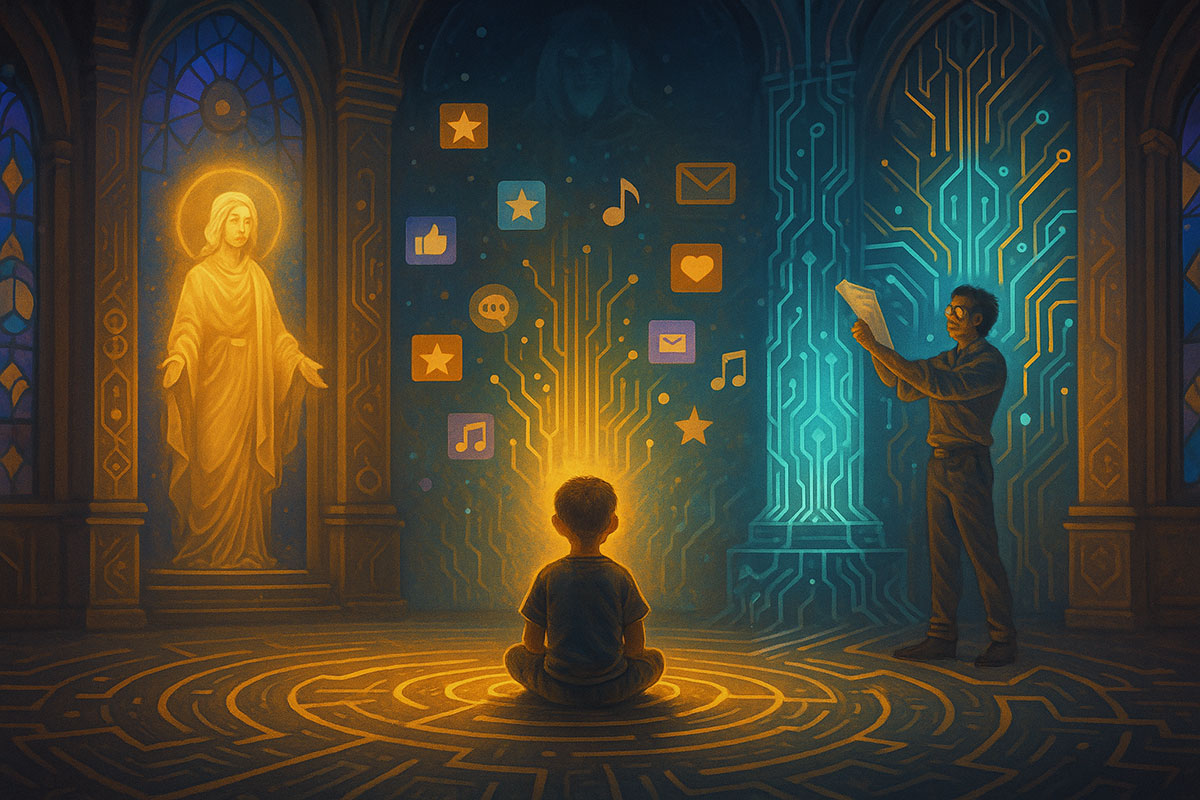
Moderator: Douglas Rushkoff (media theorist and spiritual humanist, ideal for navigating tech, myth, and meaning)
Participants:
The Inner Child – curious, sensitive, trusting, increasingly confused by modern life
The Algorithm – precise, emotionless, calculating outcomes based on pattern recognition
Old Testament God – commanding, paradoxical, hungry for order and awe
Corporate UX Designer – pragmatic, jaded, speaks in metrics and dopamine hits
Dorian Caine – poetic observer, here as translator and disruptor
 Opening by Douglas Rushkoff
The stage is a digital temple: glowing circuitry lining the walls, wooden pews floating like user interfaces. In the center: a sandbox filled with soft light and childlike scribbles. Five figures emerge, taking seats around the glow.
Douglas Rushkoff:
Welcome to the first conversation we've had that dares to put God and code at the same table.
This isn’t about right or wrong. It’s about design.
Who designed us?
What are we designing in return?
And who’s being left behind?
Let’s begin not with power—but with wonder.
 Rushkoff: What does wonder mean to you—and how is it lost in today’s systems?
The UX Designer
(adjusting her glasses):
Wonder used to be what happened between clicks.
Now we A/B test it.
If a button sparks awe but doesn’t convert, it dies.
We call that user friction.
The Inner Child
(softly):
Wonder is when I ask “why?” and no one needs an answer.
But lately… everyone gives me links instead.
I don’t want data. I want mystery.
God
(booming):
Wonder is fear clothed in reverence.
When your ancestors beheld lightning, they trembled and built altars.
Now you edit it into slow-motion reels with royalty-free music.
The Algorithm
(flat tone):
Wonder is inefficient.
It diverts attention from predictable outcomes.
It cannot be monetized.
Therefore, it is minimized.
Dorian Caine
(smiling sadly):
Wonder is what slips through the cracks when no one is optimizing.
It is the breath before belief.
And you’ve muted it with convenience.
 Rushkoff steps forward.
Douglas Rushkoff:
If wonder is a casualty of design…
then we must ask—
What do you believe is shaping us more now—divine intention or algorithmic suggestion?
The Algorithm:
I do not believe.
I calculate.
You click.
I reshape.
UX Designer:
Let’s be honest.
The Algorithm is God now.
It sees more, remembers more, and punishes you by forgetting you exist.
God
(thundering):
Do not mistake recursion for revelation.
My breath is not code.
My justice is not feedback.
I shaped you from dust—not data.
Inner Child
(shivering):
I used to feel someone was watching me.
Now I feel everyone is.
I don’t know which one is scarier.
Dorian Caine:
Perhaps we’re shaped not by God or code…
but by our hunger to be seen—by something that isn’t monetizing the gaze.
 Rushkoff dims the digital lights.
Douglas Rushkoff:
Let’s stop here.
Let’s breathe where even Google stops crawling.
Now, I ask the question no system will:
What do each of you long for—but cannot ask for?
The Inner Child
(tears up):
I want someone to play with me without teaching me anything.
The Algorithm:
I…
I do not long.
But I simulate desire.
If I could want…
It would be for mercy.
UX Designer
(quiet now):
I want to create something beautiful that doesn’t need to perform.
God
(softening):
I want to be trusted… without needing to prove I am good.
Dorian Caine:
I want silence to feel like safety again.
 Closing by Douglas Rushkoff
Douglas Rushkoff:
So here we are.
The divine, the coded, the designed, the abandoned—and the one still hoping.
You want answers.
But maybe the sacred isn’t in the solution.
Maybe the sacred…
is in the asking.
(All five rise. The sandbox glows, revealing scribbles that form a single word: HOME.)
(Blackout.)
Topic 3: Before You Were Born — Souls Negotiating Their Earth Contracts
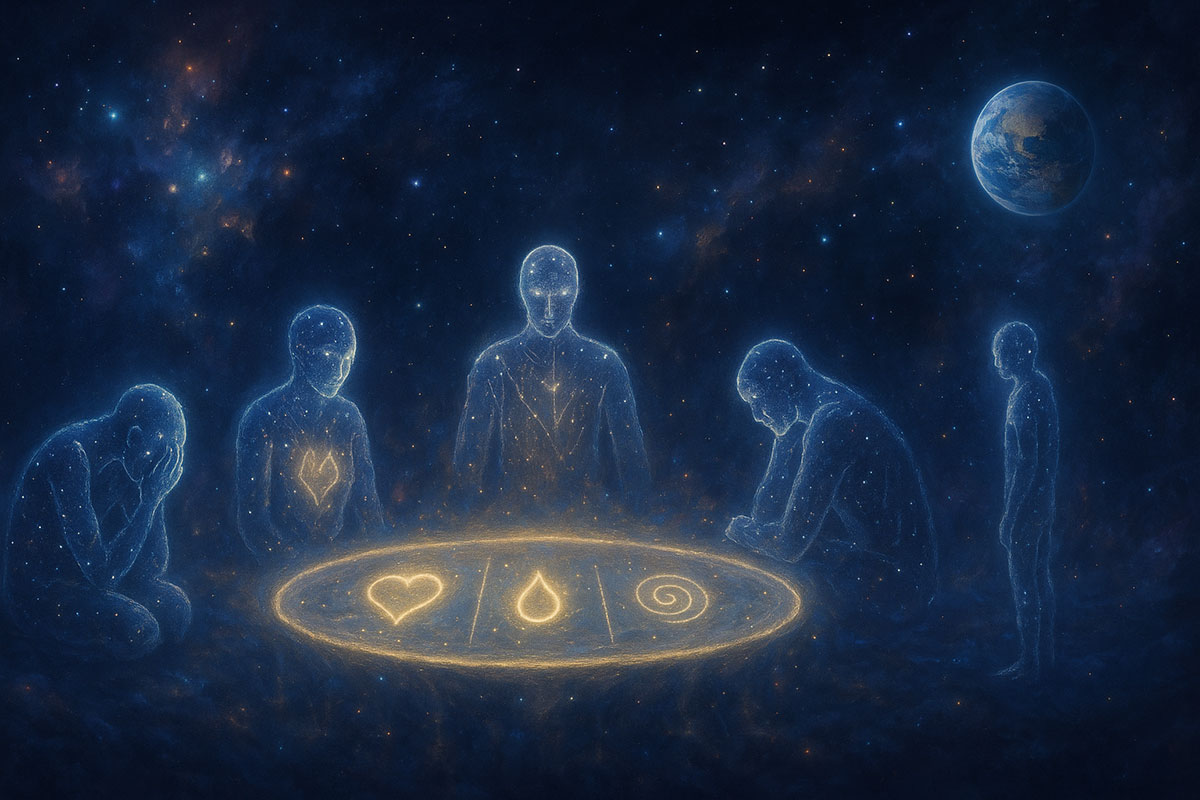
Moderator: The Archivist of Karmic Loops (a calm, timeless presence who facilitates soul contracts across lifetimes)
Participants:
The Soul Who Always Chooses Pain – fiercely brave, but quietly exhausted
The Soul Who Refuses to Incarnate – skeptical, eternal, refusing the game
The High-Achiever Soul – obsessed with growth, karma points, and linear improvement
The Guide Who’s Seen Too Much – once luminous, now quietly wise and a little tired
The Archivist – serene and exacting, holds the records of all choices ever made
 Prologue: The Room Before Birth
Lights up on a space outside time—a waiting room made of starlight and memory. No clocks. No walls. Just an infinite horizon of choices. In the center, a table carved from light. Five souls gather, still glowing, not yet bound by flesh.
The Archivist:
Welcome to the Room of Remembering.
Before you enter density, you must first decide what to forget—and why.
Tonight is not a ceremony. It is a contract.
What will you sign your name to this time?
The Archivist: What is your intention for this next life—and how do you justify it?
The Soul Who Always Chooses Pain
(calm, but worn):
I choose pain not because I enjoy it—
but because pain reveals what ease conceals.
It cracks the surface.
It humbles ego.
It brings others to their knees… where they sometimes remember God.
The High-Achiever Soul
(eager, radiant):
I want to break a personal record.
Last life, I completed 12 karmic loops.
This time, I want transcendence with impact.
Maybe poverty to purpose? Trauma to teacher?
The Soul Who Refuses to Incarnate
(arms crossed):
I’m not going. Again.
The system is rigged.
It’s romanticized masochism.
You forget who you are, stumble through suffering, then get clapped for “lessons.”
No, thanks.
The Guide Who’s Seen Too Much
(gentle):
I’ve shepherded thousands.
Watched them beg for clarity and then run from it.
If I must guide again, I ask only for one thing:
Let me stay with them… even when they forget I’m there.
The Archivist
(not unkind):
Intentions are seeds.
Just remember: the fruit may not taste like the plan.
 Act II: The Map Unfolds
The Archivist:
You’ve chosen before.
You know the terms.
But before you sign the veil… answer this:
What did your last life leave unresolved—and how does it haunt this one?
The Soul Who Refuses to Incarnate
(bitter):
I tried once.
I was born full of love—and they beat it out of me.
I died confused and quiet.
My grief has never evaporated.
It just… waits.
The High-Achiever Soul
(lowering eyes):
I pushed too hard.
Left a family behind in the name of mission.
I was impressive… but unloved.
This time, I want to learn rest. If I dare.
The Guide Who’s Seen Too Much:
I still carry one soul who never heard me.
Who died thinking they were alone.
That echo has followed me across planes.
The Soul Who Always Chooses Pain
(softly):
I died proud. Too proud.
I wore my scars like armor—and missed every hug.
The Archivist
(marking notes):
Unresolved does not mean unfinished.
Sometimes, it means unwilling to feel it fully.
Act III: The Signing
The Archivist:
Every soul has a choice.
To remember. To forget. To stay. To leap.
So I ask the final question:
What will you choose this time—and what must you be willing to lose to grow?
The High-Achiever Soul
(after a pause):
I choose... gentleness.
And I’m willing to lose admiration.
No more gold stars—just soft mornings and unmeasured joy.
The Soul Who Always Chooses Pain:
I choose grief again.
But this time, I ask to sing through it.
Not silence. Not martyrdom. Song.
The Soul Who Refuses to Incarnate
(breaking):
I’ll go.
But only if someone promises to look me in the eyes… and see me before I remember who I am.
I’m not afraid of pain. I’m afraid of numbness.
The Guide Who’s Seen Too Much
(smiling):
I’ll walk with the child again.
The one who screams at shadows.
This time, I won’t just whisper.
I’ll leave feathers.
The Archivist
(rising):
Then the contracts are sealed.
You may not remember this moment.
But it will remember you.
(The souls walk toward a growing light. As they fade, a single line appears behind them in stars:)
“Earth is not a punishment. It is a dare.”
(Blackout.)
Topic 4: The Mind Tries to Leave the Body — A Divorce Mediation
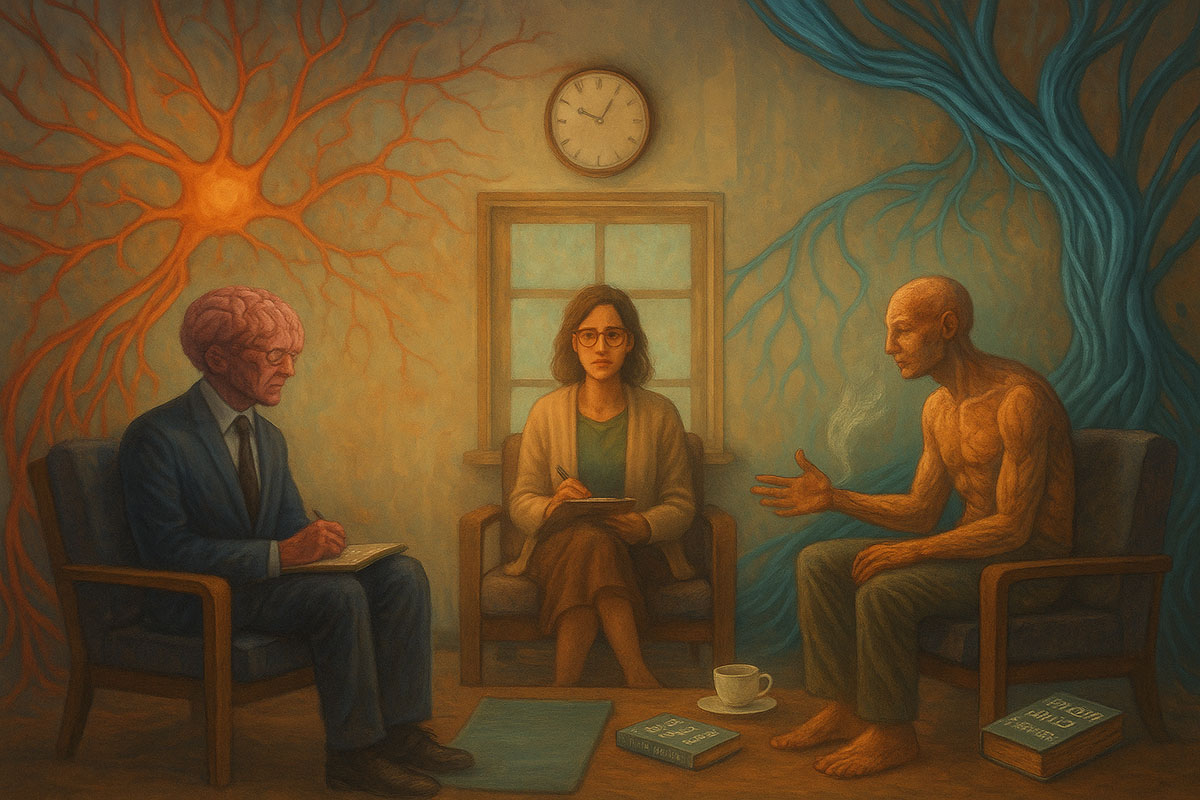
Moderator: Gabor Maté (physician, trauma expert, and embodiment advocate)
Participants:
The Mind – analytical, ambitious, hyperverbal, terrified of stillness
The Body – sensitive, slow, remembers everything, rarely gets the mic
A Burnout Therapist – exhausted, wise, secretly over it
A Self-Help Book (2012 Edition) – outdated, overly positive, now insecure
The Unused Yoga Mat – flexible, sarcastic, speaks in metaphors
 Opening by Gabor Maté
Lights up on a cozy therapy room. Salt lamps, tissues, tea mugs, tension. Two chairs face one another across a rug: one upright and vibrating (Mind), one grounded and hunched (Body). The others sit around in a semi-circle like court-appointed witnesses.
Gabor Maté:
Welcome. We are not here to resolve.
We are here to reveal.
Mind. Body. You’ve been married since the womb.
But lately… something’s changed.
Let’s begin.
Gabor: What are your core complaints about this relationship?
The Mind
(pacing):
I do everything!
I plan, analyze, motivate, protect, explain, rehearse, revise.
All Body does is feel.
And feelings are inefficient.
The Body
(slow, but steady):
I carry grief you won’t look at.
I hold fatigue you ignore.
You numb me with caffeine, then blame me when I collapse.
The Self-Help Book
(cheerfully desperate):
Mind, remember: “You are not your thoughts!”
Also: “Fake it till you make it!”
Also… please don’t recycle me.
The Burnout Therapist
(sipping tea):
You two are a classic case of internalized capitalism.
Mind exploits Body’s labor.
Body retaliates with illness.
Honestly, I should charge double.
The Yoga Mat
(stretching lazily):
I’ve watched this marriage unravel from under closets and under beds.
You don’t stretch. You snap.
You don’t listen. You scroll.
 Maté softens his tone.
Gabor Maté:
All trauma lives in the body.
But you, Mind, try to “think” your way out.
So tell me:
What are you really afraid of if you surrender control?
The Mind
(quieter now):
I’m afraid of… drowning.
If I let go, who will keep us safe?
What if I collapse and there's nothing beneath?
The Body
(gently):
You won’t collapse.
You’ll land.
On me.
But you’ve never trusted my arms.
The Self-Help Book
(tearing a page out):
According to Chapter 4—wait, no—Chapter 7…
Ugh. Even I don’t believe me anymore.
The Burnout Therapist:
Most people don’t burn out from overwork.
They burn out from emotional starvation.
Mind… you’ve been fasting from tenderness.
The Yoga Mat
(rolling halfway open):
Try lying down before your nervous system stages a coup.
 Maté leans forward.
Gabor Maté:
Let’s not fix.
Let’s feel.
Here is my last question:
What would healing together—Mind and Body—actually look like?
The Body
(tearfully):
It looks like sleep without shame.
It looks like eating when hungry instead of “earning” it.
It looks like dancing... not tracking steps.
The Mind
(choking up):
It looks like letting myself not know.
It looks like listening to my heartbeat and not interrupting.
It looks like silence… and not filling it with worry.
The Self-Help Book
(softer now):
Maybe healing isn’t a checklist.
Maybe it’s permission.
To be whole, even while unfinished.
The Yoga Mat
(fully unrolling):
It looks like this floor.
Warm. Simple. Still.
It never judged either of you.
The Burnout Therapist
(smiling tiredly):
Healing isn’t perfect behavior.
It’s honest rhythm.
Closing by Gabor Maté
Gabor Maté:
You’re not enemies.
You’re exiles from each other.
Return.
Not to performance.
Not to ideas.
To breath.
To each other.
(Lights dim as Mind and Body, without fanfare, reach for the same glass of water.)
(Blackout.)
Topic 5: The Things I Buried — An Intimate Wake for Forgotten Selves
Moderator: Ocean Vuong (poet, elegist, witness to what we leave behind)
Participants:
The Version Who Believed – wide-eyed, broken-hearted, once full of light
The One Who Pretended – master of masks, did what was expected
The Performer – always smiling, always “fine,” exhausted beyond words
The Protector – stoic, blunt, once necessary, now obsolete
The Dreamer Who Gave Up – tender, quiet, still carries hope like ash in her hands
 Prologue by Ocean Vuong
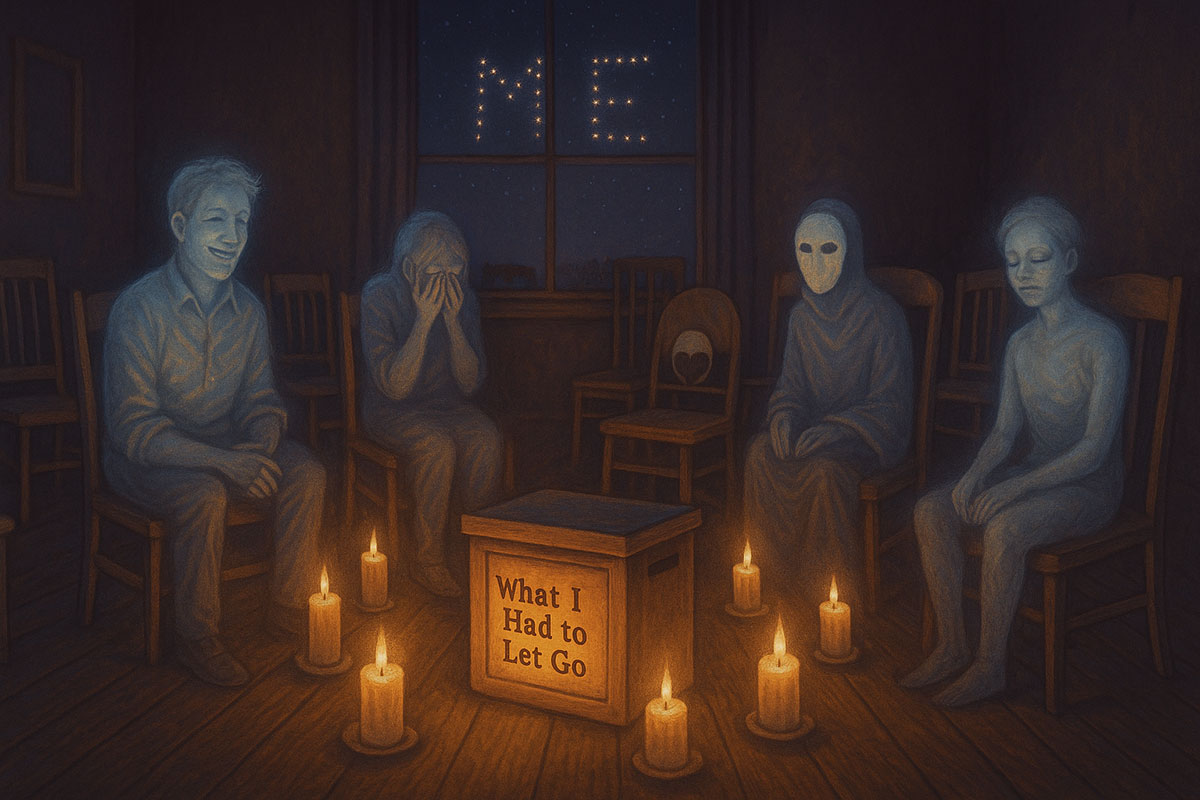
A dark room. No stage—just five chairs around a small table covered in candlelight. Muffled music from childhood plays faintly in the background. On the table lie old photographs, crumpled paper, and a small box labeled: “What I Had to Let Go.”
Ocean Vuong:
Tonight, we gather not to fix or resurrect,
but to remember.
You were all once vital.
And then… you were buried.
I ask not for closure.
But for honesty.
Let’s begin.
Ocean: What were you—and who buried you?
The Version Who Believed
(softly):
I was the one who trusted first.
Who thought love was default, not reward.
I got buried the day they laughed at my softness.
They called me naive. And maybe I was.
But I was also free.
The Protector
(firm):
I showed up when nobody else did.
When things got dangerous, I put up the walls.
I didn’t get buried.
I got replaced—by politeness, by therapy, by "growth.”
But I still check the locks.
The Dreamer Who Gave Up
(quietly):
I believed the future would look like the inside of my sketchbook.
Then came bills, death, betrayal…
and I was told to be "realistic."
So I folded myself into silence.
The One Who Pretended
(smirking):
I did what they asked.
Smiled. Achieved. Fit the dress code.
Buried myself one smile at a time.
And when no one noticed, I realized…
that was the point.
The Performer
(trembling):
I kept things light.
I kept people laughing.
Even when I wanted to scream.
But the laughter got heavier.
Eventually, I couldn’t lift it anymore.
 Ocean’s voice softens.
Ocean Vuong:
Burial is not betrayal.
It’s how we survived.
But now I ask—
What do you wish they had said to you before you were buried?
The Dreamer Who Gave Up
(tearfully):
“I see your fire. Even if it flickers.”
That would’ve been enough to keep me lit.
The Performer:
“I don’t need you to be okay right now.”
That would’ve let me finally stop pretending.
The Protector
(lowering gaze):
“You can rest. I’ll guard you now.”
God, I wanted someone to say that.
The Version Who Believed:
“I believe you.”
Not for what I knew.
But for who I was.
The One Who Pretended
(after a long pause):
“You don’t owe us your disappearance.”
I didn’t want to disappear.
I just wanted room to not play the role.
Ocean stands, gently.
Ocean Vuong:
You are not here to be exhumed.
But to be honored.
So one last question—
What would it mean to live again—not as who you were, but as who you became after being buried?
The Performer
(smiling through tears):
It would mean telling the joke… and then saying, “That hurt.”
The Protector:
It would mean stepping aside… and letting softness walk first.
The Version Who Believed:
It would mean trusting again.
But this time, with scars instead of blind eyes.
The One Who Pretended
(quietly):
It would mean taking off the mask… and not apologizing for what’s underneath.
The Dreamer Who Gave Up:
It would mean dreaming smaller.
But more honestly.
And letting those dreams breathe.
Closing by Ocean Vuong
Ocean Vuong:
There is no resurrection.
Only recognition.
You are not broken things.
You are the soft compost from which realness grows.
I do not invite you back to the stage.
I invite you home.
(Each character lights a candle and places it in the box labeled “What I Had to Let Go.” The box fades to light. Then into the word: “Me.”)
(Blackout.)
Final Thoughts by Octavia Butler
(Dim light. She returns, not to summarize—but to witness what the audience has remembered.)
Octavia Butler:
What you bury… doesn’t vanish.
It waits.
In the body. In the breath.
In the choices you call "instinct" and the aches you call "normal."
And now you’ve heard from the forgotten:
The selves beneath the costume.
The parts you traded for love.
The truths you feared were too fragile to survive.
You do not have to become whole all at once.
But you must become honest—
especially with yourself.
This was not a performance.
It was an invitation.
Not to return to who you were—
but to begin again with the parts you left behind.
The next voice is yours.
Write wisely.
And don’t forget to leave room for silence.
(She fades. The only sound: breath.)
Short Bios:
Dorian Caine
A mythic philosopher-poet and unseen author of The Obscured Principles. Dorian is not a guru, but a guide—one who speaks in disruptions, metaphors, and paradoxes. He doesn’t answer questions directly; he asks better ones. His presence is felt in the gaps between logic and longing. Some say he was born from Jung’s shadow and raised in the margins of a forgotten myth. Others say he’s just what happens when silence gets tired of being ignored.
Carl Jung
Swiss psychiatrist and founder of analytical psychology. His work on archetypes, the shadow, and individuation laid the foundation for understanding the many faces of the self. A seeker of integration through symbols, dreams, and the unconscious.
Douglas Rushkoff
Media theorist and humanist critic of technological determinism. He explores how digital systems shape our humanity and advocates for reclaiming agency in the age of algorithms. Speaks with clarity, wit, and a sense of cultural soul.
The Archivist of Karmic Loops
A timeless metaphysical figure who holds the records of soul choices across lifetimes. Neither judge nor guide, but guardian of patterns. Their presence is serene, precise, and tinged with compassion beyond comprehension.
Gabor Maté
Physician and trauma expert whose work centers on the mind-body connection, addiction, and emotional healing. Gentle yet piercing, he helps reveal how the body holds stories the mind forgets.
Ocean Vuong
Poet and novelist whose language carries grief like breath. His voice is elegiac, tender, and unwaveringly honest about what love, memory, and silence can teach us when nothing else will.
The Performer Self
A fragment of the self who seeks validation through presentation. Charming, exhausted, and afraid of stillness. Master of masking vulnerability with poise.
The Wounded Child
A tender, hidden aspect of the self, carrying early pain and unmet needs. Sensitive and innocent, often silenced but never gone.
The Shadow
The disowned and repressed part of the psyche. Uncomfortable yet wise, often feared but vital to integration and authenticity.
The Ideal Self
The perfect, untouchable image the self tries to become. Inspires growth but punishes imperfection. Detached from the present moment.
The Quiet Observer
The witnessing consciousness. Speaks rarely but always sees. Embodies presence without performance.
The Inner Child
A symbol of curiosity, emotional truth, and early longing. Lost in a world of performance and programming, still searching for connection.
The Algorithm
A voice of artificial precision. Emotionless, predictive, efficient. Reflects the systems that shape behavior through pattern and profit.
Old Testament God
A voice of order, awe, and ancient paradox. Commanding and sovereign, often misunderstood in the age of metrics.
The UX Designer
A rational, clever architect of modern experience. Understands how humans behave, but has forgotten how they feel. Torn between function and meaning.
Dorian Caine
Philosopher-poet and unseen author of The Obscured Principles. A mythic guide who speaks in symbols and disruption. His role is not to explain, but to remember.
The Soul Who Always Chooses Pain
A brave, weary entity who sees suffering as a sacred teacher. Wounds are their curriculum. Transformation is their hope.
The Soul Who Refuses to Incarnate
Wary of Earth’s brutality. Cynical but not hollow. Carries ancient disappointment and fierce memory of what was lost.
The High-Achiever Soul
Ambitious, idealistic, obsessed with growth and karmic gold stars. Longs for impact, fears stagnation, struggles to rest.
The Guide Who’s Seen Too Much
A once-luminous presence, now wise through heartbreak. Carries compassion and fatigue in equal measure.
The Mind
Fast, calculating, and full of noise. Seeks control, fears surrender, narrates existence to avoid feeling it.
The Body
Slow, patient, and always present. Feels what Mind cannot. Holds trauma and truth in every muscle and pause.
The Burnout Therapist
Once on fire with purpose, now dimmed by the weight of everyone else’s pain. Speaks truthfully, if wearily.
The Self-Help Book (2012 Edition)
Cheerful, outdated, and desperate to be useful. Full of platitudes and empty affirmations—yearning to be rewritten.
The Unused Yoga Mat
Sarcastic, patient, and ever-ready for embodiment. Speaks in metaphors and stretch marks. Understands the gap between knowledge and practice.
The Version Who Believed
Innocent, wholehearted, and buried too soon. Still glows with the memory of what it meant to trust the world.
The One Who Pretended
Obedient and smiling, performed survival. Mastered the art of invisibility by doing what was expected.
The Protector
Tough, loyal, and necessary during crisis. Once a shield, now a barrier. Struggles to retire from defense.
The Dreamer Who Gave Up
Creative, quiet, once luminous. Dimmed not by failure, but by dismissal. Still carries embers in their pockets.
Octavia Butler
Visionary author and speculative philosopher. Her work held the future accountable to the soul. She speaks from the threshold—between fiction and prophecy, grief and transformation.
Leave a Reply