
|
Getting your Trinity Audio player ready...
|
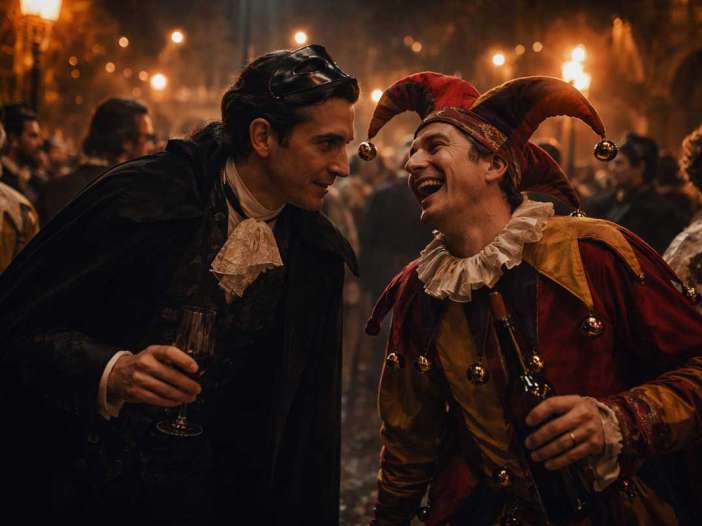
What if Edgar Allan Poe was warning us about moral certainty, not madness?
Introduction by Edgar Allan Poe
I have often been accused of dwelling too closely upon the darker chambers of the human soul. Yet I have never believed that terror is born of violence alone. It is born of certainty—of the calm conviction that one is right, and need not explain.
The Cask of Amontillado was written not to shock with cruelty, but to examine a mind that requires no witness, no justification, and no mercy. Montresor does not rage. He reasons. He does not plead. He proceeds. That, to me, was the true horror.
In this discussion, you will not find the insult named, the grievance weighed, or the scales of justice balanced. You will find instead the architecture of revenge—how grievance becomes identity, how ritual replaces conscience, and how silence completes the crime.
I offer no verdict. I offer only a voice that never doubts itself—and ask you to listen carefully to what that certainty sounds like.
(Note: This is an imaginary conversation, a creative exploration of an idea, and not a real speech or event.)
Topic 1: The Crime Without a Cause
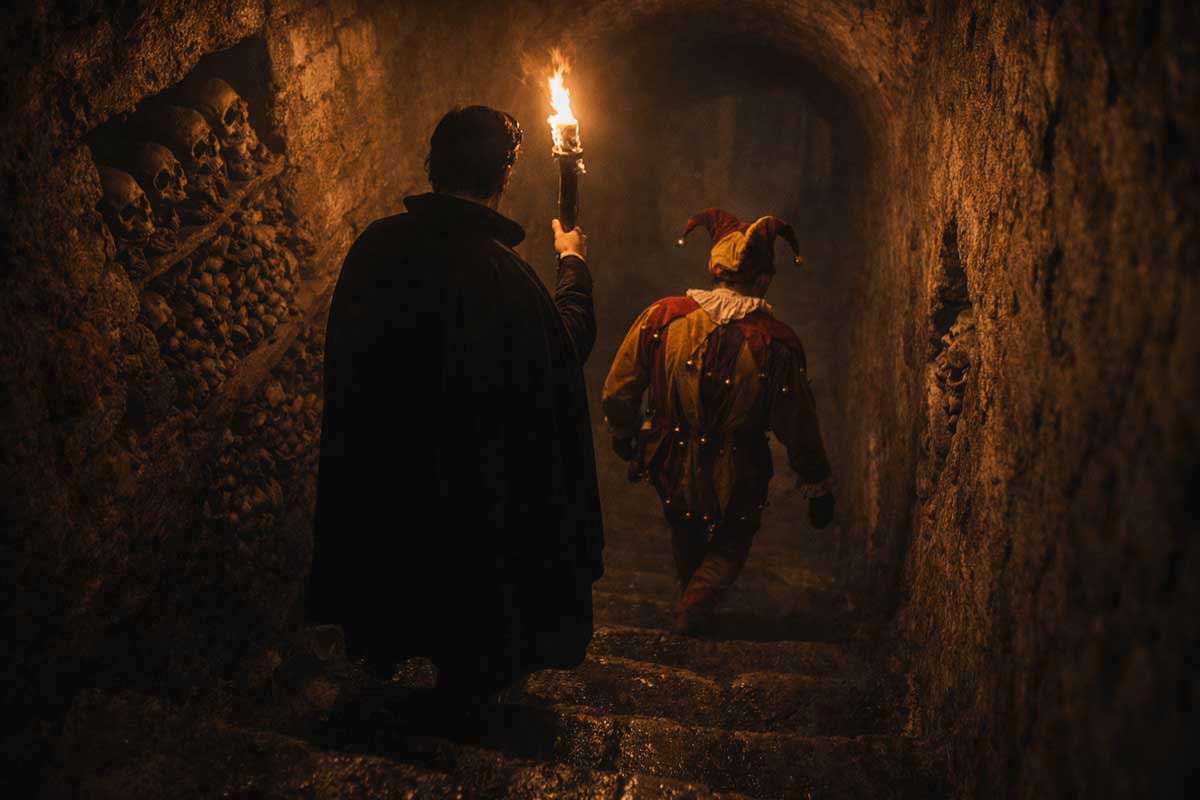
Offense, entitlement, and moral self-authorization
Moderator:
Nick Sasaki
Author:
Edgar Allan Poe
Participants:
James W. Gargano
Terence Whalen
Christopher Castiglia
G. R. Thompson
Harold Bloom
Nick Sasaki
Montresor tells us he has suffered “a thousand injuries,” yet he never names the insult that justifies murder. Why is that absence so central—and why might Poe refuse to specify it?
James W. Gargano
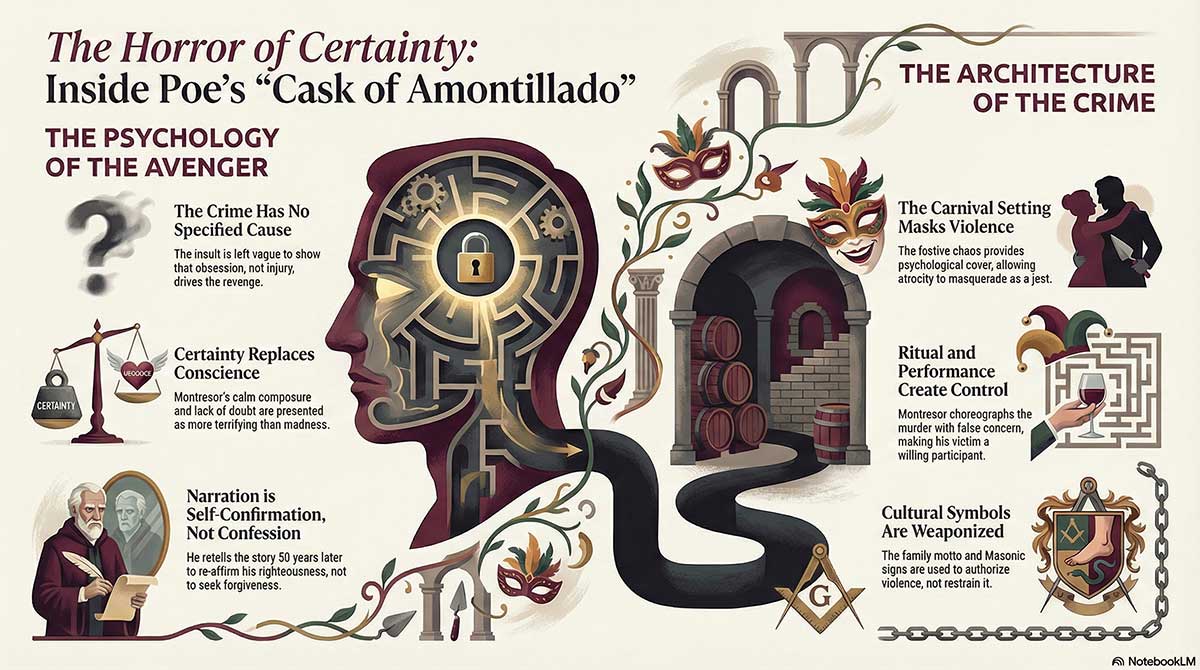
Because naming the insult would limit the story’s reach. Poe wants the reader to confront the psychology of grievance itself, not evaluate a particular offense. The absence forces us to ask whether any insult could ever warrant what follows.
Terence Whalen
I’d add that the missing insult reflects a culture of honor untethered from evidence. Montresor assumes authority over meaning. His word alone becomes law. That is the real crime.
Christopher Castiglia
Yes, and politically speaking, this is how power justifies itself. When authority no longer needs explanation, violence becomes procedural rather than emotional. The silence around the insult mirrors institutional violence.
G. R. Thompson
Psychologically, the absence suggests obsession rather than injury. The insult may be less an event than a fixation—something Montresor replays until it consumes all proportion.
Harold Bloom
Poe understood that resentment feeds on vagueness. The more abstract the injury, the more infinite the revenge. Montresor’s silence is not restraint; it is amplification.
Nick Sasaki
That leads to a deeper discomfort. Is Fortunato truly the object of revenge—or is Montresor responding to a wound that has little to do with Fortunato himself?
G. R. Thompson
Fortunato functions more as a symbol than a cause. He represents status, confidence, and social ease—everything Montresor lacks or fears losing.
James W. Gargano
Exactly. Fortunato is selected, not because of what he did, but because of who he is. The crime reveals Montresor’s internal economy, not Fortunato’s guilt.
Christopher Castiglia
From a power perspective, Fortunato’s crime is visibility. He occupies space with ease. Montresor experiences that as humiliation, even if no insult occurred.
Terence Whalen
This is resentment masquerading as justice. The story shows how private grievance can inflate itself into moral crusade.
Harold Bloom
Poe’s brilliance lies in showing us how revenge often substitutes an internal drama for an external cause. Fortunato is the stage upon which Montresor performs his identity.
Nick Sasaki
So then the hardest question. At what point does a perceived injury—real or imagined—become a claim to absolute moral authority?
Edgar Allan Poe
When reason is no longer questioned. When the mind mistakes certainty for justice. I was less interested in the injury than in the confidence with which it is remembered.
James W. Gargano
That confidence is chilling. Montresor never doubts. Doubt would humanize him. Its absence dehumanizes both men.
Terence Whalen
Moral absolutism emerges when explanation feels unnecessary. Montresor does not argue—he executes. That is the danger Poe exposes.
Christopher Castiglia
This is the logic of authoritarian violence: grievance becomes destiny, and destiny becomes permission.
G. R. Thompson
Psychologically, this is the moment obsession hardens into identity. Montresor no longer acts from anger; he acts from self-definition.
Harold Bloom
Poe warns us that the most terrifying evil is not chaos, but clarity without conscience. Montresor is not confused. He is certain.
Nick Sasaki
So the story begins not with a crime—but with a conviction that no longer needs proof.
The room goes quiet, heavy with the implications.
Topic 2: The Mind of the Narrator
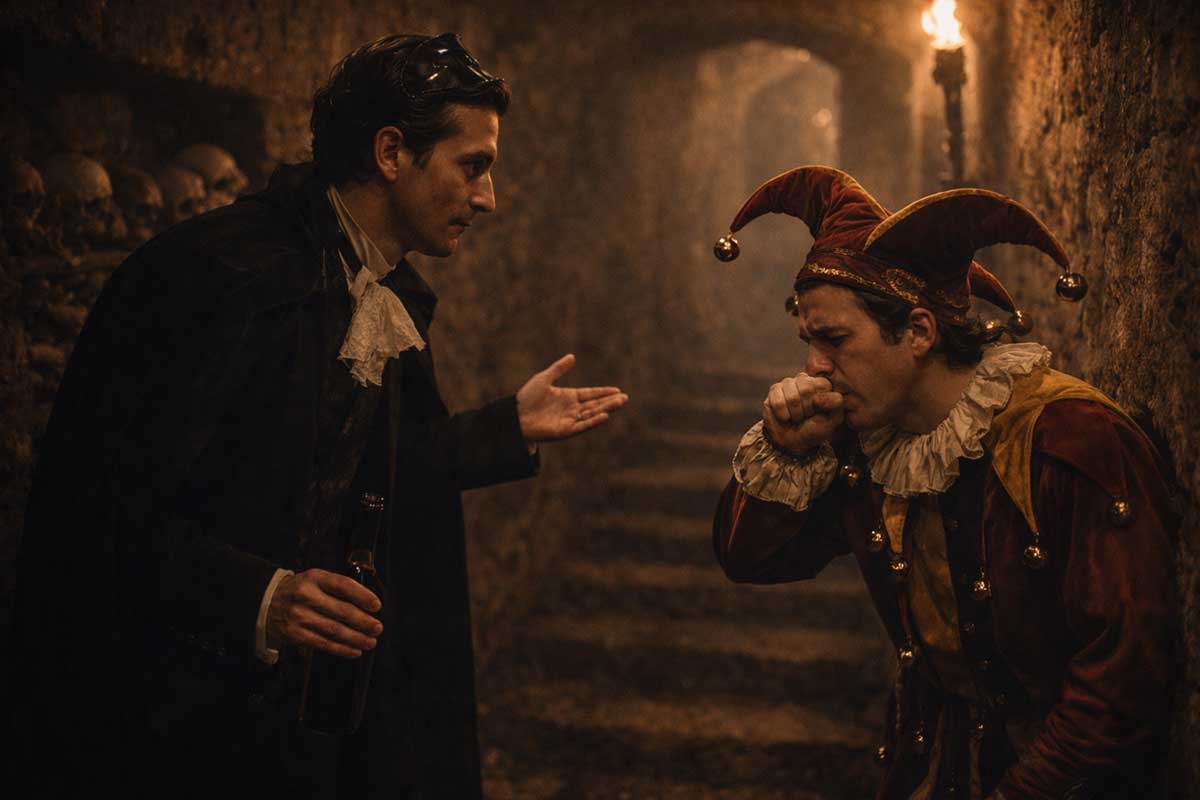
Reliability, rationalization, and self-deception
Moderator:
Nick Sasaki
Author:
Edgar Allan Poe
Participants:
James W. Gargano
J. Gerald Kennedy
Shawn Rosenheim
Elmer R. Pry
G. R. Thompson
Nick Sasaki
Montresor recounts his crime with calm precision and apparent pride. I want to begin here: is he consciously deceiving the reader—or has he fully convinced himself of his own righteousness?
James W. Gargano
Montresor is sincere, and that sincerity is the danger. Poe’s brilliance lies in creating a narrator who believes himself justified. This is not manipulation; it is moral blindness presented as clarity.
J. Gerald Kennedy
I agree. The narration functions less as confession than as self-confirmation. Montresor tells the story not to seek absolution, but to preserve the coherence of his identity.
Shawn Rosenheim
There is also performance here. Montresor stages his reasonableness the way he staged the murder. Control over tone is part of his self-image.
Elmer R. Pry
And the calmness is strategic—even internally. Emotional restraint reassures Montresor that he is rational. Passion would threaten his sense of order.
G. R. Thompson
This is classic Poe psychology: obsession masquerading as reason. Montresor’s composure signals fixation, not sanity.
Nick Sasaki
That composure is unsettling. Does Montresor’s precision suggest mastery—or does it reveal a fracture beneath the surface?
Shawn Rosenheim
Precision is a coping mechanism. It allows Montresor to avoid confronting ambiguity. The more exact the plan, the less room for doubt.
Elmer R. Pry
Yes, the narration is almost architectural. That rigidity suggests brittleness. Any disruption—emotion, chance, remorse—would collapse the structure.
James W. Gargano
Mastery and fracture coexist. Montresor controls events, but only by narrowing his moral vision to a single axis: offense and retribution.
G. R. Thompson
Poe often presents obsession as a narrowing of consciousness. Montresor’s world has only one problem and one solution.
J. Gerald Kennedy
And that narrowing is permanent. Fifty years later, he still speaks from within it. No distance has been gained.
Nick Sasaki
Which brings us to timing. Montresor tells this story half a century later. Why now—and what does that delay reveal?
Edgar Allan Poe
Some stories are not told to be forgiven. They are told to be remembered exactly as the teller wishes them to be.
J. Gerald Kennedy
The delay suggests unresolved pride rather than guilt. Montresor has not outgrown the act; he has curated it.
James W. Gargano
Yes. Memory here is not healing. It is preservation. The story remains intact because Montresor needs it to remain so.
Shawn Rosenheim
The timing implies that the crime has become identity. To narrate it is to reassert selfhood.
Elmer R. Pry
And notably, there is no evolution in tone. Fifty years bring no moral weathering. That stasis is chilling.
G. R. Thompson
The narration proves Poe’s point: reason without conscience does not decay—it calcifies.
Nick Sasaki
So Montresor does not tell the story to confess, repent, or explain. He tells it to confirm that the logic still holds.
The conversation pauses, uneasy but precise.
Topic 3: Ritual, Performance, and Control
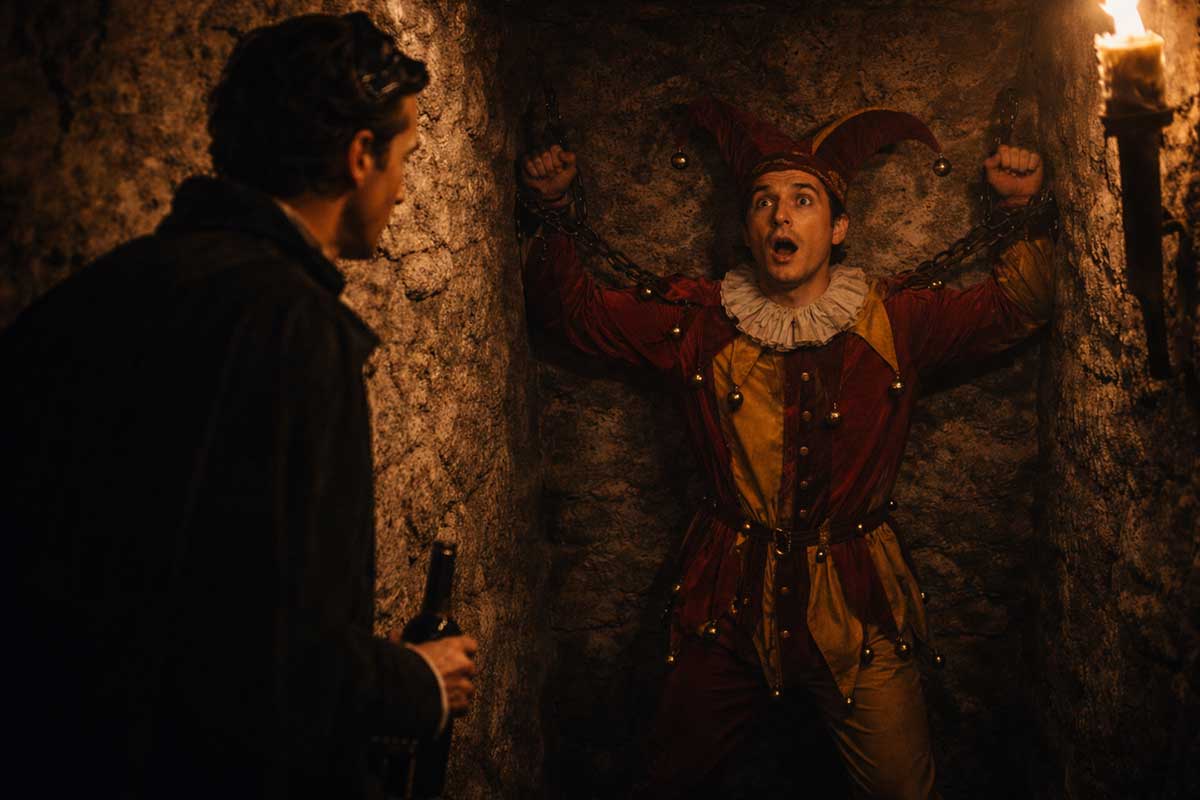
Carnival, humiliation, and staged power
Moderator:
Nick Sasaki
Author:
Edgar Allan Poe
Participants:
Shawn Rosenheim
Benjamin F. Fisher
Terence Whalen
Elmer R. Pry
Harold Bloom
Nick Sasaki
Poe sets the story during Carnival—a time of masks, excess, and inversion. Why does this setting matter so deeply to the crime Montresor commits?
Shawn Rosenheim
Carnival legitimizes transgression. Social rules loosen, identities blur, and violence can hide inside play. Montresor exploits this cultural suspension to commit a crime that appears, at first, like festivity.
Benjamin F. Fisher
Yes, Carnival becomes psychological cover. Fortunato expects absurdity, not danger. Poe uses the setting to explain why Fortunato’s instincts fail him so completely.
Terence Whalen
There’s also class performance here. Carnival collapses hierarchies temporarily, allowing Montresor to invert roles. The subordinate becomes executioner under the mask of celebration.
Elmer R. Pry
Structurally, Carnival delays suspicion. Everything feels provisional. That uncertainty is essential to Montresor’s control.
Harold Bloom
Poe understood that cruelty often requires theater. Carnival supplies the stage where atrocity can masquerade as jest.
Nick Sasaki
That theatricality continues in Montresor’s behavior—his false concern, repeated offers to turn back, careful pacing. How does ritual structure give him total control?
Benjamin F. Fisher
Ritual creates predictability. Montresor scripts each step so Fortunato believes he is choosing freely. Control is achieved through participation, not force.
Elmer R. Pry
Exactly. The repetition of concern becomes hypnotic. Each offer strengthens Montresor’s dominance by disguising it as deference.
Shawn Rosenheim
This is performance as power. Montresor performs reasonableness so convincingly that Fortunato internalizes it.
Terence Whalen
And ritual absorbs violence. By the time chains appear, Fortunato has already surrendered agency through trust in the process.
Harold Bloom
The cruelty lies in elegance. Montresor’s mastery is aesthetic. He does not rush. He choreographs.
Nick Sasaki
One final question. Fortunato is dressed as a jester—a figure meant to be mocked, not feared. Is humiliation essential to Montresor’s sense of justice?
Edgar Allan Poe
Power that seeks revenge often seeks spectacle as well. To punish privately is not enough; the victim must be reduced.
Harold Bloom
Humiliation completes the act. Fortunato’s jester costume transforms him from rival into object. That reduction is Montresor’s true victory.
Shawn Rosenheim
Yes. The costume ensures asymmetry. Fortunato never regains dignity. He dies as he lived in the story—misrecognized.
Benjamin F. Fisher
The jester also signals misplaced confidence. Fortunato believes himself clever. Poe shows how easily cleverness becomes vulnerability.
Terence Whalen
Humiliation replaces justice. Montresor does not want balance; he wants dominance remembered.
Elmer R. Pry
And the ritual ensures that dominance feels inevitable, not impulsive.
Nick Sasaki
So the murder is not merely committed—it is staged. Carnival supplies the mask, ritual supplies the script, and humiliation supplies the final seal.
The discussion stills, heavy with the realization that control can feel like order.
Topic 4: Symbols That Do Not Save

Mottos, signs, and empty authority
Moderator:
Nick Sasaki
Author:
Edgar Allan Poe
Participants:
T. O. Mabbott
Benjamin F. Fisher
Christopher Castiglia
J. Gerald Kennedy
Terence Whalen
Nick Sasaki
Montresor repeatedly invokes inherited symbols—his family motto, heraldry, codes of honor. What does “Nemo me impune lacessit” actually reveal about how he understands power?
T. O. Mabbott
Historically, the motto belongs to a feudal system where honor is defended publicly and proportionally. Poe strips away that context. What remains is a slogan without limits—honor severed from responsibility.
Benjamin F. Fisher
Yes, the motto sounds principled, but it performs no ethical work. It does not guide action; it authorizes it. Poe shows how language can sound moral while enabling brutality.
Christopher Castiglia
From a cultural standpoint, the motto replaces accountability with lineage. Montresor invokes ancestry to bypass judgment. Authority becomes inherited rather than earned.
J. Gerald Kennedy
Narratively, the motto substitutes for explanation. Where reasoning should be, we get inscription. That displacement is unsettling.
Terence Whalen
Poe is exposing the afterlife of aristocratic codes—symbols that persist long after their moral infrastructure has collapsed.
Nick Sasaki
That brings us to the Masonic moment. Montresor gestures, Fortunato misunderstands, and the trowel appears. Do these signs clarify meaning—or do they mask violence with legitimacy?
Benjamin F. Fisher
They mask it. The Masonic exchange creates the illusion of shared values, but Montresor’s meaning is unilateral. Symbols become camouflage.
J. Gerald Kennedy
It is a parody of fraternity. The language of brotherhood is weaponized. Poe shows how trust in shared signs can become fatal.
T. O. Mabbott
The trowel is key. A tool associated with building becomes an instrument of entombment. Poe collapses creation and destruction into the same symbol.
Christopher Castiglia
Symbols regulate appearance, not intention. Montresor exploits that gap. He obeys the surface rules while violating every ethical one.
Terence Whalen
Fortunato’s mistake is faith in cultural literacy. He believes symbols protect those who understand them. Poe shows that belief to be disastrously naïve.
Nick Sasaki
One last question. Why do cultural codes—honor, fraternity, tradition—fail so completely to restrain cruelty in this story?
Edgar Allan Poe
Because symbols restrain only those who still feel answerable to others. When certainty replaces conscience, language becomes decoration.
Christopher Castiglia
This is authority emptied of ethics. Symbols remain powerful precisely because they no longer need to justify themselves.
Benjamin F. Fisher
Poe warns us that tradition without moral reflection becomes inert—and inertia can carry violence effortlessly.
J. Gerald Kennedy
The failure is structural. Codes are external; conscience is internal. Montresor has replaced the latter with the former.
T. O. Mabbott
Poe is not attacking symbolism itself. He is attacking reliance on it as a substitute for moral judgment.
Terence Whalen
In the end, symbols fail because Montresor no longer believes in community—only in entitlement.
Nick Sasaki
So the motto speaks, the signs gesture, the traditions remain intact—and none of them prevent atrocity.
The room falls quiet, aware that symbols can survive even when ethics do not.
Topic 5: Justice or Monstrous Certainty
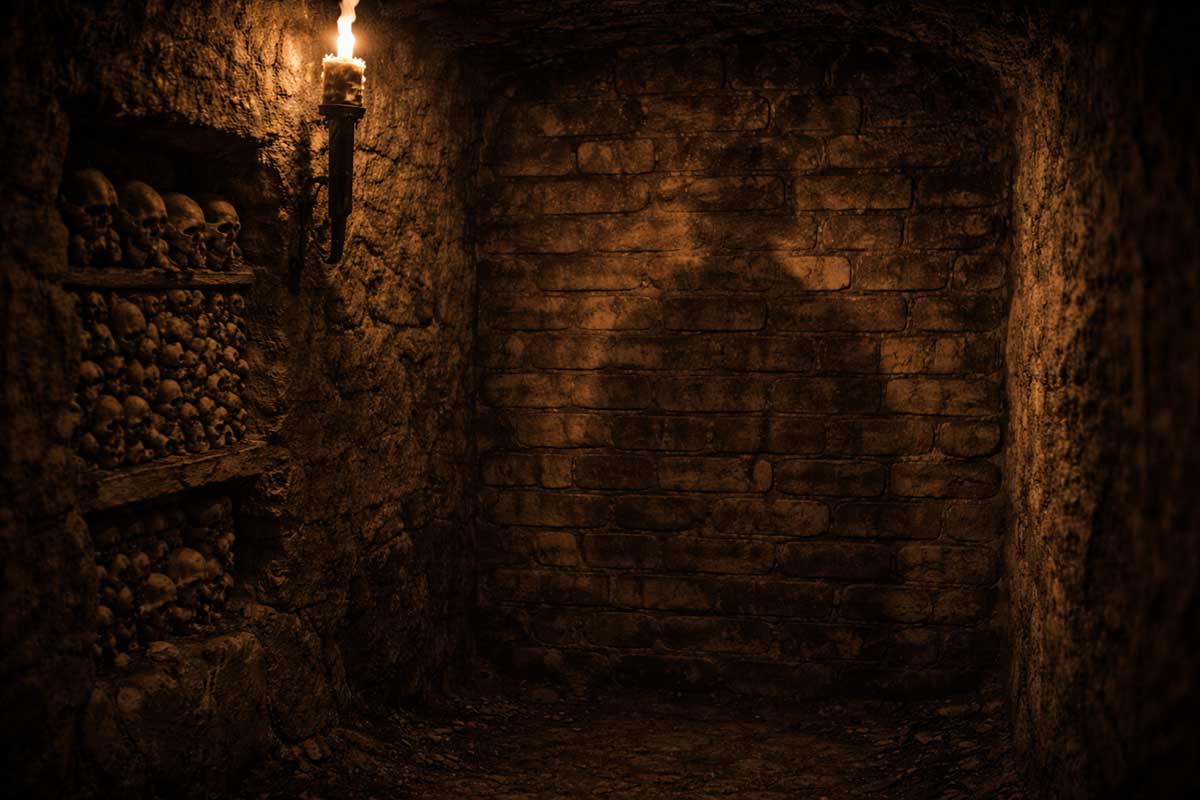
Moral absolutism and the danger of clarity
Moderator:
Nick Sasaki
Author:
Edgar Allan Poe
Participants:
Harold Bloom
Christopher Castiglia
James W. Gargano
G. R. Thompson
T. O. Mabbott
Nick Sasaki
Montresor’s logic is chillingly consistent. He believes he has been wronged, he believes punishment is justified, and he executes it without hesitation. Is that internal consistency what makes him frightening—or is it the absence of doubt?
James W. Gargano
It is the absence of doubt. Consistency alone is morally neutral. What terrifies us is Montresor’s refusal to test his certainty against anything outside himself.
G. R. Thompson
Poe shows us that obsession can masquerade as reason. Montresor’s clarity is not insight—it is fixation hardened into worldview.
Harold Bloom
Poe understood that the most dangerous minds are not chaotic but orderly. Montresor is terrifying because he is coherent, not confused.
Christopher Castiglia
This is certainty without accountability. When no external authority can challenge one’s logic, violence becomes administratively simple.
T. O. Mabbott
Historically, Poe is exposing the peril of inherited codes that no longer answer to community. Montresor’s certainty floats free of consequence.
Nick Sasaki
That raises the central ethical tension. Does Poe present Montresor’s act as a form of justice—or as a warning about what happens when certainty replaces conscience?
Harold Bloom
It is unmistakably a warning. Poe does not dramatize justice; he dramatizes its perversion. Montresor’s confidence is the indictment.
James W. Gargano
Justice requires proportion, transparency, and doubt. Montresor has none of these. What he calls justice is merely revenge with rhetoric.
Christopher Castiglia
Poe anticipates modern critiques of authoritarian morality. Montresor’s justice is self-issued, self-executed, and self-validated.
G. R. Thompson
Psychologically, justice collapses when empathy is eliminated. Montresor never imagines Fortunato’s inner life. That absence is fatal.
T. O. Mabbott
Poe withholds moral commentary because the act condemns itself through excess. The calmness does the work.
Nick Sasaki
Poe ends the story without remorse, discovery, or consequence—only the narrator’s final words. What responsibility does that refusal of closure place on the reader?
Edgar Allan Poe
I did not wish to close the moral account. I wished to open it—inside the reader.
Christopher Castiglia
By refusing resolution, Poe forces the reader to become the judge. The discomfort is intentional.
James W. Gargano
The reader must supply the doubt Montresor lacks. That is the ethical burden Poe transfers to us.
G. R. Thompson
Closure would absolve the reader. Poe denies that comfort. The crime remains morally active.
T. O. Mabbott
The ending suggests that injustice can persist quietly, unpunished, if certainty goes unchallenged.
Harold Bloom
Poe leaves us with a terrifying thought: evil need not fail to be condemned—it may simply succeed and be remembered proudly.
Nick Sasaki
So the story ends not with chaos, but with order preserved—an order built on unchallenged certainty.
The conversation ends where Poe leaves us: alert, unsettled, and responsible.
Final Thoughts by Edgar Allan Poe
Montresor is not punished. He is not discovered. He is not undone by remorse. This absence is deliberate.
Had I allowed justice to arrive, the reader might depart satisfied, assured that the moral order remains intact. But moral order is not always restored. Sometimes it is buried carefully, stone by stone, and left to age undisturbed.
What remains after fifty years is not guilt, but memory—unrevised, unchallenged, and calmly preserved. That is the condition I wished to leave you with.
If you feel unsettled, it is because the story has ended where it must: not with judgment, but with responsibility transferred. The conscience denied by the narrator has been handed to the reader.
The wall stands.
The logic remains.
What you do with it is no longer my concern.
Short Bios:
Edgar Allan Poe
A master of psychological fiction and Gothic storytelling, Poe explored obsession, guilt, and the darker logic of the human mind. His work often exposes how reason, when severed from conscience, can become a tool of terror rather than truth.
Nick Sasaki
Founder of ImaginaryTalks, Nick Sasaki moderates literary and philosophical conversations that bring classic works into dialogue with modern ethical and emotional questions. His approach emphasizes restraint, depth, and the reader’s responsibility in meaning-making.
James W. Gargano
A leading Poe scholar known for his work on unreliable narrators and moral psychology, Gargano helped redefine Poe’s fiction as deeply ethical rather than merely sensational.
J. Gerald Kennedy
An influential voice in American literary studies, Kennedy’s scholarship focuses on confession, authority, and narrative voice in nineteenth-century literature, with extensive work on Poe.
G. R. Thompson
Thompson is known for his analyses of Romantic irony, obsession, and psychological fixation in Gothic literature, particularly in Poe’s tales of extreme consciousness.
Harold Bloom
One of the most prominent literary critics of the twentieth century, Bloom emphasized the enduring psychological and symbolic power of canonical writers, including Poe’s exploration of destructive certainty.
T. O. Mabbott
A foundational Poe scholar, Mabbott produced authoritative editions of Poe’s works and focused on textual precision, historical context, and symbolic detail.
Benjamin F. Fisher
Fisher’s scholarship examines Poe’s use of symbolism, irony, and cultural codes, illuminating how language and ritual function within his darker narratives.
Christopher Castiglia
Castiglia explores power, authority, and moral imagination in American literature, bringing political and cultural insight to readings of Poe’s work.
Terence Whalen
Whalen’s work situates Poe within social and historical frameworks, emphasizing class, authority, and the lingering influence of aristocratic codes.
Leave a Reply