

|
Getting your Trinity Audio player ready...
|
Introduction by Haruki Murakami
There are moments when reality begins to feel unreliable.
Not because it is unfamiliar, but because it arrives too quickly, too loudly, without leaving space for reflection. News replaces itself before it can be understood. Images compete for attention. Words are repeated until they lose weight. The world continues to move forward, but meaning struggles to keep pace.
In such moments, it is natural to ask whether literature still has a role to play.
Stories were once a way of ordering experience. They gave shape to fear, desire, memory. They slowed time down enough for us to look at our lives from a small distance. But today, reality itself often feels more extreme than fiction. It performs endlessly, without pause. Against that velocity, a novel can seem fragile, even unnecessary.
And yet, people continue to write.
This gathering—imaginary though it may be—is not an attempt to defend literature, nor to announce its survival. It is simply a moment of attention. Twenty-five writers from different places, languages, and traditions have been invited to sit together and consider what it means to tell stories now, in a world that no longer waits to be told.
They do not share a single answer. Some believe literature must confront power directly. Others believe it should remain oblique, personal, resistant to slogans. Some are wary of new technologies; others engage them closely. What they have in common is not agreement, but persistence.
Writing, for them, is not a solution. It is a condition.
This summit does not ask whether literature can save the world. That question is too large, and perhaps beside the point. Instead, it asks quieter questions. Whose stories remain unseen? What responsibilities accompany imagination? What happens to fiction when machines can generate narratives without fatigue? Why continue writing when results are uncertain, and influence cannot be measured?
These are not questions that demand conclusions. They are questions that ask to be lived with.
Literature, at its best, does not offer clarity in the way instructions do. It offers a different kind of understanding—one that unfolds slowly, often privately, sometimes imperfectly. It allows contradictions to coexist. It permits silence. It accepts that not everything must be resolved.
This conversation begins without urgency. It does not seek to persuade. It simply opens a space where words can move at a human pace again.
Perhaps that, in itself, is enough to begin.
(Note: This is an imaginary conversation, a creative exploration of an idea, and not a real speech or event.)
Topic 1 — Does Literature Still Matter When Reality Feels Unreal?
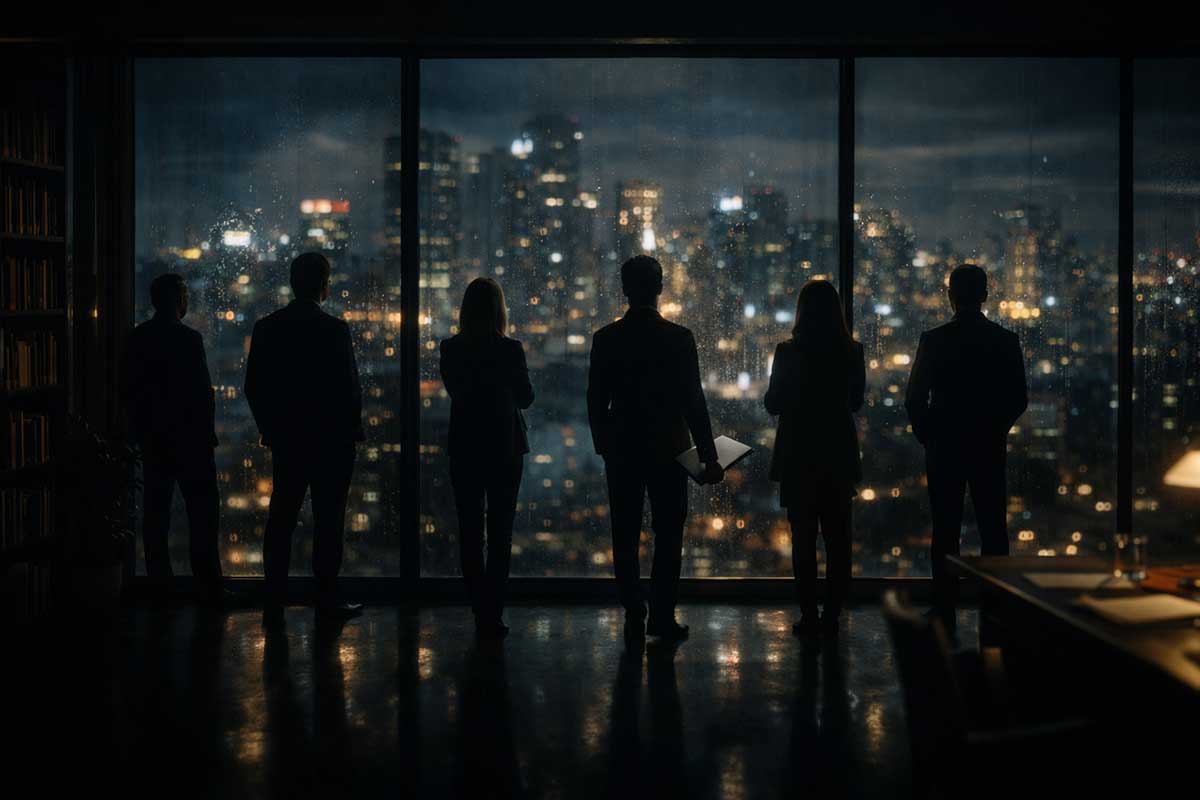
Setting
A high, glass-walled library overlooking a city at dusk.
News screens flicker silently in the distance.
No phones are on the table. No audience.
Only writers, and the sense that the world outside is already narrating itself too loudly.
Moderator
Haruki Murakami
Participants
Margaret Atwood
Don DeLillo
Olga Tokarczuk
David Mitchell
Murakami (opening)
We live in a time when reality behaves strangely.
News sounds invented. Politics reads like satire.
And catastrophe arrives with the rhythm of entertainment.
So I want to start with a simple question, even if the answer isn’t simple.
When the world itself feels unreal,
does literature still matter — or has it been overtaken by reality?
Don DeLillo
Reality didn’t become unreal recently.
What changed is speed.
Events now arrive without time for meaning to form.
The novel used to slow things down.
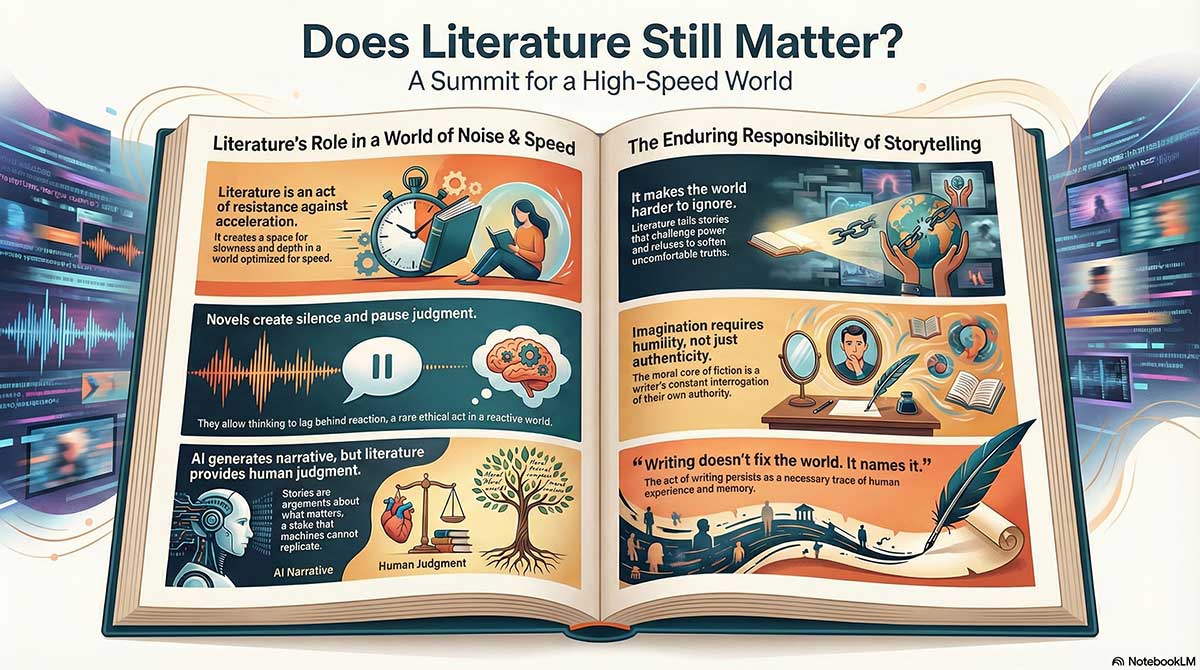
Now it feels almost ceremonial — an act of resistance against acceleration.
Whether that still “matters” depends on whether slowness has any remaining value.
Margaret Atwood
I’d say literature matters because reality feels unreal.
When power lies, when systems distort truth, storytelling becomes a record.
Not prophecy. Not escape.
A ledger of what was said, what was done, and who benefited.
If reality is unreliable, fiction becomes a stabilizing instrument.
Olga Tokarczuk
I think realism itself has collapsed.
The world no longer behaves according to linear logic.
So literature must evolve — not to explain reality, but to hold it.
Myth, fragment, multiplicity — these are not aesthetic choices anymore.
They are survival strategies for consciousness.
David Mitchell
We’re surrounded by narratives that pretend to be complete.
But they’re not stories — they’re loops.
Literature still matters if it reminds readers that time has depth.
That actions echo.
That you don’t exit the story just because the feed refreshes.
Murakami
Let me press this further.
If reality is already stranger, louder, and more extreme than fiction —
what can a novel do that the world cannot?
Margaret Atwood
A novel can pause judgment.
That’s rare now.
The world demands instant alignment — outrage or approval.
Literature creates a space where thinking is allowed to lag behind reaction.
That delay is ethical.
Don DeLillo
The novel can create silence.
Not absence, but pressure.
Silence lets fear surface in a controlled way.
Media noise disperses fear.
Literature concentrates it.
David Mitchell
A novel can acknowledge consequence.
Reality broadcasts impact without aftermath.
In books, actions return.
Characters don’t escape the system they help build.
That continuity is quietly radical now.
Olga Tokarczuk
And a novel can decentralize authority.
Reality insists on a single dominant version of events.
Literature allows parallel truths to coexist without resolution.
That ambiguity is not weakness.
It’s honesty.
Murakami
Some people say literature has lost influence.
That novels no longer shape culture — they only comment on it.
If that’s true, why continue writing at all?
Olga Tokarczuk
Because influence was never the point.
Literature doesn’t command.
It accompanies.
It walks beside the reader when no ideology will.
David Mitchell
Because meaning isn’t scalable.
It doesn’t trend.
A novel might matter deeply to one person and nowhere else.
That’s not failure. That’s precision.
Don DeLillo
Because systems don’t notice individuals — but novels do.
Writing is an act of selective attention.
It insists someone is worth the time.
Margaret Atwood
And because literature outlasts emergencies.
The crisis passes.
The record remains.
Even when the world insists nothing can be learned,
books quietly disagree.
Murakami (closing)
Maybe literature doesn’t compete with reality.
Maybe it waits.
When reality grows too loud to understand itself,
stories become a place where meaning can regroup.
Not to save the world.
Not even to explain it.
But to remind us that confusion is not the same as emptiness.
Outside, the city keeps glowing.
Inside, the conversation slows — deliberately.
Topic 2 — Whose Story Gets Told, and Who Is Still Invisible?
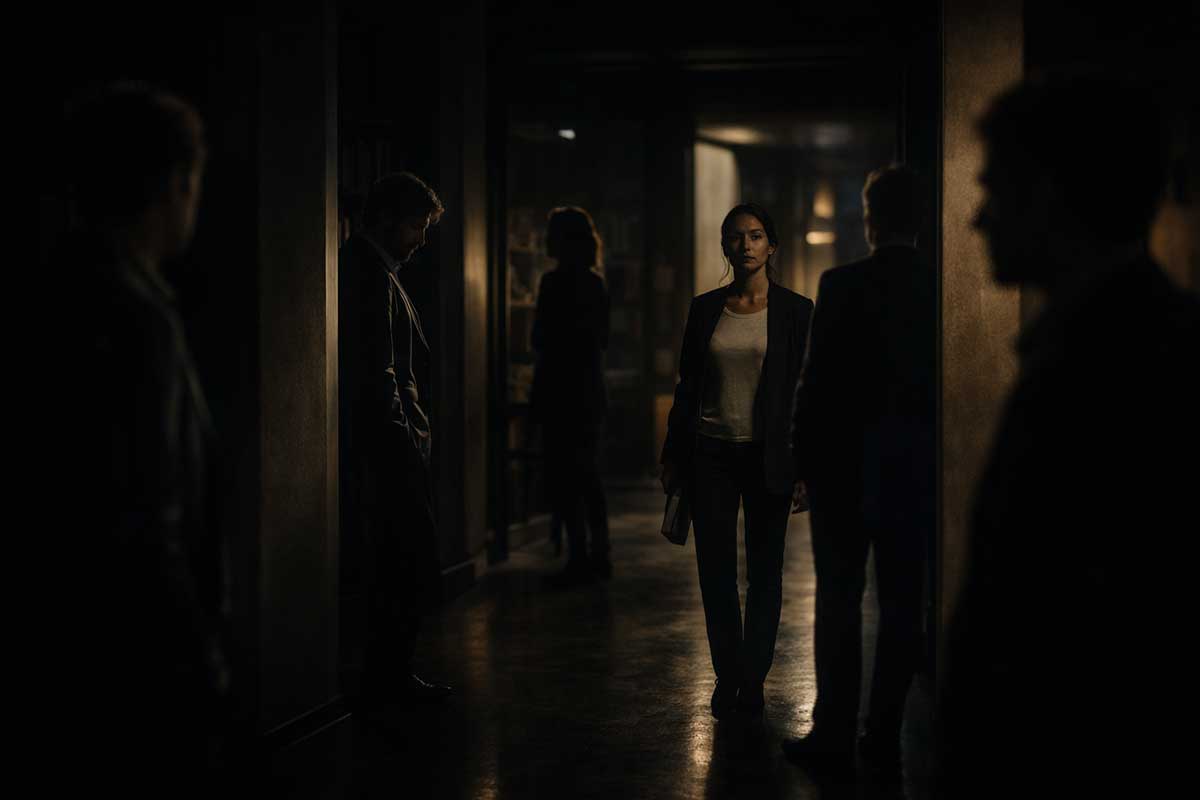
Setting
The same library, later in the evening.
The city outside is darker now.
Streetlights replace headlines.
The table feels closer. The air heavier.
Moderator
Toni Morrison
Participants
- Chimamanda Ngozi Adichie
- Hanya Yanagihara
- Arundhati Roy
- Ocean Vuong
Morrison (opening)
For a long time, literature decided who mattered.
Some lives were centered.
Others were background, or metaphor, or silence.
We now speak often about visibility.
But I want to ask something more difficult.
Whose stories are still not being told —
and why do they remain invisible?
Arundhati Roy
Power decides invisibility, not ignorance.
The stories that disappear usually threaten something:
a system, a hierarchy, an economy.
Silence is not accidental.
It’s engineered.
Chimamanda Ngozi Adichie
I agree — and I’d add that visibility can also be a trap.
Sometimes you’re invited to speak only as a symbol.
Your story becomes digestible, repeatable, safe.
The danger is thinking you’ve been heard
when you’ve only been displayed.
Ocean Vuong
There are stories that survive only in the body.
They never reach language cleanly.
War, migration, queerness — they fracture grammar.
Those stories aren’t invisible because no one writes them.
They’re invisible because they resist being consumed.
Hanya Yanagihara
Some stories are ignored because they make readers uncomfortable.
Not politically — emotionally.
Sustained suffering without redemption
is still unwelcome.
We prefer arcs that reassure us.
Morrison
Yes.
And discomfort has always been the test.
Literature doesn’t make injustice visible by explaining it.
It does so by refusing to soften it.
Morrison
Let me press further.
When marginalized stories do become visible,
they are often asked to represent.
Is representation a form of justice —
or another burden placed on the writer?
Chimamanda Ngozi Adichie
Representation is not justice.
It’s a beginning that’s often mistaken for an ending.
Writers are not ambassadors.
We are witnesses — and sometimes even unreliable ones.
Arundhati Roy
Representation without structural change
is aesthetic charity.
You can celebrate a novel about oppression
while continuing to profit from the system it critiques.
Literature alone doesn’t absolve.
Hanya Yanagihara
There’s also a quiet cruelty in expectation.
Readers want marginalized writers to heal them,
to teach, to inspire.
But sometimes the story is only pain.
And that should be allowed.
Ocean Vuong
I often feel language itself is a compromise.
To be legible, something must be lost.
The question becomes:
What are we willing to sacrifice in order to be seen?
Morrison
Exactly.
And the cost of visibility is rarely paid equally.
Morrison
Last question.
In a world eager to consume identity,
what is the ethical responsibility of the writer?
To speak?
To resist?
Or sometimes, to remain silent?
Ocean Vuong
The responsibility is to listen inwardly first.
To avoid turning trauma into currency.
Silence can be ethical —
but only when it’s chosen, not imposed.
Hanya Yanagihara
I think responsibility lies in honesty.
Not balance. Not comfort.
If a story hurts,
its job is not to apologize.
Chimamanda Ngozi Adichie
The writer’s duty is not to simplify complexity.
Especially when the world demands slogans.
Literature must remain stubbornly human.
Arundhati Roy
And sometimes the responsibility is to be inconvenient.
To say what power hopes will stay unsaid.
Politeness has never liberated anyone.
Morrison (closing)
Stories do not ask for permission to exist.
They ask for attention.
And attention is never neutral.
It reveals what we value,
and what we are willing to overlook.
The work of literature is not to make us comfortable with the world —
but to make the world harder to ignore.
The lights dim further.
No one speaks for a moment.
Topic 3 — Is Fiction Still Allowed to Lie?
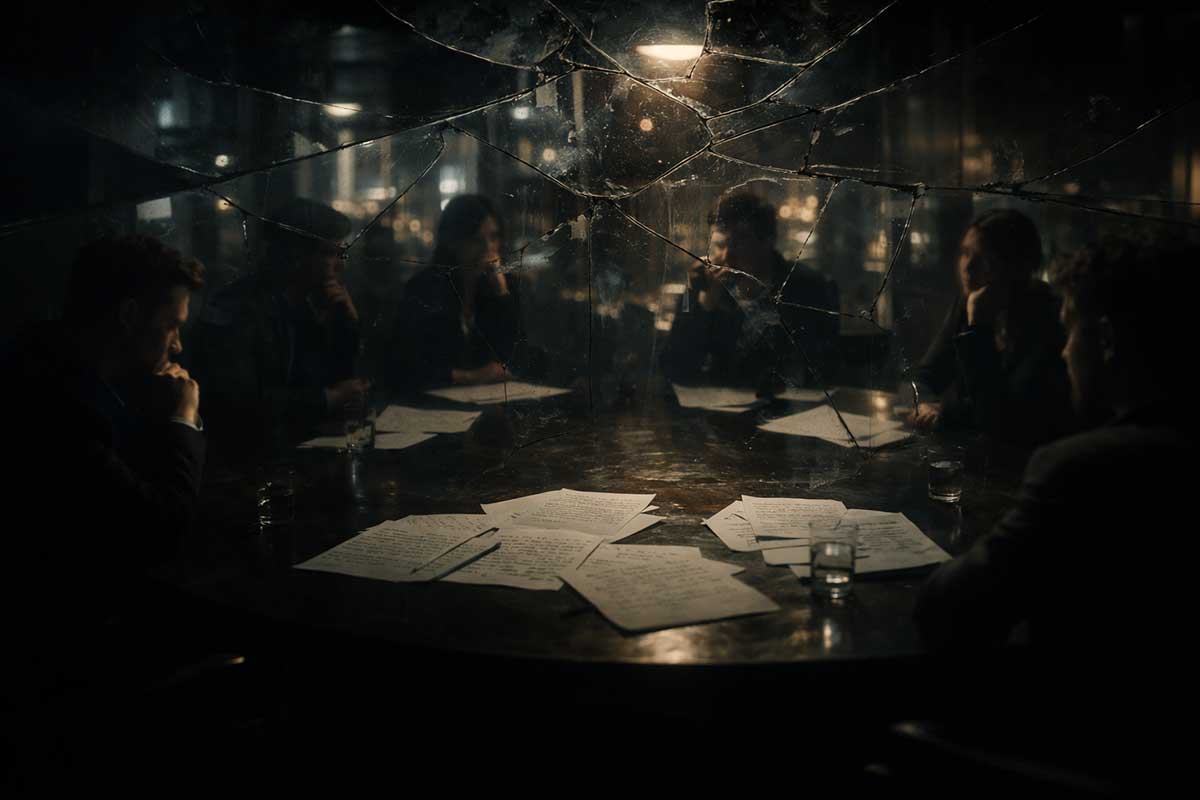
Setting
Night has fully settled.
Rain streaks the tall windows of the library, distorting the city lights outside.
The room feels enclosed now, almost confessional.
No one leans back in their chair.
Moderator
Kazuo Ishiguro
Participants
Karl Ove Knausgård
Elena Ferrante
Rachel Cusk
J. M. Coetzee
Ishiguro (opening)
For centuries, fiction was granted a peculiar freedom:
the freedom to invent, to distort, to lie —
not in opposition to truth, but in search of it.
Yet today, fiction is often interrogated.
Who has the right to imagine whom?
What is permitted invention, and what is ethical trespass?
So let me begin here.
Is fiction still allowed to lie?
Karl Ove Knausgård
I don’t think fiction ever lied.
It merely hid behind form.
When I wrote openly about my life,
people accused me of abandoning fiction.
But what disturbed them wasn’t truth —
it was exposure.
The discomfort comes when literature stops protecting us.
Rachel Cusk
I agree, but I’d say the opposite as well.
Autofiction isn’t truth-telling — it’s restructuring.
You remove plot, remove disguise,
and what’s left is a voice navigating damage.
The lie is not invention.
The lie is coherence.
Elena Ferrante
Anonymity is my answer to this question.
The author must disappear
so the fiction can tell its own truth.
If readers focus on whether a story “really happened,”
they stop listening to what it knows.
J. M. Coetzee
The danger lies not in lying,
but in entitlement.
To imagine another is a profound ethical act.
Fiction must justify that act —
not through accuracy, but through humility.
Ishiguro
Let me push this further.
There is now a strong demand for authenticity —
for lived experience to match the story told.
Does this protect truth,
or does it restrict imagination?
Ferrante
It restricts imagination profoundly.
It assumes experience is ownership.
But emotions do not belong to individuals alone.
Jealousy, fear, longing —
they circulate freely among us.
Knausgård
The demand for authenticity often masks fear.
Fear that fiction might reveal something unwanted.
Readers want permission slips.
Literature was never meant to provide them.
Cusk
Yet the demand didn’t arise from nothing.
It came from centuries of misrepresentation.
The question is not whether limits exist —
but who decides them.
Coetzee
Exactly.
Ethics cannot be outsourced to biography.
A writer must interrogate their own authority constantly.
That interrogation is the moral core of fiction.
Ishiguro
Final question.
If fiction loses its right to invent freely,
what does literature become?
Knausgård
Documentation.
And documentation is not innocent.
Ferrante
A courtroom.
And literature cannot survive constant prosecution.
Cusk
A performance of sincerity.
Which is its own kind of fiction.
Coetzee
It becomes smaller.
And a smaller literature
cannot contain the human condition.
Ishiguro (closing)
Fiction does not lie to deceive.
It lies to reach places
facts cannot enter.
The danger is not invention,
but forgetting why we invented stories in the first place.
Outside, the rain continues.
Inside, no one rushes to dry conclusions.
Topic 4 — Can a Novel Compete with Speed, Screens, and AI?
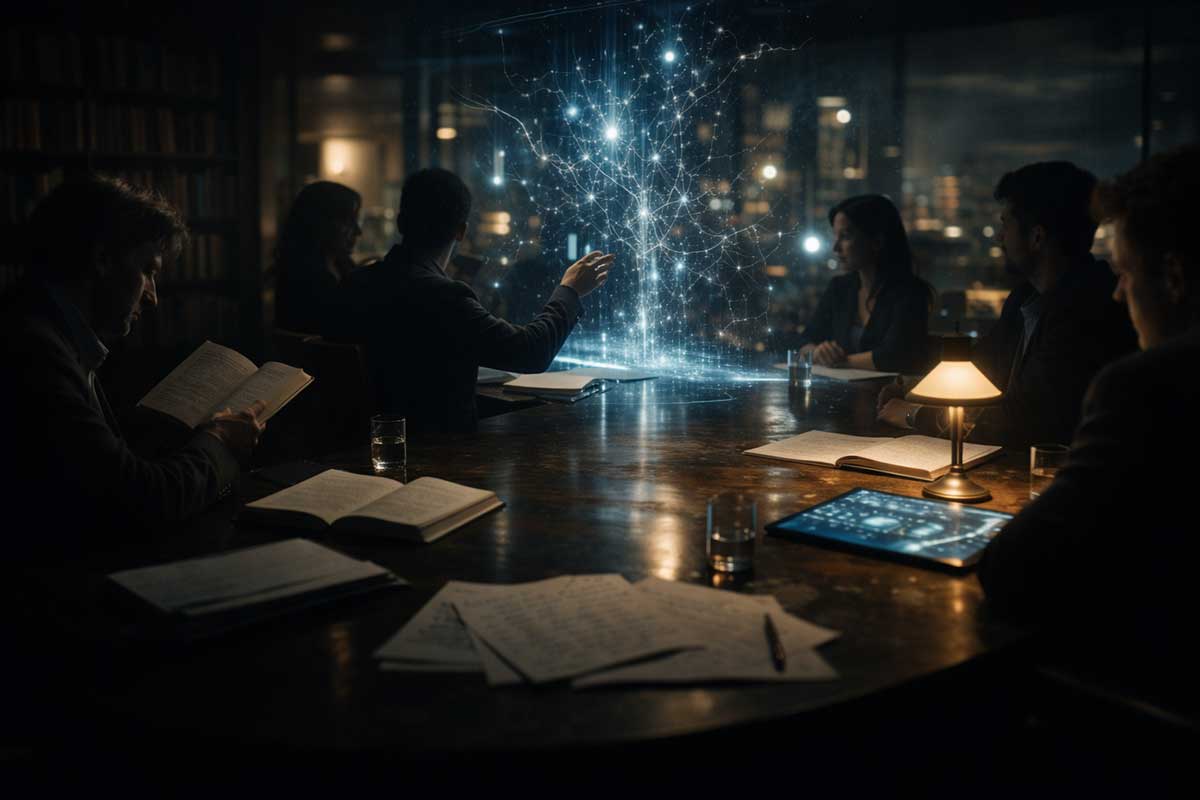
Setting
The library’s automated lights adjust almost imperceptibly.
A soft mechanical hum can be heard—climate control, servers, unseen processes.
The city outside is now mostly screens: windows glowing blue, white, endlessly refreshed.
Moderator
William Gibson
Participants
- Jennifer Egan
- George Saunders
- Sally Rooney
- Ted Chiang
Gibson (opening)
Novels were built for slowness.
Screens are built for acceleration.
AI is built for abundance.
So let’s not romanticize the question.
Let’s ask it plainly.
Can the novel still compete
in a world optimized for speed, distraction, and automated storytelling?
Jennifer Egan
I don’t think “compete” is the right word.
Novels don’t win races.
They survive by adapting form without surrendering depth.
Fragmentation, nonlinear time, modular structure—
these aren’t concessions to technology.
They’re responses to how consciousness already feels.
George Saunders
I’d say novels compete by refusing efficiency.
Efficiency flattens moral complexity.
A novel asks the reader to sit inside uncertainty longer
than is comfortable.
That’s not scalable—but it’s transformative.
Sally Rooney
Speed changes what intimacy looks like.
People now experience relationships in bursts—messages, pauses, silences.
Novels still matter because they slow intimacy down again.
They make room for interiority,
which screens mostly externalize.
Ted Chiang
AI can generate narrative structure easily.
What it can’t generate is value judgment.
Stories aren’t just sequences of events.
They are arguments about what matters.
That argument requires a human stake.
Gibson
Let’s talk about attention.
Readers say they don’t have time anymore.
Is attention a cultural failure,
or has literature failed to justify its demand?
George Saunders
Attention isn’t gone.
It’s just misdirected.
People binge entire seasons of shows.
They scroll for hours.
The question isn’t time—it’s trust.
Readers must believe a novel is worth the surrender.
Jennifer Egan
Exactly.
The novel now asks for a deeper contract.
Not “this will entertain you,”
but “this will change how you notice things.”
Sally Rooney
There’s also shame around attention.
People feel guilty for wanting to read slowly.
Novels offer permission
to care deeply about small emotional shifts.
That permission is radical now.
Ted Chiang
And AI intensifies this problem.
When stories are infinite,
attention becomes the scarce resource.
Human-written novels signal scarcity—
someone chose to spend years on this.
Gibson
Final question.
If AI can produce endless readable fiction,
what becomes the value of a single novel?
Ted Chiang
Intentionality.
A novel is not just text—it’s a decision.
Sally Rooney
Vulnerability.
Someone risked being misunderstood.
George Saunders
Moral friction.
The feeling that something important is at stake.
Jennifer Egan
Form as meaning.
Not content, but how it’s shaped.
Gibson (closing)
The novel was never meant to dominate attention.
It was meant to retrain it.
Speed will keep accelerating.
Screens will keep multiplying.
AI will keep narrating.
But the novel remains one of the few places
where time is still allowed to thicken.
And sometimes,
that’s the only competition that matters.
The hum continues.
The writers stay seated.
Topic 5 — Why Do You Still Write, Knowing It May Change Nothing?

Setting
Near dawn.
The library lights have dimmed to their lowest setting.
Outside, the city is quiet for the first time all night.
No one checks the time. No one wants to end first.
Moderator
W. G. Sebald
Participants
- Cormac McCarthy
- Annie Ernaux
- Orhan Pamuk
- Jhumpa Lahiri
Sebald (opening)
Literature has survived many disappointments.
It has failed to prevent wars, cruelty, forgetting.
And yet, it persists.
Often quietly. Often without reward.
So let me ask the question without comfort:
Why do you still write, knowing it may change nothing?
Cormac McCarthy
Because the world exists whether we speak of it or not.
Writing doesn’t fix it.
It names it.
And naming has always been a human instinct—
even when no one is listening.
Annie Ernaux
I write because memory is not neutral.
If it is not written, it is rewritten by power.
My work does not seek change.
It seeks accuracy.
And accuracy is already a form of resistance.
Orhan Pamuk
I write because silence is also political.
Especially where I come from.
To write is to accept loneliness, suspicion, sometimes danger.
But not writing would be a deeper exile.
Jhumpa Lahiri
I write because language itself is unstable.
I live between tongues, between homes.
Writing is how I test whether belonging
is still possible in fragments.
Sebald
Many writers discover that writing costs them something—
relationships, peace, sometimes even safety.
Has writing taken more from you than it has given?
Pamuk
Yes.
But what it gave me was not negotiable.
Ernaux
Writing demanded that I expose what polite society prefers hidden.
That cost was real.
But the alternative was erasure.
Lahiri
Writing often replaces ease with clarity.
Clarity is rarely gentle.
McCarthy
Anything worth doing exacts a price.
That’s not unique to writing.
Sebald
Final question.
If the future stopped reading novels tomorrow,
would what you’ve written still matter?
Ernaux
Yes.
Because it mattered to the moment it was written.
Pamuk
Yes.
Because someone once needed it—even if only briefly.
Lahiri
Yes.
Because it taught me how to live inside uncertainty.
McCarthy
Yes.
Because the act itself was honest.
Sebald (closing)
Literature does not guarantee remembrance.
It does not promise justice.
What it offers instead
is a trace—
a fragile mark left by someone
who refused to disappear quietly.
When the lights go out,
that trace remains.
The sun begins to rise.
The summit ends without applause.
Final Thoughts by Haruki Murakami
When the conversation ends, nothing dramatic happens.
There is no final agreement, no shared declaration about the future of literature. The writers do not stand up convinced that their work will matter more tomorrow than it did yesterday. The world outside continues unchanged, moving at the same speed, carrying the same uncertainties.
And yet, something remains.
Throughout these conversations, one thing becomes quietly clear: literature has never been guaranteed a purpose. It has never been promised effectiveness. Stories have always existed without assurances. They were written in times of peace and in times of collapse, often without knowing whether they would be read, remembered, or misunderstood.
What sustains literature is not its impact, but its necessity to those who create it.
Writers continue to write not because the world demands it, but because something inside them does. A pressure. A rhythm. A sense that without putting words in a certain order, life becomes harder to inhabit. Writing is not an answer to chaos; it is a way of staying present within it.
Machines may learn to imitate narrative. Screens may fragment attention. Reality may continue to outpace our ability to explain it. None of this negates the act of writing. It simply changes the conditions under which it takes place.
A novel does not compete with speed. It waits.
It waits for a reader willing to slow down, to enter another consciousness, to tolerate ambiguity. That reader may be rare. But rarity does not equal irrelevance. Some experiences are meaningful precisely because they cannot be scaled.
Literature does not shout. It does not trend. It does not resolve. It leaves traces—of thought, of feeling, of a moment when someone chose to look more closely at the world rather than turn away.
If these conversations have shown anything, it is that writing continues not out of optimism, but out of fidelity. Fidelity to memory. To language. To the fragile belief that inner experience still matters, even when external systems suggest otherwise.
The lights dim. The room grows quiet again.
Somewhere, someone opens a book—not to escape reality, but to sit with it more honestly. And somewhere else, someone begins to write, unsure of the outcome, but unable not to begin.
That is how literature has always moved forward. Not by certainty, but by continuation.
Short Bios:
Haruki Murakami
A Japanese novelist known for blending surrealism, loneliness, music, and metaphysical themes, shaping global contemporary literature for decades.
Margaret Atwood
A Canadian writer whose novels explore power, gender, technology, and ecological futures, often blurring the line between speculative fiction and reality.
Don DeLillo
An American novelist focused on media saturation, paranoia, and the psychological effects of modern systems on individual consciousness.
Olga Tokarczuk
A Polish writer whose work combines myth, history, and fragmented narratives to explore identity, empathy, and the interconnectedness of lives.
David Mitchell
A British novelist known for complex, interlinked narratives that span time, genre, and perspective, examining continuity and consequence.
Toni Morrison
An American novelist and essayist whose work centers Black history, memory, and moral witness, redefining whose stories belong at the center of literature.
Chimamanda Ngozi Adichie
A Nigerian writer exploring feminism, postcolonial identity, and cultural narratives with clarity, conviction, and global resonance.
Hanya Yanagihara
An American novelist whose work confronts trauma, endurance, and the limits of empathy through emotionally intense storytelling.
Arundhati Roy
An Indian novelist and essayist whose fiction and nonfiction challenge political power, injustice, and silenced histories.
Ocean Vuong
A Vietnamese American poet and novelist whose lyrical prose explores war, queerness, family, and inherited trauma.
Kazuo Ishiguro
A British novelist known for restrained, emotionally precise narratives that explore memory, loss, and unreliable perception.
Karl Ove Knausgård
A Norwegian writer whose autobiographical fiction radically exposes personal life to examine identity, shame, and truth.
Elena Ferrante
An Italian novelist writing under a pseudonym, known for exploring female friendship, power, and interior life with fierce emotional honesty.
Rachel Cusk
A British writer associated with autofiction, examining voice, selfhood, and the ethics of personal narrative.
J. M. Coetzee
A South African novelist whose austere, philosophical works interrogate ethics, authority, and moral responsibility.
William Gibson
A Canadian-American writer whose fiction anticipated digital culture and examines how technology reshapes human perception and society.
Jennifer Egan
An American novelist experimenting with form, time, and fragmentation to reflect contemporary consciousness.
George Saunders
An American writer blending satire, compassion, and moral inquiry, often focusing on ordinary people under systemic pressure.
Sally Rooney
An Irish novelist whose work explores intimacy, class, and communication in the digital age with emotional restraint.
Ted Chiang
An American science fiction writer known for intellectually rigorous stories about technology, choice, and human values.
W. G. Sebald
A German writer whose hybrid works combine fiction, history, and memory to explore trauma, loss, and remembrance.
Cormac McCarthy
An American novelist whose stark prose confronts violence, fate, and moral collapse in both historical and modern settings.
Annie Ernaux
A French writer whose autobiographical works document class, gender, and memory with sociological precision.
Orhan Pamuk
A Turkish novelist exploring identity, history, and cultural tension between East and West.
Jhumpa Lahiri
An American writer focusing on migration, language, and belonging, often writing across cultures and tongues.
Leave a Reply