
|
Getting your Trinity Audio player ready...
|
Introduction by Newt Gingrich
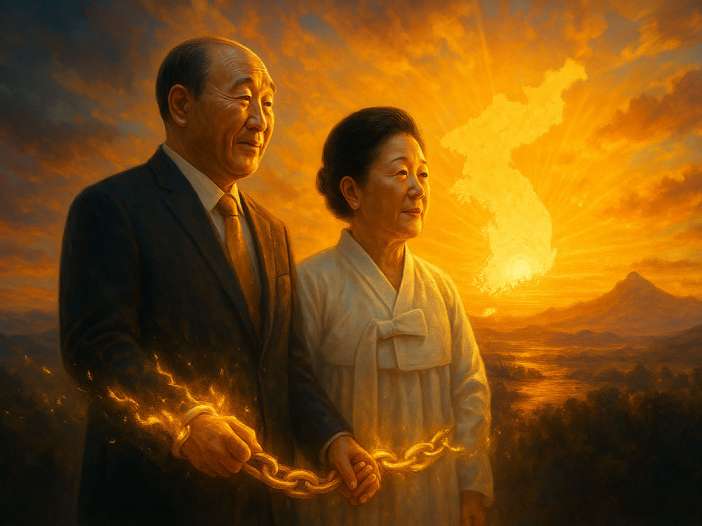
Can you imagine this? An 82-year-old great grandmother — recovering from heart surgery — placed in isolation, denied visitors, denied a wheelchair or even a cane, and then indicted as though she were some kind of criminal. This is not justice; this is persecution.
Mother Han, Dr. Hak Ja Han Moon, is known across the world as the Mother of Peace. For more than six decades she has given her life to the cause of reconciliation, of family, of building bridges across nations and faiths. And yet, the Lee government in Seoul has chosen to treat her not with dignity, but with cruelty.
Let’s be very clear: this is not about law. This is about ideology. This is about silencing a voice that has consistently stood against communism, stood for democracy, and stood for freedom of faith. This is an assault on religious liberty itself.
President Trump, and indeed the full weight of the American government, must make it unmistakably clear to Seoul: this persecution must end. To arrest, isolate, and degrade an elderly peace leader is unworthy of a democracy. It undermines South Korea’s standing in the free world, and it insults every believer who still values the freedom to pray, to gather, and to live their faith without fear.
(Note: This is an imaginary conversation, a creative exploration of an idea, and not a real speech or event.)
Topic 1 — Political Pressure from Ideology
Moderator (Nick Sasaki):
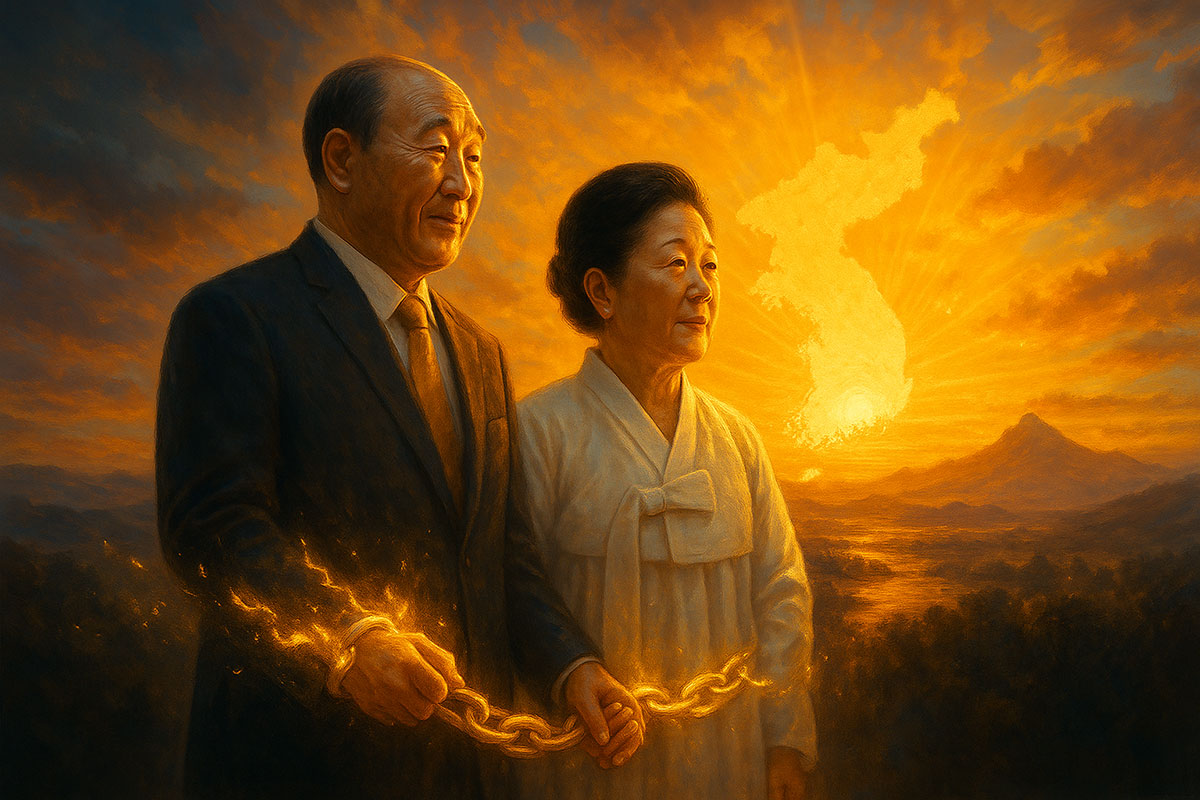
Welcome, everyone. Today, we are examining why Dr. Hak Ja Han Moon, known as the Mother of Peace, has been held in such harsh detention conditions in South Korea. Our first focus is the role of political ideology — the tension between left-leaning governments and conservative Christian movements. Let me begin with this question: Why do you think a left-leaning administration would see a faith leader like Dr. Moon as a political threat?
Question 1: Why would a left-leaning government target Dr. Moon?
Newt Gingrich:
The answer is rooted in ideology. For decades, Dr. Moon and her late husband were among the most outspoken voices against communism. Their movement is deeply conservative, pro-family, and pro-freedom. When a government in Seoul begins leaning left, and by extension aligning itself closer to Beijing’s influence, figures like Dr. Moon become symbolic enemies. This is not just about one woman — it’s about silencing a worldview that directly challenges socialist agendas.
Kim Jin-ho:
From inside Korea, I can say it plainly: Christianity, especially conservative Christianity, has been a thorn in the side of progressive administrations. The Unification Movement, despite controversy, is seen as politically powerful. It is not only faith; it is influence. When the government sees that influence as aligned with the conservative bloc, they treat it as a rival, not a partner.
Paula White:
And let us remember — this is an 82-year-old woman we’re talking about. Her so-called “threat” is not in military or political power, but in her moral authority. When faith leaders speak truth without fear, it shakes governments that thrive on fear. The Mother of Peace embodies a spirit that cannot be controlled by ideology.
Cho Hyun-jin:
Legally speaking, governments often weaponize administrative or financial investigations as a tool against religious groups. But beneath the paperwork lies ideology. They are not truly afraid of mismanaged accounts; they are afraid of ideas — ideas that empower citizens to resist government overreach.
Park Ji-young:
In the churches of Korea, people whisper about this openly. They say, “If they can bring down Mother Moon, they can bring down anyone.” The fear is not only hers, but ours. The message is: submit to the government’s ideology or be silenced.
Moderator:
Thank you. Let me take this deeper. How does this reflect the historical struggle between communism and faith in Korea?
Question 2: How does Dr. Moon’s detention connect to Korea’s history with communism and religion?
Kim Jin-ho:
History looms large here. Korea was split by ideology — communism in the North, democracy in the South. Those who lived through war remember how churches stood as bulwarks against communism. Rev. Moon himself was imprisoned in Heungnam for his faith. So when today’s government detains Dr. Han, it echoes that old pattern: political ideology trying to crush faith.
Newt Gingrich:
Absolutely. The Cold War never fully ended on the Korean Peninsula. Dr. Moon represents a living testimony of resistance against tyranny. That makes her dangerous to those who wish to soften Korea’s stance toward China or North Korea. It’s not only about domestic politics; it’s about geopolitical strategy.
Paula White:
Let me add the spiritual layer: faith is always the first target of oppressive ideology. Why? Because faith awakens people to their dignity as children of God. Communism seeks to erase God and replace Him with the state. Dr. Moon’s message of “One Family Under God” is the direct opposite of that. Her detention is a symbolic act — to say, “The state is stronger than your God.” But that is a lie.
Park Ji-young:
In the countryside churches of Korea, the elderly still tell stories of hiding from communists who wanted to burn Bibles. For them, what is happening to Mother Moon feels like history repeating itself. They say, “The red shadow has come south.”
Cho Hyun-jin:
And from a legal standpoint, the government denies it is ideology. They point to statutes, clauses, technicalities. But look closer: who is prosecuted, and who is ignored? It is always the outspoken conservative faith leaders. That pattern is not law — it is politics.
Moderator:
Let’s turn to the personal dimension. What is the impact of using harsh detention against someone of her age and status? What does this say about the true motives of the government?
Question 3: What does her harsh treatment reveal about the motives behind this detention?
Paula White:
It reveals cruelty and fear. A government confident in its justice system would not need to humiliate an elderly grandmother. By denying her a wheelchair, by keeping her in a damp cell without proper medical care, they are not just punishing her body — they are sending a message: “We can break even the Mother of Peace.”
Cho Hyun-jin:
From a legal and humanitarian perspective, this is unacceptable. International law requires humane treatment, especially for the elderly and infirm. By denying her basic dignity, they cross the line from detention into persecution. It suggests the intent is not justice but psychological warfare.
Newt Gingrich:
It also shows desperation. If their case against her were strong, they would present it fairly. Instead, they lean on spectacle and cruelty, because they know the legal substance is weak. They want to tarnish her image before the world can rally to her side.
Park Ji-young:
In Korea, ordinary Christians see this and feel both sorrow and anger. Sorrow for a woman treated unjustly, anger that their government acts with such disrespect to faith. Many whisper prayers in secret because they fear retaliation — this chilling effect is intentional.
Kim Jin-ho:
I will put it bluntly: if the government truly cared about justice, they would not treat an 82-year-old woman like a flight risk. The harshness is not necessity, it is ideology. It reveals a government more interested in controlling thought than upholding law.
Moderator:
Thank you all. What we’ve uncovered here is powerful: Dr. Han’s detention is not simply a legal matter, but part of a deeper ideological struggle — one that goes back generations, and one that tests both democracy and faith today.
Topic 2 — Targeting Religious Influence and Power
Moderator (Nick Sasaki):
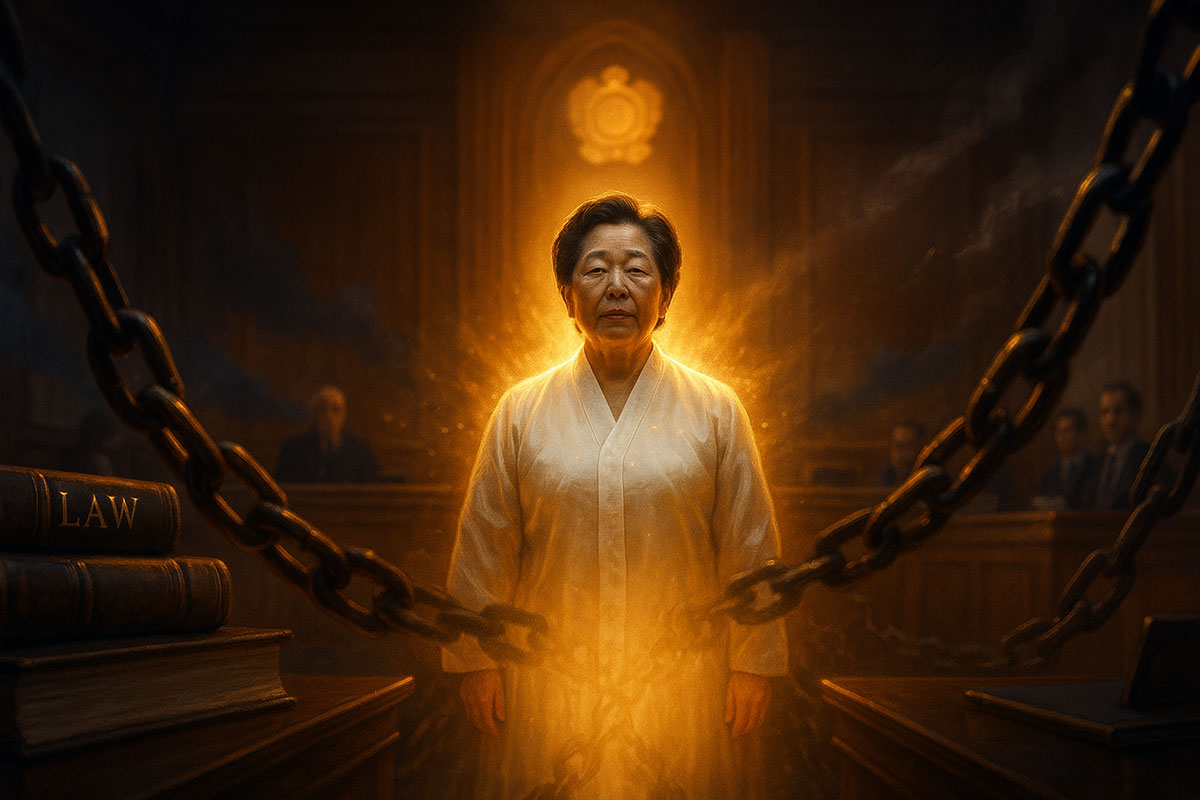
In our first discussion, we looked at ideology. Now let’s focus on another dimension: power. Dr. Hak Ja Han Moon isn’t just an elderly woman — she is the leader of a global religious movement with millions of followers. So my first question is this: Why would a government view her spiritual influence as a political threat?
Question 1: Why would her spiritual influence be seen as a political threat?
Park Ji-young:
In Korea, faith leaders carry enormous moral weight. Even if they don’t run for office, their words shape public opinion. Dr. Moon’s speeches reach far beyond church walls. When she calls for national renewal or criticizes corruption, people listen. That influence makes politicians nervous.
Newt Gingrich:
Exactly. Leaders like Dr. Moon represent independent power bases. She commands loyalty not through law, but through faith. That’s something governments can’t easily control. When a movement becomes global — with ties to Washington, Tokyo, and beyond — it threatens the monopoly of power.
Kim Jin-ho:
Her detention is proof that the government sees her not merely as a spiritual figure, but as a political rival. The Unification Movement owns schools, newspapers, and NGOs. That network of influence stretches across society. Politicians calculate: if she speaks, it may swing votes, shape debates, and even influence foreign relations.
Paula White:
And let us not forget the spiritual core. A government that does not honor God will always fear those who do. Dr. Moon’s influence isn’t just organizational — it is spiritual authority. That is something no administration can buy or legislate.
Cho Hyun-jin:
Yes, and from a legal standpoint, targeting her movement through investigations has been a common tactic. But beneath those charges lies fear of her ability to mobilize large numbers of people across generations and nations.
Moderator:
Thank you. Let me go deeper. How is her treatment connected to the broader global trend of governments clamping down on religious groups?
Question 2: How does this fit into the global trend of suppressing religion?
Newt Gingrich:
We’ve seen this pattern worldwide — in China, in the Middle East, in authoritarian states. Faith movements that operate beyond government control are branded as threats. South Korea’s government risks drifting toward this same authoritarian instinct.
Kim Jin-ho:
Indeed. In Korea, the state has long tried to monitor or contain religion. But the harsher the treatment, the more obvious the intent: to suppress independent voices. It’s part of a global struggle — who holds ultimate loyalty, the state or God?
Paula White:
This is not just political. It’s spiritual warfare. From the days of Pharaoh to today, rulers who elevate themselves above God always persecute believers. The trend is ancient: silence the prophets, suppress the faithful, remove spiritual competition.
Cho Hyun-jin:
From human rights law, we see the same justification everywhere: “for security, for public order, for financial regulation.” These become excuses to violate freedom of religion. Dr. Moon’s detention is part of that broader erosion of basic liberties.
Park Ji-young:
When Korean believers hear about her treatment, they feel connected to Christians in China or the Middle East who face similar suppression. It reminds them that the freedom to believe is fragile, even in a democracy.
Moderator:
So let’s make this personal. What does targeting Dr. Moon’s movement mean for ordinary believers — in Korea and around the world?
Question 3: What impact does this have on ordinary believers?
Cho Hyun-jin:
For believers in Korea, the impact is chilling. If their Mother of Peace can be humiliated, what chance do they have? It discourages open expression of faith and makes congregations afraid to gather. That is the true cost: silencing communities.
Paula White:
Yes — but persecution also purifies. I’ve seen it across the world. When believers are pressed, they discover courage they didn’t know they had. Dr. Moon’s suffering may frighten some, but it will ignite others to pray more boldly and stand more firmly.
Kim Jin-ho:
Still, the immediate effect is intimidation. Families worry about surveillance. Pastors hesitate to speak. It creates a climate where faith becomes private, not public. And that undermines democracy itself, because faith communities are essential to civil society.
Newt Gingrich:
From an international perspective, this damages South Korea’s reputation. Democracies are supposed to protect freedom of conscience. By targeting Dr. Moon, the government undermines its own moral authority on the world stage. That impacts believers far beyond Korea.
Park Ji-young:
And for ordinary members, it creates both pain and pride. Pain to see their leader treated unjustly, pride to know they stand in a tradition of faith under fire. Many Koreans quietly say, “If she can endure, so can we.”
Moderator:
Thank you all. What we see here is that Dr. Moon’s detention isn’t just about her — it’s about power and influence. By targeting her, the government seeks to weaken a global spiritual movement. Yet paradoxically, her suffering may only deepen the resolve of her followers and draw international attention to the cause of religious freedom.
Topic 3 — Legal Pretext but Political Motive

Moderator (Nick Sasaki):
So far, we’ve discussed ideology and influence. Now, let’s focus on the legal dimension. The government claims to be acting according to law, but many argue this is only a pretext to mask deeper political motives. Here’s my first question: What legal justifications are being used against Dr. Moon, and how do they contrast with the reality?
Question 1: What legal pretexts are being used, and what is the reality?
Cho Hyun-jin:
The authorities point to alleged financial irregularities and organizational accountability. This is a common tactic: frame a faith leader as violating tax or administrative laws. But the reality is selective enforcement. Many organizations face similar issues, yet only certain religious groups — especially those aligned with conservative views — face this level of scrutiny and detention.
Newt Gingrich:
Exactly. When governments want to suppress a movement, they rarely admit it outright. Instead, they look for technicalities — paperwork errors, financial disputes, regulatory oversights. It’s the modern way of persecuting without admitting persecution.
Park Ji-young:
Korean believers understand this. We’ve seen governments use “law” to hide political motives. If the law were applied fairly, it would target many groups, not just Dr. Moon. The fact that she alone is singled out shows the true intent.
Paula White:
It reminds me of biblical times. Daniel was not punished for wrongdoing, but for praying. The rulers made a law specifically to trap him. This is the same: laws twisted into weapons. The appearance of legality is used to justify injustice.
Kim Jin-ho:
And when the state hides behind the law, it undermines trust. Citizens begin to see the justice system not as impartial, but as a tool of ideology. That is dangerous, because it erodes democracy itself.
Moderator:
Thank you. Let’s go deeper. How does using legal pretexts for political persecution impact democracy and the rule of law in South Korea?
Question 2: What is the impact on democracy and rule of law?
Newt Gingrich:
The danger is enormous. Once laws are weaponized, no one is safe. Today it’s Dr. Moon; tomorrow it could be any church, NGO, or business leader who falls out of favor. That’s how democracies slide into authoritarianism — not with a sudden coup, but with gradual corruption of law.
Cho Hyun-jin:
Yes. The constitution guarantees freedom of religion. But selective enforcement creates a double standard. That undermines the very principle of equality before the law. If believers lose faith in the courts, social stability is at risk.
Kim Jin-ho:
And let’s be clear: Korea’s democracy is young. It rose from dictatorship only a few decades ago. People fought and bled for these freedoms. To see them eroded by misuse of the legal system is deeply painful. It feels like betrayal of that hard-won history.
Paula White:
Spiritually, it reveals fear. A strong government confident in its justice would not need to humiliate an elderly woman of faith. By twisting laws, they reveal their insecurity. That weakness, not strength, is what drives such actions.
Park Ji-young:
For ordinary believers, it creates confusion. They ask, “If the law says she is guilty, should we believe it?” But deep inside, they sense the truth — that justice is being twisted. This breeds cynicism toward government, which is poison for democracy.
Moderator:
So now let’s make it personal. What do you believe is the deeper motive behind using legal pretext in this case? What are they truly trying to achieve?
Question 3: What is the deeper motive behind this legal pretext?
Kim Jin-ho:
The deeper motive is to neutralize a movement. By attacking its leader legally, they hope to weaken its global credibility. They want the world to see not a spiritual mother, but a suspect. This is about branding, not justice.
Paula White:
I believe it is also about silencing a prophetic voice. Dr. Moon speaks of a higher loyalty — to God above state, to love above politics. That message cannot be tolerated by those who demand absolute loyalty to their ideology.
Cho Hyun-jin:
On a practical level, the motive is deterrence. If one leader is humiliated through legal process, others will think twice before speaking out. It’s a warning: “Step out of line, and you too will be dragged through the courts.”
Newt Gingrich:
There is also a geopolitical angle. Weakening Dr. Moon may serve the interests of those who want South Korea less independent, more pliable to outside pressures — particularly from Beijing. By targeting her, they aim to reduce Korea’s resistance to pro-China alignment.
Park Ji-young:
And spiritually, the motive is fear of faith. Governments fear what they cannot control. They cannot control prayers. They cannot control belief. So they try to control the body of the believer — but faith always slips through.
Moderator:
Thank you. What emerges here is sobering. The use of law against Dr. Moon is not really about justice — it is about politics. It is about weakening a faith community by cloaking persecution in legal robes. But history shows that when laws are weaponized against the faithful, the faithful endure, and often grow stronger.
Topic 4 — Sending a Warning to Other Faith Leaders
Moderator (Nick Sasaki):
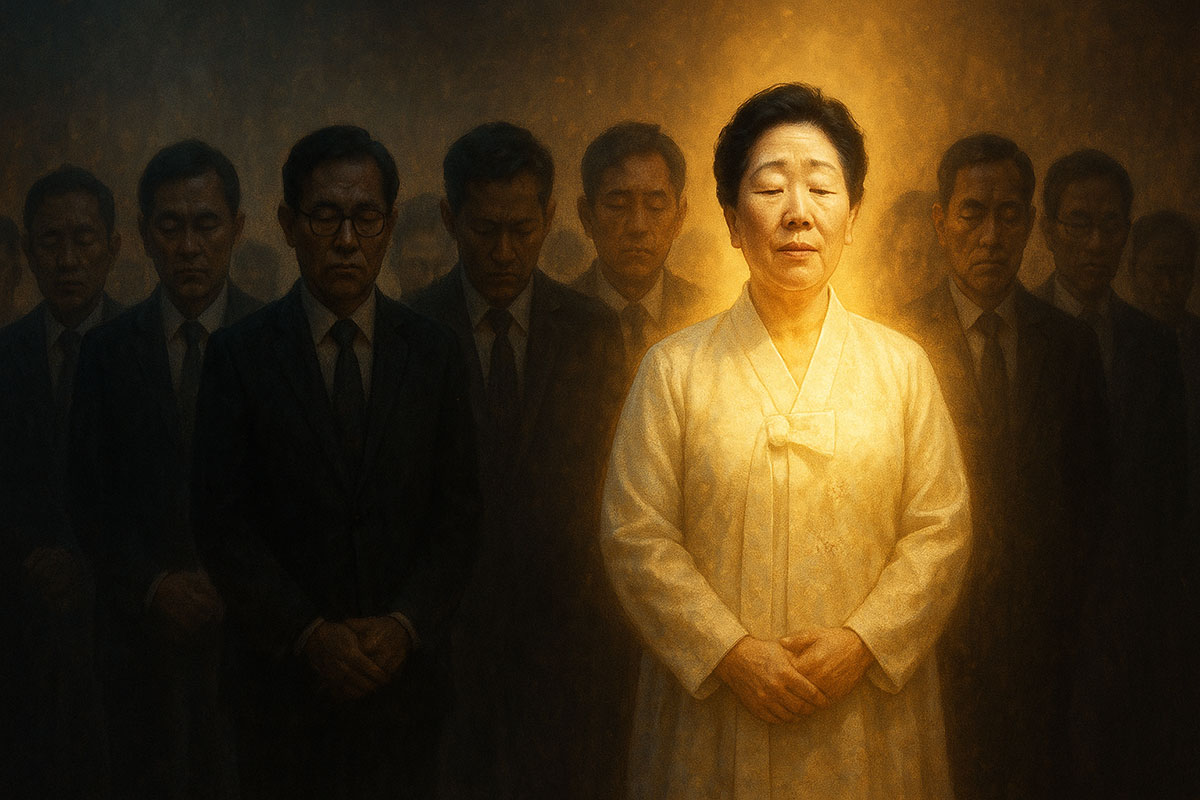
We’ve talked about ideology, influence, and the legal pretexts. Now let’s look at the message being sent. By detaining Dr. Hak Ja Han Moon under such harsh conditions, many believe the government is not only targeting her, but sending a signal to other pastors, churches, and faith leaders: “Stay quiet, or this could happen to you.”
Let me begin with this question: How does her detention serve as a warning to other religious leaders in Korea?
Question 1: How is this a warning to other faith leaders?
Park Ji-young:
In Korea, pastors and church leaders watch closely. They see an 82-year-old grandmother denied even a wheelchair. The message is clear: no one is too sacred to be humiliated. It creates fear in the pulpits. Many pastors now whisper instead of preach.
Newt Gingrich:
Exactly. It’s intimidation by example. If you can break the Mother of Peace, you can break anyone. It’s not about legality — it’s about making believers second-guess themselves before speaking against the state.
Cho Hyun-jin:
Legally, this is called “deterrence by prosecution.” By making one high-profile case as painful as possible, you discourage others from even risking criticism. It’s a chilling effect — turning free speech and freedom of religion into dangerous acts.
Paula White:
Spiritually, this is Pharaoh’s tactic. Punish the leader, enslave the people with fear. But what tyrants forget is that faith thrives under fire. Yes, some leaders may retreat for a season, but many more will rise when they see injustice so clearly.
Kim Jin-ho:
In the Korean context, it’s particularly painful. The church was once the refuge against dictatorship. Now, the government is trying to make the church a place of silence. That is the warning being broadcast.
Moderator:
Thank you. Let’s go deeper. What impact does this kind of warning have on the wider Christian community — both inside Korea and around the world?
Question 2: What impact does this warning have on believers worldwide?
Paula White:
For believers worldwide, it awakens solidarity. Christians in America, Africa, Latin America — we know persecution when we see it. The warning intended to silence can instead become a trumpet, rallying global intercessors.
Cho Hyun-jin:
But inside Korea, it’s different. The fear is real. Congregations worry about surveillance. Donations drop. Pastors advise caution. The government wants exactly that — a climate where faith is practiced privately, not boldly.
Newt Gingrich:
Internationally, this damages South Korea’s image as a democracy. The world sees not a confident nation, but one insecure enough to bully an elderly woman. That perception harms its moral standing and even its alliances.
Park Ji-young:
Among ordinary Korean believers, the impact is both sorrow and resolve. Sorrow to see their Mother of Peace treated like a criminal. But also resolve — a quiet fire building in their hearts. Many say, “If she can endure, so will we.”
Kim Jin-ho:
It also connects Korean Christians to a global story of persecution. They realize freedom of religion is fragile everywhere. This creates empathy and global ties — but at the cost of local fear.
Moderator:
So now let’s be practical. If this is meant as a warning, how should faith leaders and communities respond? With silence, resistance, or something else?
Question 3: How should faith communities respond to this warning?
Kim Jin-ho:
We must not respond with silence. Silence is surrender. But neither should we respond with anger alone. We need courage rooted in love, standing firm but not vengeful. That is the only way to break the cycle.
Paula White:
Yes, and the response must be prayer and unity. The enemy’s tactic is division and fear. God’s answer is faith and love. If pastors pray together, speak together, and refuse to abandon their elderly mother of faith, the warning will backfire.
Cho Hyun-jin:
From a legal side, communities must document everything, appeal internationally, and hold authorities accountable. Sunlight is the best defense. When the world is watching, governments cannot so easily abuse.
Newt Gingrich:
And politically, the U.S. and allies must speak out. If South Korea wants to be seen as a democratic partner, it must respect religious freedom. Silence from the international community would only encourage more repression.
Park Ji-young:
On the ground, believers should not despair. They should strengthen home gatherings, family prayers, small group meetings. Even if churches are afraid, faith can still grow quietly, like roots breaking stone.
Moderator:
Thank you. What we’ve uncovered here is sobering but hopeful. Yes, her detention is a warning to faith leaders — but how believers respond determines whether fear triumphs or faith spreads. The government may have intended to silence, but instead they may spark a stronger, more united faith community, both in Korea and around the world.
Topic 5 — Erasing Symbolic Leadership and Hope

Moderator (Nick Sasaki):
We’ve covered ideology, influence, legal pretext, and the warning effect. Our final theme is perhaps the most symbolic. Some believe Dr. Hak Ja Han Moon’s detention is not just about control, but about erasing her role as a living symbol of faith, hope, and continuity. My first question is: Why would the government want to diminish or erase her symbolic leadership?
Question 1: Why would they want to erase her symbolic leadership?
Kim Jin-ho:
Symbols carry immense power in Korea. Dr. Moon is not just a person; she is a living reminder of Rev. Moon’s legacy, of resistance against communism, and of decades of faith leadership. By diminishing her image, the government hopes to weaken the story that inspires millions.
Paula White:
And let me add — this is spiritual. Evil always seeks to attack symbols of hope. Just as the cross was meant to erase Jesus’ influence, detaining Dr. Moon is meant to erase her as a symbol of faith. But just like the cross, it will have the opposite effect: her suffering will amplify her significance.
Newt Gingrich:
Politically, it’s about removing rallying points. Movements need figures to unify around. If you silence or discredit the figurehead, you weaken the movement. The government knows that as long as she remains a respected symbol, the Unification Movement cannot be easily controlled.
Cho Hyun-jin:
From a legal perspective, symbols are not supposed to matter — justice is supposed to be blind. But here, the law is being used precisely because of her symbolic status. She is targeted not because of what she did, but because of what she represents.
Park Ji-young:
For ordinary believers, Mother Moon is hope embodied. They call her “Omma,” and that word means family, comfort, belonging. By humiliating her, the authorities aim to shatter that sense of family. They want to turn hope into despair.
Moderator:
Thank you. Let me ask this next: What does it mean for believers to see their symbol of hope treated this way? What are the psychological and spiritual consequences?
Question 2: What does her treatment mean for believers psychologically and spiritually?
Park Ji-young:
It cuts deep. To see your spiritual mother denied even basic dignity — no bed, no cane, no sunlight — is heartbreaking. Many believers cry in secret. It tests their faith: If God loves us, why does Omma suffer? But at the same time, it awakens a fierce loyalty. They say, “If she can endure, so can we.”
Cho Hyun-jin:
Psychologically, it creates trauma. Members fear they could be next. Families worry about association with the church. Yet paradoxically, such persecution can also strengthen collective identity. Nothing unites like shared suffering.
Paula White:
Spiritually, I see it differently: it is a refining fire. Persecution purifies motives. Some will fall away in fear, but those who remain will shine brighter. They will see her not as a victim, but as a witness to God’s love in adversity.
Newt Gingrich:
Globally, it creates sympathy. Ordinary people, even outside the movement, look at this case and say: Why target an elderly woman? It raises doubt about the government’s fairness. In the long run, it may grow her symbolic power instead of erasing it.
Kim Jin-ho:
And for Koreans, it reopens old wounds. They remember when dictators jailed pastors and dissidents. To see it happening again shakes their trust in democracy. For them, her suffering symbolizes the unfinished struggle for true freedom.
Moderator:
Powerful insights. Now, let’s look ahead. If the goal is to erase her symbolic role, what must be done to preserve and strengthen her legacy of hope?
Question 3: How can her legacy of hope be preserved and strengthened?
Newt Gingrich:
First, by telling her story. The more the government tries to silence her, the more we must speak. Articles, documentaries, global advocacy — let the world know what she stands for. Her story should not be hidden in a cell; it should echo in every capital.
Kim Jin-ho:
Second, by living her teachings. Legacy is not only in words, but in lives transformed. If her followers embody love, sacrifice, and peace, then no prison or detention can erase her.
Paula White:
Yes, and the church must respond in love, not bitterness. Legacy is preserved when persecution is answered with compassion. That is the way of Christ, and that is the way of true love.
Cho Hyun-jin:
Legally, we must demand transparency. Appeal to international human rights bodies, document every abuse, and ensure her case is remembered as a violation of freedom, not as a crime. That legal record will protect her legacy for future generations.
Park Ji-young:
And in Korea, families must keep her memory alive in their homes — through prayers, testimonies, stories. When children grow up hearing, “Omma suffered, but she prayed for us,” they will carry that legacy into the future.
Moderator:
Thank you. What we’ve learned today is that Dr. Moon’s detention is more than a political act — it is an attempt to erase a symbol of hope. But history shows that symbols born of suffering are never erased; they only grow stronger. Her legacy may yet shine brighter because of this trial, not despite it.
Final Thoughts by Newt Gingrich
After listening to this discussion, one truth stands out: Dr. Hak Ja Han Moon’s detention is not simply a legal case — it is a moral outrage. No democracy worthy of the name should treat an elderly woman, a great grandmother, a global religious leader, in such a degrading way.
Mother Moon has endured damp floors, stale air, and relentless interrogation, yet her faith remains unbroken. This is a testament not only to her personal strength but to the power of religious conviction itself. And it is exactly this power that those in authority fear.
Her arrest is a direct assault on religious liberty. It is also a test — for Korea, for America, and for the world. Will we stand silently while faith is criminalized? Or will we rise in defense of the most basic freedom — the freedom to believe, to pray, and to live out our conscience without fear?
I believe the United States, under the leadership of President Donald J. Trump, must bring the full weight of American influence to bear. The Lee government must be pressured to end this abuse immediately. This is not only about one woman; it is about the principle of freedom itself.
Faith is not a crime. Love is not afraid. And the world must know that we will not allow the light of peace, embodied by Mother Moon, to be extinguished by injustice.
Short Bios:
Dr. Hak Ja Han Moon (Mother of Peace)
Born in 1943, Dr. Hak Ja Han Moon is the co-founder and current leader of the Unification Movement, known globally as the “Mother of Peace.” Alongside her late husband, Rev. Sun Myung Moon, she has dedicated more than 60 years to promoting the vision of “One Family Under God.” She is recognized for her interfaith work, humanitarian initiatives, and leadership in advancing women’s roles in peacebuilding.
Rev. Sun Myung Moon (Father, 1920–2012)
Rev. Moon was the founder of the Unification Movement and the Family Federation for World Peace and Unification. He endured imprisonment in North Korea’s Heungnam labor camp for his faith before building a worldwide spiritual movement. Rev. Moon emphasized reconciliation, family values, and a global vision of peace, teaching that all people are children of God.
Newt Gingrich
Newt Gingrich served as the 50th Speaker of the U.S. House of Representatives. A historian, author, and political strategist, he is known for his strong stance on freedom, democracy, and religious liberty. Recently, he has spoken out against the detention of Dr. Hak Ja Han Moon, framing it as a violation of fundamental rights.
Paula White
Paula White is an American pastor, televangelist, and faith advisor. She served as spiritual counselor to President Donald Trump and is recognized for her strong advocacy of religious freedom worldwide. She has voiced concern over Dr. Moon’s treatment, highlighting the humanitarian and spiritual injustice of her detention.
Kim Jin-ho
Kim Jin-ho is a Korean Christian theologian and public intellectual, often addressing the intersection of faith, politics, and society. He is known for critiquing the misuse of power against religious communities and analyzing the political undercurrents shaping Korean Christianity.
Cho Hyun-jin
Cho Hyun-jin is a Korean human rights lawyer specializing in freedom of religion and civil liberties. He has defended pastors and faith-based organizations facing unfair legal challenges, and he is vocal about the selective use of laws as a political tool.
Park Ji-young
Park Ji-young is a representative voice for Korean Christians and faith leaders. She often speaks on behalf of congregations facing growing restrictions, providing insight into how ordinary believers experience and endure government pressure on religion.
Leave a Reply