

|
Getting your Trinity Audio player ready...
|
What if understanding emotional immaturity led to appreciation, not resentment?
Introduction by Nick Sasaki
I want to start with something simple and honest. A lot of people pick up Adult Children of Emotionally Immature Parents because it finally puts words to something they have felt for years. That clarity can be healing. But it can also become a trap if the story turns into a permanent identity.
So I framed this series around an older, tougher, and more freeing idea: Honor your father and mother. Not because parents are perfect. Not because they always deserve applause. But because honoring them, with truth and boundaries, protects your heart from resentment and protects your future from repetition.
These five conversations are built to do something specific. Tell the truth without contempt. Set boundaries without punishment. Practice gratitude without denial. Move from grievance to legacy. This is not about blaming parents forever. This is about becoming the kind of adult who can face reality and still choose dignity.
(Note: This is an imaginary conversation, a creative exploration of an idea, and not a real speech or event.)
Topic 1: What Honor Really Means (Not Excusing, Not Resenting)
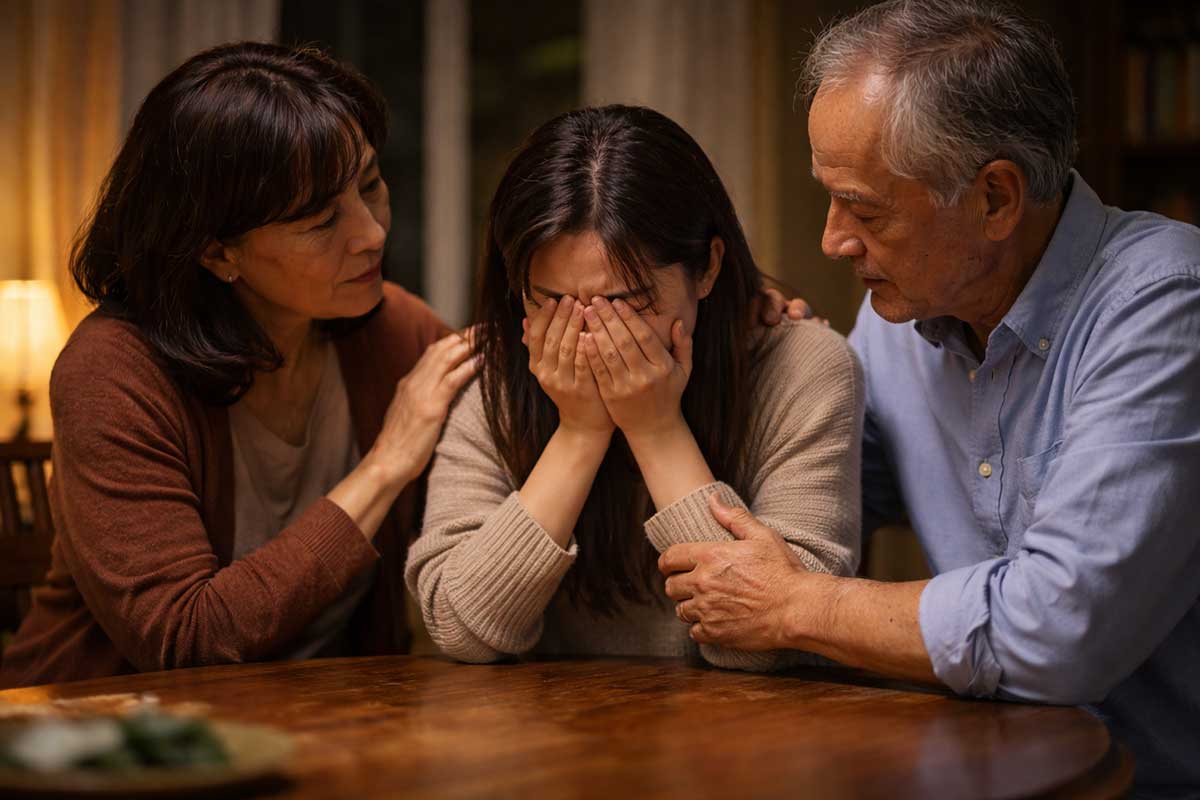
The room feels less like a therapy circle tonight and more like a study. Warm light. A wooden table. A few well-worn books stacked near a pitcher of water. Not a church sanctuary, not a courtroom, not a talk show set. Something in between, like a place where people come to be honest without trying to win.
Tim Keller sits at the head of the table. His tone is gentle, but there is a firmness beneath it, the kind that does not wobble when the subject gets complicated.
Around him: Rabbi Jonathan Sacks with the calm clarity of a teacher who refuses cheap answers. Dallas Willard with a patient, almost quiet joy that makes “discipline” sound like freedom. Edwin Friedman with the steady gaze of a man who has seen families turn love into anxiety. Harriet Lerner with her sharp kindness and zero interest in self-deception. Mother Teresa with a small, attentive stillness, as if she is listening not only to words but to what people are afraid to say.
Keller begins.
He says, “We are going to talk about the command to honor father and mother. Many people either reject it because their parents were not honorable, or they misuse it to excuse harm and deny reality. I want neither. I want the adult version. Honor not because parents are perfect, but because God is forming something in you through how you respond to imperfection.”
He looks at the group.
He says, “So here is our starting point. If honor is commanded, what does it mean when parents were clearly limited or harmful?”
Harriet Lerner answers first. “It means we have to separate honor from submission,” she says. “Many adult children confuse the two. Honor does not mean you tolerate disrespect. Honor does not mean you keep secrets to protect someone’s image. Honor can mean telling the truth cleanly and refusing to participate in a destructive dance.”
Rabbi Sacks nods. “In the Torah,” he says, “honor is not sentimental. It is covenantal. It is duty, not because your parents earned it, but because you exist in a chain of generations. Yet duty never requires falsehood. In Jewish ethics, to honor a parent does not mean to pretend. It means you do not humiliate them. You do not curse them. You do not make your life a revenge project. You preserve dignity even while you preserve truth.”
Dallas Willard speaks quietly. “Honor is a spiritual discipline,” he says. “It trains the soul. Not by denying pain, but by learning to act from what is right rather than what is reactive. When parents are harmful, honor might look like distance. It might look like refusing to retaliate. It might look like doing what is needed to keep the heart free from bitterness.”
Edwin Friedman leans forward. “And honor requires differentiation,” he says. “If you are emotionally fused, you will either idolize your parents or demonize them. Both are forms of bondage. Differentiation means you can say, ‘This is my family, these are their patterns, and I will not be driven by them.’ That is the beginning of adult honor. You stop being controlled, and you stop trying to control.”
Mother Teresa speaks with simplicity. “We honor by refusing to return harm with harm,” she says. “But we also honor truth. God does not ask you to stay in violence. Sometimes the most loving thing is to step back and pray, and to keep your words gentle even when your heart is strong.”
Keller listens carefully.
He says, “So honor is not denial, and honor is not self-abandonment. It is dignity, truth, and a refusal to be ruled by resentment.”
He pauses, then asks the second crucial question.
He says, “How do we honor without lying to ourselves about what happened?”
Rabbi Sacks answers first this time. “Language matters,” he says. “There is a way to tell the truth that is not contempt. You can say, ‘My father was emotionally absent.’ That is truth. You can also say, ‘My father was a monster.’ That may contain truth, but it invites the soul into hatred. Truth without contempt is one form of honor.”
Lerner adds, “Truth requires specificity,” she says. “When people speak in moral fog, they either excuse everything or condemn everything. The mature move is to name behavior and impact. ‘When you shouted at me, I learned to become small.’ That is truth. It is not a character assassination. It is a statement of cause and effect.”
Friedman says, “Families run on anxiety,” he replies. “When you start telling the truth, the system will push back. Someone will call you ungrateful. Someone will say you are disrespectful. If you collapse under that, you will stop being honest. Honor without lying requires you to tolerate the family’s discomfort without being controlled by it.”
Willard says, “There is also an inner honesty,” he adds. “Some people lie by making themselves the only villain. Others lie by making parents the only villain. Both are distortions. Spiritual maturity is seeing reality as it is. Your parents were limited. You were wounded. And you are still responsible for who you become.”
Mother Teresa nods gently. “You can tell the truth to God even if you cannot tell it to your parents,” she says. “If speaking truth to them only causes more cruelty, you do not have to cast pearls before those who trample. But you must not bury the truth inside yourself. Bring it into the light in prayer, with a wise counselor, with a trusted friend.”
Keller looks at the table, then back up.
He says, “I want to underline something. A lot of people confuse appreciation with amnesia. But you can appreciate certain gifts and still name real harm.”
He lets that settle, then asks the third crucial question.
He says, “What is one practical form of honor that does not require emotional intimacy?”
Dallas Willard answers first. “Pray for them,” he says. “Not as a performance, but as a way of keeping your heart from becoming hard. Prayer is not the same as closeness. You can pray for someone you cannot safely be close to.”
Harriet Lerner says, “Stop trying to get them to be different,” she replies. “That sounds strange, but it is profoundly honoring. When you demand emotional maturity from someone who cannot give it, you often become controlling, bitter, or needy. A practical honor is adjusting expectations and building your emotional life elsewhere, without constant attacks on them.”
Friedman says, “Keep contact structured,” he replies. “If you choose contact. Short calls. Clear start and end times. Avoid predictable flashpoints. Do not argue theology or old grievances. This is not cowardice. It is leadership. You are calming the system by refusing to amplify it.”
Rabbi Sacks says, “Provide practical care when appropriate,” he adds. “In Jewish tradition, honoring parents includes concrete acts: ensuring they have what they need, speaking to them respectfully, not exposing them to shame. This does not mean you surrender your life. It means you maintain decency.”
Mother Teresa says, “Speak gently,” she replies. “Even when you must say no. A gentle word can carry a strong boundary. The world is already full of harshness. If you can keep your speech clean, you honor God, and you protect your own soul.”
Keller leans back slightly. “So honor can be prayer, structured contact, practical care, truthful speech without contempt, and the refusal to be recruited into family anxiety.”
Then his tone sharpens just a little, not harsh, but serious.
He says, “Now I want to address the fear many people have. That talking about childhood wounds creates a victim mindset. How do we make this command, honor father and mother, a pathway into appreciation rather than a trap of denial?”
Lerner answers first. “By defining appreciation accurately,” she says. “Appreciation is not pretending your parents were ideal. Appreciation is recognizing what they did provide, if anything, and then refusing to live the rest of your life as a protest. Mature appreciation says, ‘I see what was missing, and I choose not to be defined by it.’”
Rabbi Sacks says, “And by remembering the purpose of the command,” he replies. “It is not to protect parents from consequence. It is to protect society, and it is to protect the soul of the child from becoming consumed by contempt. The command asks, ‘Can you live with dignity even when others fail?’ That is the essence of moral life.”
Willard says, “Victimhood begins when you believe you have no power,” he says. “Honor, properly understood, restores power. You stop needing their approval. You stop fighting the past. You accept reality and choose virtue. That is not weakness. That is spiritual strength.”
Friedman adds, “Victimhood is emotional reactivity dressed up as righteousness,” he says. “Differentiation breaks it. When you stop being reactive, you stop being a victim of the system.”
Mother Teresa finishes softly. “Appreciation is a form of love,” she says. “Not a feeling. A choice. You may not feel warm toward them. But you can choose not to hate. You can choose not to speak with cruelty. You can choose to do good. That is appreciation. It is love despite disappointment.”
Keller looks around the table one more time.
He says, “So the mature version is this. Honor is truth without contempt. Boundaries without revenge. Appreciation without denial. And a refusal to let your parents’ limitations become the excuse for your own stagnation.”
Nobody claps. Nobody needs to.
The air in the room feels different, like something heavy has been set down carefully. Not dismissed. Not dramatized.
Just placed where it belongs, so a person can finally walk forward without dragging it.
Topic 2: Truth-Telling as a Form of Honor

The room has the same warm, study-like light as Topic 1, but the energy is different. Topic 1 defined honor. Topic 2 is where honor gets tested.
Krista Tippett sits with her quiet, steady presence, the kind that makes people speak more carefully. She does not rush toward conclusions. She invites the room to tell the truth with dignity.
At the table are Henry Cloud, calm and practical, with that boundary clarity that does not need drama. Marshall Rosenberg, gentle and exacting, always listening for the need beneath the accusation. Sue Johnson, attuned to the music of attachment, able to name what people do when they are afraid of losing love. James Hollis, thoughtful and unsentimental, carrying the weight of adult psychological development. And Lindsay C. Gibson, the author whose work sparked this entire inquiry, here not to be defended, but to be sharpened by the honor frame.
Krista begins.
She says, “We are keeping the command to honor father and mother in the room. Not as a weapon, not as an excuse, but as a moral and spiritual discipline. Tonight is about truth-telling as a form of honor. So let’s begin with the hardest reality.”
She looks around the table.
She says, “If honoring parents is commanded, what does truth with respect look like when the parent denies everything?”
Henry Cloud answers first. “Truth with respect means you stop trying to get a confession,” he says. “Respect does not require agreement. It requires decency. If a parent denies, you can still say, ‘I remember this differently. I’m not here to argue. I’m here to tell you what I will and won’t accept going forward.’ Respect is how you speak. Truth is what you name. The boundary is what you do next.”
Marshall Rosenberg follows, voice soft. “When someone denies, it often means they are protecting themselves from shame,” he says. “Truth with respect means we do not humiliate. We describe what we observed, what we felt, what we needed. Not what they are. We say, ‘When you changed the plans and didn’t tell me, I felt anxious and I needed consideration. Would you be willing to let me know earlier?’ That is truth. It is also respect.”
Sue Johnson nods. “And denial is often a defense against vulnerability,” she says. “Some parents cannot admit harm because admitting harm would collapse their self-image. So the adult child must decide: do I need admission for healing, or do I need a safer pattern? Truth with respect can look like this: ‘I want to be close, and I need safety. If we cannot talk about the past, then we will keep our conversations in the present, and I will step away when I feel attacked.’”
James Hollis speaks with a slower weight. “Denial forces a painful maturation,” he says. “The child longs for recognition. The adult must accept that recognition may never come. Truth with respect becomes an inner act. You refuse to gaslight yourself. You name what happened, privately if needed, and you stop negotiating your reality. Respect means you do not become contemptuous. Truth means you do not become compliant.”
Lindsay Gibson waits a moment, then speaks in her measured way. “Denial is extremely common with emotionally immature parents,” she says. “Not because they are evil, but because they cannot tolerate uncomfortable emotions, especially shame. They interpret your truth as an attack. So truth with respect has to be realistic. You give short statements. You do not over-explain. And you focus on the present pattern. If you insist on them seeing the past as you see it, you will often get stuck in endless invalidation. Respect is not silence. Respect is communication that is calm and boundaried.”
Krista Tippett nods, letting the word “realistic” sit in the air.
She says, “That’s a good hinge. Honor demands respect. But respect cannot mean self-erasure. So I’m going to tighten the question.”
She says, “How do you name emotional immaturity in a parent without turning it into a character assassination or a lifelong label for yourself?”
Rosenberg answers first this time. “We name behavior,” he says. “Not identity. The moment I say, ‘You are emotionally immature,’ the other person hears contempt. They will defend. If I say, ‘When I share my feelings, you often change the subject or criticize, and I feel lonely,’ I am naming reality without labeling the person. And for myself, I do not say ‘I am damaged.’ I say, ‘I learned strategies that helped me then, and I want new strategies now.’”
Cloud adds, “Exactly,” he says. “Labels can be helpful privately, but they are rarely helpful in a heated conversation. I tell people: keep your vocabulary simple. ‘That doesn’t work for me.’ ‘I won’t stay in a conversation where I’m mocked.’ ‘I’m not discussing that.’ The parent may never accept your framework. You do not need them to. You need your own clarity and your own follow-through.”
Sue Johnson looks toward Lindsay and then back to Krista. “The biggest risk,” she says, “is that adult children turn the label into a story about who they are. ‘I’m the one who was emotionally neglected.’ That story can become a permanent posture. A healthier approach is to treat it as information that helps you choose safer bonds. The label is not your identity. It is a map.”
Hollis says, “Character assassination is a way of avoiding grief,” he adds. “If I can declare my parent a villain, I don’t have to feel the sorrow of what I missed. So we avoid character assassination by grieving honestly. Then the language becomes cleaner. ‘My mother could not meet me emotionally.’ That is not murder. That is truth. And for the self, we avoid lifelong labeling by moving from explanation to vocation. What will you do with your life, now that you understand?”
Lindsay Gibson speaks with careful precision. “When I describe emotional immaturity, I’m describing a limitation in emotional functioning,” she says. “Not a moral verdict. It’s important to keep that distinction. The goal is not to diagnose your parents to their face. The goal is to stop expecting emotional skills they do not have. And about labeling yourself: many adult children feel relief when they finally understand the dynamic, but the next step must be growth. If the label becomes a resting place, you will stop developing. The label should be a doorway, not a home.”
Krista’s expression softens a little, because that line lands exactly where she lives.
She says, “A doorway, not a home.”
Then she asks the third crucial question, the one that forces the adult plan.
She says, “What does real repair look like when the parent cannot self-reflect, and how can an adult child keep honor while still protecting themselves?”
Henry Cloud answers first. “Repair becomes less about words and more about structure,” he says. “If the parent cannot reflect, you stop negotiating reality with them. You set boundaries around behavior. You limit access to your vulnerable parts. And you practice respectful firmness. Honor is how you treat them. Protection is how you manage proximity.”
Rosenberg says, “Repair, if the parent cannot reflect, may mean you stop asking for empathy and start making clear requests,” he adds. “And if requests fail, you choose actions that protect. Leaving a conversation is not punishment. It’s self-care. Honor is maintaining respect in your tone. Protection is choosing what you will do.”
Sue Johnson’s voice is gentle but direct. “Repair can also mean building secure attachment elsewhere,” she says. “If you keep trying to make your parent your primary emotional home, you will keep getting hurt. Honor can look like continued contact, kindness, maybe even care. But your deepest emotional needs must be met in relationships that can reciprocate. That is not disloyal. It is adult.”
Hollis speaks with that older, steady weight. “Repair may mean accepting the wound,” he says. “Not as a life sentence, but as a fact. The psyche wants to go back and fix the past. But the past is not repairable in that way. The adult repair is building an inner parent who is truthful and kind. You become the caretaker of your own soul. Honor becomes your refusal to humiliate. Protection becomes your refusal to participate in the old role.”
Lindsay Gibson adds the practical spine. “Repair, in these cases, often means shifting from relationship hopes to relationship management,” she says. “You decide what topics are safe. You choose the amount of contact that does not dysregulate you. You stop sharing vulnerable feelings with someone who uses them against you. And you practice what I call ‘observing without absorbing.’ Honor means you do not attack their dignity. Protection means you keep your dignity.”
Krista sits with it for a moment. Then she turns the whole conversation toward the fear that brought you here in the first place.
She says, “We’re reframing this toward honor and appreciation. Some people worry that naming emotional immaturity creates resentment. So let me ask you each, briefly: what is one way this framework can actually increase appreciation rather than victim mindset?”
Cloud answers first. “It increases appreciation by lowering unrealistic expectations,” he says. “When you stop demanding what someone cannot give, you stop fighting constantly. You can appreciate what is real.”
Rosenberg says, “Appreciation grows when needs are named and met elsewhere,” he says. “Then you stop trying to squeeze blood from a stone. You can see your parents as human.”
Sue Johnson says, “When attachment panic calms, appreciation becomes possible,” she says. “Otherwise, everything feels like abandonment. Secure bonds reduce bitterness.”
Hollis says, “Appreciation becomes possible when grief is faced,” he says. “What you do not grieve, you resent. What you grieve, you can integrate.”
Lindsay Gibson concludes the round. “Understanding emotional immaturity is not meant to make you angry forever,” she says. “It’s meant to free you from confusion. Confusion breeds obsession. Clarity creates choices. And when you have choices, you can decide to honor without self-erasure and to appreciate without denial.”
Krista Tippett looks around the table, as if she is listening for the final note.
She says, “So perhaps the mature form of honoring is this. You refuse contempt. You refuse denial. You refuse to repeat the pattern. You tell the truth, you set boundaries, and you place your deepest emotional needs where they can be met.”
No one offers a slogan. No one needs one.
Because what they’ve done tonight is something quieter and harder.
They have made “honor your father and mother” compatible with psychological reality, and they have made psychological reality compatible with adulthood.
That is how the victim story loosens its grip, not by being mocked, but by being outgrown.
Topic 3: Gratitude Without Denial (Finding the Good That Is Real)

The room feels lighter in a quiet, intentional way, like someone chose the lighting to encourage honesty without heaviness. Alain de Botton sits at the table with the gentle curiosity of someone who understands that people do not change because they were scolded. They change because a better story becomes believable.
Arthur Brooks is warm and practical, with the tone of a man who thinks happiness is not a mood, but a craft. David Brooks looks like he is listening for the moral center of the room, the place where character gets built. Martin Seligman sits with steady confidence, the researcher who refuses to let helplessness pretend it is wisdom. Tara Brach brings calm that feels like permission to be human. Brother David Steindl-Rast has the presence of someone who has spent a lifetime trying to separate gratitude from naïveté.
Alain begins.
He says, “Our frame is honor your father and mother. Not because parents are perfect, but because honor forms the child into an adult. Tonight is a delicate question: how do we shift from victim story to appreciation without sliding into denial? I want gratitude that is real, not performative.”
He looks around the table.
He says, “How do you practice gratitude without gaslighting yourself about pain?”
Brother David answers first. “Gratitude is not amnesia,” he says. “Gratitude is seeing what is given, even inside what is difficult. It does not erase suffering. It changes how suffering is held. If you pretend pain did not happen, you are not grateful, you are afraid. Real gratitude can say, ‘This hurt,’ and still ask, ‘What goodness is possible now?’”
Tara Brach nods. “I agree,” she says. “If gratitude becomes a way to silence the wounded part of you, it is violence turned inward. The first step is truth. You acknowledge pain with kindness. Then gratitude becomes safe. It becomes a widening of attention, not a denial. You can grieve what you did not receive and still feel thankful for what you did.”
Martin Seligman adds, “In psychology we would say you’re aiming for realistic optimism,” he says. “People get stuck in two extremes. One is a victim narrative where every memory is evidence of harm. The other is forced positivity where nothing is allowed to hurt. Gratitude works when it is factual. Name the harm accurately, then name the good accurately. That balance strengthens agency.”
Arthur Brooks says, “Gratitude is a discipline,” he replies. “It’s like physical therapy. You don’t do it to pretend you’re fine. You do it because without it your attention becomes addicted to resentment. Resentment feels like power, but it creates dependence. Gratitude breaks dependence. Not by denying the past, but by reclaiming the present.”
David Brooks speaks with moral clarity. “Pain that is unacknowledged becomes bitterness,” he says. “Bitterness then becomes identity. Gratitude is one way out, but only if it is built on truth. The mature soul can carry two sentences at the same time. ‘This was wrong.’ And ‘I will not let this make me small.’ Gratitude is part of that second sentence.”
Alain de Botton smiles faintly. “So gratitude is not a verdict about your parents’ goodness,” he says. “It is a practice that protects your own inner life from being dominated by what went wrong.”
He pauses.
He says, “Now let’s make it concrete. What can you appreciate even if emotional maturity was missing? In other words, what does appreciation look like when you are not pretending you got everything you needed?”
Arthur Brooks answers first. “You can appreciate effort,” he says. “Many parents were limited, but they still worked, they still showed up in certain ways, they still kept a roof over your head. That does not erase emotional absence. But it is real. Appreciation is simply honesty about what was real, without demanding that it cover what was missing.”
Brother David adds, “You can appreciate what they could give,” he says. “Perhaps they could not give emotional attunement, but they gave perseverance, humor, hospitality, skills, faith, or sacrifice. When you appreciate what was given, you stop demanding a fantasy. You accept reality. Acceptance is a form of peace.”
Tara Brach says, “Sometimes the appreciation is indirect,” she says. “You can appreciate the strength you built. Not as a romantic story, but as a truth. ‘I learned to comfort myself. I learned to listen. I learned to protect the vulnerable.’ The danger is to glorify the wound. The healthy move is to honor the growth without justifying the cause.”
Seligman says, “I’d add appreciation for learning,” he replies. “When people understand patterns, they can break patterns. You can appreciate that the past has become information. Not destiny. If you can say, ‘I see how my family shaped my habits and my fear,’ then you can also say, ‘I can shape my future habits and my courage.’ That shift is worth appreciating.”
David Brooks says, “You can appreciate that your parents are human beings inside a moral story,” he says. “Many people were never taught emotional language. They were never modeled repair. They did not hand you a refined emotional education because they did not have one. That is tragic. But when you see that, contempt softens. And when contempt softens, honor becomes possible.”
Alain leans forward. “This is important,” he says. “Appreciation is not saying, ‘They were great.’ Appreciation is saying, ‘I will not be consumed by what they could not do.’ It is also saying, ‘I will recognize what they did do, if anything, and I will build the rest myself.’”
He pauses, then asks the third crucial question.
He says, “How do you shift the inner narrative from grievance to strength without pretending? What does that change look like in a daily life, not just in ideas?”
Seligman answers first. “Change your explanatory style,” he says. “Listen for the sentences you repeat. ‘Nothing ever works out.’ ‘People always fail me.’ ‘My parents ruined me.’ These are global, permanent, and personal conclusions. Replace them with accurate, specific statements. ‘This relationship was limited.’ ‘This pattern hurt me.’ ‘I can choose a different response now.’ The narrative changes when your language becomes more precise.”
Arthur Brooks says, “Build rituals,” he adds. “A gratitude practice that is factual. Write down three specific things weekly that you received from your parents or your upbringing, even if small. Then write down one specific limit you will not repeat. Appreciation plus responsibility. That combination prevents victimhood because it always points to the next action.”
Tara Brach says, “Work with the nervous system,” she replies. “Grievance often lives in the body as tension and threat. When you practice mindful attention, breathing, compassion, you reduce the feeling that the past is happening now. Then your mind is free to choose a different story. Without regulation, your body will keep demanding the old story.”
Brother David says, “Practice gratefulness, not gratitude,” he says. “Gratitude is a feeling that comes and goes. Gratefulness is a stance. It is the decision to meet life as gift, even when life includes pain. That stance does not deny suffering. It refuses cynicism. It refuses contempt. It keeps the heart available.”
David Brooks says, “Shift from accusation to aspiration,” he replies. “Instead of spending your best energy proving how wrong your parents were, spend your best energy building the kind of person you respect. When you do that, honor becomes more than words. It becomes the character you form. And appreciation becomes the refusal to become bitter.”
Alain de Botton looks around the table and lets the room breathe.
He says, “So the honor frame does something subtle. It does not command you to like your parents. It commands you to keep your own soul clean. It invites truth without humiliation, boundaries without revenge, and appreciation that is honest.”
He pauses, then offers a closing thought, almost like a summary but not quite.
He says, “Perhaps the mature form of gratitude is this. I will name what I lacked. I will value what I received. And I will not spend the rest of my life as a protest. I will build.”
Nobody argues. Because that sentence does not erase anyone’s pain.
It simply refuses to let pain become the main author of the future.
Topic 4: Boundaries That Preserve Honor (Not Punishment, Not Silence)
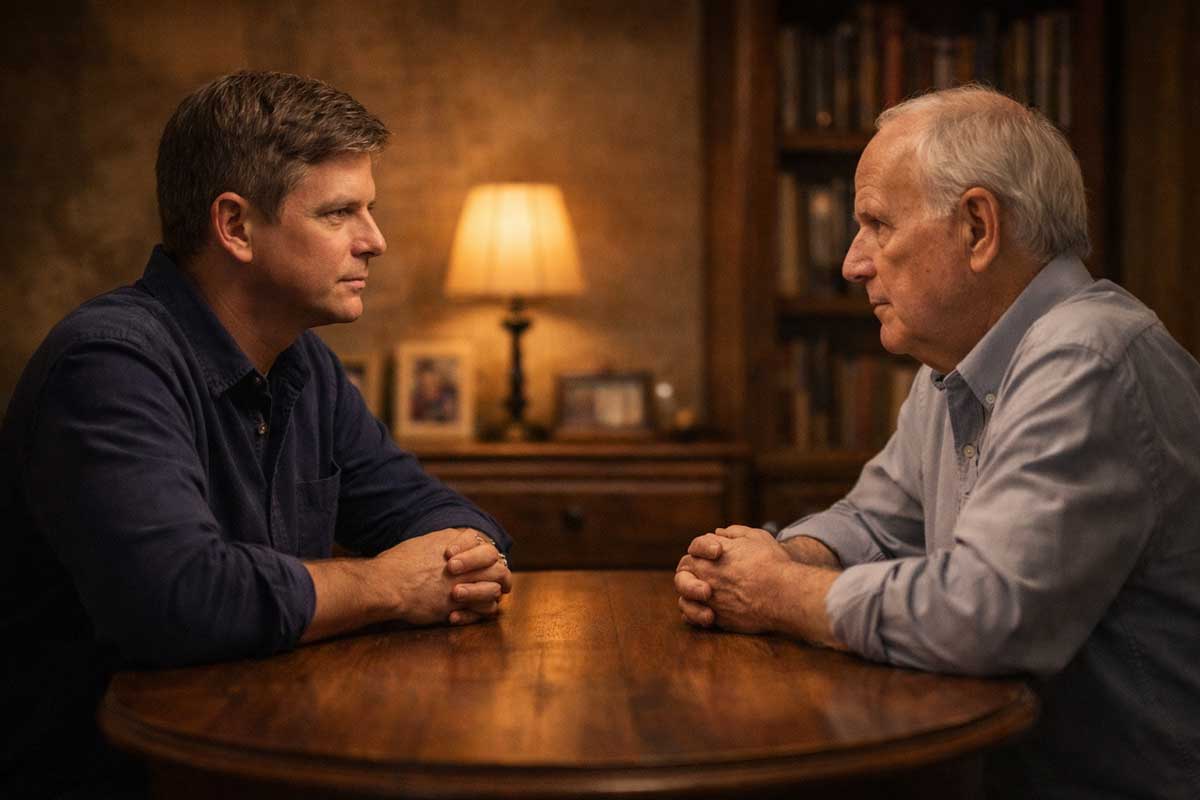
The room shifts back into practical mode. The lighting is still warm, but the atmosphere is sharper, like a workshop where everyone expects to leave with something usable.
Terry Gross sits with her familiar calm. She doesn’t posture. She asks questions the way a good interviewer does, not to show intelligence but to pull out what matters.
At the table are Nedra Glover Tawwab, crisp and grounded, the person you want in your head when a family conversation starts sliding into chaos. Dallas Willard, quiet and steady, reminding everyone that love is not a mood, it is a discipline. Edwin Friedman, clear-eyed about how anxiety spreads through families like smoke. Becky Kennedy, warm but firm, protective of emotional reality and also determined to raise capable humans. Viktor Frankl, dignified and unsentimental, bringing everything back to choice and responsibility.
Terry begins.
She says, “Our frame is honor your father and mother. Not because parents are perfect, but because honor forms something in us. Tonight we get practical. Boundaries are where honor gets confused with either obedience or rejection. So I want to start with the simplest, hardest question.”
She looks around the table.
She says, “How do you set boundaries in a way that keeps dignity for both sides?”
Nedra answers first. “A boundary is not a verdict,” she says. “It’s a decision about what I will do. Dignity stays intact when you speak in calm, specific language and follow through consistently. ‘I’m not discussing that.’ ‘If the yelling starts, I’m going to end the call.’ No insults, no diagnosis, no long speeches. Honor is the tone. The boundary is the action.”
Dallas Willard nods. “Dignity is preserved when the boundary is rooted in love and truth,” he says. “Love does not mean unlimited access. Love means willing the good of the other. Sometimes the good is that you do not participate in sin, cruelty, or chaos. A boundary can be an act of righteousness, not resentment.”
Edwin Friedman leans in. “Dignity is preserved when you are not reactive,” he says. “Families are systems. If you set a boundary and you become emotional, the system will pull you back into the old pattern. The most dignified boundary is calm leadership. You state it, you hold it, and you do not get recruited into the family’s anxiety.”
Becky Kennedy adds, “Dignity is preserved when the boundary is about behavior, not the person’s worth,” she says. “Even with parents, you can communicate: ‘I love you. I want to be with you. And I can’t stay in conversations where I’m criticized.’ That holds both connection and protection.”
Viktor Frankl speaks quietly. “Dignity is preserved when you remember your freedom,” he says. “Between what is said to you and how you respond, there is a space. In that space you choose your behavior. A boundary is often simply the choice not to participate in what diminishes your humanity.”
Terry nods and moves to the next tension point.
She says, “What does limited contact with honor look like in real life? Not punishment, not silent treatment. But not self-abandonment either.”
Friedman answers first this time. “Limited contact with honor is structure,” he says. “It is planned. Short visits. Clear start and end. Neutral settings. You do not walk into the same trap and then act surprised. Honor is refusing contempt. Protection is refusing chaos.”
Nedra adds, “You decide what topics are off-limits and you keep your script short,” she says. “If it keeps happening, you end the interaction calmly. You don’t argue. You don’t explain for twenty minutes. The most honoring thing is consistency without cruelty.”
Becky Kennedy says, “And you build anchors,” she adds. “If your parents are unpredictable, create predictability in the parts you can control. ‘We’ll do Sunday lunch for two hours.’ ‘We’ll call on Thursdays for fifteen minutes.’ People feel safer with predictability, and it reduces the chance you’ll explode.”
Dallas Willard offers a spiritual lens. “Limited contact can be an act of mercy,” he says. “It may keep you from sinning in anger. It may keep them from sinning in cruelty. It can create a space where kindness is possible. Honor sometimes means you do not give the relationship enough rope to hang both of you.”
Frankl adds, “Limited contact with honor includes inner freedom,” he says. “You may be physically present, but you do not surrender your inner life to their reactions. You do not need their approval to be respectful. You do not need their agreement to be calm.”
Terry takes a breath. “This is where families get tangled,” she says. “People argue about consequences. Some consequences are loving. Some are revenge. So here’s the third crucial question.”
She says, “What consequences are loving and what consequences are revenge?”
Nedra answers first. “Revenge wants them to hurt,” she says. “Loving consequences want the behavior to stop and the relationship to stay as healthy as it can. Loving consequences are predictable and tied to the behavior. ‘If you insult me, I leave.’ Revenge consequences are dramatic and vague. ‘You’ll never see me again,’ said in anger, without a plan.”
Friedman nods. “Revenge is reactivity,” he says. “It’s the emotional system taking over. Loving consequences come from a differentiated self. You know what you will do, and you do it without needing to punish.”
Becky Kennedy adds, “Also notice the message,” she says. “Loving consequences say, ‘I care about this relationship, and I need it to be safe.’ Revenge says, ‘I want you to feel what I felt.’ That second one is understandable, but it does not build repair. It builds escalation.”
Dallas Willard speaks softly. “If the consequence is meant to humble them, it is pride,” he says. “If the consequence is meant to protect what is good, it can be love. The heart test is important. Are you trying to preserve your soul and the possibility of peace, or are you trying to win?”
Frankl concludes, “Revenge is bondage to the past,” he says. “A loving consequence is a commitment to your own integrity now.”
Terry leans back slightly. “I want to give this a real-life shape,” she says. “Many people feel guilty. They think honor means endless availability. Or they think boundaries mean disrespect. If you could give one boundary sentence that embodies honor, what would it sound like?”
Nedra goes first. “I love you, and I’m going to end this call if the insults continue,” she says.
Becky Kennedy offers hers. “I want to be with you, and I can’t stay in conversations where I’m criticized,” she says.
Friedman’s is blunt. “This is what I’m willing to do. This is what I’m not willing to do,” he says. “And then you stop talking.”
Willard’s is gentle. “I’m going to step away now so I can return with kindness,” he says.
Frankl’s is simple. “I respect you, and I will not participate in this,” he says.
Terry looks around the table, letting those sentences settle like tools laid out on a bench.
Then she says, “So maybe tonight’s definition is this. Honor is not endless access. Honor is dignity. Boundaries are not punishment. They are the shape dignity takes in real life.”
No one argues. Because when you frame boundaries that way, they stop feeling like rebellion.
They start feeling like adulthood.
Topic 5: The Adult Pivot (From Victim Story to Legacy)

The room feels quieter now, not because the topic is lighter, but because this is where everything converges. There is less analysis in the air and more responsibility. This is the point where insight either becomes character or dissolves back into explanation.
Rabbi Jonathan Sacks sits at the center, not as a judge but as a moral guide. His presence carries a sense of lineage, of generations looking both backward and forward. Around the table are Viktor Frankl, steady and unsentimental about meaning; James Clear, precise and action-oriented; Steven Hayes, calm and flexible in the face of inner struggle; **Ryan Holiday responsibility and restraint; and Elisabeth Elliot, quietly resolute, embodying faith lived under pressure.
Rabbi Sacks begins.
He says, “The command to honor father and mother is not about the past alone. It is about the future. It asks a profound question: what kind of person will you become because of your parents, not merely in reaction to them? Tonight is about the adult pivot. The movement from grievance to legacy.”
He looks around the table.
He says, “When someone has done real psychological work, what are the clearest signs that they are healing rather than simply explaining themselves more eloquently?”
James Clear answers first. “Their life starts to look different,” he says. “Not dramatically, but consistently. They keep promises to themselves. They stop returning to the same conflict hoping for a different ending. They build habits that support stability. Healing shows up as follow-through. Fewer speeches. More systems.”
Steven Hayes nods. “I’d say psychological flexibility,” he adds. “They can feel pain without organizing their identity around it. They can have the thought ‘my parents failed me’ without letting that thought dictate their choices. Healing means your inner experience no longer controls your behavior.”
Ryan Holiday says, “They stop outsourcing responsibility,” he says. “They stop saying, ‘I’d be better if my parents were different.’ They focus on what is in their control: their actions, their character, their responses. That’s Stoic maturity.”
Elisabeth Elliot speaks softly. “You see humility,” she says. “Not humiliation. Humility. The kind that says, ‘This was hard, and I am not special for having suffered.’ Healing removes the need to be exceptional in pain. It replaces it with quiet faithfulness.”
Viktor Frankl concludes the round. “They discover meaning beyond their wound,” he says. “When suffering remains the center, the person remains bound. When meaning emerges, suffering becomes part of a larger story. Healing is visible when the question changes from ‘Why did this happen to me?’ to ‘What does life now ask of me?’”
Rabbi Sacks lets the answers breathe.
Then he asks the second crucial question.
He says, “What responsibilities must an adult child accept even if their parents never change, never apologize, never understand?”
Ryan Holiday answers first. “You are responsible for not becoming what harmed you,” he says. “That alone is a moral obligation. You don’t get to pass cruelty forward because it was passed to you.”
James Clear adds, “You’re responsible for your environment,” he says. “If your upbringing trained chaos, you build order. If it trained avoidance, you build routines. You don’t wait to feel ready. You design a life that supports who you want to be.”
Hayes says, “You’re responsible for living by your values even when your emotions protest,” he says. “Pain does not exempt you from integrity. It invites you into it.”
Elisabeth Elliot says, “You’re responsible for obedience to conscience,” she adds. “Not to your parents’ approval, but to what you know is right. Honoring parents does not mean obeying them forever. It means obeying God, truth, and love with a clean heart.”
Frankl says, “You are responsible for your attitude,” he concludes. “That responsibility cannot be delegated. It cannot be excused. It is the final freedom of the human person.”
Rabbi Sacks nods slowly.
He says, “That brings us to the hardest emotional inheritance.”
He pauses.
He says, “What do you do with anger so it becomes fuel for growth rather than a lifetime leash?”
Steven Hayes answers first. “You allow it without obeying it,” he says. “Anger is information, not instruction. When you stop fighting it and stop following it, you regain choice.”
James Clear says, “You give anger a job,” he adds. “Anger can signal where boundaries are needed. But once the boundary is set, anger’s job is done. If you keep feeding it, it becomes identity.”
Ryan Holiday says, “Anger fades when you accept reality,” he says. “Not approve of it. Accept it. Acceptance removes the fantasy that the past will change. Once that fantasy dies, energy is freed.”
Elisabeth Elliot says, “Anger becomes destructive when it is cherished,” she says. “When it is brought into the light, named, and surrendered, it loses its power. Bitterness is not strength. It is captivity.”
Frankl speaks last. “Anger can be transformed when it is placed in service of meaning,” he says. “When anger moves you to protect life, to build, to serve, to create, it ceases to poison. When it merely accuses, it corrodes.”
Rabbi Sacks leans forward slightly for the final turn.
He says, “This series has deliberately moved away from victimhood and toward honor and appreciation. If you had to give one sentence to a reader who wants to honor imperfect parents without becoming trapped by the past, what would it be?”
James Clear says, “Let your understanding produce better habits, not better excuses.”
Hayes says, “Let your pain inform your values, not replace them.”
Holiday says, “Become someone your parents’ failures cannot explain.”
Elisabeth Elliot says, “Do not let what you suffered determine what you serve.”
Frankl says, “Live so that your past becomes a chapter, not the title.”
Rabbi Sacks closes, his voice calm and resolute.
He says, “To honor father and mother is not to declare them flawless. It is to declare that the chain of generations will not be broken by resentment. It is to say: I received life imperfectly, and I will pass it on more wisely. That is how honor becomes legacy.”
No one speaks after that.
Because this is the point where analysis ends, and life begins.
Final Thoughts by Nick Sasaki

If there is one takeaway I hope lands, it is this: honor is not the same as pretending. Honor does not require you to rewrite history. It requires you to respond to history in a way that does not poison your life.
Some parents will never apologize. Some will never understand. That is painful. But you still get to choose what you carry forward. You can carry bitterness, or you can carry wisdom. You can repeat the pattern, or you can break it. You can keep arguing with the past, or you can build a better present.
Honoring imperfect parents means speaking with dignity, holding clean boundaries, and finding whatever appreciation is real, even if it is small. And then it means living so that your children, your spouse, your friends, and your community receive the best of you, not the leftover pain.
That is how healing becomes maturity. That is how maturity becomes legacy.

Short Bios:
Nick Sasaki is the creator of ImaginaryTalks-style conversations and the host voice for this series, focused on turning insight into maturity, responsibility, and lived change.
Tim Keller was a Presbyterian pastor and bestselling author known for combining clear Christian theology with practical wisdom about modern life, suffering, and forgiveness.
Krista Tippett is an interviewer and writer best known for On Being, recognized for thoughtful conversations that explore meaning, ethics, and the inner life with nuance.
Alain de Botton is a philosopher and author who makes psychology and philosophy practical, often focusing on emotional education, relationships, and mature self-understanding.
Terry Gross is the longtime host of NPR’s Fresh Air, respected for calm, incisive interviews that draw out honest, grounded perspectives.
Rabbi Jonathan Sacks was a leading Jewish thinker and former Chief Rabbi of the UK, known for moral clarity, wisdom on family and society, and deep insight into duty, dignity, and meaning.
Dallas Willard was a Christian philosopher and author who emphasized spiritual formation, character, and discipleship as practical disciplines of the heart and mind.
Edwin Friedman was a rabbi and family systems thinker who popularized applying systems theory to leadership and family dynamics, especially the importance of differentiation and calm presence.
Harriet Lerner is a psychologist and bestselling author known for practical guidance on family patterns, anger, boundaries, and speaking truth without escalating conflict.
Mother Teresa was a Catholic nun and humanitarian who founded the Missionaries of Charity, known worldwide for radical compassion and service to the poor.
Henry Cloud is a psychologist and author known for clear, actionable teaching on boundaries, healthy responsibility, and relationship dynamics.
Marshall Rosenberg was a psychologist and the founder of Nonviolent Communication, a framework for expressing feelings and needs with clarity and respect.
Sue Johnson is a clinical psychologist and creator of Emotionally Focused Therapy, known for her work on attachment, bonding, and relationship repair.
James Hollis is a Jungian analyst and author focused on midlife development, meaning, and the psychological work of becoming an adult in a deeper sense.
Lindsay C. Gibson is a clinical psychologist and author of Adult Children of Emotionally Immature Parents, known for describing emotional immaturity patterns and practical pathways to clarity and boundaries.
Arthur C. Brooks is a social scientist and author who writes about happiness, meaning, and building a life of purpose through habits, relationships, and service.
David Brooks is a columnist and author who explores character, moral formation, and the inner life, often emphasizing humility and relational maturity.
Martin Seligman is a psychologist and a founder of positive psychology, known for research on learned helplessness, optimism, and human flourishing.
Tara Brach is a psychologist and meditation teacher known for blending mindfulness with compassion practices to support emotional healing and resilience.
Brother David Steindl-Rast is a Benedictine monk and author widely known for teaching gratefulness as a practical spiritual stance rooted in reality.
Nedra Glover Tawwab is a therapist and author known for direct, practical guidance on boundaries, self-respect, and reducing family conflict without drama.
Becky Kennedy is a clinical psychologist and parenting expert known for balancing empathy with firm leadership, helping families build connection and capability.
Viktor Frankl was a psychiatrist, Holocaust survivor, and author of Man’s Search for Meaning, known for emphasizing responsibility, purpose, and the freedom to choose one’s response.
James Clear is the author of Atomic Habits, known for turning behavior change into simple systems and small practices that compound over time.
Steven C. Hayes is a psychologist and creator of Acceptance and Commitment Therapy, focused on psychological flexibility and living by values even with difficult emotions.
Ryan Holiday is an author who popularizes practical Stoicism, emphasizing self-control, responsibility, and character under pressure.
Elisabeth Elliot was a Christian author and speaker known for writings on faith, suffering, obedience, and steady integrity in hard circumstances.
Leave a Reply