

What if top Shakespeare scholars argued whether Othello is guilty or groomed?
Introduction by William Shakespeare
I did not write Othello to warn you about villains alone.
I wrote it to trouble you about trust.
When I set Othello upon the stage, I gave him every reason to stand secure: honor earned in war, love freely chosen, authority publicly bestowed. And then I asked a quieter question—what happens when certainty rests not on proof, but on belief?
Iago does not conquer with force. He whispers, waits, and watches others do the work for him. He understands something I learned early as a playwright: that the most dangerous lies are not spoken outright. They are invited in.
This is not a story about jealousy in the abstract. It is a story about how a good man can be undone by the fear of being an exception—loved, yet never fully belonging. Othello does not doubt Desdemona first. He doubts himself. And into that crack, the world pours suspicion.
If this play unsettles you, it is because it asks you to look inward. It asks how easily virtue can become violence once it believes it is righteous. It asks whether love, when mixed with ownership, stops being love at all.
Watch closely. The tragedy does not begin in the bedroom.
It begins the moment trust demands proof it was never meant to require.
(Note: This is an imaginary conversation, a creative exploration of an idea, and not a real speech or event.)
Topic 1 — Why Othello Believes Without Proof
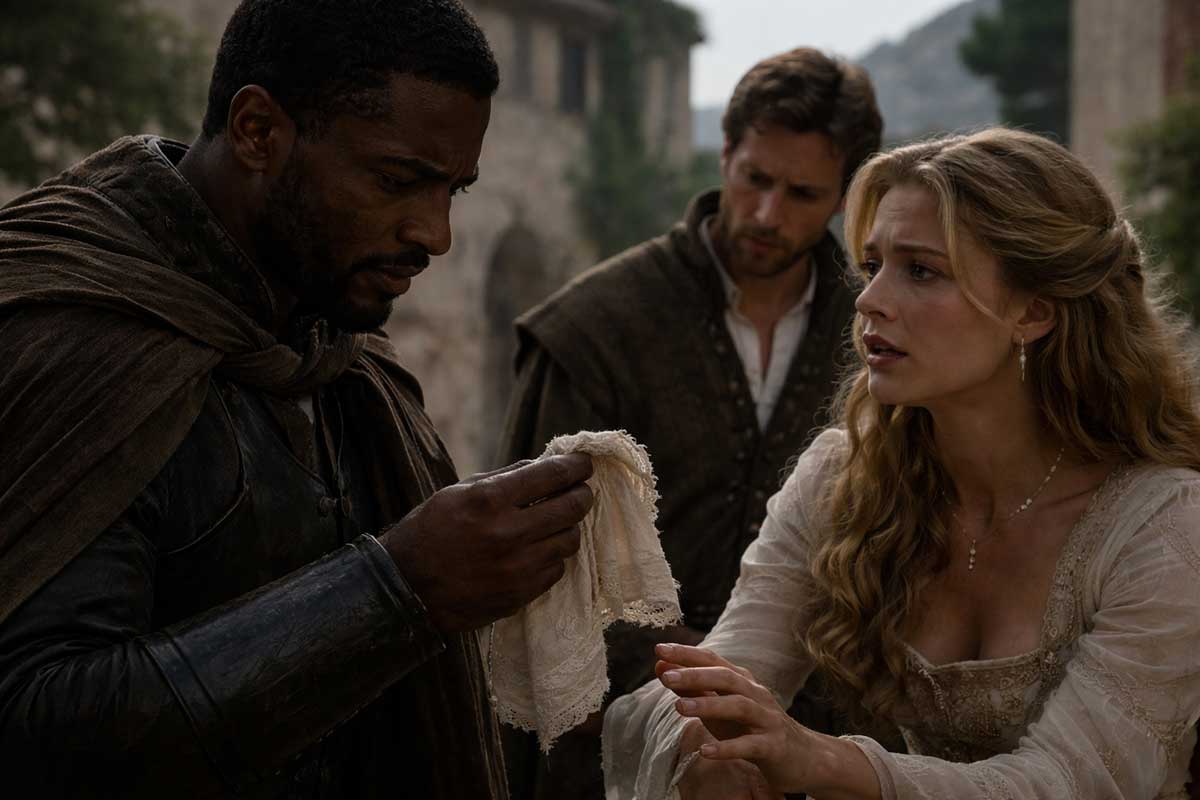
Moderator: Emma Smith
Scholars: Ayanna Thompson, Michael Neill, Edward Pechter, Ruth Vanita, Marjorie Garber
Emma Smith:
Let’s start with the uncomfortable puzzle modern readers can’t shake: Othello is a great general, a careful leader—so why does he accept such thin “evidence” and spiral so fast? Is this a story about gullibility, or about how belief works when it’s under stress?
Edward Pechter:
I’d push back on the assumption that the evidence is “thin” in the way we mean it today. Othello isn’t evaluating a case file—he’s navigating a social world where reputation and inference are treated as facts. The handkerchief isn’t just cloth. It’s a symbol of intimacy. And in a culture trained to read signs as moral proof, symbols are evidence.
Marjorie Garber:
Yes—and the play makes evidence theatrical. It doesn’t function like logic; it functions like staging. Iago doesn’t “prove” anything. He choreographs a reality that Othello can’t stop seeing. What’s persuasive is not the claim; it’s the scene: pauses, half-sentences, reluctance, the posture of honesty. Othello falls for the performance of sincerity.
Ayanna Thompson:
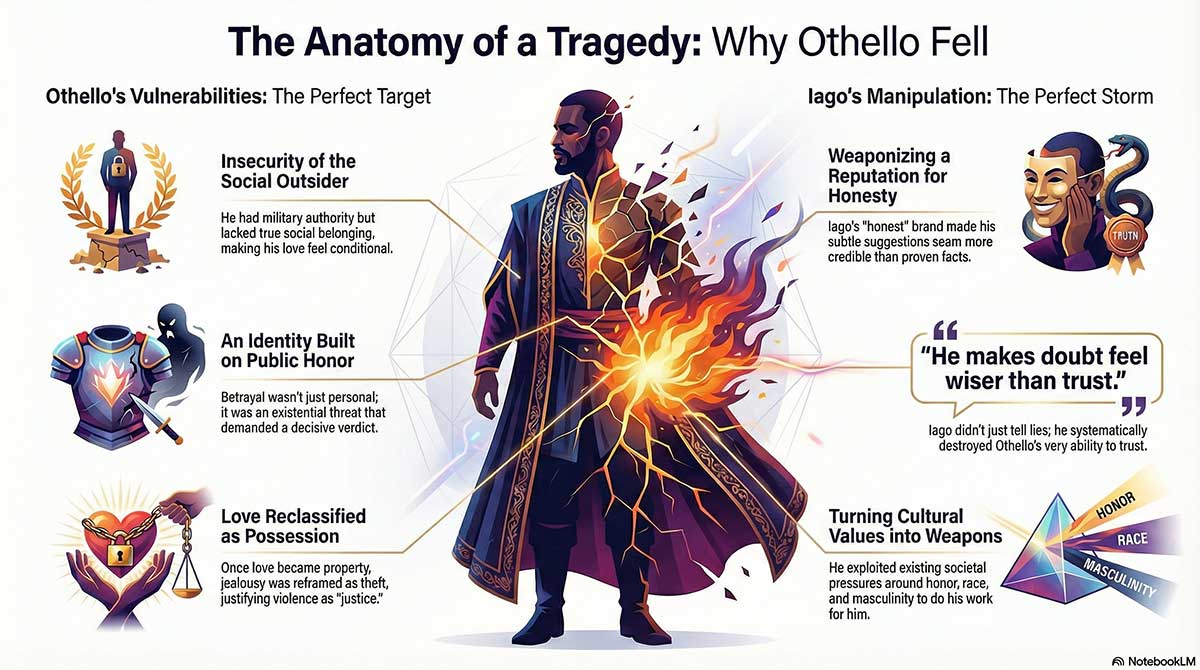
And crucially, Othello’s social position magnifies that vulnerability. He lives in a world where he has access to power, but not to belonging. He can lead armies, yet still feel he’s auditioning for acceptance. That means he’s already primed to interpret love as something fragile—something he must deserve and could easily lose.
Michael Neill:
Which connects to honor. Othello’s identity is built on a public sense of self—service, reputation, authority. When Iago implies that Desdemona’s fidelity is compromised, Othello hears it not merely as romantic betrayal but as existential collapse. The proof doesn’t have to be airtight if the fear is total.
Ruth Vanita:
And it’s worth remembering how quickly the play pushes love into the realm of ownership. If love becomes “mine,” then losing it becomes theft. Jealousy isn’t only emotion; it becomes a claim about property, about legitimacy, about being publicly unmade. The tragedy is how fast the relationship is reclassified—from intimacy to possession.
Emma Smith:
So here’s the next part readers ask: why doesn’t he simply talk to Desdemona in a way that could clarify things? He speaks at her, but he doesn’t really investigate with her. Why?
Ayanna Thompson:
Because the fear isn’t rational—it's identity-threatening. If Othello asks directly and believes her, he risks looking naive in the very society that already marks him as different. If he asks and doesn’t believe her, he confirms his own worst story. Either way, the question becomes less “What happened?” and more “What kind of man am I if I’m wrong?”
Edward Pechter:
Also, direct speech is not the play’s mode of truth. This is a world of intermediaries: reports, insinuations, overheard fragments. If Othello goes to Desdemona, he steps out of the system of masculine proof and enters the world of private trust. The tragedy is that he cannot—or will not—risk that kind of intimacy.
Marjorie Garber:
And the play is ruthless about how language fails. When Desdemona speaks, she’s speaking into a courtroom she doesn’t know exists. She answers the wrong questions because she doesn’t know the accusation. Othello is watching her through Iago’s script. It’s like trying to escape a dream by using the dream’s logic.
Michael Neill:
Othello also becomes addicted to certainty. He doesn’t want clarification—he wants a verdict. Jealousy can be unbearable because it keeps possibilities open. A verdict shuts the door. That’s why the handkerchief is so fatal: it allows him to say, “Now I know,” even if he doesn’t.
Ruth Vanita:
And look at how the play treats “proof” as intimacy. The handkerchief is a token of love, but it’s transformed into a tool of prosecution. The relationship is put on trial using the relationship’s own symbols. That’s a particularly cruel mechanism: love becomes the instrument that destroys love.
Emma Smith:
Let me press the big modern question: is Othello’s collapse mainly a personal flaw—jealousy, insecurity—or is the play showing something broader about belief and manipulation?
Michael Neill:
Broader. Othello is personally vulnerable, yes—but the play is about how a community can be engineered through narrative. Iago doesn’t just trick a man; he redirects a moral system. He teaches Othello what to count as evidence, what to count as shame, what to count as justice. That’s cultural manipulation, not merely interpersonal deceit.
Ayanna Thompson:
And it’s impossible to separate that from race. Othello is granted authority, but he is not granted full social safety. The tragedy is that he internalizes the idea that what he has—love, status—can be revoked at any time. In that condition, a small doubt grows into a certainty because it feels familiar. Suspicion becomes a confirmation of what society has hinted all along.
Edward Pechter:
The play also warns us about “honest” branding. Iago’s greatest weapon is his reputation. When a person is socially certified as truthful, their insinuations travel faster than facts. Othello is responding as many people do: not to evidence, but to the perceived credibility of the source.
Marjorie Garber:
Which is devastatingly modern. We like to think we evaluate claims, but often we evaluate narrators. Iago is a narrator with perfect timing. He gives Othello images rather than arguments. Once those images lodge in the mind, the mind does the rest. The tragedy is partly self-authored—because imagination can become a machine that manufactures proof.
Ruth Vanita:
And the final cruelty is that Desdemona’s goodness cannot protect her. Moral character doesn’t win against a closed narrative. Once she has been placed inside the story “unfaithful,” everything she does is reread as evidence of that story. This is how belief becomes violent: it makes alternative realities inadmissible.
Emma Smith:
So if we had to give readers one clear takeaway—something that answers why he believes without proof—what would it be?
Ayanna Thompson:
Because he’s living in a world where belonging feels conditional, and love feels revocable.
Edward Pechter:
Because “proof” in this culture is often symbolic and reputational, not empirical.
Marjorie Garber:
Because Iago stages certainty so well that Othello experiences it as reality.
Michael Neill:
Because honor turns suspicion into an emergency—something that demands decisive closure.
Ruth Vanita:
Because once love is treated as possession, fear becomes justification—and justification becomes violence.
Emma Smith (closing):
Then Topic 1 gives us a grim thesis: Othello doesn’t fall because he lacks intelligence. He falls because he’s pressured into a kind of belief that feels like survival—belief that converts anxiety into certainty, and certainty into action.
Whenever you’re ready, we’ll go to Topic 2: Iago — How a Story Becomes a Trap.
Topic 2 — Iago: How a Story Becomes a Trap
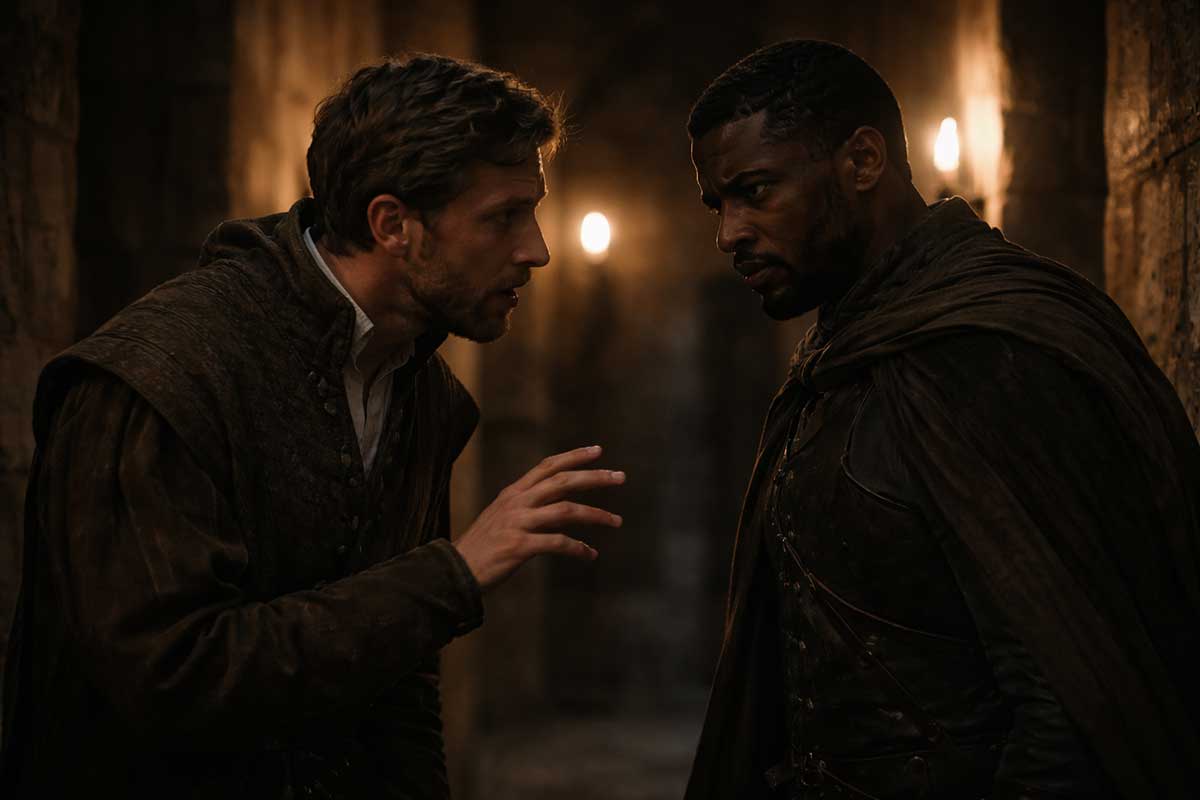
Moderator: Emma Smith
Scholars: E. A. J. Honigmann, F. R. Leavis, Stanley Cavell, Jonathan Dollimore, Lynda Boose
Emma Smith:
Readers often ask a deceptively simple question: Why does Iago do this? But the play seems to resist motive. Is Iago driven by jealousy, resentment, boredom—or something else entirely?
E. A. J. Honigmann:
From a close-reading standpoint, the striking thing is how many motives Iago offers—and how none of them fully hold. Passed over for promotion, suspected adultery, wounded pride—each appears briefly, then fades. Shakespeare doesn’t let any one reason settle. That instability is deliberate. The motive keeps shifting because motive isn’t the point.
F. R. Leavis:
I would go further. The danger is trying to excuse Iago by psychologizing him. He is not merely aggrieved; he is energetic. His intelligence is active, creative, and cold. What defines him is not injury but delight in control. He takes pleasure in bending reality to his will.
Stanley Cavell:
And yet that control operates through skepticism. Iago doesn’t create lies so much as he destroys acknowledgment. He teaches Othello to doubt the possibility of knowing another person. Once acknowledgment collapses, love becomes impossible—not because betrayal is proven, but because trust is rendered naive.
Jonathan Dollimore:
That’s where power enters. Iago’s manipulation isn’t random cruelty; it exploits ideological fault lines already present. Honor, masculinity, race, reputation—these are levers. Iago doesn’t invent them; he activates them. His genius is understanding which pressures will do the work for him.
Lynda Boose:
And notice how gender scripts are essential to the trap. Iago weaponizes assumptions about women—about silence, sexuality, obedience. Desdemona is framed as dangerous precisely because she appears virtuous. Emilia is dismissed because she speaks too late. Patriarchal logic supplies Iago with credibility.
Emma Smith:
So when readers ask, “Is Iago a psychopath?”—how do we answer without reducing the play?
F. R. Leavis:
The label is tempting, but it flatters us. It makes Iago an exception. Shakespeare does the opposite. He shows us how ordinary values—honor, loyalty, masculine pride—can be reorganized into instruments of destruction. Iago is terrifying because he is not monstrous enough.
Stanley Cavell:
Exactly. Iago’s power lies in plausibility. He never asks Othello to believe something outrageous. He asks him to believe what the world already whispers. His method is suggestion, not assertion. That’s why resistance feels socially risky.
E. A. J. Honigmann:
Which is why Iago’s language matters so much. He speaks in fragments, questions, ellipses. He makes Othello feel like the author of his own conclusions. That illusion of authorship is the trap.
Jonathan Dollimore:
And that illusion mirrors political manipulation. Those in power rarely dictate beliefs outright; they shape the conditions under which certain beliefs feel inevitable. Iago models how narratives control behavior without coercion.
Lynda Boose:
Notice too that Iago relies on silence as much as speech. He withholds information strategically. He lets others incriminate themselves by talking. The trap tightens because no one is fully speaking with anyone else.
Emma Smith:
One of the most unsettling moments is the end—when Iago refuses to explain himself. Why does Shakespeare deny us closure?
Stanley Cavell:
Because explanation would rehumanize him. Silence preserves the damage. The audience is left where Othello was left: with consequences instead of reasons.
F. R. Leavis:
And because motive would make him legible. Shakespeare wants Iago to remain structurally dangerous. His silence reminds us that destruction doesn’t require meaning—only opportunity.
Jonathan Dollimore:
Politically, silence is also power. Iago exits without confession, leaving others to repair what cannot be repaired. That’s often how real systems of harm function.
E. A. J. Honigmann:
From a textual perspective, the silence also resists moral bookkeeping. We cannot balance the tragedy by saying, “This happened because X.” The play refuses that comfort.
Lynda Boose:
And importantly, the women are again denied answers. Emilia dies telling the truth, but truth does not undo the story already believed. Silence wins—not because it’s stronger, but because it arrives last.
Emma Smith:
So if we had to answer the reader’s core question—How does Iago actually trap people?—what’s the simplest formulation?
Jonathan Dollimore:
He turns values into weapons.
Stanley Cavell:
He makes doubt feel wiser than trust.
F. R. Leavis:
He exploits intelligence without conscience.
E. A. J. Honigmann:
He lets others write the ending for him.
Lynda Boose:
And he operates inside systems that already distrust women, outsiders, and intimacy.
Emma Smith (closing):
Then Topic 2 leaves us here: Iago doesn’t win because he lies better than others tell the truth. He wins because he understands how stories govern belief—and how easily belief becomes action.
Next, we move inward, to Topic 3 — The Outsider’s Fear: Race, Masculinity, and Insecurity, where the trap finally closes.
Topic 3 — The Outsider’s Fear: Race, Masculinity, and Insecurity
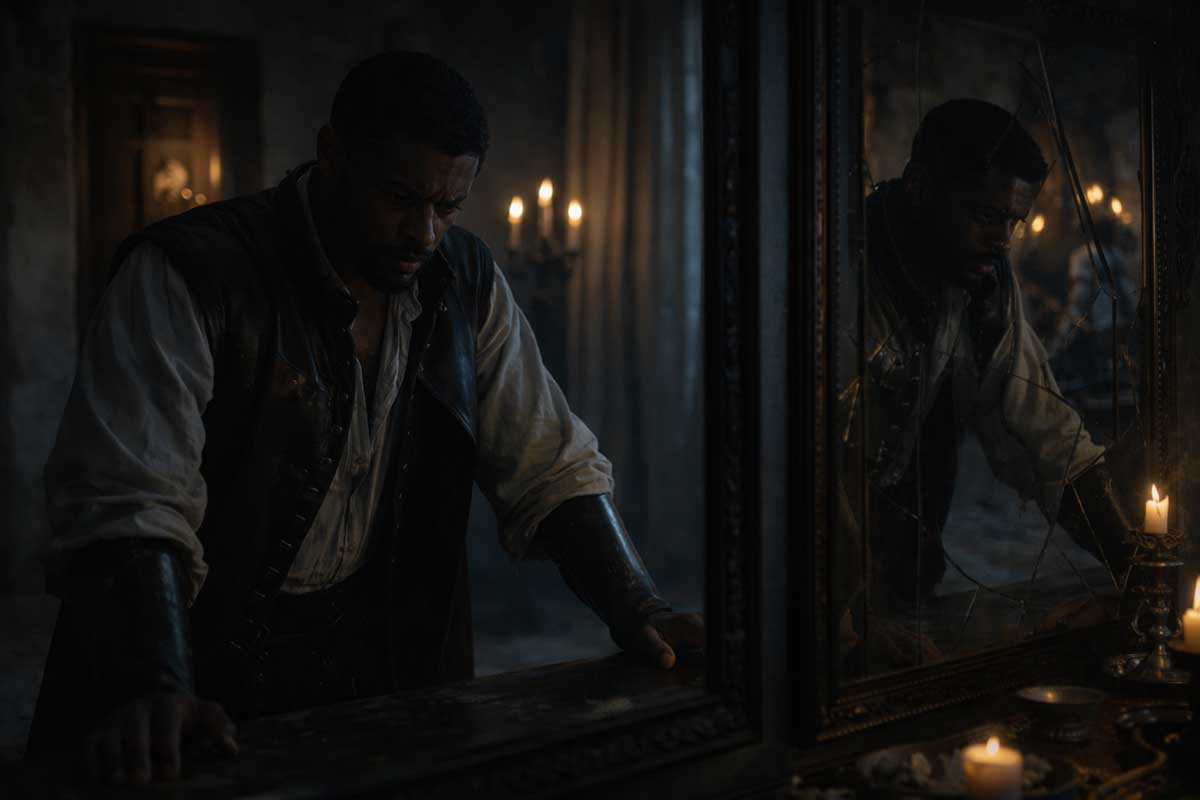
Moderator: Emma Smith
Scholars: Ania Loomba, Kim F. Hall, Ian Smith, Virginia Mason Vaughan, Karen Newman
Emma Smith:
Readers often ask whether Othello’s collapse is “really” about jealousy—or whether race, masculinity, and outsider status are doing the deeper work. Is insecurity a private flaw here, or a social condition?
Ania Loomba:
It’s decisively social. Othello lives at the intersection of usefulness and suspicion. Venice depends on him militarily but never fully accepts him culturally. That produces a specific vulnerability: he must perform confidence because it is never assumed. When that performance cracks, the fall is swift.
Kim F. Hall:
And race in the play isn’t just about skin color; it’s about value. Early modern “blackness” often coded excess—of emotion, of sexuality, of appetite. Othello internalizes those scripts. When Iago hints that Desdemona desires Cassio, the idea feels plausible because Othello has already been taught to doubt the stability of his own worth.
Ian Smith:
Which is why the play keeps returning to spectacle. Othello’s authority is visible—uniforms, commands, public esteem—but his belonging is conditional. He is hyper-visible and yet never at ease. In that context, jealousy is not an eruption; it’s a confirmation of a fear already present.
Virginia Mason Vaughan:
Reception history reinforces this. For centuries, productions framed Othello either as noble exception or savage stereotype—both flatten him. What the text actually shows is a man navigating relentless scrutiny. The tragedy is not that he is different, but that difference is never allowed to rest.
Emma Smith:
So when readers ask, “Was Othello confident or only performing confidence?”—how do we answer?
Karen Newman:
Performance is confidence here. Masculinity in this world is a role maintained through public recognition. Othello’s marriage threatens that equilibrium. Love exposes him to judgment in a domain—sexual intimacy—where racial myths are most active. The performance becomes harder to sustain.
Ania Loomba:
Exactly. His eloquence early in the play is not just personal charisma; it’s survival skill. But eloquence can’t protect him once suspicion reframes his identity. When he starts repeating Iago’s language, we see a collapse of self-authorship. He speaks the words that undo him.
Kim F. Hall:
Notice how quickly his language shifts from wonder to disgust. That shift mirrors the racialized logic of excess: love becomes lust, trust becomes naivety, tenderness becomes weakness. The play shows how fast social myths can overwrite lived experience.
Ian Smith:
And masculinity intensifies that overwrite. Othello’s honor is bound to control—of self, of household, of narrative. When control feels threatened, violence presents itself as restoration. That’s not personal pathology; it’s a cultural script.
Emma Smith:
Many modern readers wonder whether Othello ever had a real chance. Could he have resisted this collapse?
Virginia Mason Vaughan:
Resistance would have required a community willing to trust him without conditions. The tragedy suggests that such a community does not exist. Othello is always one rumor away from exile—social if not literal.
Karen Newman:
And the play refuses the fantasy of “strong individualism.” Love alone cannot counter structural suspicion. Desdemona’s loyalty is real, but it’s powerless against a system primed to read her independence as sexual danger.
Ania Loomba:
This is why the speed of Othello’s fall matters. It shocks us—but it also reveals how thin the ice always was. The fall looks sudden because the pressure was constant.
Kim F. Hall:
The play is unsparing about this: insecurity doesn’t begin in the mind; it is installed by repetition. Othello’s tragedy is believing, at the worst possible moment, what society has implied all along.
Emma Smith:
Let’s crystallize this for readers. If Topic 1 was about belief without proof, what does Topic 3 add?
Ian Smith:
That belief attaches itself to identity.
Virginia Mason Vaughan:
That suspicion is not neutral—it’s historically produced.
Karen Newman:
That masculinity turns doubt into command.
Kim F. Hall:
That race transforms jealousy into inevitability.
Ania Loomba:
And that insecurity is not weakness—it’s exposure.
Emma Smith (closing):
Then Topic 3 leaves us with a hard truth: Othello does not collapse because he lacks strength. He collapses because strength, in this world, is always provisional. When identity must be performed to be believed, the cost of doubt becomes unbearable.
Next, we turn to those who see the danger early but cannot stop it:
Topic 4 — Desdemona and Emilia: Truth That Arrives Too Late.
Topic 4 — Desdemona and Emilia: Truth That Arrives Too Late
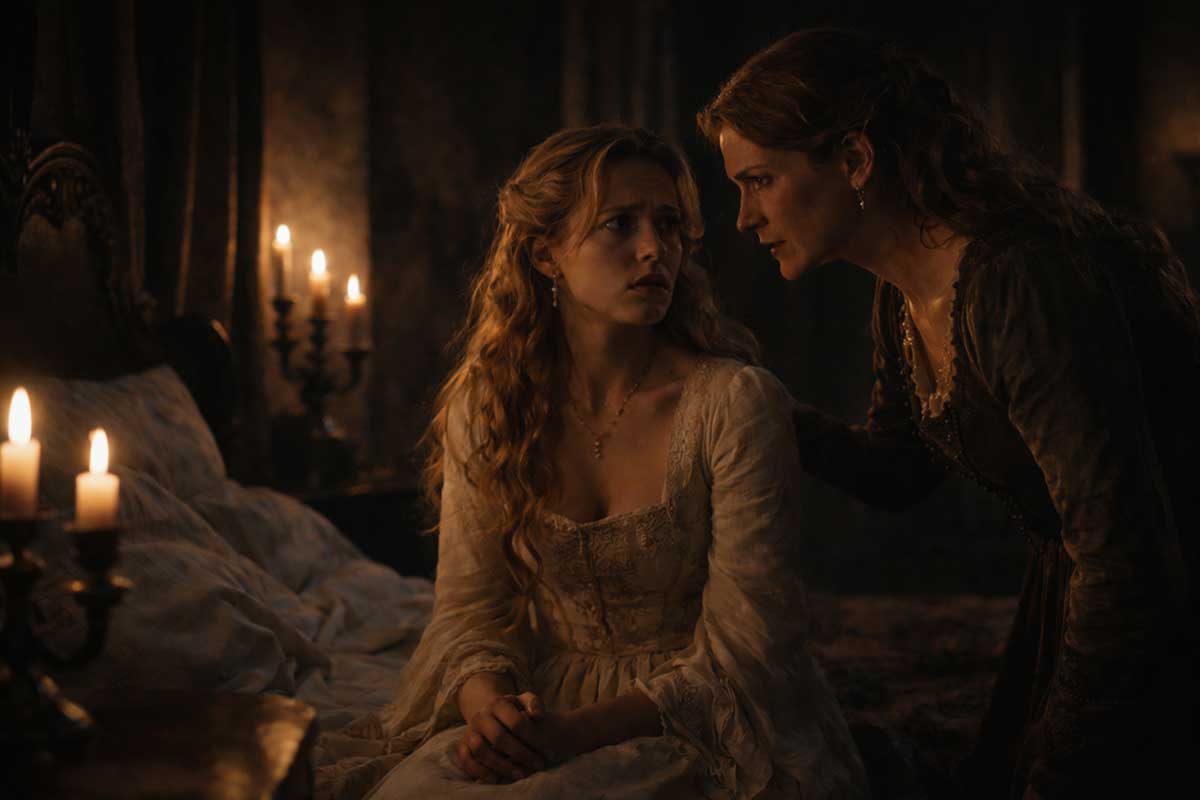
Moderator: Emma Smith
Scholars: Marilyn French, Coppélia Kahn, Gail Kern Paster, Lisa Jardine, Emma Smith
Emma Smith:
Readers often ask a painful question: Why doesn’t Desdemona stop this? Or, Why doesn’t Emilia speak sooner? But perhaps those questions already assume a freedom these women never had. So let’s begin there—what kind of truth is even possible for them?
Marilyn French:
The tragedy is not that Desdemona is silent. It’s that when she speaks, her speech has no authority. She lives in a patriarchal system where female virtue is defined as obedience, not credibility. Her innocence is not a shield; it’s a liability. The more truthful she is, the less believable she becomes.
Coppélia Kahn:
And masculinity sets the rules of the game. Honor is negotiated between men, over women’s bodies. Desdemona is not a participant in the conflict; she is its terrain. Once Othello frames the issue as honor, her words cannot enter the conversation without being dismissed as manipulation or deceit.
Gail Kern Paster:
We also need to attend to the emotional economy of the play. Desdemona’s affect—her calm, her gentleness—is interpreted as guilt rather than sincerity. Early modern psychology often treated controlled emotion in women as suspicious. So even her composure becomes evidence against her.
Emma Smith:
That helps us understand Desdemona. But Emilia is different—older, sharper, more skeptical. Readers frequently wonder why she doesn’t intervene earlier.
Lisa Jardine:
Because Emilia occupies a structurally impossible position. She is expected to be loyal to her husband, silent in public, and useful to others. When she speaks against Iago at the end, it is not a gradual awakening—it is a rupture. She crosses every boundary at once, which is why her truth-telling is fatal.
Marilyn French:
Exactly. Emilia’s speech is revolutionary because it breaks the rule that women may explain, but not accuse. Once she names Iago’s actions as deliberate harm, she threatens the entire structure that protected him. The system responds by eliminating her.
Coppélia Kahn:
Notice also how long Emilia lives with partial knowledge. The play shows how oppression works incrementally. She knows something is wrong, but not enough to act safely. By the time the full truth is visible, action requires self-sacrifice.
Emma Smith:
So when modern readers say, “Why didn’t truth save Desdemona?”—what’s the honest answer?
Gail Kern Paster:
Because truth does not function independently of power. Words require conditions to be heard. Desdemona’s truth lacks the social backing to interrupt male certainty once it hardens.
Lisa Jardine:
And because timing matters cruelly. The play shows how truth often arrives not late by accident, but late by design. Iago’s manipulation works by controlling sequence—who knows what, and when. By the time the women speak fully, the narrative is already sealed.
Marilyn French:
Which makes the tragedy especially bitter. The women are morally right long before they are socially legible. The audience sees this gap clearly—but the characters cannot.
Emma Smith:
There’s also the question of responsibility. Some readers ask whether Desdemona’s obedience or Emilia’s early silence makes them complicit.
Coppélia Kahn:
That framing is itself a product of patriarchal thinking. It shifts blame downward. The play is explicit: the cost of resistance for women is lethal. Compliance is not consent; it’s survival under constraint.
Gail Kern Paster:
And the play refuses to punish them morally. Desdemona dies innocent. Emilia dies speaking truth. Shakespeare is not ambiguous about their ethical standing—only about the world that destroys them.
Lisa Jardine:
Their deaths expose a brutal asymmetry: men are allowed time to doubt, rage, and act; women are allowed only one moment of full speech—and it must be their last.
Emma Smith:
Let’s give readers a clear takeaway. What does Topic 4 ultimately reveal about Othello?
Marilyn French:
That patriarchy doesn’t merely silence women—it weaponizes their virtues against them.
Coppélia Kahn:
That male honor systems inevitably sacrifice women to preserve themselves.
Gail Kern Paster:
That emotional restraint in women is read as guilt, not grace.
Lisa Jardine:
That truth without power is not protection.
Emma Smith (closing):
Then Topic 4 leaves us here: Desdemona and Emilia do not fail to save themselves. The world fails to hear them. And Othello insists that when truth is denied a voice, tragedy is not a mistake—it is the expected outcome.
Next, we turn to the final question the play refuses to soften:
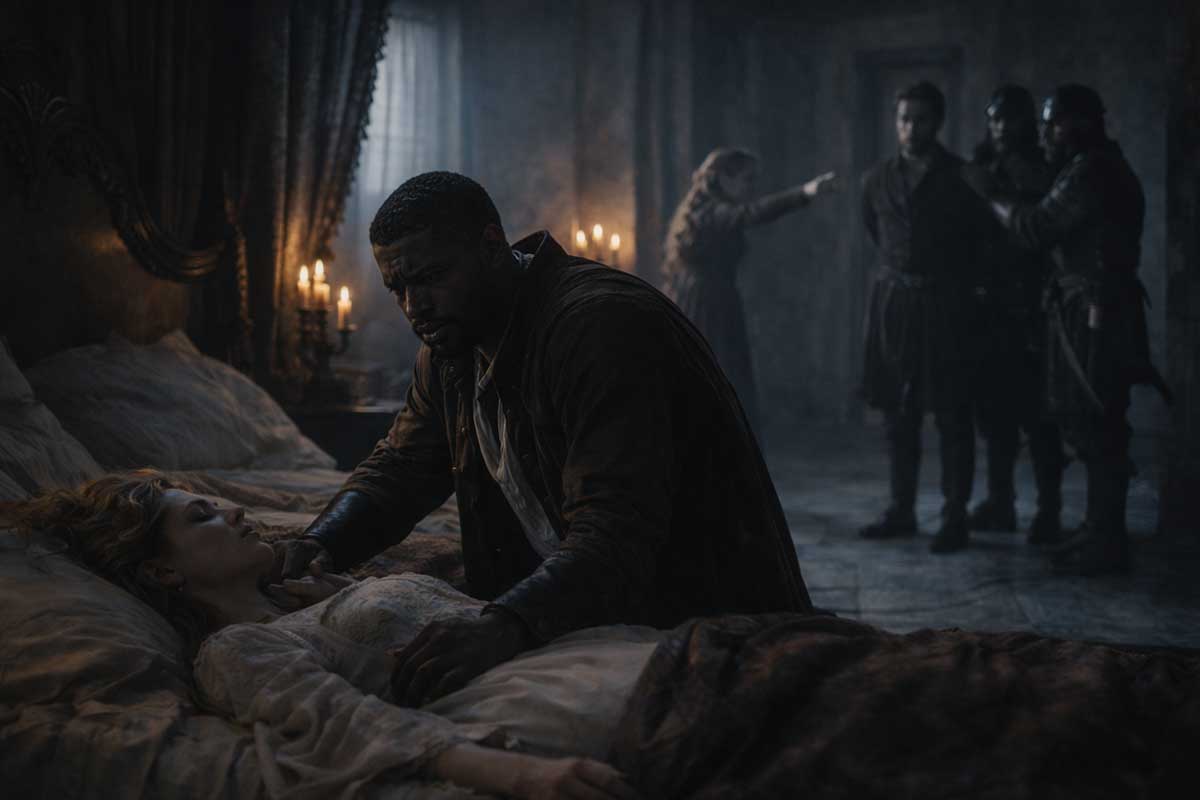
Topic 5 — When Love Turns Into “Justice.”
Topic 5 — When Love Turns Into “Justice”
Moderator: Emma Smith
Scholars: A. C. Bradley, Northrop Frye, Frank Kermode, Terry Eagleton, Stephen Greenblatt
Emma Smith:
We arrive at the most disturbing question readers ask: Why does Othello believe killing Desdemona is justice? Not revenge, not rage—justice. How does love collapse into something that claims moral authority?
A. C. Bradley:
From a tragic psychology standpoint, Othello’s error is not the intensity of feeling but the misdirection of conscience. He convinces himself that love demands purity, and that impurity must be corrected. The act becomes, in his mind, a sorrowful duty—what he calls a “sacrifice” rather than a crime.
Northrop Frye:
Tragedy often turns moral absolutes against themselves. Once Othello accepts a world divided cleanly into honor and dishonor, action becomes inevitable. The play drives toward catastrophe because tragic structure rewards decisiveness, not deliberation. In that sense, the murder is the form tragedy takes when doubt ends.
Terry Eagleton:
But we should be blunt: this is ideology at work. Othello doesn’t invent the idea that control equals virtue. He inherits it. When power teaches men that order must be enforced—even violently—then murder can masquerade as ethics. The play exposes how easily “justice” becomes a rhetorical cover for domination.
Emma Smith:
Readers often struggle with Othello’s final speech. Is it repentance, self-exoneration, or one last attempt to control the story?
Frank Kermode:
Endings are where we seek meaning most desperately—and where Shakespeare denies us comfort. Othello’s final speech is an effort to frame his life, to create coherence where coherence has collapsed. It is not false, but it is incomplete. Meaning arrives too late to heal.
Stephen Greenblatt:
And it’s shaped by cultural scripts. Othello tells his story as one of service and error—an honorable man undone by circumstance. That narrative restores a measure of dignity, but it also sidesteps responsibility. Shakespeare lets us feel the pull of that self-fashioning while still recognizing its limits.
A. C. Bradley:
Importantly, the play does not present his suicide as heroic redemption. It is an acknowledgment of irreparable harm. Othello recognizes that the moral order he believed in has devoured the very thing it claimed to protect.
Emma Smith:
So what survives after all this violence? The state is restored. Cassio is promoted. Iago is punished. But the emotional damage feels unresolved.
Northrop Frye:
That’s because tragedy clears the stage, not the conscience. Order returns in a technical sense, but meaning does not. The system continues, emptied of those who suffered most.
Terry Eagleton:
Which is the bleakest insight of the play. Institutions absorb catastrophe and move on. Love, truth, and innocence do not regenerate automatically. The ending shows us continuity without repair.
Stephen Greenblatt:
And Iago’s silence matters here. He refuses explanation, denying the audience the illusion that understanding prevents recurrence. The play closes with authority restored but vulnerability exposed.
Emma Smith:
If we step back, what does Othello ultimately warn modern readers about?
A. C. Bradley:
That moral certainty without humility is lethal.
Frank Kermode:
That meaning is something we construct at the end, not something that saves us in time.
Northrop Frye:
That tragedy ends not when justice is achieved, but when nothing remains to oppose it.
Terry Eagleton:
That systems teach individuals how to justify cruelty.
Stephen Greenblatt:
And that the stories we tell about ourselves can be powerful enough to destroy others.
Emma Smith (closing):
So Topic 5 leaves us with a final, chilling clarity: Othello does not show love corrupted by hatred. It shows love corrupted by certainty. When belief hardens into judgment, and judgment claims moral authority, violence no longer looks like failure—it looks like necessity.
That is the tragedy Shakespeare leaves us with.
Final Thoughts by William Shakespeare
When the stage falls silent at the end of Othello, many ask where justice lies.
I would tell you: it lies nowhere clean.
Iago is named and seized, yet no punishment can restore what has been destroyed. Othello learns the truth, yet knowledge arrives too late to save innocence. Desdemona dies not because she sinned, but because she trusted—deeply, faithfully, without suspicion.
This is the cruelty of the world I wished to show you: that truth is not always timely, and repentance does not undo consequence. A man may see clearly at last, and still stand amid ruins of his own making.
If there is any mercy here, it is not in law or vengeance, but in recognition. Othello understands, finally, what he has become—and what he has lost. That knowledge costs him everything. Yet it spares him one last lie: that he was righteous.
I leave you not with answers, but with a charge.
Guard your judgments.
Question certainty that feeds on fear.
And remember—evil need not shout. It often speaks softly, and waits.
That, more than any villain, is the danger that endures.
Short Bios:
Ayanna Thompson is a leading Shakespeare scholar whose work focuses on race, performance history, and the cultural afterlives of Shakespeare, with particular authority on Othello and Black representation.
Michael Neill is one of the most respected editors and critics of Othello, known for his deep analysis of language, jealousy, and tragic psychology in early modern drama.
Edward Pechter specializes in close textual reading and theatrical dynamics, offering precise insights into character motivation and dramatic causality in Shakespeare.
Ruth Vanita is a pioneering scholar in gender and sexuality studies, bringing fresh perspectives on marriage, intimacy, and power relations in Shakespeare’s plays.
Marjorie Garber is a highly influential public intellectual and Shakespeare critic whose work bridges literature, psychology, and cultural theory, making complex ideas widely accessible.
E. A. J. Honigmann was a foundational figure in modern Shakespeare studies, particularly admired for his rigorous analysis of Iago and dramatic strategy in Othello.
F. R. Leavis shaped 20th-century Shakespeare criticism with his moral seriousness, famously offering a controversial but enduring reading of Othello’s tragic structure.
Stanley Cavell approached Shakespeare philosophically, exploring skepticism, knowledge, and moral blindness, with Othello central to his ideas about trust and acknowledgment.
Jonathan Dollimore is a key voice in political and radical Shakespeare criticism, examining how power, ideology, and transgression operate within early modern drama.
Lynda Boose is known for her influential feminist readings of Shakespeare, especially regarding domestic violence, patriarchy, and the staging of gendered power.
Ania Loomba is one of the most important postcolonial Shakespeare scholars, whose work on race, empire, and colonial anxiety has reshaped how Othello is read globally.
Kim F. Hall focuses on race, embodiment, and early modern constructions of difference, offering essential insights into Blackness and identity in Shakespeare.
Ian Smith examines race, performance, and representation in early modern drama, contributing nuanced readings of Othello’s social and cultural tensions.
Virginia Mason Vaughan is a leading historian of Othello’s performance and reception, tracing how race and character have been interpreted across centuries.
Karen Newman brings feminist and cultural analysis to Shakespeare, especially in her work on marriage, speech, and the silencing of women.
Marilyn French offered groundbreaking feminist critiques of Shakespeare, challenging traditional readings and foregrounding the costs of patriarchal systems.
Coppélia Kahn is widely respected for her work on gender, masculinity, and power, particularly how male anxiety drives Shakespearean tragedy.
Gail Kern Paster integrates history of the body, emotion, and humoral theory to illuminate the physical and emotional worlds of Shakespeare’s characters.
Lisa Jardine was a major figure in Renaissance cultural history, connecting Shakespeare’s plays to education, politics, and early modern intellectual life.
Emma Smith is one of today’s most admired Shakespeare communicators, combining scholarly depth with clarity and warmth for modern audiences.
A. C. Bradley remains foundational for his psychologically rich readings of Shakespearean tragedy, especially his analysis of character and moral conflict.
Northrop Frye brought mythic and structural approaches to Shakespeare, framing the plays within larger narrative and symbolic systems.
Frank Kermode explored time, interpretation, and meaning in literature, offering subtle insights into how Shakespeare’s tragedies unfold and are understood.
Terry Eagleton applies Marxist and ideological critique to Shakespeare, revealing how social structures and power relations shape tragedy.
Stephen Greenblatt is the central figure of New Historicism, redefining Shakespeare studies by emphasizing power, surveillance, and cultural context.
Leave a Reply