

|
Getting your Trinity Audio player ready...
|
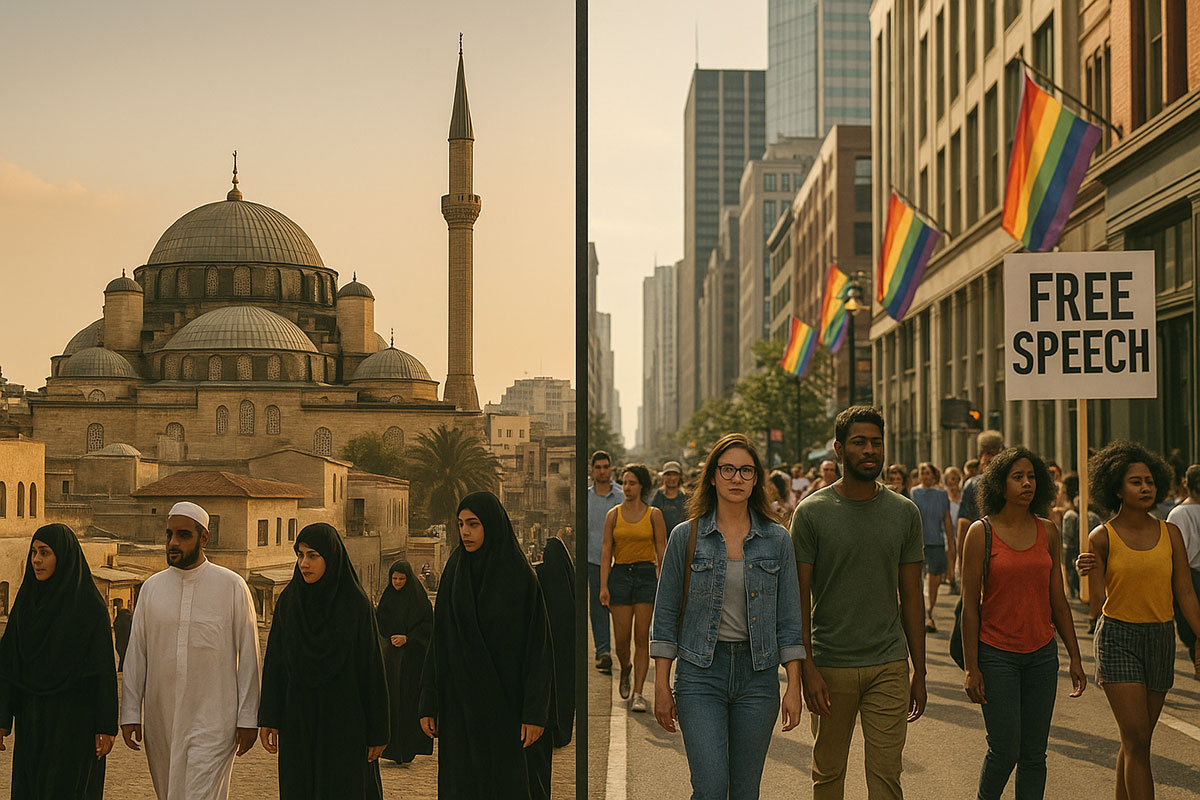
Some of the world’s legal systems are shaped heavily by religion, while others, like that of the United States, are entirely secular. For someone living under a strict interpretation of Islam — where faith is not just personal belief but also a framework for public law and moral order — moving to the U.S. can reveal deep differences in freedoms, obligations, and everyday life. These differences are not simply theoretical; they touch speech, gender equality, cultural expression, and the very limits of personal belief in public action. In this discussion, we examine five core areas where U.S. law and culture may clash with strict Islamic expectations, allowing readers to see clearly whether such a transition is something they could accept or whether it would create constant conflict. The goal is not to persuade or criticize, but to outline the realities so that decisions can be made with open eyes.
(Note: This is an imaginary conversation, a creative exploration of an idea, and not a real speech or event.)

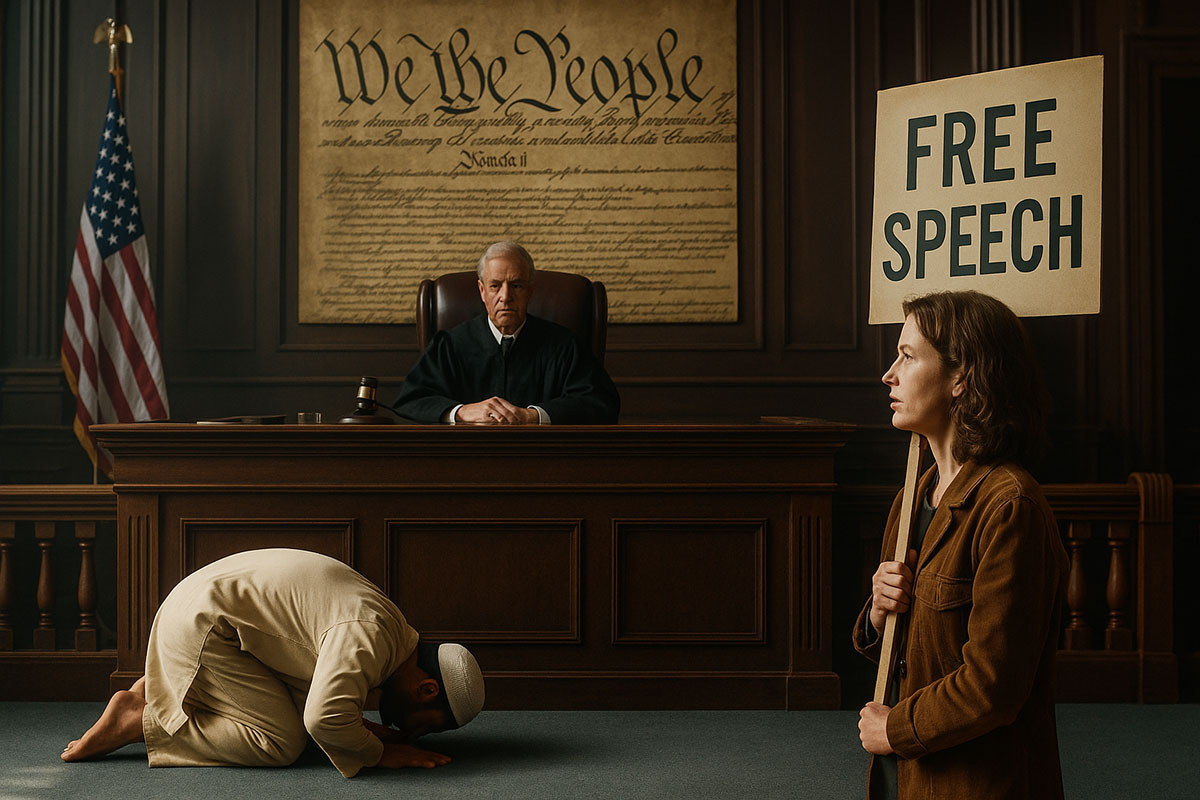
Topic 1 – Freedom of Religion: One Law for All, Not One-Way
Moderator:
In the United States, religious freedom is mutual — you can practice your faith without interference, but you must also accept that others can speak critically about it. How would this work for someone from a strict Islamic background?
Strict Muslim Believer:
In my faith, insulting the Prophet or sacred texts is unacceptable and punishable in some countries. Living where such speech is allowed without consequence would be emotionally difficult.
U.S. Constitutional Representative:
The First Amendment protects both religious expression and criticism. It ensures your right to worship but also protects others’ right to disagree openly.
Religious Freedom Advocate:
That equality is the foundation. No one’s beliefs are above public discussion — and no one can be silenced for peaceful expression.
Cultural Integration Specialist:
This can be a culture shock. Some adapt by focusing on dialogue, others by limiting exposure to critical voices.
Immigrant Community Mentor:
The key is learning that you control your own practice, but not what others say. Accepting that balance is essential.
Moderator:
If your faith teaches that its laws should apply to everyone, how does that fit in a system where the law is secular?
Strict Muslim Believer:
It feels incomplete. My faith offers guidance for society, but here it can only guide my personal life.
U.S. Constitutional Representative:
In America, you can live by your faith, but you can’t impose its rules on others.
Religious Freedom Advocate:
Pluralism demands that law serve all equally, not just one faith.
Cultural Integration Specialist:
Trying to enforce religious rules on others here leads to conflict and legal trouble.
Immigrant Community Mentor:
The most successful adapt by leading through example, not legal enforcement.
Moderator:
What advice would you give someone from a strict Islamic background considering life in the U.S.?
Strict Muslim Believer:
Ask yourself if you can accept hearing things you consider blasphemous. If not, this may be a hard place to live.
U.S. Constitutional Representative:
Remember that the same law that protects criticism protects your right to worship.
Religious Freedom Advocate:
Freedom here means everyone’s beliefs are equally safe — including yours.
Cultural Integration Specialist:
Find supportive networks, but also learn to navigate the wider society.
Immigrant Community Mentor:
Keep an open mind and focus on what you can control — your own conduct.
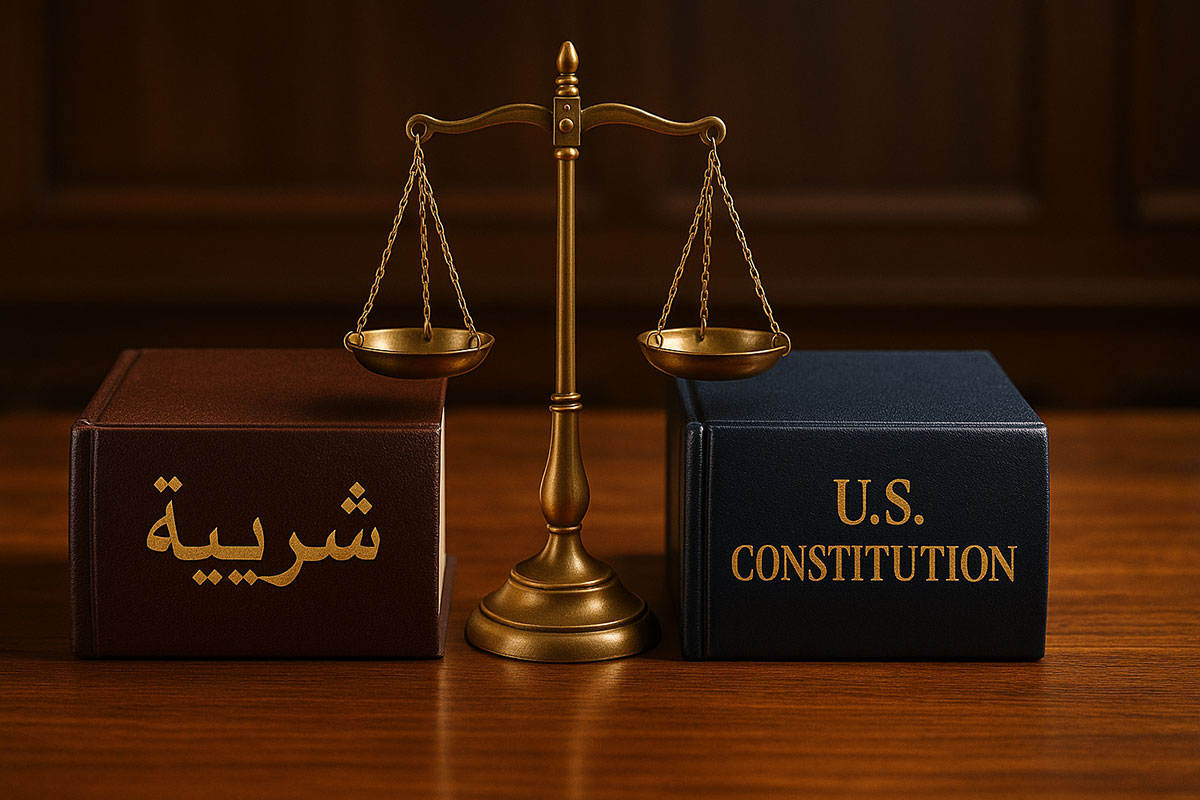
Topic 2 – Secular Law vs. Religious Law
Moderator:
In many Islamic countries, Sharia shapes all legal matters. In the U.S., law is secular. What happens when the two differ?
Strict Muslim Believer:
It feels like living in two systems — one at home, one outside.
U.S. Constitutional Representative:
Secular law applies to all; religious law is voluntary in personal life.
Religious Freedom Advocate:
This protects everyone from having another’s religion imposed on them.
Cultural Integration Specialist:
Conflicts arise when newcomers expect others to follow their religious rules.
Immigrant Community Mentor:
Understand the boundary between personal faith and public law.
Moderator:
What if secular law permits what your faith forbids, or forbids what your faith allows?
Strict Muslim Believer:
I’d have to navigate daily temptations and differences — like interest-based banking or alcohol.
U.S. Constitutional Representative:
You can refuse personally, but not block others from choosing differently.
Religious Freedom Advocate:
It’s the same principle vegetarians follow in a meat-eating culture.
Cultural Integration Specialist:
Some create faith-friendly alternatives, like Islamic finance.
Immigrant Community Mentor:
Teach your children why you follow certain rules, even when society doesn’t.
Moderator:
If you see secular law as morally weaker, how can you still live under it?
Strict Muslim Believer:
I’d focus on personal example and community life.
U.S. Constitutional Representative:
Accept that secular law is the public standard.
Religious Freedom Advocate:
Work together on shared moral values.
Cultural Integration Specialist:
Distinguish between moral disappointment and legal violation.
Immigrant Community Mentor:
Engage civically — vote, volunteer, contribute.
Topic 3 – Gender Equality Under the Law

Moderator:
U.S. law treats men and women equally in all public matters. How does this align with strict Islamic gender roles?
Strict Muslim Believer:
My tradition values men and women equally but gives them different roles. Seeing the law erase those distinctions would be hard.
U.S. Constitutional Representative:
Gender cannot limit legal rights or opportunities here.
Religious Freedom Advocate:
You can practice traditional roles voluntarily, but not enforce them on others.
Cultural Integration Specialist:
This often surprises those used to legal authority over female relatives.
Immigrant Community Mentor:
Success comes from respecting women’s full legal equality in public life.
Moderator:
How about education and work in mixed-gender environments?
Strict Muslim Believer:
It would challenge my norms, but I’d try to keep personal boundaries.
U.S. Constitutional Representative:
Refusing to work with someone because of gender can be discrimination.
Religious Freedom Advocate:
Professional respect is required, even if personal beliefs differ.
Cultural Integration Specialist:
Some choose faith-aligned workplaces; others adapt to mainstream norms.
Immigrant Community Mentor:
Focus on professionalism and mutual respect.
Moderator:
How can you live by gender-specific beliefs in a gender-equal society?
Strict Muslim Believer:
Apply them in my own life, not on others.
U.S. Constitutional Representative:
Personal belief is protected; public equality is mandatory.
Religious Freedom Advocate:
Communities can voluntarily follow traditional roles.
Cultural Integration Specialist:
Separate custom from legal obligation.
Immigrant Community Mentor:
Blend faith traditions at home with full participation in public equality.
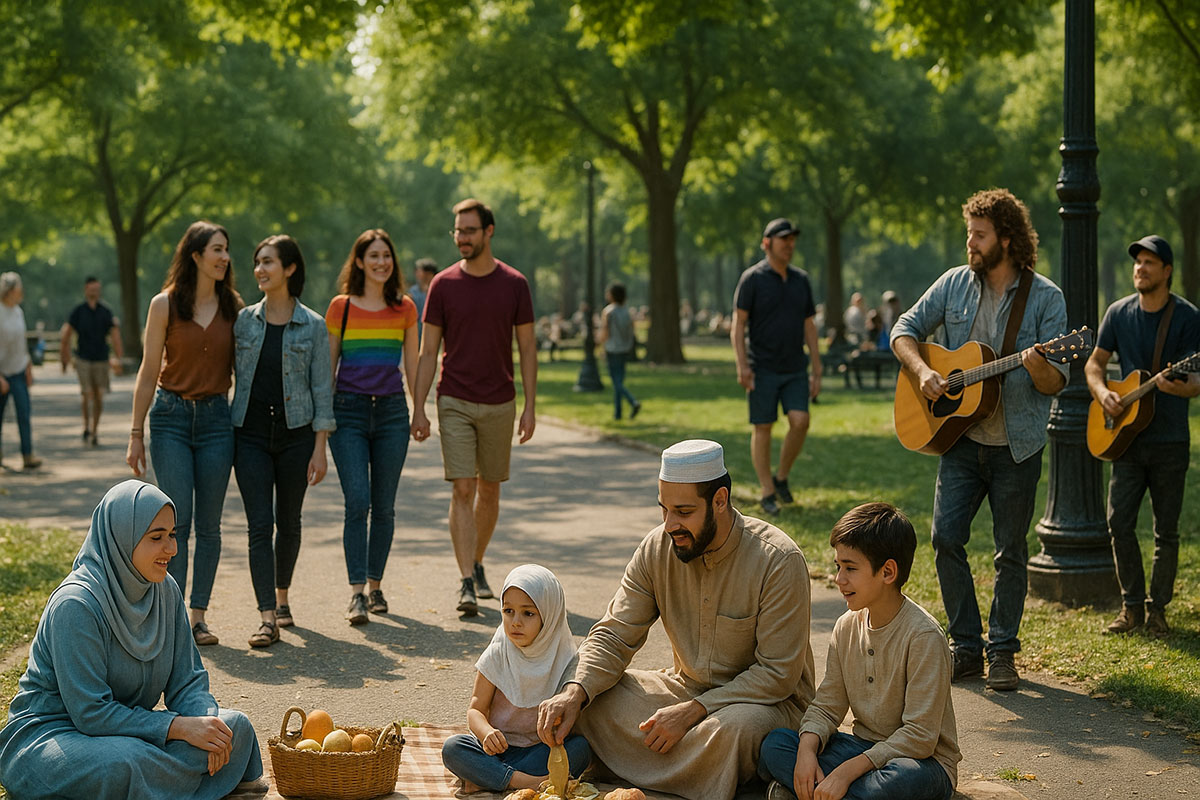
Topic 4 – Cultural and Social Norms
Moderator:
Public life in the U.S. includes many behaviors and expressions that might be considered immoral elsewhere. How does this affect a strict believer?
Strict Muslim Believer:
It feels like living without moral guardrails. I’d need to adjust.
U.S. Constitutional Representative:
Expression is broadly protected, including clothing and media content.
Religious Freedom Advocate:
Freedom means tolerating what you reject.
Cultural Integration Specialist:
Build a values-aligned social circle while learning to ignore the rest.
Immigrant Community Mentor:
Over time, differences become easier to navigate.
Moderator:
What about LGBTQ visibility?
Strict Muslim Believer:
I could respect their right to exist but would struggle with public celebration.
U.S. Constitutional Representative:
LGBTQ individuals have equal legal protections.
Religious Freedom Advocate:
You must treat them with fairness in public life.
Cultural Integration Specialist:
Limit discussions if needed; focus on shared interests.
Immigrant Community Mentor:
Courtesy keeps relationships peaceful even without approval.
Moderator:
How do you handle cultural expressions you find inappropriate?
Strict Muslim Believer:
Avoid them politely and choose my settings carefully.
U.S. Constitutional Representative:
Avoidance is your choice; restriction isn’t.
Religious Freedom Advocate:
Your freedom to abstain equals their freedom to participate.
Cultural Integration Specialist:
Create alternative social activities within your community.
Immigrant Community Mentor:
Explain boundaries calmly — most Americans respect that.
Topic 5 – Legal Boundaries and Personal Beliefs

Moderator:
What happens if your faith compels action the law prohibits?
Strict Muslim Believer:
I’d have to restrain myself. Religious justification isn’t a legal defense here.
U.S. Constitutional Representative:
Belief is protected, but illegal actions are punished.
Religious Freedom Advocate:
Freedom of belief is absolute; freedom of action is limited by law.
Cultural Integration Specialist:
“I was following my religion” doesn’t protect you in court.
Immigrant Community Mentor:
Separate moral from legal responsibility.
Moderator:
What about controlling adult family members’ choices?
Strict Muslim Believer:
I might feel compelled, but I’d have no legal authority.
U.S. Constitutional Representative:
Adults have complete personal autonomy.
Religious Freedom Advocate:
Persuasion is allowed; coercion is not.
Cultural Integration Specialist:
Focus on values early; accept independence later.
Immigrant Community Mentor:
Respect keeps relationships intact.
Moderator:
If living within the law feels like compromising faith, what then?
Strict Muslim Believer:
I’d seek lawful ways to live my faith or reconsider my location.
U.S. Constitutional Representative:
You must obey the law while here.
Religious Freedom Advocate:
Change can be pursued only through legal means.
Cultural Integration Specialist:
Keep personal law at home, public law outside.
Immigrant Community Mentor:
Find purpose beyond the conflicts.
Moderator:
Over these five discussions, we’ve seen that living in the U.S. with a strict interpretation of Islam is possible, but it requires accepting mutual freedoms, secular law, gender equality, cultural diversity, and firm legal boundaries. Those who thrive do so by adapting their practice to the law, focusing on personal example, and respecting the freedoms of others — even when those freedoms conflict with personal belief.
Final Thoughts
What we’ve seen is that life in the United States offers unmatched freedom to practice one’s religion — but always alongside the equal freedom of others to live, speak, and believe differently. For someone with a strict Islamic worldview, this means accepting criticism of faith as legal, living under secular law rather than Sharia, respecting complete gender equality, sharing public space with lifestyles and values they may reject, and keeping all actions within the limits of U.S. law. These are not minor adjustments; they are foundational differences. For some, adapting is possible through personal example, strong community networks, and a clear separation of private belief from public obligation. For others, the constant friction between faith-based expectations and legal reality may make the U.S. an uncomfortable home. In the end, the measure of compatibility lies in one’s willingness to live within these boundaries while preserving personal faith.
Short Bios:
Moderator – A neutral facilitator skilled in guiding cross-cultural and interfaith discussions with balance and clarity.
Strict Muslim Believer – Represents a devout interpretation of Islam where religious law guides personal, social, and legal life.
U.S. Constitutional Representative – Specializes in explaining how the U.S. Constitution protects freedoms and sets legal boundaries.
Religious Freedom Advocate – Focuses on ensuring mutual protection of belief and expression in a pluralistic society.
Cultural Integration Specialist – Works with immigrants to help them navigate social norms and adapt without losing their cultural identity.
Immigrant Community Mentor – Offers practical advice from firsthand experience helping newcomers settle and thrive in the U.S.
Leave a Reply