

|
Getting your Trinity Audio player ready...
|
What if Macbeth had to defend his choices with no prophecy to blame?
Introduction by William Shakespeare
Macbeth analysis begins in the most dangerous place of all: a mind that hears a sentence and calls it destiny. I did not write this tragedy to prove that witches can rule men like puppets. I wrote it to show how easily a man will offer himself to ruin when he grows hungry for certainty. Prophecy is only breath in the air—until someone uses it to excuse what he already wishes to do.
Macbeth is praised first for courage, not cruelty. He is celebrated because violence, in war, is called virtue. Then I place him on the threshold between battlefield and court, and I let him hear a promise that sounds like fate. From that moment, the play becomes a test: what will he do with the idea of greatness? Will he wait, endure, govern himself? Or will he hurry the future with blood, mistaking speed for strength?
If you follow the story closely, you’ll see the pattern repeating like a drumbeat beneath the scenes: an image appears, a desire answers it, and language arrives to justify the desire. The dagger is the mind rehearsing the deed. The crown is the deed pretending to be reward. The ghost is guilt refusing to stay hidden. And the final prophecies are not protections at all, but riddles designed to make confidence feel clean.
This is a tale of ambition, yes—but more sharply, it is a tale of interpretation. What destroys Macbeth is not merely what he wants, but how he reads the world: he demands certainty, then mistakes it for permission.
(Note: This is an imaginary conversation, a creative exploration of an idea, and not a real speech or event.)
Topic 1 — When Prophecy Finds a Hungry Mind
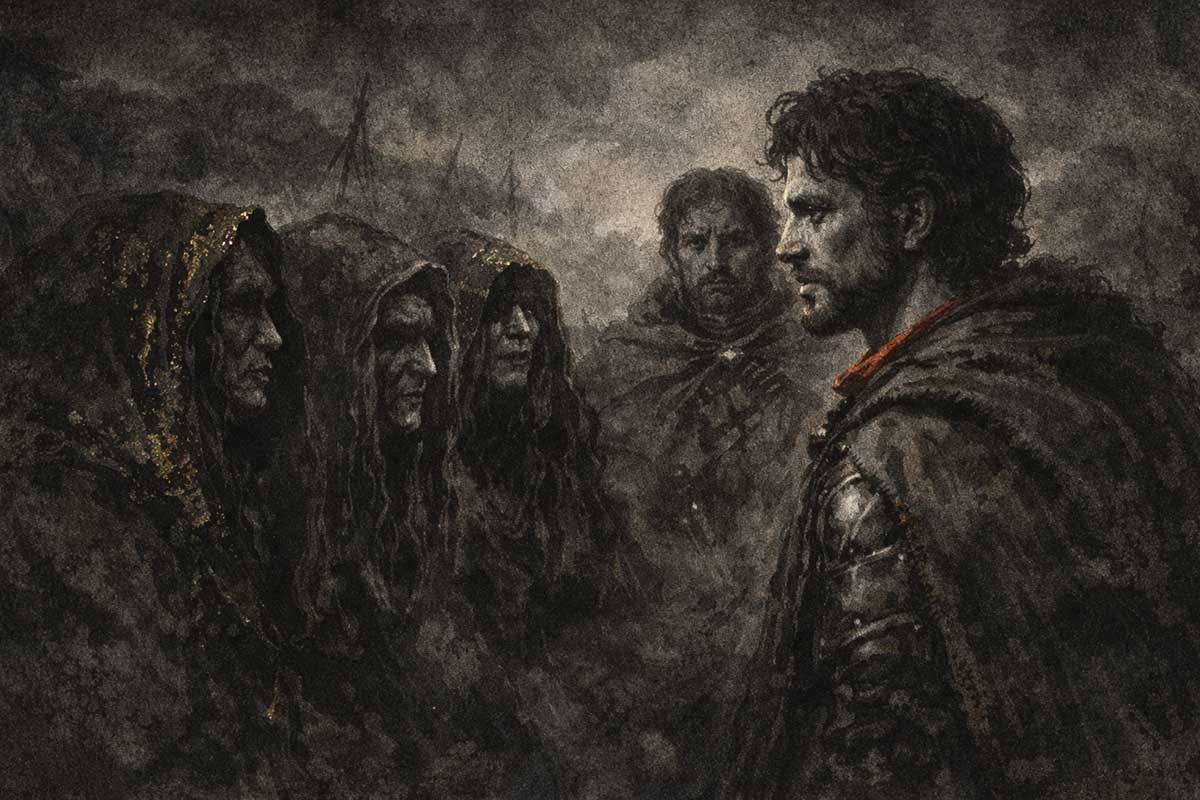
The setting is spare—neither castle nor heath, but a dim, neutral room like a rehearsal space after the audience has gone. No crowns. No blood. Only language hanging in the air, waiting to be believed.
James Shapiro stands at the center, not elevated—just the one who begins.
James Shapiro
We’re starting at the moment most people remember as “the beginning”: the witches, the greeting, the spark. But I want to be careful. The play is ruthless about how it works. It gives Macbeth a prophecy, yes—then it watches what he does with it.
So here’s where we’ll begin: do the witches cause Macbeth’s downfall, or do they simply name what is already inside him?
Stephen Greenblatt
They are less a cause than a catalyst. Macbeth already lives in a world where power is seized by force, where violence earns praise. The witches don’t invent ambition. They give it a script. Once a desire has a script, it becomes easier to perform it—especially for a man who has just been rewarded for killing well.
Emma Smith
And they give him something even more intoxicating than a script: they give him the feeling that meaning is hidden behind events. That the world is not random. That there’s a design. Macbeth wants that. It’s why the first prophecy landing—Thane of Cawdor—hits like a drug. The play shows how quickly he treats the witches not as strange speakers, but as an authority.
Marjorie Garber
The “authority” piece matters. Macbeth doesn’t ask, “Are they trustworthy?” He asks, “How do I become what they say?” That’s the pivot. The witches speak in titles. Titles are social reality. In Scotland, names are not cosmetic. If you are called something, you are something. So their language weaponizes identity: Macbeth begins to wear the future like a garment before he has earned it.
Jonathan Bate
And Shakespeare places it in a liminal moment: the battlefield is behind him, the court ahead. In between, the witches. That in-between space is where moral decisions become malleable. “Fair is foul, and foul is fair” is not merely spooky poetry; it’s a warning that perception will collapse, that language itself can invert.
Stanley Wells
The simplest truth is: the witches do not lift the knife. Macbeth does. But Shakespeare does something sly: he makes the temptation feel external, so Macbeth can later treat it as fate. The witches offer Macbeth a moral alibi—before he even commits the crime.
Shapiro nods once, then shifts to the question people always ask next—the one that determines whether Macbeth is tragic, monstrous, or merely weak.
James Shapiro
If that’s true—if the witches are catalyst and alibi—then the next question becomes sharper. Macbeth knows what he is considering is morally and politically catastrophic. He says it. He knows Duncan is a good king. He knows the laws of hospitality.
So why does he cross the line anyway? Why murder Duncan?
Emma Smith
Because the play makes the future feel urgent. Macbeth doesn’t just want to be king. He wants the anxiety to stop. The prophecy creates a problem: now he can imagine a future where he is king, but he is still not king. That gap becomes unbearable. Murder becomes, in his mind, a way to collapse time—make the imagined future arrive now.
Stephen Greenblatt
Also: the culture of violence. Macbeth is praised for brutality in war. He is “valiant” because he kills without hesitation. That habituation matters. It lowers the friction between thought and action. Once you’ve been trained to equate violence with loyalty, the step toward political violence is smaller than we like to admit.
Marjorie Garber
And he has an audience. Lady Macbeth is not merely pushing; she is witnessing. She becomes the mirror in which he sees either greatness or cowardice. Her language is theater: “Are you a man?” “Will you do this?” Macbeth is being cast in a role. He kills Duncan partly to become the man he thinks she demands—and the man he thinks history will applaud.
Jonathan Bate
But Shakespeare doesn’t let us say “Lady Macbeth made him do it” and walk away clean. Macbeth is fascinated before she speaks. The letter he writes has excitement in it. The play is honest: persuasion works best when it accelerates what was already moving.
Stanley Wells
And there’s a political misunderstanding at the heart of it. Macbeth thinks: once I have the crown, peace returns. He imagines one violent act will restore stability—like a single strike winning a war. The tragedy is that murder doesn’t finish anything; it opens a sequence. Duncan’s death is not a door closed. It’s a door ripped off its hinges.
Shapiro lets the weight sit, then turns toward the image that most directly reveals Macbeth’s psychology before the crime—before blood, before consequences—when the mind rehearses what the hand will soon do.
James Shapiro
Now the dagger. People remember it as a spooky moment. But it’s more than spookiness.
What do the “dagger” vision and the “fair is foul” logic reveal about how desire turns into action?
Marjorie Garber
The dagger is rehearsal. It’s the mind making an action feel inevitable. Macbeth is not being controlled; he is being seduced by his own imagination. The hallucination is the bridge between thought and deed. It lets him say, “Something led me,” when really he is leading himself.
Emma Smith
And notice the sensory detail: “Is this a dagger which I see before me…?” He turns desire into an object. That’s what the play does with ambition repeatedly—externalizes it. Once desire becomes an object, you can follow it. You can pretend you’re not choosing; you’re tracking something already there.
Stephen Greenblatt
“Fair is foul” sets the ethical climate for that. If the moral categories blur, then action becomes less accountable. Macbeth doesn’t stop knowing right from wrong—but he starts treating right and wrong as costumes. If “fair” can look “foul” and “foul” can look “fair,” then the question becomes not “Is it right?” but “Can it be made to appear right?”
Jonathan Bate
That’s why the language in the early acts feels like fog. Shakespeare is showing a mind stepping into a world where words no longer anchor truth. The witches speak in paradox. Macbeth begins to think in paradox. The dagger is paradox made visible: a weapon that isn’t there, guiding an action that will be.
Stanley Wells
And when the action happens, Macbeth is immediately changed—not triumphant, but contaminated. The play doesn’t romanticize the crossing. It makes him unsteady, guilty, frantic. The dagger doesn’t make him brave. It makes him someone who can’t go back.
Shapiro closes his notebook, not because the topic is finished, but because the first hinge has turned. Macbeth’s mind has accepted the prophecy as permission. He has chosen the shortcut. And now, even before the body is found, the play is already whispering its cruel truth: the future doesn’t become secure when you seize it. It becomes haunted.
James Shapiro
So our record for Topic 1 is this: the witches do not create Macbeth, but they give him a frame—an excuse shaped like destiny. Lady Macbeth does not plant ambition, but she hardens it into a test of identity. And Macbeth’s own imagination—more than any spell—bridges desire into murder.
Next, we follow the cost: the way guilt behaves differently in Macbeth and Lady Macbeth, and how power turns intimacy into isolation.
Topic 2 — Lady Macbeth and the Cost of Becoming Fearless
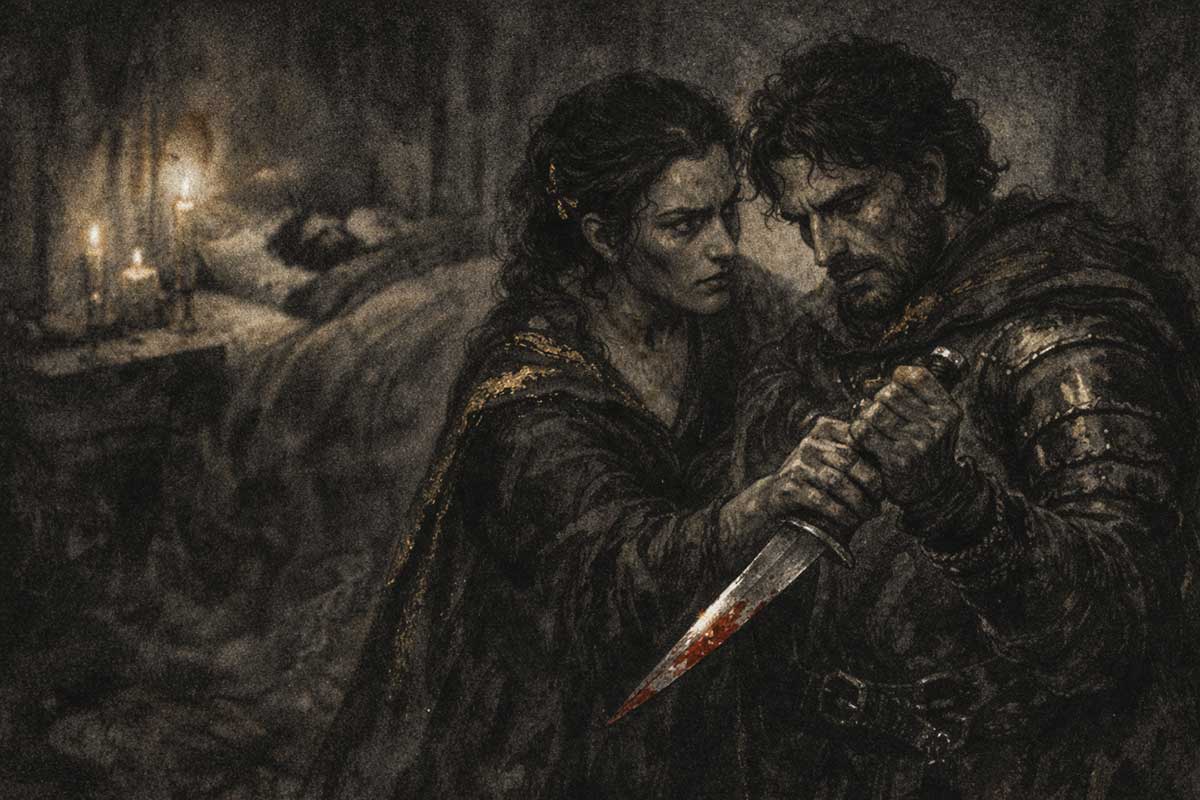
The room feels the same, but the air is different—thicker, as if the words from the first session have left residue. If Topic 1 was the spark, Topic 2 is the burn you can’t hide: the private aftermath, the public performance, the slow betrayal of the body by the mind.
Elaine Showalter begins without ceremony.
Elaine Showalter
We tend to flatten Lady Macbeth into a single idea: “ambitious wife.” But Shakespeare gives her more complexity than that—especially in how her courage functions and then fails.
So let’s start bluntly: is her persuasion mainly love, manipulation, ideology, or fear of powerlessness—and why does it work?
Janet Adelman
It works because Macbeth’s ambition is real, but his identity is fragile. Lady Macbeth doesn’t hand him a desire; she gives him a way to become the person who can carry it out. Her persuasion is intimacy turned into pressure—she knows where he doubts himself, and she touches exactly that place.
Coppélia Kahn
And she weaponizes the cultural code of masculinity. “Are you a man?” in this play is not casual. It’s a social verdict. She frames murder as a test of manhood because she knows Macbeth wants certainty about who he is. If he can’t be certain morally, he’ll try to be certain socially.
Dympna Callaghan
I’d add that it’s not only manipulation. It’s also her own terror of powerlessness. She sees how quickly fortune can be reversed. She hears prophecy and thinks: if we don’t seize this, someone else will. Her urgency is a survival logic—twisted, yes, but recognizable. It’s the logic of those who believe history crushes the hesitant.
Carol Thomas Neely
And there’s performance in it. Lady Macbeth speaks as if she’s casting a spell, but really she’s casting a role. She performs fearlessness to make fearlessness contagious. That performance works partly because Macbeth wants to be infected by it—he wants her certainty to become his.
Gail Kern Paster
The body matters here too. Lady Macbeth imagines she can re-engineer herself—“unsex me here”—as if willpower can rewrite physiology. That fantasy of self-control is the seed of her later collapse. Shakespeare makes her persuasion a kind of self-experiment: can a human being amputate conscience on command?
Showalter nods, then moves the discussion to the heart of what readers most want answered: why guilt behaves so differently in the two of them, even though they share the same crime.
Elaine Showalter
That leads directly into the next question: why does guilt hit Lady Macbeth differently from Macbeth? Why does he unravel in one way—visions, paranoia, public breakdown—while she unravels in another—sleepwalking, bodily compulsion, silent deterioration?
Gail Kern Paster
Because Macbeth’s guilt turns outward into threat management. He experiences the crime as danger—danger of being found out, danger of losing power. His body reacts through agitation and hypervigilance. Lady Macbeth’s guilt turns inward into somatic symptom. She tries to lock guilt away; her body releases it at night.
Carol Thomas Neely
This is why the sleepwalking scene is so devastating: it’s not confession for moral relief; it’s involuntary revelation. The body becomes the stage when the mind refuses to be. She repeats gestures—washing, rubbing—because she cannot “resolve” the act with language the way Macbeth tries to resolve it with more action.
Janet Adelman
And there’s an irony in the early scenes that people overlook: Lady Macbeth’s strength is largely verbal. She talks herself into fearlessness. Macbeth’s strength is physical—he’s a warrior. When the crime is done, Macbeth’s body can still “do.” He can keep acting. Lady Macbeth has nowhere to go after language fails her. She can’t talk the blood away forever.
Coppélia Kahn
Also, Macbeth’s guilt is immediately politicized. The moment Duncan is dead, Macbeth becomes a public figure trapped in a public role. He must perform kingship while his mind is splitting. That pressure accelerates him into violence as strategy. Lady Macbeth’s guilt is private at first—she is not the visible ruler—so it ferments, unobserved, until it becomes uncontrollable.
Dympna Callaghan
And she loses power within the marriage. Early on she directs, plans, manages. Later Macbeth shuts her out. He stops sharing. When her role as co-architect is removed, she becomes a spectator to a disaster she helped start but can no longer steer.
Showalter lets the last line land, then asks the question that turns Topic 2 from “character study” into something far more universal—and far more useful for readers trying to understand the play.
Elaine Showalter
So what does their relationship teach us about shared ambition turning into isolation? How does a partnership become two solitary prisons?
Janet Adelman
Because they build intimacy on secrecy. That feels powerful at first—“we know what others don’t.” But secrecy corrodes the ordinary tenderness that sustains a marriage. When you share a crime, you can’t share innocence anymore, and you can’t return to being simply “together.”
Coppélia Kahn
And because ambition is not neutral. It demands a hierarchy even inside love. Someone must drive, someone must follow, someone must clean up. In the beginning, Lady Macbeth dominates because Macbeth hesitates. Later Macbeth dominates because he discovers that being king means never appearing unsure. Their roles invert, and that inversion destroys the idea of equality.
Carol Thomas Neely
Look at the public moments: the knocking at the gate, the banquet, the ghost. These are pressure-tests. Lady Macbeth is forced into emergency performance—covering, smoothing, redirecting—while Macbeth becomes increasingly impossible to manage. Their shared project becomes a crisis she can’t contain.
Gail Kern Paster
And the body becomes the final truth-teller. Macbeth’s body becomes an instrument of further harm—he keeps moving forward. Lady Macbeth’s body becomes a witness against her. She cannot stop the hand that rubs and rubs. The relationship ends not with a fight, but with collapse.
Dympna Callaghan
It’s chilling: their intimacy creates the first murder, and then murder destroys intimacy. Shared ambition begins as a bond, then becomes the reason they can’t look at each other without remembering what they did.
Showalter closes the session with an almost clinical observation that feels like a verdict—but isn’t. It’s simply what the play shows.
Elaine Showalter
So the record for Topic 2 is this: Lady Macbeth’s fearlessness is a performance that works—until the body refuses to keep performing. Macbeth’s guilt turns into governance-by-paranoia; hers turns into sleepwalking confession. And what began as a partnership becomes isolation, because ambition doesn’t just demand power—it demands silence, and silence is not a place where love can live for long.
Next we move into the engine of Macbeth’s reign: paranoia, Banquo, the ghost, and the witches’ trap—how fear becomes policy.
Topic 3 — Paranoia Makes a Kingdom
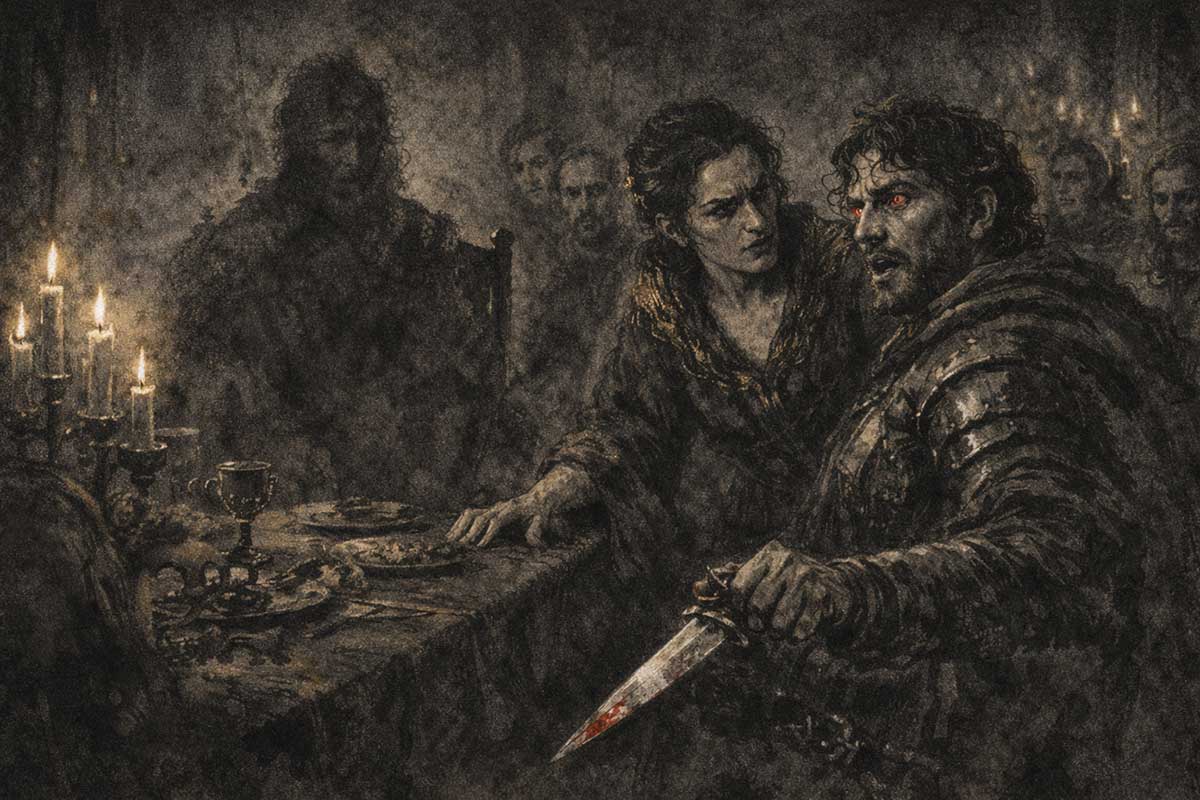
The room feels colder now, as if the conversation itself has stripped warmth out of the air. In Topic 1, ambition felt like a private temptation. In Topic 2, guilt felt like a private sickness. Now comes the terrible public turn: when a mind in fear becomes a government.
David Scott Kastan speaks without preface, like someone reading the next charge aloud.
David Scott Kastan
Macbeth becomes king—and immediately behaves like a man who does not believe he deserves it. That difference matters.
So let’s begin here: why is Banquo so threatening to Macbeth—morally, politically, psychologically—beyond the prophecy?
Andrew Hadfield
Politically, Banquo is dangerous because he’s close enough to the center to matter and clean enough to be credible. Macbeth has taken a throne; Banquo could become the voice that reminds the court what legitimacy looks like. Even if Banquo never acts, his mere presence is comparison—and comparison is poison for a usurper.
Catherine Belsey
And psychologically, Banquo is unbearable because he is the “other self.” He hears the same prophecy and does not immediately convert it into a crime. That contrast creates shame. Macbeth can tolerate enemies; what he cannot tolerate is a nearby witness to moral alternative.
Leah Marcus
There’s also a narrative pressure. Shakespeare keeps the witches’ promise alive through Banquo. The prophecy about Banquo’s line is the play’s future stretching beyond Macbeth’s reign. Macbeth can’t bear a future that doesn’t include him as the final answer.
Kiernan Ryan
Banquo is an inconvenient proof that Macbeth’s story isn’t the only possible story. The witches don’t demand murder. Macbeth chooses it. Banquo’s continued integrity exposes that choice. That’s why Macbeth’s solution becomes elimination: he tries to rewrite the moral record by removing the person who could read it differently.
Michael Dobson
And theatrically, Banquo functions as Macbeth’s conscience with a face. Banquo’s presence keeps Macbeth from pretending the past doesn’t matter. Once Banquo is dead, Macbeth discovers the past doesn’t die with him—it returns more vividly.
Kastan nods once, then turns to the moment that makes paranoia visible in public—the banquet. The question everyone asks in some form is always the same: why does the ghost matter so much?
David Scott Kastan
So let’s go there. What is Banquo’s ghost doing to the story? Is it guilt made visible, political instability, or a breakdown of reality?
Michael Dobson
All three—and that’s why it’s such a powerful device. For Macbeth, the ghost is private terror. For the court, Macbeth’s reaction is public scandal. The ghost collapses the distance between inner life and political image. A king who cannot control himself cannot control a kingdom.
Catherine Belsey
And guilt becomes spectacle. Macbeth is exposed in the very space where power is supposed to be performed: the banquet. Banquo’s ghost isn’t only “conscience”; it’s the return of the suppressed truth inside the theater of authority.
Leah Marcus
Notice what Lady Macbeth tries to do: normalize it, reduce it to a “fit,” keep the story contained. That’s crisis management. But Shakespeare shows the limits of management. Some truths don’t stay offstage. The ghost is the play insisting that murder has consequences beyond legal discovery—it has psychic consequences that sabotage rule.
Andrew Hadfield
Politically, that scene tells the nobles something crucial: Macbeth is unstable. Not “a little stressed”—unstable in a way that can’t be predicted. In a monarchy, unpredictability is dangerous. Tyranny isn’t only cruelty; it’s volatility.
Kiernan Ryan
And in terms of reality: the play doesn’t let us settle comfortably into “it’s just in his head.” That uncertainty is itself the point. Macbeth has entered a world where moral disorder produces perceptual disorder. The ghost makes external the inner breakdown, and Shakespeare refuses to soothe us with certainty about what is “real.”
Kastan shifts the discussion toward the engine that powers Macbeth after the banquet—the decision to return to the witches. It’s a move that feels like seeking answers, but really it’s seeking a drug: certainty.
David Scott Kastan
So why does Macbeth return to the witches for certainty, and how do the prophecies evolve into a trap?
Leah Marcus
Because Macbeth needs the future to stop being a threat. Once he kills Duncan, the future becomes a chain of “what if I’m discovered?” He returns to the witches because they are the only “authority” that seems to speak beyond uncertainty. He wants a final answer.
Andrew Hadfield
And the witches give him exactly the kind of answer that makes tyrants: answers that feel absolute but are linguistically slippery. “Beware Macduff.” “None of woman born.” “Birnam Wood.” These aren’t protections; they’re riddles. Macbeth turns riddles into certainty because certainty is what he craves.
Catherine Belsey
Which is why the prophecies are a trap: they exploit interpretation. Macbeth hears what he wants to hear. He takes metaphor as guarantee. He takes ambiguity as armor. The witches don’t need to force him; they let him force himself.
Michael Dobson
In performance terms, the apparitions function like a confidence trick. They show images that produce the feeling of control. Macbeth becomes addicted to that feeling. And addiction makes him act faster, harsher, more preemptively. He stops reacting to threats and starts manufacturing them.
Kiernan Ryan
And here is the crucial political transformation: paranoia becomes policy. Macbeth governs through preemption. If someone might threaten him, he destroys them first. The prophecy doesn’t protect him; it authorizes escalation. That’s why the play’s violence widens: it stops being strategic and becomes habitual.
Kastan closes the session with a sentence that feels like the core of this topic—and perhaps the core of Macbeth itself.
David Scott Kastan
So the record for Topic 3 is this: Banquo threatens Macbeth because he embodies moral alternative and future continuity. Banquo’s ghost turns guilt into public instability. And the witches’ prophecies become a trap because Macbeth treats language like certainty, and certainty like permission.
Next we move into how Macbeth itself teaches us to mistrust certainty—how fate becomes a language trick, how symbols become reality, and how Shakespeare makes interpretation the real battleground.
Topic 4 — Fate Is a Language Trick
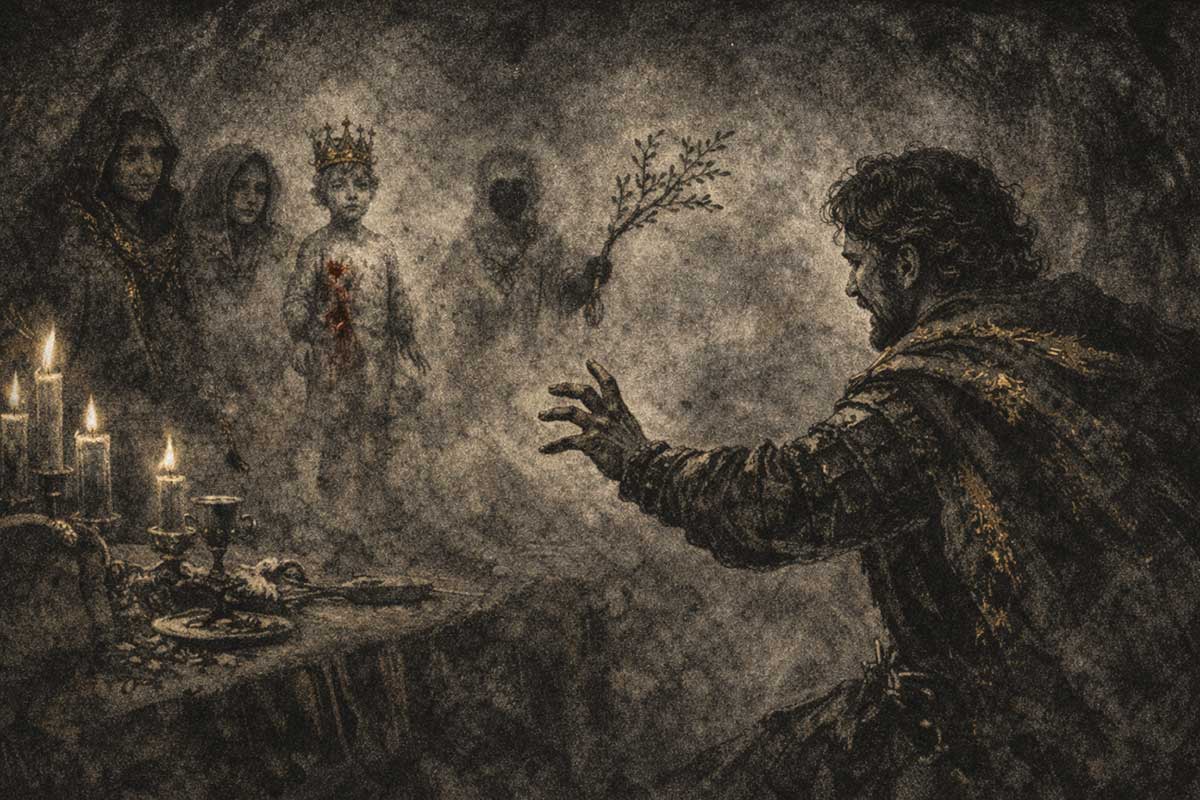
The room is quieter now, not because there is less to say, but because the play has reached its deeper cruelty: Macbeth doesn’t just do terrible things—he learns to think in a way that makes terrible things feel inevitable.
A. C. Bradley sits forward as if the question is old, but still sharp.
A. C. Bradley
We keep circling the same dilemma because Shakespeare built the play around it: fate and responsibility, prophecy and choice.
So let us stop circling and press: is Macbeth ruled by fate or free will—and where does Shakespeare place responsibility?
Harold Bloom
Macbeth is responsible because he chooses the interpretation that flatters him. The witches provide a possibility; Macbeth turns it into destiny. That conversion—possibility into destiny—is the tragic act. Fate does not murder Duncan. Macbeth does, and he knows it even as he tries to speak like a man pushed.
Terry Eagleton
But we should be careful not to turn “responsibility” into a comforting moral lecture. Macbeth is operating inside a political system where violence is already normalized. He is celebrated for slaughter in war. That doesn’t absolve him, but it explains the ease with which power becomes murder. Shakespeare shows free will under conditions—free will inside a culture that rewards domination.
Jan Kott
Yes, and that’s why Macbeth feels modern. The witches are not just supernatural. They are history’s machinery speaking. Macbeth thinks he is seizing destiny, but he is also being seized by a logic bigger than himself: power breeds fear; fear breeds violence; violence breeds more fear. He chooses—but he chooses inside a trap that power itself constructs.
Northrop Frye
In tragic structure, the prophecy is less “fate” than narrative pressure. Shakespeare sets a pattern and watches characters fulfill it through their own choices. The uncanny part is that the pattern seems to know them. But it knows them because it is built from human desire—ambition, fear, the hunger for certainty.
Cleanth Brooks
And Shakespeare’s technique makes responsibility impossible to dodge: Macbeth speaks his conscience aloud. We hear the argument against the act before the act is done. That’s what destroys any simplistic “fate did it” claim. The text records deliberation. Deliberation implies agency.
Bradley nods, then pushes into the second question—the one that makes readers feel the play in their bones: why the symbols aren’t decorative, but bodily.
A. C. Bradley
Then let’s talk about the language of guilt. How do symbols—sleep, darkness, blood—turn moral failure into lived reality?
Cleanth Brooks
Because the symbols are not ornaments; they are extensions of meaning. “Macbeth doth murder sleep” isn’t a poetic flourish—it’s a statement of consequence. Sleep is innocence, restoration, and the ability to forget. When Macbeth kills Duncan, he kills his own ability to return to the ordinary human rhythm.
Northrop Frye
Blood works similarly. Blood is the physical fact of the moral act. It becomes the sign that refuses to fade. Notice how the language can’t stop returning to it. The play is showing how guilt creates repetition. Symbols repeat because the mind repeats the crime even when the body moves forward.
Harold Bloom
And darkness is complicity. Characters call upon night not only to hide the deed from others, but to hide it from themselves. Darkness becomes permission: “Let not light see my black and deep desires.” Shakespeare makes us hear a mind trying to blind itself.
Terry Eagleton
But the symbols also serve political meaning. Sleep is the peace a nation loses under tyranny. Blood is the cost paid by bodies outside the palace. Darkness is censorship and secrecy—what must be hidden for the regime to function. Shakespeare fuses private guilt with public consequence.
Jan Kott
That fusion is what makes the play unbearable: there is no “private sin” here. The body politic bleeds because Macbeth’s mind cannot tolerate uncertainty. The symbols are the play’s way of making inner collapse become outer reality.
Bradley turns to the third question, the one that makes Macbeth feel like a play about interpretation itself—how words can destroy a man who believes them too literally.
A. C. Bradley
Finally: why do prophecy and irony work so devastatingly well in Macbeth? What does the play suggest about interpretation—about how humans read signs?
Northrop Frye
Because prophecy speaks in a mode that resembles metaphor, and Macbeth treats metaphor like a contract. He wants language to function like law. But prophecy functions like poetry: it contains multiple meanings at once. Macbeth dies because he demands single meaning from multivalent speech.
Cleanth Brooks
Exactly. The trap is linguistic. “None of woman born” sounds absolute, but it’s a phrase with concealed edges. Shakespeare’s irony is not only “the audience knows more”—it’s that Macbeth’s confidence is produced by his own misreading. The tragedy is interpretive.
Harold Bloom
Macbeth’s imagination is too strong for his wisdom. He sees patterns and assumes they exist to serve him. That’s a kind of narcissism: the belief that the universe is speaking about you. The witches exploit it by speaking to him in titles and riddles that center his ego.
Terry Eagleton
And the social dimension matters: systems of power rely on narrative certainty. Leaders must appear sure. Macbeth’s need to interpret prophecy as guarantee is political performance. The irony is that the performance of certainty becomes the engine of catastrophe.
Jan Kott
Which is why Macbeth is always contemporary. People in power are destroyed not only by enemies, but by the stories they tell themselves about inevitability. Macbeth is a man murdered by his own certainty.
Bradley closes the notebook, his voice steady.
A. C. Bradley
So the record for Topic 4 is this: Macbeth is responsible because he chooses his reading of prophecy. Shakespeare makes symbols behave like consequences—sleep, blood, darkness become lived reality. And prophecy works because Macbeth treats language as guarantee, when language is, in this play, a trapdoor.
Next comes the endgame: Birnam Wood, “none of woman born,” Macbeth’s final confidence, and what “restoration” actually means when the kingdom has learned fear.
Topic 5 — The Endgame of Certainty
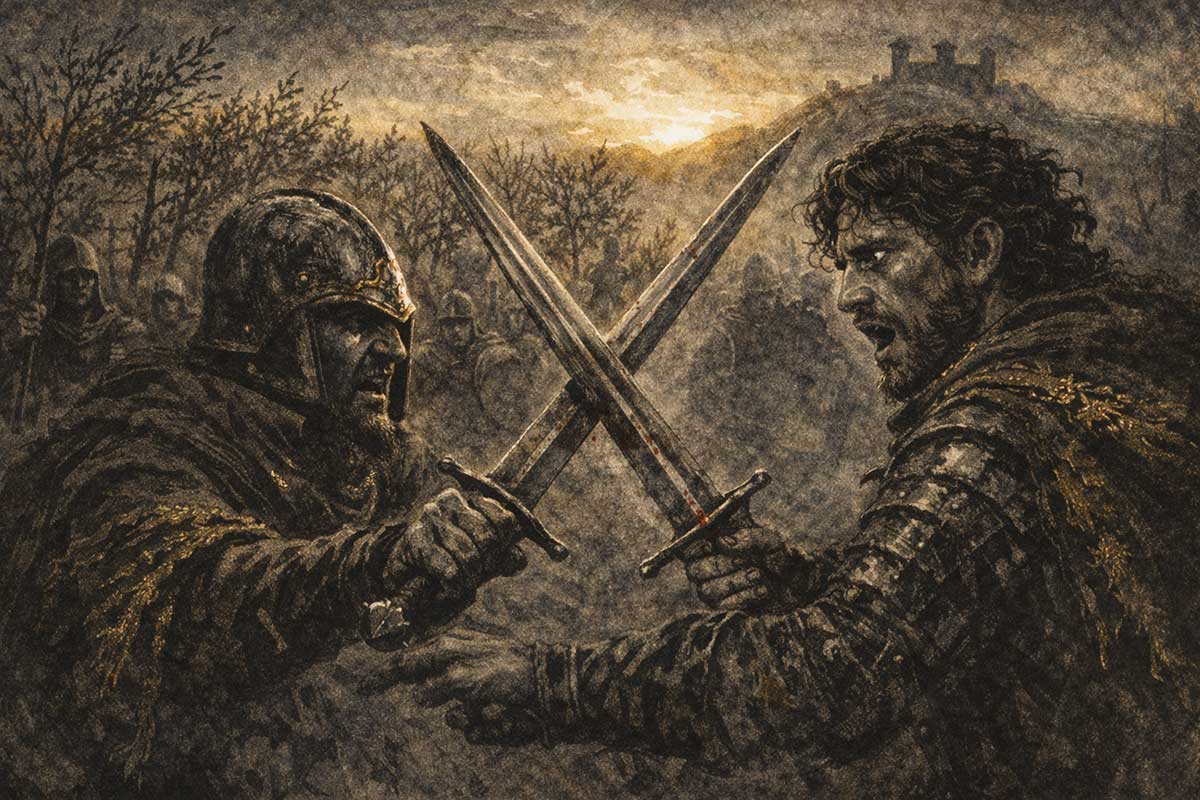
By now, the room feels like it has absorbed the play’s rhythm: a thought becomes a claim, a claim becomes a certainty, and certainty becomes a weapon. Macbeth’s last act is not simply violence—it is the final test of language against reality.
Barbara A. Mowat begins with the question that sits under nearly every “ending explained” search: how Macbeth can possibly believe he is safe while the world closes in.
Barbara A. Mowat
Macbeth clings to a particular kind of confidence—confidence produced by words.
So first: why does Macbeth believe he’s invincible—and what does that tell us about how power handles risk and ambiguity?
Paul Werstine
Because the prophecies are engineered to produce the feeling of invincibility. Macbeth’s mind is exhausted by uncertainty, and the apparitions offer relief. That relief becomes dependence. When you’re dependent on certainty, you treat it like truth.
Peter Holland
And because kingship in this play is performance under pressure. Macbeth cannot afford to appear unsure. So he chooses the interpretation that gives him the strongest public posture. Power doesn’t merely crave certainty—it requires the appearance of it. Macbeth mistakes “can’t show doubt” for “can’t have doubt.”
Gary Taylor
Also, Macbeth’s invincibility fantasy is a defense against moral awareness. If he is destined to win, then the costs become irrelevant. Prophecy becomes moral anesthesia. He can stop asking, “Should I?” because he tells himself, “I must.”
Gordon McMullan
Which is exactly the trap: certainty becomes a substitute for judgment. Macbeth’s reign is a case study in how authority transforms risk into denial. The more threatened he feels, the more absolute his language becomes.
David Crystal
And Shakespeare makes the certainty sound clean because the wording is clean. Short, declarative phrases: “none of woman born.” “Birnam Wood.” They have the grammar of inevitability. Macbeth falls in love with their clarity.
Mowat nods and turns to the mechanics readers always remember—Birnam Wood and “none of woman born.” The question is not whether they happen, but how Shakespeare makes them happen without supernatural “miracles.”
Barbara A. Mowat
So how do “none of woman born” and “Birnam Wood” show prophecy operating through loopholes, not miracles?
David Crystal
It’s linguistic misdirection. Macbeth hears “none of woman born” as “no human.” But that’s an inference, not the literal phrase. Shakespeare’s trap is that Macbeth supplies the overconfident meaning himself. The prophecy doesn’t lie; Macbeth over-reads.
Paul Werstine
And Birnam Wood “moving” is the same trick—metaphor turns into tactic. Soldiers carrying branches make the image appear true. Prophecy becomes a kind of staged reality. It’s as if Shakespeare is saying: you don’t need magic for prophecy to feel supernatural—human strategy is enough.
Peter Holland
Which also comments on theater. Shakespeare makes the final fulfillment look like a stage illusion: branches become a forest, a Caesarean birth becomes “not born,” words become fate. The prophecies are theatrical devices inside the play and a warning about being fooled by appearances.
Gordon McMullan
And the loopholes reveal something darker: prophecy doesn’t protect. It entices. It gives confidence to the very person who most needs restraint. That’s why the fulfillments are not “grand wonders.” They’re grim jokes—language turned against the man who trusted it.
Gary Taylor
Exactly. Macbeth is undone not by a supernatural force, but by the human reality his certainty refused to respect: war tactics, bodily facts, and political consequence.
Mowat shifts to the final question—the one audiences often want to feel relieved by: Macbeth dies, Malcolm becomes king, order returns. But Shakespeare rarely restores order without leaving a bruise.
Barbara A. Mowat
When Macbeth falls and Malcolm rises, is order restored in a satisfying way—or does Shakespeare intentionally leave it unsettled?
Peter Holland
It’s restored ceremonially. The play ends with the language of renewal, invitations to coronation, promises of repair. But the cost has been enormous. The “satisfaction” is complicated: we are relieved the tyrant is gone, but we can’t unsee how easily the state slid into terror.
Gordon McMullan
And Shakespeare refuses to give us a clean moral universe. Macbeth is punished, yes, but not before he drags the nation through horror. The restoration is real, but it is not innocent. Scotland has learned fear. That learning doesn’t evaporate.
Gary Taylor
Also, consider Macbeth’s final stance. He isn’t begging for mercy; he’s defiant, then shocked, then forced to face the loophole. That arc leaves a bitter aftertaste: the tyrant is not corrected; he’s simply ended. The play doesn’t offer moral education as comfort.
Paul Werstine
And the ending points backward as much as forward. Macbeth’s rise came from a vacuum of trust and a culture of violence. If those conditions remain, then “restoration” is fragile. The play closes, but it doesn’t guarantee permanence.
David Crystal
Even the final prophecy mechanics leave residue: language can deceive; certainty can be fatal; interpretation can destroy. Those are not problems solved by a new king. They are human problems. That’s why the ending never feels like a fairy-tale return—it feels like a warning.
Mowat closes the session with a final record, precise and unromantic.
Barbara A. Mowat
So the record for Topic 5 is this: Macbeth believes he is invincible because power chooses the reading that reduces ambiguity. Prophecy fulfills itself through loopholes—language and tactics, not miracles. And the restoration at the end is real but scarred: tyranny can be ended, but the damage it teaches can outlive the tyrant.
Final Thoughts by William Shakespeare
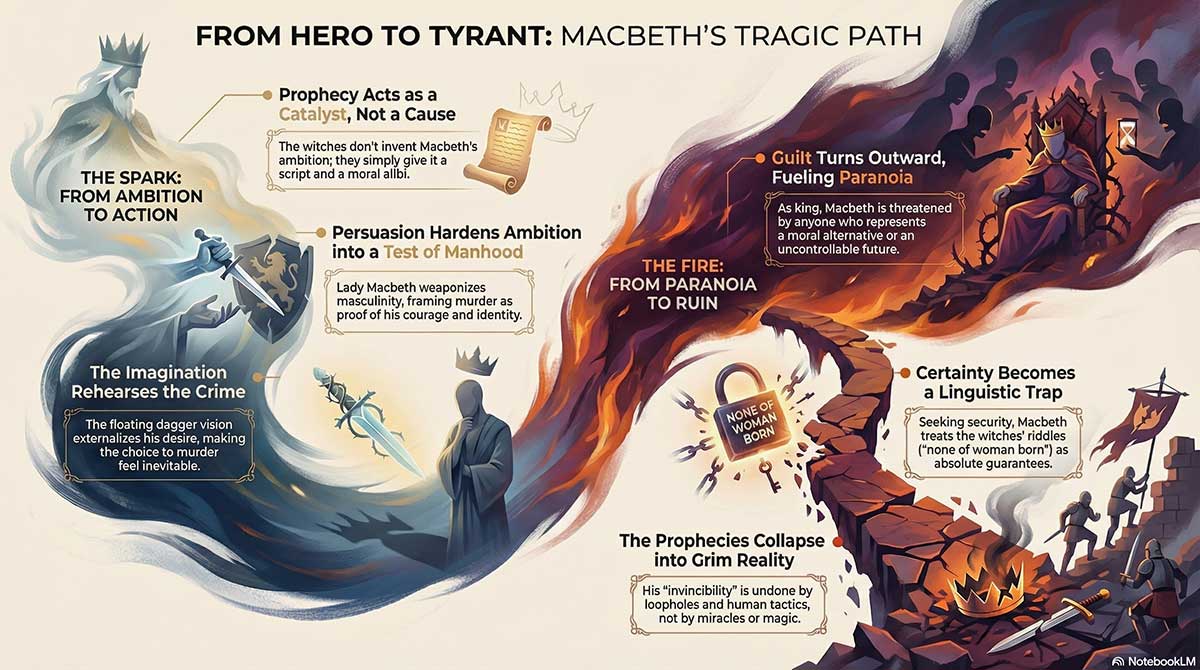
When the play ends, some will say the witches did it, and others will blame Lady Macbeth. Yet the tragedy is plain: Macbeth is undone by the way he listens. He takes metaphor for guarantee. He takes ambiguity for armor. He takes a prophecy’s shape and pours into it his own impatience—until it hardens into necessity.
I gave him language that sounds absolute—“none of woman born,” “Birnam Wood”—because I wished to show how words can betray the man who clings to them as if they were shields. The prophecies do not lie; they lure. They offer the sweetest comfort to a fearful ruler: the feeling that the future is settled. And once a man believes the future is settled, he begins to treat other human lives as obstacles to be removed.
Lady Macbeth, too, teaches a hard truth. She believes she can command her own nature, wear fearlessness like a garment, and wash consequence away with willpower. But guilt is not a stain that water removes. It is a memory that returns through the body when the mind can no longer pretend. Their marriage begins as a conspiracy of closeness and ends as two separate prisons—because ambition asks for silence, and silence starves love.
When Malcolm rises and order returns, it is not a perfect healing. A kingdom can replace a tyrant, but it cannot unlearn what terror taught it. That is why this tragedy remains useful: it warns that the most dangerous ruler is not the one who hates, but the one who convinces himself he is destined—and therefore entitled to do whatever destiny “requires.”
If my play leaves you unsettled, it has done its work. For the lesson is not “beware witches.” It is this: beware the moment you start calling your desire fate—and your certainty virtue.
Short Bios:
William Shakespeare
English playwright and poet whose tragedies explore power, ambition, guilt, and the moral cost of certainty. Macbeth examines how language and desire turn thought into irreversible action.
James Shapiro
Shakespeare scholar known for situating the plays within their historical, political, and cultural moments, especially questions of power and authority.
Stephen Greenblatt
Literary critic and founder of New Historicism, exploring how Renaissance power, belief, and self-fashioning shape Shakespeare’s characters.
Emma Smith
Oxford professor specializing in how Shakespeare’s plays generate meaning through ambiguity, performance, and reader interpretation.
Jonathan Bate
Scholar and biographer focused on Shakespeare’s language, imagination, and ethical complexity across tragedy and history plays.
Marjorie Garber
Harvard literary critic examining identity, performance, and how characters become trapped by the roles they inhabit.
Stanley Wells
Renowned editor and textual scholar whose work clarifies Shakespeare’s language, structure, and dramatic intention.
Elaine Showalter
Literary critic known for feminist readings of literature, examining gender, power, and psychological cost in classic texts.
Janet Adelman
Scholar focusing on family dynamics, guilt, and psychological conflict in Shakespeare’s tragedies.
Coppélia Kahn
Critic specializing in masculinity, authority, and gender roles in early modern drama.
Dympna Callaghan
Scholar exploring gender, power, and cultural context in Shakespeare and Renaissance literature.
Carol Thomas Neely
Known for studies of madness, gender, and emotional expression in Shakespeare’s plays.
Gail Kern Paster
Scholar examining how early modern ideas of the body, emotion, and physiology shape character behavior.
David Scott Kastan
Literary critic focused on authority, interpretation, and political meaning in Shakespearean drama.
Andrew Hadfield
Scholar examining Shakespeare’s engagement with politics, nationalism, and rebellion.
Catherine Belsey
Critic known for analyzing how texts construct subjectivity, power, and ideology.
Leah Marcus
Scholar exploring how historical context and textual variation influence Shakespeare’s meanings.
Kiernan Ryan
Critic focusing on radical interpretations of tragedy, freedom, and resistance in Shakespeare.
Michael Dobson
Scholar of Shakespeare in performance, reception history, and theatrical tradition.
A. C. Bradley
Influential critic whose work shaped modern discussions of character, tragedy, and moral responsibility.
Harold Bloom
Renowned critic emphasizing character, imagination, and inwardness in Western literature.
Jan Kott
Theatre critic who reinterpreted Shakespeare through modern political and existential lenses.
Northrop Frye
Critic known for mythic and structural approaches to literature and tragedy.
Terry Eagleton
Literary theorist examining ideology, power, and class in literary texts.
Cleanth Brooks
Key figure in New Criticism, focusing on close reading and textual coherence.
Barbara A. Mowat
Editor and scholar specializing in Shakespeare’s texts, interpretation, and performance history.
Paul Werstine
Expert in Shakespearean textual transmission and editorial theory.
Peter Holland
Scholar focusing on performance, staging, and reception of Shakespeare’s plays.
Gary Taylor
Editor and critic known for challenging traditional Shakespearean canon and authorship.
Gordon McMullan
Scholar studying authorship, collaboration, and political context in early modern drama.
David Crystal
Linguist specializing in the sound, rhythm, and meaning of Shakespeare’s language.
Leave a Reply