
|
Getting your Trinity Audio player ready...
|
Introduction by Mary Oliver
When I was young, I learned to trust the world long before I learned to trust myself.
A field, a pond, a scattering of trees—these were my earliest teachers. They asked nothing of me. They did not hurry me along. They simply existed, patient and unembarrassed, and from them I understood that attention is a kind of doorway into the truth.
Later, I found the poets who had been walking toward that doorway long before I ever knew it existed—Whitman with his great, embracing heart; Emerson with his steady lantern of insight; Thoreau who listened so fiercely to the inner life of the woods; Rilke who carried his solitude like a chalice; and Millay, whose fire could warm or wound in equal measure.
When I read them, I felt something in me stir—the soul recognizing its kin.
What they sought, I sought.
What astonished them, astonished me.
And so, when I imagine sitting with them now, it is not as a student at the feet of masters, but as a companion in the long, wild effort to understand what the world is trying to say.
In these conversations, we gather not to solve anything but to look more deeply.
To ask:
What does it mean to pay attention?
What do we owe our solitude?
Where does revelation hide?
Why must beauty ache?
And what, after all this living, does the soul want from the act of making poems?
I hope you’ll walk with us.
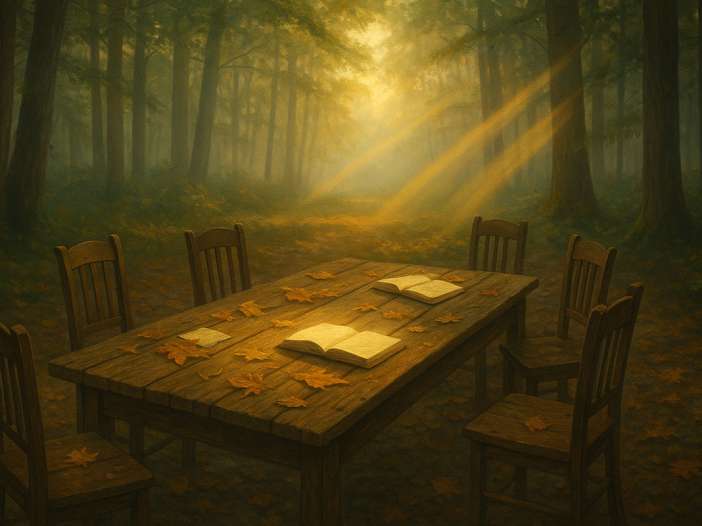
There is room at the table.
The world is speaking.
Let us listen.
(Note: This is an imaginary conversation, a creative exploration of an idea, and not a real speech or event.)
Topic 1 - Attention as Prayer
Mary Oliver opens the circle
The room feels like early morning—soft light, nothing hurried. Mary sits with her hands relaxed in her lap, as if she has just returned from a long walk and is ready for listening.
“Friends,” she says, looking around the table, “I’ve always believed that to pay attention is a form of prayer. And so I want to begin by asking something simple. When you look closely at the world, what becomes visible that isn’t there at first glance?”
She smiles with that gentle curiosity that never presses, only invites.
QUESTION 1 — “When you look closely at the world, what becomes visible that isn’t there at first glance?”
Ralph Waldo Emerson
Emerson leans forward slightly. “Mary, when the eye becomes quiet, the soul begins its work. What first appears as a mere stone or leaf reveals itself as a doorframe into the divine. The world is full—absolutely full—of correspondences. But they do not shout. They wait for the still and patient observer. What becomes visible? The hidden law that binds all things.”
Edna St. Vincent Millay
Millay’s voice is bright, warm, but edged with yearning. “I see the pulse beneath the surface—the quickening that says the world is alive and listening. At first glance, a flower is only a flower. But when I look again, I see its hunger for the sun, its trembling. I see its briefness. That briefness breaks my heart, and in the breaking, I see more.”
Walt Whitman
Whitman laughs softly, expansive as ever. “When I look closely, I see the self everywhere—the self in the grass blade, the self in the passing stranger, the self in the dust on my shoes. But I also see something else: the shared pulse of being. The rush of life that says, ‘You are not alone. You never were.’ What becomes visible? The great family of things.”
Percy Bysshe Shelley
Shelley speaks with an upward tilt, as if addressing a higher ceiling than the rest. “Attention dissolves the veil, Mary. It reveals spirit. The world becomes translucent, trembling with the breath of the unseen. A cloud transforms into an emblem of longing. A wave becomes the echo of eternity. What appears? The truth that matter itself is only the shadow of the infinite.”
Rainer Maria Rilke
Rilke listens before speaking, as if translating silence into language. “When I look closely, I find the interior life of things. The sadness of a chair left empty. The courage of a tree standing through winter. Attention allows us to witness what a thing holds within—its fears, its dignity. The world becomes a companion, not an object.”
Mary nods, absorbing each voice as though it were a river arriving at her feet.
Mary asks her second question
She turns her gaze toward the window, then back to the poets.
“Life often tries to make our eyes heavy,” she says softly. “How do you keep your eyes awake?”
QUESTION 2 — “How do you keep your eyes awake when life tries to make them heavy?”
Percy Bysshe Shelley
Shelley responds first this time, luminous and restless. “The imagination is a torch, Mary. When the world grows dim, I lift it high. My eyes stay awake by refusing the dullness imposed by habit. To remain awake is a kind of rebellion.”
Ralph Waldo Emerson
Emerson follows, grounded yet elevated. “I stay awake by returning to nature, the original scripture. When the world burdens me with noise, I step into the forest, and my perception resets itself. The world reintroduces itself as if for the first time.”
Walt Whitman
Whitman grins. “I keep my eyes awake by loving the world with all my might. Attention is a kind of affection. When I feel myself growing numb, I go among people—workers, wanderers, children—and let their vitality stir mine. The world wakes me by its abundance.”
Rainer Maria Rilke
Rilke speaks gently. “For me, wakefulness is born from solitude. When I withdraw, even briefly, my senses sharpen. Heavy eyes come from being overwhelmed. But in solitude, I hear the faintest rustle, the quietest longing of things. That keeps me awake.”
Edna St. Vincent Millay
Millay folds her hands. “I stay awake by feeling everything fully. Even sorrow wakes me. Desire wakes me. Beauty certainly wakes me. The heart, when it refuses to dull itself, keeps the eyes clear.”
Mary closes her eyes for a moment, breathing in their responses as if they were breezes passing through a field.
Mary asks her final question
She opens her eyes again, calm and bright.
“I’ve often wondered whether attention changes the thing we’re looking at—or whether it changes us. What do you think?”
QUESTION 3 — “Do you believe attention changes the thing we’re looking at—or does it change us?”
Walt Whitman
Whitman begins, expansive as a rising tide. “Everything changes everything, Mary. When I lean toward the world, it leans back. My gaze alters the air around the moment. But more than that, attention enlarges the heart. The world stays itself, but I become more capable of embracing it.”
Rainer Maria Rilke
Rilke tilts his head thoughtfully. “I believe things long to be seen. Our attention awakens them, yes—but perhaps only because it awakens us first. When we look with love, we become porous. The boundaries thin. We change, and so the world appears to change.”
Edna St. Vincent Millay
Millay speaks next, her voice steady. “For me, attention is transformation. To look is to be altered. A thing may remain itself—a stone is still a stone—but the poem born from it is new, and so am I. Attention reshapes the interior.”
Percy Bysshe Shelley
Shelley’s eyes brighten. “Attention is a force, Mary. A creative power. It calls forth the latent spirit in things. It is alchemy. Yes, it changes us, but it also summons the hidden beauty of the world into visibility. The seen and the seer evolve together.”
Ralph Waldo Emerson
Emerson concludes with quiet certainty. “When we attend, we align ourselves with the soul of the world. The world does not bend to our will; it reveals its nature. The change is within us—the rising of understanding. Through that understanding, the world becomes more radiant.”
Mary Oliver closes the conversation
She lets a long silence bloom, as she always does. The poets wait with her, unafraid of the quiet.
“At first,” she says softly, “I thought attention was a kind of offering. But listening to all of you, I think it is also a way of becoming. A way of being shaped by the world we admire.”
She looks around the circle—at Whitman’s warmth, Rilke’s inwardness, Emerson’s clarity, Millay’s passion, Shelley’s fire.
“Thank you,” she whispers. “For showing me that attention is not just prayer—it is transformation.”
The light in the room deepens, as if the day itself had been listening.
Topic 2 - Solitude vs. Society: Does the Poet Belong to the World or Apart From It?

Mary Oliver opens the circle
The conversation begins in a room so quiet it feels alive. Mary looks at each poet as if she could see the place inside them that writes.
She speaks softly.
“When you step away from the noise of the world, what returns to you that you cannot find anywhere else?”
She folds her hands in her lap, inviting the room to unfold.
QUESTION 1 — “When you step away from the noise of the world, what returns to you that you cannot find anywhere else?”
Henry David Thoreau
Thoreau begins without hesitation. “Clarity, Mary. That is what returns. The pond speaks plainly when the village does not. In solitude, the essential rises to the surface. The world reveals its bones and marrow. Society layers on expectations; solitude strips them away. I find myself again only when I have lost the company of others.”
Edna St. Vincent Millay
Millay touches her fingertips together. “For me, solitude returns the self—not the modest self, but the burning one. In society, I often feel scattered into too many pieces. Solitude gathers me. It gives me back my own voice, unbent by the sound of others. It also returns longing—a sharp, useful thing.”
Walt Whitman
Whitman laughs gently. “I love a crowd, Mary. The ferry, the press of bodies, the pulse of cities—they exhilarate me. Yet even I must step away. And when I do, I rediscover the great unnameable presence that moves through all things. Solitude gives me the universal self—the one that belongs not just to me but to everyone.”
Ralph Waldo Emerson
Emerson nods. “Solitude is the workshop of the soul. Society distracts with its glittering surfaces, but solitude shows the root. In solitude, I hear the voice that is not mine but somehow speaks through me. What returns is intuition—my most trustworthy companion.”
Rainer Maria Rilke
Rilke speaks last, his voice a quiet thread. “Solitude returns the depth of the world. In society, life becomes shallow out of necessity—there is simply too much sound. But alone, I hear the subtle movements of the inner life. Solitude gives me intimacy with existence itself.”
Mary listens with her whole being, as if their words were falling like light onto still water.
Mary asks her second question
Her eyes soften, thoughtful.
“How do you know when you need the company of others, and when you need only the company of the trees?”
QUESTION 2 — “How do you know when you need the company of others, and when you need only the company of the trees?”
Ralph Waldo Emerson
Emerson responds first this time. “The soul instructs us, Mary. There is a quiet tug within that tells us when communion is required and when contemplation is. A person who listens inwardly will always know the difference. The woods do not replace humanity; they prepare us for it.”
Walt Whitman
Whitman grins, placing a hand over his chest. “I go to the trees when I feel myself shrinking. I go to people when I feel myself swelling. The balance between the two keeps me whole. I listen to my energy. If it longs to reach outward, I seek society. If it longs to deepen, I seek the forest.”
Henry David Thoreau
Thoreau’s eyes narrow with thought. “It is a simple matter. When the presence of others dulls my senses, I leave. When the woods sharpen them, I stay. Society is best approached after one has remembered themselves. The trees remind me who I am.”
Edna St. Vincent Millay
Millay smiles faintly. “I seek people when my heart needs stirring. I seek solitude when my heart needs mending. Both are necessary for me. I have loved the world fiercely, Mary, but I have also needed to withdraw from it so I might survive its demands.”
Rainer Maria Rilke
Rilke folds his hands in his lap. “I know I need solitude when my thoughts scatter like startled birds. I know I need others when solitude becomes too heavy a mirror. A true life requires both distance and connection. But solitude is where my soul recognizes itself.”
Mary breathes these answers as if absorbing them into the marrow of her own understanding.
Mary asks her final question
She looks down for a moment, then raises her gaze again, luminous.
“I’ve often wondered whether solitude enlarges the self—or dissolves it into something wider. What do you think?”
QUESTION 3 — “Does solitude enlarge the self—or dissolve it into something wider?”
Edna St. Vincent Millay
Millay speaks first, her voice warm with conviction. “Solitude enlarges me, Mary. It gives me space to stretch into my own hunger, my own grief, my own delight. In solitude, I become vivid. I cannot be dissolved when I am most myself.”
Henry David Thoreau
Thoreau shakes his head gently. “Solitude dissolves the false self so the true one may emerge. In the woods, I diminish—but only the parts that never belonged to me. What remains is the essential man. The self is purified, not erased.”
Walt Whitman
Whitman exhales slowly, contemplative. “Solitude enlarges and dissolves. It makes me big by making me porous. I become part of everything. A leaf, a river, a stranger walking by the sea. Solitude does not shrink or expand—it opens. It is a threshold.”
Rainer Maria Rilke
Rilke’s voice is quiet, steady. “Solitude dissolves the surface, Mary, so the deeper self can speak. It does not enlarge in the worldly sense, but in the spiritual one. The self in solitude becomes vast by becoming more inward. It widens through depth.”
Ralph Waldo Emerson
Emerson concludes. “Solitude reveals the Over-Soul—the greater presence that holds all beings. When one enters solitude, the individual self becomes translucent. Through this transparency, we glimpse unity. That unity is the enlargement.”
Mary sits for a long moment, letting the silence hold them all.
Mary Oliver closes the conversation
“When I was young,” she says softly, “I thought solitude meant being alone. But it turns out it means being returned. Returned to what is real. Returned to the self before it was shaped by the world. Returned to the trees, who never forget to be themselves.”
She looks around the circle, gratitude blooming in her smile.
“Thank you,” she whispers. “For reminding me that solitude is not withdrawal. It is a way of remembering.”
The room hums with the quiet truth of it.
Topic 3 - Nature as Revelation: Is Nature Speaking or Are We Speaking Through It?
Mary Oliver opens the circle
The room feels almost like a clearing in a forest—quiet, expectant, touched by something ancient. Mary lifts her eyes as if listening to a distant birdsong.
“When you walk into the woods or along a field,” she says, her voice soft as moss, “do you feel the world speaking first—or do you feel yourself speaking toward it?”
She lets the question settle, like a leaf drifting onto still water.
QUESTION 1 — “When you walk into the woods or along a field, do you feel the world speaking first—or do you feel yourself speaking toward it?”
Ralph Waldo Emerson
Emerson leans forward slightly, his tone clear and steady.
“The world speaks first, Mary. Always. Nature is the primary text; we are merely its students. When I enter the woods, I hear a truth that precedes me by centuries. The wind is a syllable of the divine. The brook is a line of scripture. And I am only an echo—grateful to answer back.”
Walt Whitman
Whitman laughs, warm and sweeping.
“Mary, I feel everything speaking at once. The world speaks to me, and I speak to it, and we speak through each other. I hear my body answer the tide. I hear my soul nod to the grass. It’s a conversation without beginning or end. Nature sings, and I sing with it.”
Henry David Thoreau
Thoreau’s voice is quiet but certain.
“The world speaks first. Loudly, if we listen rightly. The groan of a tree in winter, the sharp cry of a bird—these are not metaphors but truths. When I enter the woods, I do not carry my voice ahead of me. I let the world arrive. Only after I’ve heard it do I reply.”
Percy Bysshe Shelley
Shelley looks upward, as though searching the air for something luminous.
“I believe nature speaks in symbols, Mary. The world whispers in metaphor. The sky’s vastness calls the soul upward. The sea mirrors our longing. When I hear the world speak, it is not in language but in resonance. My voice is merely a translation of what the world inspires.”
Mary listens to each answer with the stillness of someone whose heart is shaped by the outdoors.
Mary asks her second question
She gazes briefly toward an unseen horizon in her mind.
“What truth,” she asks gently, “have you learned from nature that no book could have taught you?”
QUESTION 2 — “What truth have you learned from nature that no book could have taught you?”
Walt Whitman
Whitman answers first, expansive as a summer breeze.
“I learned that everything belongs. The worm and the wolf, the fog and the flame. Nature taught me that nothing is outside the circle of life—not sorrow, not joy, not death. Books can tell you about unity; the open field lets you feel it in your bones.”
Henry David Thoreau
Thoreau’s eyes sharpen, as if seeing Walden before him.
“I learned that simplicity is strength. The world does not hurry, and yet it accomplishes everything. A pine tree never apologizes for growing slowly. A pond never doubts its own reflection. Books speak of philosophy, but nature shows us how to live.”
Ralph Waldo Emerson
Emerson speaks with quiet authority.
“I learned that the divine is not elsewhere. It is not contained in ritual or institution. The divine is in the leaf, the sunlight, the quiet brook. Nature awakened in me the truth that the soul is not separate from the world but part of its unfolding intelligence.”
Percy Bysshe Shelley
Shelley’s voice glows with wonder.
“I learned that beauty is a form of knowledge. The sky’s brilliance is an argument. The mountains make a plea. The storm declares a principle. Nature taught me that emotion itself is a kind of wisdom—one that precedes reason and outlasts it.”
Mary nods, deeply moved, as if each reply confirms something she always carried but never said aloud.
Mary asks her final question
She places her hands gently on the table.
“When you stand before the wild,” she asks, “do you feel it as a mirror, a message, or a companion to the soul?”
QUESTION 3 — “Is the wild a mirror, a message, or a companion to the soul?”
Henry David Thoreau
Thoreau speaks first this time.
“The wild is a companion. A stern one, at times, but faithful. It holds us to our own nature. When I walk in the woods, I do not see my reflection—I see my grounding. The wild does not flatter; it instructs.”
Percy Bysshe Shelley
Shelley’s answer rises with lyrical intensity.
“To me, the wild is a message. A trembling dispatch from the infinite. The sky calls us upward; the sea calls us inward. Nature speaks of freedoms the human world cannot yet imagine. Its every breeze is a prophecy.”
Ralph Waldo Emerson
Emerson folds his hands thoughtfully.
“It is a mirror, Mary. A profound one. When we look at nature, we see our own essence reflected back—unadorned, uncorrupted, unafraid. The rose is not ashamed of its beauty. The mountain is not self-conscious in its height. The wild teaches us how to stand.”
Walt Whitman
Whitman lifts his face as if greeting sunlight.
“It is all three. The wild mirrors our enormity. It sends messages to the soul that words cannot hold. And it walks beside us—the friend who never turns away. The wild is the great companion of existence. It reminds us that we are at home in the universe.”
Mary listens as though the answers were falling directly into the place in her heart that first made her a poet.
Mary Oliver closes the conversation
She lets the silence deepen, the way she might let a river deepen its slow current. Then she speaks.
“When I was a child,” she says, “I believed the woods were alive, not metaphorically but truly. I thought the trees were watching, the grasses breathing, the fox listening. I still believe this. Nature has never stopped speaking. It was only I who needed to learn how to hear.”
She looks at the poets around her—Emerson’s steady gaze, Thoreau’s clarity, Shelley’s fervor, Whitman’s warmth.
“Thank you,” she whispers. “For reminding me that the wild is not outside us. It is the oldest part of us, waiting to be recognized.”
The room feels like a meadow opening.
Topic 4 - The Burden of the Beautiful: How Much Emotion Should Poetry Carry?
Mary Oliver opens the circle
The atmosphere feels tender, like a candlelit room where truth can speak softly. Mary looks around at the poets who carried great intensities in their lives—joys, sorrows, storms—and whose work turned feeling into form.
“When beauty wounds you,” she asks quietly, “how do you hold the ache long enough for it to become a poem?”
She does not rush.
She never rushes.
QUESTION 1 — “When beauty wounds you, how do you hold the ache long enough for it to become a poem?”
Edna St. Vincent Millay
Millay answers first, her voice bright with lived passion.
“I hold it by letting it linger. Beauty is a kind of sweet bruise—the kind you don’t want to heal too quickly. I turn the ache over in my hands, feel its edges, its warmth. Only when I’ve let it trouble me fully does it reveal the words it wants. To rush beauty is to miss its instruction.”
Rainer Maria Rilke
Rilke lifts his eyes, thoughtful, solemn.
“I do not hold the ache; I allow it to hold me. Grief and beauty are siblings—one cannot be felt without brushing against the other. When beauty wounds me, I surrender. The ache becomes a space inside me, and the poem emerges from that opened chamber. The ache must ripen, not be restrained.”
Walt Whitman
Whitman smiles, expansive even in sorrow.
“I embrace the ache, Mary. I let it course through me like a tide. I do not cling to it, but I do not flee it either. My body becomes the vessel. The ache transforms into a chant, a celebration even when sorrow is its source. All feelings—joy, hurt, wonder—belong in the big, generous house of a poem.”
Percy Bysshe Shelley
Shelley speaks with an intensity that seems to lighten the air.
“I hold the ache by turning toward the ideal. Beauty wounds because it hints at perfection we cannot grasp. I chase that perfection not with despair but with fire. The ache becomes a ladder toward the eternal. A poem is the echo of that climb.”
Mary listens as if these answers are touching the very place where her own poems begin.
Mary asks her second question
She breathes in gently, as though inhaling memory.
“Is there a danger in loving the world too intensely—or is that the only honest way to live?”
QUESTION 2 — “Is there a danger in loving the world too intensely—or is that the only honest way to live?”
Percy Bysshe Shelley
Shelley responds quickly, voice fierce and luminous.
“There is no danger, Mary—only necessity. To love the world intensely is to honor its fleeting brilliance. Indifference is the true danger. Passion, even when painful, is the path to truth. The world aches to be loved fully.”
Walt Whitman
Whitman spreads his hands, as if embracing everyone and everything.
“Mary, to love the world intensely is simply to see it clearly. The blade of grass, the ferry worker, the child crying in a doorway—each deserves a full-hearted gaze. Intense love is not a risk; it is a blessing. It connects us to every living thing.”
Edna St. Vincent Millay
Millay’s voice softens with knowing.
“Loving intensely is dangerous, yes. It can break you. It broke me many times. But what is the alternative? A life half-lived? A heart half-awake? I would rather suffer from too much love than too little. Danger is the price of deep living.”
Rainer Maria Rilke
Rilke considers the question as if holding it delicately in both hands.
“To love intensely is to stand unshielded before existence. Yes, it carries danger—the danger of loss, of longing, of transformation. But it is also the only way to touch the soul of the world. Only the open heart can receive the world’s music.”
Mary nods, as if each voice confirms a truth she has carried in silence for years.
Mary asks her final question
Her gaze grows tender, almost protective.
“How much of sorrow must a poem carry before it begins to shine?”
QUESTION 3 — “How much of sorrow must a poem carry before it begins to shine?”
Walt Whitman
Whitman begins, steady and warm.
“A poem shines when it carries truth, whether sorrow or joy. Sorrow alone does not make a poem radiant. What makes it shine is the recognition that we all share the same human tide. Sorrow becomes light only when it connects us.”
Rainer Maria Rilke
Rilke’s voice is quiet, almost like a prayer.
“A poem must carry the exact amount of sorrow that the soul can transmute—not more, not less. Sorrow is not the light itself, but the alchemy that makes light possible. When sorrow is held with tenderness, it becomes luminous.”
Edna St. Vincent Millay
Millay speaks with the clarity of someone who has lived her poems.
“Sorrow is the stone that sharpens the blade. But a poem should not drown in it. It should rise through it. The shine comes not from sorrow’s weight but from the courage to lift it.”
Percy Bysshe Shelley
Shelley’s response is charged with visionary fire.
“Sorrow is the shadow of beauty. Without shadow, light has no form. A poem shines when sorrow and beauty meet—when the heart’s wound reveals the world’s divine symmetry. The poem becomes a lantern.”
Mary lets their answers rest in the air like embers.
Mary Oliver closes the conversation
She places her palm softly against the wooden table.
“When I first began writing,” she says, “I thought sorrow was the price of beauty. But over time I learned something gentler: beauty carries its own ache, and sorrow carries its own quiet radiance. A poem does not have to choose between them.”
Her eyes travel from Millay’s tender fierceness to Rilke’s contemplative depth, from Shelley’s fire to Whitman’s great-hearted warmth.
“A poem shines,” she whispers, “when it refuses nothing—not the joy, not the grief, not the bewildering loveliness of being alive.”
She lets silence gather around them—warm, unhurried, holy.
Topic 5 - The Soul’s Calling: Why Do Poets Write, and For Whom?
Mary Oliver opens the circle
The room feels quieter than before, as if each poet senses the gravity of the final theme. Mary sits with the ease of someone who belongs to the question she is about to ask.
“When did you first feel the tug of poetry,” she says softly, “as if it were choosing you rather than the other way around?”
Her voice carries the tenderness of someone asking not for information, but for truth.
QUESTION 1 — “When did you first feel the tug of poetry, as if it were choosing you rather than the other way around?”
Rainer Maria Rilke
Rilke speaks first, as if the question reaches into the deepest chamber of his life.
“Mary, poetry chose me in childhood, when I felt the world pressing itself upon me more intensely than I could bear. I did not seek poetry; poetry sought a voice for its longing. I became its instrument. Even now, I feel that the poems are not mine—they are visitors who ask to be welcomed.”
Henry David Thoreau
Thoreau nods quietly.
“For me, poetry came when I first walked alone beside the pond and felt a language rising from silence. The world was speaking a kind of truth that human speech had neglected. Poetry chose me when I realized ordinary words were insufficient for the life I was seeing.”
Walt Whitman
Whitman smiles broadly, almost boyishly.
“I felt the tug of poetry on the ferry, in the streets, in the crowds. It was the pulse of life itself calling my name. I didn’t ask to be a poet. I simply could not contain the abundance I felt. Poetry erupted from me like breath. It chose me because I loved the world without hesitation.”
Edna St. Vincent Millay
Millay’s voice carries a distant fire.
“I felt poetry choose me the first time I realized language could hold my passions without breaking. I was young—too young to understand what it meant—but the poems came with a force that startled me. They demanded to be written. Poetry claimed me like a storm claims the sea.”
Ralph Waldo Emerson
Emerson rests his hands together thoughtfully.
“I felt the call when I discovered that language could reflect the divine patterns beneath life. Poetry invited me into its discipline—not of art only, but of perception. It chose me when I recognized that truth required not just thought, but beauty.”
Mary bows her head for a moment, as if honoring the sacred beginnings of each poet.
Mary asks her second question
She lifts her eyes again, gentle yet piercing.
“When you first began to write, who did you hope would hear you?”
QUESTION 2 — “Who did you hope would hear you when you first began to speak on the page?”
Walt Whitman
Whitman begins, warm as sunlight on the river.
“I hoped the people of the future would hear me—workers, wanderers, lovers, the unnoticed, the uncelebrated. I wrote for the great human multitude. I wanted them to feel seen, Mary. I wanted them to know they were part of the vast democratic chorus of existence.”
Rainer Maria Rilke
Rilke speaks next, quiet as breath.
“I wrote for the solitary soul who sits in darkness, wondering if anyone has ever felt as they do. I hoped that person might hear me and feel less alone. I wrote not for the many, but for the one who listens deeply.”
Ralph Waldo Emerson
Emerson nods with still clarity.
“I hoped the awakened soul would hear me—the person ready to perceive the divine in themselves. My writing was an invitation to look inward, to trust the inner voice. I wrote for the seeker, not the scholar.”
Henry David Thoreau
Thoreau’s voice is steady, almost austere.
“I wrote for no audience in particular. My first hope was to be truthful to myself. If anyone else heard me—someone who wished to live more deliberately—that was enough. I wrote for the neighbor in spirit, the one who values the essential.”
Edna St. Vincent Millay
Millay smiles faintly.
“I wrote for anyone who had ever loved too deeply or suffered too fiercely to stay silent. I wanted to speak to hearts that felt too much. If they heard me, they were my kin.”
Mary closes her eyes for a moment, as if holding their answers like smooth stones in her palms.
Mary asks her final question
When she opens them again, her gaze is luminous.
“What do you believe the soul wants from the act of writing?”
QUESTION 3 — “What do you believe the soul wants from the act of writing?”
Rainer Maria Rilke
Rilke speaks first, with reverence.
“The soul wants expression, Mary—not as confession or display, but as becoming. Writing is the soul’s way of unfolding itself. It wants to grow, to deepen, to transform. The poem is its metamorphosis.”
Ralph Waldo Emerson
Emerson’s tone is clear and rooted.
“The soul writes to know itself. Writing is a mirror held to the inner world. Through language, the soul recognizes its own likeness. Writing is how the soul witnesses its own divinity.”
Walt Whitman
Whitman raises a hand as if blessing the air.
“The soul writes to join the great river of life. Writing allows us to merge with everything—people, nature, time. The soul seeks expansion, connection, unity. A poem is the soul singing its way home.”
Edna St. Vincent Millay
Millay’s voice holds both fire and tenderness.
“The soul writes because it refuses to remain silent. It wants release. It wants intimacy. It wants to turn its bruises and desires into something that can be held. Writing is the soul’s cry and its consolation.”
Henry David Thoreau
Thoreau ends the circle with quiet finality.
“The soul writes to preserve truth. It wants to record what is essential, what is real. In a world of noise, writing is a way of carving out a clear path. The soul seeks integrity—and writing is its compass.”
Mary lets the silence that follows stretch wide and soft, like the shoreline at dusk.
Mary Oliver closes the conversation
“When I first began to write,” she says slowly, “I didn’t know it was my soul speaking. I only knew that something inside me refused to be quiet. Over the years, I’ve learned that writing is how the soul keeps itself awake—how it remembers, how it praises, how it survives.”
She looks at each poet—Emerson’s steadiness, Rilke’s depth, Whitman’s openheartedness, Millay’s fierce tenderness, Thoreau’s integrity.
“Maybe the soul writes,” she whispers, “because it wants to be astonished by its own honesty.”
She lets the last words drift into the quiet like a heron lifting into the dusk.
Final Thoughts by Mary Oliver

I have always believed that our lives are quietly shaped by what we choose to notice.
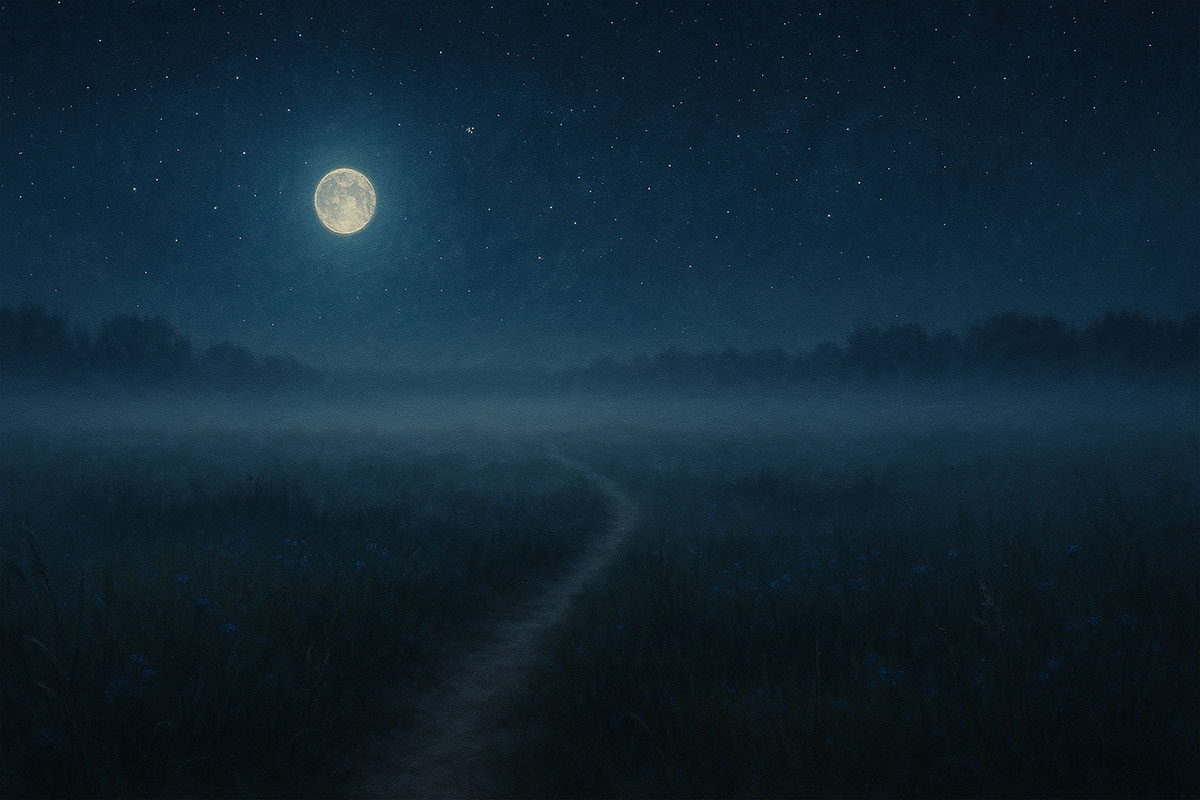
A wildflower trembling in the wind, a fox pausing in the tall grass, the hush of a field under the full moon—these moments do not demand our attention, yet they reward it endlessly when given.
Listening to these poets—my old companions in spirit—I’m reminded once again that the work of the soul is both simple and difficult.
Simple because all it asks is sincerity.
Difficult because sincerity requires courage: the courage to look at the world without turning away, and to look at ourselves with the same steadiness.
Whitman, Emerson, Thoreau, Millay, Rilke—each offered a different map for how to live with openness, how to love the world even when it breaks us, how to let language rise from the deepest part of our seeing.
Their answers were varied, but their devotion was the same.
If I have learned anything from them—and from the long conversation of my own life—it is this:
Pay attention.
Be astonished.
Tell about it.
Not because the world needs more poems,
but because the soul needs more truth.
And if we are fortunate,
the truth will lift its face from the grasses,
or the shoreline,
or the night sky,
and recognize us back.
Go gently.
Keep looking.
The world is waiting.
Short Bios:
Mary Oliver
Mary Oliver (1935–2019) was an American poet celebrated for her clarity, tenderness, and devotion to the natural world. Her work explored attention, presence, and the quiet revelations of everyday life. Winner of the Pulitzer Prize and the National Book Award, Oliver became one of the most beloved poets of the modern era, known for bringing readers into deeper relationship with nature and the soul.
Ralph Waldo Emerson
Ralph Waldo Emerson (1803–1882) was an American essayist, philosopher, and central figure of the Transcendentalist movement. His writings emphasized self-reliance, the divinity of nature, and the inherent wisdom of the individual soul. Emerson’s essays, including Nature and Self-Reliance, profoundly shaped American thought and inspired generations of writers and thinkers.
Henry David Thoreau
Henry David Thoreau (1817–1862), a naturalist, philosopher, and writer, is best known for Walden, his meditation on simple living close to nature. A student and friend of Emerson, Thoreau championed deliberate living, civil disobedience, and the spiritual necessity of solitude. His work continues to influence environmentalism, personal freedom, and contemplative culture.
Walt Whitman
Walt Whitman (1819–1892) was an American poet whose groundbreaking work Leaves of Grass transformed modern poetry. Bold, expansive, and radically democratic, Whitman celebrated the body, the self, and the interconnectedness of all living things. His voice remains one of the most influential and inclusive in American literary history.
Rainer Maria Rilke
Rainer Maria Rilke (1875–1926) was an Austrian poet and novelist known for his profound psychological insight and spiritual depth. His works, including Letters to a Young Poet and the Duino Elegies, explore solitude, transformation, and the inner life. Rilke’s language, both mystical and intimate, continues to guide readers seeking meaning and self-understanding.
Edna St. Vincent Millay
Edna St. Vincent Millay (1892–1950) was an American poet and playwright celebrated for her lyrical mastery, emotional intensity, and fiercely independent spirit. She won the Pulitzer Prize for Poetry in 1923 and became a leading voice of her generation. Millay’s work blends passion, wit, and musicality, capturing the complexities of love, freedom, and loss.
Percy Bysshe Shelley
Percy Bysshe Shelley (1792–1822) was an English Romantic poet known for his visionary imagination and radical idealism. Author of “Ode to the West Wind” and Prometheus Unbound, Shelley championed beauty, justice, and the transformative power of the human spirit. His passionate, lyrical style left a lasting mark on literature and political thought.
Leave a Reply