

Introduction by Dr. Frank Sulloway
Birth order is one of nature’s quiet architects. For decades, I have studied how siblings—raised under the same roof, by the same parents, with access to the same resources—nonetheless grow into remarkably different individuals. What explains this divergence? My research, compiled over many years in Born to Rebel, shows that siblings differentiate themselves as a matter of evolutionary strategy.
Firstborns tend to align with authority, structure, and the status quo. They defend the family’s established hierarchy because they benefit from it. Laterborns, however, face a very different adaptive landscape. Lacking the size, privilege, and parental investment granted to their older siblings, they often innovate—through creativity, humor, exploration, or unconventional thinking. This is not random variation; it is strategic differentiation, a way for children to reduce direct competition and increase their chances of thriving.
In these conversations, we explore this dynamic from multiple vantage points—psychology, anthropology, neuroscience, creativity, cultural history, and leadership. What emerges is a compelling portrait of human nature: one in which sibling order shapes not only personality, but the trajectory of innovation, rebellion, and even revolutions.
Birth order is not destiny, but it is a powerful influence—one that silently guides our choices, our opportunities, and the ways we carve out our identity in a complex world. I invite you to join us in examining this fascinating pattern that has shaped families, societies, and history itself.
(Note: This is an imaginary conversation, a creative exploration of an idea, and not a real speech or event.)
Topic 1 — Born to Rebel: Why Younger Siblings Break the Mold

Opening by Gad Saad
Gad Saad (smiling)
“I often say that human behavior is not random chaos but patterned chaos — beautifully structured by evolutionary pressures. Birth order is one of those pressures. So today, I want to explore why laterborns so often grow into rebels, innovators, and creative outliers. Let’s dive in.”
 Question 1
Gad Saad
“Let me begin here: What specific evolutionary mechanisms explain why laterborns consistently display more openness, innovation, and rebelliousness than firstborns? In other words, why does birth position produce such predictable psychological strategies?”
(Randomized order below.)
Frank Sulloway
“From an evolutionary adaptation standpoint, laterborns occupy a disadvantaged niche — smaller, weaker, and competing with an already established sibling. So they cannot win by dominance. They must differentiate. The most effective strategy is to explore alternative paths: creativity, openness, novelty-seeking, humor, and social engagement. Evolution essentially ‘forces’ laterborns to innovate socially and cognitively because survival through direct competition is a losing strategy. They must outperform through surprise, not strength.”
Esther Perel
“In family dynamics, the firstborn is often the repository of parental expectations. They become the guardian of continuity. Laterborns, in contrast, are liberated from this burden. They observe what works and what doesn’t — and improvise. Their creativity is relational: they charm, they negotiate, they strategize. The rebellion is not only evolutionary; it is emotional improvisation shaped in the micro-theater of the family.”
Jordan Peterson
“Well, hierarchies are ancient — millions of years old. Firstborns occupy the top position in the sibling dominance hierarchy from the day of birth. That produces conscientiousness, rule-following, and agreeableness within structure. Laterborns enter a hierarchy already claimed, so to gain attention and resources, they must adopt counter-strategies. They explore unknown territory — cognitive or behavioral — which mimics the broader human proclivity to seek out new niches and expand the known world.”
Malcolm Gladwell
“I like to think of siblings as players entering a game in progress. The firstborn sets the rules. The laterborn’s first thought is: ‘How do I play this game differently?’ That is the essence of innovation — a response to constraints. Creativity is often about finding the side door when the front door is blocked. Laterborns are natural side-door thinkers.”
Robert Sapolsky
“In many primates, you see that older offspring monopolize resources. Younger individuals develop alternative social strategies — affiliative behavior, risk-taking, cunning, bold exploration. This pattern is not uniquely human. It’s a deeply conserved biological phenomenon. Humans simply express it in far more elaborate cognitive ways, including art, humor, and technological innovation.”
Question 2
Gad Saad
“Let’s build on that. How does the struggle for identity inside the family translate into creativity and non-conformity later in life? What is the psychological chain reaction from childhood niche differentiation to adult innovation?”
(Randomized order.)
Malcolm Gladwell
“Identity is scarcity-driven. If the firstborn dominates competence in one domain — academic achievement, reliability, responsibility — the younger sibling must differentiate to avoid redundancy. That differentiation becomes a lifelong habit: finding the space no one else is occupying. It’s why so many entrepreneurs are laterborns. They instinctively scan the environment for gaps.”
Esther Perel
“Identity is forged in relation. A younger sibling pays exquisite attention to relational cues — tone, mood, status, inclusion. They develop emotional agility. That emotional agility often becomes creative agility. They experiment with humor, charm, improvisation — all of which translate into creative confidence later in life. Creativity is, in some sense, a relational performance.”
Frank Sulloway
“In my data, laterborns score significantly above firstborns in openness to experience — the psychological trait most strongly correlated with creativity. Identity differentiation is not symbolic; it creates measurable personality differences. A child who cannot compete through conformity must compete through originality. Once that niche is established, it becomes a stable personality pathway into adulthood.”
Robert Sapolsky
“Stress physiology plays a role too. Firstborns often experience chronic low-grade pressure — parental expectations, leadership roles — which increases caution and risk-aversion. Laterborns, with less pressure, tend to develop a more exploratory stress response profile. This shapes identity: one child becomes a stabilizer, the other a disruptor. Both roles are adaptive. But the disruptor’s identity is tied to novelty.”
Jordan Peterson
“You grow into the role you practice. If you spend childhood experimenting with alternatives because someone else has already claimed the main route, your identity forms around experimentation. Competence emerges from repeated behavioral patterns, and laterborns often practice creative problem-solving more than firstborns. Identity becomes the echo of those strategies.”
Question 3
Gad Saad
“Finally: Is rebellion a personality trait, or is it fundamentally a survival strategy produced by birth order? In other words — are rebels born, or designed by circumstance?”
(Randomized order.)
Jordan Peterson
“It’s both. There are temperamental predispositions, but birth order acts as a powerful environmental shaper. Your biological temperament interacts with your hierarchical position. The youngest in a family of conformists may still rebel simply because rebellion is the only unoccupied niche. It’s niche-seeking behavior layered atop temperament.”
Frank Sulloway
“My research strongly suggests rebellion is mainly adaptive strategy, not innate personality. Birth order predicts attitudes toward social change, scientific innovation, political revolution, and risk-taking. These patterns hold even when controlling for genetics and socioeconomic status. Rebellion emerges from the necessity to differentiate.”
Esther Perel
“I see rebellion as a relational language. It communicates difference. It says: ‘I am not you; I am myself.’ For many laterborns, rebellion is a declaration of individuality. It is not mere defiance; it is self-definition.”
Robert Sapolsky
“In primates, when an individual cannot compete through dominance, they innovate. They try new foods, new territories, new alliances. Rebellion is simply the manifestation of exploring alternatives. It’s strategy, not essence.”
Malcolm Gladwell
“I’d say rebels are made. Circumstance gives them a reason to challenge. The world changes because someone says, ‘This path is closed — I’m going to try another.’ And that someone is often the younger sibling.”
Closing by Gad Saad
Gad Saad (smiling)
“What I love about this conversation is that it highlights how much of human creativity emerges from constraint — from being second, or third, or last in line. The younger sibling survives by inventing. Innovation is not merely talent; it’s strategy. And perhaps that explains why so many of history’s great disruptors were, quite literally, born to rebel.”
Topic 2 — The Firstborn Paradox: Order, Responsibility, and the Weight of Expectations
Opening by Gad Saad
Gad Saad (smiling)
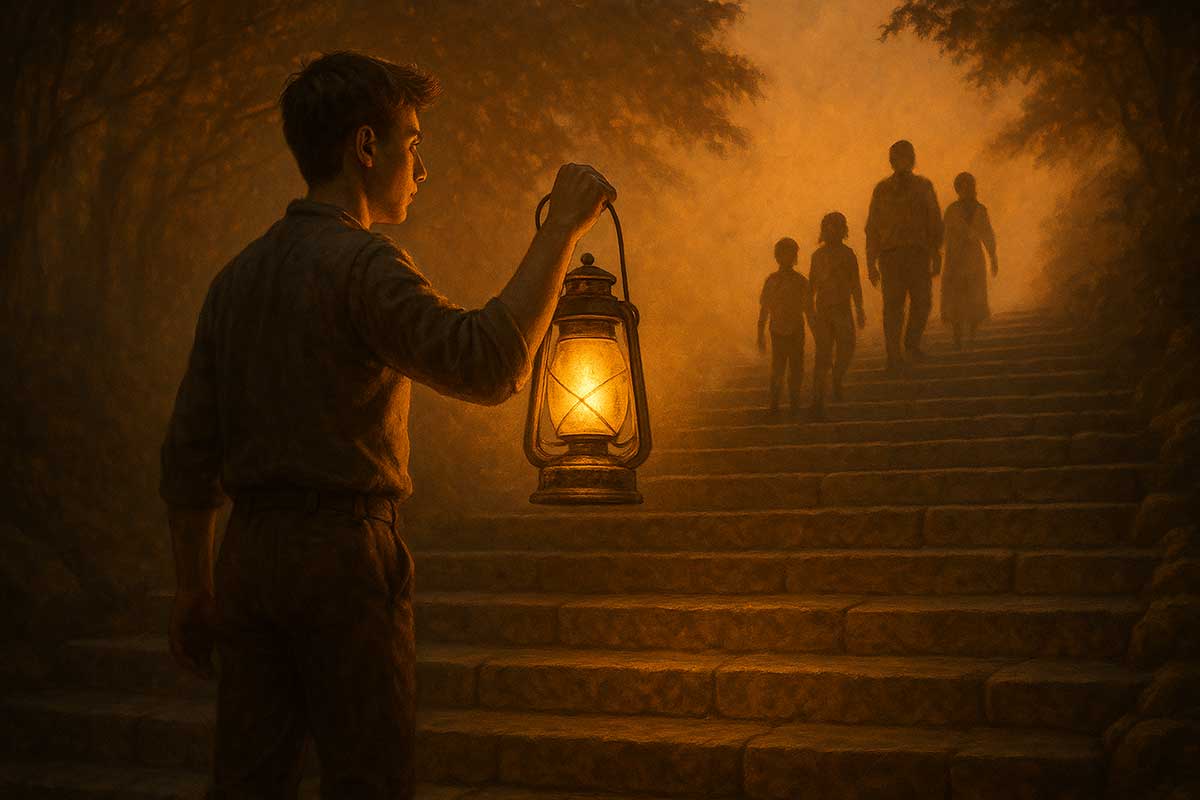
“Whenever we speak about birth order, people immediately focus on the rebelliousness of younger siblings. But the firstborn story is just as important — maybe more. Firstborns often grow into leaders, achievers, stabilizers of society. Yet behind that reliability is often a heavy psychological load. Today, we’re going to look at the paradox of being first: the privilege, the pressure, and the personality it shapes.”
Question 1
Gad Saad
“To begin: To what extent is the firstborn ‘responsibility profile’ biologically innate versus socially imposed? In other words, are firstborns naturally conscientious, or do they become conscientious because the family environment forces that role upon them?”
(Randomized responses below.)
Dan Siegel
“The moment a firstborn arrives, they’re enveloped with undivided parental attention. That early relational environment fosters neural pathways associated with responsibility, predictability, and compliance. It’s not that biology predetermines these traits — it’s that early experiences sculpt the brain. The firstborn becomes the ‘prototype child,’ carrying the full weight of parental hope.”
Judith Rich Harris
“We must be cautious not to overstate parental influence. Children are heavily shaped by peer groups and broader social contexts. However, birth order does influence how siblings interact — and siblings are a child’s earliest peers. The firstborn’s role emerges from sibling dynamics as much as parenting. They become responsible because they are treated as the older one by the other children.”
Frank Sulloway
“My data suggest that the firstborn tendency toward conscientiousness is largely strategic. Firstborns maintain the parental investment advantage by aligning themselves with authority. It is less about innate personality and more about preserving dominance. When parents approve, resources flow. Conscientiousness becomes the path of least resistance — and greatest reward.”
Angela Duckworth
“Grit requires two conditions: expectation and identity. Firstborns often internalize responsibility as part of their identity because they see themselves as the model. Parents tend to be stricter with firstborns, but firstborns also absorb more of that structure willingly. The drive to meet expectations — to ‘be the one who gets it right’ — is an incredibly strong motivator.”
Simon Sinek
“Leadership is often a firstborn phenomenon because leadership is not simply about competence — it’s about accountability. Firstborns are told implicitly: ‘You go first, you set the example.’ They grow up with practice reps in accountability. That’s not biology; that’s repeated responsibility. Experience becomes identity.”
Question 2
Gad Saad
“Let’s take this further. Is there cross-cultural universality in firstborn conformity and rule-following, or do some cultures invert the pattern? Put differently: Is the firstborn profile a human universal or culturally dependent?”
(Randomized responses below.)
Frank Sulloway
“In my comparative studies, firstborns consistently align with authority across cultures. Whether in political revolutions, scientific revolutions, or even household dynamics, firstborns resist change more often than laterborns. The degree varies across cultures, but the pattern holds. Even in collectivist cultures, where younger siblings may carry family obligations too, the firstborn is still the anchor of tradition.”
Simon Sinek
“In hierarchical cultures, the firstborn role is amplified — they become the guarantor of stability. In more individualistic cultures, the responsibility is still there, but it’s expressed through achievement rather than obedience. The expression shifts, but the pattern remains.”
Dan Siegel
“Attachment and expectation are remarkably universal. In most societies, the firstborn receives more initial attention simply because they arrive first. This shapes emotional regulation patterns — predictability, caution, structure. Cultural context can modulate these tendencies, but it does not eliminate them.”
Judith Rich Harris
“I’ll push back slightly. Peer groups and societal expectations also dictate roles, sometimes overriding family influence. In cultures where younger siblings assume major responsibilities — for example, in some South Asian or Middle Eastern households — the pattern is less strict. But generally, the firstborn still becomes the ‘standard.’ Even if shared, the role is never reversed.”
Angela Duckworth
“Responsibility is reinforced everywhere: school, religious institutions, extended family. Culture doesn’t erase the firstborn effect — it layers additional expectations on top of it. In the most achievement-oriented cultures, firstborns often become the most achievement-oriented individuals.”
Question 3
Gad Saad
“And now the paradox: Do firstborns pay a psychological cost for their higher achievement and responsibility? Does their conformity and success come with hidden burdens — such as anxiety, perfectionism, or rigidity?”
(Randomized responses below.)
Angela Duckworth
“Yes — grit is a double-edged sword. Persistence can become perfectionism. Responsibility can become self-criticism. Firstborns often internalize mistakes as identity threats. They excel because they push themselves, but they often suffer because they cannot forgive themselves.”
Dan Siegel
“The psychological cost emerges in rigidity. When a child’s identity is built around being responsible and correct, deviations can trigger intense stress. Their nervous system becomes attuned to predictability. Life, however, is unpredictable. Many firstborn adults struggle with flexibility — emotional and cognitive.”
Judith Rich Harris
“The pressure comes from being watched — by parents, siblings, society. Firstborns know they are the test case, the template. That scrutiny shapes behavior, but it also shapes anxiety. They live in a psychological spotlight they did not choose.”
Frank Sulloway
“In revolutions — scientific or political — firstborns are often the least likely to embrace paradigm shifts. This hesitation is not only strategic; it is emotional. Their investment in the status quo becomes part of their self-worth. Change feels like losing their identity. That is the burden.”
Simon Sinek
“I see many firstborn leaders who struggle with vulnerability. They believe they must always know the answer. That is exhausting. Leadership requires openness, humility, and adaptability. Yet the firstborn narrative — ‘you go first, you know better’ — produces leaders who fear being wrong. The emotional cost is hidden behind competence.”
Closing by Gad Saad
Gad Saad
“What I find fascinating about the firstborn paradox is that the very traits that make firstborns the pillars of families — reliability, responsibility, conscientiousness — are the same traits that can imprison them psychologically. The firstborn becomes the keeper of the rules, the guardian of the family’s identity. It’s a noble role, but also a heavy one. And perhaps understanding this — truly understanding it — is the first step toward compassion for the invisible burdens they carry.”
Topic 3 — Creativity, Courage & Happiness: Does Birth Order Shape Our Emotional Destiny?

Opening by Gad Saad
Gad Saad (smiling)
“I often say human behavior is both patterned and purposeful. One of the most powerful patterns we see is the link between birth order, creativity, and well-being. Laterborns tend to be more open, more exploratory, more willing to break rules — and these very traits often predict higher happiness. So today, I want to examine that relationship more deeply: is creativity the royal road to joy? And if so, did our birth position quietly script that path for us?”
Question 1
Gad Saad
“I’d like to begin with the causal chain. Why does creative expression correlate so strongly with happiness — and do laterborns indeed score higher along that chain? What’s the psychological mechanism behind this?”
(Randomized responses below.)
Mihaly Csikszentmihalyi
“Creativity produces flow. When a person is fully immersed in a task, time dissolves, self-judgment quiets, and the mind experiences optimal functioning. Laterborns, because of their greater openness and willingness to experiment, tend to enter flow states more readily. The less rigid the personality, the easier it is to lose oneself in meaningful activity. That is pleasure, but also fulfillment.”
Brené Brown
“Creativity requires vulnerability — the courage to be seen. Laterborns are often more familiar with that vulnerability because they’ve navigated comparison from birth. They learn early that they won’t win by mimicry; they must win by originality. And when creativity is embraced as identity, it becomes self-acceptance. Vulnerability integrated with expression is one of the deepest sources of joy.”
Tal Ben-Shahar
“Happiness is not the absence of pain; it is the presence of meaning, engagement, and growth. Creativity supports all three. Laterborns, by being more exploratory and playful, tend to engage with life in ways that spark intrinsic motivation. Their curiosity leads to engagement. Their experimentation leads to growth. And their expression leads to meaning.”
Julia Cameron
“Creativity is a spiritual act — not religious, but soulful. Laterborns cultivate creativity as survival: the younger child charms, entertains, amuses, and improvises to find their place. Eventually that improvisation becomes their inner language. When we express ourselves freely, without trying to meet the impossible standard of perfection, we heal. In that healing, we find happiness.”
Carol Dweck
“Creativity requires a growth mindset. Laterborns are more exposed to ‘being learners’ rather than ‘being judged.’ The firstborn is praised for achievement; the younger child is often praised for effort, humor, or novelty. This naturally cultivates a growth mindset — and people with growth mindsets report higher long-term well-being. Creativity thrives in environments where mistakes are acceptable. Laterborns live that environment.”
Question 2
Gad Saad
“Let’s dig deeper. Is the creativity advantage in laterborns simply a function of birth order, or is it driven by the reduced pressure and expectations placed upon them? Put differently: is happiness a by-product of freedom?”
(Randomized responses below.)
Julia Cameron
“Freedom is oxygen for creativity. The firstborn is often trapped in the psychology of ‘should,’ while the laterborn swims in the psychology of ‘could.’ That shift — from duty to possibility — is liberation. Creative people need room to play, to pivot, to try again. The younger child receives that room more naturally.”
Carol Dweck
“When you grow up without the crushing expectation to be the example, you develop resilience through experimentation. Laterborns become comfortable with uncertainty. They build self-belief not through performance but through discovery. Reduced pressure fosters intrinsic motivation, which is deeply tied to happiness.”
Mihaly Csikszentmihalyi
“Freedom allows for exploratory behavior, which increases the probability of encountering activities that produce flow. The more exploratory a person is, the more likely they are to find passions that sustain their well-being. Laterborns have more room to explore simply because the path ahead is not rigidly defined.”
Tal Ben-Shahar
“The science of happiness is clear: autonomy is essential. When laterborns are allowed to be themselves rather than the standard-bearer, the autonomy they enjoy becomes emotional wealth. Happiness follows autonomy like a shadow.”
Brené Brown
“Pressure disconnects us from authenticity. Freedom connects us to it. Laterborns often escape the perfectionism trap that ensnares many firstborns. When people feel free to show up imperfectly, they experience joy more readily. Imperfection is not the enemy of creativity; it is the birthplace of it.”
Question 3
Gad Saad
“And finally: Can firstborns cultivate younger-sibling levels of creativity and joy later in life — or are these traits relatively fixed? In other words, can the ‘responsibility child’ rewrite their emotional destiny?”
(Randomized responses below.)
Tal Ben-Shahar
“Absolutely. Happiness skills are learnable. Creativity is learnable. But the firstborn must consciously release the narrative of perfection and embrace experience instead of performance. Happiness is built, not inherited.”
Julia Cameron
“The inner artist never dies. It simply goes into hiding. When firstborns reclaim play — morning pages, small creative risks, gentle experimentation — they rediscover the joy they were never allowed to fully inhabit. Creativity is a birthright, not a birth-order privilege.”
Carol Dweck
“Mindsets can change. Fixedness can be softened. The firstborn who shifts from a performance mindset to a growth mindset experiences an explosion of creativity. The brain is plastic. Behavior is plastic. Identity is plastic.”
Brené Brown
“Joy is available to anyone who is willing to be vulnerable. The challenge for firstborns is permission — to try, to fail, to not always be the strong one. When they grant themselves that permission, creativity follows. So does joy.”
Mihaly Csikszentmihalyi
“Flow is accessible to all. What changes is the threshold. Firstborns must unlearn rigidity. Once they do, they can achieve creative fulfillment equal to, or even exceeding, laterborns. The essential ingredient is openness.”
Closing by Gad Saad
Gad Saad
“What we’ve learned today is that creativity is not merely an artistic trait — it is a psychological engine for well-being. Laterborns often have a head start because their role demands exploration. But emotional destiny is not fixed. Anyone can cultivate the openness of a younger sibling and tap into the joy of creative play. If happiness is the by-product of courageous expression, then perhaps we all have a rebel within us — waiting to be awakened.”
Topic 4 — Evolutionary Strategy: Are Sibling Roles Designed for Survival?

Opening by Gad Saad
Gad Saad (smiling)
“Evolution is the ultimate economist — ruthless in allocating resources, brilliant in generating diversity, and completely indifferent to our feelings. One of the most fascinating expressions of this evolutionary logic is sibling differentiation. Why would nature produce one child who guards tradition and another who breaks it? Are these roles accidental, or are they adaptive designs forged by millions of years of selection pressures? That’s what we are exploring today.”
Question 1
Gad Saad
“To begin, I want to ask: What adaptive benefits does a family gain from producing both a rule-following child and a risk-taking one? What does evolution achieve by diversifying roles within the same genetic unit?”
(Randomized responses below.)
Sarah Blaffer Hrdy
“In cooperative mammals, variation within a family increases the chances that at least one offspring will thrive under unpredictable conditions. Firstborns often excel in stable environments where conforming maintains access to resources. Laterborns excel when conditions shift — when new strategies or exploration are required. The family becomes a diversified portfolio of survival strategies.”
Richard Dawkins
“From the gene’s-eye view, producing variation among children is tremendously advantageous. If all offspring expressed the same competitive strategy, they’d directly clash and waste genetic resources. One plays dominance; another plays innovation. The aim is not family harmony — it’s maximizing genetic spread. Differentiation reduces internal competition and increases the probability of reproductive success across varied conditions.”
Daniel Lieberman
“Our ancestors lived in volatile environments: shifting climates, scarce food, unpredictable predators. A uniform strategy would have been disastrous. A cautious, tradition-oriented firstborn ensured stability and continuity. A bold, exploratory laterborn increased the chances of discovering new foods, new routes, new tools. One child protects the known; the other expands the possible.”
David Buss
“Sibling differentiation is also about parental investment optimization. Parents unconsciously channel resources differently based on birth order. The firstborn is groomed for predictable success — responsibility, status acquisition, alliance with authority. Laterborns receive less direct investment, so they adopt higher-variance strategies. Sometimes they fail spectacularly; sometimes they innovate dramatically. Evolution favors the risk distribution.”
Robert Sapolsky
“You see this across primates: older siblings tend to enforce hierarchy while younger ones experiment with alternative social strategies. This isn’t philosophical — it’s behavioral necessity. When the top niche is occupied, you either innovate or perish. Families benefit because they produce individuals suited for both stable and unstable worlds.”
Question 2
Gad Saad
“Let’s go deeper. Are there documented parallels in other species where laterborns adopt more exploratory or rebellious roles? If this pattern is truly evolutionary, it must appear outside humans.”
(Randomized responses below.)
Richard Dawkins
“In birds, especially species that raise multiple offspring simultaneously, later hatchlings often adopt alternative foraging strategies. Some become opportunistic feeders, others become more risk-prone. In fish and amphibians, younger individuals explore fringe territories while dominant older siblings monopolize the central resource zones. This is not uniquely human; it's a broad evolutionary pattern.”
Robert Sapolsky
“In olive baboons, younger males often form unusual coalitions or attempt novel strategies to gain access to females or food. The dominant older males follow rigid rules; the younger ones bend them. The parallel to human laterborn innovation is unmistakable. Hierarchies create creativity at the bottom.”
Sarah Blaffer Hrdy
“In cooperative breeding mammals, such as marmosets, laterborns frequently take on unconventional roles — helpers, scouts, alternative caregivers. These roles increase the survival of the entire group. Nature rewards flexibility, and laterborns often own that flexibility.”
Daniel Lieberman
“In early human tribes, we see bone and tool evidence suggesting that younger males often undertook riskier hunts or exploration trips. They ranged farther from camp, experimented with new tool shapes, or engaged in first-contact interactions. The archaeological record supports behavioral differentiation based on age and, likely, sibling order.”
David Buss
“Risk-taking as an adaptive strategy is widespread. From wolves to meerkats, younger members experiment more, challenge more, and innovate more. Parallels to human sibling roles are everywhere because the underlying pressures — hierarchy, resource scarcity, competition — are universal across social species.”
Question 3
Gad Saad
“And finally: What is the strongest evidence that birth-order effects are evolutionarily functional rather than random family quirks? Why should we believe nature designed this?”
(Randomized responses below.)
David Buss
“The consistency of the pattern is the strongest evidence. Across cultures, socioeconomic classes, and historical eras, you see remarkably stable birth-order traits: firstborn conscientiousness, laterborn openness. Stable cross-cultural patterns are rarely random — they are typically adaptive solutions shaped by selection pressures.”
Richard Dawkins
“The logic of resource distribution is evolutionary bedrock. Firstborns monopolize initial parental investment. Laterborns adapt to less favorable conditions by modifying strategy. This is precisely the kind of role specialization evolution produces when confronted with resource gradients.”
Sarah Blaffer Hrdy
“The emotional landscape of parenting itself provides evidence. Parents are unconsciously more experimental with laterborns — less anxious, more permissive. This creates a developmental environment that promotes exploration. The alignment of parental psychology with adaptive role differentiation is not accidental; it is co-evolved behavior.”
Daniel Lieberman
“Anthropological data show that societies with high survival unpredictability rely more heavily on younger siblings for exploration and risk-taking. This suggests a functional role embedded in cultural expectations — not random noise. Families intuitively lean into the adaptive division of roles.”
Robert Sapolsky
“If this were random, we’d see noise. But we see patterns — stable, predictable, cross-species patterns. Hierarchy produces conformity at the top and creativity at the margins. That is evolution’s signature. Not randomness, but beautiful, structured, strategic variation.”
Closing by Gad Saad
Gad Saad
“What fascinates me is that birth order isn’t merely a family story — it’s an evolutionary story. One child stabilizes the tribe; the other expands it. One protects the map; the other redraws it. These roles were not designed for domestic harmony; they were designed for survival in a dangerous world. And perhaps the most remarkable insight is this: the tension between the rule-follower and the rebel is not a flaw in human nature — it is the engine of our species’ success.”
Topic 5 — The Innovation Gap: How Birth Order Shaped History, Art, Science, and Revolutions
Opening by Gad Saad
Gad Saad (smiling)
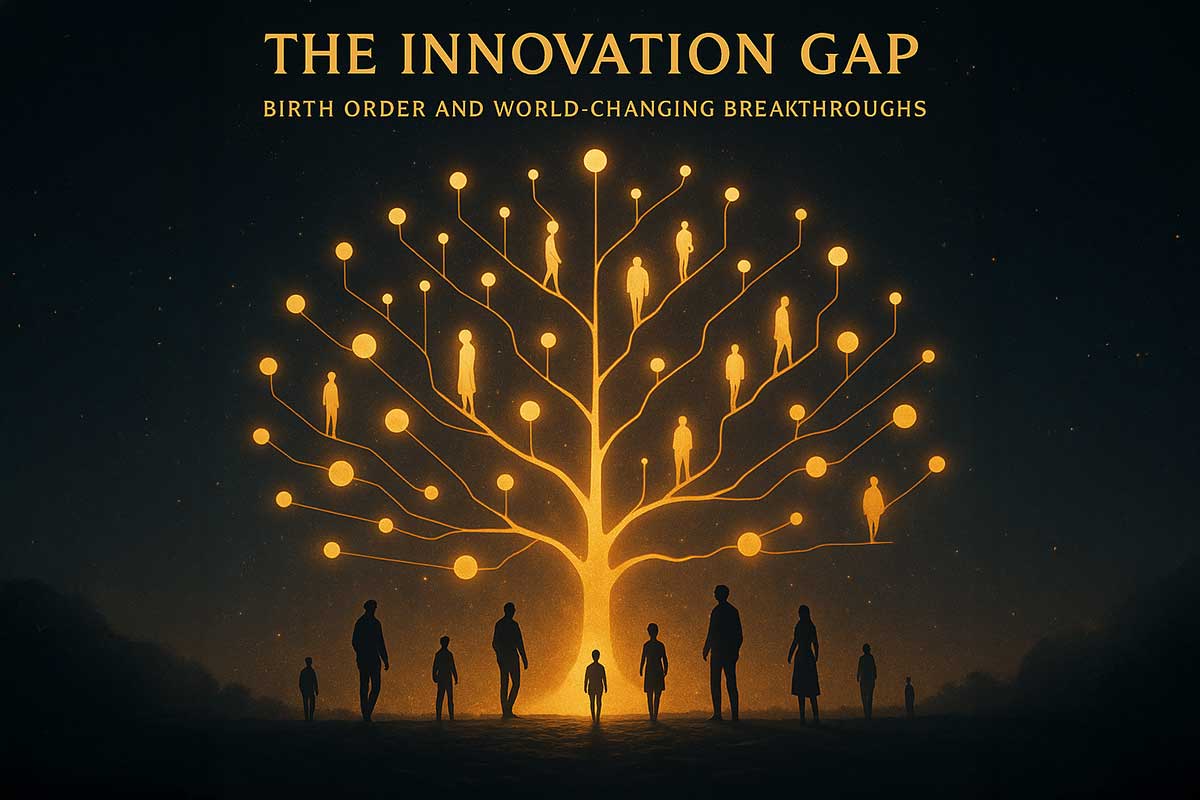
“Throughout history, we find a recurring pattern: groundbreaking thinkers, disruptive artists, revolutionary scientists — so many of them are laterborns. It raises a provocative question: Is innovation simply a matter of individual brilliance, or is it shaped by the accidents of family structure? Today, we explore whether humanity’s major leaps forward would exist at all without birth-order dynamics quietly steering who becomes the rule-keeper and who becomes the rule-breaker.”
Question 1
Gad Saad
“I want to start here: Is there quantitative or historical evidence showing that major innovators are disproportionately laterborns? Or is that just an attractive narrative?”
(Randomized responses below.)
Walter Isaacson
“When you look at innovation biographies closely, patterns emerge. Steve Jobs: laterborn. Benjamin Franklin: laterborn. Leonardo da Vinci: laterborn. The younger-sibling advantage shows up again and again — they’re freer, more experimental, more willing to break form. They rarely inherit the family business; they inherit the open space of possibility.”
Yuval Noah Harari
“History is shaped by outsiders — people who do not benefit from the existing structure. Laterborns are often structural outsiders in their own homes, and that orientation matters. Revolutions, scientific or political, begin with those who feel less invested in the old hierarchy. Younger siblings are not defending the world; they are reinventing it.”
Nassim Nicholas Taleb
“Innovation is a tail event — low probability but high impact. Laterborns tend to adopt high-variance strategies because they lack the stable, privileged position of firstborns. You need risk-takers for breakthroughs. A society of firstborns would be fragile — stable, maybe, but stagnant. A society with laterborns brings randomness, experimentation, and antifragility.”
Steven Johnson
“When you map networks of creativity — historical salons, scientific communities, artistic clusters — the innovators often come from backgrounds requiring deviation from norms. Birth order is one of the earliest constraints a person encounters. Laterborns grow up navigating around existing patterns. That naturally produces idea pathways that diverge from convention.”
Ian Bremmer
“Political innovation follows this pattern too. Outsider leaders, reformers, disruptors — many have laterborn psychological profiles. They’re not invested in preserving the existing power structures. Whether you look at movements in Europe, Asia, or the U.S., the big shifts come from people who were not groomed to protect the status quo.”
Question 2
Gad Saad
“Let’s go deeper. Would human cultural evolution have stagnated without sibling differentiation? If all children behaved like firstborns — conscientious, rule-following, risk-averse — what would the world look like?”
(Randomized responses below.)
Nassim Nicholas Taleb
“Stagnant. Predictable. And ultimately doomed. Progress requires convexity — trial and error with upside. Firstborn psychology minimizes variance; laterborn psychology amplifies it. Innovation is essentially variance with survival. Without rebels, we’d have no breakthroughs — and no resilience.”
Yuval Noah Harari
“Civilizations rise through stability but advance through disruption. Firstborns help establish order; laterborns challenge it. Remove the challenger, and cultural evolution slows to a crawl. Remove the stabilizer, and societies collapse. History’s progress is built on this dance — structure and rebellion, order and innovation.”
Walter Isaacson
“Every scientific or artistic golden age required rule-followers and rule-breakers. You see it in the Renaissance, in the Enlightenment, in Silicon Valley. The stability of institutions allowed space for experimentation — but the experimenters were not usually the ones guarding the institutions. That balance is essential.”
Steven Johnson
“Innovation ecosystems depend on diversity of cognitive approaches. If everyone solved problems the same way, breakthroughs would evaporate. Birth order is one of the earliest ways diversity is created inside a single family. It’s nature’s first injection of cognitive variety.”
Ian Bremmer
“International systems behave the same way. Too much conformity produces stagnation; too much rebellion produces chaos. Human societies need both. If birth-order dynamics naturally produce both stabilizers and disruptors, then evolution essentially engineered a dual-engine system for progress.”
Question 3
Gad Saad
“And now the final question: How do we disentangle birth-order effects from other variables — socioeconomic status, parental personality, chance? Why should we believe birth order plays a meaningful role in shaping innovators rather than being coincidental?”
(Randomized responses below.)
Steven Johnson
“You can’t isolate any human variable perfectly, but you can identify patterns that repeat across eras, cultures, and disciplines. Birth order is one of those robust patterns. When historical, psychological, and sociological evidence converge, you pay attention.”
Yuval Noah Harari
“Chance shapes individuals, but patterns shape civilizations. The recurring role of outsiders in innovation is too consistent to dismiss. Birth order is one mechanism that produces outsiders within families. It doesn’t determine destiny — but it influences probability.”
Walter Isaacson
“When writing biographies, you look for formative pressures. Over and over, younger siblings describe feeling compelled to differentiate — to be seen, to stand out, to escape comparison. That psychological tension often becomes creative drive. These patterns don’t guarantee innovation; they set the stage for it.”
Nassim Nicholas Taleb
“Even if birth order explains only a small slice of variance, its impact is asymmetric. One rebel can alter the entire system. You don’t need strong correlation when dealing with tail events. You need the right kind of correlation — one that creates rare individuals capable of massive impact.”
Ian Bremmer
“I see it geopolitically: leaders who reshape systems often emerge from roles that forced them to think differently from childhood. Birth order is one of several forces — but it’s a significant one. It influences how people deal with hierarchy, how they negotiate power, and how they approach change.”
Closing by Gad Saad
Gad Saad
“What strikes me most is how deeply birth order is woven into the human story. Not as fate, but as a nudge — pushing one child to stabilize and another to explore. If innovators are more often laterborns, it is not because they were destined for greatness, but because they were trained from childhood to question the status quo. And perhaps the real insight is this: human progress wasn’t built on conformity or rebellion alone — it was built on the tension between them.”
Final Thoughts by Dr. Gad Saad

Including what he learned — a new insight he didn’t expect going into these discussions.
What struck me most through these dialogues—and I say this sincerely as someone who has studied birth order for decades—is that I came in thinking primarily about strategy, but I walked away thinking much more about emotion.
I’ve always explained birth-order patterns through the cold, elegant logic of evolution: the firstborn safeguards stability, the laterborn explores novelty. But this group revealed something I hadn’t fully internalized:
 Creativity isn’t just a strategy for differentiation—it’s an emotional language.
Firstborn conscientiousness isn’t merely adaptive—it’s often a silent burden.
The rebel isn’t simply breaking rules—they’re seeking visibility and identity.
Creativity isn’t just a strategy for differentiation—it’s an emotional language.
Firstborn conscientiousness isn’t merely adaptive—it’s often a silent burden.
The rebel isn’t simply breaking rules—they’re seeking visibility and identity.
Julia Cameron showed me that creativity is a form of healing.
Brené Brown reminded me that openness requires vulnerability, not just novelty-seeking.
Tal Ben-Shahar reframed happiness as the interplay between autonomy and meaning.
And the evolutionary scholars demonstrated that emotional roles within families mirror survival strategies shaped over millennia.
What I learned—what genuinely surprised me—is that birth order doesn’t just shape what we do.
It shapes how we feel while doing it.
Firstborns carry the invisible armor of responsibility—strong, but heavy.
Laterborns carry the spark of improvisation—bright, but uncertain.
And yet both roles, in their own ways, contribute something essential to our species:
the stability that keeps us grounded, and the creativity that keeps us evolving.
So here’s my final reflection:
If you’re a firstborn, allow yourself moments of rebellion. If you’re a laterborn, appreciate the shoulders you stood on. And if you're an only child—well, you’ve been both the president and the revolution your whole life, so congratulations.
Understanding birth order doesn’t box us in.
It liberates us—because once we see the pattern, we can choose how to transcend it.
That, perhaps, is the most human capacity of all.
Short Bios:
Frank Sulloway is an American psychologist and historian of science best known for his landmark work Born to Rebel. His research shows how birth order shapes personality, creativity, and attitudes toward authority, emphasizing sibling differentiation as a core evolutionary strategy.
Malcolm Gladwell is a bestselling author and journalist whose books explore hidden patterns behind human behavior. His work connects birth order, opportunity, and social environments to creativity, achievement, and innovation.
Jordan Peterson is a Canadian psychologist and professor whose work focuses on personality theory, human motivation, and social hierarchies. His insights highlight how family structures and early roles shape adult identity.
Esther Perel is a psychotherapist and author who examines relationships, desire, and emotional dynamics. Her perspective emphasizes how family roles and early relational patterns influence later identity and self-expression.
Robert Sapolsky is a neuroscientist and primatologist known for studying stress, social hierarchies, and behavioral biology. His research reveals deep parallels between human sibling roles and patterns found across primate societies.
Judith Rich Harris was an independent researcher and author of The Nurture Assumption, offering influential critiques of traditional views on parental influence. She highlighted the powerful roles of peers, siblings, and social environments.
Angela Duckworth is a psychologist known for her work on grit, perseverance, and long-term achievement. Her research explains why firstborns often excel in structured, high-expectation environments.
Dan Siegel is a clinical professor of psychiatry whose work in interpersonal neurobiology explores how early relationships shape emotional regulation, personality, and brain development.
Simon Sinek is a leadership theorist and author known for exploring purpose, identity, and responsibility. His frameworks shed light on why firstborns often step naturally into leadership roles.
Julia Cameron is an author and creativity teacher best known for The Artist’s Way. Her work helps individuals reclaim creativity through gentle practice, emotional expression, and artistic freedom.
Mihaly Csikszentmihalyi was a psychologist who developed the concept of “flow,” the state of deep immersion in meaningful activity. His research connects creativity with fulfillment and well-being.
Carol Dweck is a Stanford psychologist known for her research on fixed versus growth mindsets. Her work explains how early feedback—often shaped by birth order—affects confidence, creativity, and resilience.
Tal Ben-Shahar is a positive-psychology expert whose teaching focuses on happiness, meaning, and emotional well-being. He highlights how autonomy and growth shape long-term life satisfaction.
Brené Brown is a researcher and author who studies vulnerability, courage, and emotional connection. She shows how authentic self-expression—often stronger in laterborns—supports joy and creativity.
Richard Dawkins is an evolutionary biologist and author whose gene-centered view of evolution helps explain why siblings adopt divergent strategies for survival and identity formation.
Sarah Blaffer Hrdy is an anthropologist and primatologist whose work explores maternal behavior, cooperative breeding, and evolutionary family dynamics. Her findings illuminate how sibling roles support group survival.
David Buss is an evolutionary psychologist known for studying mating strategies, personality variation, and adaptive behavior. His work situates birth order within broader evolutionary mechanisms of competition and differentiation.
Daniel Lieberman is a biological anthropologist who studies human evolution, endurance, and adaptation. He provides long-view evolutionary context for why siblings specialize in different behavioral strategies.
Yuval Noah Harari is a historian and author whose books explore how human psychology and collective narratives shape global development. He emphasizes the role of outsiders—including laterborns—in driving social and cultural revolutions.
Walter Isaacson is a biographer of major innovators such as Steve Jobs, Leonardo da Vinci, and Einstein. His work highlights personal patterns—including birth-order influences—that drive creativity and breakthrough thinking.
Steven Johnson is an author who explores innovation, networks, and the development of new ideas. He shows how cognitive diversity—including that shaped by sibling roles—fuels discoveries.
Nassim Nicholas Taleb is a mathematician and risk theorist known for The Black Swan and Antifragile. He studies how rare, high-impact individuals—often rebels or outsiders—reshape entire systems.
Ian Bremmer is a political scientist and founder of Eurasia Group, known for analyzing global risks and power dynamics. His insights connect challenger psychology with political and societal transformation.
Leave a Reply