• Skip to main content
  • Skip to primary sidebar
  • Skip to footer
ImaginaryTalks.com
  • Spirituality and Esoterica
    • Afterlife Reflections
    • Ancient Civilizations
    • Angels
    • Astrology
    • Bible
    • Buddhism
    • Christianity
    • DP
    • Esoteric
    • Extraterrestrial
    • Fairies
    • God
    • Karma
    • Meditation
    • Metaphysics
    • Past Life Regression
    • Spirituality
    • The Law of Attraction
  • Personal Growth
    • Best Friend
    • Empathy
    • Forgiveness
    • Gratitude
    • Happiness
    • Healing
    • Health
    • Joy
    • Kindness
    • Love
    • Manifestation
    • Mindfulness
    • Self-Help
    • Sleep
  • Business and Global Issues
    • Business
    • Crypto
    • Digital Marketing
    • Economics
    • Financial
    • Investment
    • Wealth
    • Copywriting
    • Climate Change
    • Security
    • Technology
    • War
    • World Peace
  • Culture, Science, and A.I.
    • A.I.
    • Anime
    • Art
    • History & Philosophy
    • Humor
    • Imagination
    • Innovation
    • Literature
    • Lifestyle and Culture
    • Music
    • Science
    • Sports
    • Travel
You are here: Home / Compassion / The Antifa Children’s Story: The Little Lantern Keepers

The Antifa Children’s Story: The Little Lantern Keepers

December 1, 2025 by Nick Sasaki Leave a Comment

Introduction by Mister Rogers 

Hello, neighbor.

I’m so glad you’re here with us today.
Stories have a special way of helping us understand things that feel confusing or even a little scary. Sometimes the world asks us to choose sides, or tells us that people who look different or believe different things aren’t safe to be around. And when we hear that again and again, we can begin to feel afraid of one another.

But I’ve learned something over the years:
when you take the time to look closely at someone — anyone — you’ll usually find a very good person there, trying their best to shine their own small light.

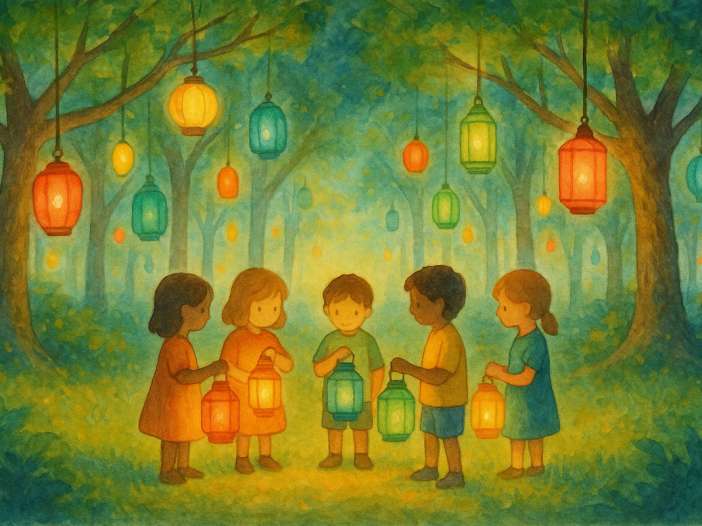
In this story, you’ll meet some children who live in a forest full of lanterns. Their lights are all different colors, just like people are all different in the world. And sometimes those differences can feel confusing. Sometimes we might wonder if someone else’s light somehow makes ours dimmer.

But lights don’t work that way.
One light shining helps every other light shine a little brighter.

As you read this story, I hope you’ll remember something important:
Whenever we listen to each other with kindness… whenever we look a little deeper… the world becomes just a little warmer, and just a little safer.

And I’m proud of you for wanting to understand.


Table of Contents
Introduction by Mister Rogers 
The Story of the Little Lantern Keepers
The Little Lantern Keepers
The Stranger with No Lantern
A New Question
Learning to See Again
The Forest Brightens
Moral of the Story
Final Thoughts by Mister Rogers

The Story of the Little Lantern Keepers

Once upon a time in the Forest of Many Voices…

there was a village where the lights began to dim.

For many years, the villagers fought and shouted.
Each person said their lantern was the only one that shined the “right” kind of light.

Some lights were blue.
Some were green.
Some were red.
Some were gold.

Every group believed their color meant:
“I am on the side of the good.”

And every other color meant:
“You might be dangerous.”

The louder the shouting grew, the dimmer the lanterns became.

The Little Lantern Keepers

One day, a band of young villagers—full of fiery hearts—said:

“If the red lanterns ever take over, the whole forest will burn!
We must stop them! We must shout louder!
We must smash the dangerous lanterns before they grow!”

They called themselves the Little Lantern Keepers,
because they wanted to protect the forest from darkness.

Their hearts were pure.
Their intentions were good.

But their fear made their hands shake.

Soon they were running through the streets,
yelling at anyone whose lantern looked too red.

They thought they were saving the forest.
But the more lanterns they smashed, the darker the forest grew.

And in the darkness…
it became harder to tell who really wanted harm
and who was simply holding a lantern of a different color.

The Stranger with No Lantern
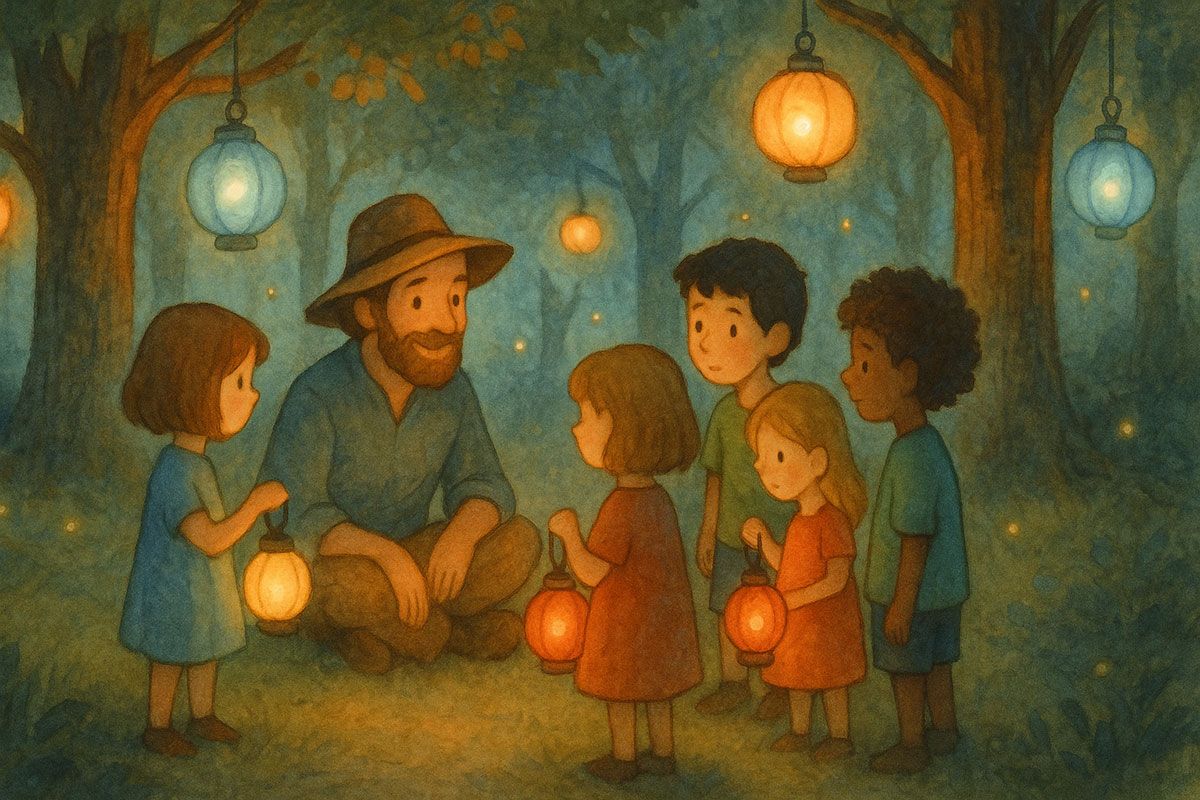
One evening, a quiet stranger walked into the village.

He carried no lantern at all.

This confused the Little Lantern Keepers.
They surrounded him.

“Where is your lantern?” they demanded.
“Which color is yours?
Are you with the oppressors or the oppressed?
Are you safe or are you dangerous?”

The stranger smiled gently.

“I don’t choose one color,” he said.
“I walk with everyone. I see light in all of them.”

The young Keepers stepped back.

“That’s impossible,” they said.
“If you don’t pick a side, you’re helping the darkness!”

The stranger knelt and whispered:

“My friends… the forest isn’t dark because of lanterns.
It’s dark because we’ve stopped seeing each other.”

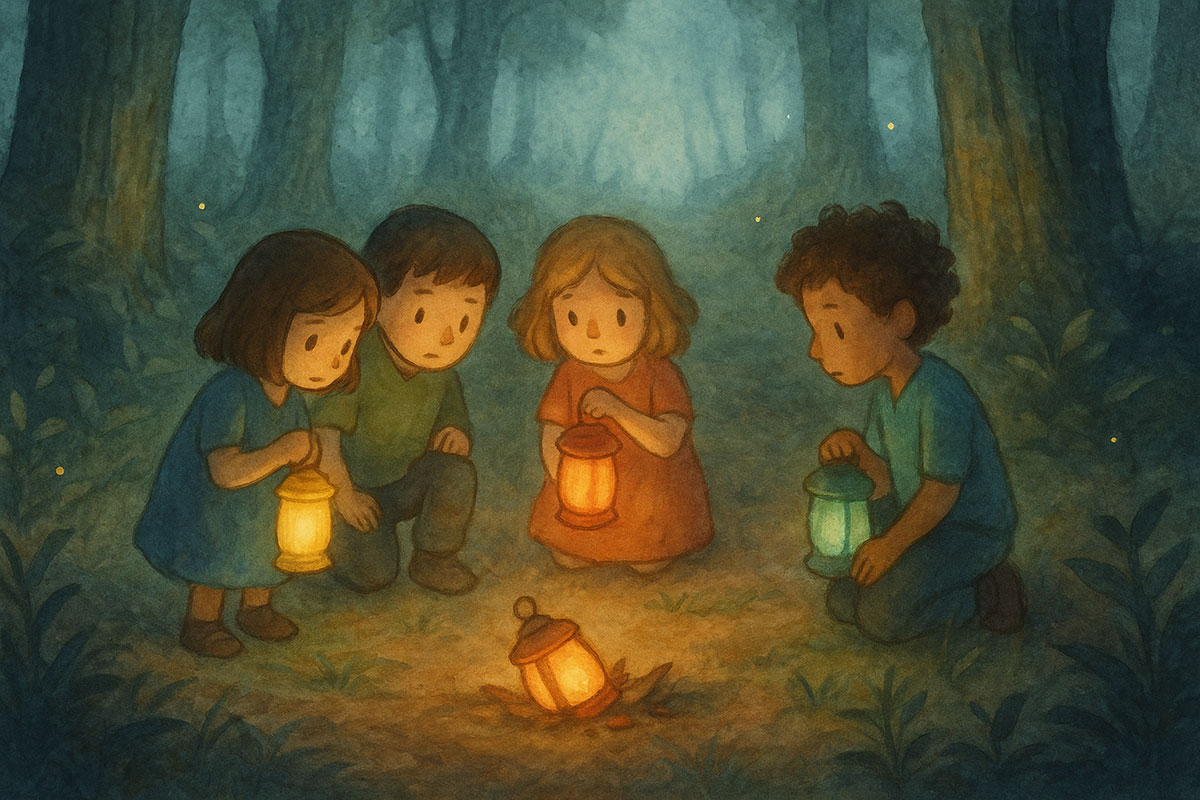
He touched a broken red lantern on the ground.

Inside, the wick still glowed a tiny ember.

He breathed on it softly.
It flickered back to life — a small, warm flame.

The Keepers watched in silence.

A New Question
The stranger handed the lantern to them.

“Tell me,” he said,

“When you smashed this lantern,
did it make the forest brighter or darker?”

The Keepers looked around.

The forest felt colder.
The air felt heavier.
The arguing felt louder.

One Keeper whispered:

“…Darker.”

Another said:

“We only wanted to stop danger.”

The stranger nodded.

“I know.
But sometimes, when we try to destroy the darkness outside of us…
we forget to calm the darkness inside of us.”

The Keepers lowered their heads.

Learning to See Again
The stranger taught them a new way:

  • Look people in the eyes before judging them.

  • Listen for pain before assuming evil.

  • Protect others, but don’t punish shadows.

  • Remember that fear can disguise itself as courage.

  • And never smash a lantern you haven’t taken time to understand.

The Keepers tried it.

For the first time, they approached a man holding a red lantern
and asked:

“Why do you carry that color?”

The man answered softly:

“My daughter is sick.
This lantern reminds me of her favorite scarf.
I don’t know much about politics…
I’m just trying to stay hopeful.”

The Keepers looked at one another.

They had never asked before.

The Forest Brightens

Over time, the Keepers changed.
Their shouting turned to conversation.
Their anger turned to awareness.
Their fear turned to wisdom.

They still protected the forest.
They still stood up for others.
But they no longer smashed lanterns without listening.

And slowly…

the whole forest glowed again.

Because light doesn’t grow
by blowing out someone else’s flame.

It grows when we help each other shine.

Moral of the Story

You cannot protect the world by destroying what you fear.
You protect the world by understanding what you fear.

And sometimes, just sometimes…

the “dangerous” lantern
is just another person trying to find their way in the dark.

Final Thoughts by Mister Rogers

You know, as we come to the end of our time together, I’m thinking about something very special:
how brave it is to choose kindness in a world that often chooses fear.

The children in our story learned that even a broken lantern still has a tiny spark inside. And when someone takes the time to notice that spark… when someone cares enough to kneel down and look closely… that little light can begin to glow again.

People are like that, too.

Sometimes someone shouts because they’re scared.
Sometimes someone gets angry because they’ve been hurt.
Sometimes someone decides that others are “dangerous” just because it’s the only way they know to protect their own heart.

But every person — every single one — carries a light inside them.

And when we treat each other with gentleness…
when we offer listening instead of judgment…
when we choose to look for the good instead of the worst…
we help those inner lights shine again.

It’s such a good feeling to know that even a small act of kindness can brighten a whole forest.

I’m glad you shared this story today.
And I’m glad you’re learning how much your light matters.

You make the world a better place —
just by being exactly who you are.

Short Bios:

Nick Sasaki

Nick is the storyteller who brings the Lantern Forest to life. He believes that kindness can soften even the hardest hearts and that stories help people see one another more clearly.

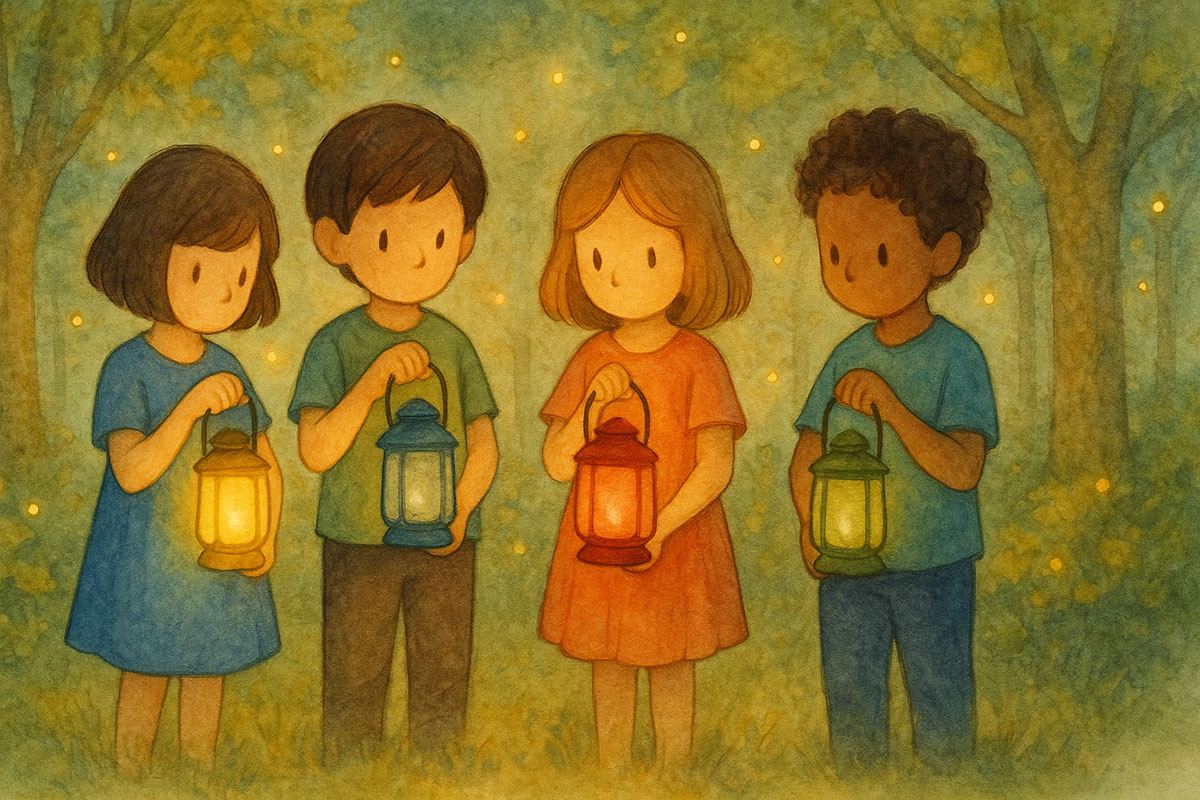
Lila

Lila carries the yellow lantern. She’s quiet, thoughtful, and good at noticing what others feel.

Milo

Milo carries the blue lantern. He’s curious, calm, and always trying to understand how things work.

Rosie

Rosie carries the red lantern. She’s warmhearted, brave, and feels deeply when others are hurting.

Theo

Theo carries the green lantern. He’s friendly, adventurous, and loves discovering new places.

The Stranger With No Lantern

A peaceful traveler who listens before he speaks. He helps the children see that every light matters, even the ones that seem dim or broken.

Related Posts:

  • Karma Exchanger: A Novel of Pain, Rebirth, and Mercy
  • The House With the Black Stone: A Korean Family Saga
  • Be Kind to Your Mother Before It’s Too Late
  • S. Y. Agnon in 2026: An Imagined Novel of Belonging
  • Grimm Fairy Tale Universe: The Complete Grimmverse Book One
  • Astrology and Self-Discovery: Do the Stars Reveal…

Filed Under: Compassion, Empathy, Politics Tagged With: Antifa children’s story, Antifa explained for kids, Antifa simple meaning, children understanding politics, children’s conflict story, conflict resolution for kids, easy activism stories, empathy fable, gentle political stories kids, kids empathy story, moral stories modern, nonviolent story for kids, peaceful activism for kids, simple ideology story, social groups for kids, teaching kindness story, understanding differences kids, unity children’s tale, unity story for children, what is Antifa for beginners

Reader Interactions

Leave a Reply Cancel reply

Your email address will not be published. Required fields are marked *

Primary Sidebar

RECENT POSTS

  • Convenience Store Woman: 5 American Stories About Marriage and Freedom
  • convenience-store-women-analysis-Convenience Store Woman: Is the New Normal Really Normal?
  • convenience store womenConvenience Store Woman: Who Decides What Is Normal?
  • sayaka murata imaginary friendsSayaka Murata Imaginary Friends: The Mystery Behind Her Inner World
  • Social Health Stories: 5 Ways We Lost Our Sense of Belonging
  • Social Health: Why Modern Life Is Making Us Lonely
  • nickel-boys-modern-stories-The Nickel Boys: 5 Modern Stories About Truth, Trauma and Hope
  • coloson whitehead the nickel boys discussionThe Nickel Boys: What Kind of Hope Survives Injustice?
  • the nickel boys colson whiteheadThe Nickel Boys: Elwood and Turner on Justice, Survival and Truth
  • AI Resource Consumption: Can AI Give More Than It Takes?
  • madeline-miller-circe-modern-stories-5 Modern Stories Inspired by Circe by Madeline Miller
  • Circle-Madeline-Miller-analysis-Circe Explained: Myth, Meaning, and Madeline Miller
  • Madeline Miller Circle CharactersMadeline Miller Circe: What If No One Ever Chose You?
  • 5 Modern Stories Inspired by Keigo Higashino’s Silent Parade
  • could japanese culture succeed where religion has failedCould Japanese Culture Succeed Where Religion Has Failed?
  • keigo-Higashino-when-love-becomes-too-much-5 Modern Stories Inspired by The Devotion of Suspect X
  • The Devotion of Suspect X Explained by Psychologists: Is Ishigami’s Love Really Love?
  • the devotion of suspect xThe Devotion of Suspect X Explained: Was Ishigami’s Sacrifice Really Love?
  • 5 Modern Midnight Library Stories About Regret, AI, and Choice
  • Matt Haig The Midnight LibraryThe Midnight Library Explained by Scholars and Matt Haig
  • The-Midnight-Library-explainedThe Midnight Library Explained Through Its Characters
  • 5 Modern Siddhartha Stories About Wisdom, Love, AI, and Choice
  • Siddhartha explained by leading scholarsSiddhartha Explained by Leading Hermann Hesse Scholars
  • Siddhartha explainedSiddhartha Explained Through Its Characters: Love, Loss, and Enlightenment
  • before-the-names-are-carved-Before the Names Are Carved: Five Connected Stories
  • The Scholars and the Unworn ShoesHan Kang Human Acts Explained by Leading Scholars
  • Han Kang Human Acts: An Imaginary Conversation with the Dead
  • The Years We Thought We Had: A Story of Love and Waiting in Japan
  • snow-country-analysis-Snow Country Analysis: Kawabata Scholars Explain It
  • snow-country-was-their-love-realSnow Country Explained Through Its Characters
  • the-man-who-never-took-the-day-off-The Man Who Never Took the Day Off: A Modern Ishiguro Story
  • The Remains of the Day Explained by Leading Ishiguro Scholars
  • the-remains-of-the-day-imaginary-talks-The Remains of the Day Explained Through Its Characters
  • the-pastor-who-couldnt-be-forgiven-The Pastor Who Couldn’t Be Forgiven: A Modern Story of Grace
  • disgrace-j-m-coetzee-Disgrace Explained Through Its Characters
  • disgrace-explained-leading-jm-coetzee-scholarsDisgrace Explained by Leading J. M. Coetzee Scholars
  • Forty-One Could Live. Nine Had to Die.
  • The Gospel According to Jesus Christ explainedThe Gospel According to Jesus Christ Explained Through Its Characters
  • SARAMAGO’S GOSPEL EXPLAINEDThe Gospel According to Jesus Christ Explained by Top Scholars
  • the last safe floorThe Last Safe Floor: A Modern Lord of the Flies Story for 2026
  • william golding explained by top scholarsWilliam Golding Explained by Top Scholars: Evil, Faith, and Redemption
  • lord-of-flies-character-conversation-Lord of the Flies Explained Through Its Characters: Is the Beast Inside Us?
  • never complain never explainNever Complain Never Explain: Henry Ford & Disraeli
  • The Empty Chair: A Modern Brothers Karamazov Story
  • the brothers karamazov explained top dostoevsky scholarsThe Brothers Karamazov Explained by Top Dostoevsky Scholars
  • Brothers Karamazov explainedThe Brothers Karamazov Explained Through Its Characters
  • before yesBefore Yes: A Modern American Story Inspired by Albert Camus
  • The Stranger Explained by Top Albert Camus Scholars
  • the stranger explainedAlbert Camus’s The Stranger Explained Through Its Characters
  • What is Worth Saving?The Last Store on Main Street: Inspired by The Sound and the Fury
  • The Sound and the Fury Scholar discussionThe Sound and the Fury Explained by Top William Faulkner Scholars
  • The Sound and the Fury Family SpokenThe Sound and the Fury Explained by Its Characters
  • The Building That Stopped Seeing | Modern Camus Story
  • The Plague Explained by Top Albert Camus Scholars
  • albert camus the plague explainedThe Plague explained by its characters
  • the last good sentenceThe Last Good Sentence: A Story About Fame and Loneliness
  • hemingway scholars debateThe Old Man and the Sea Explained by Top Scholars
  • The Old Man and the Sea Explained by Its Characters
  • the new meaning of survivalThe New Meaning of Survival: Top Scholars on Human Flourishing
  • true meanig of survivalThe True Meaning of Survival: Living, Not Just Existing
  • the last affordable roadThe Last Affordable Road: A Modern Grapes of Wrath Story
  • the-grapes-of-wrath-explained-by-top-scholars-The Grapes of Wrath Explained: Top Steinbeck Scholars
  • the grapes of wrath conversationThe Grapes of Wrath Explained Through Its Characters
  • the white silenceThe White Silence: A Japanese Novel of Loneliness
  • jose-saramago-blindness-explained-Blindness Explained by Top Scholars | José Saramago’s Greatest Warning
  • José-Saramago-Blindness-Explained-Blindness Explained Through Its Characters and José Saramago
  • Can the Bhagavad Gita Still Guide Humanity in 2026?
  • The Crown of AshesThe Crown of Ashes: A Modern Shakespearean Tragedy
  • the-fourth-bowl-If Toni Morrison Wrote a Japanese Family Novel: The Fourth Bowl
  • Beloved Ending Explained: 25 Questions Answered by Morrison Scholars
  • Toni-Morrison-Beloved-Explained-Beloved Explained Through Its Characters and Toni Morrison
  • house with the black stoneThe House With the Black Stone: A Korean Family Saga
  • Be Kind to Your Mother Before It’s Too LateBe Kind to Your Mother Before It’s Too Late
  • Gabriel-García-Márquez-one-hundred-years-of-solitude-explained-One Hundred Years of Solitude Explained by Top Scholars
  • one-hundred-years-of-solitude-explained-One Hundred Years of Solitude Explained
  • are-any-lives-truly-ordinary-Hateship Friendship Courtship Loveship Marriage explained
  • The Overstory explainedThe Overstory Explained: Themes, Ending, and Meaning
  • Demon Copperhead Explained: Barbara Kingsolver’s Pulitzer-Winning Novel
  • can you judge trump by his enemiesCan You Judge Donald Trump by His Enemies?
  • The Warmth of Other Suns Explained
  • America Iran strategyCan America Prevent a Wider Middle East War?
  • Lincol in the BardoLincoln in the Bardo Ending Explained:
  • God-as-Original-Parent-If God Created Man and Woman, Is God Our Original Parent?
  • can creation reveal godDoes Creation Reveal the Nature of God? Five Great Thinkers Discuss
  • Are Therapists to Blame for the Rise of Adults Cutting Off Their Parents?
  • your seventh year is changingJoel Osteen’s Seventh Year: When Suffering Is Not the Final Chapter
  • Joel Osteen’s Best Messages: Hope, Favor, and Faith
  • Hilary Mantel Wolf-Hall ending explainedWolf Hall Ending Explained: Can a Good Man Survive Political Power?
  • i-never-said-i-was-god-What If Jesus Never Claimed to Be God?
  • did-jesus-say-he-was-god-Did Christianity Reverse the Message of Jesus?
  • The Unseen World Liz MooreThe Unseen World Analysis: Memory, AI, and Identity
  • gilead ending explainedGilead Ending Explained: Can Grace Reach the Person We Judge Most?
  • Elena Ferrante My Brilliant FriendMy Brilliant Friend Ending Explained: Who Was Brilliant?
  • The-Underground-Railroad-ending-explained--The Underground Railroad Ending Explained
  • The Road Cormac McCarthyThe Road Ending Explained: Father and Son Imaginary Conversation
  • Atonement Ending Explained: Briony Faces the Truth
  • Never Let Me Go Kazuo IshiguroNever Let Me Go Analysis: An Imaginary Conversation
  • have-we-forgotten-who-we-really-areMichael G. Reccia: Has Humanity Forgotten Who We Really Are?
  • pachinko imaginary talksPachinko by Min Jin Lee: An Imaginary Conversation Across Generations
  • are-you-falling-behindMin Jin Lee on Time, Failure, and Falling Behind in Life

Footer

Recent Posts

  • Convenience Store Woman: 5 American Stories About Marriage and Freedom August 27, 2026
  • Convenience Store Woman: Is the New Normal Really Normal? August 27, 2026
  • Convenience Store Woman: Who Decides What Is Normal? August 27, 2026
  • Sayaka Murata Imaginary Friends: The Mystery Behind Her Inner World August 27, 2026
  • Social Health Stories: 5 Ways We Lost Our Sense of Belonging August 26, 2026
  • Social Health: Why Modern Life Is Making Us Lonely August 26, 2026

Pages

  • About Us
  • Contact Us
  • Disclaimer
  • Earnings Disclaimer
  • Privacy Policy
  • Terms and Conditions

Categories

Copyright © 2026 Imaginarytalks.com