

Introduction by Wislawa Szymborska
When my student Nick Sasaki asked me about the poems he had written,
I found myself smiling—not at perfection (which is boring),
but at the courage to ask questions that have no final answers.
The world, dear Nick, is not held together by grand philosophies
or the thunderous declarations of experts,
but by the small, almost invisible gestures
that people make when they think no one is watching.
You have written about these gestures.
You have written about what the world forgets
even while it is busy saving itself.
Your poems do not teach—
they remind.
A modest difference,
but modesty is underrated.
You look at a curtain being opened,
and you suspect that something cosmic happens there.
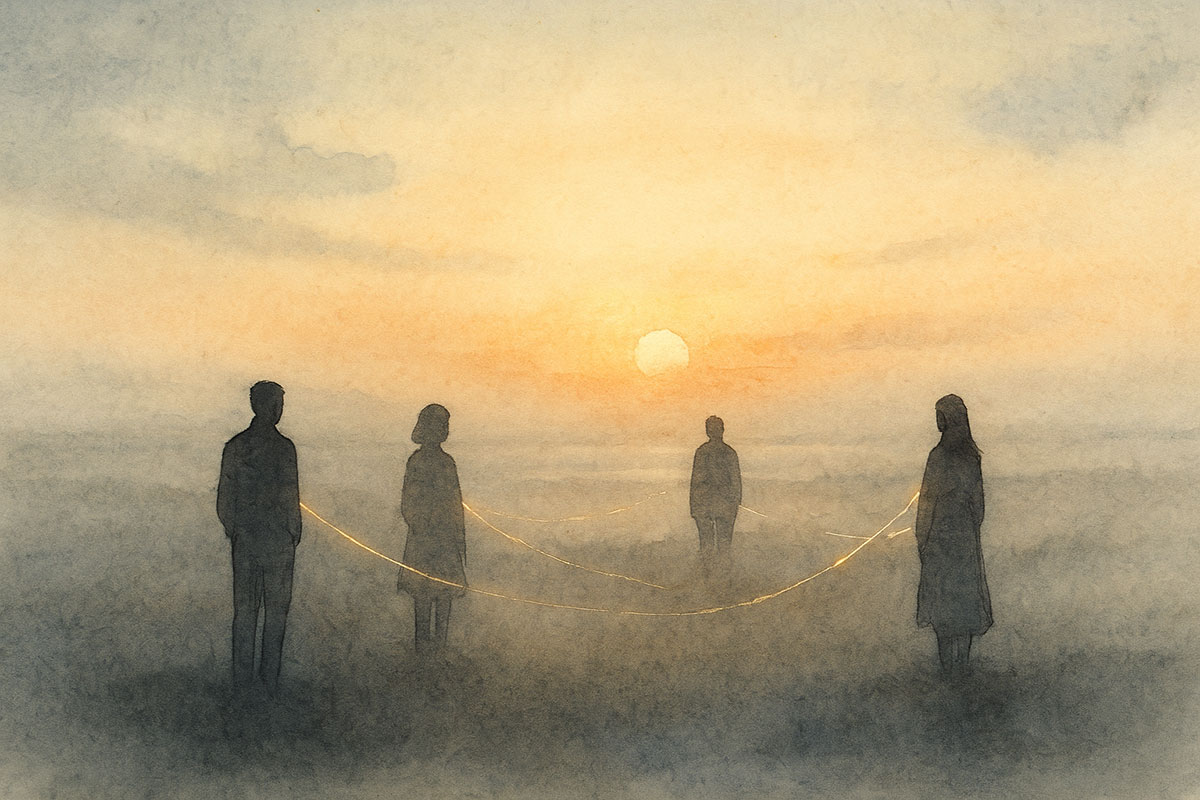
You see threads between strangers in a city at dusk
and have the audacity to believe they might be real.
You trust the possibility
that the future is a draft we rewrite each morning—
and not everybody permits themselves such trust.
I’m pleased—not in a teacherly sense,
but in the quiet way one is pleased
when a bird lands on the windowsill
for no particular reason.
Carry on, Nick.
You are paying attention,
and that is the beginning of everything.
(Note: This is an imaginary conversation, a creative exploration of an idea, and not a real speech or event.)
Where the World Is Really Made

People keep wondering
where the world is shaped.
In parliaments, perhaps,
or boardrooms
with polished tables
and well-practiced smiles.
Some insist it’s engineered
in the sleepless circuits of AI,
those glowing chambers
where numbers never grow tired.
But the truth is quieter.
The world is mostly decided
in the few seconds
before you open your curtains
each morning.
If you draw them back in anger,
even sunlight sharpens itself
into a blade.
Open them with kindness,
and the very same light
sets an extra place
for those who never find a seat.
Scientists haven’t yet found
a formula for this.
Perhaps it’s better they don’t.
A little mystery helps
the world last longer.
A sip of coffee you take
might soften the breathing
of a stranger continents away.
It sounds absurd—
and therefore, possibly true.
If, today,
you manage to set your heart
in even the smallest order,
a storm somewhere
might hesitate—
just long enough
for someone to find shelter.
No need to believe this.
But if it might be real,
even by a fraction,
you could at least dust off
the small switch
hidden inside your chest—
the one that changes everything.
Threads We Pretend Not to See

Most people believe
they live on solitary islands.
After all,
shoe sizes differ,
fears come in private shapes,
and yesterday’s sorrows
rarely match anyone else’s.
This seems like proof
that we are separate.
Convincing, even.
Yet somewhere—
in a city you’ll never visit—
a person you’ll never meet
folds quietly into themselves,
and for no clear reason,
you release a soft sigh.
It won’t appear
in any official statistics.
Not everything worth noting does.
Scientists name it “resonance,”
poets call it “fate,”
and children,
who understand most things first,
simply say,
“I know what you mean.”
When warmth rises in your chest
on an otherwise ordinary afternoon,
don’t rush to take the credit.
Someone, somewhere,
might be offering a small kindness
you weren’t supposed to feel—
but did anyway.
Of course,
we excel at turning away,
at sharpening our differences,
at crafting fences
around our delicate selves.
It’s practically a human hobby.
Still—
if someone’s smile
halfway across the world
can soften the edge of your night,
it may be worth acknowledging
the invisible thread
tugging lightly at your sleeve.
Even if we pretend
not to see it.
The Hardest Place to Reach

Human beings
spend remarkable energy
trying to change the world.
They design new systems,
dismantle old laws,
and place enormous hope
in machines with faster thoughts
than their own.
All admirable, of course.
And yet the world,
with its stubborn personality,
rarely improves
on schedule.
It may be because the world
doesn’t actually live
“out there.”
It resides—
rather inconveniently—
inside our own chests.
Some tend their anger
as if pulling weeds in a garden.
Others polish
the flaws of their neighbors
like smudges on a mirror.
Enthusiastic efforts, yes,
but mirrors are often cloudy
because of our own breath.
For centuries, humanity
has searched for a device—
a button, a lever,
a sacred switch—
that could change everything.
They’ve rummaged through
filing cabinets,
summits,
and the oldest particles
the universe remembers.
Yet the switch
has been hiding all along,
stitched quietly
into the lining of our hearts,
overlooked daily
in the rush to fix everything else.
If today
you release even one anger
from its cage,
somewhere
a small conflict
might hesitate—
just enough
for peace to breathe.
There’s no need
to fully believe this.
But should it be true—
even slightly—
you might consider
brushing the dust
from that hidden switch.
Just in case.
The Things We Misplace Without Noticing

We humans
misplace things often.
Keys, umbrellas,
patience,
hope.
Hope, especially,
has a talent for vanishing
into the nearest shadow
for half a year
without leaving a note.
But the real trouble
comes from losing
what makes the world bearable.
The quiet sense
that we matter,
for instance.
Or the simple understanding
that others carry
their own invisible weights
—just as heavy,
just as awkward—
as ours.
And then there’s the miracle
of being alive at all,
mixed each morning
into the air like a faint perfume
no one bothers to name.
Unlike wallets,
these losses make no sound.
They slip away silently,
like shy animals
avoiding human attention.
Half the world’s conflicts,
perhaps,
begin with these
unnoticed absences—
a mislaid tenderness,
a forgotten dignity,
a misplaced reminder
that we belong to each other.
If today
you find, tucked inside your chest,
a small note reading,
“You matter.
And so does everyone else,”
don’t assume
it wrote itself.
Some lost things
grow tired of waiting
to be remembered.
They return to us
of their own accord.
When they do,
place them gently
in your deepest pocket.
Try not to lose them again.
Tomorrow in Draft Form
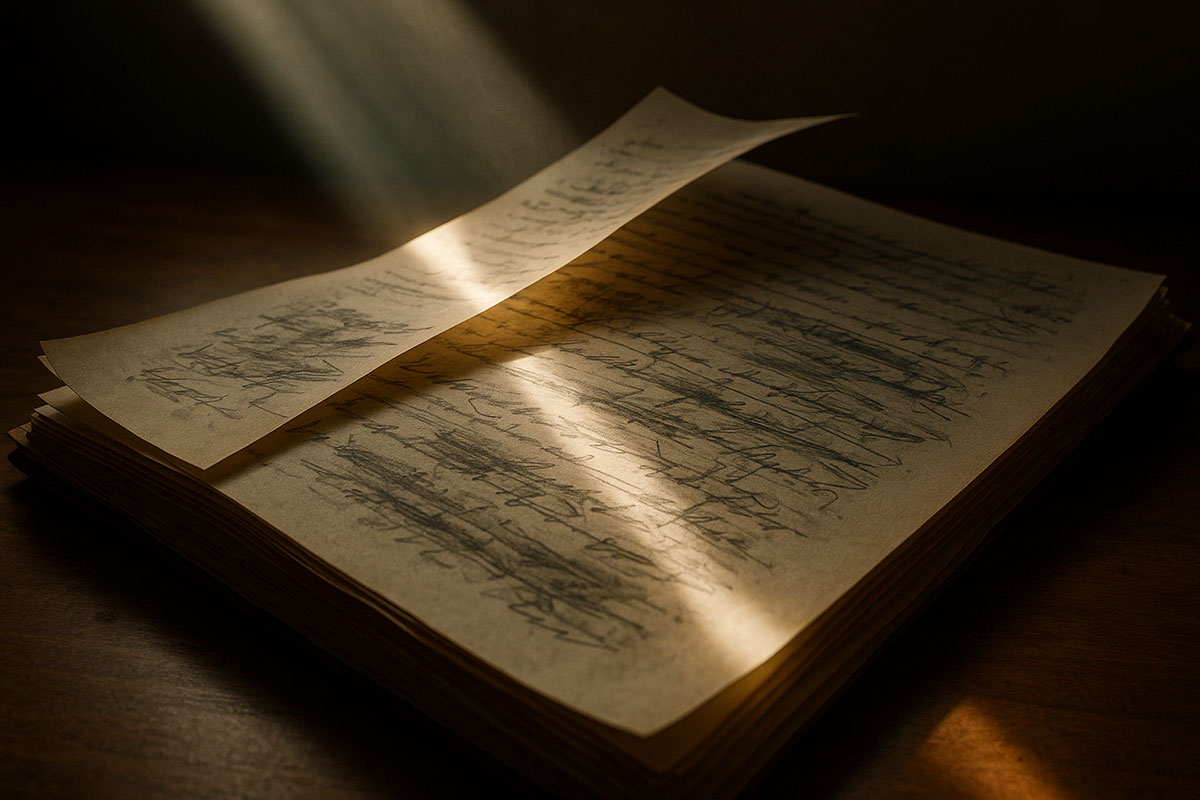
People like to say
the future is predictable—
a matter of charts,
models,
experts with confident voices
and occasionally correct forecasts.
But the future
is far less obedient
than these pronouncements suggest.
It behaves more like a cat:
it appears when uninvited,
and hides precisely
when you call it by name.
In truth,
the future spends most of its time
wandering around
as a rough draft.
Its pages are dog-eared,
its ink smudged,
eraser marks everywhere—
a manuscript revised
by countless invisible hands.
What we rarely realize is this:
each morning,
the first line of that draft
is quietly handed to us.
Write it in anger,
and the world stiffens.
Write it in kindness,
and a stranger’s afternoon
lightens, inexplicably.
Write it in fear,
and tomorrow shrinks
into a tighter corridor.
Write it in courage,
and the vacant lot ahead
sprouts a flower
no one planted.
Teachers of science
call this influence.
Friends of poetry
call it miracle.
Children—
having settled the matter—
simply say,
“I hope tomorrow is nice.”
The line you add today,
however small,
might soften the edge
of some distant storm.
The future, after all,
is not yet written.
It waits—
patiently,
messily—
for your hand
to continue the draft.
Final Thoughts by Wislawa Szymborska
And now, Nick, we arrive at the end,
which, as always, is only another beginning in disguise.
What can I tell you as your teacher?
Only this:
The poems you write will not save the world.
Nothing ever has.
But they may save
a morning,
a breath,
a moment of clarity
for someone you will never meet.
And that is already astonishing.
Poetry’s task is humble:
to notice what tries endlessly to be overlooked.
To defend the ordinary
from being trampled by the rush of “important things.”
To whisper truths that would faint
if forced to shout.
You have done this in your five poems—
looked at the world slantwise,
allowed tenderness its own intelligence,
and left space for mystery
to do its quiet work.
If there is one thing I want you to remember,
it is this:
The world is unfinished.
So are we.
So is every poem.
And that is our good fortune.
Now go—
write something else
that no one expects
but everyone secretly needs.
Short Bios:
Wislawa Szymborska
Wislawa Szymborska (1923–2012) was a Polish poet and essayist known for her understated wit, philosophical clarity, and profound attention to the ordinary. Awarded the 1996 Nobel Prize in Literature, she explored themes of chance, identity, and the fragile beauty of everyday life. Her work is celebrated for its quiet humor, emotional restraint, and disarming insight into the human condition.
Nick Sasaki
Nick Sasaki is a writer, creator, and imaginative storyteller whose work blends spiritual insight, emotional clarity, and modern consciousness. Known for transforming timeless truths into accessible narratives, he seeks to awaken readers to the subtle forces shaping their inner and outer worlds. His creative projects explore connection, compassion, and the evolving nature of humanity.
Leave a Reply