

Introduction by Wislawa Szymborska
If there is one certainty I’ve learned from my long apprenticeship to life, it is that we do not think alone. Even our most private thoughts come to us carrying the fingerprints of others—teachers we admired, writers who startled us awake, friends whose presence rearranged the furniture of our minds.
These conversations with my friends—Anton Chekhov, Czesław Miłosz, Franz Kafka, Józef Czechowicz, and Zbigniew Herbert—are not merely dialogues across time. They are expressions of gratitude for the companionship that literature provides, especially to those of us who live half in the world and half in words.
Chekhov taught me to bow before the miracle of the ordinary.
Miłosz reminded me that history is a heavy suitcase we must sometimes set down.
Kafka showed me that even the darkest corridors contain a stubborn spark of hope.
Czechowicz whispered that modesty is not weakness but a soft kind of courage.
Herbert, stern and tender at once, proved that irony, when used wisely, can defend human dignity.
These friends and mentors shaped me quietly, the way moonlight shapes a room—by illuminating not what is obvious, but what is possible.
So let us sit together now, in the soft glow of shared imagination, and listen.
Because poetry, like friendship, is not a lesson but a gift.
(Note: This is an imaginary conversation, a creative exploration of an idea, and not a real speech or event.)
Topic 1: The Miracle of the Ordinary

The room is small, sunlit, and almost intentionally unremarkable—a wooden table, two mismatched chairs, a pot of tea that has already cooled, and a single window overlooking an ordinary courtyard where nothing special seems to happen. Which, of course, is exactly why both of them would choose it.
Szymborska is looking at a small sugar cube she hasn’t yet dropped into her tea.
Chekhov is watching a cat stroll along the window ledge, pretending not to care whether it slips.
Both are smiling already.
This is the world they love most: the quiet world.
Szymborska:
It’s a strange thing, Anton Pavlovich. The more I write, the more convinced I am that the ordinary is the most underestimated miracle in the world. People keep looking for revelations, for thunder, for angels. But miracles happen in kitchens.
Chekhov:
(soft laughter)
I’ve always suspected angels prefer kitchens. They don’t like being stared at. And besides, every major drama begins with something small. A man leaves a spoon on the table. A woman forgets to close a drawer. Life is a comedy of tiny errors and tiny triumphs.
Szymborska:
Exactly. When I was younger, I tried to write about big things—history, nations, humanity. But the more I saw of the world, the more I realized that the “big” things are just accumulations of millions of small, human moments.
Chekhov:
You sound like someone who has spent a lifetime watching rather than judging.
Szymborska:
Judging is noisy. Watching is quiet. I like quiet.
The cat on the window ledge jumps lightly into the room, as if summoned by the word “quiet.” Chekhov bends to stroke it, but the cat naturally walks away from him. This too makes both of them smile.
Chekhov:
I used to tell young writers: “If you want to understand people, watch how they pour their tea.” Because the truth hides in the smallest gestures.
Szymborska:
And I would tell them: “If you want to understand life, ask questions that seem ridiculous.” Why does a spoon hold exactly enough sugar? Why do we trust chairs so easily? Why do we forget most of what happens to us, yet remember the oddest details?
Chekhov:
(laughing)
I wish we could co-teach a class. The students would run for their lives.
Szymborska:
Only the impatient ones. The rest would find a lifetime’s worth of material in the way sunlight falls across a floor.
A silence follows—comfortable, contemplative, the sort that both writers believe in.
Chekhov breaks it first, but gently.
Chekhov:
There’s a kind of moral clarity in the ordinary. When you watch people doing simple things—sitting, waiting, worrying—you see the small kindnesses that go unnoticed. A man tying his mother’s scarf. A girl giving up her seat on the tram. These things don’t make history, but they make us human.
Szymborska:
In my poems, I try to bring those unnoticed gestures into the light. To say, “Look, this too is the world.” People think poetry must be grand, but the grandest thing in life is that we survive our everydayness. We endure dishes and deadlines and disappointments, and somehow, we still love each other.
Chekhov:
And still we find reasons to laugh. Even in pain. Perhaps especially in pain.
He pours more tea. The teapot is almost empty. That feels symbolic somehow, but neither of them wants to ruin the moment by saying so.
Szymborska:
Anton, you wrote that if you want to move people, you must write truthfully about the little things. I think that’s why your stories endure. You never shouted. You whispered. And the world leaned in to listen.
Chekhov:
You whisper too—so gently that sometimes it feels like your poems are afraid to disturb the dust. And yet your readers finish a poem and feel they’ve been struck by lightning. How do you manage that?
Szymborska:
I don’t know. Maybe because I don’t trust lightning. I trust dust.
They both laugh—not loudly, but with that unmistakable joy of two people discovering they are somehow made of the same quiet stuff.
Chekhov:
Let me ask you a question. Why the ordinary? Why did you choose it as your terrain, your kingdom?
Szymborska:
Because it chose me. My childhood was quiet. My life was not dramatic. I was not the kind of poet who struggled in flames. I was the kind who noticed ants on sidewalks and soup simmering on stoves. I found the extraordinary because it hid in plain sight.
Chekhov:
And because it is the only democratic miracle. Everyone has a day. Everyone breathes. Everyone misplaces their keys. The ordinary belongs to all of us.
Szymborska:
Yes. Poetry should never be a private club.
Outside, the courtyard shifts its light just slightly. A woman hangs laundry. A child drags a stick along a wall. A man waters a plant that doesn’t seem grateful for it.
Both poets look toward the window with genuine interest, as if the world has just begun.
Szymborska:
I often think the true purpose of poetry is not to tell people what to think, but to remind them that they are alive. Fully alive, even in the simplest moment. Even when they believe nothing is happening.
Chekhov:
Nothing is happening is a lie. Something is always happening. A thought, a memory, an unnoticed shift. The world is constantly moving beneath the surface.
Szymborska:
A poet’s job is to show the movement under the stillness.
Chekhov:
And to forgive humanity for its flaws.
Szymborska:
And to celebrate it for the same flaws.
Another silence. This one deeper.
The cat curls at Chekhov’s feet now, as if rewarding him for patience.
Chekhov:
Tell me, Wislawa… if you could preserve one ordinary moment forever, just one, what would it be?
Szymborska:
Just one? That’s cruel. But…
I suppose it would be the moment a person pauses before answering a question. That small hesitation—where thought forms, identity breathes, truth trembles. It is the most human gesture we have.
Chekhov:
Beautiful. And you?
Szymborska:
Your turn.
Chekhov:
I would choose the moment someone sits down after a long day. That sigh—half relief, half surrender. It contains the whole world.
She nods, deeply moved.
Szymborska:
We are very similar, Anton.
Chekhov:
We are both doctors of the ordinary. We treat the world with small observations and hope the patient recovers.
Szymborska:
And if the world never recovers?
Chekhov:
Then at least it will have been seen.
The teapot is empty.
The conversation is not.
Both sit back, hands folded around warm cups, watching the courtyard as if it were the stage of the greatest play ever written.
Because to them, it is.
Topic 2: The Weight of History and the Lightness of the Individual
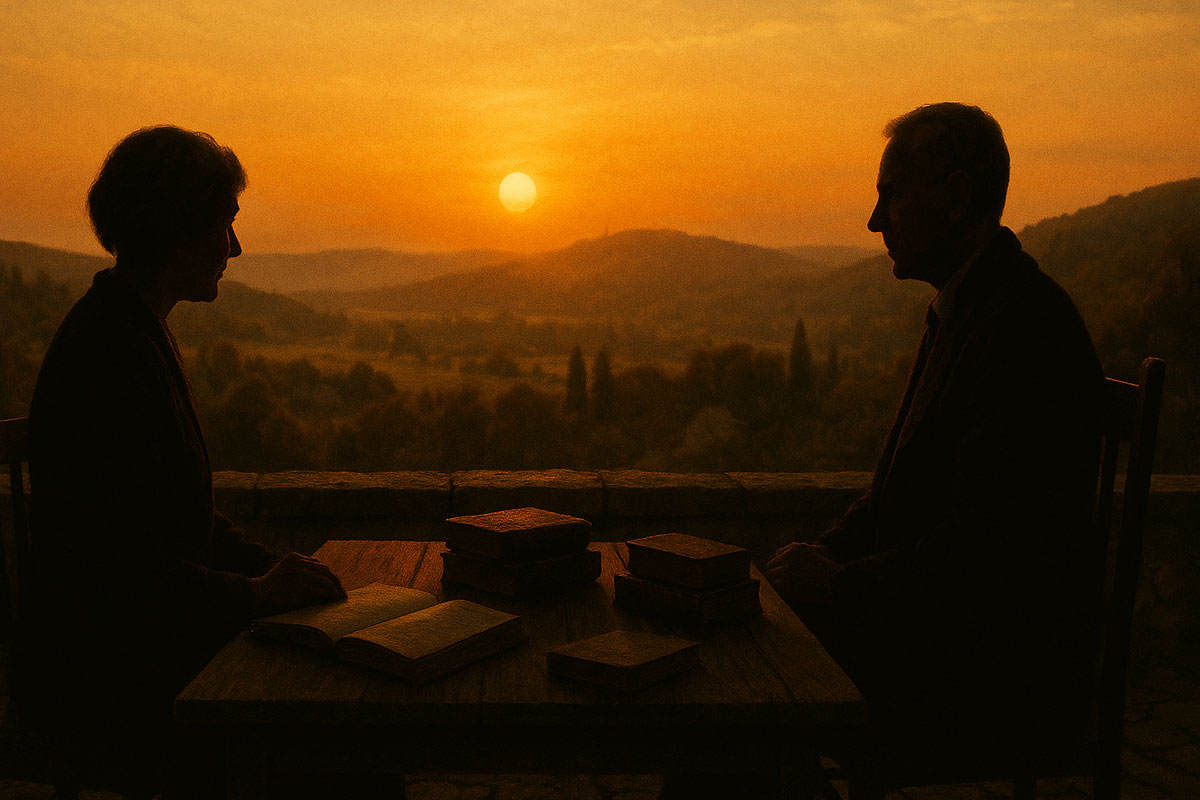
A small stone terrace overlooks a quiet valley in southern Poland. The late afternoon light is soft, stretched thin across the hills in that particular way Polish light seems to do—as if it’s trying to soothe the land it has witnessed suffer so much. Two chairs sit at an angle, turned neither toward nor away from each other but toward something invisible between them.
Szymborska arrives first, holding a notebook she probably won’t open.
Miłosz enters with a cane he barely needs, more out of old habit than frailty.
When they sit, they do so with the familiarity of two minds shaped by the same nation yet carved by different lives.
Miłosz:
Wislawa, you once wrote that history “writes itself into us,” whether we want it or not. Do you still believe that?
Szymborska:
More than ever. History is the heaviest luggage we never choose to pack. It crawls into our language, our memories, even our sense of humor. But I’ve also learned that individuals—ordinary people—carry that weight far more gracefully than history deserves.
Miłosz:
Gracefully, yes. But often unknowingly. And perhaps that is what saves them.
Szymborska:
Ignorance as salvation? That sounds like one of your darker lines.
Miłosz:
(laughs softly)
Not ignorance—innocence. People live their lives: grow tomatoes, wait in lines, fall in love, write grocery lists. They do this even when the world is collapsing around them. That resilience… it is light, but not frivolous.
Szymborska:
I agree. History storms through gates, but people slip through cracks.
A distant church bell rings, echoing through the valley. The sound seems older than either of them, older even than the wars they lived through.
Miłosz:
You know, I have envied you at times.
Szymborska:
Me? Why?
Miłosz:
Because you wrote about the world without becoming its prisoner. Your poems step lightly, like someone who knows gravity but refuses to be bullied by it.
Szymborska:
That’s kind, Czesław, but not true. I simply avoid the podium. You climbed onto it many times.
Miłosz:
History pushed me onto it.
I wrote of wars, ideologies, nations bleeding. I felt responsible, as if words could rescue something from the wreckage.
Szymborska:
And they did. You helped people make sense of the world’s cruelty. I’m not sure I ever did that. I ask questions, but you answered them.
Miłosz:
But questions keep humanity alive longer than answers do.
The breeze shifts. A page in Szymborska’s notebook flutters, but she does not stop it.
Szymborska:
Let me ask you something. Do you think poetry has any real power against history? Against tyranny, violence, stupidity?
Miłosz:
Power? No. Influence? Yes.
Poetry cannot stop a tank. But it can make the person driving the tank remember he is human. Even briefly. That is not small.
Szymborska:
You always believed in moral responsibility. I admire that. But I’ve always doubted whether poets have any special authority to guide others.
Miłosz:
Authority, no. But sensitivity, yes.
We see the fractures before they break. People think poets are dreamers, but we are often the first to notice when the world’s foundations begin to crack.
Szymborska:
We feel tremors others ignore.
Miłosz:
Exactly. And we translate those tremors into language people can feel in their bones.
The sun lowers. Shadows stretch across the terrace like long lines of unwritten verse.
Szymborska:
I often think individuals are lighter than history because they don’t pretend to know more than they do. History is arrogant. Individuals are humble.
Miłosz:
Perhaps because individuals don’t expect to be remembered. There is freedom in anonymity.
Szymborska:
Yes. The unknown man who saved someone in a crowd. The woman who chose kindness instead of bitterness. These people rarely appear in textbooks, but they hold the world together more than generals do.
Miłosz:
But they vanish.
Szymborska:
So do generals.
Miłosz smiles—an expression of surrender to a truth he has always known but rarely admitted aloud.
Miłosz:
Let me ask you a difficult question. When you wrote about history, why did you always approach it sideways? Never with a frontal assault?
Szymborska:
Because frontal assaults require certainty, and I distrust certainty. I prefer the angle that allows doubt to breathe. History is too often a monologue. Poetry should always be a conversation.
Miłosz:
Your modesty is a weapon.
Szymborska:
And your grandness is a shield.
A silence follows. A meaningful one.
Two poets sitting with the ghosts of an entire continent between them.
Miłosz:
Wislawa…
Do you forgive history?
Szymborska:
(pause)
No. But I forgive people.
Not as a moral stance, just as a practical one. People are confused, fragile, easily frightened. When they do harm, it’s often because they couldn’t carry the weight they were handed.
Miłosz:
You are kinder than I am.
Szymborska:
No. I just look smaller. My kindness fits into a teacup. Yours needs a cathedral.
Miłosz:
(laughing, deeply this time)
I’ll take that as a compliment.
Szymborska:
It is.
The sky has turned the color of an old photograph—faded gold, soft and forgiving.
Miłosz:
Do you think individuals can ever escape history entirely?
Szymborska:
Escape, no. But they can dance with it. Step lightly where history stomps. Turn tragedy into memory, memory into story, story into understanding.
Miłosz:
You make it sound like art saves us.
Szymborska:
Not saves us.
But keeps us company while we endure.
Another silence. This one is almost tender.
Miłosz:
Let me ask one more thing.
When you write about the ordinary—about people choosing apples or folding umbrellas—do you ever think you are betraying history by ignoring it?
Szymborska:
Never.
The ordinary is where history hides when it’s ashamed of itself.
Miłosz:
(eyes widening slightly)
That… is extraordinary.
Szymborska:
It’s just true.
History is loud when it wants to frighten us.
But when it wants to rest, it retreats into kitchens, gardens, trams, laundromats, long sighs, short laughs.
I write about those spaces.
Spaces where the world behaves like a human being.
Miłosz slowly nods. Not in agreement, but in recognition—the recognition of a truth he has spent decades circling around, only to find it spoken plainly by someone who claims to dislike grand statements.
Miłosz:
Wislawa… you have always been a poet of lightness. But not the kind that floats away. The kind that lifts others.
Szymborska:
And you have always been a poet of weight. But not the kind that crushes. The kind that gives shape.
They look at the valley again.
Somewhere a child is calling for someone.
Somewhere a train is approaching or leaving.
Somewhere history is happening.
Somewhere individuals are living.
Here, on this terrace, two poets sit in the gentle tension between both.
Miłosz:
Perhaps the truth is this:
History is heavy.
People are light.
And poetry is the bridge between them.
Szymborska:
Yes.
And on that bridge, we meet.
The sun sets completely now, leaving only a thin line of gold along the hilltops.
Miłosz stands slowly. Szymborska remains seated, watching the last light fade.
There is no grand conclusion.
No triumphant insight.
Just two human beings who have lived long enough to know that meaning often whispers instead of announces.
And that is enough.
Topic 3: How to Portray Hope in an Absurd World
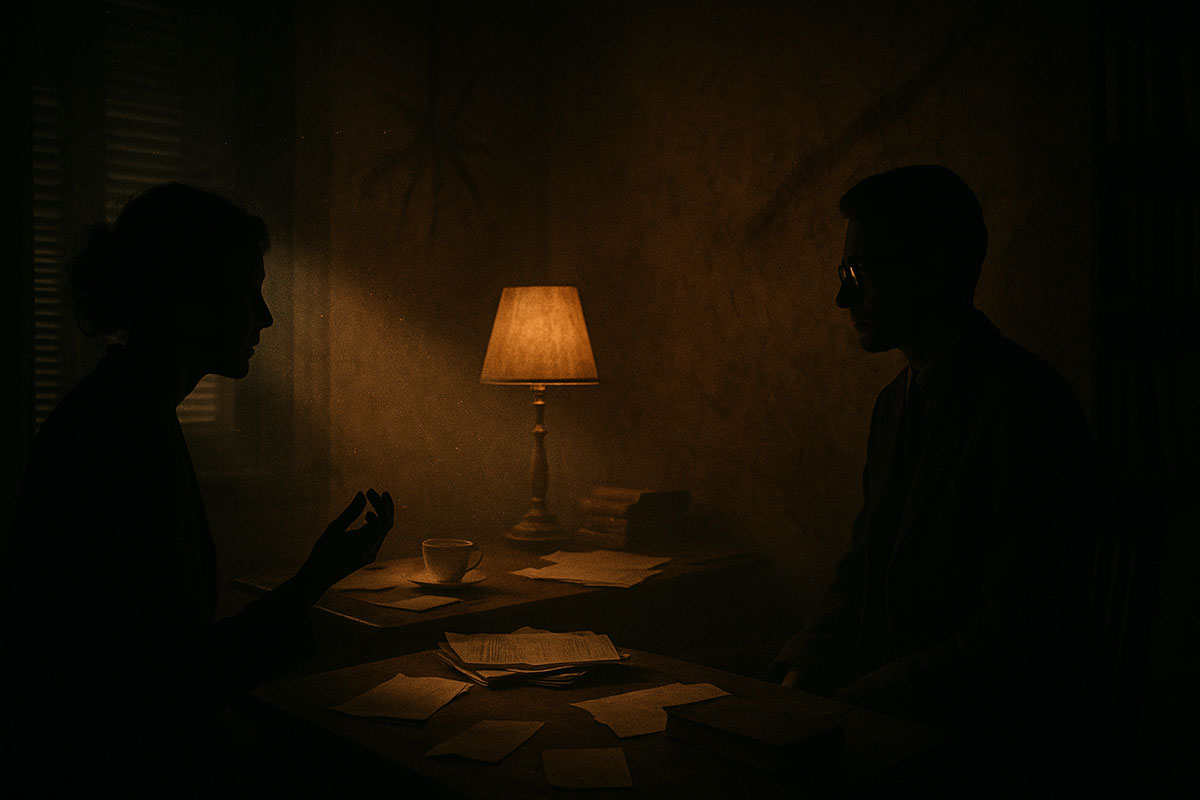
A dimly lit room, undecided between being a study or an attic, seems to lean slightly forward, as if listening in advance to the conversation it knows will take place. Dust hangs in the air like patient punctuation. A single lamp on the desk reveals a stack of unfinished letters—Kafka's customary collection of half-spoken thoughts.
Szymborska enters the room quietly, as one would step into a dream they aren’t sure they were invited to. Kafka stands near the window, though not quite looking out of it, as if he’s unsure whether the outside world will acknowledge him.
They greet each other with a silence that feels like respect.
Kafka:
Wislawa… you write of the world with humor. I’ve always admired that but never managed it myself. My world is more often made of shadows.
Szymborska:
Shadows are useful. They show the outlines of things the light ignores. But what you call “humor”… I call survival. When the world becomes absurd, laughter is what keeps us from dissolving into it.
Kafka:
Absurdity has followed me all my life. I feel as though the universe distrusts straightforward explanations. Whenever I tried to understand meaning, it hid behind a new door—and the key changed shape.
Szymborska:
Meaning doesn’t hide from us. It changes costumes. It arrives wearing absurdity, coincidence, or silence. Hope isn’t in understanding the world; it’s in noticing that something is still alive beneath the confusion.
Kafka:
That is extraordinarily comforting. But tell me—how do you write hope without lying?
Szymborska:
By keeping it small. Large hope becomes propaganda. Small hope becomes truth. A cup of tea made by someone who cares. A letter arriving unexpectedly. A plant growing in a crack of the sidewalk. These things never solve the absurdity of life, but they make it livable.
Kafka:
I have often envied people who can live comfortably in the small. My mind tends to follow every thread until it tangles around my own throat.
Szymborska:
You explore the labyrinth. I explore the staircase. Both eventually lead upward.
Kafka sits, hands folded like someone who has practiced restraint as a lifestyle. Szymborska remains standing, drawn toward the shelves as if they were filled with living creatures rather than books.
Kafka:
You once wrote that “whatever has happened, still something happens within us.” That line struck me deeply. Because inside—yes, there is always motion, even when life wants us to freeze in place.
Szymborska:
I believe that hope is the internal continuation of life even when external circumstances collapse. You, Franz, gave the world one of its truest depictions of the absurd. But hidden in your work is something else—an ember.
Kafka:
An ember?
Szymborska:
Yes. Something stubborn that refuses to go out. Even in The Trial, even in The Castle. Your characters keep moving. They keep asking. They keep trying. That is hope.
Kafka:
(surprised)
I never thought of it that way.
I always saw them as trapped.
Szymborska:
A trapped person who keeps searching is more hopeful than a free person who gives up.
Kafka lowers his head. A faint smile almost appears, like a leaf trembling on a branch.
Kafka:
Wislawa, there is a question that haunts me:
How do humans remain gentle in a world that is not gentle with them?
Szymborska:
By recognizing that gentleness is not a reaction to the world. It is a decision. The world is absurd, but we are not required to imitate it. We can choose to respond with humor, patience, or even curiosity.
Kafka:
Curiosity… yes, I sense you hold that dearly.
Szymborska:
Curiosity is hope wearing comfortable shoes.
A brief silence follows, not heavy, but exploratory. Kafka straightens a small stack of papers on the desk—papers with sentences that stop halfway, as if the ink ran out or the courage did.
Kafka:
My characters often feel watched, judged, threatened by invisible forces. When you read such writing, do you feel despair or recognition?
Szymborska:
Recognition.
Because the absurd is simply the world seen without its polite costume. Bureaucracy, chance, illness, death, misunderstanding—they are all quietly absurd. You didn’t invent absurdity, Franz. You revealed its architecture.
Kafka:
But I fear I did so without offering a door out.
Szymborska:
You offered a mirror. And sometimes a mirror is enough to make someone step out on their own.
Kafka:
You make the burden of interpretation feel lighter.
Szymborska:
Because I don't believe art must redeem the world. Art only needs to remind us that we deserve redemption.
Kafka rises and begins pacing slowly, as if each step must be negotiated with the floor. Szymborska observes him with a calm expression that carries neither pity nor analysis—just presence.
Kafka:
Tell me, Wislawa…
What does hope look like to you, in its smallest form?
Szymborska:
It looks like someone pausing.
A breath before a decision.
That tiny moment where possibilities still exist.
Kafka:
A hesitation?
Szymborska:
Yes. People underestimate it. But hesitation says, “There is still another way.”
Kafka:
In my work, hesitation is often fear.
Szymborska:
Fear is the guardian of possibility. Whoever hesitates is still deciding, still imagining. That, to me, is hopeful.
Kafka stops pacing, visibly affected.
Kafka:
I never imagined fear could be anything but an obstruction.
Szymborska:
Fear is honest. It tells us that something matters. Only indifference is hopeless.
Kafka:
You speak of the absurd as if it were a companion.
Szymborska:
It is. If you accept absurdity, you can walk beside it rather than beneath it.
Kafka:
And hope?
Szymborska:
Hope is not the opposite of absurdity. It is absurdity’s quiet twin. The world makes no sense, and yet we continue. That is the most hopeful act imaginable.
Kafka:
Continuing…
Szymborska:
Yes. Even when answers don’t come. Especially then.
Kafka returns to his chair. Something in his posture has softened, as if he has finally exhaled a breath he didn't know he was holding.
Kafka:
I’ve always felt like a man sentenced without knowing the crime. Yet speaking with you, it seems perhaps the crime is only being alive—and the sentence is also being alive.
Szymborska:
And the appeal is in finding beauty anyway.
Kafka:
Beauty… in an absurd world?
Szymborska:
Precisely. Beauty is absurd.
A poem is absurd.
Love is absurd.
But absurdity is not an enemy. It is a texture.
Kafka:
(slow nod)
Then perhaps hope is not a ladder out of the absurd, but a lantern within it.
Szymborska:
Franz, that might be the most hopeful thing you’ve ever said.
The dust in the room shimmers briefly in the lamplight as if applauding.
Kafka looks toward the window again. This time he seems to see something—not clarity exactly, but space.
Space to breathe.
Space to think.
Space to continue.
Kafka:
Wislawa… thank you.
For giving me a way to see my own darkness without fearing it.
Szymborska:
Darkness is just unclaimed territory.
Hope begins when we decide to settle inside it and light a small fire.
Kafka smiles—quietly, imperfectly, but undeniably.
And the absurd world, just for a moment, feels almost kind.
Topic 4: The Art of Modesty
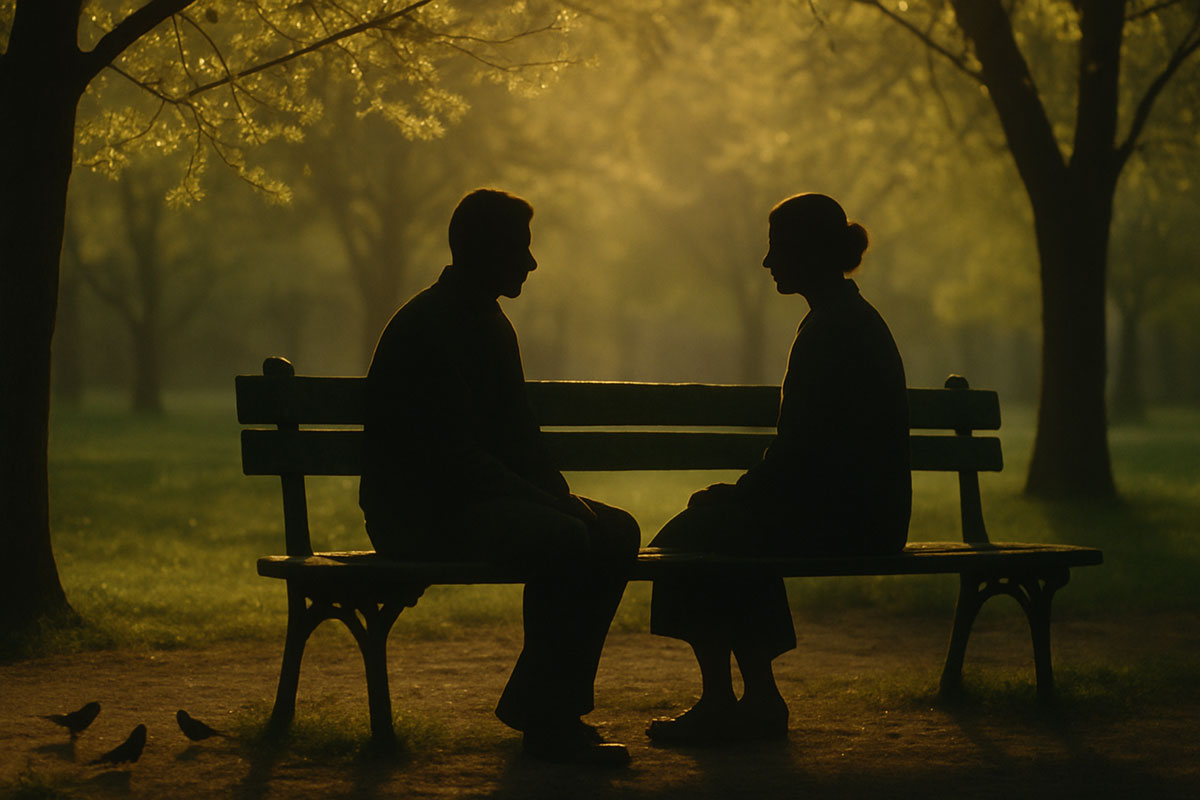
A nearly empty park in early spring.
The trees still carry the memory of winter, holding their buds close like shy secrets. A single bench sits beneath a linden tree. Its green paint is chipped, but dignified in the way old, humble things often are.
Czechowicz is already seated there, hands folded in his lap, looking as though he has been waiting for only a second or for an entire lifetime—it’s hard to tell. Szymborska approaches with light steps, almost matching the rhythm of the sparrows hopping near the bench.
They greet each other with the quietest smiles—modest smiles, appropriate for two poets who distrust spectacle.
Czechowicz:
Wislawa, I chose this place because it has nothing extraordinary to offer. Which is exactly why it offers everything.
Szymborska:
(laughing softly)
Yes, it is the perfect stage for a conversation about modesty. A bench that doesn’t brag. Trees that don’t insist on blooming before they’re ready.
Czechowicz:
And no statues demanding admiration.
Szymborska:
Exactly. People think modesty is a weakness. But to me, it is the discipline of not shouting when a whisper tells the truth more clearly.
A gentle breeze moves through the branches, almost bowing to their words.
Czechowicz:
In your poems, humility appears not as an apology but as a way of seeing. You observe the world as if you expect it to surprise you. That is modesty, I think—expecting to be taught, not to instruct.
Szymborska:
I admire those who can walk into the world and say, “Teach me, I know nothing.” It feels honest. When poets pretend to know too much, their work grows stiff.
Czechowicz:
Certainty is heavy. Humility is light.
Szymborska:
And light travels farther.
The sparrows keep darting in small arcs on the path, as if illustrating that point with every movement.
Czechowicz:
People often confuse modesty with invisibility. But modesty does not mean disappearing. It means refusing to distort yourself to be seen.
Szymborska:
A beautiful distinction. A modest person doesn’t hide—they just don’t wave their arms.
Czechowicz:
(laughs quietly)
Yes. They let presence speak instead of volume.
A silence opens between them, gentle and instructive like a page break. Neither feels the need to fill it. Two people comfortable with quiet—rare enough to feel precious.
Szymborska:
Józef, your poems always felt like listening to a faraway bell—soft, but impossible to ignore. How did you cultivate such restraint?
Czechowicz:
Restraint comes naturally to me. When emotions swell, I step back. I whisper instead of cry out. Maybe because chaos frightens me. Or because the world is already loud enough.
Szymborska:
I understand. I often think of poetry as the art of choosing what not to say.
Czechowicz:
Yes… the art of respectful omission.
Szymborska:
Respectful—that’s the key. Modesty is respect for the reader’s imagination. You leave them space to stand beside you.
She glances at the budding branches above them.
Szymborska:
Your poems always breathe. They don’t rush. They don’t corner the reader. They simply wait—like spring waits.
Czechowicz:
Spring teaches modesty. It never forces its arrival. It trusts that warmth will come. It trusts that blooming is inevitable.
Szymborska:
If only humans could bloom with such patience.
Czechowicz:
We try. Some more quietly than others.
Another pause.
The wind picks up slightly, ruffling Czechowicz’s hair. Szymborska smooths the page of the small notebook she carries, though she does not open it.
Czechowicz:
Do you think modesty diminishes the importance of poetry?
Szymborska:
No. I think modesty protects poetry from self-importance. A poem should not arrive like a military parade. It should arrive like a letter slipped under the door.
Czechowicz:
And the reader chooses whether to pick it up.
Szymborska:
Exactly. Coercion is the enemy of art.
Czechowicz gazes at the pathway where an older couple strolls quietly, their hands almost touching but not quite.
Czechowicz:
I often wonder… perhaps modesty is an antidote to despair. When ambition grows too large, failure grows with it. But when one’s expectations are small—simply to observe, to feel—the world cannot truly disappoint.
Szymborska:
Ambition is a ladder. Modesty is a hammock.
Czechowicz:
A hammock?
Wislawa, that is perfect.
Szymborska:
It holds you gently, encourages rest, sways with the world rather than fighting it.
Czechowicz:
Yes. And it touches the ground more than the sky.
They share a quiet laughter, the kind that leaves soft echoes.
Szymborska:
But modesty is not only personal. There is also modesty toward the subject itself. When I write about things—atoms, insects, chance, forgiveness—I try to remember I am not their master. I’m their guest.
Czechowicz:
You speak to subjects as if they could answer.
Szymborska:
Perhaps they do. Not directly, but through intuition. Through the gentle surprise that happens when the next line emerges.
Czechowicz:
The poem writes you as much as you write it.
Szymborska:
Precisely.
The sun emerges briefly from behind a cloud, illuminating dust particles dancing in the air. Both poets look at them, absorbed. Dust—so modest, so eternal.
Czechowicz:
Have you ever felt that modesty protects you from despair?
Szymborska:
Often.
When poets believe they must explain the universe, they crumble under the weight. But if they only try to describe a beetle, or a wave, or a moment of breath—then the task becomes beautiful instead of impossible.
Czechowicz:
Yes. Scale is everything. When a poet writes about war, perhaps he should start by writing about one broken chair in an empty room.
Szymborska:
A single chair explains more about war than a thousand speeches.
A sparrow lands at their feet, tilting its head, curious. Czechowicz lowers his hand very slightly, not to touch it but simply to acknowledge it. Modesty in gesture.
Czechowicz:
Wislawa… what would a world without modesty look like?
Szymborska:
A marketplace where everyone is shouting and no one is listening.
A place where certainty crushes wonder, and every opinion arrives with a marching band.
Czechowicz:
A nightmare.
Szymborska:
Exactly. Modesty is not silence—it is tuned volume.
Czechowicz:
And tuned attention.
She nods.
Szymborska:
And tuned gratitude.
Modesty is gratitude for the chance to witness life, not own it.
Czechowicz:
You remind me why I began writing. To witness. To observe gently.
Szymborska:
Your poems taught me the same. Before your work, I believed poetry must be clever. After your work, I understood poetry must be attentive.
A deeper silence forms.
The kind that falls when a conversation has said the necessary things but still wishes to sit in its own echo.
The wind softens.
The sparrows settle.
The world leans in.
Czechowicz:
Wislawa… is there a single gesture that represents modesty for you?
Szymborska:
Yes.
Someone bending to pick up something they didn’t drop.
Czechowicz:
(surprised, moved)
Beautiful.
And for me—it is someone stepping aside to let another pass, even when they could have insisted on their right of way.
Szymborska:
Both gestures say the same thing:
“I see you.”
Czechowicz:
Recognition… the gentlest form of love.
The sun dips lower. The air cools.
Szymborska finally sits beside Czechowicz on the bench.
Two poets.
Two quiet souls.
Two believers in the delicate power of understatement.
Their conversation has revealed no fireworks, no proclamations, no triumphs.
And yet—
this small, soft meeting feels like a cathedral built from silence.
A modest cathedral.
The best kind.
Topic 5: The Boundary Between Irony and Kindness
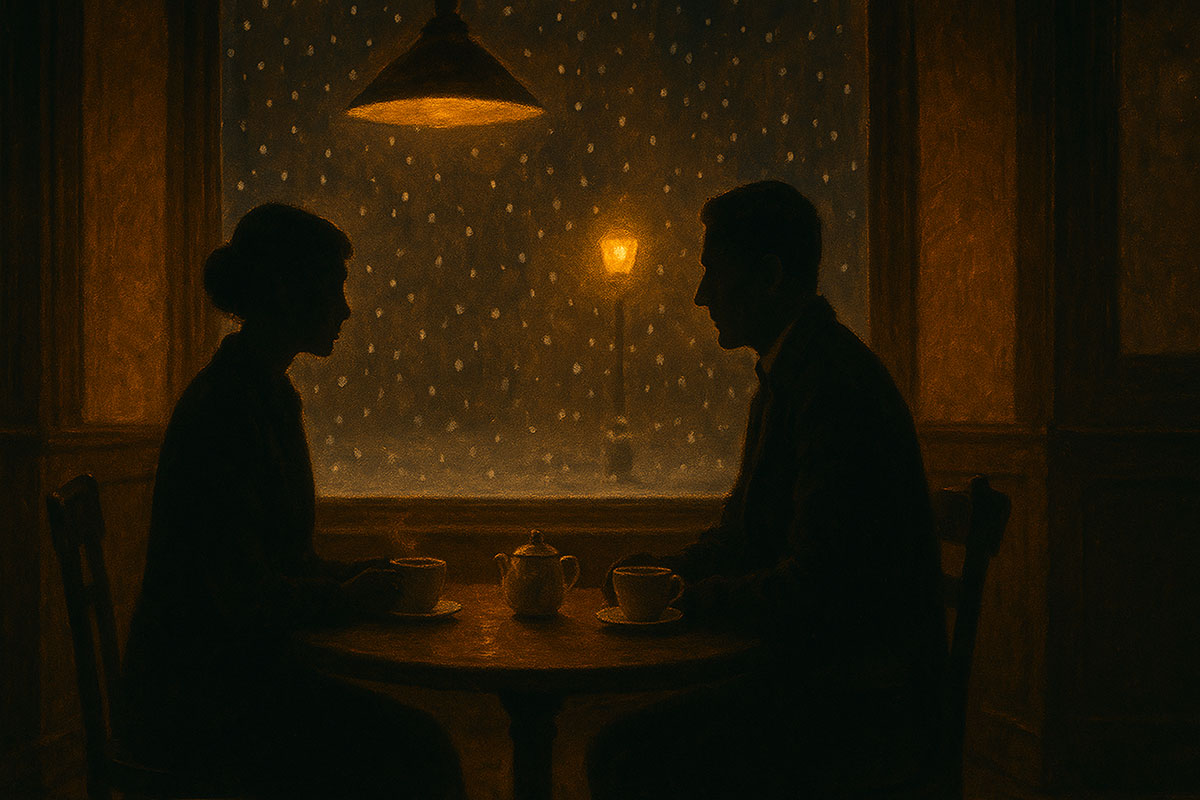
A quiet café in Warsaw late in the evening.
The light bulbs hang low, glowing amber like softened memory.
Outside, the street is nearly empty except for a tram murmuring by every fifteen minutes. The room smells faintly of old wood, coffee, and something warm that might be nostalgia.
Herbert sits at a corner table, posture crisp, as if a sense of duty lives inside his spine.
Szymborska arrives with her gentle shuffle, placing her coat on the back of the chair as if apologizing to it.
They sit facing one another—two poets with very different temperaments, yet bound by a mutual respect sharper than most friendships.
Herbert:
Wislawa, I must confess, I’ve always envied your ability to be ironic without becoming cruel. It is a skill I’ve never developed fully. My irony often cuts deeper than I intend.
Szymborska:
Your irony cuts because it needs to. Mine grazes the skin so readers will notice the tenderness underneath. We have different surgical techniques.
Herbert:
(smiles faintly)
Yes, but you make your critiques feel like small, embarrassed truths revealing themselves. I feel as if my critiques walk in wearing boots.
Szymborska:
Not boots—armor. You wrote to protect what is sacred. I wrote to question what is assumed. Those require different kinds of weapons.
The waiter brings two teas. Neither poet asked for them, but both accept them as if they had.
Herbert:
Tell me, Wislawa…
where exactly do you see the boundary between irony and unkindness?
Szymborska:
It lies in intention.
Irony is unkind when it wants to wound.
Irony is kind when it wants to wake someone gently.
Herbert:
But waking someone gently doesn’t always work.
Sometimes people need a harsher alarm.
Szymborska:
Yes. And sometimes the harsh alarm makes them resent the morning altogether.
Herbert:
Fair point.
Herbert stirs his tea with firmness.
Szymborska stirs hers without stirring anything at all.
Herbert:
My irony comes from disappointment—disappointment in history, in power, in cowardice. I cannot write softly about these things.
Szymborska:
And you shouldn’t.
Poetry has room for many tones.
Your voice is a shield against forgetting. Mine is a net catching overlooked details.
Herbert:
You see humans with compassion that frustrates me sometimes.
Szymborska:
And you see their failures with precision that frightens me sometimes.
Herbert:
Because I believe humans can do better.
Szymborska:
And I believe humans are already trying.
A pause settles, carrying no tension—only recognition.
Herbert:
You once wrote that we should examine our own weaknesses before judging the world. But without judgment, how do we defend what matters?
Szymborska:
Judgment is necessary. Condemnation is optional.
When I critique, I try to critique actions, not people.
People are always more than the worst thing they've done.
Herbert:
You are too generous.
Szymborska:
Maybe. But generosity leaves the door open.
Condemnation locks it.
A tram passes outside.
The vibration causes the café’s hanging light to sway slightly, as if nodding in agreement or dissent—it’s hard to tell.
Herbert:
In my poems, I used irony as a weapon against hypocrisy and tyranny. I feared kindness might weaken the blow.
Szymborska:
But kindness softens the audience, not the blow.
If people feel seen, they are more willing to face the truth you present.
Herbert:
You speak as if kindness itself is a strategy.
Szymborska:
Perhaps it is.
Not manipulation—orientation.
If readers sense that you care for them, they listen longer.
Herbert:
But what if the world does not deserve such care?
Szymborska:
Then kindness becomes an act of resistance.
Herbert looks startled, as if this idea caught him off guard.
Herbert:
Resistance?
I always thought resistance required hardness.
Szymborska:
Softness can resist too.
Grass grows through concrete.
Laughter survives censorship.
Small mercies outlast empires.
Herbert:
That sounds like faith.
Szymborska:
Not faith—observation.
I’ve simply lived long enough to see the quiet things endure.
Herbert looks down at his hands, as if reassessing their purpose.
Herbert:
Wislawa… do you ever fear your gentleness might be mistaken for naivety?
Szymborska:
Often.
But I have made peace with being underestimated.
It allows me to observe more freely.
Herbert:
You hide your sharpness behind modesty.
Szymborska:
And you hide your tenderness behind severity.
For the first time, Herbert laughs—openly, genuinely.
The café seems to warm by several degrees.
Herbert:
So we are both hiding opposite things.
Szymborska:
Perhaps.
But both approaches serve poetry.
Your irony protects truth.
Mine reveals it by surprise.
The waiter refills their cups.
Outside, snow begins to fall lightly—flakes that seem unsure whether they should commit to winter.
Herbert:
If irony can be kind, what does that kindness look like?
Szymborska:
It looks like holding up a mirror gently, so the person sees what they must without shattering.
Herbert:
And unkind irony?
Szymborska:
Throwing the mirror at them.
Herbert:
(laughs again)
I suppose I’ve thrown a few mirrors.
Szymborska:
Yes. But sometimes that’s necessary when the reflection is urgent.
Herbert leans forward, elbows on the table.
Herbert:
And what about self-irony?
You seem to use it so gracefully.
Szymborska:
Self-irony is humility’s favorite tool.
It prevents us from becoming statues of ourselves.
It reminds us we are flawed, temporary, and wonderfully absurd.
Herbert:
I envy that freedom.
Szymborska:
Try it sometime.
Mock your own solemnity.
It may liberate your anger.
Herbert considers this seriously, as if it were a prescription from a trusted doctor.
Herbert:
Do you think there is a moral obligation for poets to be kind?
Szymborska:
No. But there is a moral obligation for poets to be honest.
And sometimes honesty requires cruelty.
Sometimes honesty requires mercy.
Herbert:
So the boundary between irony and kindness is situational?
Szymborska:
Situational—and relational.
Ask yourself:
“Does this irony help someone grow, or does it merely punish?”
Herbert nods slowly.
He has spent a lifetime writing about justice, honor, and moral clarity.
This new kind of clarity—the clarity of softness—feels challenging.
Herbert:
I have always admired your tenderness, Wislawa.
And now I see it is not softness. It is strength that chooses not to shout.
Szymborska:
And I admire your courage, Zbigniew.
Your poems stand guard in a world that keeps trying to forget its conscience.
A deeper silence flows between them, one of mutual recognition.
It is not agreement—they remain different poets, with different philosophies—but a shared understanding that poetry needs both edges and openings.
Herbert:
Perhaps irony and kindness are not opposites after all.
Perhaps they are two ways of telling the truth.
Szymborska:
Yes.
And the poet’s task is only to choose the right tone for the moment.
Herbert raises his cup in a quiet, respectful toast.
Szymborska mirrors the gesture.
Outside, the streetlights glow more warmly against the falling snow,
as if the city itself has softened for a moment.
Two poets sit together—
one sharp, one gentle—
both necessary.
Both telling the truth in their own way.
Final Thoughts by Wislawa Szymborska
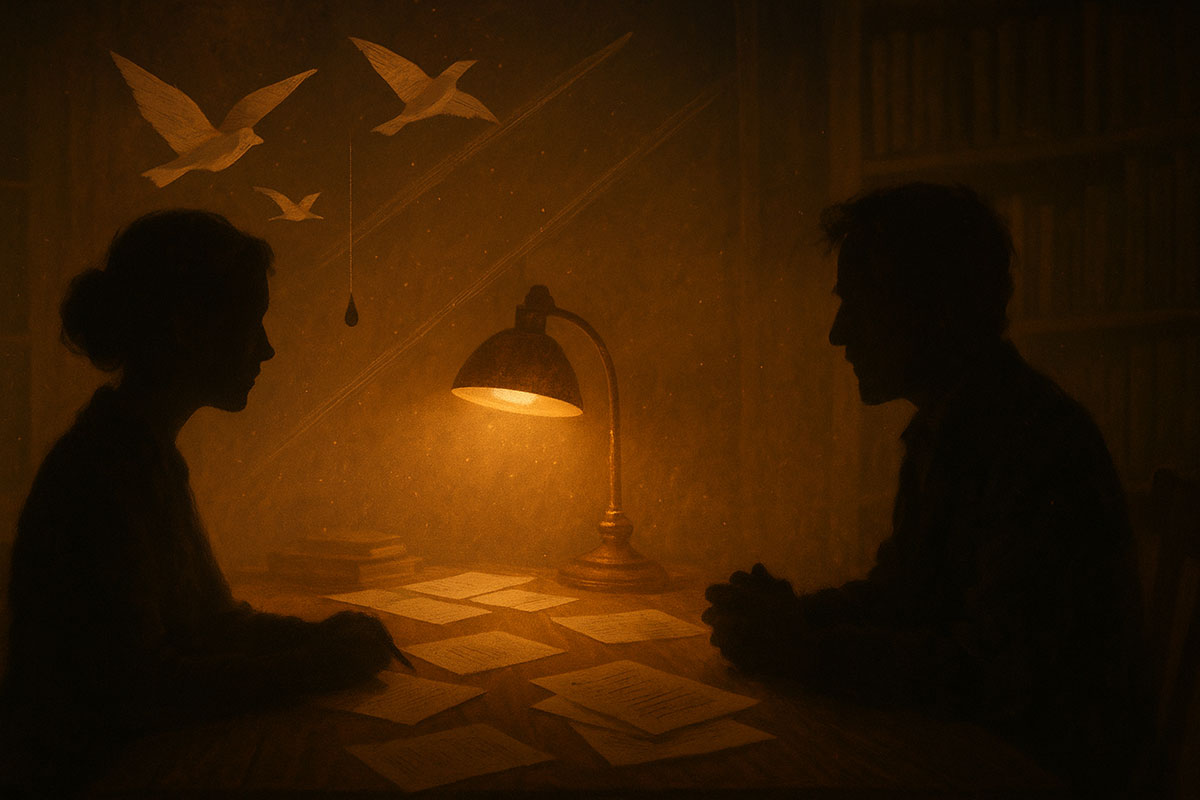
When these conversations end—and all conversations must—I hope something of their warmth remains with you. Not as philosophy or doctrine, but as the faint afterglow of companionship. The kind you feel walking home after spending an evening with someone who understands you a little better than you understand yourself.
I have always believed that gratitude is a quiet art.
It does not shout or demand applause.
It simply notices:
the kindness in a gesture,
the wisdom in a sentence,
the courage in a friend who keeps asking questions even when the world stops answering.
To speak again with these people I admired—my friends, my guides, my mirrors—has been a joy stitched from memory and imagination. If anything I have said carries the faintest trace of their brilliance, it is because I learned to see the world through their generosity of thought.
And to you, the reader who has joined us here:
thank you for listening with patience, curiosity, and the willingness to linger in the spaces between words. Poetry survives because someone is willing to listen.
Today, that someone was you.
May you continue your own conversations—quiet or spirited, serious or playful—with those who inspire you. And may they accompany you, gently and faithfully, long after the final page is turned.
With warmth, with gratitude,
Wislawa Szymborska
Short Bios:
Wislawa Szymborska
Wislawa Szymborska (1923–2012) was a Polish poet known for her wit, philosophical clarity, and gentle irony. Winner of the 1996 Nobel Prize in Literature, she explored the ordinary with uncommon depth, revealing profound meaning in simplicity, chance, and human fragility. Her voice is humble yet penetrating, playful yet wise.
Anton Chekhov
Anton Chekhov (1860–1904), one of Russia’s most influential writers, reshaped modern storytelling through nuanced short fiction and deeply human plays. With quiet humor and precise observation, he captured the subtle tragedies and miracles of daily life, influencing generations of writers across the world.
Czesław Miłosz
Czesław Miłosz (1911–2004), Nobel Prize–winning Polish poet, essayist, and thinker, wrote with moral seriousness and historical insight. His work confronts war, exile, memory, and the ethical responsibilities of the artist. Miłosz remains one of the most important moral voices of twentieth-century literature.
Franz Kafka
Franz Kafka (1883–1924) was a Prague-born writer whose surreal, psychologically layered fiction revealed the absurd, often oppressive nature of modern life. His works—haunting, prophetic, and deeply human—created a literary landscape where hope flickers even in the shadow of bewildering systems.
Józef Czechowicz
Józef Czechowicz (1903–1939) was a Polish poet admired for his lyrical delicacy, atmospheric imagery, and quiet emotional depth. His work blends modesty with musicality, creating intimate landscapes of memory and feeling. Despite his early death, he remains a cherished figure in Polish poetry.
Zbigniew Herbert
Zbigniew Herbert (1924–1998) was a Polish poet known for his sharp intellect, moral clarity, and incisive irony. His iconic character, Mr. Cogito, shaped late-twentieth-century Polish literature. Herbert’s writing defends dignity, truth, and ethical resistance in the face of historical and political pressures.
Leave a Reply